Muromachi turned sword making into an industry: the uchigatana rose with massed infantry warfare, Osafune and Seki produced bundle swords beside custom orders, and the Ming trade carried Japanese blades abroad by the tens of thousands.
 NihontoWatchNihontoWatch
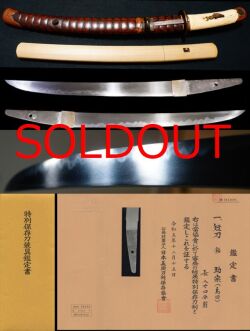
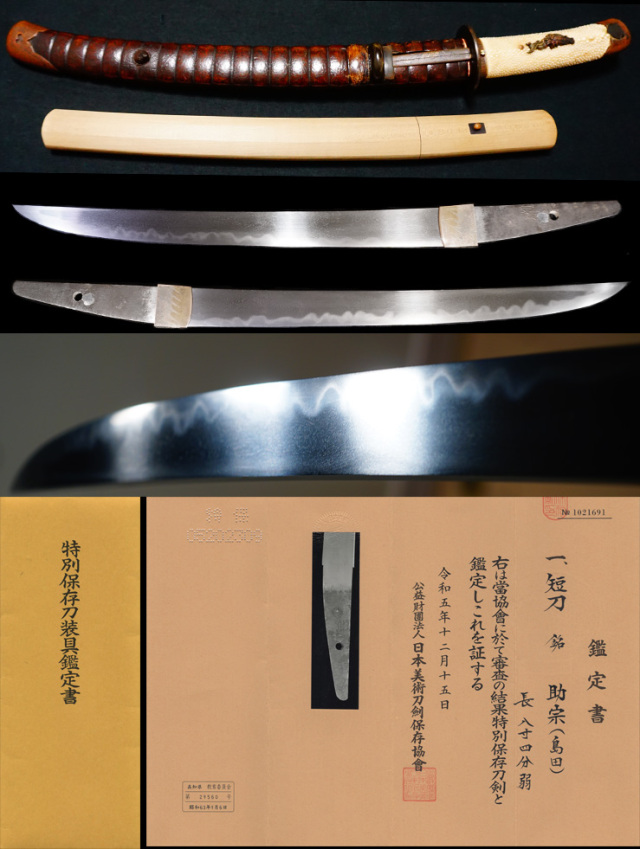
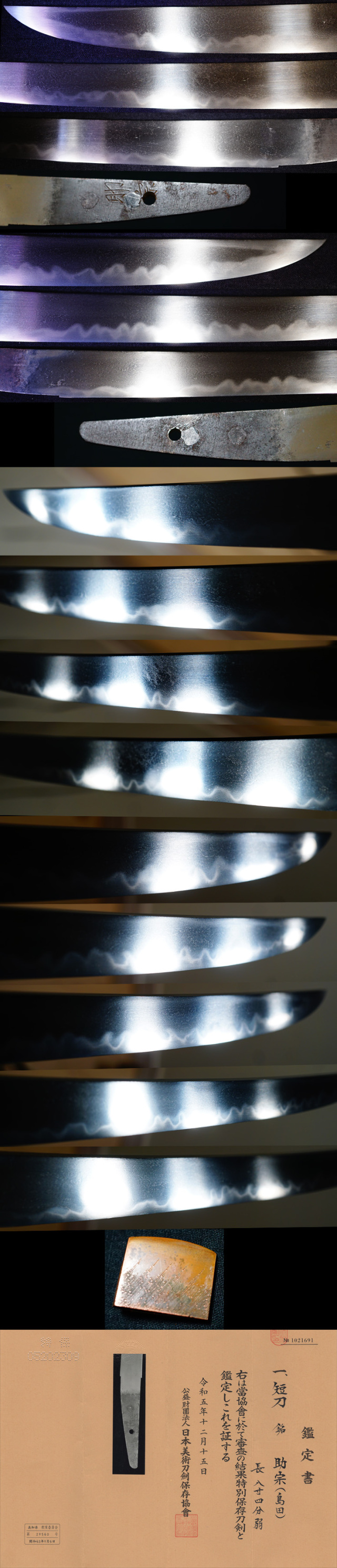
助宗の短刀は武田信玄の差料として有名であり、本作はタナゴ腹風の茎で村正を彷彿させ小板目肌が細かく詰んだ鍛えに、表裏揃いの互の目乱れを焼き、地沸厚くつき、地刃共に明るく冴え本工の高度な技量を見事に示した一振りです。 時代の拵えは仕立ての良い素銅金具の極上な拵えです。 駿河国島田派は、室町時代中期の義助を祖とし、初代助宗は義助の弟と伝え、新刀期に至るまで数代にわたって繁栄しました。一派は相州小田原鍛冶との技術交流も盛んに行い、本家に迫る相州伝で名を馳せました。
NihontoWatchSukemune助宗
Offered by Kusanagi
This piece has sold
Get an email when a new Sukemune piece hits the market.


As written by the shop
Suruga · around 1532-1555
Fujishiro Jo saku · Tōken Taikan top 37%
The Muromachi period (1392 to 1573)
Muromachi turned sword making into an industry: the uchigatana rose with massed infantry warfare, Osafune and Seki produced bundle swords beside custom orders, and the Ming trade carried Japanese blades abroad by the tens of thousands.
A Hozon-certified blade judged to show notably superior workmanship and a better state of preservation. The bar is higher: re-tempered blades and most unsigned Muromachi/Edo works are excluded.
The NBTHK (Nihon Bijutsu Tōken Hozon Kyōkai, the Society for the Preservation of Japanese Art Swords) is a public-interest incorporated foundation founded in 1948 and supervised by Japan’s Agency for Cultural Affairs (Bunkachō); it is based at the Japanese Sword Museum in Tokyo. Its expert panels physically examine each submitted work (shinsa) and issue a certificate (kanteishō) ranking it by artistic and historical merit. NBTHK papers are the most widely recognized standard of authentication for Japanese swords and fittings.
NBTHK official sitePlease notify us of your intention to return, by email or fax, no later than the day after the item's arrival. Return shipping, insurance, and refund transfer fees are the customer's responsibility.