 NihontoWatchNihontoWatch
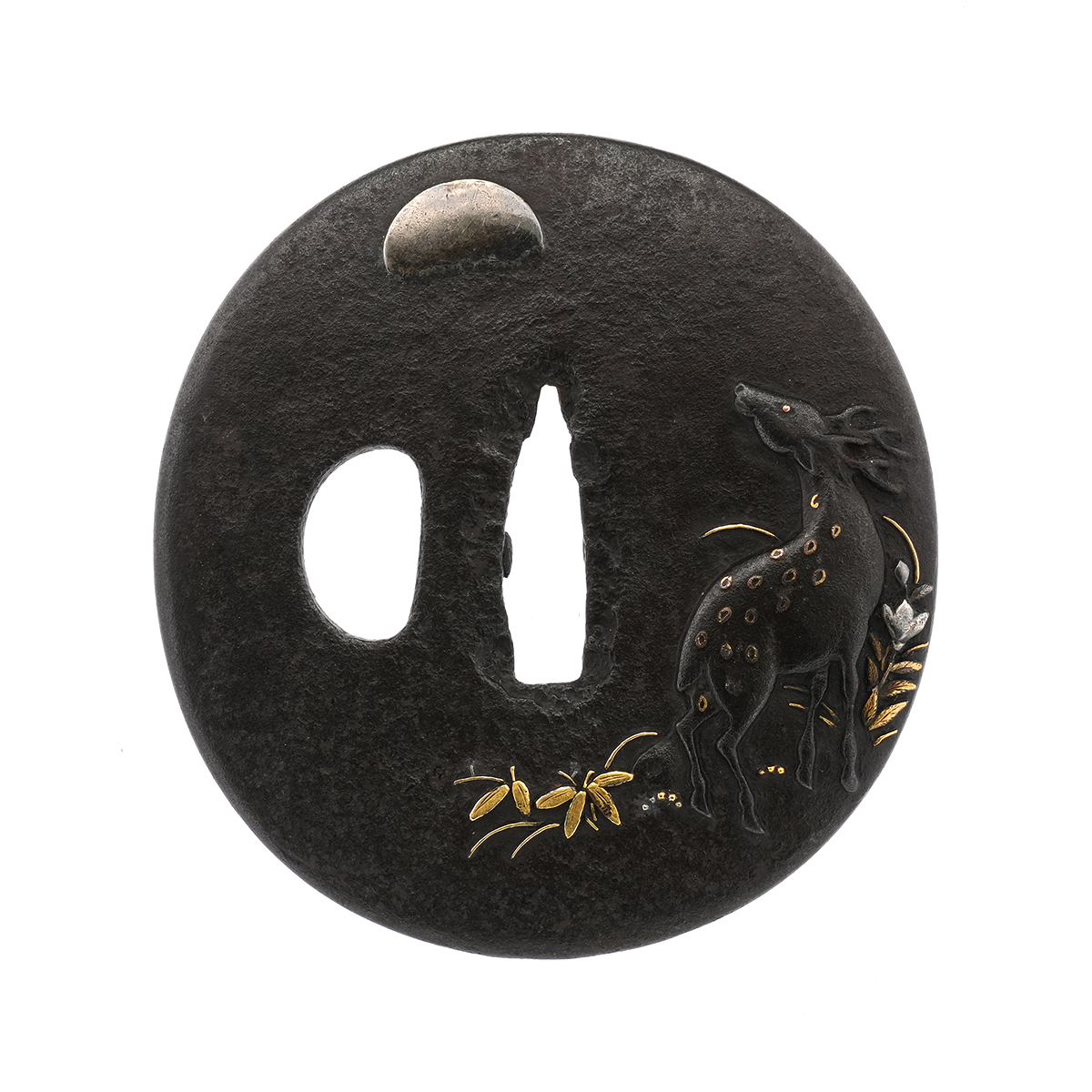
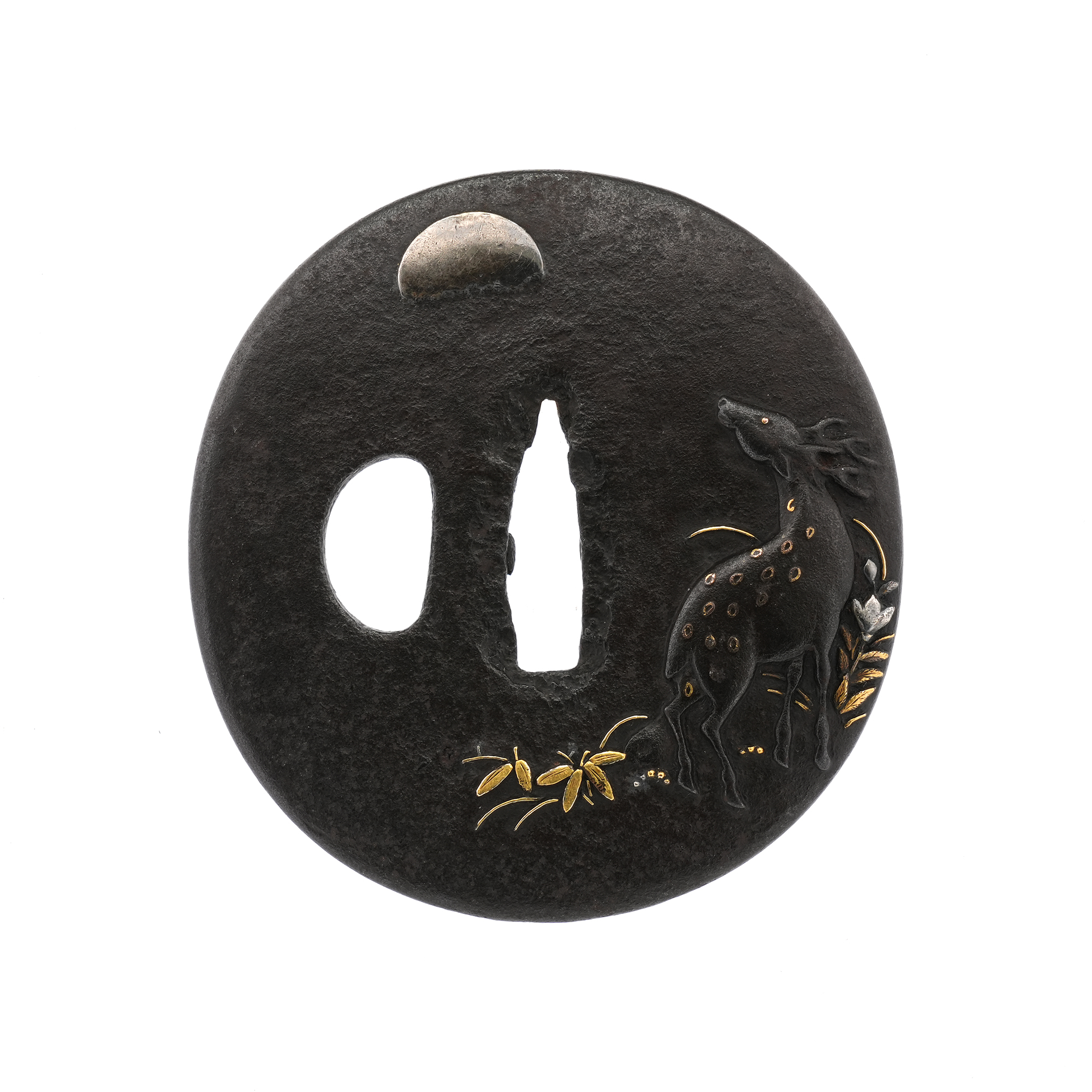
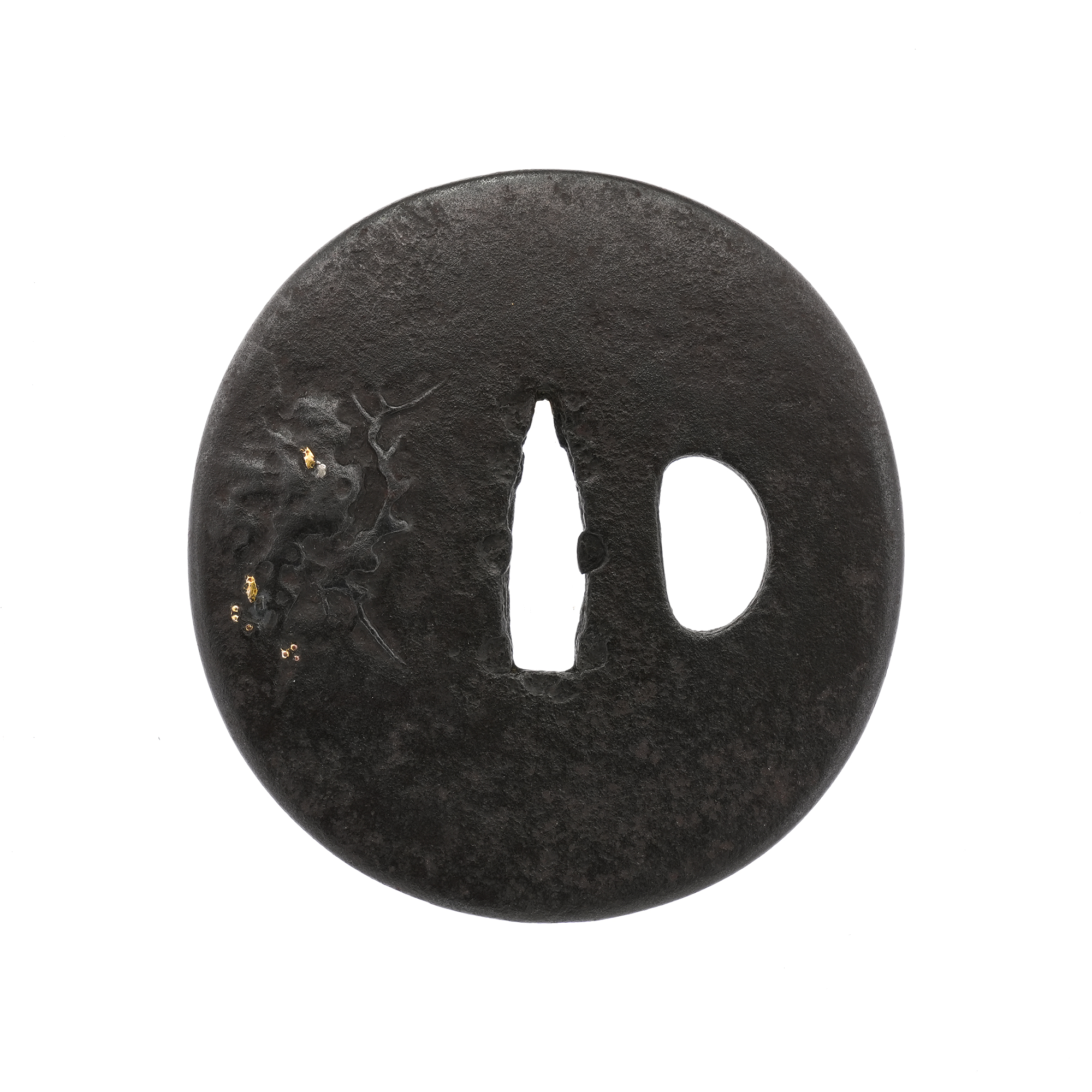
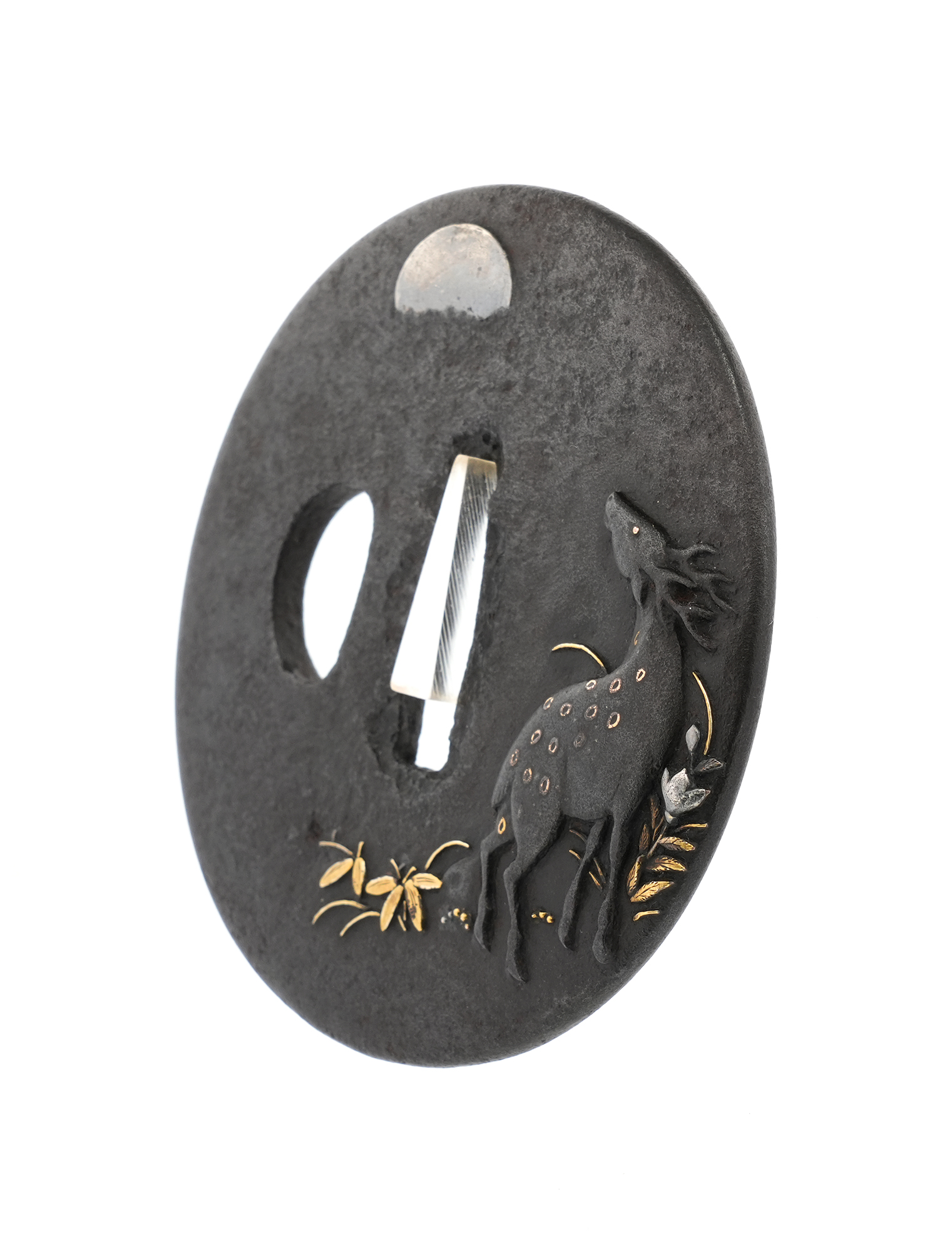
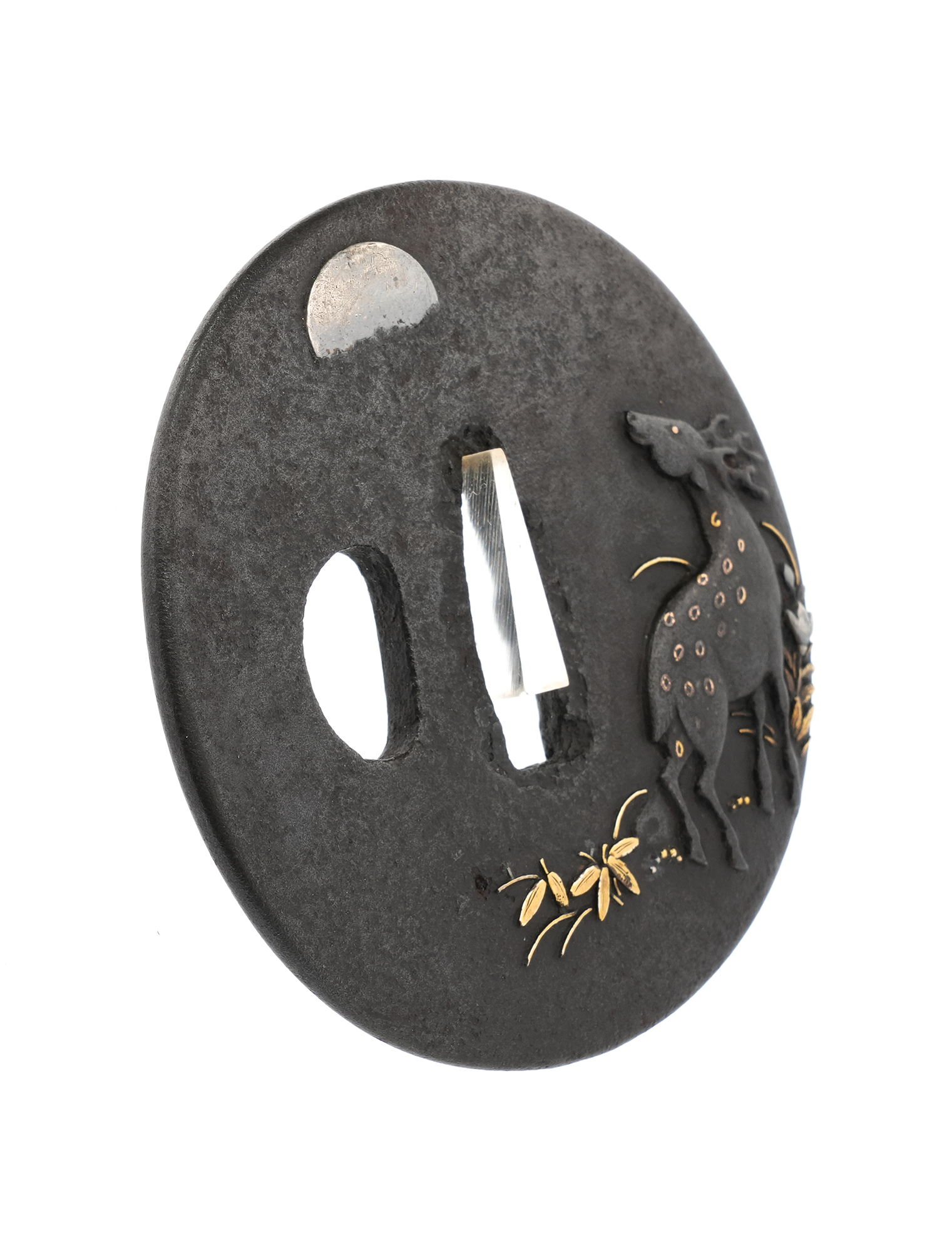
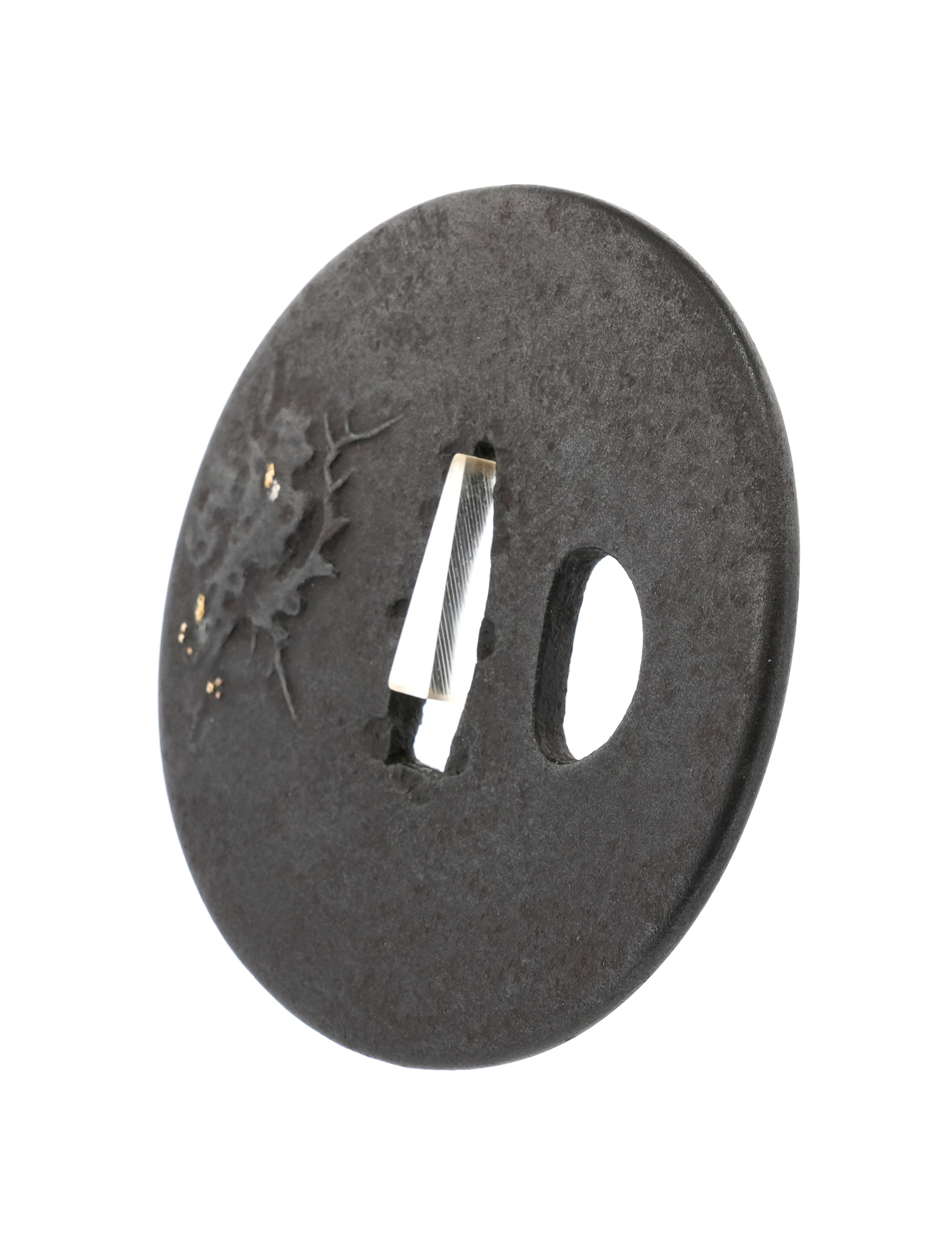
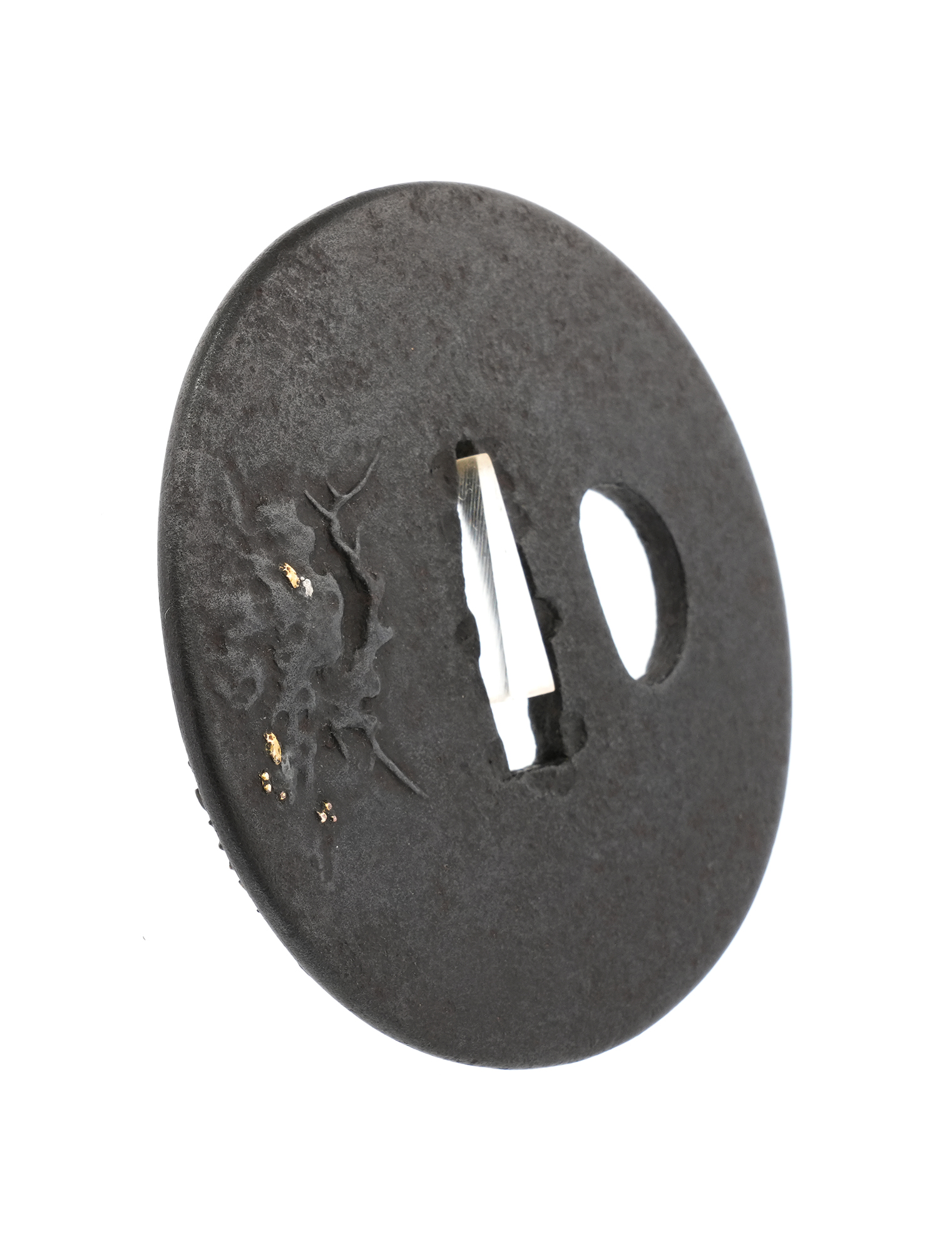
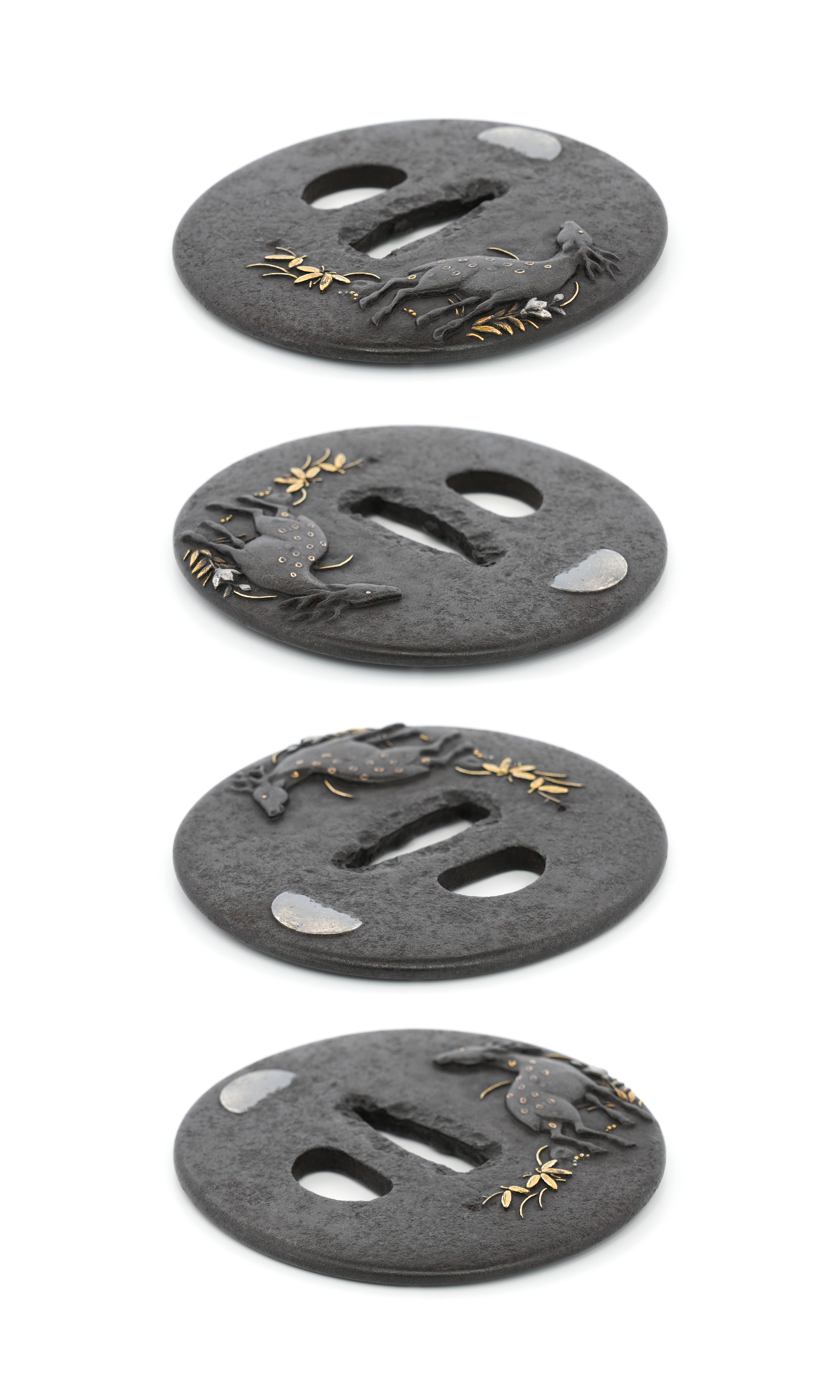
No accessories. The combination of Kasugano and deer is a highly dignified subject that evokes the sacred grounds of Kasuga Taisha and the sacred deer that have been cherished as messengers of the gods. In this piece, the shrine buildings and torii gates are not depicted directly; instead, the quiet night of Kasugano is represented solely by a deer gazing at the moon amidst clouds, autumn grasses, bamboo grass, and a rocky landscape. By likening the wide, remaining iron surface to the night air, a deep silence and poetic sentiment are created on the limited surface of the tsuba. While the deer is a spiritual existence long associated with Kasuga belief, it also harmonizes well with the autumn moon and wild grasses, resulting in a composition where one can enjoy both religious implications and seasonal elegance simultaneously. The tatemaru-gata iron plate presents a calm texture with fine undulations remaining. In the upper left, the moon, half-appearing from between clouds, is expressed prominently in silver, and in the lower right, a stag stretching its neck to gaze at the moon is carved in takabori. By placing the moon and the deer on a diagonal line, a wide night sky is created between them, and the composition is such that following the deer's gaze naturally leads to the moon. While the silver moon quietly receives light, the deer blends into the black iron plate while emerging through the contours of the carving, allowing one to enjoy different scenery from the front and from an angle. The stag stands with its slender legs together, and the contours from its upward-facing face to its ears, neck, chest, back, and loins are captured in soft takabori, with gold inserted into the eyes to clarify its gaze toward the moon. The spots scattered on its body are also expressed in gold, adding a modest brilliance to the dark ground color, while thin gold lines are placed on the belly and legs to tighten the volume and coat of the body. Wild grasses are arranged to the right rear, with leaves in gold and flowers in silver, balancing the colors of the field receiving moonlight, and by adding gold bamboo leaves to the left of the deer, the silver moon above, the deer in the center, and the grasses below resonate as a continuous scene. The reverse side turns from the gorgeous moonlit night of the front; a rock face is prominently expressed to the left, with moss dotted in gold and silver on its uneven surface, and small gold dewdrops scattered about. A small tree that has shed its leaves extends thin branches from the rock, and combined with the wide, remaining iron surface, it becomes a concise scene that makes one feel the chilled night air and the changing of the seasons. By limiting the use of irogane to key points, the pleasure of appreciating the tetsu-aji itself is not lost. The deer and autumn grasses on the front and the rocks and withered trees on the back complement each other, providing a depth as if viewing a different corner of Kasugano each time the tsuba is turned. Around the nakago-ana, traces of repeated adjustments made to fit different blades and koshirae over a long history overlap, and together with the semegane remaining near the seppa-dai, they convey the years it has been in actual use. Although the production period cannot be determined solely by the processing marks on the nakago-ana, when considering the iron plate with its thickness, the gentle tatemaru-gata, the deep and calm iron color, the antique composition that makes use of the blank space, and the carving style of the gold and silver zogan, it is appropriate to view this as a work from around the early to mid-Edo period, and its solid weight of 116 grams enhances the style characteristic of an antique tsuba rooted in practical use. Although mumei, the work, which arranges the moon, sacred deer, autumn grasses, bamboo grass, rocks, and withered trees on the front and back without excess or deficiency and effectively uses gold and silver without spoiling the silence of the iron plate, is truly worth seeing. The silver half-moon and the figure of the deer gazing at it convey the subject at a glance even when displayed, and in hand, the pleasure of following the details such as the gold spots, grass leaves, moss, and dew is endless. Therefore, this is a tsuba of deep interest that I would like to recommend not only to those who favor sword fittings with deer as the subject, designs related to Kasuga belief, or the atmosphere of a moonlit night, but also to enthusiasts who wish to enjoy the contrast between old tetsu-aji and irogane.
Offered by Toushin

We couldn’t find current papers for this piece. Ask the dealer whether it has been, or can be, submitted to shinsa. — Hoshi

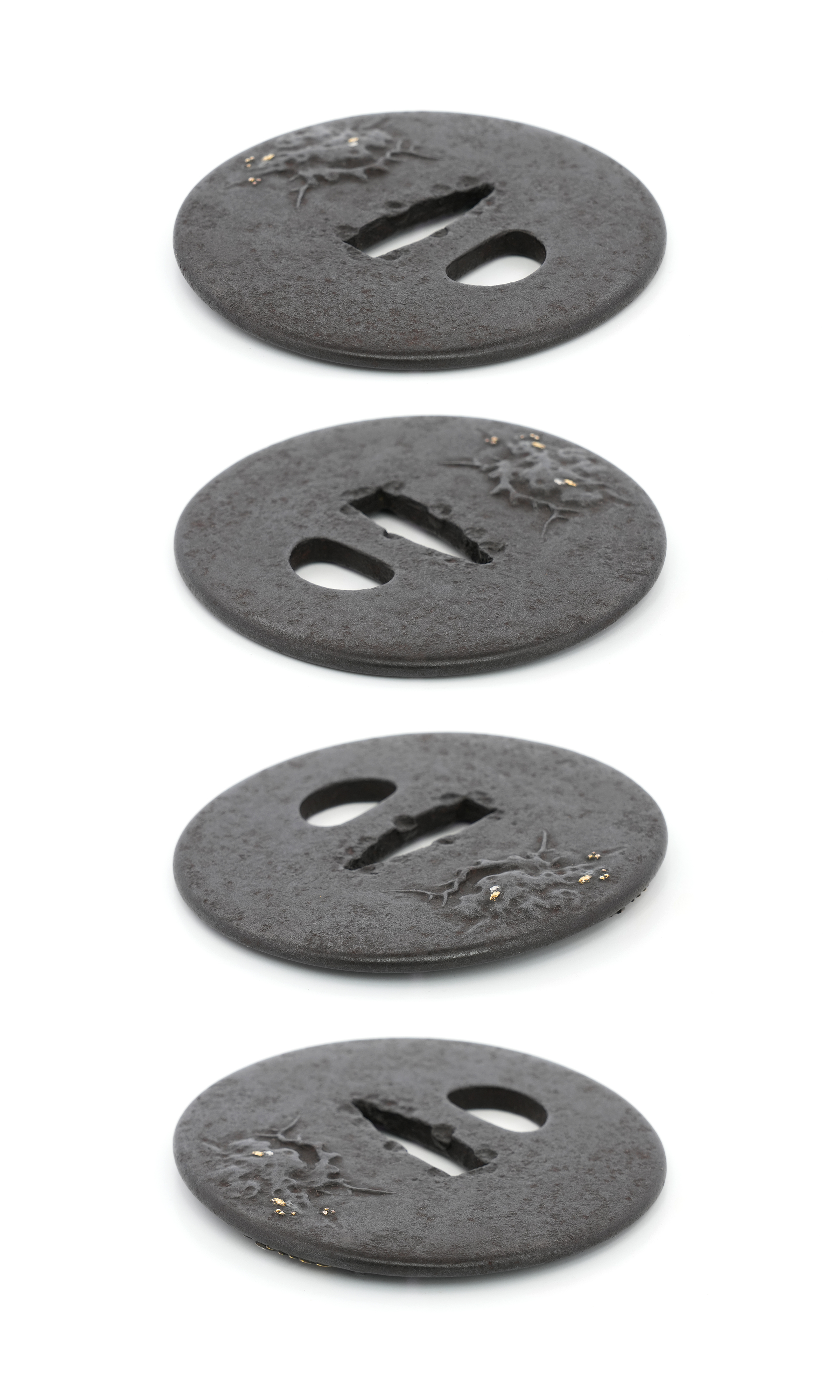
Unsigned
Machine translation of the shop's Japanese ·
Machine translation from the shop's Japanese · may contain errors ·
We could not find an authenticity certificate on the seller’s listing. Japanese swords and fittings are normally papered by the NBTHK (or the NTHK). Without one, the attribution is the seller’s own assessment and has not been independently verified — treat it with caution and ask the dealer about certification before buying.
As a rule we do not accept returns, except when we have sent a different item from the one ordered or when there is a significant discrepancy between the description and the item. If you wish to return an item, please contact us within 3 days of its arrival and then send it back.
¥220,000