 NihontoWatchNihontoWatch
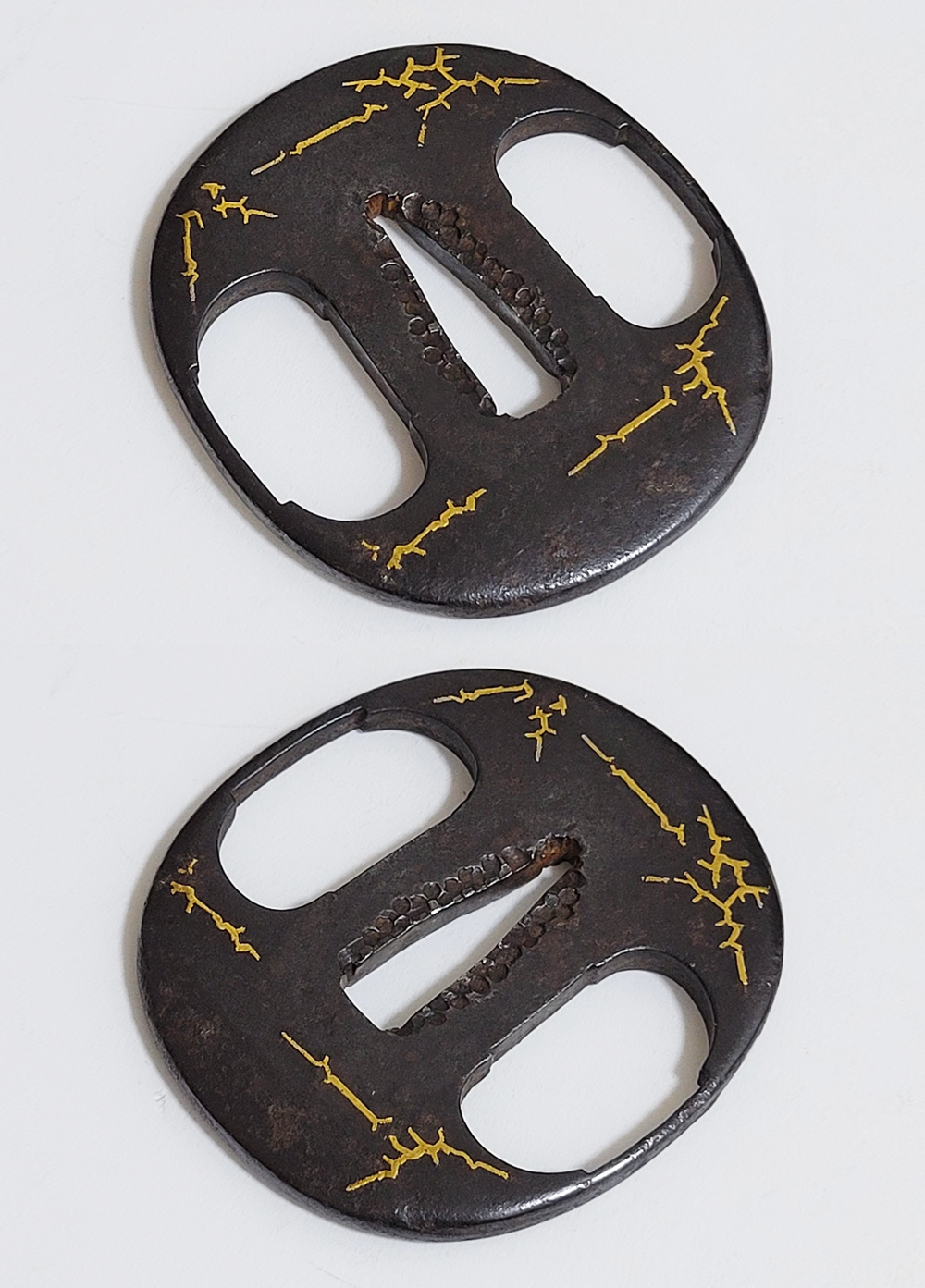
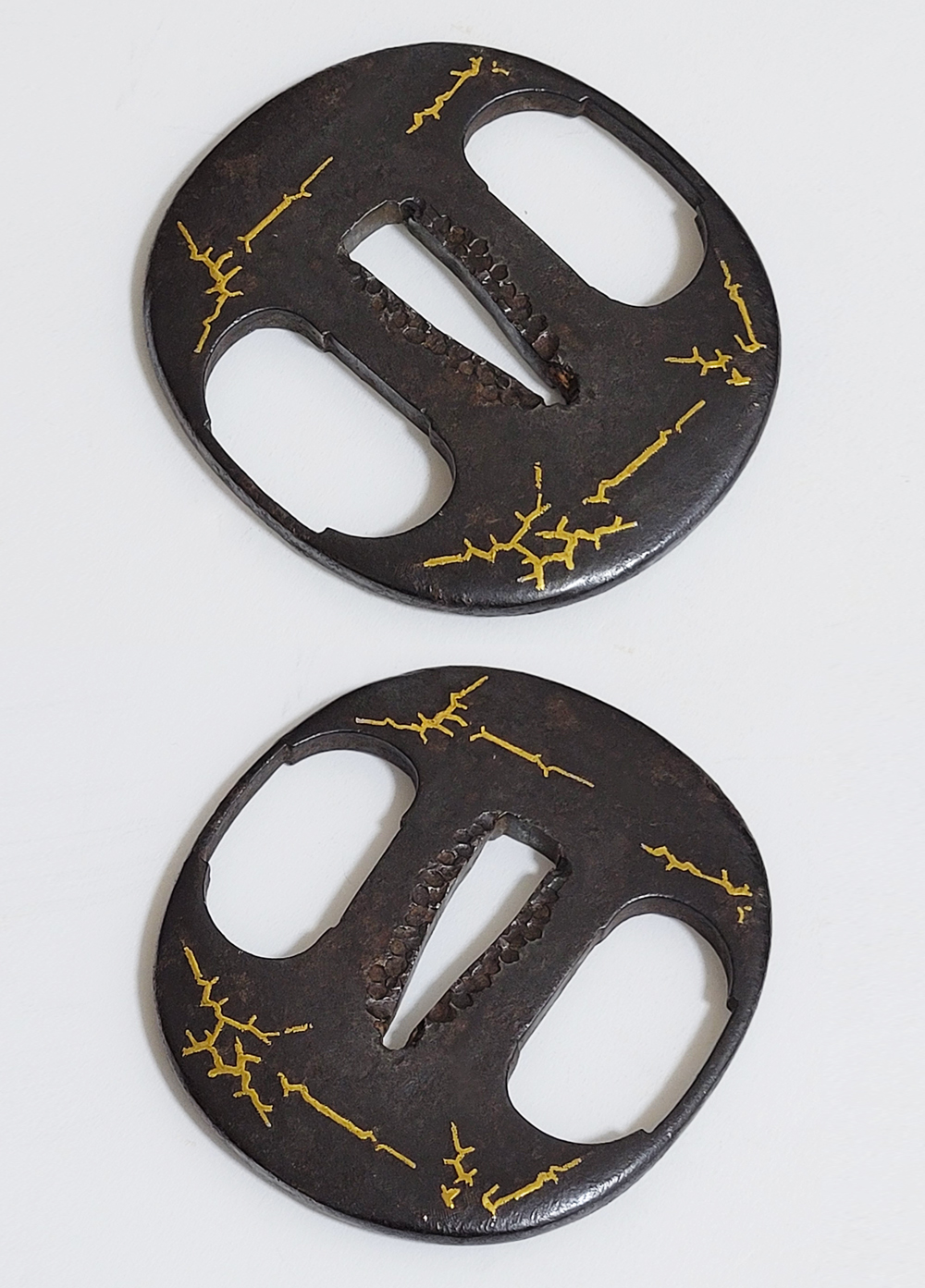
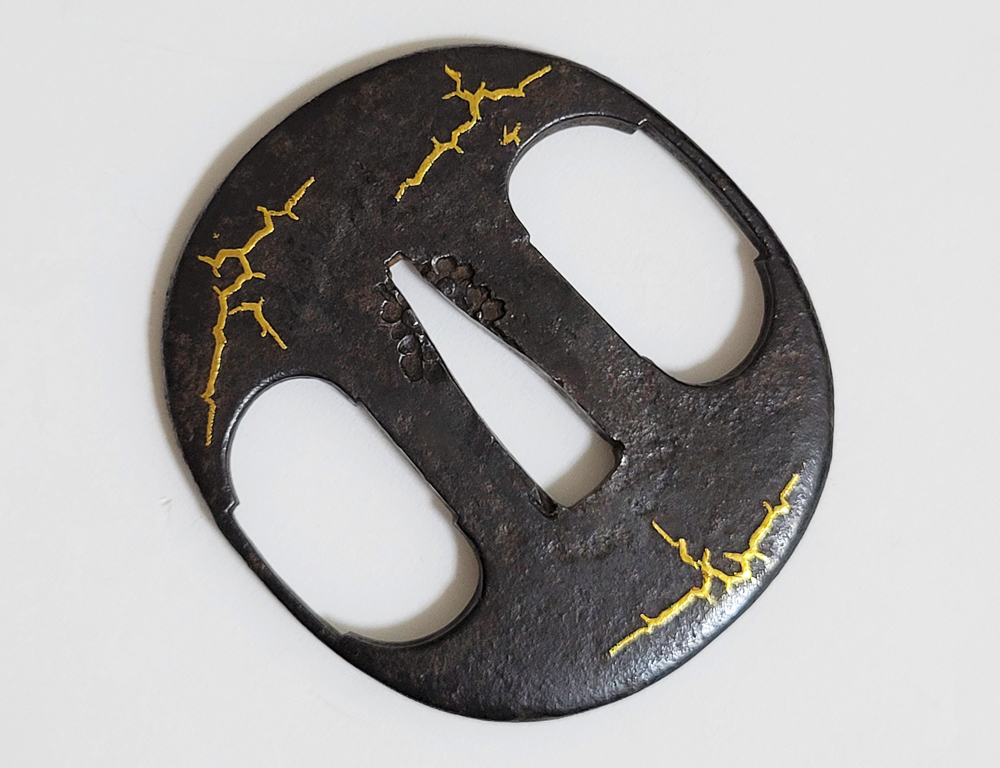
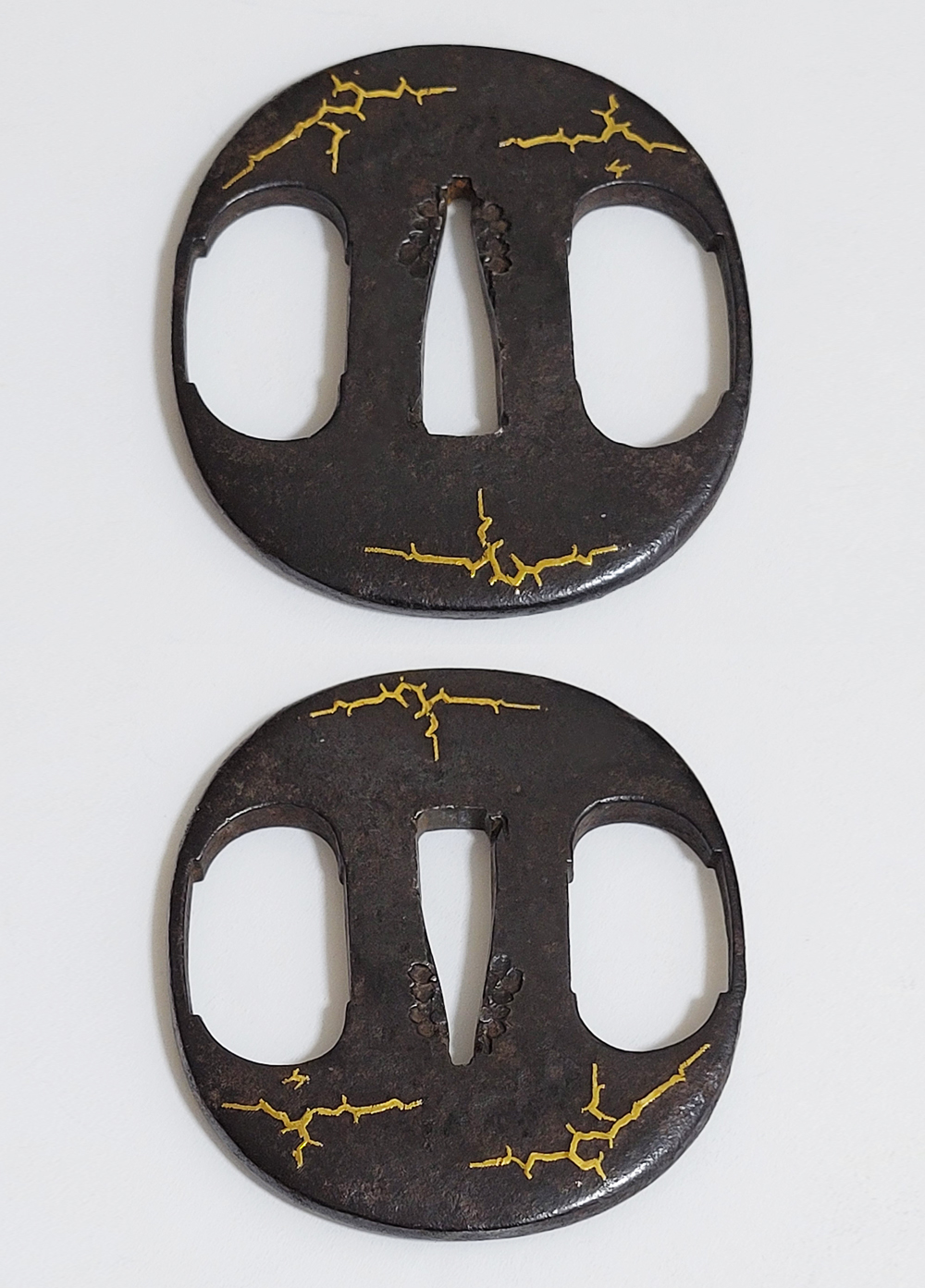
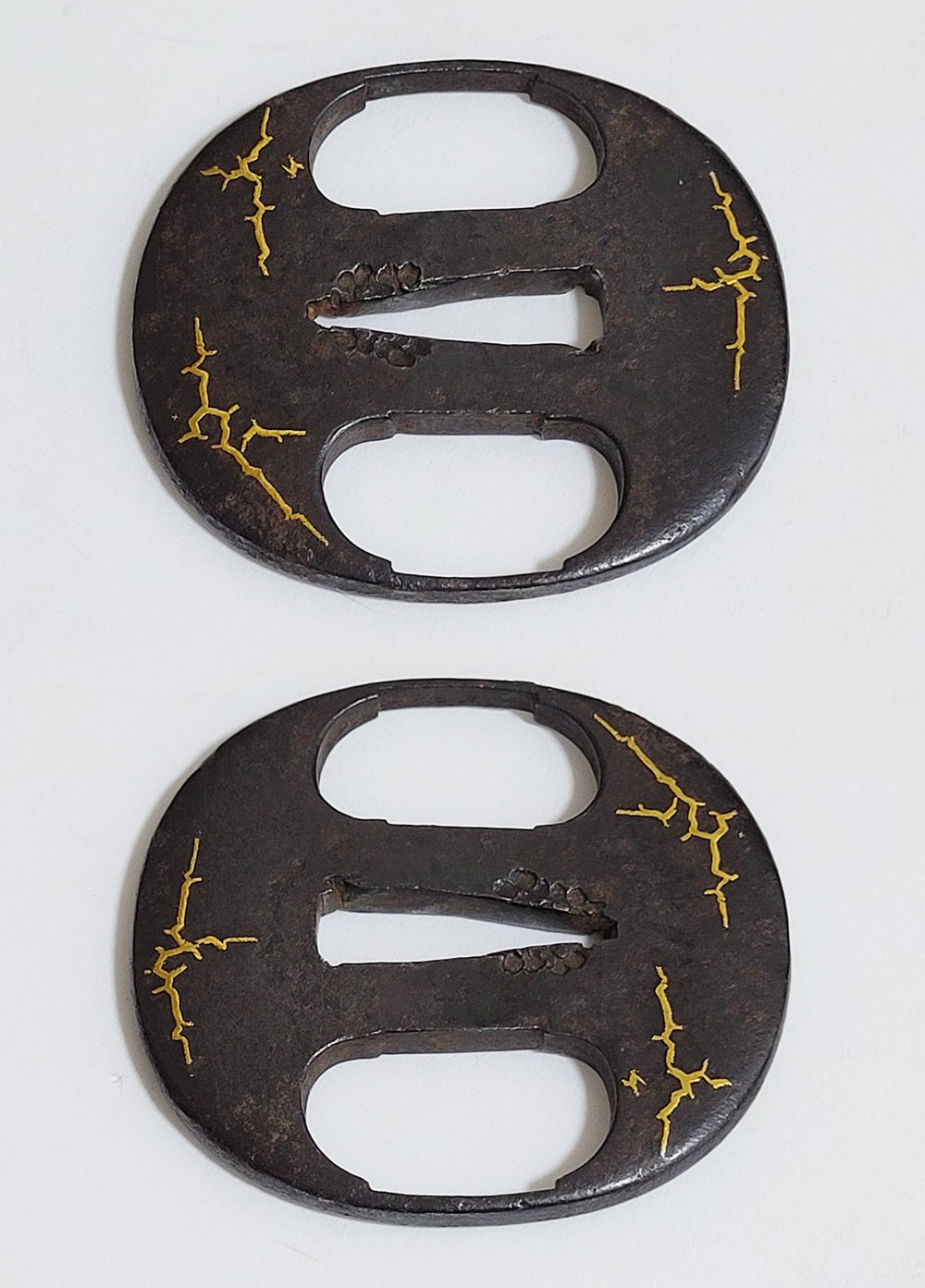
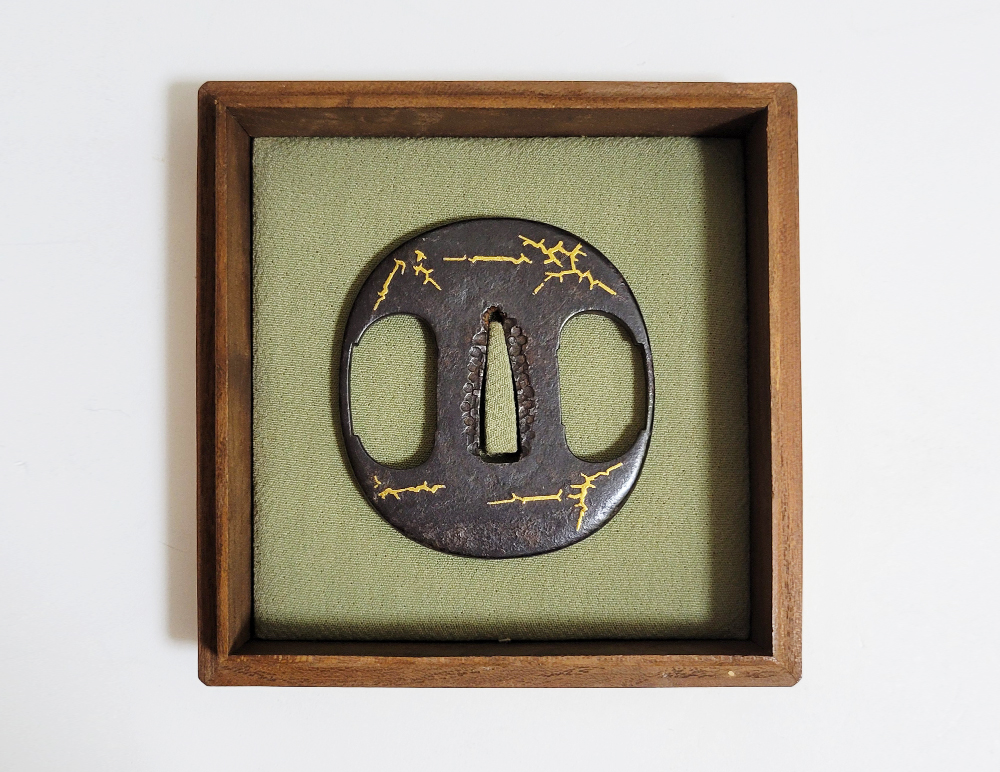
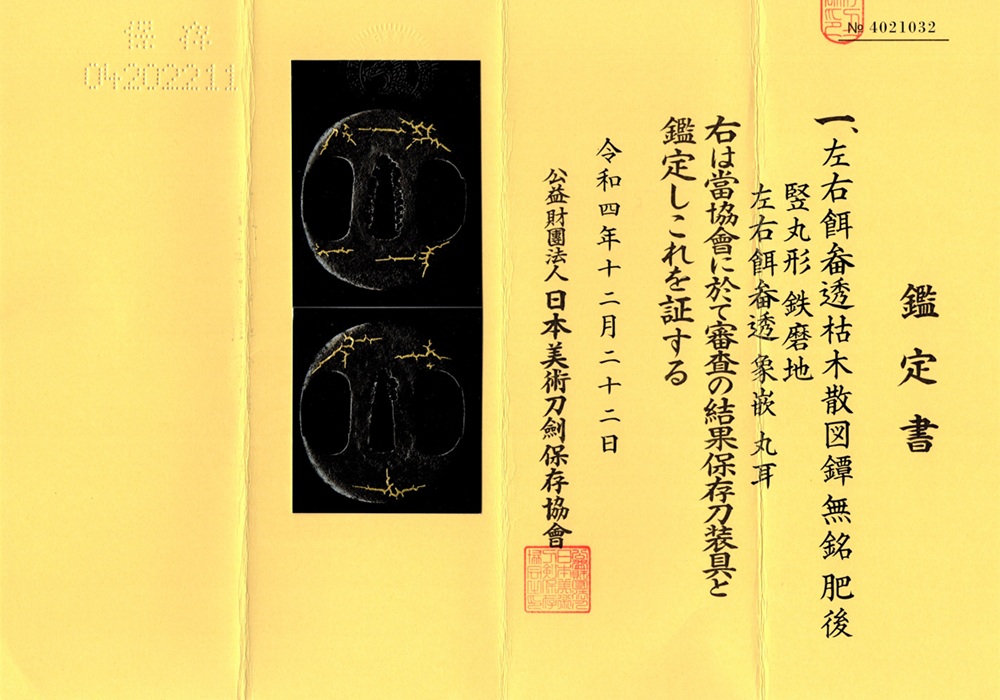
This work is a Higo tsuba featuring a design of efugo (falconry bait containers) and scattered withered trees in sukashi. Higo tsuba are sword fittings that developed primarily in Kumamoto, Higo Province, during the Edo period, with schools such as Hayashi, Hirata, Nishigaki, and Shimizu being well known. They are characterized by concise designs that resonate with the aesthetic sense of the tea ceremony, tasteful iron grounds, and skillful sukashi and zogan. The design of this work features large efugo sukashi on the left and right of the seppadai, with withered trees scattered in gold zogan on the front and back of the iron ground. The efugo is a tool used to carry bait for hawks during falconry, evoking the falconry culture of the samurai class. The withered trees, in their simple form with fallen branches and leaves, possess a unique charm and add a wabi-sabi aesthetic. On a dark, polished iron ground, the large, symmetrical sukashi and the gold zogan of the withered trees, which extend in thin, irregular lines, harmonize with the subdued texture of the iron ground and the refined, understated decorative gold zogan, resulting in a tsuba that possesses the astringent taste and elegance typical of Higo tsuba. Judging from the balance between the traditional iron texture and the sophisticated design, it is likely a work from around the mid-Edo period. Reiwa 4 (2022) passed the Hozon Tosogu shinsa.
NihontoWatchOffered by Touken Matsumoto

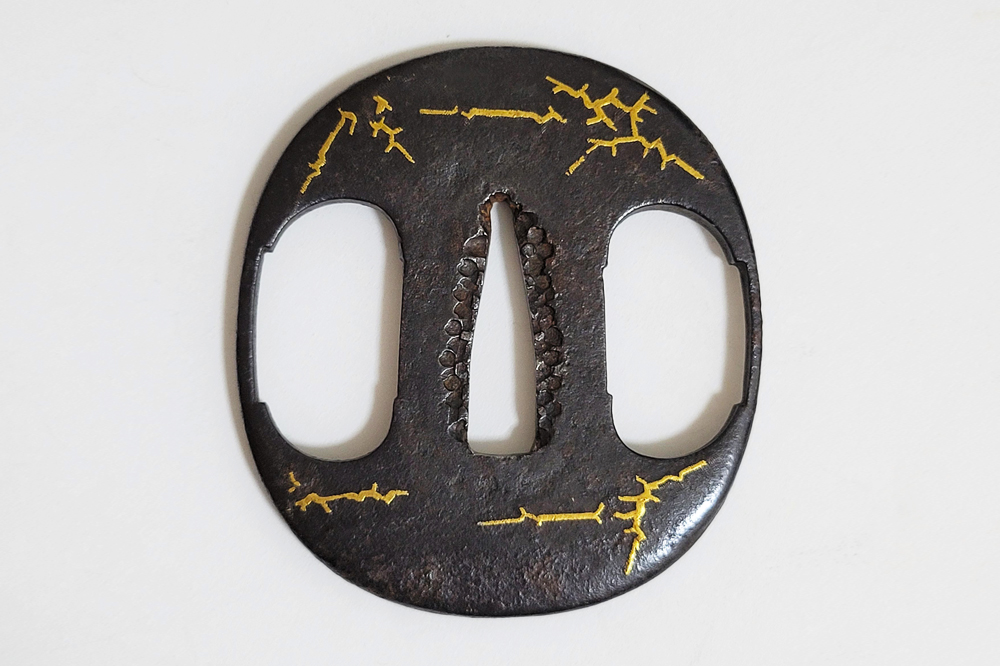
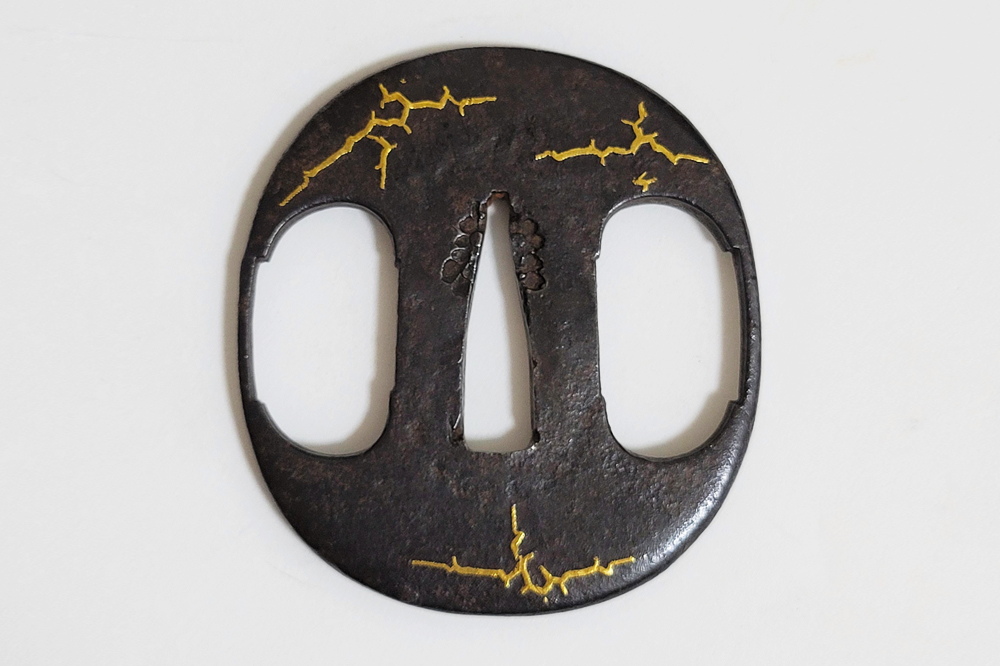
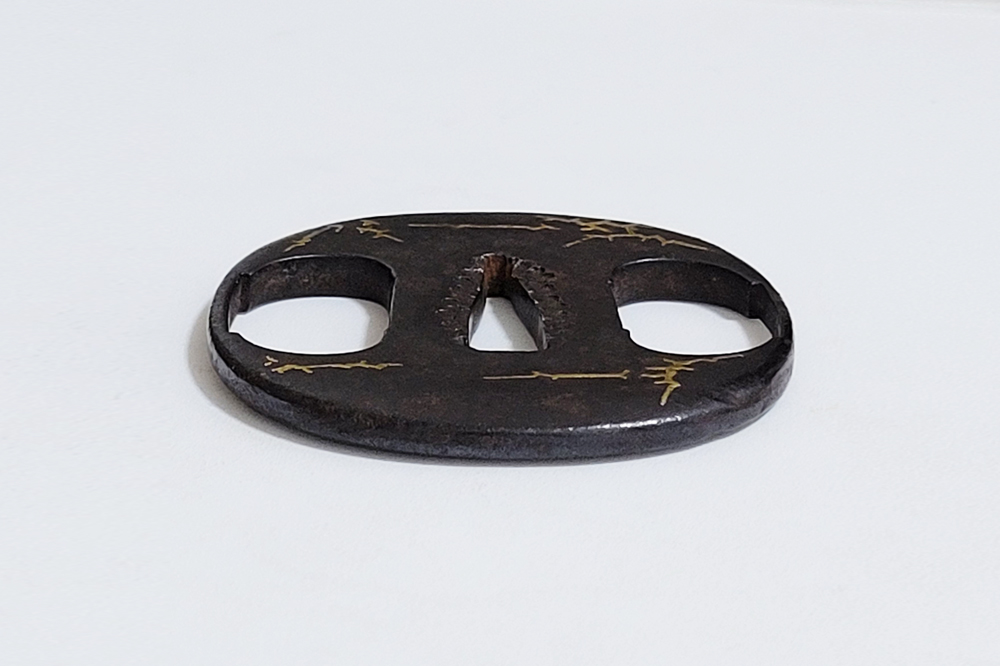
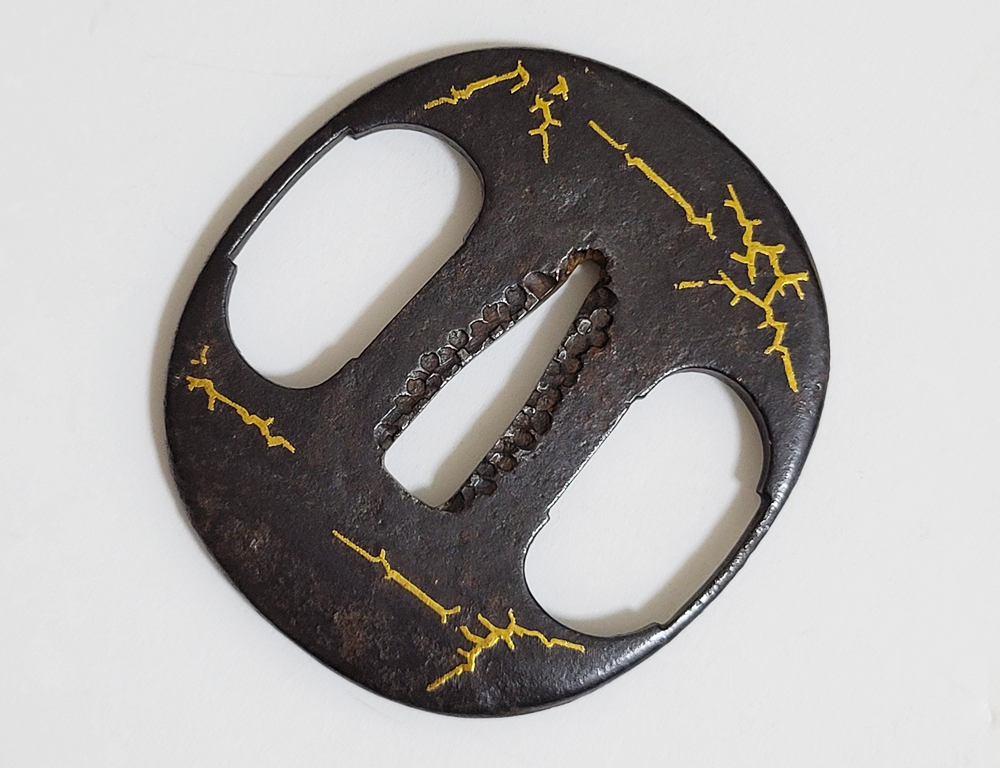
Machine translation of the shop's Japanese ·
Machine translation from the shop's Japanese · may contain errors ·
Certifies a genuine fitting worth preserving: a correct signature, or, if unsigned, an identifiable era and school, with recognized artistic and craft value.
The NBTHK (Nihon Bijutsu Tōken Hozon Kyōkai, the Society for the Preservation of Japanese Art Swords) is a public-interest incorporated foundation founded in 1948 and supervised by Japan’s Agency for Cultural Affairs (Bunkachō); it is based at the Japanese Sword Museum in Tokyo. Its expert panels physically examine each submitted work (shinsa) and issue a certificate (kanteishō) ranking it by artistic and historical merit. NBTHK papers are the most widely recognized standard of authentication for Japanese swords and fittings.
NBTHK official siteReturns within 7 days of the item's arrival. Returns are not possible if (1) the item has been altered, or (2) for overseas transactions.
¥120,000