 NihontoWatchNihontoWatch
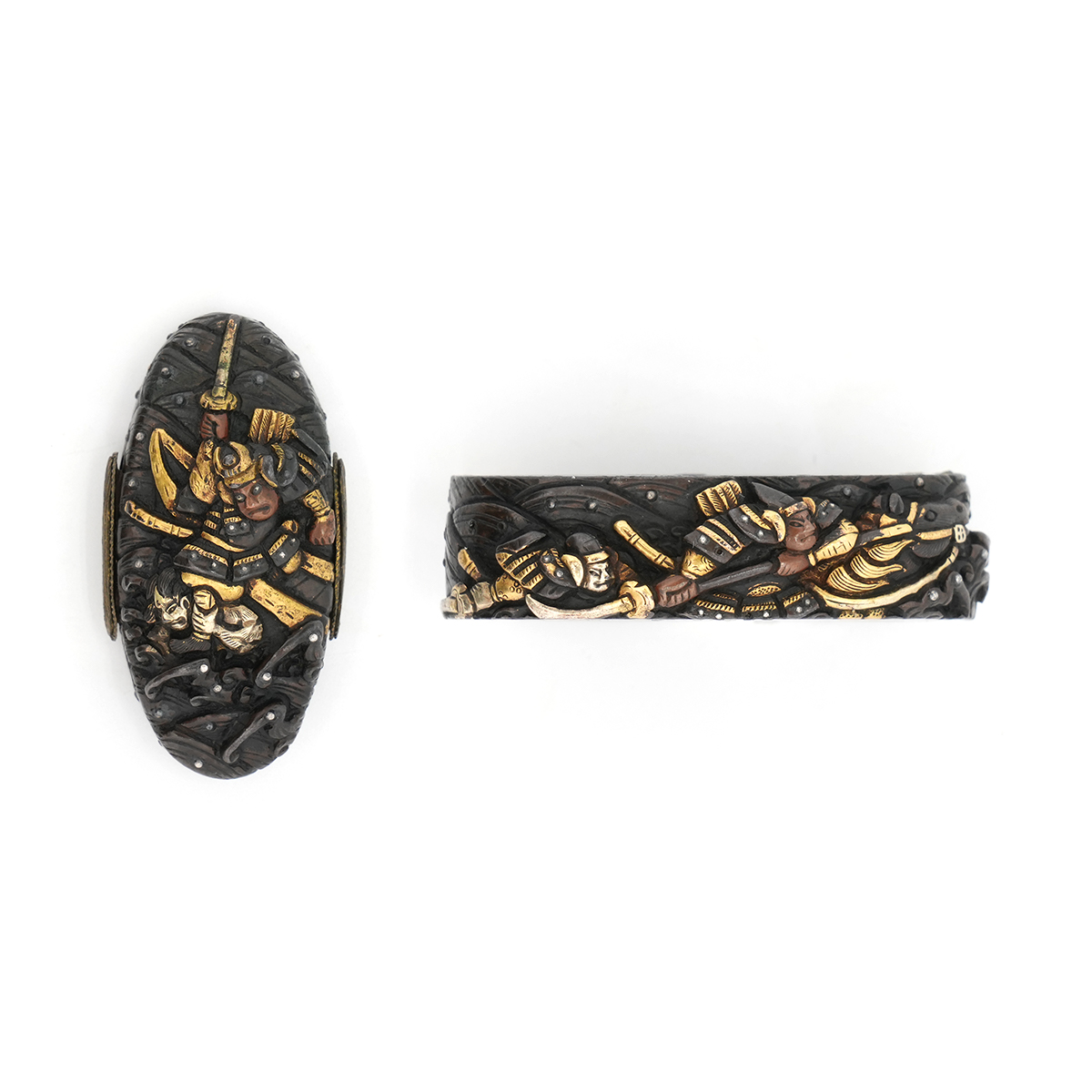
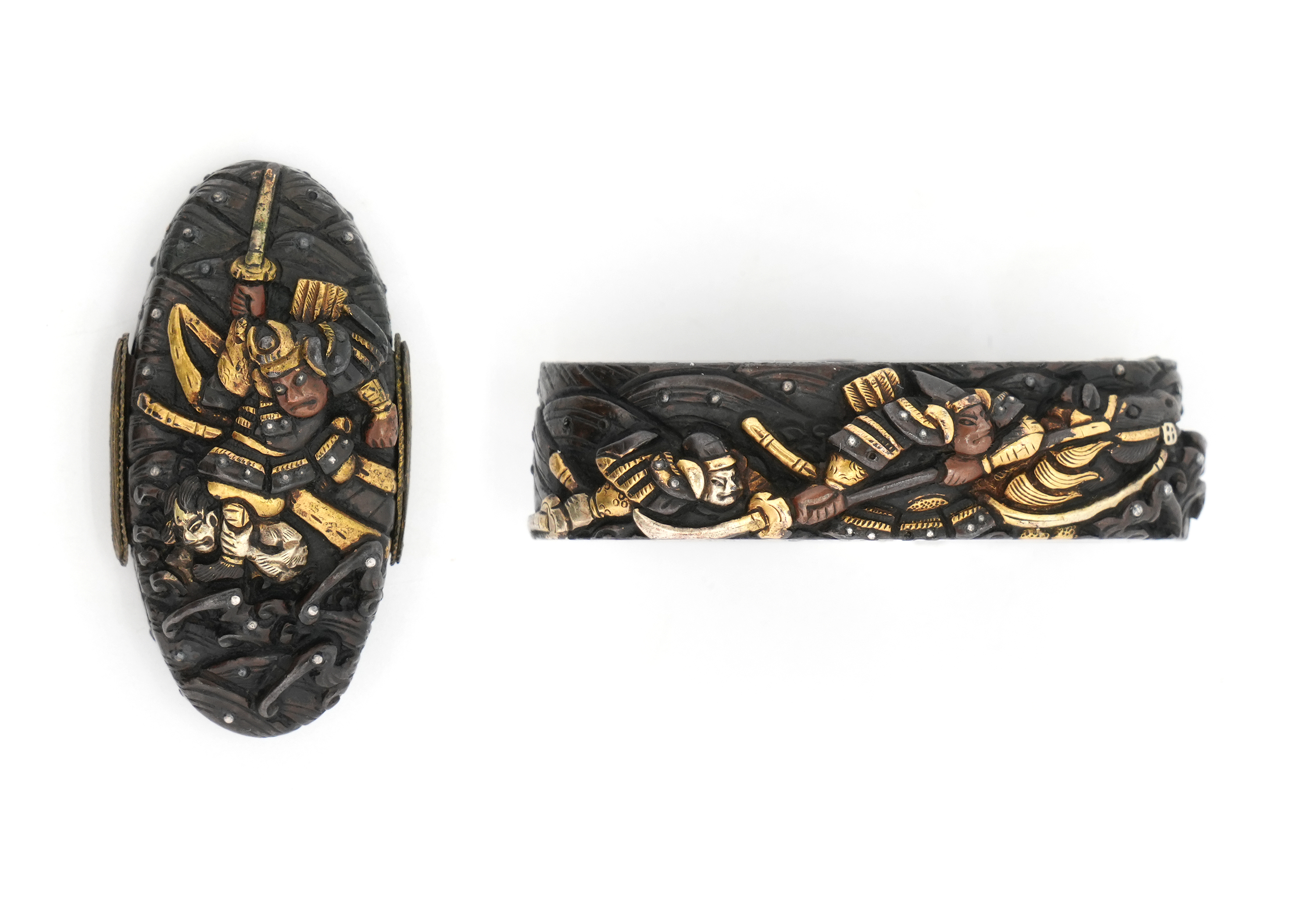
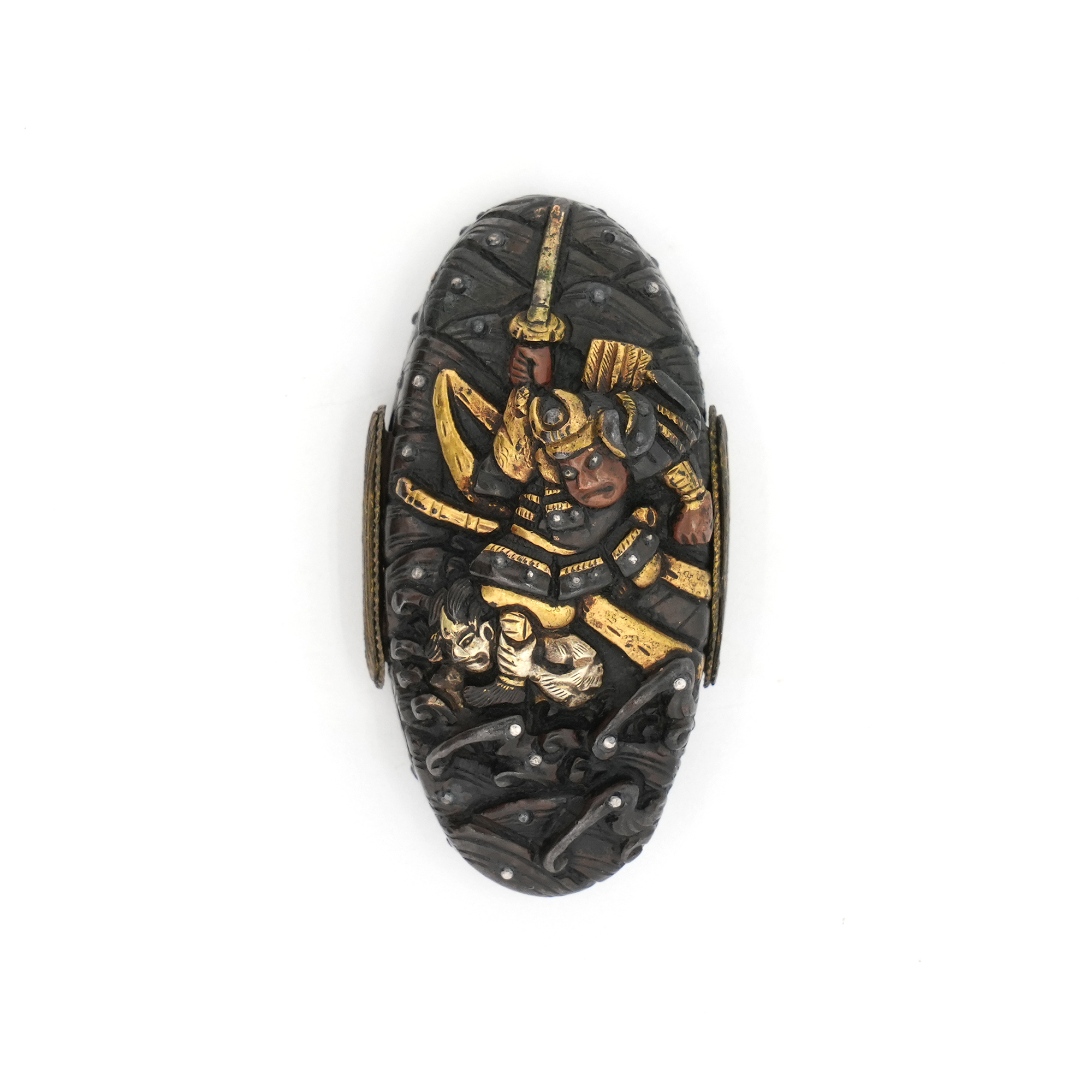
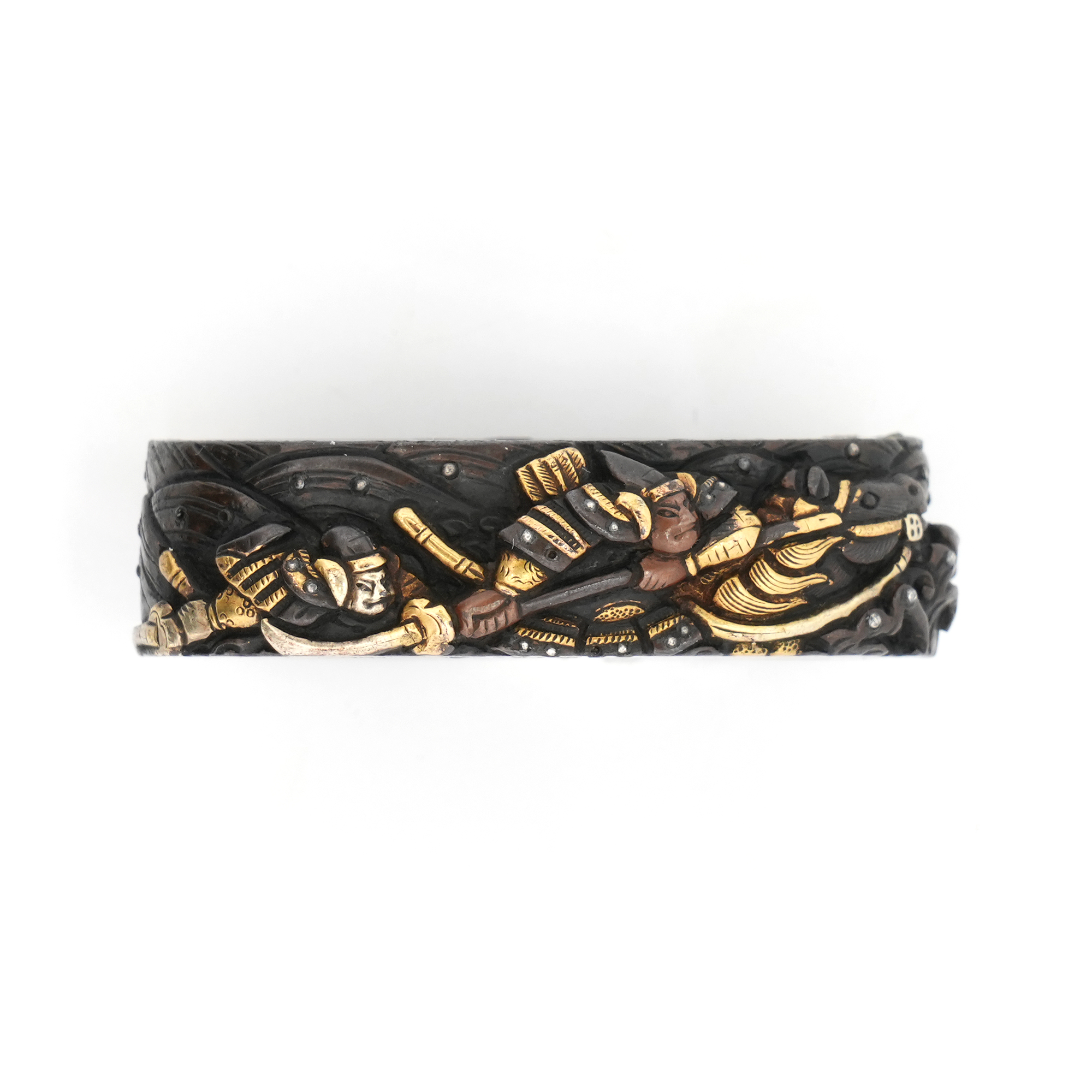
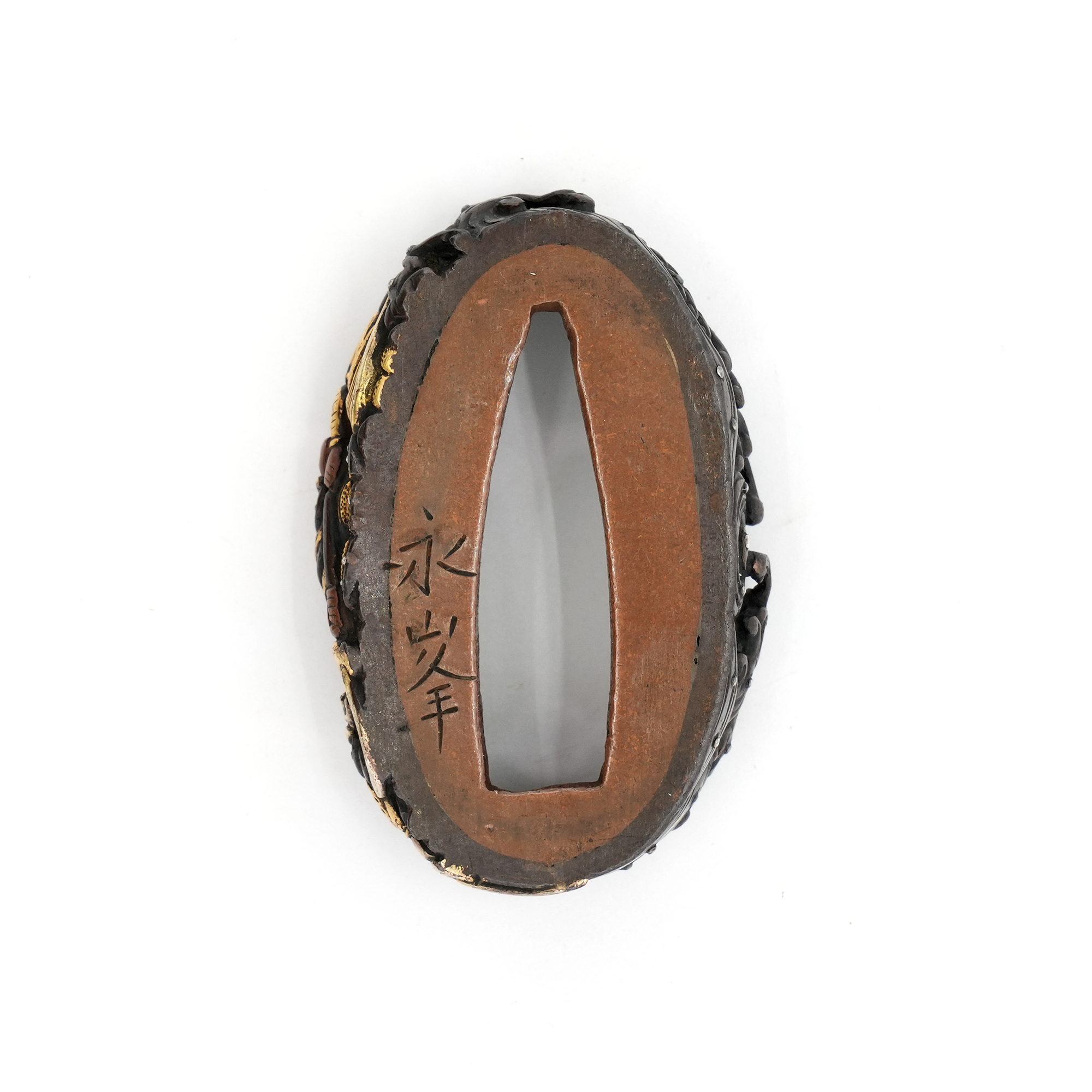
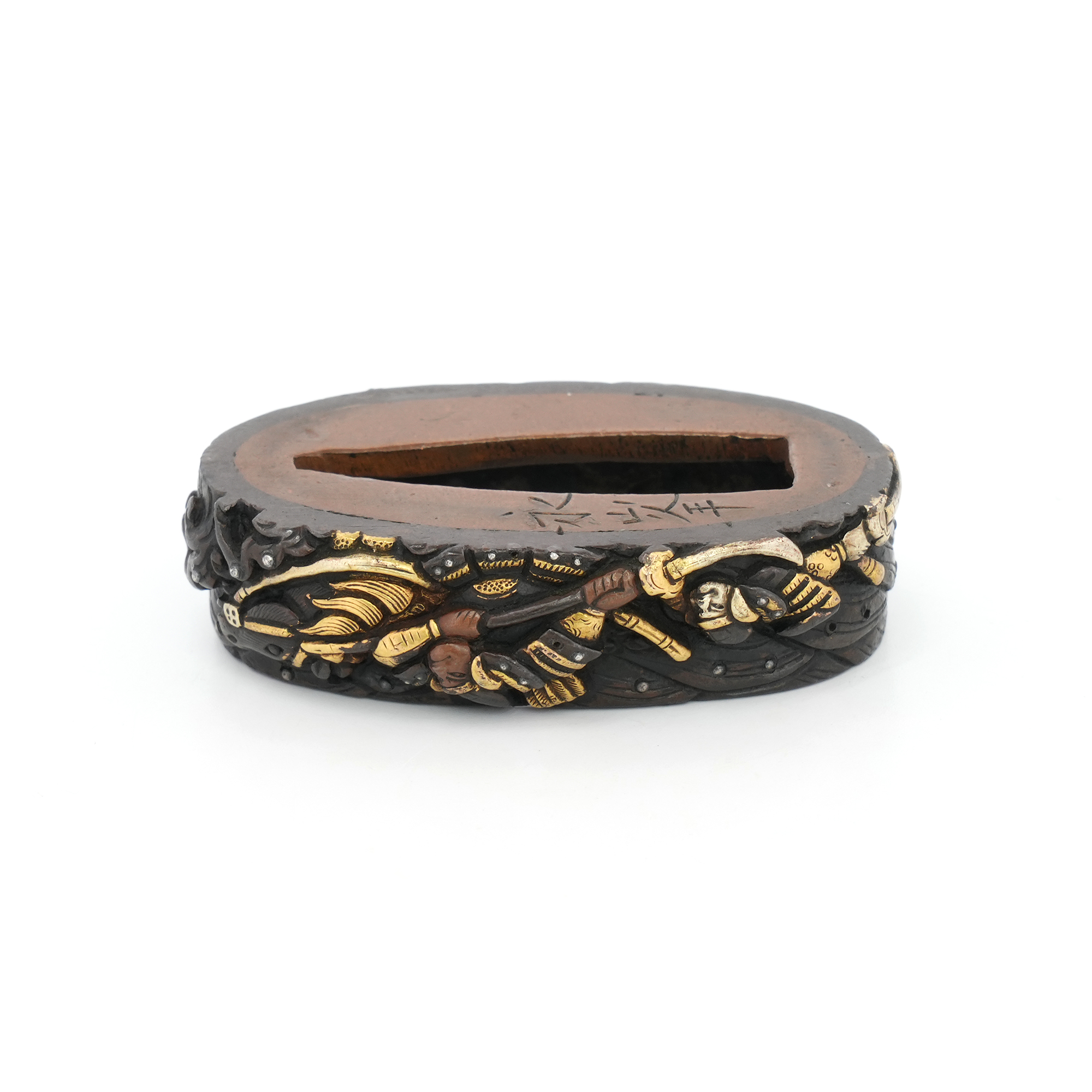
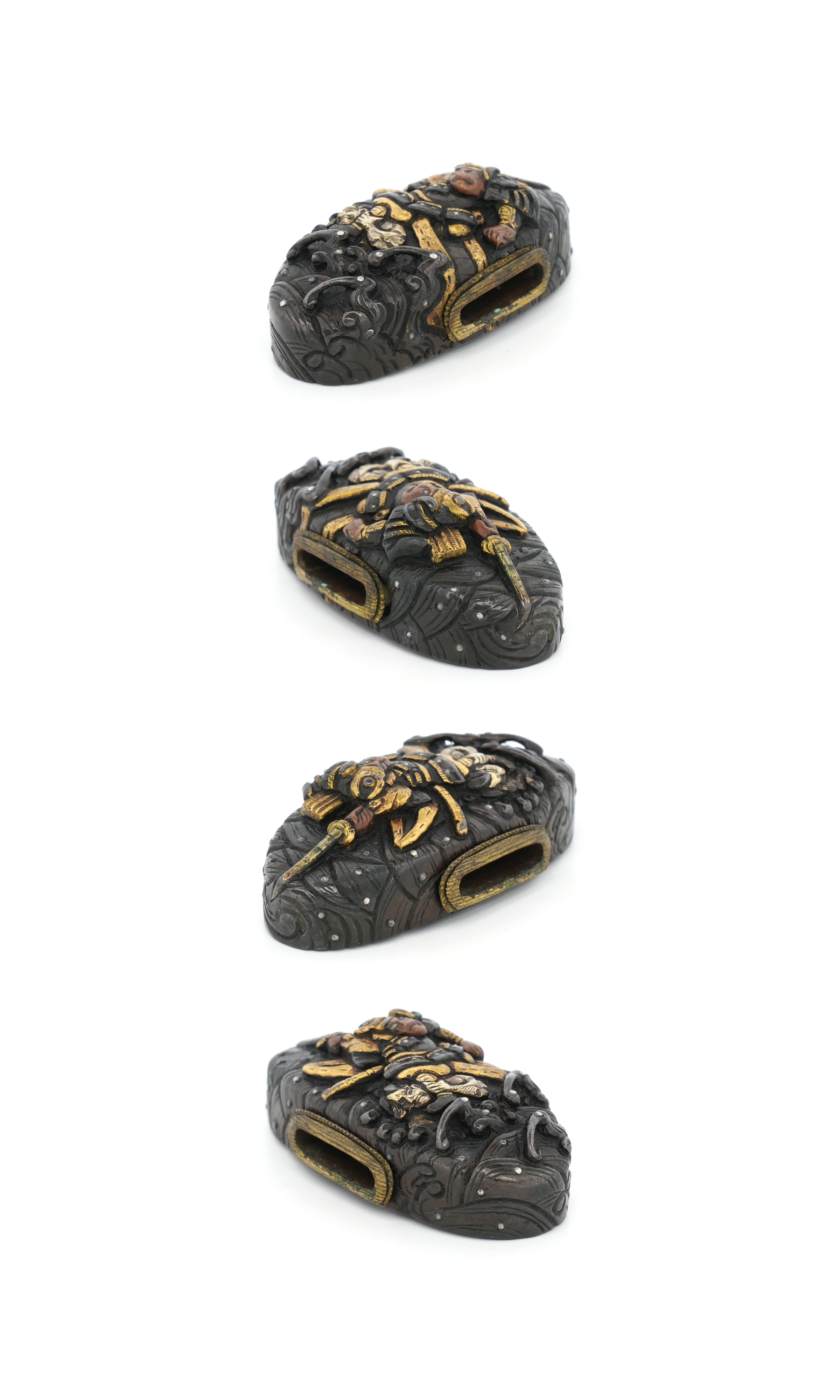
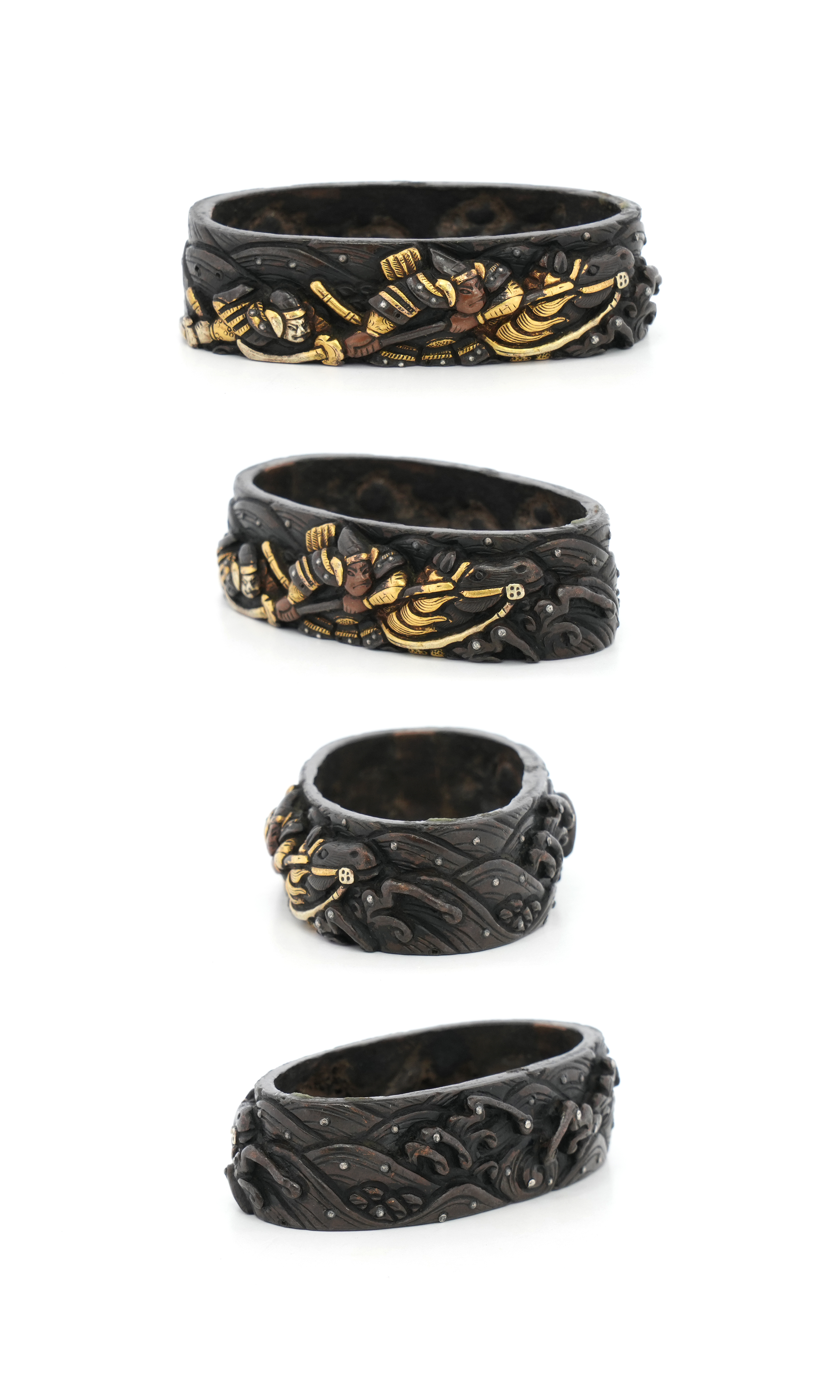
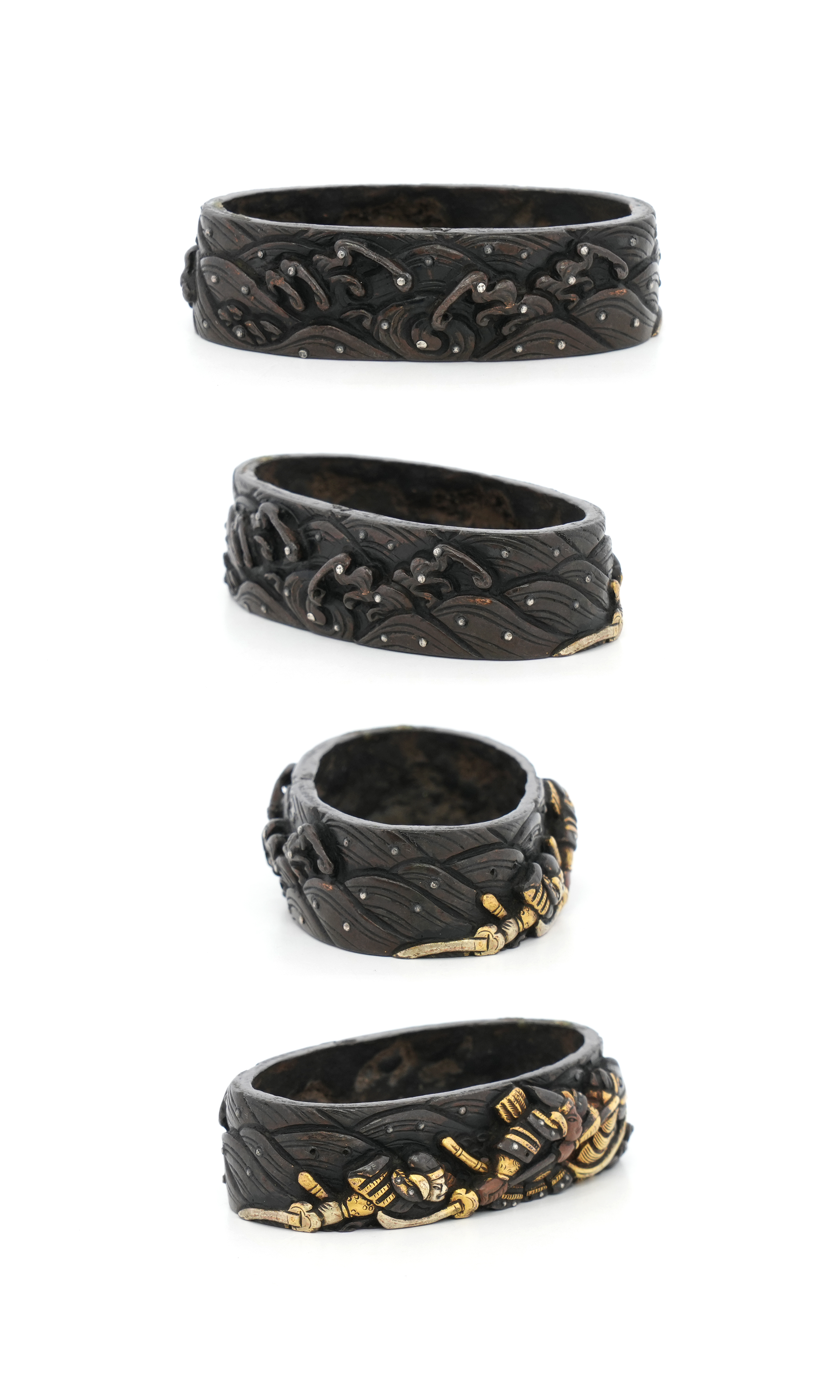
Nagamine was a sword fitting metalworker in Kyoto who was active around the Shotoku and Kyoho eras. He used the place name Ayanokoji to call himself the Ayanokoji family, and some old records identify him as the Watanabe family. It is said that he lived in Tominokoji, Oshinokoji, and Ayanokoji, and works can be seen with the added place of residence "Karaku-ju," and rarely "Kaji-ju." There is a theory that his origins lie in the Mino Goto school, and he is a skilled craftsman known for his work in finely depicting warriors and historical figures. While there is a tradition that the first and second generations of father and son both used the name Nagamine, there is also a theory that they are the same person based on the style of the works, and the differences in the several known types of kao are also thought to be changes due to the production period. The character for the mei is "Mine," and it is not written as "峰." Although there are not many extant works, the "Yoshiie Sekigan no Ran-zu Tsuba" introduced in an exhibition at the Osaka Museum of History also shows his characteristic style of condensing the core of a story into a limited surface and depicting everything from armor to the gestures of the figures. This piece is also a work where one can appreciate Nagamine's figure expression, as he uses a deep black ground as a stage to carve multiple warriors in takabori and shows the tense moment of a battle while using different iroe. The subject is the "Noto-no-kami Saigo" told in the 11th volume of the Heike Monogatari. At Dan-no-ura, as the defeat of the Heike became imminent, Noto-no-kami Taira no Noritsune approached Minamoto no Yoshitsune's ship to strike him down, but Yoshitsune escaped by leaping from ship to ship in the hassotobi, and eventually, Noritsune threw away his weapons and helmet to wait for the fierce warriors of the Genji side. It is said that Aki Taro Sanemitsu of Tosa Province boarded the ship accompanied by his younger brother Jiro and his retainers, and Noritsune first kicked the retainers into the sea, then grabbed Sanemitsu and Jiro under his left and right arms and threw himself into the sea with them. This spectacular scene, in which the Heike's greatest fierce warrior maintained his martial prowess until the very end, has been taken up in warrior paintings and sword fittings as a particularly dramatic subject among the Genpei Kassen-zu. On the fuchi-gashira, a warrior in armor, believed to be Taira no Noritsune, wielding a tachi at the prow of a ship is placed prominently, and at his feet, a silver-coloured warrior attempting to grapple from the sea is depicted, unfolding the moment when power clashes between the ship and the waves across the entire curved surface. On the fuchi, a warrior in armor wielding a naginata in the waves and a foot soldier attendant holding a tachi are depicted, a composition that evokes the Genji warriors closing in on Noritsune. While reconstructing the figures and movements of the original story onto the limited surface of the sword fittings, it is designed so that one can follow the story from the attack to the final grappling by moving one's gaze from the fuchi to the kashira. Deep black shakudo is used for the ground, and gold iroe is applied to the ship and Noritsune's armor on the kashira, and to key points of the armor and weapons on the fuchi, making the figures of the warriors stand out vividly from the dark ground. The face and hands of the warrior believed to be Noritsune are expressed in suaka, and silver is inserted into the eyes to create a sharp gaze, while a bright silver tone is used for the figures in the sea to highlight their forms as they grapple while wet from the waves. The composition, which uses the colours of gold, silver, suaka, and shakudo differently according to the position and role of the figures, is skillful, and one can enjoy the brilliance of the battle scene from the front, and the thickness of the takabori and the layering of the iroe from the side. The waves spreading across both the fuchi and kashira are carved with fine chisels on the undulating water surface, and by scattering splashes with silver zogan on top, the force of the rough waves shaking the ship and crashing against the warriors' bodies is expressed. Especially on the kashira, the upward movement of Noritsune about to swing down his tachi and the downward movement of the figure grappling at his feet are in opposition, and by surrounding them with silver splashes, a strong sense of tension is created on the small curved surface. On the fuchi, the long arc of the naginata, the direction in which the warrior is moving, and the tachi held by the attendant are combined to make full use of the horizontally long surface. The fuchi has sufficient dimensions at 39.3 millimeters in height, and the calm blackness of the shakudo ground, the takabori that expresses the figures in thick relief, the abundant iroe, and the silver zogan of the wave splashes unite to show a solid presence even when mounted on a koshirae. In addition to being a signed work by Nagamine, of which there are few extant works, the content is substantial, depicting the spectacular final moments of Taira no Noritsune continuously on the fuchi and kashira, and is rich in the pleasure of deciphering everything from the facial expressions of the figures to the armor, weapons, and the movement of the waves. It is a set that combines brilliance and power, which I would like to recommend not only to those who like the Genpei Kassen-zu and warrior pictures, but also to those who want to collect figure carvings rich in narrative by Kyoto metalworkers of the mid-Edo period.
Tetsugendo Ayanokoji Nagamine綾小路永峯
Offered by Toushin
We couldn’t find current papers for this piece. Ask the dealer whether it has been, or can be, submitted to shinsa. — Hoshi

Edo
Kyoto
Signed
Machine translation of the shop's Japanese ·
Machine translation from the shop's Japanese · may contain errors ·
Yamashiro
3 pieces on the market now
We could not find an authenticity certificate on the seller’s listing. Japanese swords and fittings are normally papered by the NBTHK (or the NTHK). Without one, the attribution is the seller’s own assessment and has not been independently verified — treat it with caution and ask the dealer about certification before buying.
As a rule we do not accept returns, except when we have sent a different item from the one ordered or when there is a significant discrepancy between the description and the item. If you wish to return an item, please contact us within 3 days of its arrival and then send it back.
¥330,000