- Ordering Number
- AS24141
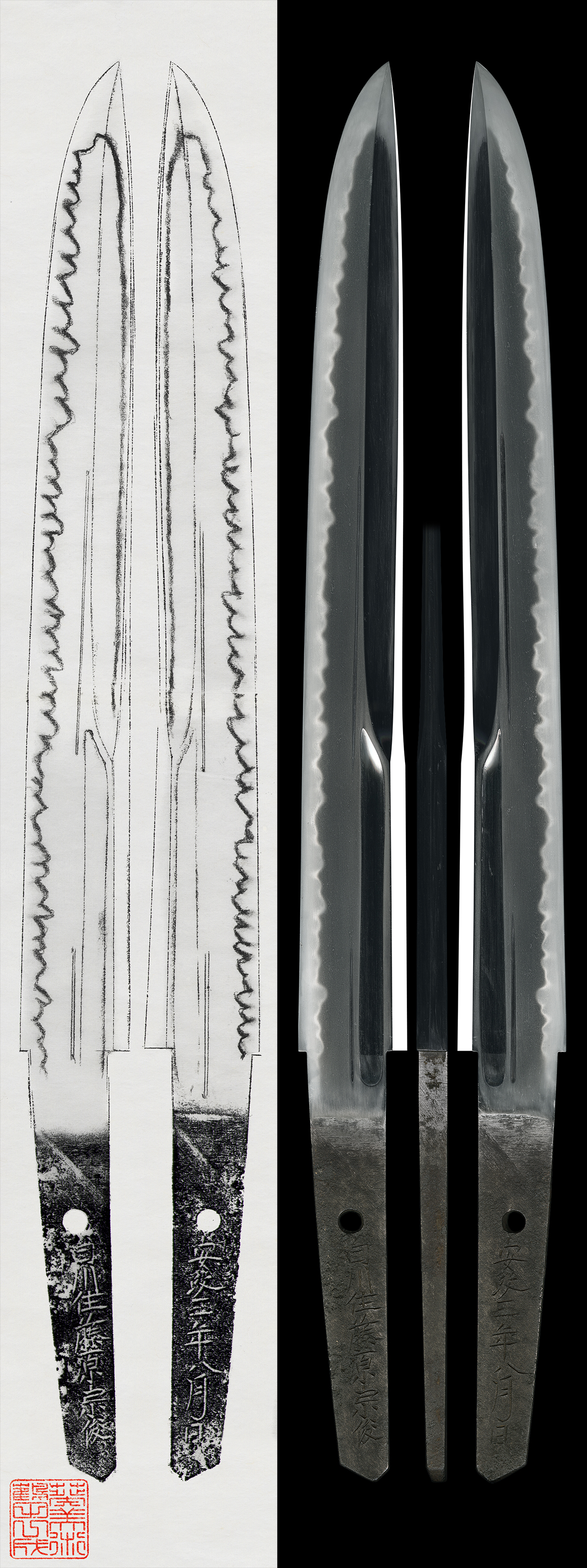
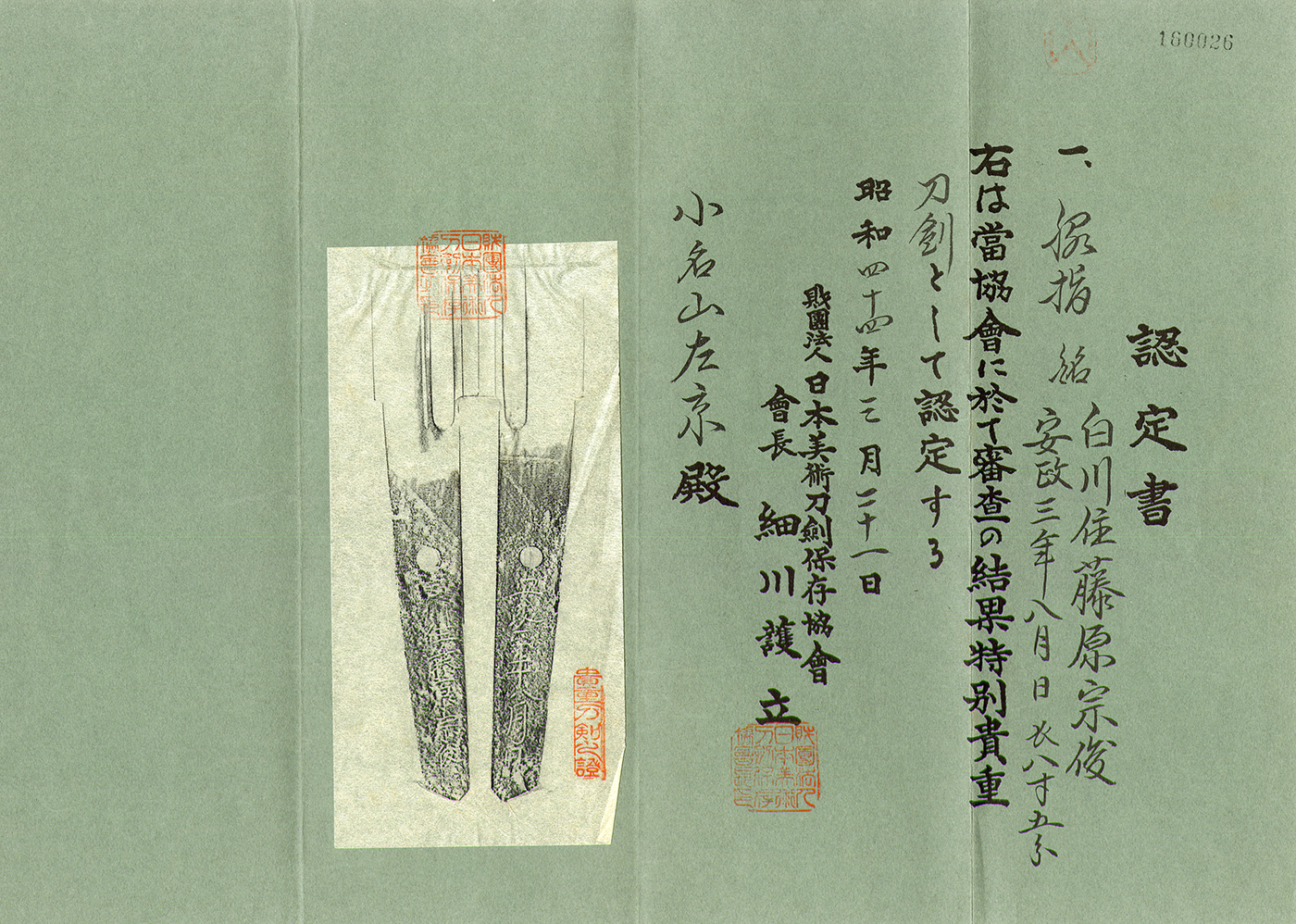
- Inscription
- Shirakawa Ju Fujiwara Munetoshi (Koyama)
A day in the eighth month of Ansei 3
- Habaki
- gold plated single habaki
- Blade Length
- 25.6cm (10.08in)
- Curvature
- 0.1cm (0.04in)
- Mekugi-ana
- 1
- Motohaba
- 2.55cm (1.00in)
- Kasane
- 0.77cm (0.30in)
- Weight
- 220g
- Era
- Edo period, August 1856.
- Koshirae
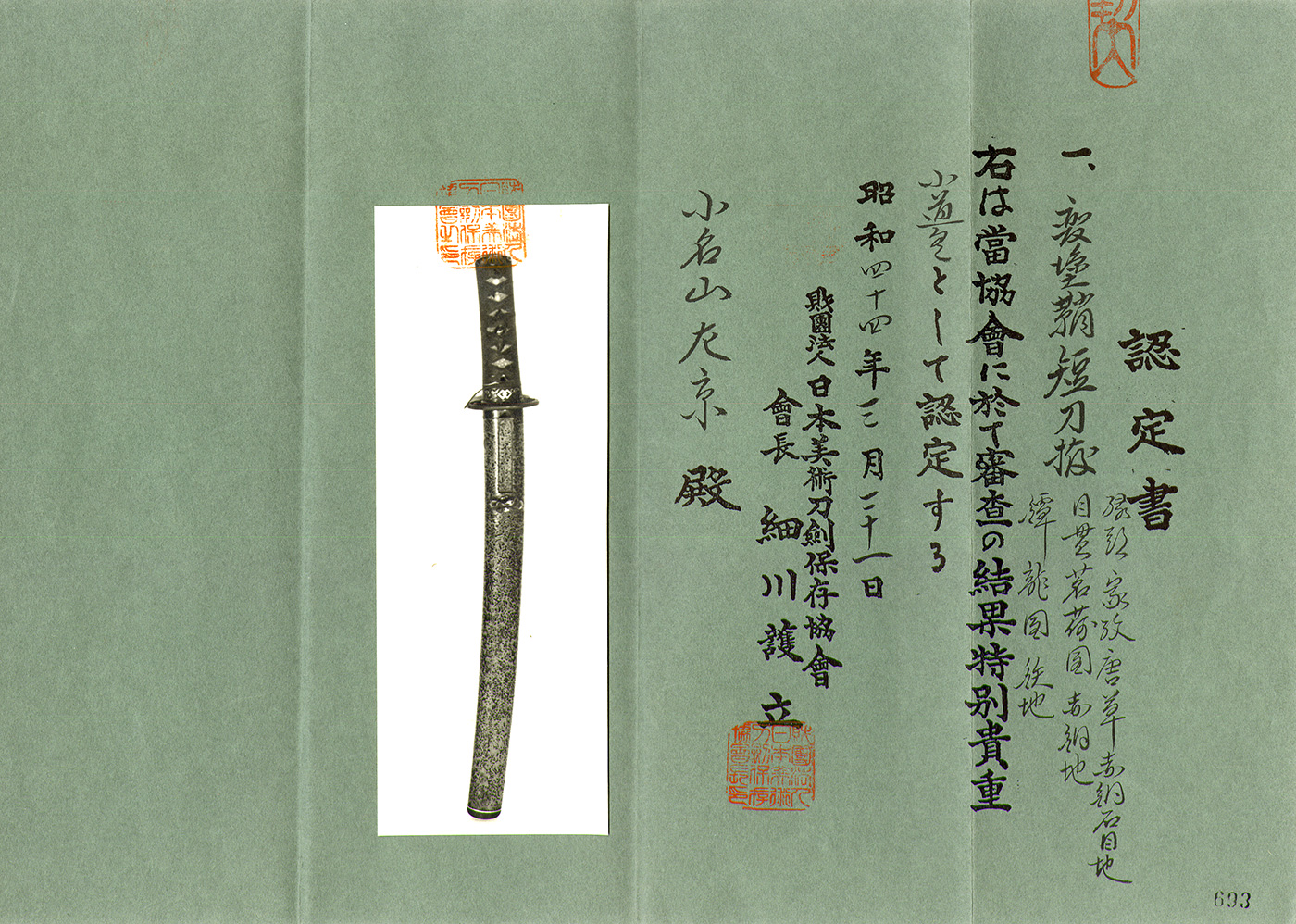
- NBTHK Tokubetsu Kicho Tosogu (*The Tsuba differs from the one listed on the certificate.)
- Tsuba
- Oval-shaped brass tsuba featuring openwork carvings of a pine tree and a bird of prey.
- Fuchikashira
- Shakudo fittings carved with family crests (kamon) and ivy leaves, decorated with gold iroe.
- Saya (Scabbard)
- Brown and black kawari-nuri saya with a carved red lacquer (tsuishu) style finish.
- Menuki
- Carved with myoga (Japanese ginger) motifs.
- Kozuka
- Copper kozuka carved with a plum tree and a bird of prey.
- Kogai
- Copper kogai with shakudo nanako decoration, featuring a feather motif.
- Kojiri
- Shakudo kojiri decorated with pine needle motifs in gold, silver, and copper.
- Koshirae
- NBTHK Tokubetsu Kicho Tosogu Certificate.
- AoiArt estimation paper
- Whole Oshigata.




 NihontoWatch