 NihontoWatchNihontoWatch
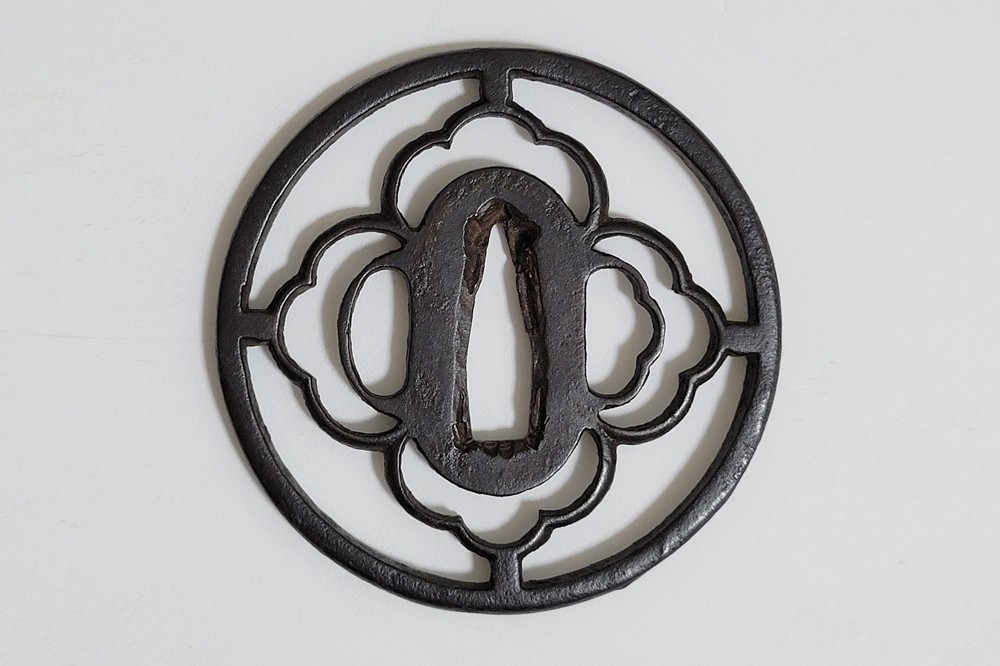
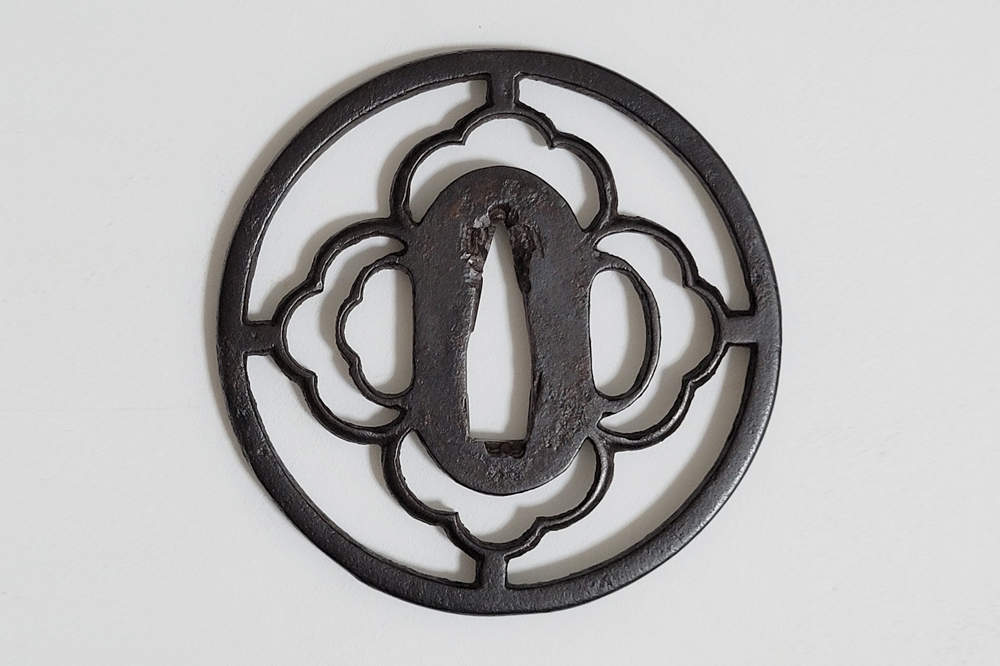
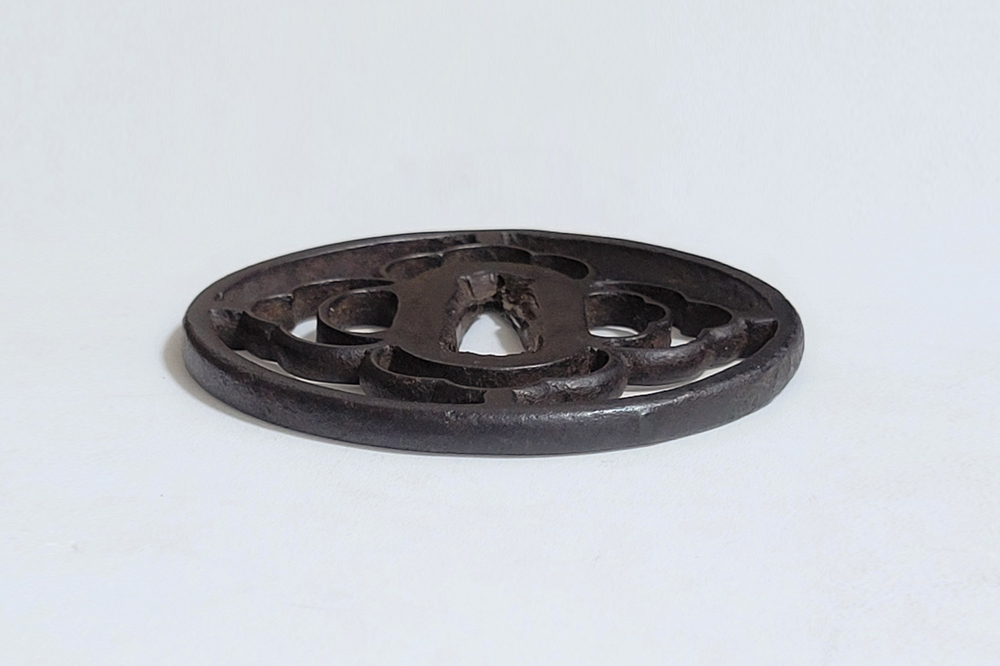
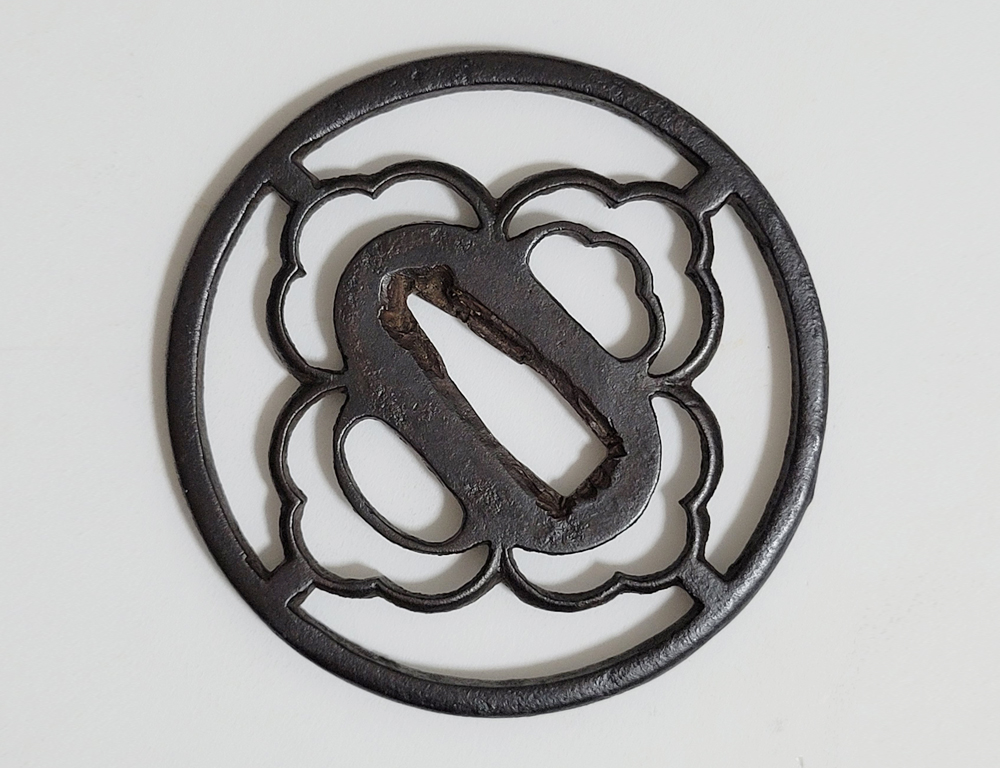
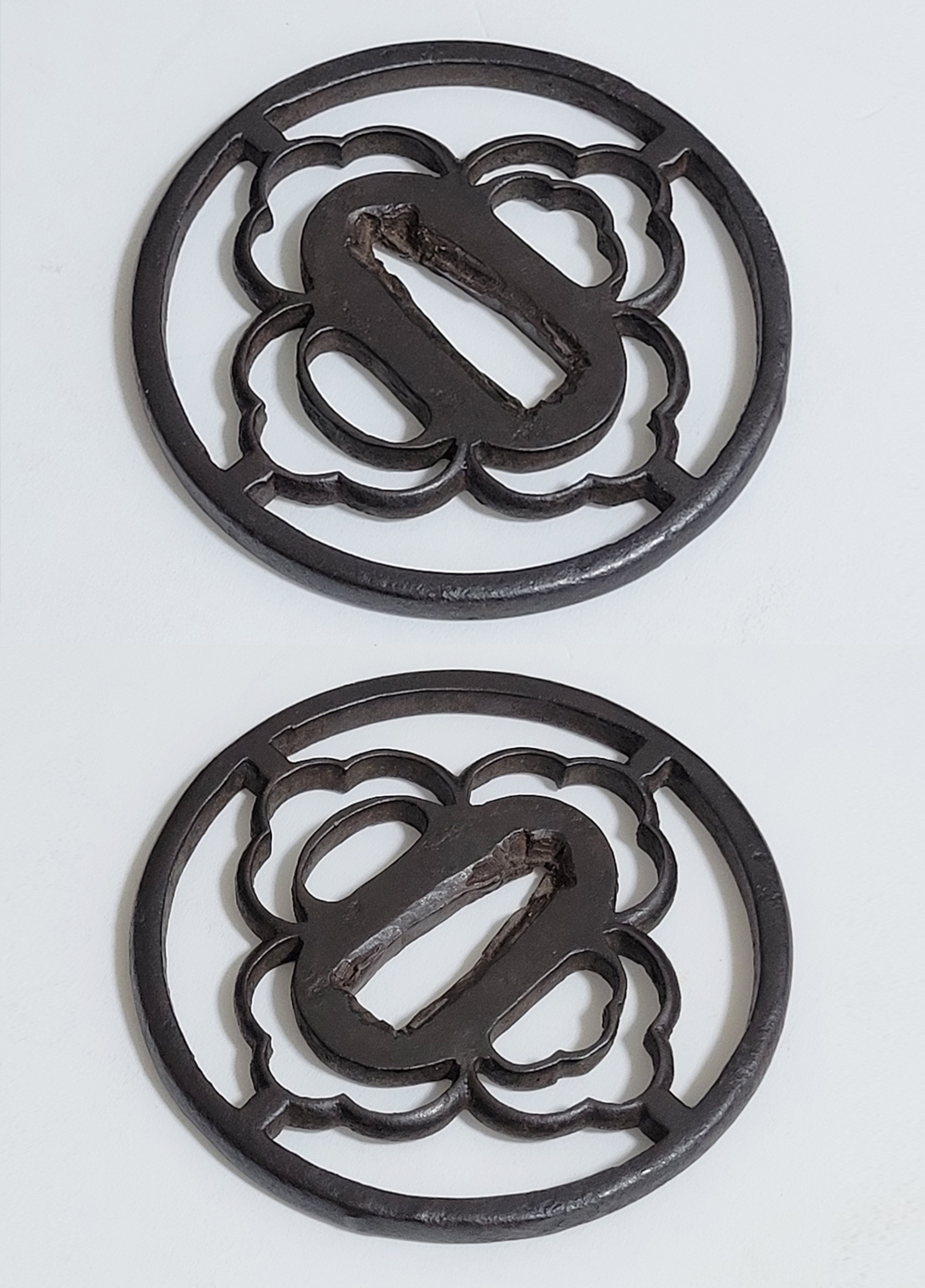
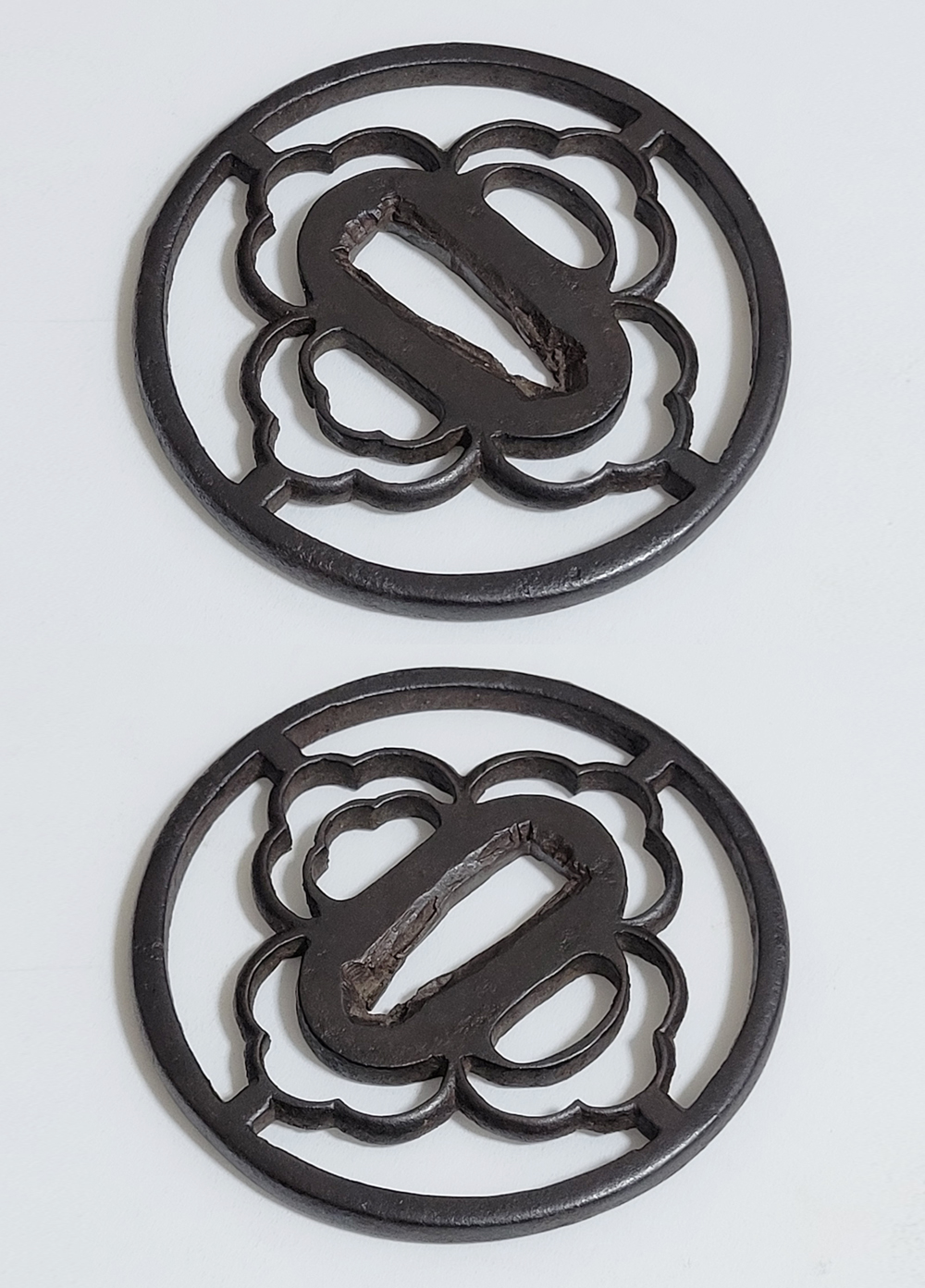
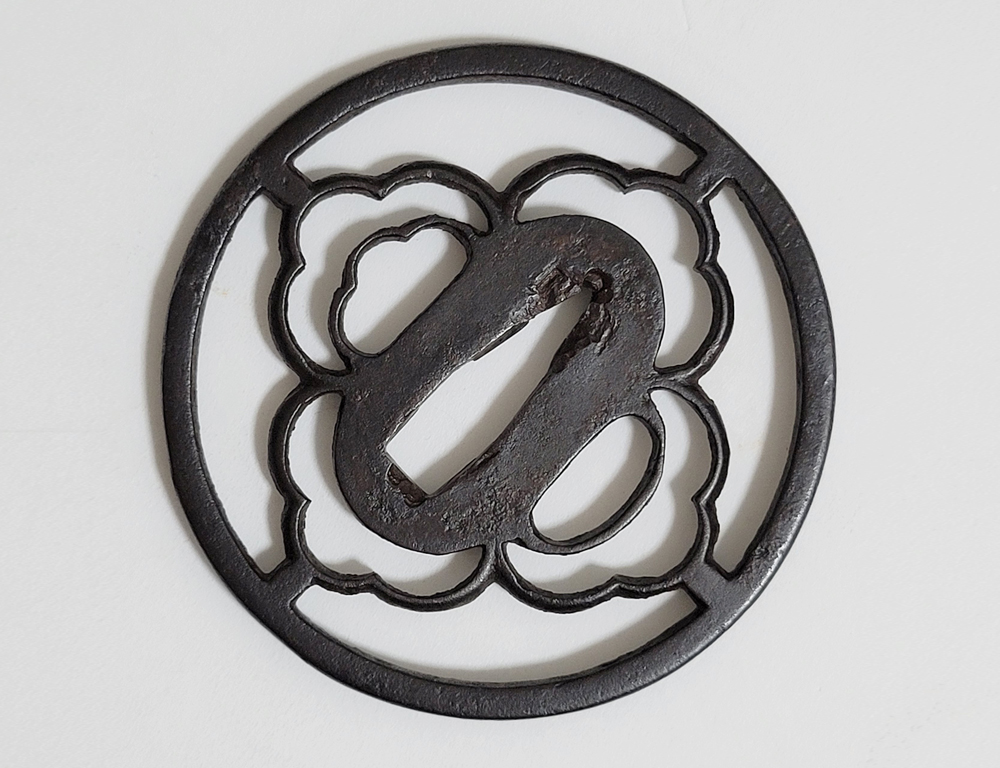
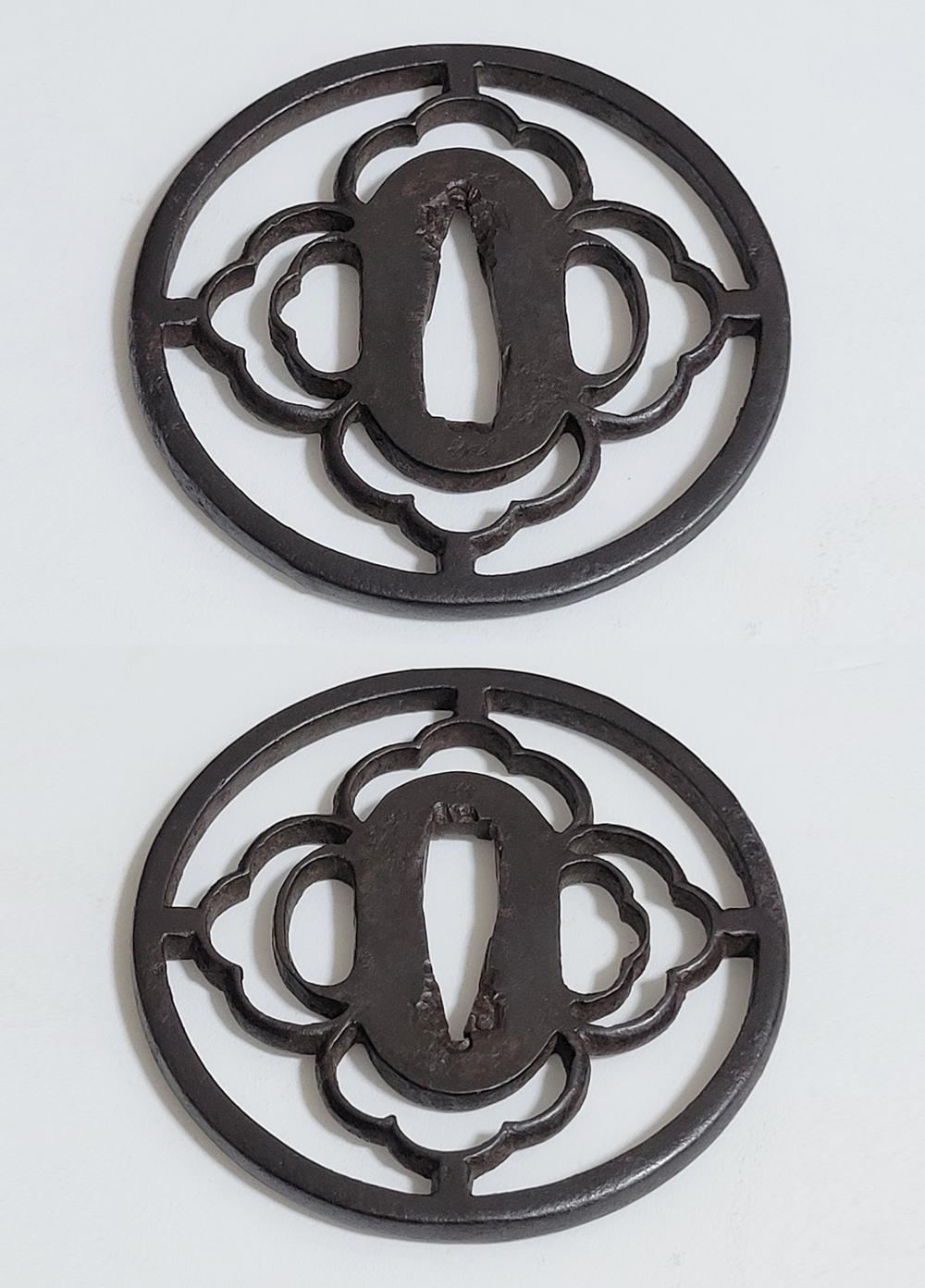
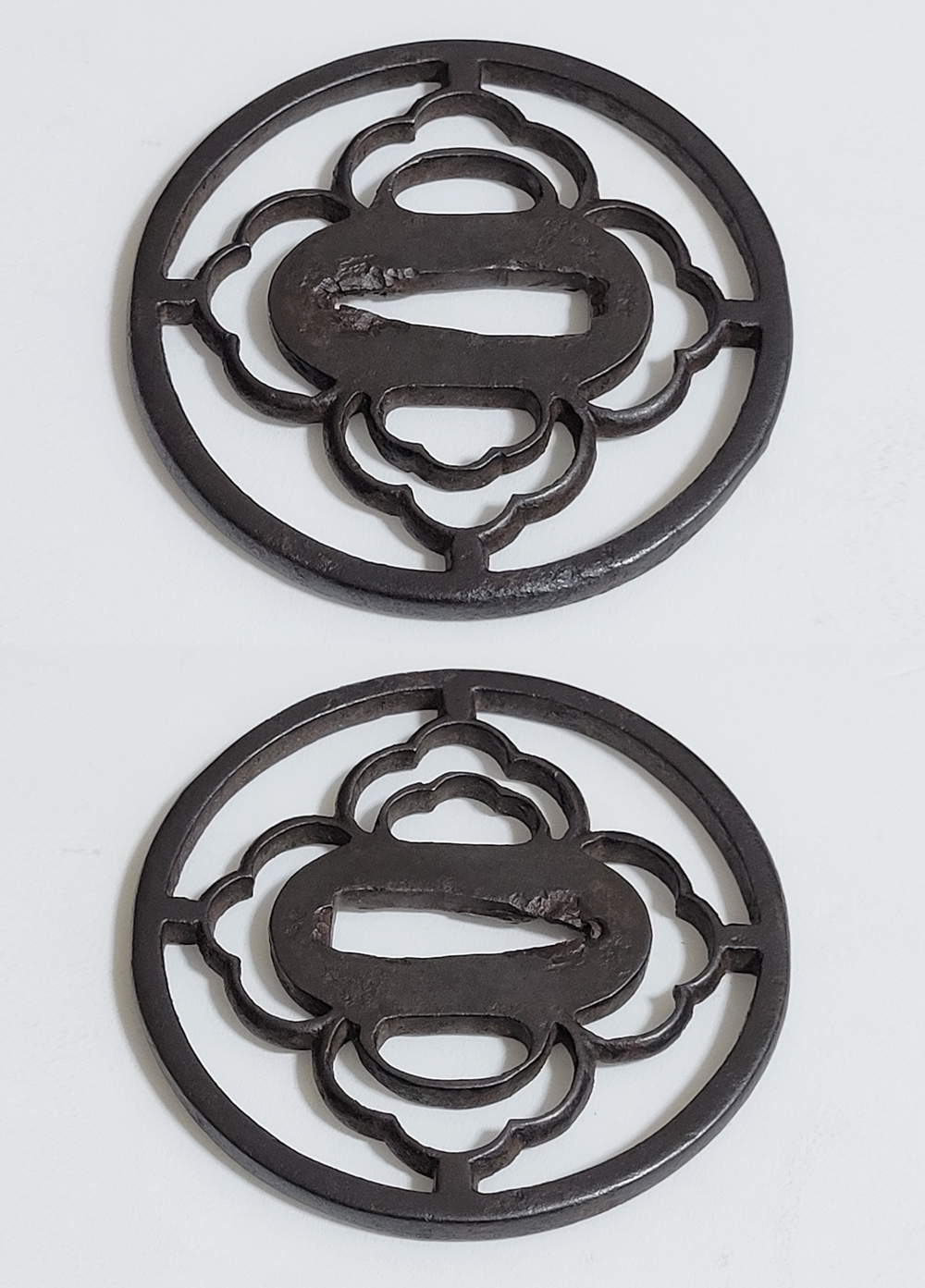
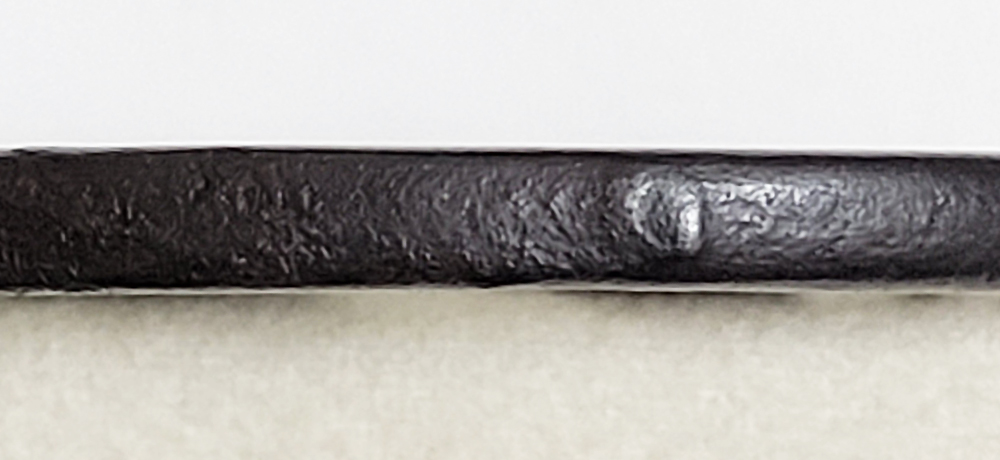
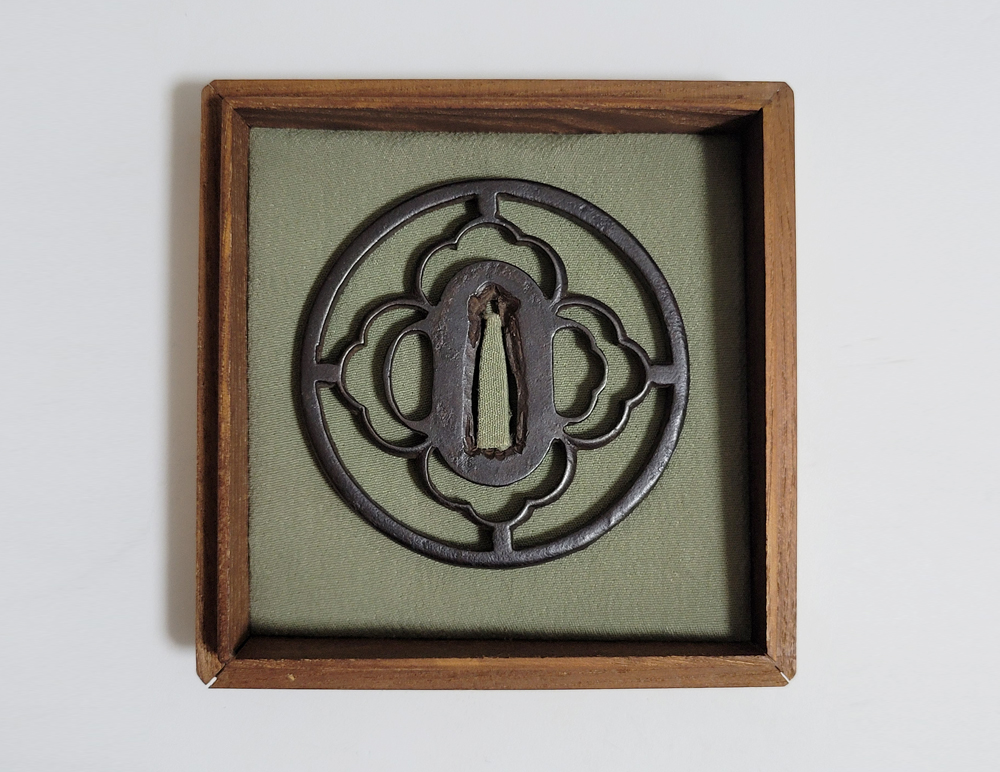
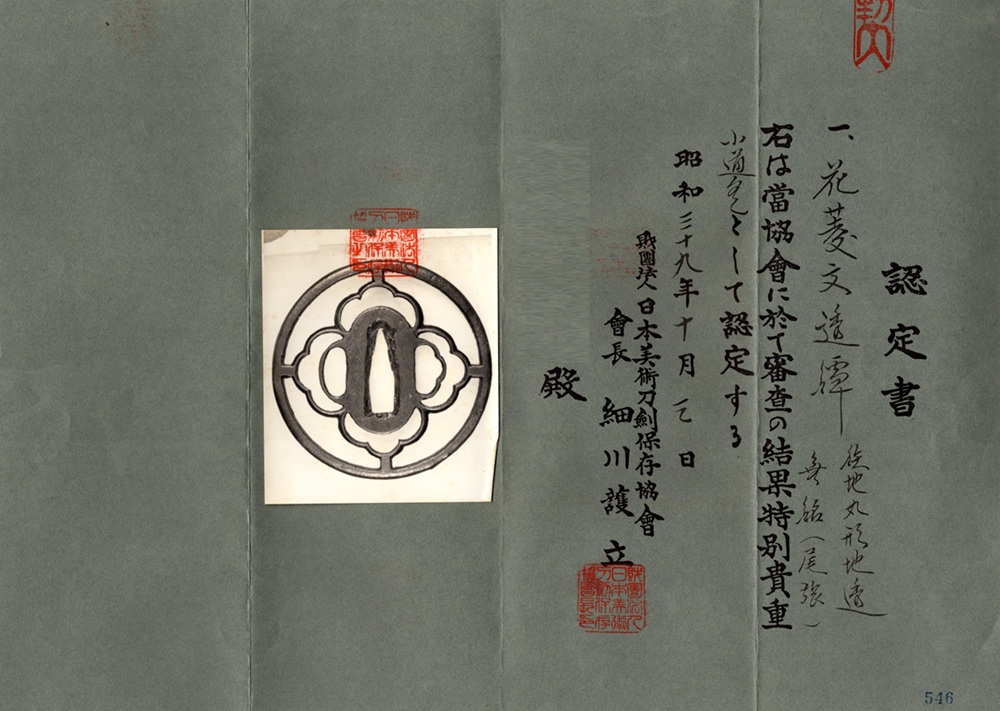
This work is an Owari tsuba featuring a hanabishi-mon design in geometric sukashibori. The hanabishi is a traditional pattern based on a lozenge shape combined with petals, which has been used for decorations and family crests since ancient times. It is a refined design where the petal-shaped hanabishi outline, formed by overlapping curves, surrounds the seppadai. The tightly forged tetsu-ji has become chū-hiku, and tekkotsu appear on the mimi. It is a tsuba with the sturdy and robust quality typical of Owari tsuba, where the thick and powerful sukashibori harmonizes with the soft curves of the hanabishi-mon. It comes with a Showa 39 (1964) Tokubetsu Kicho Kodogu ninteisho.
NihontoWatchOffered by Touken Matsumoto

Its only papers are older green Kichō papers, which the NBTHK largely disavows today. Ask the dealer whether it has passed current shinsa. — Hoshi

Machine translation of the shop's Japanese ·
Machine translation from the shop's Japanese · may contain errors ·
This work carries older NBTHK “Kichō”-era papers, which the NBTHK no longer issues and largely disavows today. To confirm the attribution, submission to an official Japanese examination body (such as the NBTHK or NTHK) for modern certification could be considered.
Returns within 7 days of the item's arrival. Returns are not possible if (1) the item has been altered, or (2) for overseas transactions.
¥50,000