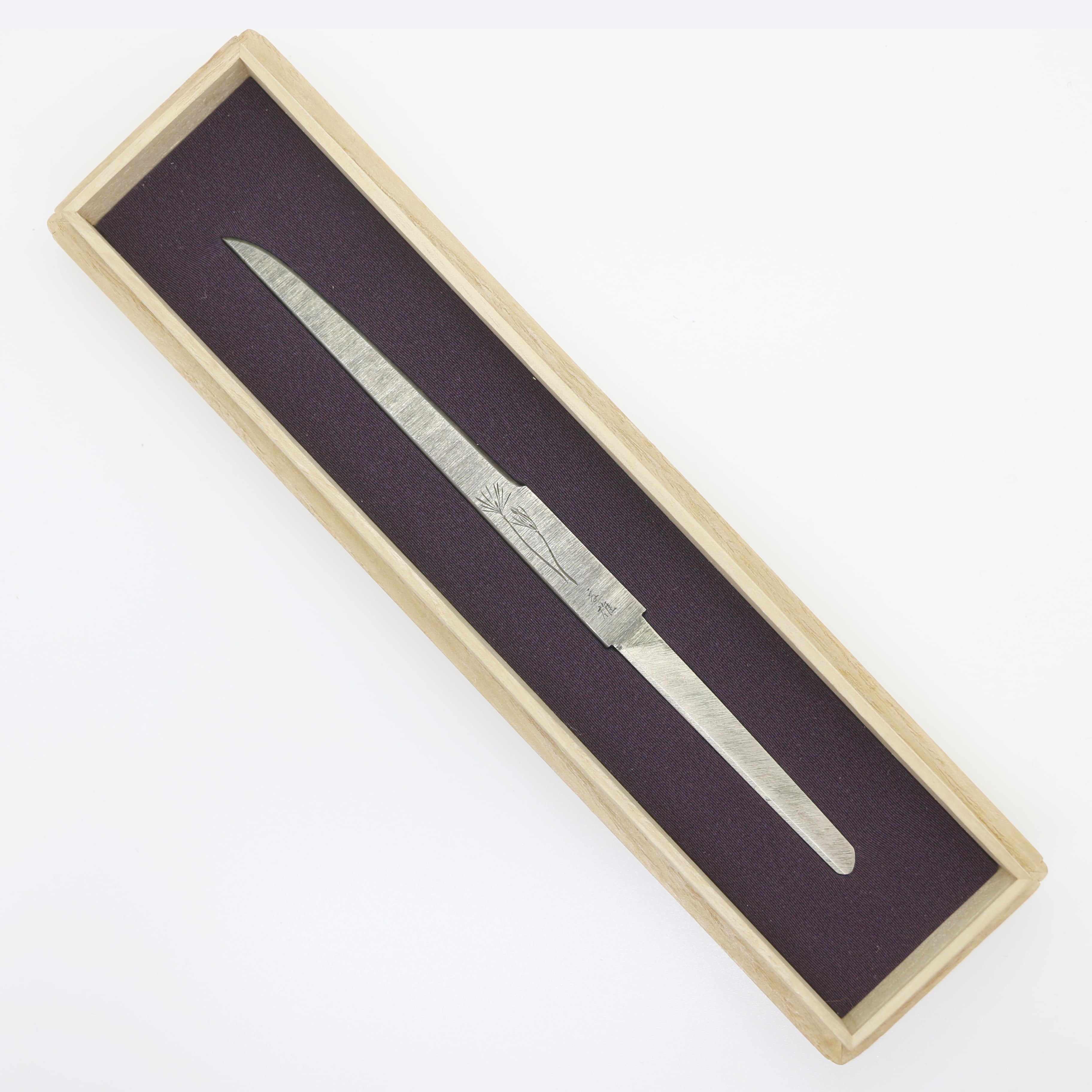
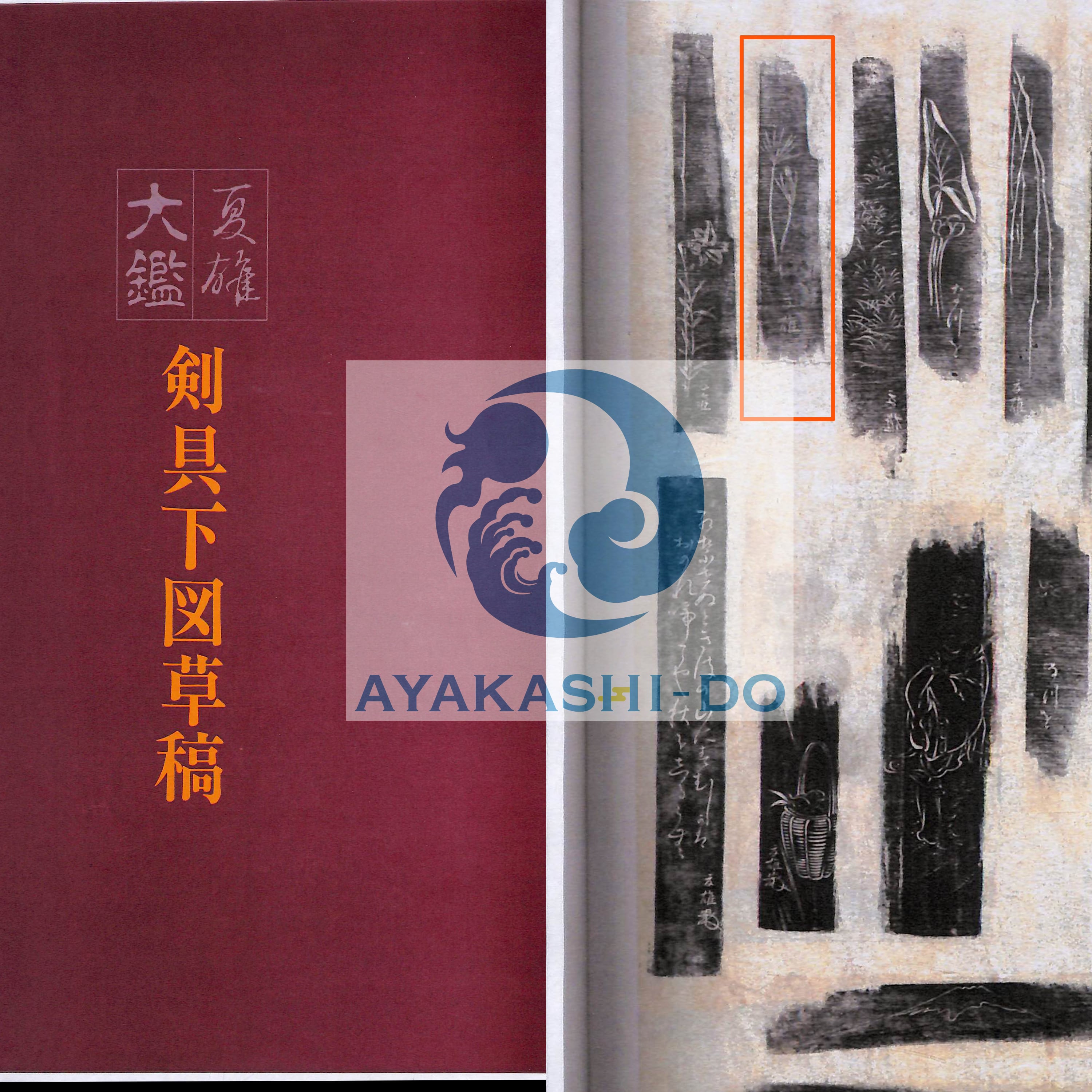
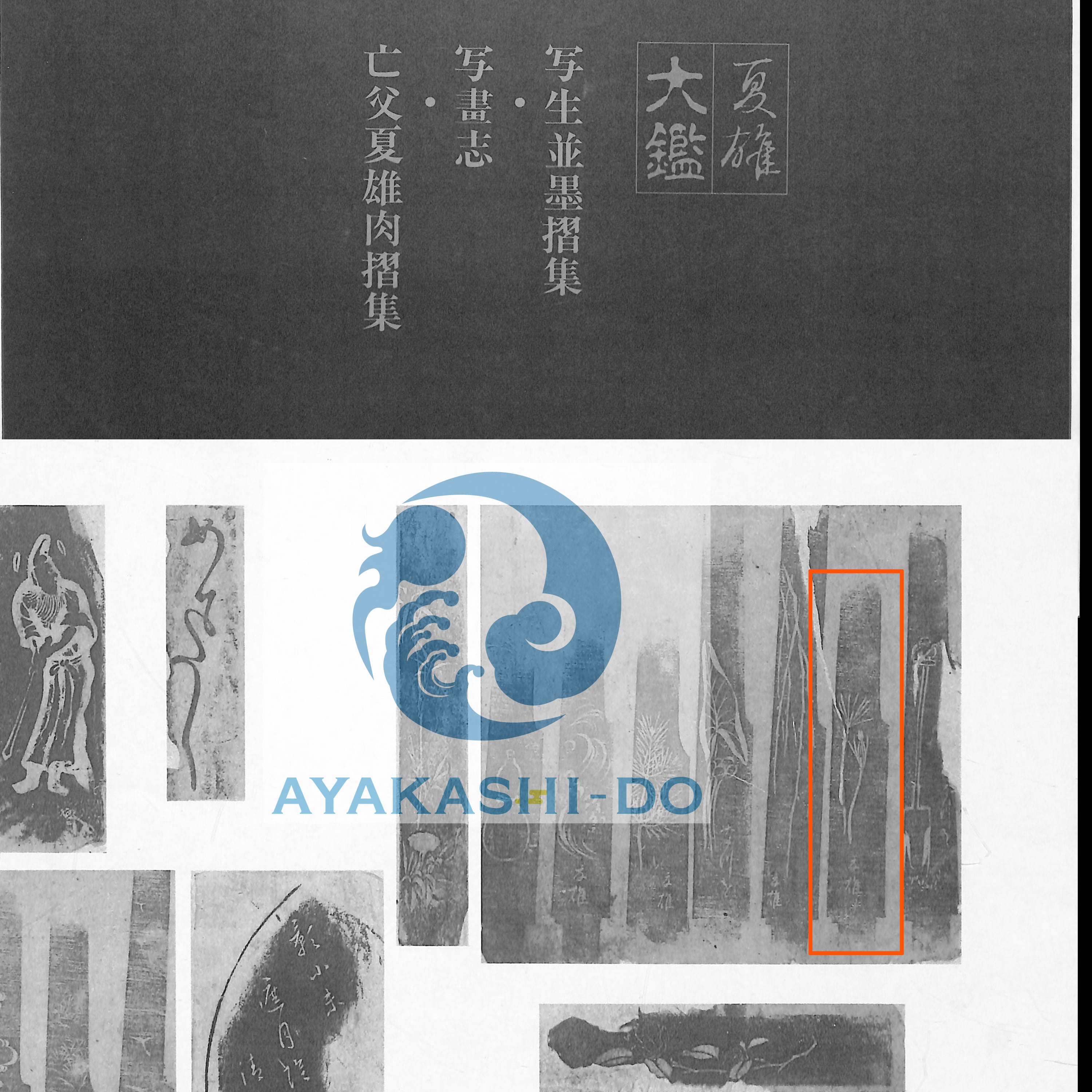
This is a silver kozuka (small knife) signed by Natsuo, featuring a dandelion motif. Kano Natsuo was a renowned metalworker active from the late Edo to Meiji period, known for his exquisite carving techniques. This piece is also listed in the 'Natsuo Taikan' (Compendium of Natsuo's Works).
 NihontoWatch
mei · Bunsei–Meiji (1828-1898)
Kano Natsuo
Bunsei–Meiji (1828-1898)
Signed
Tokuho
Kinko · Musashi · around 1828-1898
1 piece on the market now
Kano Natsuo (1828–1898) was born in Kyoto and adopted as a youth by the sword dealer Kano Jisuke. He began formal metalwork training at the age of twelve under Okumura Shohachi, and at fourteen advanced to study soft-metal techniques with Ikeda Koju of the Otsuki school, initially signing his work "Juro" before adopting the art name Natsuo. Concurrently he pursued a broad humanistic education: classical Chinese reading under Tanimori Tanematsu and painting in the Maruyama-Shijo tradition under Nakajima Raisho. This interdisciplinary grounding during his formative Kyoto years proved decisive, and he is universally acclaimed as the last great master of machibori — the independent "town-carver" lineage working outside official domain patronage. At twenty-seven he relocated to Edo, where he achieved artistic maturity. Following the Meiji Restoration, the government entrusted him with producing prototype dies for the new national coinage. In 1890 he was appointed professor at the Tokyo Fine Arts School and simultaneously selected as one of the inaugural Imperial Household Artists (Teishitsu Gigeiin), distinctions that confirmed his standing as the preeminent metalwork artist of his generation.
Natsuo's technical command encompassed the full vocabulary of decorative metalwork and ranged freely across media and method. His tsuba and kozuka demonstrate consummate mastery of takabori high-relief carving and the subtler sukidashi-bori technique, in which motifs emerge from carefully lowered grounds with sculptural presence. He employed katakiribori single-chisel engraving and fine kebori hairline work with equal fluency, often combining both on a single piece. His palette of ground metals was characteristically varied: iron, shakudo, and shibuichi — the last frequently exhibiting his signature torafu tiger-stripe patterning — served as foils for polychrome iroe inlay in gold, silver, suaka, and shibuichi, supplemented by hira-zogan flat inlay, nunome-zogan fabric-impression inlay, and nanako fish-roe stippling where the design demanded it. His deep study of the Maruyama-Shijo painterly tradition is everywhere evident in compositions that balance bold naturalistic observation with refined atmospheric space, while his acknowledged reverence for the Muromachi-period master Kaneie and the Kin family informed his approach to pictorial tsuba design and iron-ground rim treatments.
Natsuo's oeuvre is distinguished by an extraordinary breadth of subject matter — from classical Chinese literary themes such as the Seven Sages of the Bamboo Grove and the Four Gentlemen to lyrical naturalistic studies of marine life, geese, peonies, and plovers, and even narrative kyogen theater scenes — all rendered with a quality the NBTHK examiners repeatedly characterize as possessing "spirit resonance and vitality."[[c:1]] His ability to conjure expansive atmospheric depth within the confined format of a tsuba or kozuka, controlling the interplay of carved relief, empty space, and restrained color, places him at the apex of late Edo and Meiji period metalwork[[c:2]]. Works spanning his entire career, from ambitious pieces made in his late twenties through masterworks of his fifties, consistently demonstrate the union of penetrating observation from life with poetic sensibility and virtuosic chisel technique that defines his enduring importance in the history of Japanese decorative metalwork[[c:3]].
Where Natsuo stands among comparable artisans: across all of nihontō, and within tradition, era, and period. The tiers (Foremost · Leading · Major · Notable) weigh official designations from the NBTHK and Japan's Agency for Cultural Affairs, together with historical honors of lasting repute such as the Sansaku and Meibutsu-chō.
Select a lens to see how it's measured.
Kinko · Yamashiro
1 piece on the market now
The Kano (加納) school of kinko metalwork centers on the towering figure of Kanō Natsuo (1828–1898), the master whom the NBTHK setsumei consistently acclaim as "the last great master of machibori" (町彫, town carving). Born in Kyoto in Bunsei 11 (1828), Natsuo was adopted while still young by the sword dealer Kanō Jisuke, whose family name the lineage bears. At twelve he entered the atelier of the metalworker Okumura Shōhachi, and at fourteen he studied metalworking techniques under Ikeda Kōju of the Ōtsuki school, signing his early work Jurō (寿朗) before adopting the name Natsuo. " At twenty-seven he went to Edo, where he refined his art and achieved full maturity, answering the commissions of daimyo houses and private patrons alike: a tsuba "made at the request of the Katō family," and a celebrated wind-blown bamboo tsuba transmitted in the Satake family, lords of Akita domain. The school's shared vocabulary unites an exceptional range of grounds and techniques under a painter's discipline. Grounds include polished iron (migaki-ji), shakudō in nanako-ji (rare, and characteristic of the early period) and arashi-ji, the "day-and-night" composite of iron and shibuichi (chūya-jitate), and the hallmark tiger-stripe (torafu) shibuichi.
Upon these, relief in sukidashi-takabori of "markedly dignified" character is joined by katakiribori and kebori — the V-cut engraving that mimics the ink brush — together with hira-zōgan, suemon-zōgan, nunome-zōgan, and keshikomi-zōgan, and polychrome iroe employing gold, silver, shakudō, suaka, shibuichi, brass, and even shell inlay. " Grounded in meticulous sketching from life in the Maruyama–Shijō spirit, the compositions reserve broad expanses of space and give particular weight to "the layers of atmosphere that fill that space"; the ability to express a subject "with tasteful restraint and an effortless clarity" despite employing a variety of metals and methods is, the setsumei observe, the school's true strength. The pictorial tsuba tradition is consciously invoked — Natsuo's study of Kaneie, "revered as the founder of so-called pictorial-style tsuba (efū tsuba)," is explicit in his own notes, and the influence of Yasuchika is likewise discerned — across motifs ranging from fish, egrets and willows, geese in rain, peonies, and the Four Gentlemen to the Seven Sages of the Bamboo Grove, kyōgen scenes, and the moon upon the water. With the Meiji Restoration the school's legacy passed beyond sword fittings into the new nation's artistic metalwork: Natsuo was entrusted by the government with the master models for casting the new coinage, entered the Osaka Mint in Meiji 2, and in Meiji 23 (1890) became a professor at the Tokyo School of Fine Arts, being selected that same year as one of the first Teishitsu Gigeiin (Imperial Household Artists). " Bridging the late Edo decorative tradition and Meiji artistic metalwork, the Kano school stands at the very summit of the tosogu canon. Learn more →
| Smith | Era | Designated |
|---|---|---|
| Natsuo夏雄 | 1828-1898 | 77 |
| Shukyo/Hideaki秀鏡 | — | 2 |
| Takao隆雄 | 1670 | 1 |
A Hozon-certified fitting of notably superior craftsmanship and condition, often with signature or workmanship of high reference value.
The NBTHK (Nihon Bijutsu Tōken Hozon Kyōkai, the Society for the Preservation of Japanese Art Swords) is a public-interest incorporated foundation founded in 1948 and supervised by Japan’s Agency for Cultural Affairs (Bunkachō); it is based at the Japanese Sword Museum in Tokyo. Its expert panels physically examine each submitted work (shinsa) and issue a certificate (kanteishō) ranking it by artistic and historical merit. NBTHK papers are the most widely recognized standard of authentication for Japanese swords and fittings.
NBTHK official siteExcept where the item is defective, we do not accept returns as a rule. In the case of an error on our part, please contact us by email within 3 days of the item's arrival.
This is a silver kozuka (small knife) signed by Natsuo, featuring a dandelion motif. Kano Natsuo was a renowned metalworker active from the late Edo to Meiji period, known for his exquisite carving techniques. This piece is also listed in the 'Natsuo Taikan' (Compendium of Natsuo's Works).
NihontoWatchmei · Bunsei–Meiji (1828-1898)
Kano Natsuo
Bunsei–Meiji (1828-1898)
Signed
Tokuho
Kinko · Musashi · around 1828-1898
1 piece on the market now
Kano Natsuo (1828–1898) was born in Kyoto and adopted as a youth by the sword dealer Kano Jisuke. He began formal metalwork training at the age of twelve under Okumura Shohachi, and at fourteen advanced to study soft-metal techniques with Ikeda Koju of the Otsuki school, initially signing his work "Juro" before adopting the art name Natsuo. Concurrently he pursued a broad humanistic education: classical Chinese reading under Tanimori Tanematsu and painting in the Maruyama-Shijo tradition under Nakajima Raisho. This interdisciplinary grounding during his formative Kyoto years proved decisive, and he is universally acclaimed as the last great master of machibori — the independent "town-carver" lineage working outside official domain patronage. At twenty-seven he relocated to Edo, where he achieved artistic maturity. Following the Meiji Restoration, the government entrusted him with producing prototype dies for the new national coinage. In 1890 he was appointed professor at the Tokyo Fine Arts School and simultaneously selected as one of the inaugural Imperial Household Artists (Teishitsu Gigeiin), distinctions that confirmed his standing as the preeminent metalwork artist of his generation.
Natsuo's technical command encompassed the full vocabulary of decorative metalwork and ranged freely across media and method. His tsuba and kozuka demonstrate consummate mastery of takabori high-relief carving and the subtler sukidashi-bori technique, in which motifs emerge from carefully lowered grounds with sculptural presence. He employed katakiribori single-chisel engraving and fine kebori hairline work with equal fluency, often combining both on a single piece. His palette of ground metals was characteristically varied: iron, shakudo, and shibuichi — the last frequently exhibiting his signature torafu tiger-stripe patterning — served as foils for polychrome iroe inlay in gold, silver, suaka, and shibuichi, supplemented by hira-zogan flat inlay, nunome-zogan fabric-impression inlay, and nanako fish-roe stippling where the design demanded it. His deep study of the Maruyama-Shijo painterly tradition is everywhere evident in compositions that balance bold naturalistic observation with refined atmospheric space, while his acknowledged reverence for the Muromachi-period master Kaneie and the Kin family informed his approach to pictorial tsuba design and iron-ground rim treatments.
Natsuo's oeuvre is distinguished by an extraordinary breadth of subject matter — from classical Chinese literary themes such as the Seven Sages of the Bamboo Grove and the Four Gentlemen to lyrical naturalistic studies of marine life, geese, peonies, and plovers, and even narrative kyogen theater scenes — all rendered with a quality the NBTHK examiners repeatedly characterize as possessing "spirit resonance and vitality."[[c:1]] His ability to conjure expansive atmospheric depth within the confined format of a tsuba or kozuka, controlling the interplay of carved relief, empty space, and restrained color, places him at the apex of late Edo and Meiji period metalwork[[c:2]]. Works spanning his entire career, from ambitious pieces made in his late twenties through masterworks of his fifties, consistently demonstrate the union of penetrating observation from life with poetic sensibility and virtuosic chisel technique that defines his enduring importance in the history of Japanese decorative metalwork[[c:3]].
Where Natsuo stands among comparable artisans: across all of nihontō, and within tradition, era, and period. The tiers (Foremost · Leading · Major · Notable) weigh official designations from the NBTHK and Japan's Agency for Cultural Affairs, together with historical honors of lasting repute such as the Sansaku and Meibutsu-chō.
Select a lens to see how it's measured.
Kinko · Yamashiro
1 piece on the market now
The Kano (加納) school of kinko metalwork centers on the towering figure of Kanō Natsuo (1828–1898), the master whom the NBTHK setsumei consistently acclaim as "the last great master of machibori" (町彫, town carving). Born in Kyoto in Bunsei 11 (1828), Natsuo was adopted while still young by the sword dealer Kanō Jisuke, whose family name the lineage bears. At twelve he entered the atelier of the metalworker Okumura Shōhachi, and at fourteen he studied metalworking techniques under Ikeda Kōju of the Ōtsuki school, signing his early work Jurō (寿朗) before adopting the name Natsuo. " At twenty-seven he went to Edo, where he refined his art and achieved full maturity, answering the commissions of daimyo houses and private patrons alike: a tsuba "made at the request of the Katō family," and a celebrated wind-blown bamboo tsuba transmitted in the Satake family, lords of Akita domain. The school's shared vocabulary unites an exceptional range of grounds and techniques under a painter's discipline. Grounds include polished iron (migaki-ji), shakudō in nanako-ji (rare, and characteristic of the early period) and arashi-ji, the "day-and-night" composite of iron and shibuichi (chūya-jitate), and the hallmark tiger-stripe (torafu) shibuichi.
Upon these, relief in sukidashi-takabori of "markedly dignified" character is joined by katakiribori and kebori — the V-cut engraving that mimics the ink brush — together with hira-zōgan, suemon-zōgan, nunome-zōgan, and keshikomi-zōgan, and polychrome iroe employing gold, silver, shakudō, suaka, shibuichi, brass, and even shell inlay. " Grounded in meticulous sketching from life in the Maruyama–Shijō spirit, the compositions reserve broad expanses of space and give particular weight to "the layers of atmosphere that fill that space"; the ability to express a subject "with tasteful restraint and an effortless clarity" despite employing a variety of metals and methods is, the setsumei observe, the school's true strength. The pictorial tsuba tradition is consciously invoked — Natsuo's study of Kaneie, "revered as the founder of so-called pictorial-style tsuba (efū tsuba)," is explicit in his own notes, and the influence of Yasuchika is likewise discerned — across motifs ranging from fish, egrets and willows, geese in rain, peonies, and the Four Gentlemen to the Seven Sages of the Bamboo Grove, kyōgen scenes, and the moon upon the water. With the Meiji Restoration the school's legacy passed beyond sword fittings into the new nation's artistic metalwork: Natsuo was entrusted by the government with the master models for casting the new coinage, entered the Osaka Mint in Meiji 2, and in Meiji 23 (1890) became a professor at the Tokyo School of Fine Arts, being selected that same year as one of the first Teishitsu Gigeiin (Imperial Household Artists). " Bridging the late Edo decorative tradition and Meiji artistic metalwork, the Kano school stands at the very summit of the tosogu canon. Learn more →
| Smith | Era | Designated |
|---|---|---|
| Natsuo夏雄 | 1828-1898 | 77 |
| Shukyo/Hideaki秀鏡 | — | 2 |
| Takao隆雄 | 1670 | 1 |
A Hozon-certified fitting of notably superior craftsmanship and condition, often with signature or workmanship of high reference value.
The NBTHK (Nihon Bijutsu Tōken Hozon Kyōkai, the Society for the Preservation of Japanese Art Swords) is a public-interest incorporated foundation founded in 1948 and supervised by Japan’s Agency for Cultural Affairs (Bunkachō); it is based at the Japanese Sword Museum in Tokyo. Its expert panels physically examine each submitted work (shinsa) and issue a certificate (kanteishō) ranking it by artistic and historical merit. NBTHK papers are the most widely recognized standard of authentication for Japanese swords and fittings.
NBTHK official siteExcept where the item is defective, we do not accept returns as a rule. In the case of an error on our part, please contact us by email within 3 days of the item's arrival.

