 NihontoWatchNihontoWatch
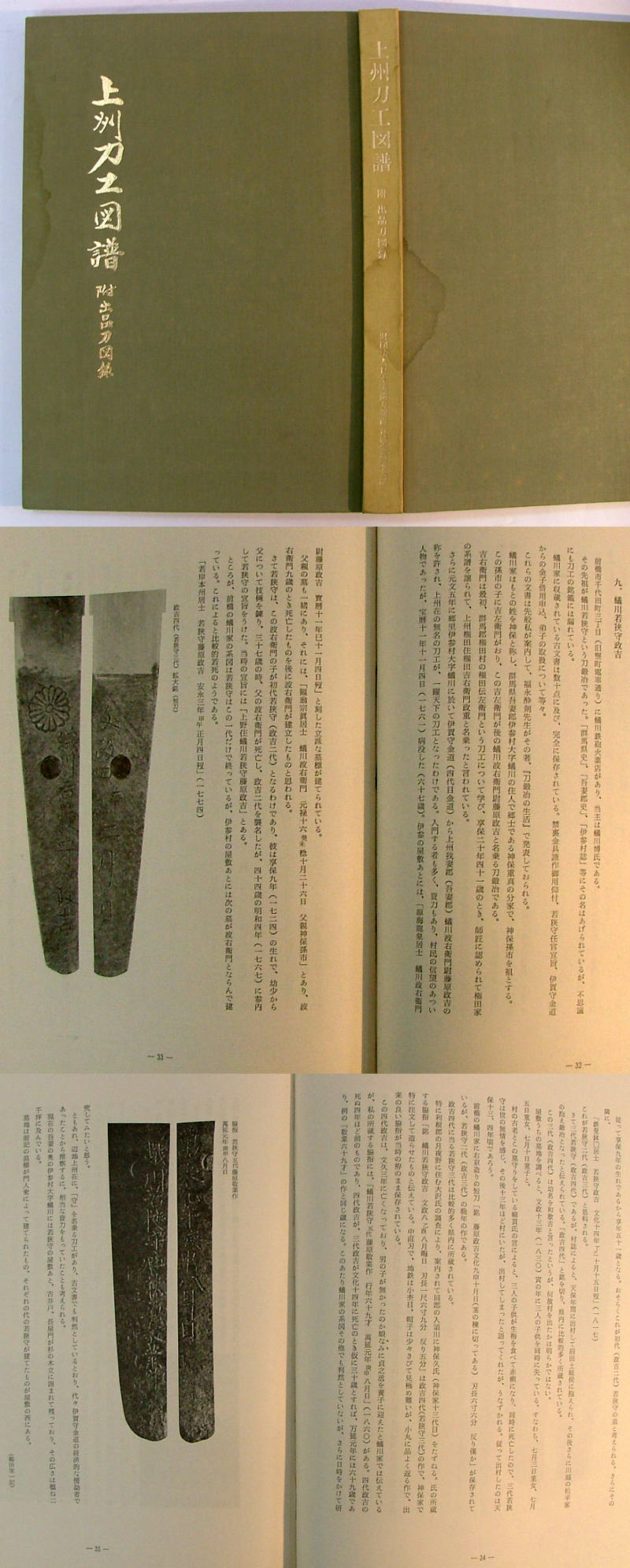
Below Quoted from "Joshu Toko Zufu" The Society for the Preservation of Japanese Art Swords, Takasaki Branch, pages 32 to 35 (Written by Yanagida Eiichi). "Arikawa Wakasa no Kami Masayoshi In Maebashi City, Chiyoda-machi 3-chome (formerly Tatemachi Densha-dori), there is the Arikawa Gun and Gunpowder Store, and the current head is Mr. Arikawa Hiroshi. His ancestor was a swordsmith named Arikawa Wakasa no Kami. His name is listed in the 'Gunma Ken-shi', 'Agatsuma Gun-shi', 'Isama Mura-shi', etc., but strangely, it is missing from the swordsmith meikan. The old documents stored in the Arikawa family reach dozens of items and are perfectly preserved. Orders for the respectful production of metal fittings for the Imperial Palace, the senji for the appointment to Wakasa no Kami, applications for borrowing money from Iga no Kami Kinmichi, the handling of disciples, and so on. These documents were recently introduced by me and published by Dr. Fukunaga Suiken in his book, 'The Life of Swordsmiths'. The Arikawa family originally used the surname Jinbo, and they are a branch of the Jinbo Shigezane family, who were goshin of Isama Village, Oaza Arikawa, Agatsuma County, Gunma Prefecture; Jinbo Magoichi is the ancestor. This Magoichi had a son named Kichizaemon, and this Kichizaemon is the swordsmith who later called himself Arikawa Namuemon-no-jo Fujiwara Masayoshi. It is said that Kichizaemon first studied under a swordsmith named Gonda Denzaemon of Gonda Village, Gunma County, and in Kyoho 20 at the age of 41, he was recognized by his master, was granted the Gonda family lineage, and called himself Joshu Gonda-ju Gonda Kichizaemon Masashige. Furthermore, in Genbun 5, in his hometown of Isama Village, Oaza Arikawa, he was granted the title of Joshu Agatsuma Gun Arikawa Namuemon-no-jo Fujiwara Masayoshi by Iga no Kami Kinmichi (the 4th generation Kinmichi), and this nameless swordsmith residing in Joshu suddenly became a swordsmith of the realm. Many people entered his apprenticeship, he had financial resources, and he was a person who held the deep trust of the villagers, but he died of illness on November 4, Horeki 11 (1761) (aged 67). At the site of the residence in Isama, a magnificent tombstone is erected, inscribed with 'Genkai Ryusen Koji, Arikawa Namuemon-no-jo Fujiwara Masayoshi, Died November 4, Horeki 11, Year of the Snake'. His father's grave is also there, which says, 'Kanno Soshin Koji, Arikawa Namuemon, October 26, Genroku 16, Year of the Water Sheep, Father Jinbo Magoichi', and it is thought that Namuemon erected this later for the one who died when Namuemon was nine years old. Now, as for Wakasa no Kami, the son of this Namuemon became the first generation Wakasa no Kami (2nd generation Masayoshi); he was born in Kyoho 9 (1724), refined his skills under his father from a young age, and when his father Namuemon died when he was 37, he succeeded to the name of the 2nd generation Masayoshi, but at the age of 44 in Meiwa 4 (1767), he visited the palace and received the senji for Wakasa no Kami. The senji of that time says 'Kozuke-ju Arikawa Wakasa no Kami Fujiwara Masayoshi'. However, while the genealogy of the Arikawa family in Maebashi ends with only this one generation of Wakasa no Kami, the following grave stands alongside Namuemon at the site of the residence in Isama Village. According to this, he seems to have died relatively young. 'Jakugan Honshu Koji, Wakasa no Kami Fujiwara Masayoshi, Died January 4, An'ei 3, Year of the Wood Horse' (1774) Therefore, since he was born in Kyoho 9, his age at death would be 51. This is probably considered the grave of the first generation (2nd generation Masayoshi) Wakasa no Kami. Furthermore, next to it, 'Tetsuso Hachi-□ Koji, Wakasa no Kami Masayoshi, Died October 15, Bunka 14, Year of the Fire Ox' (1817) This is thought to be the 2nd generation Wakasa no Kami (3rd generation Masayoshi). Now, regarding the 3rd generation Wakasa no Kami (4th generation Masayoshi), according to the village records, it is passed down that he left the village during the Tenpo era and was employed by Lord Toki of Numata, and after that, he further became the employed smith of the Matsudaira family of Kawagoe. He signed the mei 'Masayoshi 4th Generation', and his works are relatively numerous within the prefecture. It is said that this 3rd generation (4th generation Masayoshi) had the childhood name Wakakichi, but it is not clear why he left the village. When examining the graveyard within the residence grounds, he lost three children at the same time in the year of the Tiger, Bunsei 13 (1830). Namely, a young girl on July 3, a young girl on July 5, and a young boy on July 10. According to the village elders and Mr. Watanuki, who tends this grave, the three children ate raw plums, contracted dysentery, and died at the same time, so the 3rd generation Wakasa no Kami felt the transience of the world, stayed in the village for about 13 years after that, but then left the village; this story is convincing. Therefore, the time he left the village would be around Tenpo 13 or 14. In the Arikawa family in Maebashi, a tanto in Ukyo-zukuri 'mei Fujiwara Masayoshi Bunka 9, Year of the Monkey, October day (cut into the mune of the nakago) nagasa 6 sun 6 bu, sori slight' is preserved, which is a work from the late years of the 2nd generation Wakasa no Kami (3rd generation Masayoshi). The 3rd generation Wakasa no Kami, who corresponds to the 4th generation Masayoshi, is relatively numerous in the prefecture. Particularly, through an investigation by Mr. Osawa who lives in Tsukiyono, Tone County, I was guided to visit Mr. Jinbo Hisashi (13th generation of the Jinbo family) in Irisukawa of the same county. The wakizashi he possesses 'mei Arikawa Wakasa no Kami Masayoshi, Bunsei 8, Year of the Wood Rooster, August last day, nagasa 1 shaku 6 sun 9 bu, sori 5 bu' is a work of the 4th generation Masayoshi (3rd generation Wakasa no Kami), and it is passed down that it was specially ordered and made by the Jinbo family. It has a chu-suguba, the jitetsu is ko-mokume, and while the boshi is a little rusted and difficult to kiwame, it is a work with a refined sori in ko-maru, and a well-made wakizashi is preserved in its koshirae from that time. This 4th generation Masayoshi died in Bunkyu 3, and the Arikawa family passes down that since he perhaps had no male children, he adopted Sadanojo as a daughter's husband, but among the wakizashi I possess, there is 'Arikawa Wakasa no Kami 5th Generation Fujiwara Takayoshi saku, age 69, Man'en 1, Year of the Metal Monkey, August day' (1860). This is from about four years before the 4th generation Masayoshi died, and if the 4th generation Masayoshi was, for example, 30 years old when the 3rd generation Masayoshi died in Bunka 14, he would be 69 years old in Man'en 1, which would be the same age as the work of the aforementioned 'Takayoshi age 69'. This area is not clear even in the Arikawa family genealogy and other records, but I would like to study it further over time. In any case, there was a swordsmith in the remote Joshu region who used the title 'Kami', and as is clear from the old documents, judging from the fact that he was a financial supporter of Iga no Kami Kinmichi for generations, it can be considered that he possessed considerable financial resources. At the site of the residence of Wakasa no Kami in Oaza Arikawa, Isama Village, in the depths of present-day Agatsuma, an old well and a nagayamon remain surrounded by cedar groves, and its size reaches approximately 2,000 tsubo. In the graveyard, the aforementioned tombstones erected by the group of monjin and those erected by each generation of Wakasa no Kami are to the west of the residence. (Written by Yanagida Eiichi)" End Quoted from "Joshu Toko Zufu" The Society for the Preservation of Japanese Art Swords, Takasaki Branch, pages 32 to 35 (Written by Yanagida Eiichi). * "Joshu Toko Zufu" is not included. * This book is not included.
Offered by E-sword
We couldn’t find current papers for this piece. Ask the dealer whether it has been, or can be, submitted to shinsa. — Hoshi

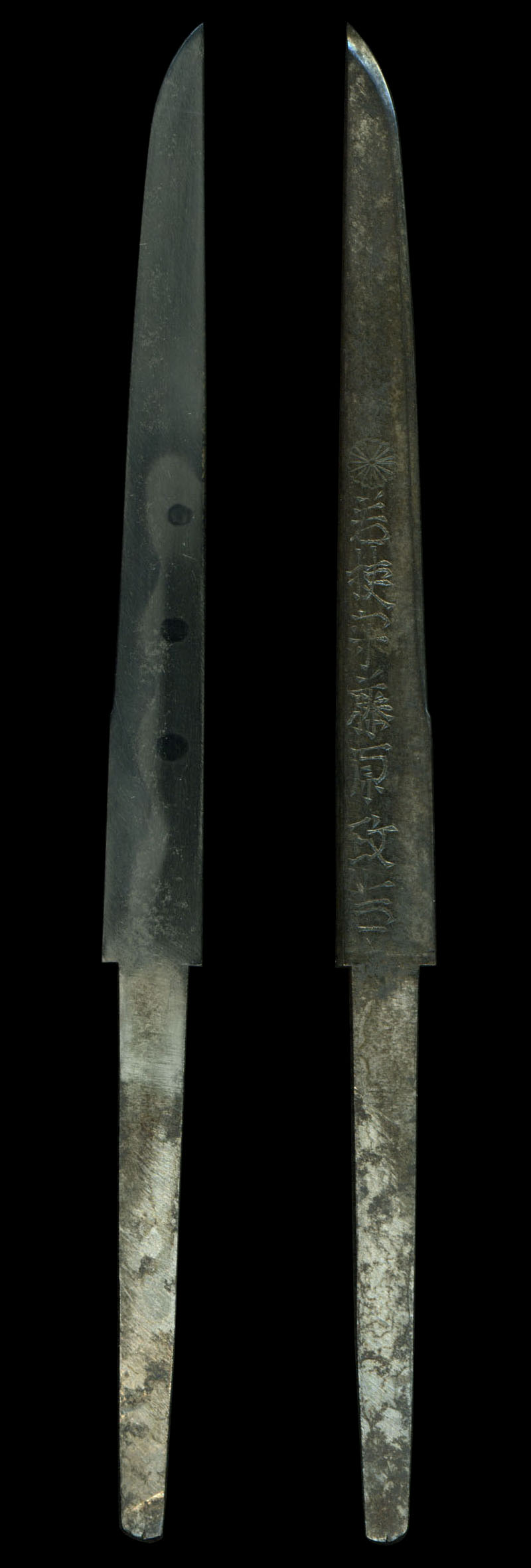
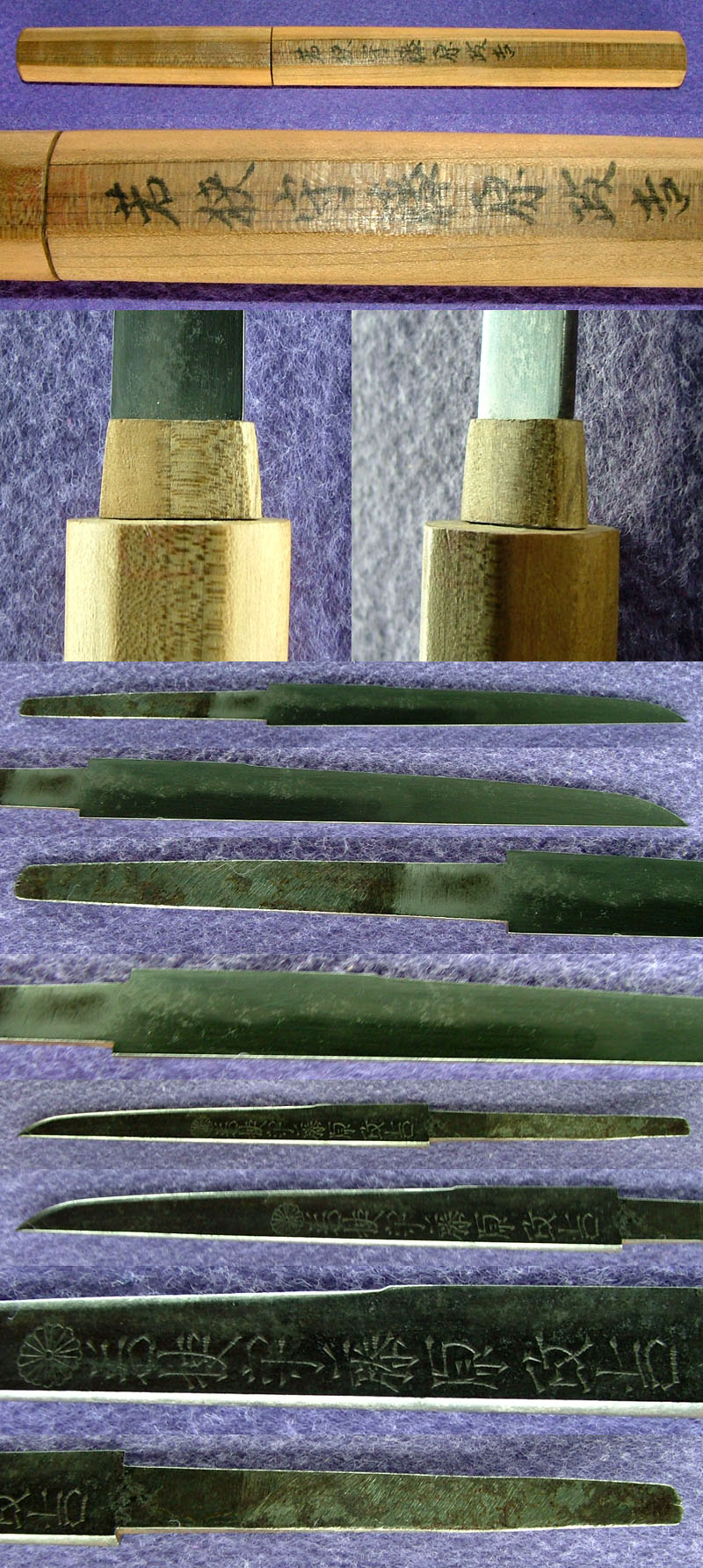
Wakasa no Kami Fujiwara Masayoshi
Bunsei (1818-1830)
Kōzuke
Signed
As written by the shop
Machine translation from the shop's Japanese · may contain errors ·
We could not find an authenticity certificate on the seller’s listing. Japanese swords and fittings are normally papered by the NBTHK (or the NTHK). Without one, the attribution is the seller’s own assessment and has not been independently verified — treat it with caution and ask the dealer about certification before buying.
Cooling-off (returns or exchanges) is accepted within 3 days of the item's arrival. Return shipping and refund transfer fees are the customer's responsibility. Fees other than the item price (transfer fees, credit card fees, etc.) cannot be refunded. Returns and refunds are not available for overseas destinations.
¥100,000