 NihontoWatchNihontoWatch
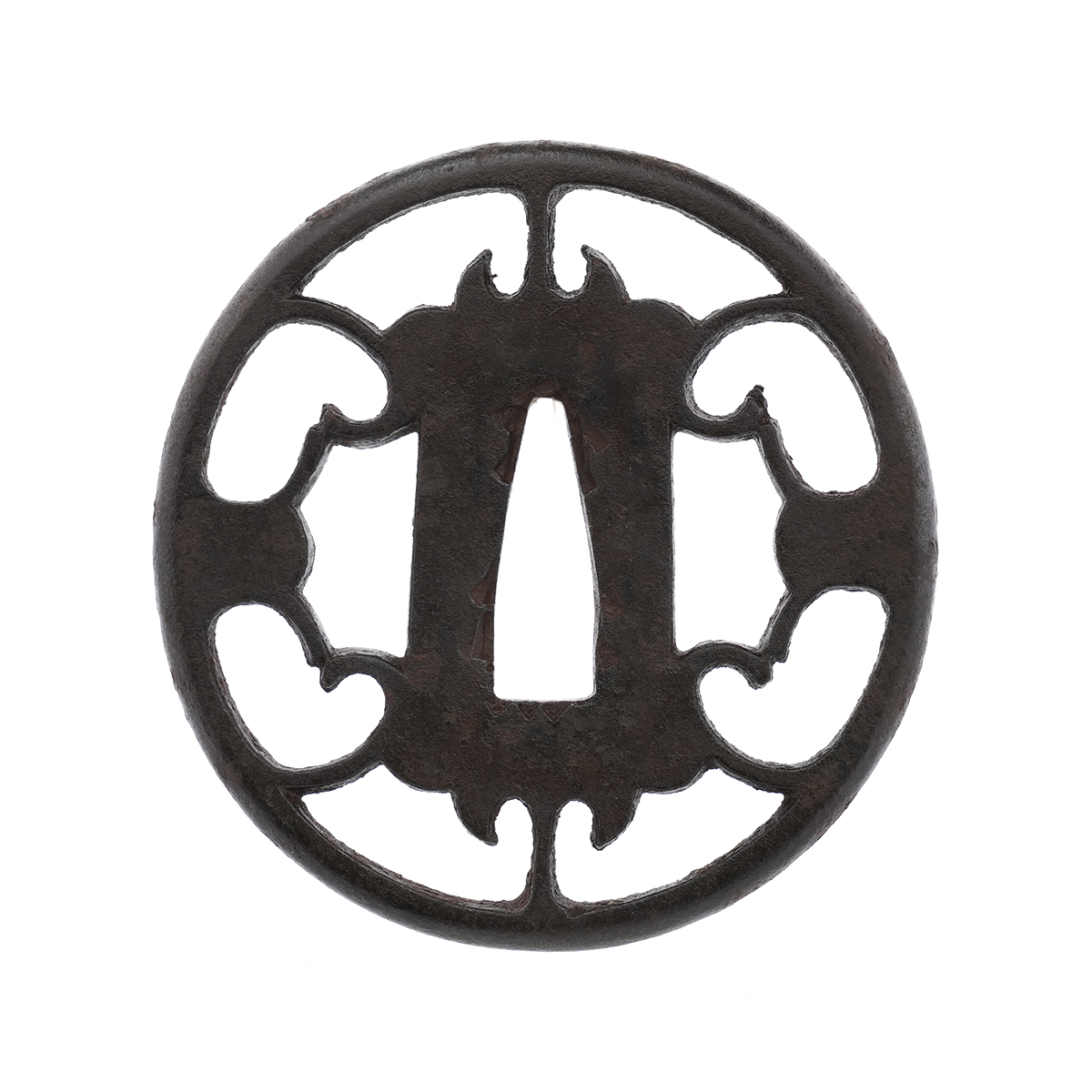
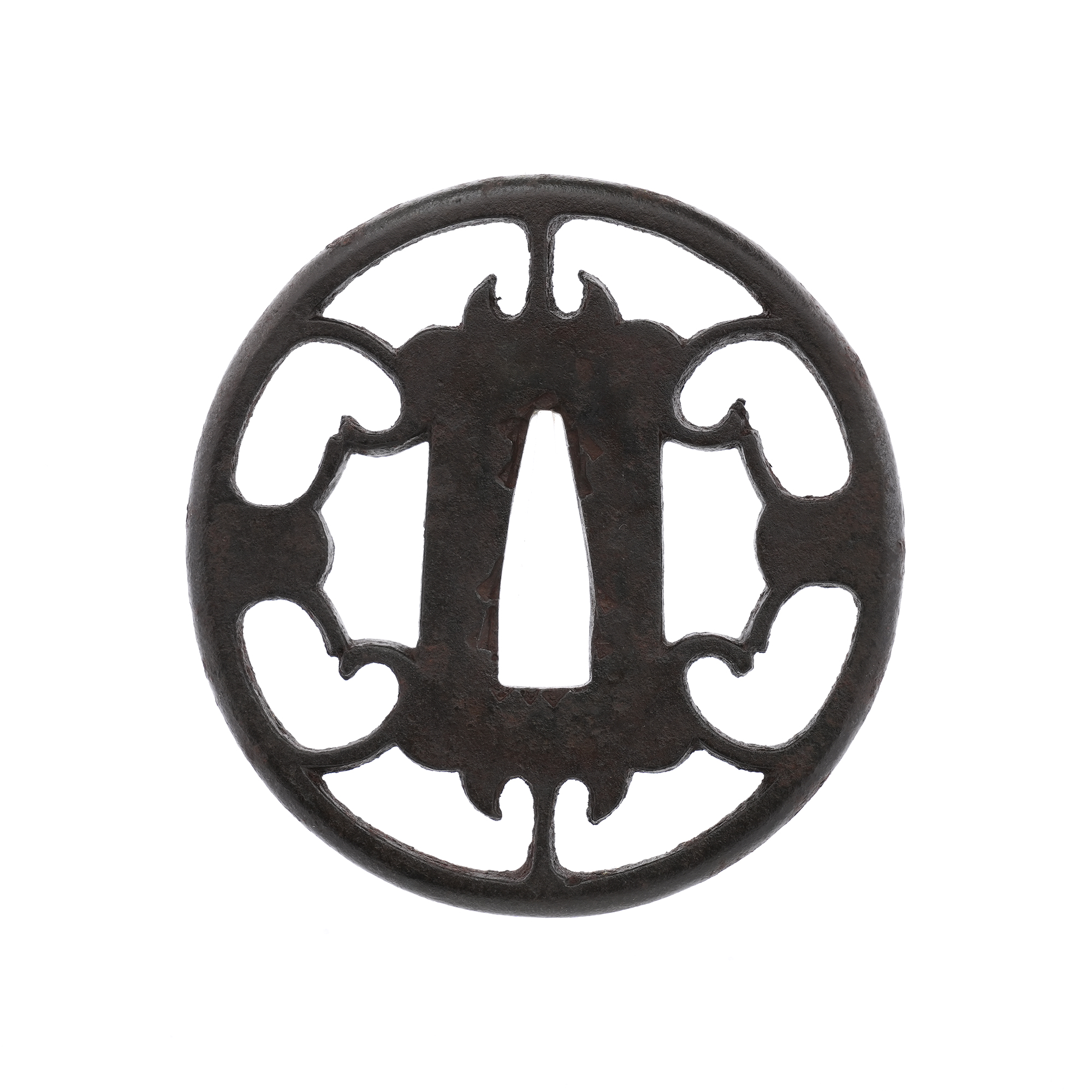
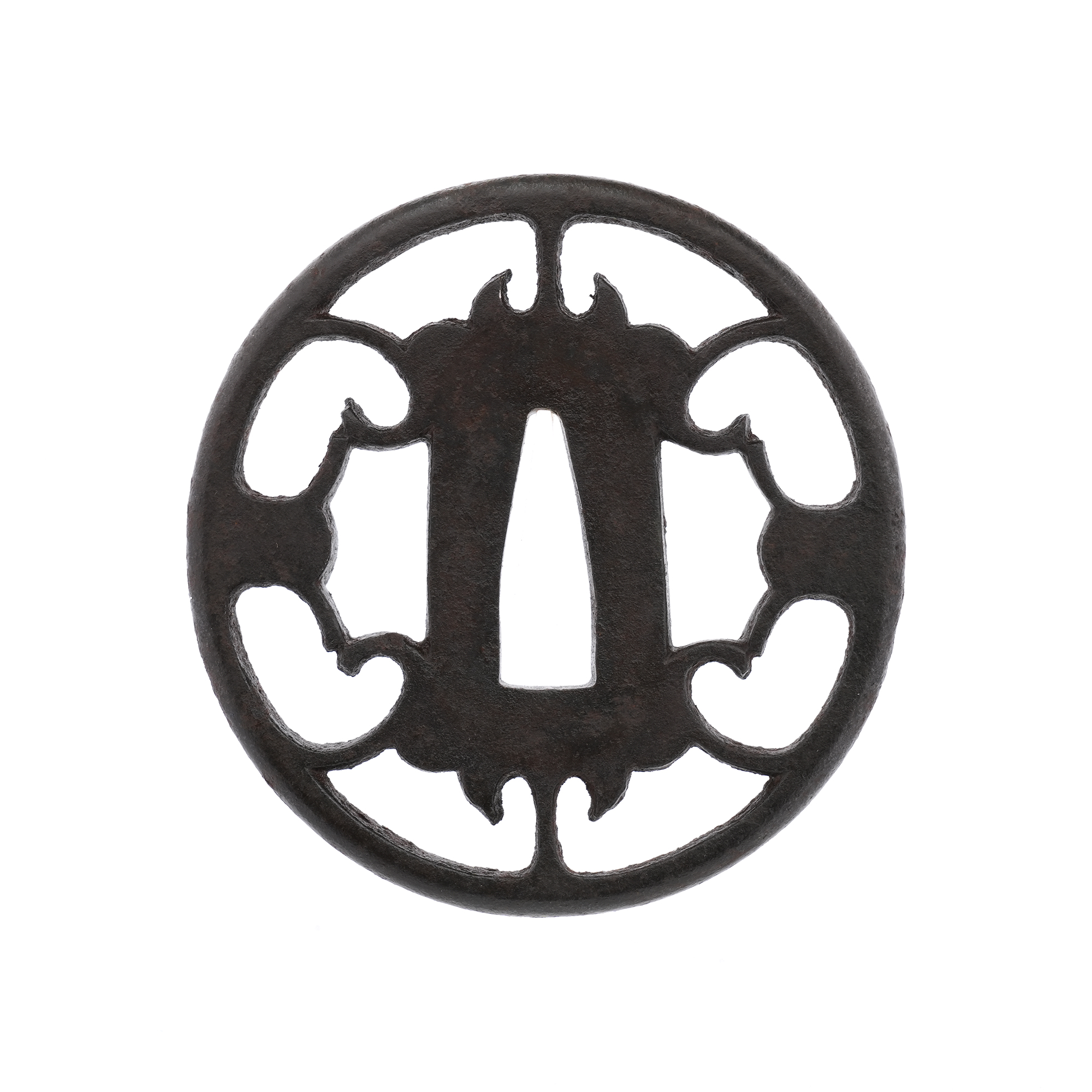
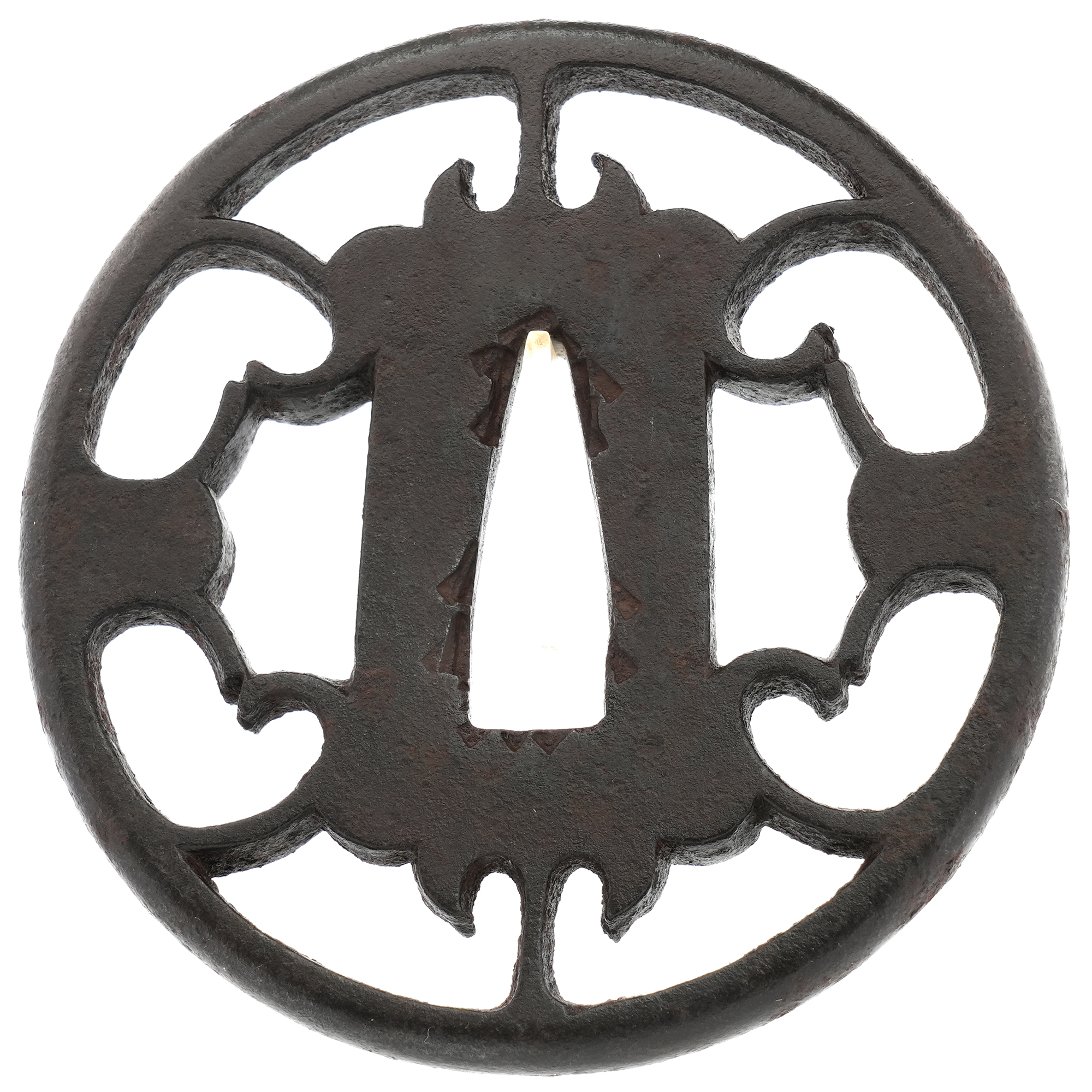
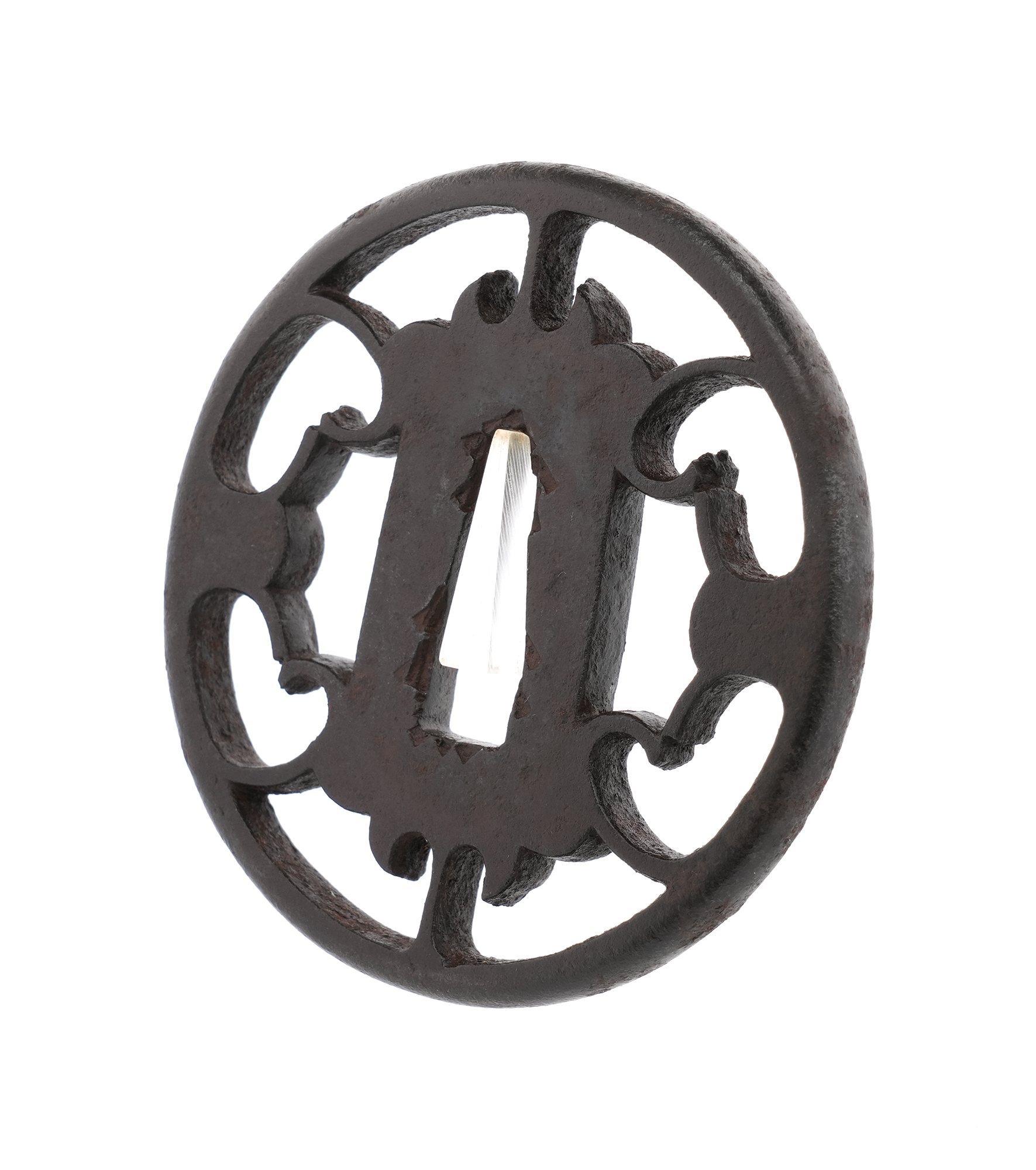
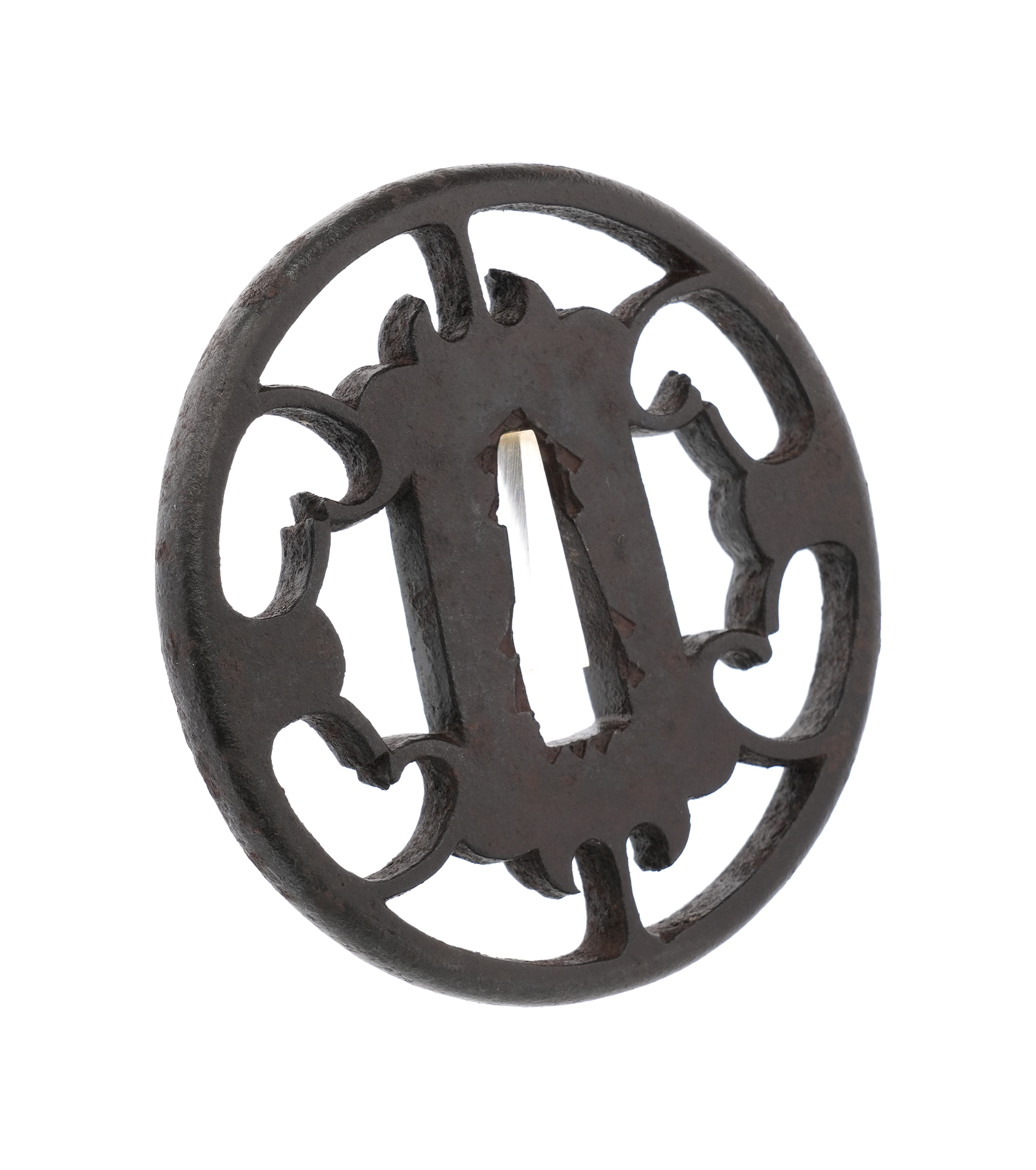
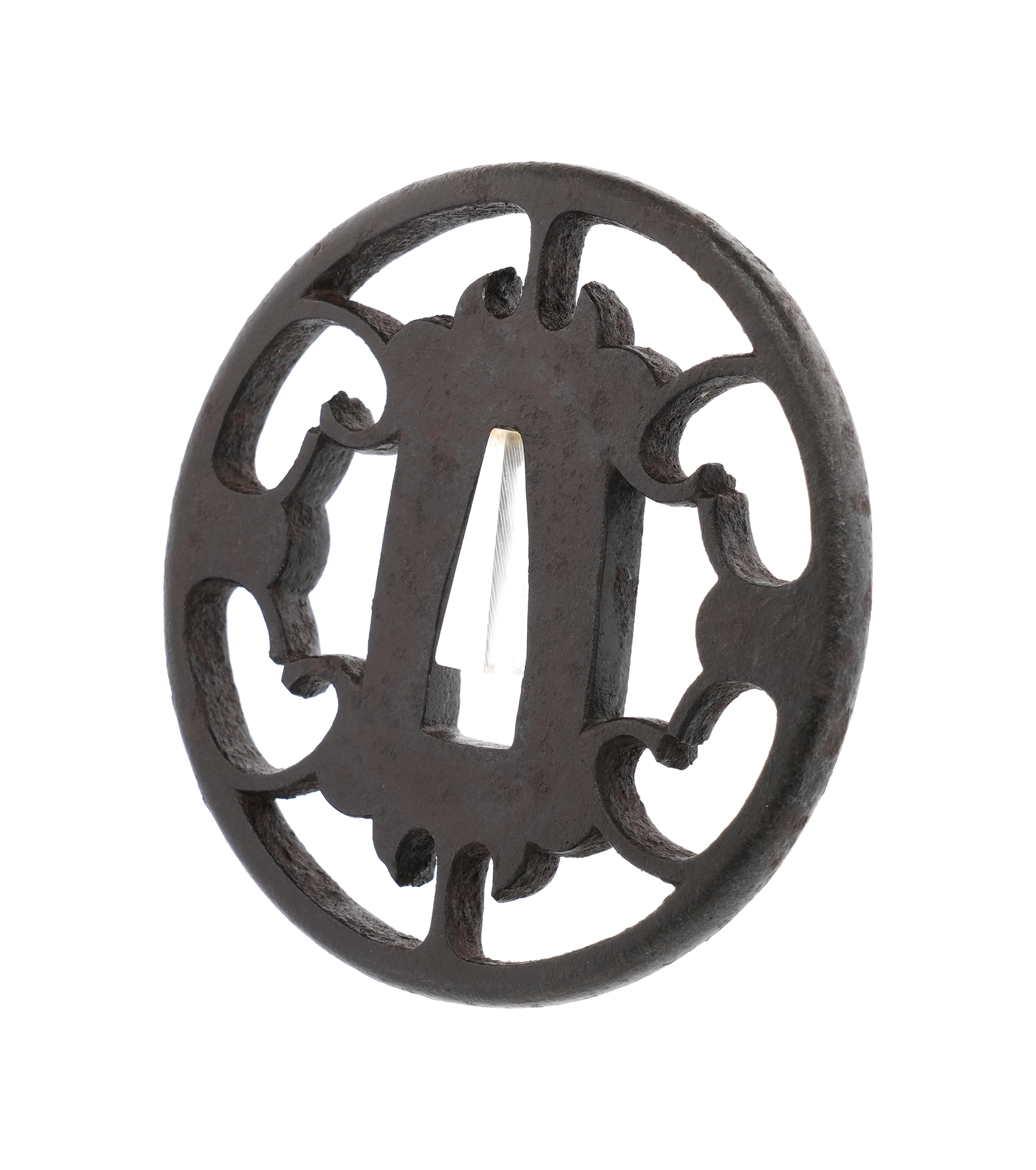
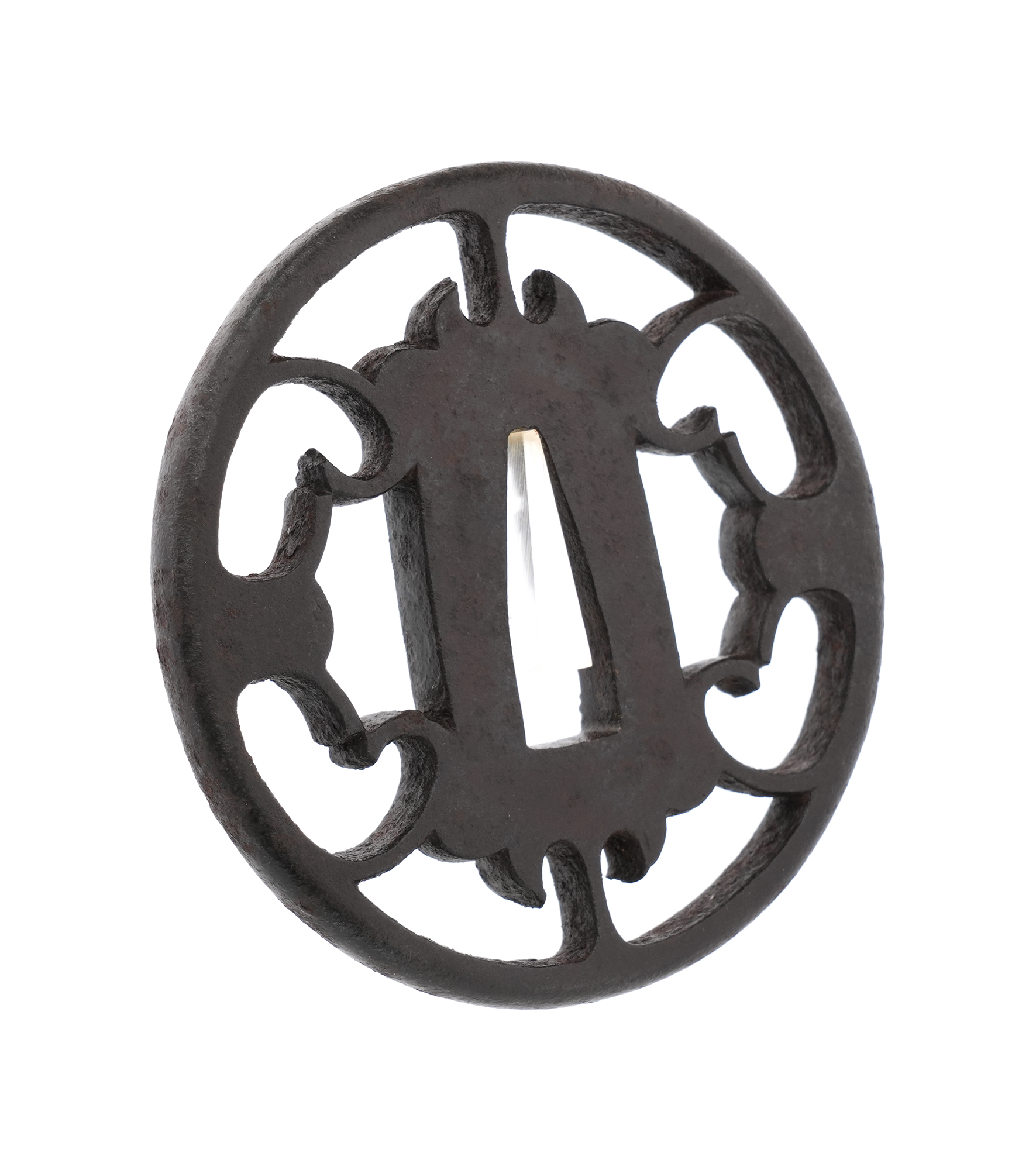
The early to middle Edo period Warabite is a design motif based on the curling tip of a bracken fern sprouting in spring, and it has long been used in arms, armor, and crafts as an auspicious design symbolizing new life, growth, and prosperity. This piece expands the warabite in four directions, utilizing the thickness of the iron plate and bold jisukashi to bring them together into a single tsuba; while the composition is highly abstract, the more one follows the curling curves, the more one can feel the form of a plant filled with vitality. Based on a tatemaru-gata, the composition features a thick seppadai at the center with warabite curving widely toward the top, bottom, left, and right, creating a clear balance between the wide openwork negative space and the volume of the iron plate. From a distance, it appears simple and powerful, while close at hand, one can appreciate the subtle tension of each curve and the expression of the areas left behind by the carving. The four-directional patterns are not mechanically symmetrical, but rather correspond to one another with slight variations born of handwork, and the flow toward the outer edge and the movement curling back toward the center create a pleasant tension on the tsuba surface. The thickness of the seppadai is a solid 6.2 mm, and sufficient meat remains on the rounded mimi, so despite the design having much openwork, it has a certain sense of substance when held in the hand. The blackish iron hada and the antique patina settled over many long years convey the dignity unique to iron tsuba that do not rely on ornate decoration. The simple tagane-zukai remaining on the nakago-ana and the edges of the openwork, the softly refined curves, and the modeling that boldly cuts through the thick jigane suggest the work of the early to middle Edo period, which pursued the interest of design while maintaining practicality. Because warabite sukashi-tsuba are simple at first glance, the quality of the jigane, the placement of the openwork, and the volume of the mimi and seppadai become the essentials of appreciation. This piece excels in the balance between the curves spreading in four directions and the negative space, and it possesses a refined presence that will tighten the appearance of the tososhin and tsuka when mounted in a koshirae. It is a piece with high appreciation value that allows one to enjoy both the elegant iron-aji and the auspicious warabite motif at once, and I would like to recommend it to those who appreciate abstract sukashi-tsuba, thick old tsuba, and tosogu that feel refined within their ruggedness.
NihontoWatchOffered by Toushin

We couldn’t find current papers for this piece. Ask the dealer whether it has been, or can be, submitted to shinsa. — Hoshi

Unsigned
Machine translation of the shop's Japanese ·
Machine translation from the shop's Japanese · may contain errors ·
We could not find an authenticity certificate on the seller’s listing. Japanese swords and fittings are normally papered by the NBTHK (or the NTHK). Without one, the attribution is the seller’s own assessment and has not been independently verified — treat it with caution and ask the dealer about certification before buying.
As a rule we do not accept returns, except when we have sent a different item from the one ordered or when there is a significant discrepancy between the description and the item. If you wish to return an item, please contact us within 3 days of its arrival and then send it back.
¥220,000