
NihontoWatch Mon

NihontoWatch

MarketAuctions
Encyclopedia
NihontoWatch Mon

NihontoWatch

MarketAuctions
Encyclopedia

Description

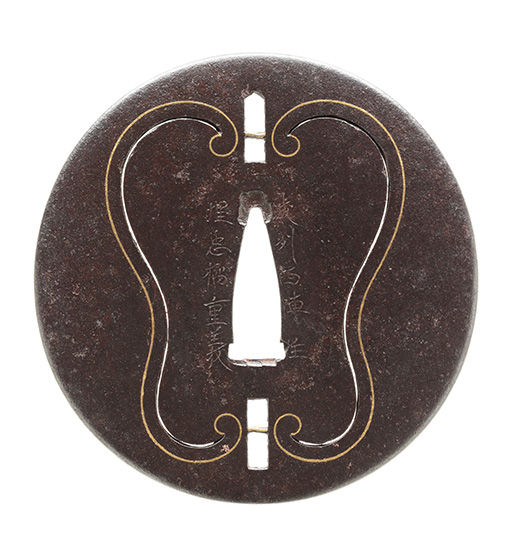
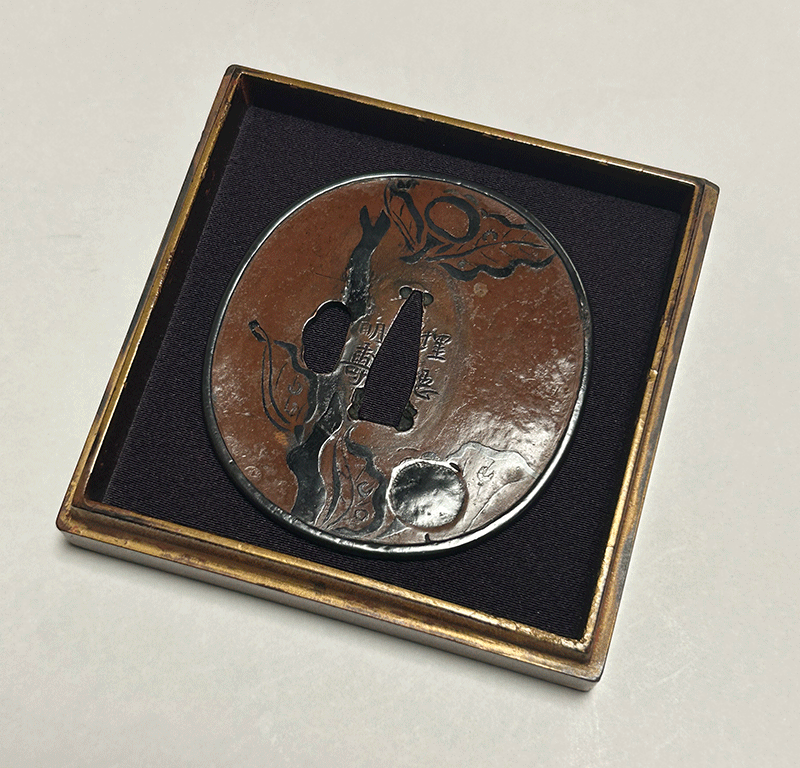
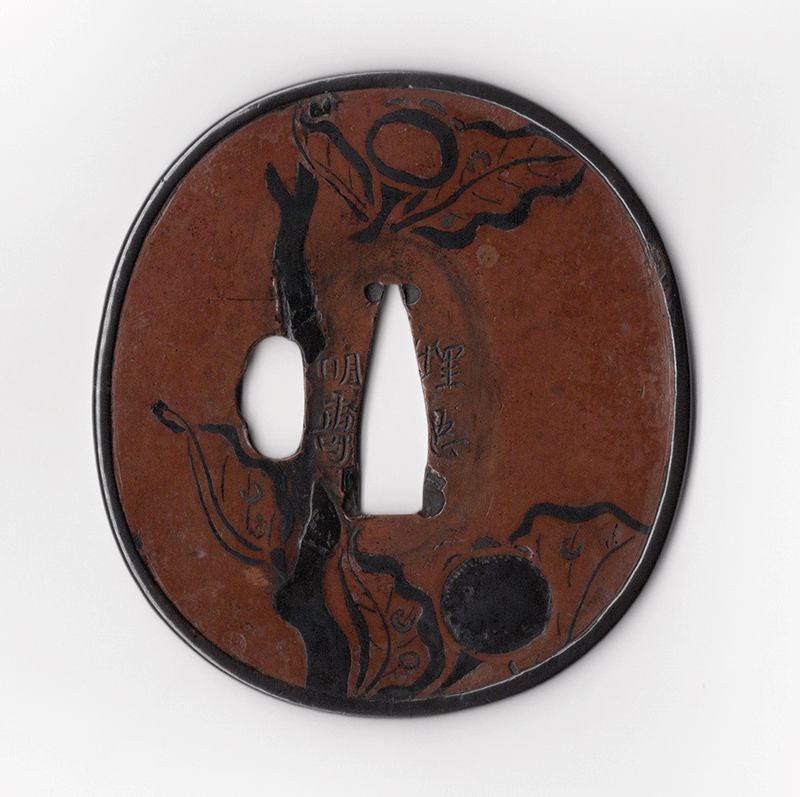
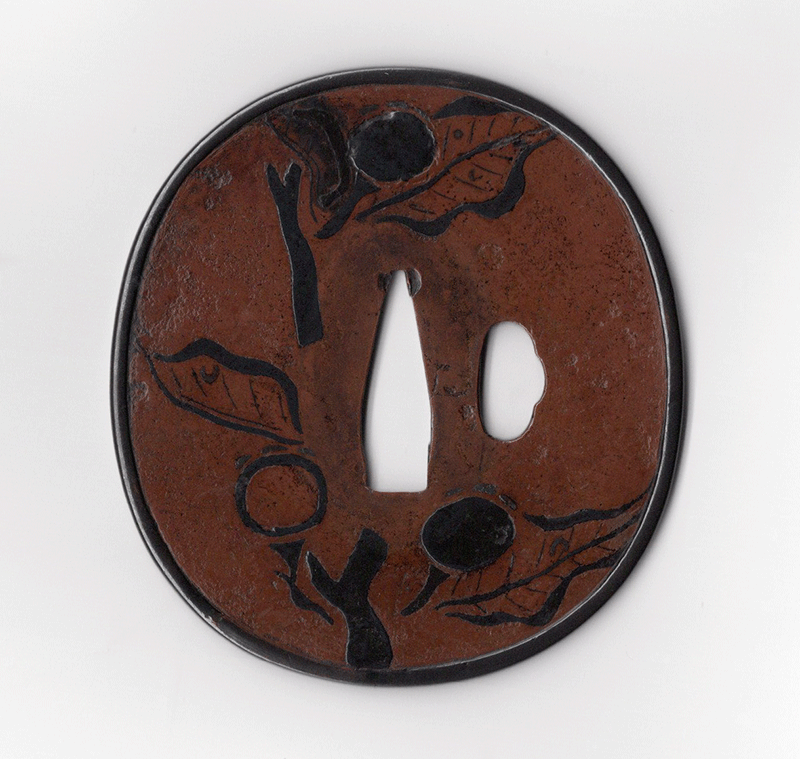
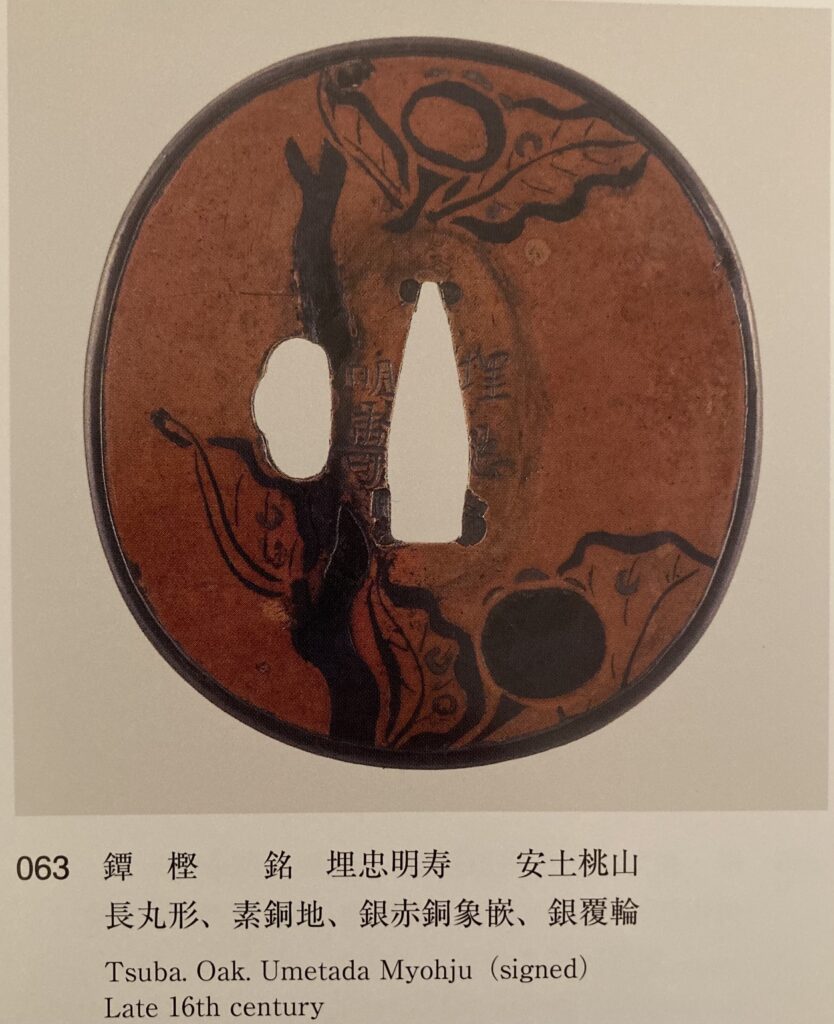
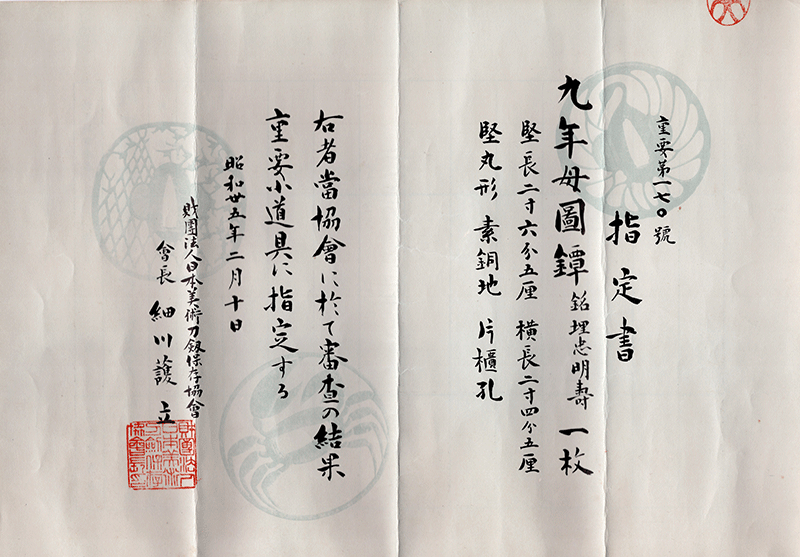
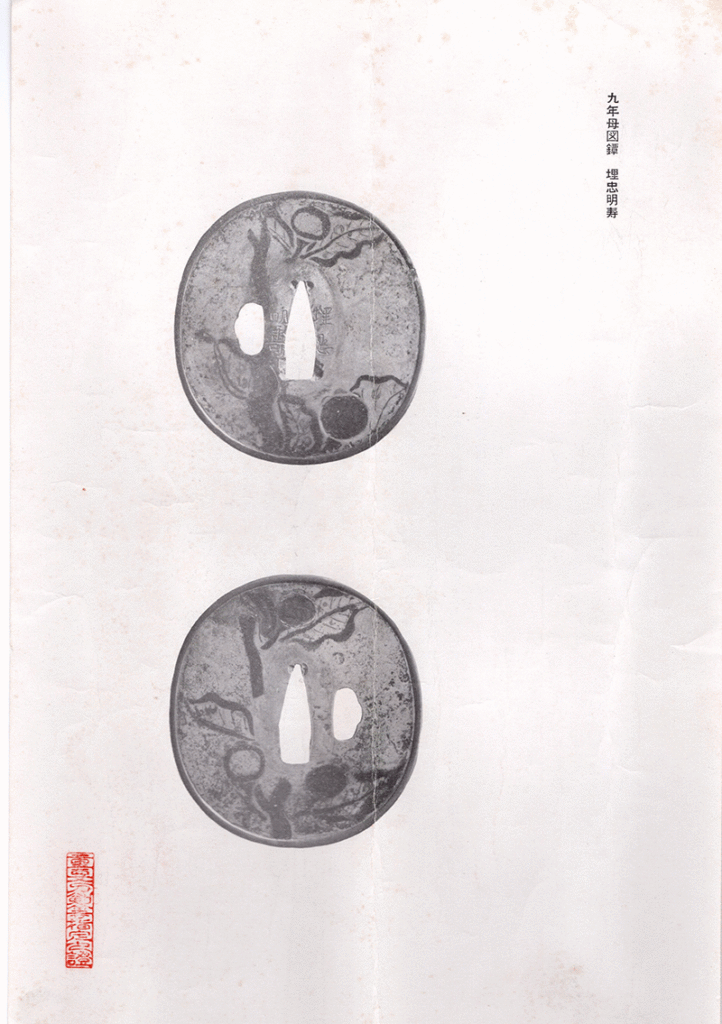
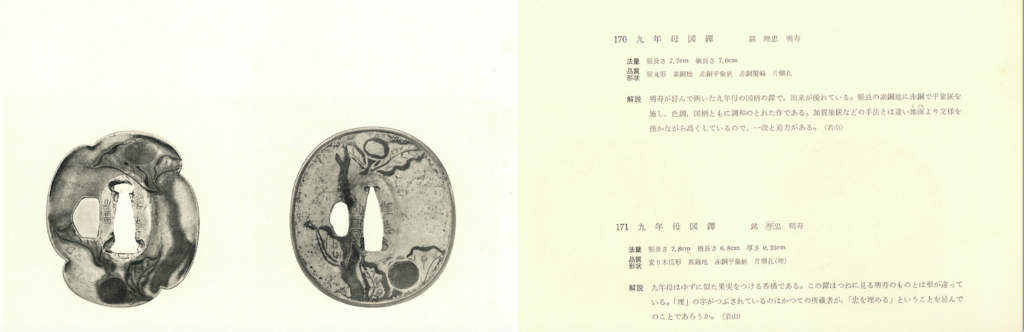
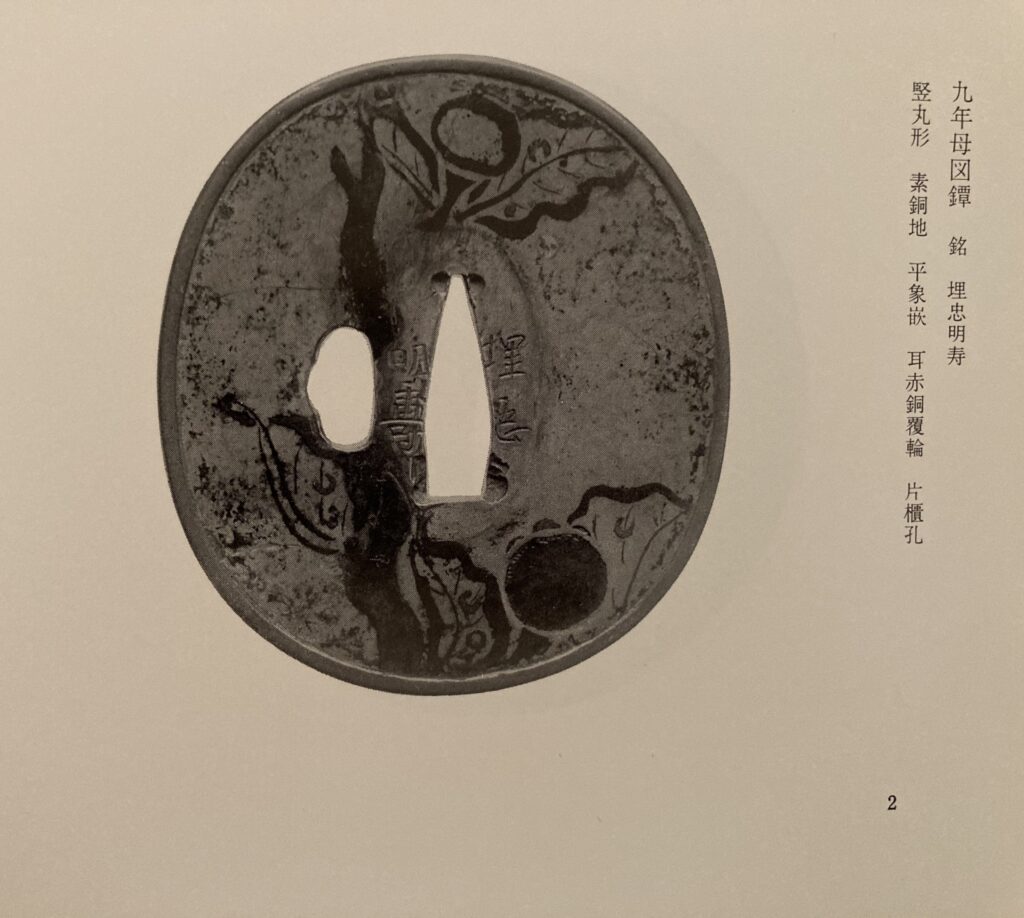
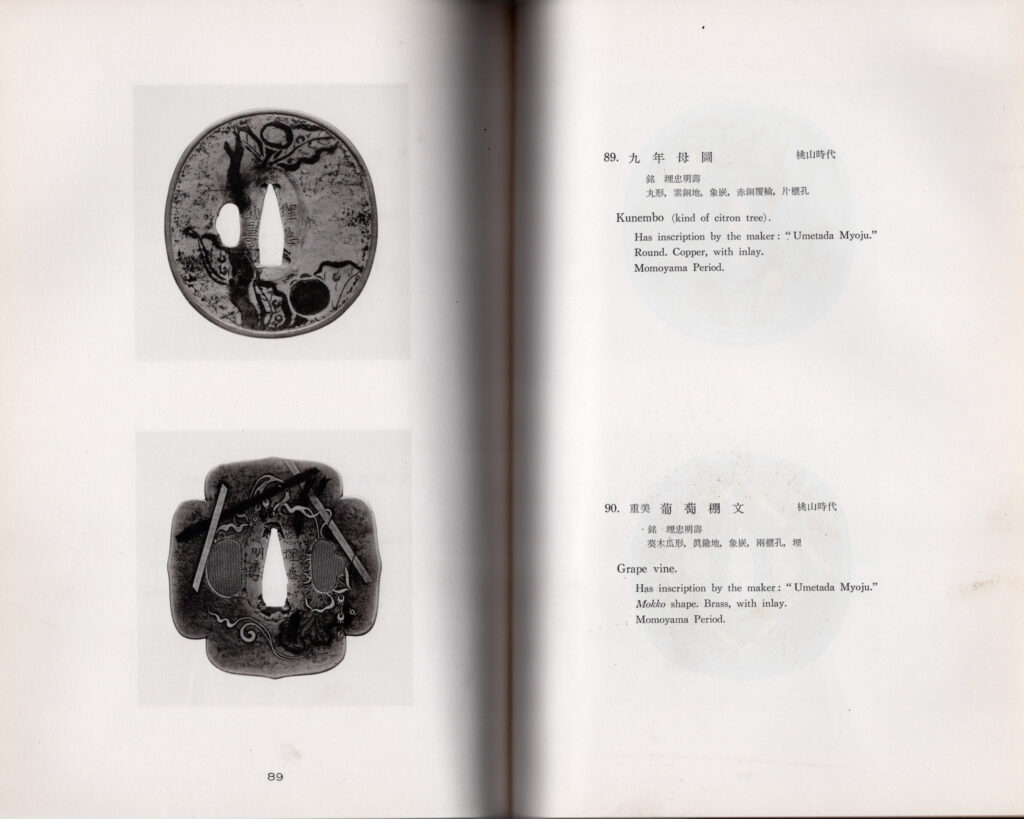
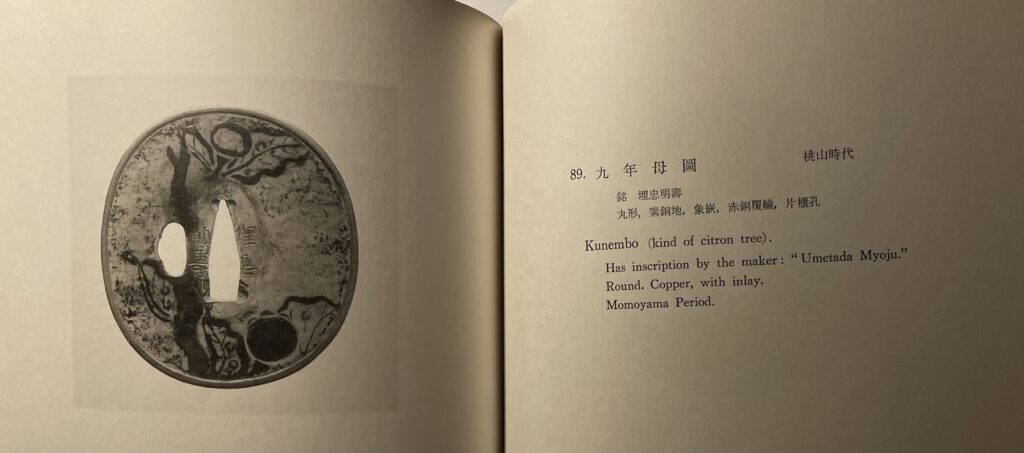
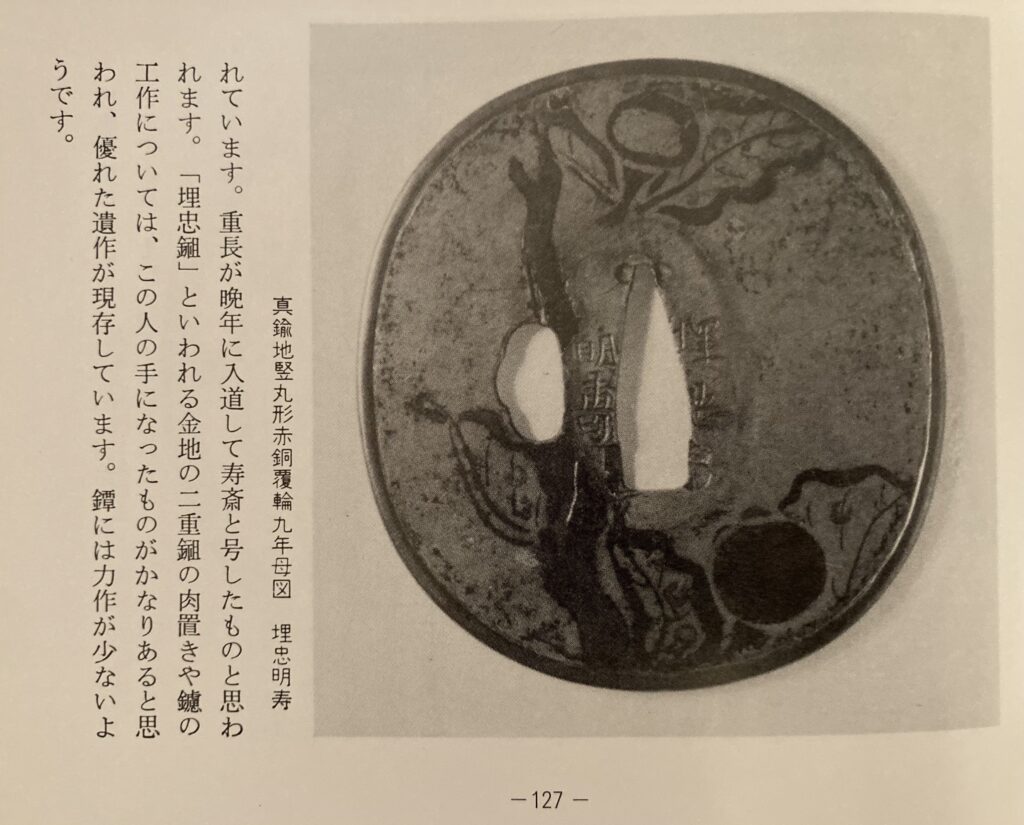
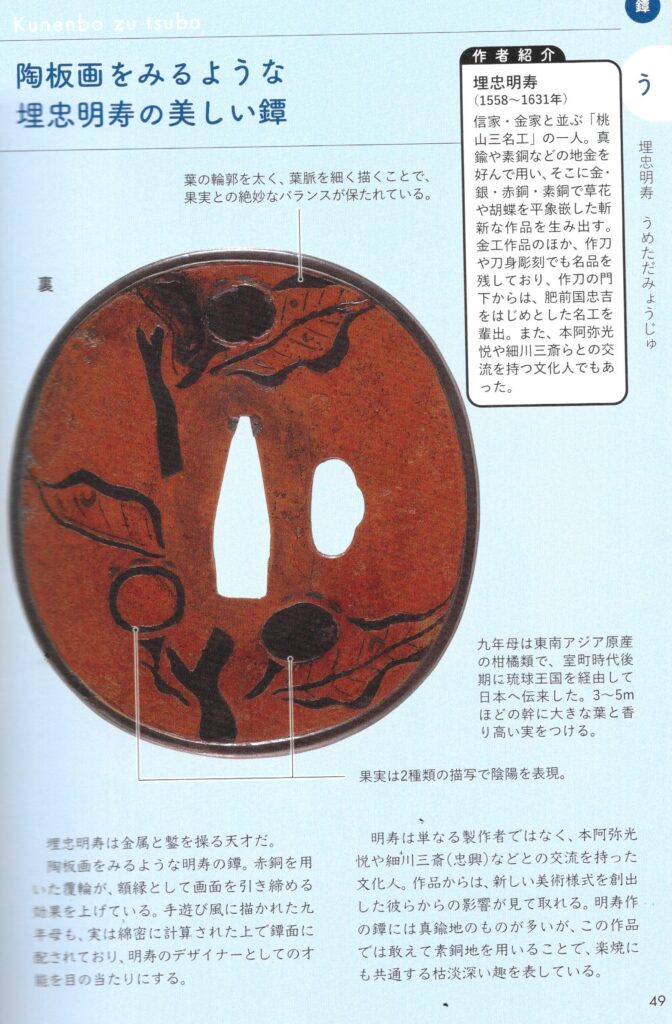
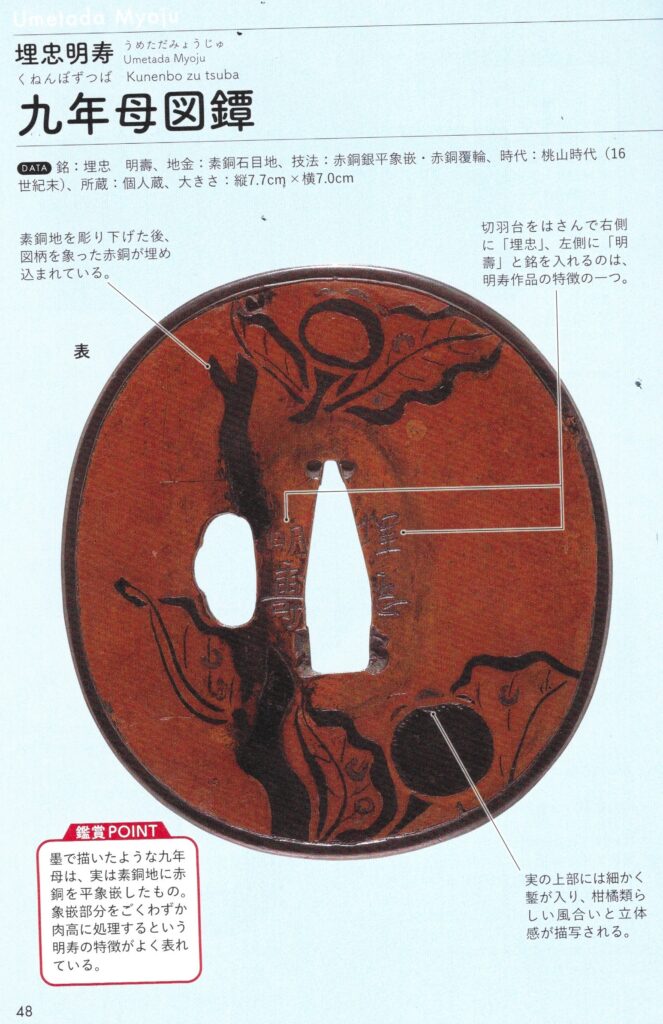
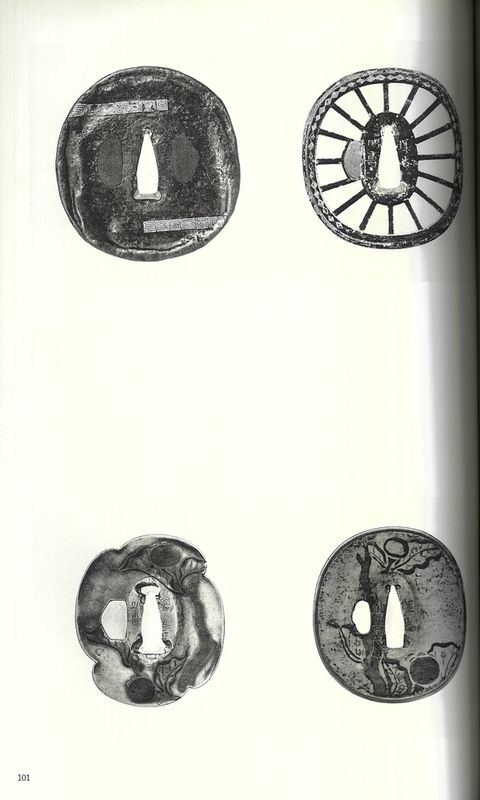
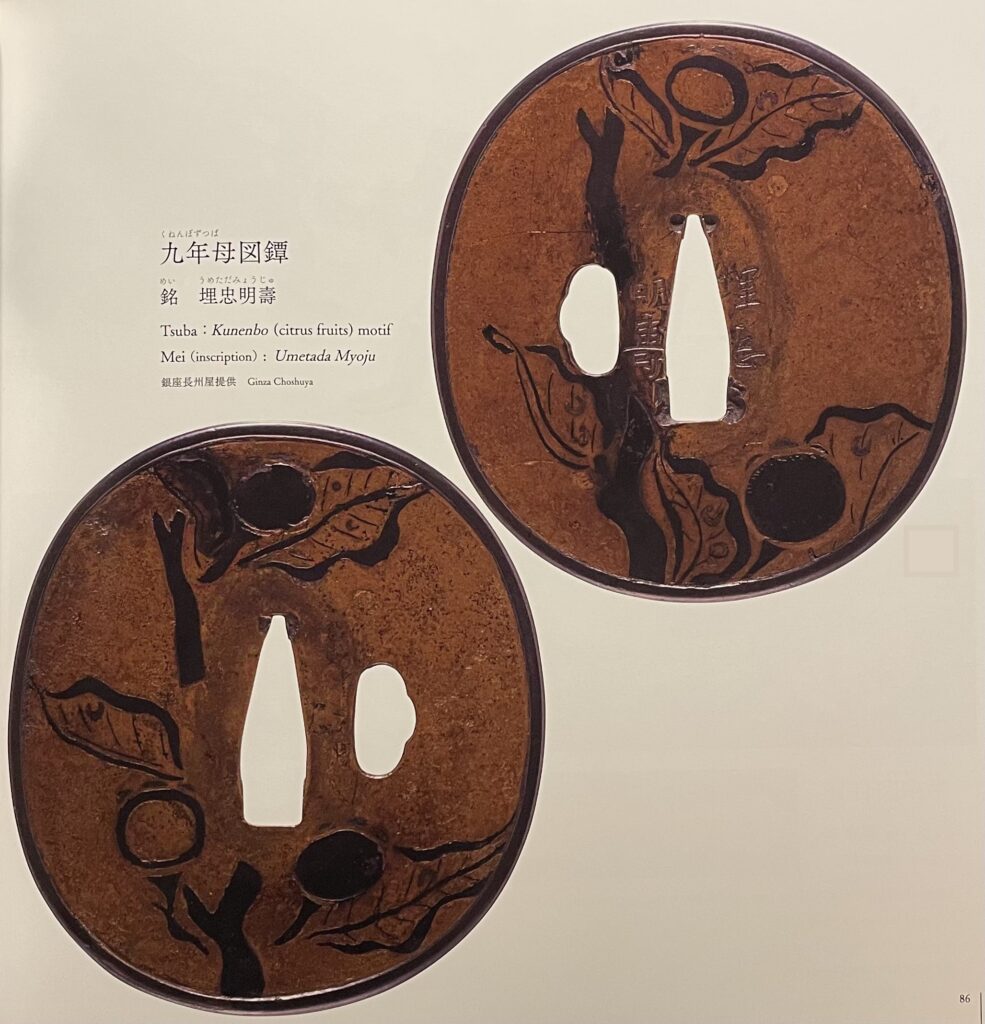
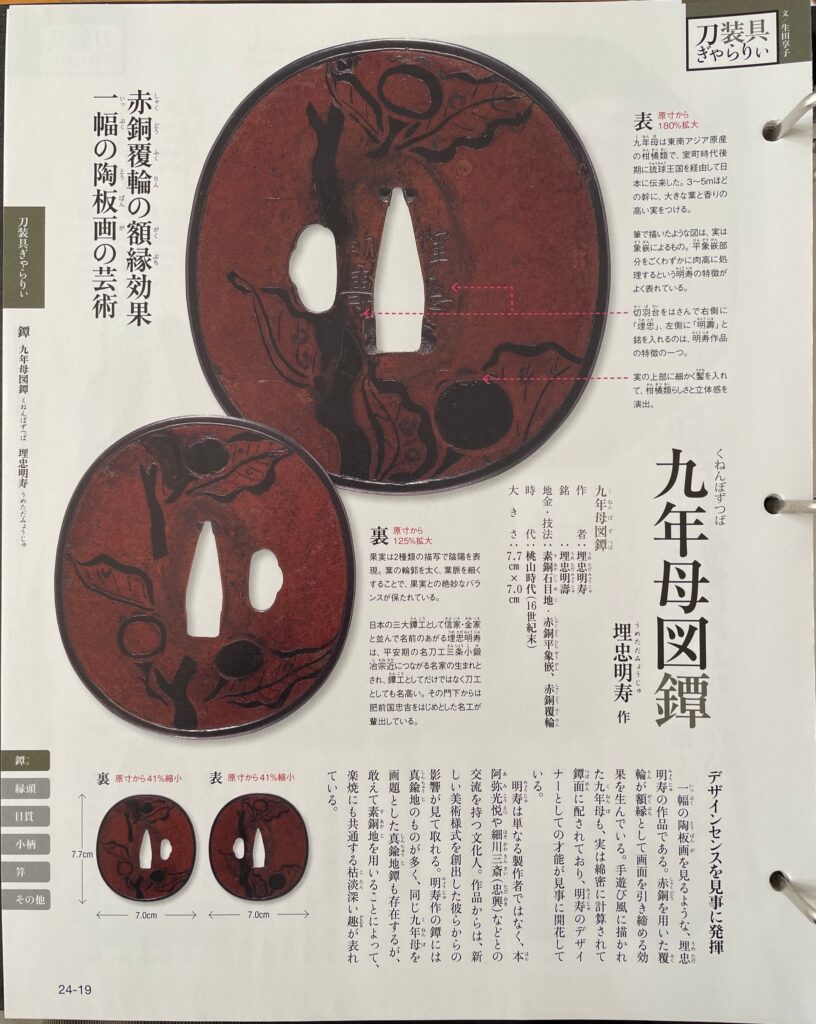
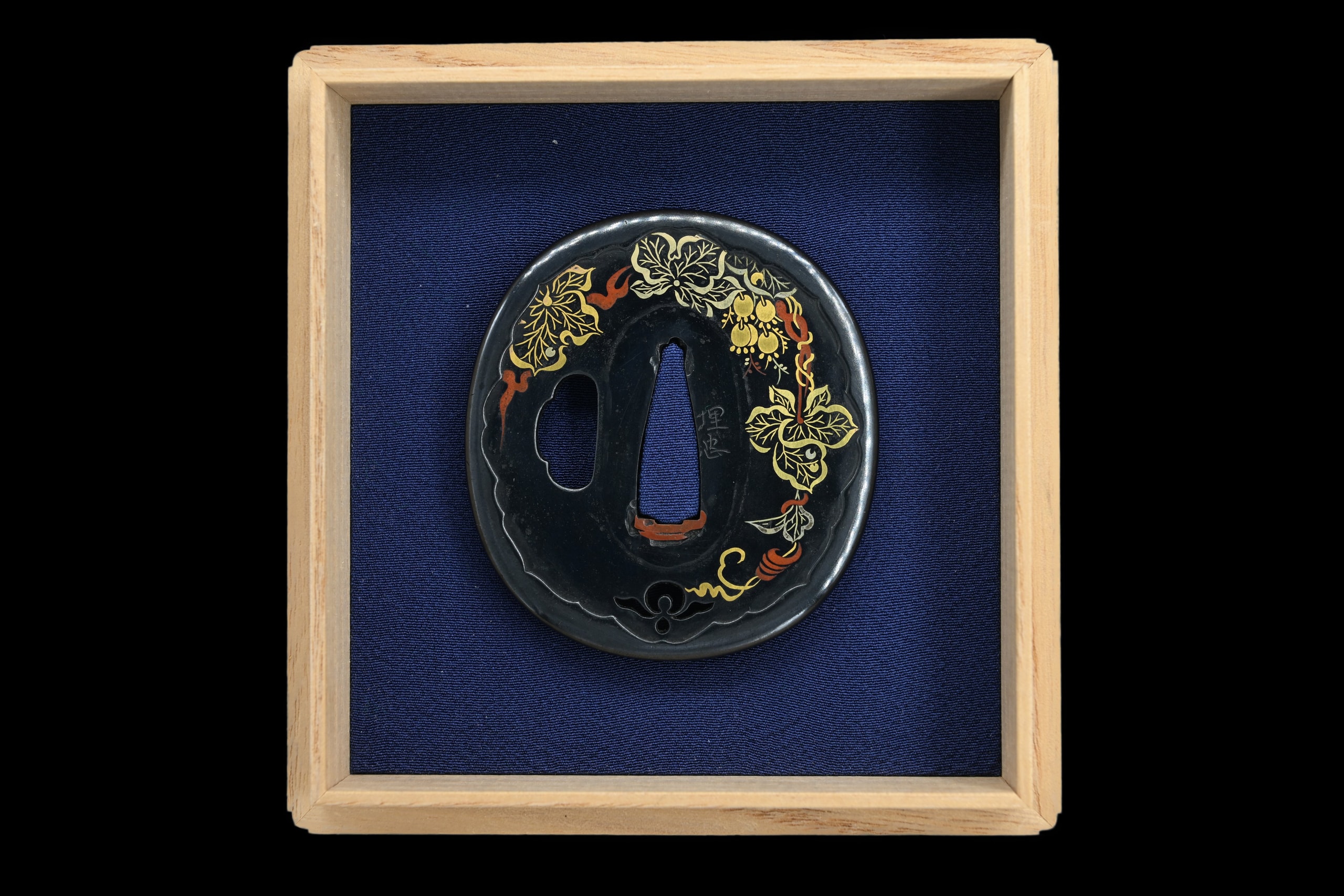
This is a tsuba made by Umetada Myoju, a renowned metalworker from the Momoyama period. The tsuba is designated as Juyo Tosogu by the NBTHK. It features a design of kumembo (九年母, a type of citrus fruit) in suaka-ji (素銅地, copper base) with shakudo (赤銅) inlay, a motif favored by Myoju.

NBTHK Setsumei

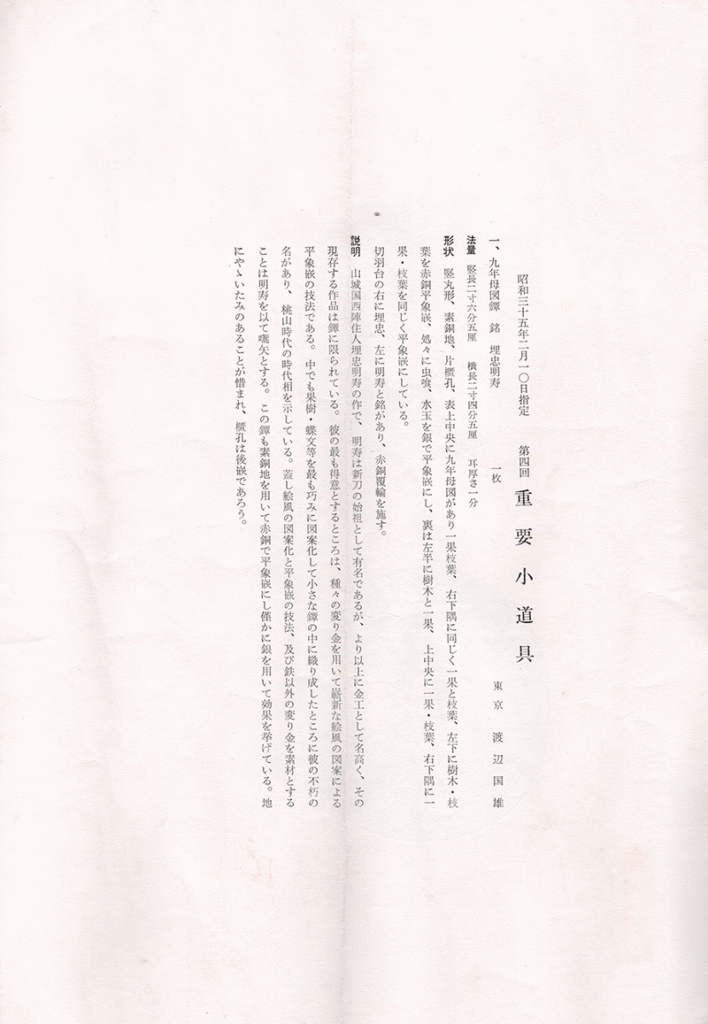
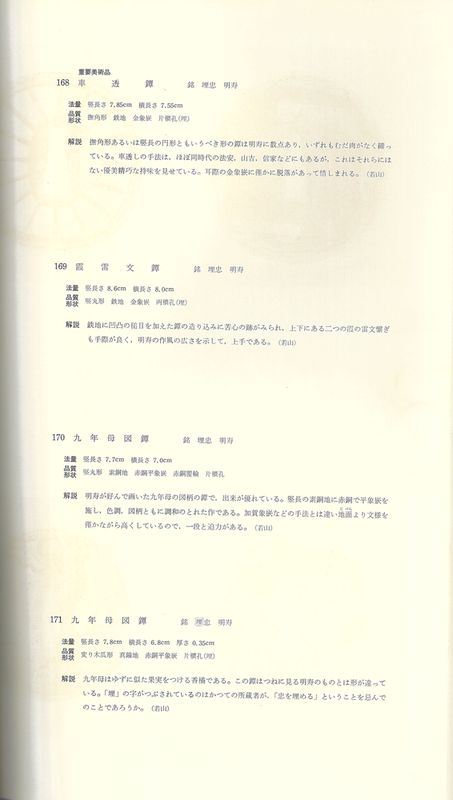
Jūyō-Tōsōgu, 4th Session — Designated February 10, 1960 Tsuba, mei: Umetada Myōju (埋忠明寿) Measurements Tate (height): 2 sun 6 bu 5 rin (approx. 8.03 cm) Yoko (width): 2 sun 4 bu 5 rin (approx. 7.42 cm) Thickness: 1 bu (approx. 0.30 cm) Description Form: tate-maru-gata (vertical round form) Material: suaka (refined copper) plate Construction: ichimai (single plate) Design: Kunenbō citrus (九年母) fruit with branches, leaves, and trees Decoration: - On the front, at the upper center is a kunenbō fruit motif with a single fruit, branch, and leaves; at the lower right is likewise a single fruit with branch and leaves; and at the lower left, trees, branches, and leaves are inlaid. - These are executed chiefly in shakudō hira-zōgan (flat inlay). In places, “worm-eaten” effects and water droplets are rendered with silver hira-zōgan. - On the reverse, the left half shows a tree and a single fruit; at the upper center are a fruit with branch and leaves; and at the lower right, again a fruit with branch and leaves, all similarly in hira-zōgan. Rim: fitted with a shakudō fukurin (rim cover) Hitsu-ana: one hitsu-ana (kata-hitsu) Signature: on the seppa-dai, “Umetada” (埋忠) on the right and “Myōju” (明寿) on the left Artisan Umetada Myōju, resident of Nishijin in Yamashiro Province. Era Momoyama period. Explanation This is the work of Umetada Myōju of Nishijin in Yamashiro Province. Although Myōju is widely known as the founder of the shintō (new-sword) tradition, he is even more celebrated as a metalworker, and the surviving works by his hand are limited to tsuba. His greatest strength lay in the technique of hira-zōgan employing various unusual metals (kawarigane) and in devising fresh, pictorially oriented designs. Among these, his most accomplished achievements are his skillful stylization of motifs such as fruit trees and butterflies, woven together within the small surface of a tsuba—the source of his enduring fame and a clear expression of Momoyama-period taste. Indeed, the pictorial manner of design, the hira-zōgan technique, and the use of non-iron metals as the ground material all find their earliest beginning with Myōju. This tsuba likewise uses a suaka ground, with shakudō flat inlay and sparing use of silver to strong effect. It is regrettable that the ground shows slight damage; and the hitsu-ana was likely added later.

NihontoWatch MonNihontoWatch
MarketAuctionsEncyclopedia
Fittings›Umetada›Myoju›Tsuba: Umetada Myoju - Juyo Tosogu
tsubaJūyō
Umetada Myoju

Tsuba: Umetada Myoju - Juyo Tosogu

mei · Momoyama

SOLD
Umetada Myoju — 1 of 27
Umetada Myoju — 2 of 27
Umetada Myoju — 3 of 27
Umetada Myoju — 4 of 27
Umetada Myoju — 5 of 27
Umetada Myoju — 6 of 27
Umetada Myoju — 7 of 27
Umetada Myoju — 8 of 27
Umetada Myoju — 9 of 27
Umetada Myoju — 10 of 27
Umetada Myoju — 11 of 27
Umetada Myoju — 12 of 27
Umetada Myoju — 13 of 27
Umetada Myoju — 14 of 27
Umetada Myoju — 15 of 27
Umetada Myoju — 16 of 27
Umetada Myoju — 17 of 27
Umetada Myoju — 18 of 27
Umetada Myoju — 19 of 27
Umetada Myoju — 20 of 27
Umetada Myoju — 21 of 27
Umetada Myoju — 22 of 27
Umetada Myoju — 23 of 27
Umetada Myoju — 24 of 27
Umetada Myoju — 25 of 27
Umetada Myoju — 26 of 27
Umetada Myoju — 27 of 27
1 / 27
1 / 27
Umetada Myoju — 1 of 27Umetada Myoju — 2 of 27Umetada Myoju — 3 of 27Umetada Myoju — 4 of 27Umetada Myoju — 5 of 27Umetada Myoju — 6 of 27Umetada Myoju — 7 of 27Umetada Myoju — 8 of 27Umetada Myoju — 9 of 27Umetada Myoju — 10 of 27Umetada Myoju — 11 of 27Umetada Myoju — 12 of 27Umetada Myoju — 13 of 27Umetada Myoju — 14 of 27Umetada Myoju — 15 of 27Umetada Myoju — 16 of 27Umetada Myoju — 17 of 27Umetada Myoju — 18 of 27Umetada Myoju — 19 of 27Umetada Myoju — 20 of 27Umetada Myoju — 21 of 27Umetada Myoju — 22 of 27Umetada Myoju — 23 of 27Umetada Myoju — 24 of 27Umetada Myoju — 25 of 27Umetada Myoju — 26 of 27Umetada Myoju — 27 of 27
Measurements & details
Maker

Umetada Myoju

Era

Momoyama

Province

Yamashiro

Signature

Signed

Papers

Jūyō #4 (NBTHK)

Description

This is a tsuba made by Umetada Myoju, a renowned metalworker from the Momoyama period. The tsuba is designated as Juyo Tosogu by the NBTHK. It features a design of kumembo (九年母, a type of citrus fruit) in suaka-ji (素銅地, copper base) with shakudo (赤銅) inlay, a motif favored by Myoju.

NBTHK Zufu Commentary

Juyo #4

AI translation — may contain errors

-Tōsōgu, 4th Session — Designated February 10, 1960

, : Myōju (埋忠明寿)

Measurements (height): 2 6 5 (approx. 8.03 cm) (width): 2 4 5 (approx. 7.42 cm) Thickness: 1 (approx. 0.30 cm)

Description Form: (vertical round form) Material: (refined copper) plate Construction: (single plate) Design: Kunenbō citrus (九年母) fruit with branches, leaves, and trees Decoration:

  • On the front, at the upper center is a kunenbō fruit motif with a single fruit, branch, and leaves; at the lower right is likewise a single fruit with branch and leaves; and at the lower left, trees, branches, and leaves are inlaid.
  • These are executed chiefly in hira-zōgan (flat inlay). In places, “worm-eaten” effects and water droplets are rendered with silver hira-zōgan.
  • On the reverse, the left half shows a tree and a single fruit; at the upper center are a fruit with branch and leaves; and at the lower right, again a fruit with branch and leaves, all similarly in hira-zōgan. Rim: fitted with a (rim cover) : one () Signature: on the , “” (埋忠) on the right and “Myōju” (明寿) on the left

Artisan Myōju, resident of Nishijin in Yamashiro Province.

Era period.

Explanation This is the work of Myōju of Nishijin in Yamashiro Province. Although Myōju is widely known as the founder of the (new-sword) tradition, he is even more celebrated as a metalworker, and the surviving works by his hand are limited to .

His greatest strength lay in the technique of hira-zōgan employing various unusual metals (kawarigane) and in devising fresh, pictorially oriented designs. Among these, his most accomplished achievements are his skillful stylization of motifs such as fruit trees and butterflies, woven together within the small surface of a —the source of his enduring fame and a clear expression of -period taste. Indeed, the pictorial manner of design, the hira-zōgan technique, and the use of non-iron metals as the ground material all find their earliest beginning with Myōju.

This likewise uses a ground, with flat inlay and sparing use of silver to strong effect. It is regrettable that the ground shows slight damage; and the was likely added later.
About the maker

Myoju

明寿

Shinto · around 1590-1631

›

Umetada Myoju (埋忠明寿) resided in Nishijin, Kyoto, and was active from the Bunroku era through the Kan'ei era, with a career spanning the late Momoyama into early Edo periods. He is said to have been born in Eiroku 1 (1558) under the earlier name Sokichi, with the common name Hikojiro; he later took the tonsure and adopted the name Myoju, and is transmitted as having died in Kan'ei 8 (1631) at the age of seventy-four. The Umetada house claimed descent from Sanjo Munechika and was a distinguished lineage of metalworkers who, over successive generations, served the Ashikaga shogunal family. Revered as the "founder of shinto smithing," Myoju was also highly accomplished in toshin-bori (carving on sword blades) and is known as the teacher of Hizen Tadayoshi and Higo no Kami Teruhiro. Together with Kaneie and Nobuie, he is celebrated as one of the "three great masters of the Momoyama period."[[c:1]] His activities extended across many fields — swordmaking, the production of steel and sword fittings, the shortening (suriage) of blades, the insertion of inlaid signature attributions (zogan-mei), and the production of sword mountings — and he accepted commissions for the Toyotomi and Tokugawa houses as well as many daimyo families.

Myoju's tsuba may be broadly divided into two categories: iron works and soft-metal (irogane) works. When the ground is iron, he expresses geometric patterns — sayagata, raimon (thunder pattern), kasumi-kaminari-mon (mist-and-thunder designs), and rinzu-mon — by means of gold nunome-zogan, a technique originally a forte of the Shoami lineage that Myoju may initially have adopted. His iron openwork includes celebrated masterpieces such as wheel (kuruma) sukashi and double-tomoe sukashi tsuba. When brass (shinchu), shakudo, or suaka (refined copper) serves as the ground, he develops compositions through a distinctive form of hira-zogan that retains only a slight relief (niku), deploying colored metals — gold, silver, shakudo, suaka, and other irogane — in novel combinations. His chosen subjects are auspicious trees and plants — grapes, kunenbo (a citrus resembling yuzu), oak, pine and bamboo — "boldly stylized into patterns, producing an exceptionally fresh and courtly (miyabi) taste." In his iron works, the nejikaeshi-mimi (twisted turned-back rim) and gold rim inlay are techniques "at which he particularly excelled,"[[c:6]] while the iron itself is invariably "carefully selected" and displays excellent quality. In soft-metal works, ground textures including hammered (tsuchime-ji), polished (migaki-ji), and file-finished surfaces are deployed with meticulous care to heighten the pictorial effect.

Across the NBTHK setsumei, Myoju's work is consistently described as possessing "the vitality that preserves the very momentum of brushwork,"[[c:5]] with refined linework that vividly recalls the paintings of the Rinpa tradition[[c:3]]; a "strong connection with Hon'ami Koetsu and Tawaraya Sotatsu" is repeatedly affirmed, and his ability is said to rival that of these contemporaries. The pictorial manner of design, the hira-zogan technique, and the use of non-iron metals as the ground material "all find their earliest beginning with Myoju" — he stands as the originator of an entire aesthetic vocabulary in kinkō (metalwork). His compositions are praised for giving "priority to open space" while expanding motifs into large-scale patterns, and the coloration of his inlay is executed "with truly meticulous care." He is consistently identified as "a representative figure in the world of Momoyama-period art and craft," whose works manifest "the spirited character of Momoyama culture"[[c:2]] and convey "a deep, resonant charm" that makes fully visible the essence of a master craftsman.

Historical importance

Where Myoju stands among comparable artisans: across all of nihontō, and within tradition, era, and period. The tiers (Foremost · Leading · Major · Notable) weigh official designations from the NBTHK and Japan's Agency for Cultural Affairs, together with historical honors of lasting repute such as the Sansaku and Meibutsu-chō.

随一
Foremost
屈指
Leading
有数
Major
著名
Notable

Select a lens to see how it's measured.

Designation record
45 designated works
Jūyō Bunkazai
6
Jūyō Bijutsuhin
9
Tokubetsu Jūyō
7
Jūyō
23
Myoju — full profileShinto school
About the school

Umetada

埋忠

Shinto · Kyoto

51 pieces on the market now

›

The Umetada school is one of the most distinguished metalworking lineages of the Momoyama period, rooted in Nishijin, Kyoto, and claiming descent from the legendary Sanjo Munechika. The house served the Ashikaga shogunal family over successive generations, establishing deep foundations in the full range of sword-related arts -- swordmaking, blade carving (toshin-bori), the production of steel and fittings, the shortening of blades, the insertion of inlaid signature attributions (zogan-mei), and the making of mountings. Learn more →

9 recorded smiths77 designated works
Leading smiths
SmithEraDesignated
Myoju明寿1590-163145
Muneyoshi宗吉1596-16154
Naritsugu就次—0
Umetada Mitsushige光重1700-17500
Kaji’emon加治右衛門—0
Explore the Umetada school →
NBTHK Certificate
Jūyō Tōsōgu重要刀装具
Important Fitting
›

Exceptional craft of very high artistic value, judged to rank with a nationally recognized Important Art Object (Jūyō Bijutsuhin).

About the NBTHK›

The NBTHK (Nihon Bijutsu Tōken Hozon Kyōkai, the Society for the Preservation of Japanese Art Swords) is a public-interest incorporated foundation founded in 1948 and supervised by Japan’s Agency for Cultural Affairs (Bunkachō); it is based at the Japanese Sword Museum in Tokyo. Its expert panels physically examine each submitted work (shinsa) and issue a certificate (kanteishō) ranking it by artistic and historical merit. NBTHK papers are the most widely recognized standard of authentication for Japanese swords and fittings.

NBTHK official site→
Seller
I
Iida Koendo
Established 1880 · 146 yrs on the market
🇯🇵Ships from Japan
›
✓Verified dealeriidakoendo.com
✓Ships worldwide✓English supportWire transfer
Return policy

Customer-initiated returns accepted within two days of arrival; return shipping paid by customer and fees non-refundable. Returns/refunds unavailable for overseas deliveries.

View all of Iida Koendo’s listings→View this item on the dealer’s site→

Previously sold by Umetada Myoju

Tozando
Tanto - by Umetada Myoju - MyojuTanto - by Umetada Myoju - Myoju
Sold

Tantō

ByUmetada Myoju
SOLD

More from the Umetada school

View all →
Bushido Antique Japanese Swords
Tsuba - by Umetada School - Kyo Umetada Kiku TsubaTsuba - by Umetada School - Kyo Umetada Kiku Tsuba

Tsuba

ByUmetada School
¥750
Bushido Antique Japanese Swords
Tsuba - by Umetada School - Ko Umetada Tsuba ChrysanthemumTsuba - by Umetada School - Ko Umetada Tsuba Chrysanthemum

Tsuba

ByUmetada School
¥650
Bushido Antique Japanese Swords
Tsuba - by Umetada School - Well bucket & morning glory vine motif TsubaTsuba - by Umetada School - Well bucket & morning glory vine motif Tsuba

Tsuba

ByUmetada School
¥675
Nihon Collection
Tokuho
Tsuba - Tokuho - by Umetada School - Umetada - Grapevine DesignTsuba - Tokuho - by Umetada School - Umetada - Grapevine Design

Tsuba

ByUmetada School
¥8,100
Samurai Nippon
Tokuho
Tsuba - Tokuho - by Umetada School - Genjiko Sukashi ZuTsuba - Tokuho - by Umetada School - Genjiko Sukashi Zu

Tsuba

ByUmetada School
¥1,500,000
Samurai Nippon
Hozon
Tsuba - Hozon - by Umetada Shichiza - Kanko Shirasagi ZuTsuba - Hozon - by Umetada Shichiza - Kanko Shirasagi Zu

Tsuba

ByUmetada Shichiza
¥1,100,000
Samurai Nippon
Hozon
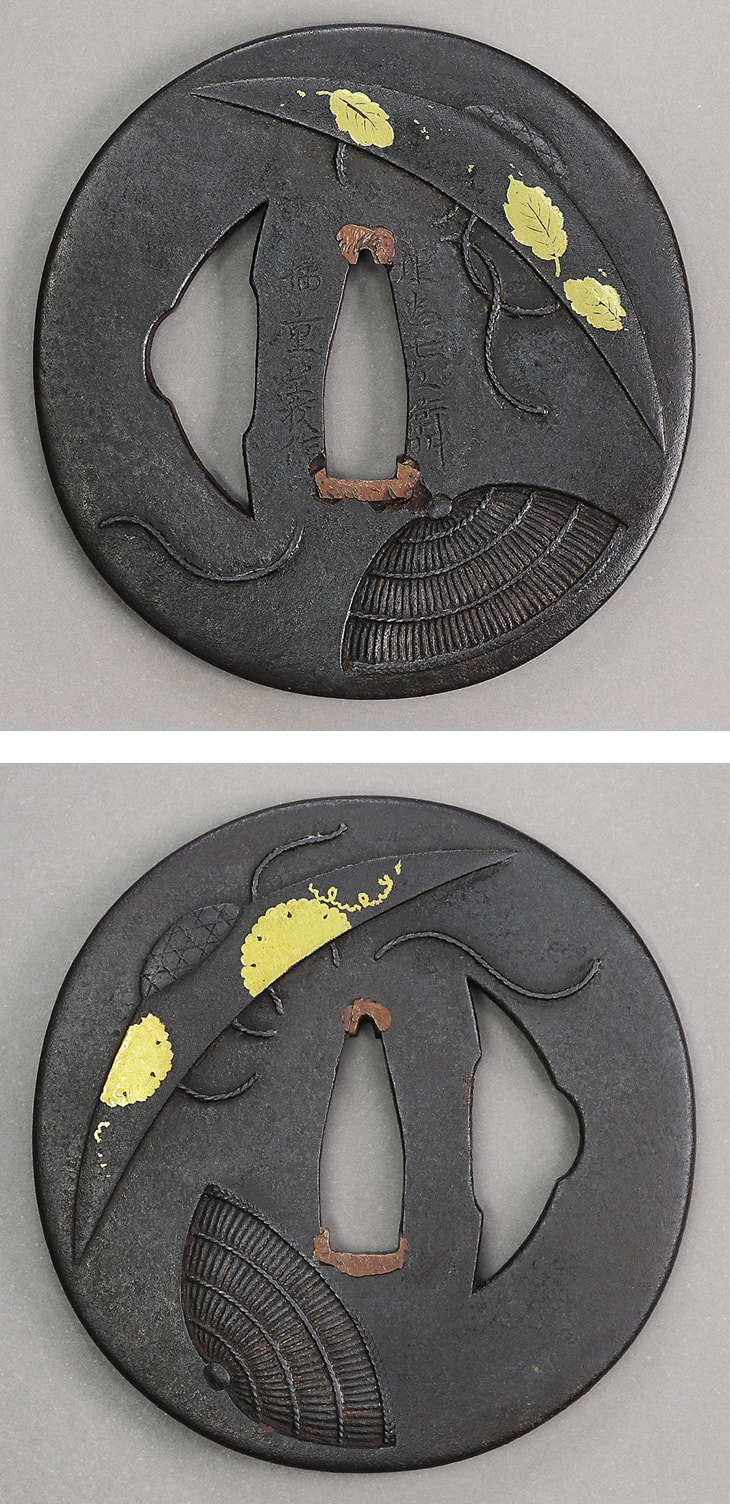
Tsuba - Hozon - by Umetada Shigeyoshi - Kasazukushi Zu (Umbrella Motif) by Umetada Shichizaemon Tachibana ShigeyoshiTsuba - Hozon - by Umetada Shigeyoshi - Kasazukushi Zu (Umbrella Motif) by Umetada Shichizaemon Tachibana Shigeyoshi

Tsuba

ByUmetada Shigeyoshi
¥125,000
Tetsugendo
Tokuho
Tsuba - Tokuho - by Umetada School - Spectacular soft metal tsuba by the Umetada SchoolTsuba - Tokuho - by Umetada School - Spectacular soft metal tsuba by the Umetada School

Tsuba

ByUmetada School
¥4,750

Swords

  • Katana
  • Wakizashi
  • Tantō
  • Tachi
  • Naginata
  • Yari

Fittings

  • Tsuba
  • Fuchi-Kashira
  • Kozuka
  • Menuki

By Certification

  • Tokujū
  • Jūyō
  • Tokuho
  • Hozon

Resources

  • Dealer Directory
  • Artist Directory
  • Glossary
  • Browse All
Nihontowatch© 2026
TermsPrivacyCookiesAbout

Description

This is a tsuba made by Umetada Myoju, a renowned metalworker from the Momoyama period. The tsuba is designated as Juyo Tosogu by the NBTHK. It features a design of kumembo (九年母, a type of citrus fruit) in suaka-ji (素銅地, copper base) with shakudo (赤銅) inlay, a motif favored by Myoju.

NBTHK Setsumei

Jūyō-Tōsōgu, 4th Session — Designated February 10, 1960 Tsuba, mei: Umetada Myōju (埋忠明寿) Measurements Tate (height): 2 sun 6 bu 5 rin (approx. 8.03 cm) Yoko (width): 2 sun 4 bu 5 rin (approx. 7.42 cm) Thickness: 1 bu (approx. 0.30 cm) Description Form: tate-maru-gata (vertical round form) Material: suaka (refined copper) plate Construction: ichimai (single plate) Design: Kunenbō citrus (九年母) fruit with branches, leaves, and trees Decoration: - On the front, at the upper center is a kunenbō fruit motif with a single fruit, branch, and leaves; at the lower right is likewise a single fruit with branch and leaves; and at the lower left, trees, branches, and leaves are inlaid. - These are executed chiefly in shakudō hira-zōgan (flat inlay). In places, “worm-eaten” effects and water droplets are rendered with silver hira-zōgan. - On the reverse, the left half shows a tree and a single fruit; at the upper center are a fruit with branch and leaves; and at the lower right, again a fruit with branch and leaves, all similarly in hira-zōgan. Rim: fitted with a shakudō fukurin (rim cover) Hitsu-ana: one hitsu-ana (kata-hitsu) Signature: on the seppa-dai, “Umetada” (埋忠) on the right and “Myōju” (明寿) on the left Artisan Umetada Myōju, resident of Nishijin in Yamashiro Province. Era Momoyama period. Explanation This is the work of Umetada Myōju of Nishijin in Yamashiro Province. Although Myōju is widely known as the founder of the shintō (new-sword) tradition, he is even more celebrated as a metalworker, and the surviving works by his hand are limited to tsuba. His greatest strength lay in the technique of hira-zōgan employing various unusual metals (kawarigane) and in devising fresh, pictorially oriented designs. Among these, his most accomplished achievements are his skillful stylization of motifs such as fruit trees and butterflies, woven together within the small surface of a tsuba—the source of his enduring fame and a clear expression of Momoyama-period taste. Indeed, the pictorial manner of design, the hira-zōgan technique, and the use of non-iron metals as the ground material all find their earliest beginning with Myōju. This tsuba likewise uses a suaka ground, with shakudō flat inlay and sparing use of silver to strong effect. It is regrettable that the ground shows slight damage; and the hitsu-ana was likely added later.

NihontoWatch MonNihontoWatch
MarketAuctionsEncyclopedia
Fittings›Umetada›Myoju›Tsuba: Umetada Myoju - Juyo Tosogu
tsubaJūyō
Umetada Myoju

Tsuba: Umetada Myoju - Juyo Tosogu

mei · Momoyama

SOLD
Umetada Myoju — 1 of 27
Umetada Myoju — 2 of 27
Umetada Myoju — 3 of 27
Umetada Myoju — 4 of 27
Umetada Myoju — 5 of 27
Umetada Myoju — 6 of 27
Umetada Myoju — 7 of 27
Umetada Myoju — 8 of 27
Umetada Myoju — 9 of 27
Umetada Myoju — 10 of 27
Umetada Myoju — 11 of 27
Umetada Myoju — 12 of 27
Umetada Myoju — 13 of 27
Umetada Myoju — 14 of 27
Umetada Myoju — 15 of 27
Umetada Myoju — 16 of 27
Umetada Myoju — 17 of 27
Umetada Myoju — 18 of 27
Umetada Myoju — 19 of 27
Umetada Myoju — 20 of 27
Umetada Myoju — 21 of 27
Umetada Myoju — 22 of 27
Umetada Myoju — 23 of 27
Umetada Myoju — 24 of 27
Umetada Myoju — 25 of 27
Umetada Myoju — 26 of 27
Umetada Myoju — 27 of 27
1 / 27
1 / 27
Umetada Myoju — 1 of 27Umetada Myoju — 2 of 27Umetada Myoju — 3 of 27Umetada Myoju — 4 of 27Umetada Myoju — 5 of 27Umetada Myoju — 6 of 27Umetada Myoju — 7 of 27Umetada Myoju — 8 of 27Umetada Myoju — 9 of 27Umetada Myoju — 10 of 27Umetada Myoju — 11 of 27Umetada Myoju — 12 of 27Umetada Myoju — 13 of 27Umetada Myoju — 14 of 27Umetada Myoju — 15 of 27Umetada Myoju — 16 of 27Umetada Myoju — 17 of 27Umetada Myoju — 18 of 27Umetada Myoju — 19 of 27Umetada Myoju — 20 of 27Umetada Myoju — 21 of 27Umetada Myoju — 22 of 27Umetada Myoju — 23 of 27Umetada Myoju — 24 of 27Umetada Myoju — 25 of 27Umetada Myoju — 26 of 27Umetada Myoju — 27 of 27
Measurements & details
Maker

Umetada Myoju

Era

Momoyama

Province

Yamashiro

Signature

Signed

Papers

Jūyō #4 (NBTHK)

Description

This is a tsuba made by Umetada Myoju, a renowned metalworker from the Momoyama period. The tsuba is designated as Juyo Tosogu by the NBTHK. It features a design of kumembo (九年母, a type of citrus fruit) in suaka-ji (素銅地, copper base) with shakudo (赤銅) inlay, a motif favored by Myoju.

NBTHK Zufu Commentary

Juyo #4

AI translation — may contain errors

-Tōsōgu, 4th Session — Designated February 10, 1960

, : Myōju (埋忠明寿)

Measurements (height): 2 6 5 (approx. 8.03 cm) (width): 2 4 5 (approx. 7.42 cm) Thickness: 1 (approx. 0.30 cm)

Description Form: (vertical round form) Material: (refined copper) plate Construction: (single plate) Design: Kunenbō citrus (九年母) fruit with branches, leaves, and trees Decoration:

  • On the front, at the upper center is a kunenbō fruit motif with a single fruit, branch, and leaves; at the lower right is likewise a single fruit with branch and leaves; and at the lower left, trees, branches, and leaves are inlaid.
  • These are executed chiefly in hira-zōgan (flat inlay). In places, “worm-eaten” effects and water droplets are rendered with silver hira-zōgan.
  • On the reverse, the left half shows a tree and a single fruit; at the upper center are a fruit with branch and leaves; and at the lower right, again a fruit with branch and leaves, all similarly in hira-zōgan. Rim: fitted with a (rim cover) : one () Signature: on the , “” (埋忠) on the right and “Myōju” (明寿) on the left

Artisan Myōju, resident of Nishijin in Yamashiro Province.

Era period.

Explanation This is the work of Myōju of Nishijin in Yamashiro Province. Although Myōju is widely known as the founder of the (new-sword) tradition, he is even more celebrated as a metalworker, and the surviving works by his hand are limited to .

His greatest strength lay in the technique of hira-zōgan employing various unusual metals (kawarigane) and in devising fresh, pictorially oriented designs. Among these, his most accomplished achievements are his skillful stylization of motifs such as fruit trees and butterflies, woven together within the small surface of a —the source of his enduring fame and a clear expression of -period taste. Indeed, the pictorial manner of design, the hira-zōgan technique, and the use of non-iron metals as the ground material all find their earliest beginning with Myōju.

This likewise uses a ground, with flat inlay and sparing use of silver to strong effect. It is regrettable that the ground shows slight damage; and the was likely added later.

About the maker

Myoju

明寿

Shinto · around 1590-1631

›

Umetada Myoju (埋忠明寿) resided in Nishijin, Kyoto, and was active from the Bunroku era through the Kan'ei era, with a career spanning the late Momoyama into early Edo periods. He is said to have been born in Eiroku 1 (1558) under the earlier name Sokichi, with the common name Hikojiro; he later took the tonsure and adopted the name Myoju, and is transmitted as having died in Kan'ei 8 (1631) at the age of seventy-four. The Umetada house claimed descent from Sanjo Munechika and was a distinguished lineage of metalworkers who, over successive generations, served the Ashikaga shogunal family. Revered as the "founder of shinto smithing," Myoju was also highly accomplished in toshin-bori (carving on sword blades) and is known as the teacher of Hizen Tadayoshi and Higo no Kami Teruhiro. Together with Kaneie and Nobuie, he is celebrated as one of the "three great masters of the Momoyama period."[[c:1]] His activities extended across many fields — swordmaking, the production of steel and sword fittings, the shortening (suriage) of blades, the insertion of inlaid signature attributions (zogan-mei), and the production of sword mountings — and he accepted commissions for the Toyotomi and Tokugawa houses as well as many daimyo families.

Myoju's tsuba may be broadly divided into two categories: iron works and soft-metal (irogane) works. When the ground is iron, he expresses geometric patterns — sayagata, raimon (thunder pattern), kasumi-kaminari-mon (mist-and-thunder designs), and rinzu-mon — by means of gold nunome-zogan, a technique originally a forte of the Shoami lineage that Myoju may initially have adopted. His iron openwork includes celebrated masterpieces such as wheel (kuruma) sukashi and double-tomoe sukashi tsuba. When brass (shinchu), shakudo, or suaka (refined copper) serves as the ground, he develops compositions through a distinctive form of hira-zogan that retains only a slight relief (niku), deploying colored metals — gold, silver, shakudo, suaka, and other irogane — in novel combinations. His chosen subjects are auspicious trees and plants — grapes, kunenbo (a citrus resembling yuzu), oak, pine and bamboo — "boldly stylized into patterns, producing an exceptionally fresh and courtly (miyabi) taste." In his iron works, the nejikaeshi-mimi (twisted turned-back rim) and gold rim inlay are techniques "at which he particularly excelled,"[[c:6]] while the iron itself is invariably "carefully selected" and displays excellent quality. In soft-metal works, ground textures including hammered (tsuchime-ji), polished (migaki-ji), and file-finished surfaces are deployed with meticulous care to heighten the pictorial effect.

Across the NBTHK setsumei, Myoju's work is consistently described as possessing "the vitality that preserves the very momentum of brushwork,"[[c:5]] with refined linework that vividly recalls the paintings of the Rinpa tradition[[c:3]]; a "strong connection with Hon'ami Koetsu and Tawaraya Sotatsu" is repeatedly affirmed, and his ability is said to rival that of these contemporaries. The pictorial manner of design, the hira-zogan technique, and the use of non-iron metals as the ground material "all find their earliest beginning with Myoju" — he stands as the originator of an entire aesthetic vocabulary in kinkō (metalwork). His compositions are praised for giving "priority to open space" while expanding motifs into large-scale patterns, and the coloration of his inlay is executed "with truly meticulous care." He is consistently identified as "a representative figure in the world of Momoyama-period art and craft," whose works manifest "the spirited character of Momoyama culture"[[c:2]] and convey "a deep, resonant charm" that makes fully visible the essence of a master craftsman.

Historical importance

Where Myoju stands among comparable artisans: across all of nihontō, and within tradition, era, and period. The tiers (Foremost · Leading · Major · Notable) weigh official designations from the NBTHK and Japan's Agency for Cultural Affairs, together with historical honors of lasting repute such as the Sansaku and Meibutsu-chō.

随一
Foremost
屈指
Leading
有数
Major
著名
Notable

Select a lens to see how it's measured.

Designation record
45 designated works
Jūyō Bunkazai
6
Jūyō Bijutsuhin
9
Tokubetsu Jūyō
7
Jūyō
23
Myoju — full profileShinto school
About the school

Umetada

埋忠

Shinto · Kyoto

51 pieces on the market now

›

The Umetada school is one of the most distinguished metalworking lineages of the Momoyama period, rooted in Nishijin, Kyoto, and claiming descent from the legendary Sanjo Munechika. The house served the Ashikaga shogunal family over successive generations, establishing deep foundations in the full range of sword-related arts -- swordmaking, blade carving (toshin-bori), the production of steel and fittings, the shortening of blades, the insertion of inlaid signature attributions (zogan-mei), and the making of mountings. Learn more →

9 recorded smiths77 designated works
Leading smiths
SmithEraDesignated
Myoju明寿1590-163145
Muneyoshi宗吉1596-16154
Naritsugu就次—0
Umetada Mitsushige光重1700-17500
Kaji’emon加治右衛門—0
Explore the Umetada school →
NBTHK Certificate
Jūyō Tōsōgu重要刀装具
Important Fitting
›

Exceptional craft of very high artistic value, judged to rank with a nationally recognized Important Art Object (Jūyō Bijutsuhin).

About the NBTHK›

The NBTHK (Nihon Bijutsu Tōken Hozon Kyōkai, the Society for the Preservation of Japanese Art Swords) is a public-interest incorporated foundation founded in 1948 and supervised by Japan’s Agency for Cultural Affairs (Bunkachō); it is based at the Japanese Sword Museum in Tokyo. Its expert panels physically examine each submitted work (shinsa) and issue a certificate (kanteishō) ranking it by artistic and historical merit. NBTHK papers are the most widely recognized standard of authentication for Japanese swords and fittings.

NBTHK official site→
Seller
I
Iida Koendo
Established 1880 · 146 yrs on the market
🇯🇵Ships from Japan
›
✓Verified dealeriidakoendo.com
✓Ships worldwide✓English supportWire transfer
Return policy

Customer-initiated returns accepted within two days of arrival; return shipping paid by customer and fees non-refundable. Returns/refunds unavailable for overseas deliveries.

View all of Iida Koendo’s listings→View this item on the dealer’s site→

Previously sold by Umetada Myoju

Tozando
Tanto - by Umetada Myoju - MyojuTanto - by Umetada Myoju - Myoju
Sold

Tantō

ByUmetada Myoju
SOLD

More from the Umetada school

View all →
Bushido Antique Japanese Swords
Tsuba - by Umetada School - Kyo Umetada Kiku TsubaTsuba - by Umetada School - Kyo Umetada Kiku Tsuba

Tsuba

ByUmetada School
¥750
Bushido Antique Japanese Swords
Tsuba - by Umetada School - Ko Umetada Tsuba ChrysanthemumTsuba - by Umetada School - Ko Umetada Tsuba Chrysanthemum

Tsuba

ByUmetada School
¥650
Bushido Antique Japanese Swords
Tsuba - by Umetada School - Well bucket & morning glory vine motif TsubaTsuba - by Umetada School - Well bucket & morning glory vine motif Tsuba

Tsuba

ByUmetada School
¥675
Nihon Collection
Tokuho
Tsuba - Tokuho - by Umetada School - Umetada - Grapevine DesignTsuba - Tokuho - by Umetada School - Umetada - Grapevine Design

Tsuba

ByUmetada School
¥8,100
Samurai Nippon
Tokuho
Tsuba - Tokuho - by Umetada School - Genjiko Sukashi ZuTsuba - Tokuho - by Umetada School - Genjiko Sukashi Zu

Tsuba

ByUmetada School
¥1,500,000
Samurai Nippon
Hozon
Tsuba - Hozon - by Umetada Shichiza - Kanko Shirasagi ZuTsuba - Hozon - by Umetada Shichiza - Kanko Shirasagi Zu

Tsuba

ByUmetada Shichiza
¥1,100,000
Samurai Nippon
Hozon
Tsuba - Hozon - by Umetada Shigeyoshi - Kasazukushi Zu (Umbrella Motif) by Umetada Shichizaemon Tachibana ShigeyoshiTsuba - Hozon - by Umetada Shigeyoshi - Kasazukushi Zu (Umbrella Motif) by Umetada Shichizaemon Tachibana Shigeyoshi

Tsuba

ByUmetada Shigeyoshi
¥125,000
Tetsugendo
Tokuho
Tsuba - Tokuho - by Umetada School - Spectacular soft metal tsuba by the Umetada SchoolTsuba - Tokuho - by Umetada School - Spectacular soft metal tsuba by the Umetada School

Tsuba

ByUmetada School
¥4,750

Swords

  • Katana
  • Wakizashi
  • Tantō
  • Tachi
  • Naginata
  • Yari

Fittings

  • Tsuba
  • Fuchi-Kashira
  • Kozuka
  • Menuki

By Certification

  • Tokujū
  • Jūyō
  • Tokuho
  • Hozon

Resources

  • Dealer Directory
  • Artist Directory
  • Glossary
  • Browse All
Nihontowatch© 2026
TermsPrivacyCookiesAbout
NihontoWatch Mon

NihontoWatch

MarketAuctions
Encyclopedia
NihontoWatch Mon

NihontoWatch

MarketAuctions
Encyclopedia