 NihontoWatchNihontoWatch
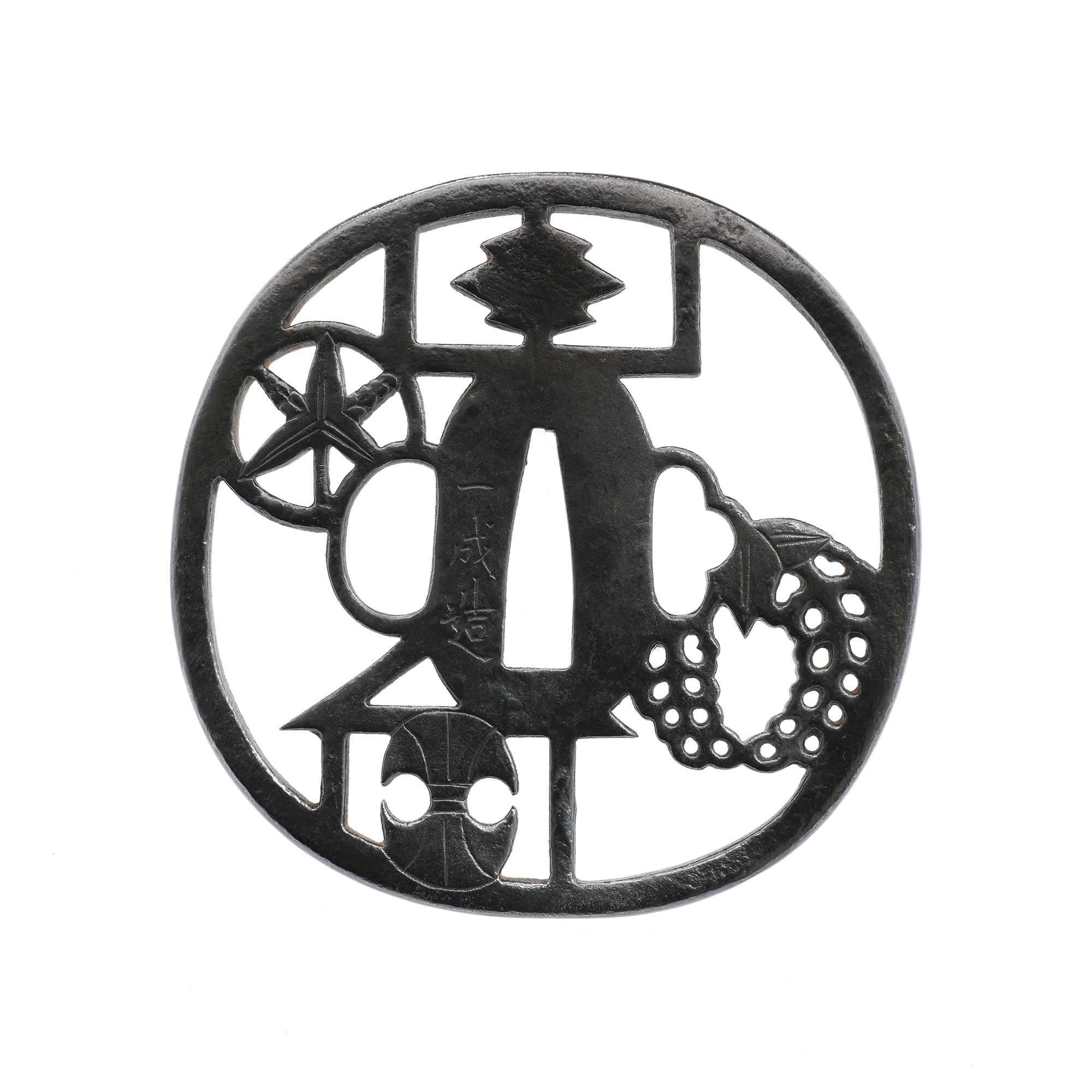
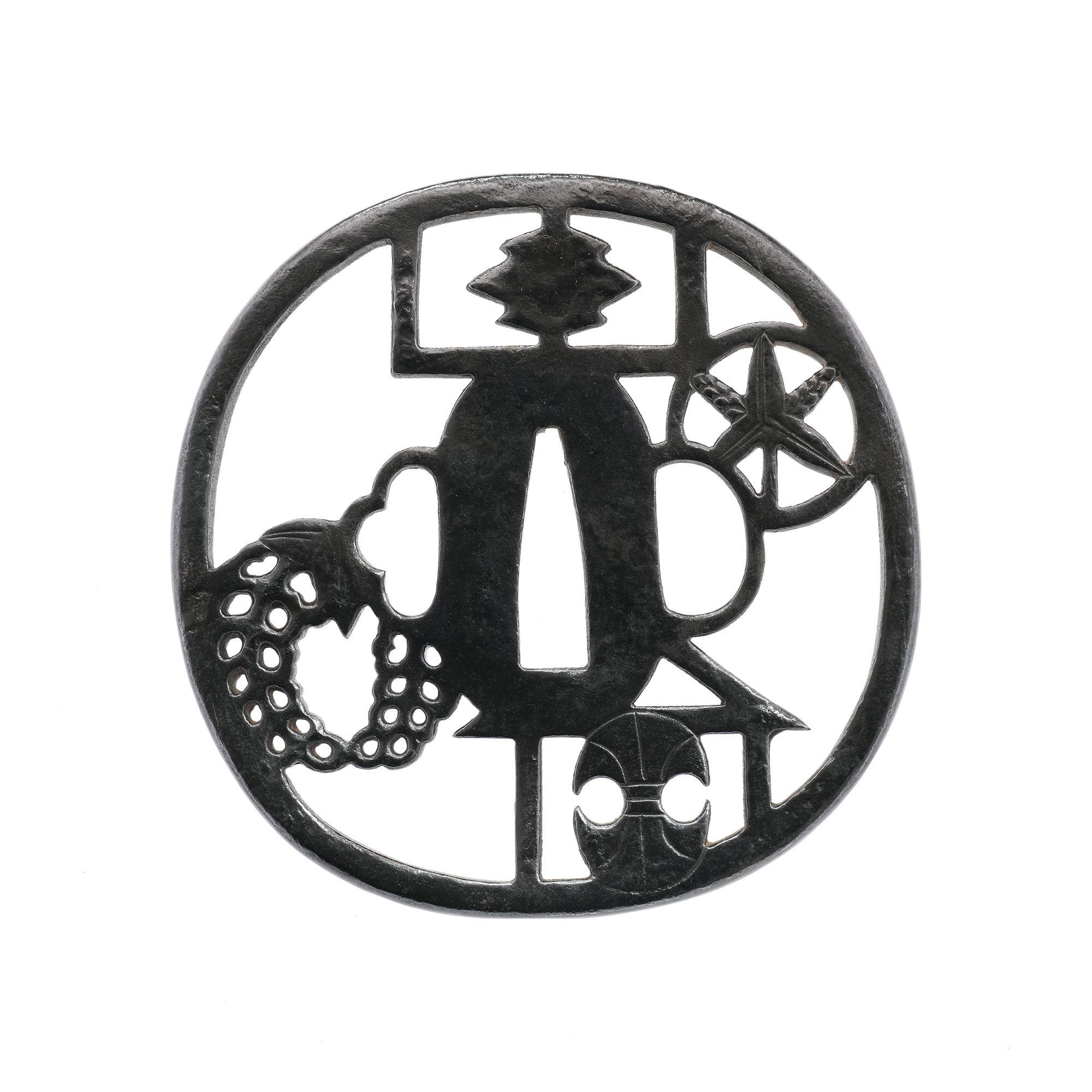
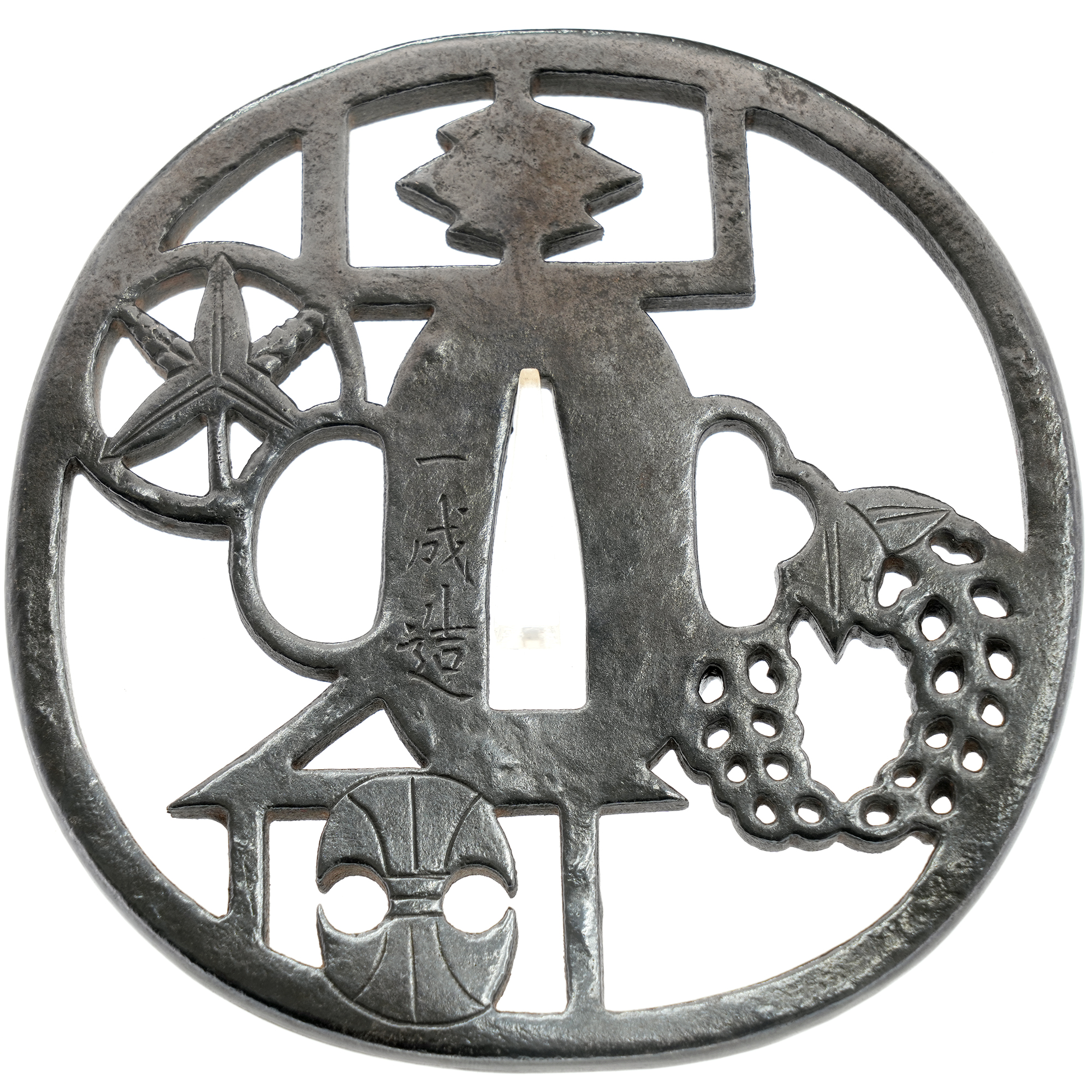
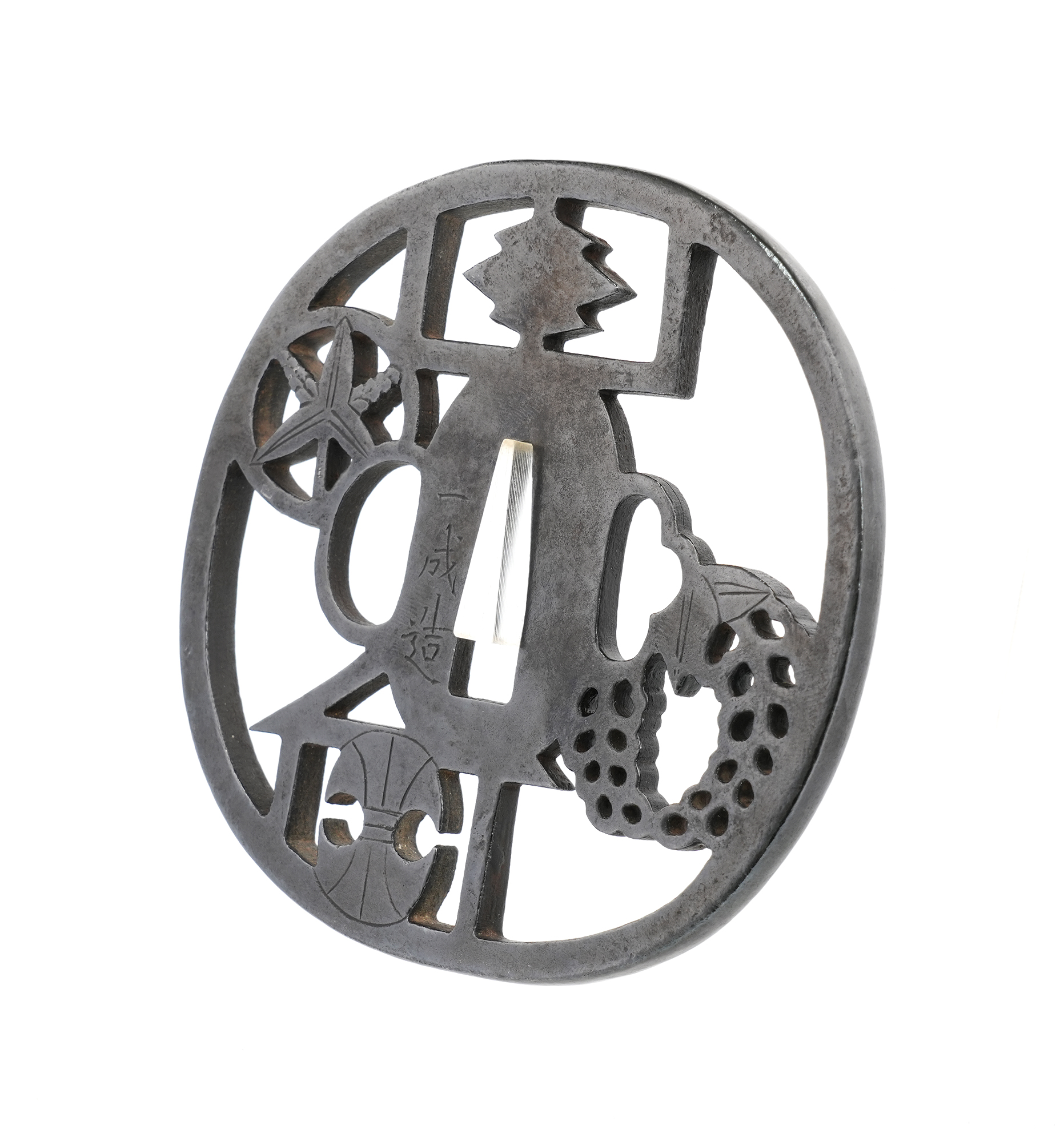
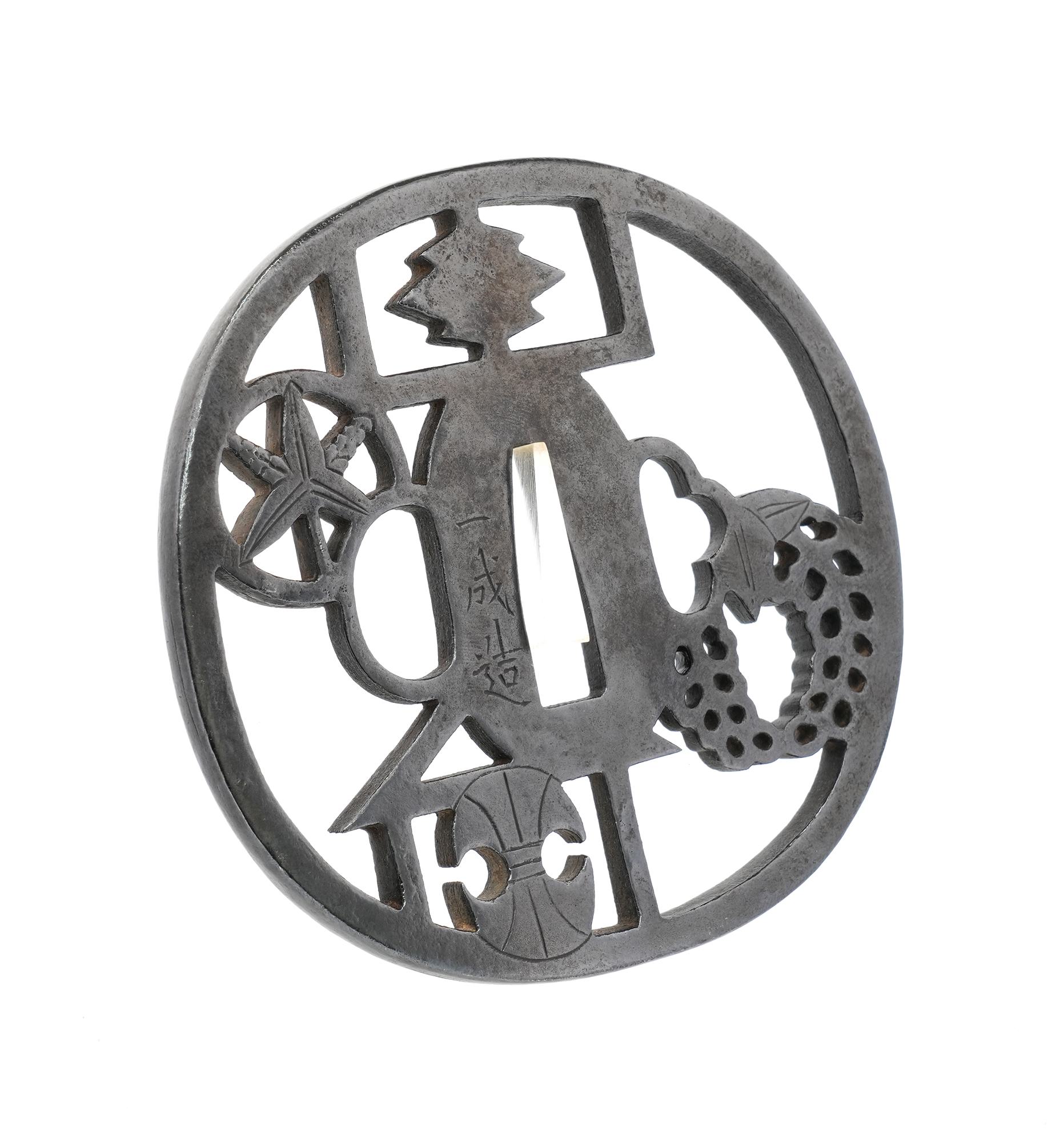
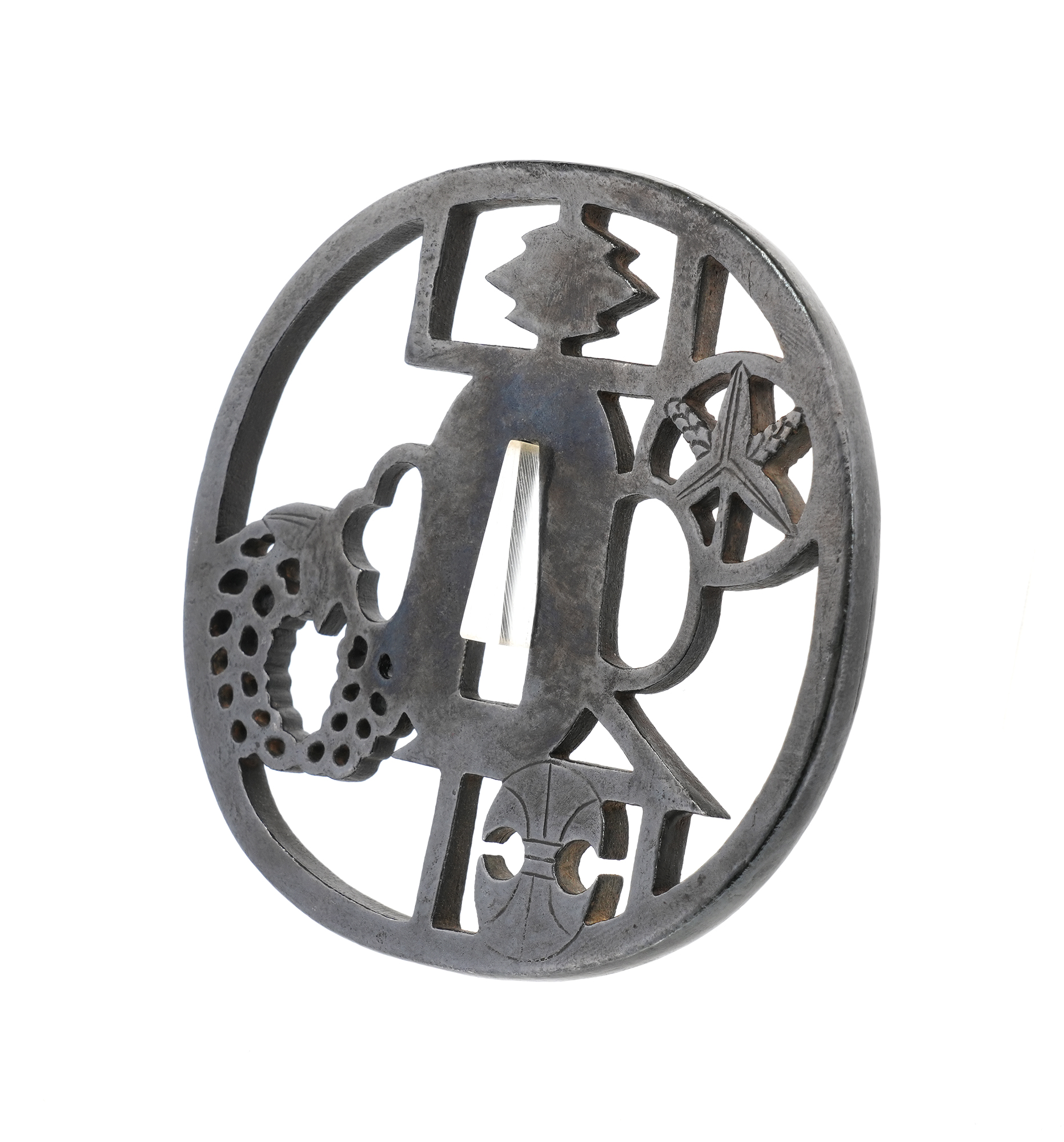
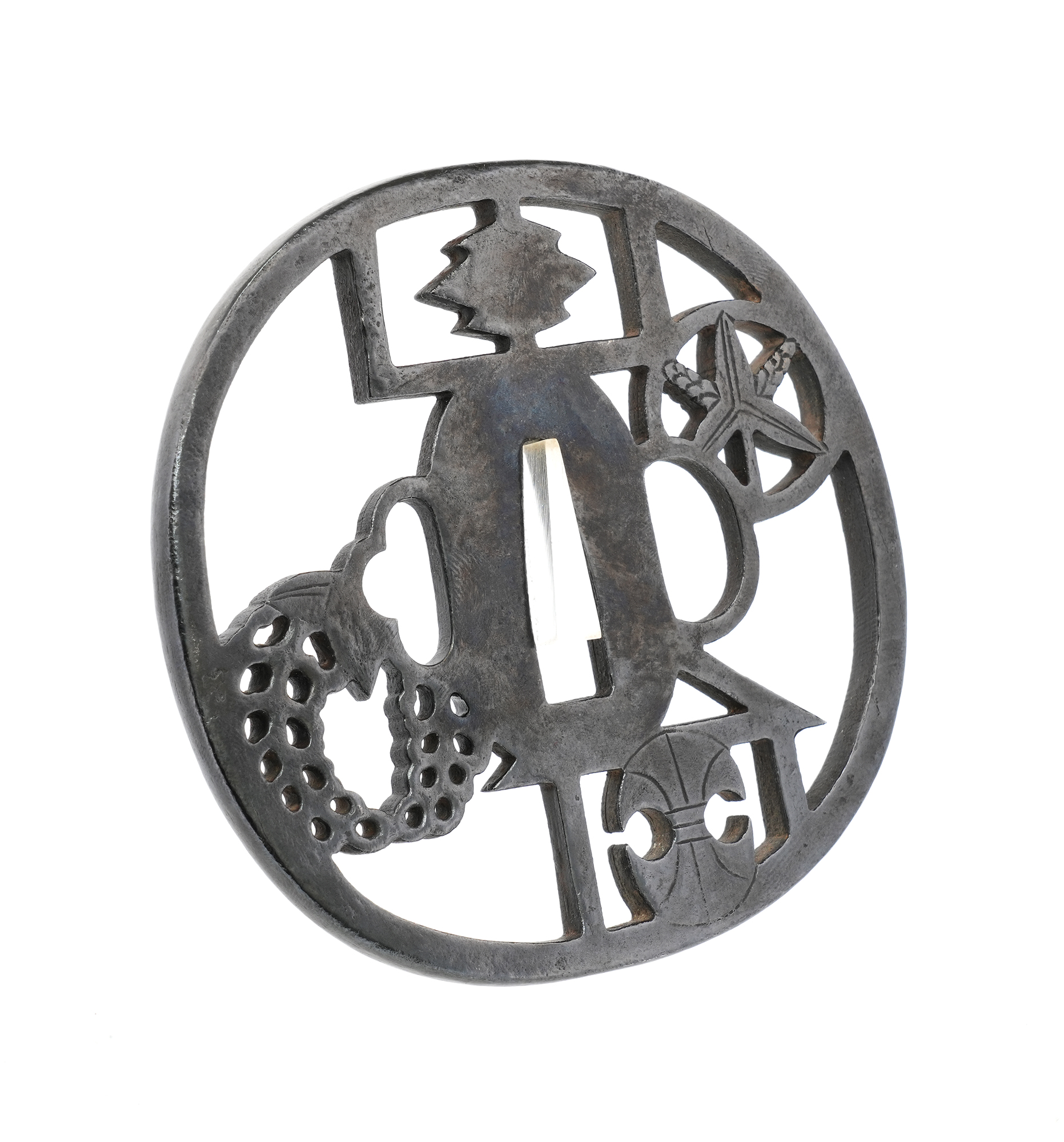
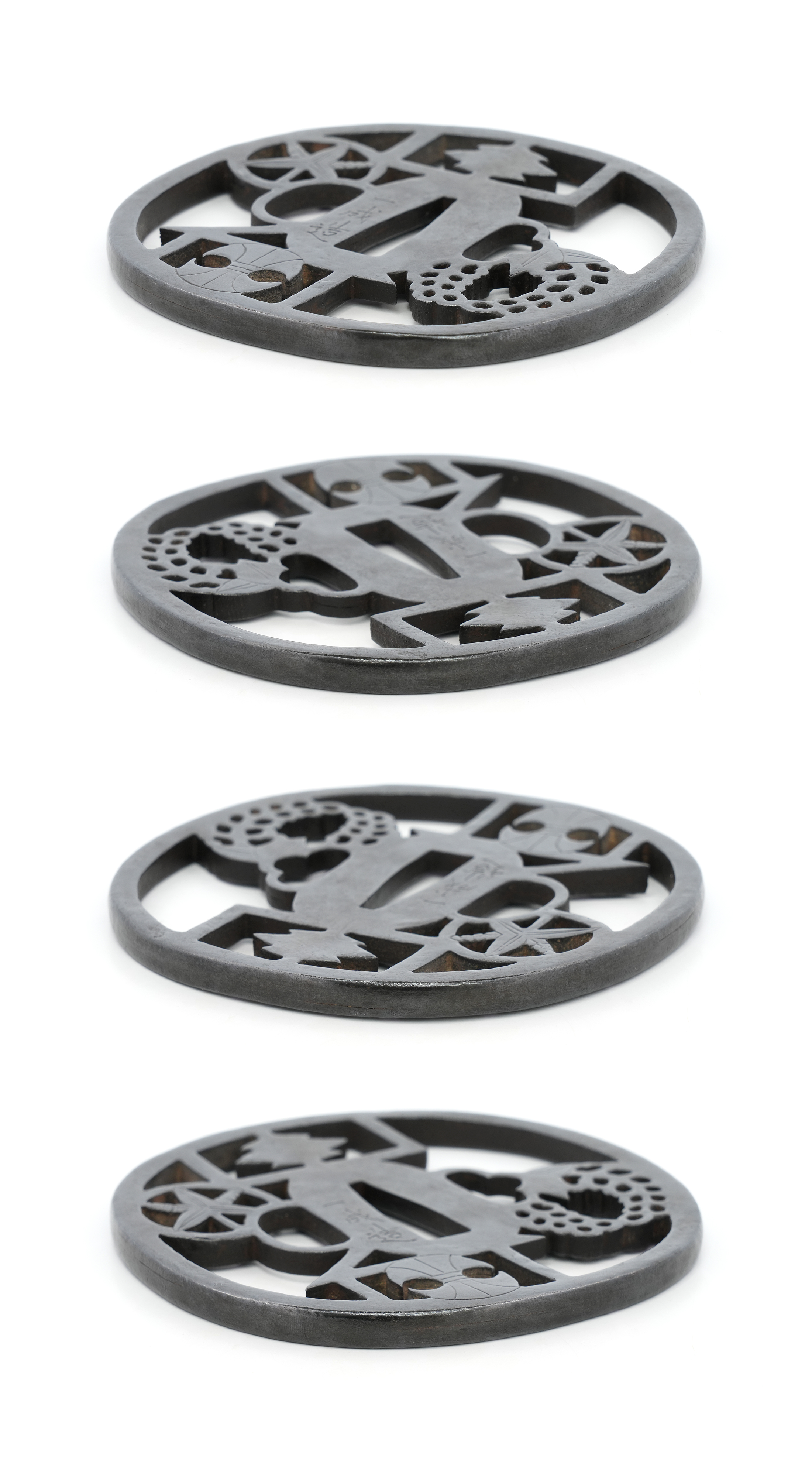
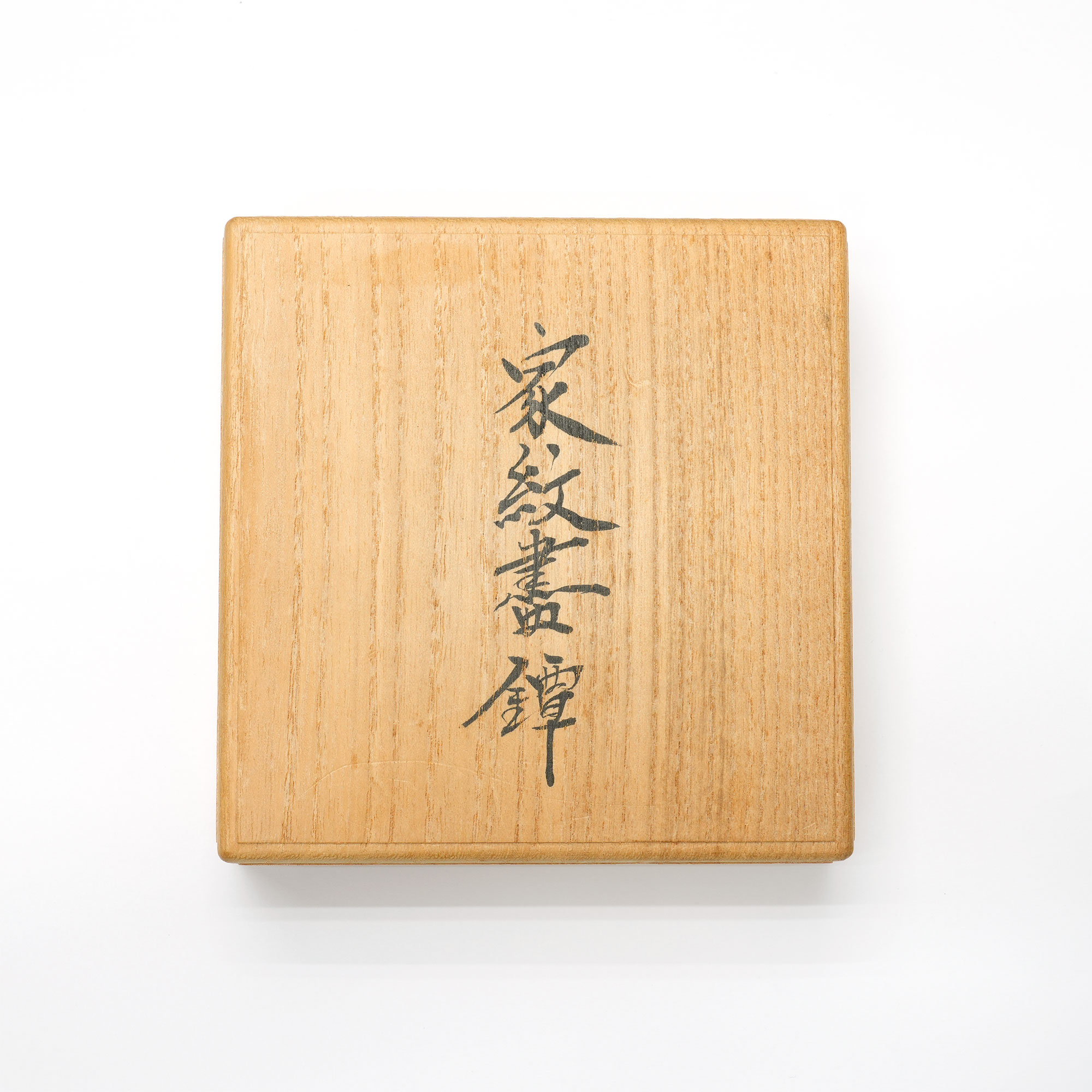
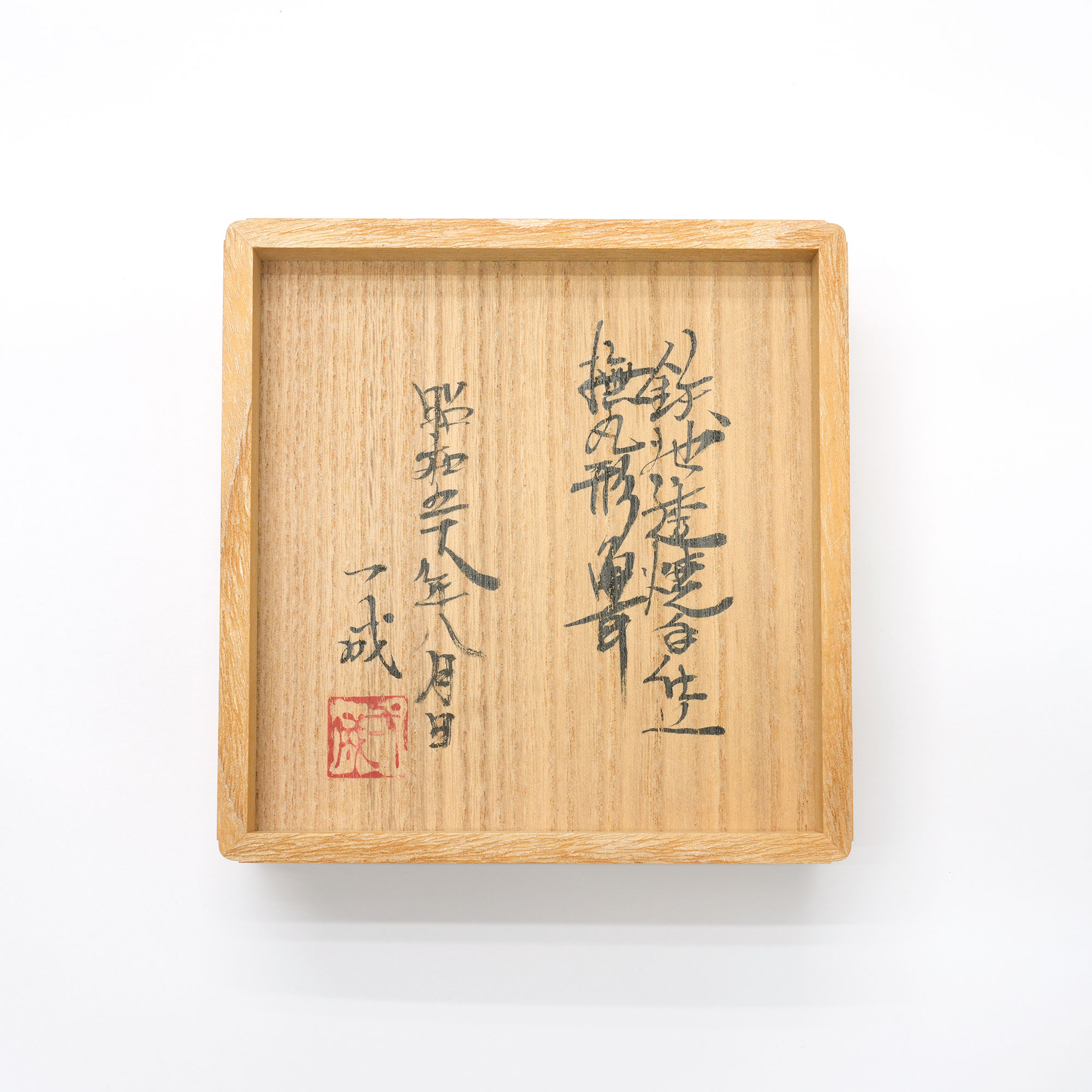
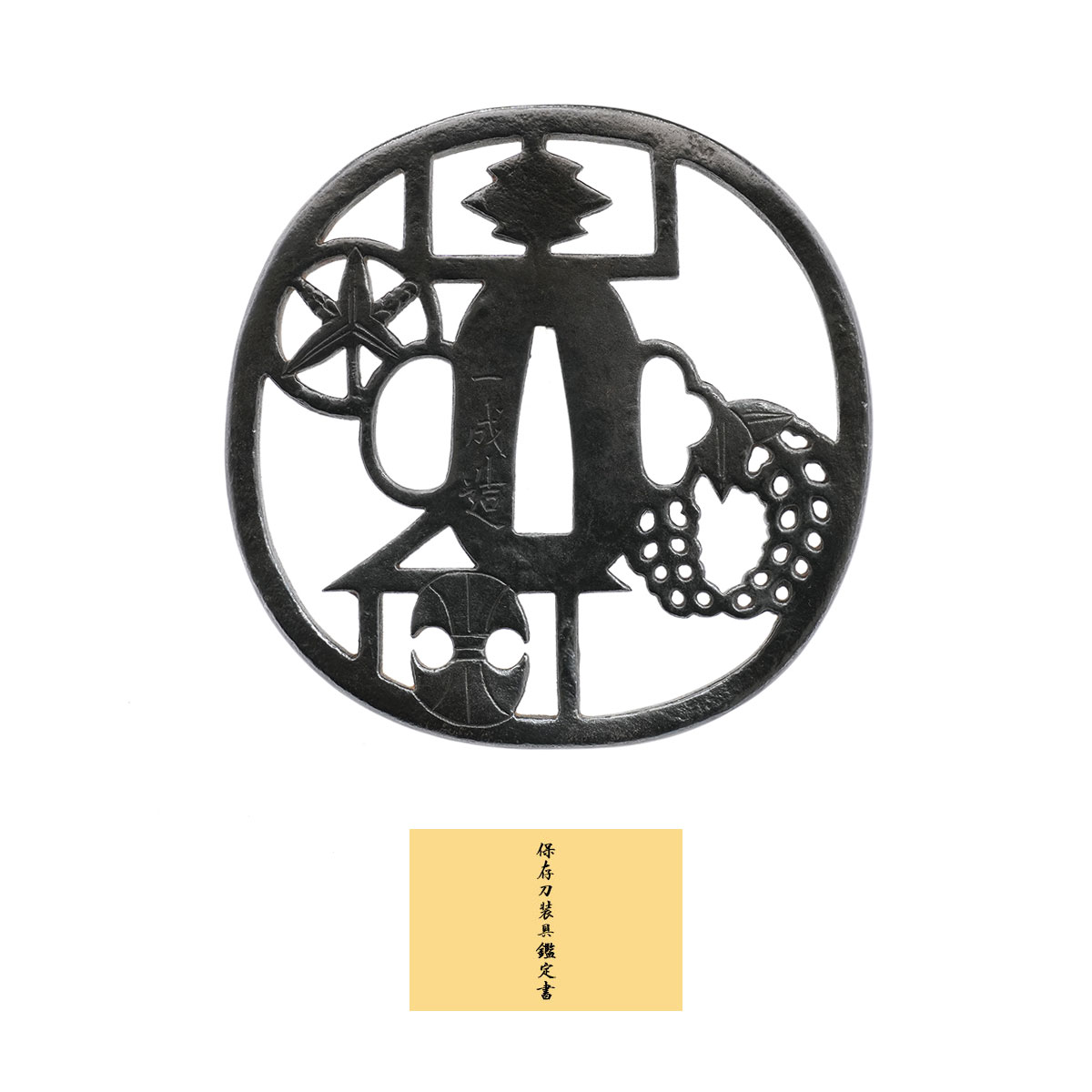
Kazunari is the mei used by Nariki Kazuhiko, a modern tsubako who began researching and producing tsuba around Showa 35, pursuing the reproduction of tetsu-aji through self-made iron and forging while deeply studying old tsuba such as Owari, Akasaka, and Kanayama. He became a holder of Intangible Cultural Property of Nakatsugawa City in Showa 56, received the Medal with Yellow Ribbon in Showa 61, was certified as Mukansa by the Nihon Bijutsu Token Hozon Kyokai in Heisei 21, and left behind mei such as "Kazunari" and "Kazunari zo". The appeal of Kazunari's work lies not in simply copying the shapes of old tsuba, but in incorporating the structural strength, the volume of the tetsu-ji, and even the negative space created by the sukashi found in old works into his own forged iron, reconstructing them with high prestige as modern tsuba. This item is a Kamon-zukushi sukashi tsuba with multiple family crests and patterns boldly pierced into a maru-gata tetsu-ji; to the right of the seppa-dai is a sagari-fuji crest drawing elegant curves, at the upper left is a maru-ni-omodaka crest, and at the top, a kagi-shaped frame made by bending the tetsu-ji at right angles is provided with a matsukawa-bishi crest incorporated inside it, while at the lower left, a fundo-noshi crest is contained within an azumaya-shaped outline. Rather than simply lining up designs of different shapes, it is a work of high design quality that skillfully alternates between parts where the tetsu-ji is left thick and parts with large sukashi centered around the seppa-dai, clearly showing individual crests while unifying the whole into a single powerful composition. The sagari-fuji crest on the right side brings soft movement to the tsuba surface through the supple curves of the hanging fujifusa and leaves, and the wisteria design, which evokes prosperity and continuous connection, adds an elegant flavor to the hard tetsu-ji. The omodaka depicted in the maru-ni-omodaka crest at the upper left is also called "shogun-so" due to the appearance of its leaves resembling arrowheads and is known as a plant pattern favored by samurai families; its form, concisely contained within the circle, shows a vivid contrast with the curves of the sagari-fuji. At the top, a kagi-shaped frame formed by bending straight lines at right angles spreads to the left and right as if straddling the seppa-dai, and by placing a matsukawa-bishi crest, which overlaps large and small diamonds, at its center, it creates a tightened accent of neat straight lines and sharp ridges within the round tsuba. At the lower left, an azumaya shape reminiscent of a roof and pillars is left in the tetsu-ji, with a fundo-noshi crest incorporated inside it; by overlapping the symmetry of the fundo, which measures accurate weight, with the celebratory intent of the noshi representing auspiciousness, it forms a composition where plant crests, geometric patterns, and lucky omens resonate with each other, increasing in flavor the more it is deciphered. The tetsu-ji shows a dense kitae-hada and a calm luster characteristic of Kazunari tsuba, and while the sukashi edges are sharpened and refined, a slight roundness is given toward the mimi, giving the outline a soft volume that is not just hardness. In the thin curved parts of the sagari-fuji, the neat outline of the maru-ni-omodaka, the matsukawa-bishi provided within the kagi-shaped frame, and the fundo-noshi contained within the azumaya shape, there is no strain in the connection of the tetsu-ji even when overlapping large and small sukashi, and the fact that the design does not collapse even when flipped over reveals the design power unique to an author who deeply researched old tsuba and the certain skill to handle forged iron at will. Possessing a grand appearance exceeding 82 mm and a certain volume of 108 grams, if matched with a kuro-urushi saya, the outlines of the various crests will emerge clearly as shadows, and if displayed against a bright background, the beautiful connection between the complex sukashi and the tetsu-ji can be appreciated to the fullest. While containing designs of different flavors—sagari-fuji, maru-ni-omodaka, matsukawa-bishi in a kagi-gata, and fundo-noshi in an azumaya-gata—into a single piece, this item, unified into a powerful kamon-zukushi form without feeling scattered, is an impressive work suitable for both collecting and display, where one can fully enjoy the results of Mukansa tsubako Kazunari's forged iron and research into old tsuba.
Offered by Toushin

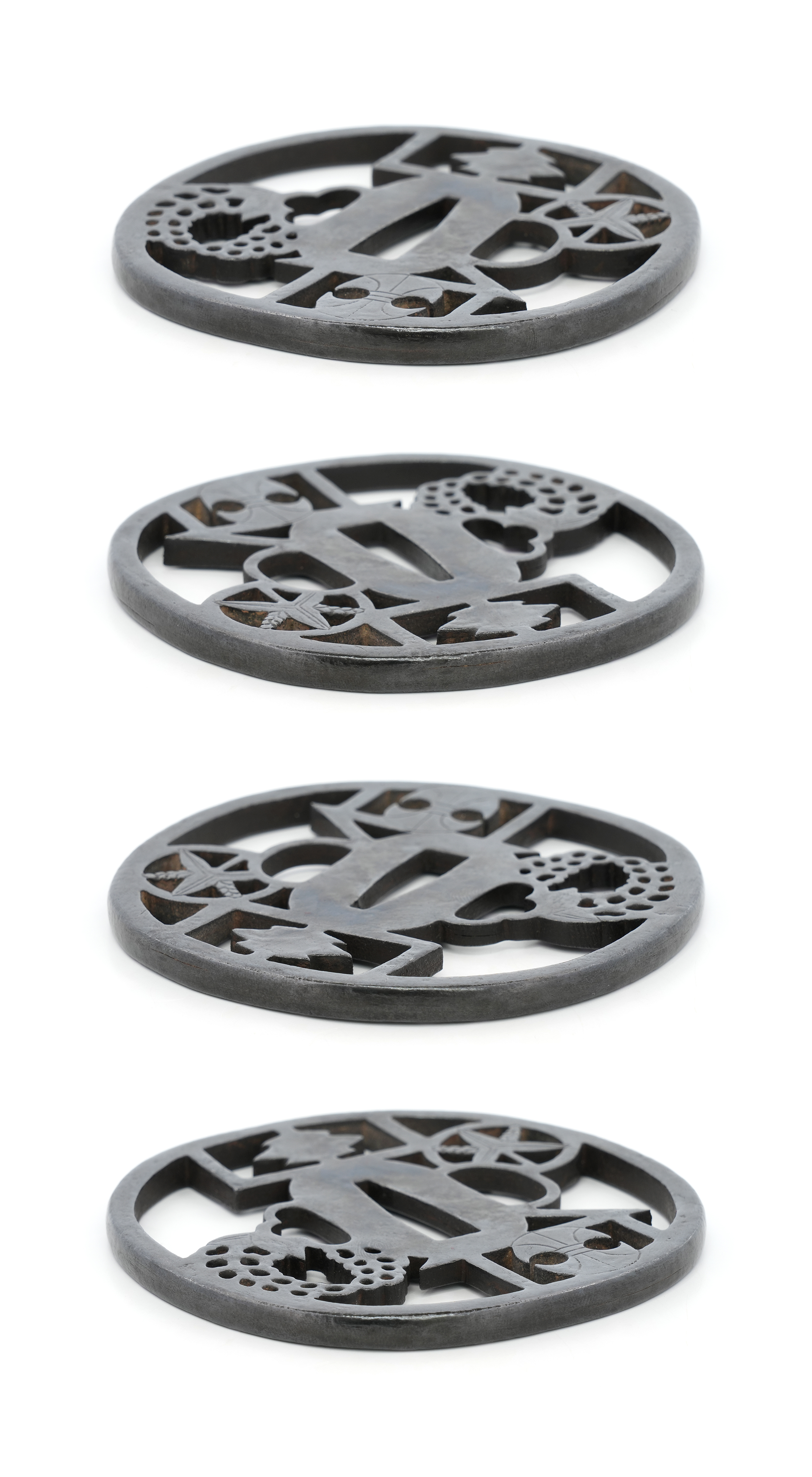
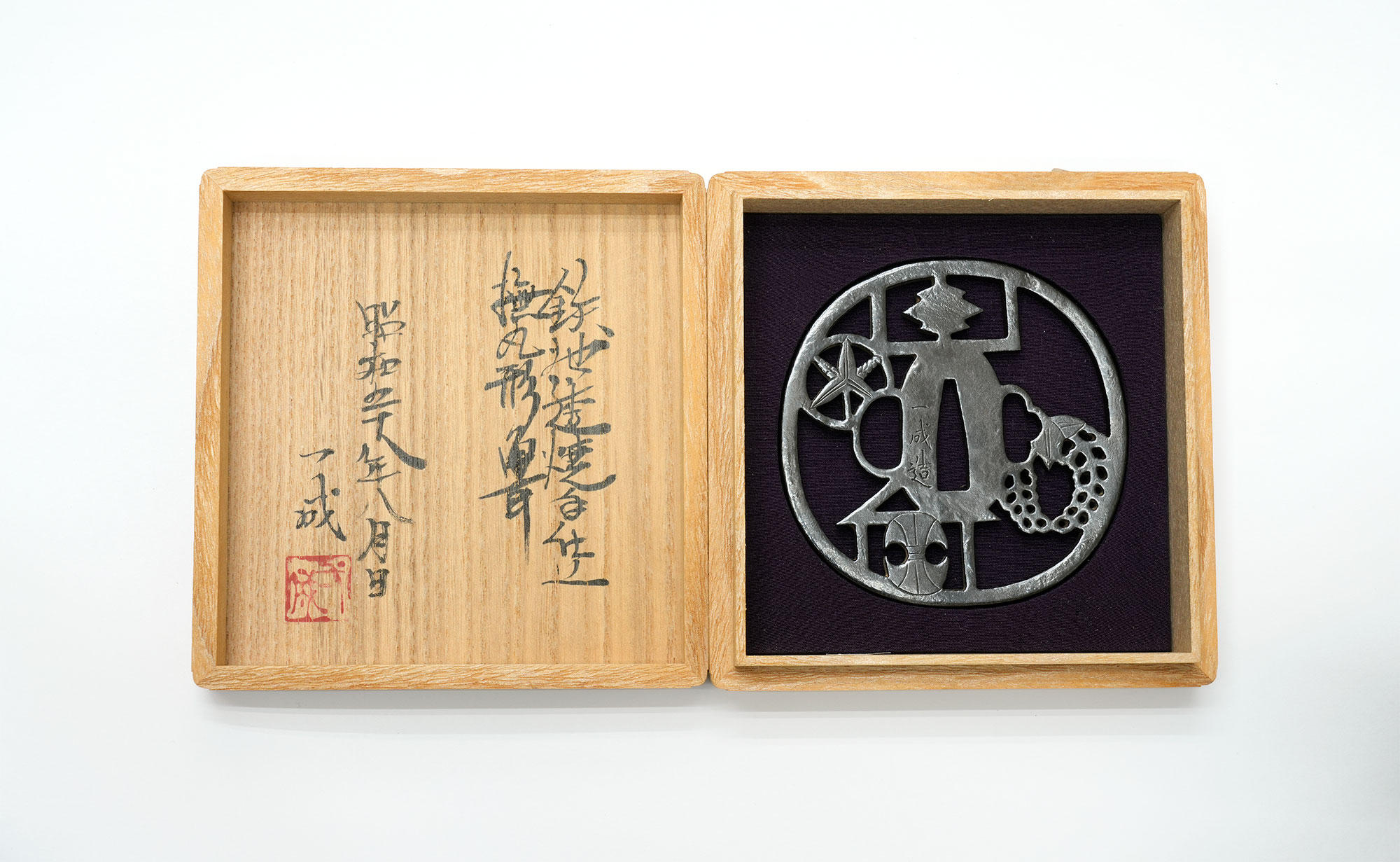
Kazunari
Shōwa
Signed
Hozon (NBTHK)
As written by the shop
Machine translation from the shop's Japanese · may contain errors ·
Certifies a genuine fitting worth preserving: a correct signature, or, if unsigned, an identifiable era and school, with recognized artistic and craft value.
The NBTHK (Nihon Bijutsu Tōken Hozon Kyōkai, the Society for the Preservation of Japanese Art Swords) is a public-interest incorporated foundation founded in 1948 and supervised by Japan’s Agency for Cultural Affairs (Bunkachō); it is based at the Japanese Sword Museum in Tokyo. Its expert panels physically examine each submitted work (shinsa) and issue a certificate (kanteishō) ranking it by artistic and historical merit. NBTHK papers are the most widely recognized standard of authentication for Japanese swords and fittings.
NBTHK official siteAs a rule we do not accept returns, except when we have sent a different item from the one ordered or when there is a significant discrepancy between the description and the item. If you wish to return an item, please contact us within 3 days of its arrival and then send it back.
¥495,000