Around 1800 Suishinshi Masahide argued in his writings that the craft must return to the old masters’ methods: the fukkotō revival. His greatest successor Naotane worked convincingly in Bizen and Sōshū manners that had been dead for centuries.
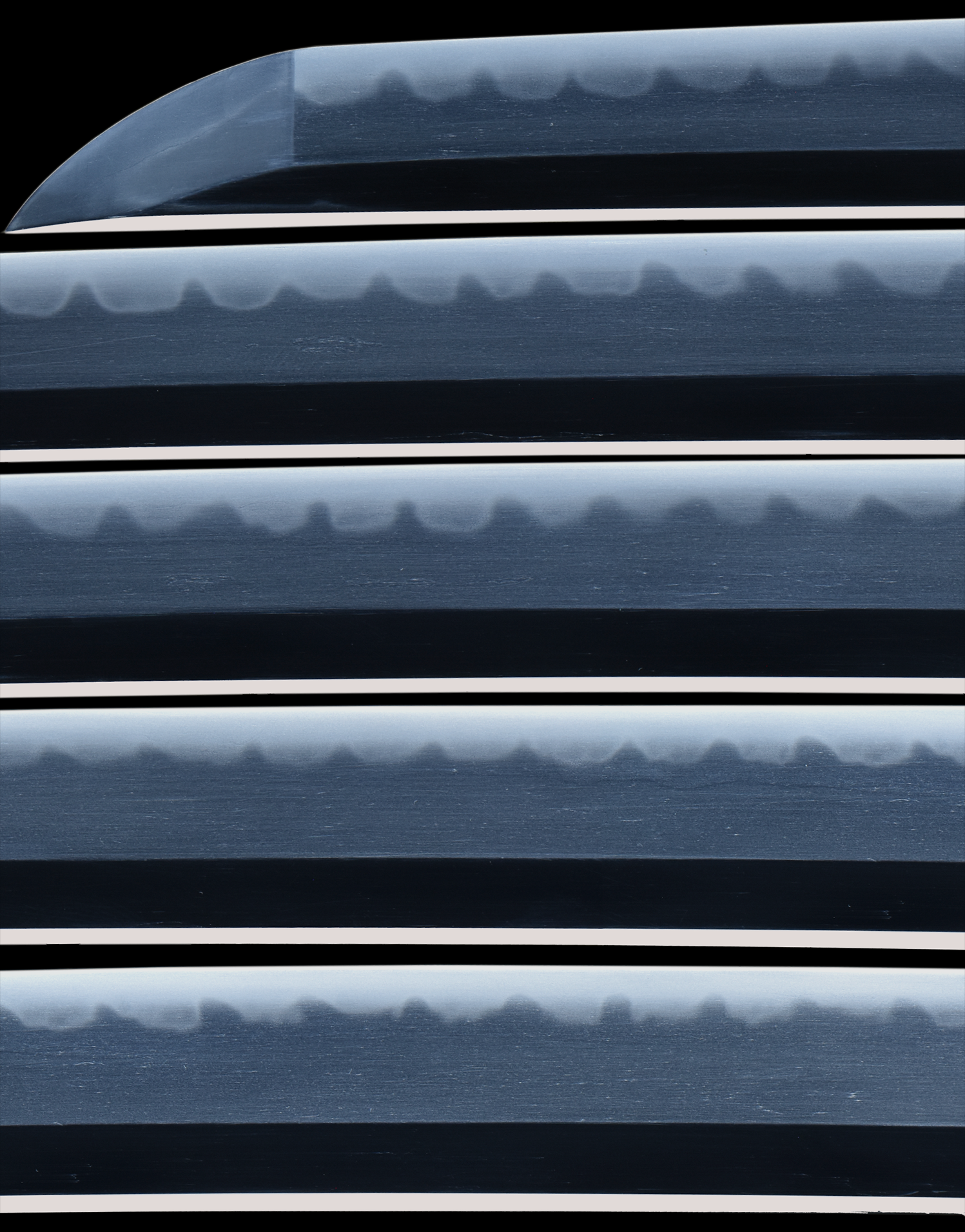
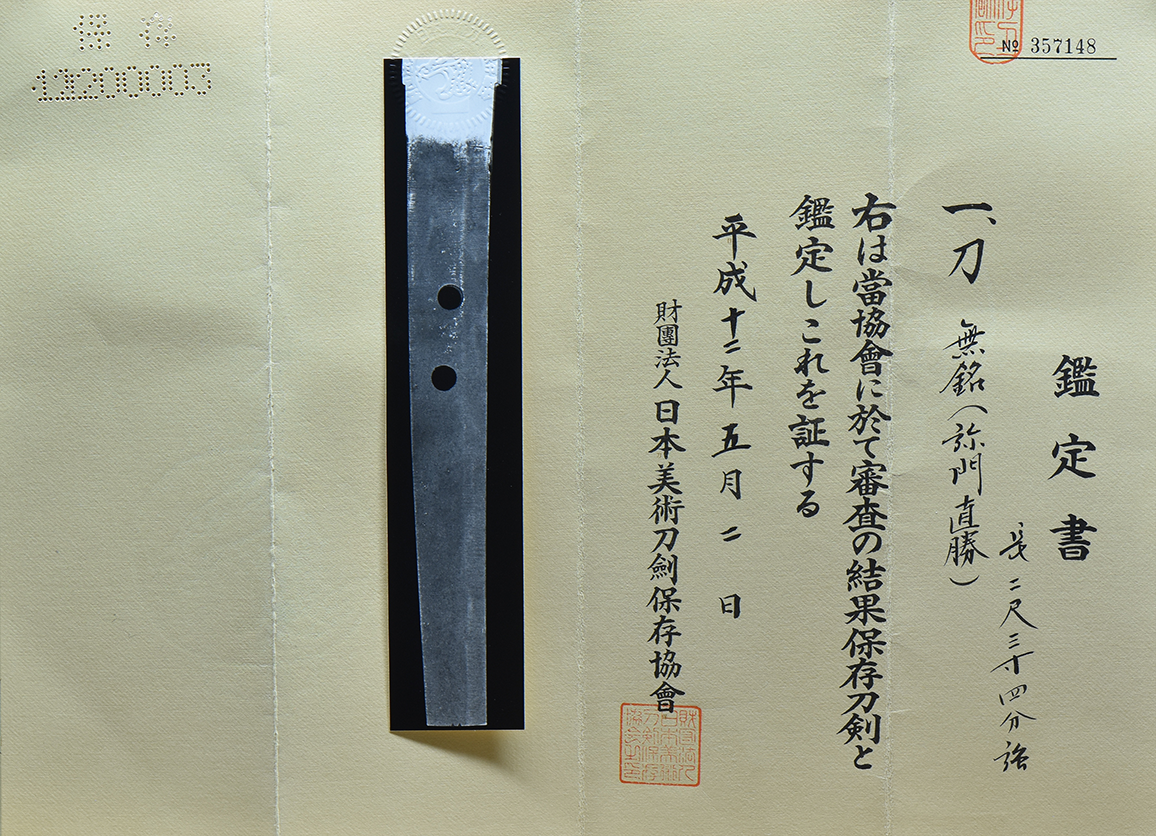
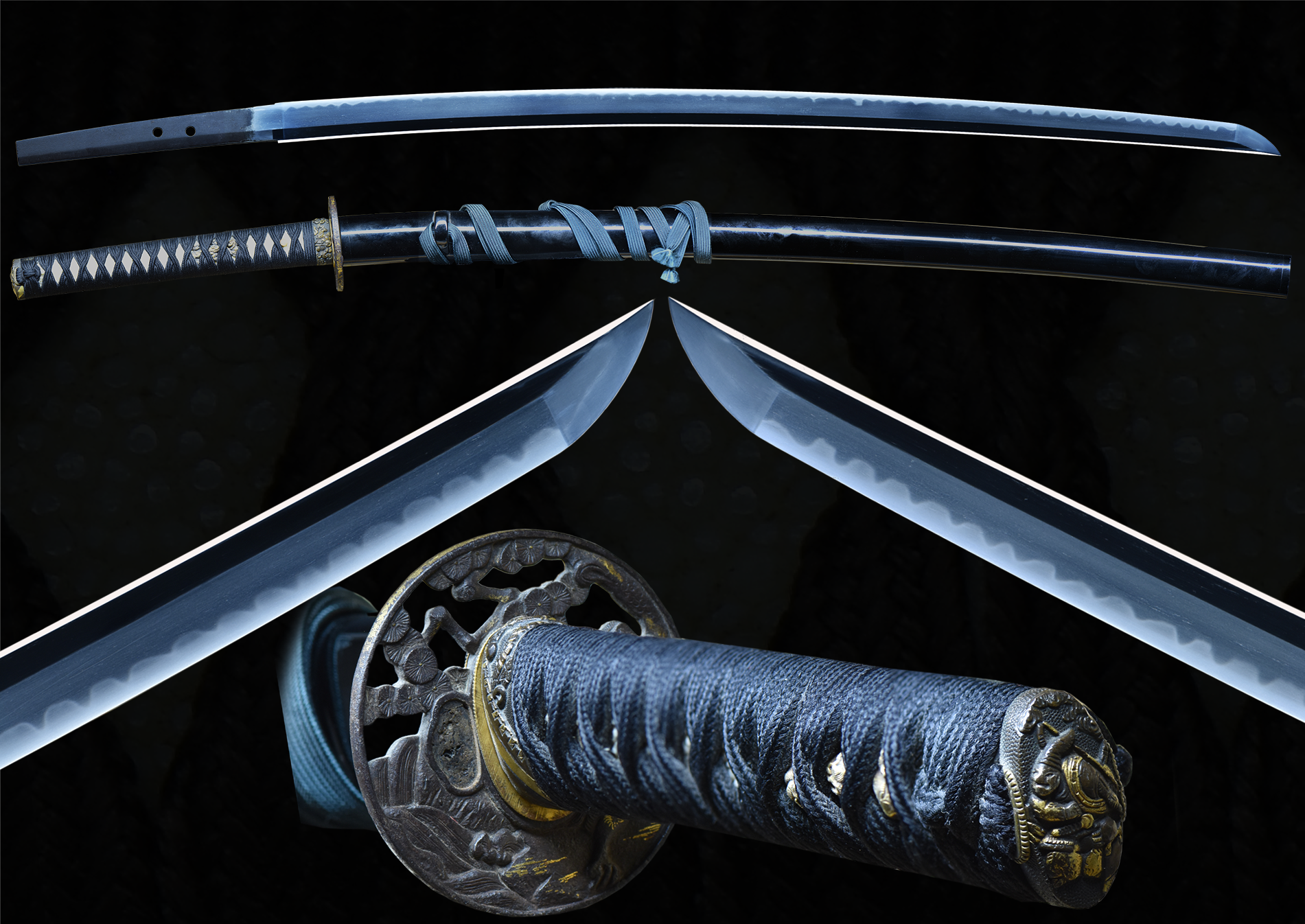
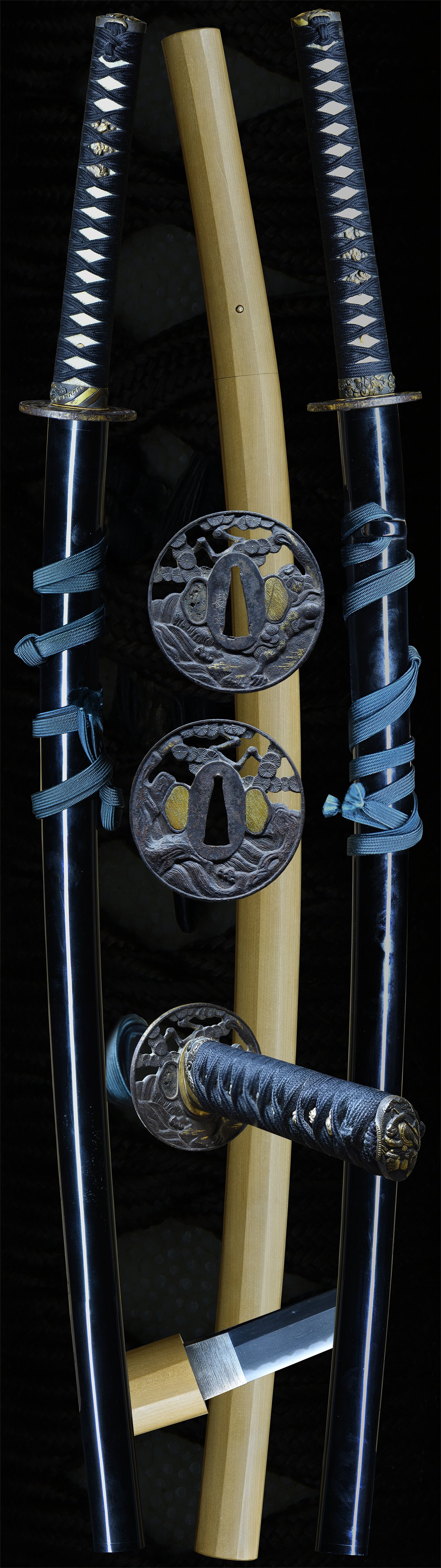
Attribution & Historical Context This katana is mumei (unsigned) and is accompanied by NBTHK Hozon papers attributing the work to Yamon Naokatsu (弥門直勝), a Shinshintō-period swordsmith active in northern Kyūshū. Naokatsu belonged to the Yamon group, a regional lineage known for maintaining conservative forging traditions rooted in earlier koto and shintō models, emphasizing practical sugata and restrained workmanship. Blades attributed to Yamon Naokatsu are typically characterized by balanced shinogi-zukuri forms, controlled hamon—often in suguha or modest gunome—and well-forged jihada reflecting functional intent. The present sword conforms well to these traits and has been authenticated by the NBTHK as a Hozon Tōken, confirming it as a genuine and preservation-worthy Japanese sword. Koshirae (Mountings) The sword is presented in matching period koshirae in excellent overall condition. The fittings include: Saya: Lacquered scabbard with a deep, glossy finish showing age-appropriate wear and attractive patina Tsuba: Iron tsuba with subtle openwork and classic moteashi detail, consistent with Edo-period sensibilities Fuchi-kashira & Menuki: Well-matched soft metal fuchi, and kashira with understated carving and tonality that harmonizes with the tsuba Tsuka-ito & Same: Traditional wrapping over genuine same with uniform tightness and minimal deterioration Seppa: Period copper seppa complementing the overall aesthetic The complete koshirae adds significant display and historical value, presenting the blade as a unified, museum-worthy example. This sword is on consignment. 鑑定書 Authentication Certificate 一刀 One sword 無銘(弥門直勝) Mumei (unsigned), attributed to Yamon Naokatsu 長さ 二尺三寸四分強 Length: 2 shaku 3 sun 4 bu, slightly over (~71+ cm) 右は当協会に於て審査の結果保存刀剣と As a result of examination conducted by this association, the sword at right is recognized as a Hozon Tōken 鑑定しこれを証する This is certified and hereby attested 平成十三年五月二日 May 2, 2001 (Heisei 13) 財団法人日本美術刀剣保存協会 Society for the Preservation of the Japanese Art Sword (NBTHK)
Offered by Nihonto Antiques


The Shinshintō revival
Around 1800 Suishinshi Masahide argued in his writings that the craft must return to the old masters’ methods: the fukkotō revival. His greatest successor Naotane worked convincingly in Bizen and Sōshū manners that had been dead for centuries.
Certifies a genuine blade worth preserving: a signature confirmed correct, or, if unsigned, an era, province, and school that the NBTHK can reliably identify.
The NBTHK (Nihon Bijutsu Tōken Hozon Kyōkai, the Society for the Preservation of Japanese Art Swords) is a public-interest incorporated foundation founded in 1948 and supervised by Japan’s Agency for Cultural Affairs (Bunkachō); it is based at the Japanese Sword Museum in Tokyo. Its expert panels physically examine each submitted work (shinsa) and issue a certificate (kanteishō) ranking it by artistic and historical merit. NBTHK papers are the most widely recognized standard of authentication for Japanese swords and fittings.
NBTHK official siteWe offer a 48 hour inspection period for all Antique items shipped within the United States only. If the item is not to your satisfaction, we will gladly refund your money less any shipping and handling fees. All sales are final after the 48 hour inspection period. Please note that all discounted items are a final sale and not returnable.
$7,600
Certificate reading — 無銘(弥門直勝)