Edo was the sword’s age of connoisseurship: the Hon’ami appraisers, the shogunal register of famous blades of 1719, and a thriving literature turned the sword into an object of study even as it ceased to be drawn in war.
 NihontoWatchNihontoWatch
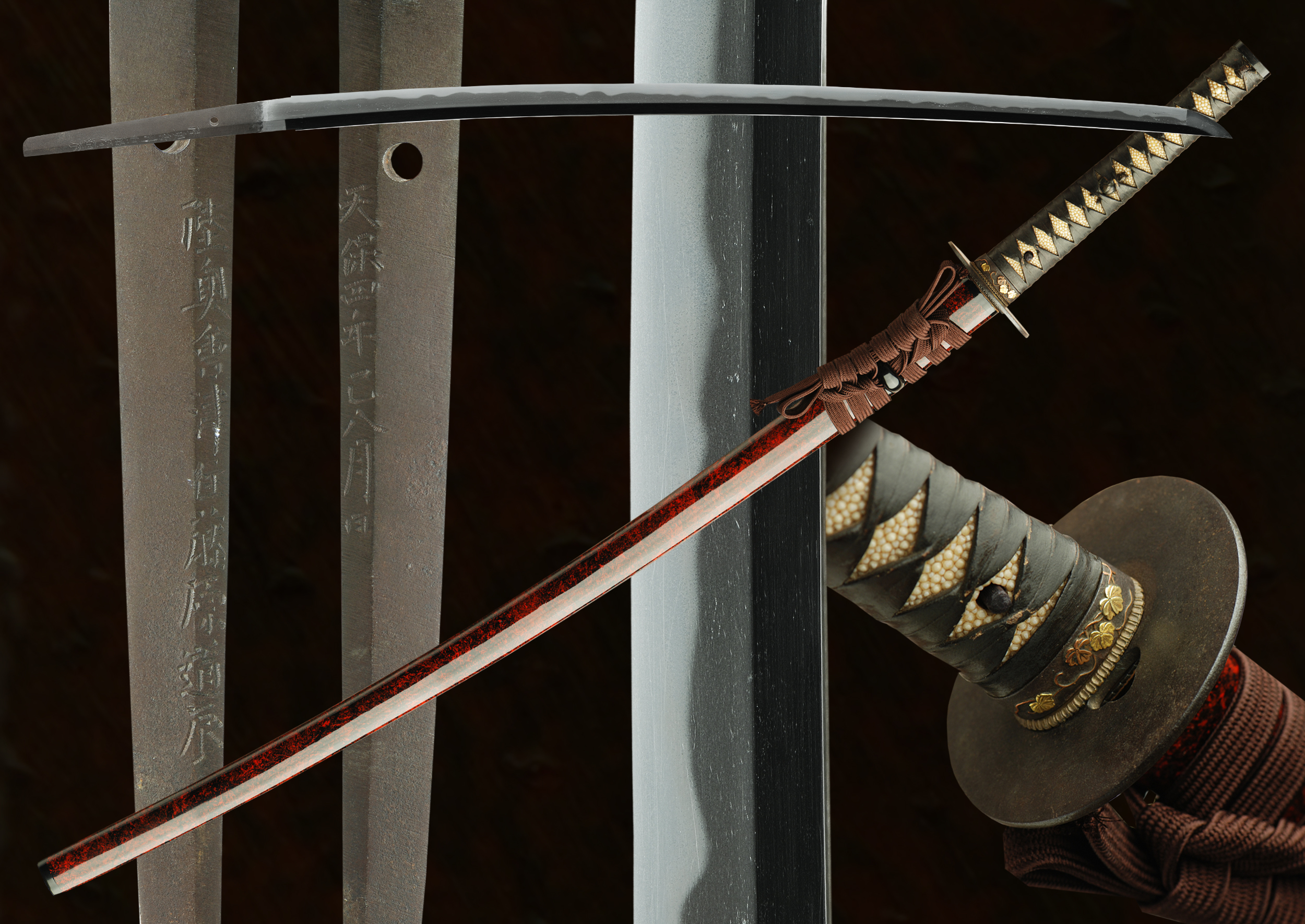
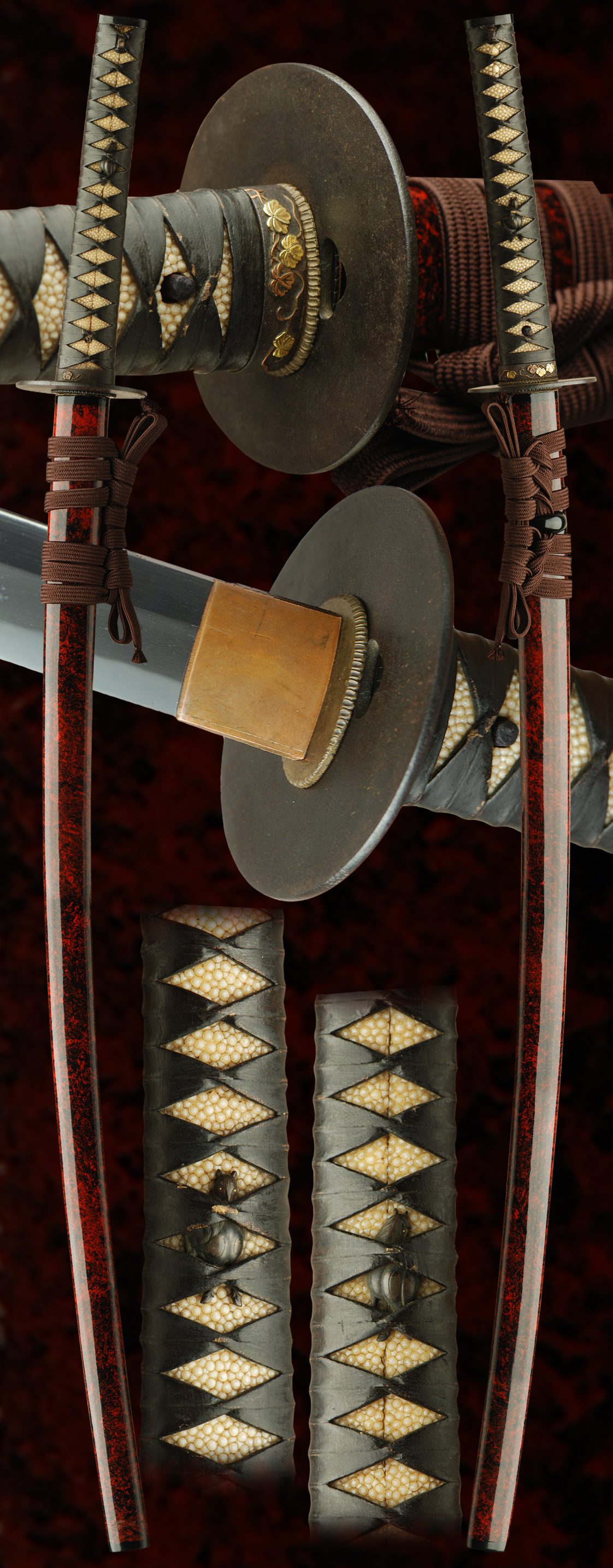
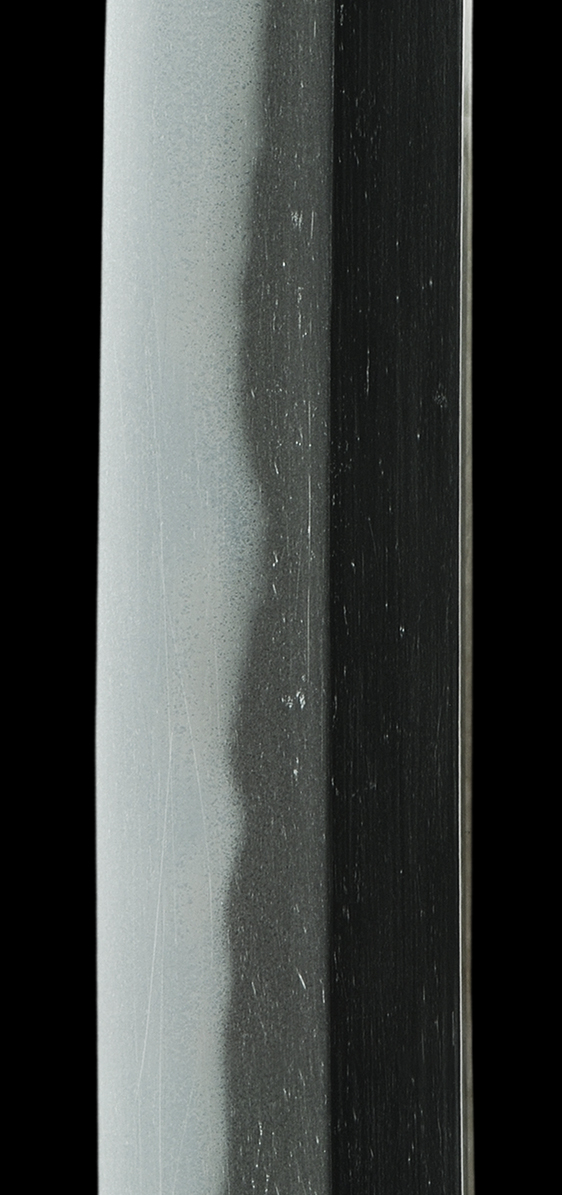
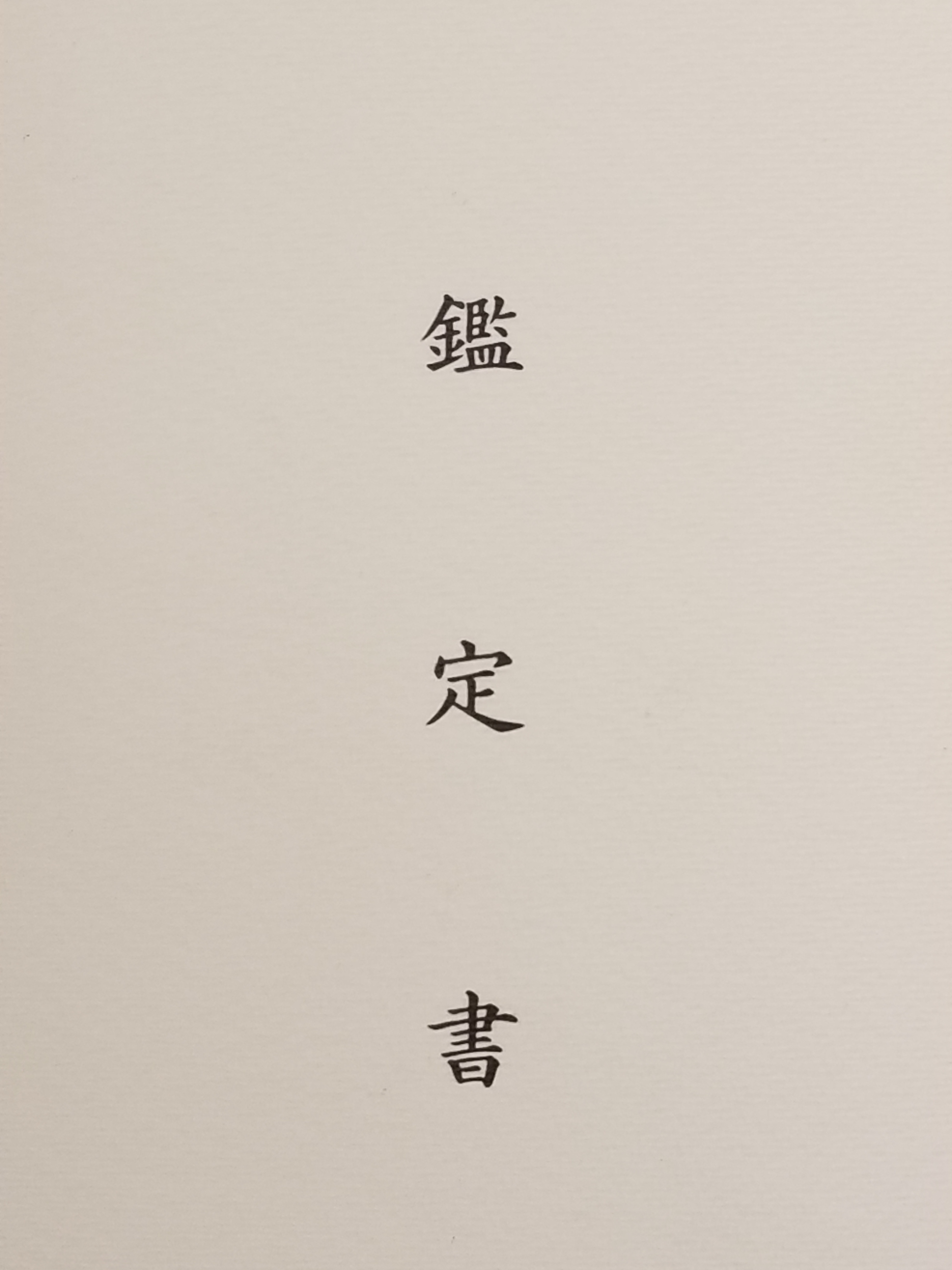
A beautiful sword signed Mutsu Aizu Ju fujiwara Michitoki and dated also Tenpo 4 nen mi hatchi gatsu hi. They were a famous group of smiths that worked from first generation to 6th generation. This work was most likely made by the 3rd or 4th.generation. It is believed he was the sword smith from Mutsu Iwashiro. He was a student of Shoken Motooki , and emulated his master’s style. His jigane is well forged and shows a milky appearance adding to its depth. This sword has a gunome hamon that is well balanced and has an abundance of hataraki. A mixture of Nie and nioi is clearly visible and adds the hamon’s elegant pattern. The sword is in an older polish and its in good condition to show the fine details on this blade. However a fresh polish would truly revitalize this sword powerful beauty. Many more details would be strongly visible making for a more valuable and desirable sword. The mounts are of a good quality. There is a floral motif beautifully finished of leaves with vines. the tsuka has an wonderful black/brown leather tsukaito wrap and then lacquered over. The saya has been restored mant years ago and is in good condition and well made. The lacquers in a rich design. On the fuchi a floral motif is used and the kashira is of horn. This style is a more traditional tsuka and was often seen. Mythological subjects and auspicious symbols were sometimes used as motifs for Japanese sword furniture. Floral motifs could stand alone as designs unto themselves, particularly if they had seasonal or symbolic associations, but they were also used as decorative patterns surrounding or backing more pictorial motifs such as bugs etc. The menuki are of a horse as seen from both directions front and back. The tsuba is a perfectly round shape in iron. The habaki is cooper. The sageo is of a reddish brown finish. This sword is on consignment. This sword has recently passed shinsa. The official papers will take a few month to be made and sent from Japan. These papers will be forwarded to the new owner when this sword sells. [et_bloom_inline optin_id=”optin_1″]
Offered by Nihonto Antiques


Iwashiro · around 1804-1818
Tōken Taikan top 76%
1 piece on the market now
The Edo period (1615 to 1868)
Edo was the sword’s age of connoisseurship: the Hon’ami appraisers, the shogunal register of famous blades of 1719, and a thriving literature turned the sword into an object of study even as it ceased to be drawn in war.
We offer a 48 hour inspection period for all Antique items shipped within the United States only. If the item is not to your satisfaction, we will gladly refund your money less any shipping and handling fees. All sales are final after the 48 hour inspection period. Please note that all discounted items are a final sale and not returnable.