 NihontoWatchNihontoWatch
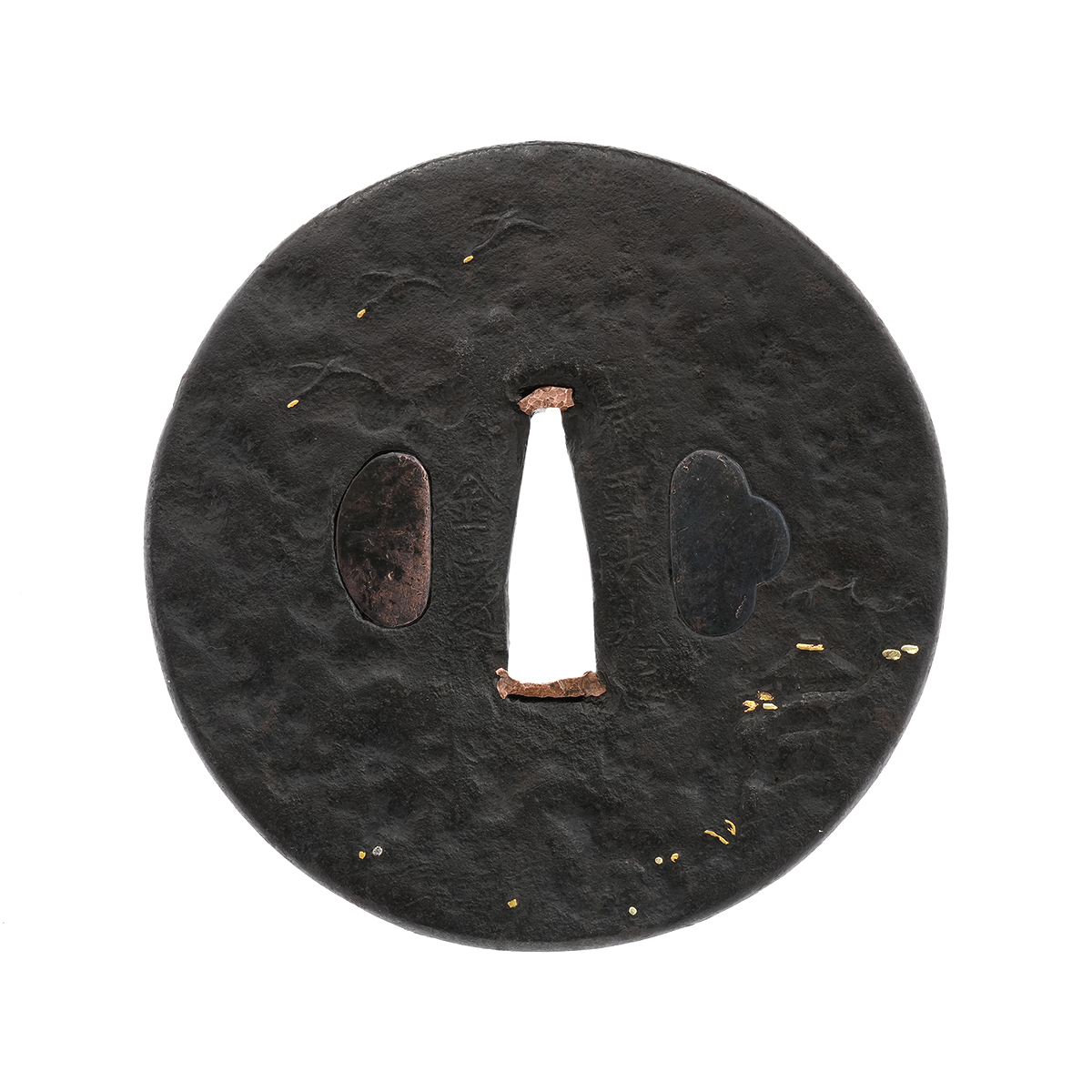
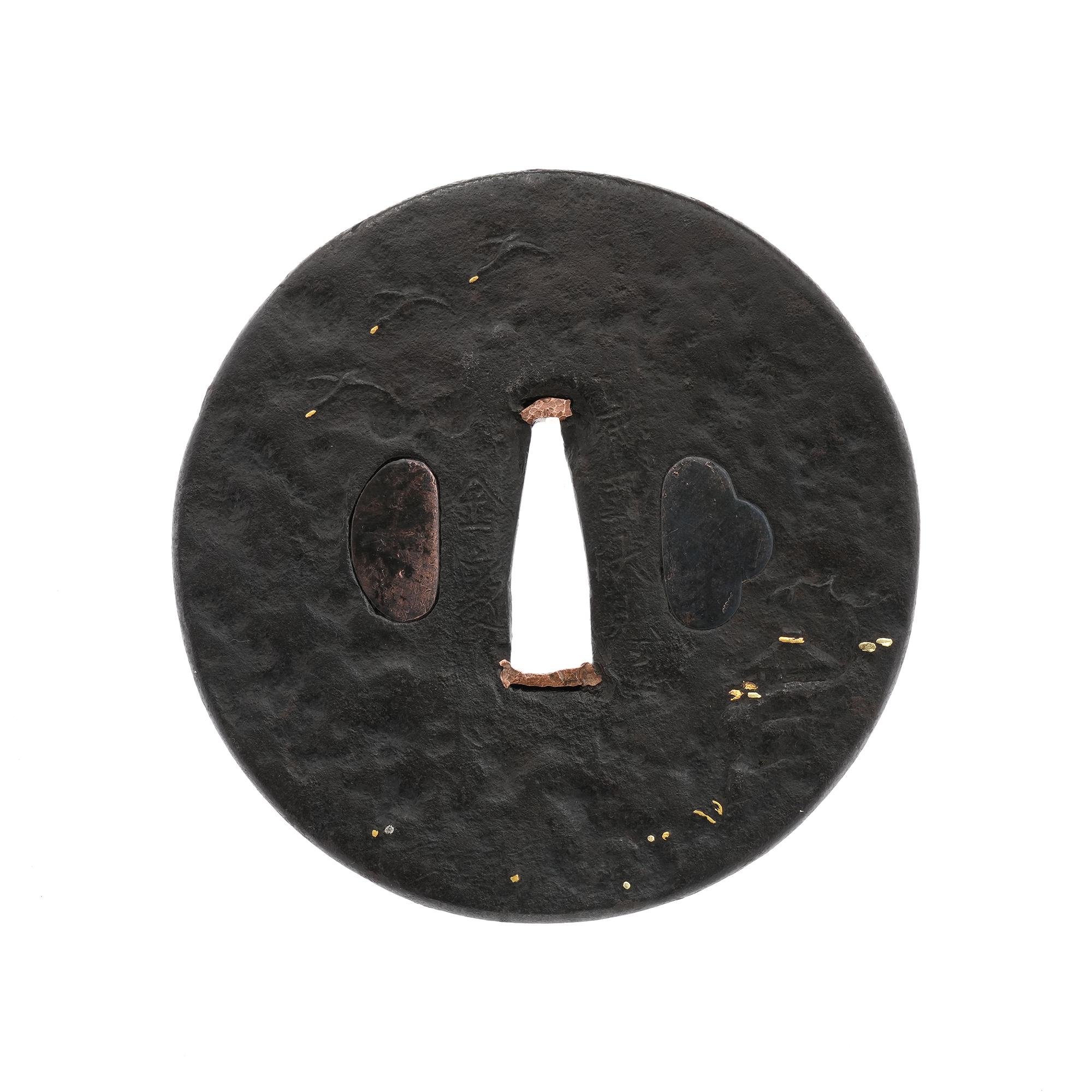
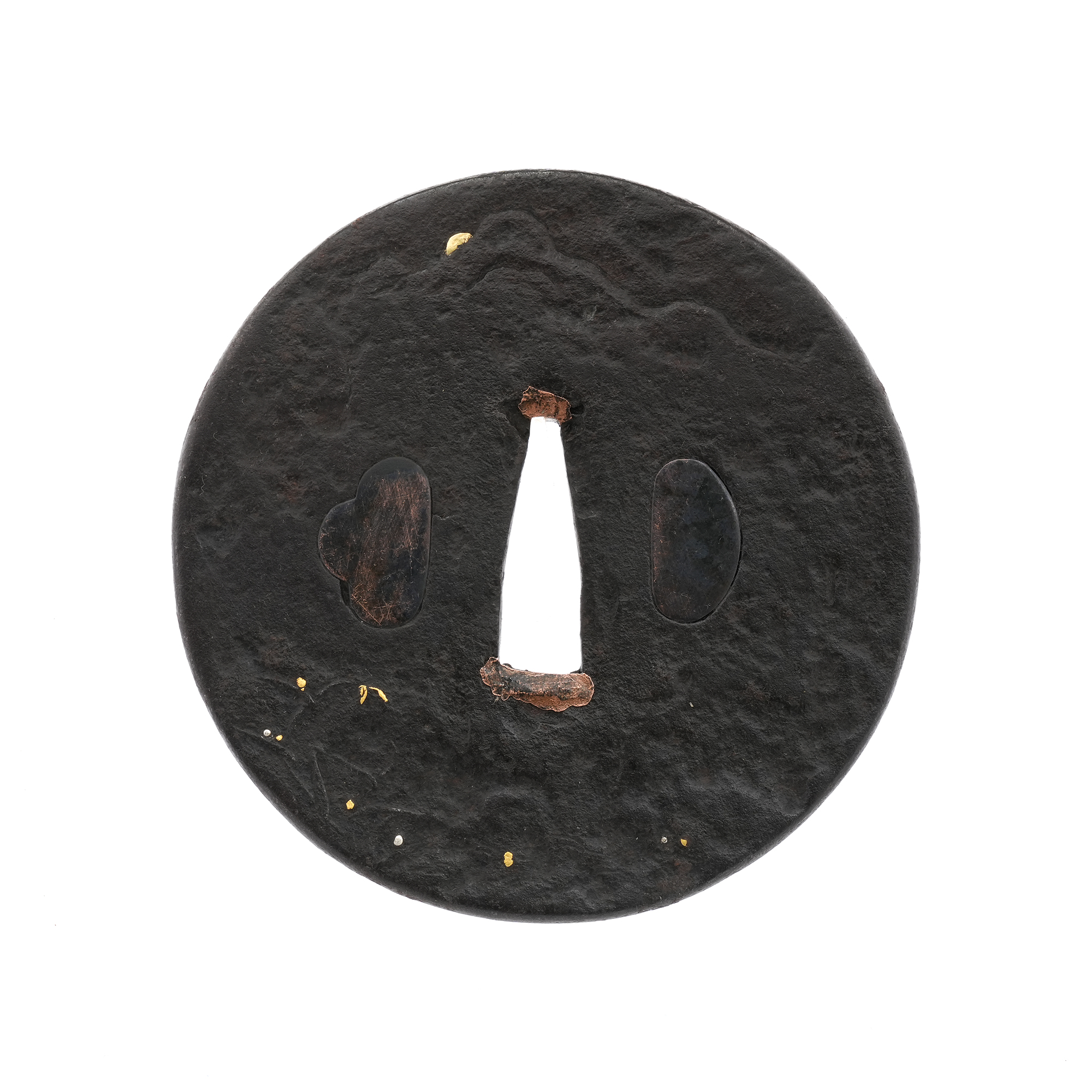
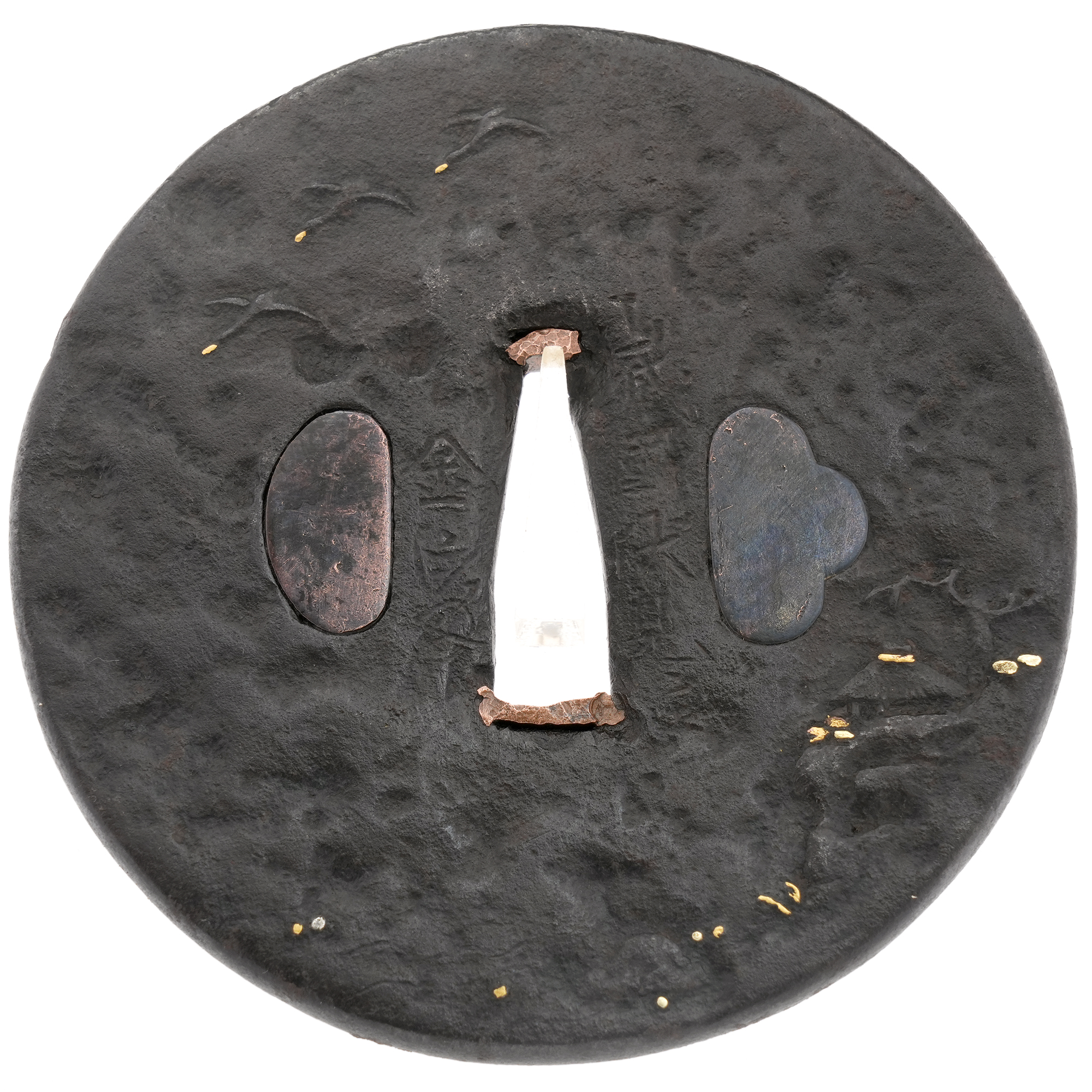
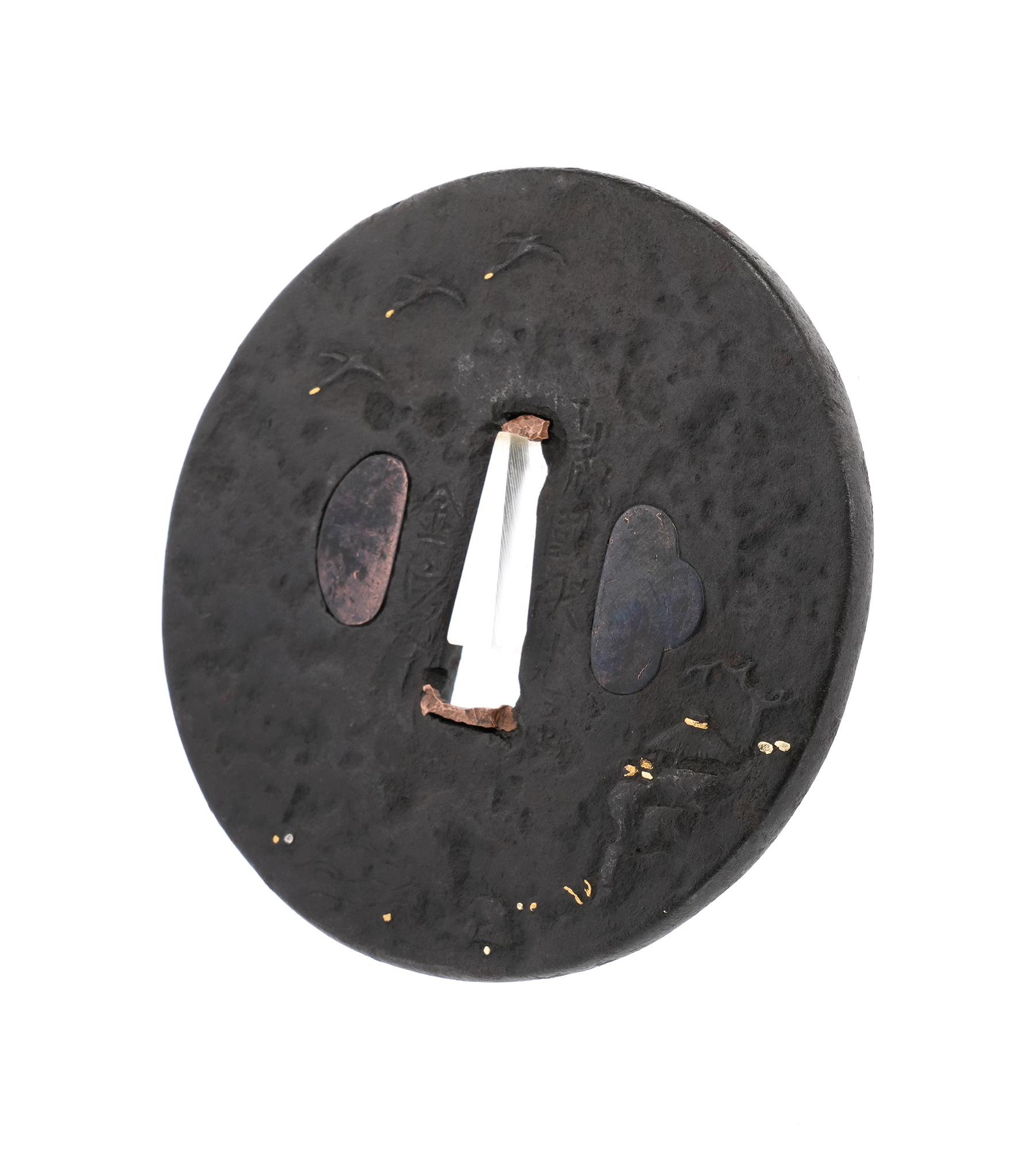
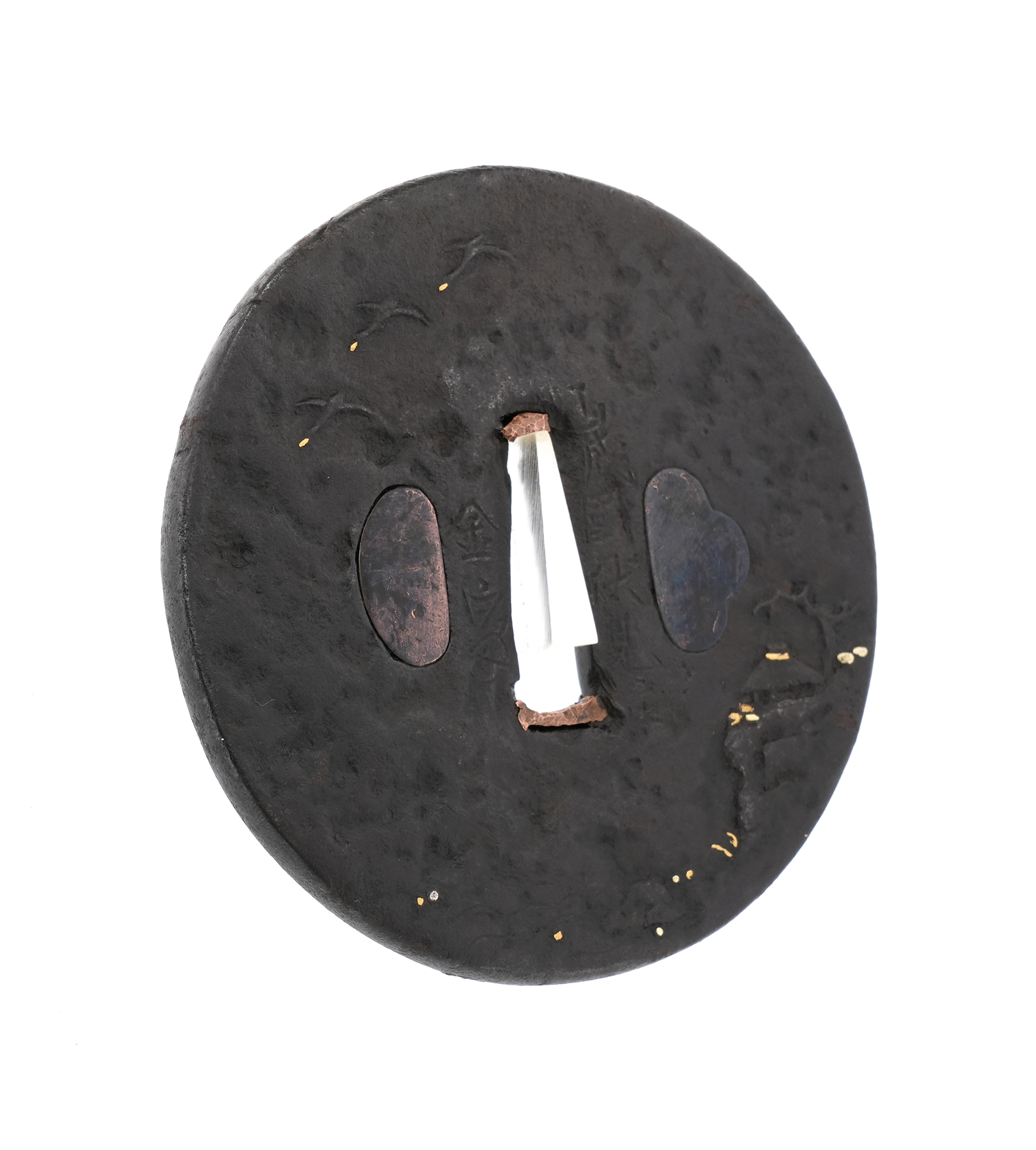
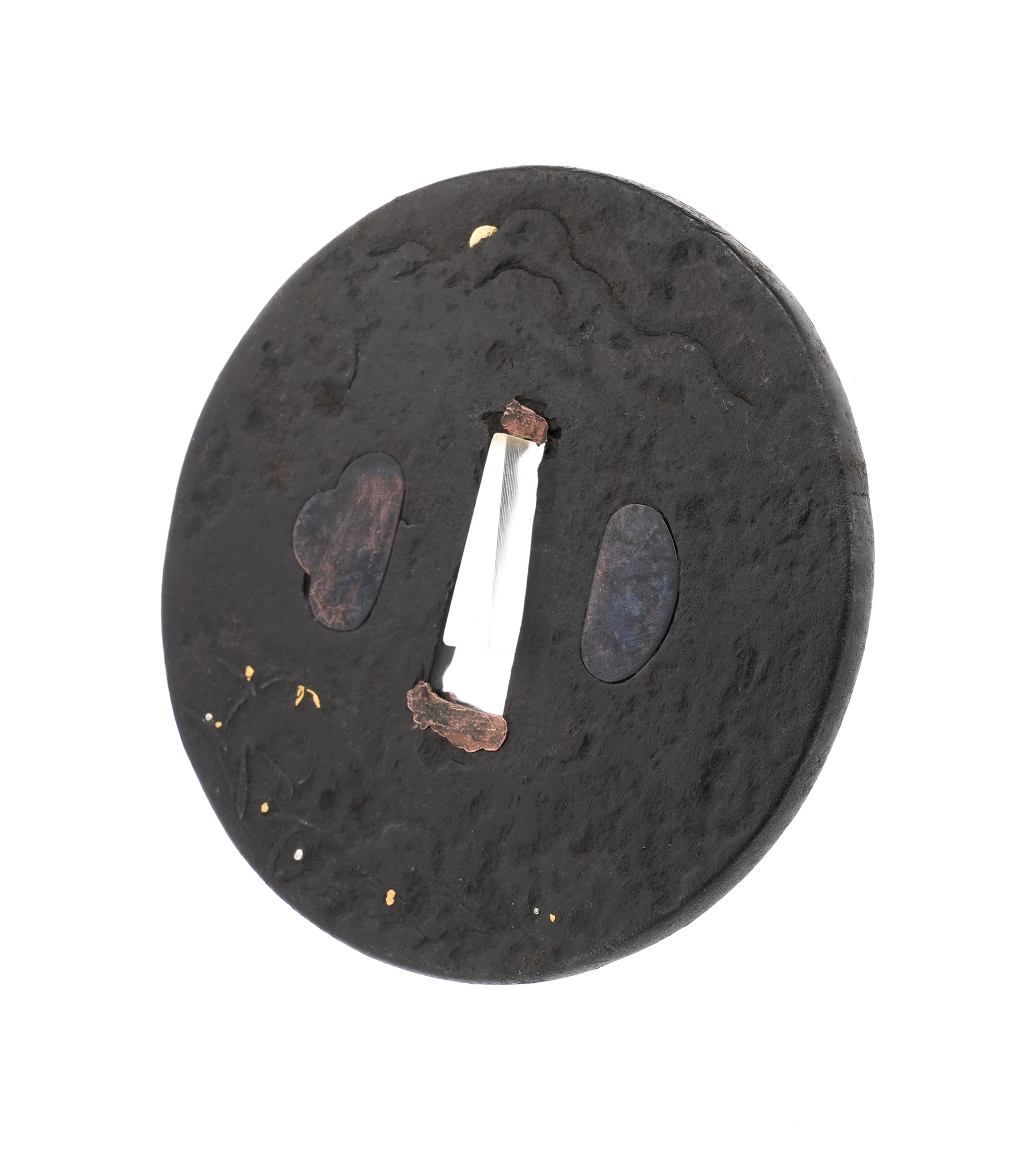
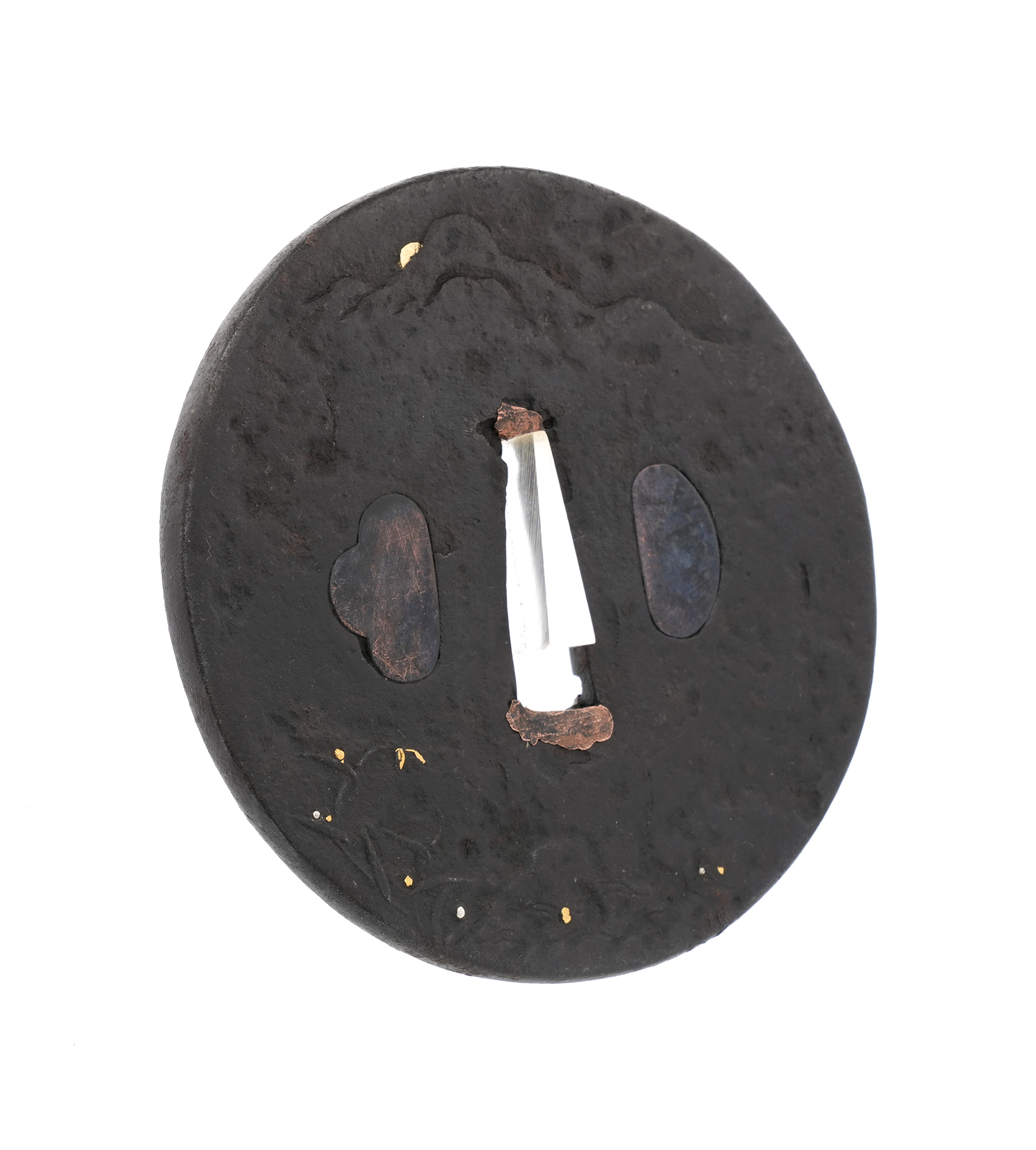
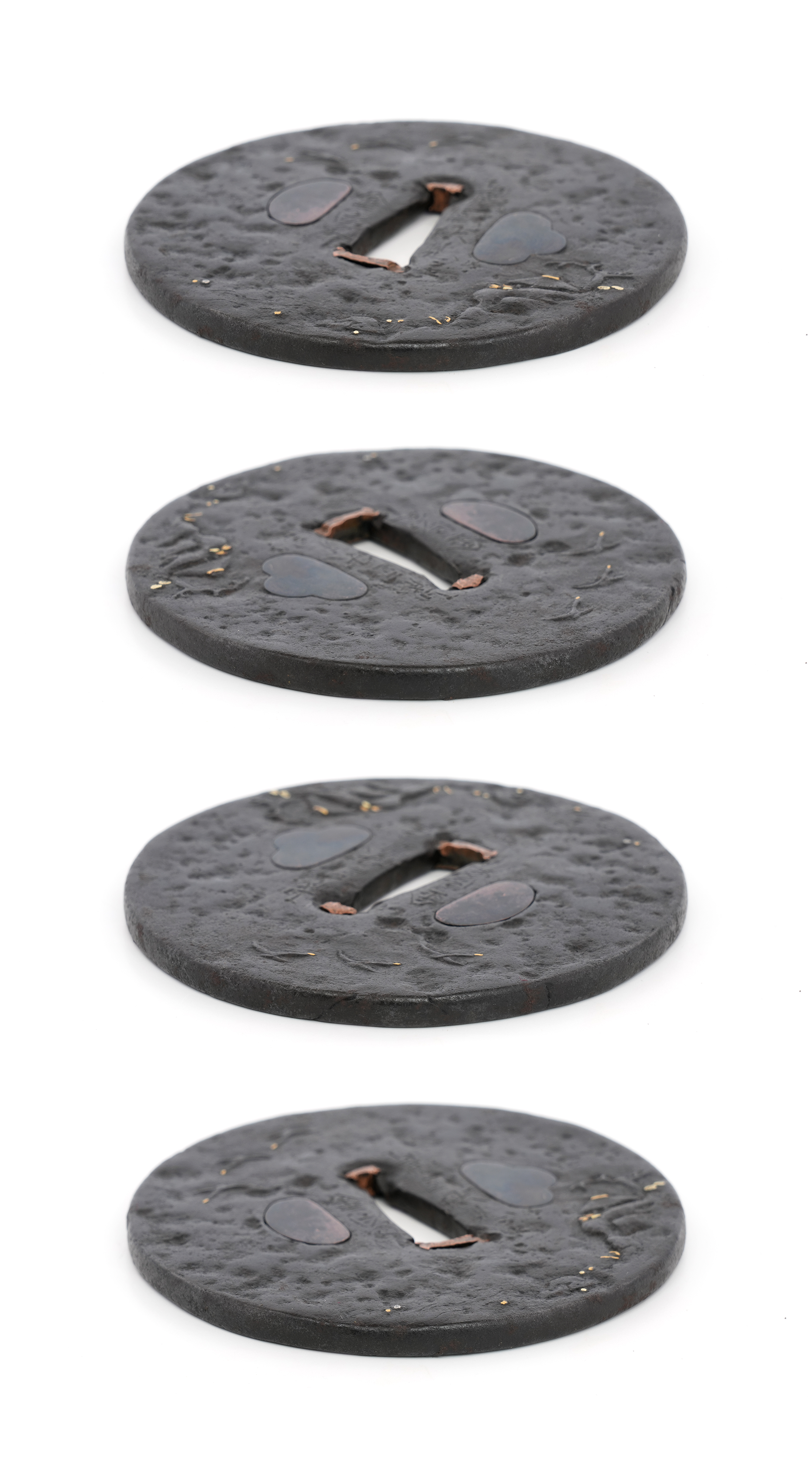
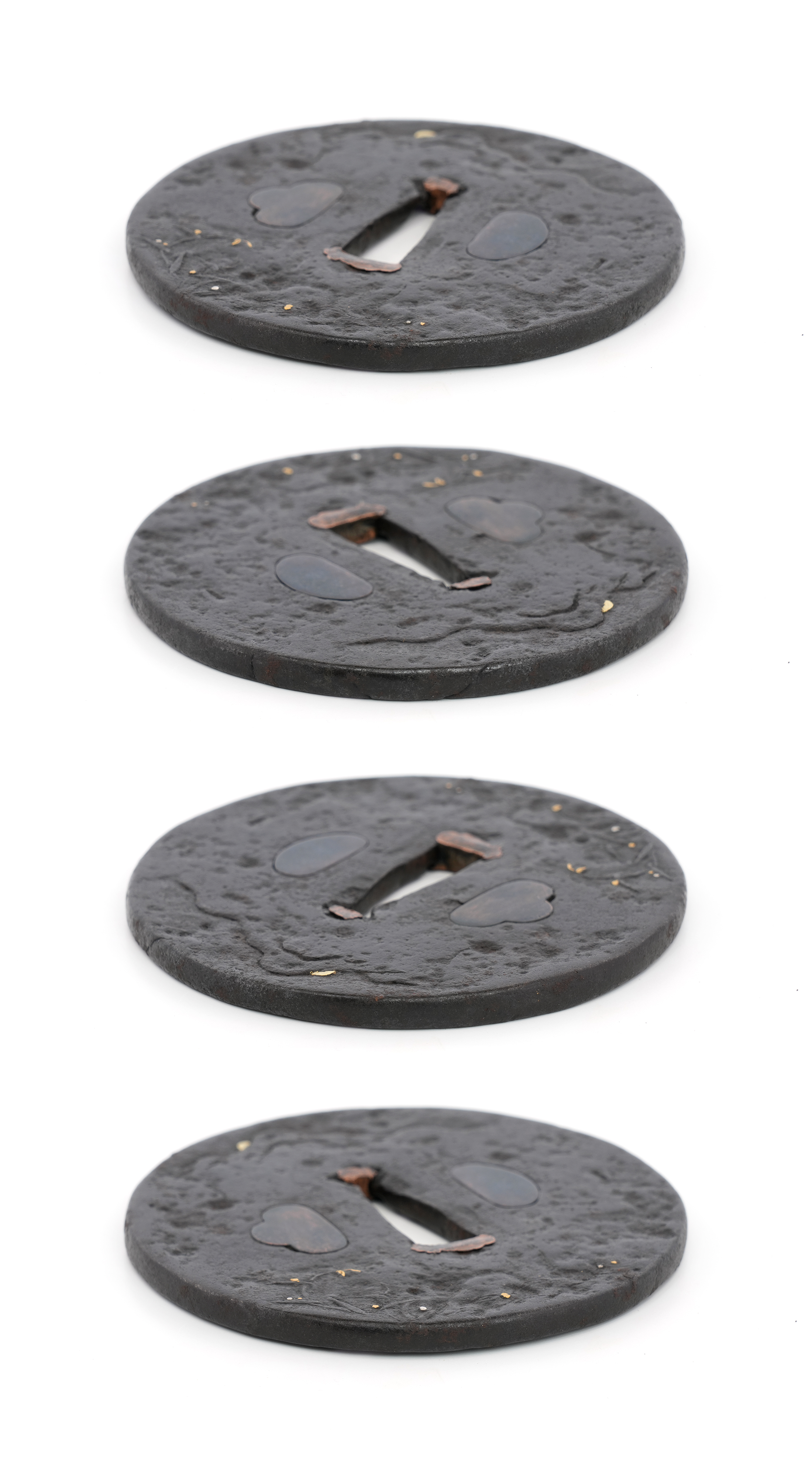
Kaneie is known for e-fu tsuba that utilize the undulations of the tetsu-ji itself to represent the expanse of mountains and clouds, adding small amounts of kin zogan to express landscapes with depth, and this piece is also a single plate depicting sansui on the omote and ura in admiration of that style, with three wild geese flying diagonally in the upper left of the omote, the small kin zogan placed on their beaks shining casually within the black tetsu-ji. The irregularities applied to the entire tsuba surface evoke the mountain slopes and the swaying of the sky, a small house is arranged in the mountains at the lower right, and the kin zogan struck into the roof and parts of the mountain valley make the details of the distant view stand out, while both hitsu-ana are filled with shakudo to add a calm change of color within the scenery. On the ura, the sun half-hidden by the mountain ridgeline is expressed with kin zogan, and grasses thought to be reeds are thinly depicted at the lower left with scattered kin and gin zogan, responding to the flying geese and mountain house on the omote, possessing a charm as if a mountain village at dusk spreads before one's eyes each time the tsuba is turned over. Although the mei "Yamashiro no Kuni Fushimi-ju Kaneie" is cut on the left and right of the seppa-dai, there is a gap in the thickness of the ji and the scenery of the hori when compared to certain works by the Momoyama period Kaneie, and since the style of the mei cannot be confirmed to match standard works from photographs alone, at present it is reasonable not to conclude it is an authentic work by Kaneie but to appreciate it as a Kaneie-style tsuba from around the middle to late Edo period, yet the kin and gin scattered on the beaks of the geese, the house, the mountain valley, the sun, and the grass complement the darkness of the tetsu-ji, making it a single plate rich in sansui taste where one can enjoy the 147 gram volume and the skin rich in undulations while tilting it in hand.
NihontoWatchOffered by Toushin

We couldn’t find current papers for this piece. Ask the dealer whether it has been, or can be, submitted to shinsa. — Hoshi

As written by the shop
Machine translation from the shop's Japanese · may contain errors ·
We could not find an authenticity certificate on the seller’s listing. Japanese swords and fittings are normally papered by the NBTHK (or the NTHK). Without one, the attribution is the seller’s own assessment and has not been independently verified — treat it with caution and ask the dealer about certification before buying.
As a rule we do not accept returns, except when we have sent a different item from the one ordered or when there is a significant discrepancy between the description and the item. If you wish to return an item, please contact us within 3 days of its arrival and then send it back.
¥44,000