 NihontoWatchNihontoWatch
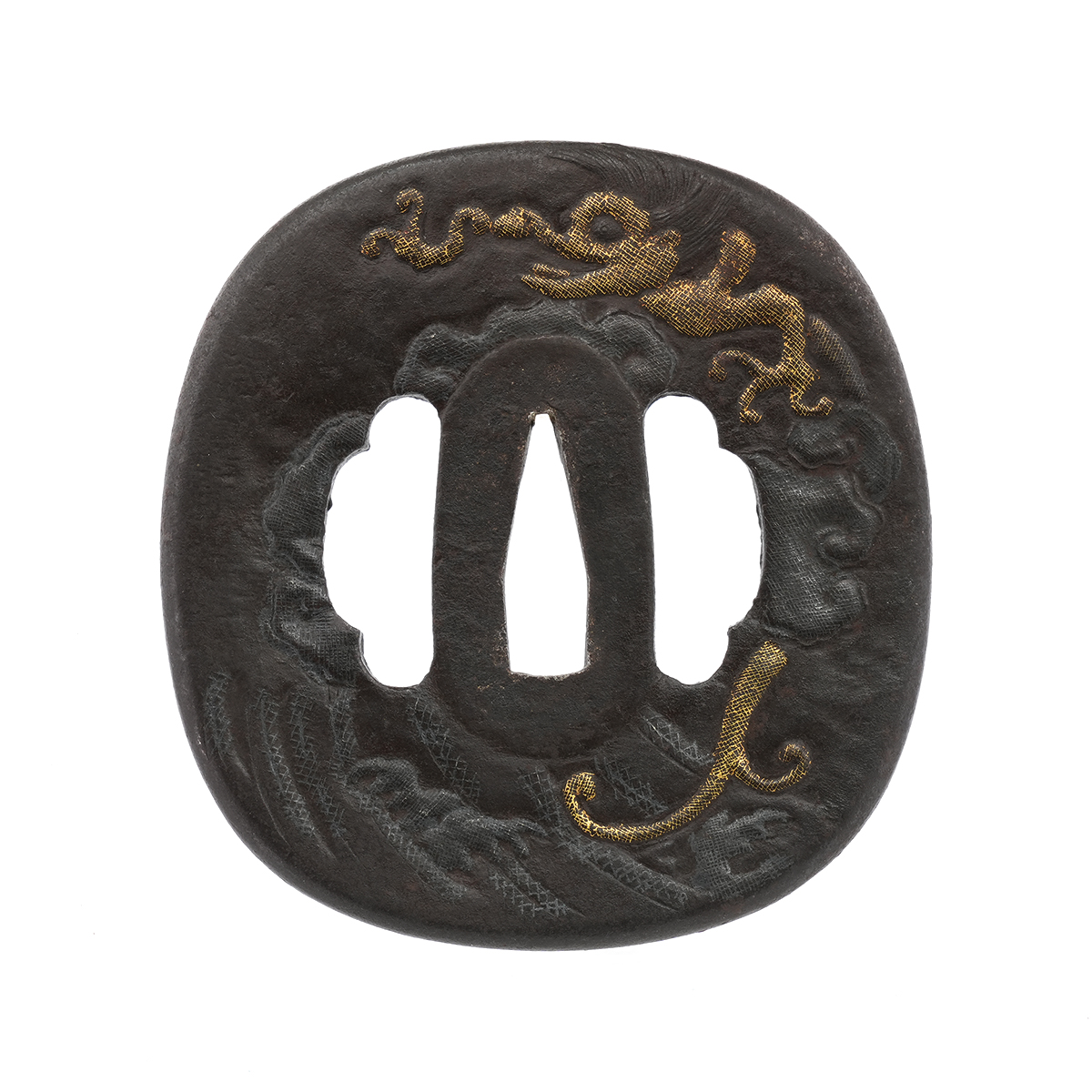
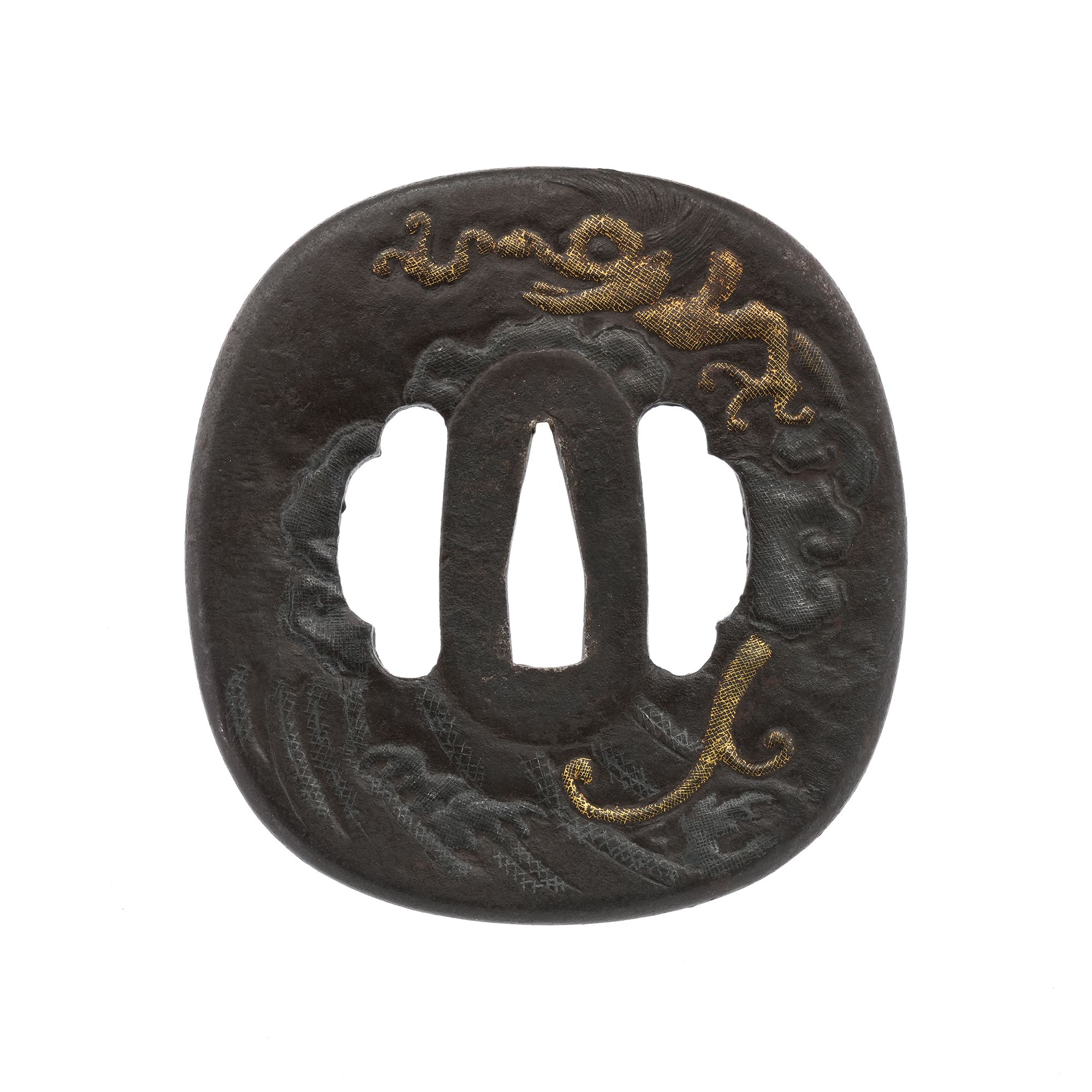
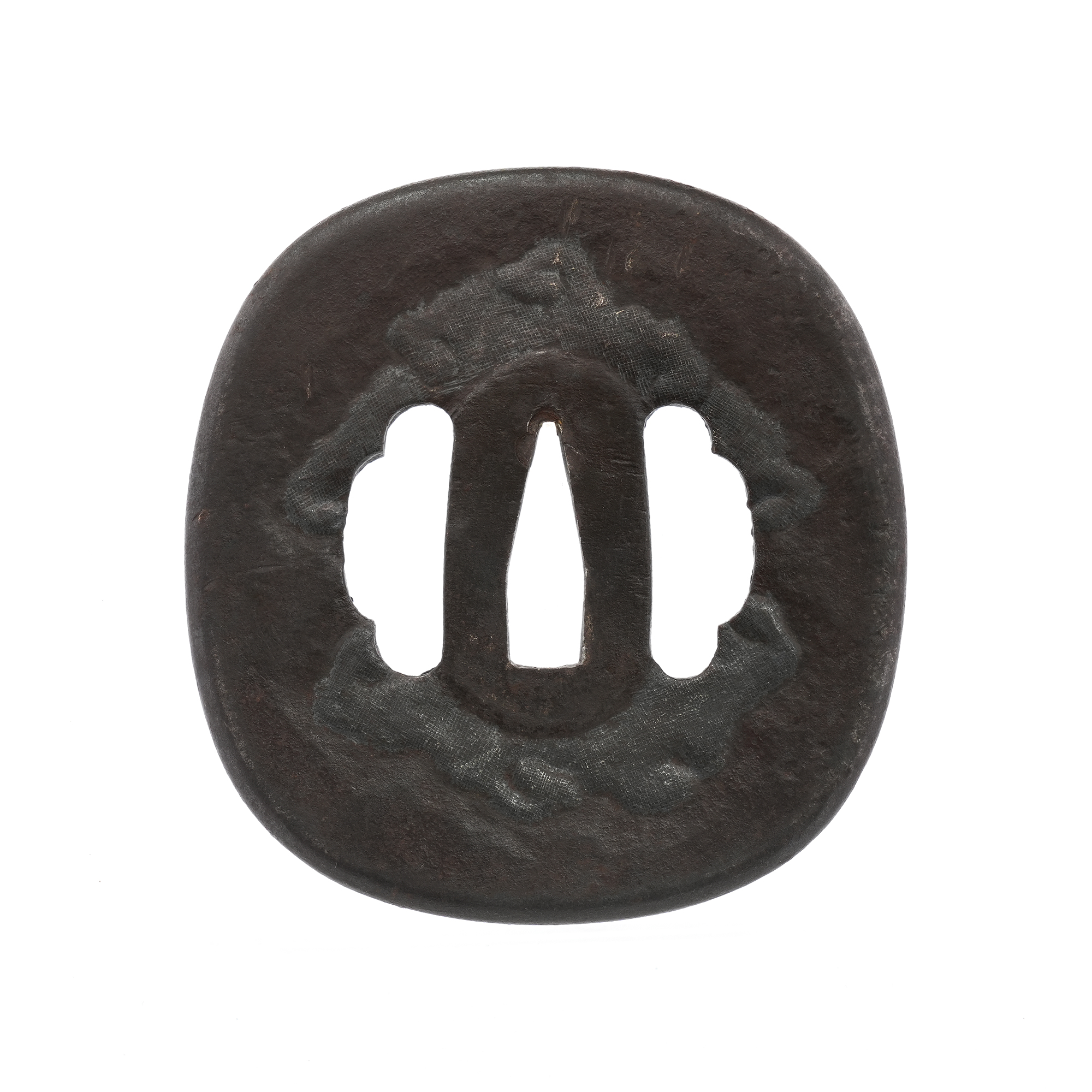
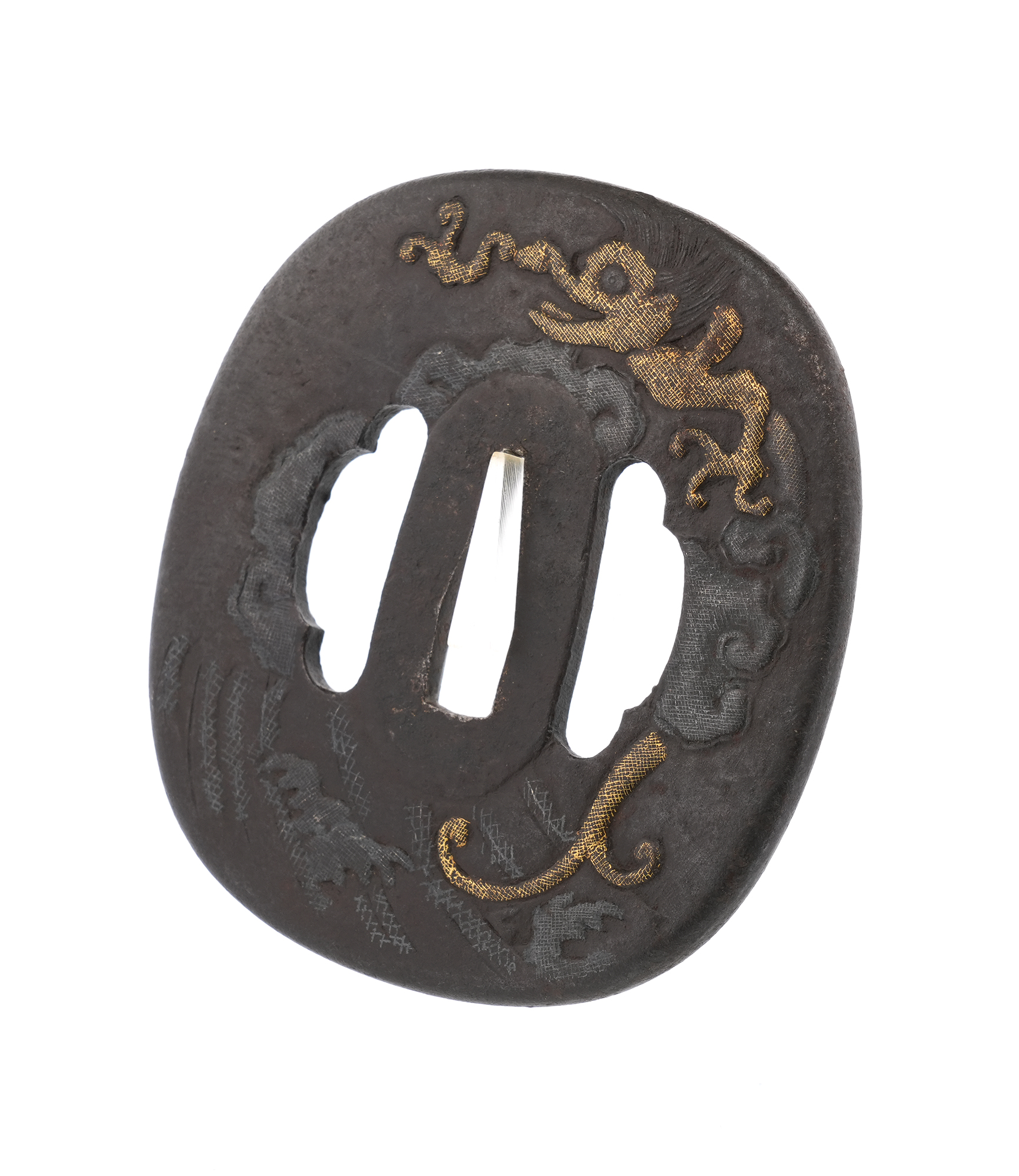
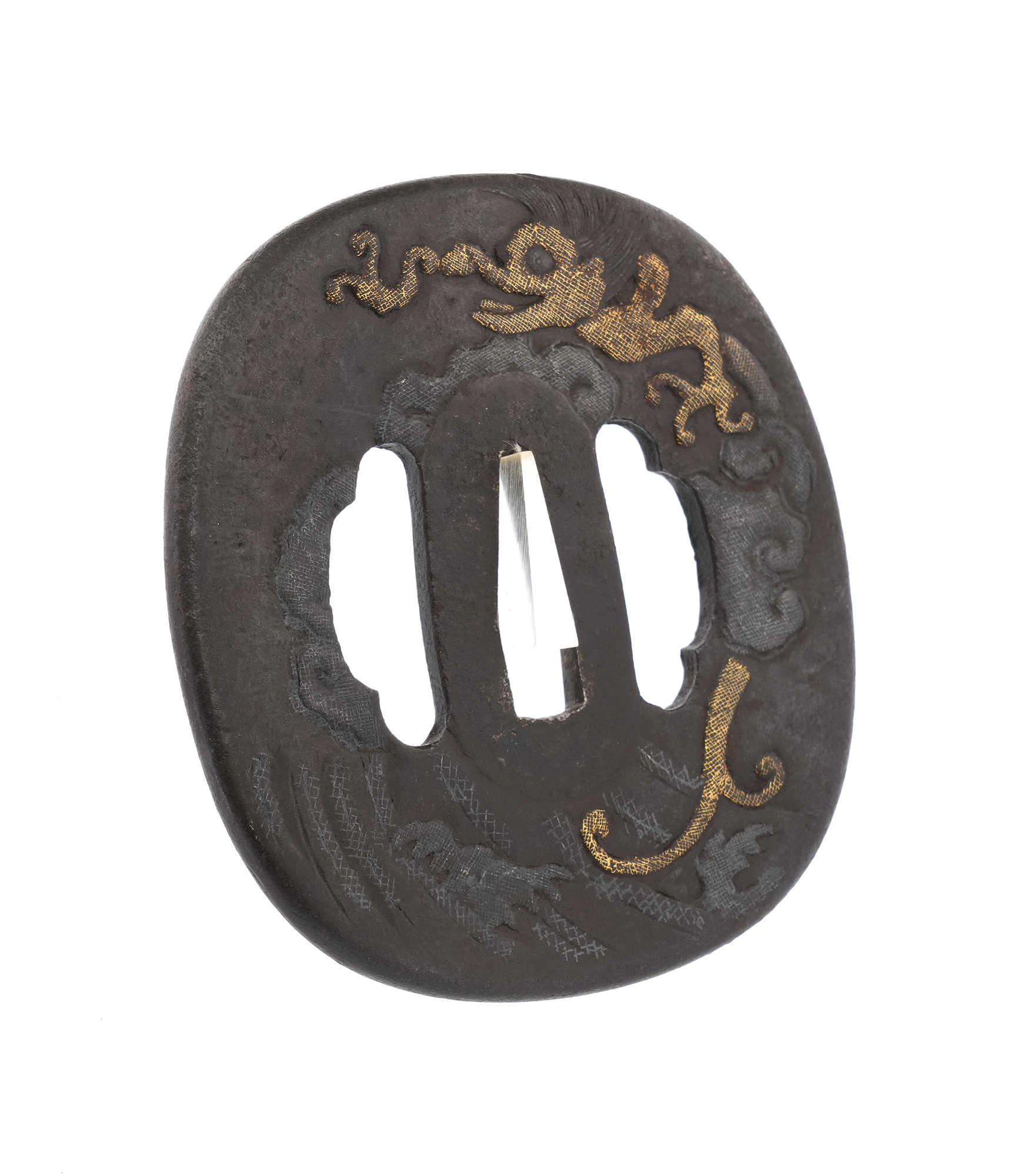
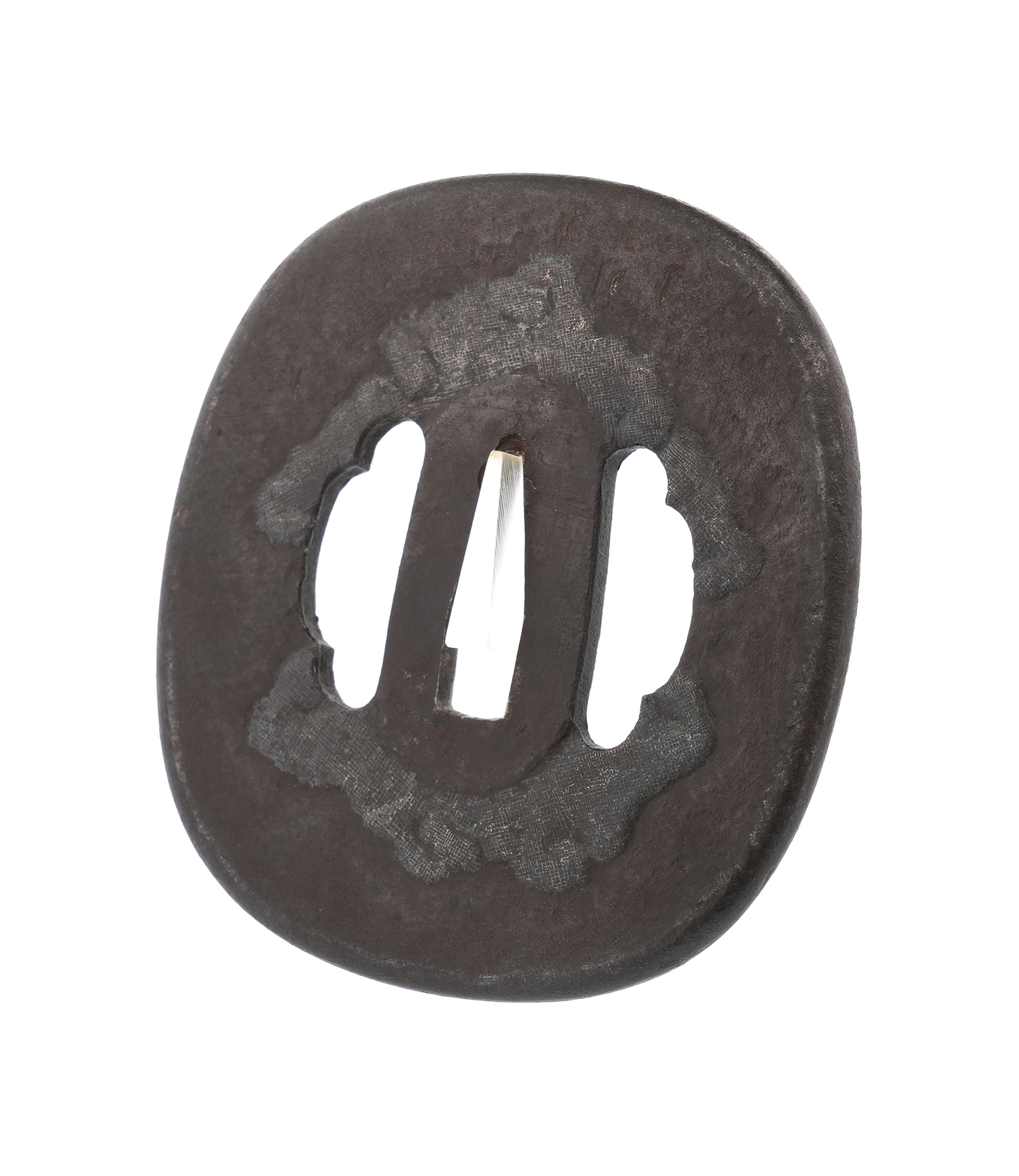
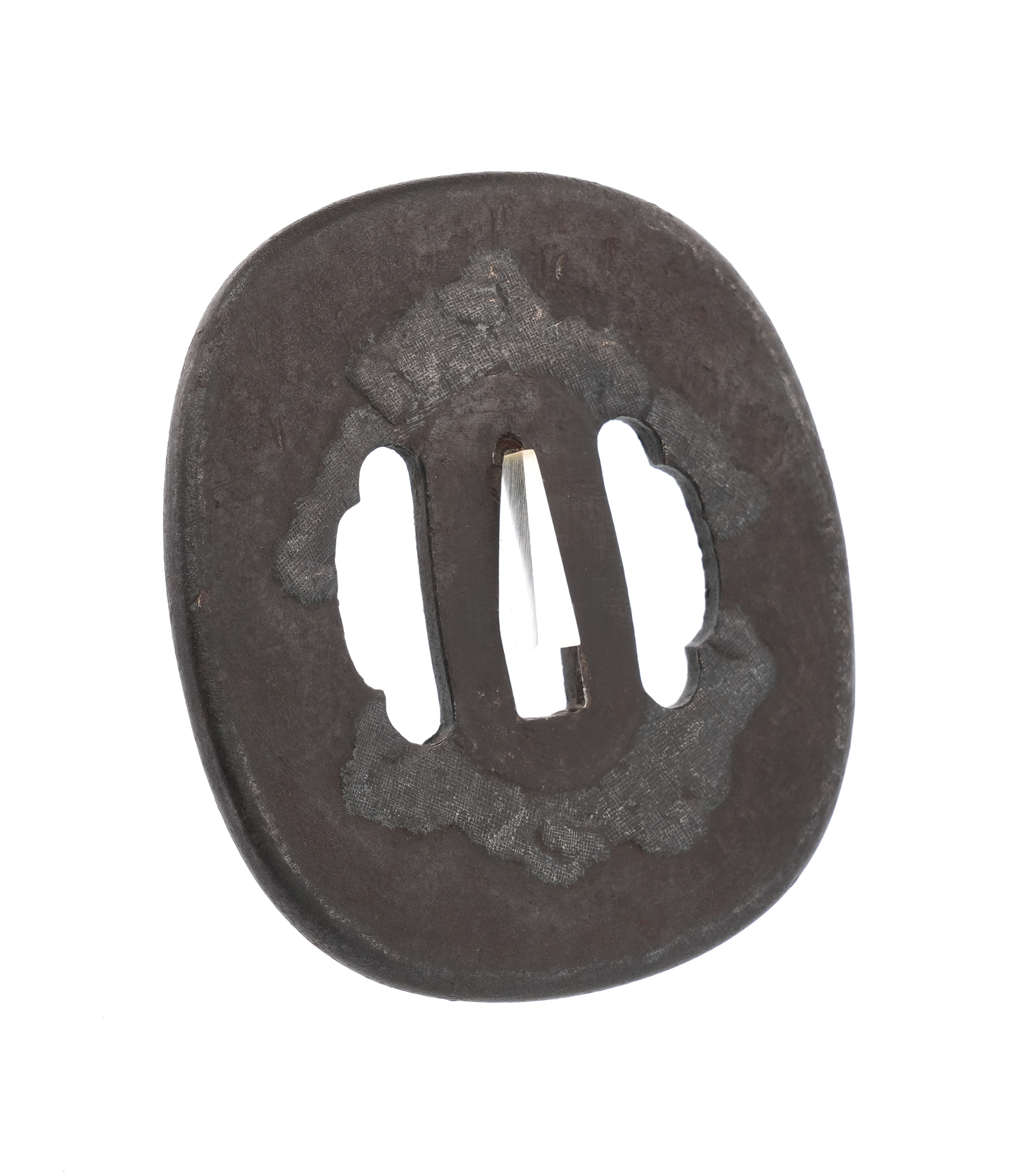
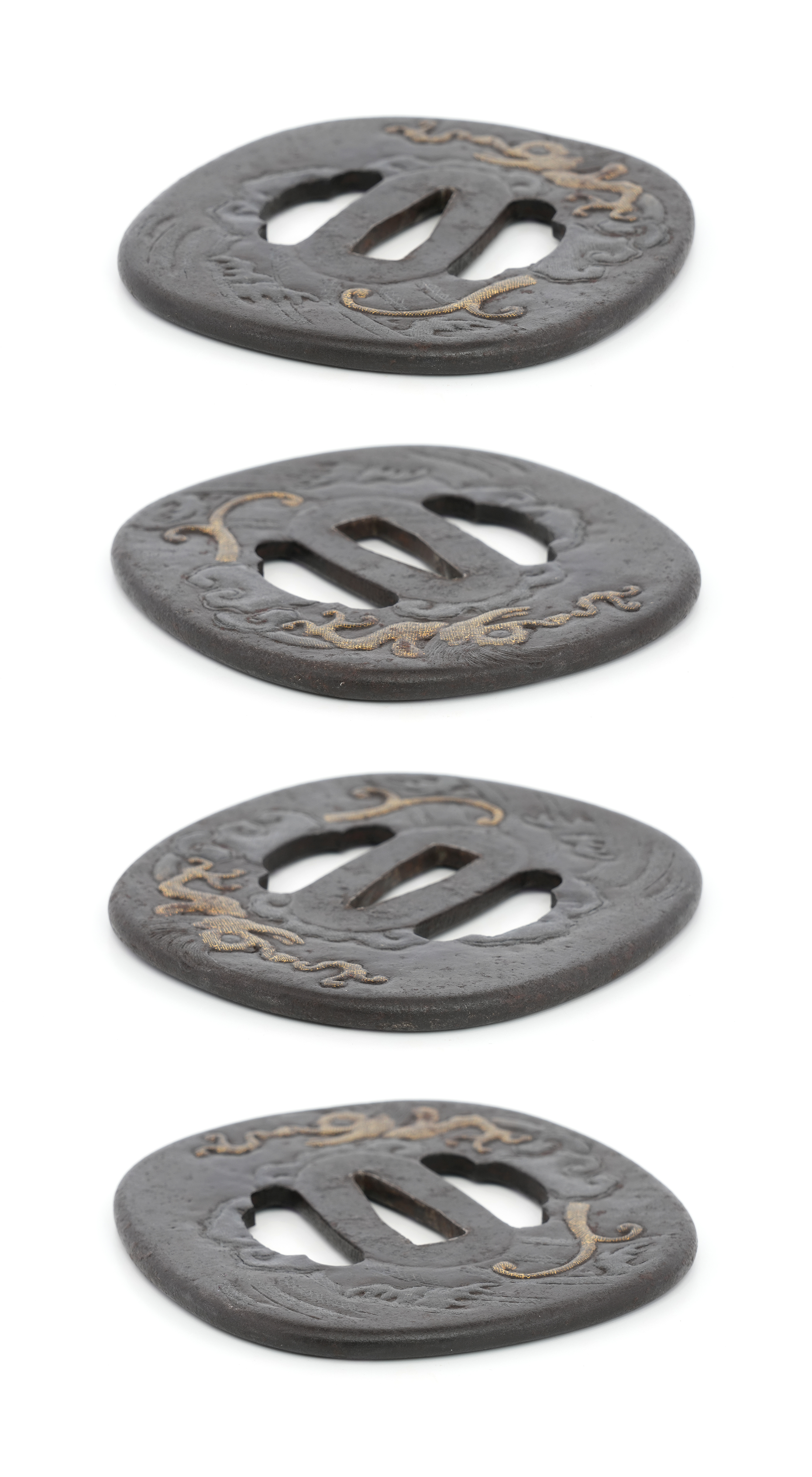
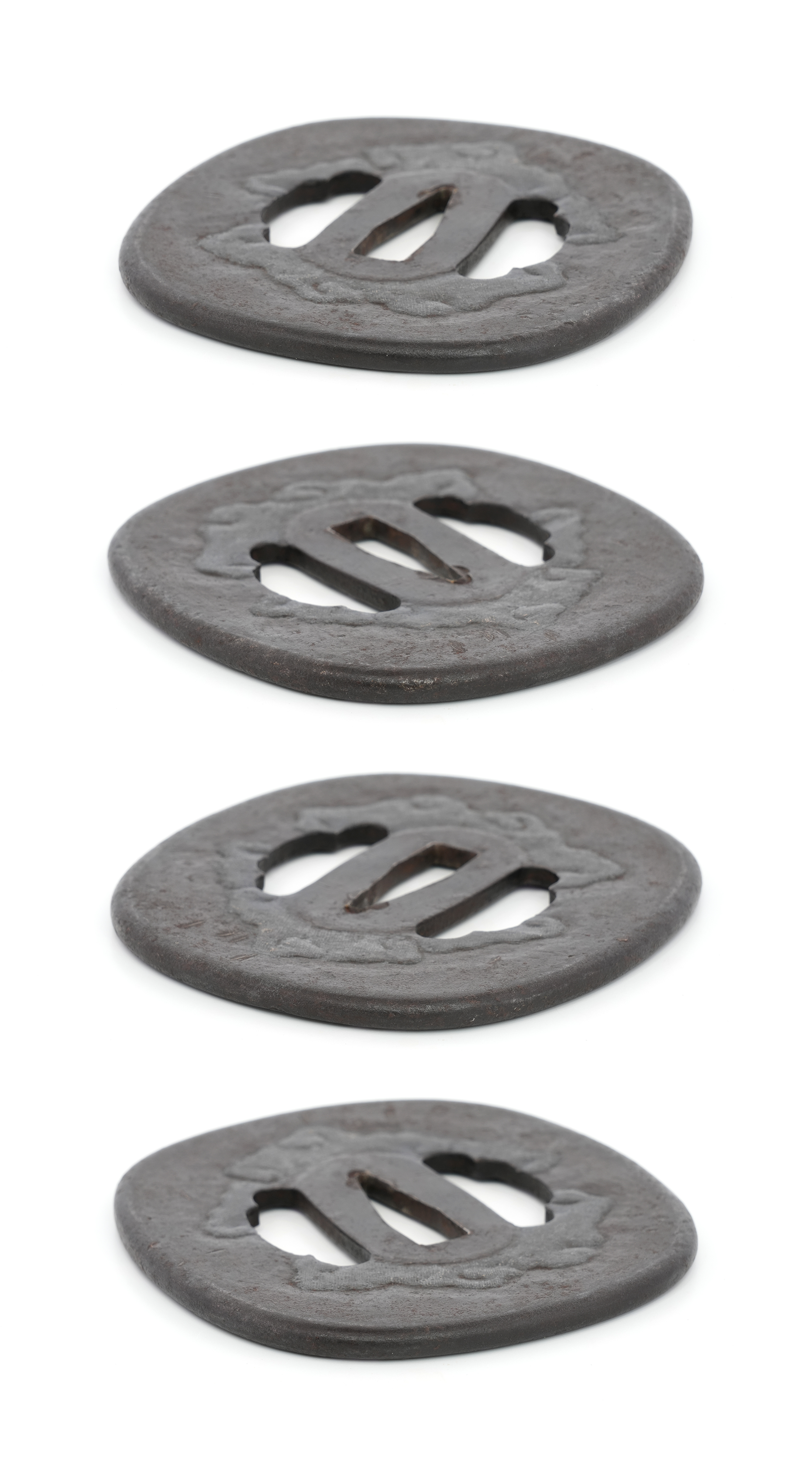
Edo Higo refers to the metalworkers centered around the Kumagai school who were active in Yotsuya, Edo from the late Edo period to the end of the Bakufu, and they are known for a style that added the flamboyance favored in Edo while inheriting the iron quality and zogan techniques nurtured by the metalworkers of their home province of Higo. Although this piece is mumei, the large and voluminous tetsu-ji, the bold composition surrounded by clouds and waves, and the technique of effectively using gold and silver nunome-zogan clearly express the characteristics of Edo Higo, so we introduce it as mumei (Edo Higo). On the upper part of the front surface, an amaryu in gold nunome-zogan advances lightly, while clouds and waves in silver nunome-zogan swirl below it, and the gold and silver scenery responds vividly atop the sober iron color. The dragon has been revered since ancient times as a spiritual beast that governs water and is an auspicious motif symbolizing success in life, leaps forward, and protection; this work, which combines the rain-calling dragon with clouds and waves in a single composition, is imbued with the blessings of abundant water and a powerful spirit of rising. The amaryu has its mouth open, showing a somewhat charming expression on its rounded face, and a light movement dwells in its twisting, stretching body and stepping limbs. The fine mesh of the gold nunome-zogan is hammered along the scales and the undulations of the body, and every time it catches the light, the figure of the dragon emerges vividly from between the clouds, making the approachable modeling that does not lean solely toward sharpness a charm unique to this piece. Silver nunome-zogan is applied to the clouds surrounding the left and right hitsu-ana and the waves overlapping below, and from within the calm expression where the pale silver color seems to melt into the tetsu-ji, the gold color of the amaryu above and the tail continuing below appears vividly, while the fine work of the nunome and the shapes of the openwork hitsu-ana give depth and rhythm to the composition. On the back surface, clouds and waves in silver nunome-zogan swirl grandly, showing the expanse of a moisture-laden sky in contrast to the bustle of the front, so every time you flip the front and back, you can alternately enjoy the golden amaryu and the quiet silver scenery. Although wear from the passage of time can be seen in the silver nunome-zogan, the outlines of the clouds and waves carved into the tetsu-ji and the traces of the nunome remain clear, and the silver color sinking faintly into the deep koshoku instead creates a calm sense of age. Possessing a size exceeding 80 mm and a solid weight of 148.5 grams, the flamboyance emitted by the gold amaryu, and the grand landscape created by the clouds and waves all in one, this is a work that allows one to fully enjoy the decorativeness of Edo Higo and the strength of an iron tsuba, shining both as an adornment for a worn sword and for appreciation in the hand.
Offered by Toushin

We couldn’t find current papers for this piece. Ask the dealer whether it has been, or can be, submitted to shinsa. — Hoshi

As written by the shop
Machine translation from the shop's Japanese · may contain errors ·
We could not find an authenticity certificate on the seller’s listing. Japanese swords and fittings are normally papered by the NBTHK (or the NTHK). Without one, the attribution is the seller’s own assessment and has not been independently verified — treat it with caution and ask the dealer about certification before buying.
As a rule we do not accept returns, except when we have sent a different item from the one ordered or when there is a significant discrepancy between the description and the item. If you wish to return an item, please contact us within 3 days of its arrival and then send it back.
¥132,000