 NihontoWatchNihontoWatch
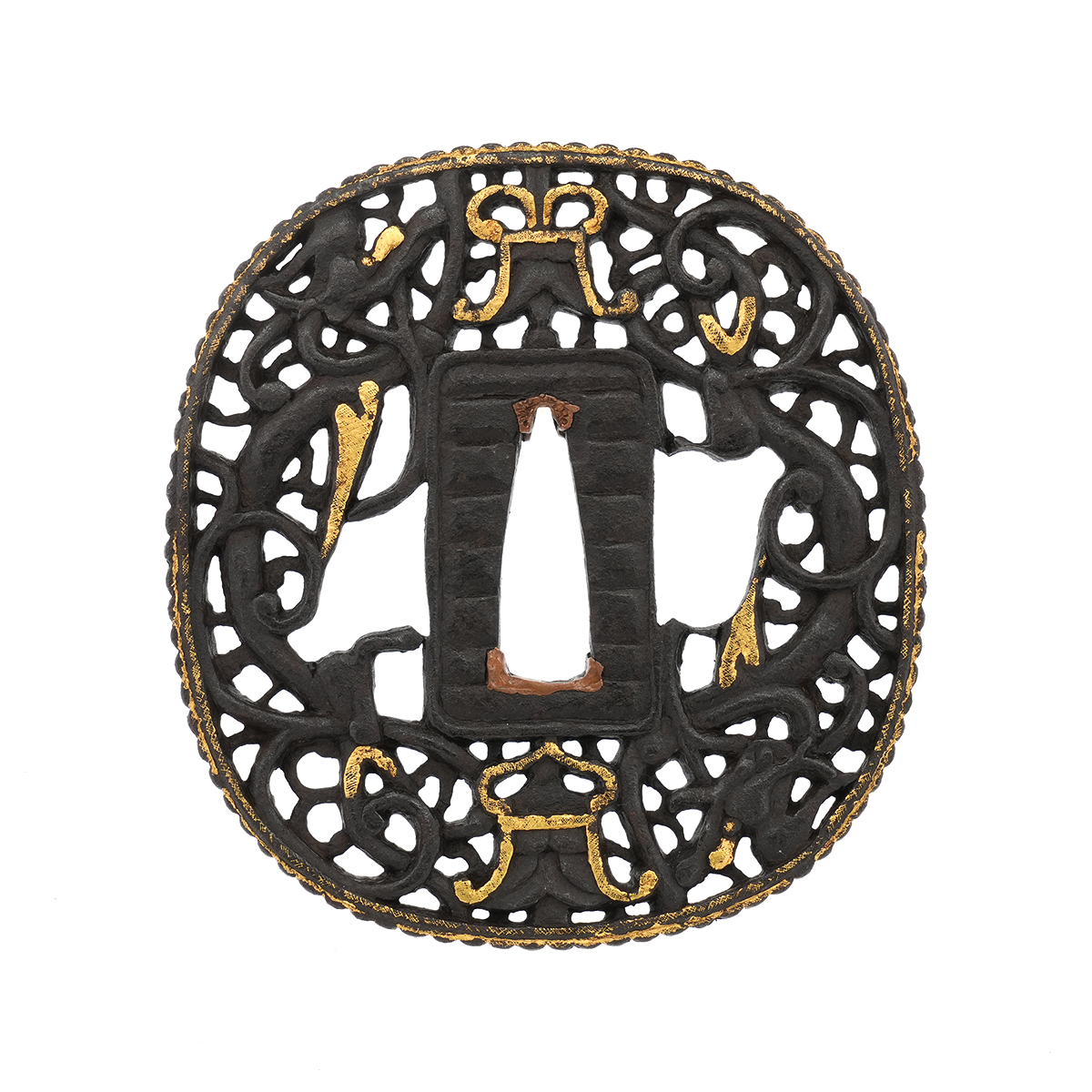
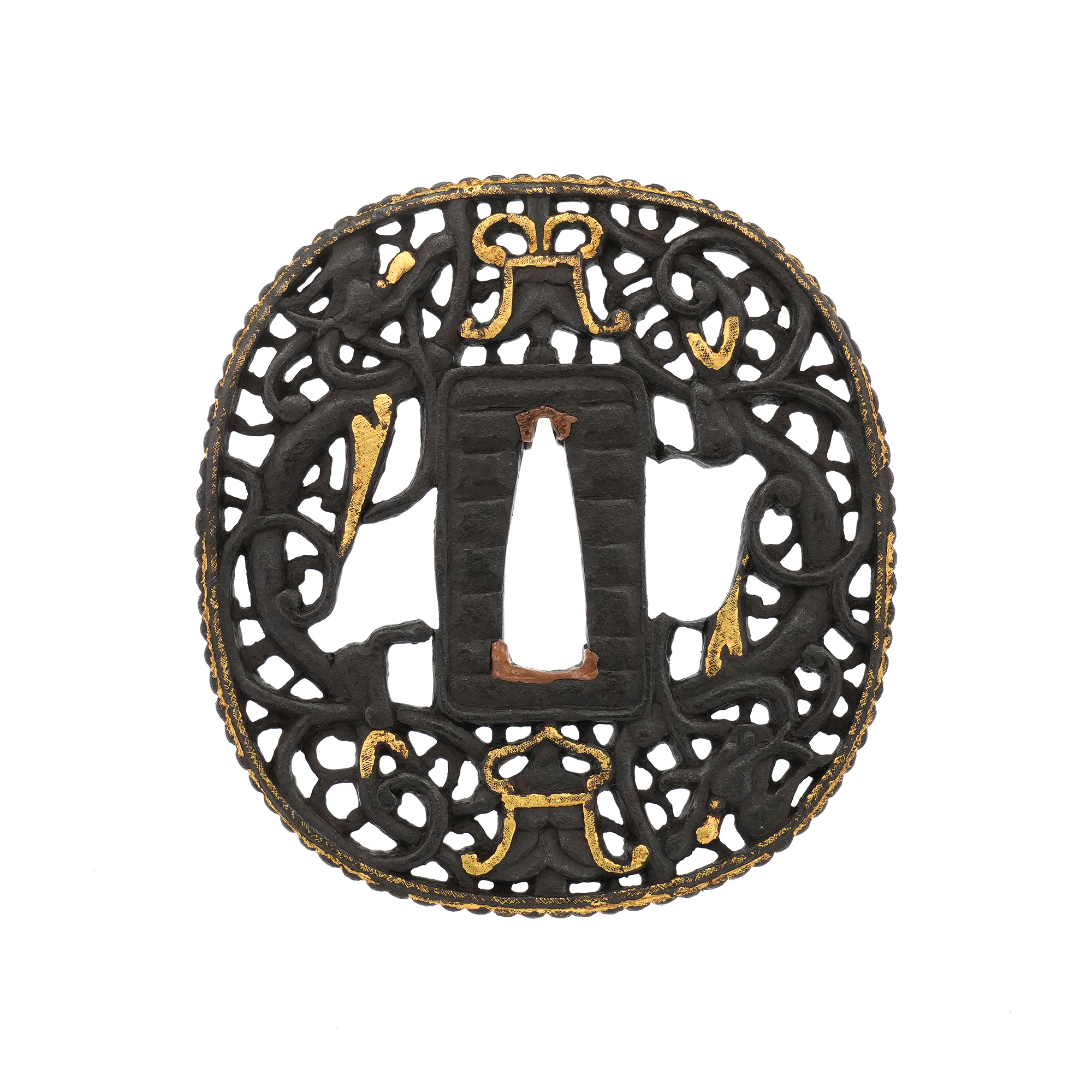
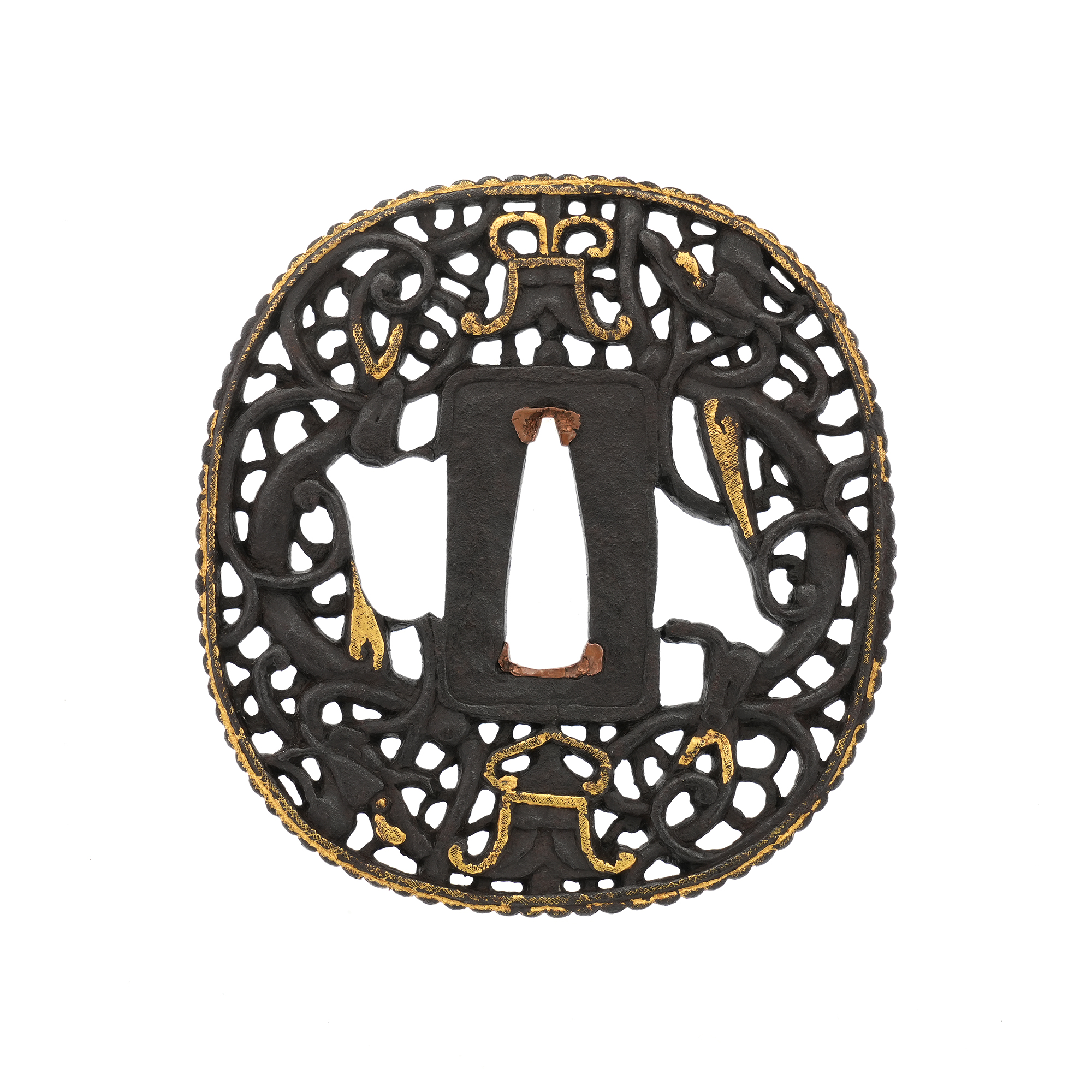
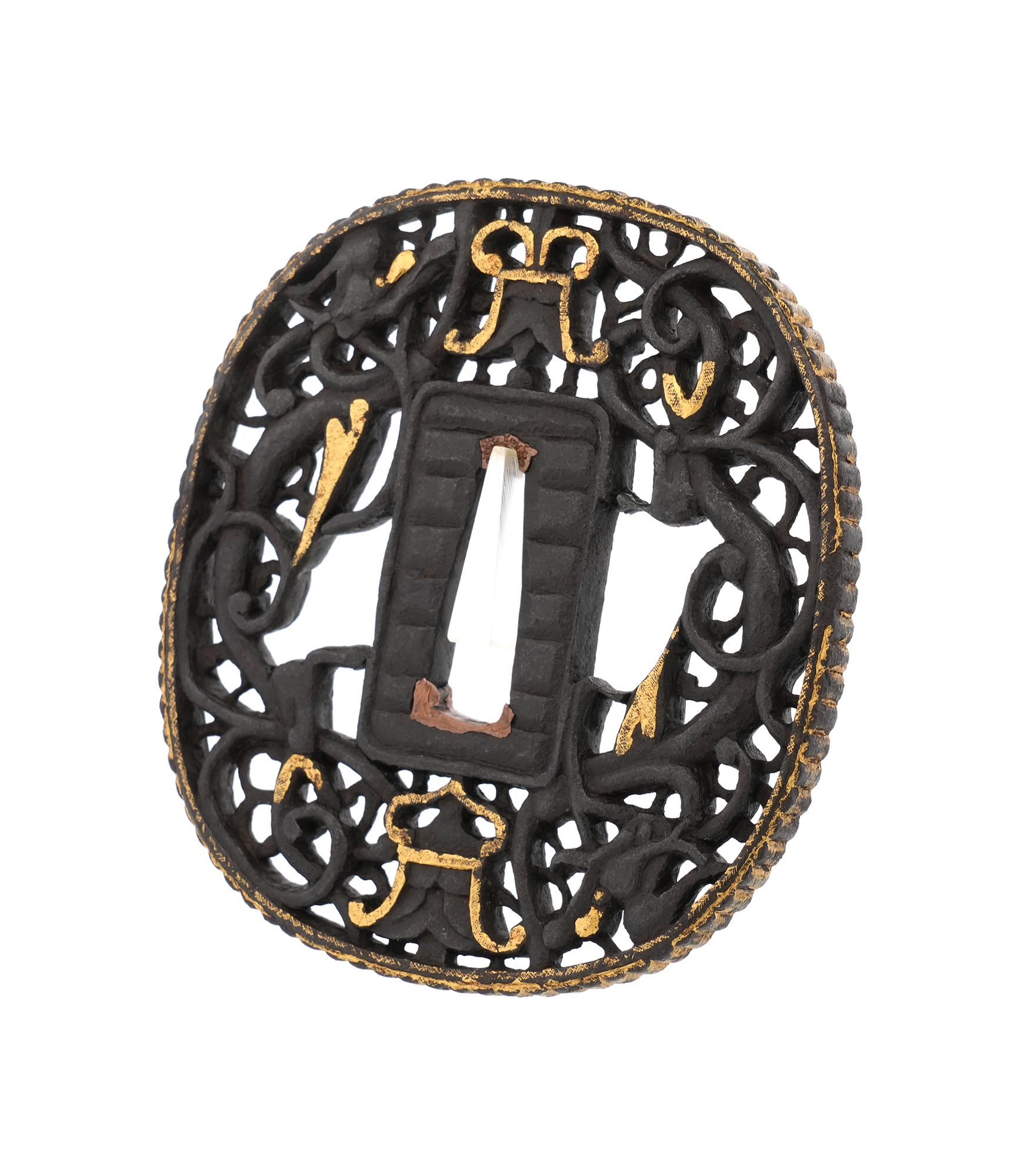
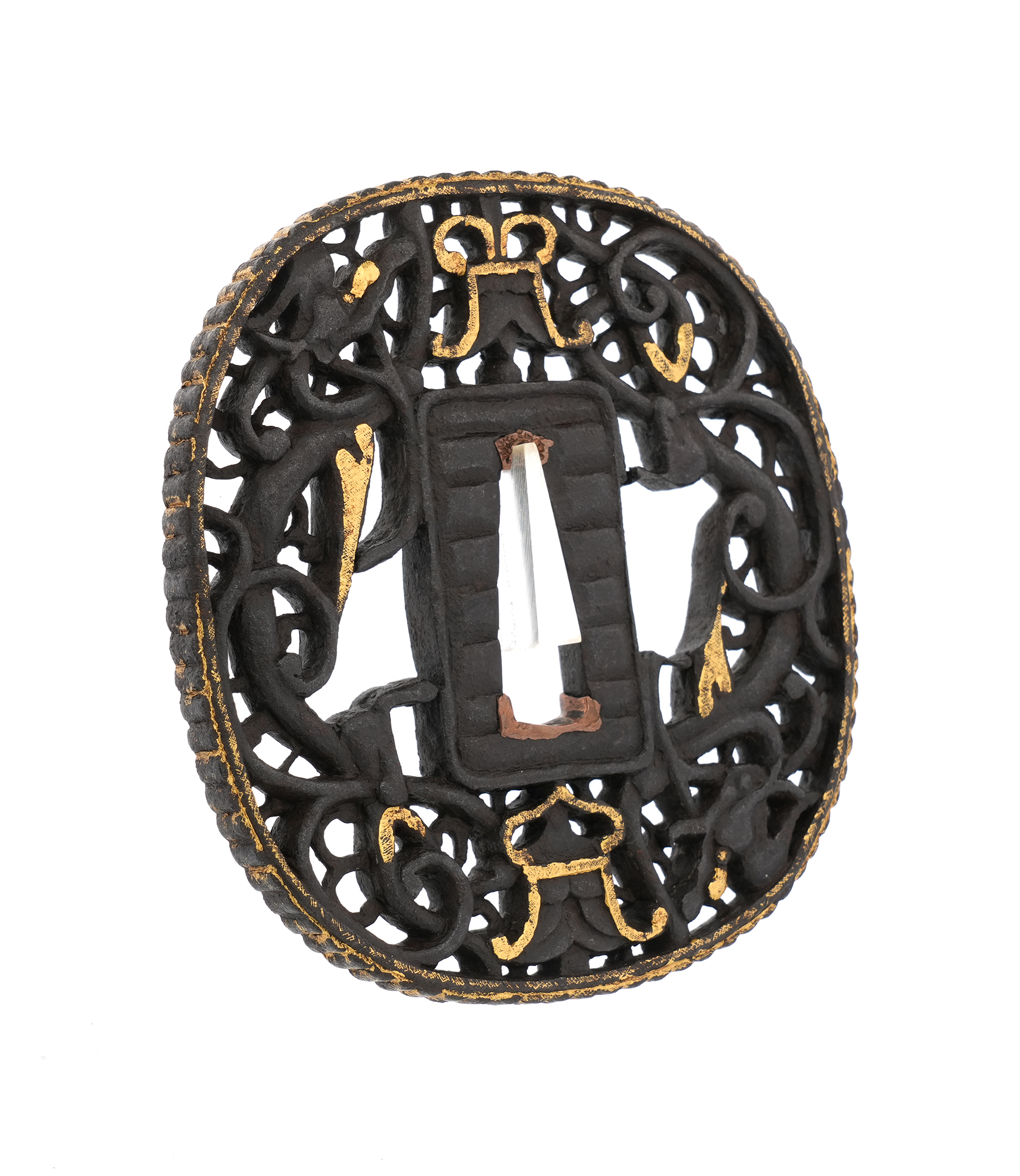
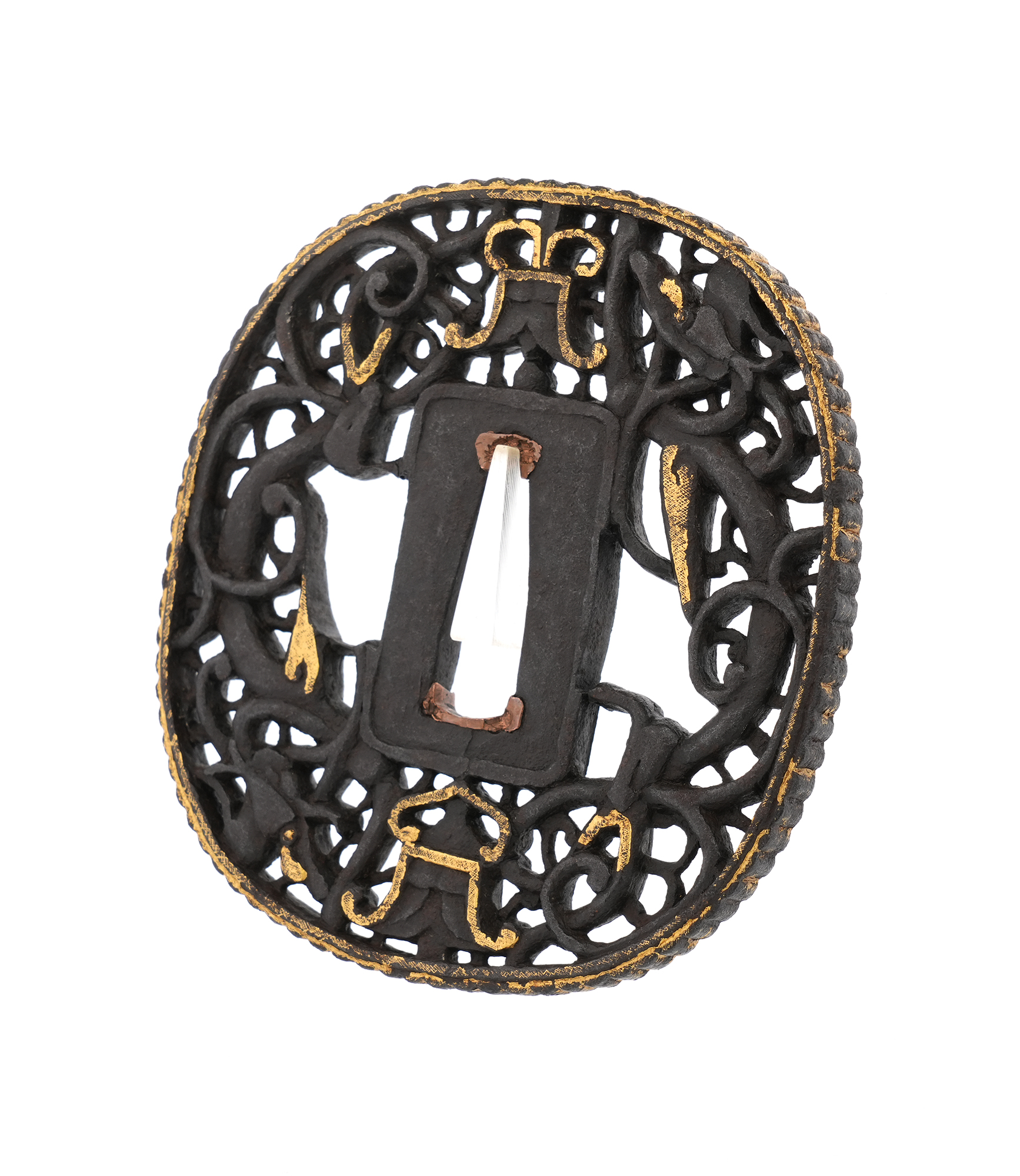
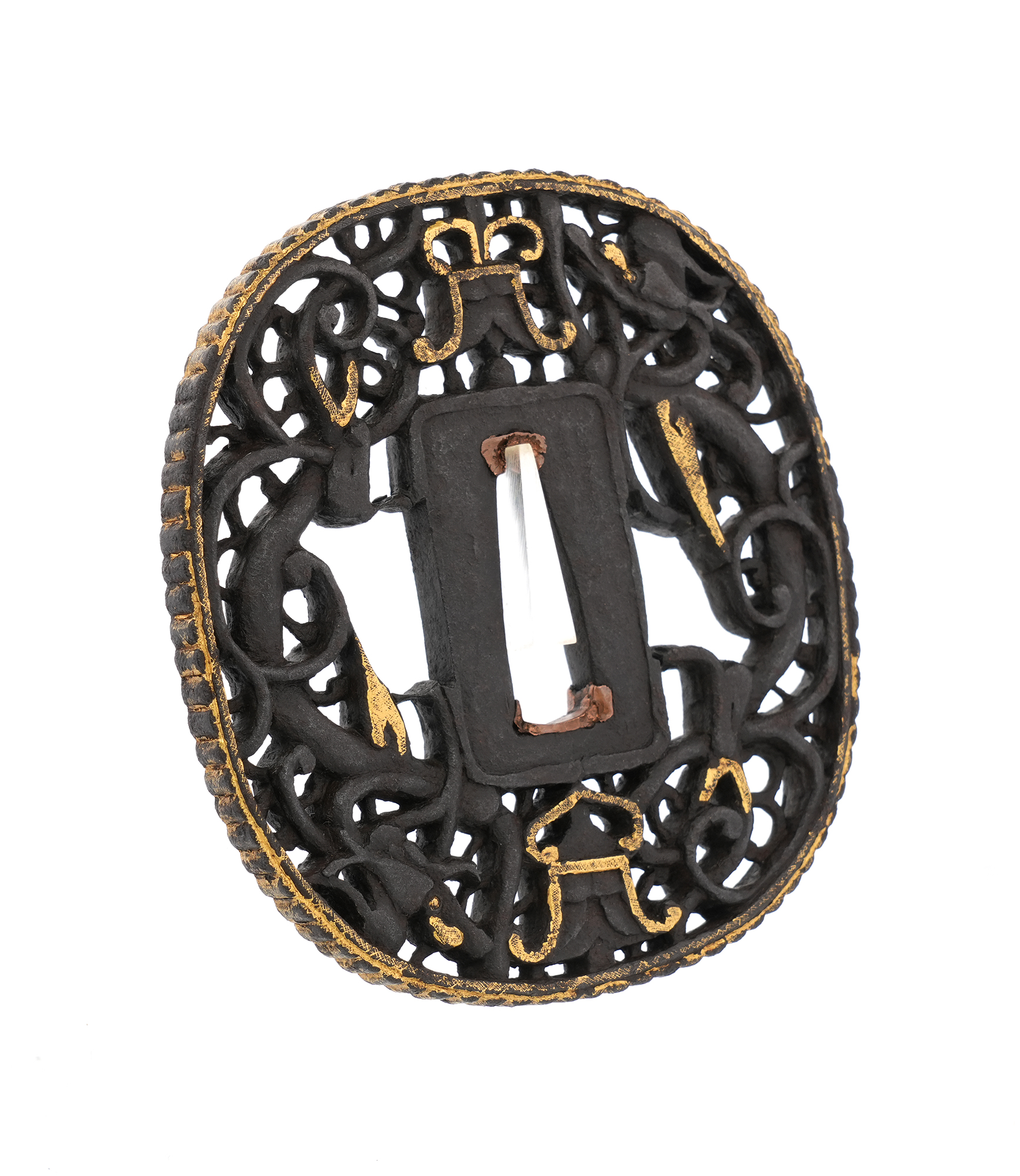
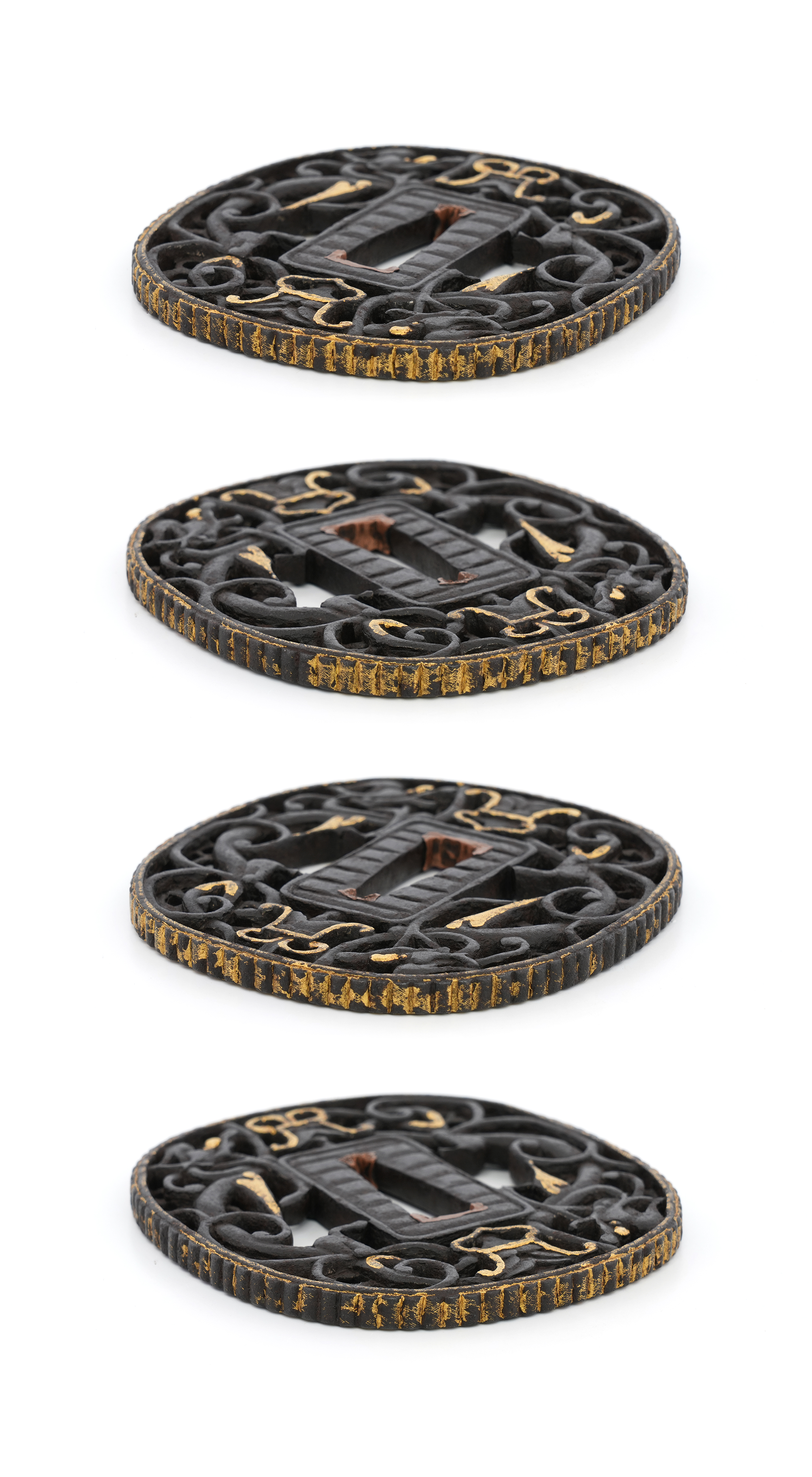
Nanban tsuba are a group of tsuba produced throughout the Edo period against the background of exoticism brought through exchange with foreign countries, and were particularly widely favored in the middle of the Edo period. Many works feature dragons, karakusa, foreign characters, and Nanban ships arranged with high density on a tetsu-ji, combining fine ji-sukashi with gold and silver nunome-zogan, characterized by a complex and gorgeous decorative quality that differs in flavor from Japanese-style compositions that make use of blank space. This piece features two dragons facing each other on the left and right of the seppa-dai, with their long bodies arranged as if melting into swirling karakusa, while foreign-style ornaments placed at the top and bottom serve as the axis of the composition, guiding the gaze from the center to the outer perimeter. As spiritual beasts that govern water, dragons symbolize protection and rapid progress, and the pair of dragons responding to each other embodies wishes for the balance of power and harmony; furthermore, the appearance of karakusa growing incessantly evokes prosperity and vitality, making this a motif richly endowed with auspiciousness within its exotic atmosphere. By deeply carving the 5.6 mm thick tetsu-ji and skillfully connecting the slender dragon bodies and multiple intersecting vines to the mimi and seppa-dai, it maintains its strength as a bugu despite being a delicate sukashibori. When viewed from an angle, the overlapping patterns and depth of the carving appear clearly, allowing one to appreciate a three-dimensional depth that cannot be captured on a flat plane, and the gold nunome-zogan applied to key points such as the dragons and karakusa on the omote and ura vividly brings out the flow of the complex patterns from the blackish-brown tetsu-ji. Furthermore, the mimi is painstakingly treated with irregularities like a string of beads, and gold nunome-zogan is applied across its entire surface, so that the fine golden brilliance continues when viewed not only from the front but also from the side, gorgeously tightening the dense design. Because the design of the karakusa and twin dragons is developed without compromise on both the omote and ura, the sequence of the sukashi and the arrangement of the gold show different expressions each time the tsuba is turned over; the precise contours stand out against a white background, while the remaining kin-zogan stands out against a black background. The large-sized sugata and the solid weight of 138 grams firmly support the dense composition, and in addition to the appreciation of deciphering details at hand, it possesses a presence that would stand out remarkably if matched with a koshirae featuring a kuroroushi-saya and understated kanagu, making it an impressive work where one can enjoy the exotic design characteristic of Nanban tsuba, deep sukashibori, and the vivid contrast between tetsu and gold as one.
Offered by Toushin

We couldn’t find current papers for this piece. Ask the dealer whether it has been, or can be, submitted to shinsa. — Hoshi

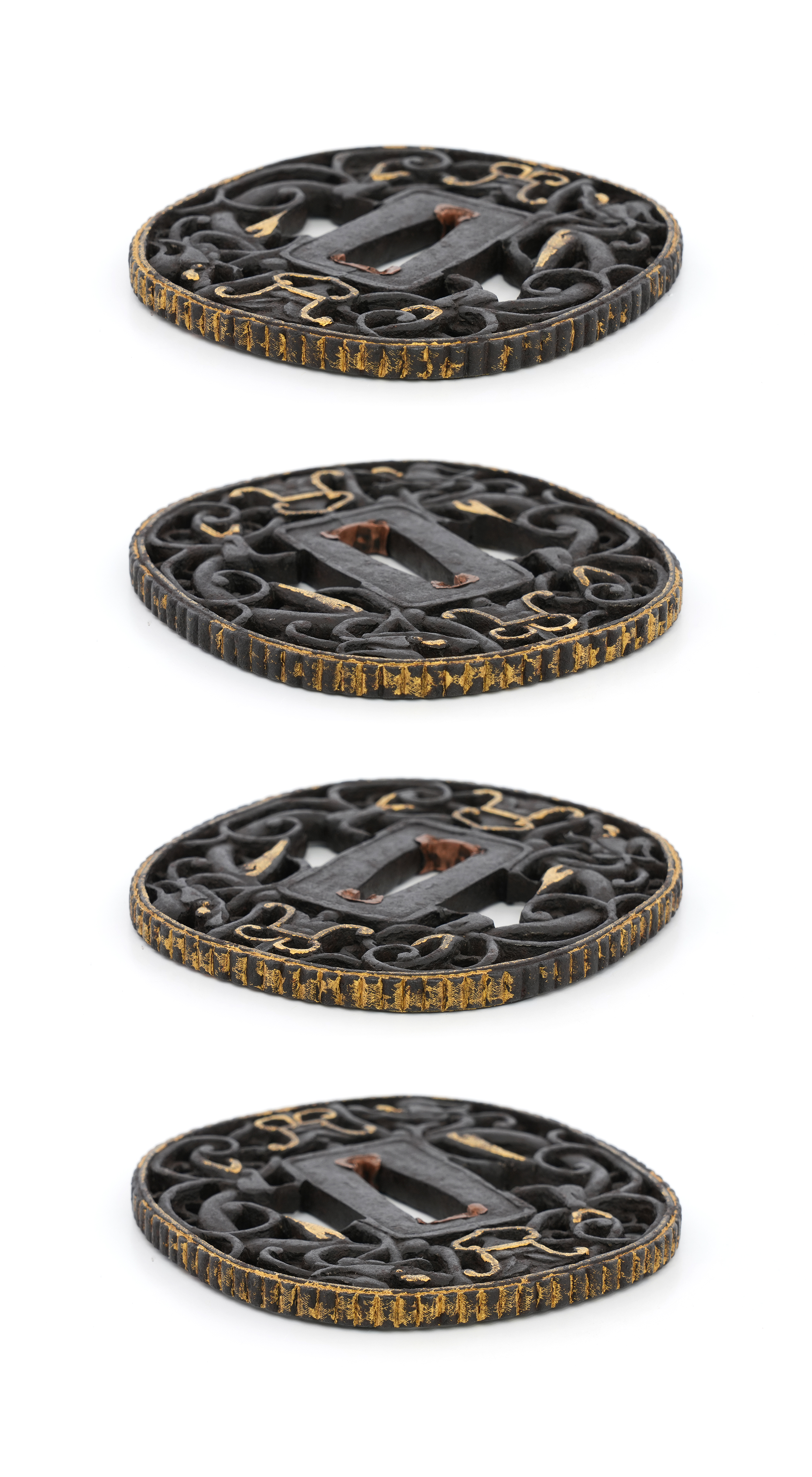
Unsigned
As written by the shop
Machine translation from the shop's Japanese · may contain errors ·
We could not find an authenticity certificate on the seller’s listing. Japanese swords and fittings are normally papered by the NBTHK (or the NTHK). Without one, the attribution is the seller’s own assessment and has not been independently verified — treat it with caution and ask the dealer about certification before buying.
As a rule we do not accept returns, except when we have sent a different item from the one ordered or when there is a significant discrepancy between the description and the item. If you wish to return an item, please contact us within 3 days of its arrival and then send it back.
¥143,000