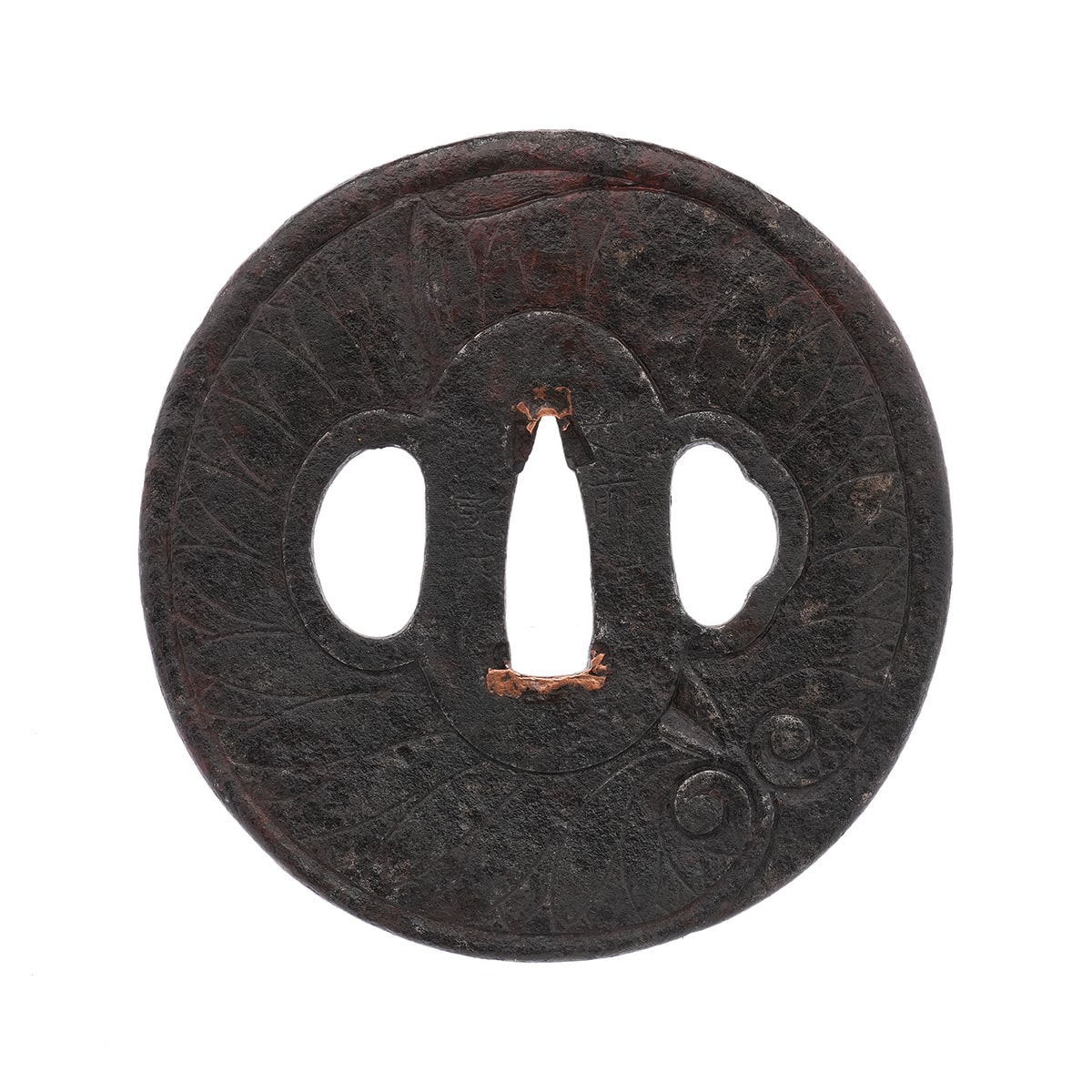
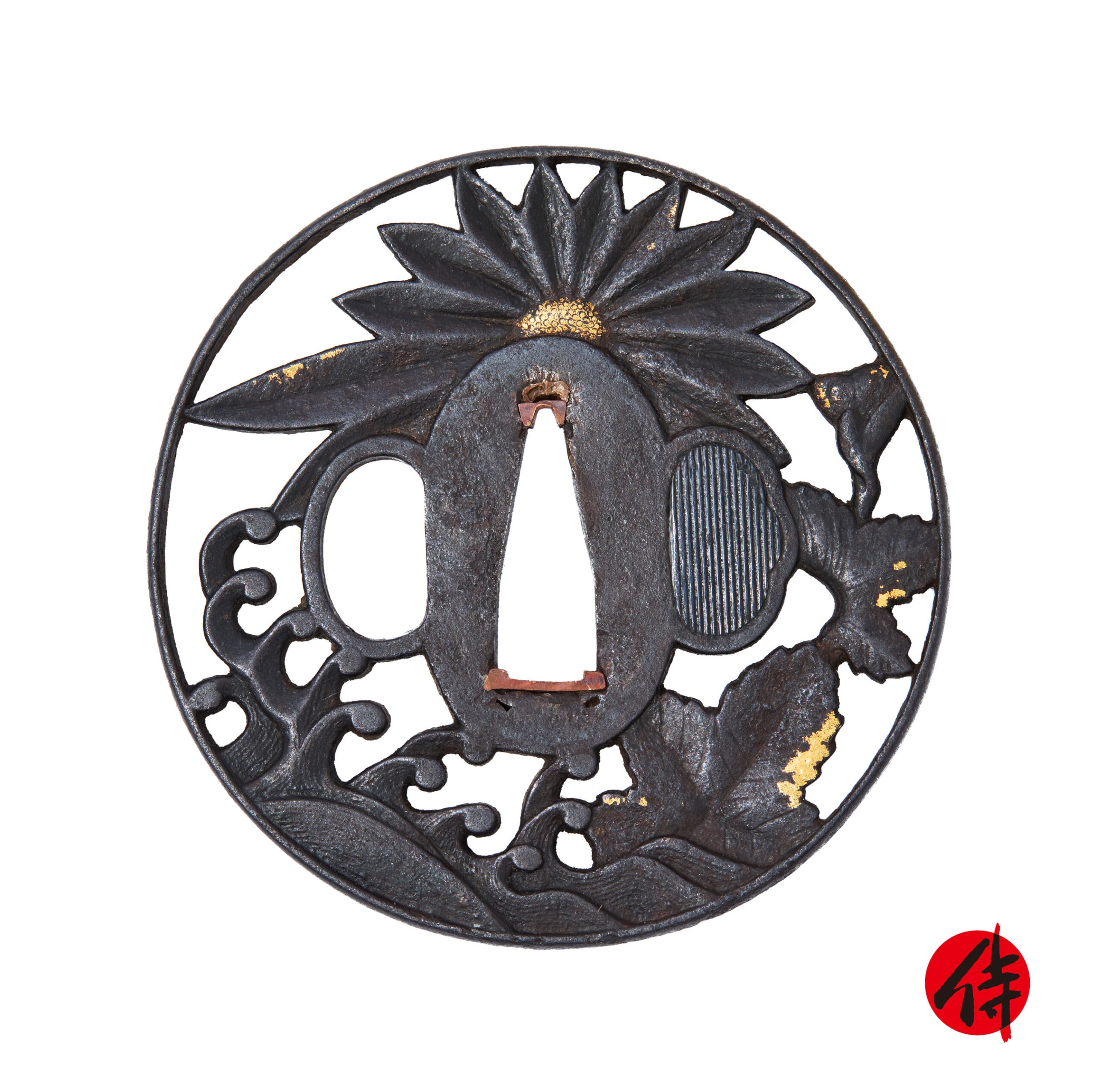
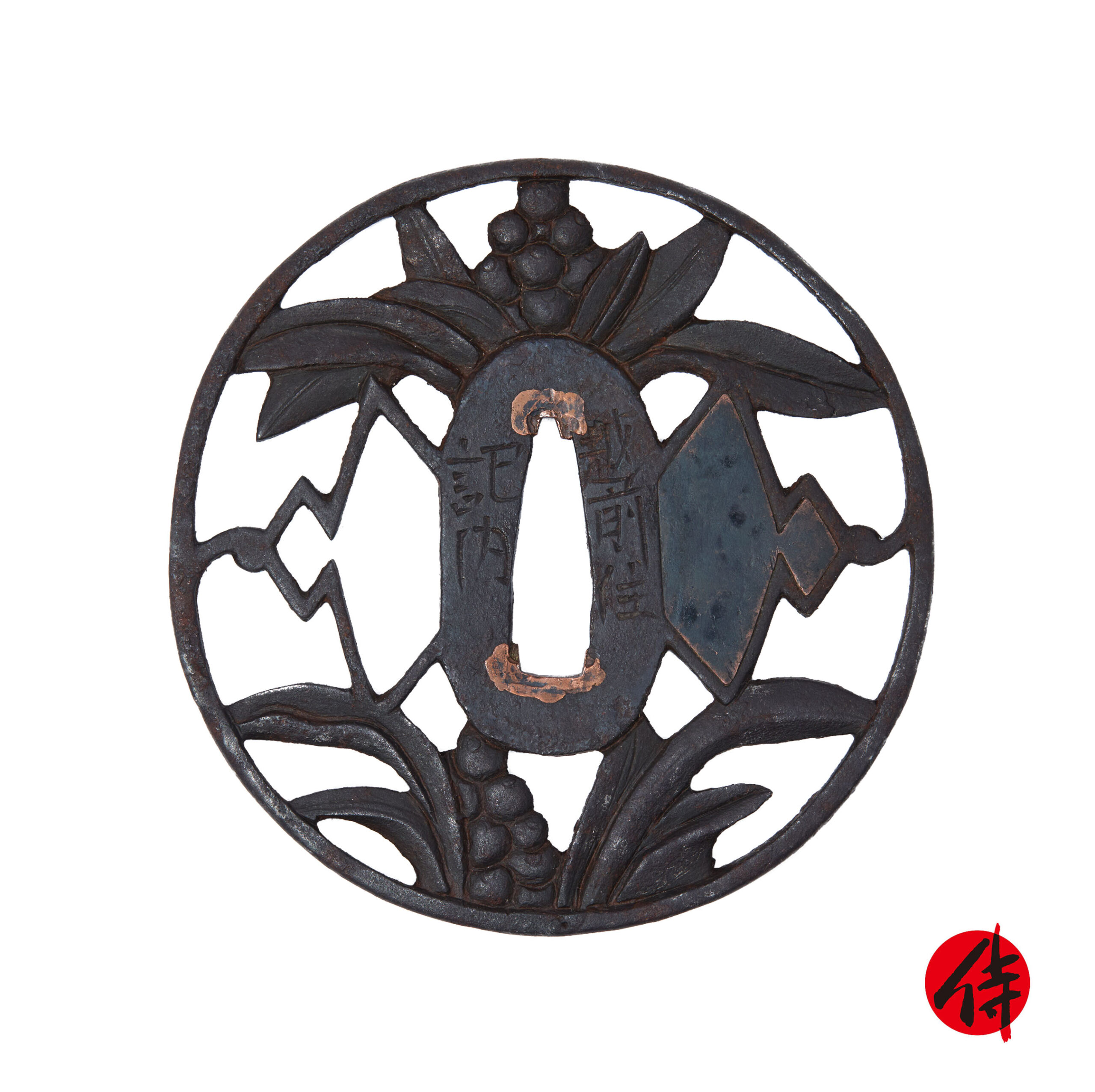
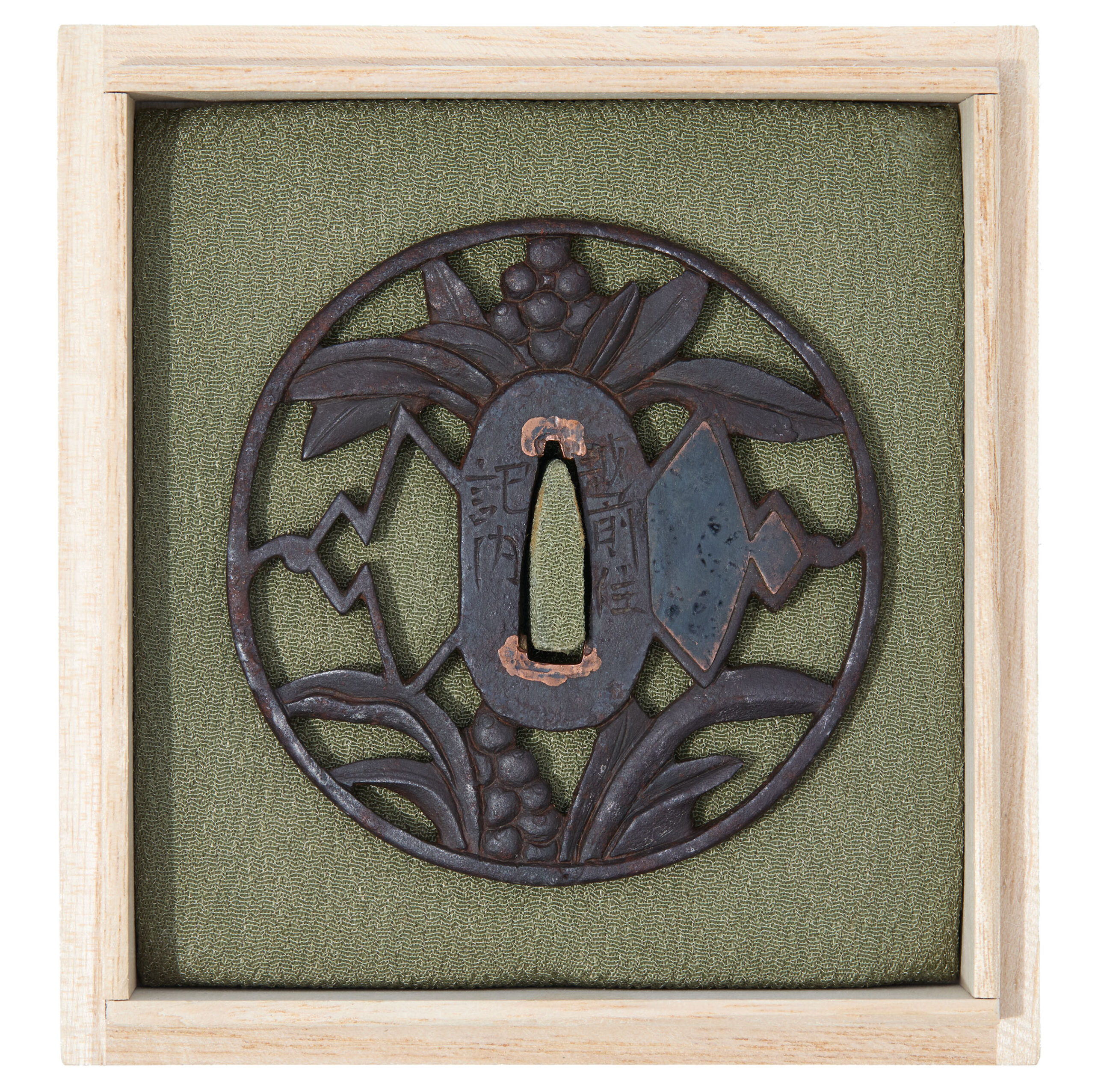
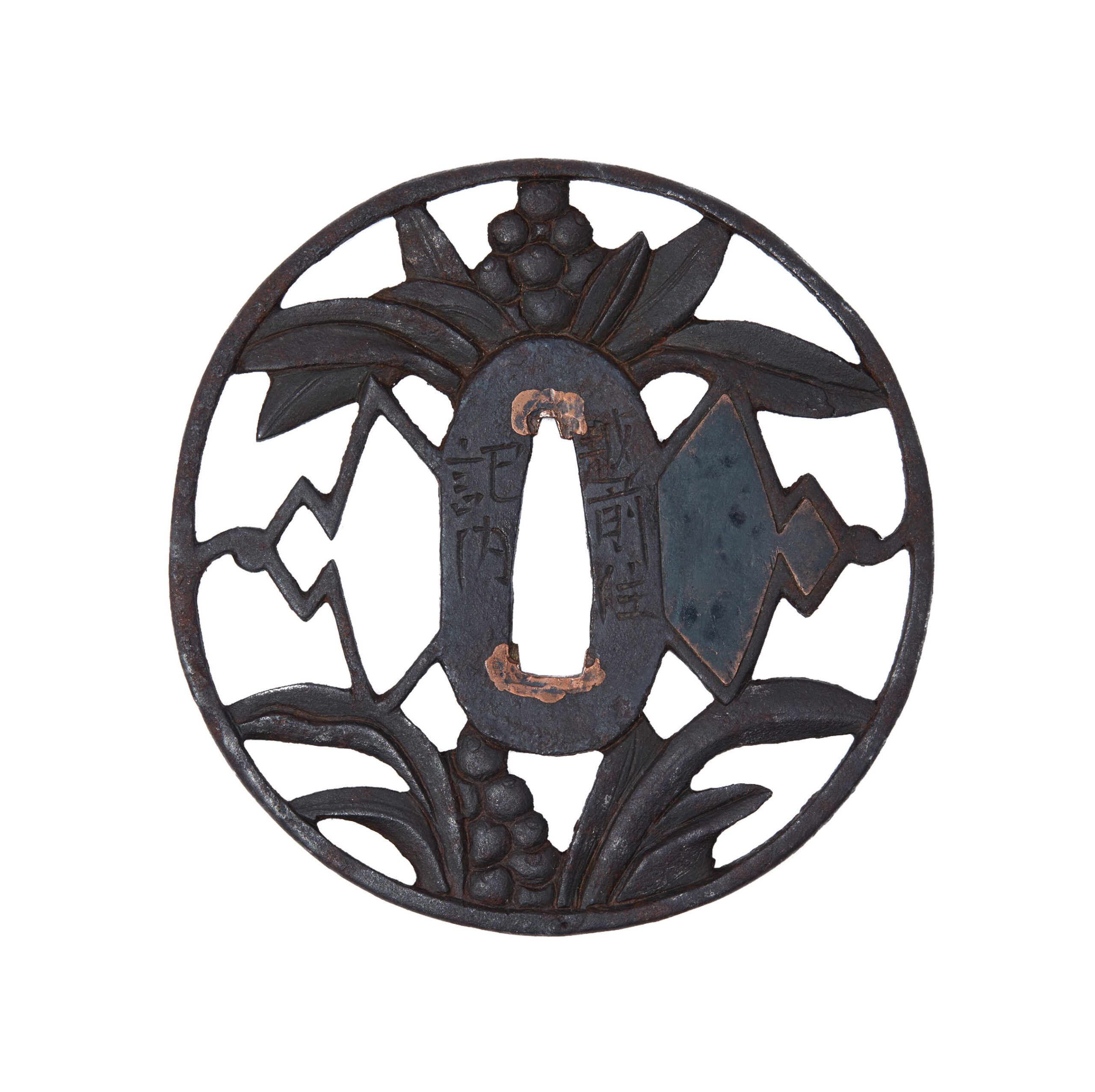
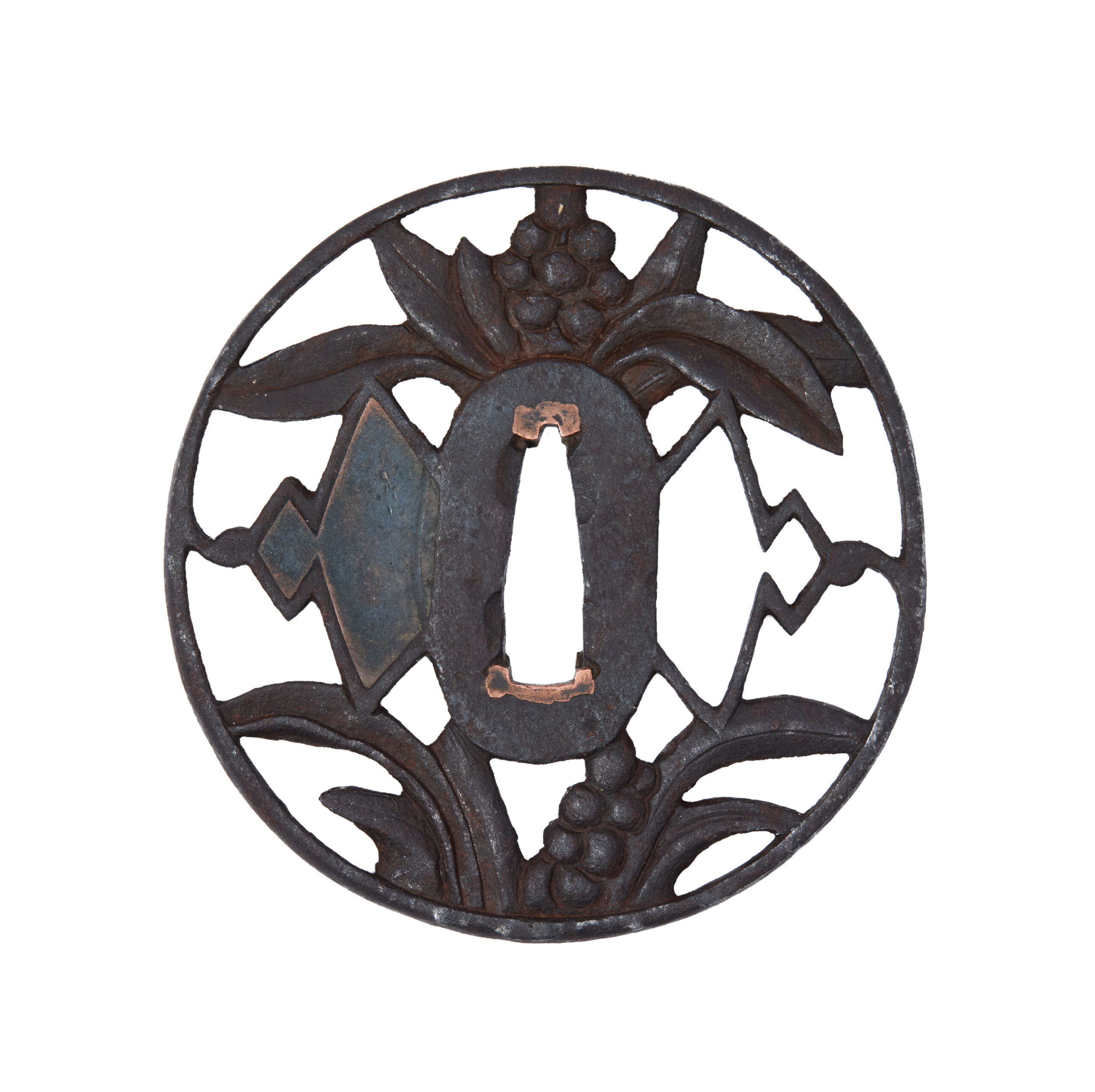
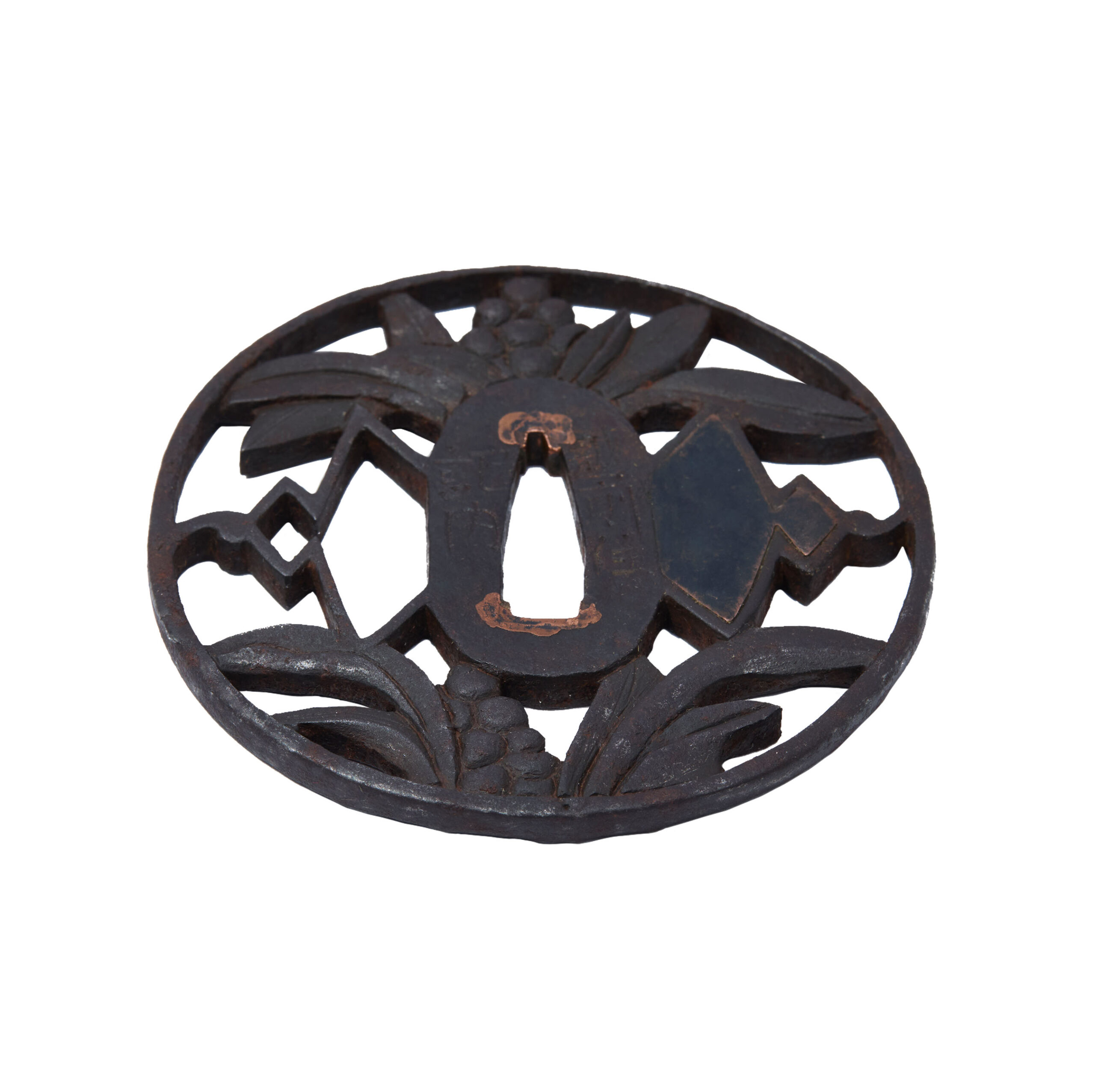
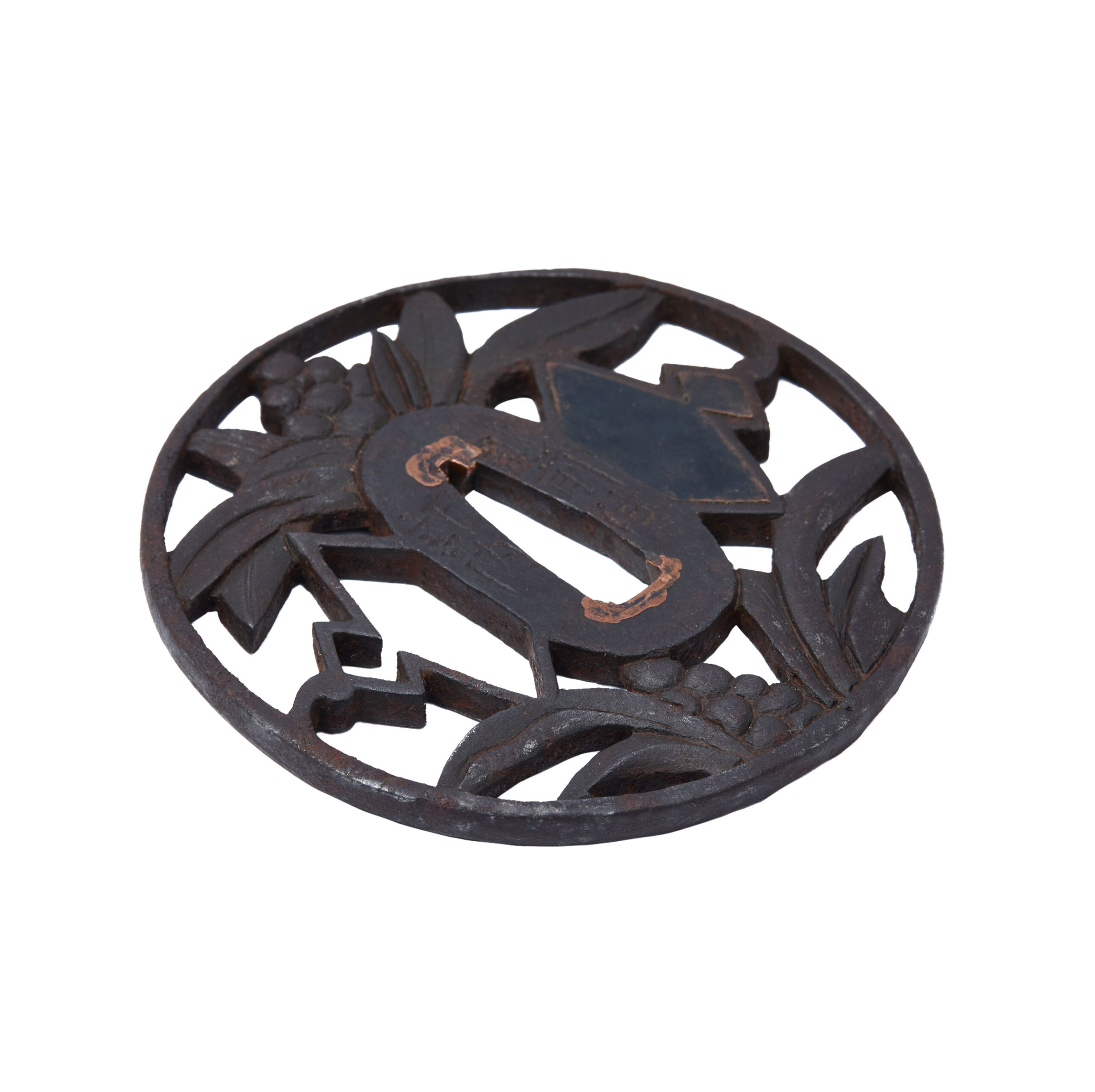
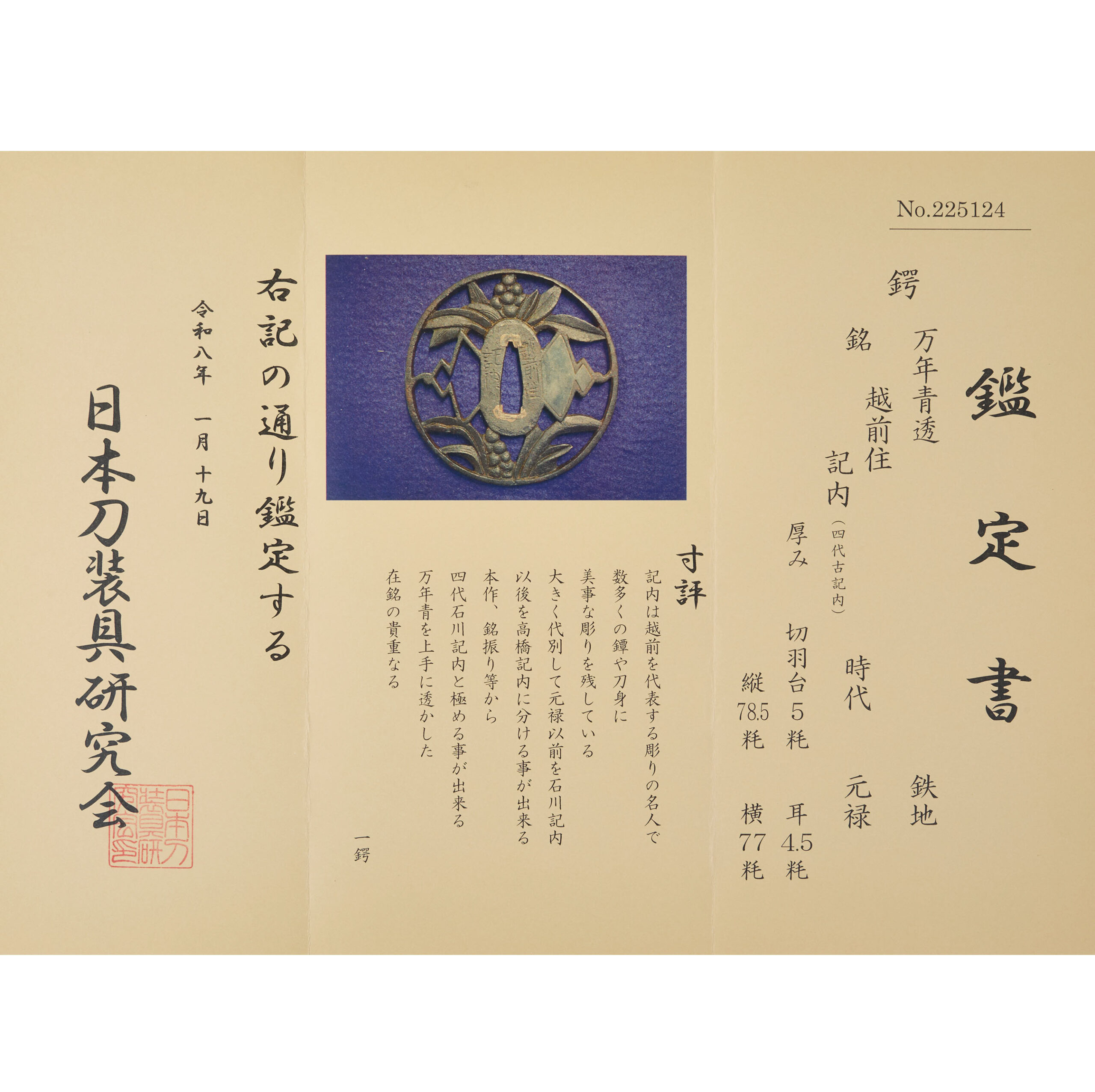
This Tsuba, signed by 4th generation Echizen jū Kinai, features an Omoto-Zu design depicting Rohdea japonica, a symbol of longevity. Made during the Genroku era (1688-1704) of the Edo period, it comes with a Nihon Tousougu Kenkyukai Certificate. The Kinai school was renowned for its intricate carvings on sword guards.
 NihontoWatch
mei · Kinai · Edo
Echizen
22 pieces on the market now
We could not find an authenticity certificate on the seller’s listing. Japanese swords and fittings are normally papered by the NBTHK (or the NTHK). Without one, the attribution is the seller’s own assessment and has not been independently verified — treat it with caution and ask the dealer about certification before buying.
Returns/exchanges limited to defects caused by shipping (except willful misconduct or gross negligence by the company); customers must contact within 72 hours of receiving the product.
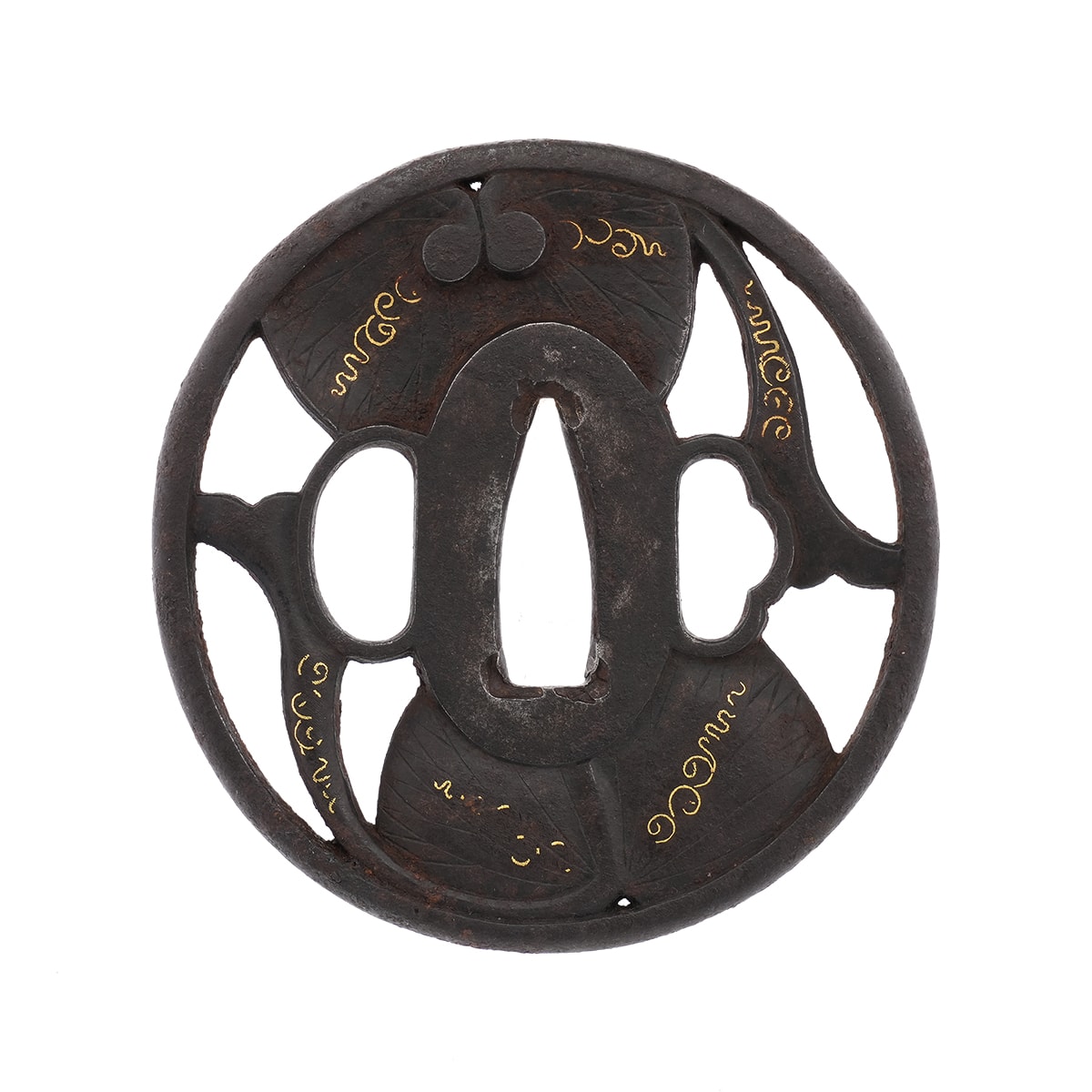
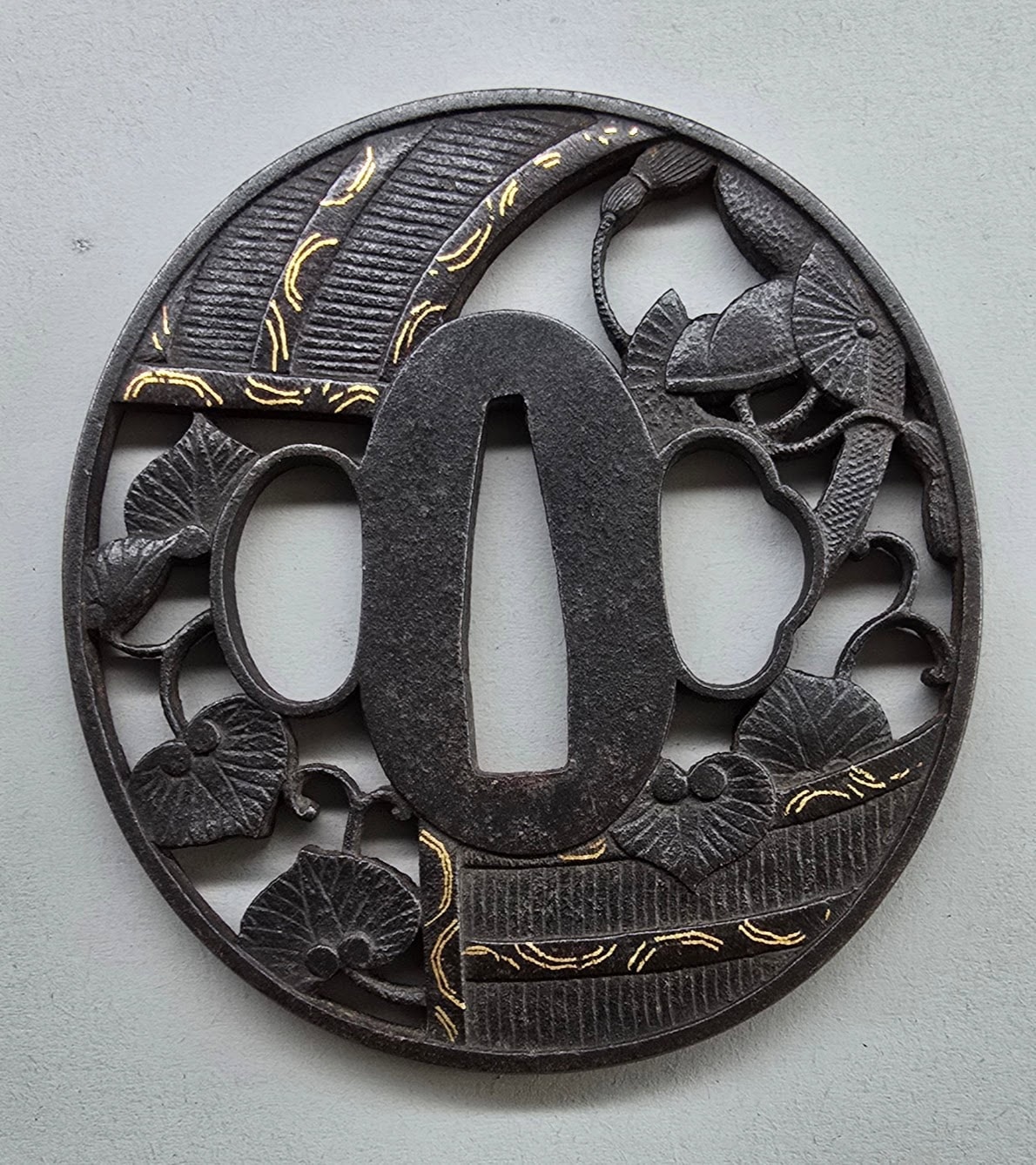
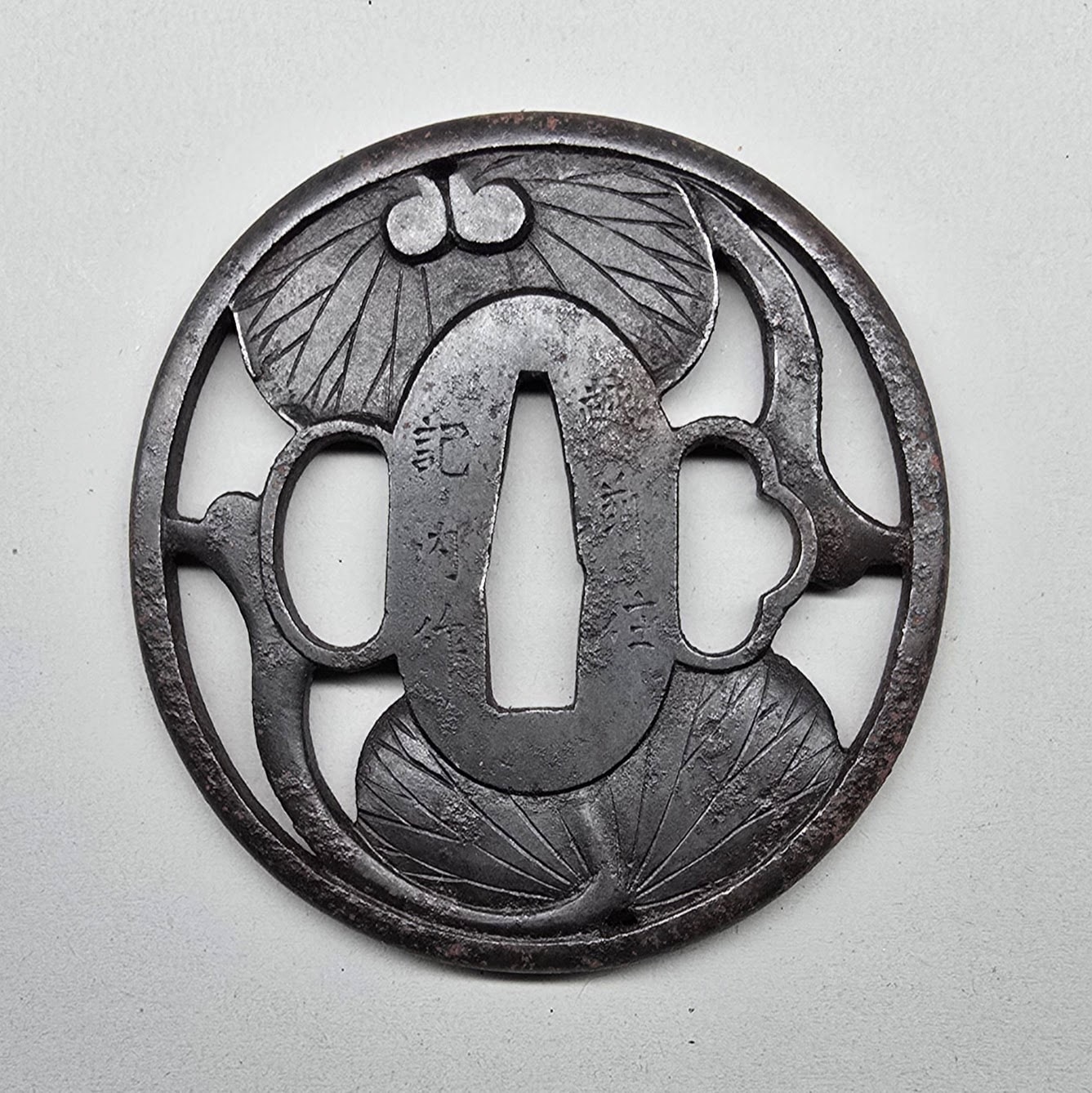
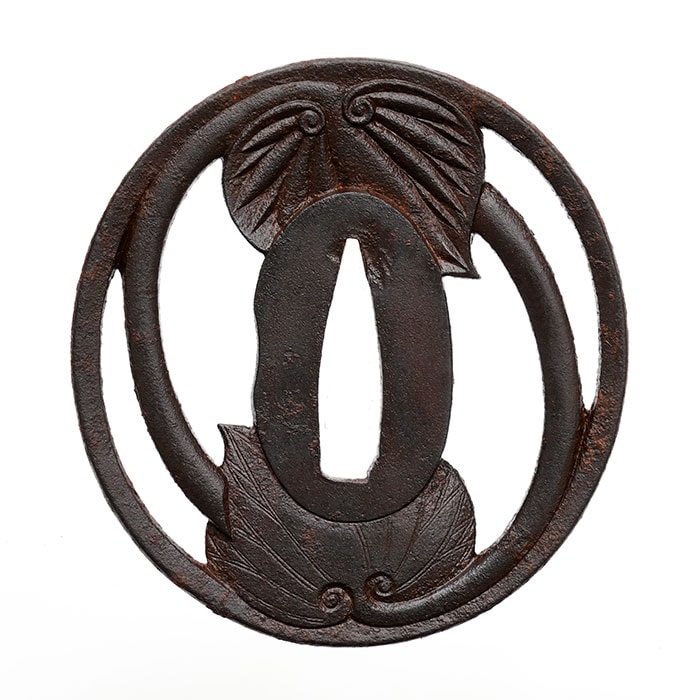
This Tsuba, signed by 4th generation Echizen jū Kinai, features an Omoto-Zu design depicting Rohdea japonica, a symbol of longevity. Made during the Genroku era (1688-1704) of the Edo period, it comes with a Nihon Tousougu Kenkyukai Certificate. The Kinai school was renowned for its intricate carvings on sword guards.
NihontoWatchmei · Kinai · Edo
Echizen
22 pieces on the market now
We could not find an authenticity certificate on the seller’s listing. Japanese swords and fittings are normally papered by the NBTHK (or the NTHK). Without one, the attribution is the seller’s own assessment and has not been independently verified — treat it with caution and ask the dealer about certification before buying.
Returns/exchanges limited to defects caused by shipping (except willful misconduct or gross negligence by the company); customers must contact within 72 hours of receiving the product.