Summary
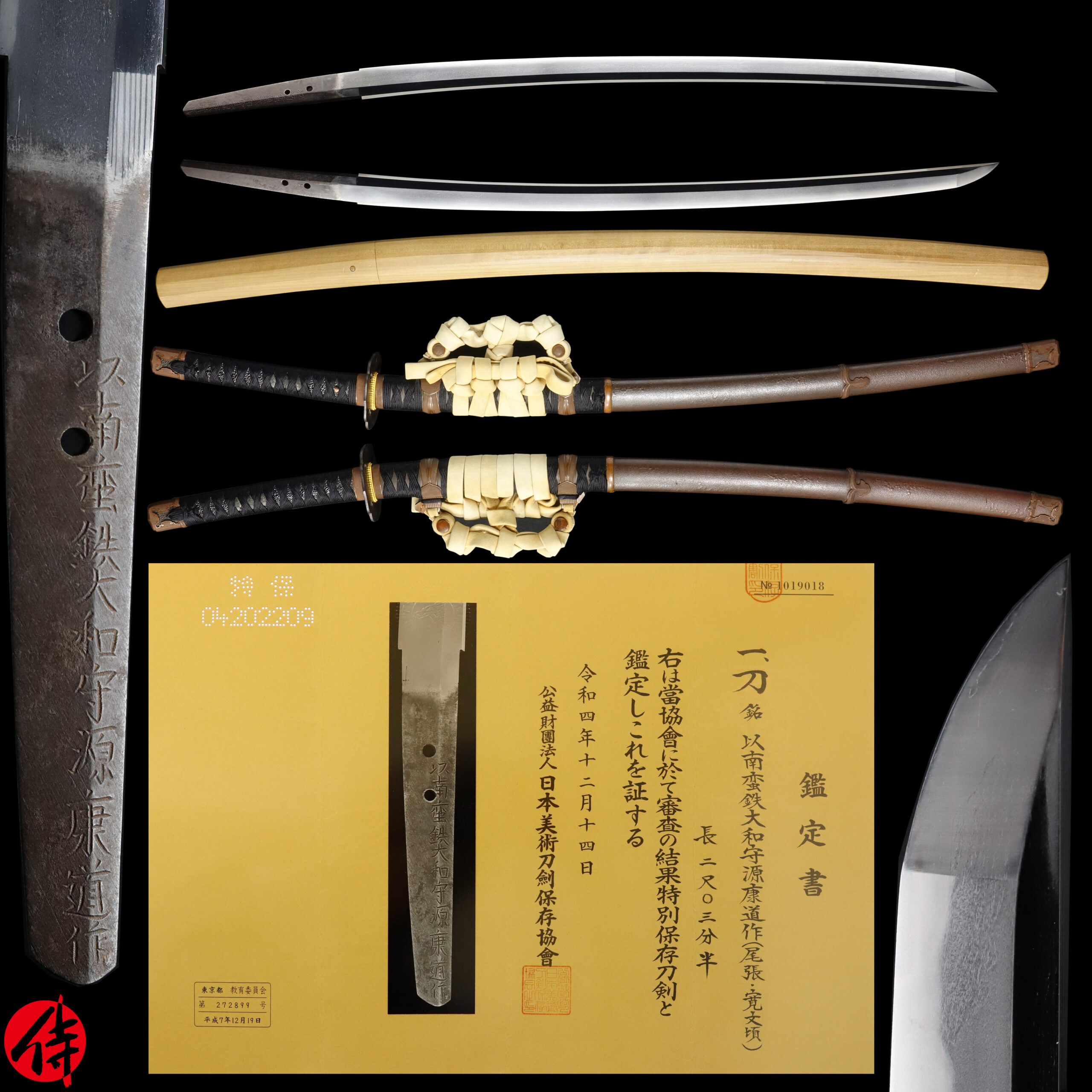
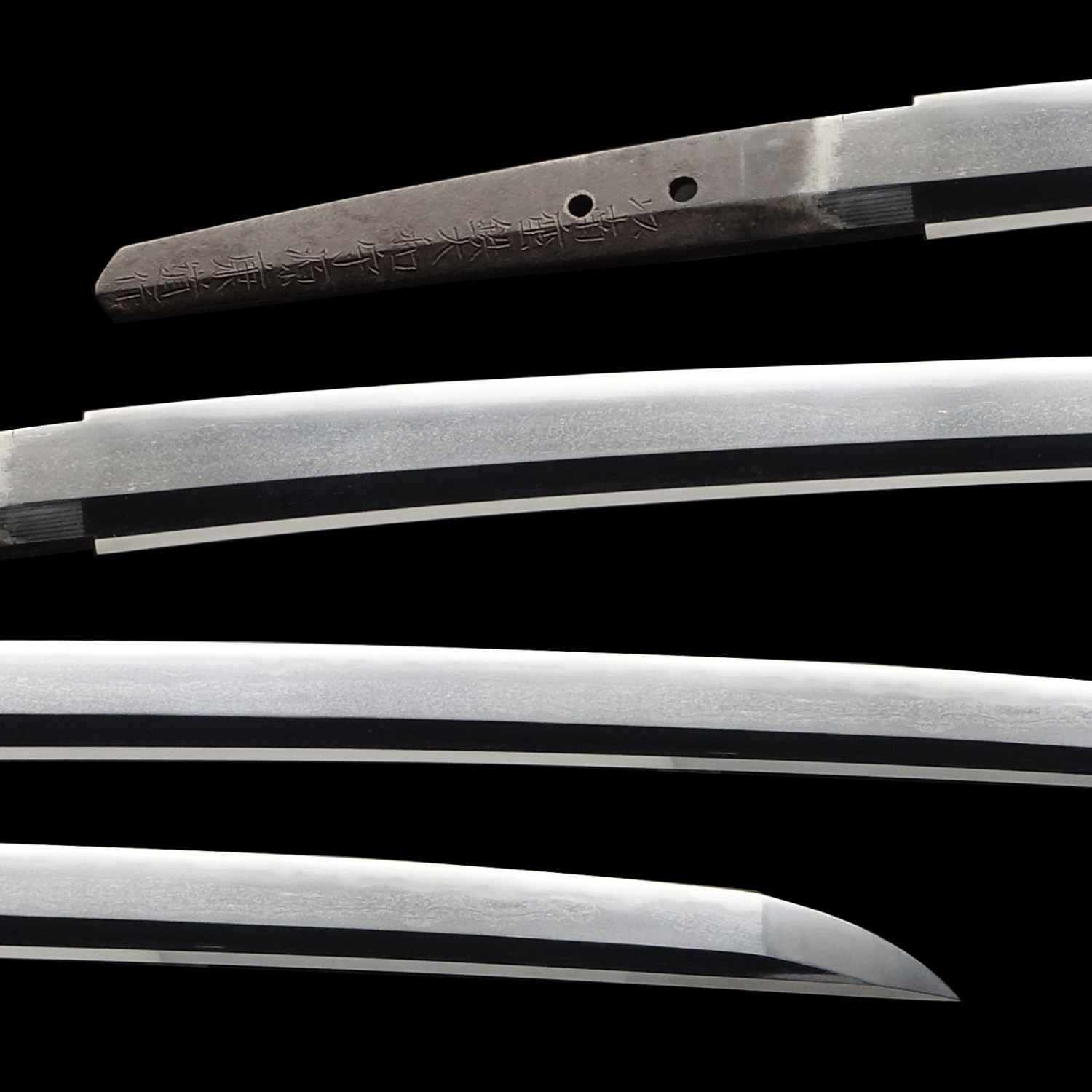
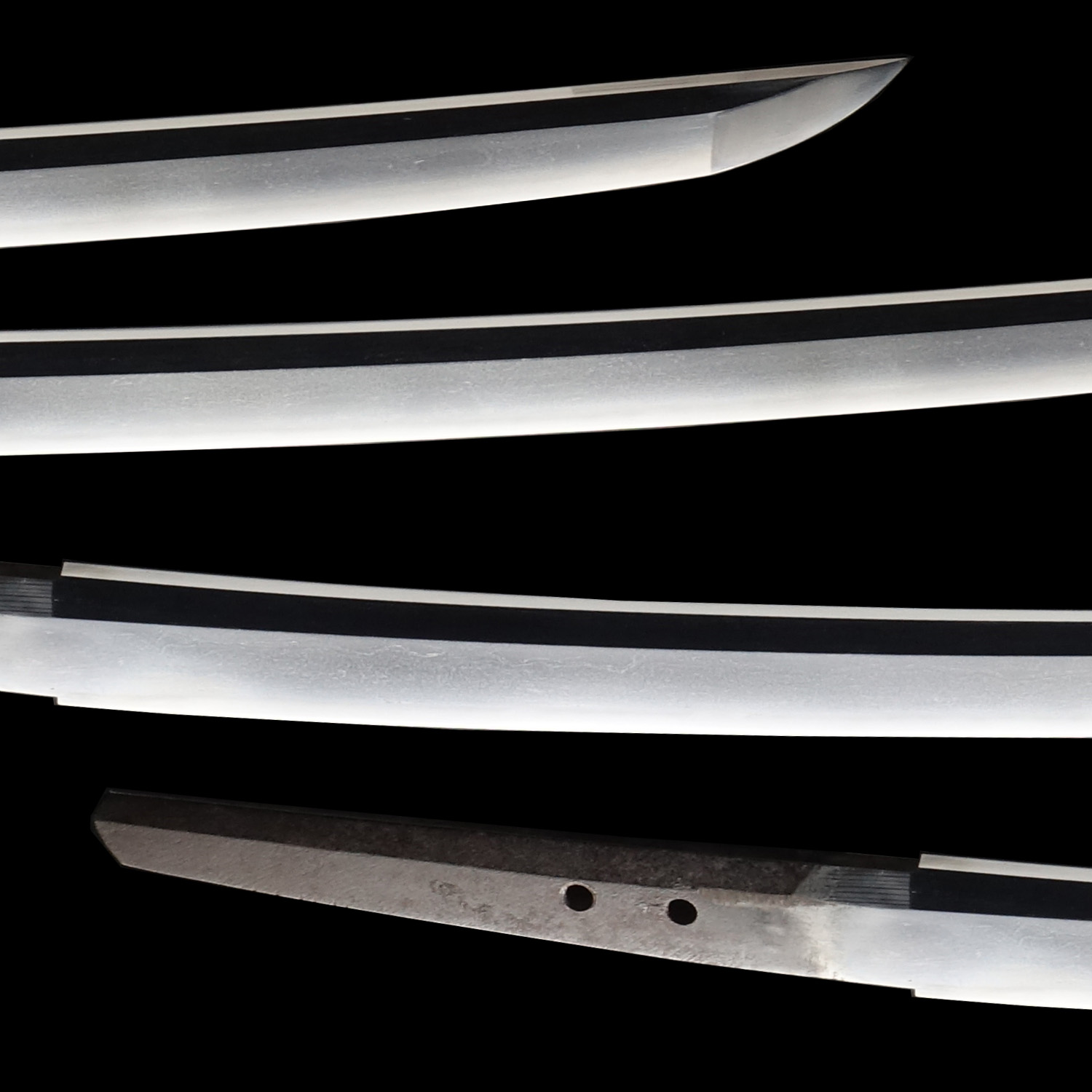
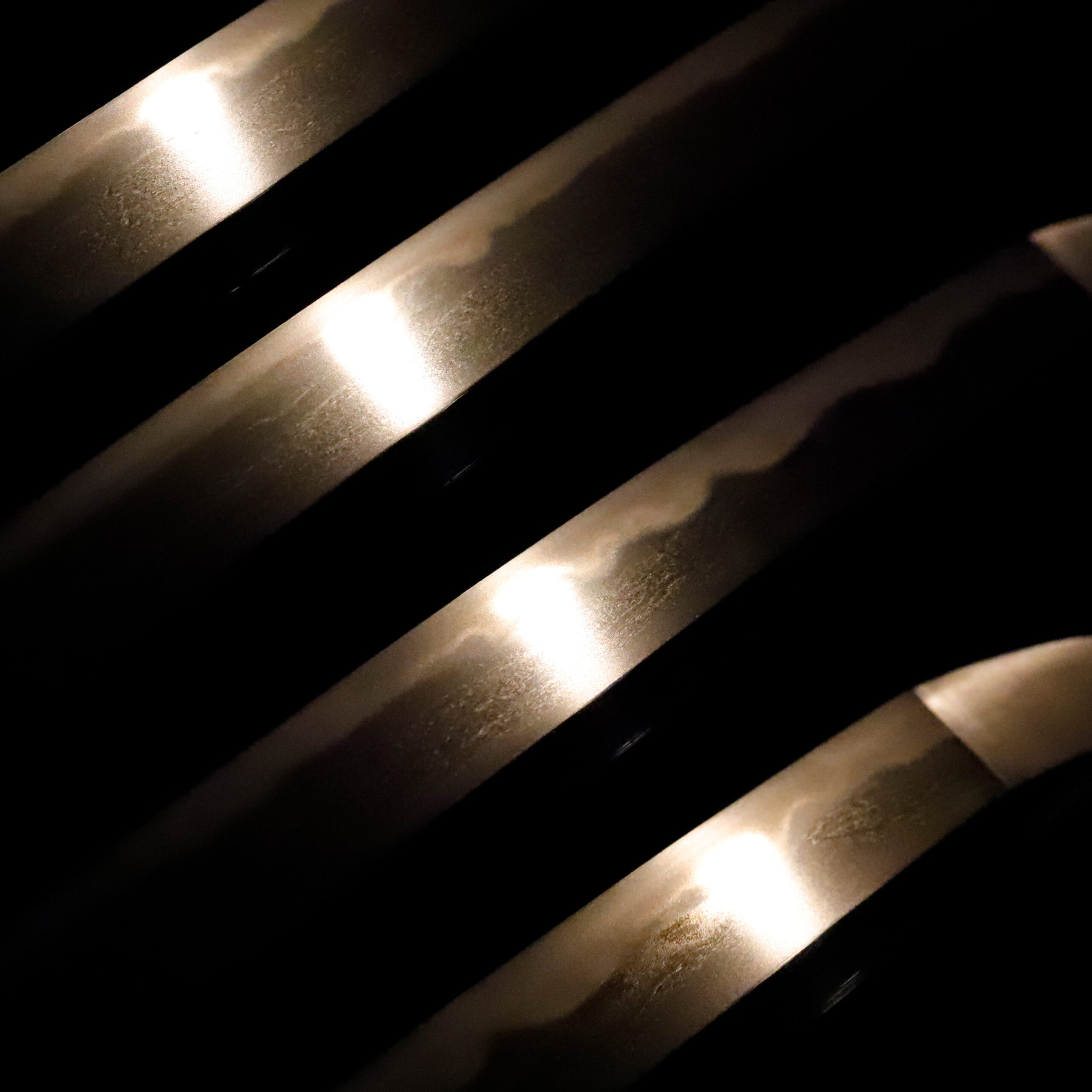
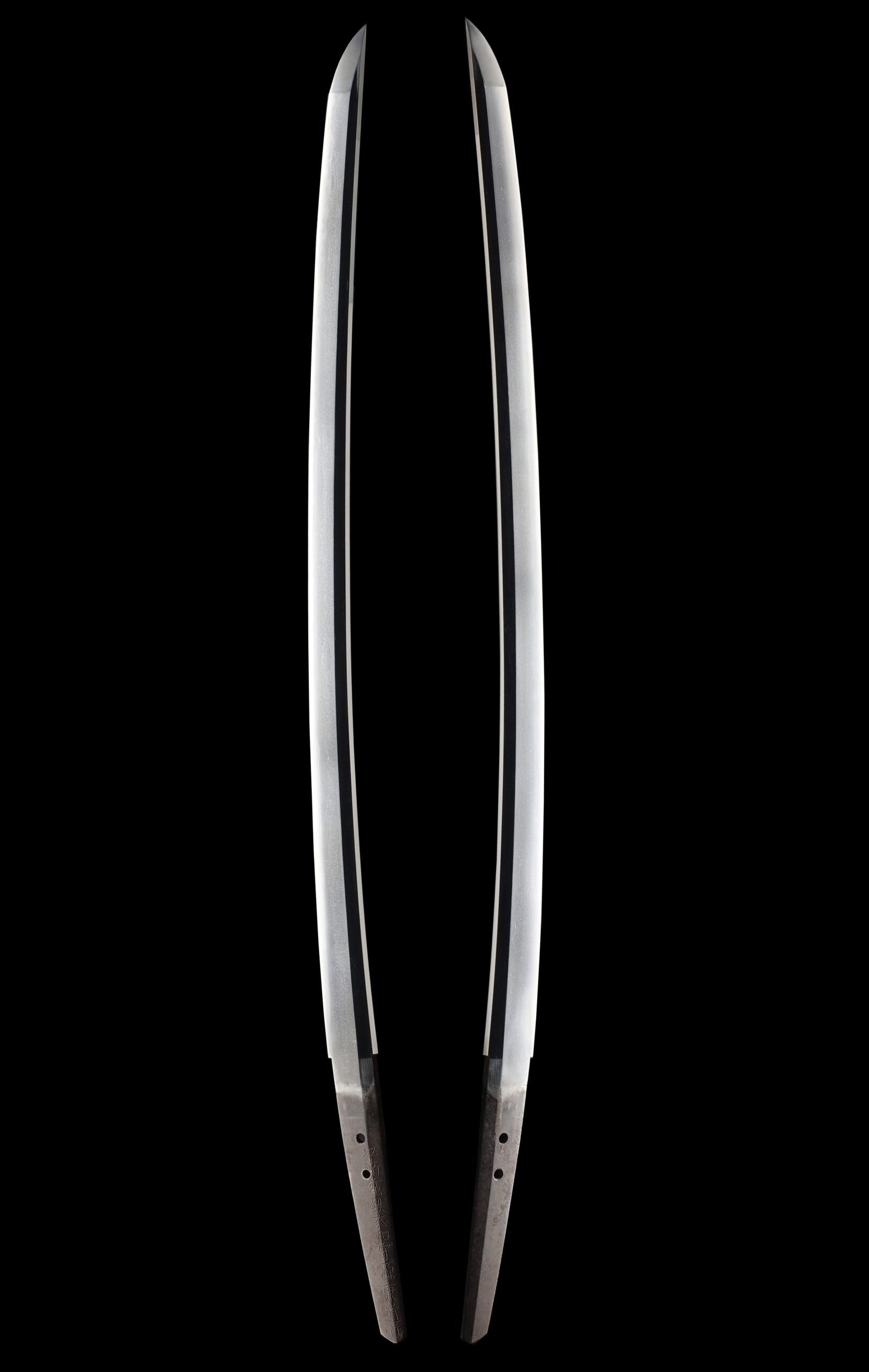
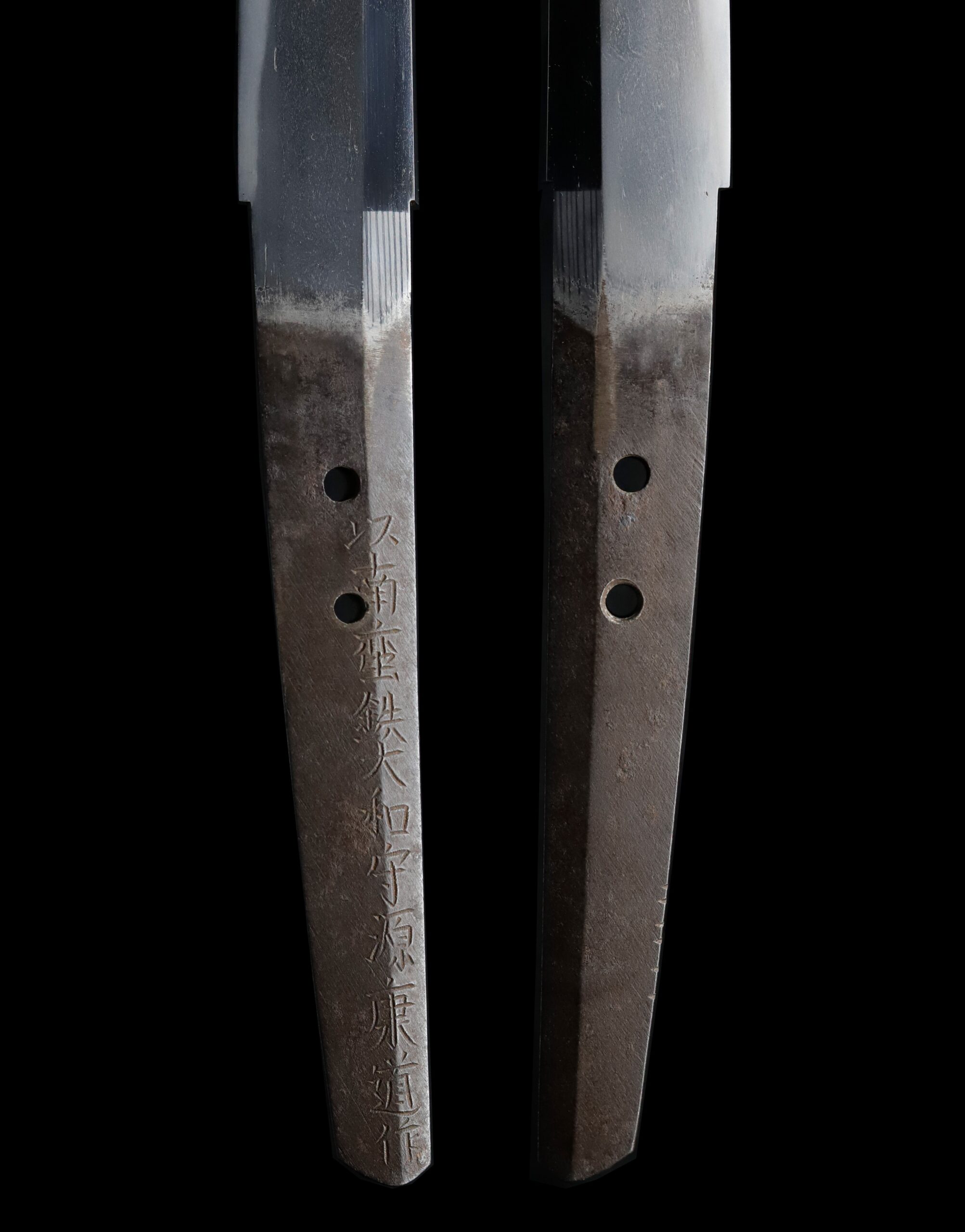
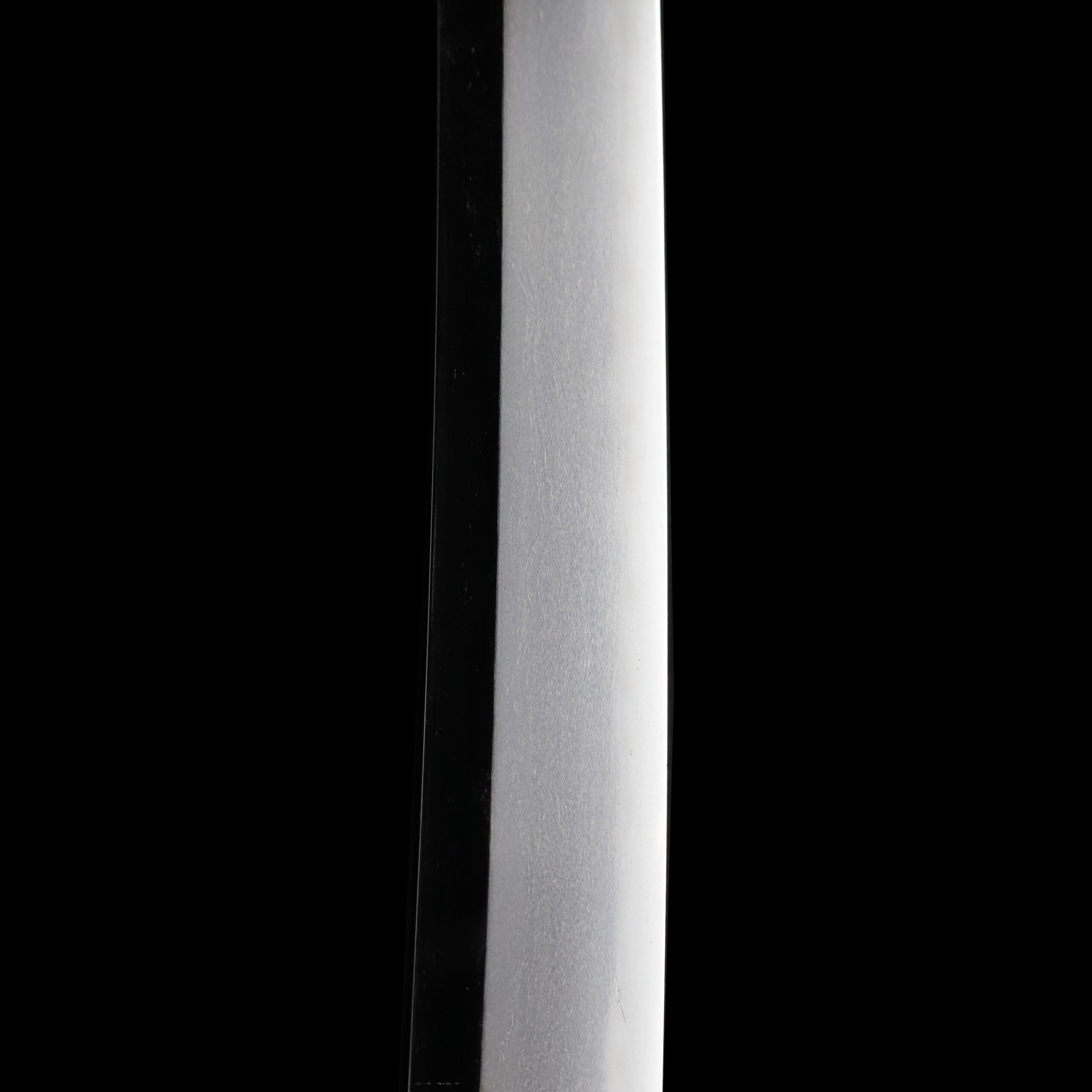
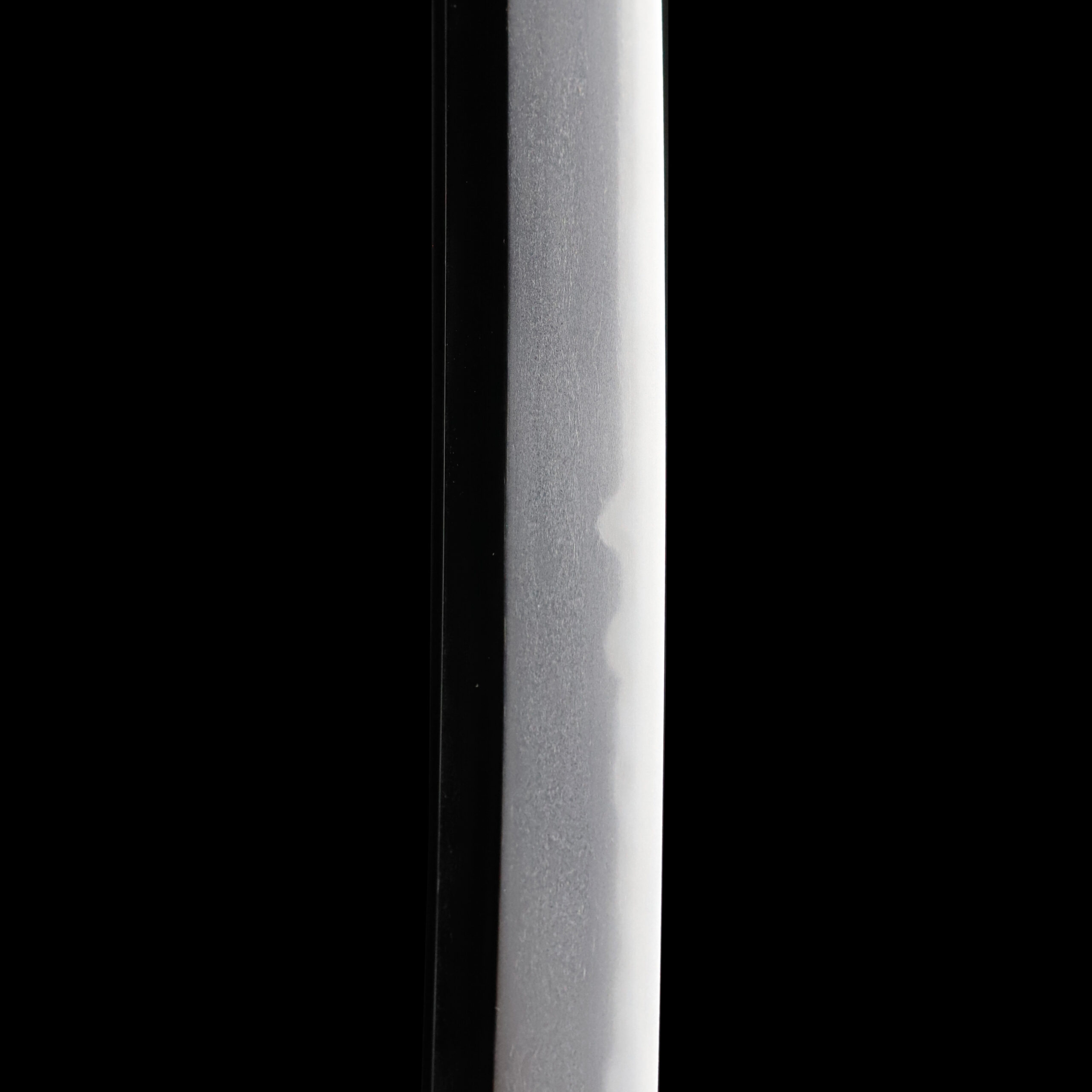
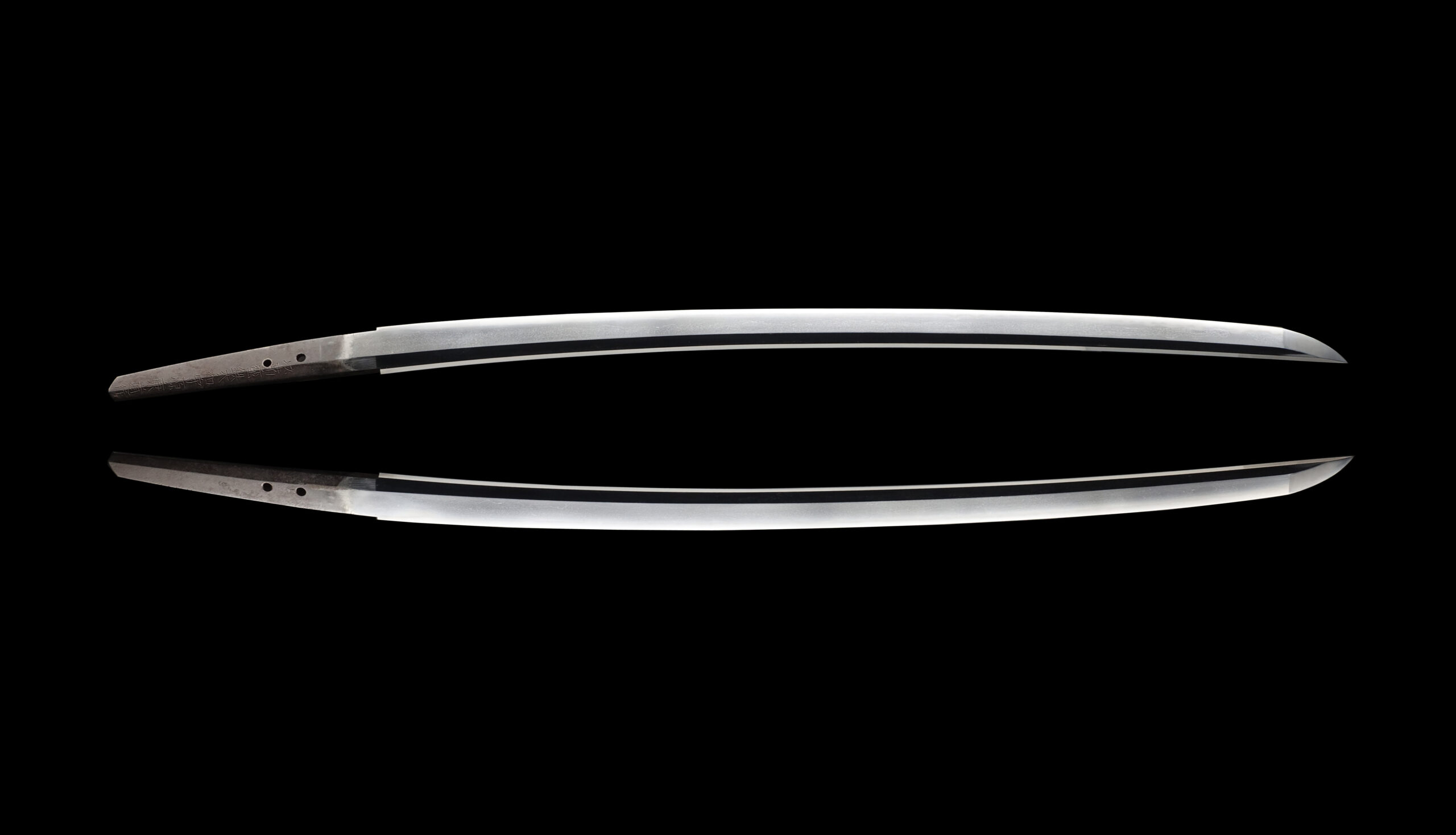
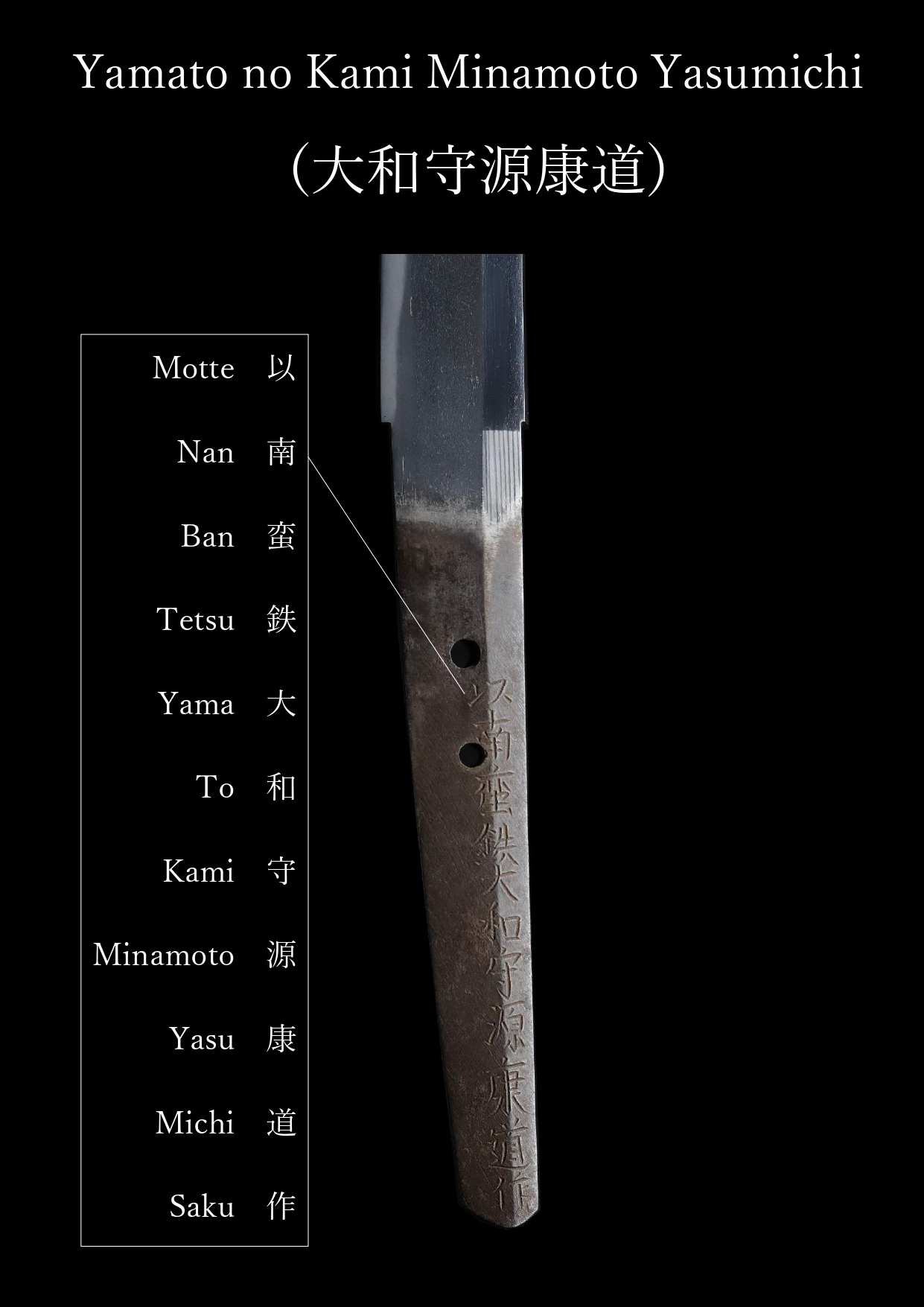
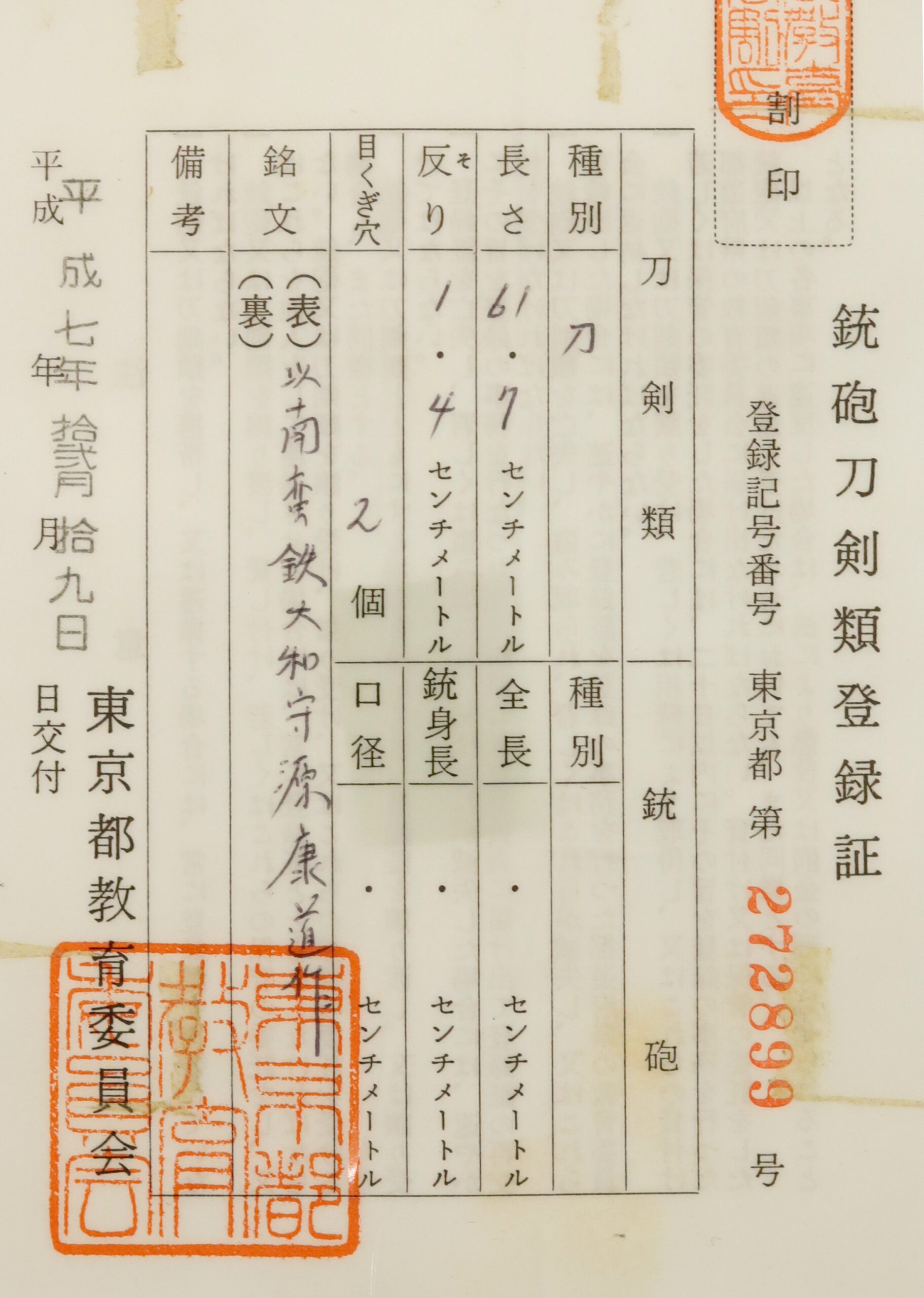
This blade was signed by Yamato no Kami Yasumichi (大和守康道) , who was active during the early Edo period (Kanbun era: 1661-1673). The maker’s name Yasumichi lasted a few generations and the first-gen Yasumichi belonged to Mino Senjuin (美濃千手院) school, which is one of the most famous schools during the late Nanbokucho-late Muromachi (Mid 14th-Early 16th century) period in Mino province (today’s Gifu prefecture). Yamato no Kami Yasumichi originally resided in Mino province but moved to Owari province in his career. The signature also says that this blade was made from western carbon steel called Nanban Tetsu (南蛮鉄). Yamato no Kami Yasumichi was an apprentice of Yasutsuna, who belonged to Kishu Isido school. He received an honorable offical title of Yamato no Kami for his excellent craftsmanship.
Mino Senjuin School
The school was located in Akasaka village near Sekigahara, an essential hub for transportation and military bases from ancient times. It is said that the Mino Senjuin school was founded by Sensui (泉水), the son of Yamato Koku Senjuin Shigehiro. Yamato region was one of the most famous sites for sword-forging during the late Heian-Kamakura period. Sensui moved from Yamato (today’s Nara prefecture) to Akasaka village in Mino province during the Nanbokucho period.
Senjuin School in Yamato region
There was a temple called Senjudo in Nara prefecture where Senju Kannon (Thousand arms) Budha statue was worshiped. And a group of swordsmiths who lived there was known as Senjuin (千手院). They belonged to Todaji temple. Senjuin School was founded by Yukinobu, who was the son of Yoshiyuki. Yukinonobu was originally a servant for Senjuin temple, a branch of Todaiji temple during the late Heian period (1086-1107), and eventually became an Okakae Kaji for the temple.
Tachi Koshirae
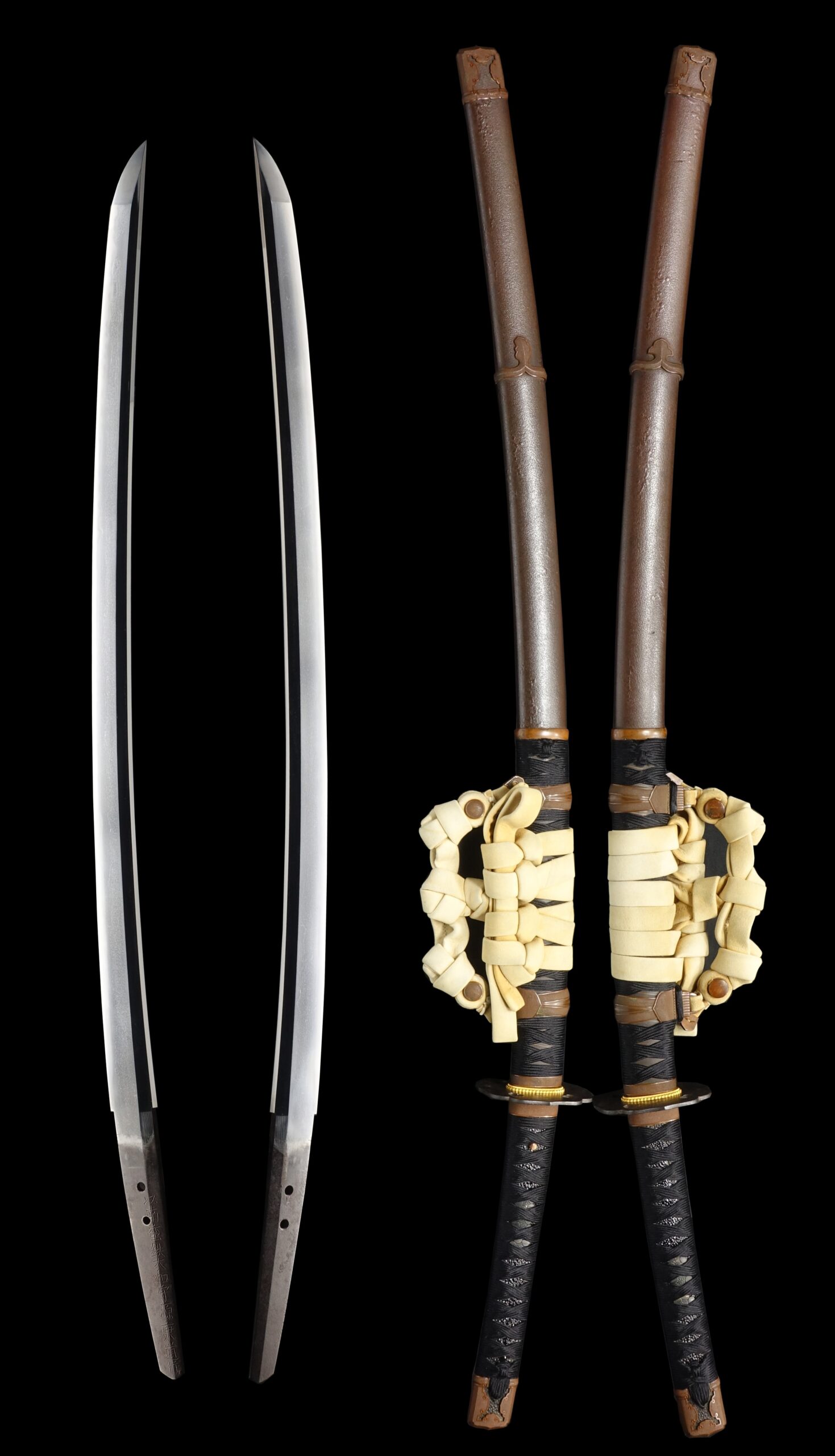
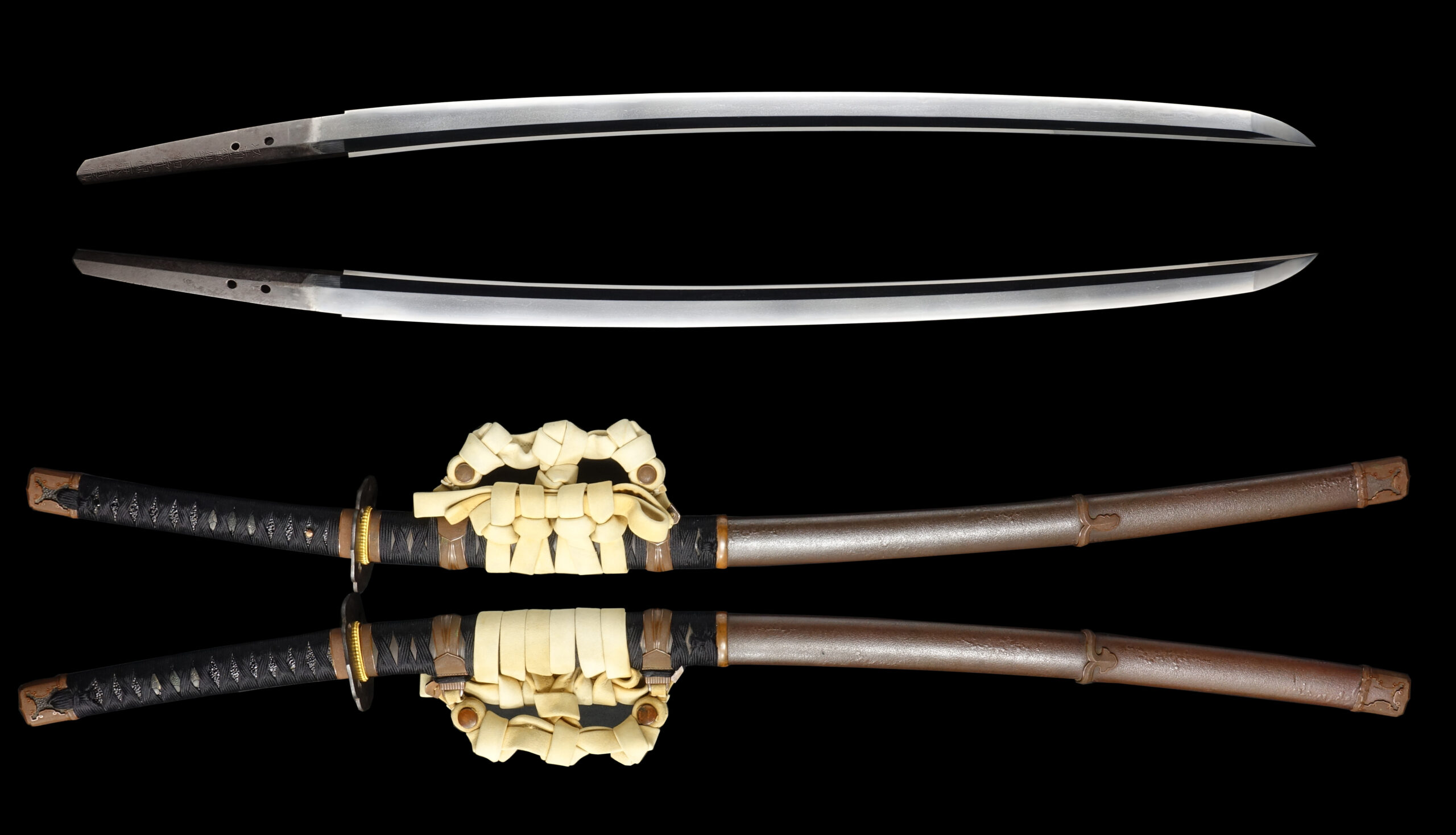
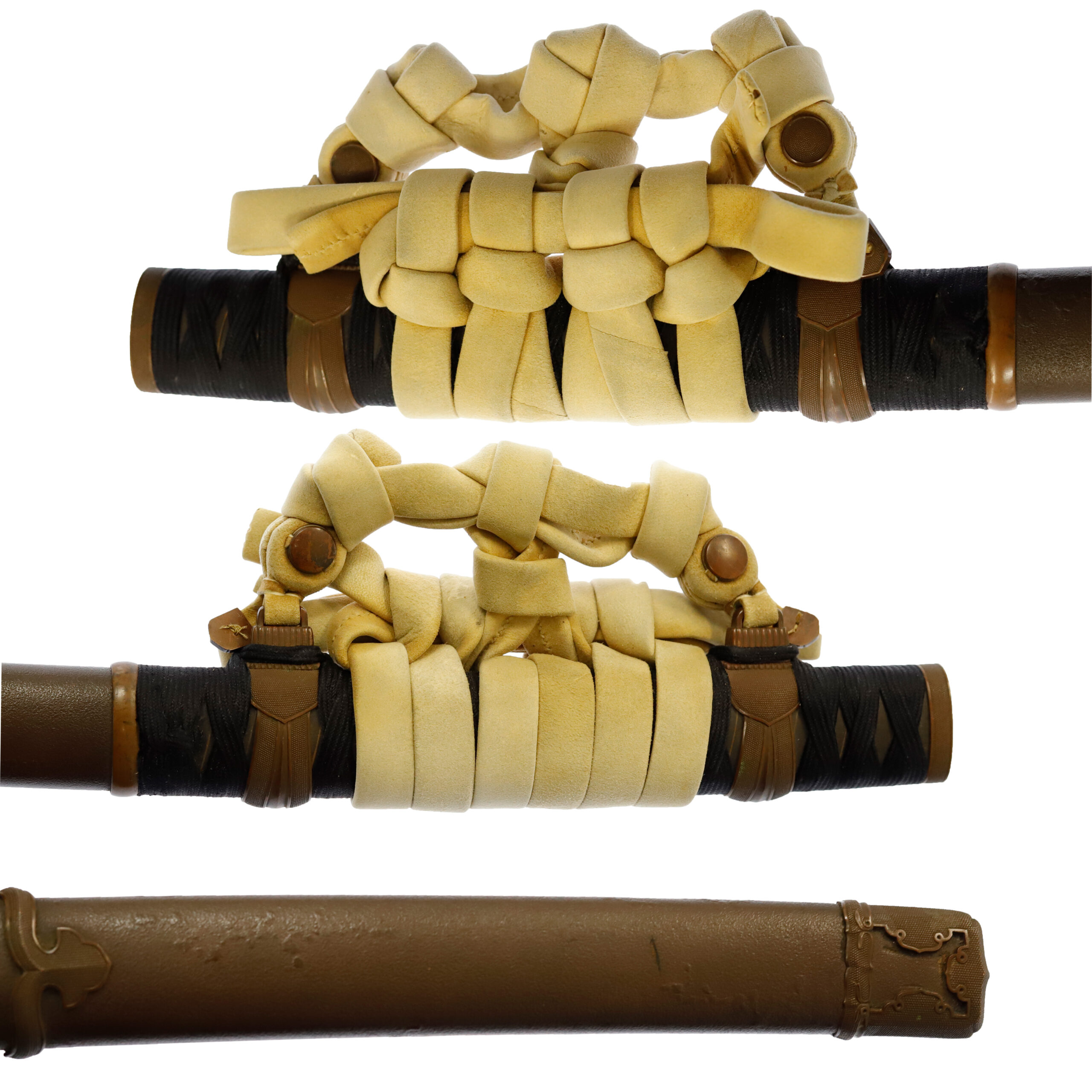
This blade is stored in Tachi(太刀) Koshirae. Tachi was mainly used by an armored Samurai with one hand on horseback from the Heian period (794-1185 A.D.) until the early Muromachi period. TACHI was suspended loosely on the left waist with its edge facing the ground so that you could draw it faster to cut down soldiers on the ground. Because of its gorgeous looking, having a Tachi-style sword mounting became a social status among Samurai.
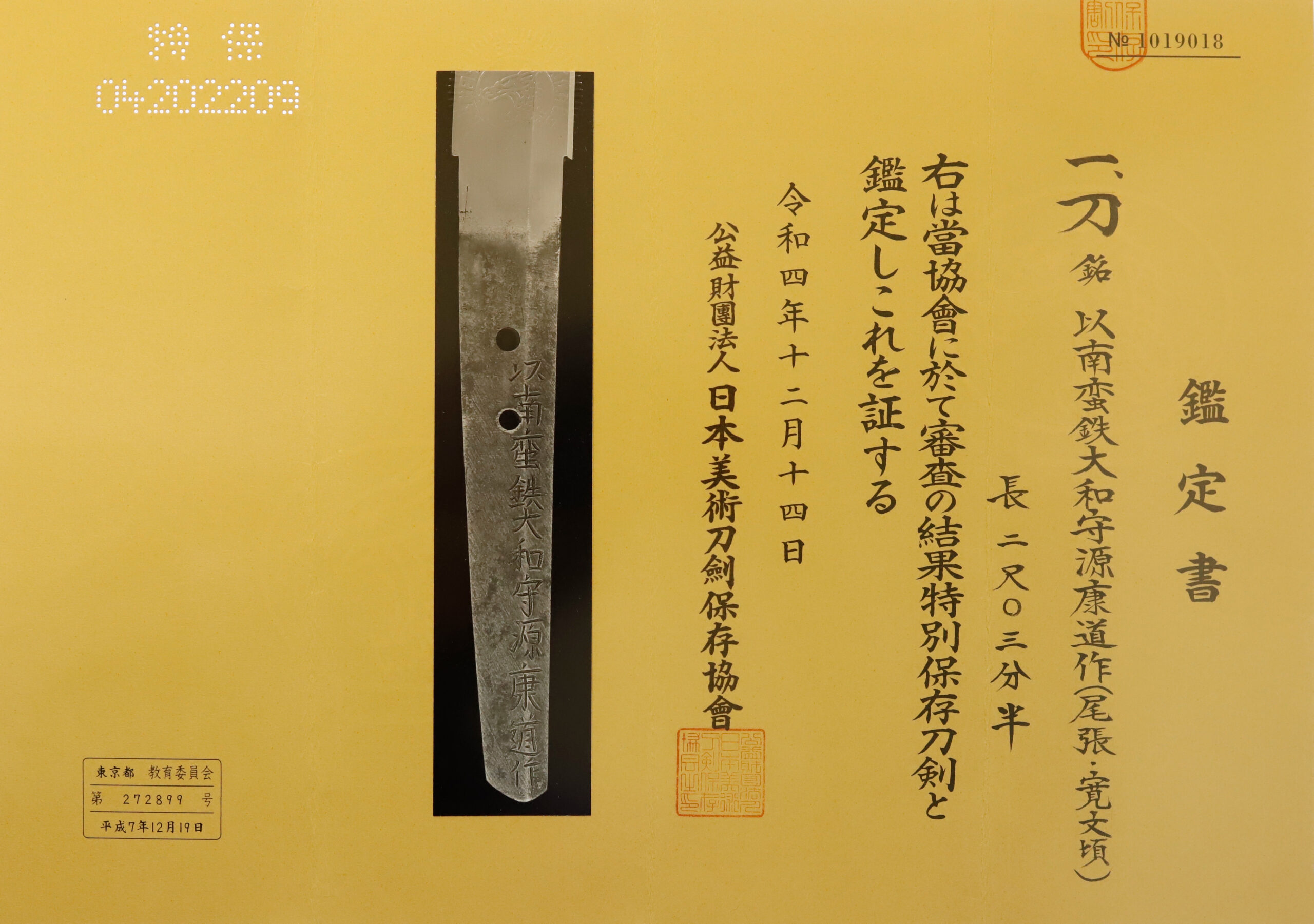
It is appraised as a Tokubetsu Hozon Token(特別保存刀剣) issued by NBTHK(Nihon Bijutsu Touken Hozon Kyokai:日本美術刀剣保存協会).
*Please keep in mind that there is a couple of tiny Kitae Kizu on this blade.
Fuchi-Kashira
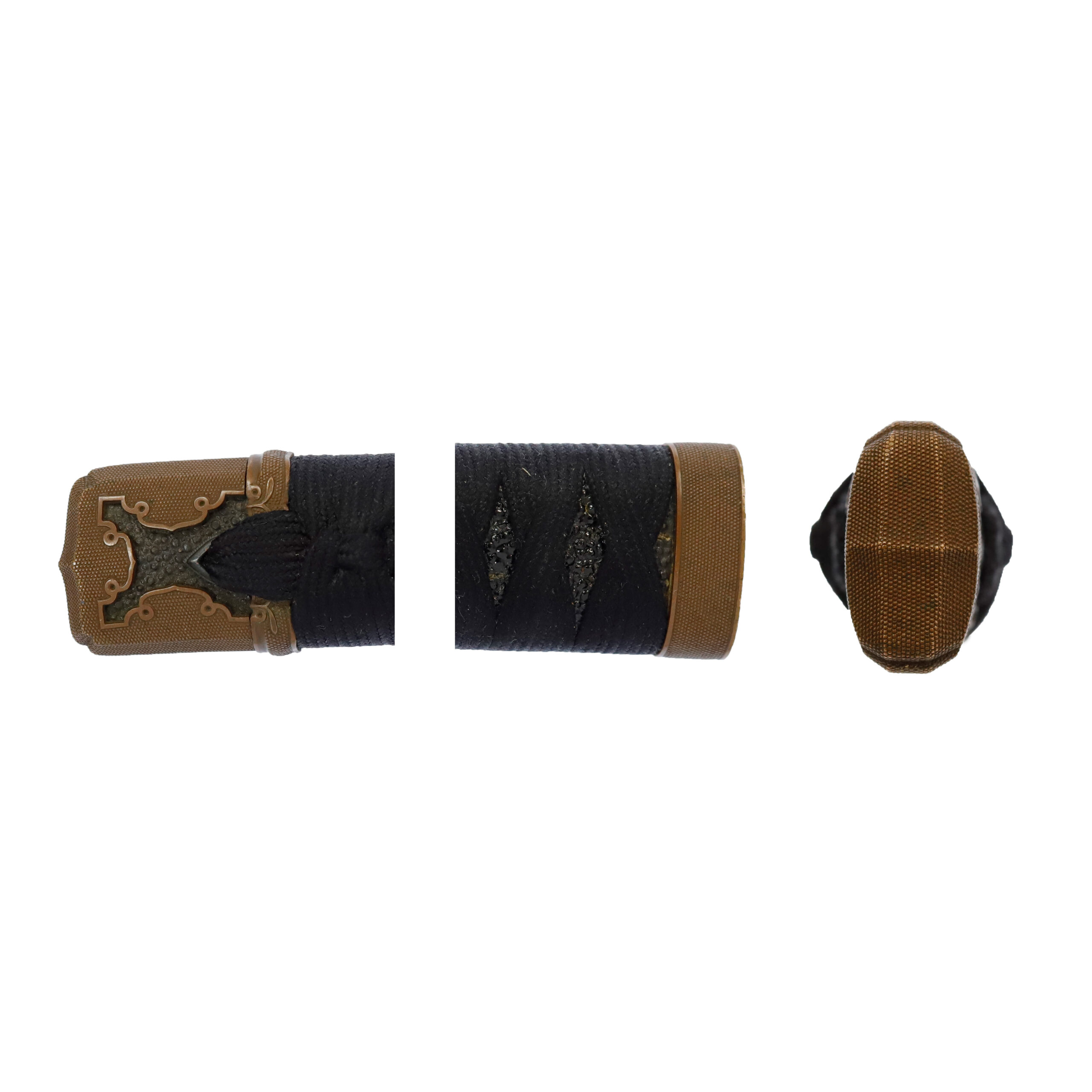
This Fuchi Kashira is made from copper, and the finish makes the most of the copper’s color. No animal or plant designs are carved, but the edges’ symmetrical geometric pattern adds glamor. The surface of this Fuchi Kashira is decorated with the Nanako-Ji (魚子地) technique. This process makes a uniform minimal protrusions pattern by hitting the Nanako-Ji Tagane (魚子地鏨, a chisel for this technique) on a metal surface. This decorative technique is often seen on sword mountings.
This design is the same as other metal fittings such as Kuchi Kanamono (口金物, a metal fitting that is attached to the tip of the scabbard close to Tsuba), Seme Kanamono (責金物, a ring-shaped metal fitting placed in the middle of the scabbard to prevent the sheath from cracking), Ashi Kanamono (足金物, metal fittings attached to the positions where Sageo cord is wrapped), and Ishiduki Kanamono (石突金物, a metal fitting that is attached to the end of the scabbard).
Tsuka and Menuki
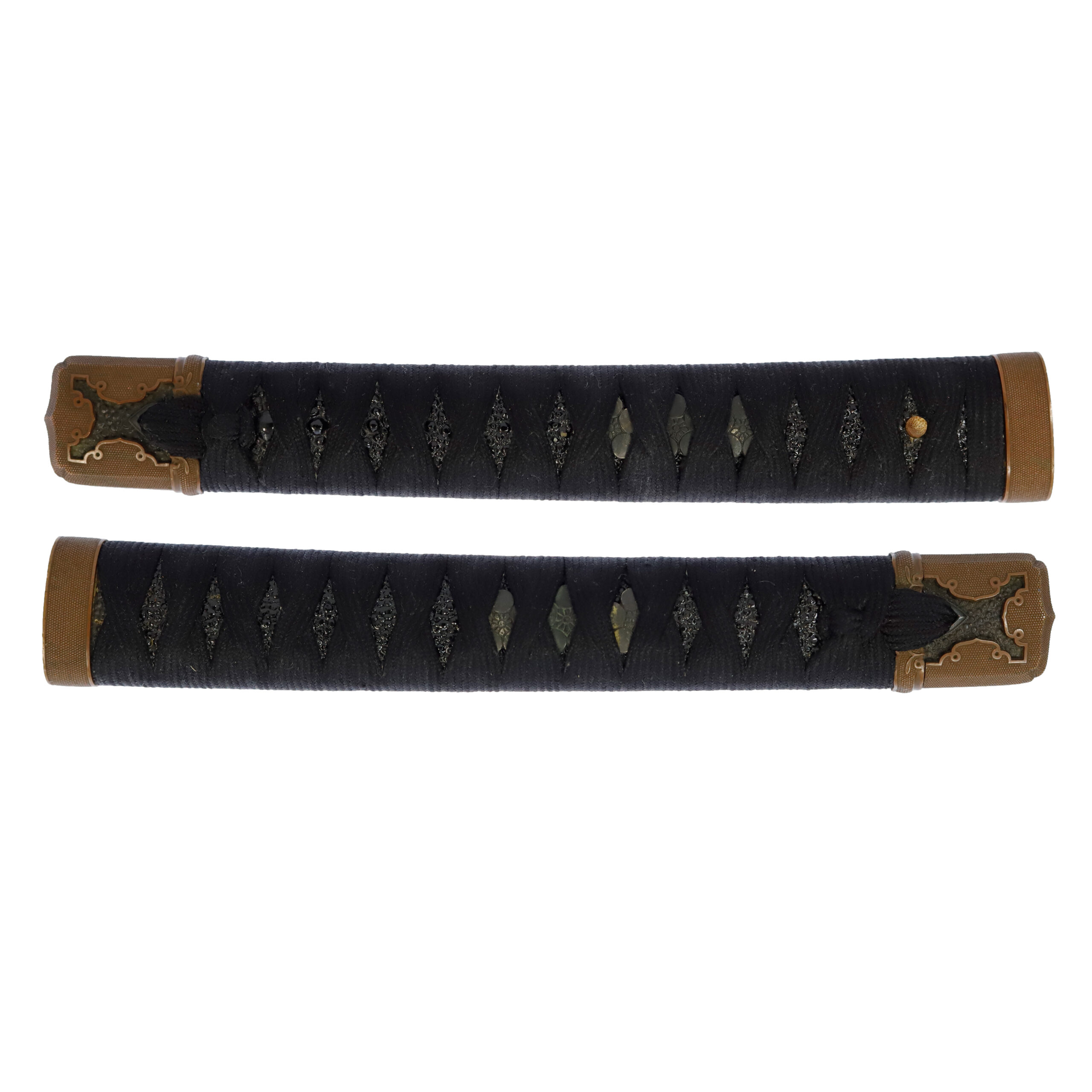
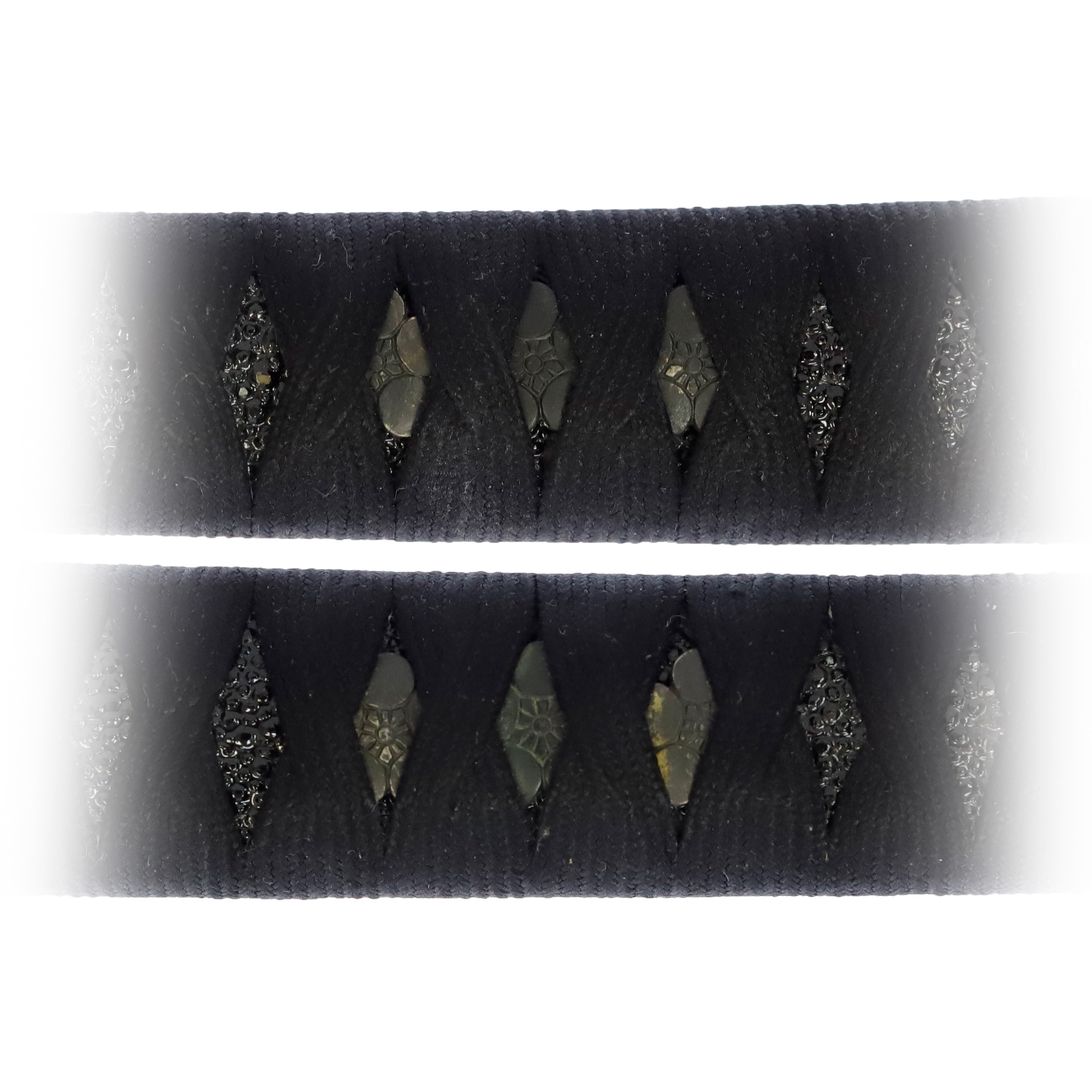
This Menuki’s motif is a family crest. Three identically designed family crests are lined up side by side. We believe this crest is called the Umebachi Mon (梅鉢紋), which is derived from the Ume (梅, Japanese apricot blossom) pattern. The Ume pattern profoundly relates to the Tenjin (天神) faith. This belief honors the soul of Sugawara-no Michizane (菅原道真, 845-903), and he cherished this flower. Michizane excelled in academics and was appointed and promoted by the emperor back then. However, other aristocrats envied his promotions, and Michizane was demoted Kyushu (九州) region, far from the capital. And he passed away two years later. After his death, the capital suffered great natural disasters. And people who opposed Michizane had unfortunate experiences. People thought that his spirit caused these things, and the capital was terrified at that time. One day, when such a situation continued, Michizane possessed a person and demanded to enshrine himself. The imperial court accepted his request and built a shrine in Kyushu to appease his spirit. This was managed by the Sugawara family, a family of scholars. And Michizane, who excelled in studies during his lifetime, came to be worshiped as the god of learning. Because of this background, it is said that many family crests with the Ume designs were used in the Kinki and Kita-Kyushu regions. A former owner of this sword might have worshipped such a religious idea.
Tsuba and Habaki
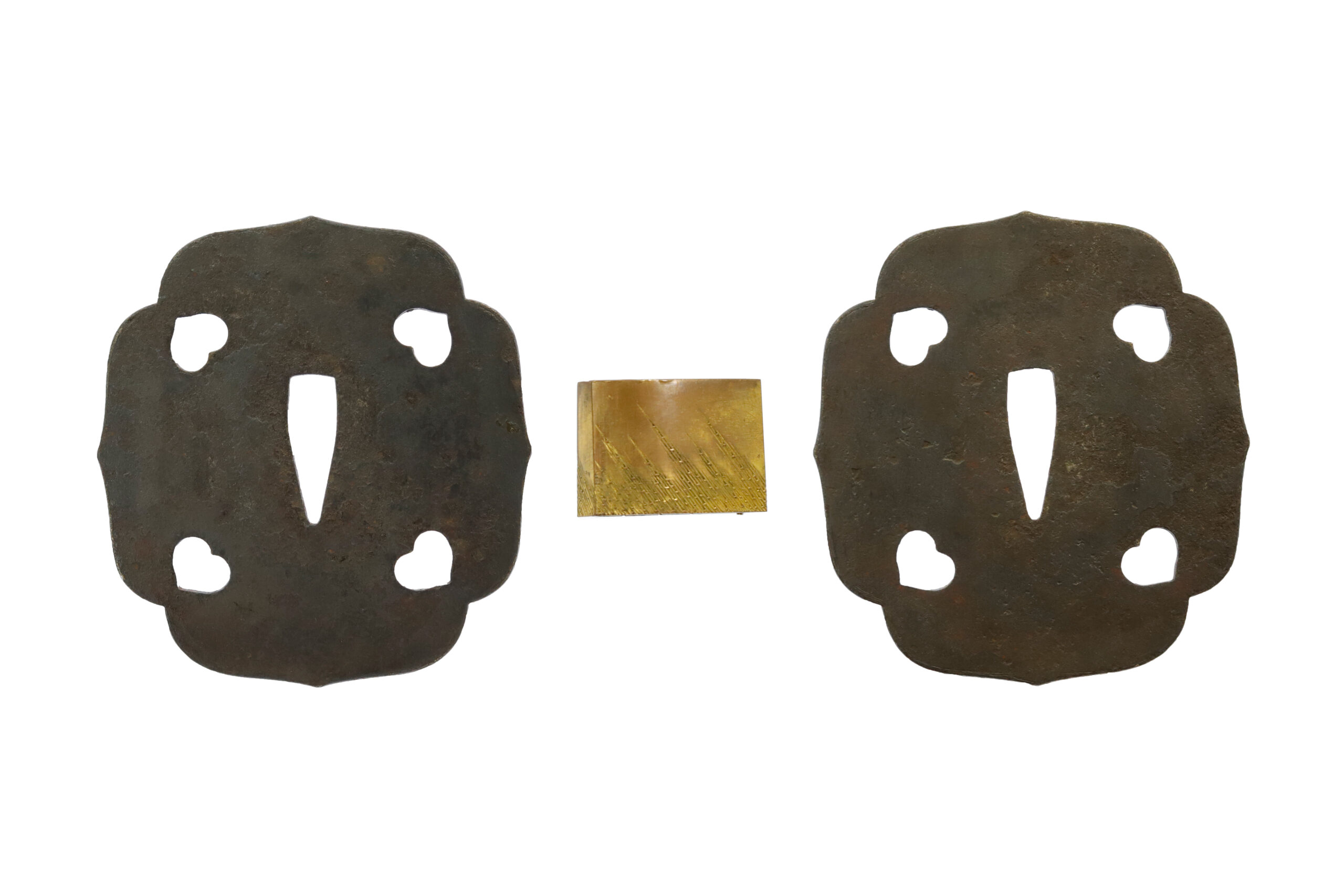
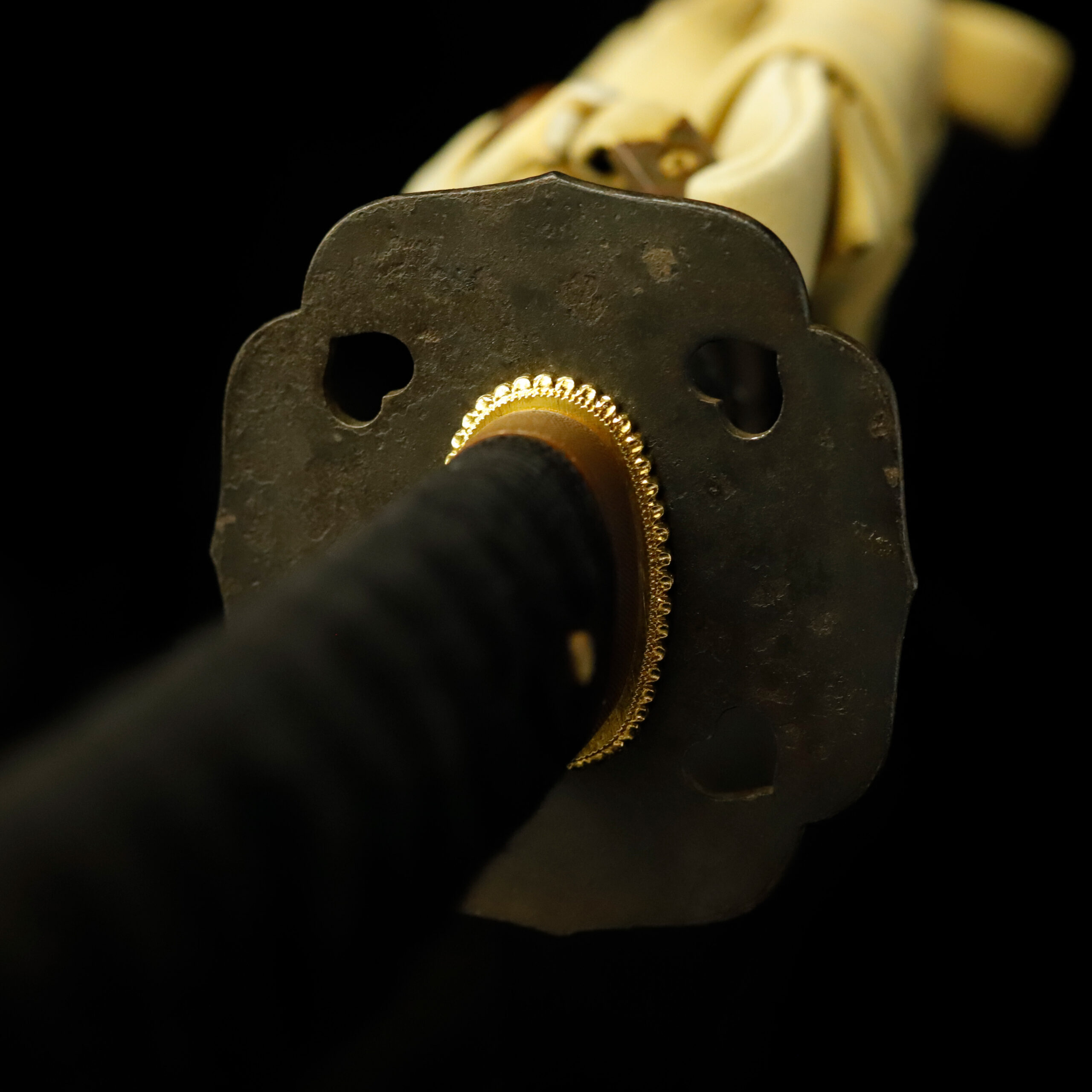
This iron Tsuba has a simplified Tachi Goshirae Tsuba (太刀拵鐔) style. The difference between Tachi Tsuba (太刀鐔) and Katana Tsuba (刀鐔) is that the top and bottom positions of the Nakago hole (茎櫃, center hole) are reversed. The Tsuba of this Koshirae has Aoi (葵) Tsuba shape. If you focus on four corners and the tips of the golden cross mark, you will find a heart mark-shaped hole is engraved on each edge. It is called the Inome (猪の目) pattern. The Inome pattern has been used since ancient times. As its name implies, the boar’s eyes are the origin of this pattern. Some people believed the Inome design would work as an amulet to protect them from evil spirits or fire. Also, it is said it would bring good luck.
Authentication Paper
They authenticated the blade on December 14th in the 4th year of Reiwa (2022). They appraised it as Tokubetsu Hozon Touken, the blade especially worth preserving for Japanese society.

 NihontoWatch