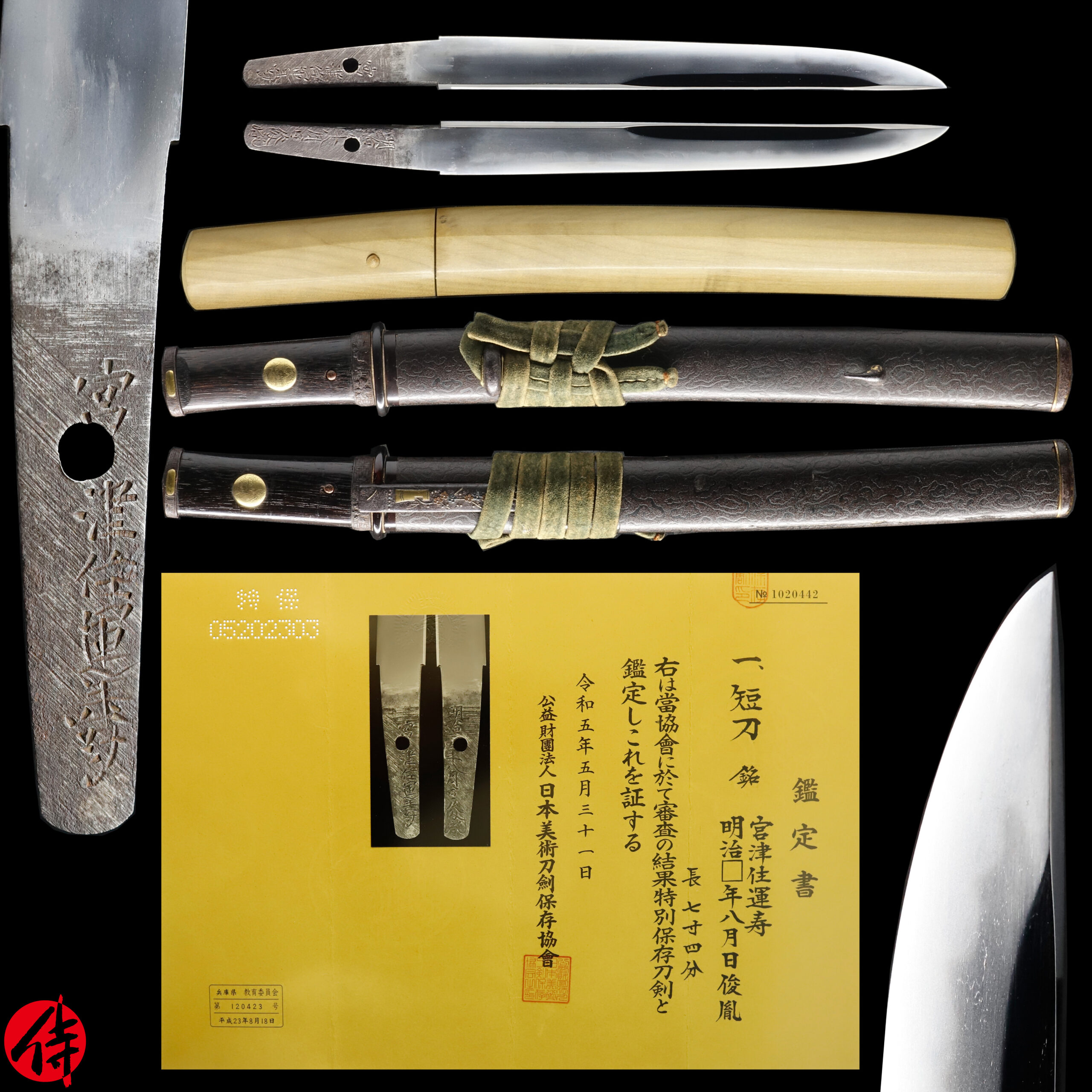
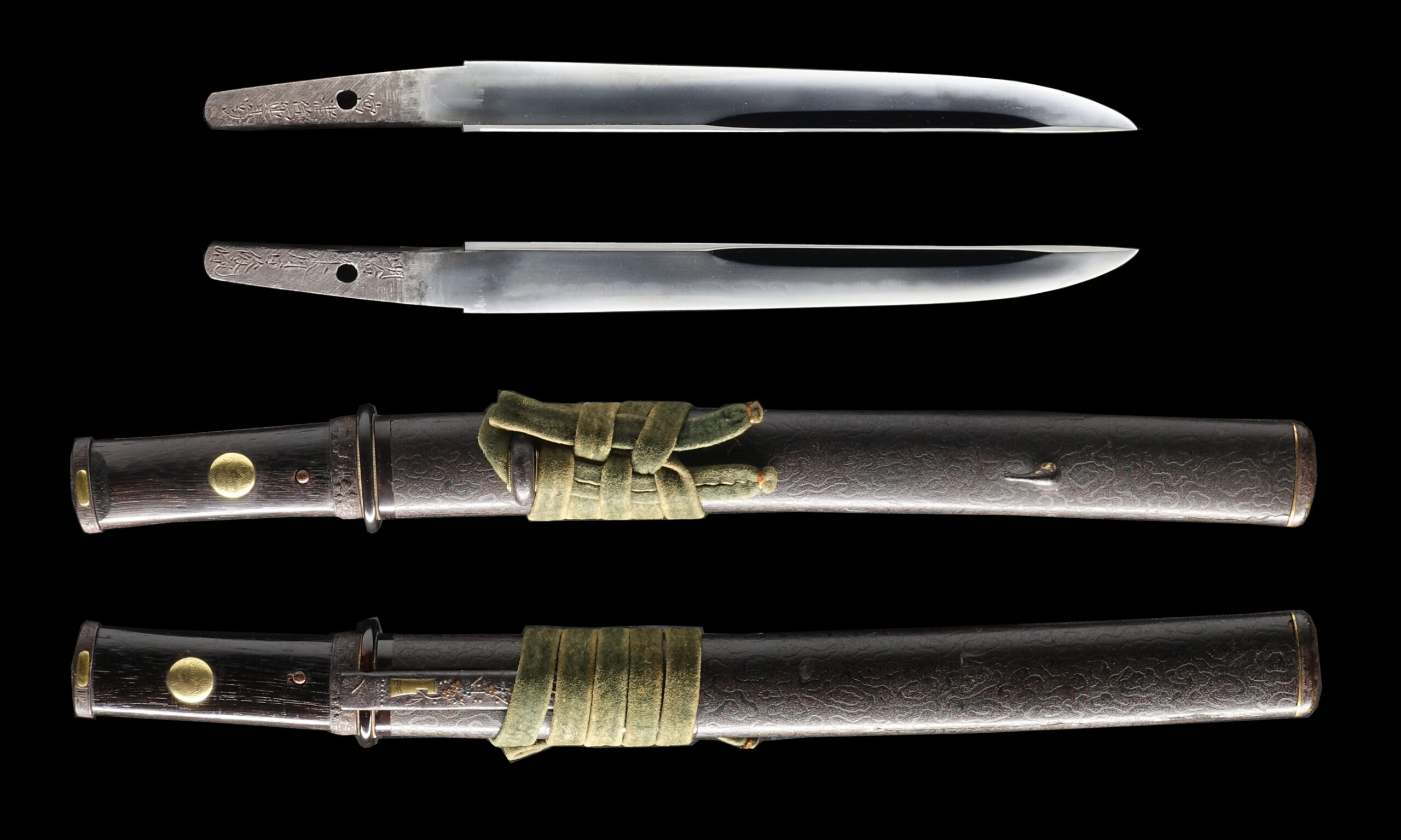
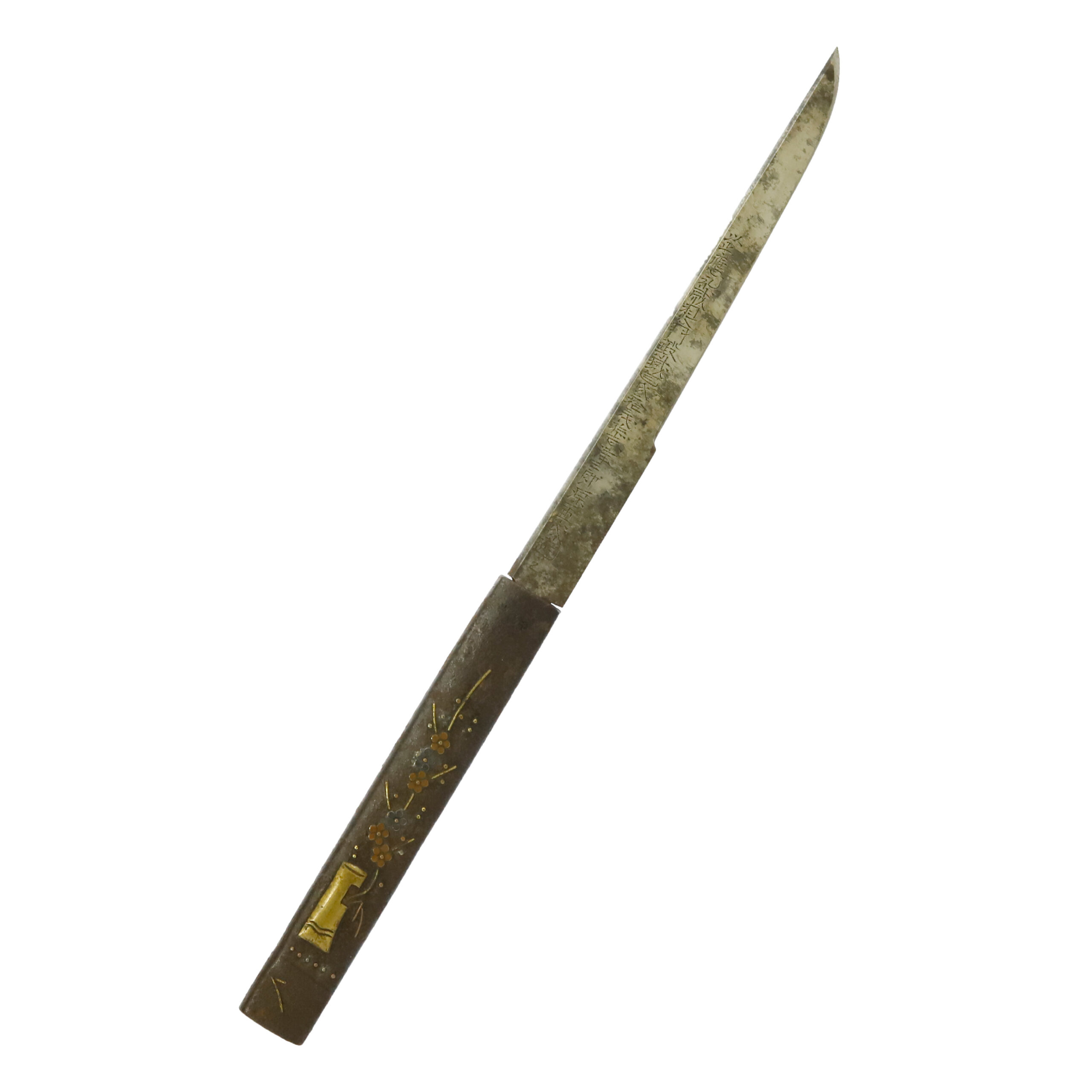
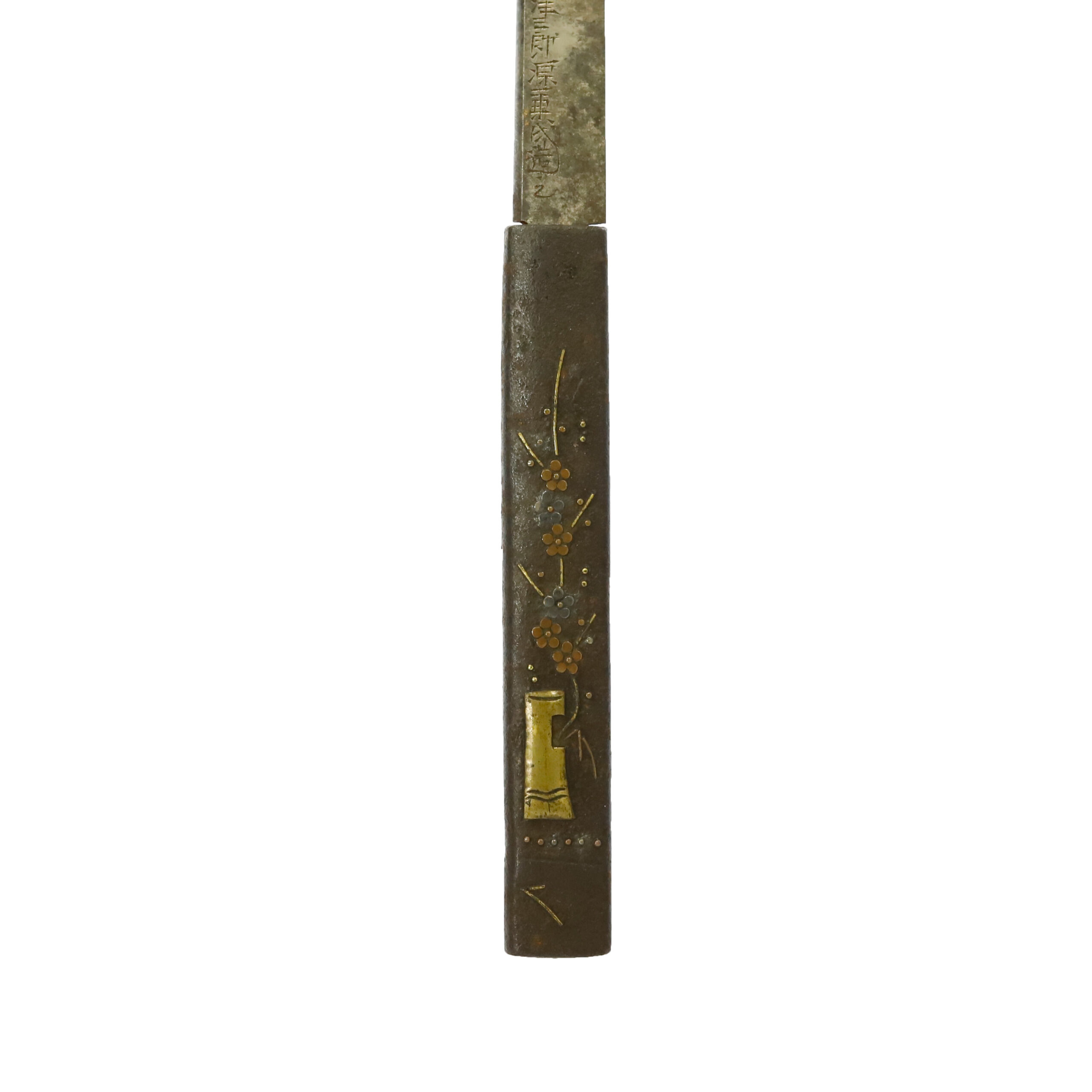
Antique Japanese Sword Tanto Signed by Toshitane with NBTHK
Tokubestsu
Hozon
Certificate
【Description】
Summary
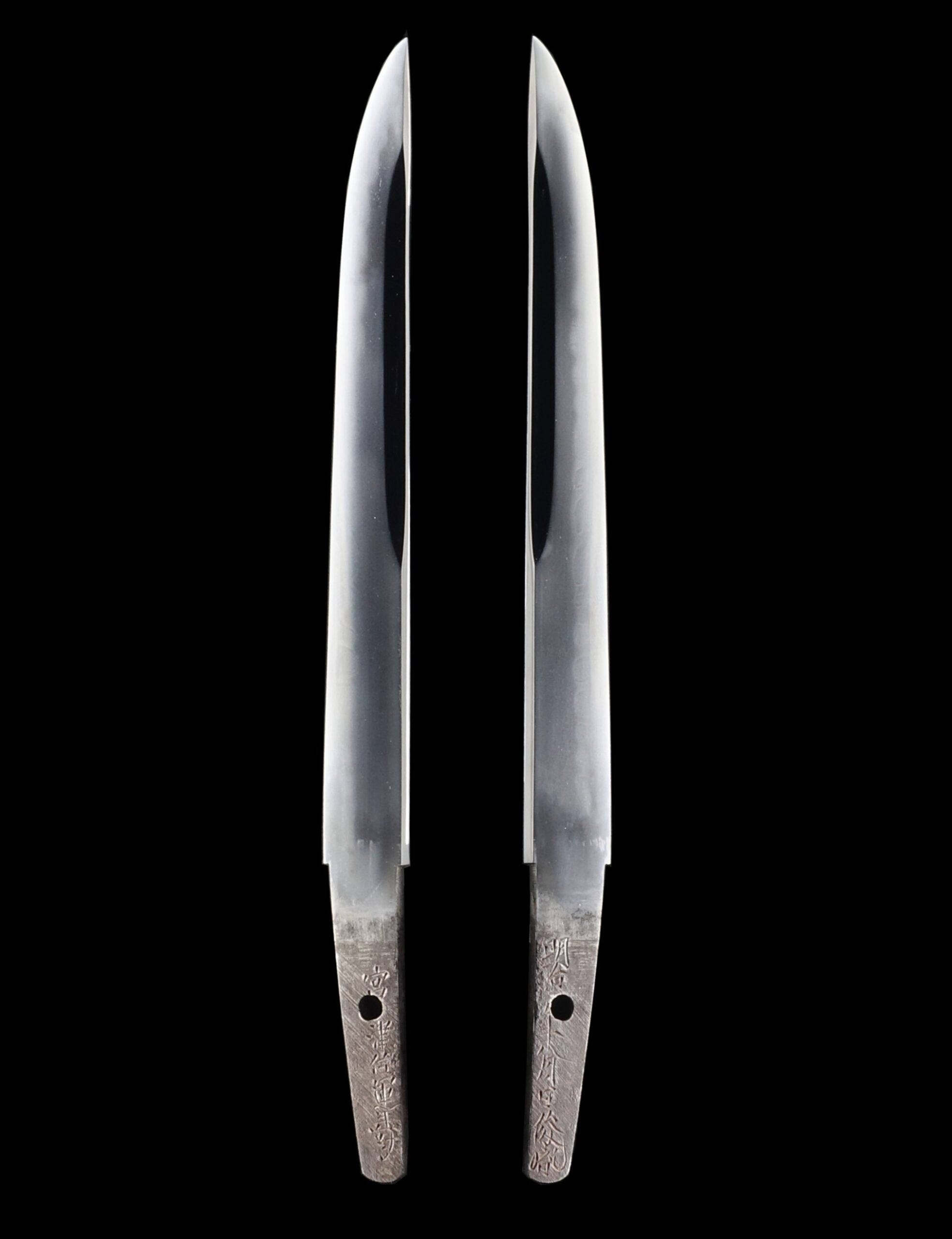
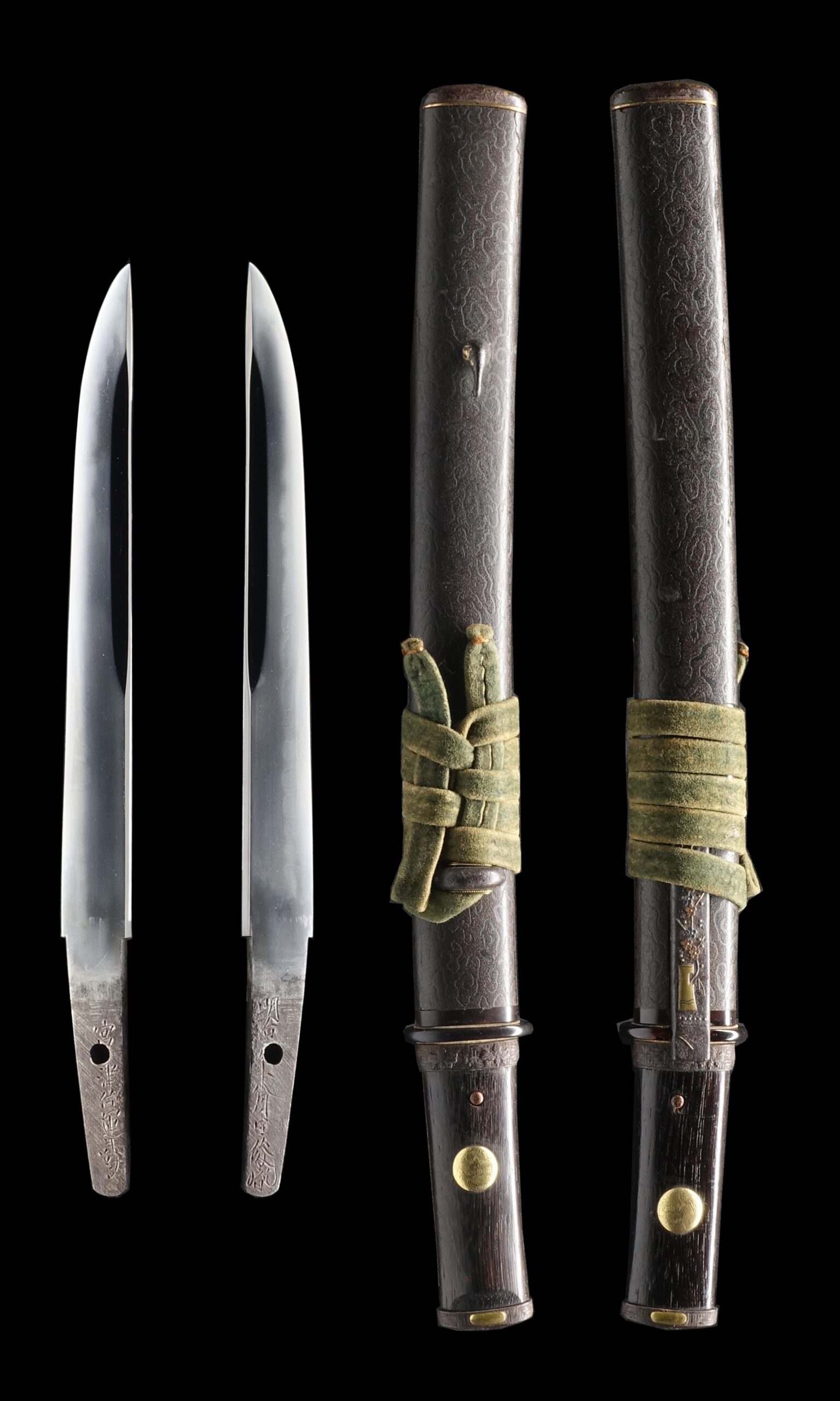
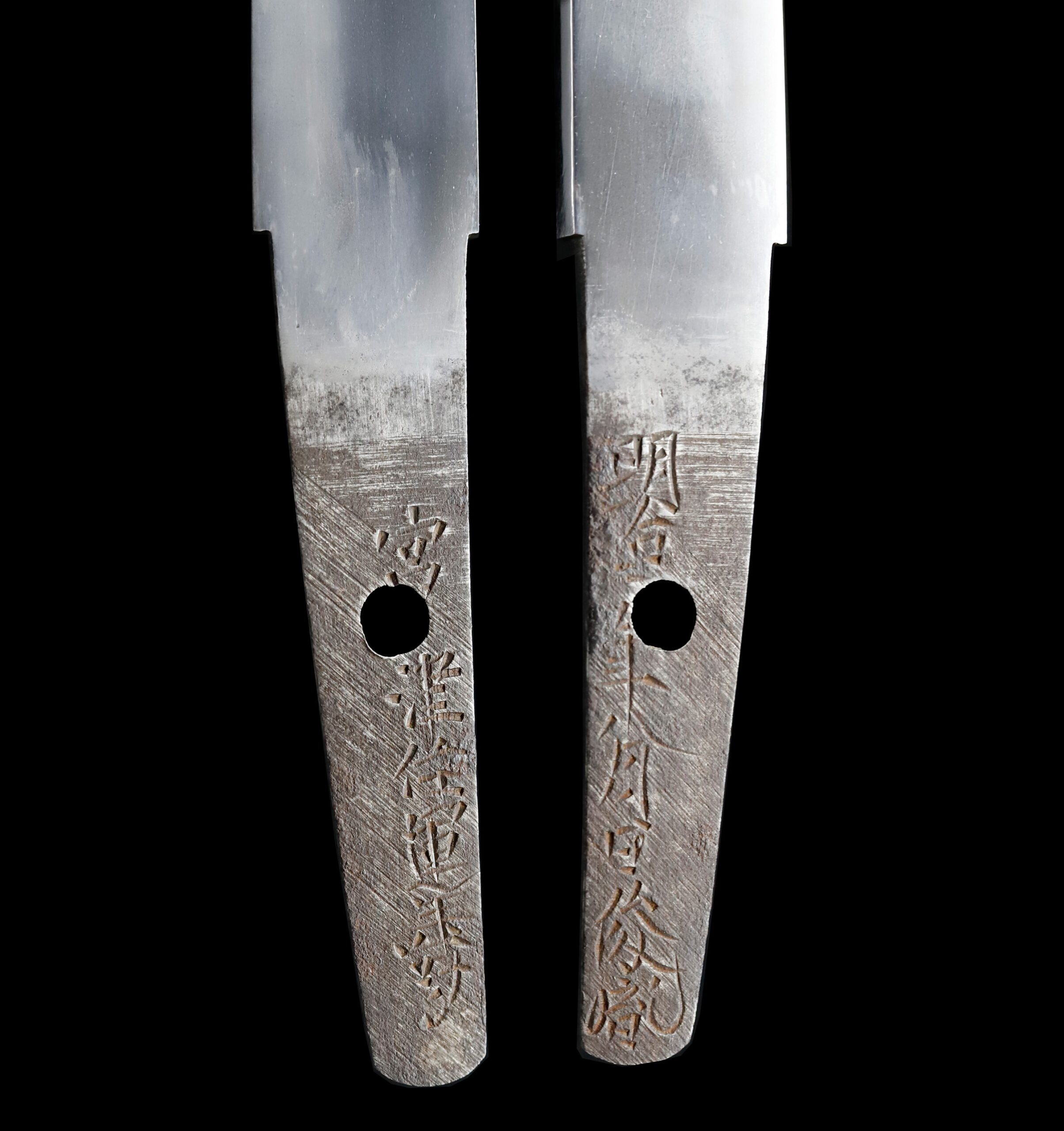
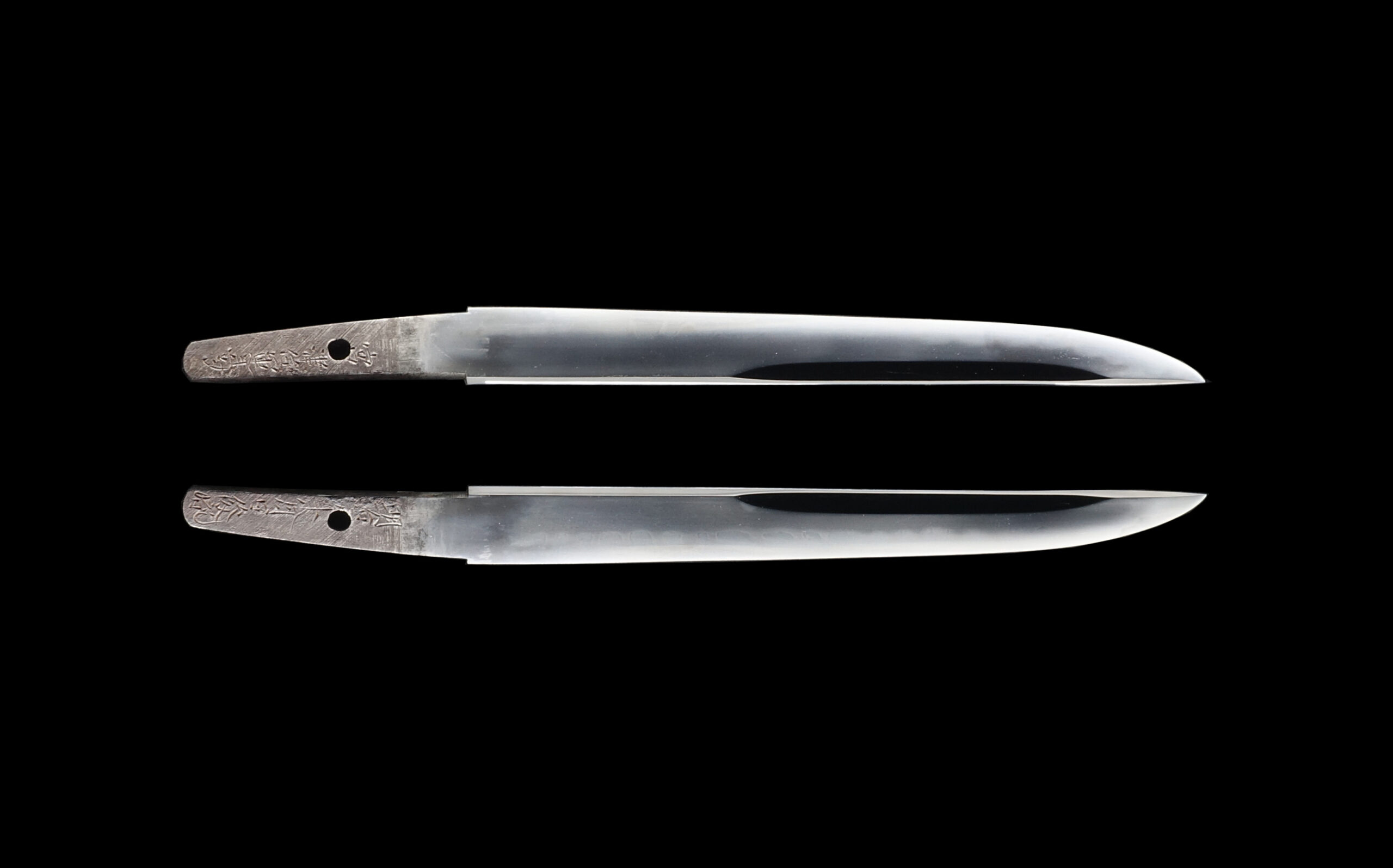
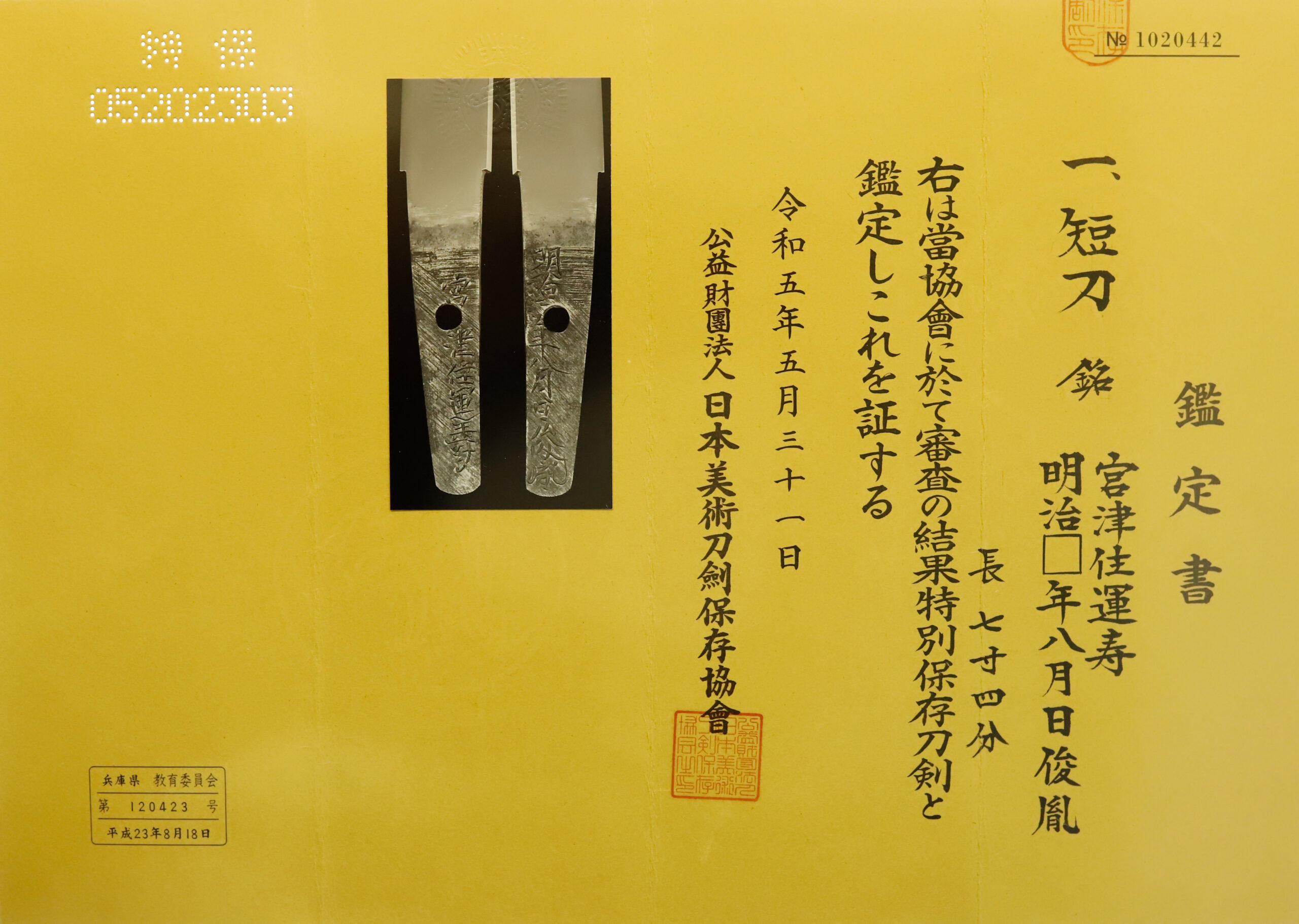
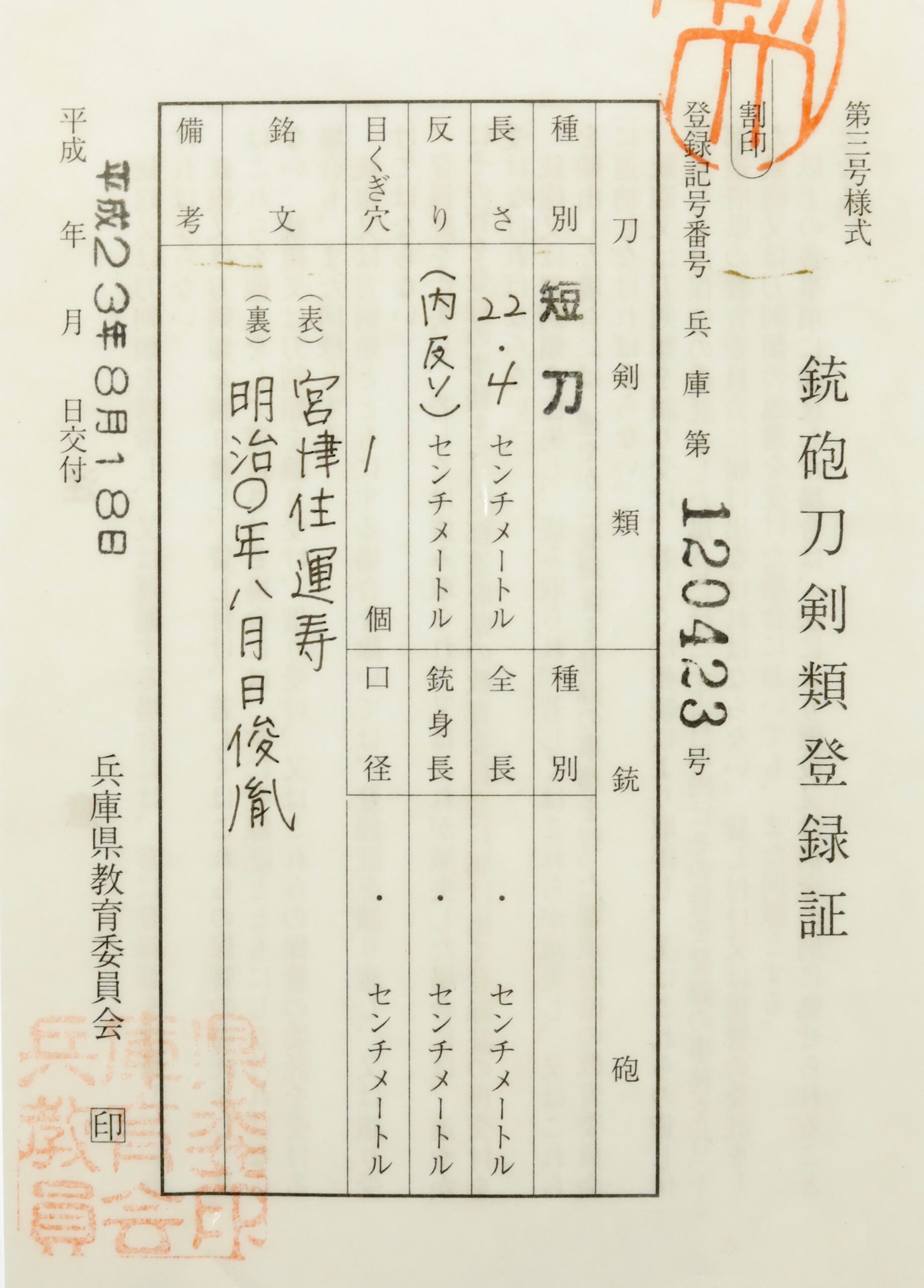
This blade was signed by Miyazu Ju Unjyu Toshitane (宮津住運寿俊胤) forged this blade at the begining of the Meiji period. He studied under the master, seventh gen Ishido Unjyu Korekazu, one of the most famous swordsmiths at the end of the Edo period. Toshitane was selected as Okakae Kaji for Honjyo clan in the Miyazu domain in Tango area. (today’s northern Kyoto). That means he was exclusively forging swords for this clan. It was quite honorable for any swordsmiths to be an Okakae Kaji.
His works have a close resemblance to his master, and we assume he learned high-level of craftsmanship from Korekazu. Toshitane received Unjyu title from his master, meaning there must have been a strong connection between the two.
When Toshitane started his career, it was the end of the Edo period when the military government of Samurai (Tokugawa Shogunate) controlled Japan, and feudal society was the norm. There was plenty of demand of weapons from Samurais back then. However, in 1868, there was a civil war between Tokugawa’s shogunate government and the new Meiji imperial government. After this battle, the Tokugawa Shogunate was ousted, and the imperial government gained control. The whole feudal system was dismantled, and the new government took the social status of Samurai. The demand for Japanese swords decreased dramatically from the beginning of the Meiji era. Many swordsmiths lost their jobs or changed their career. However, Toshizane kept forging swords to keep the tradition alive.
7th Gen Korekazu (His master)
The seventh-gen Korekazu, who was active at the end of the Edo period, is especially highly regarded among Japanese sword experts because of his superb craftsmanship. The 7th-gen Korekazu is also known as Unjyu Korekazu.7th-gen Korekazu’s real name is Masataro, and he was born in 1820 and learned the sword-forging technique from his uncle Kato Cho Unsai Tsuna Toshi, who lived in Dewano Kuni(Today’s Yamagata prefecture).Later on, he became a son-in-law of 6th-gen Ishido Korekazu and eventually took over Edo Ishido school. Seventh-gen Korekazu forged swords up until the early Meiji period. He died at the age of 75 in the 24th year of the Meiji era.
The 7th-gen Korekazu was ordered to forge a sword for Ise Shrine in Mie prefecture and Toshogu Shrine in Tochigi prefecture. And he was allowed to inscribe the Tokugawa family emblem on these swords. Furthermore, in 1854, he was ordered to forge a sword for sending to the USA and created Naginata for the UK, which was gifts from Japan for diplomatic relations. This fact indicates that Korekazu was one of the Edo government’s trusted swordsmiths and played an essential role at the end of the Edo period.
The 7th-gen Korekazu was a great master as well because he trained quite a few renowned swordsmiths, such as Unju Nobukazu. His sword style is called Bizen-Den, and he was great at forging blades with Choji Midare Hamon, which makes Bizen DEN special. His master also used Unju as his title. And it is said that Nobukazu received permission to use this title. Considering this fact, Toshitane was one of the most trusted apprentices and his craftsmanship was highly appreciated by the master as well.
This blade is appraised as a
Tokubetsu Hozon Token
(特別保存刀剣) issued by NBTHK(Nihon Bijutsu Touken Hozon Kyokai:日本美術刀剣保存協会). This authentication paper was only given to authentic Japanese swords, especially well preserved and high quality with artistic value.
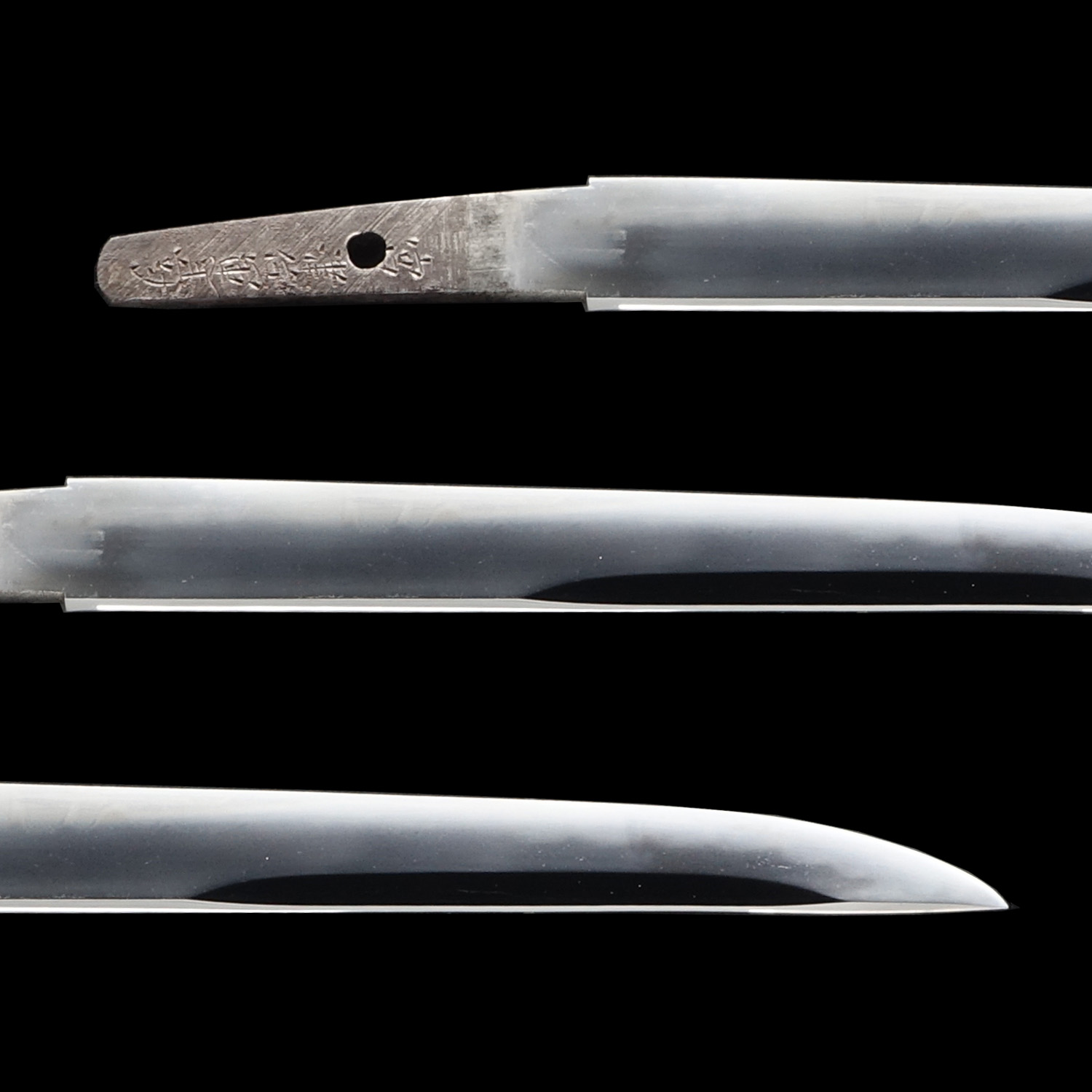
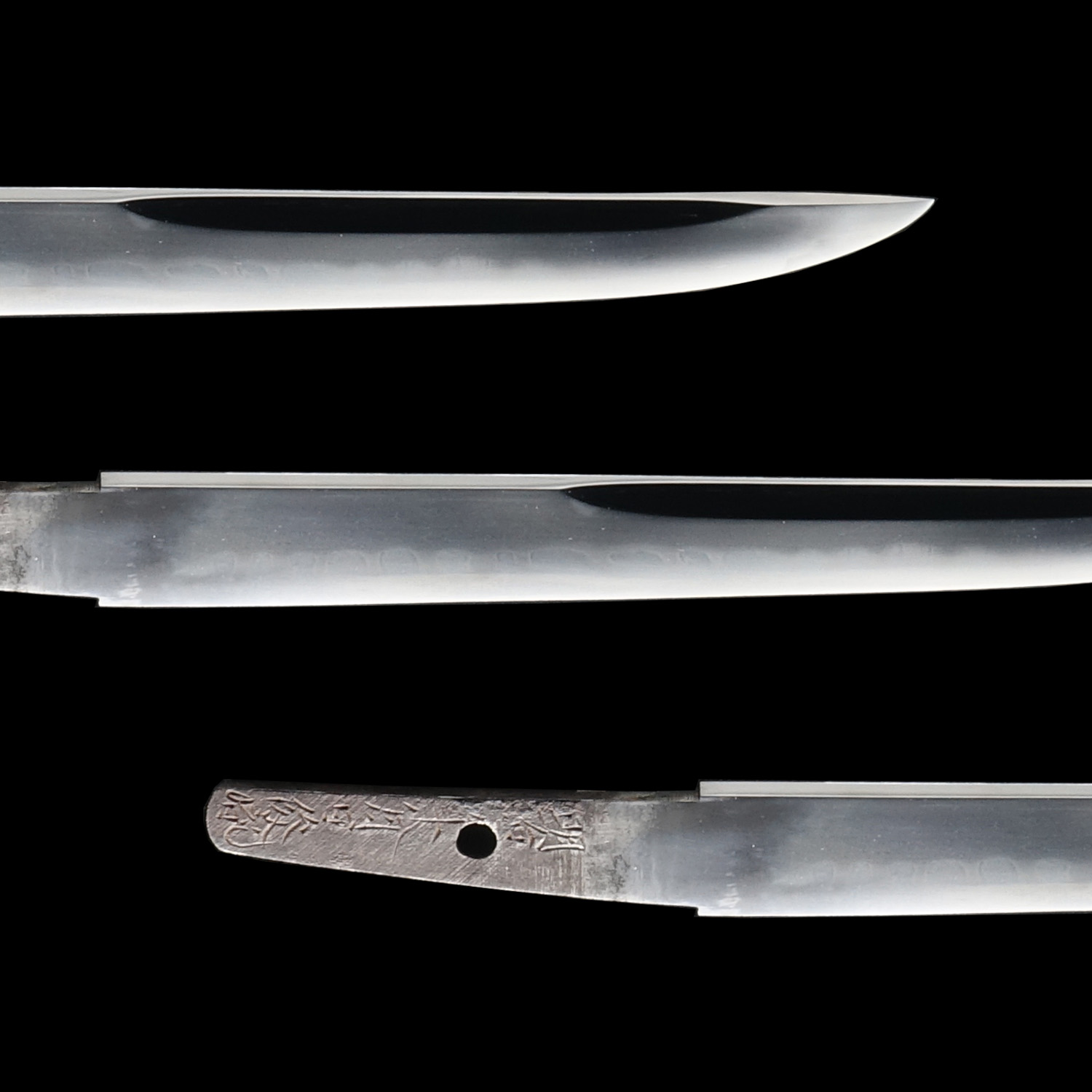
*Please keep in mind that there is one minor Kitae Kizu on the Shinogiji of the blade. If you like to know the detailed condition, please feel free to contact us.
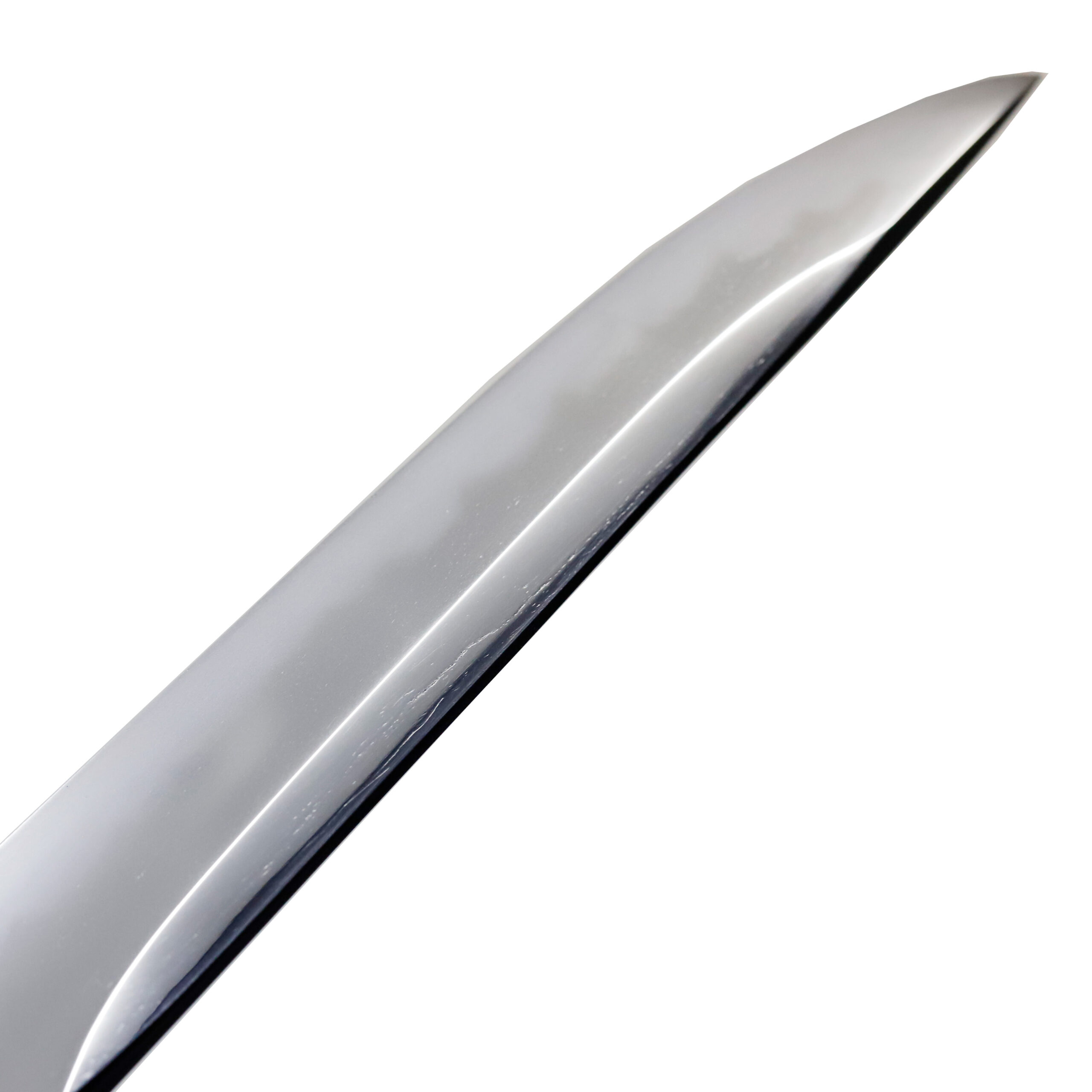
【Blade】
Cutting Edge Length(Nagasa)
:
22.4
cm
( 8.81
inches)
Curvature(Sori)
:
0
cm (0 inches)
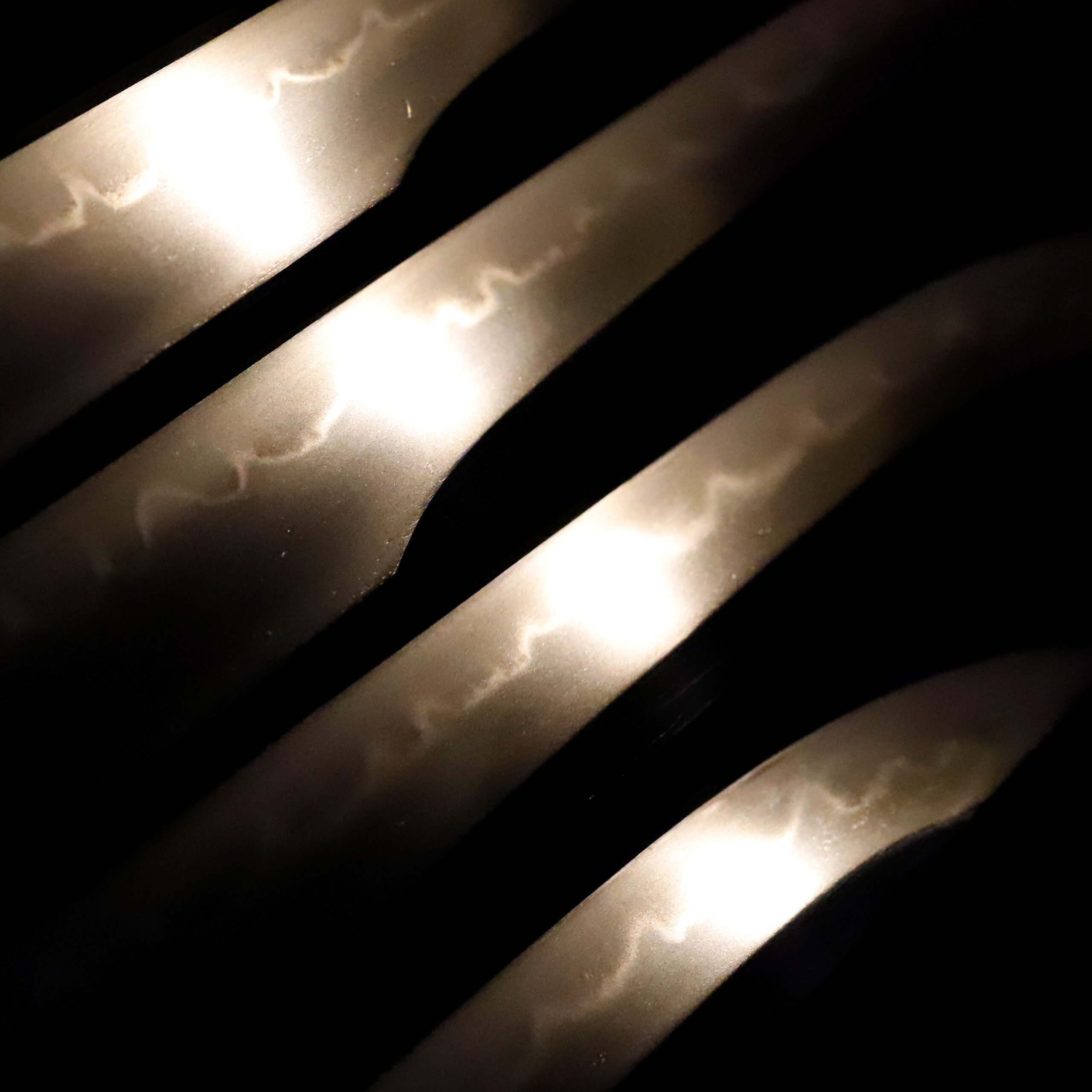
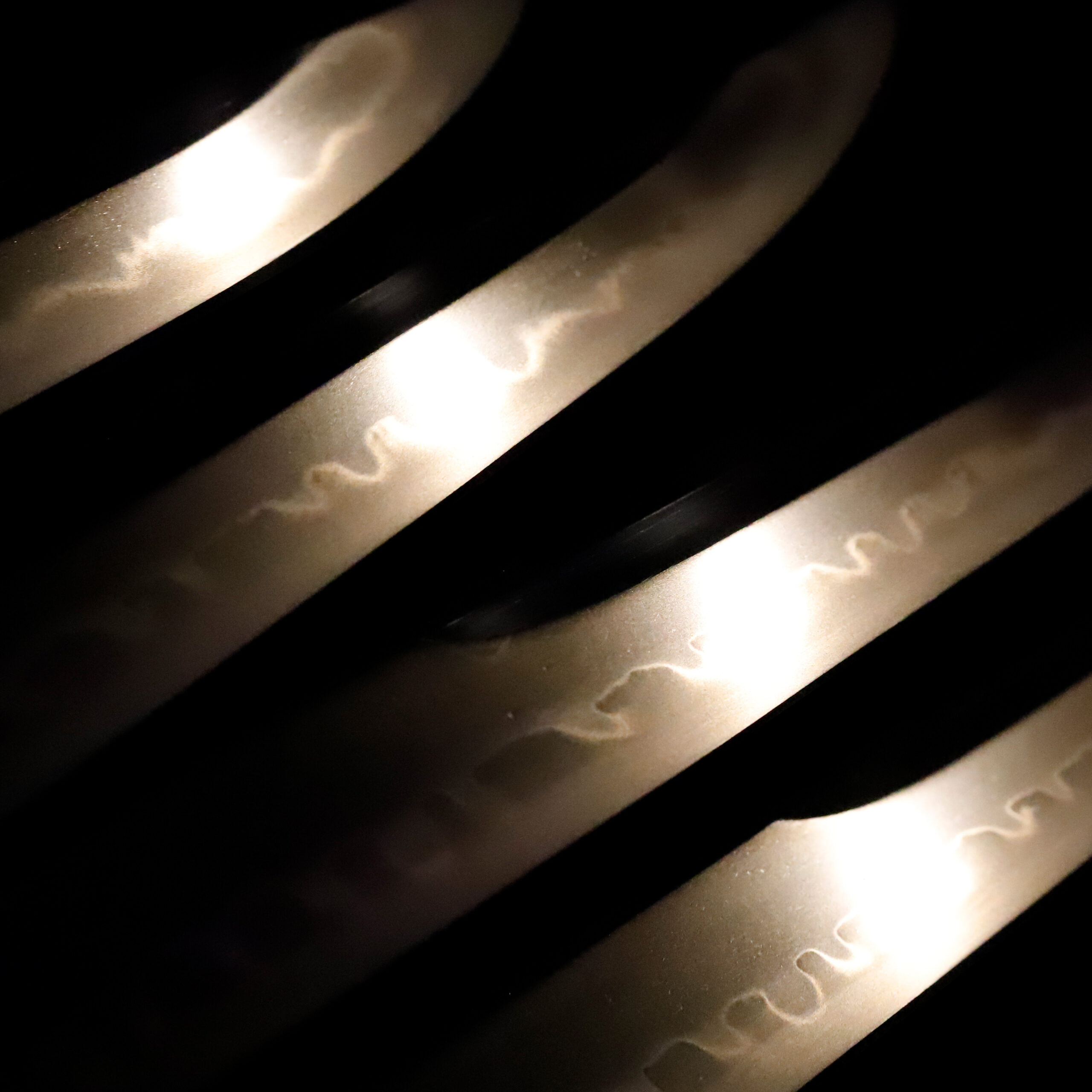
Hamon
:
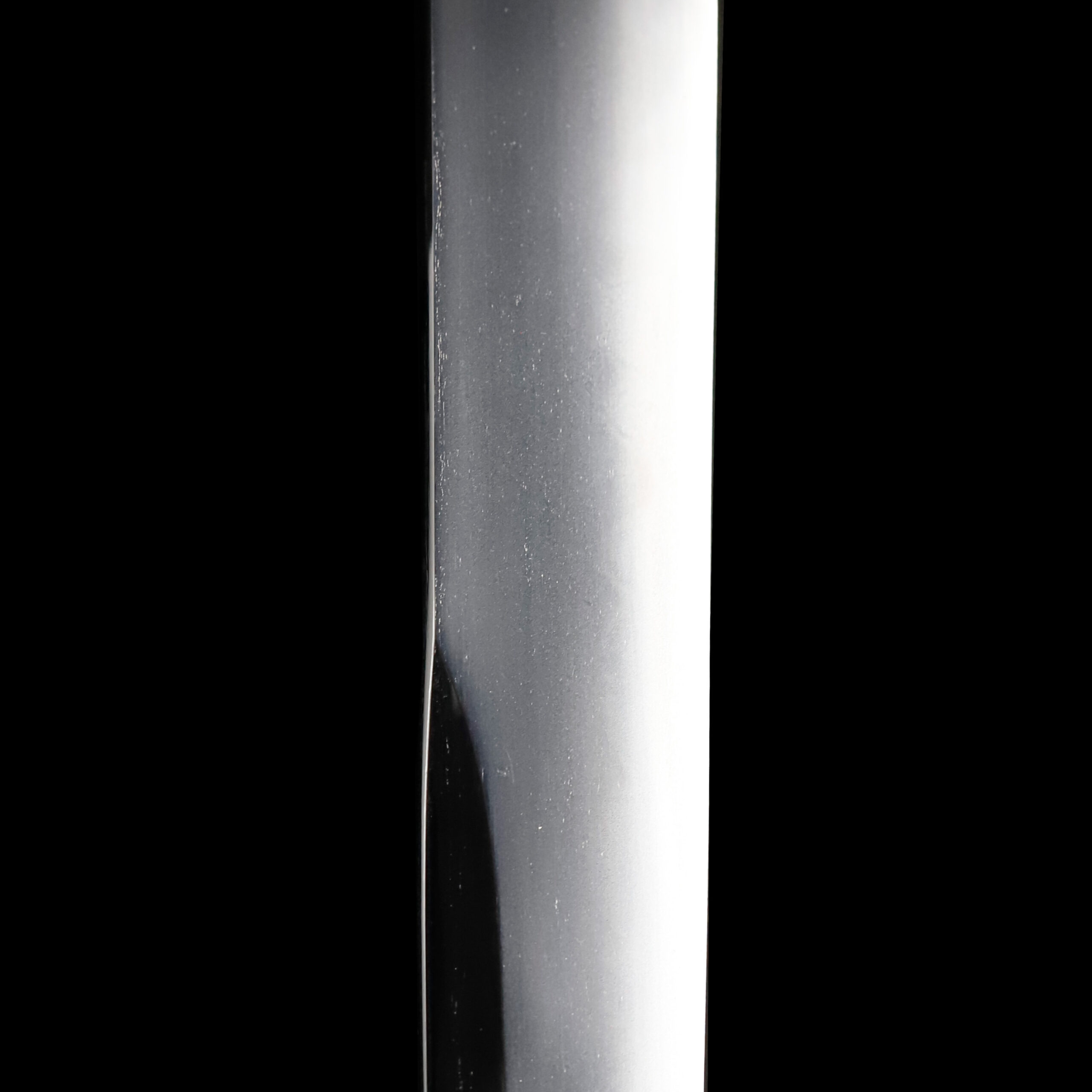
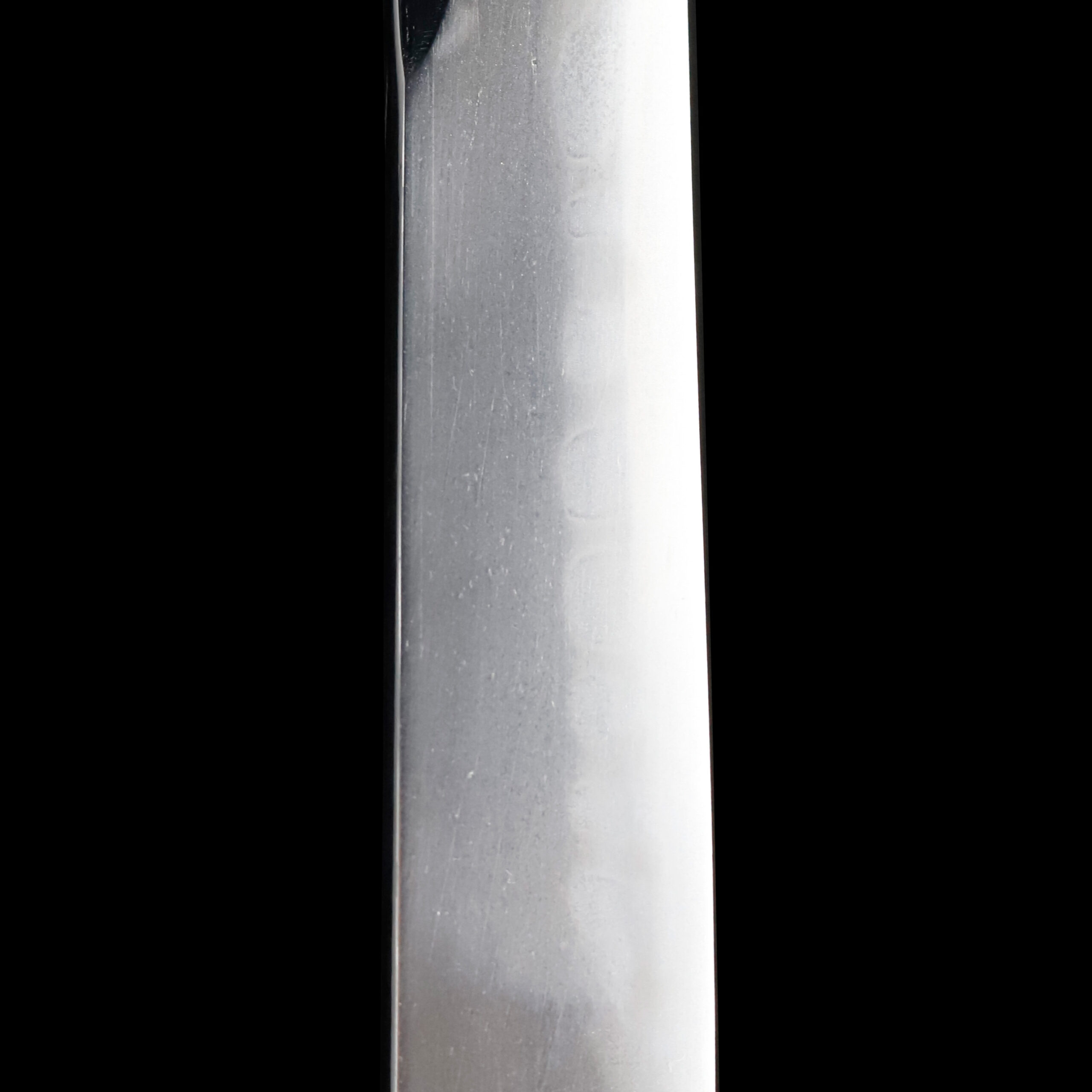
The crystalline structure which forms along the cutting edge of a blade as a result of the hardening process
Jimon(Jihada)
:
visible steel surface pattern created by folding an

 NihontoWatch