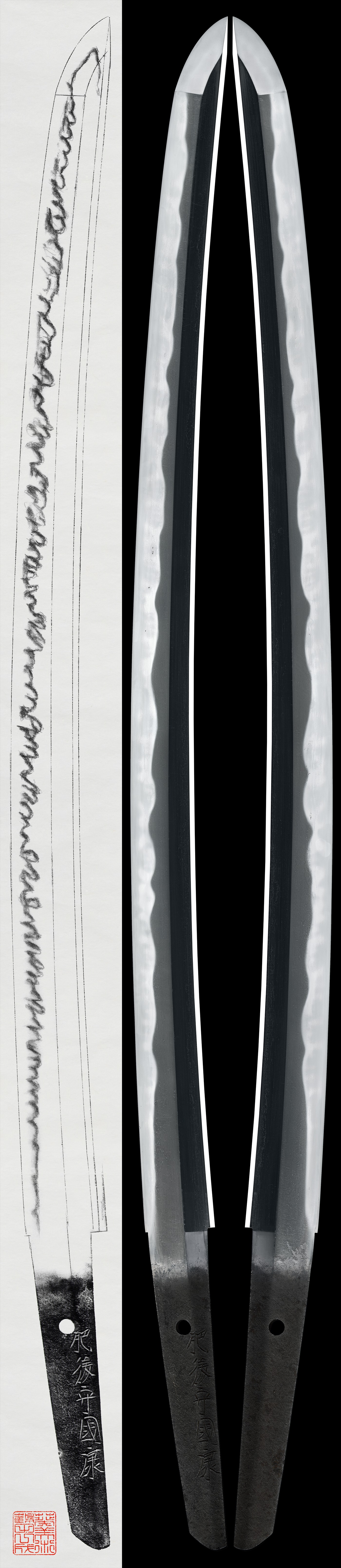
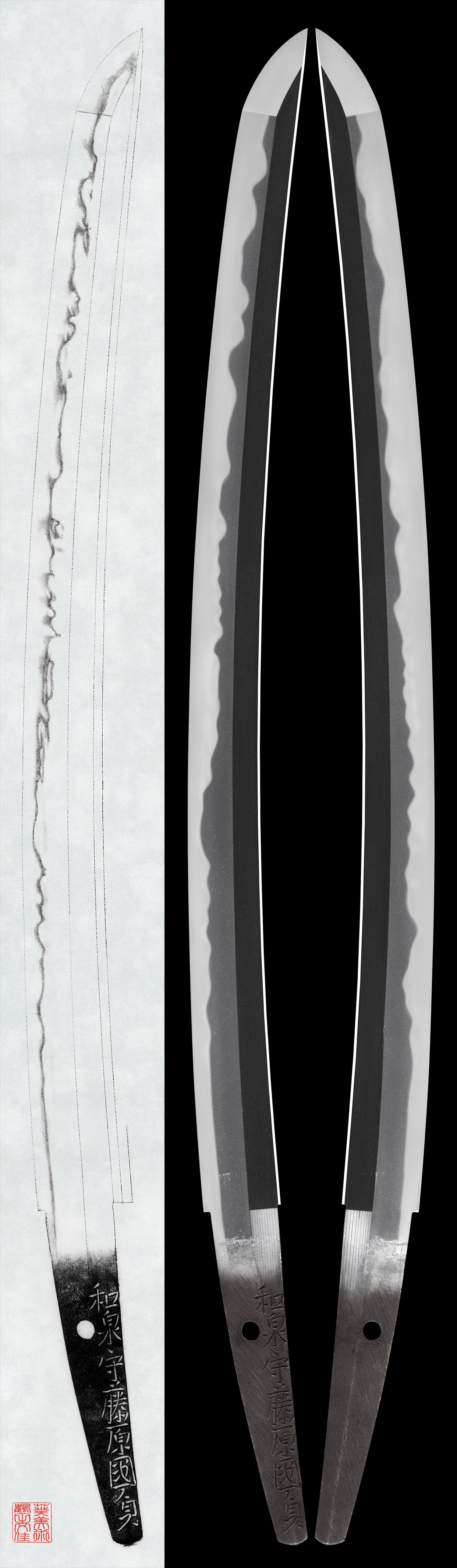
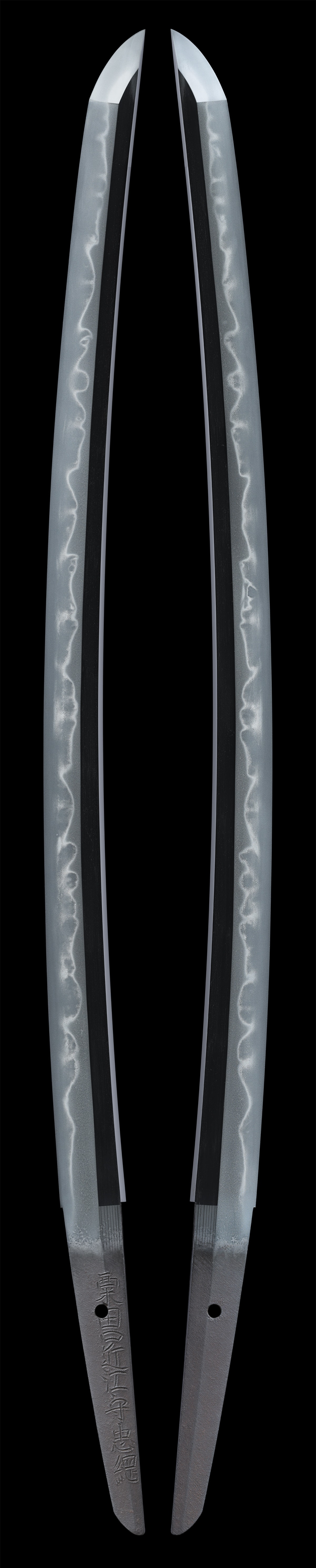
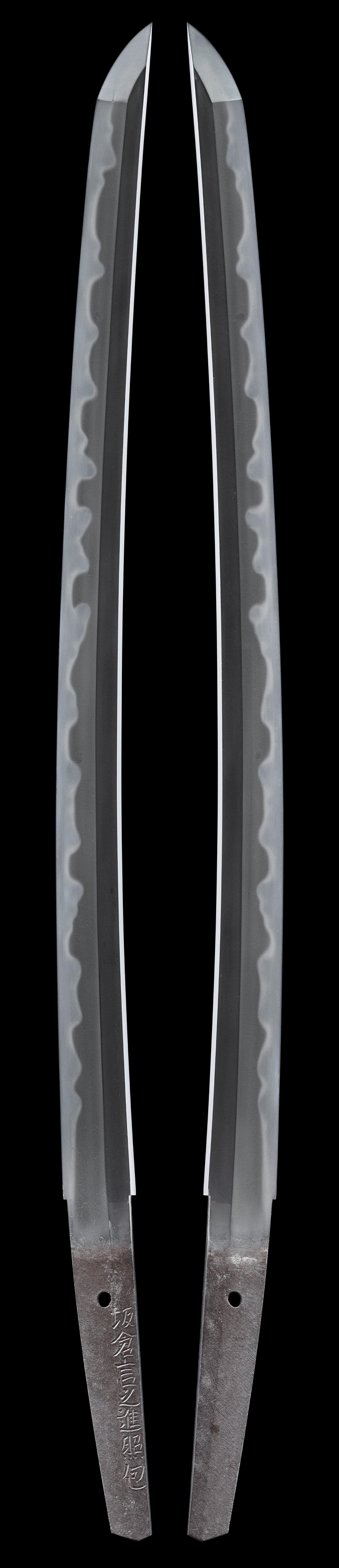
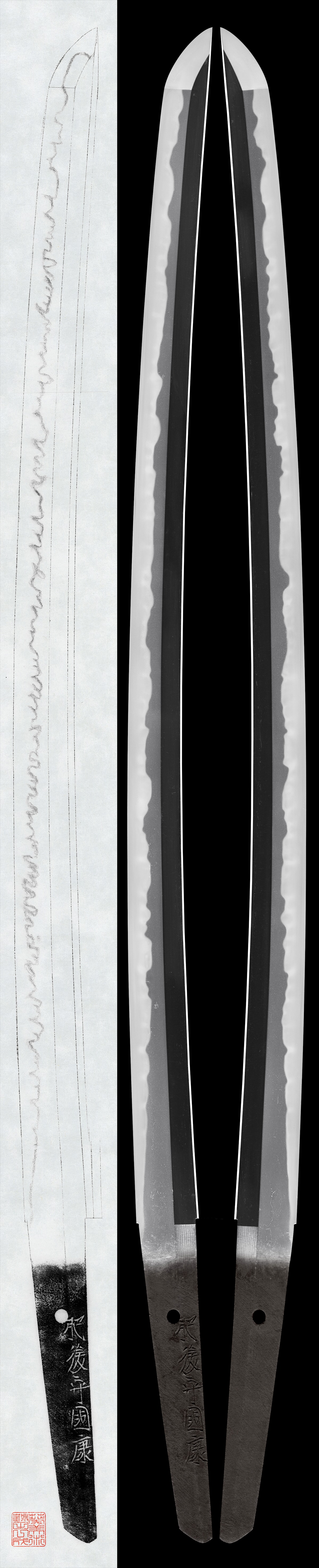
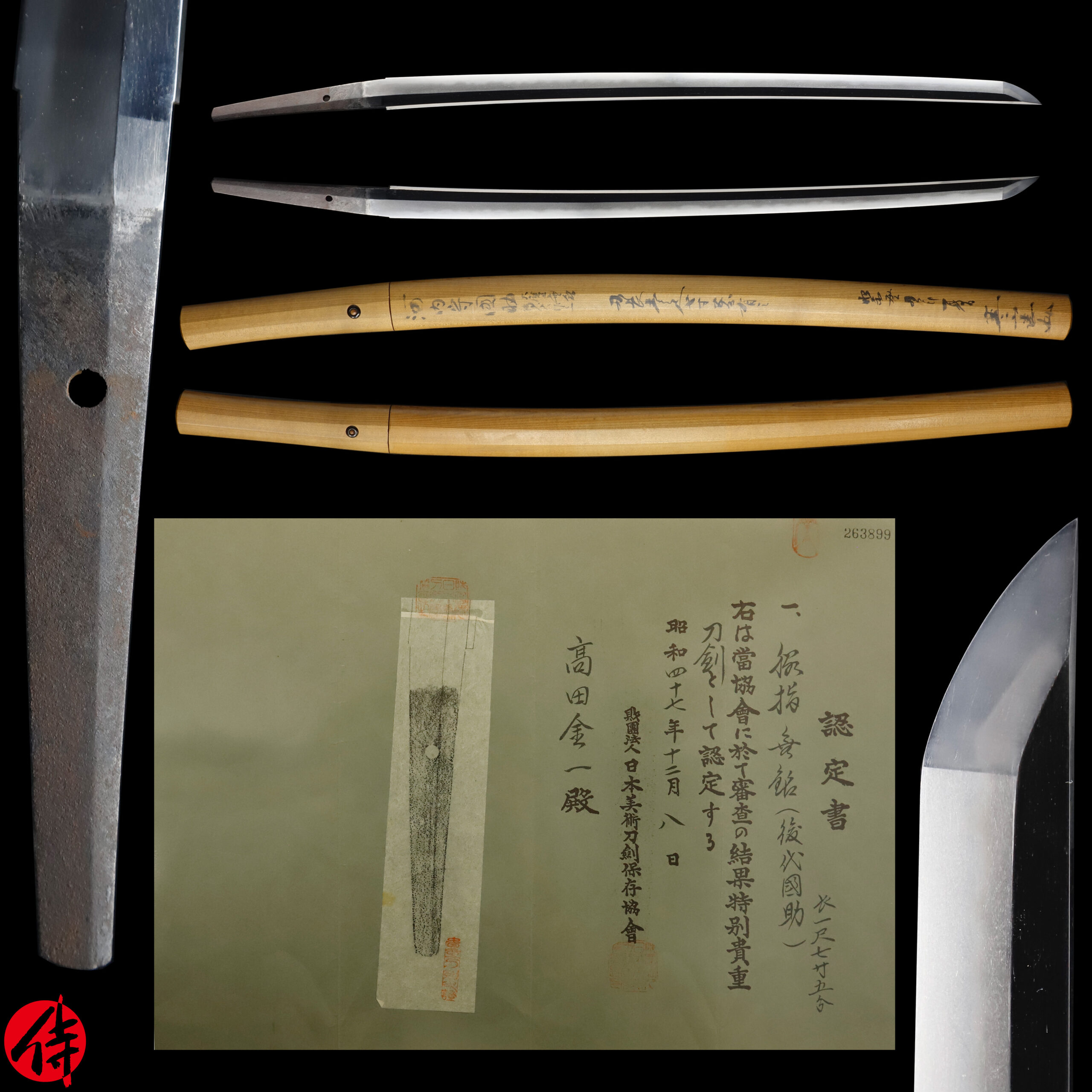
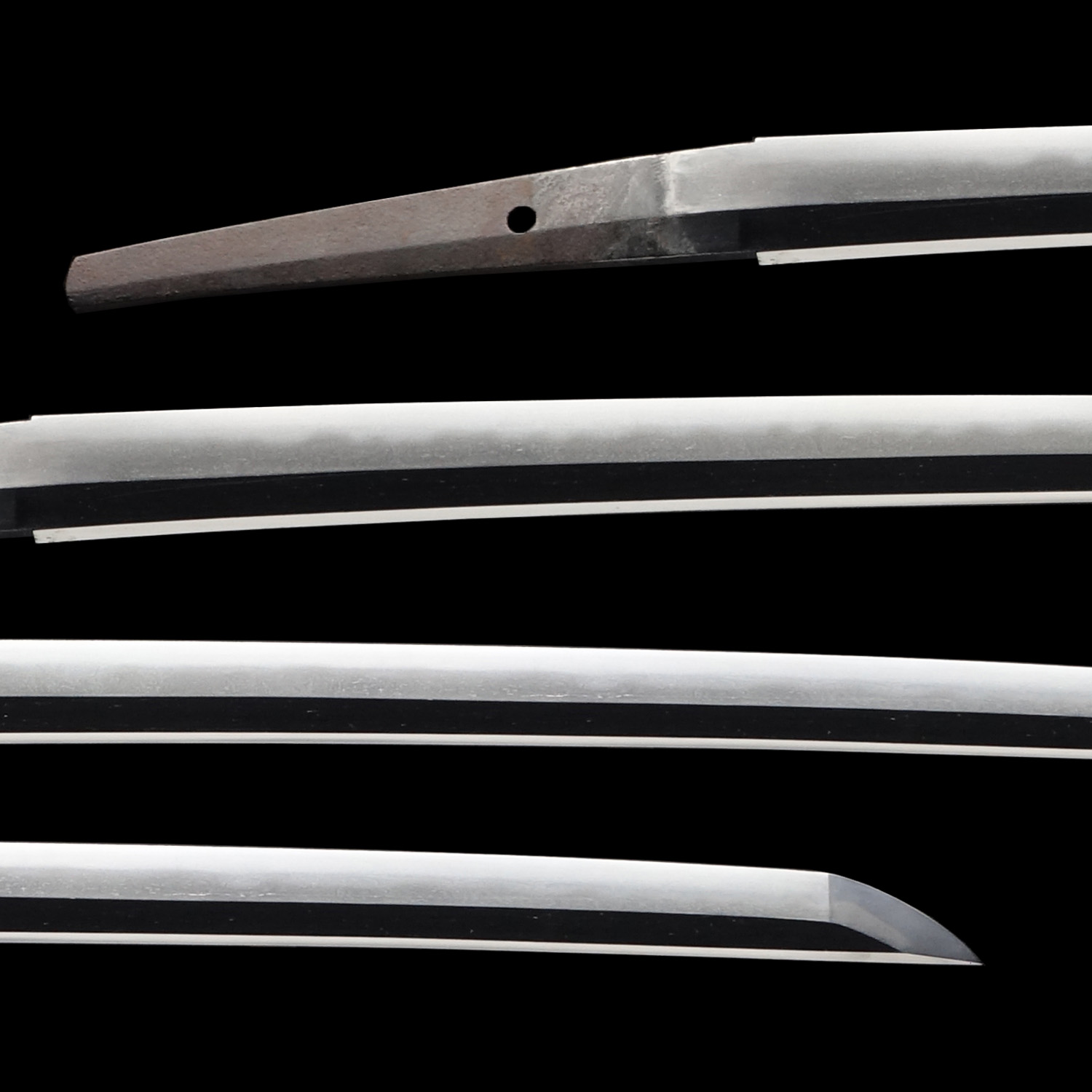
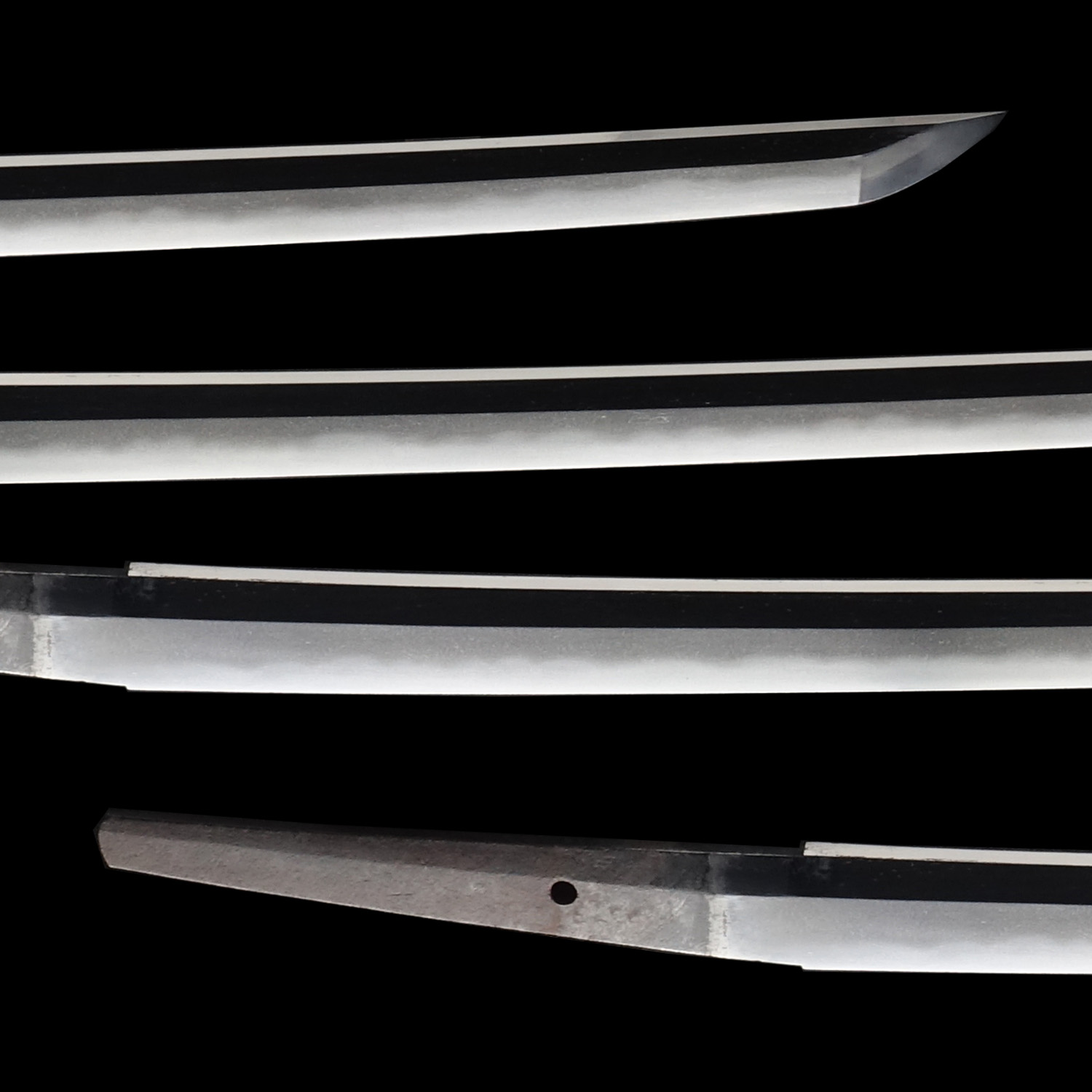
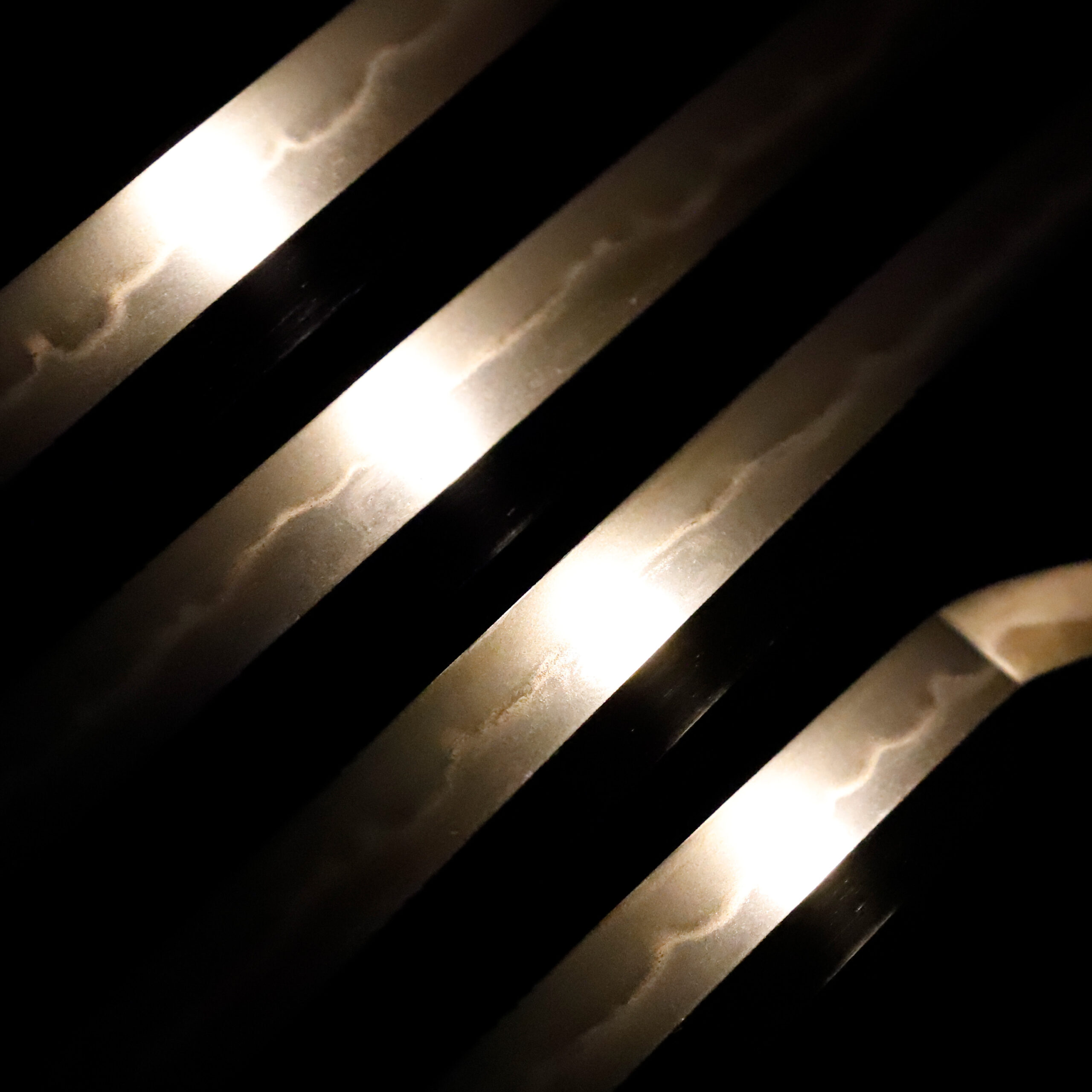
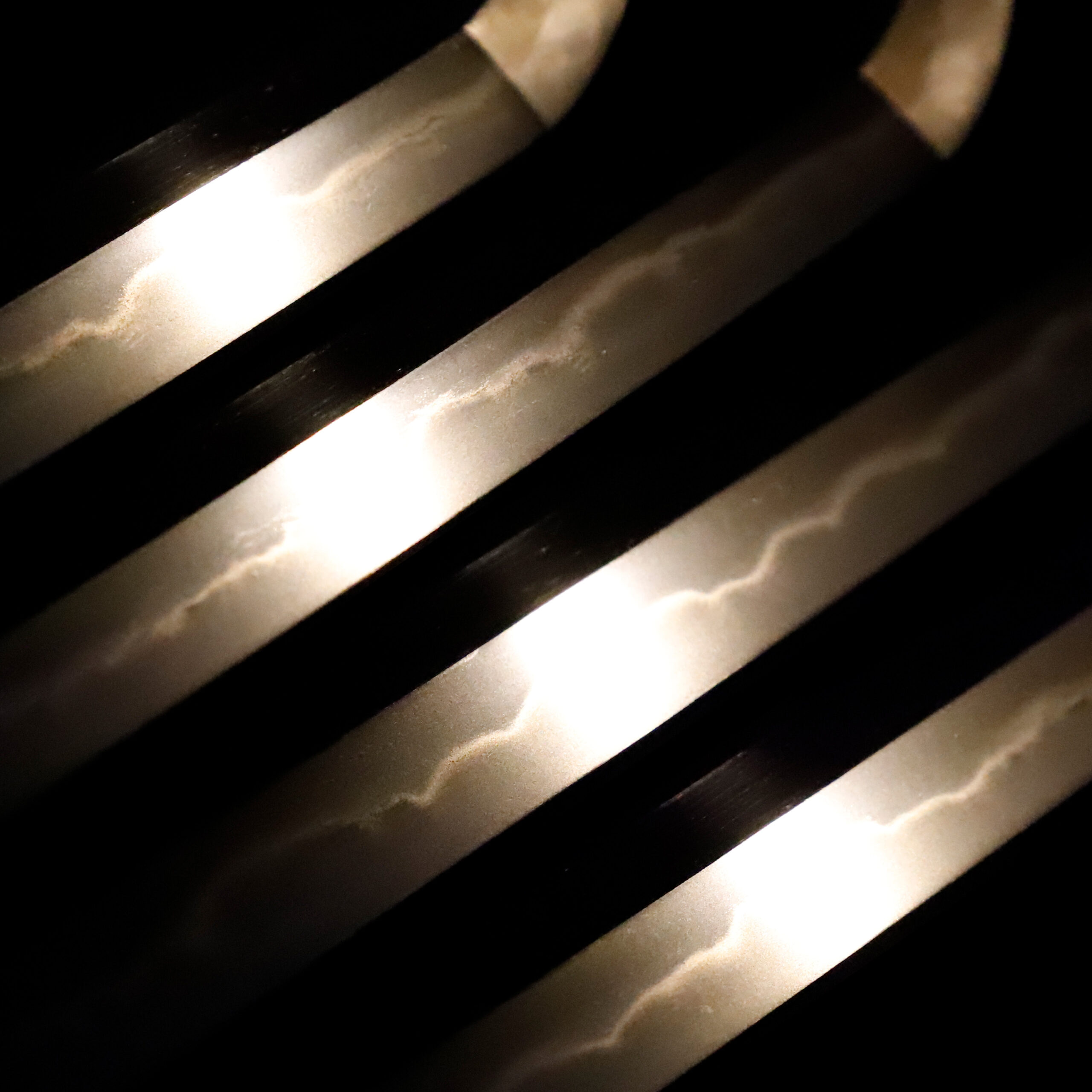
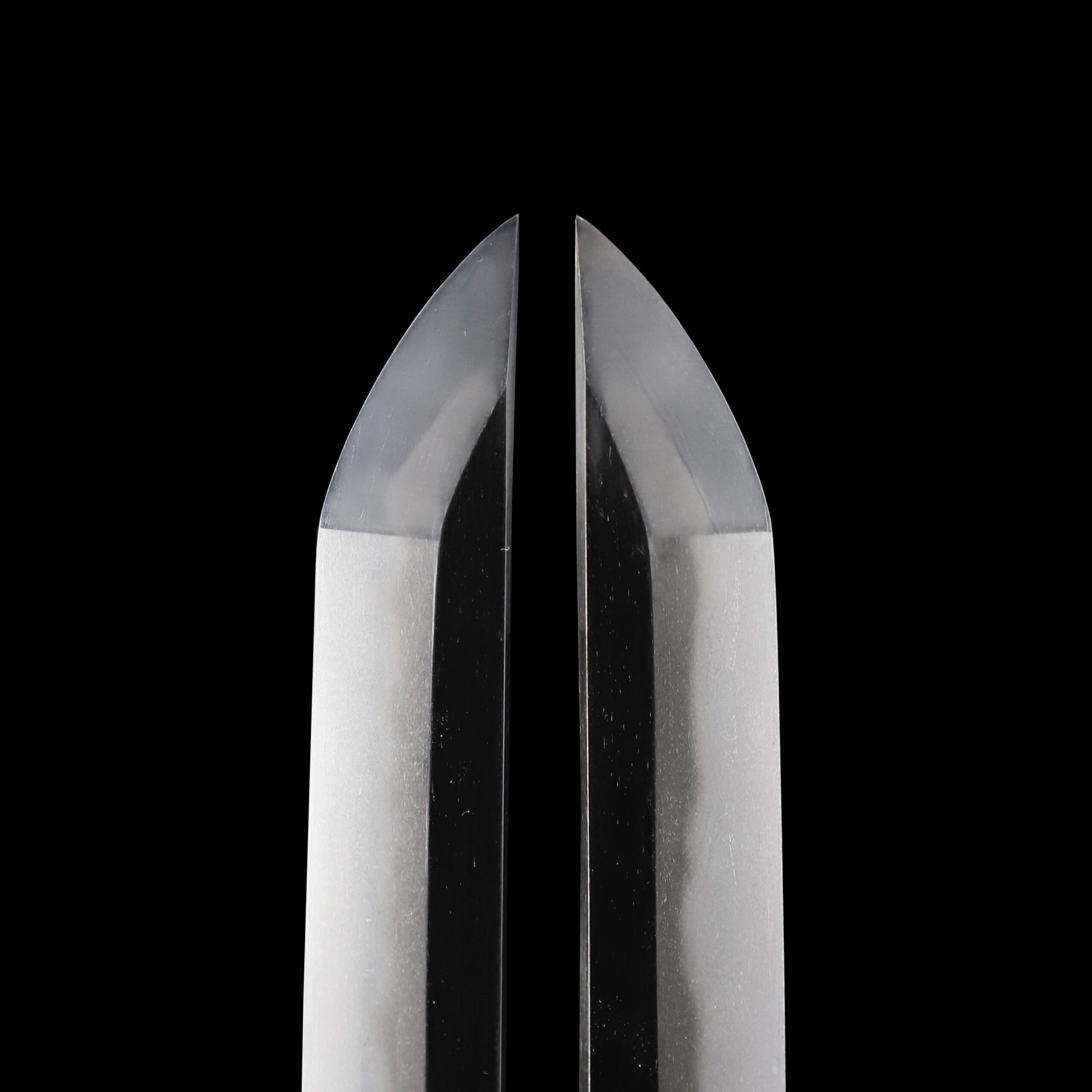
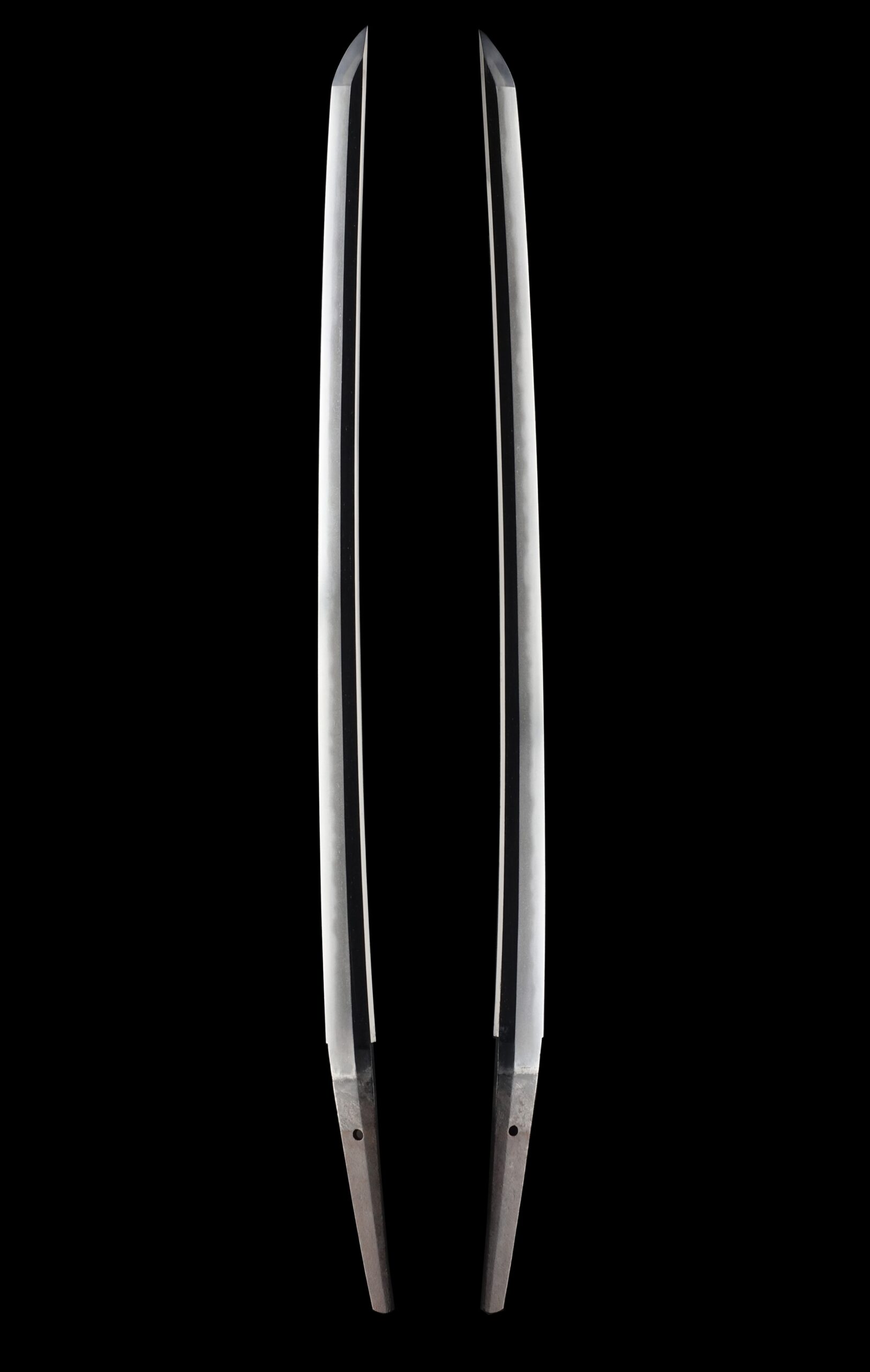
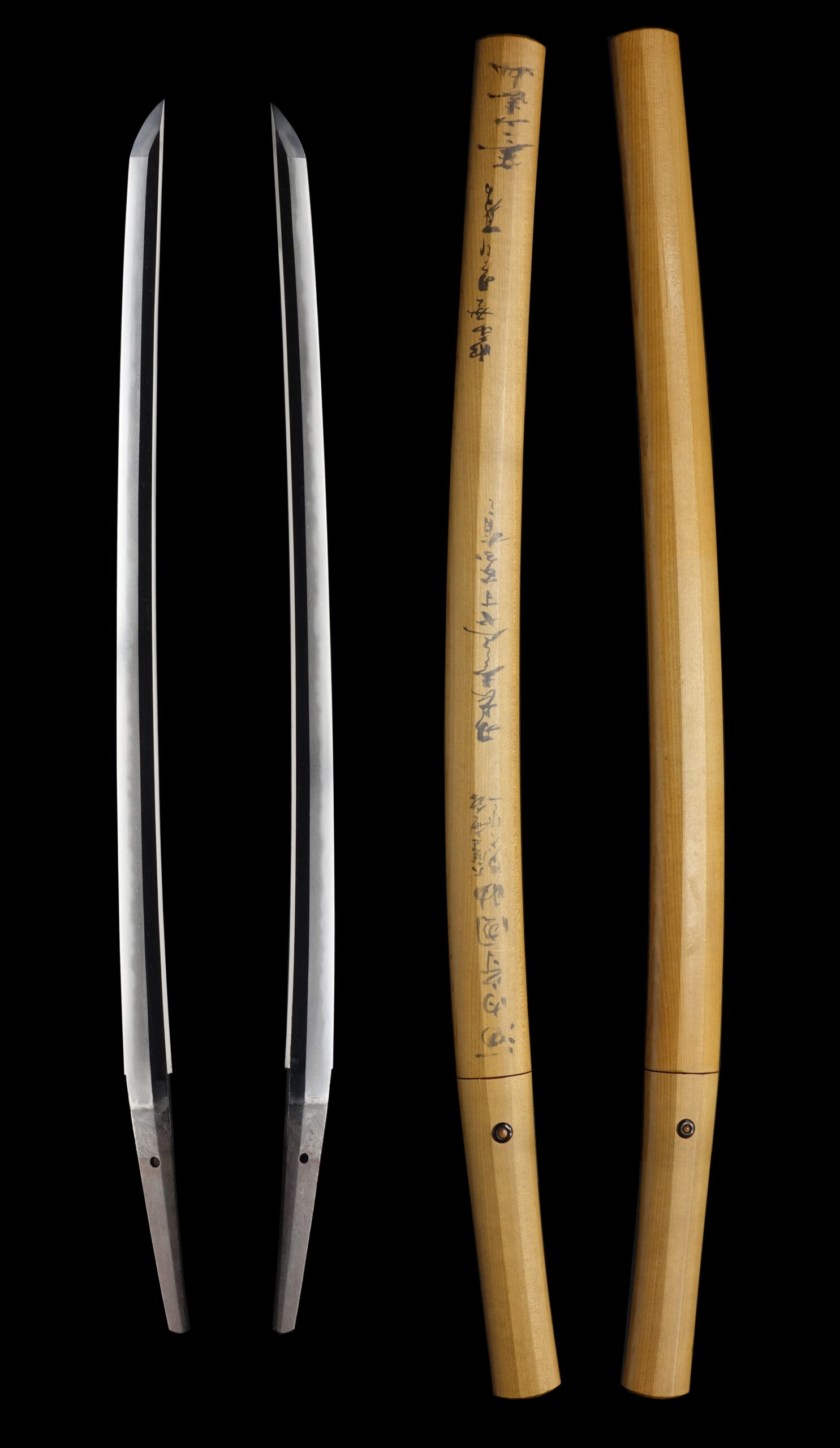
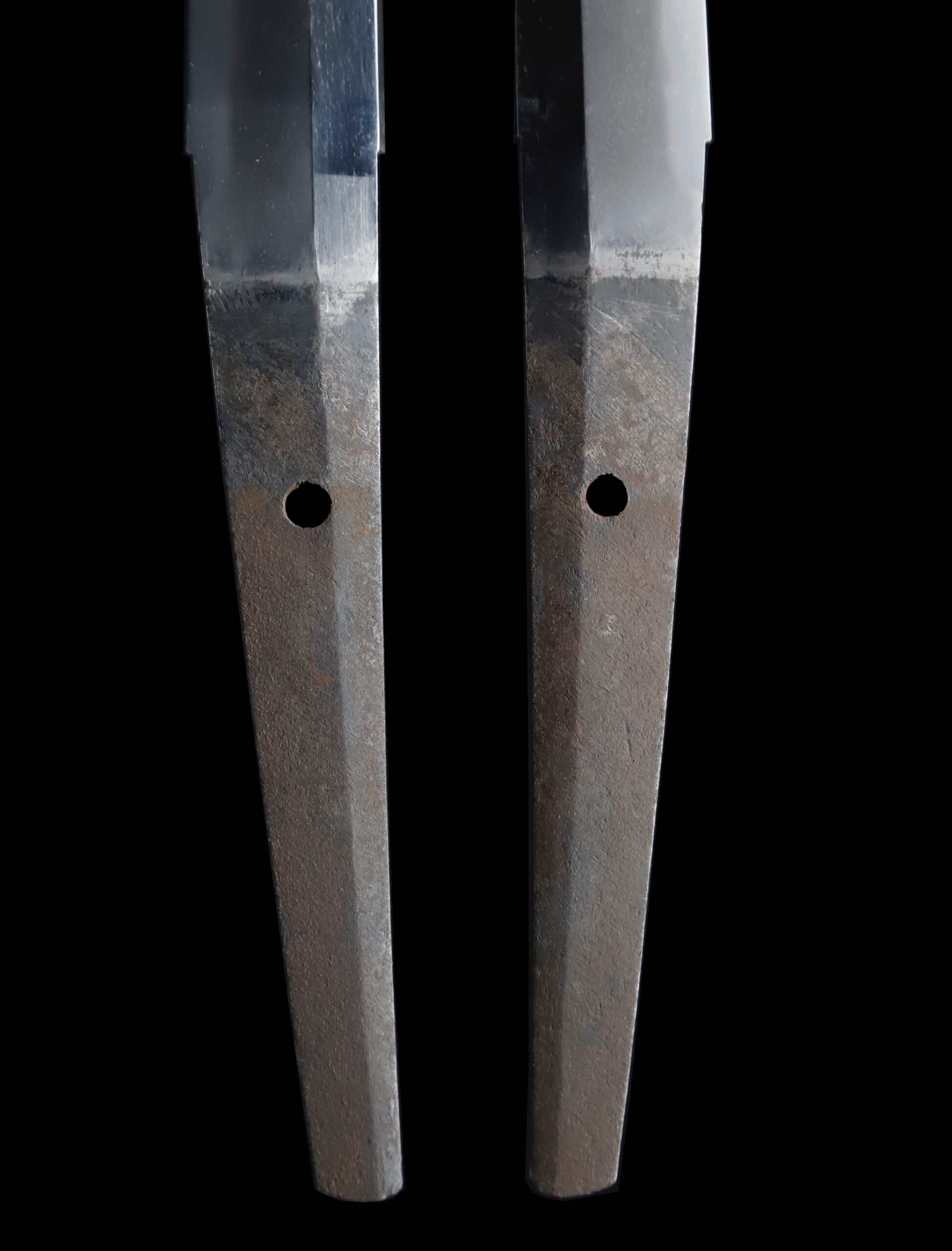
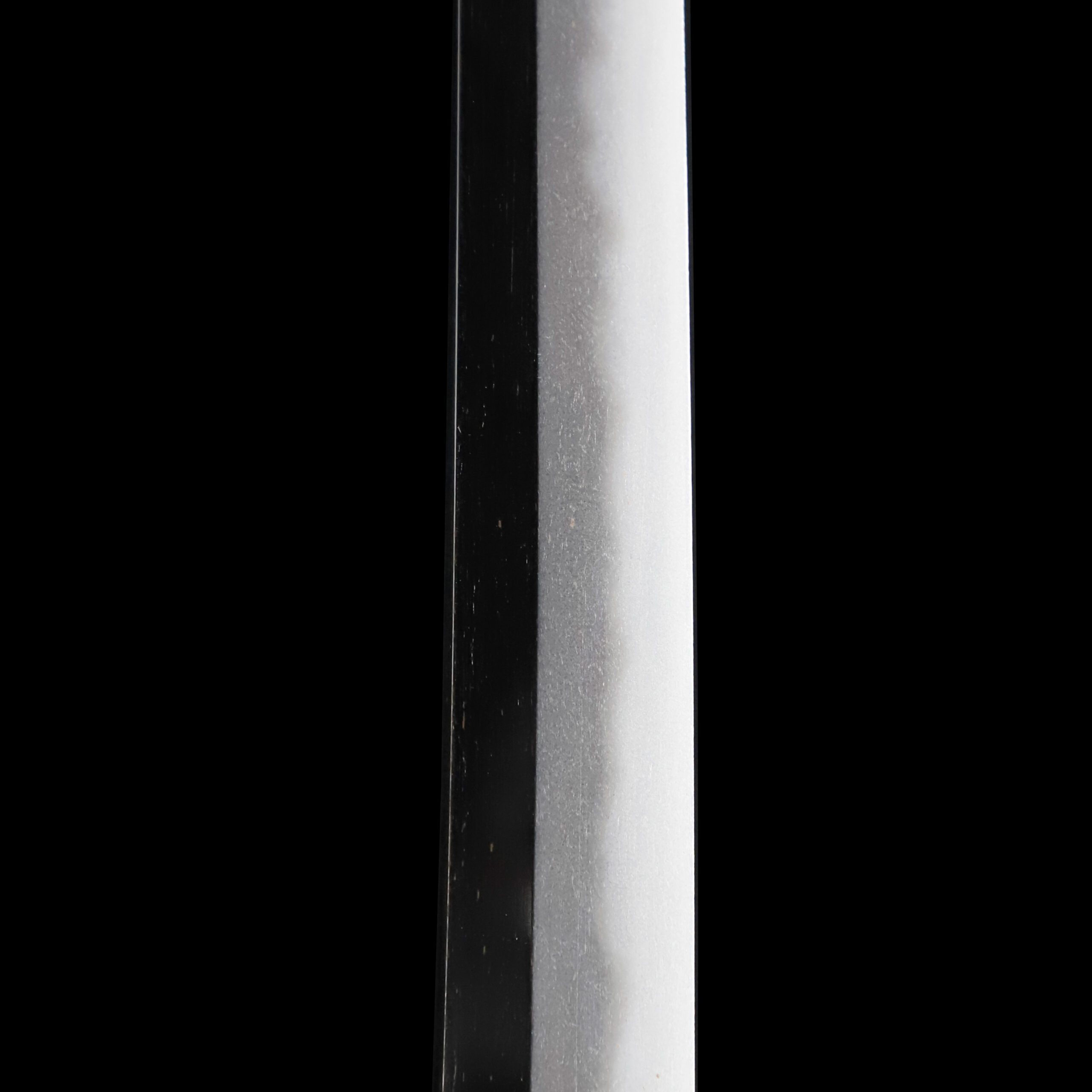
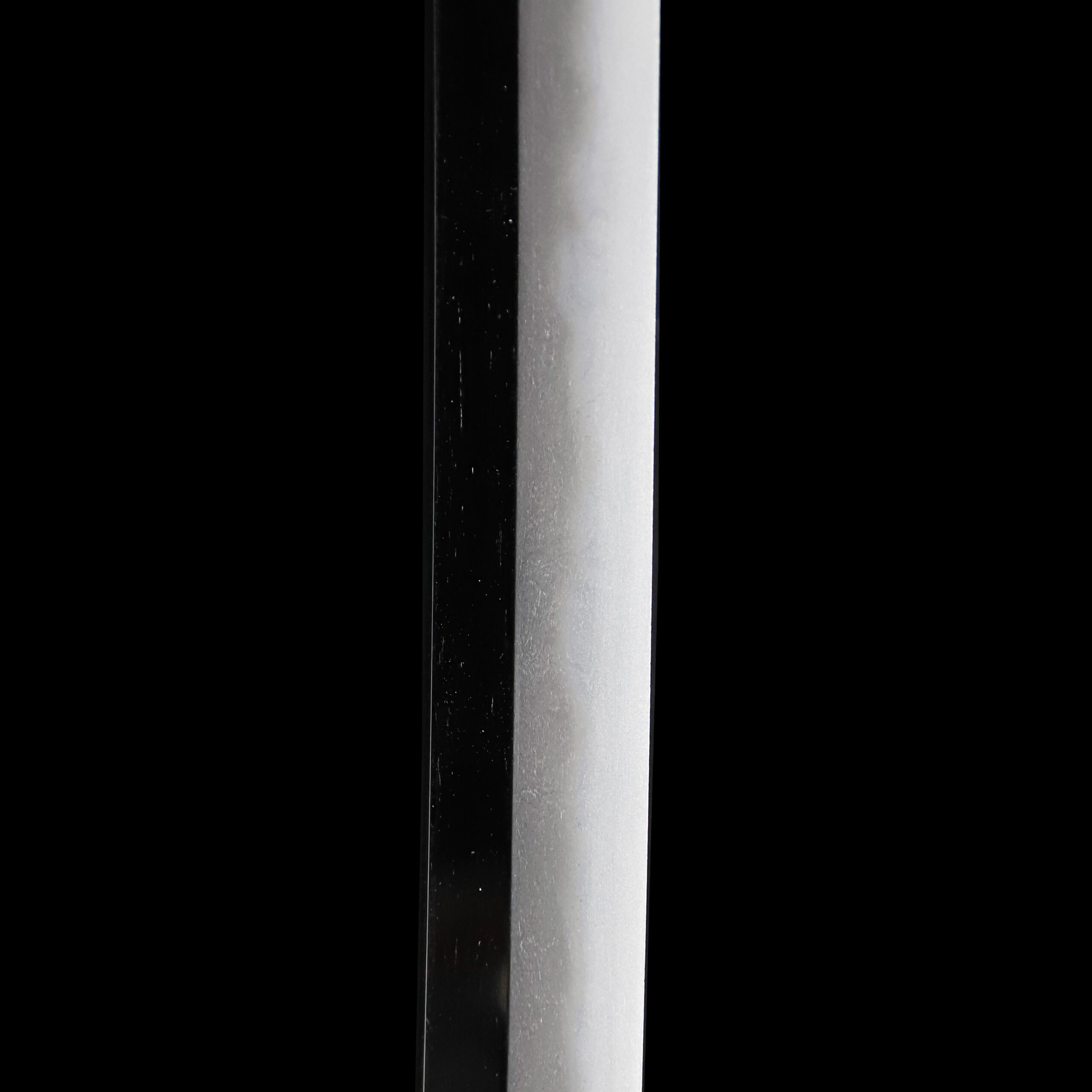
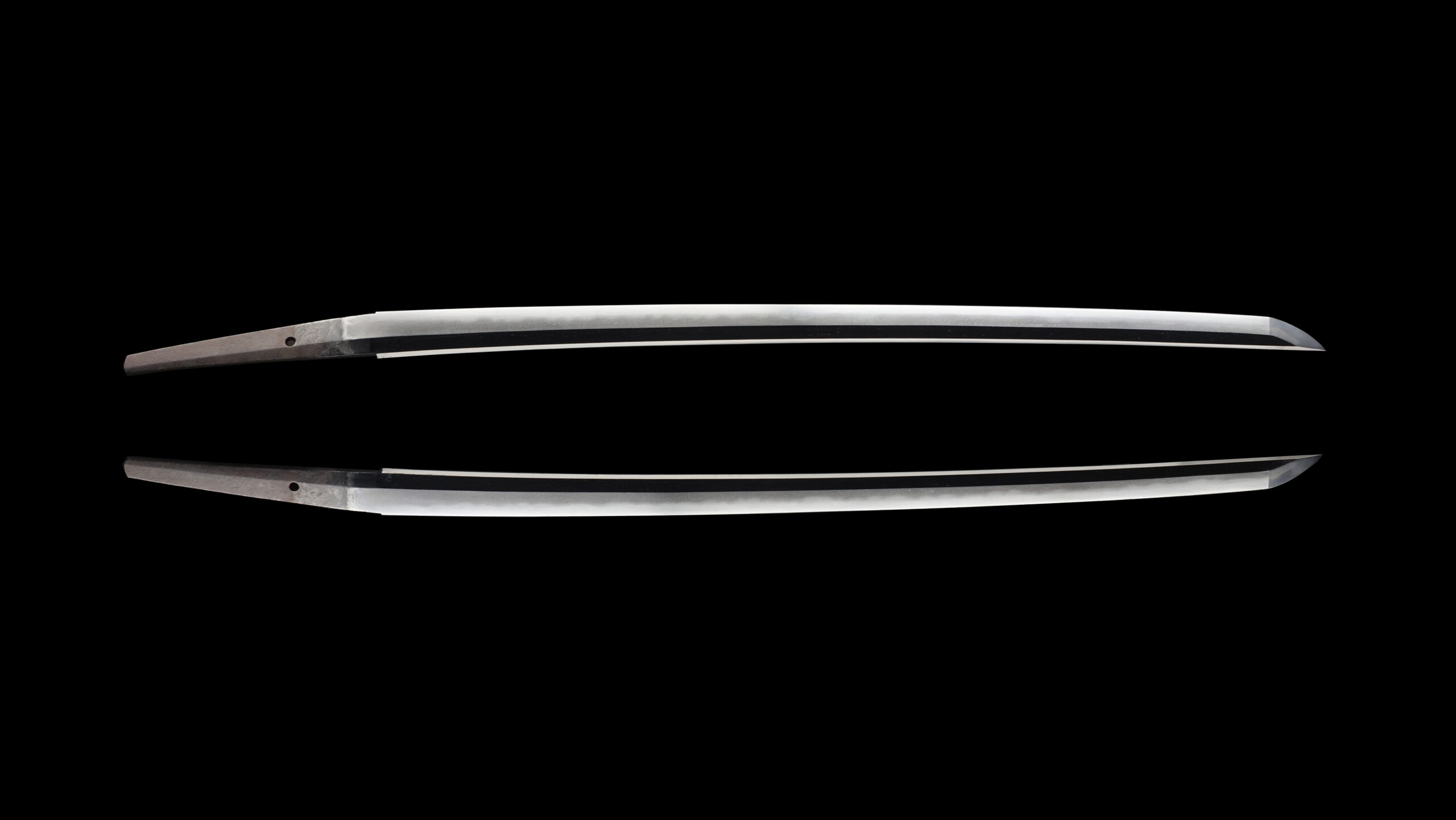
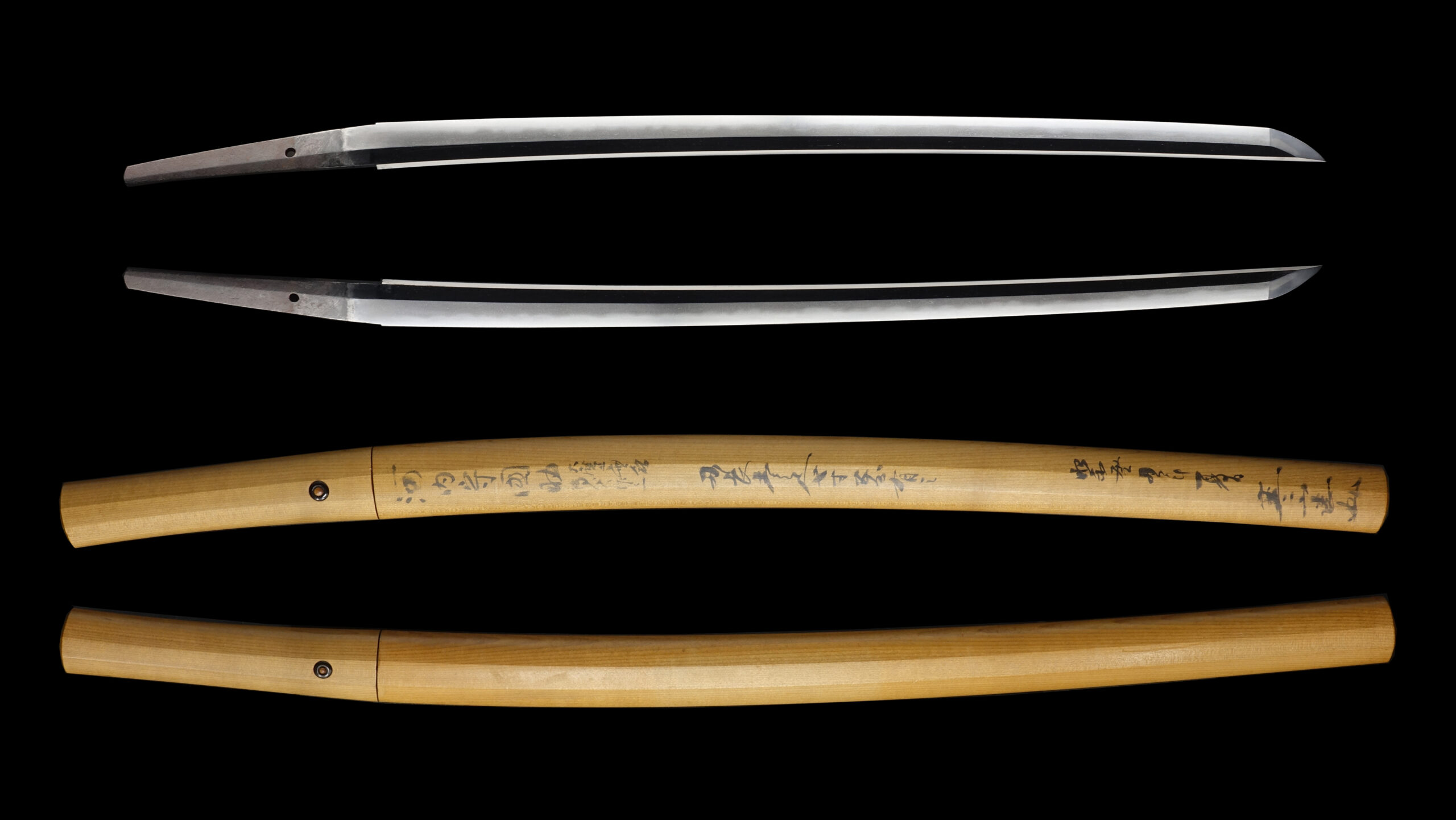
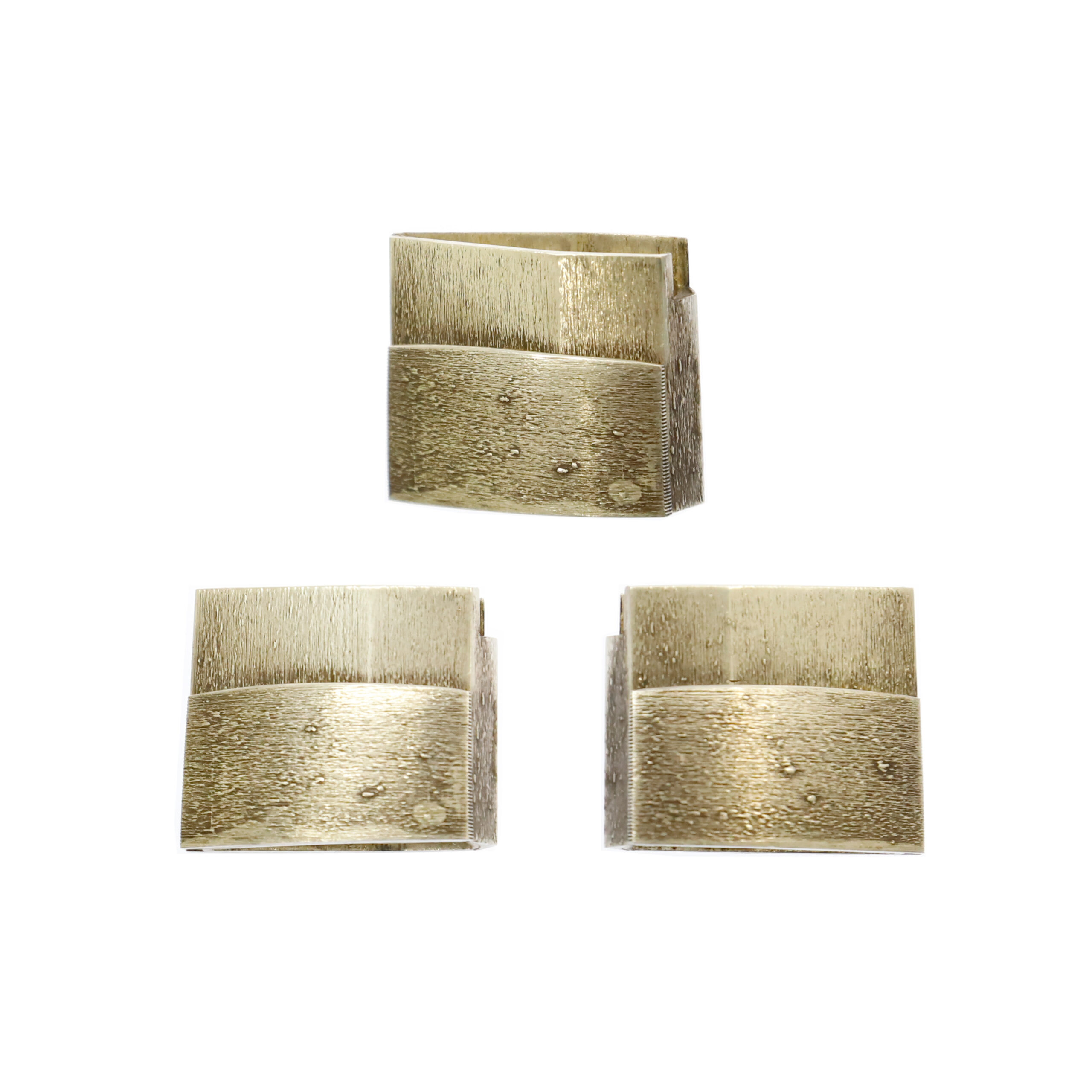
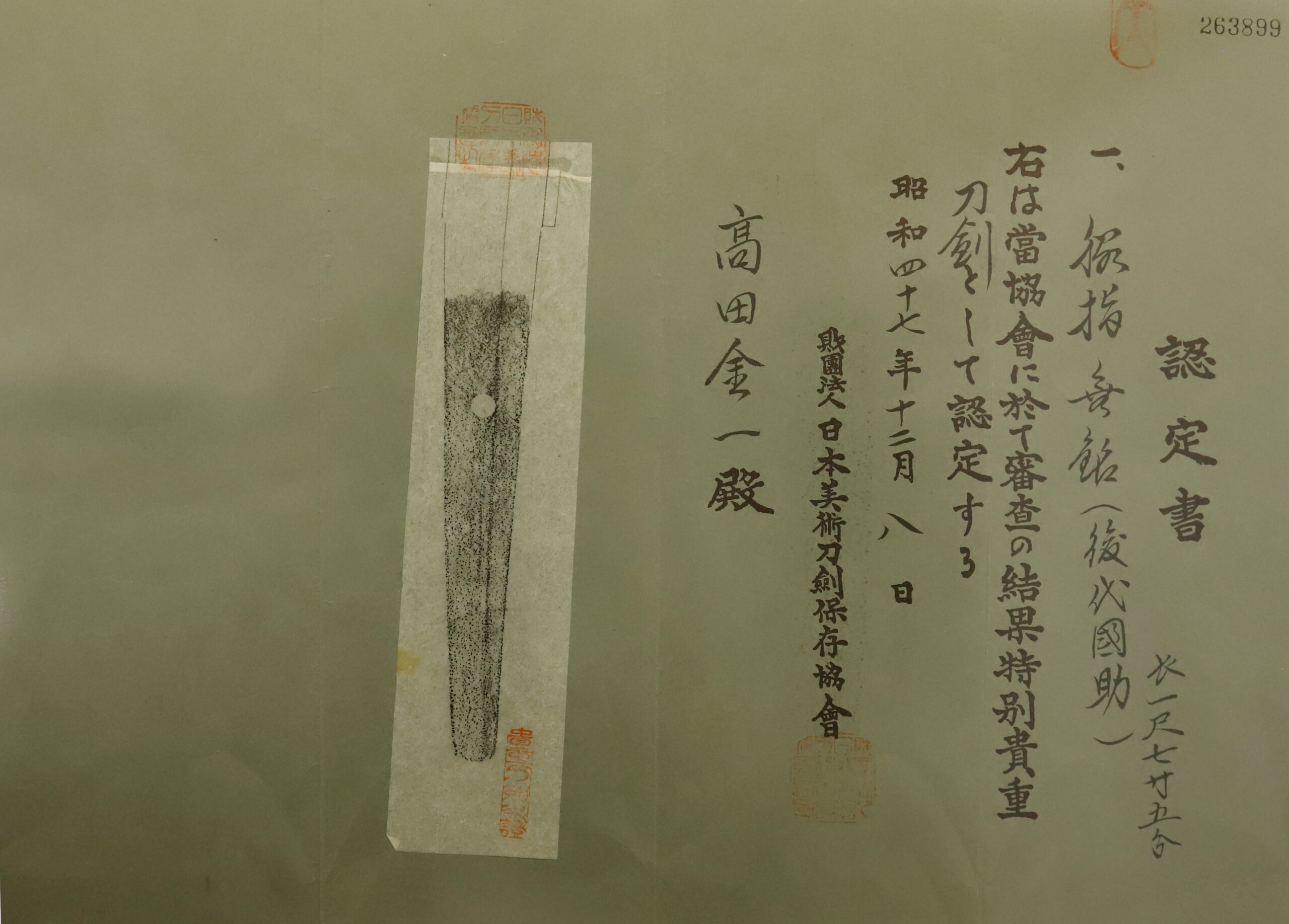
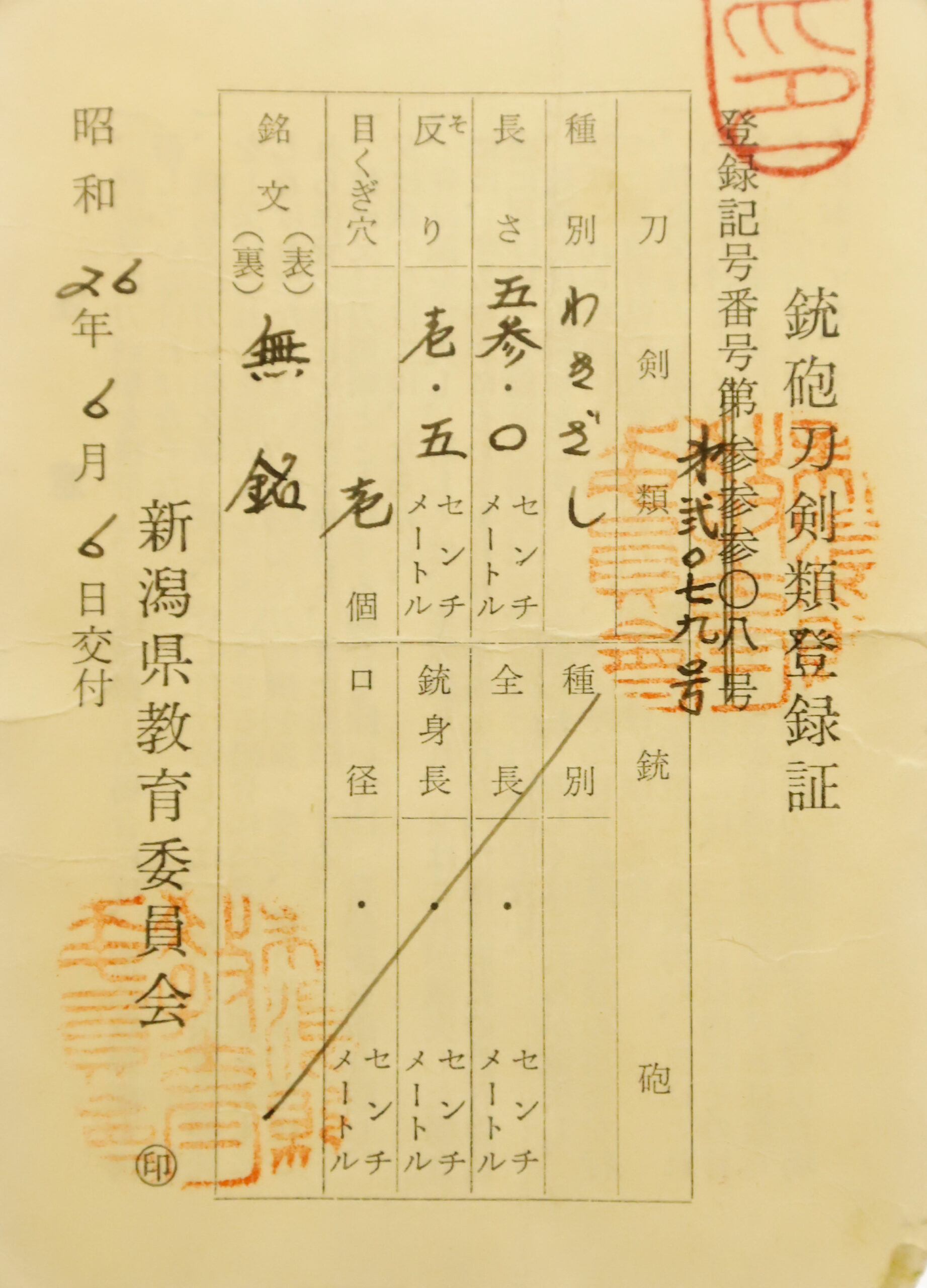
This antique Japanese Wakizashi is attributed to Kodai Kunisuke, specifically the second generation, who was active during the early Edo period (1658-1673) in Osaka. The blade is unsigned (mumei) but comes with an NBTHK Tokubetsu Kicho Certificate. It features the characteristic beauty of Osaka Shinto Jigane, known for its visible steel surface patterns.
 NihontoWatchBETA
mumei · Genna-Shoho (1615-1647) · nagasa 53cm · sori 1.5cm
Shinto · Settsu
73 pieces on the market now
Osaka in the early-to-mid Edo period was a merchant capital, a city of commerce and capital rather than a castle town tied to a single daimyo house, and the swordsmiths who gathered there worked for a wealthy townsman clientele as much as for warriors. The grouping known as Osaka Shinto (大坂新刀) took shape in Settsu from two feeder currents. Learn more →
| Smith | Era | Designated |
|---|---|---|
| Shinkai真改 | 1649-1682 | 79 |
| Tadatsuna忠綱 | 1673-1717 | 53 |
| Kanesada包貞 | 1673-1682 | 78 |
| Kanesada包貞 | 1648-1652 | 10 |
| Kunisuke國助 | 1658-1663 | 10 |
This work carries older NBTHK “Kichō”-era papers, which the NBTHK no longer issues and now regards as unreliable. To confirm the attribution, submission to an official Japanese examination body (such as the NBTHK or NTHK) for modern certification could be considered.
Returns/exchanges limited to defects caused by shipping (except willful misconduct or gross negligence by the company); customers must contact within 72 hours of receiving the product.
This antique Japanese Wakizashi is attributed to Kodai Kunisuke, specifically the second generation, who was active during the early Edo period (1658-1673) in Osaka. The blade is unsigned (mumei) but comes with an NBTHK Tokubetsu Kicho Certificate. It features the characteristic beauty of Osaka Shinto Jigane, known for its visible steel surface patterns.
NihontoWatchBETAmumei · Genna-Shoho (1615-1647) · nagasa 53cm · sori 1.5cm
Shinto · Settsu
73 pieces on the market now
Osaka in the early-to-mid Edo period was a merchant capital, a city of commerce and capital rather than a castle town tied to a single daimyo house, and the swordsmiths who gathered there worked for a wealthy townsman clientele as much as for warriors. The grouping known as Osaka Shinto (大坂新刀) took shape in Settsu from two feeder currents. Learn more →
| Smith | Era | Designated |
|---|---|---|
| Shinkai真改 | 1649-1682 | 79 |
| Tadatsuna忠綱 | 1673-1717 | 53 |
| Kanesada包貞 | 1673-1682 | 78 |
| Kanesada包貞 | 1648-1652 | 10 |
| Kunisuke國助 | 1658-1663 | 10 |
This work carries older NBTHK “Kichō”-era papers, which the NBTHK no longer issues and now regards as unreliable. To confirm the attribution, submission to an official Japanese examination body (such as the NBTHK or NTHK) for modern certification could be considered.
Returns/exchanges limited to defects caused by shipping (except willful misconduct or gross negligence by the company); customers must contact within 72 hours of receiving the product.