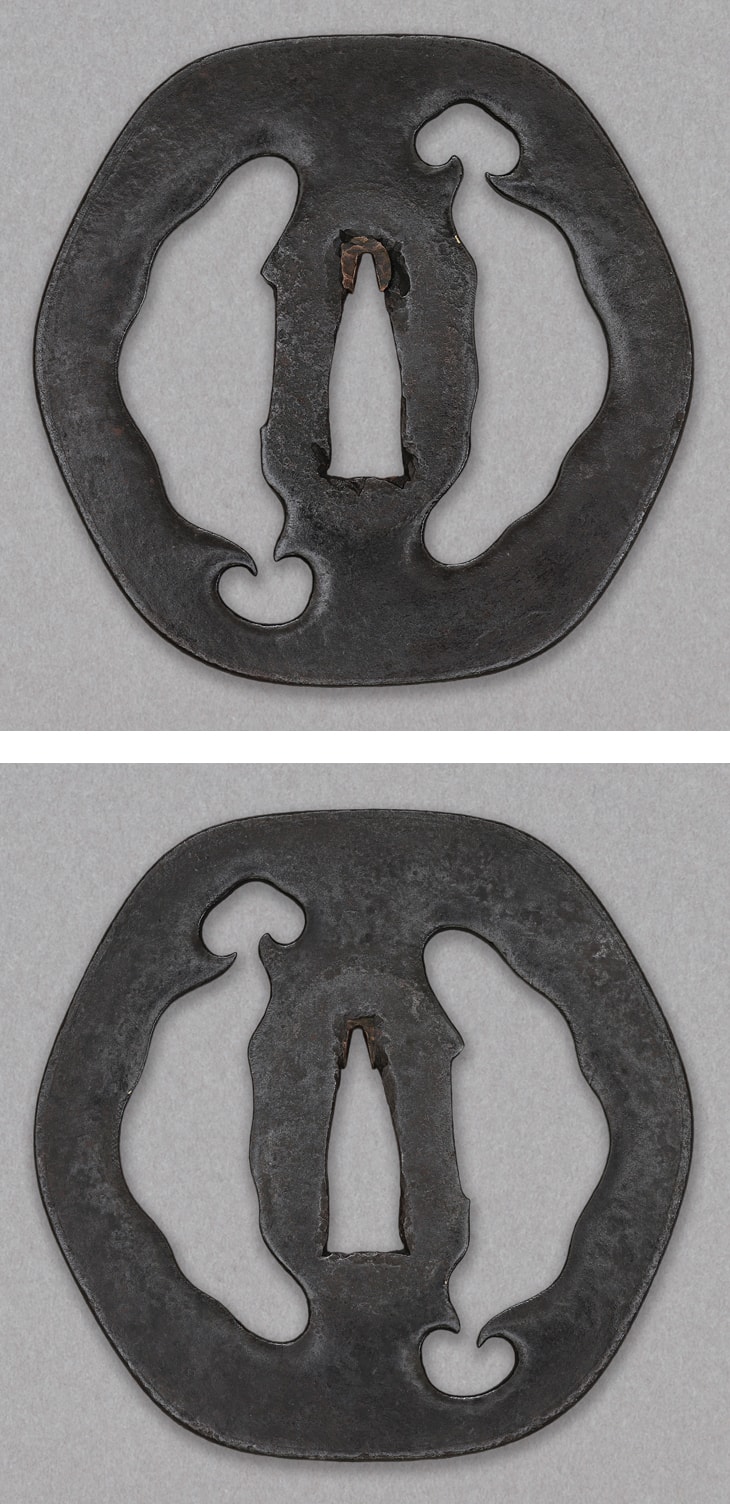
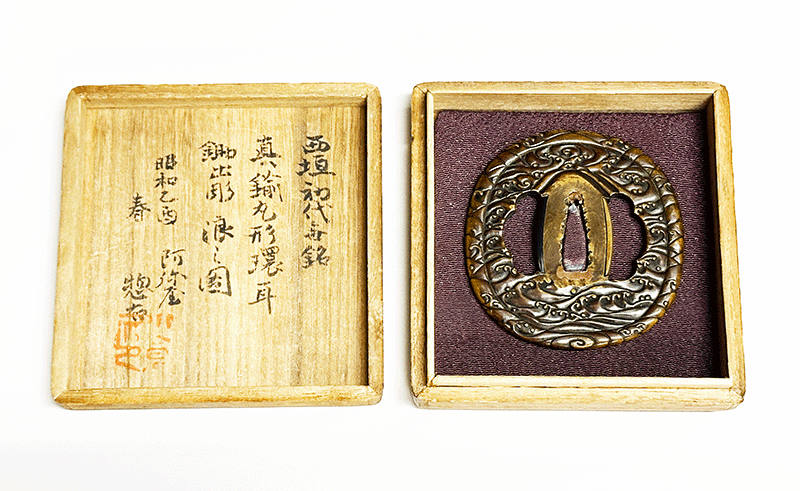
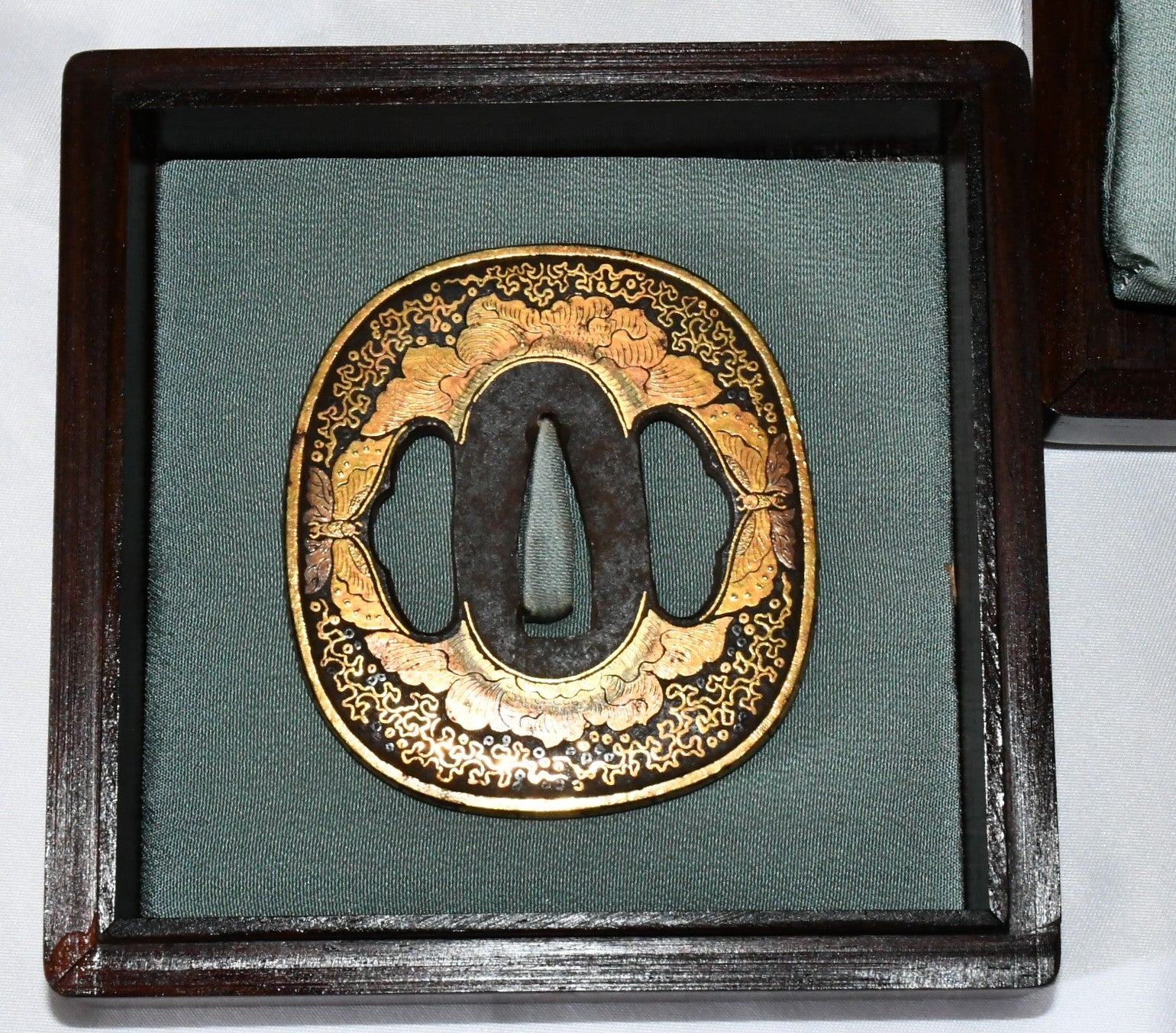
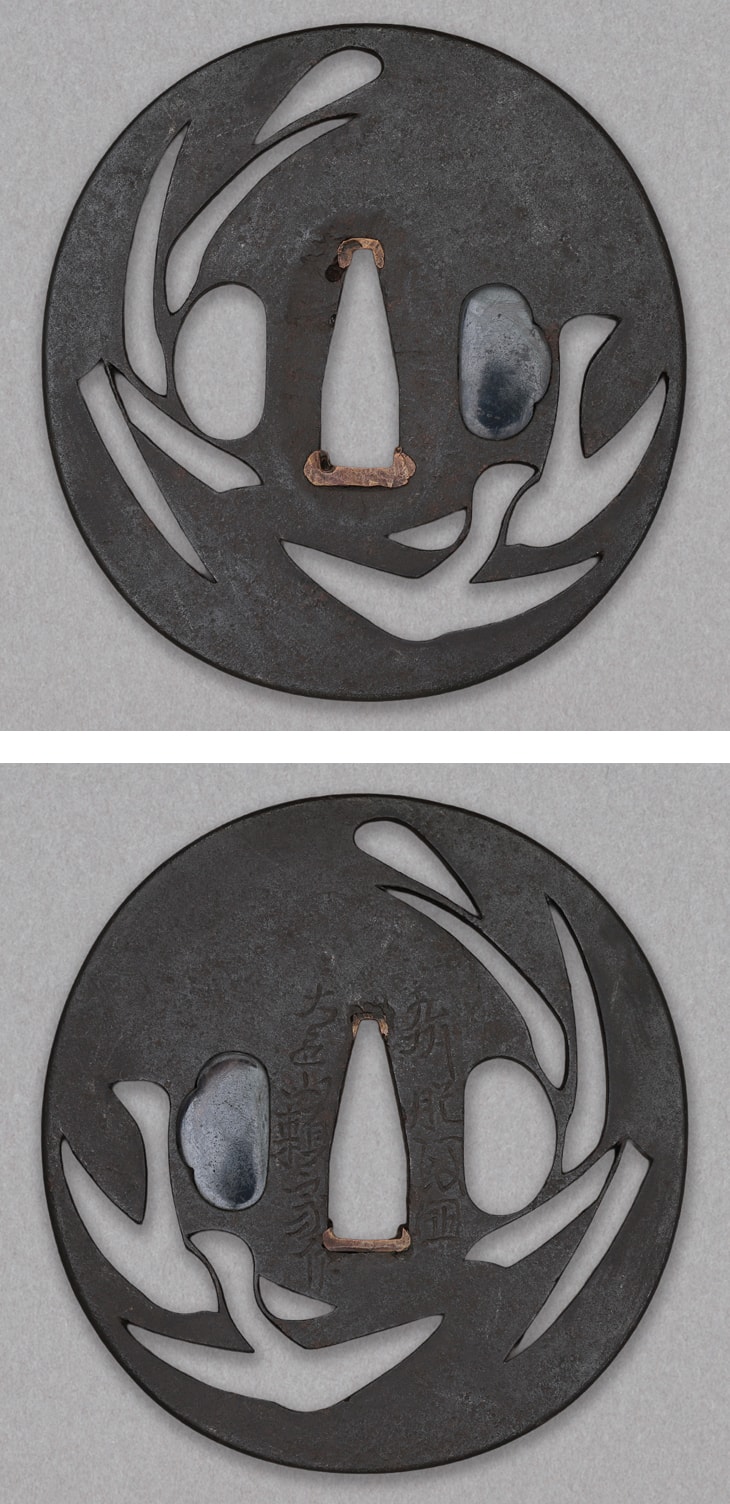
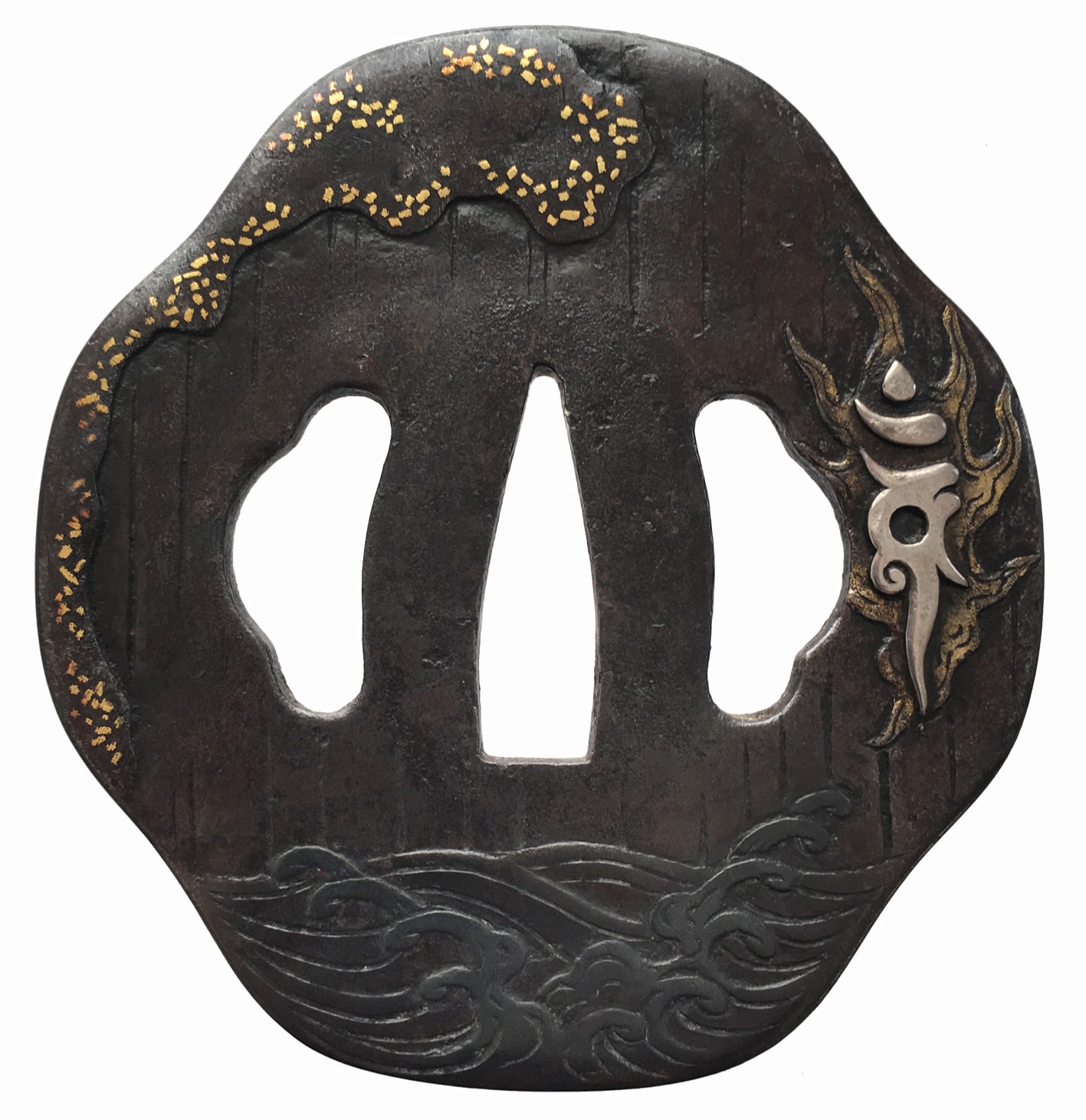
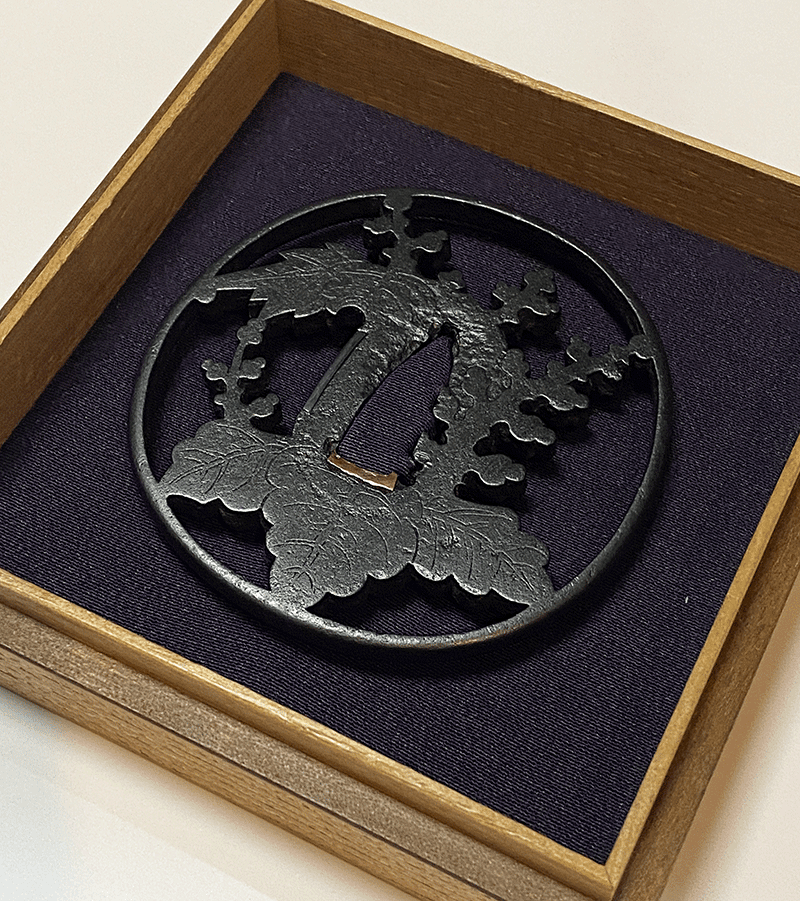
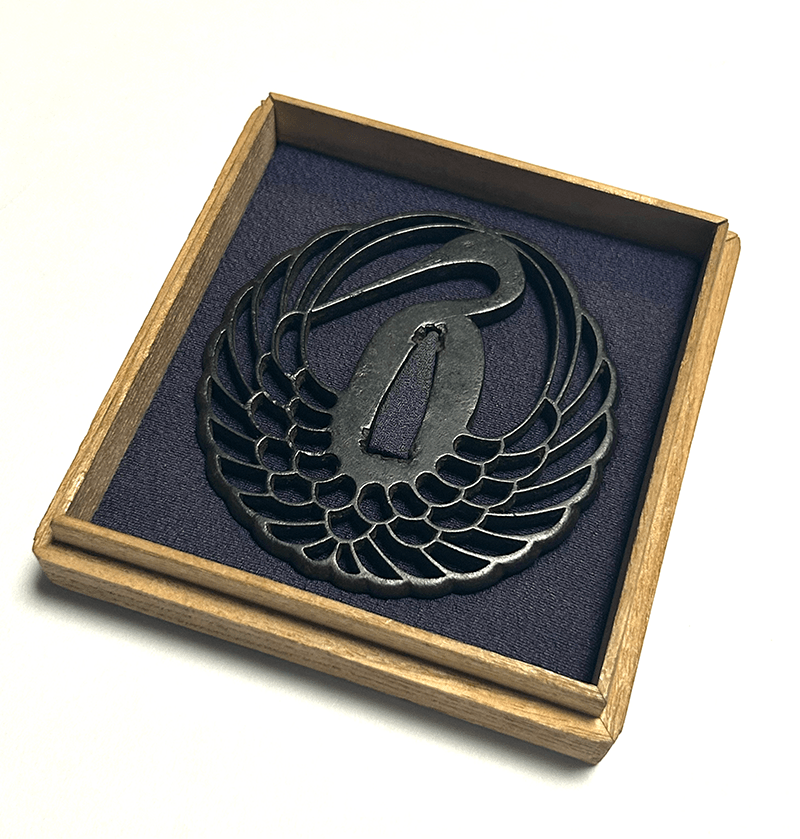
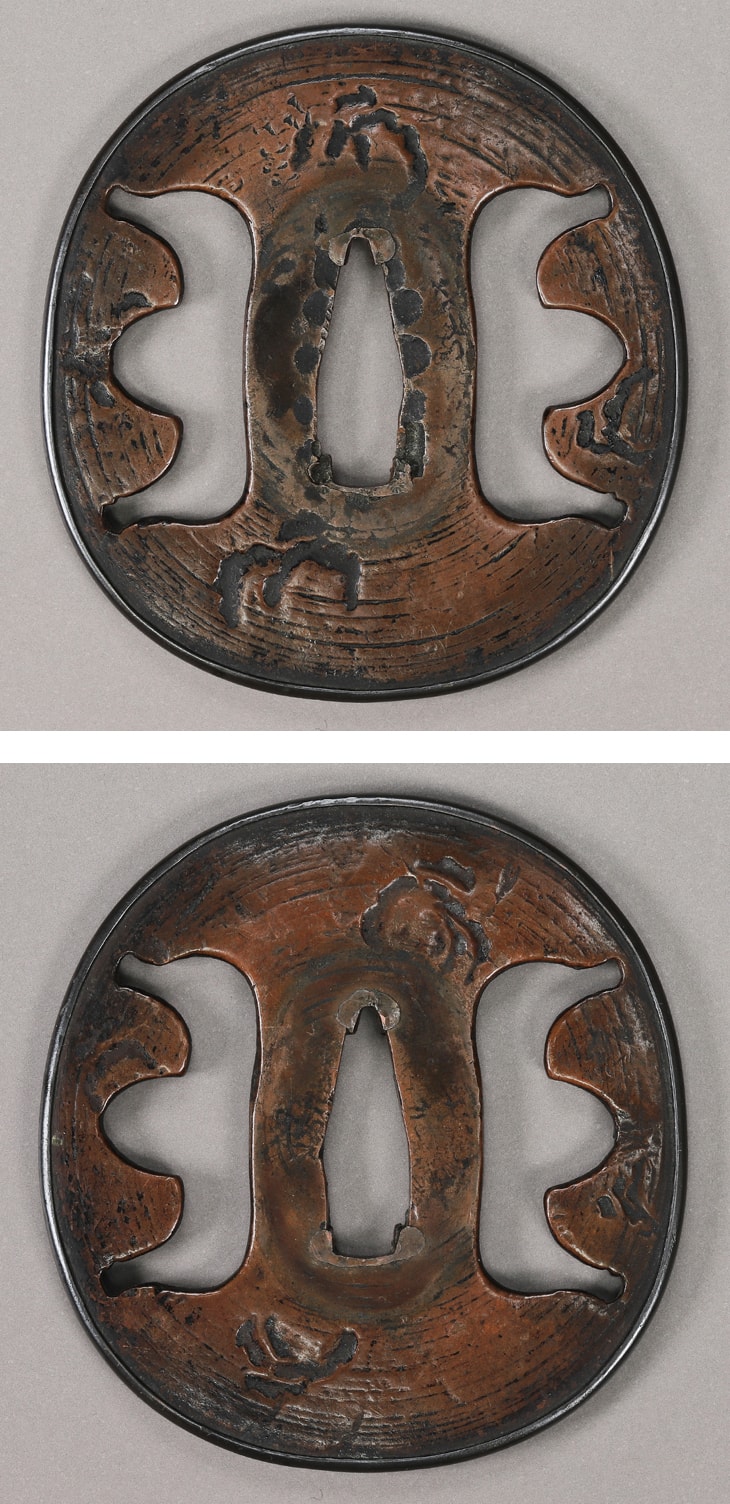
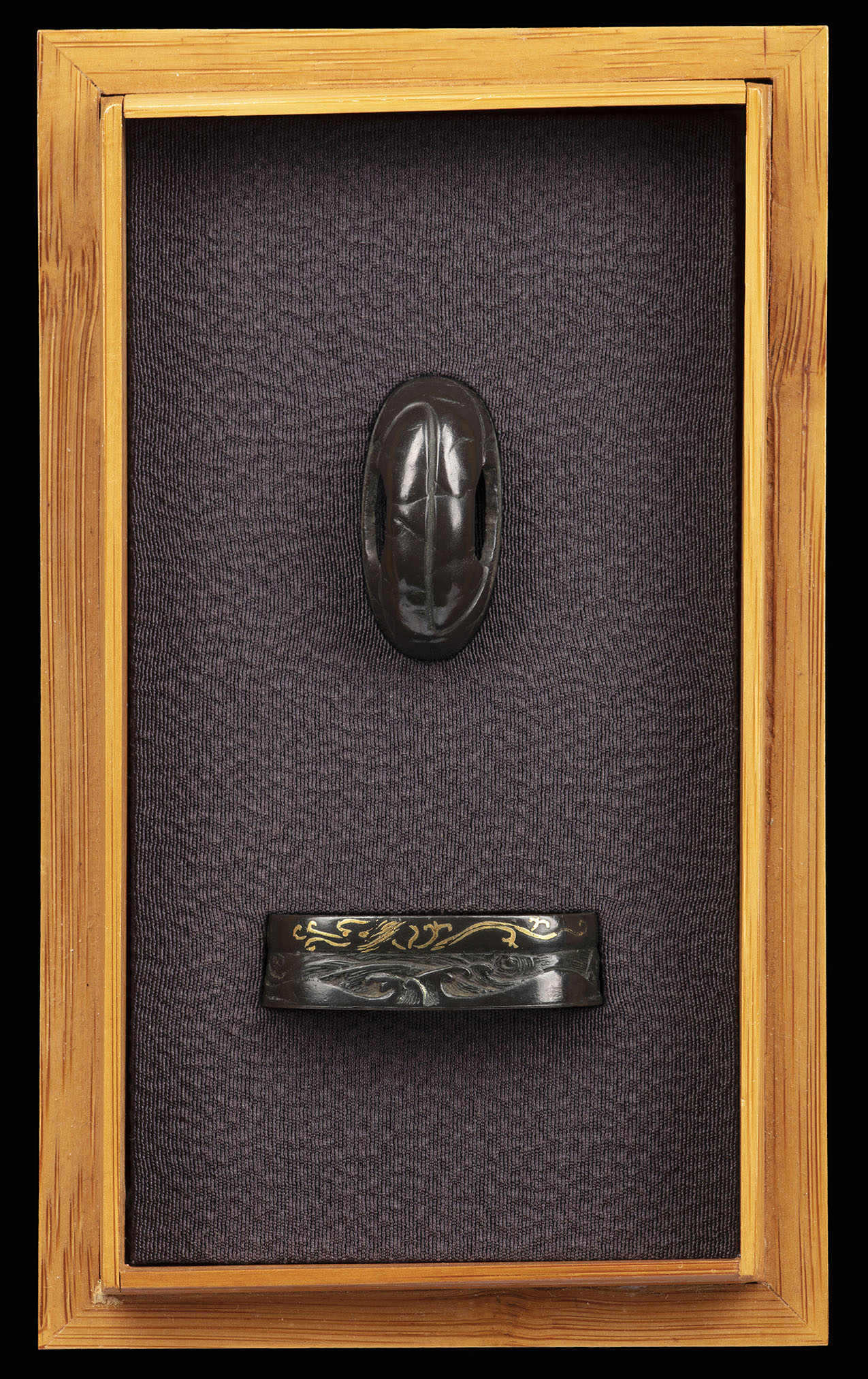
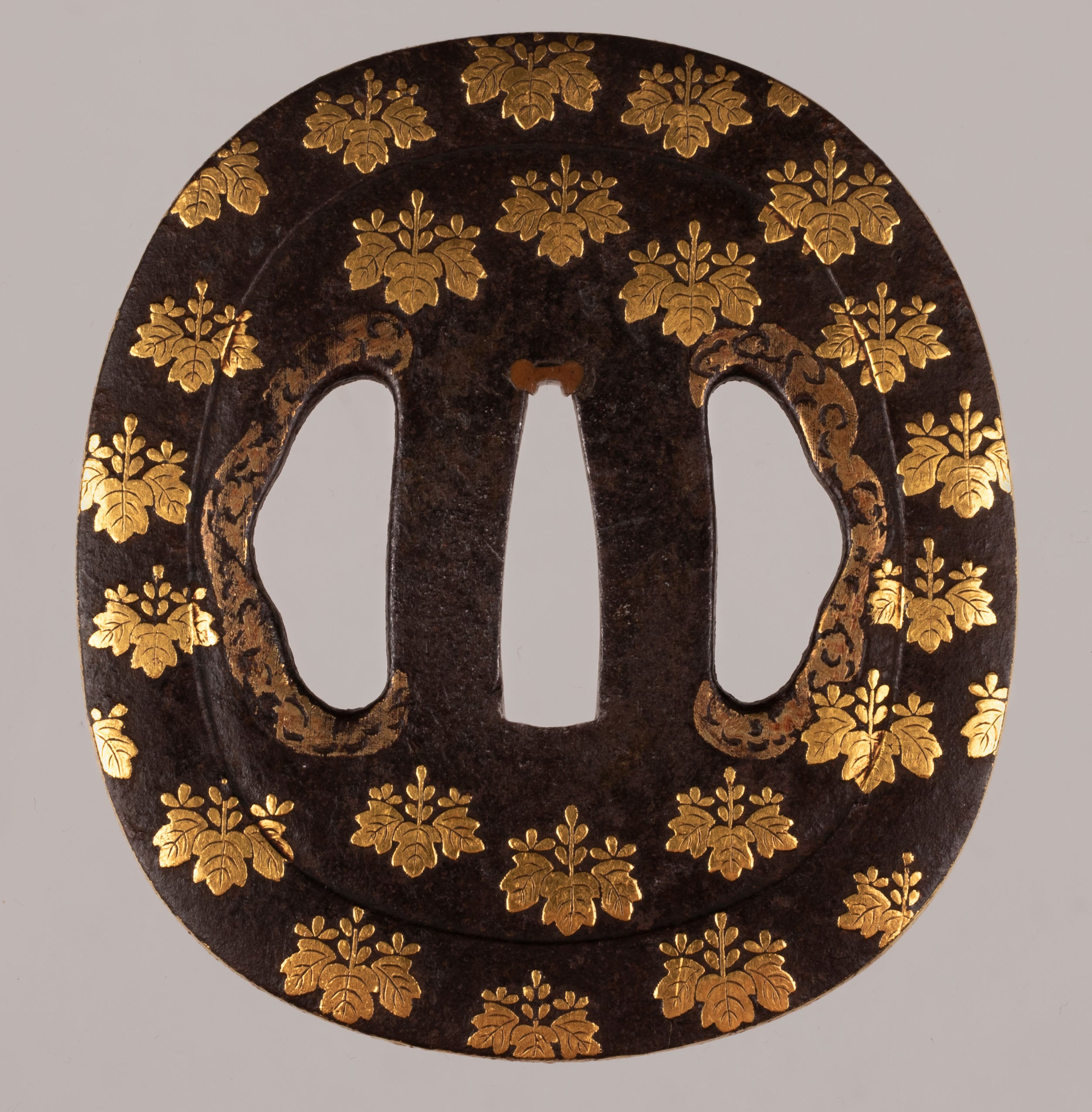
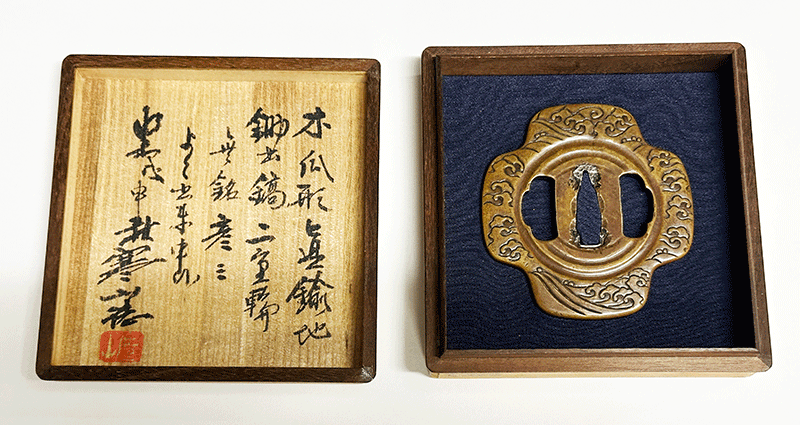
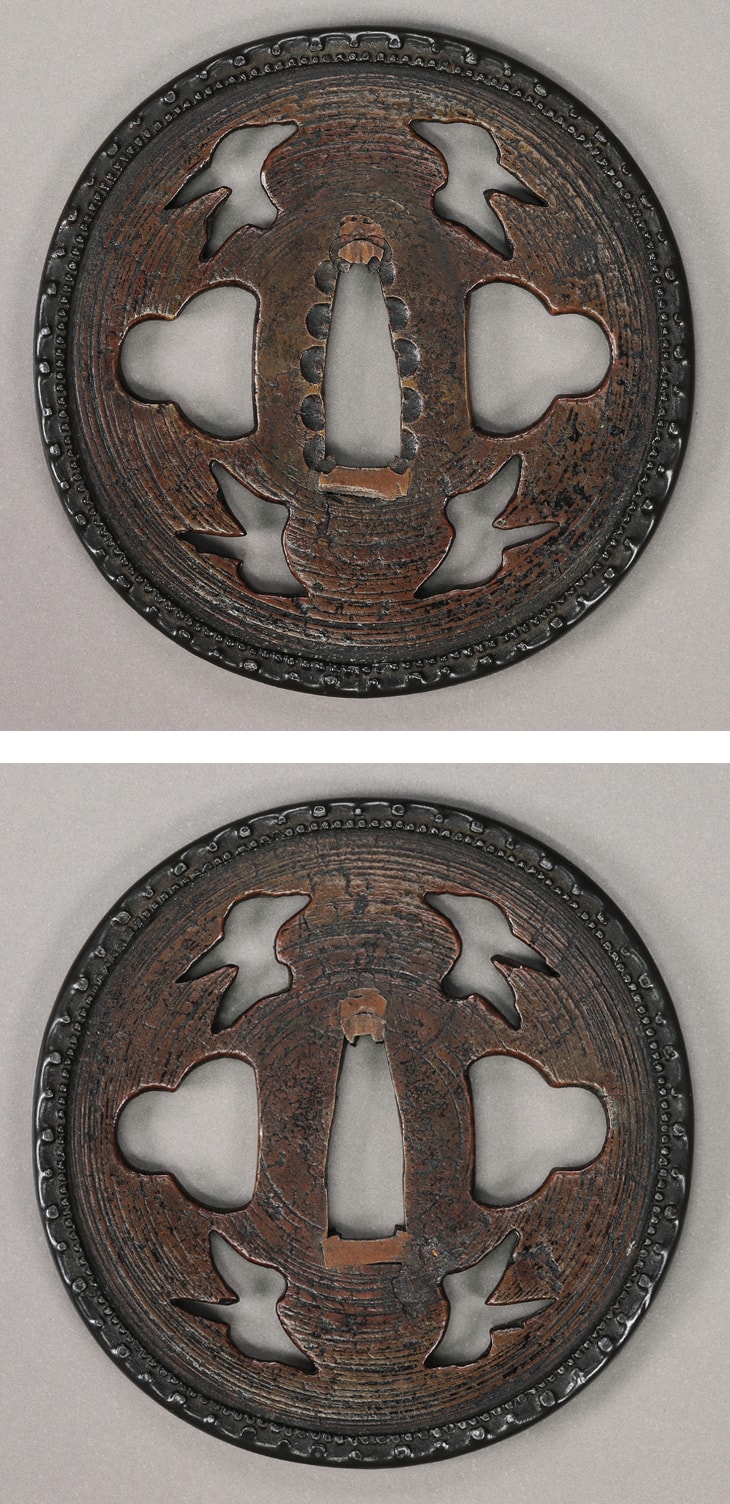
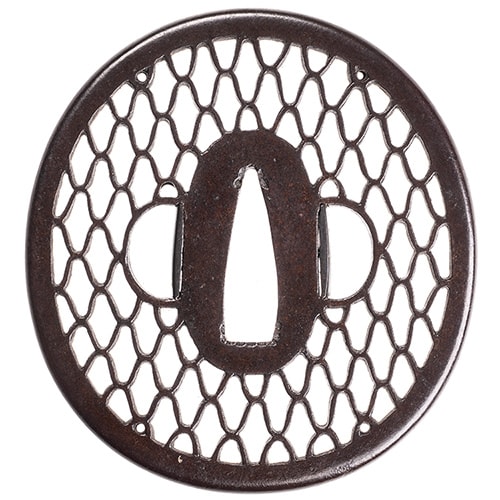
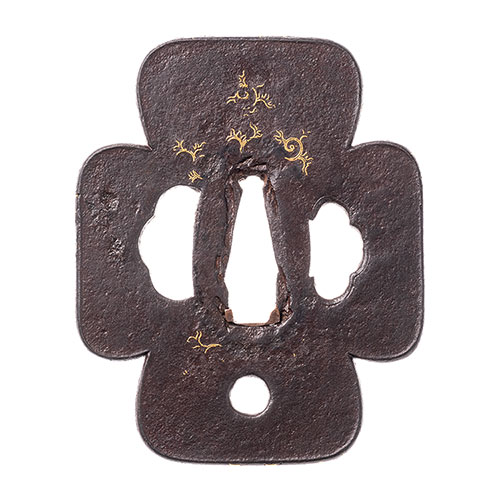
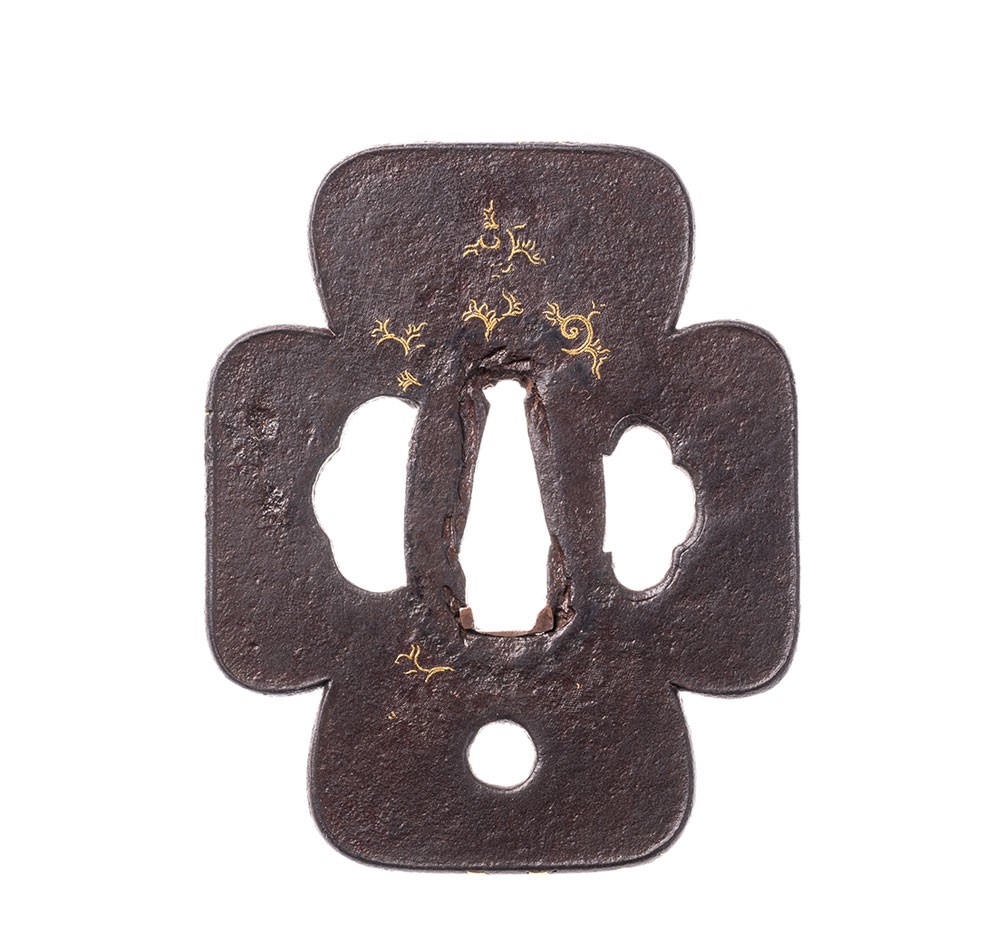
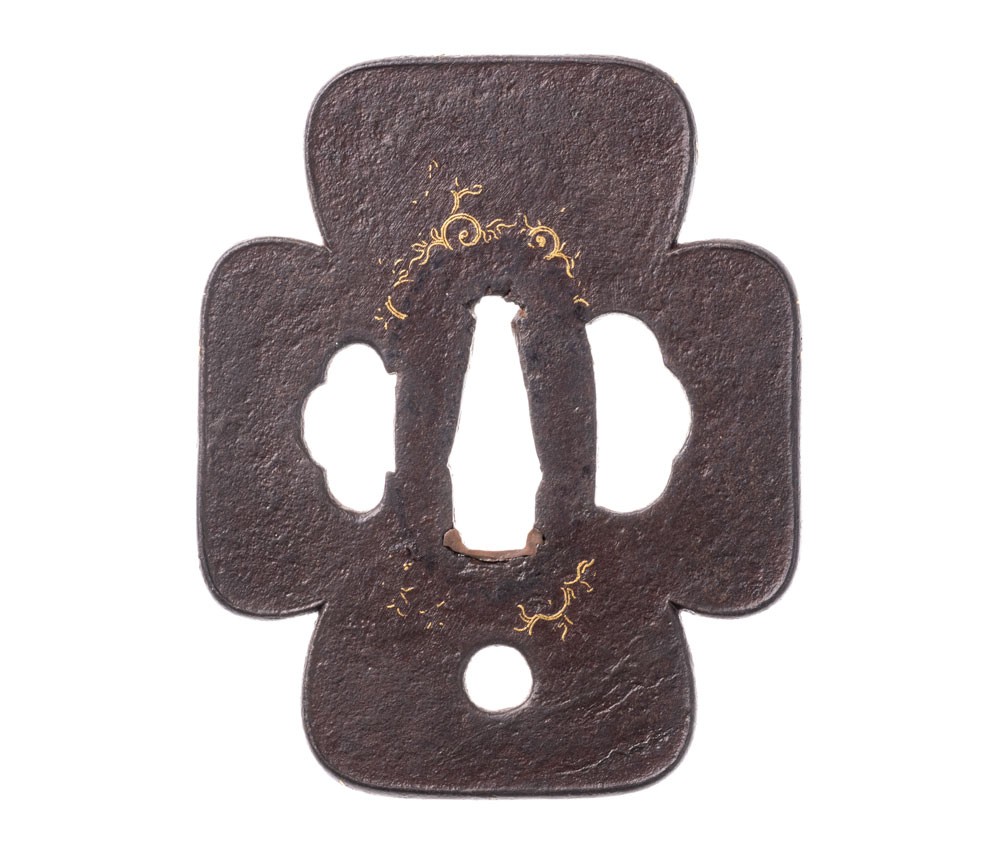
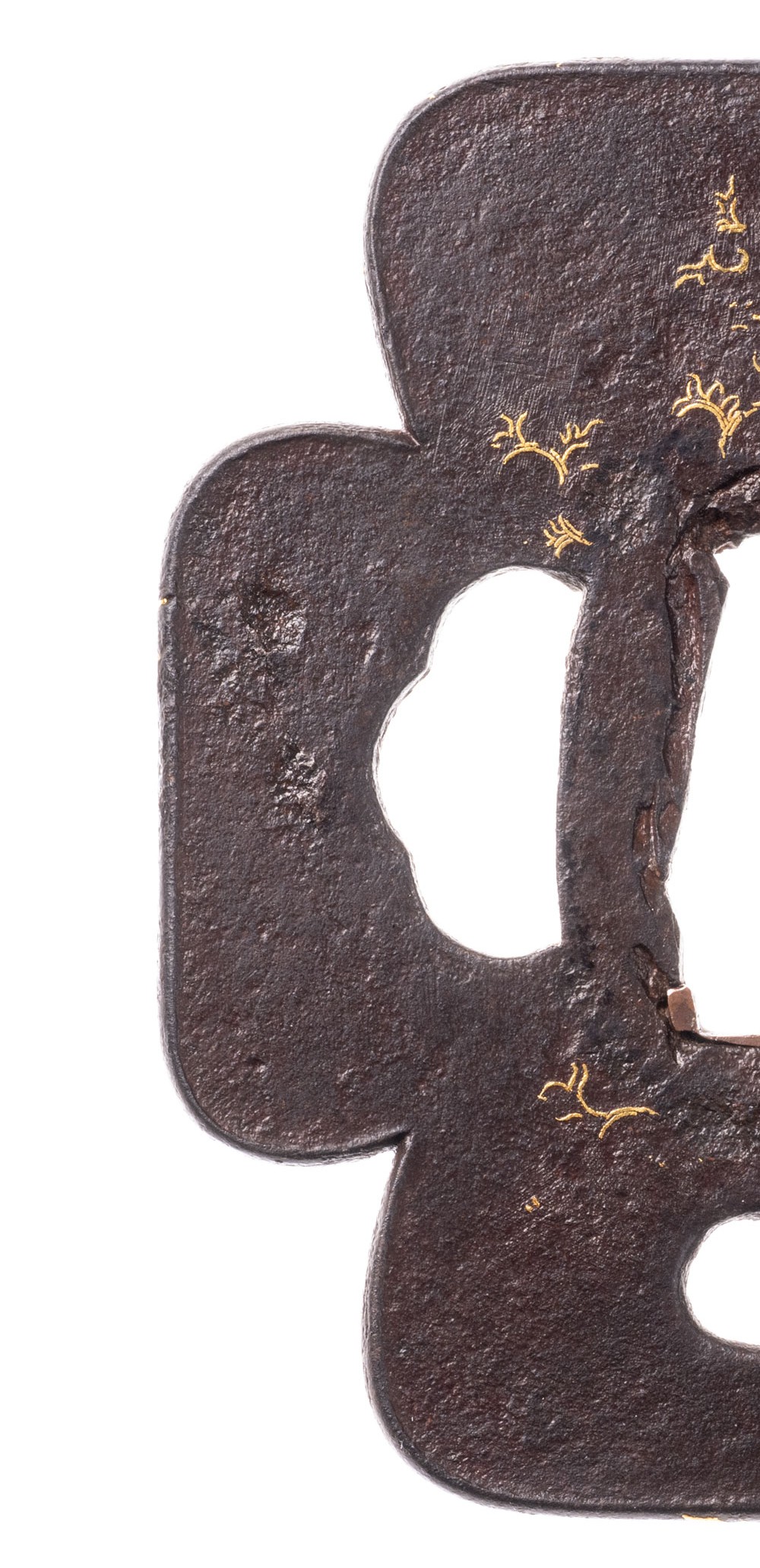
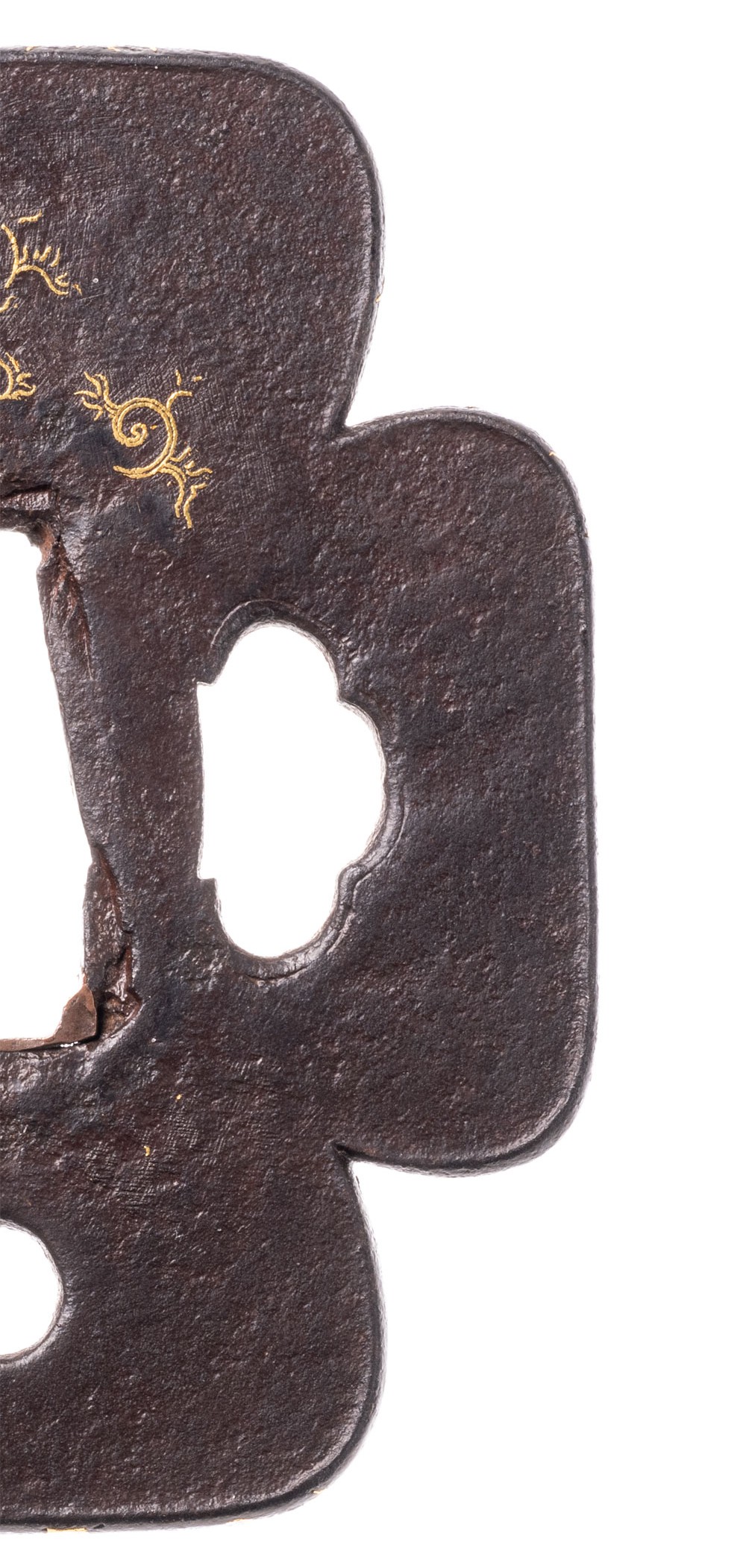
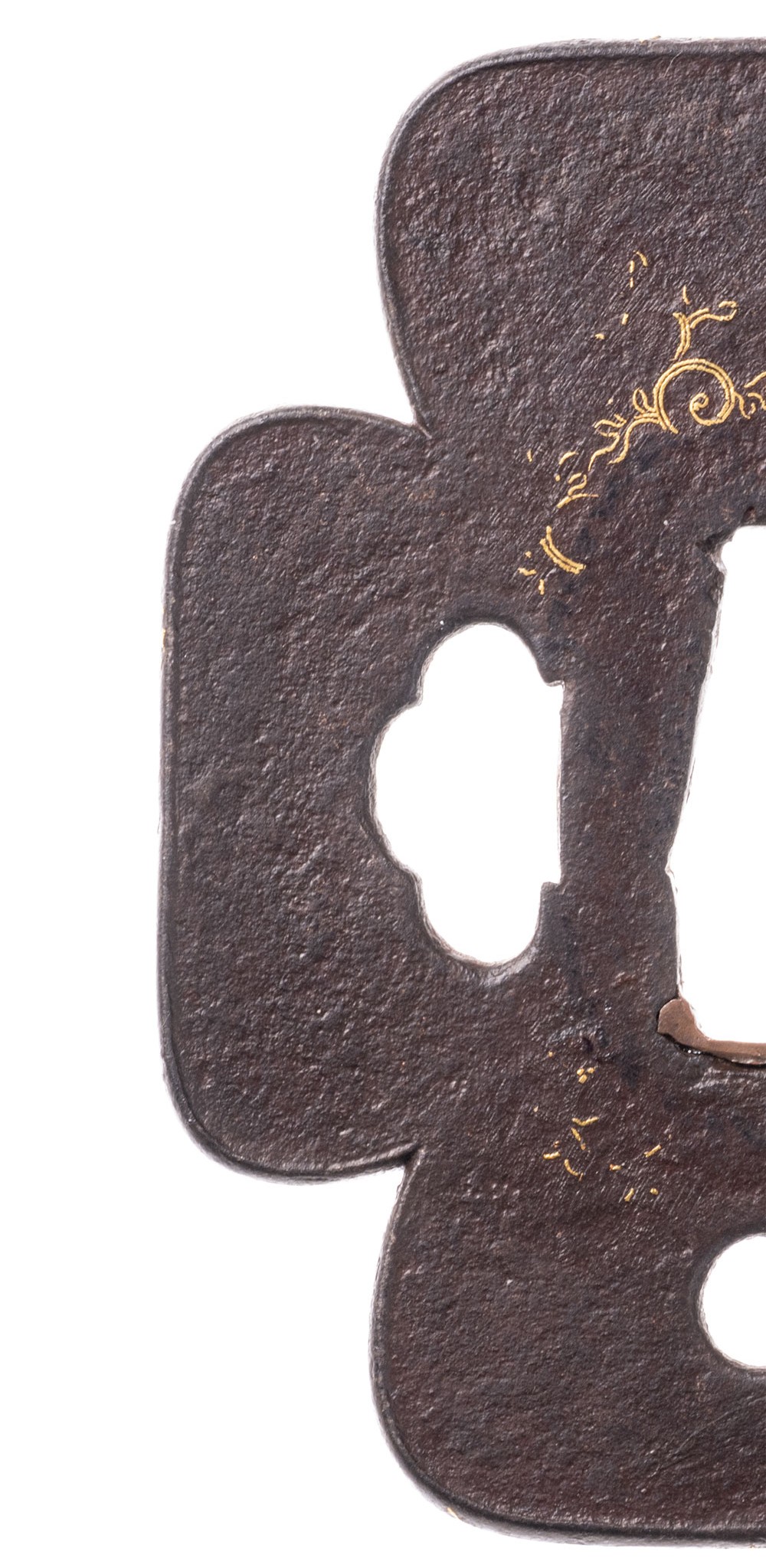
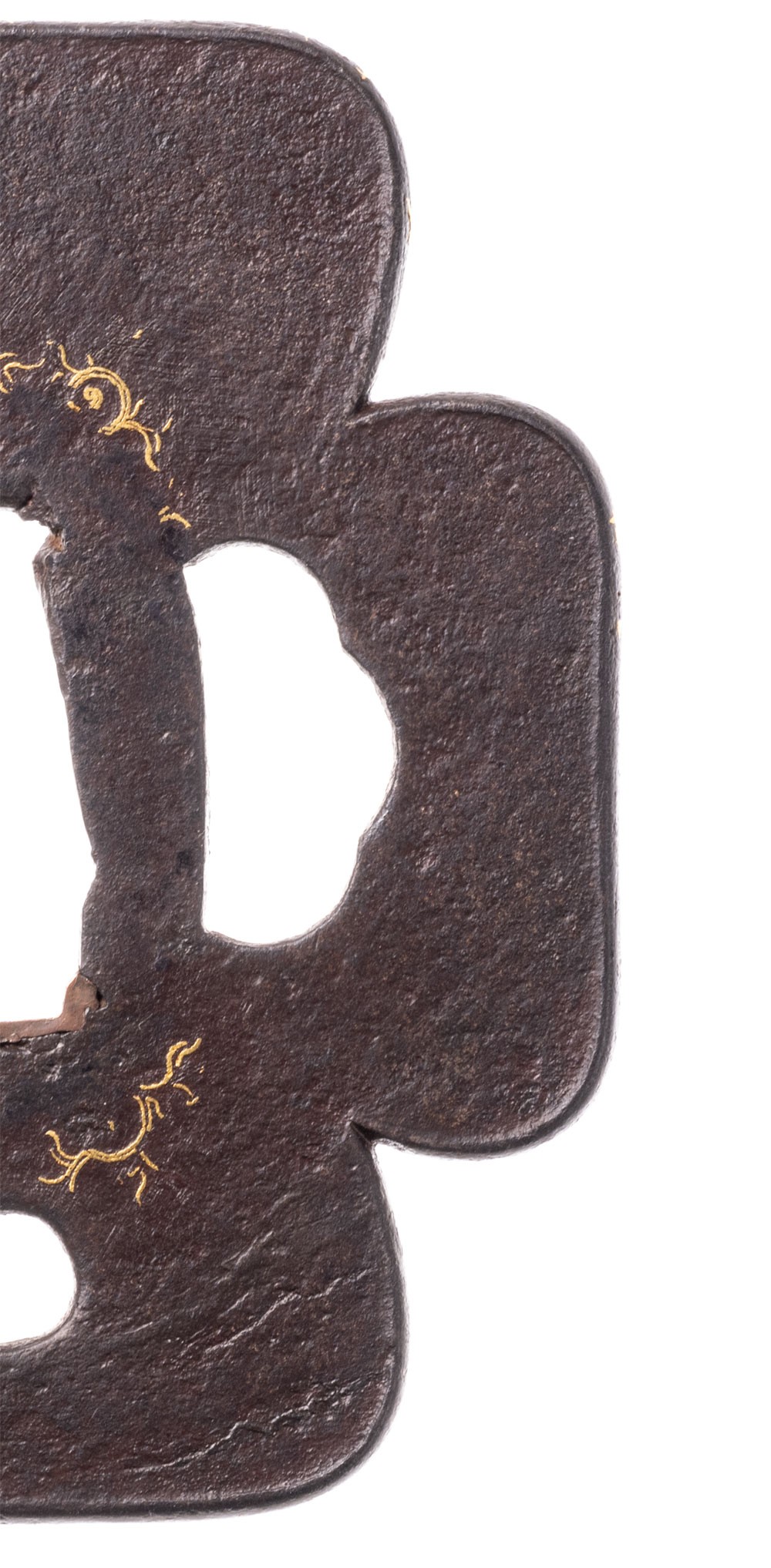
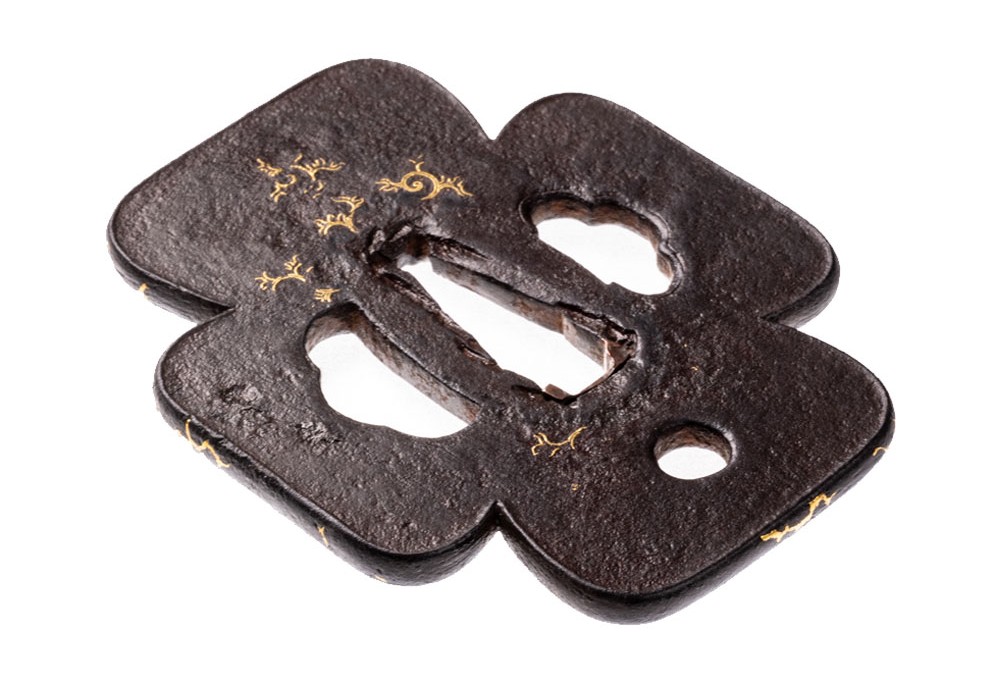
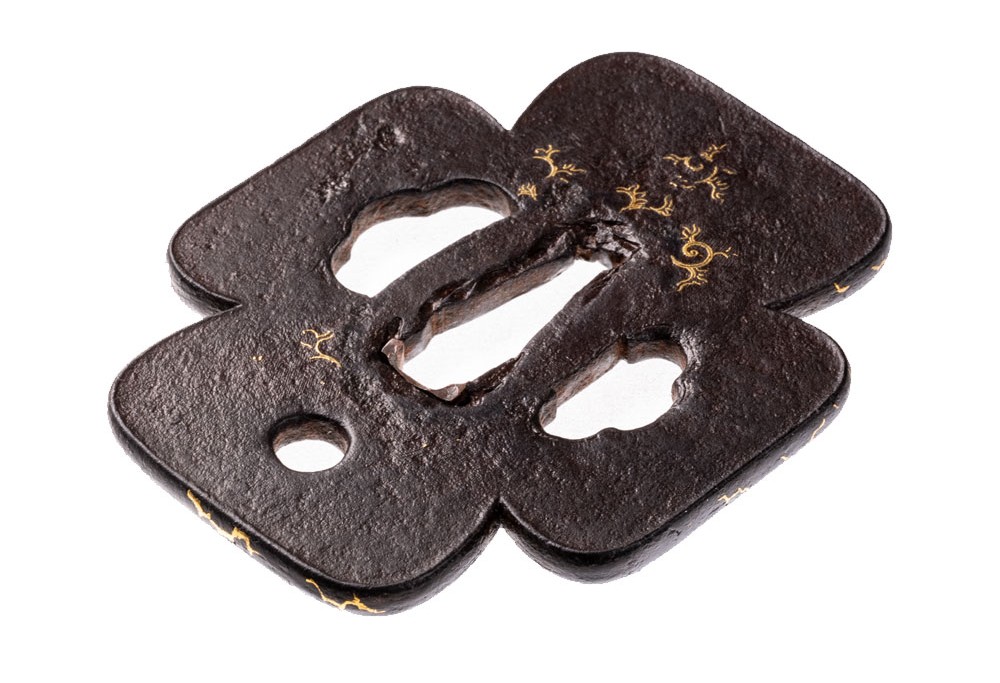
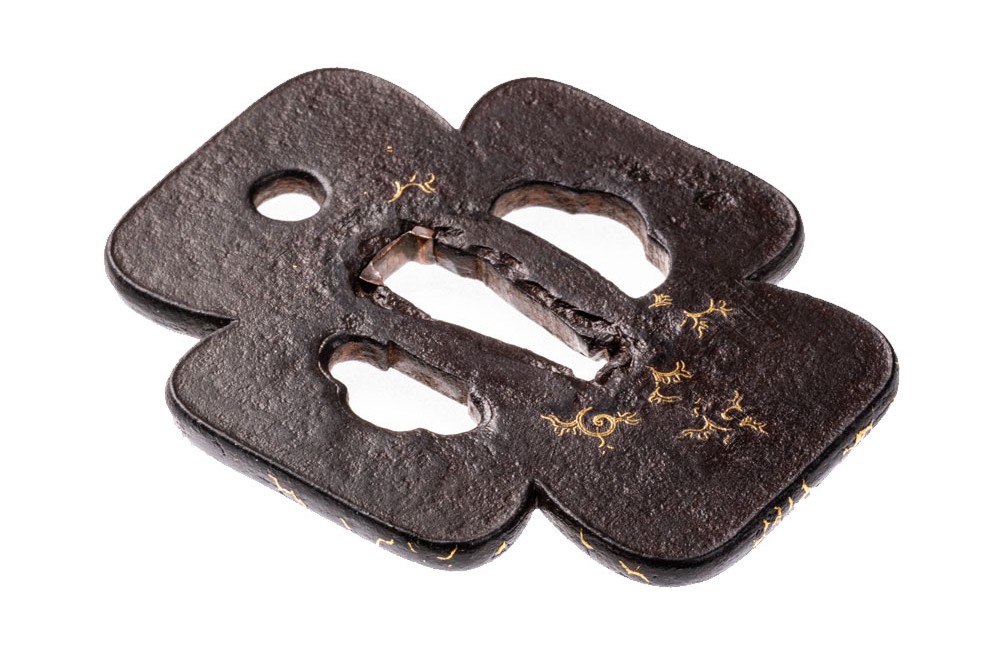
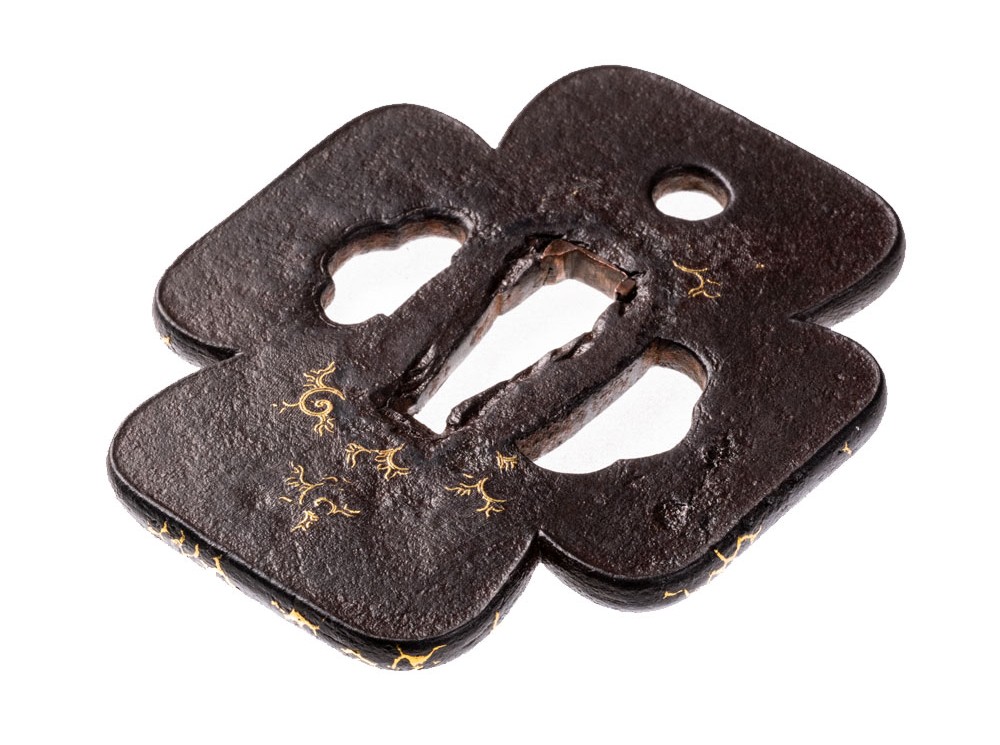
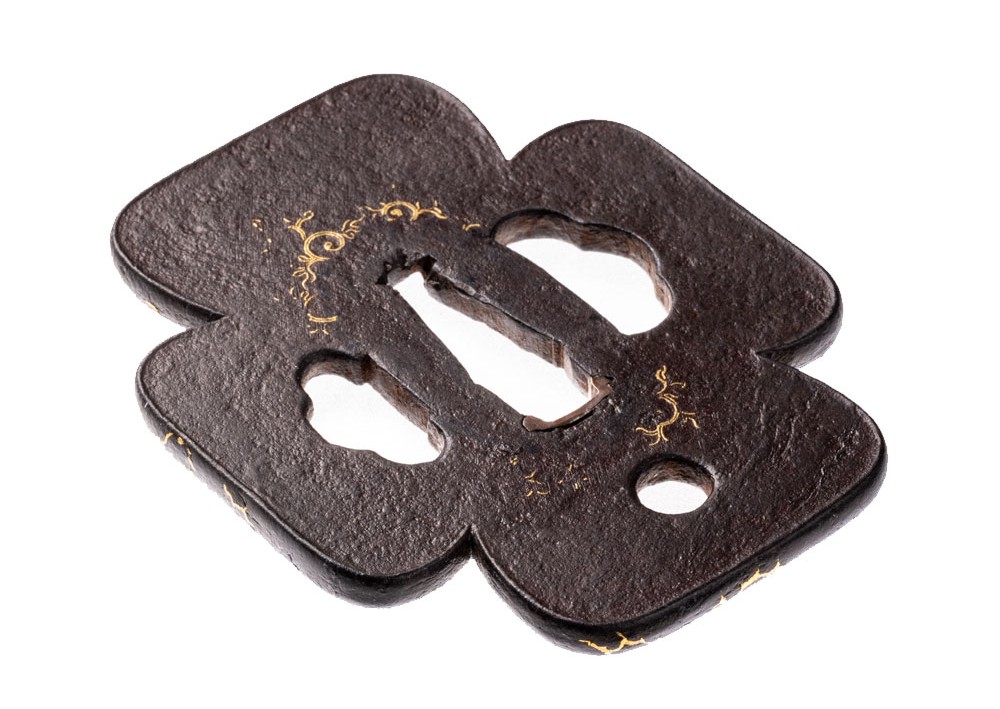
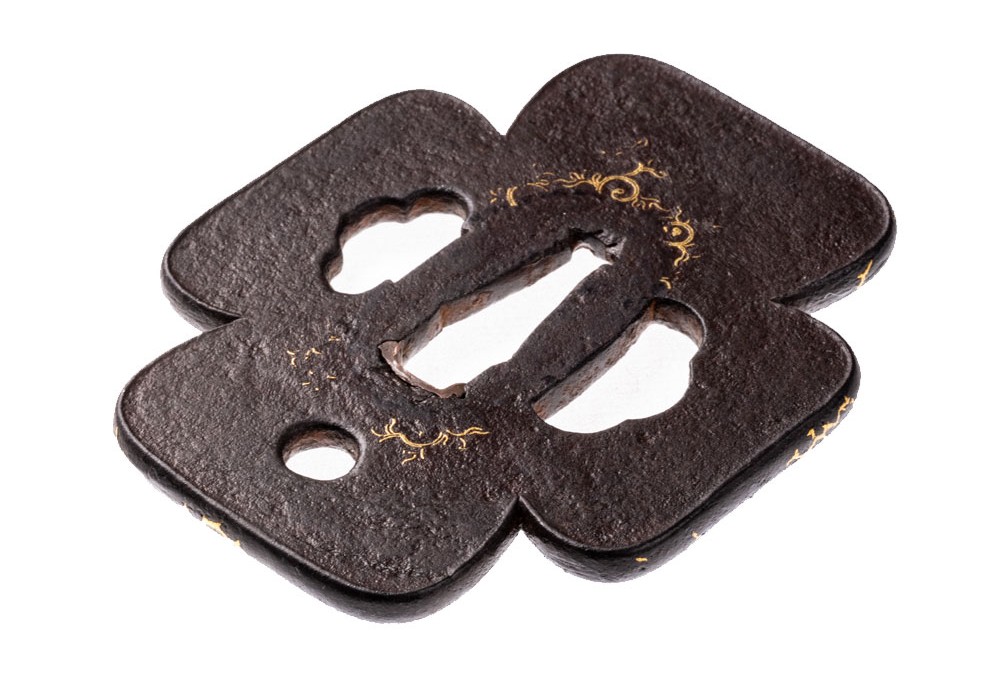
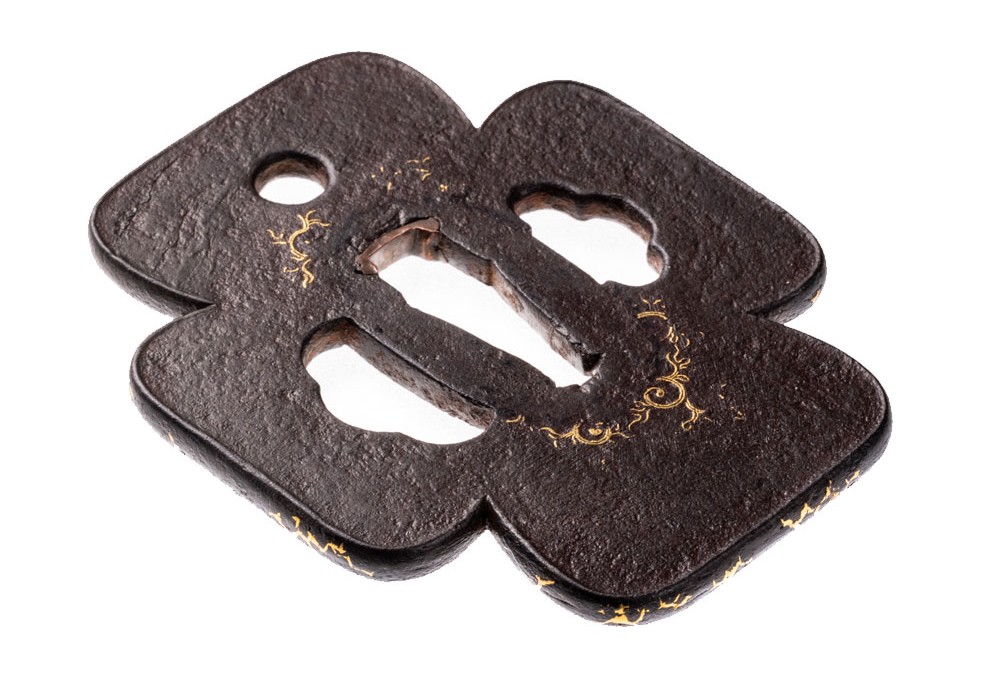
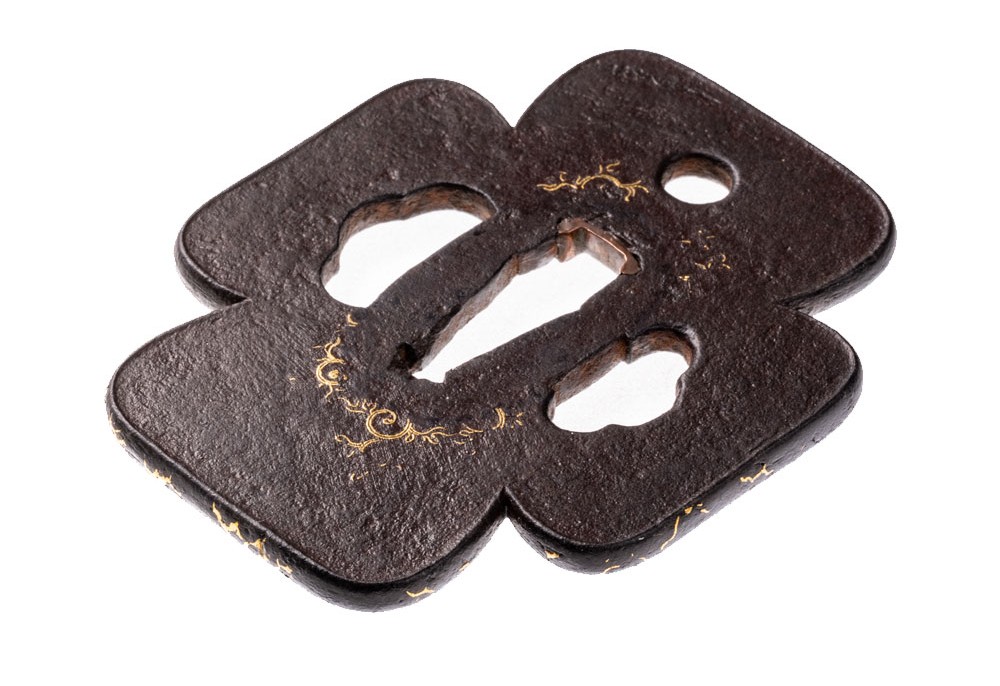
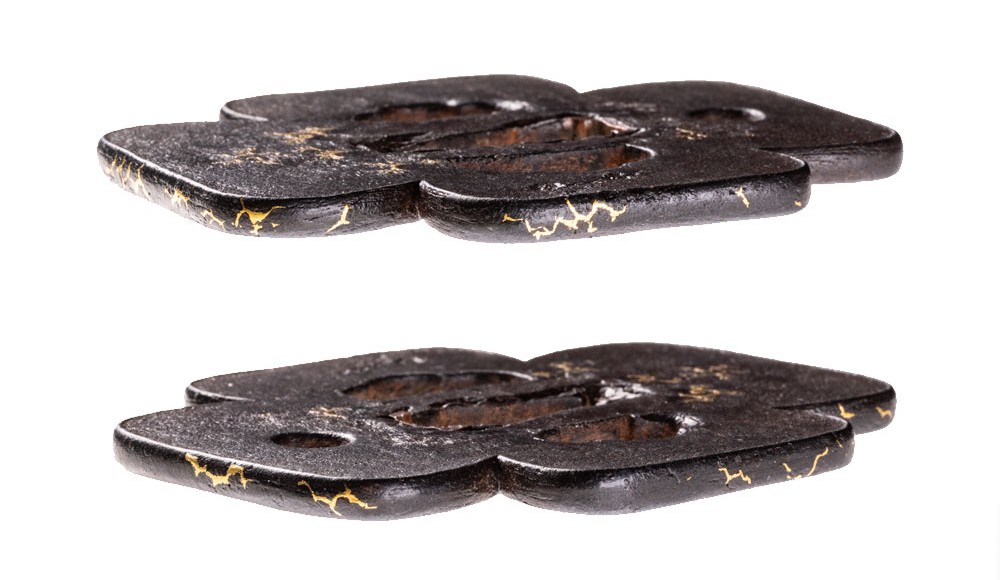
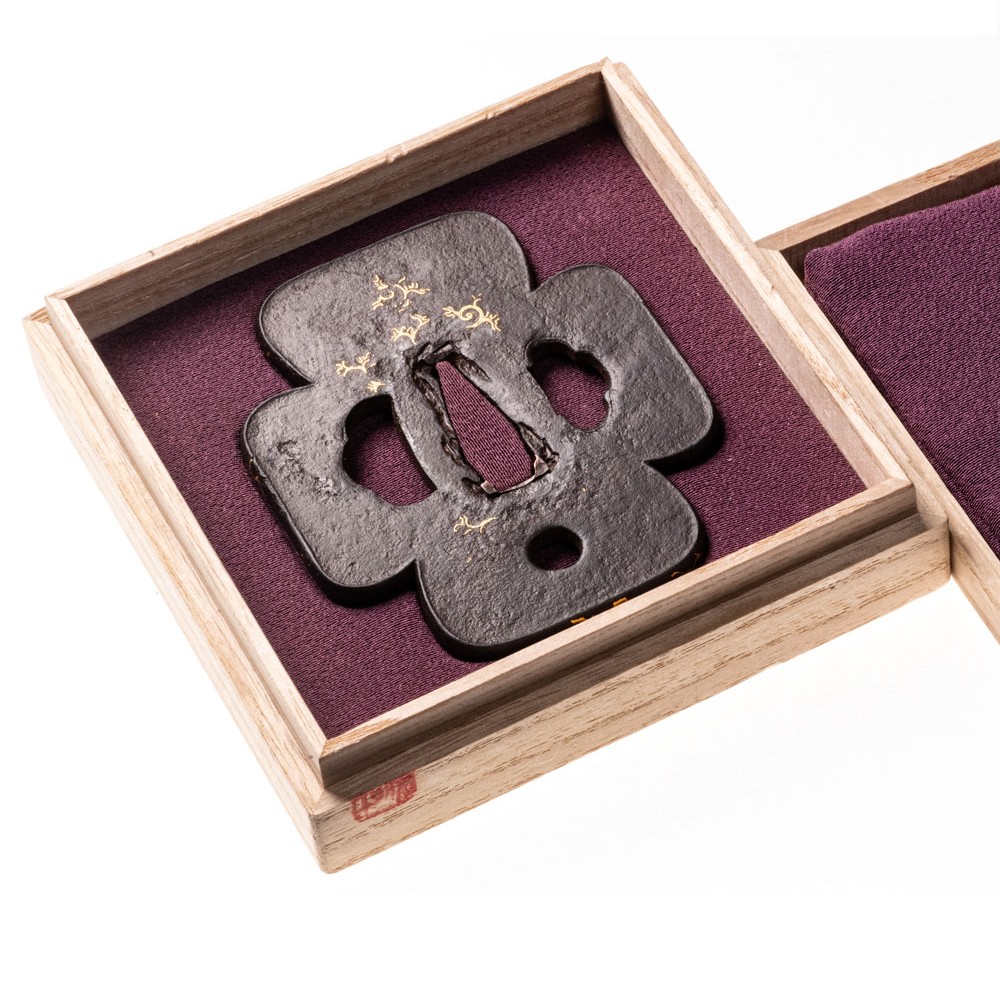
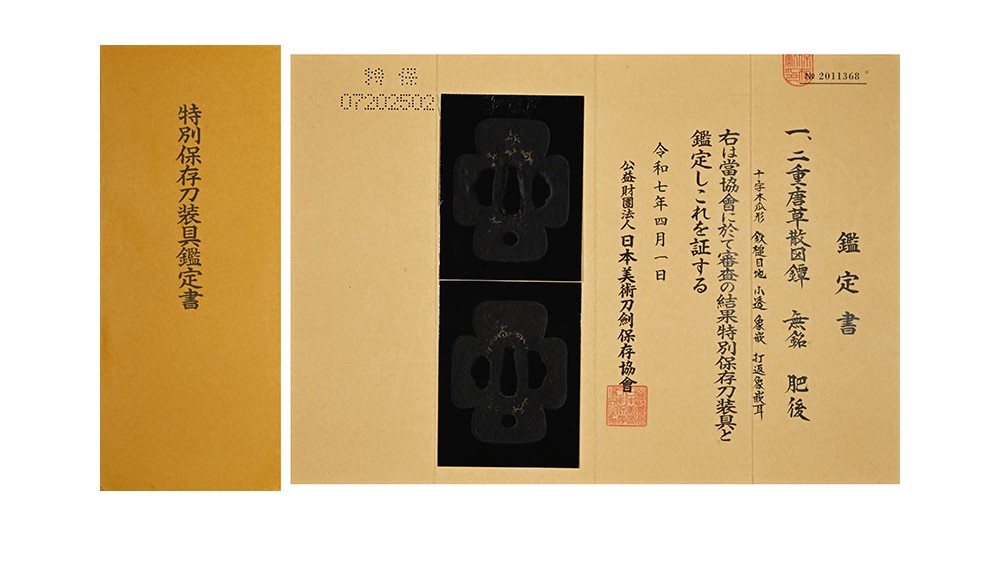
This is a Higo school tsuba featuring a double arabesque pattern. It has been certified as Tokubetsu Hozon Tosogu. The tsuba is made in a Juuji-Mokkougata shape with iron hammer marks and openwork carving, inlaid with Uchikaeshi-Zouganmimi.
Certificate reading — 無銘(肥後)
 NihontoWatchBETA
Higo · Edo
Higo Kinko School
Edo
Higo
Tokuho (NBTHK)
Higo · Higo
130 pieces on the market now
The Higo kinkō (肥後金工) tradition comprises the metalworkers who flourished in Higo province (modern Kumamoto) under the patronage of the Hosokawa daimyō house, from the Momoyama period into the late Edo period. Four families — Hayashi, Hirata, Nishigaki, and Shimizu — are regarded as representing the main line, and the first-generation masters of each were all retained by Hosokawa Sansai (Tadaoki), famed as a great commander and an accomplished master of the tea ceremony, and received his guidance. Learn more →
| Smith | Era | Designated |
|---|---|---|
| Misumi Masaharu三角正治 | — | 0 |
| Suwa Ikuhei諏訪幾平 | 1832-1903 | 0 |
| Miyamoto Musashi宮本武蔵 | 1584-1645 | 5 |
| Tsuge Yoshikatsu柘植吉勝 | — | 1 |
| Tani Denji谷伝次 | — | 1 |
A Hozon-certified fitting of notably superior craftsmanship and condition, often with signature or workmanship of high reference value.
The NBTHK (Nihon Bijutsu Tōken Hozon Kyōkai, the Society for the Preservation of Japanese Art Swords) is a public-interest incorporated foundation founded in 1948 and supervised by Japan’s Agency for Cultural Affairs (Bunkachō); it is based at the Japanese Sword Museum in Tokyo. Its expert panels physically examine each submitted work (shinsa) and issue a certificate (kanteishō) ranking it by artistic and historical merit. NBTHK papers are the most widely recognized standard of authentication for Japanese swords and fittings.
NBTHK official siteReturns/exchanges/cancellations not accepted after shipment except for significant defects; if defective, return/exchange possible within 3 days of arrival (return shipping paid by customer).
This is a Higo school tsuba featuring a double arabesque pattern. It has been certified as Tokubetsu Hozon Tosogu. The tsuba is made in a Juuji-Mokkougata shape with iron hammer marks and openwork carving, inlaid with Uchikaeshi-Zouganmimi.
Certificate reading — 無銘(肥後)
NihontoWatchBETAHigo · Edo
Higo Kinko School
Edo
Higo
Tokuho (NBTHK)
Higo · Higo
130 pieces on the market now
The Higo kinkō (肥後金工) tradition comprises the metalworkers who flourished in Higo province (modern Kumamoto) under the patronage of the Hosokawa daimyō house, from the Momoyama period into the late Edo period. Four families — Hayashi, Hirata, Nishigaki, and Shimizu — are regarded as representing the main line, and the first-generation masters of each were all retained by Hosokawa Sansai (Tadaoki), famed as a great commander and an accomplished master of the tea ceremony, and received his guidance. Learn more →
| Smith | Era | Designated |
|---|---|---|
| Misumi Masaharu三角正治 | — | 0 |
| Suwa Ikuhei諏訪幾平 | 1832-1903 | 0 |
| Miyamoto Musashi宮本武蔵 | 1584-1645 | 5 |
| Tsuge Yoshikatsu柘植吉勝 | — | 1 |
| Tani Denji谷伝次 | — | 1 |
A Hozon-certified fitting of notably superior craftsmanship and condition, often with signature or workmanship of high reference value.
The NBTHK (Nihon Bijutsu Tōken Hozon Kyōkai, the Society for the Preservation of Japanese Art Swords) is a public-interest incorporated foundation founded in 1948 and supervised by Japan’s Agency for Cultural Affairs (Bunkachō); it is based at the Japanese Sword Museum in Tokyo. Its expert panels physically examine each submitted work (shinsa) and issue a certificate (kanteishō) ranking it by artistic and historical merit. NBTHK papers are the most widely recognized standard of authentication for Japanese swords and fittings.
NBTHK official siteReturns/exchanges/cancellations not accepted after shipment except for significant defects; if defective, return/exchange possible within 3 days of arrival (return shipping paid by customer).