 NihontoWatchNihontoWatch
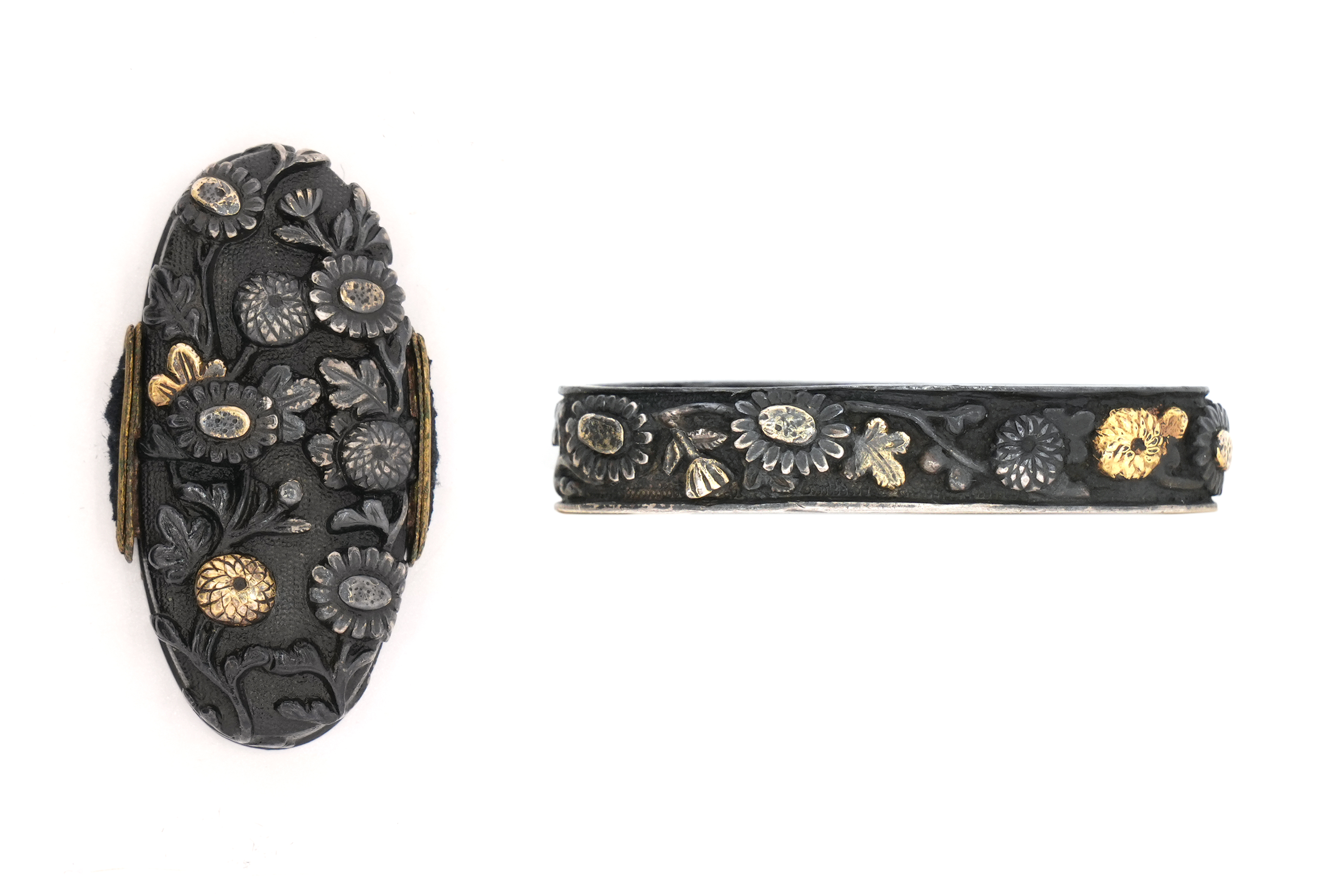
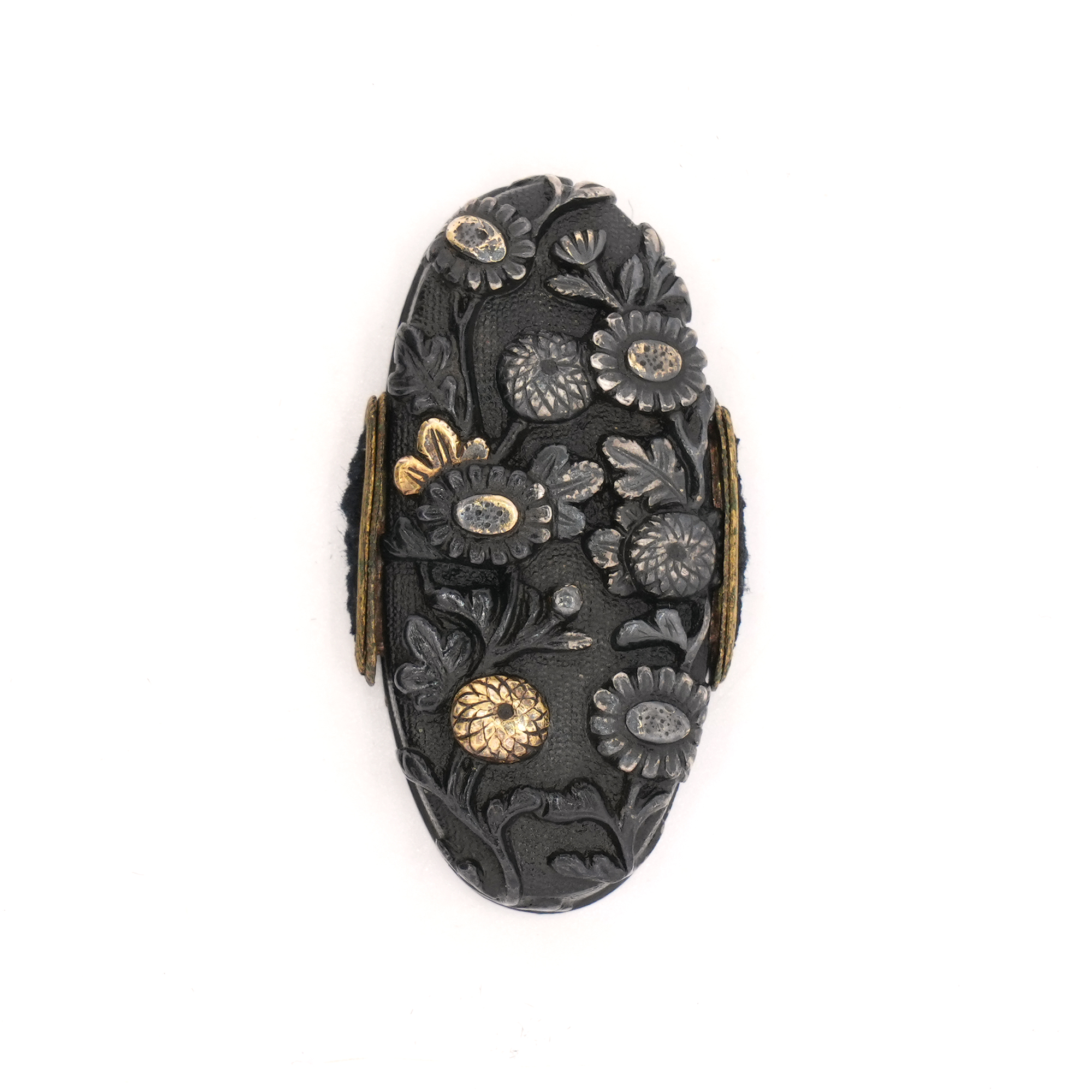
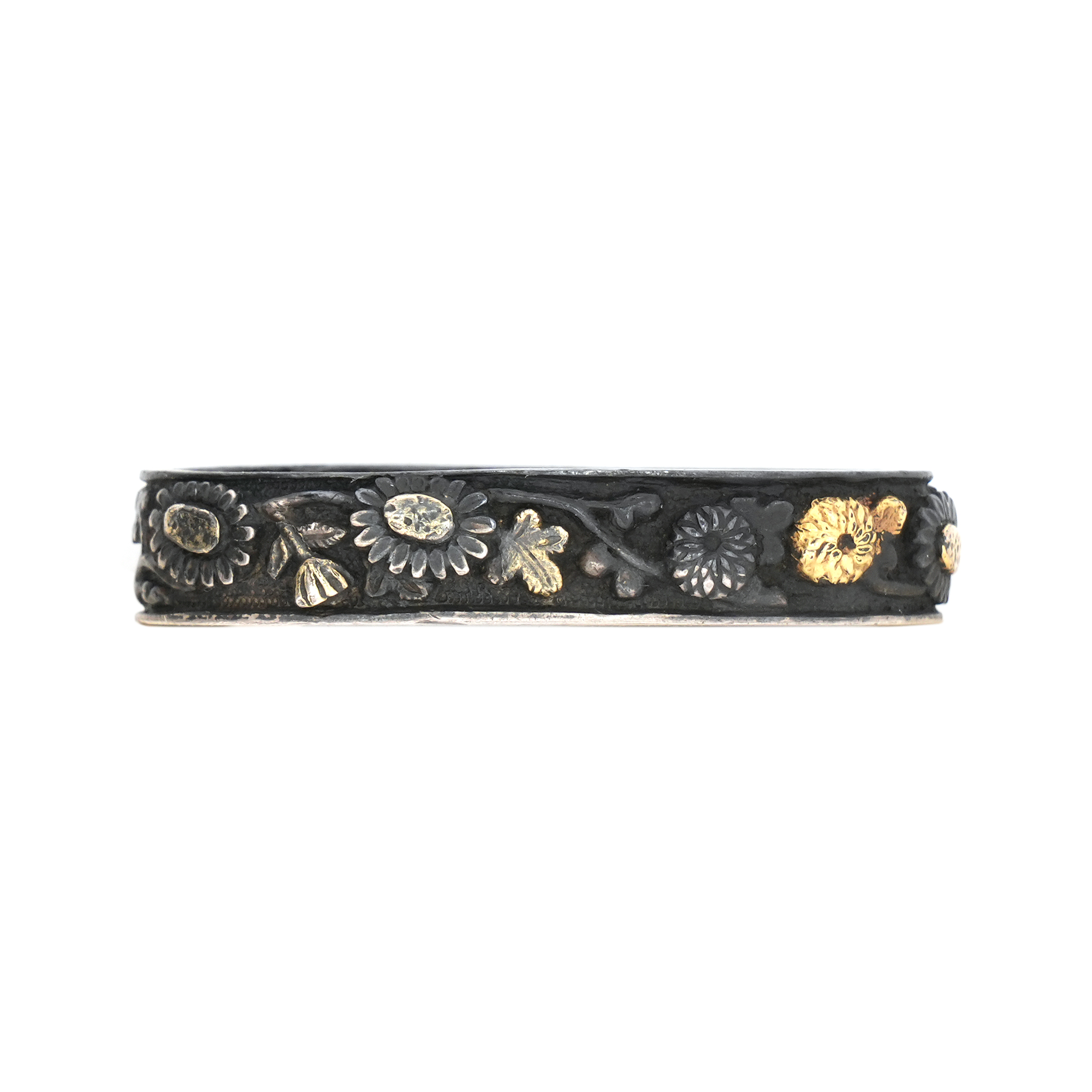
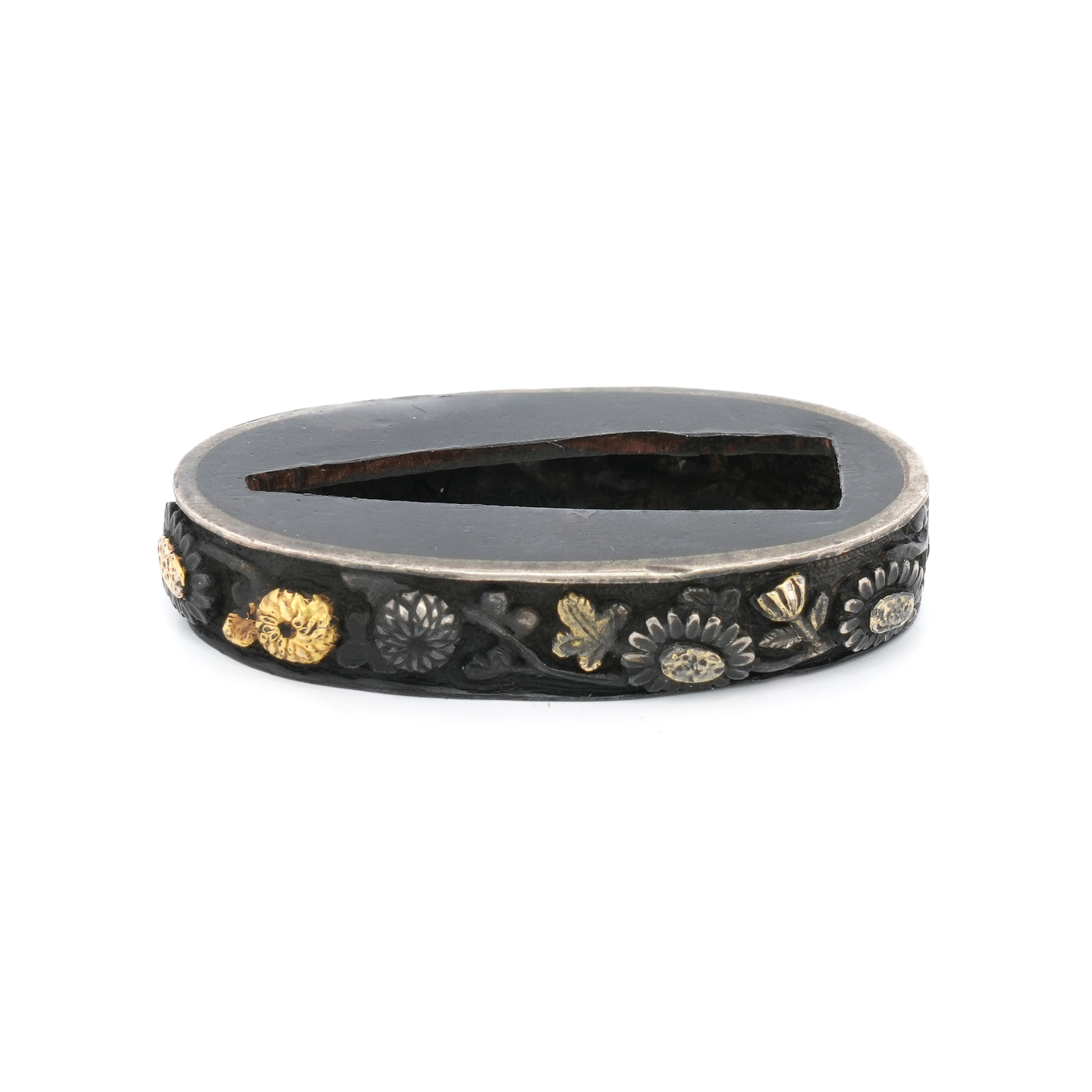
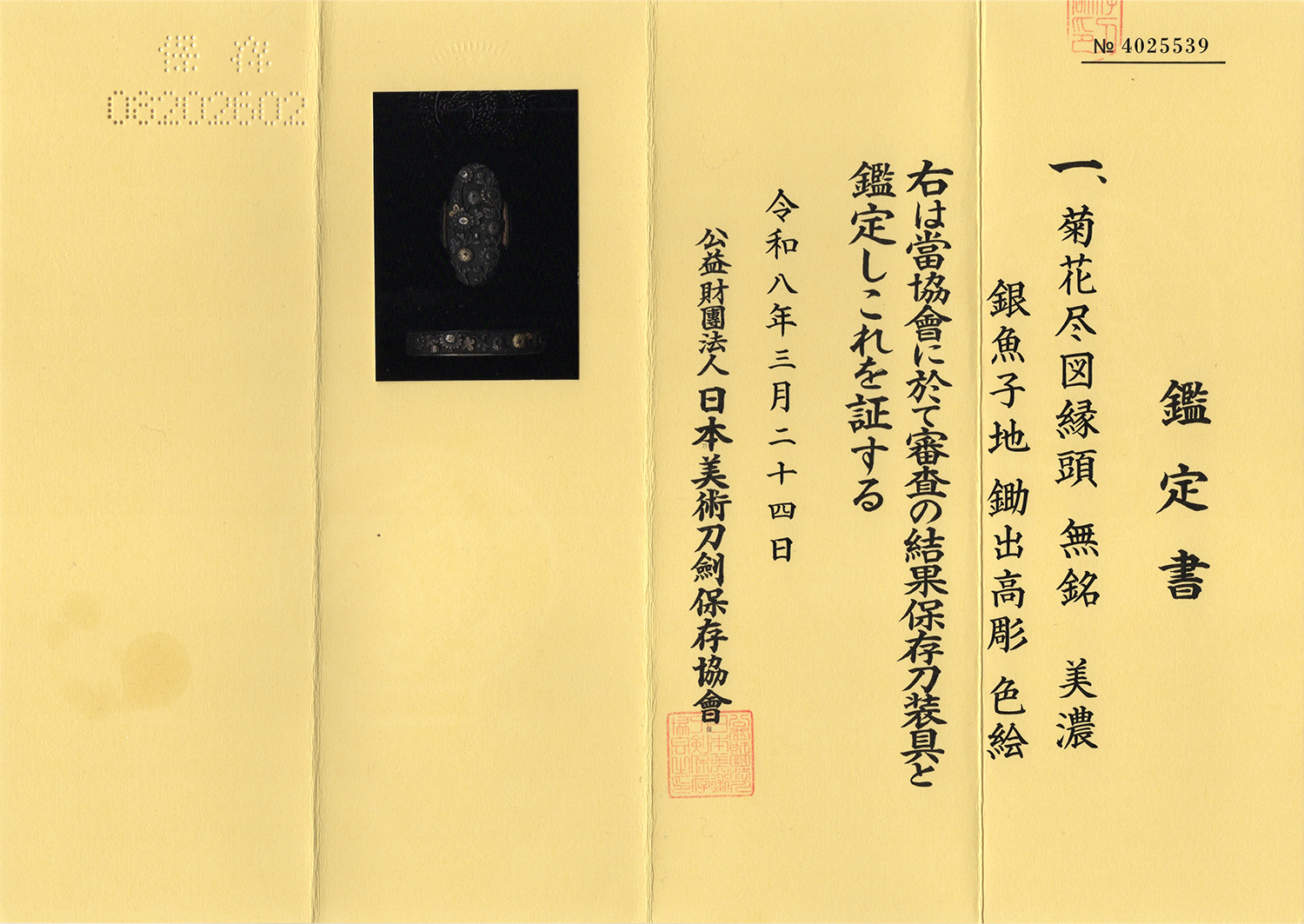
Mino kinko developed in Mino Province, giving birth to a unique style of sword metalwork later known as Mino-bori. It is characterized by a powerful carving technique called Mino no fukabori, where the ground is deeply carved away to leave the patterns in relief, and is known for magnificent works featuring autumn grasses and other floral designs decorated with gold and silver iroe. This piece is attributed as mumei Mino in its Hozon Tosogu Kanteisho, described as a work featuring sukidashi takabori and iroe on a gin-nanako-ji; it is a set that clearly exhibits the dense decorativeness typical of Mino-bori through its deep, undulating carving, densely arranged chrysanthemums, and gold and silver coloration. The chrysanthemum, with its strong vitality to bloom despite the frost and its pure appearance, symbolizes longevity, health, and nobility, and is a prestigious kissho design with deep ties to the Imperial Court. During the Choyo no Sekku festival, customs developed to pray for longevity using chrysanthemum dew or chrysanthemum sake, and the kikuka-zukushi motif, which fills the entire frame with these flowers, was favored for samurai furnishings and tosogu as a condensation of seasonal splendor and wishes for prosperity into a single design. This piece fills the entire surface of the fuchi and kashira with large and small chrysanthemums, buds, leaves, and bending stems, creating a scene of a competing chrysanthemum garden within a limited area. On the kashira, blooming flowers are layered vertically and horizontally to create depth, while on the fuchi, flowers and leaves are continuously arranged along the slender frame; the rich scenery of the kikuka-zukushi is completed only when the two are paired together. By densely striking the gin-nanako-ji and using sukidashi takabori to leave the flowers and leaves in high relief while carving down the ground, the chrysanthemums are expressed as a powerful form integrated with the base metal. Each flower changes its appearance, from those facing forward and opening wide, to those tilting diagonally, those with petals curling inward, and even tightly closed buds, while the leaves are carefully carved with deep incisions, curves, and overlaps, ensuring that the shadows are never interrupted from any angle. The silver ground has acquired a dark, calm koshoku over many years, and from that deep ground color, the polished petals and leaf veins catch soft light and emerge. Kin-iroe is applied to the flower centers and some leaves, finely interlacing the quiet light of silver with the warm glow of gold. Gold and silver chrysanthemums emerge one after another against the ground exhibiting a deep black color, and as the angle changes, the flower centers, petals, and leaf veins catch different light, so the three-dimensional feel of the carving and the richness of the colors become more prominent the more one moves and views it in the hand. The decorative quality of lining up flowers and leaves without leaving any empty space, the deep and undulating carving, and the color sense of using gold effectively against the dark, calm silver ground are well expressed, and the workmanship, which does not relax the viewer's attention from the center of the kashira to the sides and around the fuchi, is a highlight. At hand, one can thoroughly appreciate the fine grain of the nanako, the many layers of petals, and the tagane work extending to the leaf veins and buds, while from a slight distance, the magnificent appearance of gold and silver chrysanthemums blooming rhythmically against the black-based ground stands out. It is a reliable Mino-mono accompanied by a Hozon Tosogu Kanteisho, and the fact that one can fully enjoy the highly auspicious kikuka-zukushi theme, the dense modeling through gin-nanako-ji and sukidashi takabori, and the splendor of kin-gin iroe in a single set is a great attraction. If used for a koshirae, it will provide prestige and presence to the tsuka area, and if kept in its kiri box for appreciation, one can enjoy the carving and colors that early Edo period Mino kinko excelled at from up close; it is an impressive fuchikashira that one would certainly want to keep as a collection piece.
Offered by Toushin

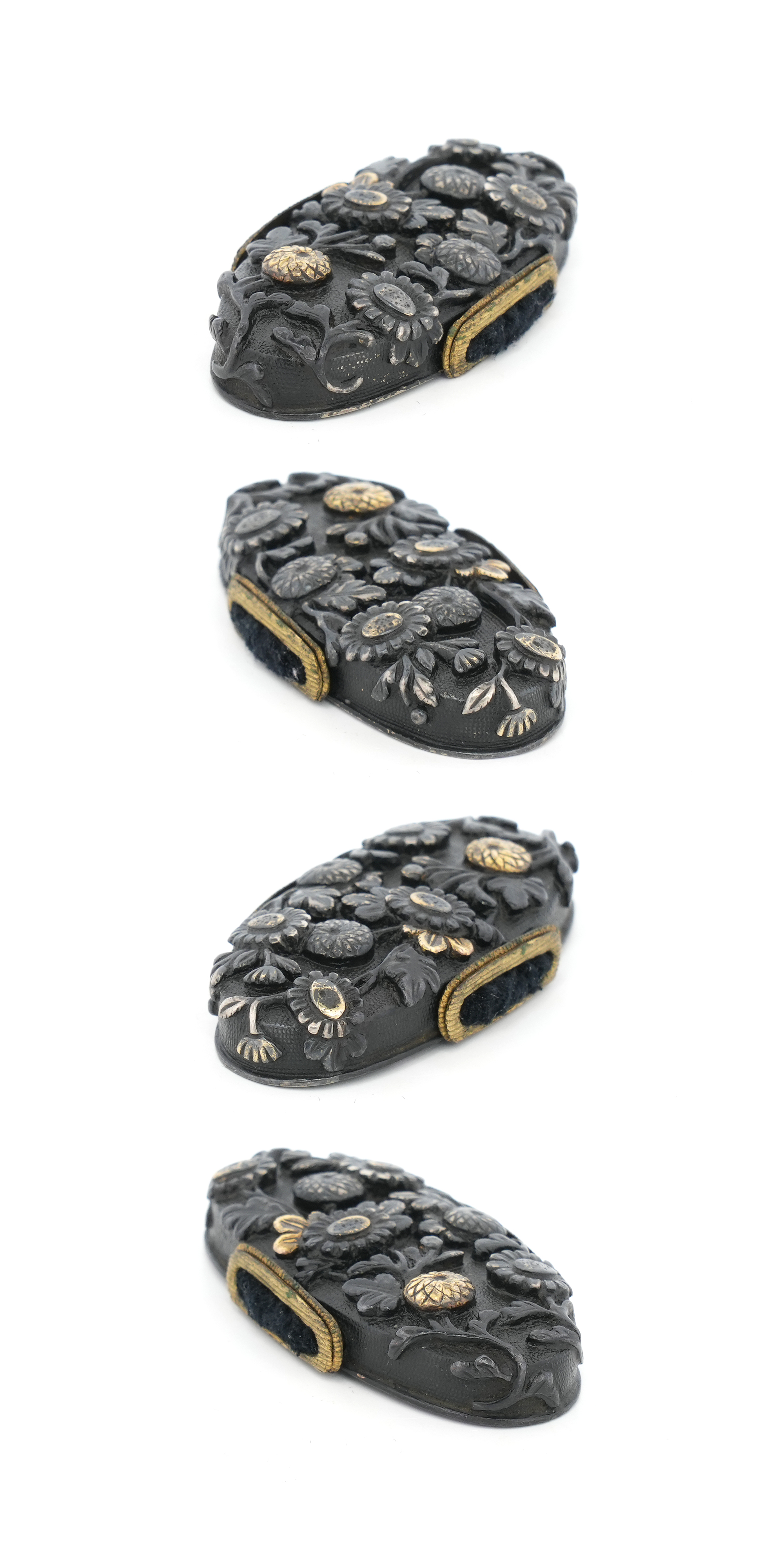
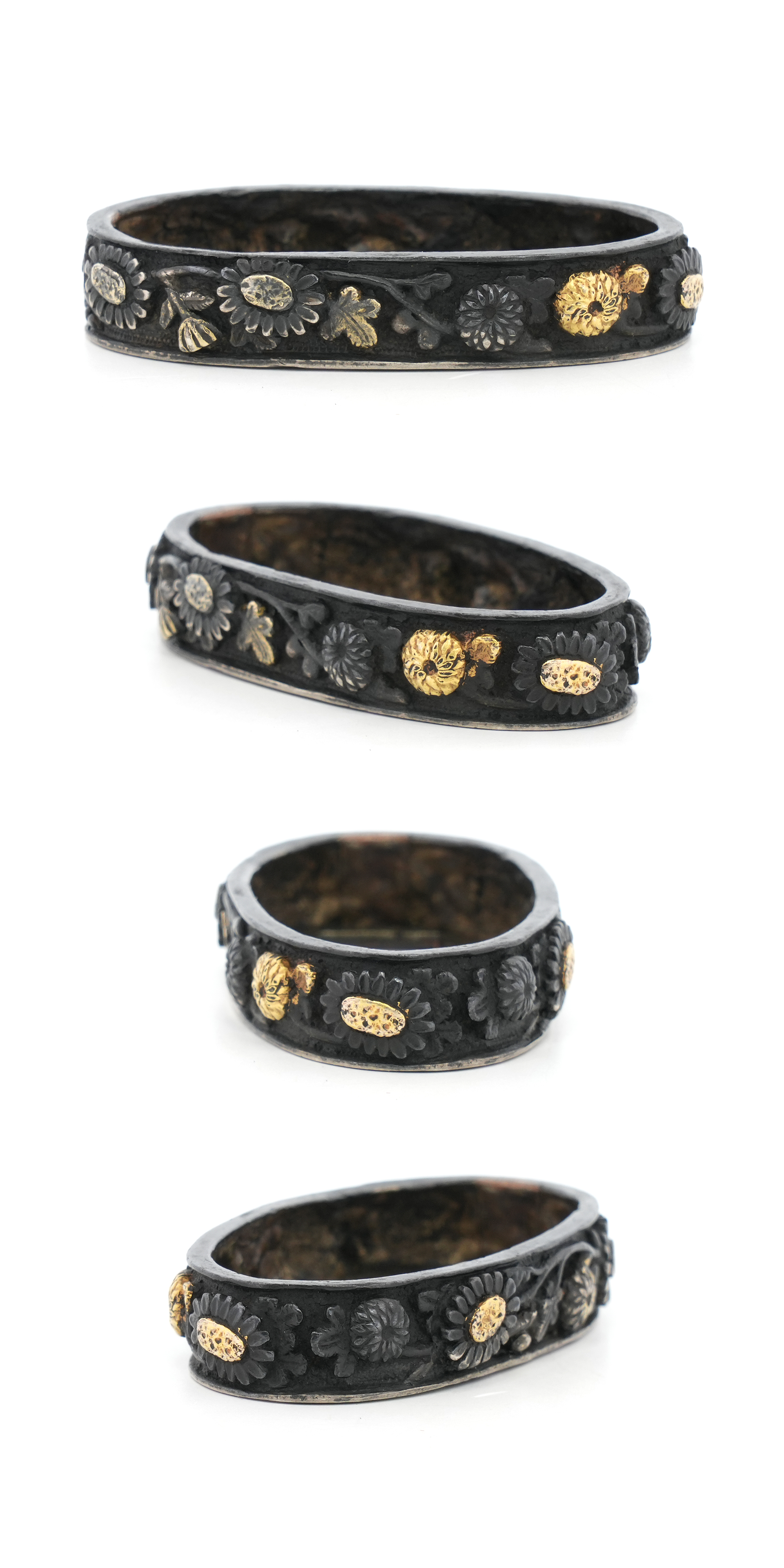
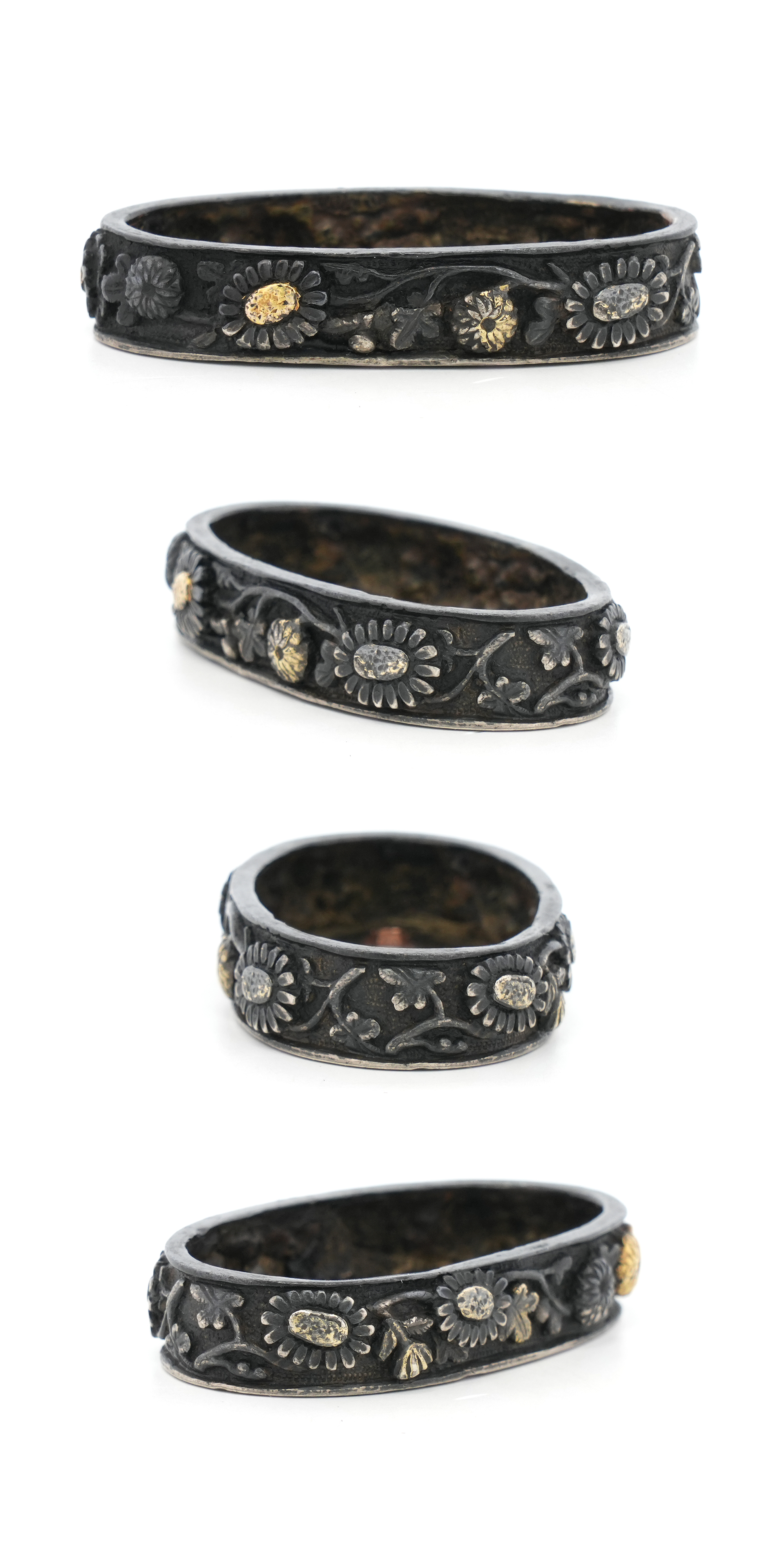
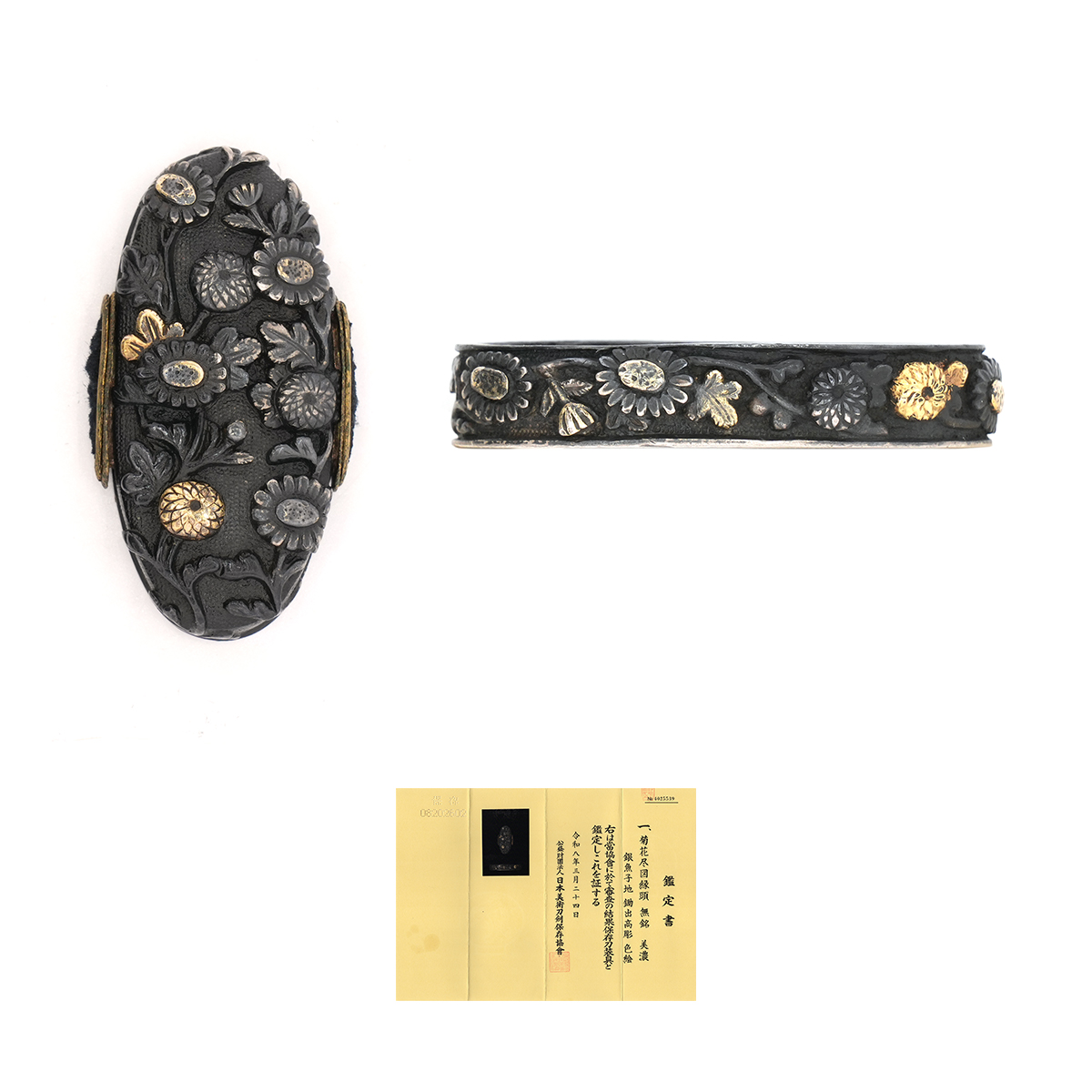
Mino
Edo
Mino
Unsigned
Hozon (NBTHK)
As written by the shop
Machine translation from the shop's Japanese · may contain errors ·
Certifies a genuine fitting worth preserving: a correct signature, or, if unsigned, an identifiable era and school, with recognized artistic and craft value.
The NBTHK (Nihon Bijutsu Tōken Hozon Kyōkai, the Society for the Preservation of Japanese Art Swords) is a public-interest incorporated foundation founded in 1948 and supervised by Japan’s Agency for Cultural Affairs (Bunkachō); it is based at the Japanese Sword Museum in Tokyo. Its expert panels physically examine each submitted work (shinsa) and issue a certificate (kanteishō) ranking it by artistic and historical merit. NBTHK papers are the most widely recognized standard of authentication for Japanese swords and fittings.
NBTHK official siteAs a rule we do not accept returns, except when we have sent a different item from the one ordered or when there is a significant discrepancy between the description and the item. If you wish to return an item, please contact us within 3 days of its arrival and then send it back.
¥330,000