

Around 1800 Suishinshi Masahide argued in his writings that the craft must return to the old masters’ methods: the fukkotō revival. His greatest successor Naotane worked convincingly in Bizen and Sōshū manners that had been dead for centuries.
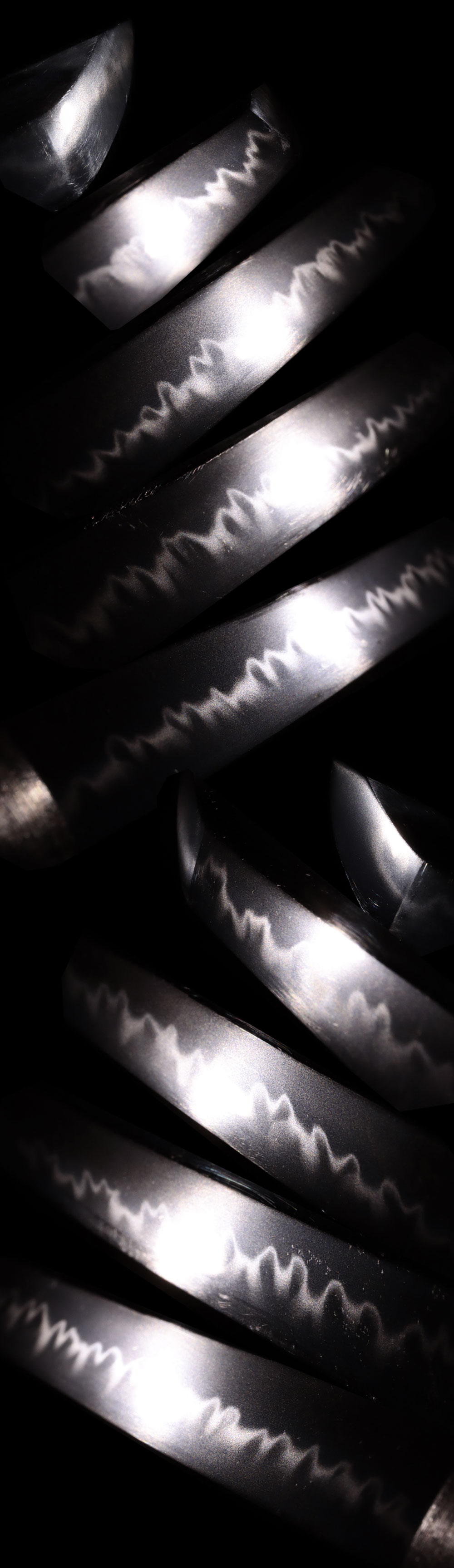
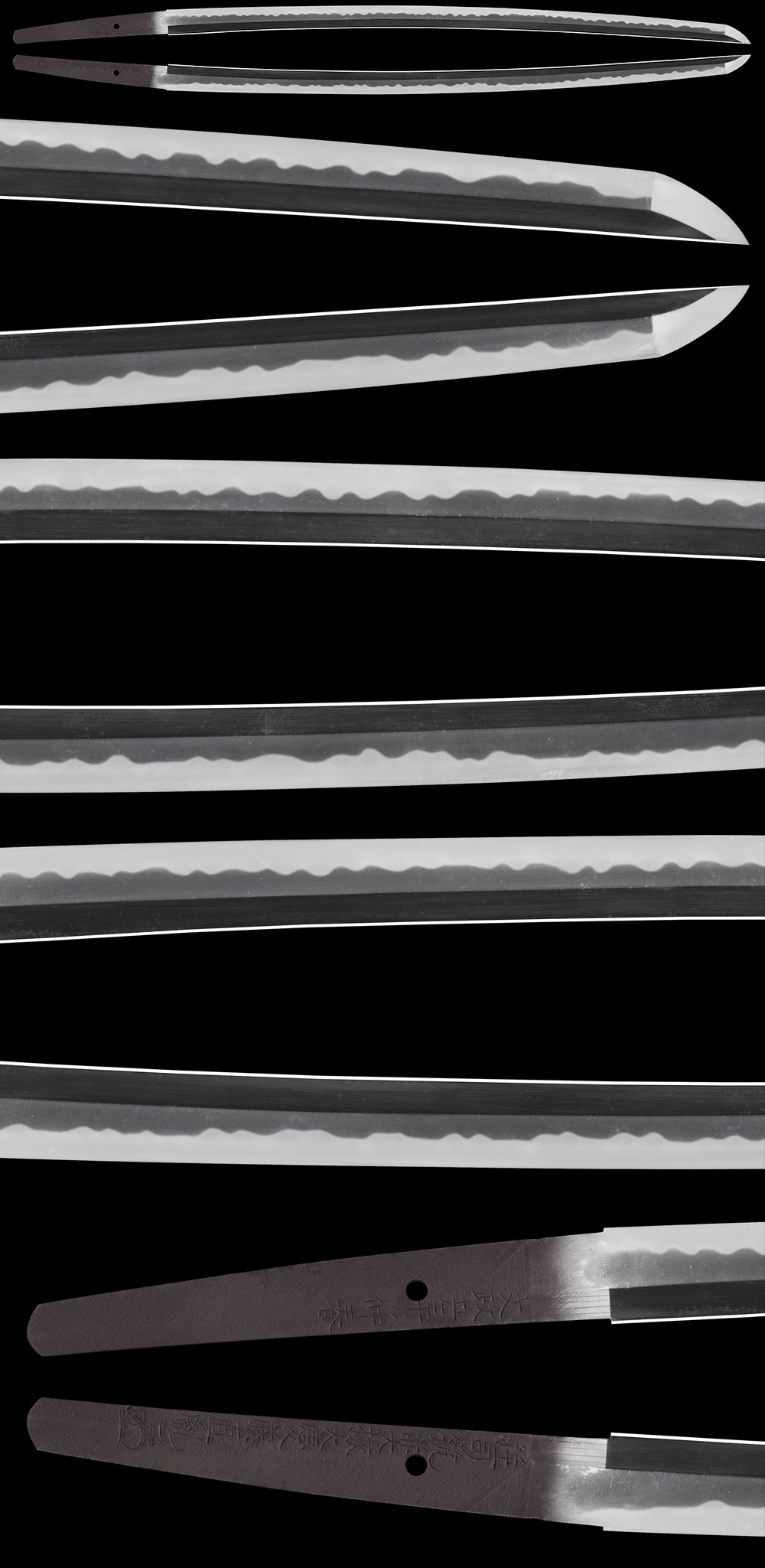
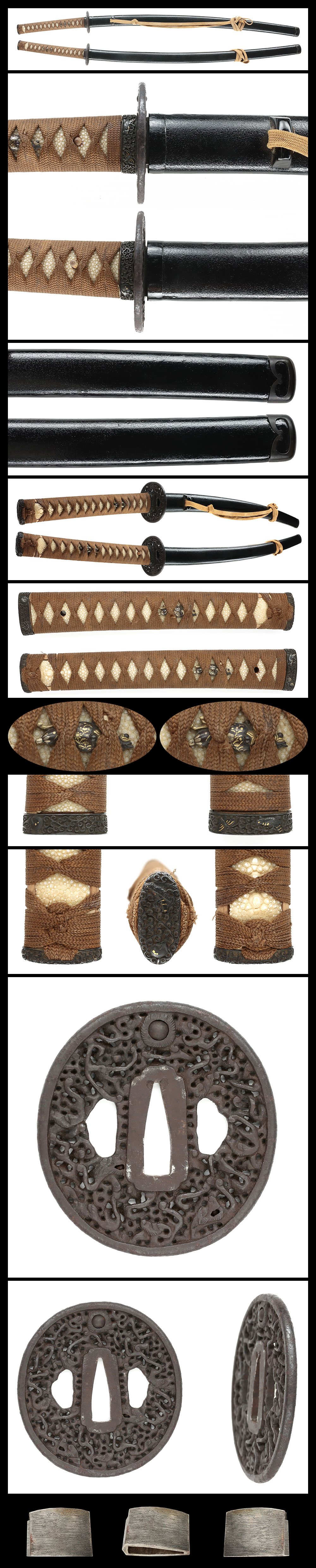
This katana features a normal width, slightly shallow curvature, and normal kissaki. The jigane is finely forged koitame hada, resulting in a clear and refreshing appearance. The hamon is gunome midare with a slightly deep nioiguchi, and the boshi turns back in a round shape. Despite being a well-made work, it is unfortunately a gimei (false signature) attributed to Souji Chikuzen Daijo Fujiwara Naotane, dated Bunsei 5 (1822).
Offered by Aoi Art
The dealer notes the signature isn’t original. Please judge it as an unsigned piece. — Hoshi


The Shinshintō revival
Around 1800 Suishinshi Masahide argued in his writings that the craft must return to the old masters’ methods: the fukkotō revival. His greatest successor Naotane worked convincingly in Bizen and Sōshū manners that had been dead for centuries.
We could not find an authenticity certificate on the seller’s listing. Japanese swords and fittings are normally papered by the NBTHK (or the NTHK). Without one, the attribution is the seller’s own assessment and has not been independently verified — treat it with caution and ask the dealer about certification before buying.
If you wish to return an item, please notify us within 3 days of receipt. After this period we cannot accept cancellations. Please ship the return to us within 5 business days. Cancellation is conditional on the item being kept in the same condition as at the time of sale, so please handle it with care.
¥250,000