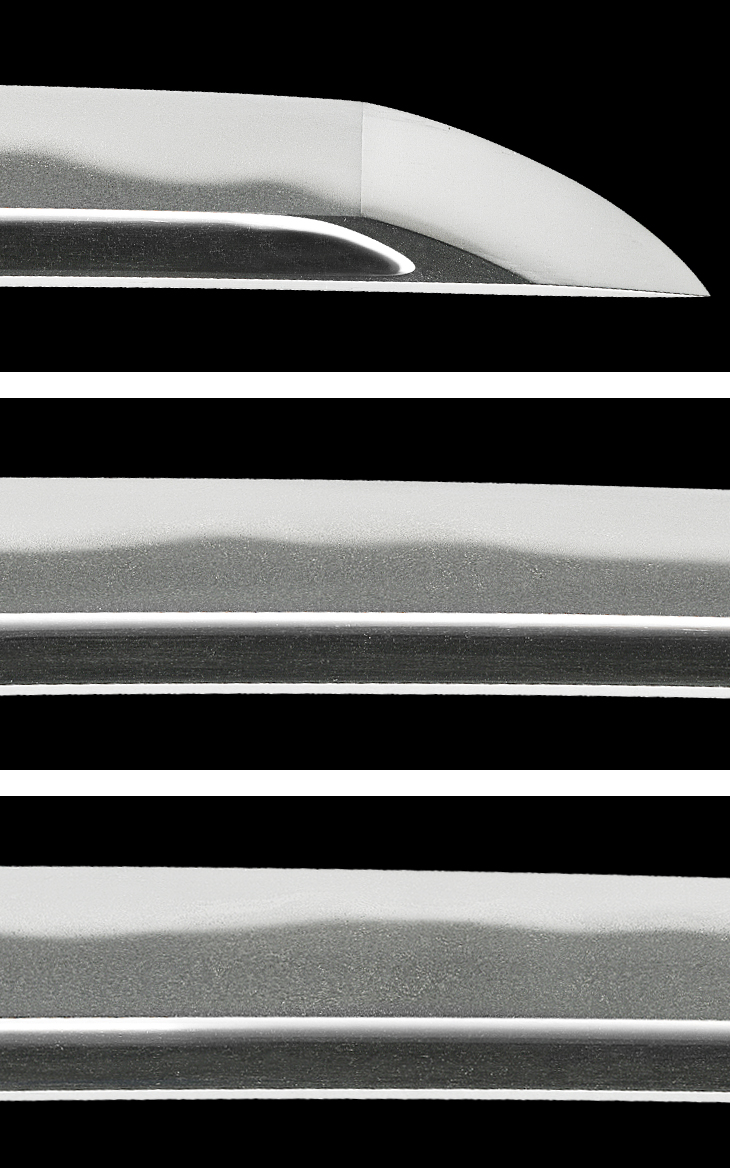
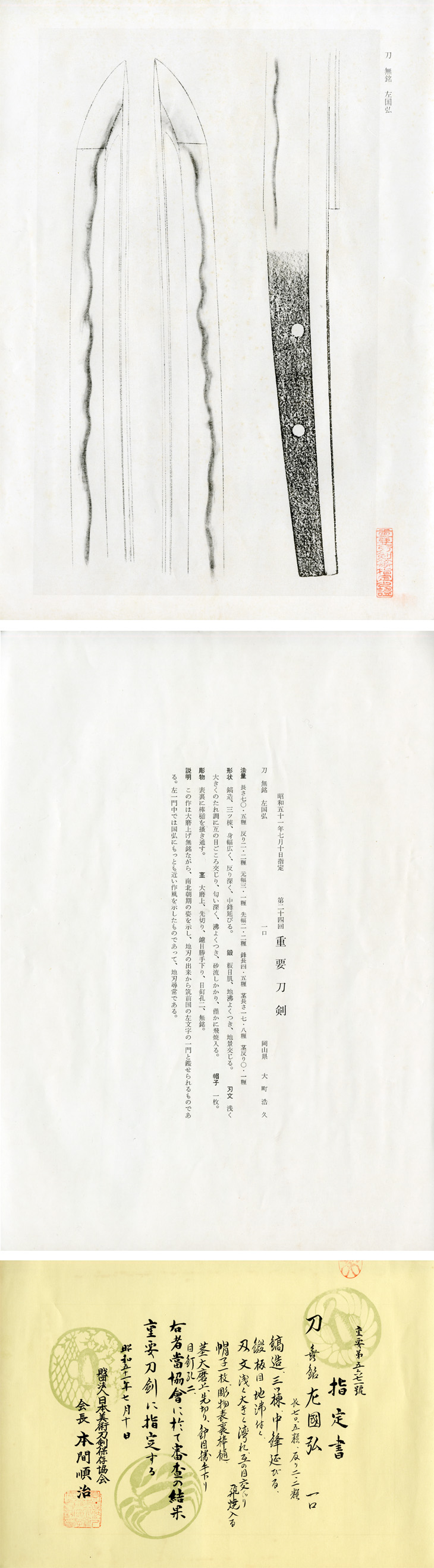
Jūyō-Tōken, 24th Session — Designated July 10, 1976
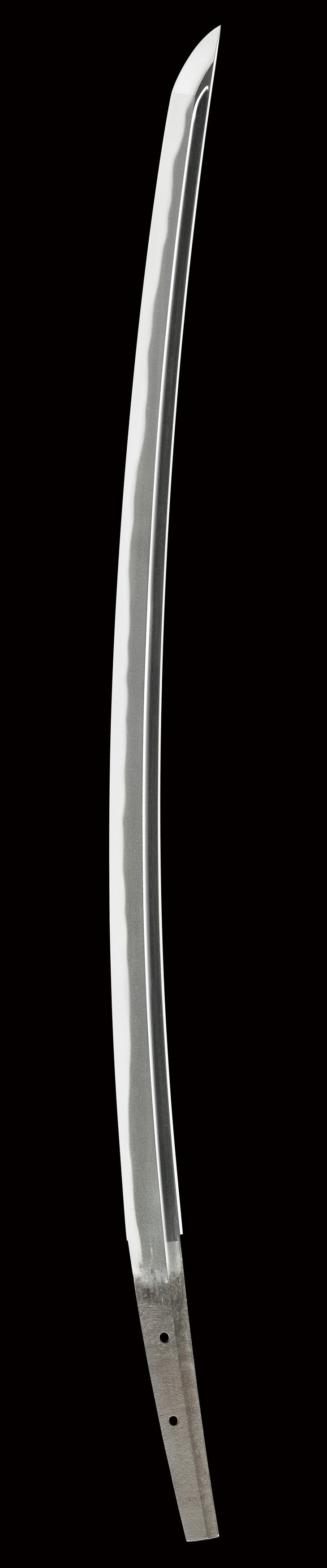
Katana, mumei: Sa Kunihiro (左国弘)
Measurements Nagasa 70.5 cm, sori 2.2 cm, motohaba 3.1 cm, sakihaba 2.2 cm, kissaki-nagasa 4.5 cm, nakago-nagasa 17.8 cm, nakago-sori 0.1 cm
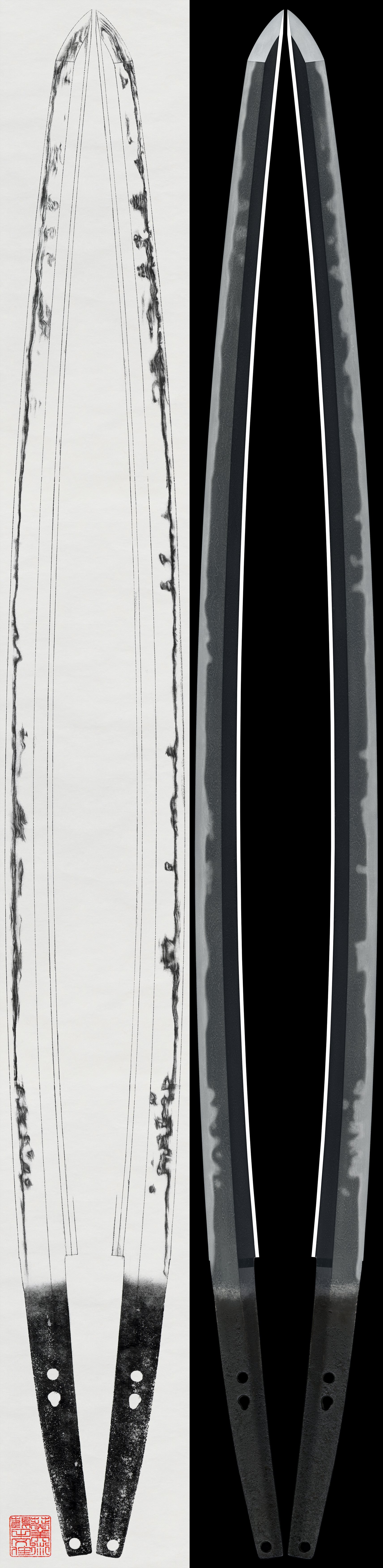
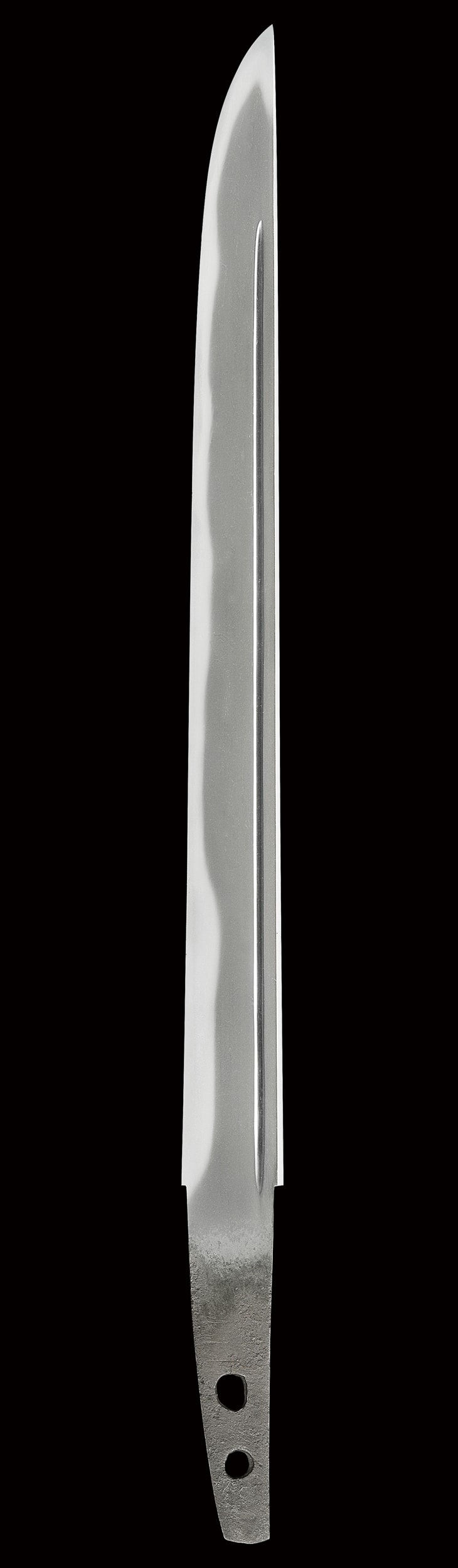
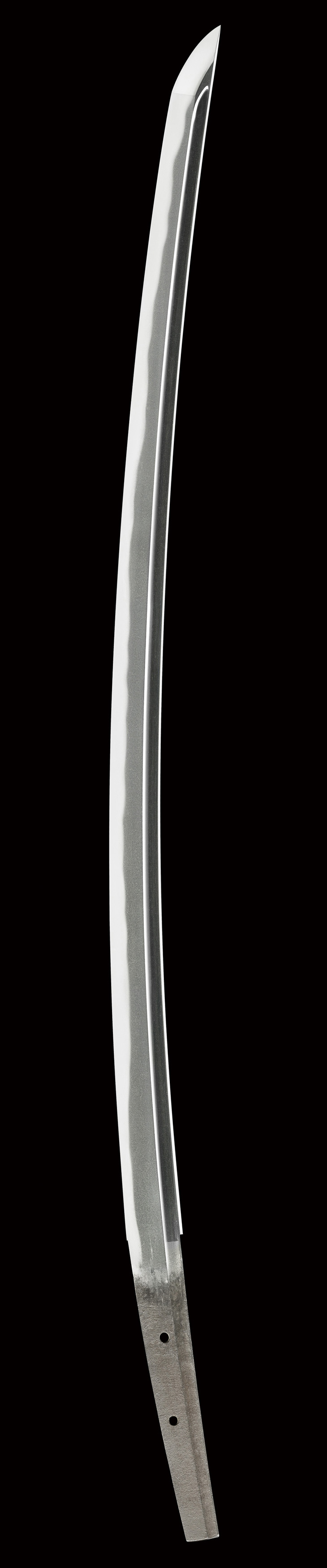
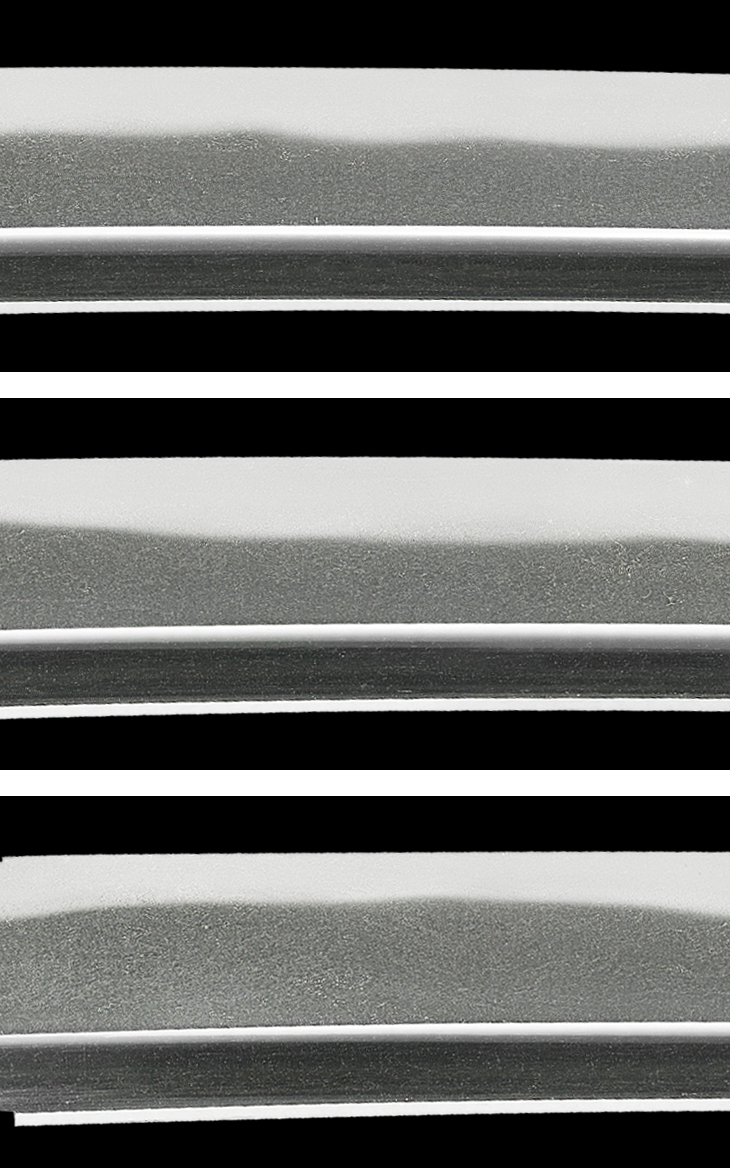
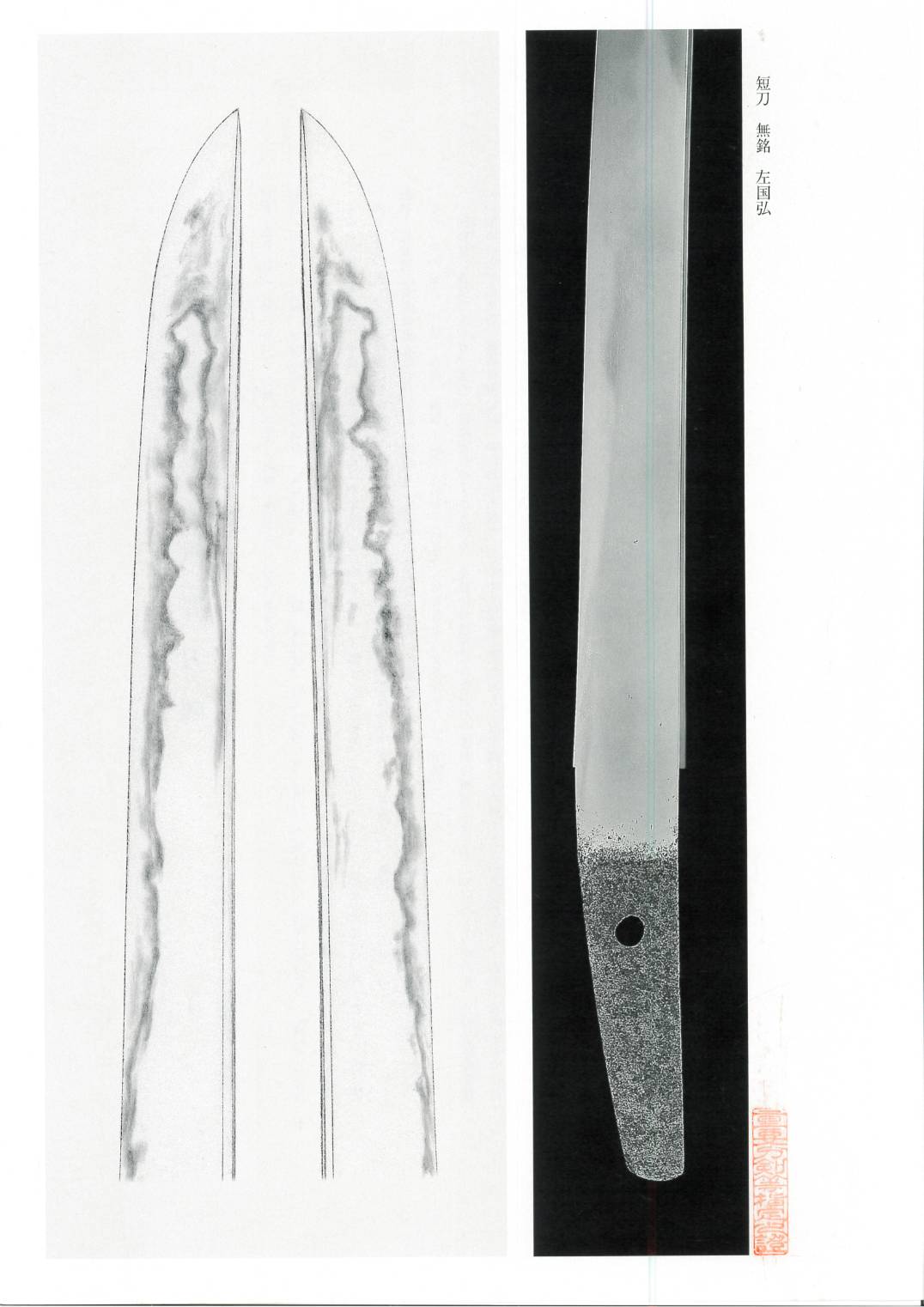
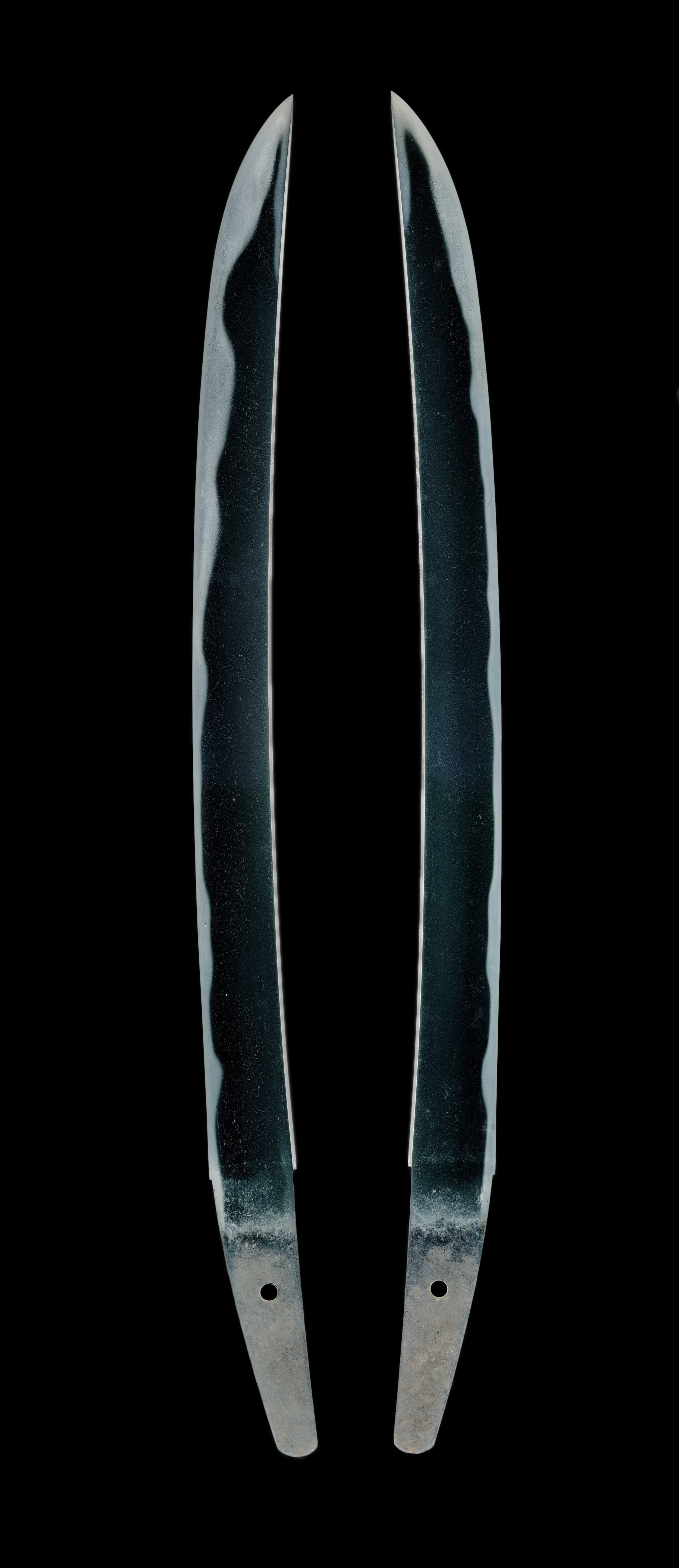
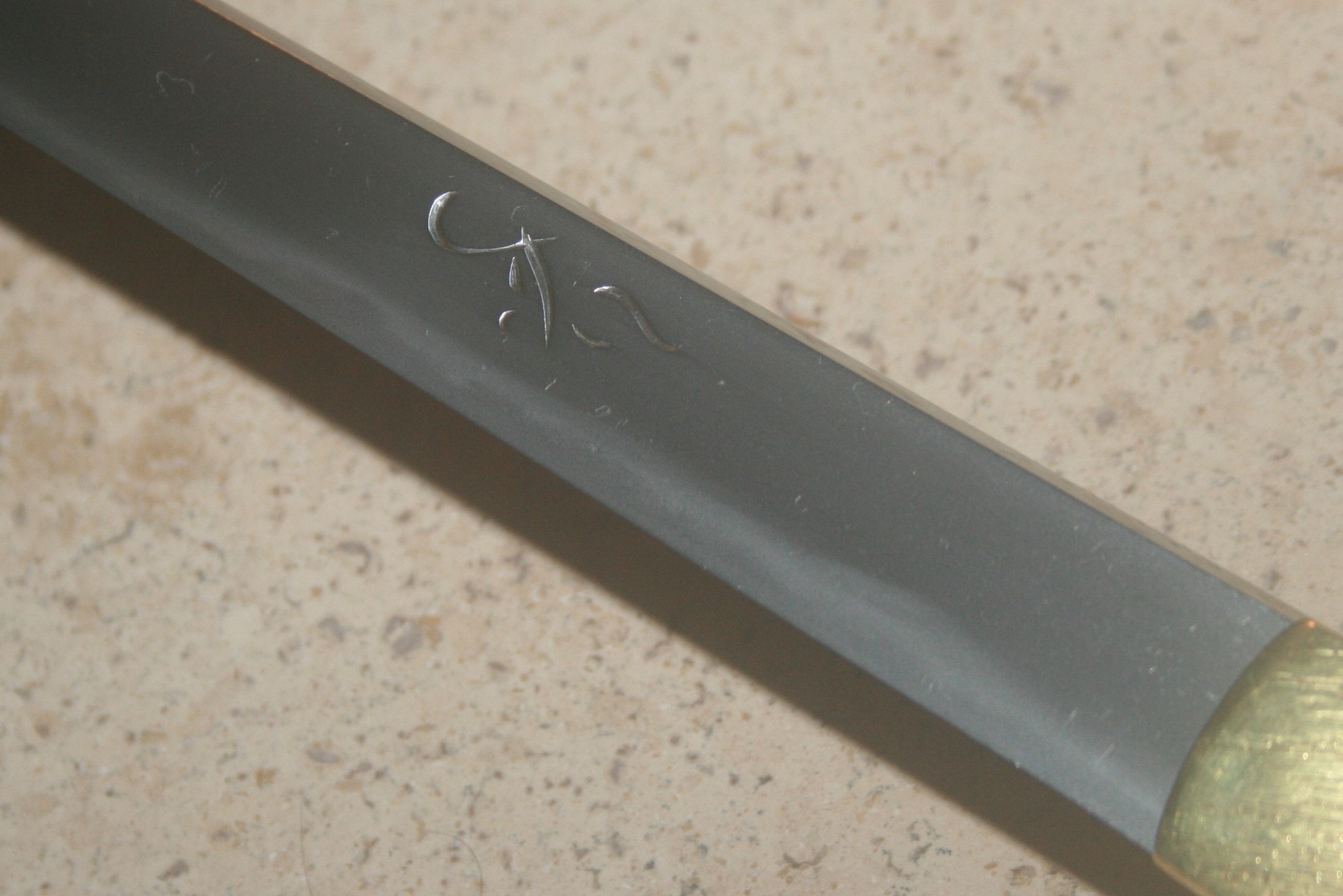
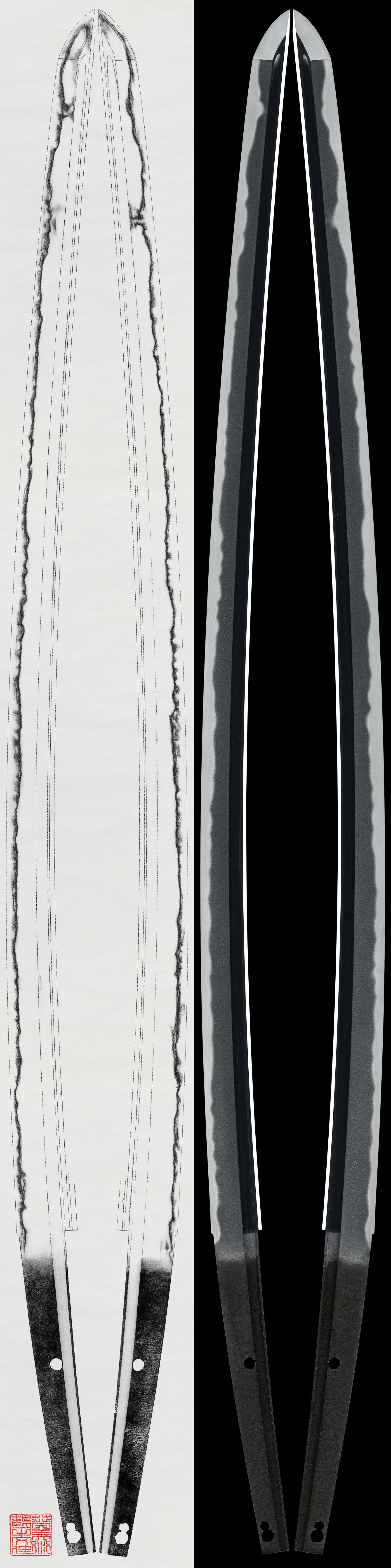
Description Keijō: shinogi-zukuri, mitsu-mune; wide mihaba with deep curvature; an extended chū-kissaki. Kitae: itame-hada; ji-nie adheres well, with chikei intermingled. Hamon: a gently undulating (shallow) notare-tendency mixed with gunome-flavor; the nioiguchi is deep; nie adheres well; sunagashi is seen, and slight tobiyaki appears. Bōshi: ichimai. Horimono: bō-hi is carved through on both sides (omote and ura). Nakago: ō-suriage; kiri-jiri; katte-sagari yasurime; two mekugi-ana; unsigned.
Artisan Sa Kunihiro
Era Nanbokuchō period
Explanation Although this blade is greatly shortened (ō-suriage) and now unsigned, it displays the sugata characteristic of the Nanbokuchō period. From the workmanship in both ji and ha, it is appraised as a work of the Sa (Samonji) lineage of Chikuzen Province.
Within the Sa group, it shows a style closest to Kunihiro; however, the workmanship in the ji and ha is straightforward and ordinary (jinjō) in character.


![Wakizashi - Tokuho - 作 定行 - 脇差 朱銘[佐野貞幸]日本美術刀剣保存協会 特別保存刀剣](/_next/image?url=https%3A%2F%2Fitbhfhyptogxcjbjfzwx.supabase.co%2Fstorage%2Fv1%2Fobject%2Fpublic%2Flisting-images%2Fworld-seiyudo%2FL31508%2F00.jpg&w=2560&q=90)