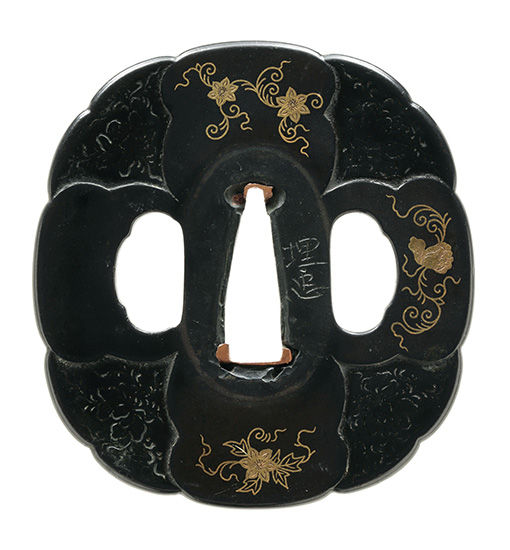
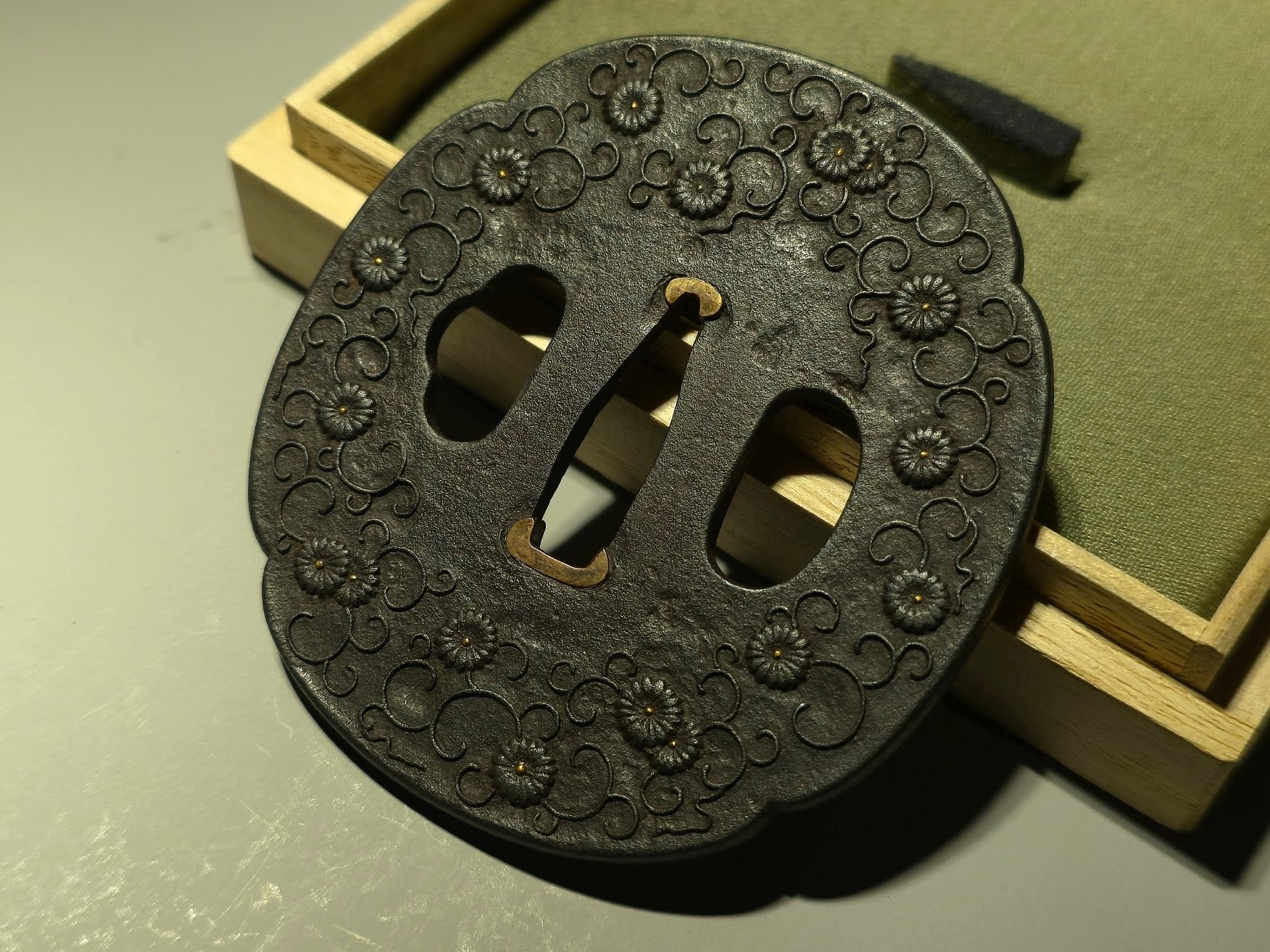
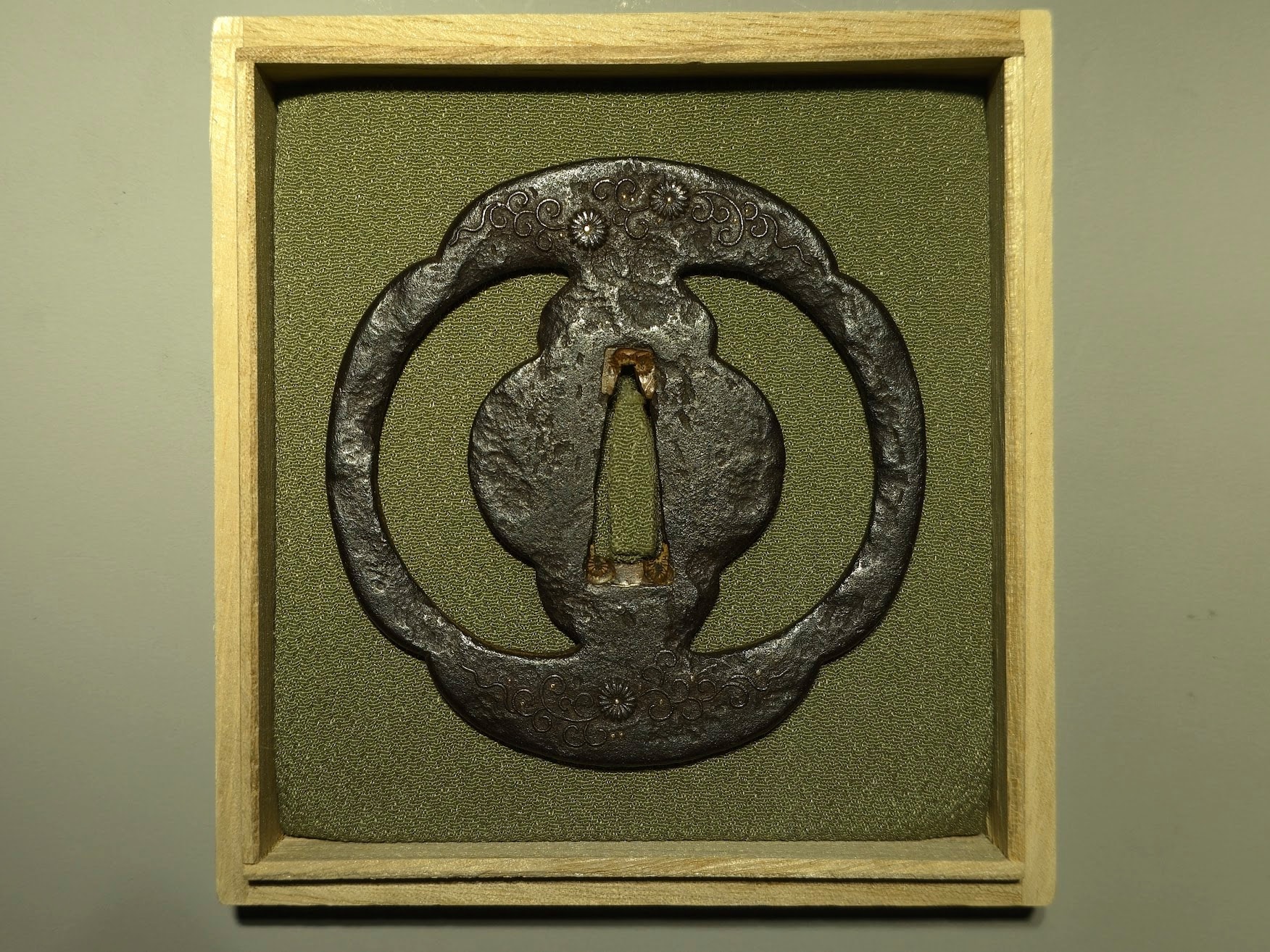
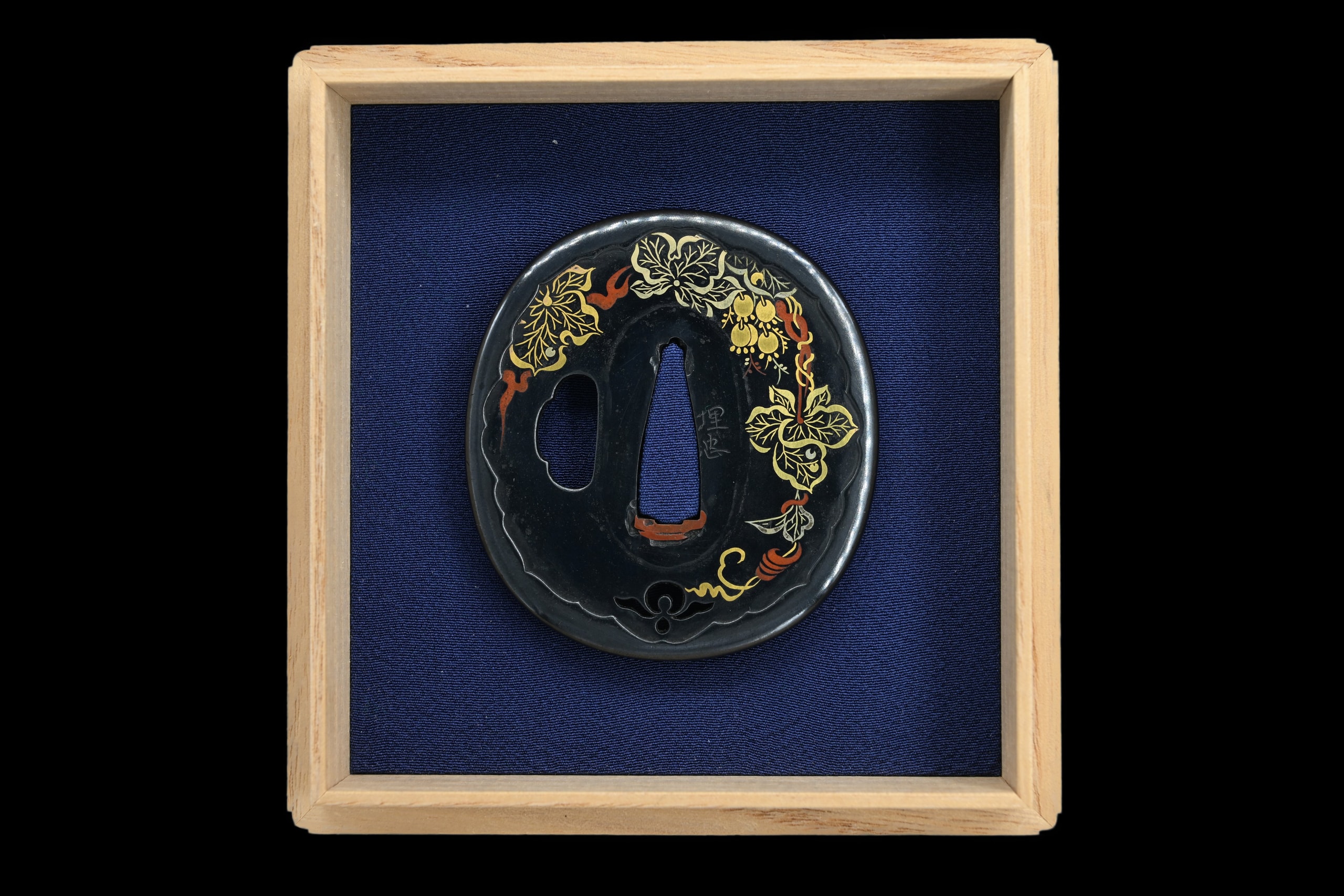
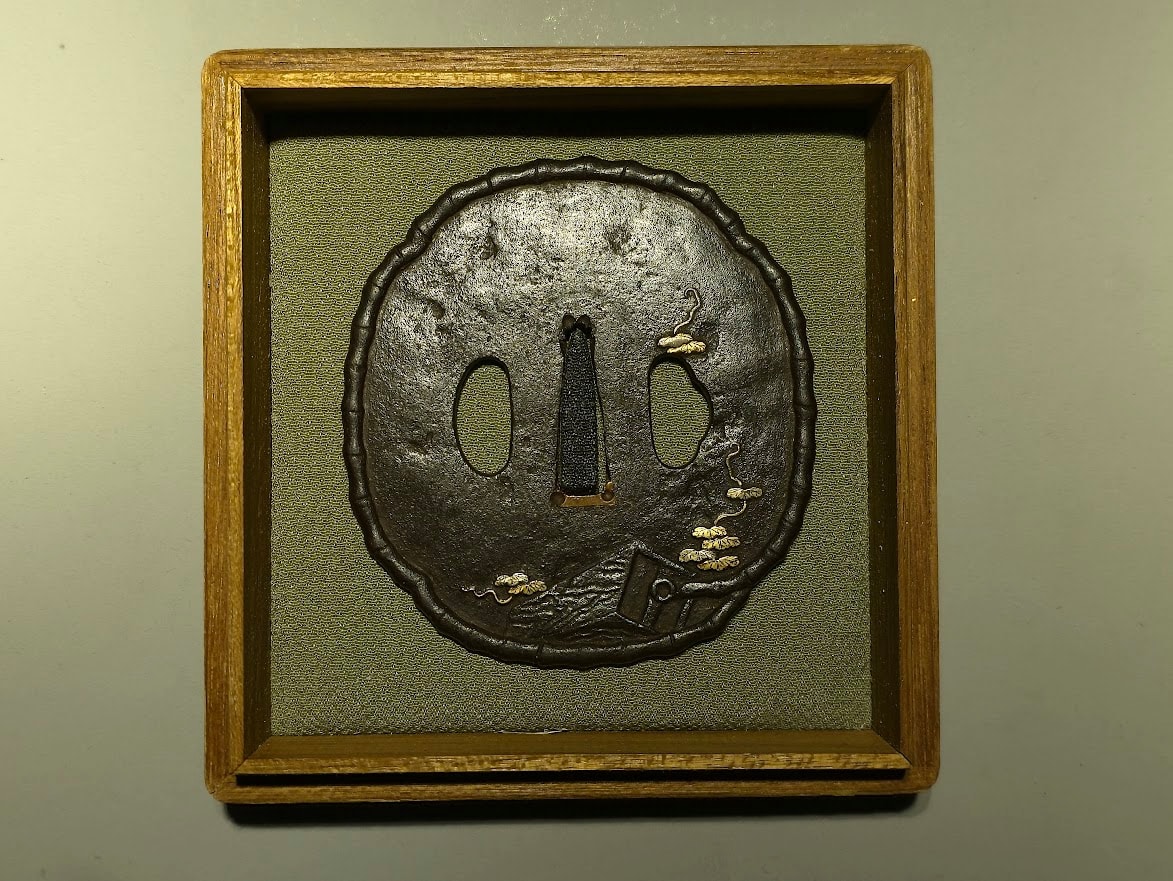
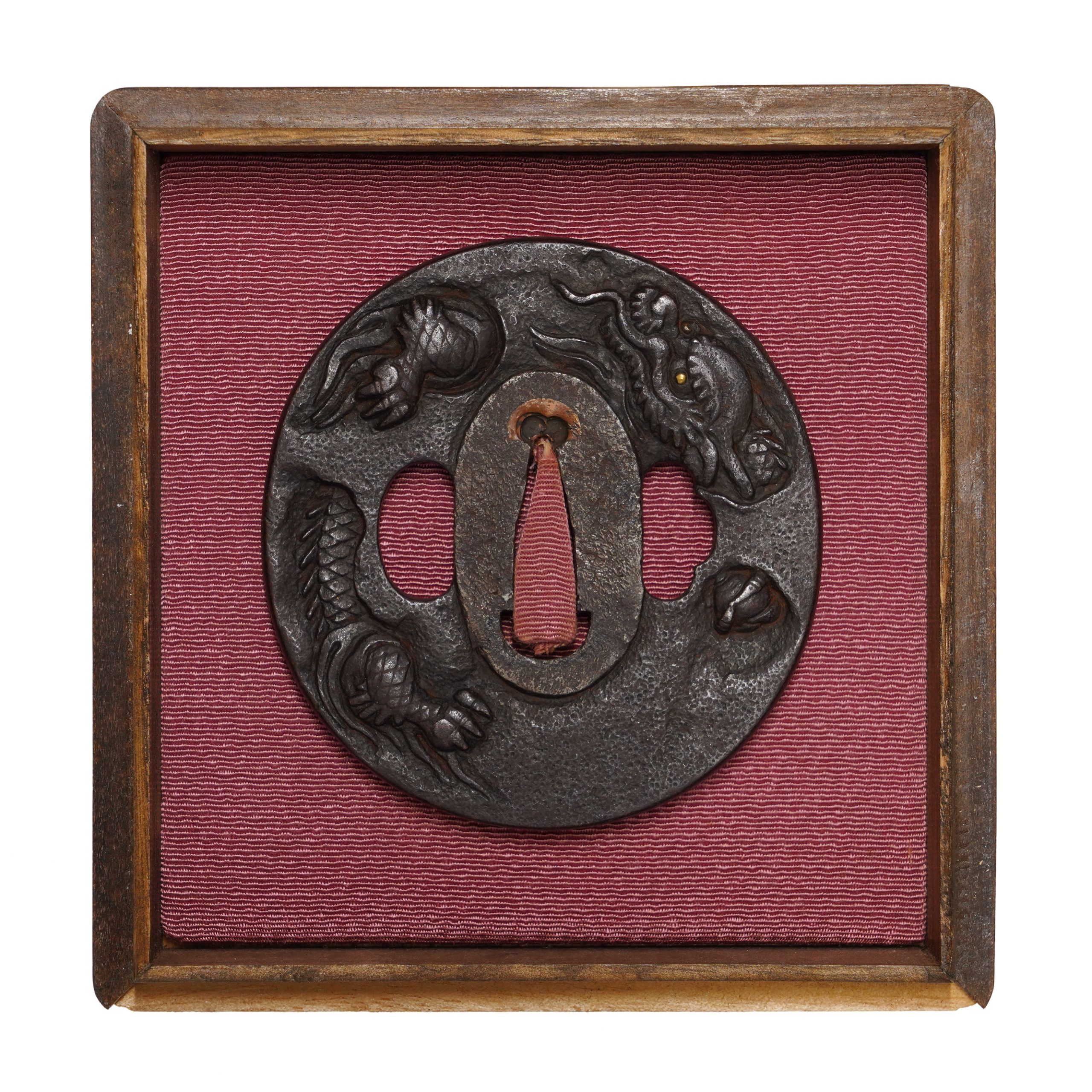
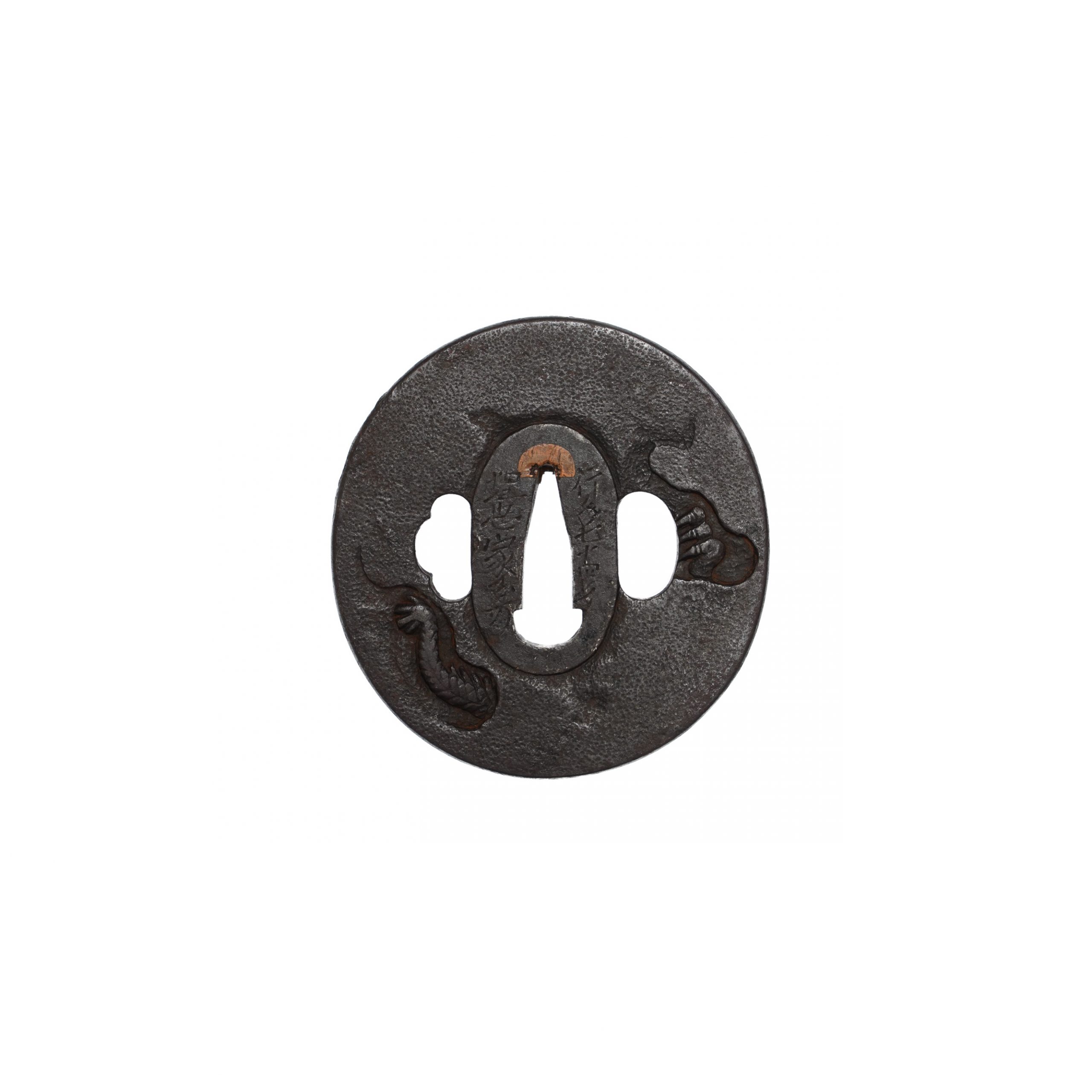
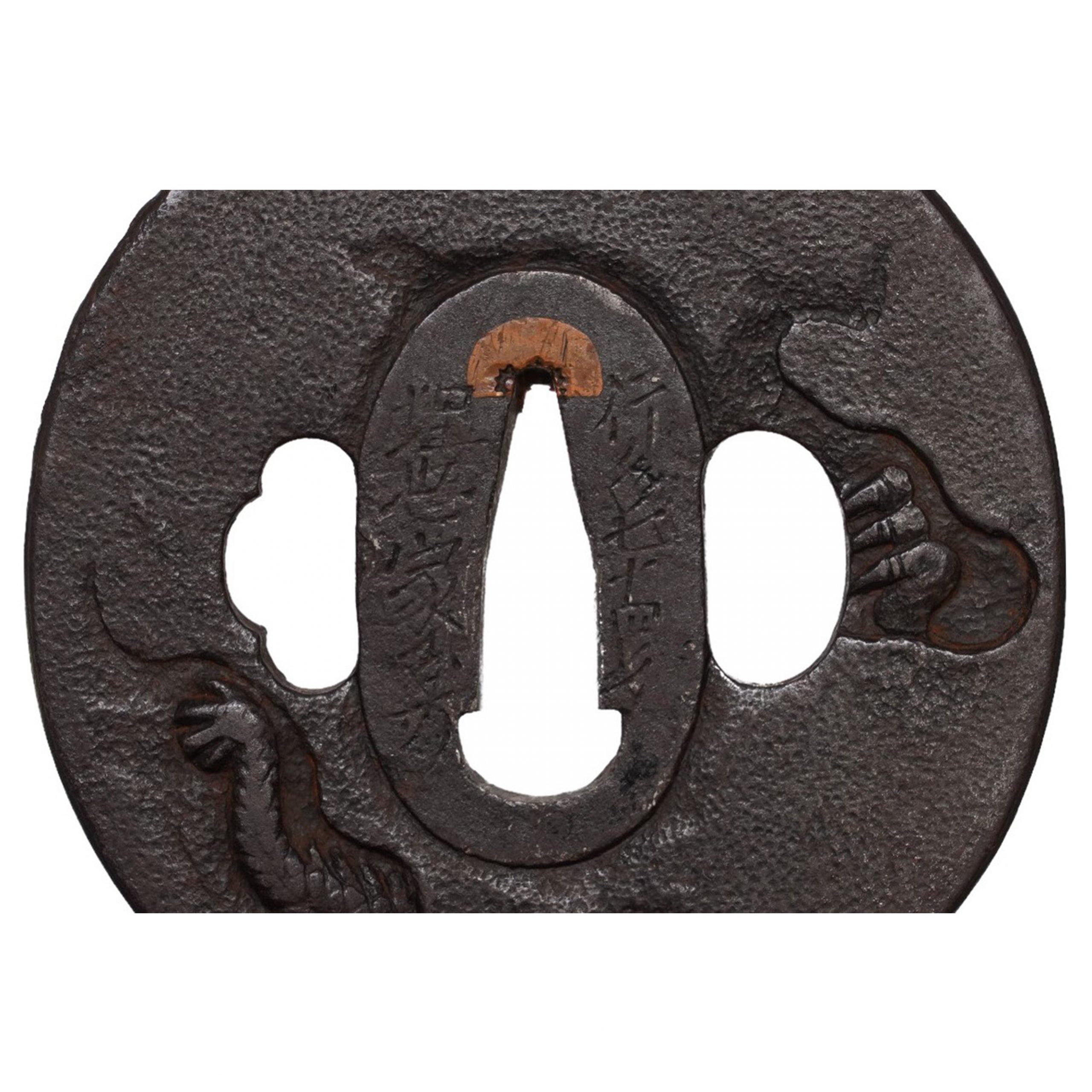
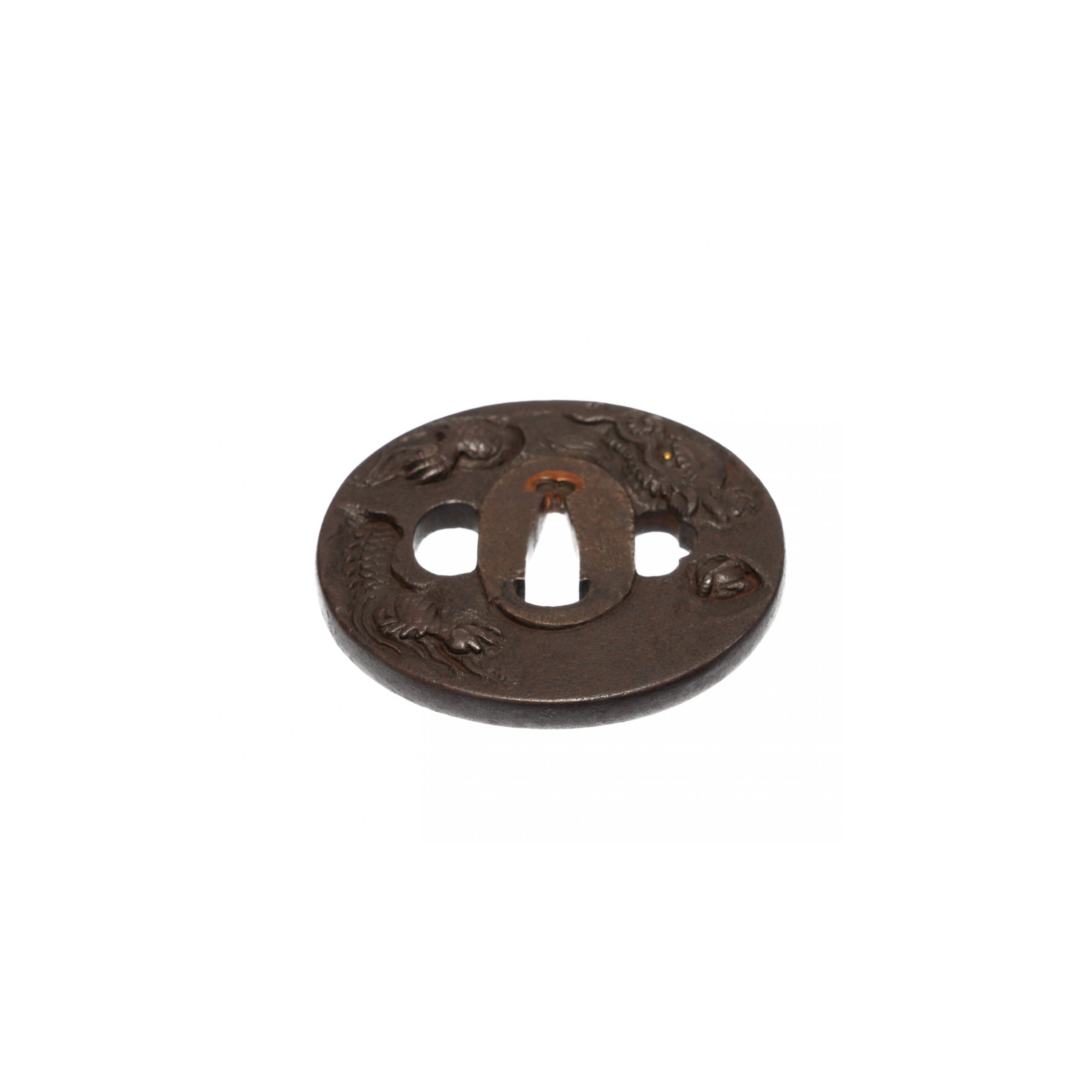
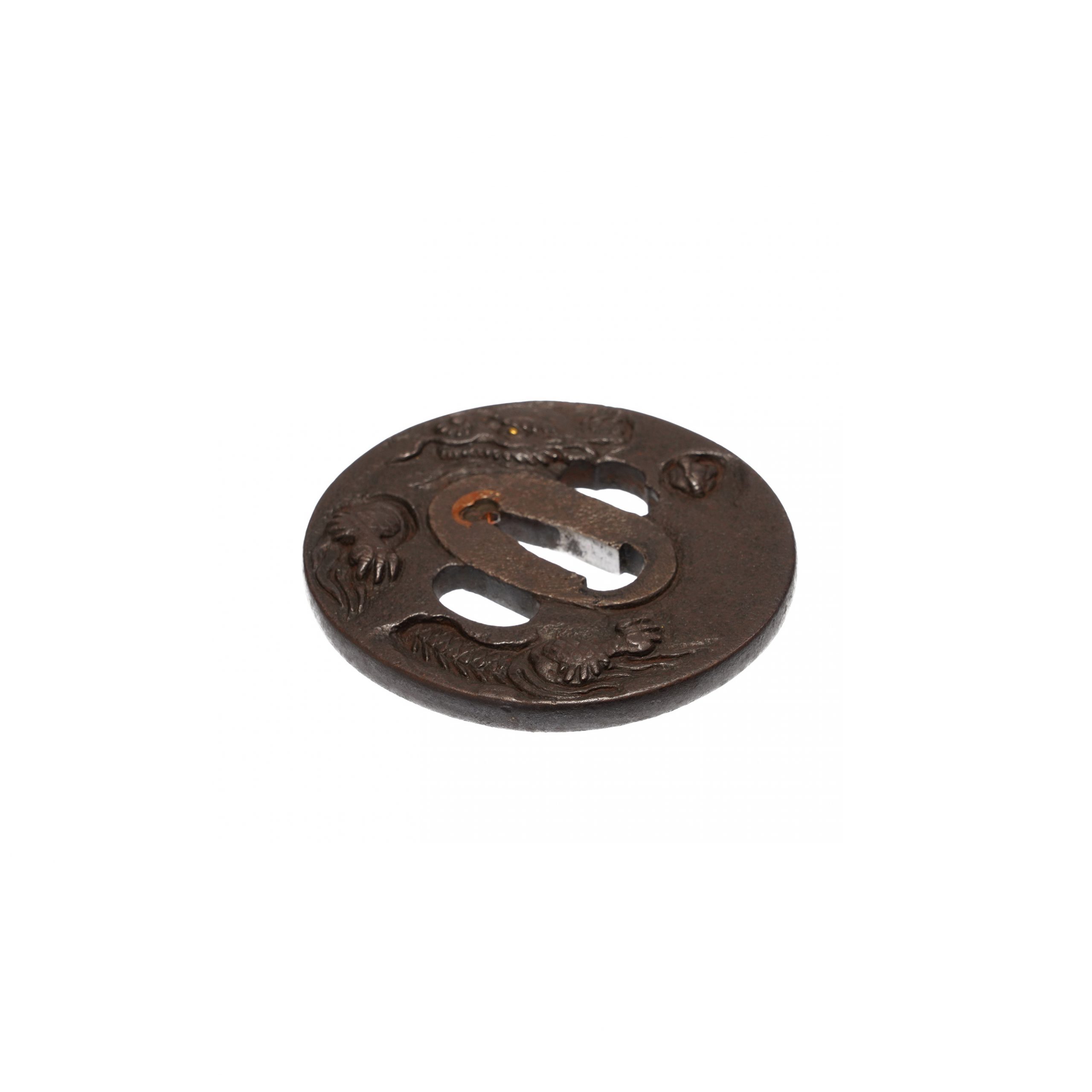
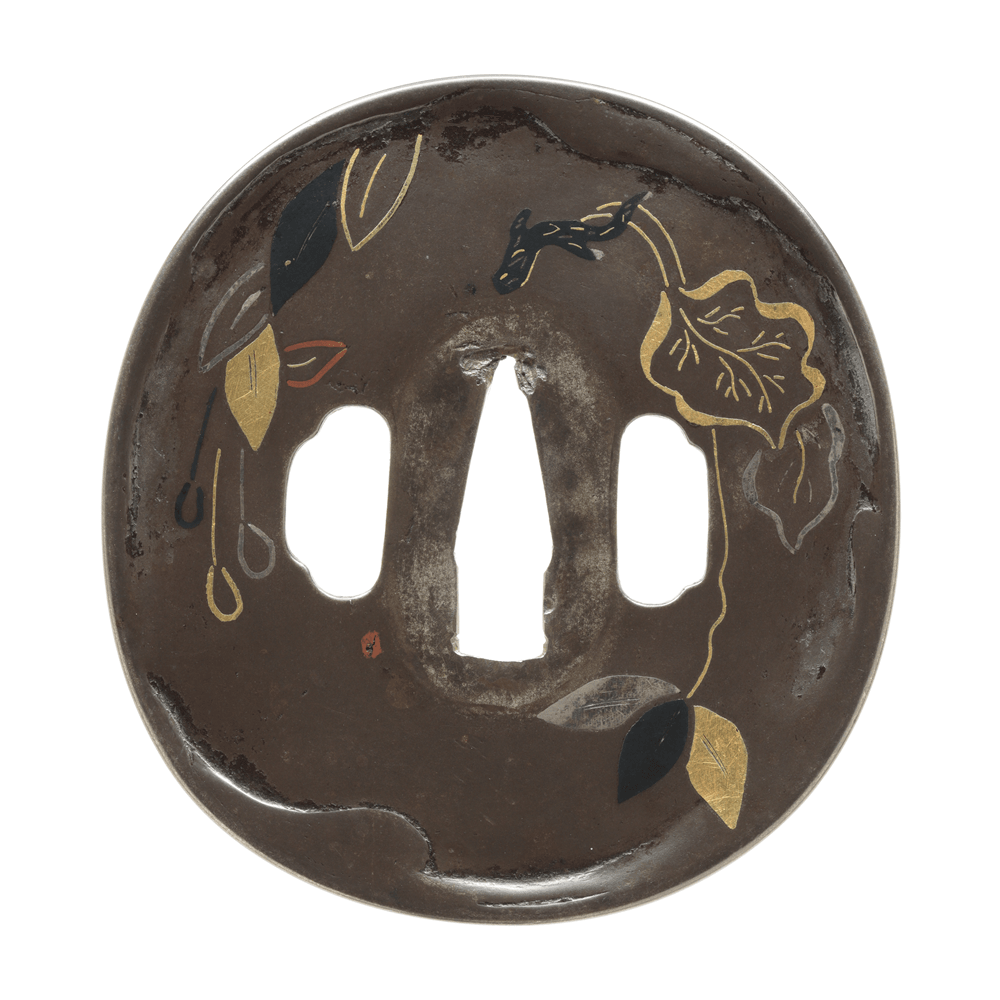
Title: Umetada-style, Ryu Zu Description Oval-shaped Tsuba that has Kozuka and Kougai holes. A dragon is engraved as if it is it emerged from the clouds. If you focus on one of this dragon’s hands, you will find that it brings a ball-shaped object. It is the Nyoi Houju (如意宝珠, Cintāmaṇi); a fantasy jewel that fulfills any desire, gives out treasure, clothes, food, and drink. Moreover, it heals illness and suffering, removes evils, purifies muddy water, and prevents disasters. It is said this magical item is taken from the brain of the king of the dragon. Initially, the dragon is an imaginary creature found in ancient traditions or myths. Furthermore, it is a symbolic beast of auspicious signs. Its body is likened to nine animals: antlers are deer, the head is a camel, eyes are demons, the neck is a snake, belly is the Mizuchi (蛟, mythical animal in Japan which looks like a snake and have a horn and four legs), scales are fish, claws are falcons, palms are tigers, and ears are cows. It was thought that the dragon would reign at the top of all animals because of its odd-looking appearance. Although the whole letters cannot be read, the engraved inscription tells us that this Tsuba was made by a Umetada (埋忠) school’s maker. We cannot appraise if this signature is authentic, but we would like to introduce the Umetada school here. The first Umetada: Umetada Myouju (埋忠 明寿) was born in Yamashiro-no Kuni (山城国, Kyoto Pref. today) as the Shigetaka (重隆)’s second son. The Umetada family was a distinguished family who produced excellent swordsmiths, and Myouju succeeded to the household headship. He firstly served under Ashikaga Yoshiaki (足利義昭, 1537-1597, the 15th Shogun of the Muromachi Shogunate), and later his works were admired by famous Samurais such as Oda Nobunaga (織田信長, 1534-1582), Toyotomi Hideyoshi (豊臣秀吉, 1537-1598), and Tokugawa Ieyasu (徳川家康, 1543-1616). The Umetada family was a prestigious school of metalworks in Kyoto. They produced both Japanese swords and sword mountings. *As this item is an antique, please check each photo and ensure its condition. What is Tsuba? Tsuba is the hand-guard of the Japanese sword. High-class Samurai wore his Katana sword with its beautiful sword mountings such as Tsuba. Tsuba’s front design tends to be more decorative as this part was often seen by other Samurais when he was walking on the streets. Why is it that the sword mounting was important for Samurai? The sword mountings of the Japanese sword have many kinds of decorations such as handguards (Tsuba), sword hilt (Menuki), pommel (Fuchi Kashira). The Japanese sword worked as a weapon and as an object to show who he was. For example, it shows their personalities and beliefs. You could say that it is like decorations for smartphones today. We recommend you zoom in on the pictures of the sword fittings. When you do so, you can see the skill of Japanese metal engraving techniques. They are mainly made of iron and copper with inlays of gold, silver, and bronze. When it comes to handguard (Tsuba), each one has a different outline and weight. These sword fittings that have lived with Japanese swords of the same age might be worth as much as the Japanese swords. They are inconspicuous parts of the Japanese sword. Nevertheless, if you are knowledgeable or particular about it, you will become a connoisseur of the Samurai. 【About us】 Samurai Museum is located in Tokyo, Japan, exhibiting antique artifacts related to the Samurai history. Samurai Museum Shop is the place for those who are interested in Japanese culture and craftsmanship. We deal with antique Samurai swords/armor, traditional crafts made in Japan and so on. 【Payment method】 We accept payment through Stripe (Credit card), PayPal , Apple Pay or ChromePay, all of which are secure payment methods. Also, you don’t need to make an account on Stripe for the checkout. If you prefer other payment method, please contact us. You may either pay in JPY , USD , AUD , CAD , EUR , CHF or GBP . The price i
 NihontoWatchBETA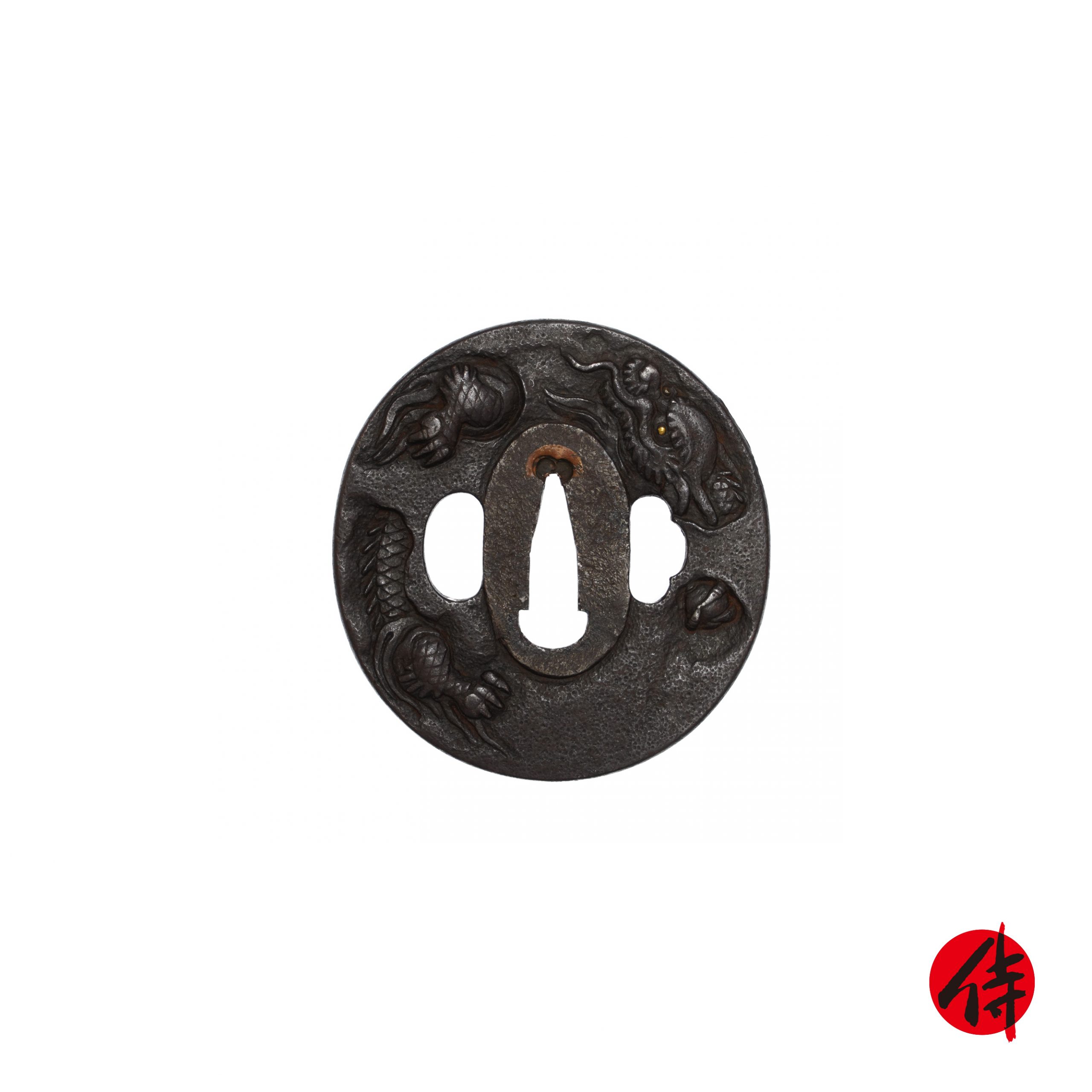
埋忠派
江戸
在銘
新刀 · Kyoto
現在43点販売中
埋忠派は桃山時代を代表する金工集団であり、刀装具制作において後藤家と並び称される名流である。その鐔制作の技術は他の追随を許さず、古来より「埋忠鐔」の名を以て絶賛されている。特に埋忠彦次郎を中心とする本流は、吉川広家指料の「碇切り」に代表される苔鑢の妙技で知られ、金無垢地に施された鑢目の高尚な品格は筆舌に尽くせないほどである。桃山期における溌剌とした芸術精神を反映し、鐔の世界に新生面を拓いた。 作風の特徴として、金無垢、素銅、真鍮など多様な地金を用い、絶妙な肉取りの平地に締まった肉置きを見せる。斜めに掛けられた鑢や角耳の鑢仕立ては埋忠の真髄であり、切羽台外周に施された微妙な角度の配慮は、拵や刀装具を熟知した技術者ならではの工夫である。意匠は桜花透、胡蝶透、葡萄文、菊唐草文など図案化された文様を陰透や平象嵌で表し、明寿が創始した赤銅・銀・金の平象嵌研出しの技法は極めて効果的である。家紋を散らした刻印打込や七宝象嵌など装飾性に富み、絵画的で雅な雰囲気が満ちている。 江戸時代に入ると京都金工界において後藤、平田、正阿弥と各派が互いに影響し合い、埋忠派もその作風に変化を見せている。埋忠寿斉の銘がある慶長十年正月の縁頭は、金無垢地に家紋散図を施した豪華な仕立てであり、上層武家の需要に応えた作例として知られる。金無垢の鐔は度々の激動期に鋳潰されたため桃山期以前の作品は極めて少なく、現存する作例は資料的にも貴重である。埋忠二字銘の作品も江戸前期に見られ、明寿に近い出来を示すものもある。
販売店の出品ページで鑑定書を確認できませんでした。日本刀および刀装具は通常、NBTHK(または NTHK)の鑑定を受けます。鑑定書がない場合、極めは販売店の見解にとどまり、第三者による確認は行われていません。ご購入前に販売店へ鑑定書の有無をお問い合わせのうえ、慎重にご判断ください。
Returns/exchanges limited to defects caused by shipping (except willful misconduct or gross negligence by the company); customers must contact within 72 hours of receiving the product.
Title: Umetada-style, Ryu Zu Description Oval-shaped Tsuba that has Kozuka and Kougai holes. A dragon is engraved as if it is it emerged from the clouds. If you focus on one of this dragon’s hands, you will find that it brings a ball-shaped object. It is the Nyoi Houju (如意宝珠, Cintāmaṇi); a fantasy jewel that fulfills any desire, gives out treasure, clothes, food, and drink. Moreover, it heals illness and suffering, removes evils, purifies muddy water, and prevents disasters. It is said this magical item is taken from the brain of the king of the dragon. Initially, the dragon is an imaginary creature found in ancient traditions or myths. Furthermore, it is a symbolic beast of auspicious signs. Its body is likened to nine animals: antlers are deer, the head is a camel, eyes are demons, the neck is a snake, belly is the Mizuchi (蛟, mythical animal in Japan which looks like a snake and have a horn and four legs), scales are fish, claws are falcons, palms are tigers, and ears are cows. It was thought that the dragon would reign at the top of all animals because of its odd-looking appearance. Although the whole letters cannot be read, the engraved inscription tells us that this Tsuba was made by a Umetada (埋忠) school’s maker. We cannot appraise if this signature is authentic, but we would like to introduce the Umetada school here. The first Umetada: Umetada Myouju (埋忠 明寿) was born in Yamashiro-no Kuni (山城国, Kyoto Pref. today) as the Shigetaka (重隆)’s second son. The Umetada family was a distinguished family who produced excellent swordsmiths, and Myouju succeeded to the household headship. He firstly served under Ashikaga Yoshiaki (足利義昭, 1537-1597, the 15th Shogun of the Muromachi Shogunate), and later his works were admired by famous Samurais such as Oda Nobunaga (織田信長, 1534-1582), Toyotomi Hideyoshi (豊臣秀吉, 1537-1598), and Tokugawa Ieyasu (徳川家康, 1543-1616). The Umetada family was a prestigious school of metalworks in Kyoto. They produced both Japanese swords and sword mountings. *As this item is an antique, please check each photo and ensure its condition. What is Tsuba? Tsuba is the hand-guard of the Japanese sword. High-class Samurai wore his Katana sword with its beautiful sword mountings such as Tsuba. Tsuba’s front design tends to be more decorative as this part was often seen by other Samurais when he was walking on the streets. Why is it that the sword mounting was important for Samurai? The sword mountings of the Japanese sword have many kinds of decorations such as handguards (Tsuba), sword hilt (Menuki), pommel (Fuchi Kashira). The Japanese sword worked as a weapon and as an object to show who he was. For example, it shows their personalities and beliefs. You could say that it is like decorations for smartphones today. We recommend you zoom in on the pictures of the sword fittings. When you do so, you can see the skill of Japanese metal engraving techniques. They are mainly made of iron and copper with inlays of gold, silver, and bronze. When it comes to handguard (Tsuba), each one has a different outline and weight. These sword fittings that have lived with Japanese swords of the same age might be worth as much as the Japanese swords. They are inconspicuous parts of the Japanese sword. Nevertheless, if you are knowledgeable or particular about it, you will become a connoisseur of the Samurai. 【About us】 Samurai Museum is located in Tokyo, Japan, exhibiting antique artifacts related to the Samurai history. Samurai Museum Shop is the place for those who are interested in Japanese culture and craftsmanship. We deal with antique Samurai swords/armor, traditional crafts made in Japan and so on. 【Payment method】 We accept payment through Stripe (Credit card), PayPal , Apple Pay or ChromePay, all of which are secure payment methods. Also, you don’t need to make an account on Stripe for the checkout. If you prefer other payment method, please contact us. You may either pay in JPY , USD , AUD , CAD , EUR , CHF or GBP . The price i
NihontoWatchBETA埋忠派
江戸
在銘
新刀 · Kyoto
現在43点販売中
埋忠派は桃山時代を代表する金工集団であり、刀装具制作において後藤家と並び称される名流である。その鐔制作の技術は他の追随を許さず、古来より「埋忠鐔」の名を以て絶賛されている。特に埋忠彦次郎を中心とする本流は、吉川広家指料の「碇切り」に代表される苔鑢の妙技で知られ、金無垢地に施された鑢目の高尚な品格は筆舌に尽くせないほどである。桃山期における溌剌とした芸術精神を反映し、鐔の世界に新生面を拓いた。 作風の特徴として、金無垢、素銅、真鍮など多様な地金を用い、絶妙な肉取りの平地に締まった肉置きを見せる。斜めに掛けられた鑢や角耳の鑢仕立ては埋忠の真髄であり、切羽台外周に施された微妙な角度の配慮は、拵や刀装具を熟知した技術者ならではの工夫である。意匠は桜花透、胡蝶透、葡萄文、菊唐草文など図案化された文様を陰透や平象嵌で表し、明寿が創始した赤銅・銀・金の平象嵌研出しの技法は極めて効果的である。家紋を散らした刻印打込や七宝象嵌など装飾性に富み、絵画的で雅な雰囲気が満ちている。 江戸時代に入ると京都金工界において後藤、平田、正阿弥と各派が互いに影響し合い、埋忠派もその作風に変化を見せている。埋忠寿斉の銘がある慶長十年正月の縁頭は、金無垢地に家紋散図を施した豪華な仕立てであり、上層武家の需要に応えた作例として知られる。金無垢の鐔は度々の激動期に鋳潰されたため桃山期以前の作品は極めて少なく、現存する作例は資料的にも貴重である。埋忠二字銘の作品も江戸前期に見られ、明寿に近い出来を示すものもある。
販売店の出品ページで鑑定書を確認できませんでした。日本刀および刀装具は通常、NBTHK(または NTHK)の鑑定を受けます。鑑定書がない場合、極めは販売店の見解にとどまり、第三者による確認は行われていません。ご購入前に販売店へ鑑定書の有無をお問い合わせのうえ、慎重にご判断ください。
Returns/exchanges limited to defects caused by shipping (except willful misconduct or gross negligence by the company); customers must contact within 72 hours of receiving the product.

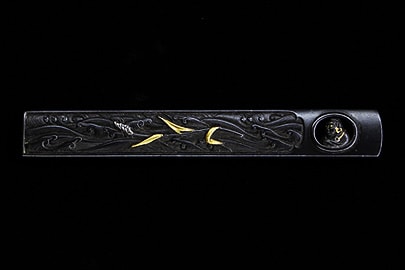

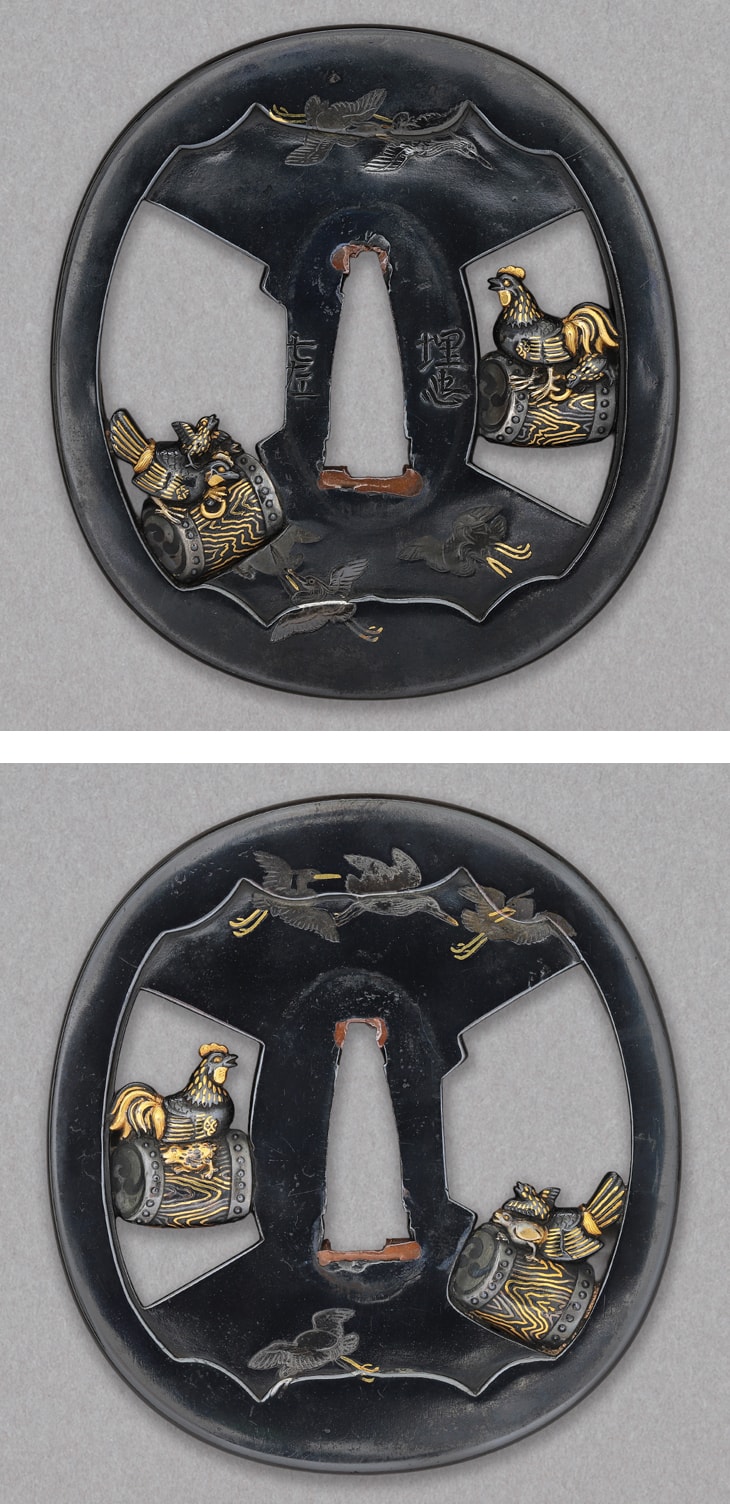
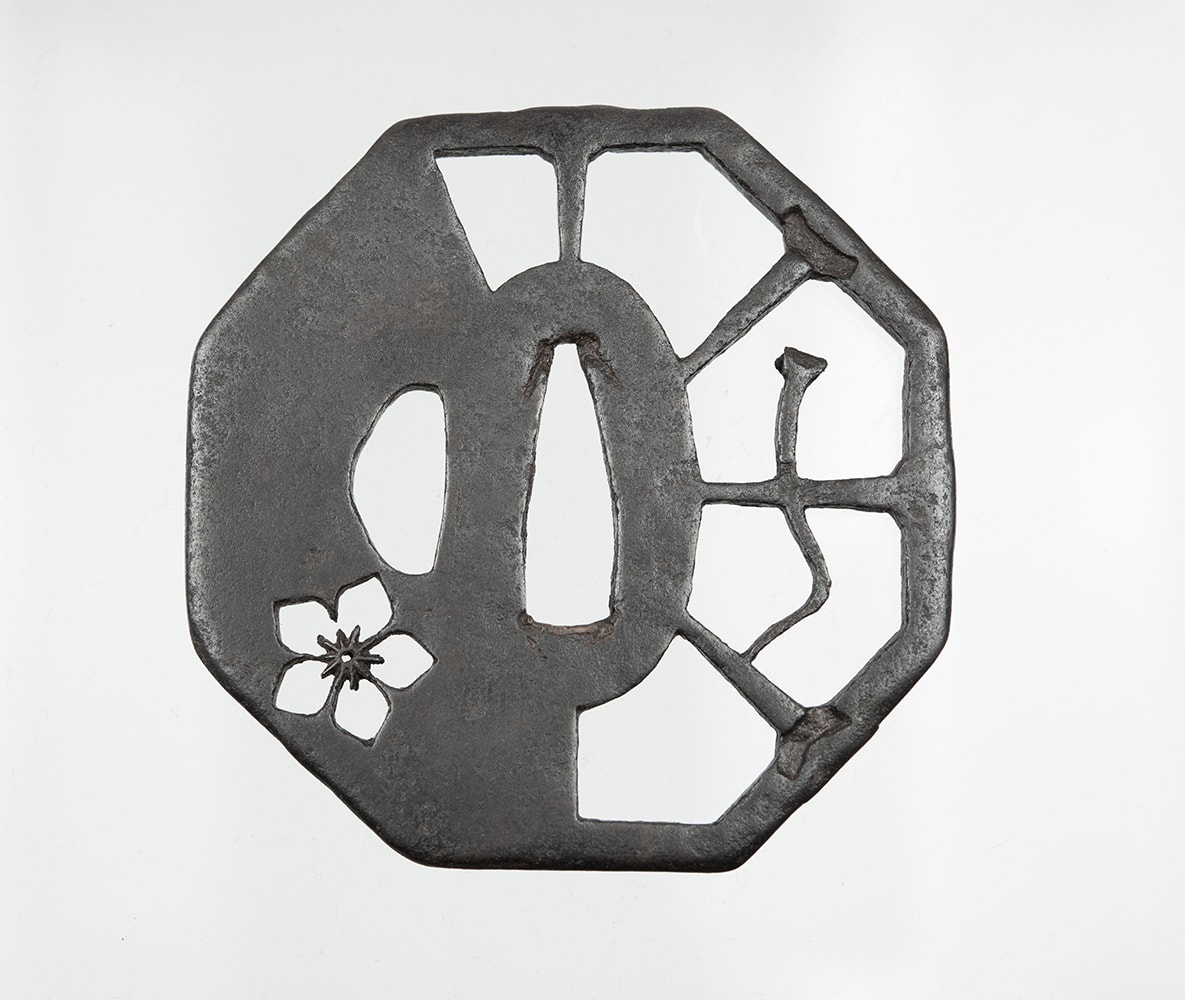
![Tsuba - Tokuho - by Umetada School - 鍔 [城州住埋忠 左右松透鍔][日本美術刀剣保存協会]特別保存刀装具](/_next/image?url=https%3A%2F%2Fitbhfhyptogxcjbjfzwx.supabase.co%2Fstorage%2Fv1%2Fobject%2Fpublic%2Flisting-images%2Fworld-seiyudo%2FL32382%2F00.jpg&w=2560&q=90)
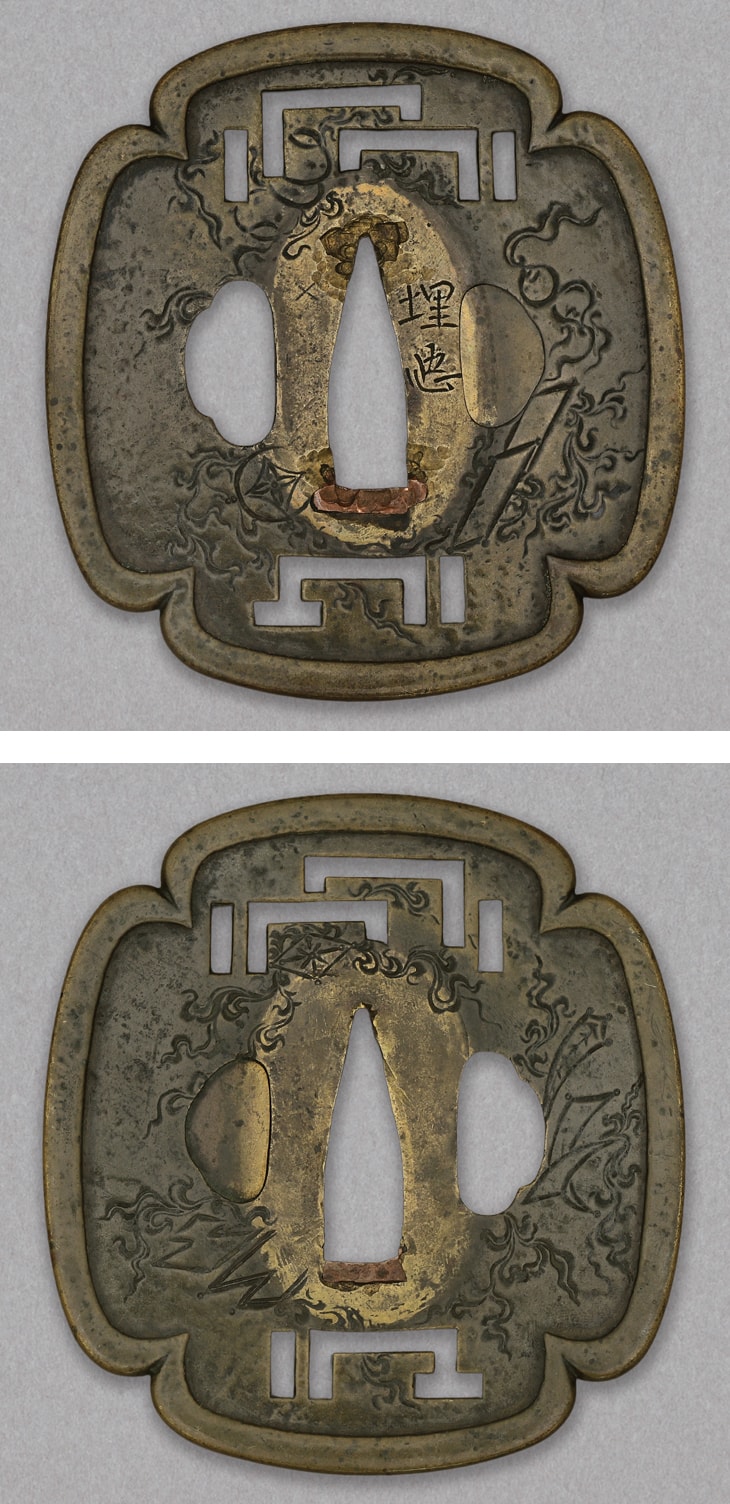
![Tsuba - Hozon - by Umetada School - 鐔[埋忠網代地紙散図大小鐔][日本美術刀剣保存協会]保存刀装具](/_next/image?url=https%3A%2F%2Fitbhfhyptogxcjbjfzwx.supabase.co%2Fstorage%2Fv1%2Fobject%2Fpublic%2Flisting-images%2Fworld-seiyudo%2FL32643%2F00.jpg&w=2560&q=90)