説明
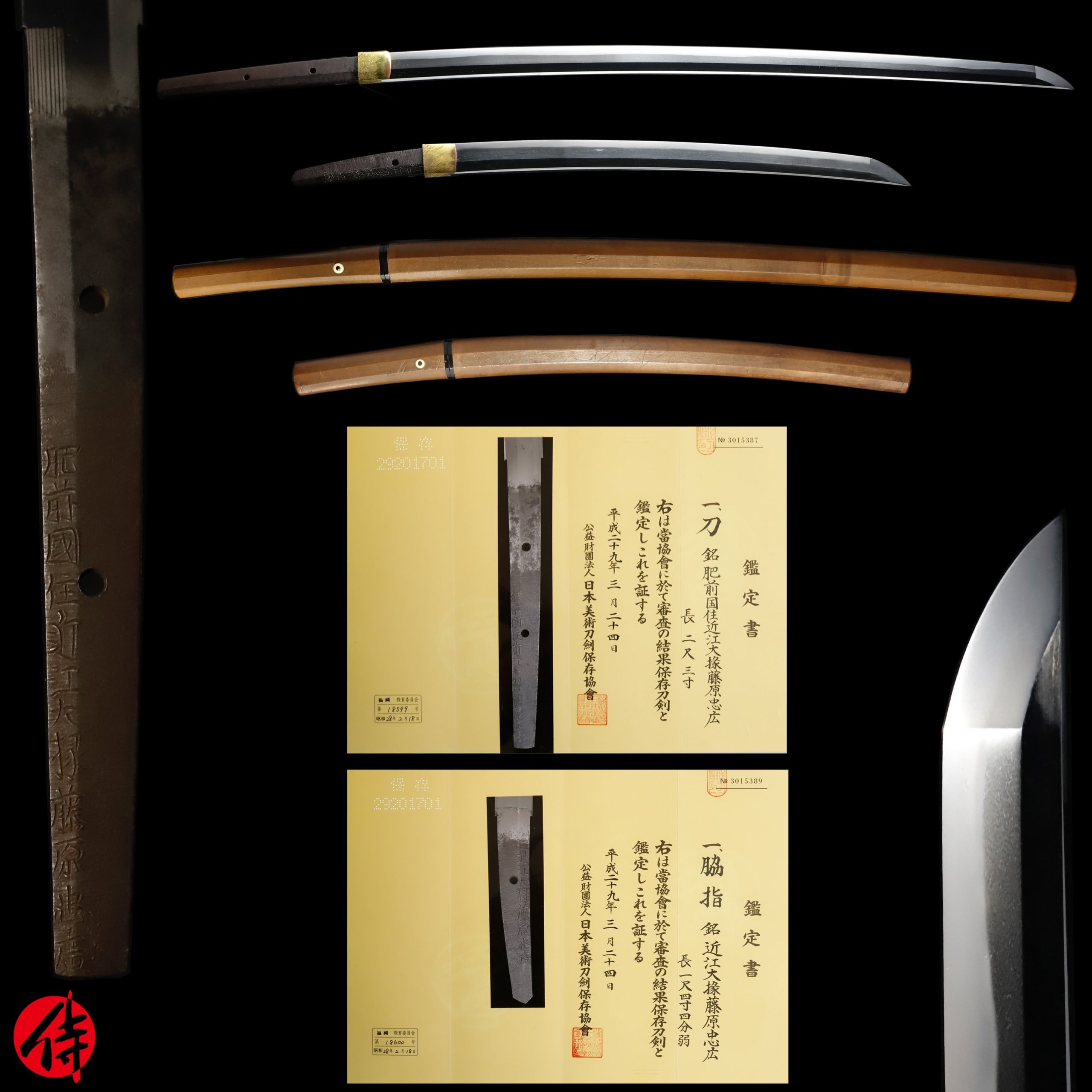
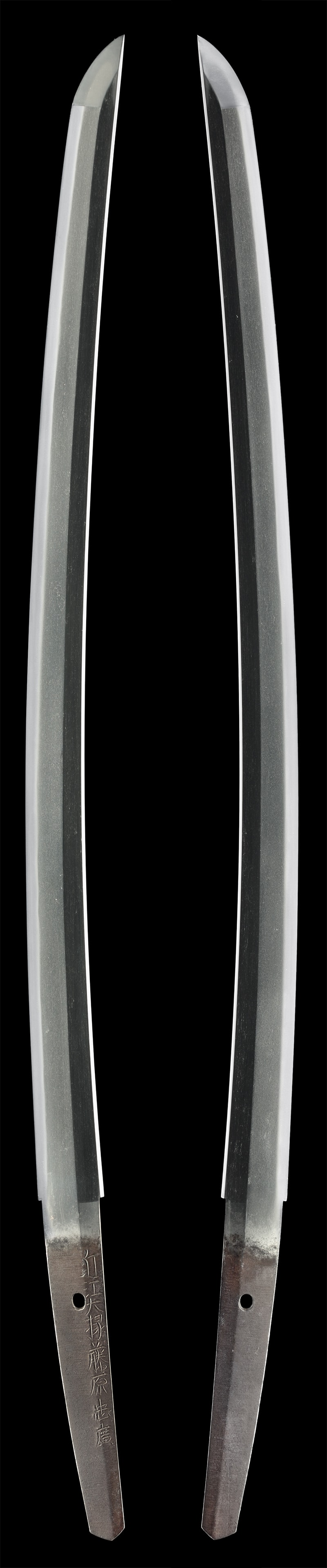
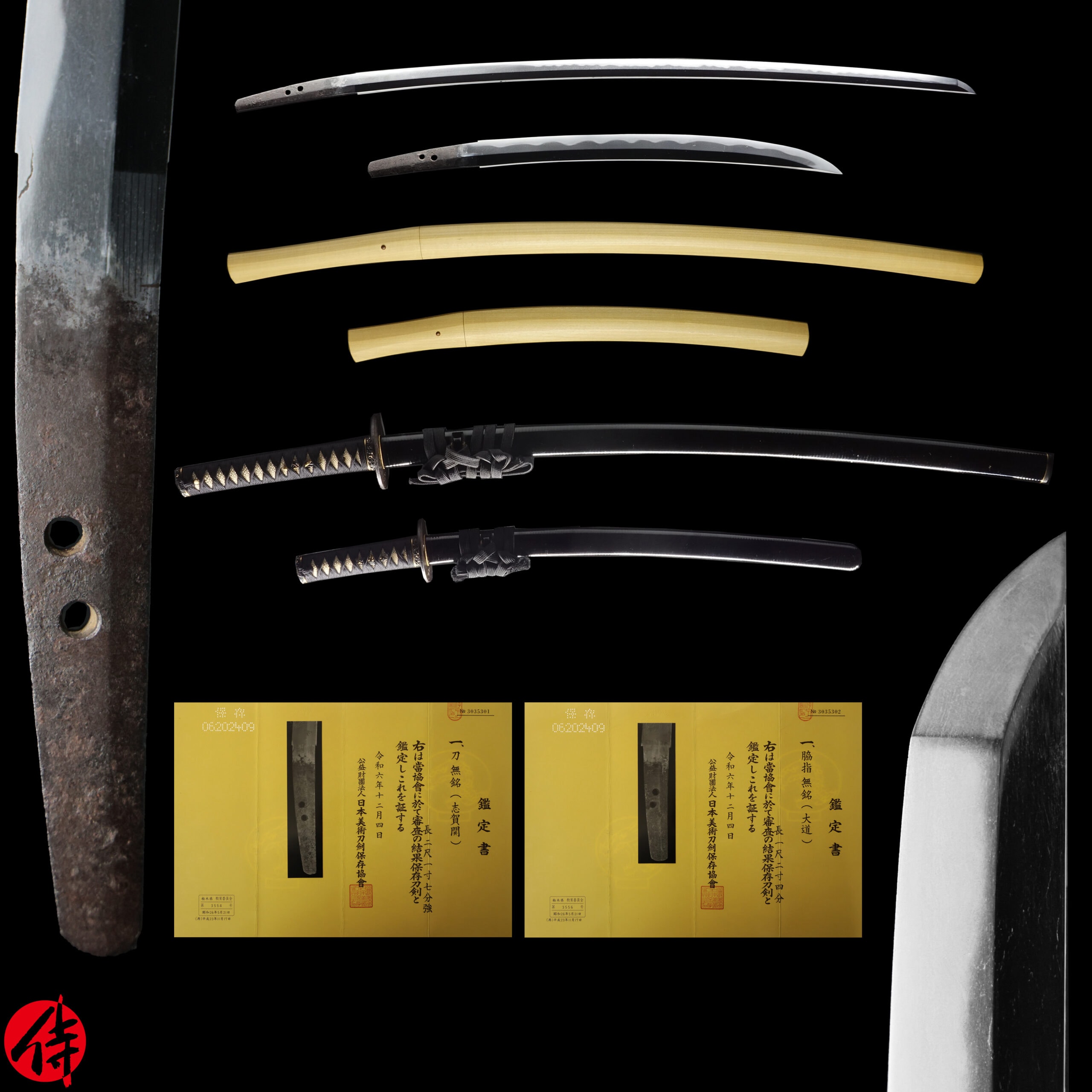
Antique Japanese Sword Daisho(Katana&Wakizashi) Signed by Fujiwara Tadahiro with NBTHK
Hozon
Certificate
【Description】
Omi no Daijyo Fujiwara Tadahiro(近江大掾藤原忠広) is the first son of the first-gen Tadayoshi. Tadayoshi(Father) is one of the most famous swordsmiths in the early Edo period and made Hizeon province(today’s Fukuoka prefecture) a prominent sword-forging place back then.
Tadahiro learned sword-forging techniques under his father’s supervision until Tadayoshi died in 1632 (9th year of the Kan-Ei era).
Tadahiro took over the school his father ran when he was only 19 years old, and he started to make a sword in the same year. This fact indicates that he was excellent at making swords, and the apprentices of his father(Tadayoshi) supported him to run the school.
Tadahiro received the title of Omi Daijyo in 1641 (the sixth year of the Genroku era). He kept forging swords for almost 60 years for the Nabeshima clan, strong feudal lords.
Tadahiro died at the age of 81 in 1693 and left a large number of excellent swords before his decease.
He had many famous apprentices, such as the third-gen Mutsu Daijyo Tadayoshi, Harima Daijyo Tadakuni, and Kawachi Daijyo Masahiro.
Fujiwara Tadahiro and other swordsmiths in the Hizen province worked under the auspices of Nabeshima clan. The swordsmiths in Hizen province were able to produce beautiful Jigane-patterned blades, also known as Hizen To, using and mixing carbon steel made in Netherland.
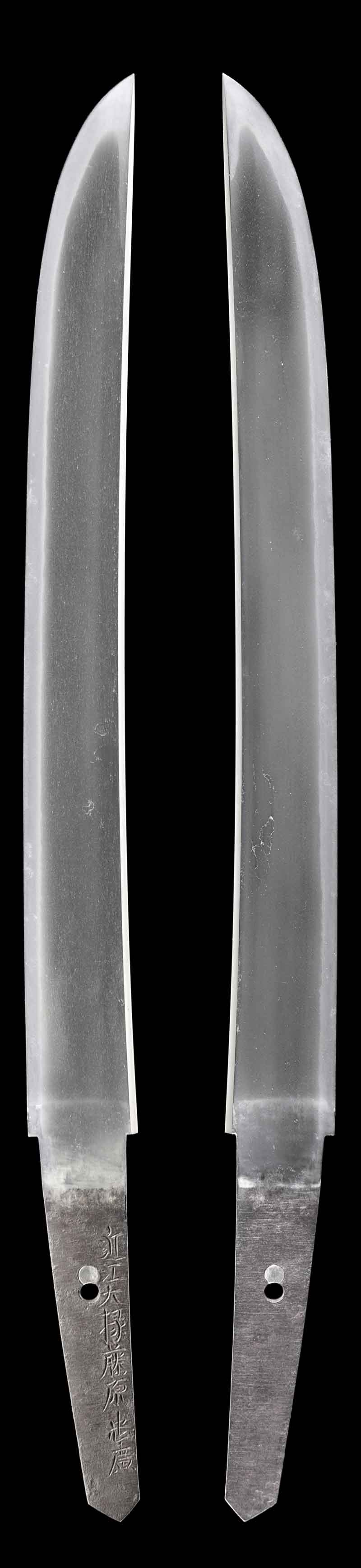
Most of Tadahiro’s work has Hamon types of Suguha and Chojimidare. These blades have Suguha Hamon, and you can see beautiful Jigane, which is famous for blades made in Hizen province. Swords forged by Tadahiro are also famous among Japanese sword collectors because of his exquisite craftsmanship and history.
Daisho is a pair of swords that contain Katana and Wakizashi. Back in Samurai time, Samurai were required to carry Daisho in public places. Carrying Daisho also showed social status among Samurai. Whoever owned this pair of Daisho when they were made must have ordered Tadahiro directly. We assume it would be likely a member of Nabeshima clan. These two blades were forged by the same swordsmith, which is quite a rare find.
What is Daisho?
Daisho is a pair of two Japanese swords Samurai carried. During the Edo period, having Daisho in public places was considered social status for Samurai. Furthermore, Samurai were required to wear them under the law back then. Daisho is written as 大=Big and 小=Small. Dai part means Katana, and Sho part means Wakizashi.
Appraisal
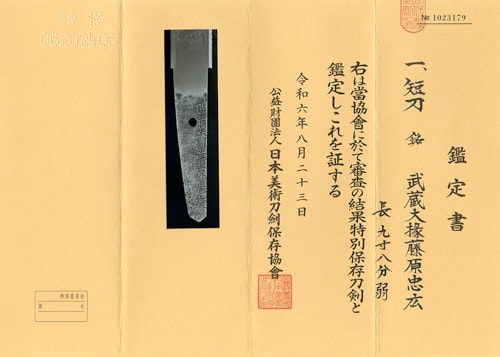
These Daisho are appraised as a Hozon certificate issued by NBTHK. This authentication paper was only given to Japanese swords, worth preserving by Nihon Bijutsu Touken Hozon Kyokai(the Society for the Preservation of the Japan Art Sword).
If you like to see more detailed conditions, please feel free to contact us.
【 Blade】
-Katana
Cutting Edge Length(Nagasa)
:
69.7 cm( 27.4 inches)
Curvature(Sori)
:
1.2 cm( 0.47 inches)
-Wakizashi
Cutting Edge Length(Nagasa)
:
31.6 cm( 12.4 inches)
Curvature(Sori)
:
1.2 cm( 0.47 inches)
Hamon
:
The crystalline structure which forms along the cutting edge of a blade as a result of the hardening process
Jimon(Jihada)
:
visible steel surface pattern created by folding and hammering during forging process
-Katana
-Wakizashi
Nakago
:
Nakago is the tang of the Japanese sword.
Japanese swordsmiths left the black rust on the tang because it prevents red rust while the tang is in its handle. And the discoloration of the tang was created over time, and it is a great indicator for a Japanese sword specialist to estimate when the sword was forged.
Habaki
:
Habaki is the equipment to make the blade not touch its scabbard inside. It prevents the blade from getting rusty and chipped.
Authentication Paper
:
NBTHK Hozon Certificate for the blade
NBTHK
, also known as Nihon Bijutsu Touken Hozon Kyokai (the Society for the Preservation of the Japan Art Sword), is one of the oldest Japanese sword appraising organizatio