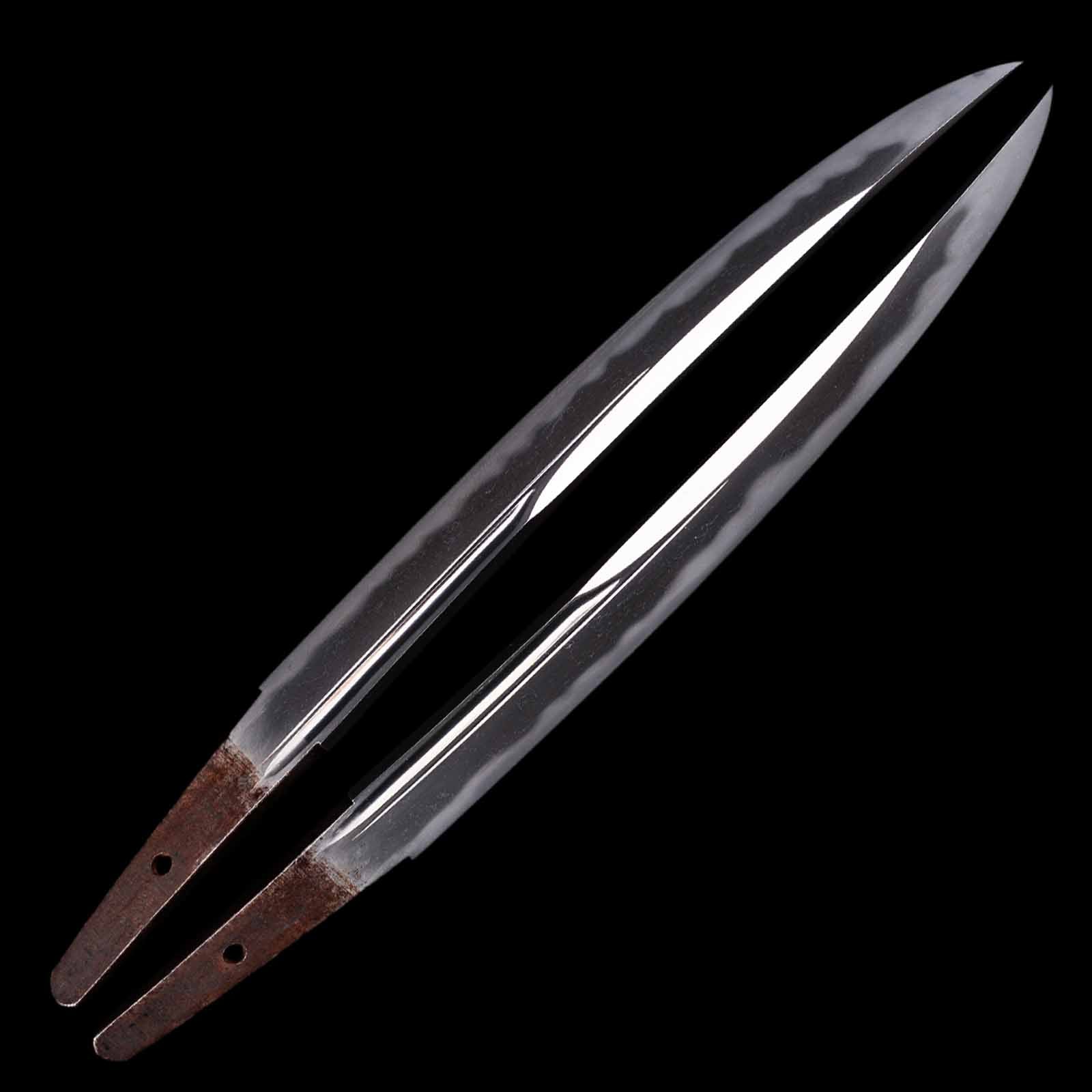
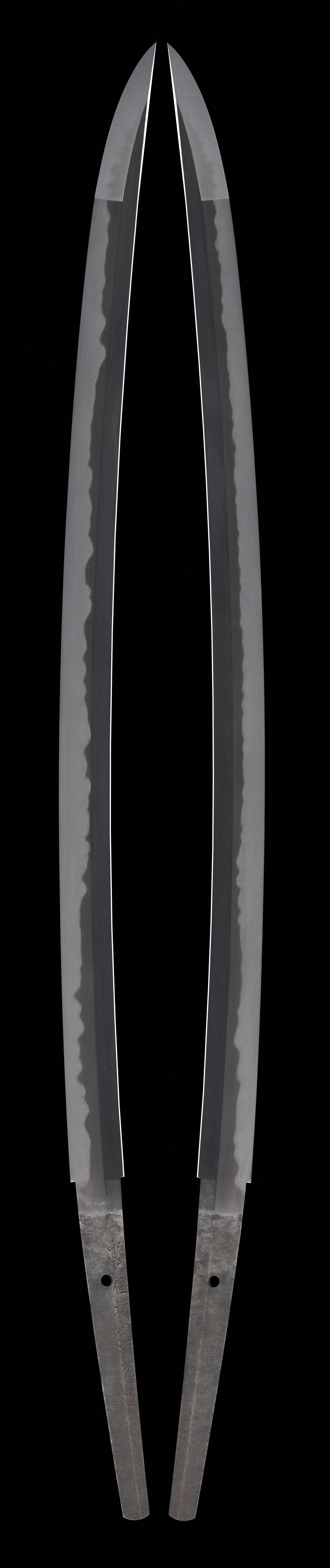
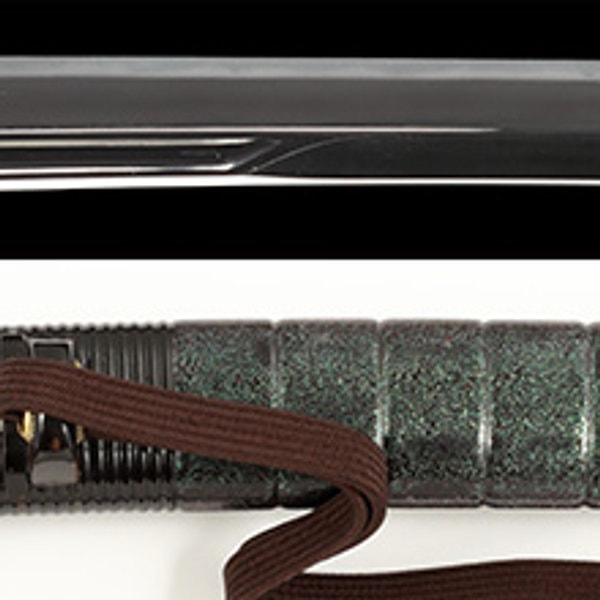
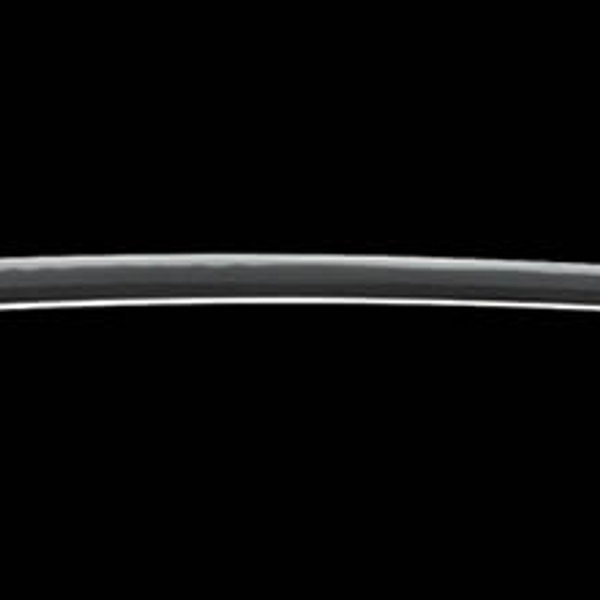
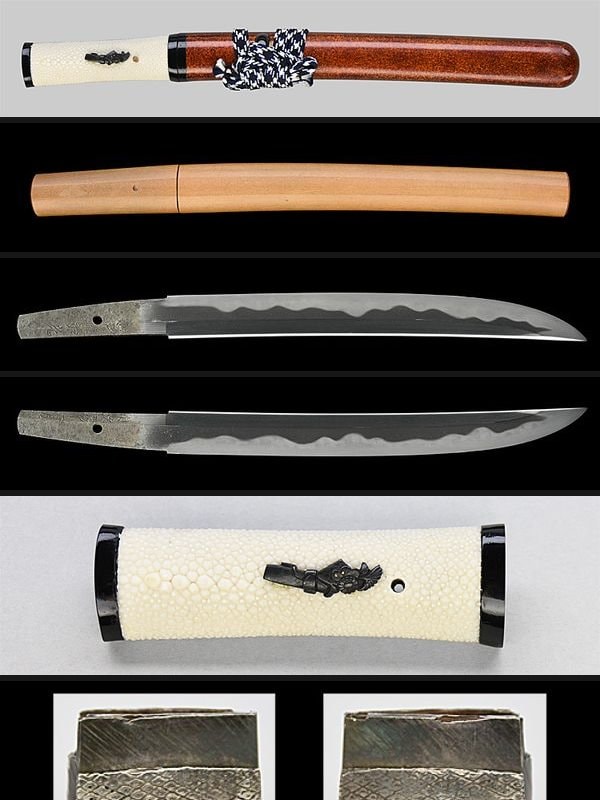
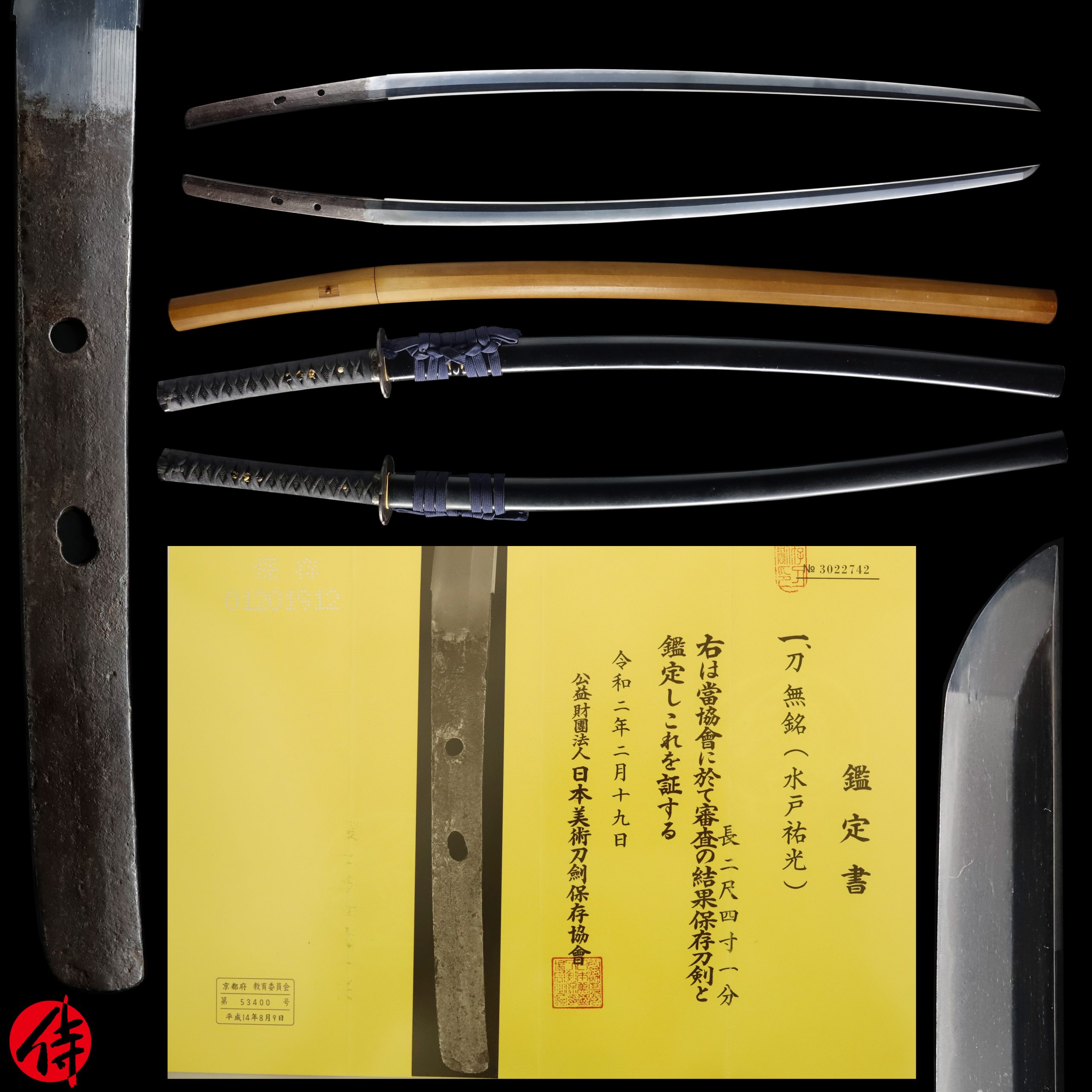
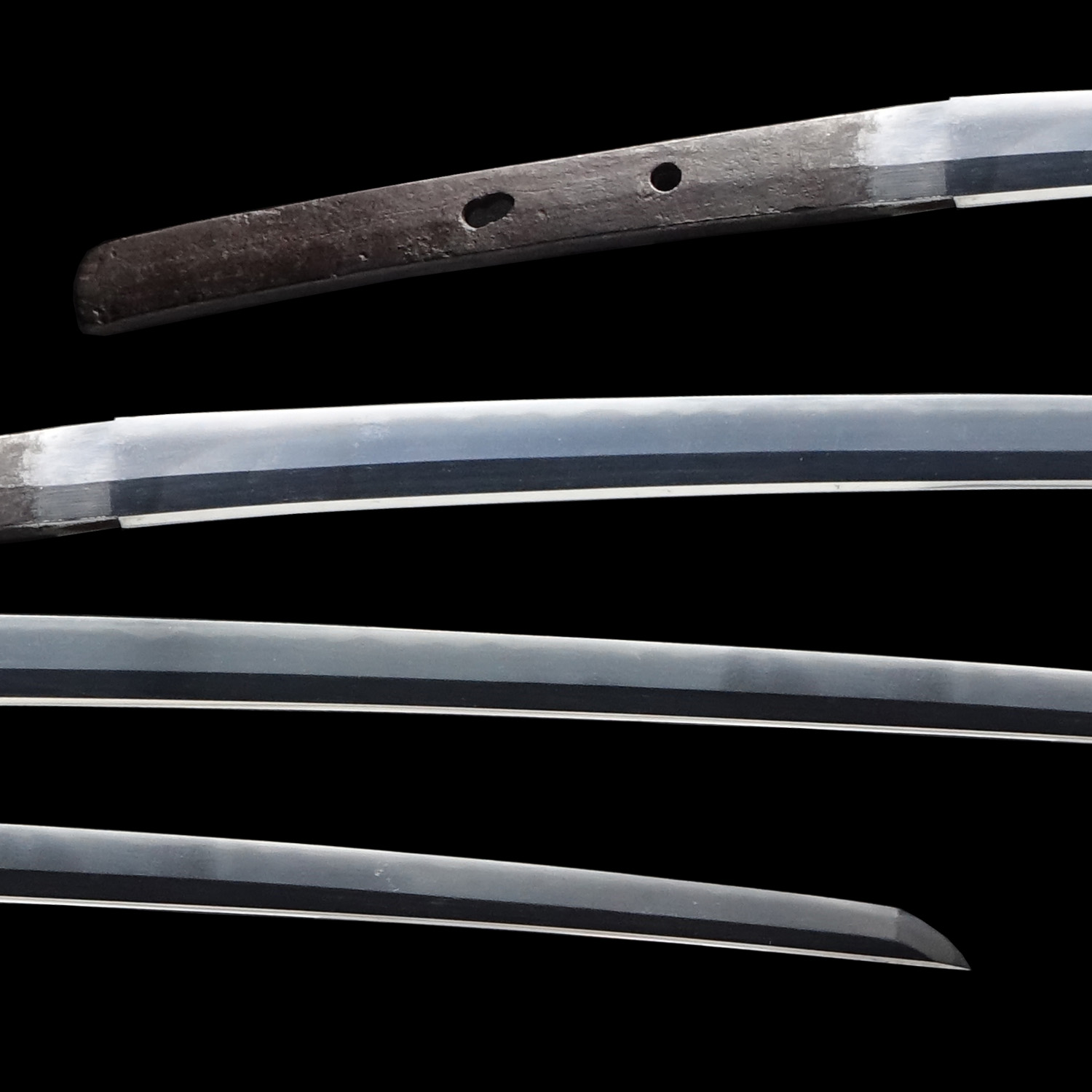
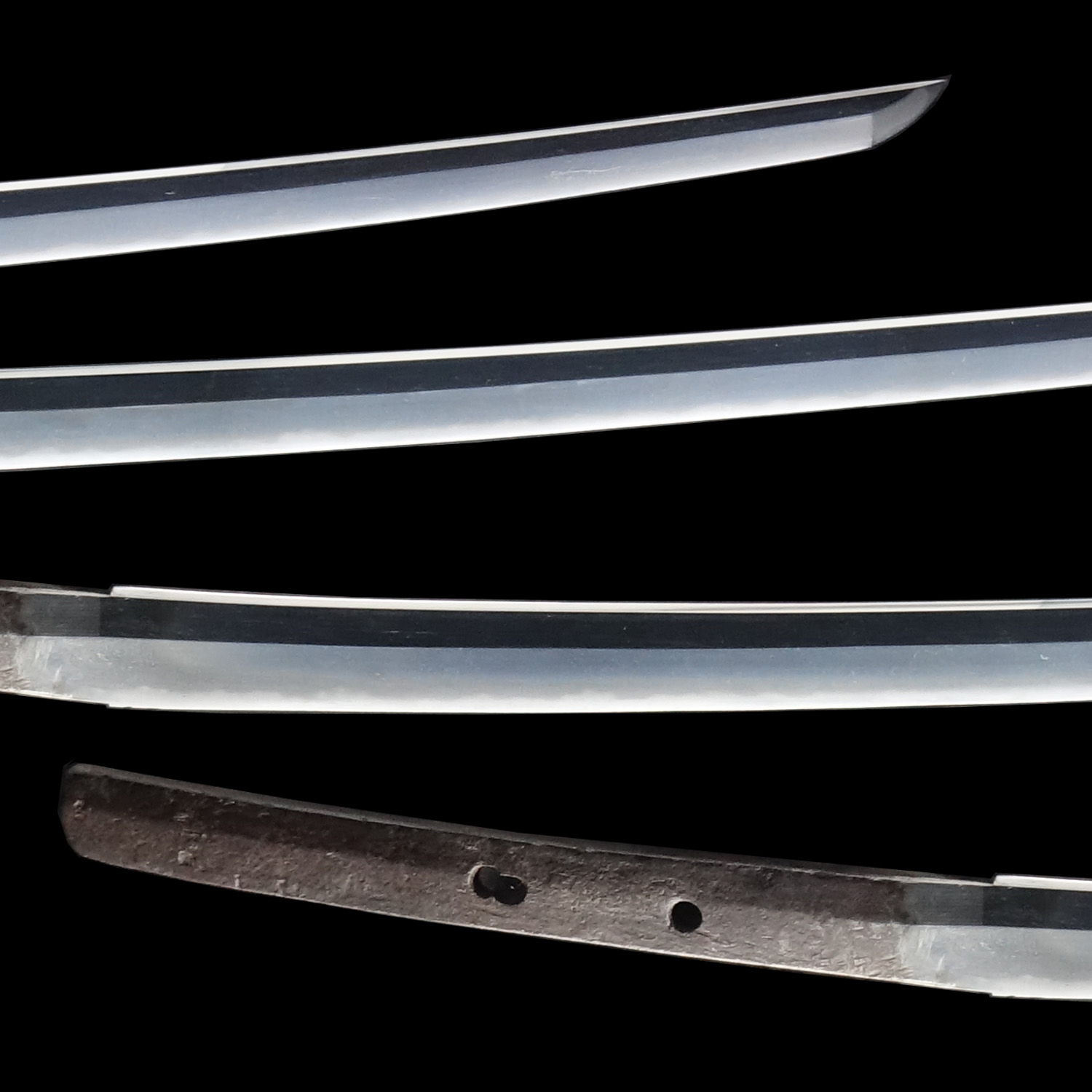
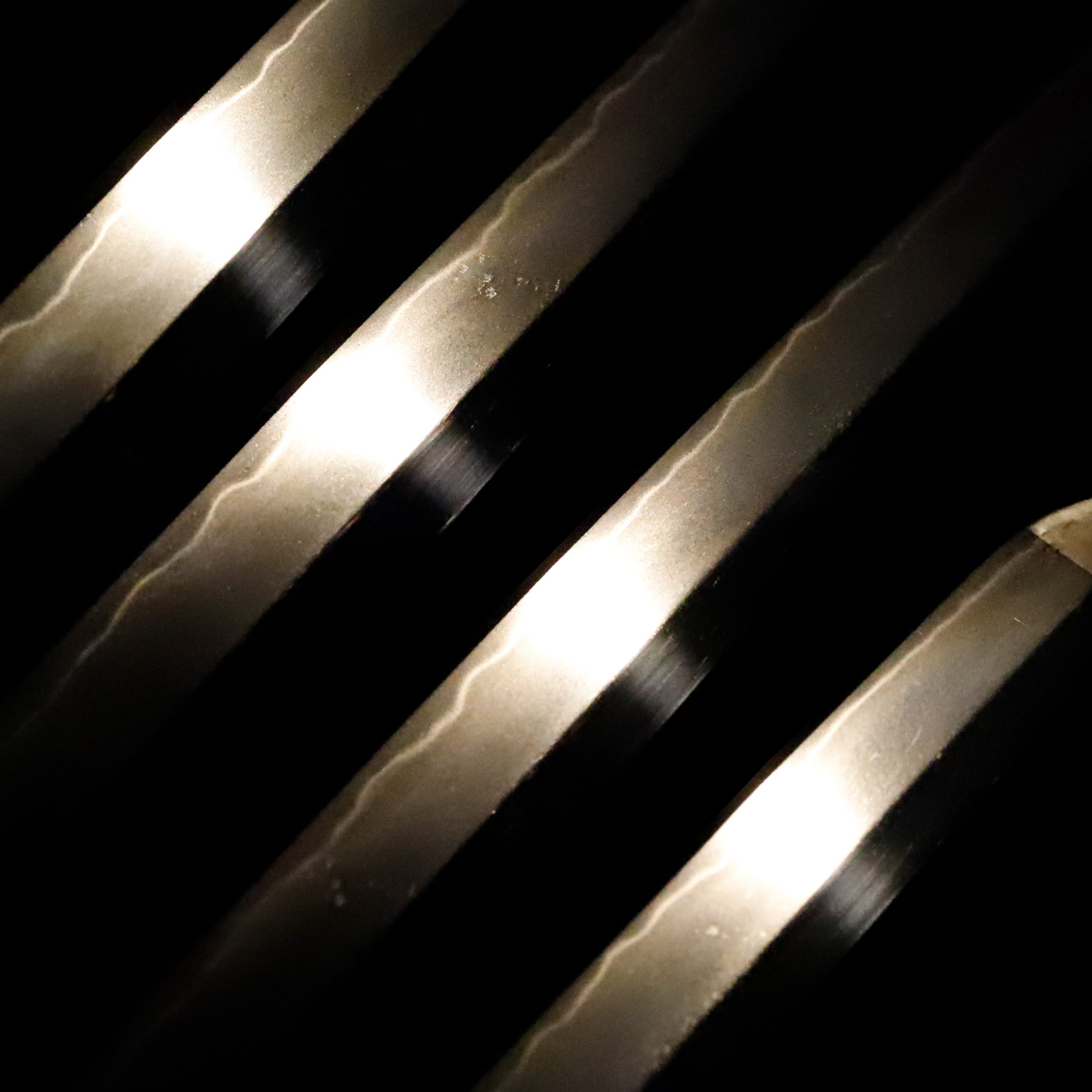
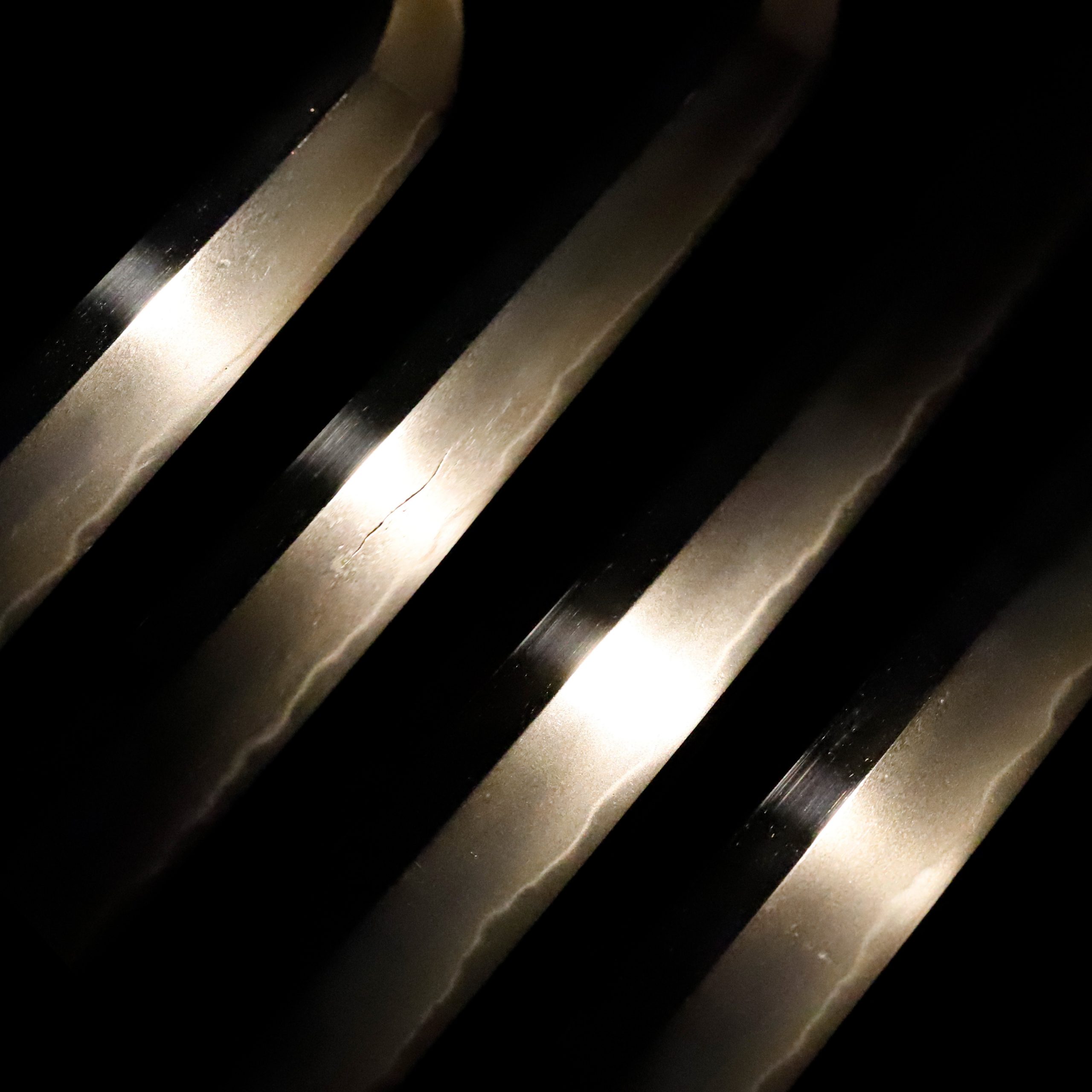
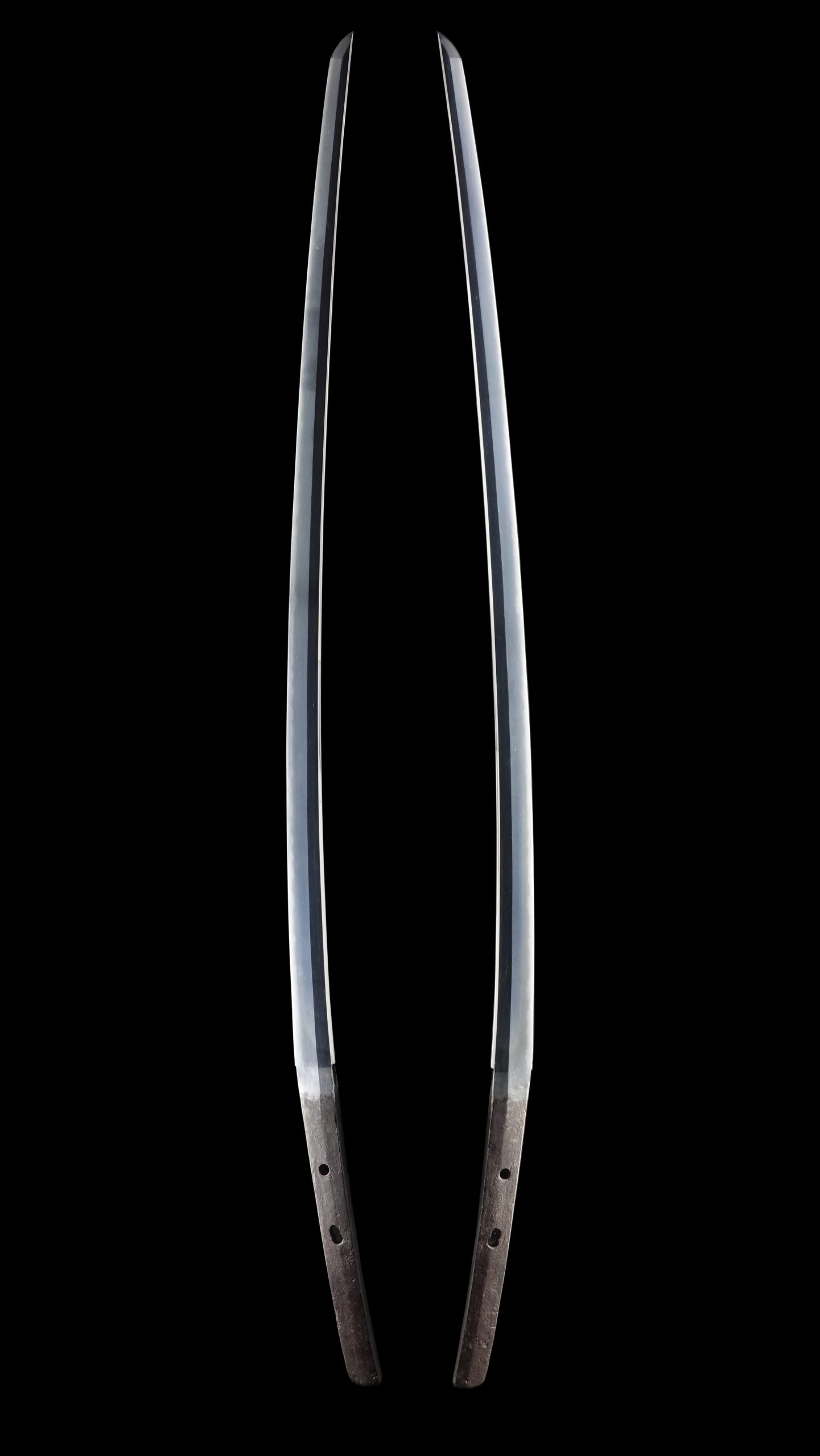
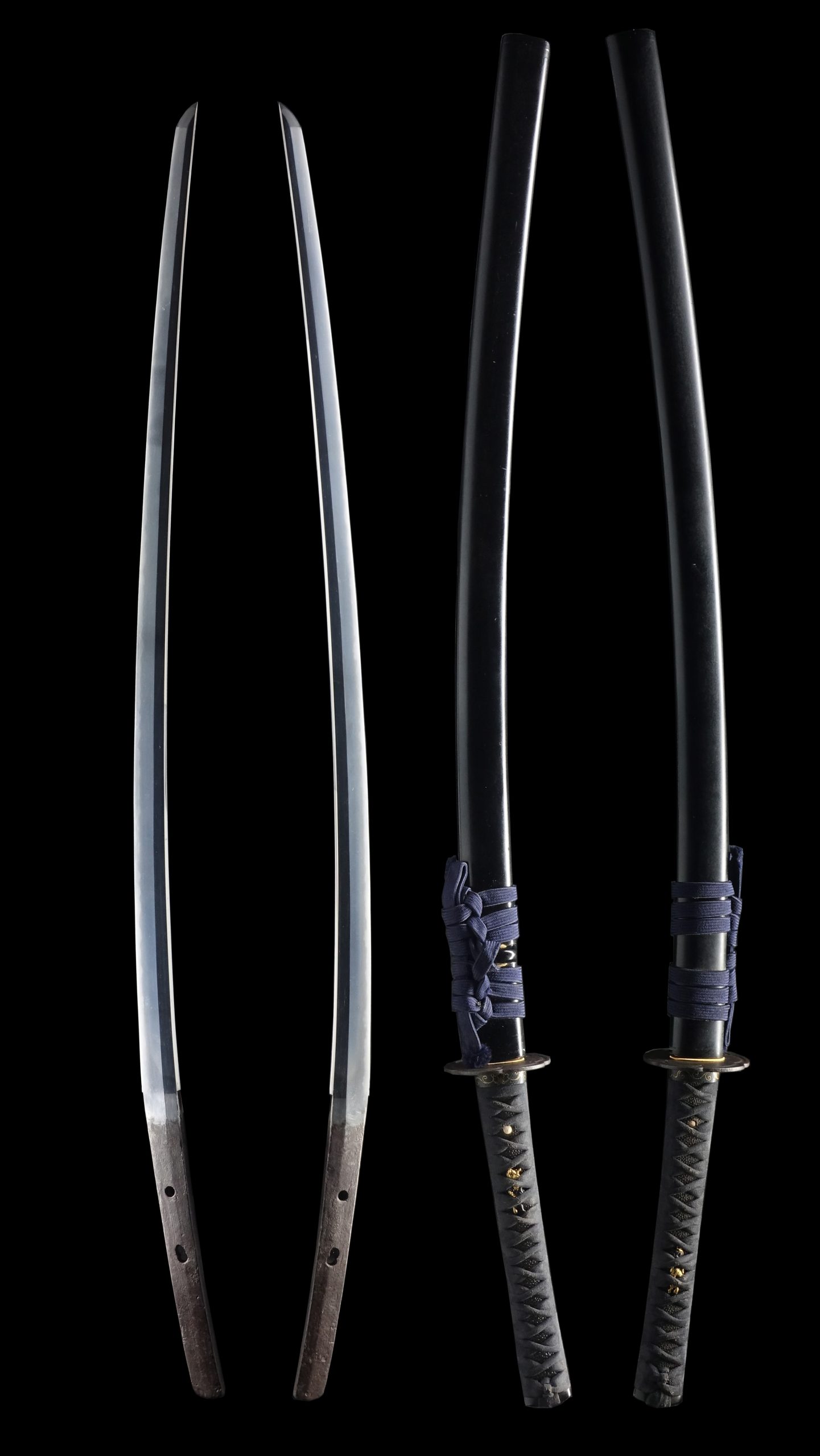
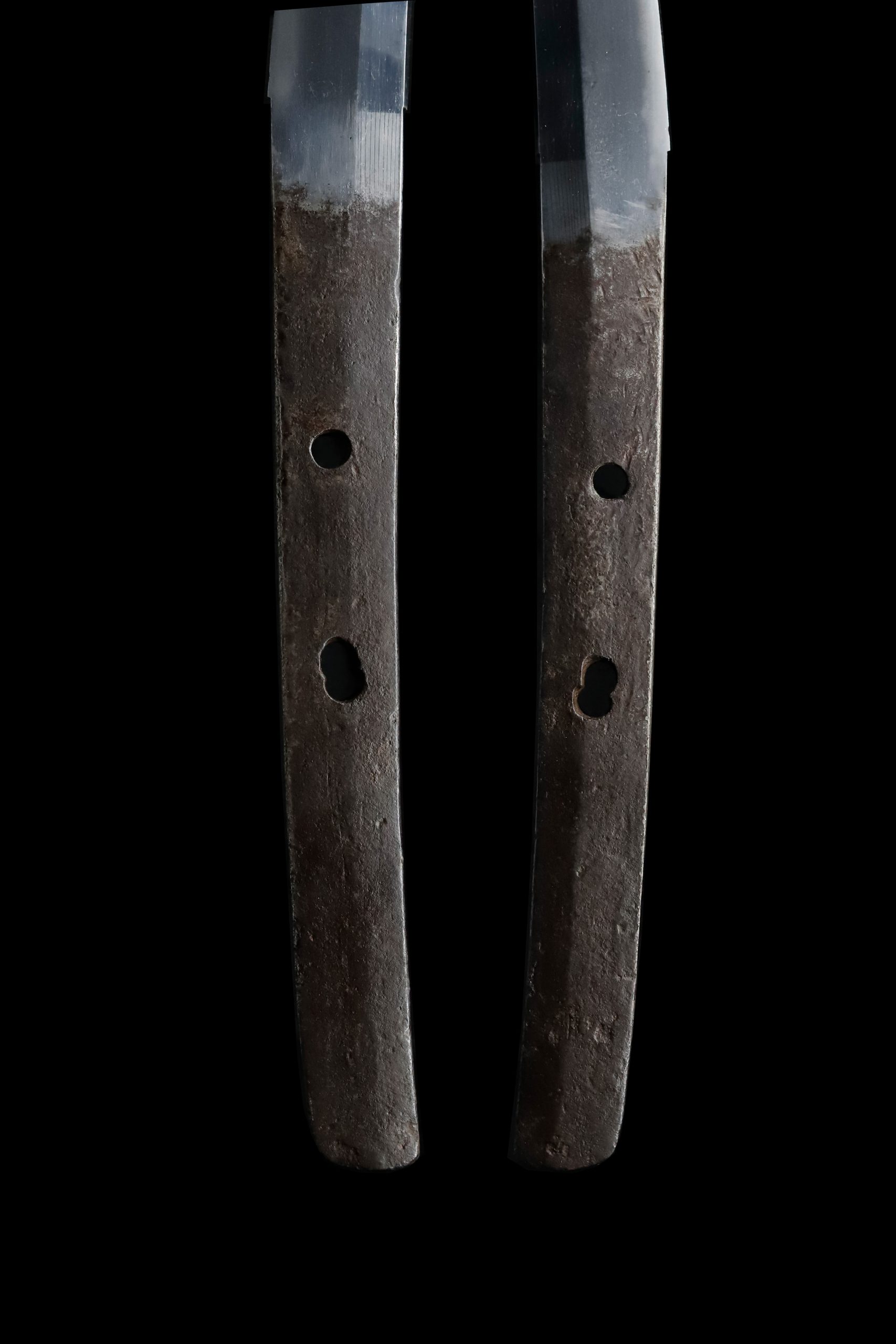
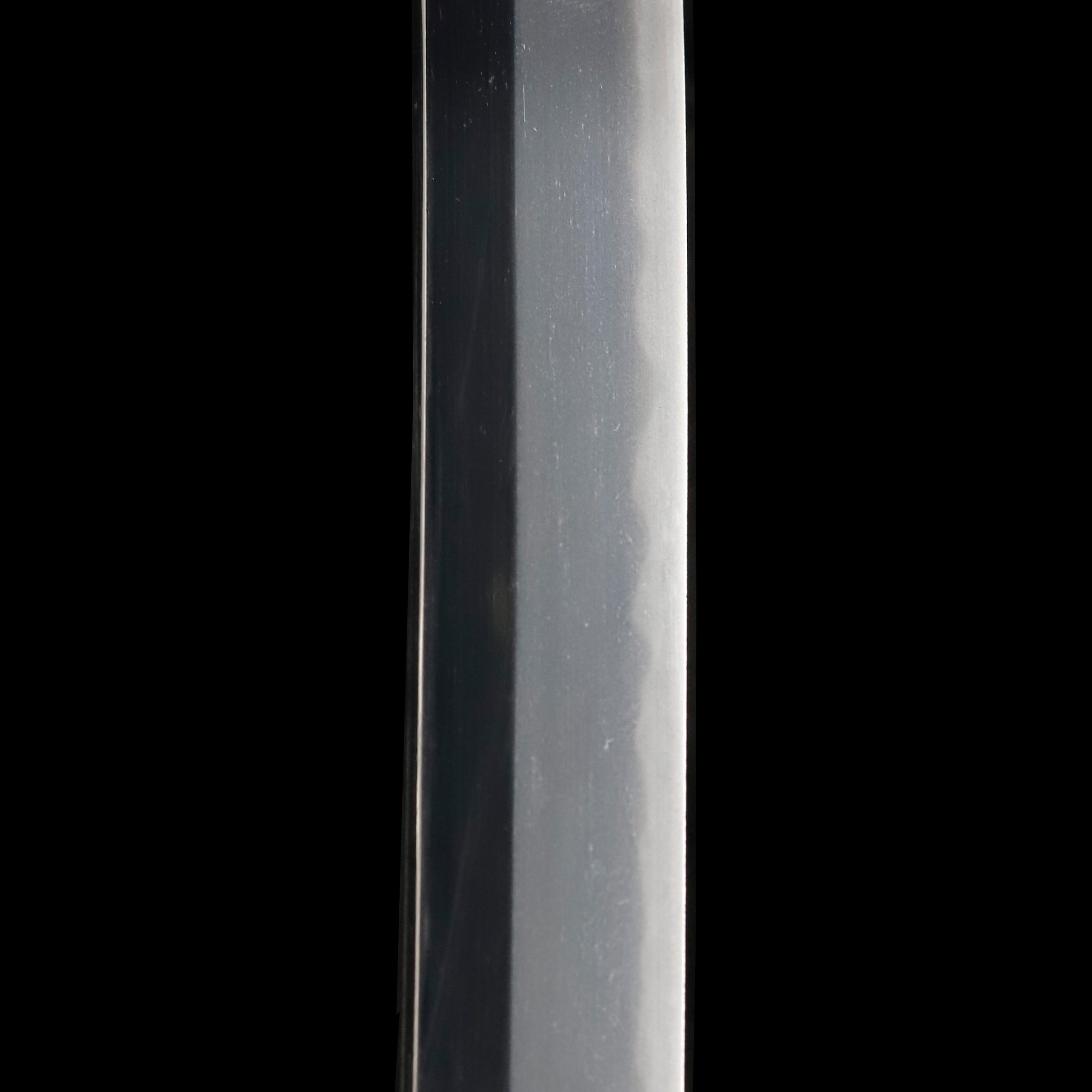
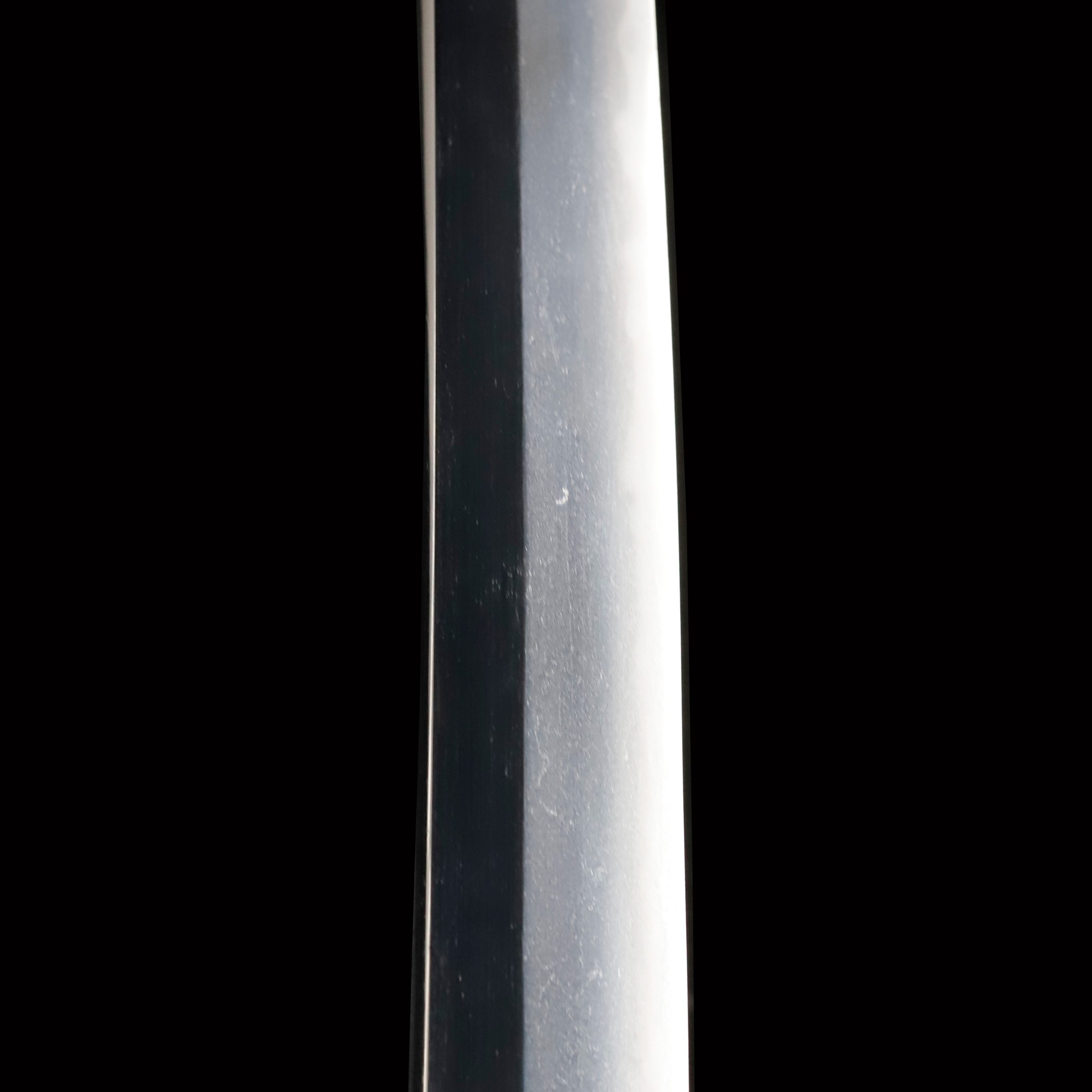
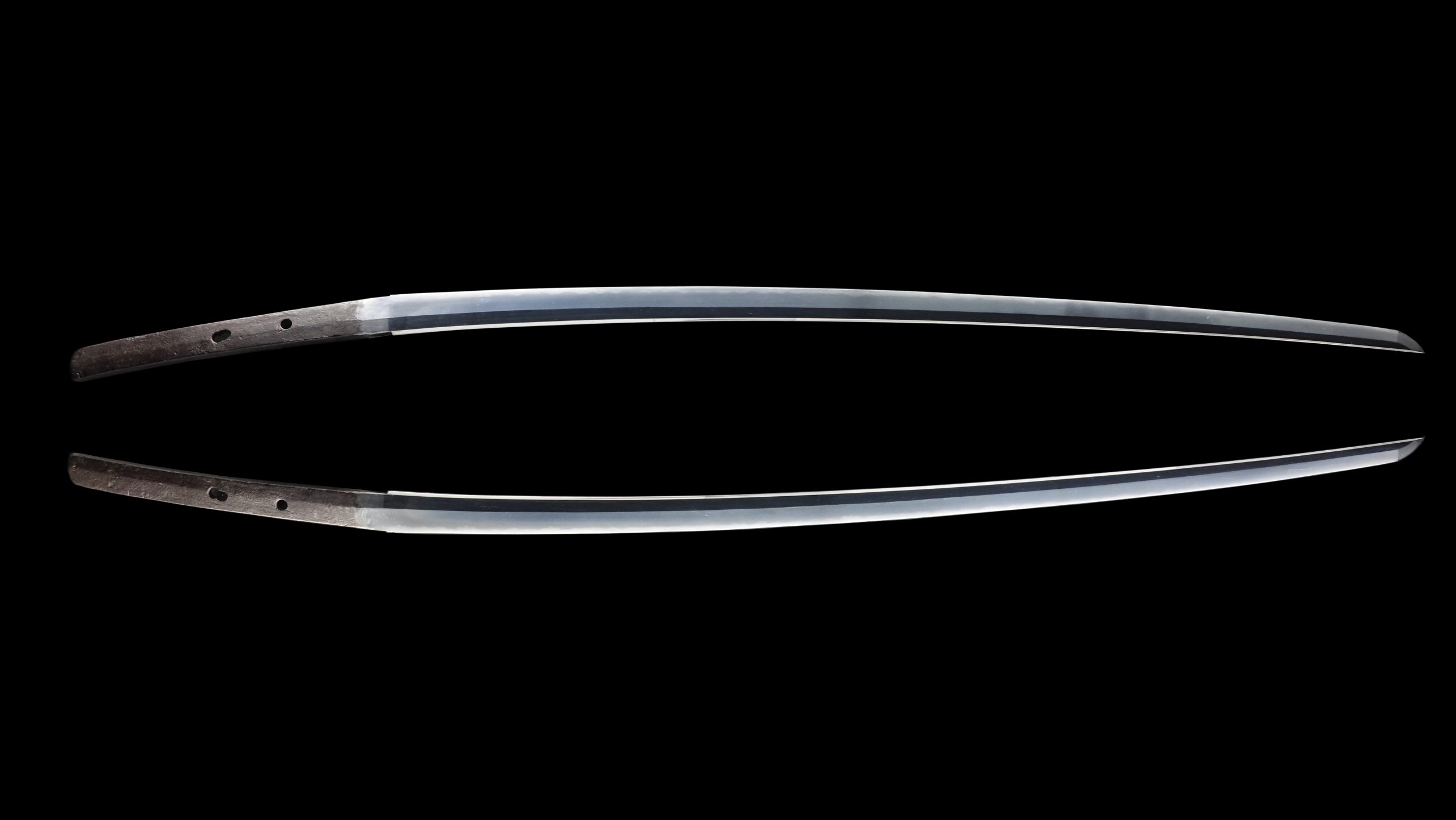
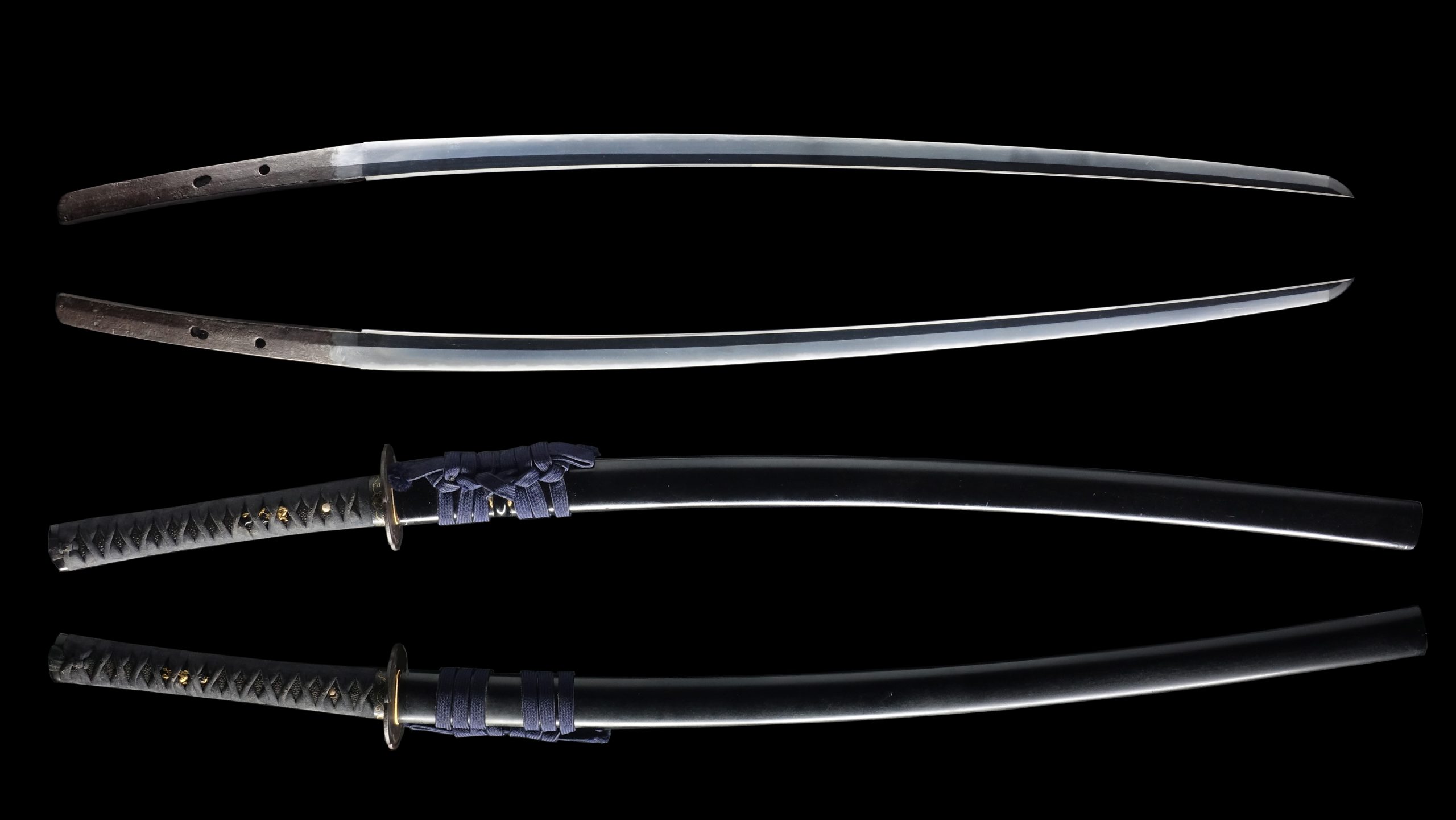
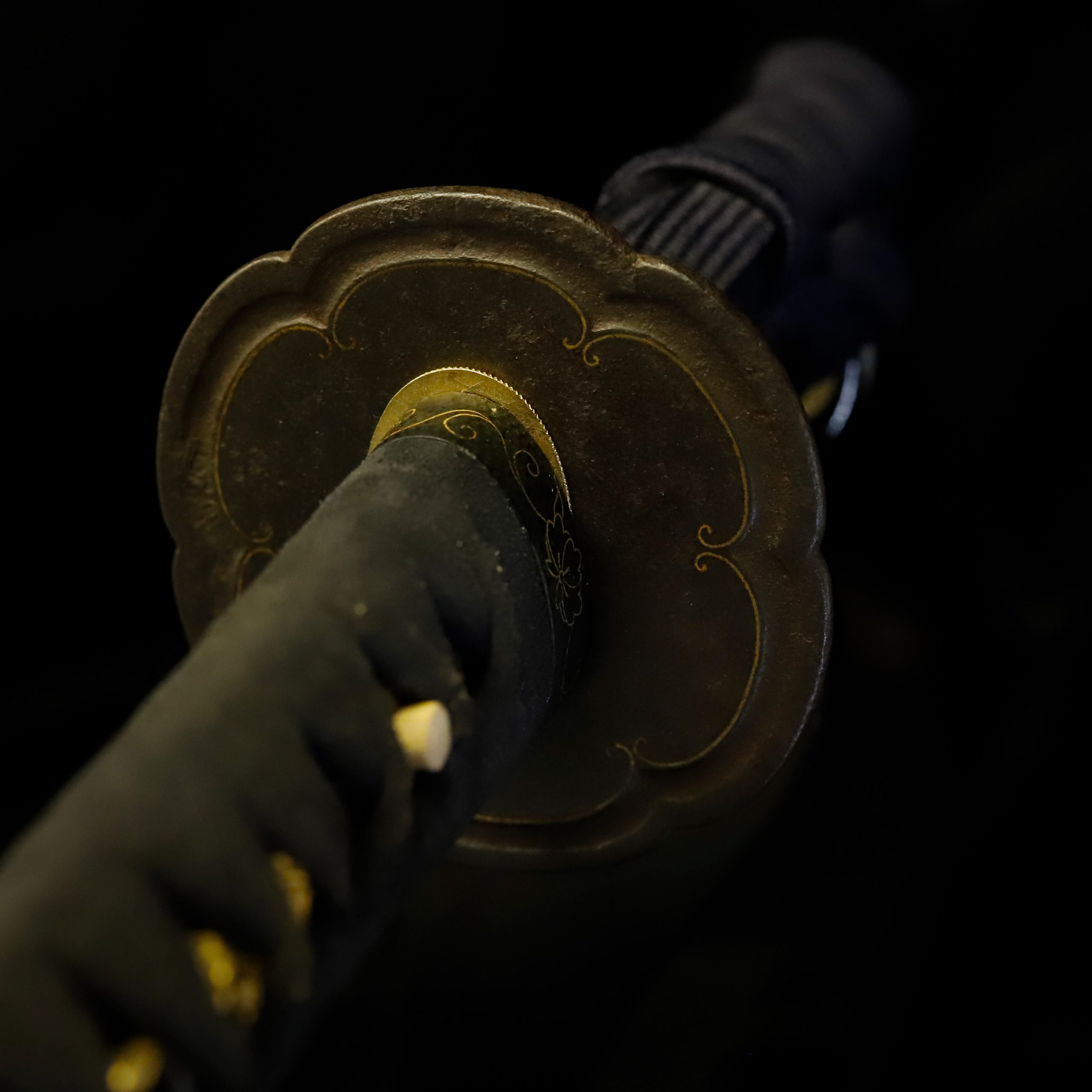
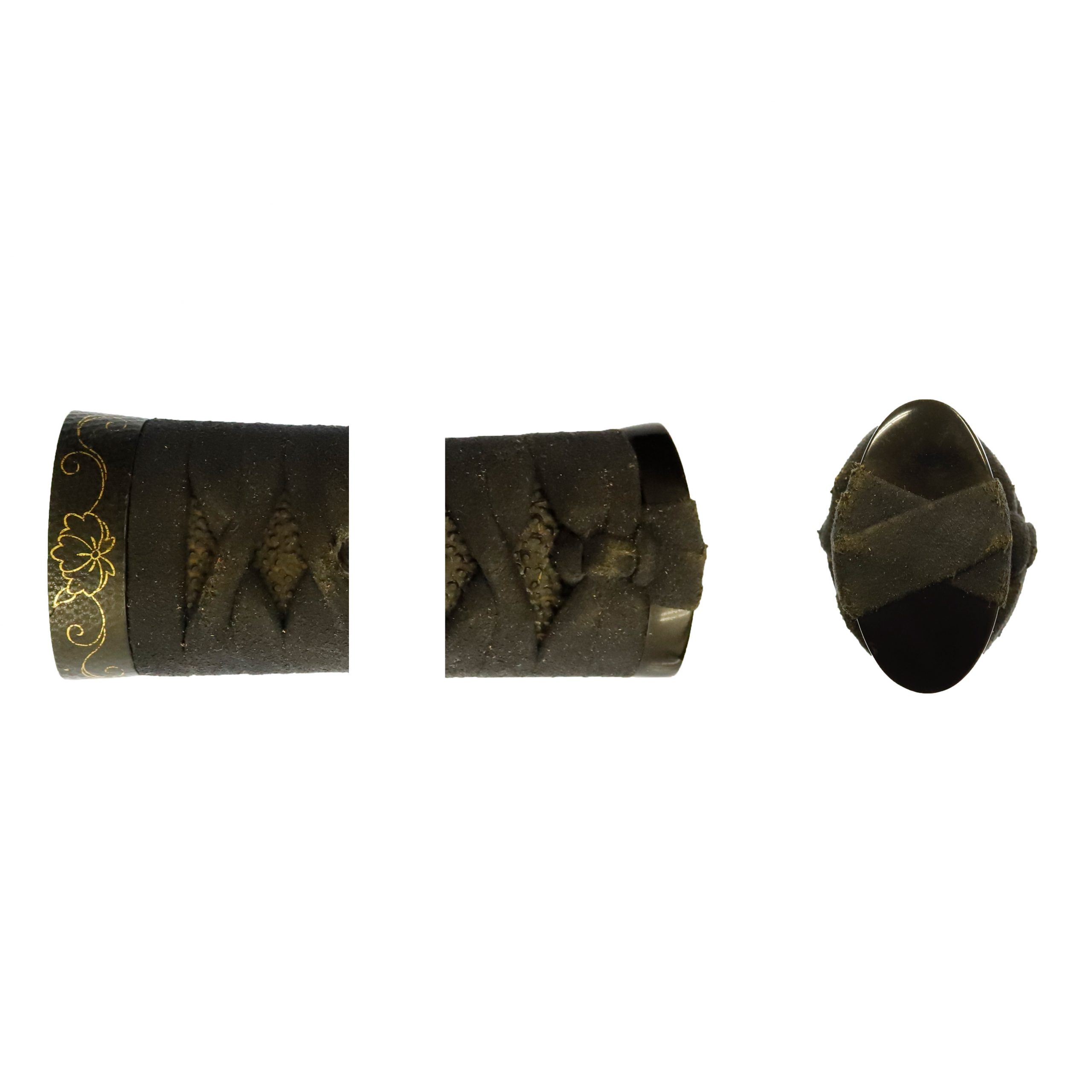
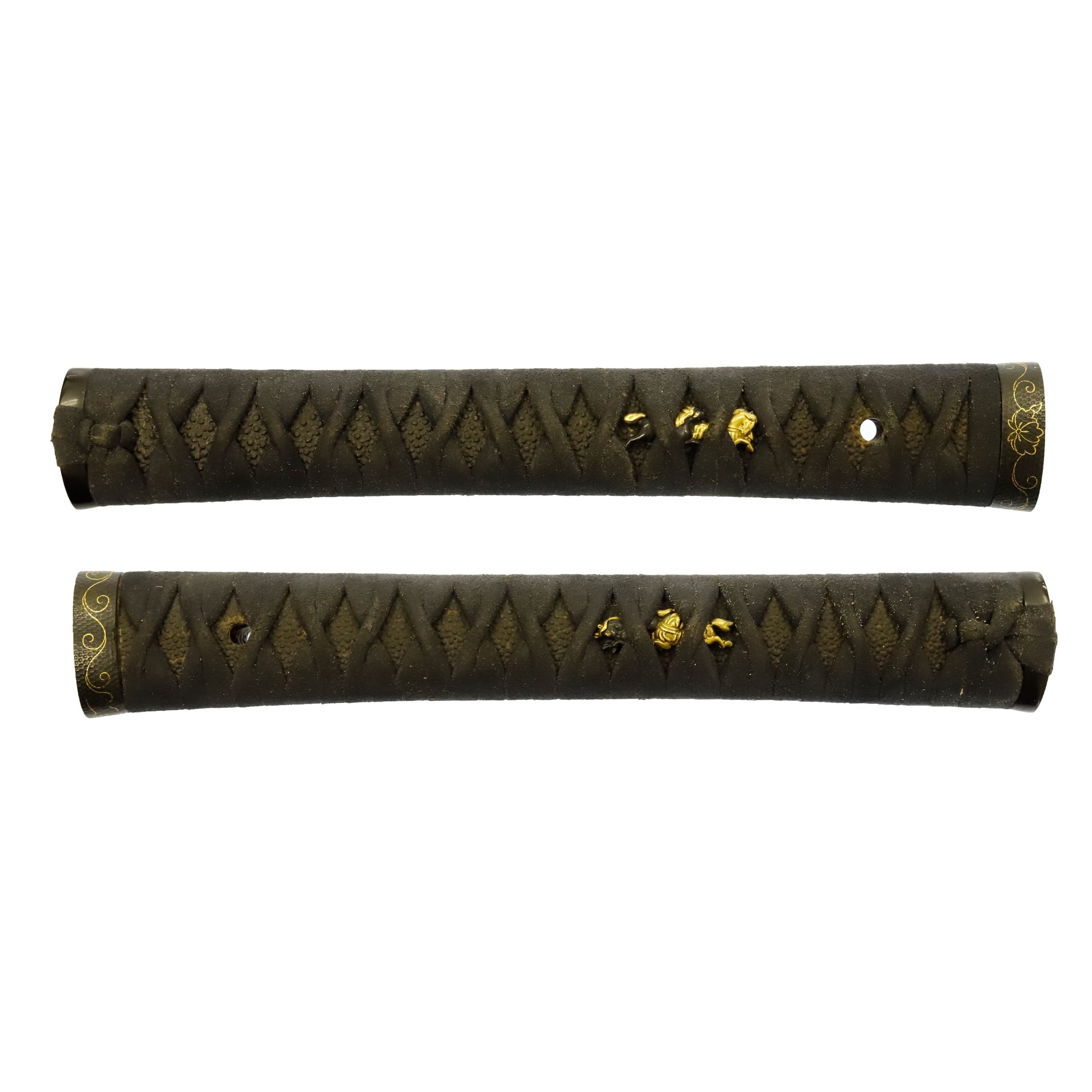
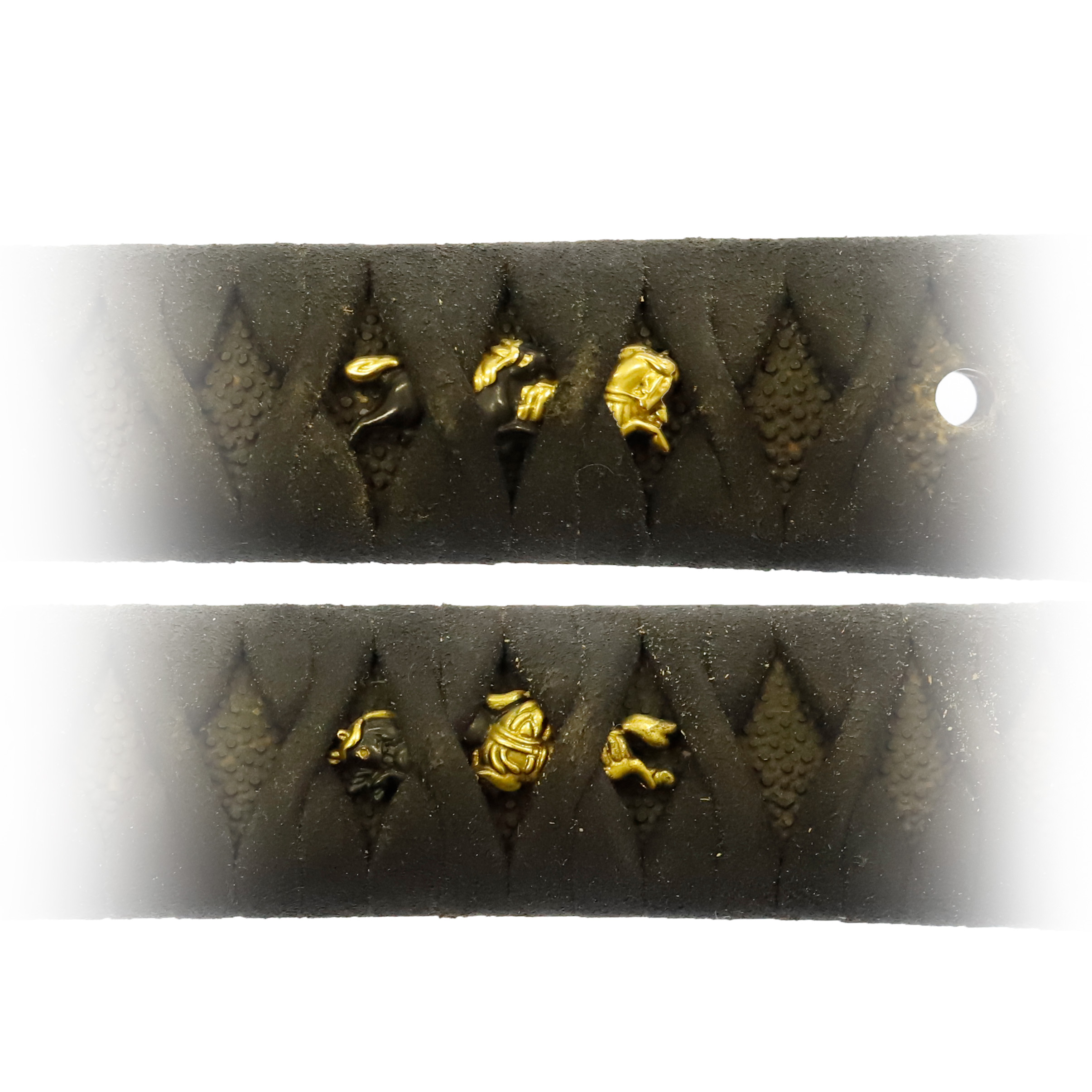
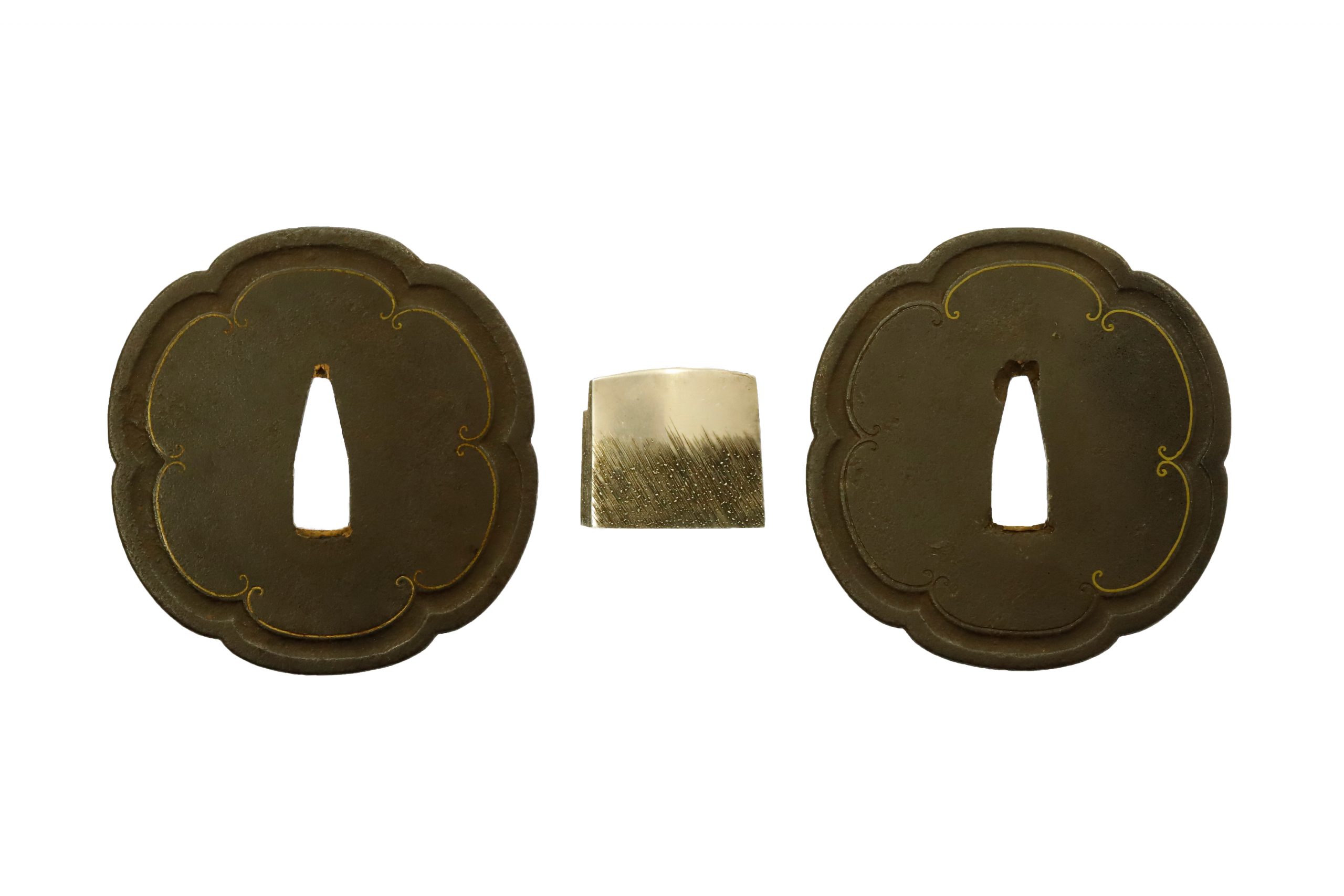
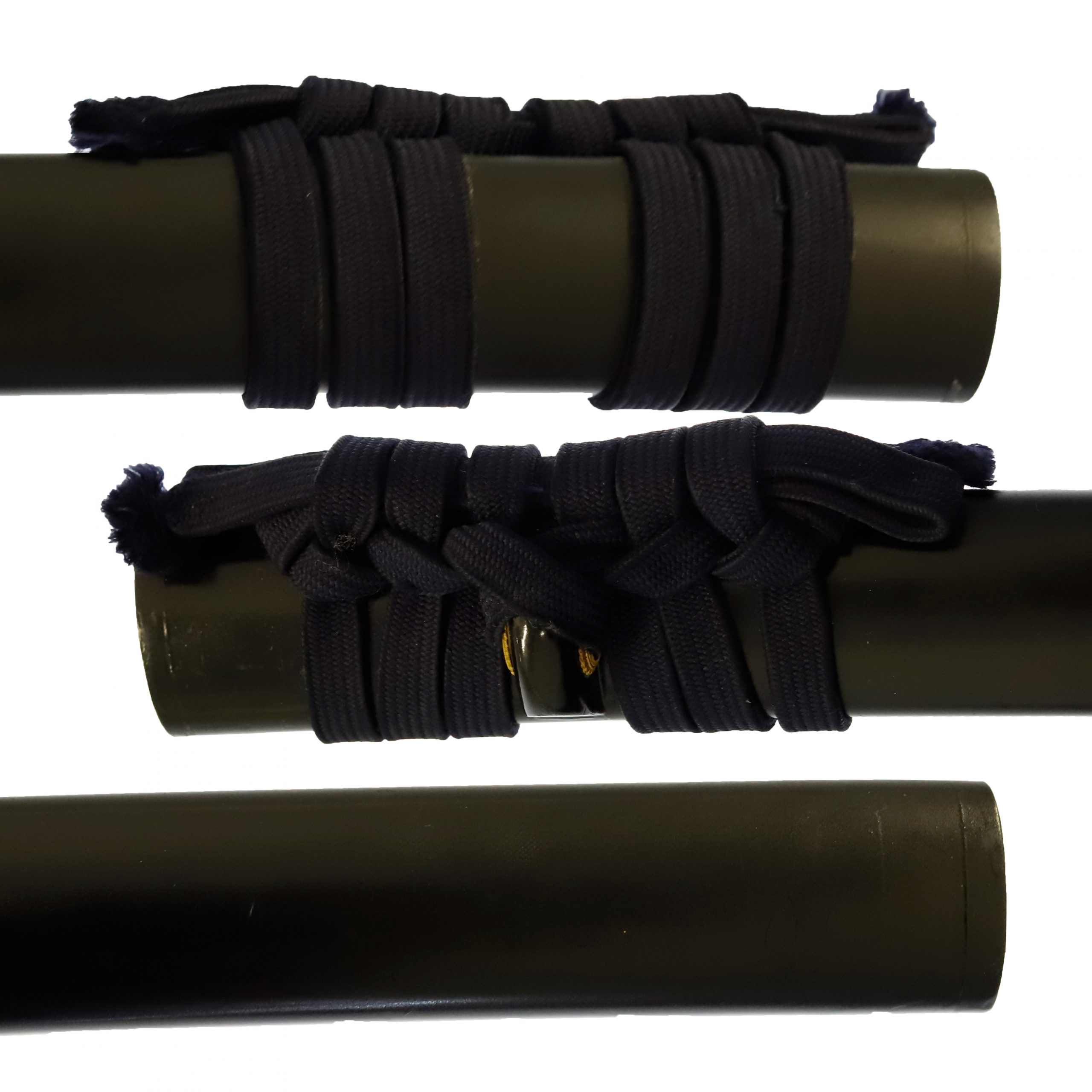
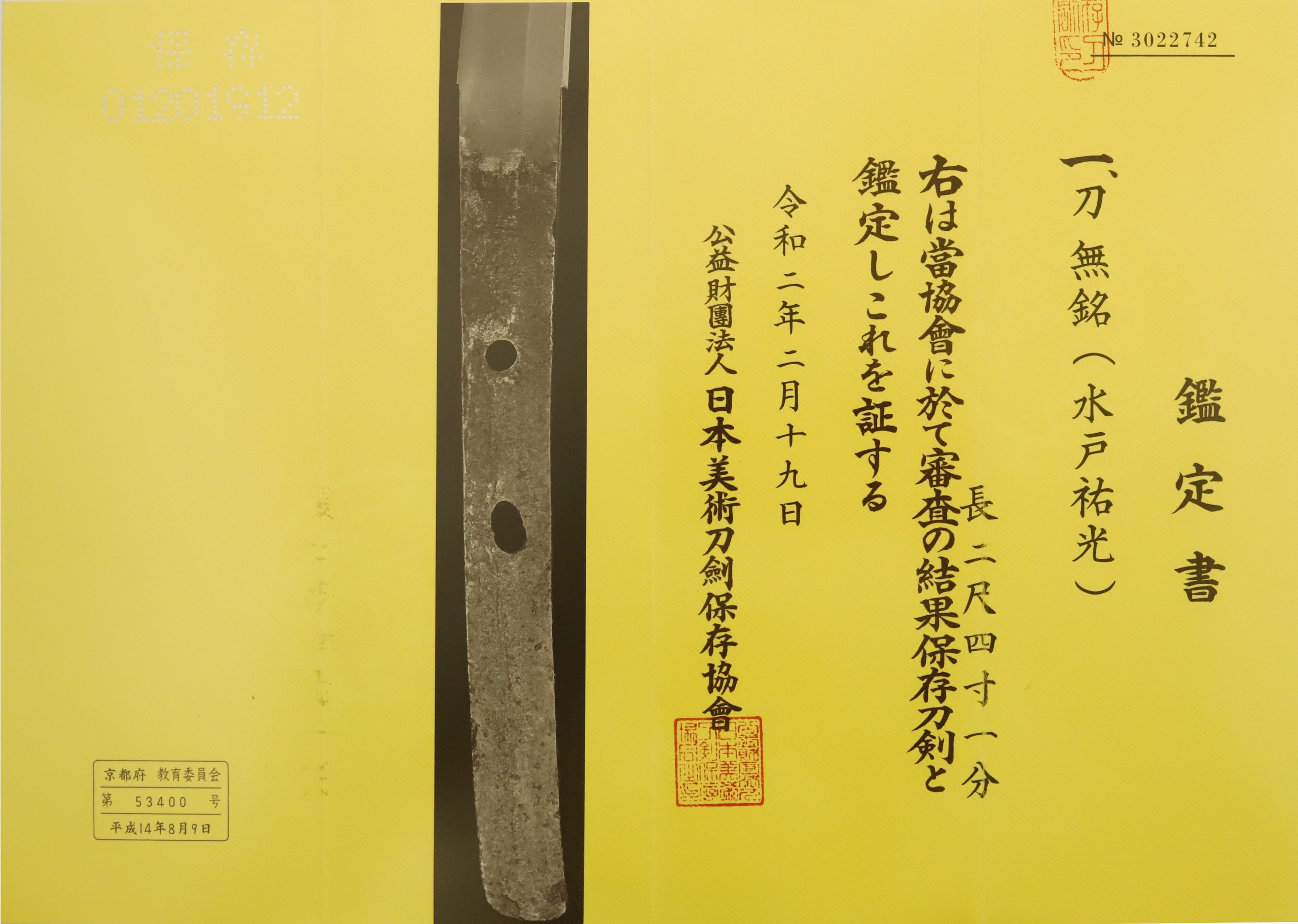
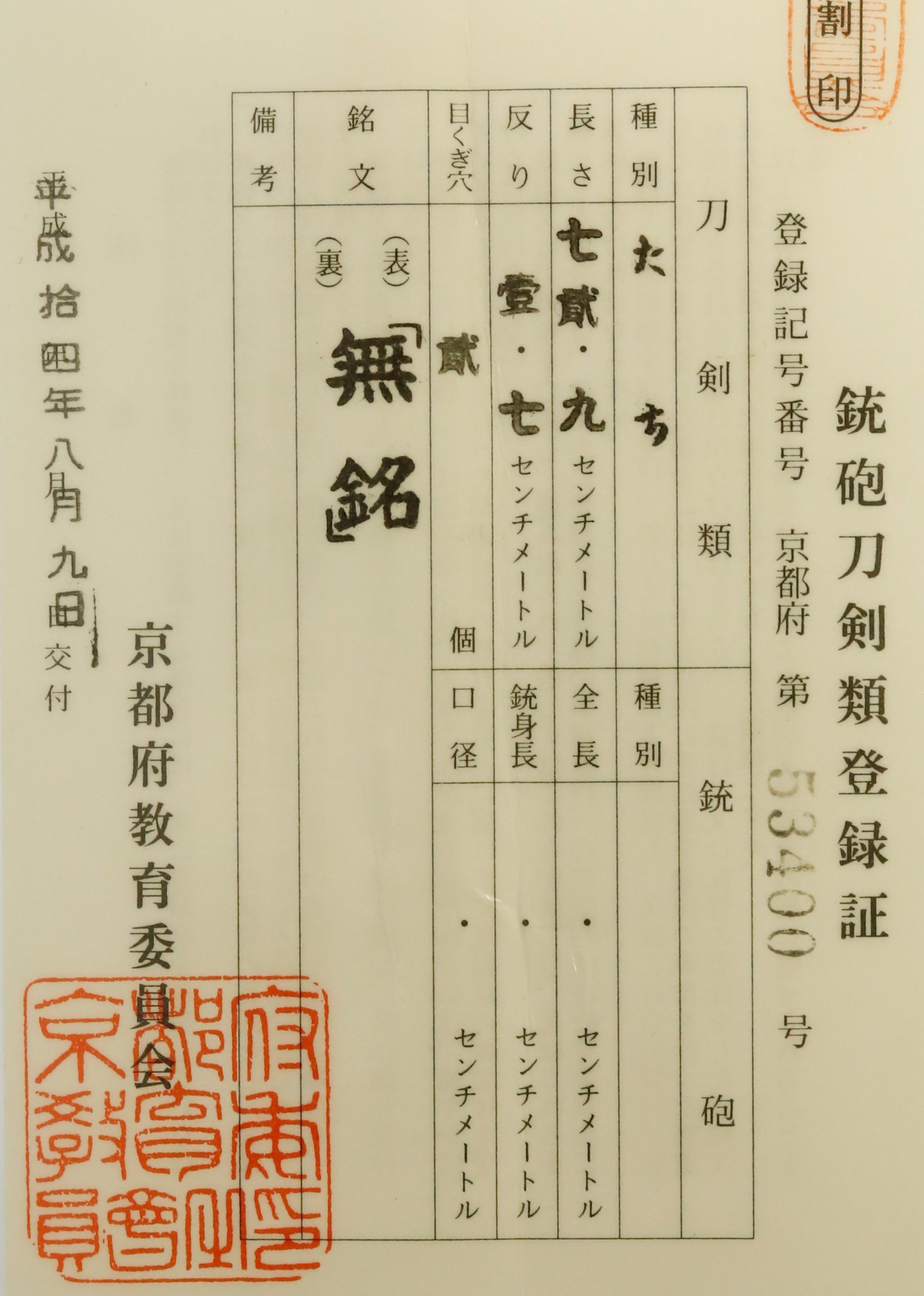
Antique Japanese Sword Katana Attributed to Sukemitsu with Hozon Certificate 【Description】 Summary This blade is attributed to Mito Sukemitsu (水戸祐光), who was active at the end of the Edo period (1854-1865). He is also known as Yokoyama Sukemitsu (横山祐光). He was born in 1820 in Edo as the third son of Taguchi Gon-Emon. He enrolled in the school of Osafune Yokoyama to become a swordsmith in Edo city. In 1849, when he was late 20’s, he started to serve Mito clan after he was recommended by Katsumura Tokkatsu, a famous swordsmith in Mito domain. Sukemitsu kept forging swords for this clan and died at the age of 54. (the fourth year of Meiji; 1874.) The Background History Japan enjoyed a relatively peaceful time from the early Edo period to the mid-Edo period(the 1600s-1760s) because of the stable economy and the powerful government run by Tokugawa Shogun. Samurai didn’t have many opportunities to utilize his Katana sword in public or on battlefields during this time. Thus, they carried their swords more as a symbol of their social status. The demand for weapons decreased accordingly compared to the previous Warring state period called Sengoku Jidai. (1467-1600) However, toward the end of the Edo period(1764-1876), the Japanese sword’s role changed dramatically. With the poverty spreading in Japan, there were so many riots initiated by the civilians. Japanese sword started to play an essential role in maintaining public safety. Pressure from foreign countries to open Japanese borders also forced Samurai to order strong-looking swords to survive this tumultuous time. We believe many swordsmiths, including Sukemitsu, made great efforts to forged high-quality, practical blades for their masters to prepare for battles. This blade has a strong looking and must have been practical to use in that demanding time. There was a civil war between Tokugawa’s Shogunate government and the new Meiji imperial government at the end of the Edo period. That means the original owner of this Katana might have seen the moment when Samurai’s life changed forever. After this battle, Tokugawa Shogunate was ousted and the imperial government gained the control. This blade is appraised as a Hozon Token(保存刀剣) issued by NBTHK(Nihon Bijutsu Touken Hozon Kyokai:日本美術刀剣保存協会). This authentication paper was only given to authentic Japanese swords, well preserved with artistic value. *Please keep in mind that there are a couple of Kitae Kizu on this blade and one is quite noticeable. If you like to make sure of its condition, please feel free to contact us. We will send you photos and videos. 【 Blade】 Cutting Edge Length(Nagasa) : 72.9 cm (28.7 inches) Curvature(Sori) : 1.7 cm (0.66 inches) Hamon : The crystalline structure which forms along the cutting edge of a blade as a result of the hardening process Jimon(Jihada) : visible steel surface pattern created by folding and hammering during forging process Nakago : Nakago is the tang of the Japanese sword. Japanese swordsmiths left the black rust on the tang because it prevents red rust while the tang is in its handle. And the discoloration of the tang was created over time, and it is a great indicator for a Japanese sword specialist to estimate when the sword was forged. Koshirae: Koshirae is the mounting of the Japanese sword. There are several parts that consist of Koshirae such as Saya(Scabbard), Tsuka(Handle), Tsuba(Handguard). Fuchi-Kashira : A pair of matching sword fittings that cover the upper and bottom parts of its sword hilt. The Kashira part has a simple look. And the Fuchi part is decorated with a plant pattern. We think this pattern could be categorized as Karakusa (唐草, arabesque) pattern. It is a pattern in which stems and leaves of vines are twined and make curves. Since ivy has a strong vitality and grows up without interruption, people regarded this design as a symbol of prosperity and longevity. Vine is called Tsuru (蔓) in Japanese, and it has another pronunciation; “Man.” There is a word 万 (it is a
 NihontoWatchBETA
無銘 · Osafune Yokoyama · 安政 · 長さ 72.9cm · 反り 1.7cm
常陸 · 1854-1860頃
藤代 Chu saku · 刀剣大鑑 上位95%
現在1点販売中
銘が正しい、または無銘でも年代・国・系統を確実に指摘できる、保存に値する真正の作と鑑定されたものです。
日本美術刀剣保存協会(NBTHK)は、1948年に設立され、文化庁の監督を受ける公益財団法人で、東京・刀剣博物館に本部を置きます。専門の審査員が出品作を直接審査し、美術的・歴史的価値に応じた鑑定書を発行します。NBTHKの鑑定書は、日本刀および刀装具の真正性を示す最も広く認知された基準です。
NBTHK公式サイトReturns/exchanges limited to defects caused by shipping (except willful misconduct or gross negligence by the company); customers must contact within 72 hours of receiving the product.
Antique Japanese Sword Katana Attributed to Sukemitsu with Hozon Certificate 【Description】 Summary This blade is attributed to Mito Sukemitsu (水戸祐光), who was active at the end of the Edo period (1854-1865). He is also known as Yokoyama Sukemitsu (横山祐光). He was born in 1820 in Edo as the third son of Taguchi Gon-Emon. He enrolled in the school of Osafune Yokoyama to become a swordsmith in Edo city. In 1849, when he was late 20’s, he started to serve Mito clan after he was recommended by Katsumura Tokkatsu, a famous swordsmith in Mito domain. Sukemitsu kept forging swords for this clan and died at the age of 54. (the fourth year of Meiji; 1874.) The Background History Japan enjoyed a relatively peaceful time from the early Edo period to the mid-Edo period(the 1600s-1760s) because of the stable economy and the powerful government run by Tokugawa Shogun. Samurai didn’t have many opportunities to utilize his Katana sword in public or on battlefields during this time. Thus, they carried their swords more as a symbol of their social status. The demand for weapons decreased accordingly compared to the previous Warring state period called Sengoku Jidai. (1467-1600) However, toward the end of the Edo period(1764-1876), the Japanese sword’s role changed dramatically. With the poverty spreading in Japan, there were so many riots initiated by the civilians. Japanese sword started to play an essential role in maintaining public safety. Pressure from foreign countries to open Japanese borders also forced Samurai to order strong-looking swords to survive this tumultuous time. We believe many swordsmiths, including Sukemitsu, made great efforts to forged high-quality, practical blades for their masters to prepare for battles. This blade has a strong looking and must have been practical to use in that demanding time. There was a civil war between Tokugawa’s Shogunate government and the new Meiji imperial government at the end of the Edo period. That means the original owner of this Katana might have seen the moment when Samurai’s life changed forever. After this battle, Tokugawa Shogunate was ousted and the imperial government gained the control. This blade is appraised as a Hozon Token(保存刀剣) issued by NBTHK(Nihon Bijutsu Touken Hozon Kyokai:日本美術刀剣保存協会). This authentication paper was only given to authentic Japanese swords, well preserved with artistic value. *Please keep in mind that there are a couple of Kitae Kizu on this blade and one is quite noticeable. If you like to make sure of its condition, please feel free to contact us. We will send you photos and videos. 【 Blade】 Cutting Edge Length(Nagasa) : 72.9 cm (28.7 inches) Curvature(Sori) : 1.7 cm (0.66 inches) Hamon : The crystalline structure which forms along the cutting edge of a blade as a result of the hardening process Jimon(Jihada) : visible steel surface pattern created by folding and hammering during forging process Nakago : Nakago is the tang of the Japanese sword. Japanese swordsmiths left the black rust on the tang because it prevents red rust while the tang is in its handle. And the discoloration of the tang was created over time, and it is a great indicator for a Japanese sword specialist to estimate when the sword was forged. Koshirae: Koshirae is the mounting of the Japanese sword. There are several parts that consist of Koshirae such as Saya(Scabbard), Tsuka(Handle), Tsuba(Handguard). Fuchi-Kashira : A pair of matching sword fittings that cover the upper and bottom parts of its sword hilt. The Kashira part has a simple look. And the Fuchi part is decorated with a plant pattern. We think this pattern could be categorized as Karakusa (唐草, arabesque) pattern. It is a pattern in which stems and leaves of vines are twined and make curves. Since ivy has a strong vitality and grows up without interruption, people regarded this design as a symbol of prosperity and longevity. Vine is called Tsuru (蔓) in Japanese, and it has another pronunciation; “Man.” There is a word 万 (it is a
NihontoWatchBETA無銘 · Osafune Yokoyama · 安政 · 長さ 72.9cm · 反り 1.7cm
常陸 · 1854-1860頃
藤代 Chu saku · 刀剣大鑑 上位95%
現在1点販売中
銘が正しい、または無銘でも年代・国・系統を確実に指摘できる、保存に値する真正の作と鑑定されたものです。
日本美術刀剣保存協会(NBTHK)は、1948年に設立され、文化庁の監督を受ける公益財団法人で、東京・刀剣博物館に本部を置きます。専門の審査員が出品作を直接審査し、美術的・歴史的価値に応じた鑑定書を発行します。NBTHKの鑑定書は、日本刀および刀装具の真正性を示す最も広く認知された基準です。
NBTHK公式サイトReturns/exchanges limited to defects caused by shipping (except willful misconduct or gross negligence by the company); customers must contact within 72 hours of receiving the product.