説明
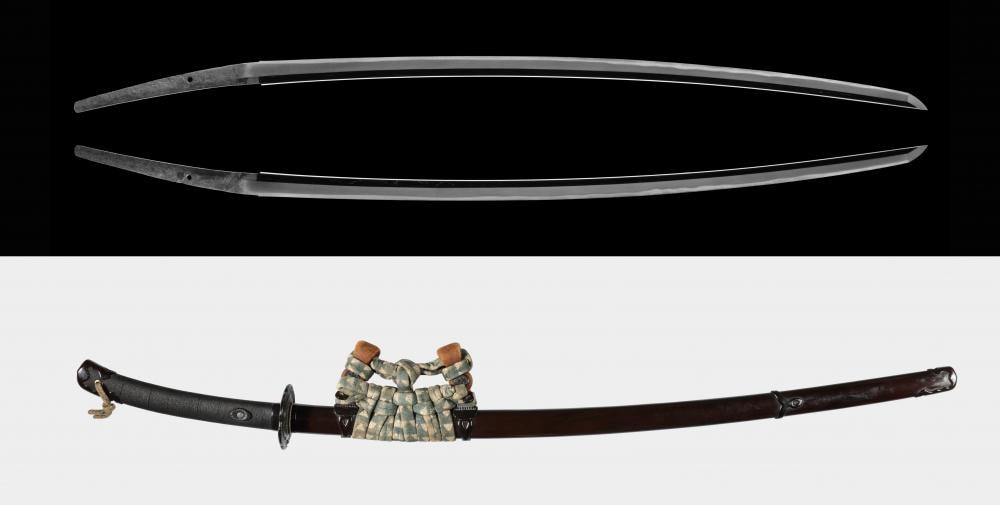
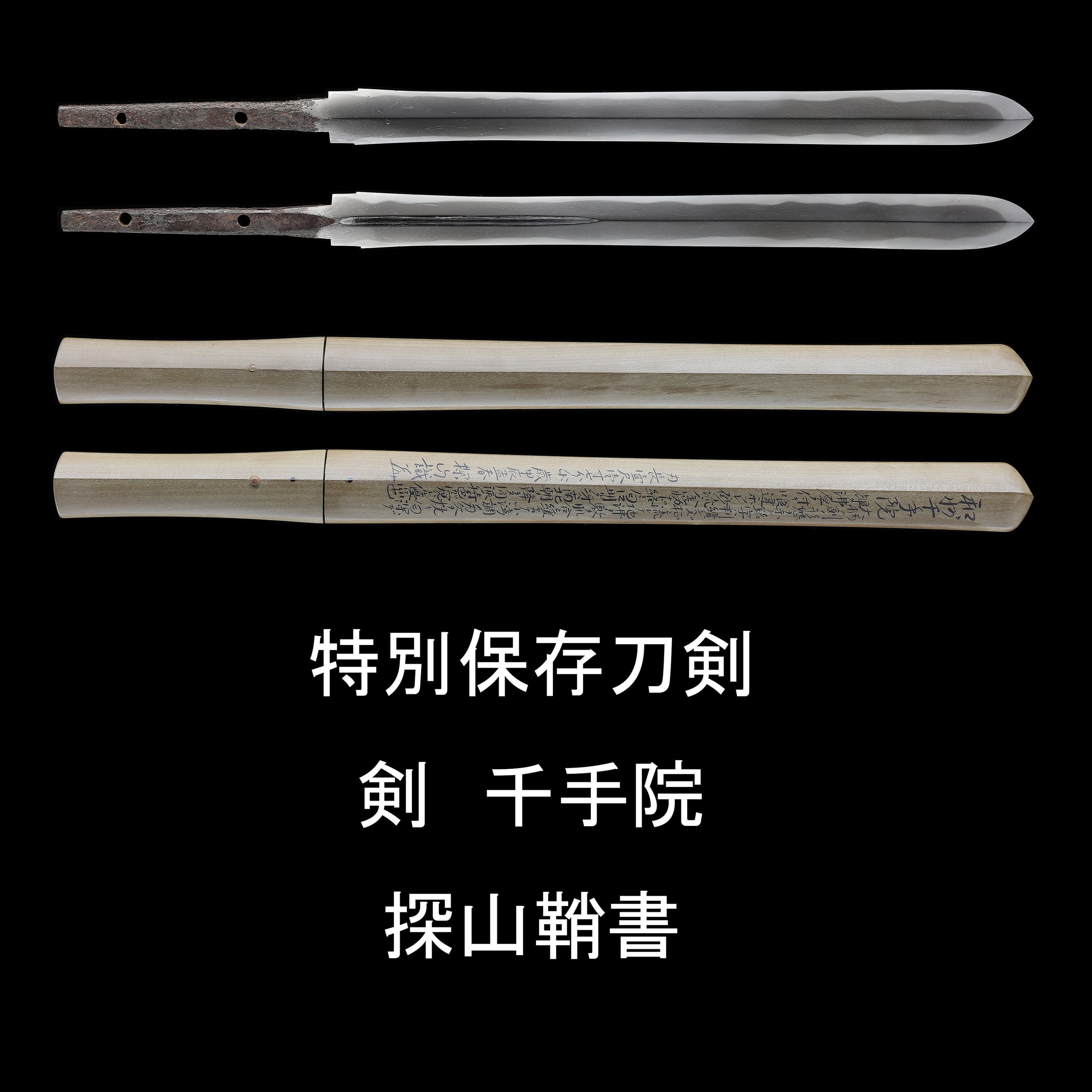
S130. O-suriage tachi papered to Yamato Senjuin.Nagasa: 28 5/8′′ 72.5 cm.Sori: 1.8 cm.Moto Haba: 2.8 cm.Moto Kasane: .6 cm.Saki Haba: 1.75 cm.Saki Kasane: .4 cm.Nakago Nagasa: 18.7 cm.Nakago Sori: .3 cm.Overall length in shira-saya: 38 7/8′′ 98.7 cm.Shinogi zukuri, koshi sori, small kissaki, 3 mekugi-ana in the suriage nakago. Itame hada with strong nagare masame hada in abundant ji-nie. The hamon is suguba worked in shallow gunome ko-midare with hotsure, nijuba, ko-choji, ashi-iri, kinsuji, and ample sunagashi (and one instance of koi guchi gai-ba thrown in for variety’s sake): all covered in fine ko-nie. The boshi is sugu, strongly swept, with ko-maru and a short kaeri. The nakago has a wonderful waxy patina. There are no kizu to warn you of; condition is exceptional.Mounted in a well made shira-saya with a very nice gold foil habaki and a brocade sword bag in excellent condition. A former owner has dented the top of the tsuka (probably in an attempt to remove the nakago): unfortunate but cosmetic only. The polish was done by Kenji Mishina in Japan: high quality and in excellent condition. This tachi comes with a Tokubetsu Hozon paper from the NBTHK (The society that runs the National Sword Museum in Tokyo) dated Heisei 13 (2001) and giving it to Senjuin of Kamarura Period. It is somewhat unusual for the NBTHK to specify time on their papers; the note giving this to Kamakura (1185-1333) is a nice touch.There were 5 branches of Yamato Den working near and for Budhist Temples in Kamakura era Kyoto. Senjuin, which worked at the NW corner of Todaiji Temple, is the oldest of the 5 branches. I think this tachi is special: beautiful work in excellent condition by an important group from the golden age of sword making. I will miss it when one of you takes it away.2 pounds, 14 ounces. $7,750.