説明

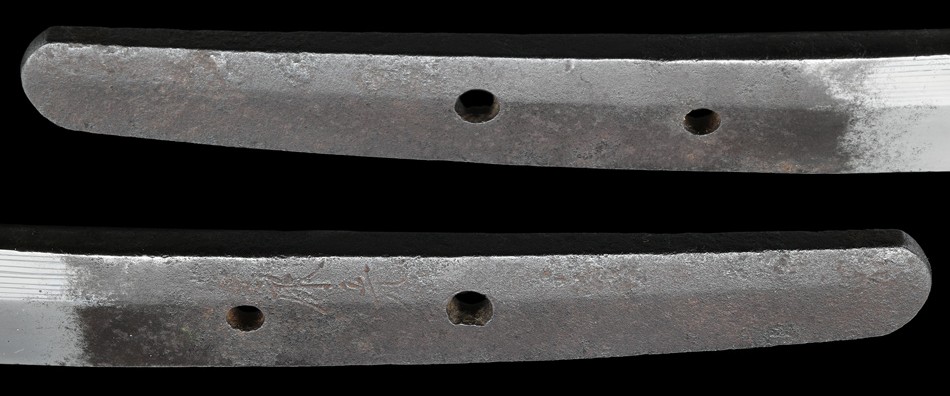
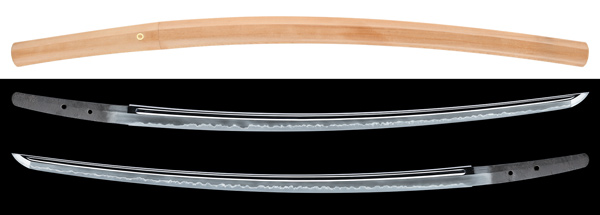
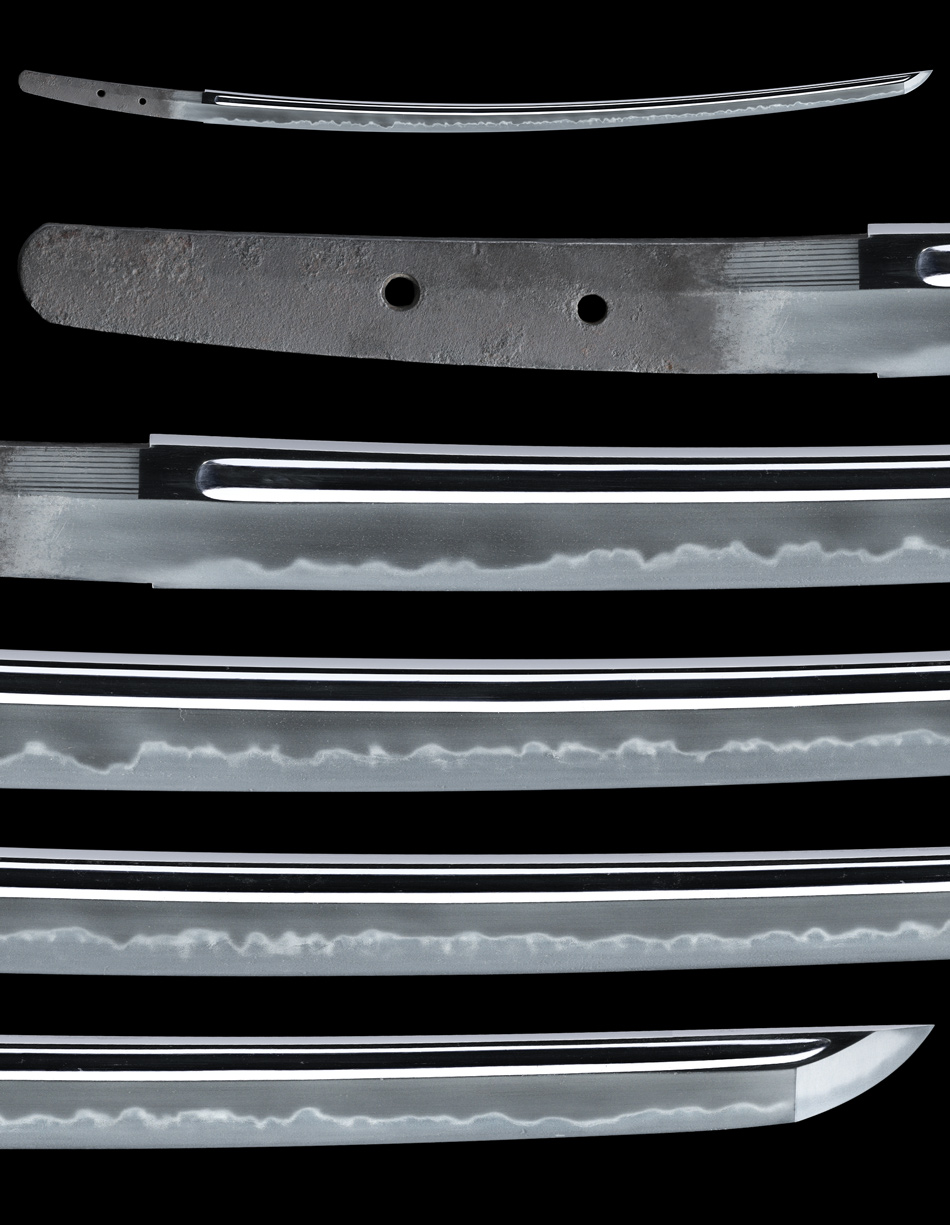
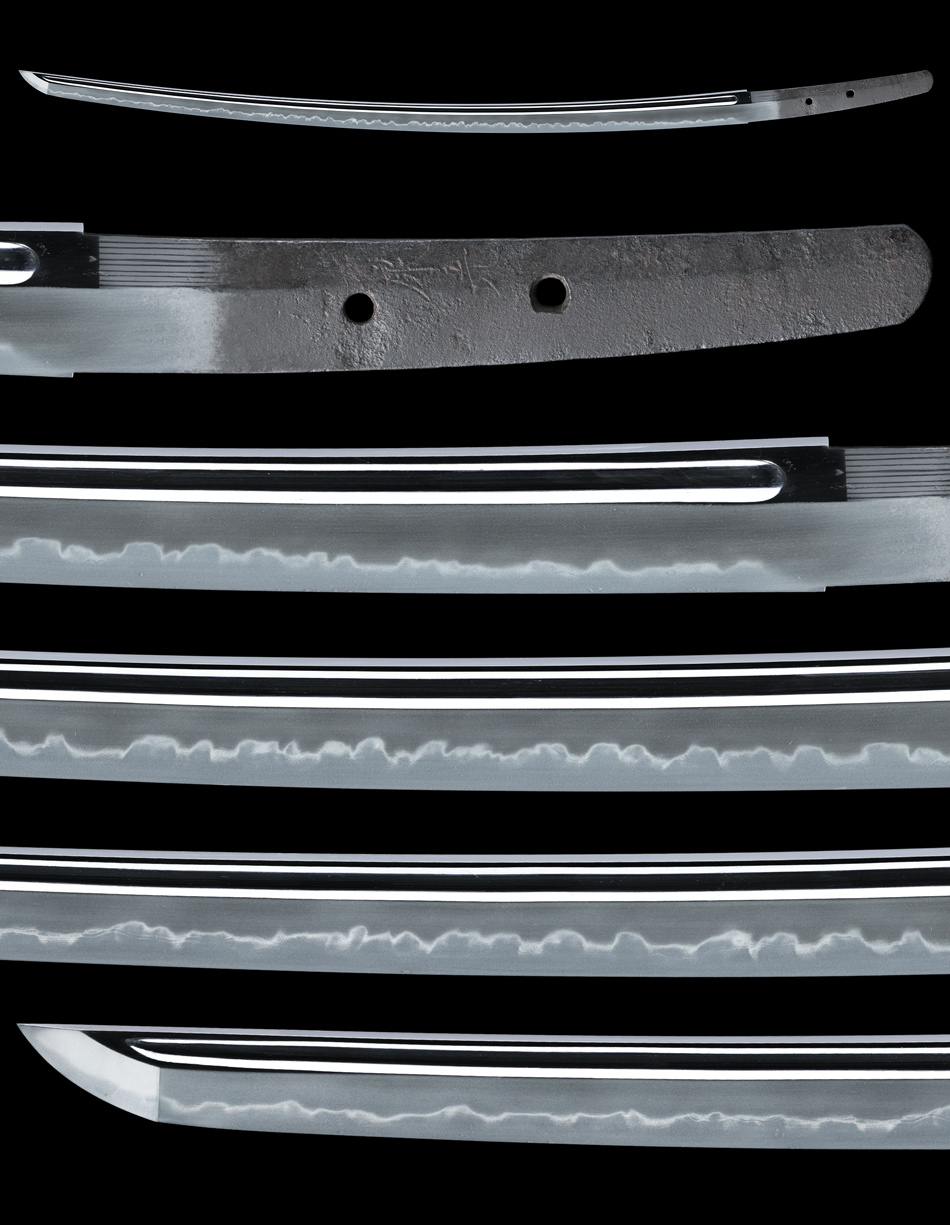
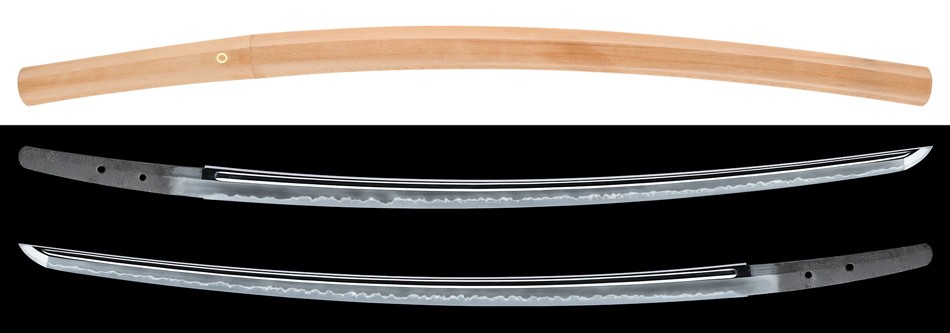
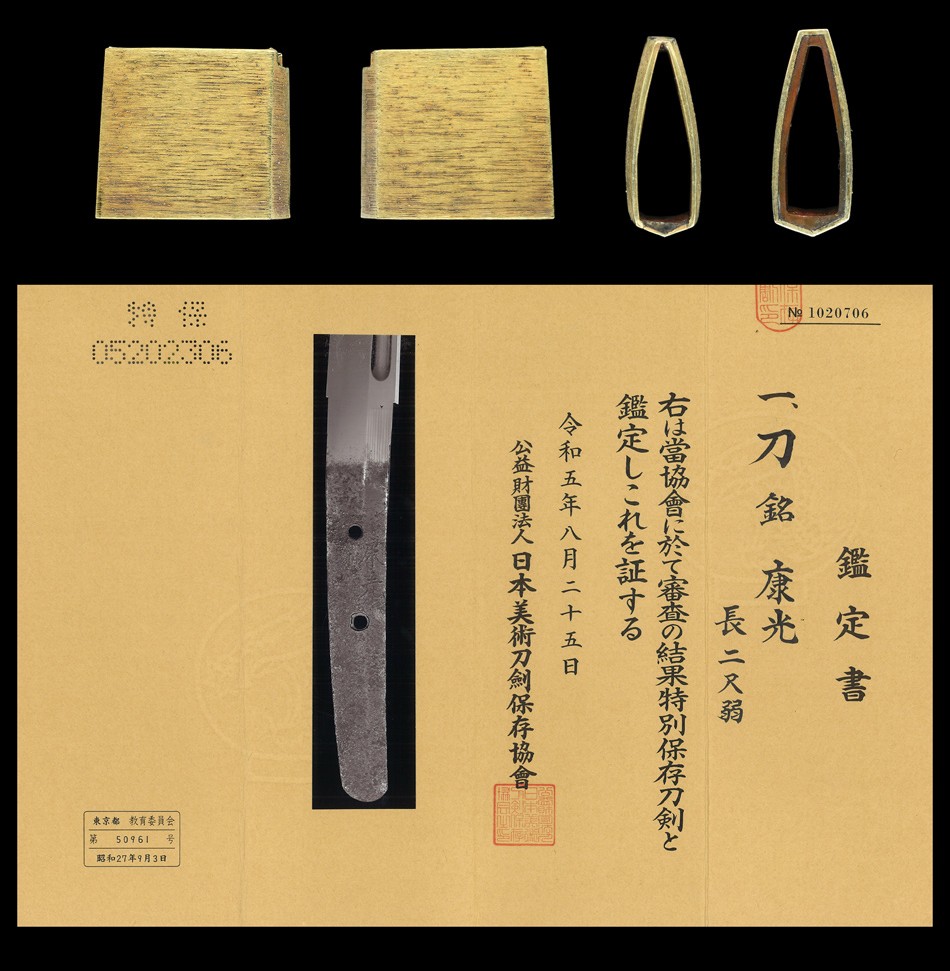
Stock No:KA-080125Paper(Certificate): [N.B.T.H.K] Tokuebtsu Hozon TokenCountry(Kuni)/Period(Jidai): Bizen(Okayama),Early Muromachi Period about 1429~Blade length(Cutting edge): about 60cmCurve(SORI): about 1.8cmWidth at the hamachi(Moto-Haba): 2.82cmThickness at the Moto-Kasane: 0.70cmWide at the Kissaki(Saki-Haba): 2.00cmThickness at the Saki-Kasane: 0.60cmHabaki: One part, Gold foill HabakiSword tang(Nakago):Unaltered, Kattesagari file patternRivet Holes(Mekugiana): 2Shape(Taihai): Shinogizukuri, Iorimune,Chu-kissakiJigane(Hada): Ko-itame with Jinie UtsuriTemper patterns(Hamon): Gunome-choji-midareTemper patterns in the point(Bohshi): Notare then Togari round tipRegistration Card: Tokyo 1952【Additional Information】長船康光は、「応永備前」と呼称される室町初期、備前鍛冶の代表工です。盛光、師光と共に「応永三光」や「三光」とも称され、著名であります。作風は、鎌倉時代への復古にあったとみられ、太刀姿や丁子刃の再現にそれが窺われ、格調高い作風を展開しています。なお、先反りが加わった姿、刃文は、互の目乱れに丁子を交えた腰開きの刃となります。総体華やかで、ここは同一派の特色となります。また静穏な作域として直刃も見られます。本刀体配は、刃長が二尺弱。身幅重ね共に尋常で、先反り強く利き、中切っ先延び心となる健全で優雅な刀姿を呈します。表裏に棒樋の彫刻を施し、はばき上で丸止めとします。地鉄は良く練れた小板目肌に杢を交え、地沸付き、映りが立ちます。刃文は匂出来の互の目丁子乱れで、匂口柔らかに明るく冴えます。刃中には足、葉が入って、盛んに働きます。帽子は湾れて先尖りごころに返ります。茎は生ぶ、時代の錆味落ち着き、勝手下がり鑢で、刀工銘を刻します。本作、長船盛光と並び、応永備前の双璧として名高い康光の健全な一作。優美な姿で、地刃細緻に整って、上品な出来栄えとなる同工の秀麗な一口としてご紹介いたします。白鞘、金着一重はばき、特別保存刀剣鑑定書。

Katana [Yasumitsu(Wazamono)] [N.B.T.H.K] Tokubetsu Hozon Token
Tokuho

Katana [Yasumitsu(Wazamono)] [N.B.T.H.K] Tokubetsu Hozon Token

¥3,000,000

世界81社の刀剣商を横断追跡 · 価格履歴 · 売却アーカイブ

仕様

長さ

60 cm

反り

1.8 cm

元幅

2.82 cm

先幅

2 cm

流派について

Oei-Bizen School応永備前派

The Oei-Bizen and Eikyo-Bizen smiths represent the resurgence of the Osafune school in Bizen Province during the early Muromachi period, an era in which a conscious revival of Kamakura-period aesthetics transformed the character of Bizen swordmaking after the bold, expansive forms of the Nanbokucho period. The school's foremost representatives are Yasumitsu and Morimitsu, described by the NBTHK as the "twin pillars" of Oei-Bizen, both active around the Oei era (1394--1428). Morimitsu is held by one tradition to have been the son of Moromitsu, a representative smith of the late Nanbokucho *ko-zori* group, and his earliest dated works bridge the transitional character of his father's generation and the fully developed Oei-Bizen idiom. The name Yasumitsu was successively inherited through as many as five generations, while the succeeding Eikyo-Bizen phase -- centered on the fourth-generation Norimitsu and his contemporary Sukemitsu -- carried the tradition forward into the mid-Muromachi period. Related smiths such as Tsuneie of the Hatakeda branch worked in a manner so closely aligned with Osafune production that the NBTHK observes there are "no grounds -- whether in workmanship, the character of the signature, or any other point" by which their work could be distinguished from the main line. Within the Oei-Bizen manner, two principal modes of tempering are recognized. The first is a brilliant *midare-ba* in which open, relaxed *gunome* with *koshi-biraki* -- widely opened bases -- is mixed with *choji*, forming what the NBTHK describes as "a splendid, large-patterned, flamboyant *midare*." The second is a calm *suguha* of restrained, archaic tone that can, at first glance, "call to mind the workmanship of the Kamakura-period Ichimonji school or earlier Osafune traditions." In both modes the school's identity is revealed through shared forging characteristics: *itame-hada* mixed with *mokume* in which the grain stands out conspicuously, with dark lines resembling *chikei* entering the *jihada* and *midare-utsuri* or *bo-utsuri* standing prominently in the ground. The *hamon* characteristically incorporates *gunome* with widely opened hips, *ashi* and *yo* entering well, the temper *nioi*-dominant with *ko-nie* and a *nioiguchi* that is "bright and clear." The *boshi* assumes the idiosyncratic form popularly termed the "candlewick" (*rosoku no shin*), becoming pointed at the tip -- a diagnostic hallmark of the school. A further point of connoisseurship is the finishing of *bo-hi* with rounded ends (*maru-dome*) above the *machi*. The transition from Oei-Bizen to Eikyo-Bizen is marked by Norimitsu's development of a somewhat intermediary character, retaining the *koshi-biraki gunome* and bright nioiguchi of the earlier masters while introducing tighter grain and elements that point toward the eventual Sue-Bizen style. Moromitsu's earlier production establishes the bridge from the opposite direction, his *ko-zori* period works showing "signs foreshadowing the style of Oei-Bizen" in their more flamboyant midare passages. The ideal pursued by the Oei-Bizen and Eikyo-Bizen smiths "appears to have been a revival of the Kamakura period," visible in their elegant *tachi* proportions and in the deliberate re-creation of *choji* tempering that had fallen out of favour during the Nanbokucho period. Yet the NBTHK consistently emphasizes that the school's own distinctive character is always discernible beneath this revivalist surface. Yasumitsu's production spans every format -- *tachi*, *katana*, *wakizashi*, *tanto*, and the exceedingly rare *omi-yari* -- and he is praised for leaving behind "highly skilled works in every format." Morimitsu's finest tachi preserve their original *ubu nakago* with imposing, deeply curved forms that convey the grandeur of an earlier age, while the vigorous internal activities within the tempered edge bring forth his strengths "without reserve." Both masters' works are consistently described as *kenzen* -- sound and well-preserved -- with a *jigane* of superior quality possessing an *urumi* richness. The school's influence pervaded early Muromachi sword production, and the Eikyo-Bizen continuation through Norimitsu ensured that the Osafune tradition maintained vitality and refinement well into the fifteenth century. Whether in the commanding vigour of the large-pattern choji-midare or in the quiet classical elegance of the suguha mode, the Oei-Bizen and Eikyo-Bizen smiths collectively represent one of the most accomplished chapters in the long history of Bizen swordsmithing.

刀剣商

銀座誠友堂

world-seiyudo.com

¥3,000,000

銀座誠友堂で見る