説明
BICHU KAMI TACHIBANA YASUHIRO (fss-936)
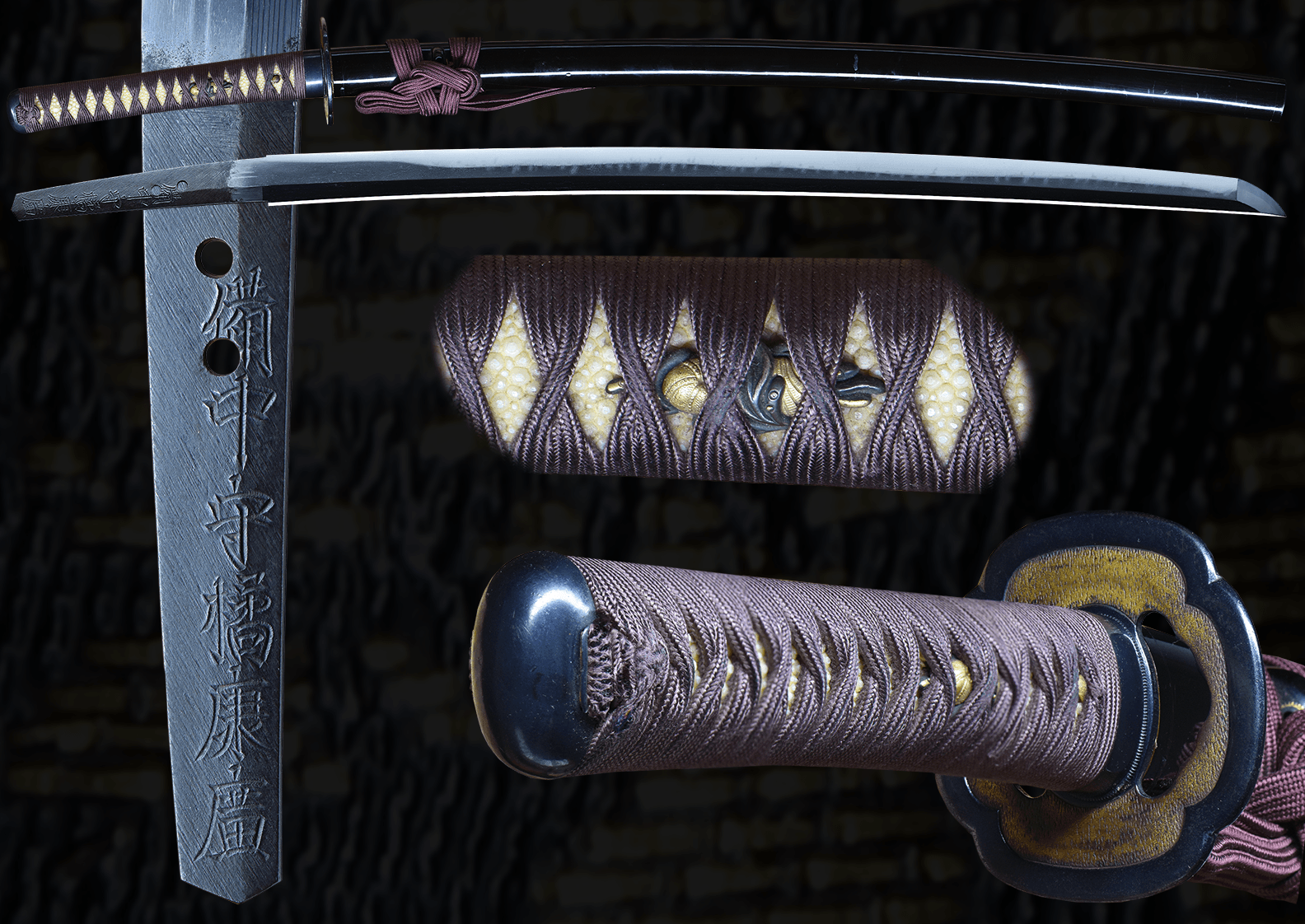
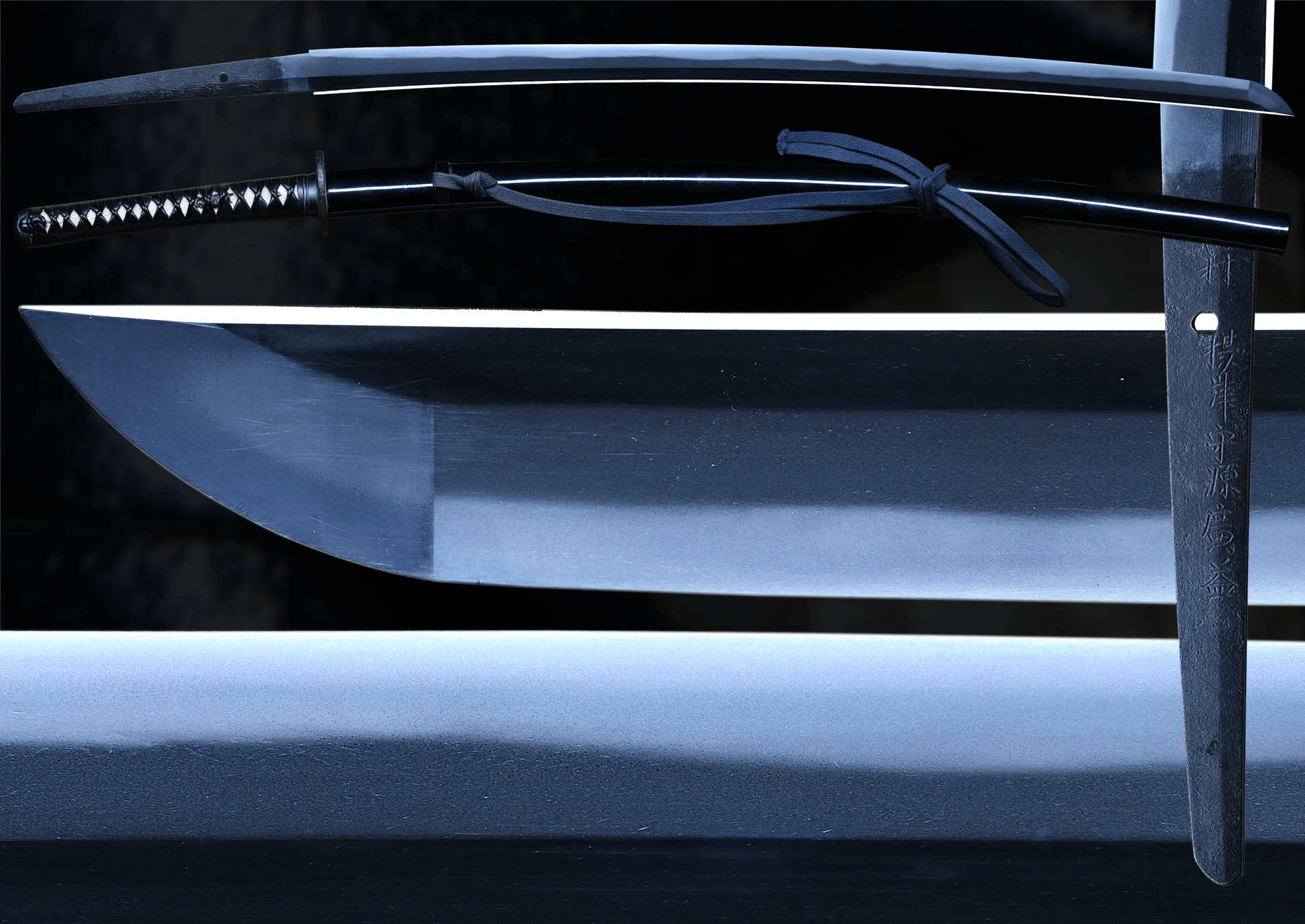
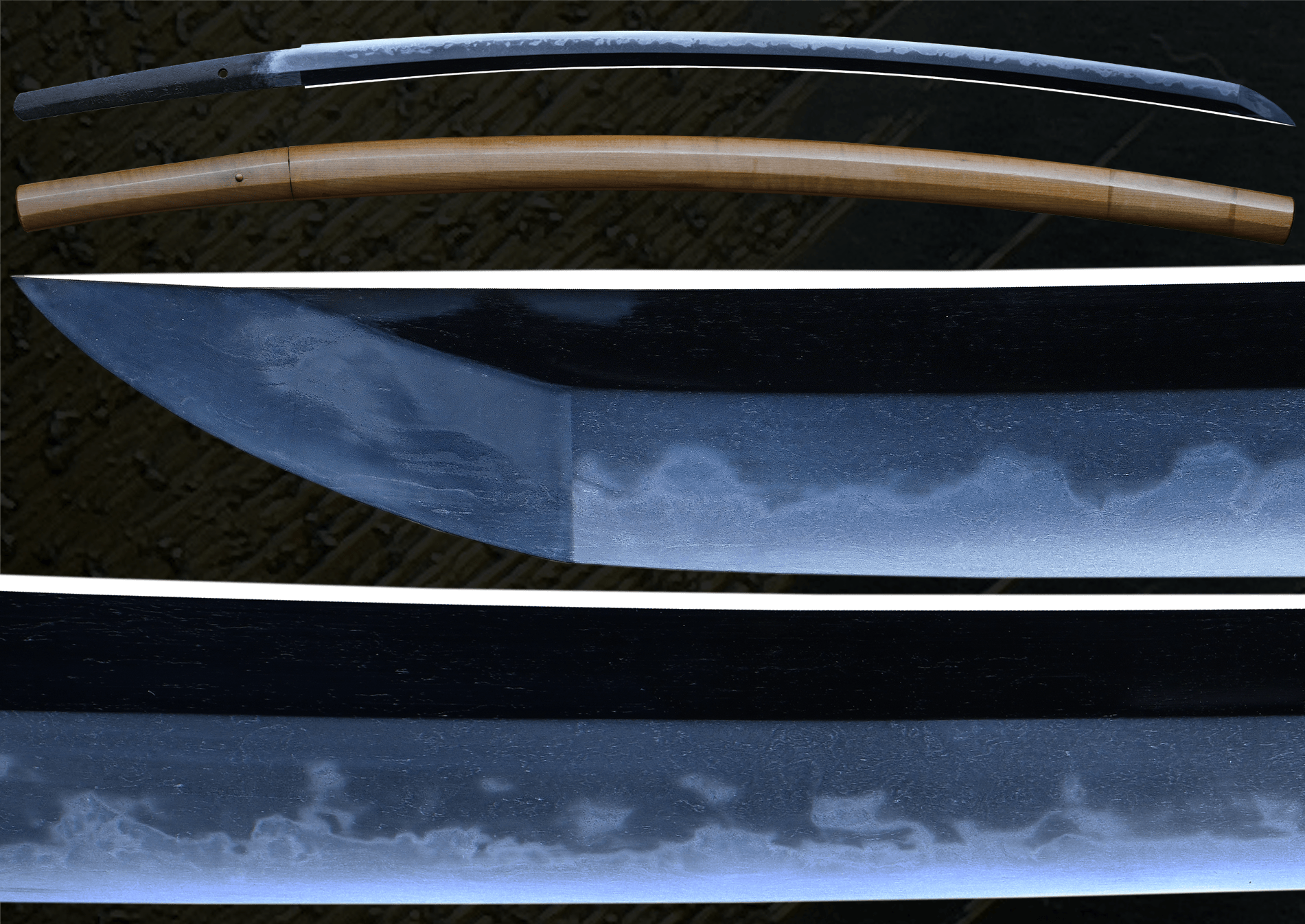
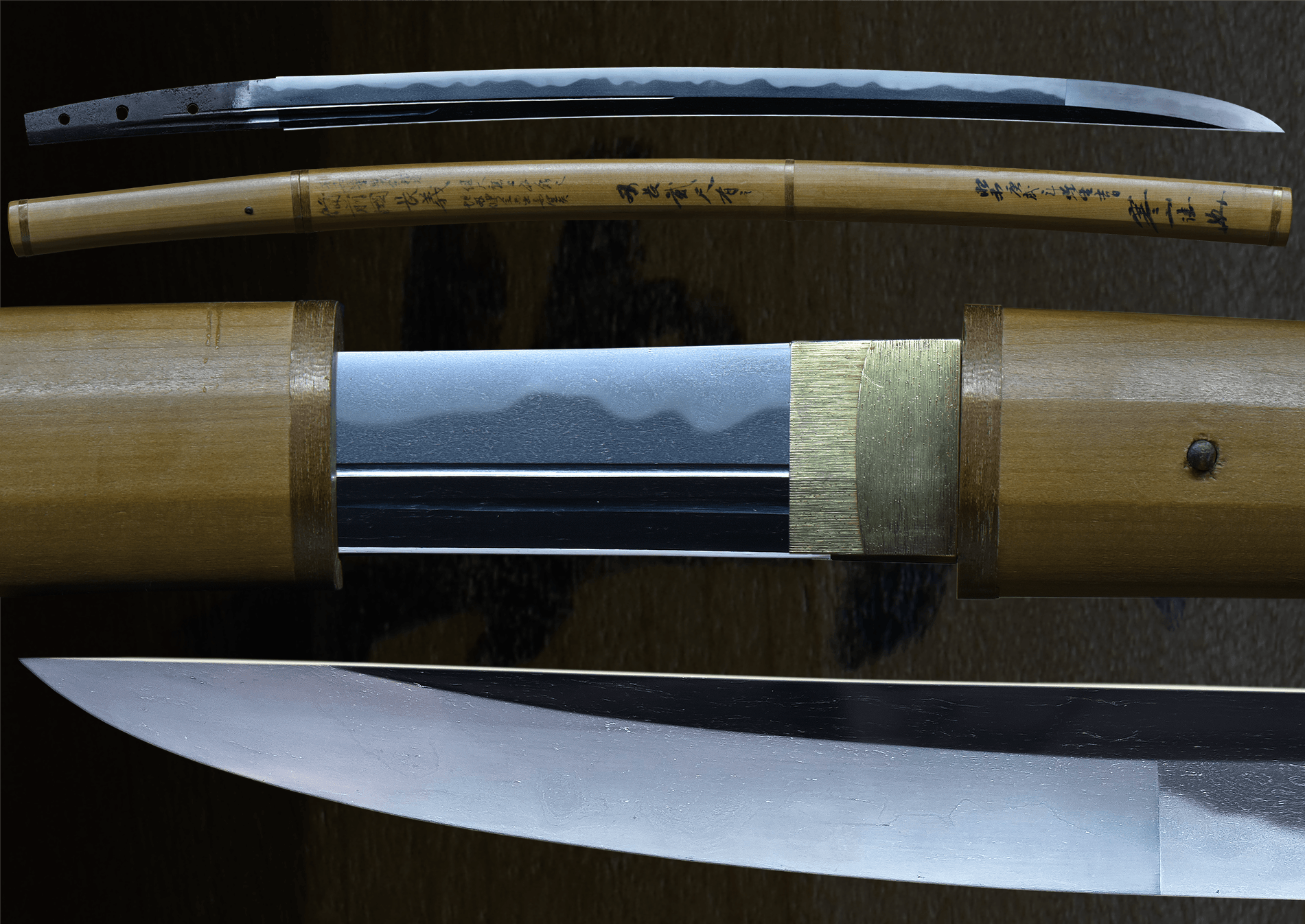
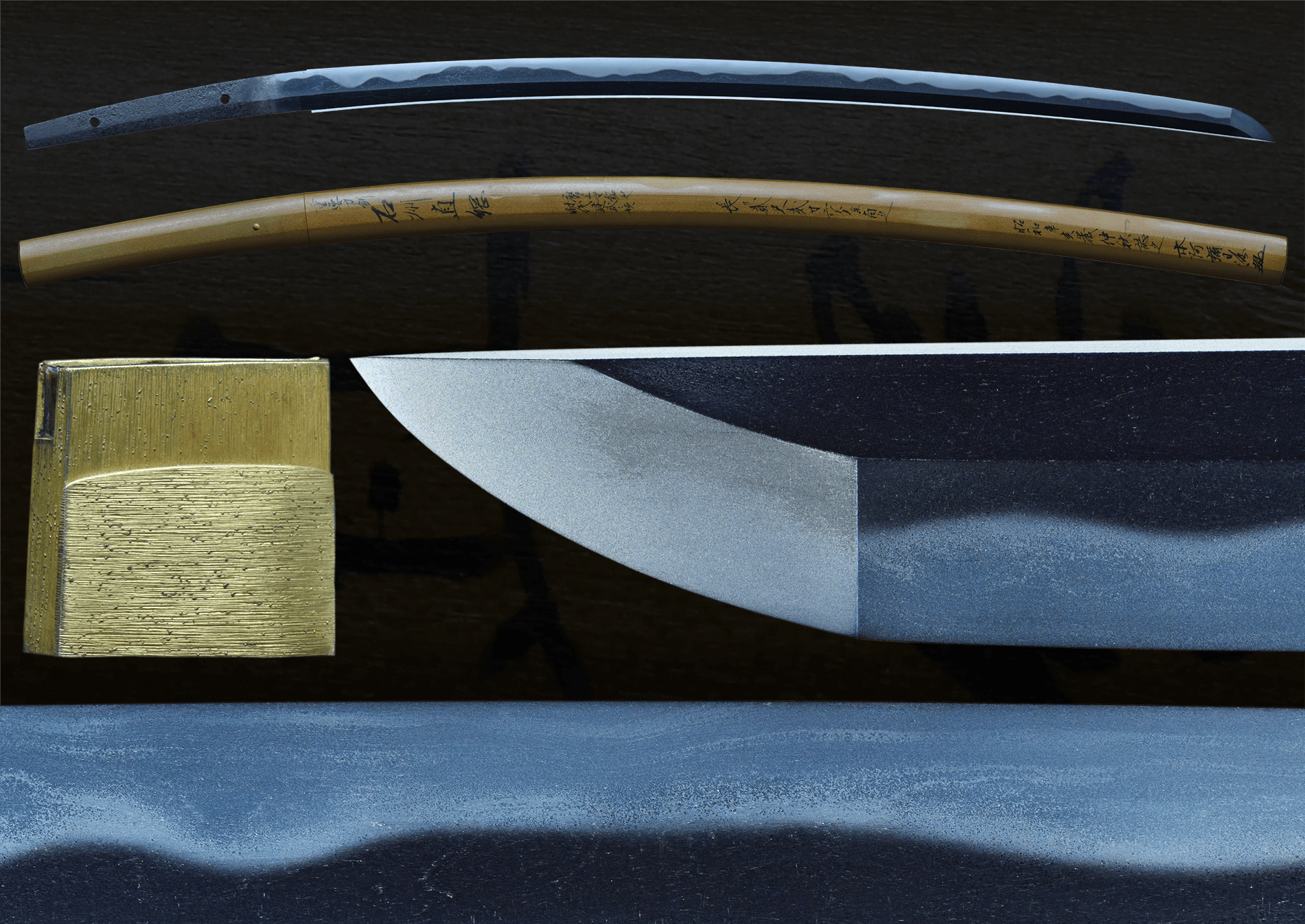
Bitchu no Kami Tachibana Yasuhiro belonged to the Ishido Kei that had its foundations in Omi Province. Omi Province was the home of many well-known smiths from the late Kamakura period into the Nanbokucho period. Some of the more famous smiths were Takagi Sadamune and Kanro Toshinaga . They had many descendants but very few of their works survived so that by the time the Tokugawa period began, there were not many of these descendants left in this province. Around the Meio Era (1492), many of the Osafune-kaji from Bizen came to Omi and made swords thus breathing new life into this area. Among these was Sukenaga who moved to this area and is said to have founded the Ishido Kei.During the early years of the Edo period during the Kanei Era (1624-1644), the various groups of smiths who made up the Ishido Kei left Omi and split into three groups. These three groups moved to Edo (Musashi Province), Wakayama (Kii Province), and Fukuoka (Chikuzen Province). These three groups prospered in their new areas throughout the Shinto period.The group that moved to Wakayama later moved to Osaka. This group is called the Kii Ishido school. The leader of this school was Tosa Shogen Tachibana Tameyasu . The second generation Tameyasu was given a title and then called himself Mutsu no Kami Tameyasu . The brother of the second generation was Bitchu no Kami Tachibana Yasuhir. His line continued for three generations. Other smiths in this school included Kawachi no Kami Yasunaga and Bizen no Kami Sukekuni. Tatara Nagayuki was Yasunaga’s student and one of the finest Bizen style smiths to work during the Shinto period.Here are the basic characteristics of the Kii Ishido school and Bitchu no Kami Yasuhiro:Thekatanahave a relatively short length, and themihababecomes narrow in the upper area.Ko-itame hadamixed witho-hadathat is inclined to bemasame-hada.Utsuriis seen at times. Thehamonischôji midareand consists ofnioiand is wide, occasionally there issaka ashi. The school’schôji midareis different from the Koto in itsyakidashiand the size of itschôji.O-chôji midarewhich are Usually innioi deki, but they are not purenioi deki,having a hint ofnie. The overall tone of thehawill be Bizen style.The boshi isKo-maru sagariormidare komiin a small pattern with a shortkaeri. Chu-kissaki.There is somehakikake.On the first generation Yasuhiro akikumonis occasionally found by itself on theuraof thenakago.The blade presented for sale here is an excellent example of the work of the first generation Bitchu (no) Kami Tachibana Yasuhiro. As noted above, he was the second son of Tameyasu. His given name was Tomita Gorôzaemon and he was originally from Kishû. He also lived in Osaka and Kyoto. He is a wazamono rated smith (his swords cut well).This blade has a graceful torii sori.. The bôshi is somewhat compressed in shape and the hamon has an maru turn-back with almost no kaeri. The nakago is ubu and has two mekugi ana. The omote side of the nakago has the naga-mei which reads BITCHU no KAMI TACHIBANA YASUHIRO.The jitetsu is ko-itame, there are areas of tobiyaki throughout the ji and even some areas of utsuri that can be found. The hamon begins at the hamachi in typical Osaka Shinto style quickly becoming a peaked gunome that turns into a wild and robust o-chôji midare that reaches to the shinogi in areas and reminds us of the finest chôji-midare of the Fukuoka Ichimonji school of the Kamakura period.This sword comes with a nice set of Edo period style koshirae. It also comes with NBTHK Tokubetsu Hozon papers attesting to the quality of the blade, the authenticity of the signature, and the excellent condition of the blade.The Koshirae has a black lacquered style saya with a dark shakudo fuchi/kashira. The menuki are seashells. The tsuba is a mokko-gata shape in iron with a rim with a black patina to match the fittings. Both the tsuka-ito and sageo makes this koshirae stand out. There is a shakudo and gold foiled and shakudo foiled seppa as well as a rain pattern gold foiled habaki. A beautiful top notch sword in the ichimonji style.
Mei:Bichu Kami Tachibana YasuhiroDate:Kanbun (1661-1673)Nagasa:25 inchesSori:10.0 mmWidth at the ha-machi:31.8 mmWidth at the yokote:22.9 mmThickness at the mune-machi:7.5 mmConstruction:Shinogi zukuriMune:IoriNakago:UbuKitae:Ko-Itame very well madeHamon:Niedeki suguha from the hamachi then turning to Choji midare with many hatarakiBoshi:Large kisssaki in maru styelCondition:Good polish
Subscribe for the Latest Updates!Join our mailing list to receive the latest News & Updates fromNihonto Antiques.SUBSCRIBEYou have Successfully Subscribed!Your email address will be kept private & will only be used to send updates from this site!