NihontoWatch Mon

NihontoWatchBETA

マーケットオークション
事典
NihontoWatch Mon

NihontoWatchBETA

マーケットオークション
事典

説明

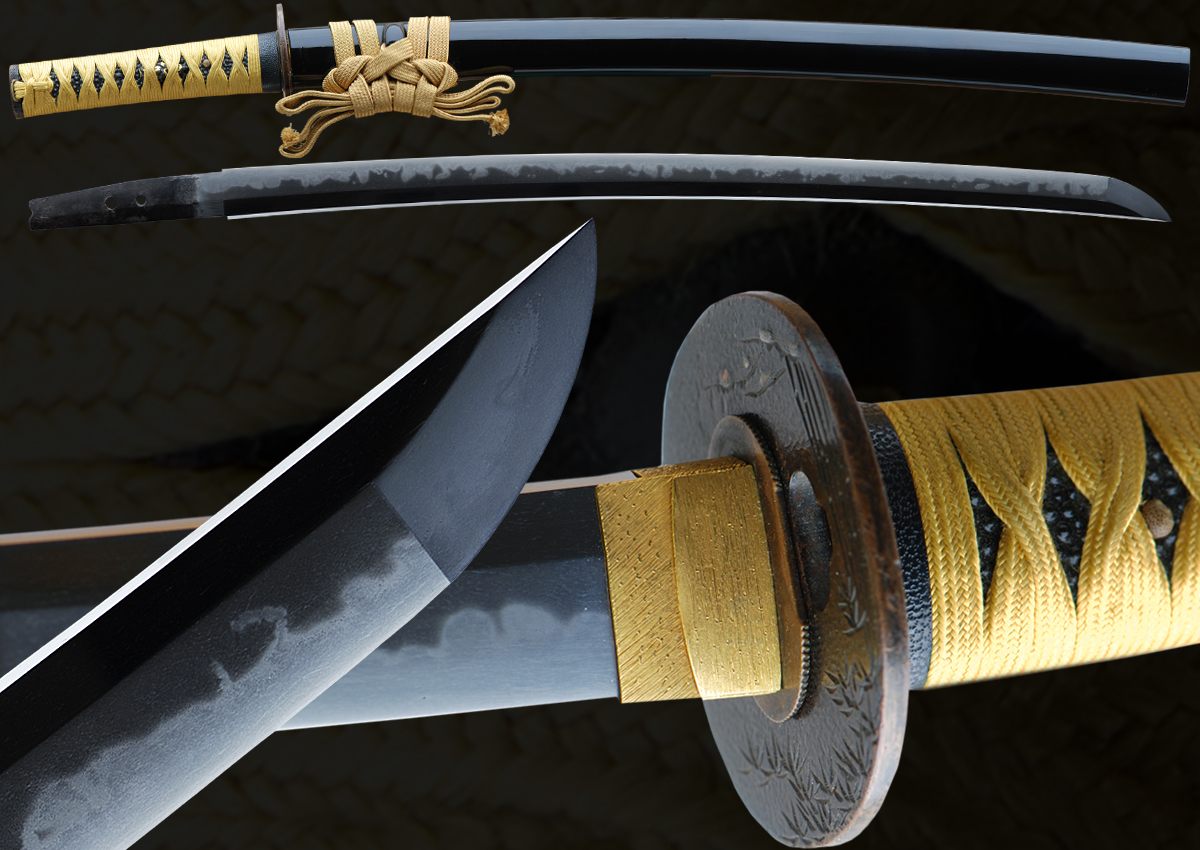
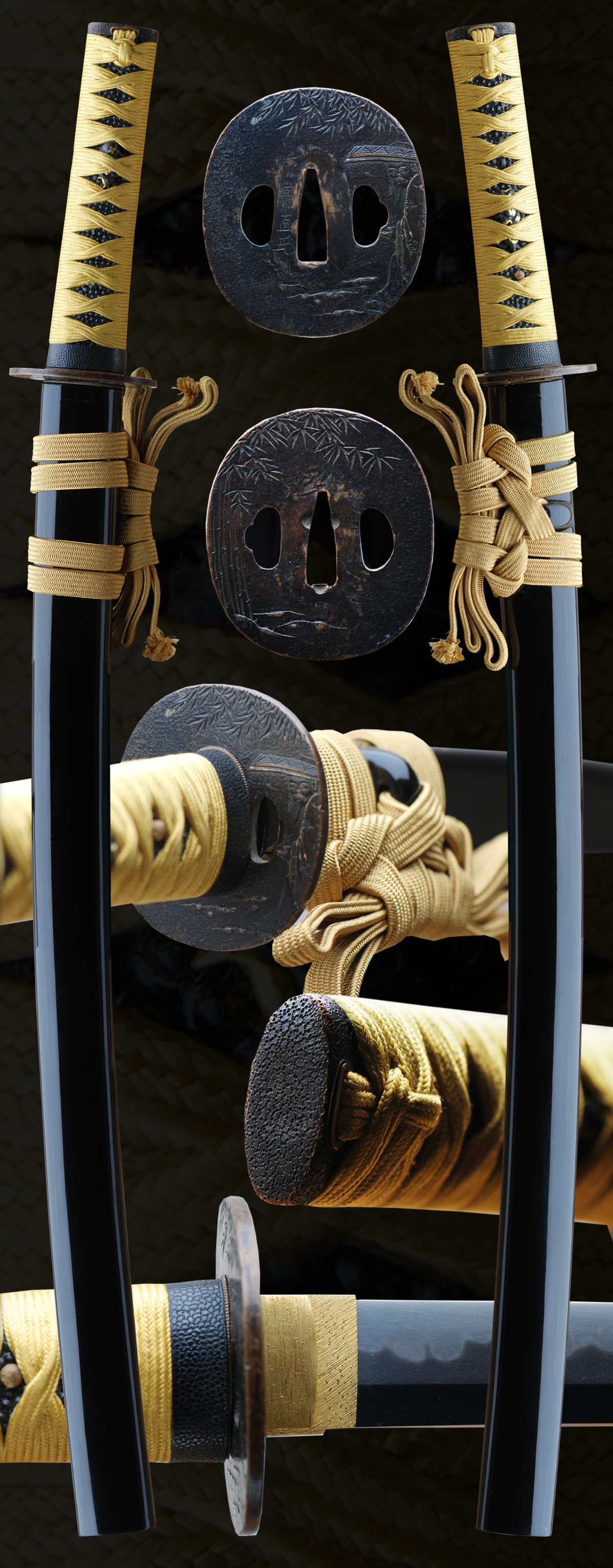
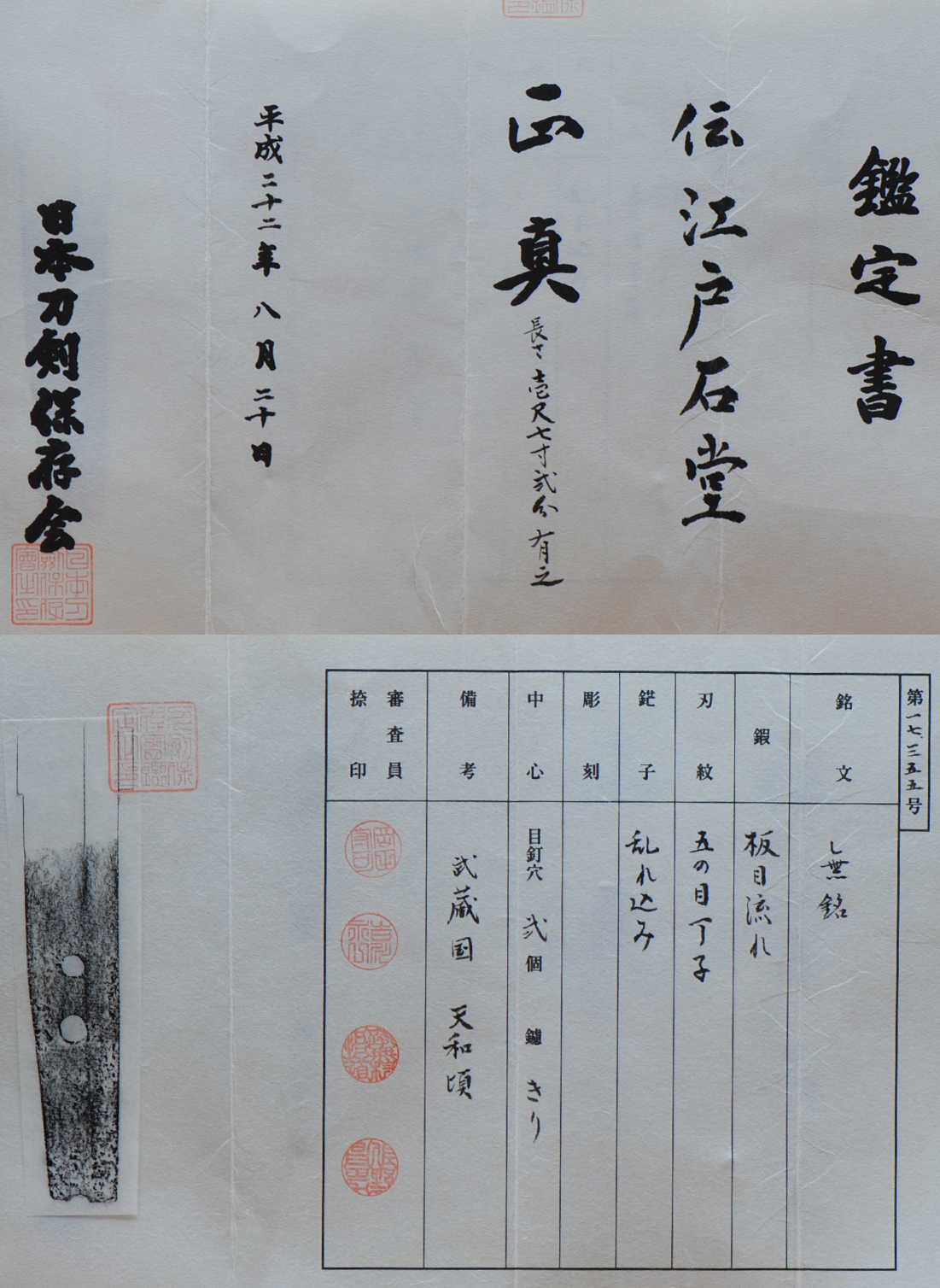
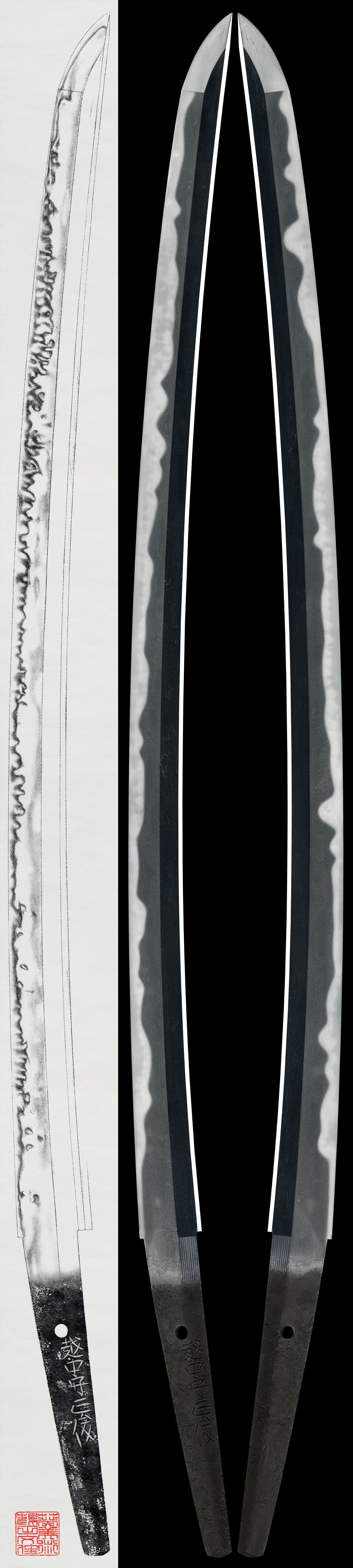
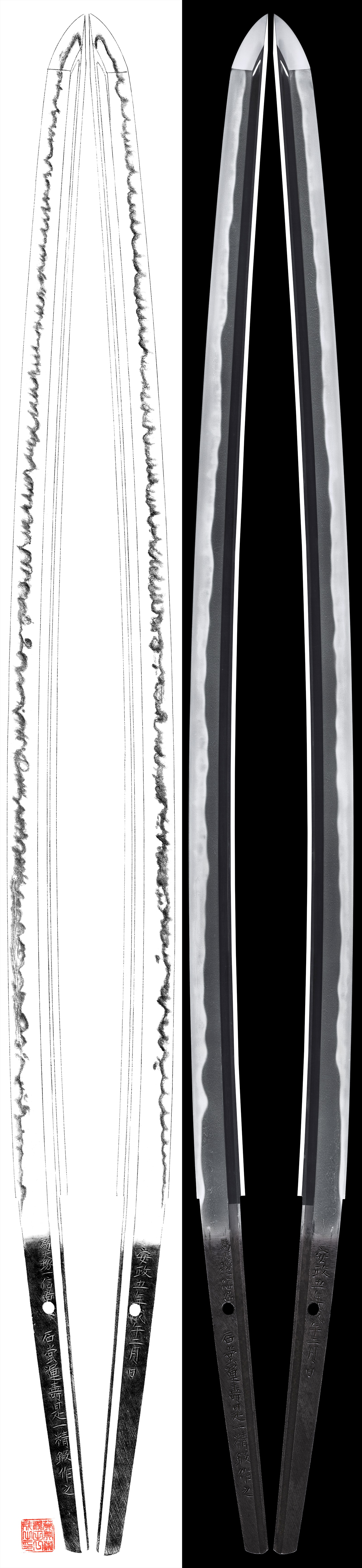
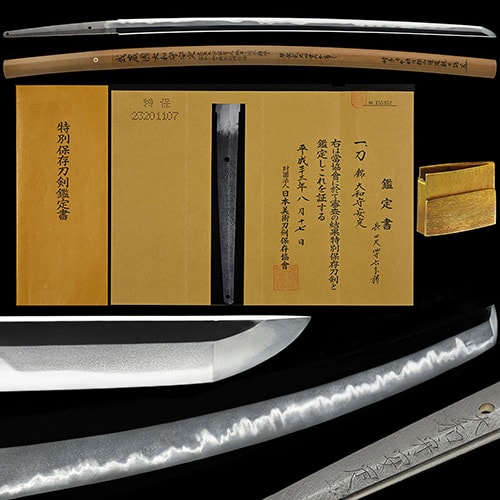
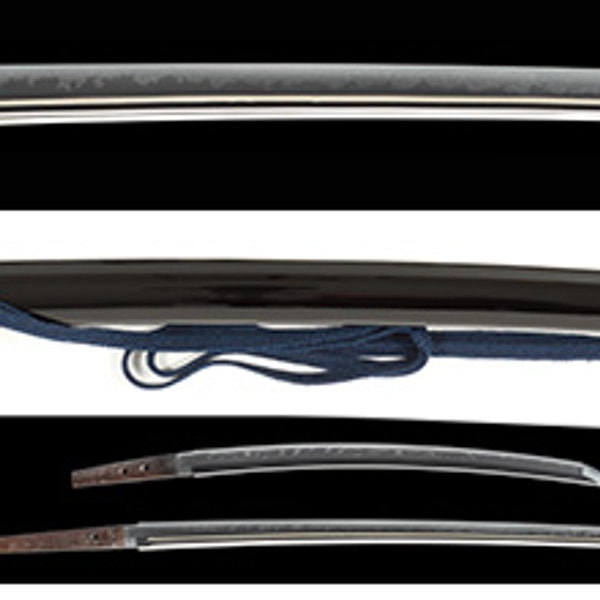
Item description:When first viewing this blade you can see a resemblance of an Ichimonji blade. Fine utsuri covers the blade as well as Ji-nie. The chiji midare is very active and it appears as flames dancing along the blade. There is tobyaki and yubashiri causing a hitatsura like hamon. The hada is a finely worked itame. An exquisite blade and one that never tires of viewing.The koshirae is a high gloss black lacquer with a gloss black lacquered Same(rayskin). The tsuka-ito and sageo are a matching gold in color. the tsuba is of a scenic nature. The menuki are of shakudo and gold and the fuchi/kashira are of a geometric design. A beautiful gilded 2-piece habaki was made for this sword to create a great package and wonderful piece. The stub is also signed.The Ishido Kei had its foundations in Omi Province. Omi Province was the home of many well-known smiths from the late Kamakura period into the Nanbokucho period. Some of the more famous smiths were Takagi Sadamune (高木貞宗) and Kanro Toshinaga. They had many descendants but very few of their works survived so that by the time the Tokugawa period began, there were not many of these descendants left in this province. Around the Meio Era (1492), many of the Osafune-kaji from Bizen came to Omi and made swords thus breathing new life into this area. Among these was Sukenaga (助長) who moved to this area and is said to have founded the Ishido Kei. During the early years of the Edo period during the Kanei Era (1624-1644), the various groups of smiths who made up the Ishido Kei (石堂系) left Omi and split into three groups. These three groups moved to Edo (Musashi Province), Wakayama (Kii Province), and Fukuoka (Chikuzen Province). These three groups prospered in their new areas throughout the Shinto period. Mei:MumeiDate:Edo (1600’s-1700’s)Nagasa:20-1/2 inchesSori:17.0 mmWidth at the ha-machi:29.9 mmWidth at the yokote:22.6 mmThickness at the mune-machi:7.5 mmConstruction:Shinogi zukuriMune:IoriNakago:UbuKitae:Itame/mokumeHamon:Gunome ChojiBoshi:MaruCondition:Good polish Ishido school information:The Ishido history is complex but in the Edo period leading up to the Meiji restoration the blacksmiths using theprofessional name of Ishido were sword makers. Beginning with the Meiji they turned to the production of kanna blades and various edged tools. The head of the clan at that time of the restoration was the sword blacksmith know as Ishido UnjusaiKorekazu. Soon two other blacksmith family names will merge with the Ishido history, they are the Kato and Seiichi famlies.Ishido Unjusai Korekazu was indeed an actual sword smith, and it is documented that he was the 7th generation to makeswords. It is now understood that Ishido Unjusai Korekazu was the father of a daughter but no son. Another sword smith who’sfamily name was Kato but used the professional name of Chounsai Tsunatoshi (father of Chiyozuru Korehide) had a brother bythe name of Kato Toshinaga. Kato Toshinaga married the daughter of Ishido and and thereby legally adopted the Ishido familyname and became known as Ishido Toshinaga, but used the professional name of Ishido Korekazu. There is evidence thatearlier in the Edo period a marriage union between the Ishido & Kato clans took place. Ishido Toshinaga was the first Ishido tomake kanna blades as a tradesman, up until that point only swords were made by the Ishido clan.About this same time, the 1850-60s, the head of the Kato clan, Kato Chounsai Tsunatoshi had two sons, the younger son, who’sname was Kato Hiroshi was later to use the professional name of Chiyozuru Korehide. Chiyozuru created his own name anddropped the Kato name and therefore became an independent blacksmith on his own and set up his own shop at a early age.At the time of Korekazu’s death in 1891, his son the talented Hidekazu, rightfully took over the family business. The Ishido namebecame prominent in the tool trades and there is a good chance that Ishido Hidekazu and Chiyozuru worked closely and helpedto encourage each others knowledge and skills. It is known and recorded that Hidekazu had two sons who where bothblacksmiths and it was assumed that one of them would have taken up the family trade and the continuation of the Ishido nameat some point. As fate would have, tragedy struck the family thrice. The first son was lost unexpectedly, possibly in an accident,and the second son died tragically soon after. During this late period in Hidekazu’s life he also lost his wife. With the burden of allthese losses it is reported that alcoholism and depression befell the master. Thankfully Hidekazu’s cousin, Chiyozuru Korehidestepped into manage the Ishido business for the few years that Hidekazu was suffering. Subscribe for the Latest Updates!Join our mailing list to receive the latest News & Updates fromNihonto Antiques.SUBSCRIBEYou have Successfully Subscribed!Your email address will be kept private & will only be used to send updates from this site!

NihontoWatch MonNihontoWatchBETA
MarketAuctionsEncyclopedia
刀剣›石堂›ISHIDO DEN (fss-812)
刀
石堂派

ISHIDO DEN (fss-812)

無銘 · Ishido · 新刀 · 長さ 52.1cm · 反り 1.7cm

売却済
石堂派 — 1 of 4
石堂派 — 2 of 4
石堂派 — 3 of 4
石堂派 — 4 of 4
1 / 4
1 / 4
石堂派 — 1 of 4石堂派 — 2 of 4石堂派 — 3 of 4石堂派 — 4 of 4
法量・詳細
刀工
石堂派
種別
刀
流派
Ishido
活動期
新刀
国
近江
銘
無銘
法量
長さ 52.1cm反り 1.7cm元幅 2.99cm先幅 2.26cm重ね 0.75cm
説明

Item description:When first viewing this blade you can see a resemblance of an Ichimonji blade. Fine utsuri covers the blade as well as Ji-nie. The chiji midare is very active and it appears as flames dancing along the blade. There is tobyaki and yubashiri causing a hitatsura like hamon. The hada is a finely worked itame. An exquisite blade and one that never tires of viewing.The koshirae is a high gloss black lacquer with a gloss black lacquered Same(rayskin). The tsuka-ito and sageo are a matching gold in color. the tsuba is of a scenic nature. The menuki are of shakudo and gold and the fuchi/kashira are of a geometric design. A beautiful gilded 2-piece habaki was made for this sword to create a great package and wonderful piece. The stub is also signed.The Ishido Kei had its foundations in Omi Province. Omi Province was the home of many well-known smiths from the late Kamakura period into the Nanbokucho period. Some of the more famous smiths were Takagi Sadamune (高木貞宗) and Kanro Toshinaga. They had many descendants but very few of their works survived so that by the time the Tokugawa period began, there were not many of these descendants left in this province. Around the Meio Era (1492), many of the Osafune-kaji from Bizen came to Omi and made swords thus breathing new life into this area. Among these was Sukenaga (助長) who moved to this area and is said to have founded the Ishido Kei. During the early years of the Edo period during the Kanei Era (1624-1644), the various groups of smiths who made up the Ishido Kei (石堂系) left Omi and split into three groups. These three groups moved to Edo (Musashi Province), Wakayama (Kii Province), and Fukuoka (Chikuzen Province). These three groups prospered in their new areas throughout the Shinto period. Mei:MumeiDate:Edo (1600’s-1700’s)Nagasa:20-1/2 inchesSori:17.0 mmWidth at the ha-machi:29.9 mmWidth at the yokote:22.6 mmThickness at the mune-machi:7.5 mmConstruction:Shinogi zukuriMune:IoriNakago:UbuKitae:Itame/mokumeHamon:Gunome ChojiBoshi:MaruCondition:Good polish Ishido school information:The Ishido history is complex but in the Edo period leading up to the Meiji restoration the blacksmiths using theprofessional name of Ishido were sword makers. Beginning with the Meiji they turned to the production of kanna blades and various edged tools. The head of the clan at that time of the restoration was the sword blacksmith know as Ishido UnjusaiKorekazu. Soon two other blacksmith family names will merge with the Ishido history, they are the Kato and Seiichi famlies.Ishido Unjusai Korekazu was indeed an actual sword smith, and it is documented that he was the 7th generation to makeswords. It is now understood that Ishido Unjusai Korekazu was the father of a daughter but no son. Another sword smith who’sfamily name was Kato but used the professional name of Chounsai Tsunatoshi (father of Chiyozuru Korehide) had a brother bythe name of Kato Toshinaga. Kato Toshinaga married the daughter of Ishido and and thereby legally adopted the Ishido familyname and became known as Ishido Toshinaga, but used the professional name of Ishido Korekazu. There is evidence thatearlier in the Edo period a marriage union between the Ishido & Kato clans took place. Ishido Toshinaga was the first Ishido tomake kanna blades as a tradesman, up until that point only swords were made by the Ishido clan.About this same time, the 1850-60s, the head of the Kato clan, Kato Chounsai Tsunatoshi had two sons, the younger son, who’sname was Kato Hiroshi was later to use the professional name of Chiyozuru Korehide. Chiyozuru created his own name anddropped the Kato name and therefore became an independent blacksmith on his own and set up his own shop at a early age.At the time of Korekazu’s death in 1891, his son the talented Hidekazu, rightfully took over the family business. The Ishido namebecame prominent in the tool trades and there is a good chance that Ishido Hidekazu and Chiyozuru worked closely and helpedto encourage each others knowledge and skills. It is known and recorded that Hidekazu had two sons who where bothblacksmiths and it was assumed that one of them would have taken up the family trade and the continuation of the Ishido nameat some point. As fate would have, tragedy struck the family thrice. The first son was lost unexpectedly, possibly in an accident,and the second son died tragically soon after. During this late period in Hidekazu’s life he also lost his wife. With the burden of allthese losses it is reported that alcoholism and depression befell the master. Thankfully Hidekazu’s cousin, Chiyozuru Korehidestepped into manage the Ishido business for the few years that Hidekazu was suffering. Subscribe for the Latest Updates!Join our mailing list to receive the latest News & Updates fromNihonto Antiques.SUBSCRIBEYou have Successfully Subscribed!Your email address will be kept private & will only be used to send updates from this site!

流派について

石堂

Shinto · 近江

現在46点販売中

›

石堂派は、近江国蒲生郡石堂村の刀工に淵源を有する一門である。慶長から元和・寛永にかけて、これらの刀工は近江よりまず京都へ上り、のちに江戸へ下って一派を成したと伝えられ、これがいわゆる江戸石堂の祖となった。武蔵大掾是一はその祖と称され、日置出羽守光平・常光・越前守宗弘らと共に江戸石堂の名を大いに高めた。中でも対馬守橘常光は、日置を姓とし生国を近江国蒲生郡とする一派の代表工で、従来は光平の兄とされてきたが、年紀作を逆算すると光平の方が六歳年長であり、また常光は橘氏、光平は源氏を名乗っていることから、兄弟であるという通説には疑問がもたれている。一門はやがて各地へ広がり、是一門からは是次が出て九州に活躍し福岡石堂の繁栄をもたらした。紀州にあっては平安城安広が紀州名草郡和歌山に移って作刀し、また備中守橘康広(富田五郎左衛門)が紀州石堂派を代表し、のちに大坂に移って大坂石堂派の始祖となった。河内守康永の門人多々良長幸もまた紀州より大坂に移り、近江には佐々木善四郎一峯らがあって、一派は江戸・大坂・紀州・福岡・近江の各地に系統を伝えた。 石堂派の作風は、御家芸ともいうべき備前伝にあり、映りの立った鍛えに丁子乱れを得意とする点に一貫した特色がある。鍛えは板目つみ、杢・流れ肌を交え、地沸微塵につき、乱れ映りが鮮やかに立つ。刃文は丁子乱れを主調とし、大丁子・頭の丸い丁子・小丁子・互の目・小互の目・尖りごころの刃などを交え、重花丁子・袋丁子をも交えて足・葉よく入り、華やかとなる。常光の作には焼に高低が見られ、焼頭が鎬にかかる程の大出来の丁子を焼くものがあって、古作一文字を髣髴とさせる。安広は互の目・小互の目・箱刃風・尖りごころの刃などを交えて総じて焼高く、棟焼よく入り、金筋・砂流し・沸筋頻りにかかる放胆な焼刃を示す。康広は逆ごころをおびた華やかな丁子乱れを得意とし、長幸は石堂派本来の一文字を狙った丁子乱れの作と、末備前に範をとった腰のひらいた互の目を主調とする作の二様を遺す。総じて匂口の明るく冴える点が、一門諸工に通じる特色である。 評価としては、石堂派は新刀・新々刀の時代にあって備前伝の作風を伝え、丁子乱れの華やかな出来をよく示した点に意義が認められる。常光は焼に高低のある華やかな丁子乱れを焼いて本領を発揮し、その典型作は同工中の優品・最高傑作と称される。安広は長寸・身幅広く重ね厚い堂々たる姿態に放胆な焼刃を加え、新刀を代表する一工としてその技倆が遺憾なく発揮されている。康広は覇気に富んだ作柄を仕上げ、その一口は薩摩国島津家に伝来したものも知られる。長幸は師に優る技量の持主と評され、匂口のふっくらとした出来を遺す。各地に展開しながら備前伝の本領を堅持し、江戸時代初期より長く続いたこの一門は、新刀・新々刀の世にあって備前の作風を伝えた代表的な流派として高く位置づけられている。

15名の刀工指定101口
主要刀工
刀工時代指定
常光1648-16617
安廣1661-16734
綱廣1673-16810
長次1345-13500
長次1681-16840
石堂流派を見る →
ご注意 — 鑑定書が見つかりません

販売店の出品ページで鑑定書を確認できませんでした。日本刀および刀装具は通常、NBTHK(または NTHK)の鑑定を受けます。鑑定書がない場合、極めは販売店の見解にとどまり、第三者による確認は行われていません。ご購入前に販売店へ鑑定書の有無をお問い合わせのうえ、慎重にご判断ください。

販売店
N
Nihonto Antiques
🇺🇸アメリカから発送
›
✓認証販売店nihontoantiques.com
✓英語対応
返品ポリシー

We offer a 48 hour inspection period for all Antique items shipped within the United States only. If the item is not to your satisfaction, we will gladly refund your money less any shipping and handling fees. All sales are final after the 48 hour inspection period. Please note that all discounted items are a final sale and not returnable.

Nihonto Antiquesの出品一覧を見る→販売店サイトでこの商品を見る→

石堂派の売約済み

Katana Sword
保存
Katana - Hozon - by Ishido School - Antique Japanese Katana Sword by Ishido SchoolKatana - Hozon - by Ishido School - Antique Japanese Katana Sword by Ishido School
売切れ

刀

作石堂派
71cm·新刀
売却済
銀座長州屋
Katana - by Ishido School - 大刀 銘 武州住石堂秦東連 (業物)Katana - by Ishido School - 大刀 銘 武州住石堂秦東連 (業物)
売切れ

刀

作石堂派
Kanbun (1661-1673)
売却済
刀剣小町
特別保存
Katana - Tokuho - by Ishido School - 刀 白鞘入り 拵付きKatana - Tokuho - by Ishido School - 刀 白鞘入り 拵付き
売切れ

刀

作石堂派
71.1cm·新刀
売却済
Tokyo Nihonto
保存
Katana - Hozon - by Ishido School - 日本刀 石堂派 刀 NBTHK保存刀剣鑑定書付Katana - Hozon - by Ishido School - 日本刀 石堂派 刀 NBTHK保存刀剣鑑定書付
売切れ

刀

作石堂派
71cm·新刀
売却済
イーソード
特別保存
Katana - Tokuho - by Ishido School - 日本刀 刀 武州住石堂秦守久 (秦東蓮) (業物)Katana - Tokuho - by Ishido School - 日本刀 刀 武州住石堂秦守久 (秦東蓮) (業物)
売切れ

刀

作石堂派
73.5cm·新刀
売却済
Japanese Sword Books and Tsuba
Wakizashi - by Ishido School - Q424. Wakazashi Papered to Kishu YasuhiroWakizashi - by Ishido School - Q424. Wakazashi Papered to Kishu Yasuhiro
売切れ

脇差

作石堂派
44.5cm·Kanbun (1661-1673)
売却済
池田美術
Katana - by Ishido School - 【江戸石堂派の巨匠】「武蔵大掾藤原是一」71.5cm 、鑑賞に・居合・試斬刀として!!!Katana - by Ishido School - 【江戸石堂派の巨匠】「武蔵大掾藤原是一」71.5cm 、鑑賞に・居合・試斬刀として!!!
売切れ

刀

作石堂派
71.5cm·江戸
売却済
サムライミュージアム
保存
Katana - Hozon - by Ishido School - Antique Japanese Sword Katana Attributed to Ishido NBTHK Hozon CertificateKatana - Hozon - by Ishido School - Antique Japanese Sword Katana Attributed to Ishido NBTHK Hozon Certificate
売切れ

刀

作石堂派
65.8cm·江戸
売却済

石堂派の作

すべて見る →
葵美術
重要
Katana - Jūyō - by Ishido Korekazu - 刀:為大塚和信君 石堂運寿是一精鍛之(第23回重要刀剣)Katana - Jūyō - by Ishido Korekazu - 刀:為大塚和信君 石堂運寿是一精鍛之(第23回重要刀剣)

刀

作是一
75.6cm·Bunka–Meiji (1817-1891)
¥4,500,000
Tokyo Sword
保存
Wakizashi - Hozon - by Kishu Ishido School - 刃文見事 紀州石堂康光 脇差 赤銅魚子地金具Wakizashi - Hozon - by Kishu Ishido School - 刃文見事 紀州石堂康光 脇差 赤銅魚子地金具

脇差

作紀州石堂派
47.7cm·新刀
¥1,350
兵左衛門百観音堂
特別保存
Katana - Tokuho - by Ishido School - 長幸於摂津國作之Katana - Tokuho - by Ishido School - 長幸於摂津國作之

刀

作石堂派
66.4cm·新刀
お問い合わせ
刀剣杉田
重要
Katana - Jūyō - by Ishido Korekazu - 石堂運寿是一精鍛作之 文久元年八月日 (第17回重要刀剣)Katana - Jūyō - by Ishido Korekazu - 石堂運寿是一精鍛作之 文久元年八月日 (第17回重要刀剣)

刀

作是一
Tenpo (1830-1844)
¥5,500,000
刀剣杉田
重要
Katana - Jūyō - by Ishido Korekazu - 藤原是一精鍛 文久二年八月日 (第49回重要刀剣)Katana - Jūyō - by Ishido Korekazu - 藤原是一精鍛 文久二年八月日 (第49回重要刀剣)

刀

作是一
新々刀
¥5,500,000
飯田高遠堂
重要
Katana - Jūyō - by Ishido Tsunemitsu - 刀剣Katana - Jūyō - by Ishido Tsunemitsu - 刀剣

刀

作常光
74.2cm·Keian (1648-1652)
¥7,700,000
江州屋刀剣店
重要
Katana - Jūyō - by Ishido Korekazu - 重要刀剣 石堂運寿是一Katana - Jūyō - by Ishido Korekazu - 重要刀剣 石堂運寿是一

刀

作是一
70.3cm·Bunka–Meiji (1817-1891)
お問い合わせ
儀平屋
特別保存
Yari - Tokuho - by Ishido Nagatsugu - (05-0007)特別保存刀剣長次作(紀伊・新刀) 一尺九寸九分 白鞘入個Yari - Tokuho - by Ishido Nagatsugu - (05-0007)特別保存刀剣長次作(紀伊・新刀) 一尺九寸九分 白鞘入個

槍

作長次
60.2cm·Tenna (1681-1684)
¥450,000

刀剣

  • 刀
  • 脇差
  • 短刀
  • 太刀
  • 薙刀
  • 槍

刀装具

  • 鍔
  • 縁頭
  • 小柄
  • 目貫

鑑定別

  • 特重
  • 重要
  • 特別保存
  • 保存

リソース

  • 刀剣商一覧
  • 刀工一覧
  • すべて見る
Nihontowatch© 2026
利用規約プライバシーCookie

説明

Item description:When first viewing this blade you can see a resemblance of an Ichimonji blade. Fine utsuri covers the blade as well as Ji-nie. The chiji midare is very active and it appears as flames dancing along the blade. There is tobyaki and yubashiri causing a hitatsura like hamon. The hada is a finely worked itame. An exquisite blade and one that never tires of viewing.The koshirae is a high gloss black lacquer with a gloss black lacquered Same(rayskin). The tsuka-ito and sageo are a matching gold in color. the tsuba is of a scenic nature. The menuki are of shakudo and gold and the fuchi/kashira are of a geometric design. A beautiful gilded 2-piece habaki was made for this sword to create a great package and wonderful piece. The stub is also signed.The Ishido Kei had its foundations in Omi Province. Omi Province was the home of many well-known smiths from the late Kamakura period into the Nanbokucho period. Some of the more famous smiths were Takagi Sadamune (高木貞宗) and Kanro Toshinaga. They had many descendants but very few of their works survived so that by the time the Tokugawa period began, there were not many of these descendants left in this province. Around the Meio Era (1492), many of the Osafune-kaji from Bizen came to Omi and made swords thus breathing new life into this area. Among these was Sukenaga (助長) who moved to this area and is said to have founded the Ishido Kei. During the early years of the Edo period during the Kanei Era (1624-1644), the various groups of smiths who made up the Ishido Kei (石堂系) left Omi and split into three groups. These three groups moved to Edo (Musashi Province), Wakayama (Kii Province), and Fukuoka (Chikuzen Province). These three groups prospered in their new areas throughout the Shinto period. Mei:MumeiDate:Edo (1600’s-1700’s)Nagasa:20-1/2 inchesSori:17.0 mmWidth at the ha-machi:29.9 mmWidth at the yokote:22.6 mmThickness at the mune-machi:7.5 mmConstruction:Shinogi zukuriMune:IoriNakago:UbuKitae:Itame/mokumeHamon:Gunome ChojiBoshi:MaruCondition:Good polish Ishido school information:The Ishido history is complex but in the Edo period leading up to the Meiji restoration the blacksmiths using theprofessional name of Ishido were sword makers. Beginning with the Meiji they turned to the production of kanna blades and various edged tools. The head of the clan at that time of the restoration was the sword blacksmith know as Ishido UnjusaiKorekazu. Soon two other blacksmith family names will merge with the Ishido history, they are the Kato and Seiichi famlies.Ishido Unjusai Korekazu was indeed an actual sword smith, and it is documented that he was the 7th generation to makeswords. It is now understood that Ishido Unjusai Korekazu was the father of a daughter but no son. Another sword smith who’sfamily name was Kato but used the professional name of Chounsai Tsunatoshi (father of Chiyozuru Korehide) had a brother bythe name of Kato Toshinaga. Kato Toshinaga married the daughter of Ishido and and thereby legally adopted the Ishido familyname and became known as Ishido Toshinaga, but used the professional name of Ishido Korekazu. There is evidence thatearlier in the Edo period a marriage union between the Ishido & Kato clans took place. Ishido Toshinaga was the first Ishido tomake kanna blades as a tradesman, up until that point only swords were made by the Ishido clan.About this same time, the 1850-60s, the head of the Kato clan, Kato Chounsai Tsunatoshi had two sons, the younger son, who’sname was Kato Hiroshi was later to use the professional name of Chiyozuru Korehide. Chiyozuru created his own name anddropped the Kato name and therefore became an independent blacksmith on his own and set up his own shop at a early age.At the time of Korekazu’s death in 1891, his son the talented Hidekazu, rightfully took over the family business. The Ishido namebecame prominent in the tool trades and there is a good chance that Ishido Hidekazu and Chiyozuru worked closely and helpedto encourage each others knowledge and skills. It is known and recorded that Hidekazu had two sons who where bothblacksmiths and it was assumed that one of them would have taken up the family trade and the continuation of the Ishido nameat some point. As fate would have, tragedy struck the family thrice. The first son was lost unexpectedly, possibly in an accident,and the second son died tragically soon after. During this late period in Hidekazu’s life he also lost his wife. With the burden of allthese losses it is reported that alcoholism and depression befell the master. Thankfully Hidekazu’s cousin, Chiyozuru Korehidestepped into manage the Ishido business for the few years that Hidekazu was suffering. Subscribe for the Latest Updates!Join our mailing list to receive the latest News & Updates fromNihonto Antiques.SUBSCRIBEYou have Successfully Subscribed!Your email address will be kept private & will only be used to send updates from this site!

NihontoWatch MonNihontoWatchBETA
MarketAuctionsEncyclopedia
刀剣›石堂›ISHIDO DEN (fss-812)
刀
石堂派

ISHIDO DEN (fss-812)

無銘 · Ishido · 新刀 · 長さ 52.1cm · 反り 1.7cm

売却済
石堂派 — 1 of 4
石堂派 — 2 of 4
石堂派 — 3 of 4
石堂派 — 4 of 4
1 / 4
1 / 4
石堂派 — 1 of 4石堂派 — 2 of 4石堂派 — 3 of 4石堂派 — 4 of 4
法量・詳細
刀工
石堂派
種別
刀
流派
Ishido
活動期
新刀
国
近江
銘
無銘
法量
長さ 52.1cm反り 1.7cm元幅 2.99cm先幅 2.26cm重ね 0.75cm
説明

Item description:When first viewing this blade you can see a resemblance of an Ichimonji blade. Fine utsuri covers the blade as well as Ji-nie. The chiji midare is very active and it appears as flames dancing along the blade. There is tobyaki and yubashiri causing a hitatsura like hamon. The hada is a finely worked itame. An exquisite blade and one that never tires of viewing.The koshirae is a high gloss black lacquer with a gloss black lacquered Same(rayskin). The tsuka-ito and sageo are a matching gold in color. the tsuba is of a scenic nature. The menuki are of shakudo and gold and the fuchi/kashira are of a geometric design. A beautiful gilded 2-piece habaki was made for this sword to create a great package and wonderful piece. The stub is also signed.The Ishido Kei had its foundations in Omi Province. Omi Province was the home of many well-known smiths from the late Kamakura period into the Nanbokucho period. Some of the more famous smiths were Takagi Sadamune (高木貞宗) and Kanro Toshinaga. They had many descendants but very few of their works survived so that by the time the Tokugawa period began, there were not many of these descendants left in this province. Around the Meio Era (1492), many of the Osafune-kaji from Bizen came to Omi and made swords thus breathing new life into this area. Among these was Sukenaga (助長) who moved to this area and is said to have founded the Ishido Kei. During the early years of the Edo period during the Kanei Era (1624-1644), the various groups of smiths who made up the Ishido Kei (石堂系) left Omi and split into three groups. These three groups moved to Edo (Musashi Province), Wakayama (Kii Province), and Fukuoka (Chikuzen Province). These three groups prospered in their new areas throughout the Shinto period. Mei:MumeiDate:Edo (1600’s-1700’s)Nagasa:20-1/2 inchesSori:17.0 mmWidth at the ha-machi:29.9 mmWidth at the yokote:22.6 mmThickness at the mune-machi:7.5 mmConstruction:Shinogi zukuriMune:IoriNakago:UbuKitae:Itame/mokumeHamon:Gunome ChojiBoshi:MaruCondition:Good polish Ishido school information:The Ishido history is complex but in the Edo period leading up to the Meiji restoration the blacksmiths using theprofessional name of Ishido were sword makers. Beginning with the Meiji they turned to the production of kanna blades and various edged tools. The head of the clan at that time of the restoration was the sword blacksmith know as Ishido UnjusaiKorekazu. Soon two other blacksmith family names will merge with the Ishido history, they are the Kato and Seiichi famlies.Ishido Unjusai Korekazu was indeed an actual sword smith, and it is documented that he was the 7th generation to makeswords. It is now understood that Ishido Unjusai Korekazu was the father of a daughter but no son. Another sword smith who’sfamily name was Kato but used the professional name of Chounsai Tsunatoshi (father of Chiyozuru Korehide) had a brother bythe name of Kato Toshinaga. Kato Toshinaga married the daughter of Ishido and and thereby legally adopted the Ishido familyname and became known as Ishido Toshinaga, but used the professional name of Ishido Korekazu. There is evidence thatearlier in the Edo period a marriage union between the Ishido & Kato clans took place. Ishido Toshinaga was the first Ishido tomake kanna blades as a tradesman, up until that point only swords were made by the Ishido clan.About this same time, the 1850-60s, the head of the Kato clan, Kato Chounsai Tsunatoshi had two sons, the younger son, who’sname was Kato Hiroshi was later to use the professional name of Chiyozuru Korehide. Chiyozuru created his own name anddropped the Kato name and therefore became an independent blacksmith on his own and set up his own shop at a early age.At the time of Korekazu’s death in 1891, his son the talented Hidekazu, rightfully took over the family business. The Ishido namebecame prominent in the tool trades and there is a good chance that Ishido Hidekazu and Chiyozuru worked closely and helpedto encourage each others knowledge and skills. It is known and recorded that Hidekazu had two sons who where bothblacksmiths and it was assumed that one of them would have taken up the family trade and the continuation of the Ishido nameat some point. As fate would have, tragedy struck the family thrice. The first son was lost unexpectedly, possibly in an accident,and the second son died tragically soon after. During this late period in Hidekazu’s life he also lost his wife. With the burden of allthese losses it is reported that alcoholism and depression befell the master. Thankfully Hidekazu’s cousin, Chiyozuru Korehidestepped into manage the Ishido business for the few years that Hidekazu was suffering. Subscribe for the Latest Updates!Join our mailing list to receive the latest News & Updates fromNihonto Antiques.SUBSCRIBEYou have Successfully Subscribed!Your email address will be kept private & will only be used to send updates from this site!

流派について

石堂

Shinto · 近江

現在46点販売中

›

石堂派は、近江国蒲生郡石堂村の刀工に淵源を有する一門である。慶長から元和・寛永にかけて、これらの刀工は近江よりまず京都へ上り、のちに江戸へ下って一派を成したと伝えられ、これがいわゆる江戸石堂の祖となった。武蔵大掾是一はその祖と称され、日置出羽守光平・常光・越前守宗弘らと共に江戸石堂の名を大いに高めた。中でも対馬守橘常光は、日置を姓とし生国を近江国蒲生郡とする一派の代表工で、従来は光平の兄とされてきたが、年紀作を逆算すると光平の方が六歳年長であり、また常光は橘氏、光平は源氏を名乗っていることから、兄弟であるという通説には疑問がもたれている。一門はやがて各地へ広がり、是一門からは是次が出て九州に活躍し福岡石堂の繁栄をもたらした。紀州にあっては平安城安広が紀州名草郡和歌山に移って作刀し、また備中守橘康広(富田五郎左衛門)が紀州石堂派を代表し、のちに大坂に移って大坂石堂派の始祖となった。河内守康永の門人多々良長幸もまた紀州より大坂に移り、近江には佐々木善四郎一峯らがあって、一派は江戸・大坂・紀州・福岡・近江の各地に系統を伝えた。 石堂派の作風は、御家芸ともいうべき備前伝にあり、映りの立った鍛えに丁子乱れを得意とする点に一貫した特色がある。鍛えは板目つみ、杢・流れ肌を交え、地沸微塵につき、乱れ映りが鮮やかに立つ。刃文は丁子乱れを主調とし、大丁子・頭の丸い丁子・小丁子・互の目・小互の目・尖りごころの刃などを交え、重花丁子・袋丁子をも交えて足・葉よく入り、華やかとなる。常光の作には焼に高低が見られ、焼頭が鎬にかかる程の大出来の丁子を焼くものがあって、古作一文字を髣髴とさせる。安広は互の目・小互の目・箱刃風・尖りごころの刃などを交えて総じて焼高く、棟焼よく入り、金筋・砂流し・沸筋頻りにかかる放胆な焼刃を示す。康広は逆ごころをおびた華やかな丁子乱れを得意とし、長幸は石堂派本来の一文字を狙った丁子乱れの作と、末備前に範をとった腰のひらいた互の目を主調とする作の二様を遺す。総じて匂口の明るく冴える点が、一門諸工に通じる特色である。 評価としては、石堂派は新刀・新々刀の時代にあって備前伝の作風を伝え、丁子乱れの華やかな出来をよく示した点に意義が認められる。常光は焼に高低のある華やかな丁子乱れを焼いて本領を発揮し、その典型作は同工中の優品・最高傑作と称される。安広は長寸・身幅広く重ね厚い堂々たる姿態に放胆な焼刃を加え、新刀を代表する一工としてその技倆が遺憾なく発揮されている。康広は覇気に富んだ作柄を仕上げ、その一口は薩摩国島津家に伝来したものも知られる。長幸は師に優る技量の持主と評され、匂口のふっくらとした出来を遺す。各地に展開しながら備前伝の本領を堅持し、江戸時代初期より長く続いたこの一門は、新刀・新々刀の世にあって備前の作風を伝えた代表的な流派として高く位置づけられている。

15名の刀工指定101口
主要刀工
刀工時代指定
常光1648-16617
安廣1661-16734
綱廣1673-16810
長次1345-13500
長次1681-16840
石堂流派を見る →
ご注意 — 鑑定書が見つかりません

販売店の出品ページで鑑定書を確認できませんでした。日本刀および刀装具は通常、NBTHK(または NTHK)の鑑定を受けます。鑑定書がない場合、極めは販売店の見解にとどまり、第三者による確認は行われていません。ご購入前に販売店へ鑑定書の有無をお問い合わせのうえ、慎重にご判断ください。

販売店
N
Nihonto Antiques
🇺🇸アメリカから発送
›
✓認証販売店nihontoantiques.com
✓英語対応
返品ポリシー

We offer a 48 hour inspection period for all Antique items shipped within the United States only. If the item is not to your satisfaction, we will gladly refund your money less any shipping and handling fees. All sales are final after the 48 hour inspection period. Please note that all discounted items are a final sale and not returnable.

Nihonto Antiquesの出品一覧を見る→販売店サイトでこの商品を見る→

石堂派の売約済み

Katana Sword
保存
Katana - Hozon - by Ishido School - Antique Japanese Katana Sword by Ishido SchoolKatana - Hozon - by Ishido School - Antique Japanese Katana Sword by Ishido School
売切れ

刀

作石堂派
71cm·新刀
売却済
銀座長州屋
Katana - by Ishido School - 大刀 銘 武州住石堂秦東連 (業物)Katana - by Ishido School - 大刀 銘 武州住石堂秦東連 (業物)
売切れ

刀

作石堂派
Kanbun (1661-1673)
売却済
刀剣小町
特別保存
Katana - Tokuho - by Ishido School - 刀 白鞘入り 拵付きKatana - Tokuho - by Ishido School - 刀 白鞘入り 拵付き
売切れ

刀

作石堂派
71.1cm·新刀
売却済
Tokyo Nihonto
保存
Katana - Hozon - by Ishido School - 日本刀 石堂派 刀 NBTHK保存刀剣鑑定書付Katana - Hozon - by Ishido School - 日本刀 石堂派 刀 NBTHK保存刀剣鑑定書付
売切れ

刀

作石堂派
71cm·新刀
売却済
イーソード
特別保存
Katana - Tokuho - by Ishido School - 日本刀 刀 武州住石堂秦守久 (秦東蓮) (業物)Katana - Tokuho - by Ishido School - 日本刀 刀 武州住石堂秦守久 (秦東蓮) (業物)
売切れ

刀

作石堂派
73.5cm·新刀
売却済
Japanese Sword Books and Tsuba
Wakizashi - by Ishido School - Q424. Wakazashi Papered to Kishu YasuhiroWakizashi - by Ishido School - Q424. Wakazashi Papered to Kishu Yasuhiro
売切れ

脇差

作石堂派
44.5cm·Kanbun (1661-1673)
売却済
池田美術
Katana - by Ishido School - 【江戸石堂派の巨匠】「武蔵大掾藤原是一」71.5cm 、鑑賞に・居合・試斬刀として!!!Katana - by Ishido School - 【江戸石堂派の巨匠】「武蔵大掾藤原是一」71.5cm 、鑑賞に・居合・試斬刀として!!!
売切れ

刀

作石堂派
71.5cm·江戸
売却済
サムライミュージアム
保存
Katana - Hozon - by Ishido School - Antique Japanese Sword Katana Attributed to Ishido NBTHK Hozon CertificateKatana - Hozon - by Ishido School - Antique Japanese Sword Katana Attributed to Ishido NBTHK Hozon Certificate
売切れ

刀

作石堂派
65.8cm·江戸
売却済

石堂派の作

すべて見る →
葵美術
重要
Katana - Jūyō - by Ishido Korekazu - 刀:為大塚和信君 石堂運寿是一精鍛之(第23回重要刀剣)Katana - Jūyō - by Ishido Korekazu - 刀:為大塚和信君 石堂運寿是一精鍛之(第23回重要刀剣)

刀

作是一
75.6cm·Bunka–Meiji (1817-1891)
¥4,500,000
Tokyo Sword
保存
Wakizashi - Hozon - by Kishu Ishido School - 刃文見事 紀州石堂康光 脇差 赤銅魚子地金具Wakizashi - Hozon - by Kishu Ishido School - 刃文見事 紀州石堂康光 脇差 赤銅魚子地金具

脇差

作紀州石堂派
47.7cm·新刀
¥1,350
兵左衛門百観音堂
特別保存
Katana - Tokuho - by Ishido School - 長幸於摂津國作之Katana - Tokuho - by Ishido School - 長幸於摂津國作之

刀

作石堂派
66.4cm·新刀
お問い合わせ
刀剣杉田
重要
Katana - Jūyō - by Ishido Korekazu - 石堂運寿是一精鍛作之 文久元年八月日 (第17回重要刀剣)Katana - Jūyō - by Ishido Korekazu - 石堂運寿是一精鍛作之 文久元年八月日 (第17回重要刀剣)

刀

作是一
Tenpo (1830-1844)
¥5,500,000
刀剣杉田
重要
Katana - Jūyō - by Ishido Korekazu - 藤原是一精鍛 文久二年八月日 (第49回重要刀剣)Katana - Jūyō - by Ishido Korekazu - 藤原是一精鍛 文久二年八月日 (第49回重要刀剣)

刀

作是一
新々刀
¥5,500,000
飯田高遠堂
重要
Katana - Jūyō - by Ishido Tsunemitsu - 刀剣Katana - Jūyō - by Ishido Tsunemitsu - 刀剣

刀

作常光
74.2cm·Keian (1648-1652)
¥7,700,000
江州屋刀剣店
重要
Katana - Jūyō - by Ishido Korekazu - 重要刀剣 石堂運寿是一Katana - Jūyō - by Ishido Korekazu - 重要刀剣 石堂運寿是一

刀

作是一
70.3cm·Bunka–Meiji (1817-1891)
お問い合わせ
儀平屋
特別保存
Yari - Tokuho - by Ishido Nagatsugu - (05-0007)特別保存刀剣長次作(紀伊・新刀) 一尺九寸九分 白鞘入個Yari - Tokuho - by Ishido Nagatsugu - (05-0007)特別保存刀剣長次作(紀伊・新刀) 一尺九寸九分 白鞘入個

槍

作長次
60.2cm·Tenna (1681-1684)
¥450,000

刀剣

  • 刀
  • 脇差
  • 短刀
  • 太刀
  • 薙刀
  • 槍

刀装具

  • 鍔
  • 縁頭
  • 小柄
  • 目貫

鑑定別

  • 特重
  • 重要
  • 特別保存
  • 保存

リソース

  • 刀剣商一覧
  • 刀工一覧
  • すべて見る
Nihontowatch© 2026
利用規約プライバシーCookie
NihontoWatch Mon

NihontoWatchBETA

マーケットオークション
事典
NihontoWatch Mon

NihontoWatchBETA

マーケットオークション
事典