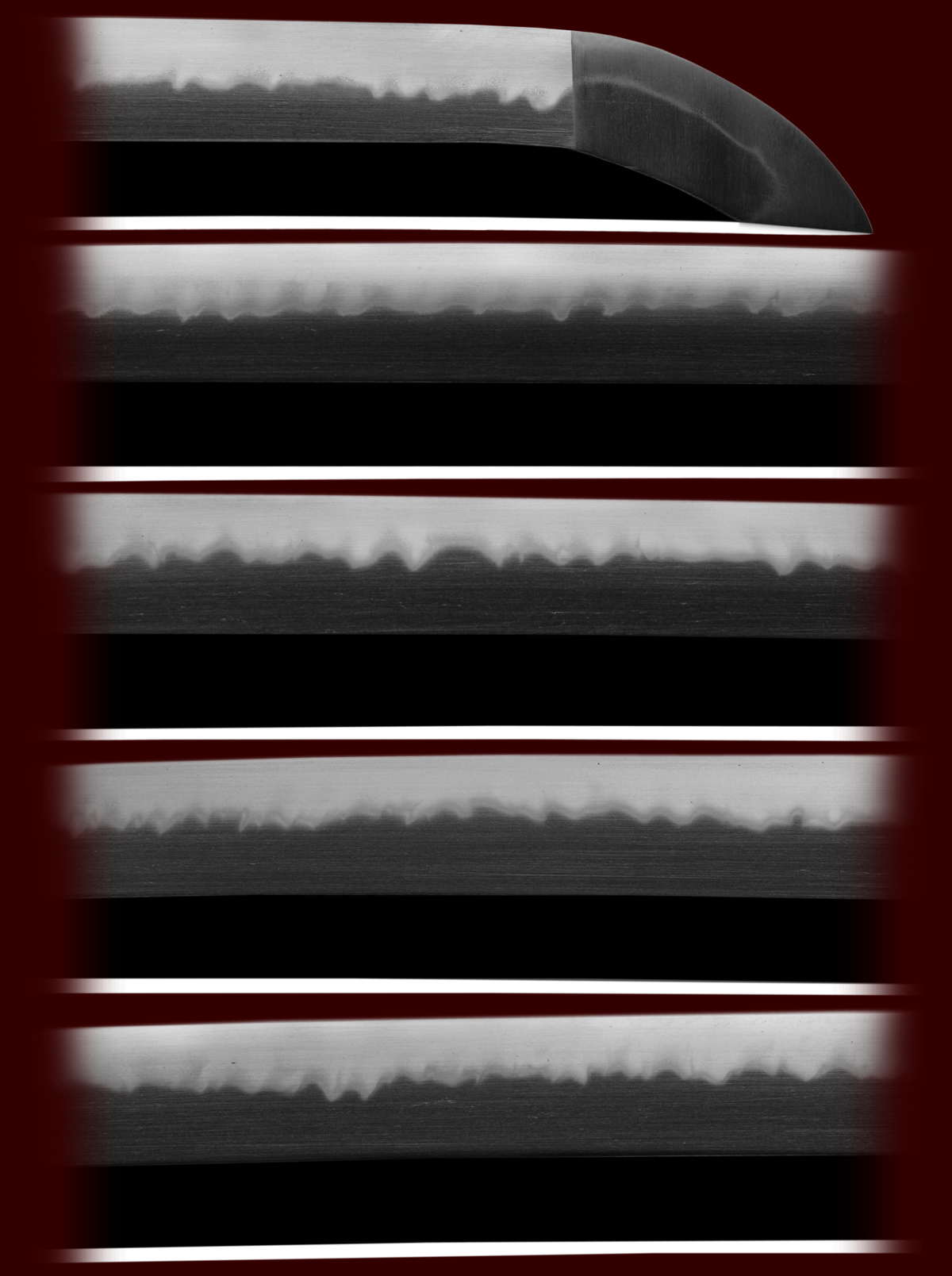
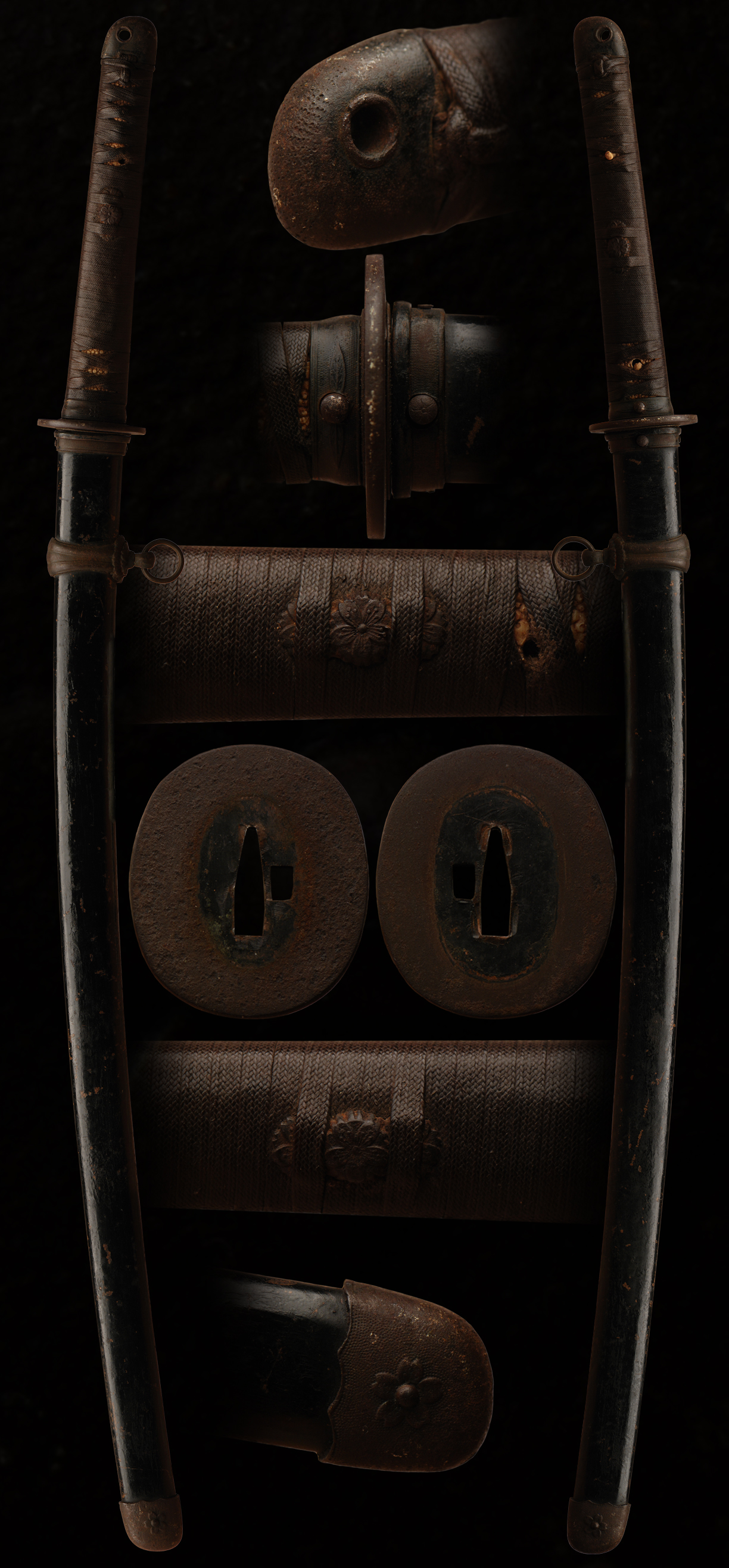
Sometimes people list these mounts as marine or navel but this is not correct. This is a late war army officers sword from WWII. This sword is a hand forged blade and not mass produced. It has good hada that was well forged and a very active hamon that was water quenched in the tradition manner. This is a very good example of a sword made by the Rikugun Jumei sword smith Kanetoshi. Kanetoshi is listed as a Rikugun Jumei Tosho. Swords made from this group can have a star stamp on the blade as this one has. This blade comes in original mounts and is in good condition.From the “Japanese Sword Guide”The presence of a STAR stamp on the nakago of a WW II era sword blade is an indicator of a blade made by swordsmiths of the Rikugun Jumei Tosho. To become Rikugun Jumei Tosho, a swordsmith had to pass tests and examination of his blades. Once accepted as an Army Certified Swordsmith (Rikugun Jumei Tosho), the smith was given a regular allocation of tamehagane with which to make sword blades. Jumei Tosho smiths also made blades using non-traditional materials, mainly forged mill steel. Blades with star stamps and which show nie in the yakiba are considered by some collectors to be gendaito; whereas other stamps were indicative of blades made by non-traditional methods and are therefore not gendaito. It is still hotly debated as to whether all tang stamps indicate non-traditionally made blades or whether certain stamps such as the star stamp indicate blades made in the traditional manner. Some star stamped blades have received origami from the NBTHK. A complete list of Rikugun Jumei Tosho swordsmiths was published in Showa 17 entitled “Rikugun Jumei Tosho Meibo”. There were also Navy commissioned swordsmiths (Kaigun Toko), but little information is currently available on them. Mei:Noshu Ju KanetoshiDate:Showa Jyu ku nen roku gatsu (june 1926)Nagasa:25 3/16 ”Sori:15.0mmWidth at the ha-machi:33.4mmWidth at the yokote:24.1mmThickness at the mune-machi:6.1mmConstruction:shinogi zukuriMune:ioriNakago:ubuKitae:ko itameHamon:midareBoshi:maruCondition:good older polish Subscribe for the Latest Updates!Join our mailing list to receive the latest News & Updates fromNihonto Antiques.SUBSCRIBEYou have Successfully Subscribed!Your email address will be kept private & will only be used to send updates from this site! Owner Stu Wood needs 2200 for it ore offer around that price.
 NihontoWatchBETA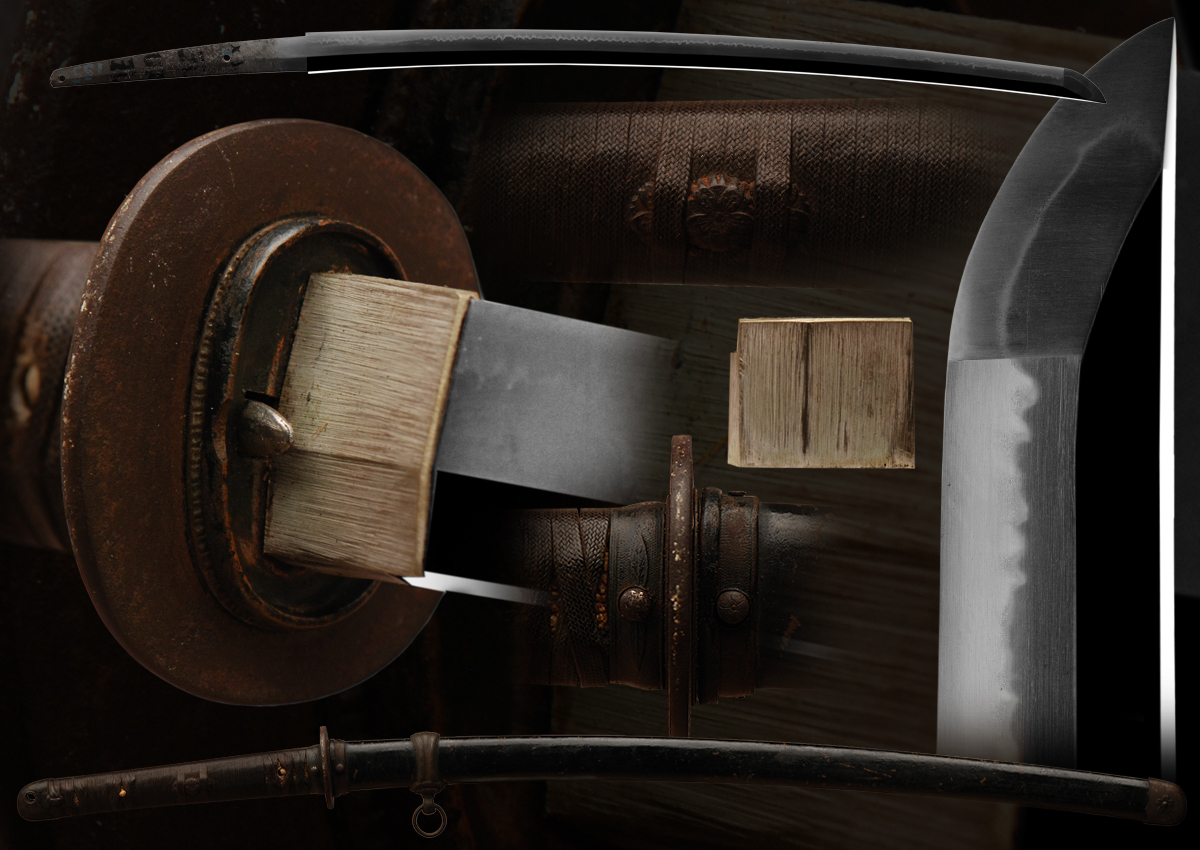

美濃 · 1926-1989頃
販売店の出品ページで鑑定書を確認できませんでした。日本刀および刀装具は通常、NBTHK(または NTHK)の鑑定を受けます。鑑定書がない場合、極めは販売店の見解にとどまり、第三者による確認は行われていません。ご購入前に販売店へ鑑定書の有無をお問い合わせのうえ、慎重にご判断ください。
We offer a 48 hour inspection period for all Antique items shipped within the United States only. If the item is not to your satisfaction, we will gladly refund your money less any shipping and handling fees. All sales are final after the 48 hour inspection period. Please note that all discounted items are a final sale and not returnable.
Sometimes people list these mounts as marine or navel but this is not correct. This is a late war army officers sword from WWII. This sword is a hand forged blade and not mass produced. It has good hada that was well forged and a very active hamon that was water quenched in the tradition manner. This is a very good example of a sword made by the Rikugun Jumei sword smith Kanetoshi. Kanetoshi is listed as a Rikugun Jumei Tosho. Swords made from this group can have a star stamp on the blade as this one has. This blade comes in original mounts and is in good condition.From the “Japanese Sword Guide”The presence of a STAR stamp on the nakago of a WW II era sword blade is an indicator of a blade made by swordsmiths of the Rikugun Jumei Tosho. To become Rikugun Jumei Tosho, a swordsmith had to pass tests and examination of his blades. Once accepted as an Army Certified Swordsmith (Rikugun Jumei Tosho), the smith was given a regular allocation of tamehagane with which to make sword blades. Jumei Tosho smiths also made blades using non-traditional materials, mainly forged mill steel. Blades with star stamps and which show nie in the yakiba are considered by some collectors to be gendaito; whereas other stamps were indicative of blades made by non-traditional methods and are therefore not gendaito. It is still hotly debated as to whether all tang stamps indicate non-traditionally made blades or whether certain stamps such as the star stamp indicate blades made in the traditional manner. Some star stamped blades have received origami from the NBTHK. A complete list of Rikugun Jumei Tosho swordsmiths was published in Showa 17 entitled “Rikugun Jumei Tosho Meibo”. There were also Navy commissioned swordsmiths (Kaigun Toko), but little information is currently available on them. Mei:Noshu Ju KanetoshiDate:Showa Jyu ku nen roku gatsu (june 1926)Nagasa:25 3/16 ”Sori:15.0mmWidth at the ha-machi:33.4mmWidth at the yokote:24.1mmThickness at the mune-machi:6.1mmConstruction:shinogi zukuriMune:ioriNakago:ubuKitae:ko itameHamon:midareBoshi:maruCondition:good older polish Subscribe for the Latest Updates!Join our mailing list to receive the latest News & Updates fromNihonto Antiques.SUBSCRIBEYou have Successfully Subscribed!Your email address will be kept private & will only be used to send updates from this site! Owner Stu Wood needs 2200 for it ore offer around that price.
NihontoWatchBETA美濃 · 1926-1989頃
販売店の出品ページで鑑定書を確認できませんでした。日本刀および刀装具は通常、NBTHK(または NTHK)の鑑定を受けます。鑑定書がない場合、極めは販売店の見解にとどまり、第三者による確認は行われていません。ご購入前に販売店へ鑑定書の有無をお問い合わせのうえ、慎重にご判断ください。
We offer a 48 hour inspection period for all Antique items shipped within the United States only. If the item is not to your satisfaction, we will gladly refund your money less any shipping and handling fees. All sales are final after the 48 hour inspection period. Please note that all discounted items are a final sale and not returnable.


