Antique Kozuka for Samurai Sword with NBTHK Tokubetsu Hozon Certificate (K-81)
売却済
世界81社の刀剣商を横断追跡 · 価格履歴 · 売却アーカイブ
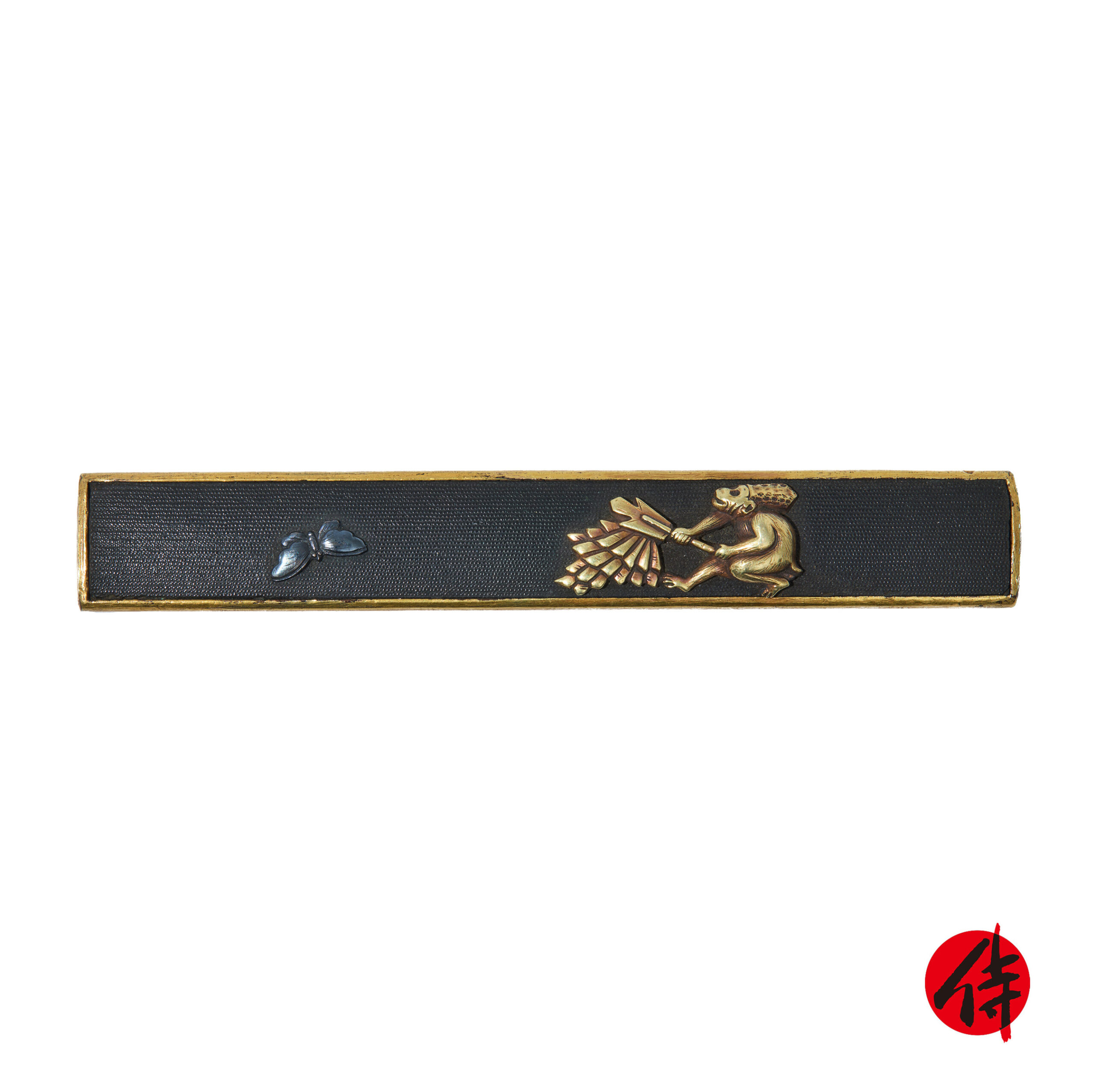
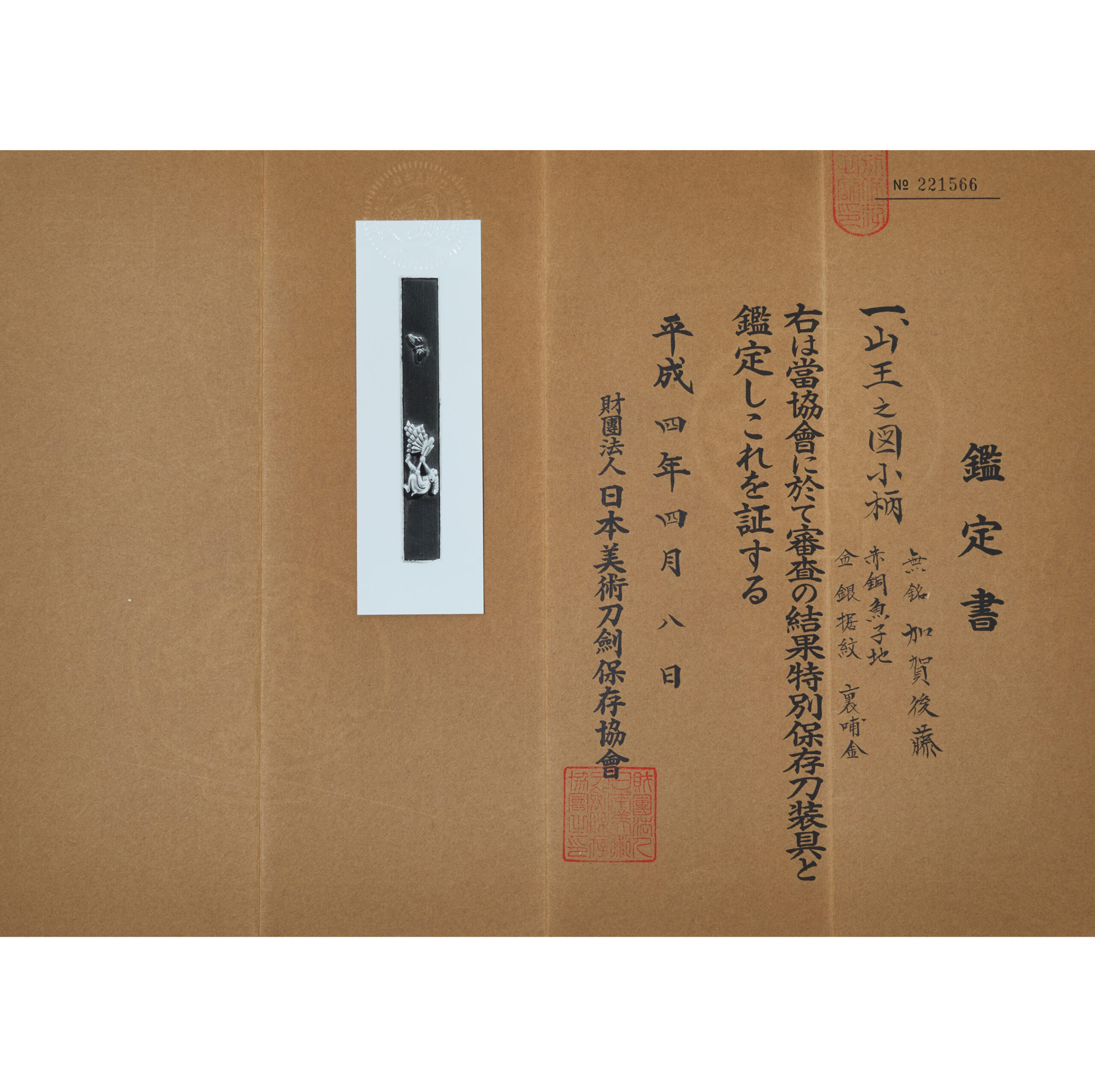
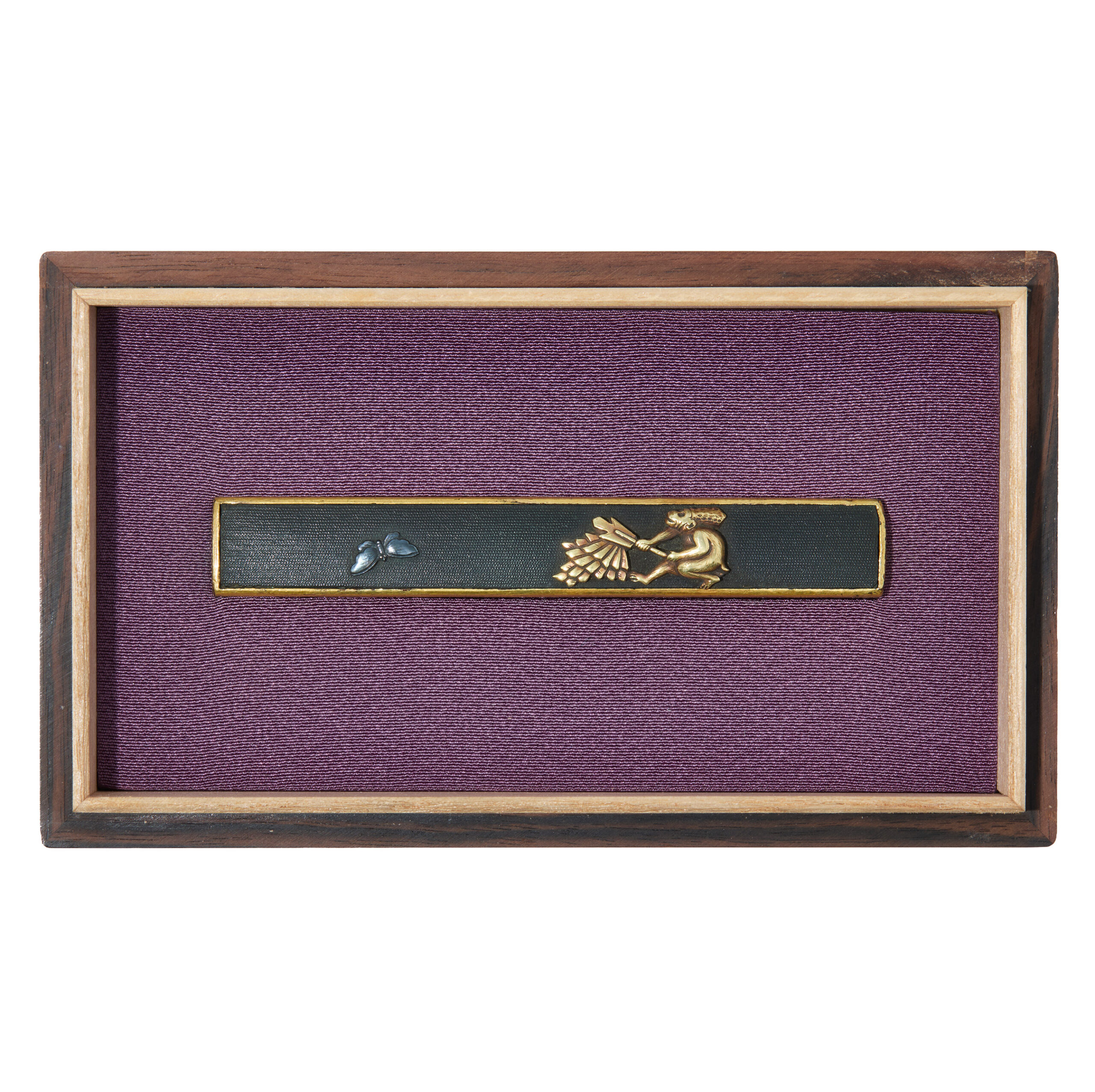
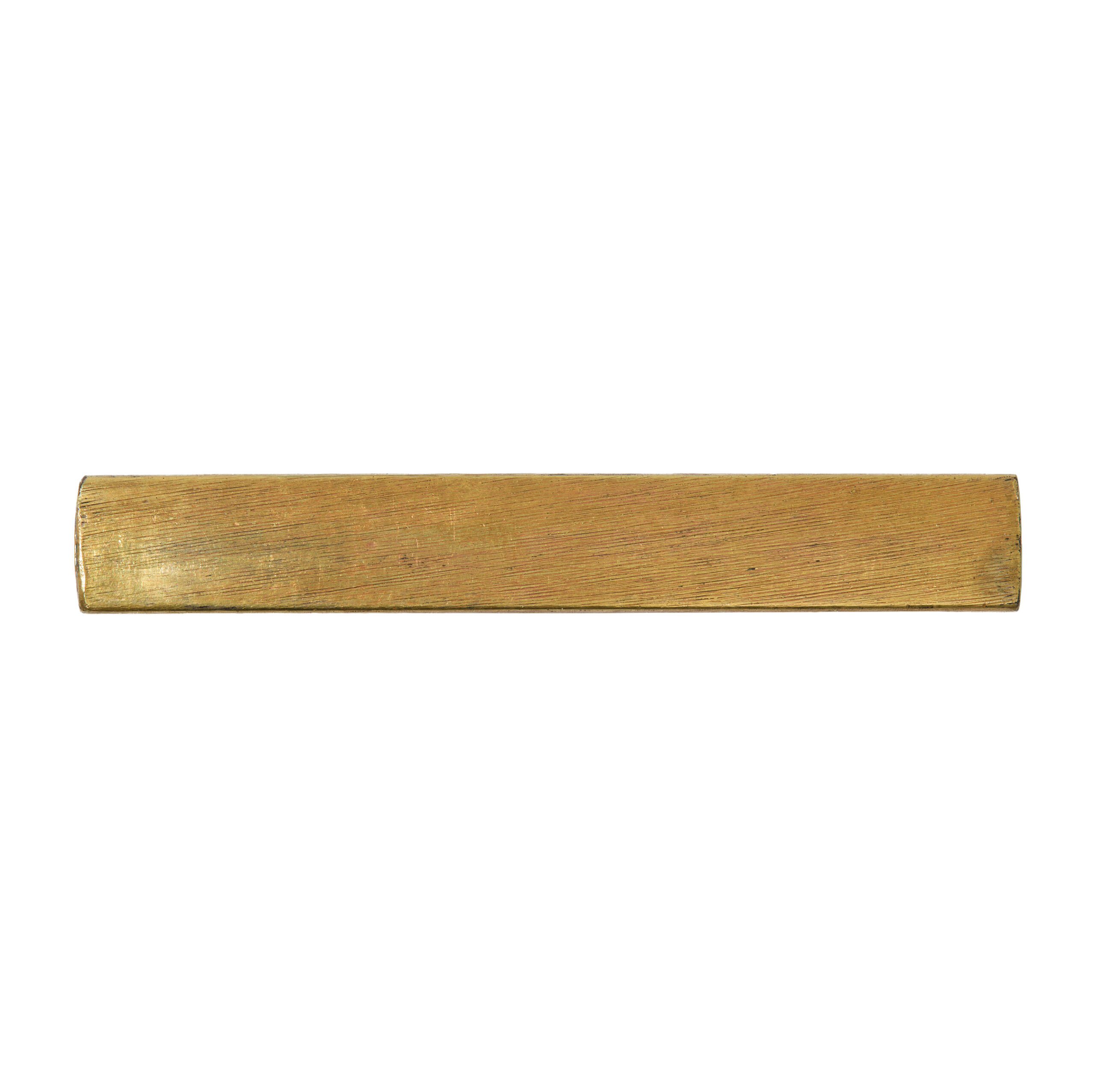
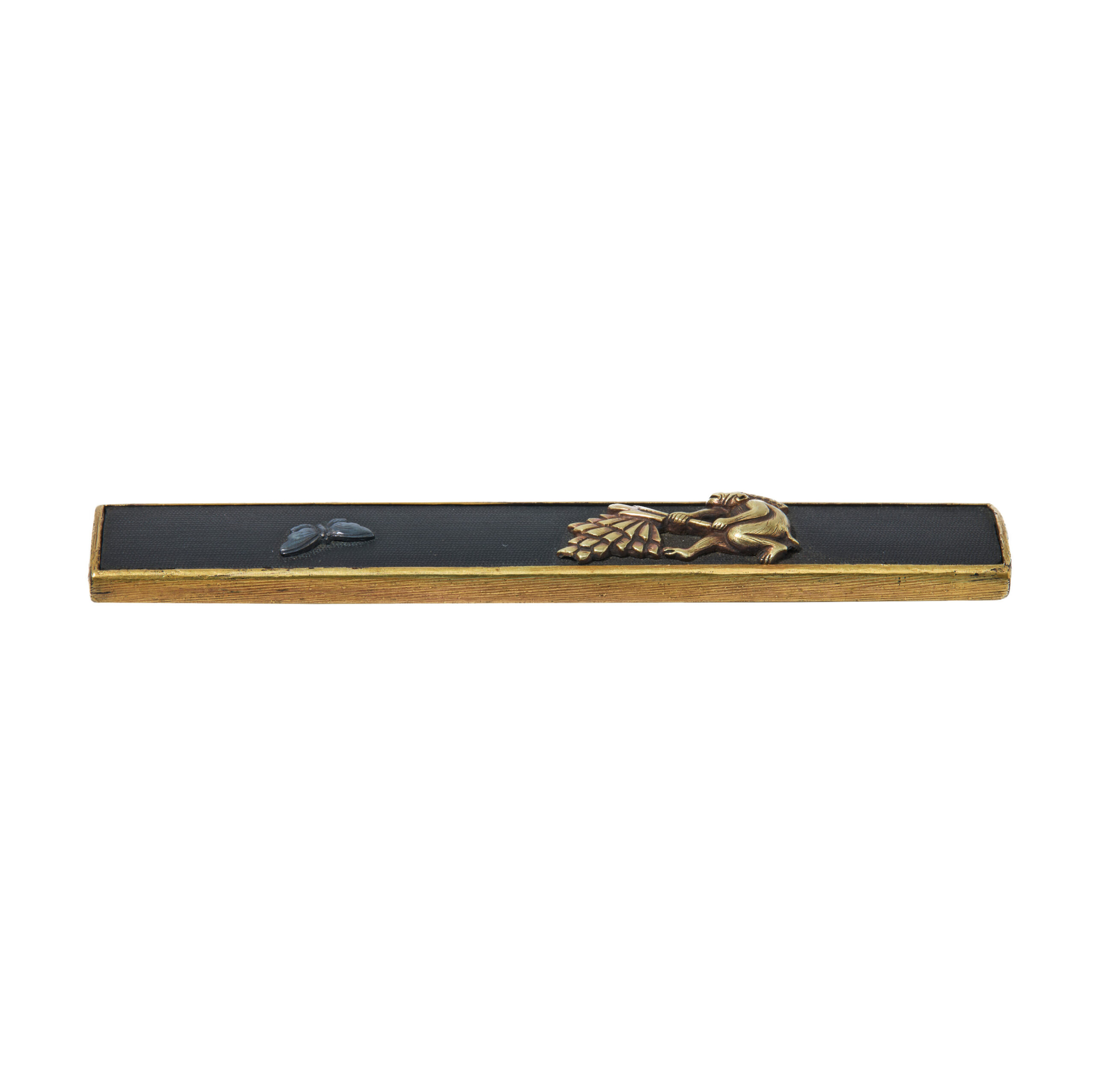
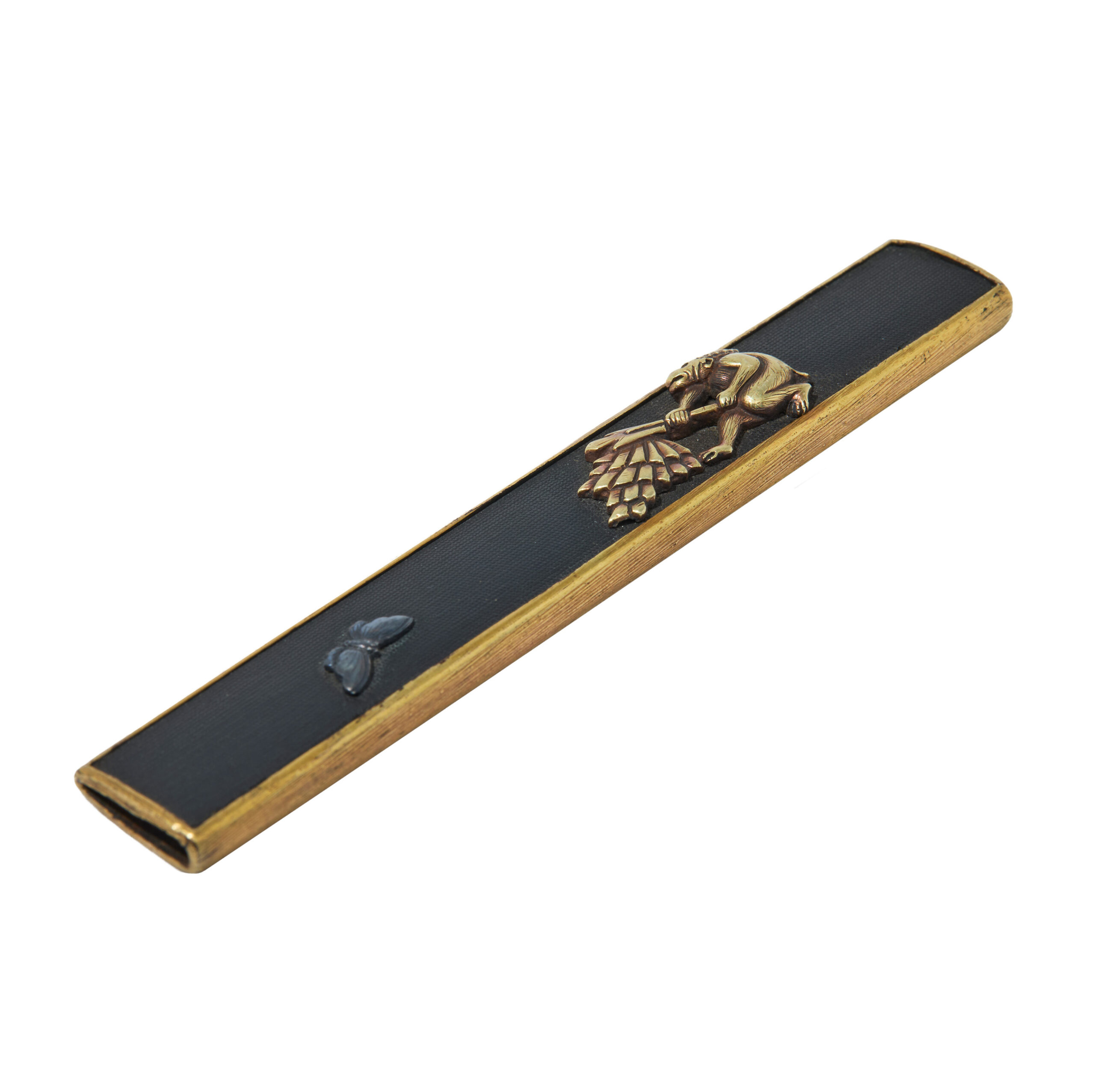
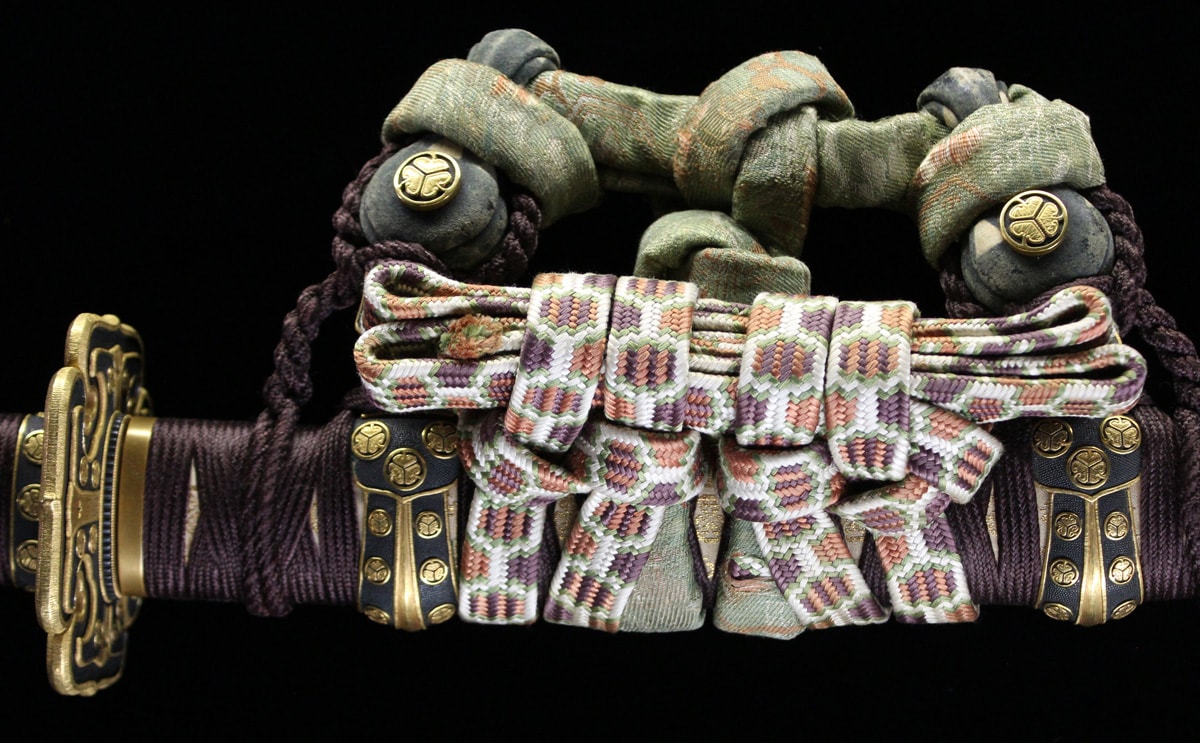
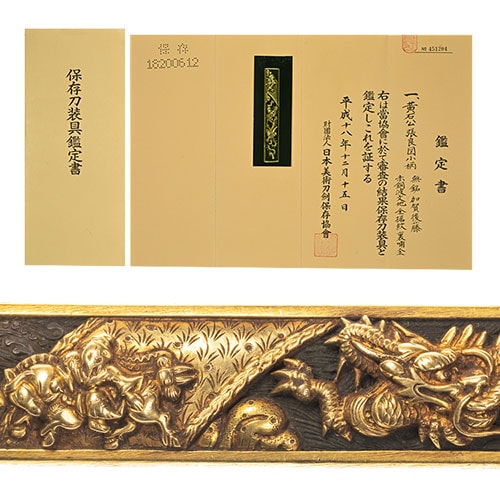
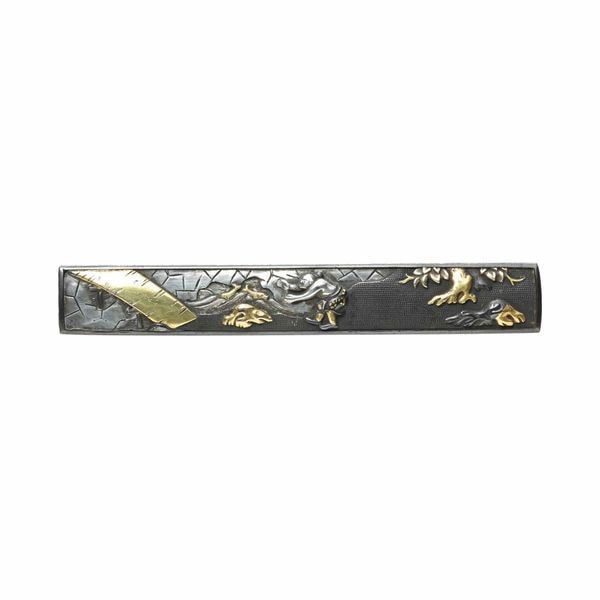
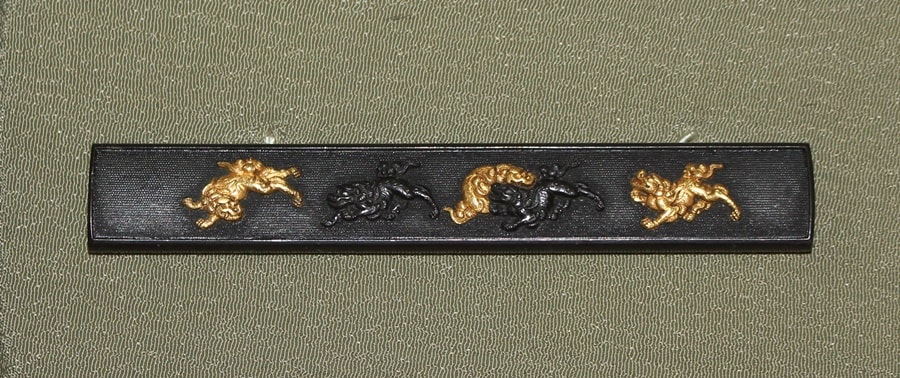
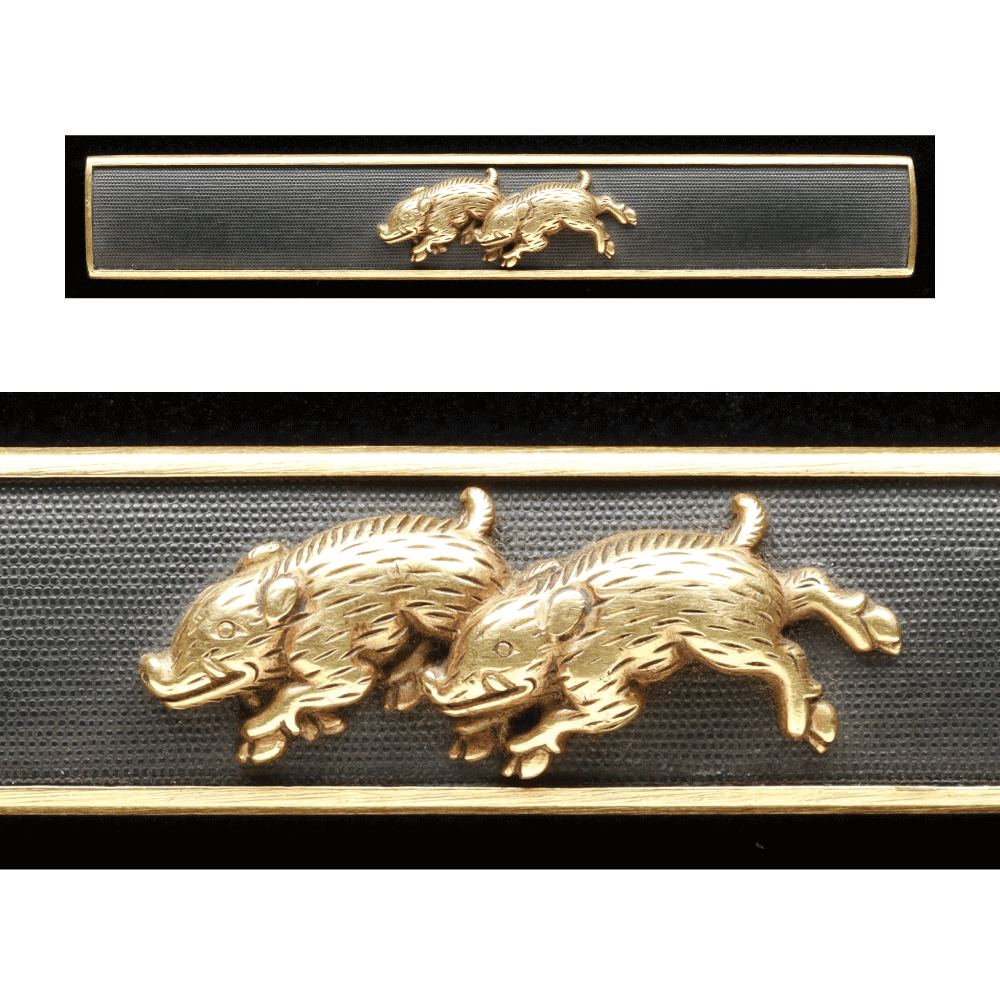
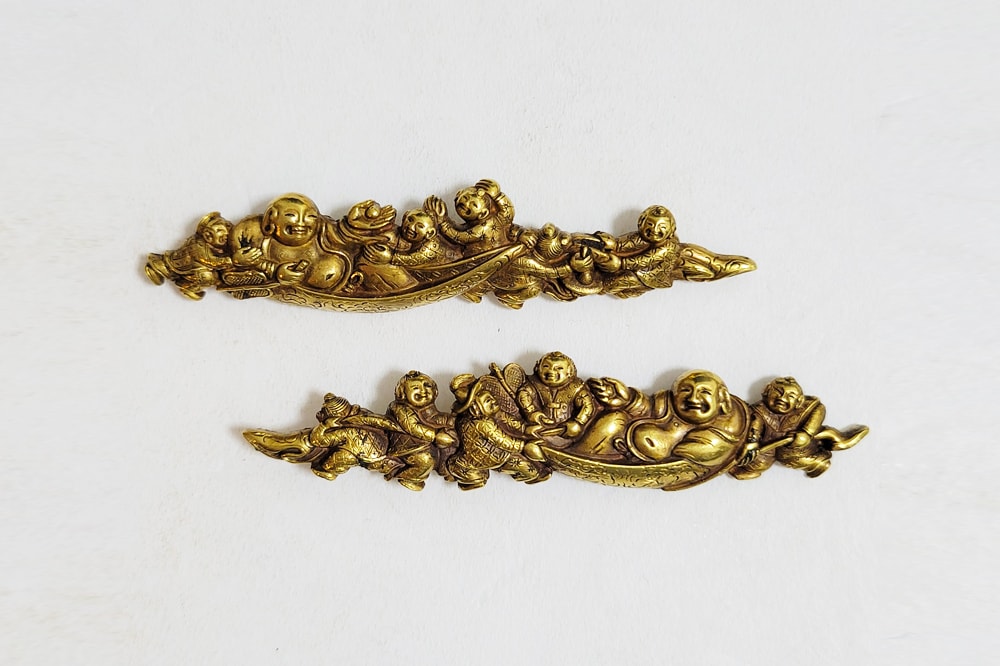
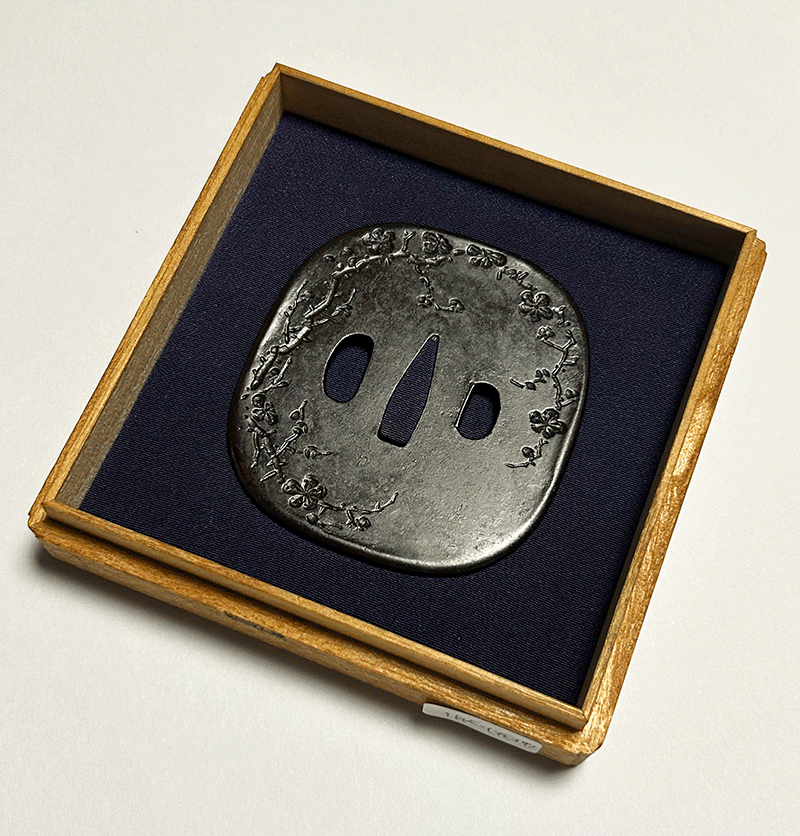
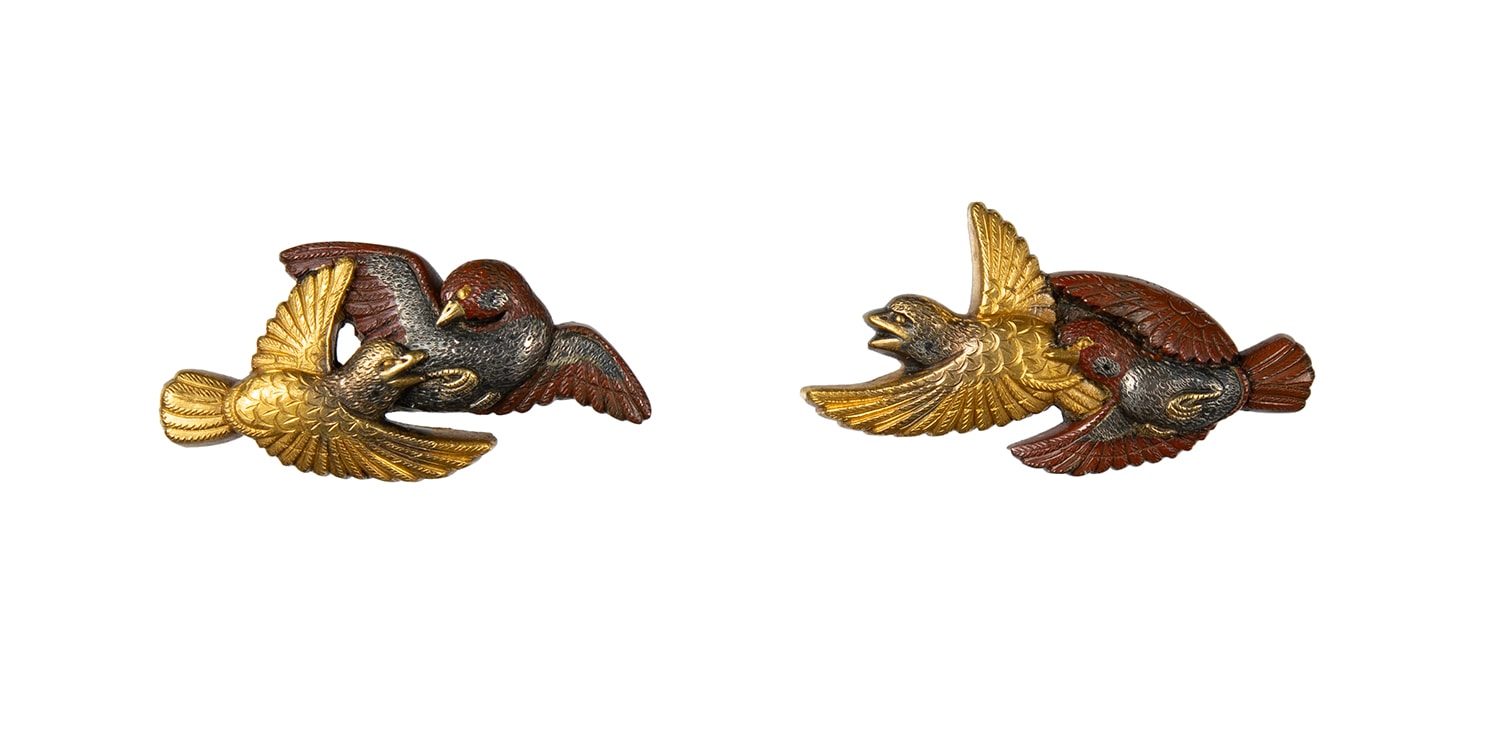
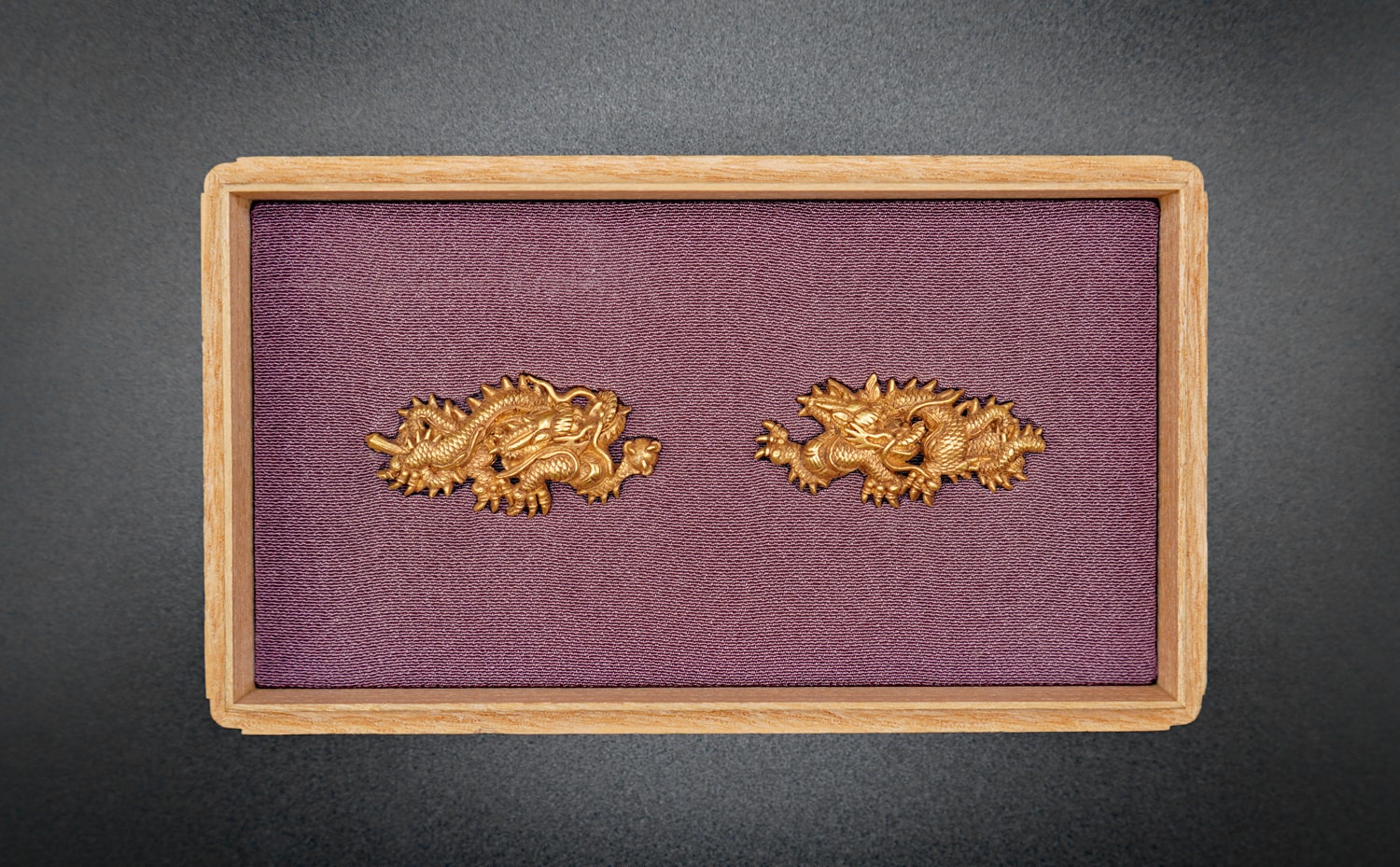
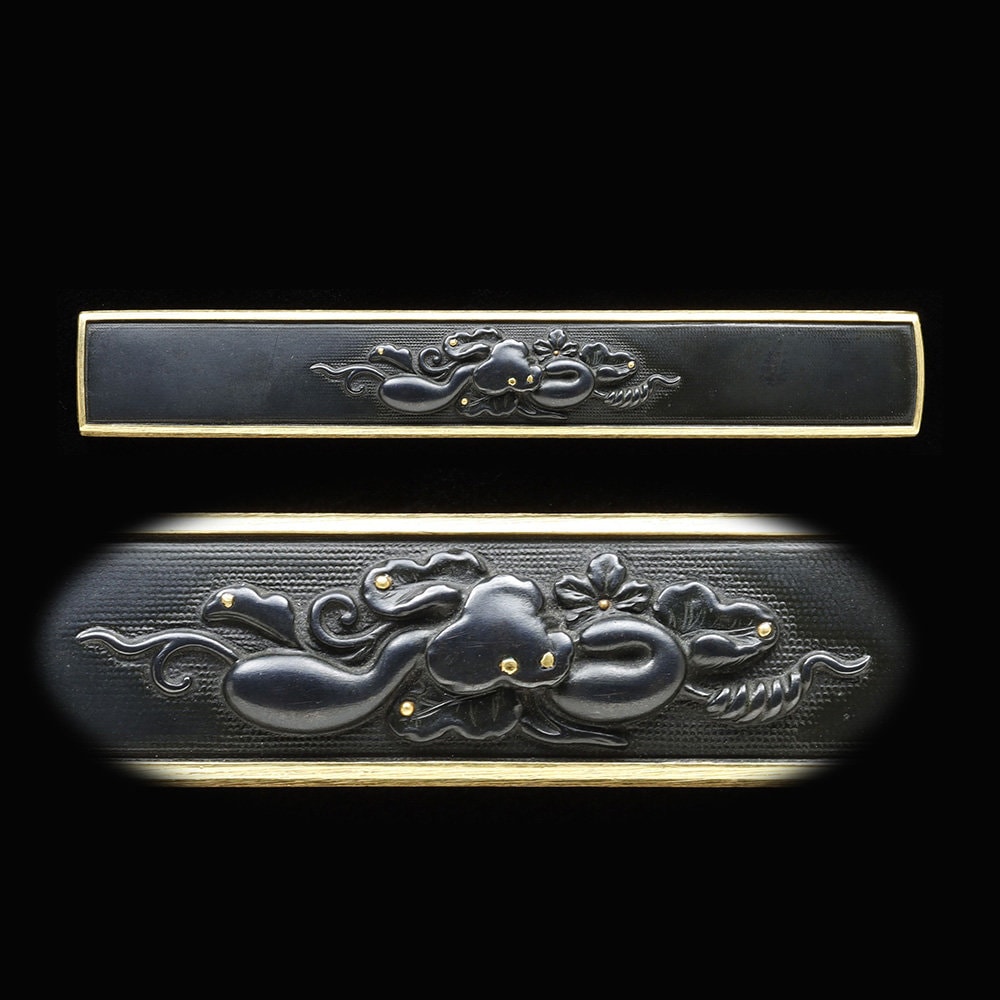
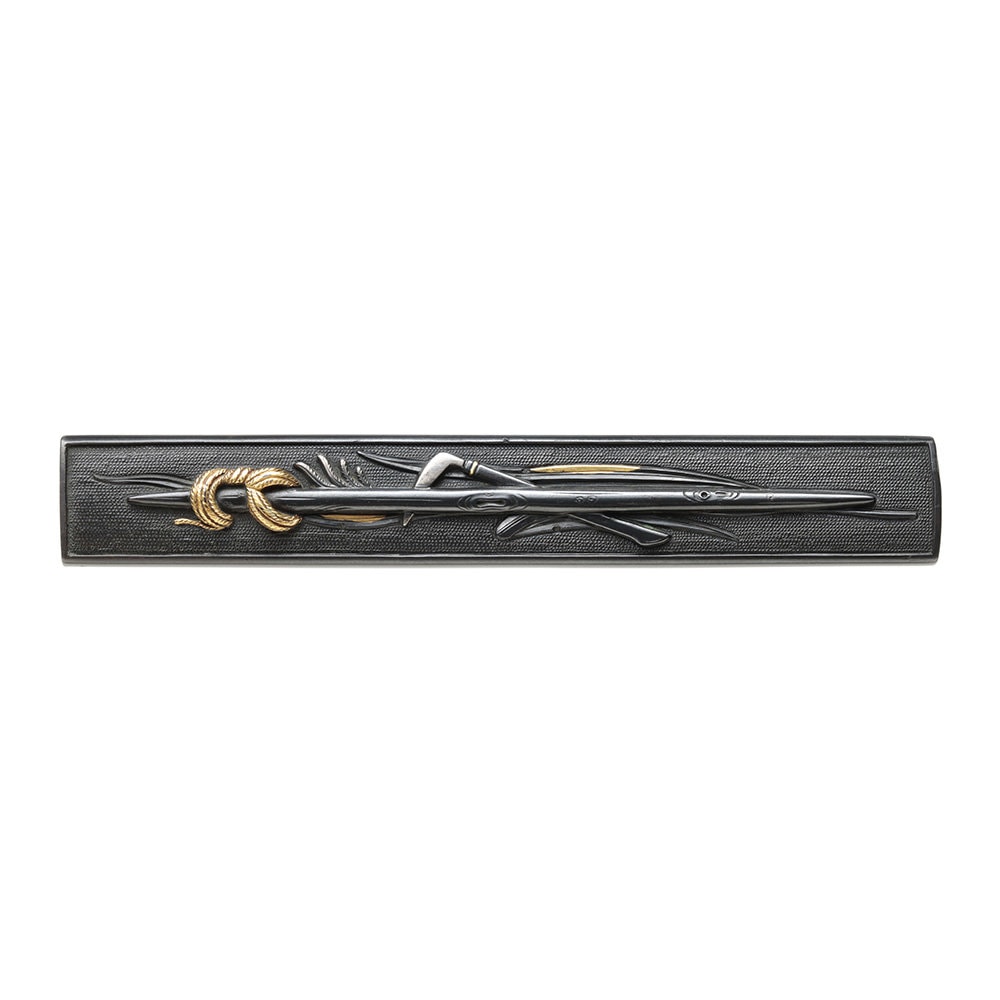
Title: Sannō no Zu Description This kozuka is crafted from shakudō, a traditional Japanese alloy of copper and gold, known for its deep blue-black patina. It features a nanako-ji (魚々子地) ground—a finely textured surface created by punching tiny dots in a regular pattern—adding depth and refinement to the background. The theme of this kozuka is “Sannō no Zu” (山王之図, Depiction of the Mountain King Deity), featuring a monkey figure holding sacred wands (gohei) and facing a butterfly, all rendered in fine mixed-metal inlay on a nanako-ji (fish roe textured) ground. In Japanese religious tradition, the monkey is considered a divine messenger of Sannō Gongen, a syncretic mountain deity associated with Hie Shrine near Mount Hiei. The butterfly may symbolize the spiritual realm or transformation, adding a layer of subtle mysticism to the design. According to the NBTHK (Society for the Preservation of Japanese Art Swords) certificate, this kozuka is attributed to the Kaga Goto school. The term Kaga Goto refers to a branch of the Goto family of metalworkers who served the Maeda clan of the Kaga domain. The foundation of this tradition was established by Goto Akinori, the seventh head of the Goto mainline, who served the Maeda family in alternating years with his cousin Kakujō, receiving a stipend of 150 koku. Akinori’s son, Goto Teijō, the ninth-generation head, also entered the service of the Maeda clan at the recommendation of his uncle Kakujō, receiving a stipend for 30 retainers (sanju-nin buchi), and played a key role in the further development of the Kaga Goto tradition. *As this item is an antique, please check each photo and ensure its condition. What is Kozuka? Kozuka is the small knife stored in Kozuka Hitsu (groove of the sheath of the Japanese sword). Many Tsubas (handguard) have two holes to put Kozuka and Kougai (equipment for appearance) next to Nakagoana (a hole of the Tsuba to put sword), so that Samurai didn’t need to draw his sword out of the scabbard when he wanted to use Kozuka or Kougai. Initially, Samurai used it for cutting wood or attacking enemies in an emergency. It is said that Kozuka was used as a craft knife rather than a weapon. The decorative designs of Kozuka were more emphasized than its practical use in the Edo period when Samurai society enjoyed one of the most peaceful times. And there were many ornamental Kozuka and Kougai created by Japanese metalworkers. Why is it that the sword mounting was important for Samurai? The sword mountings of the Japanese sword have many kinds of decorations such as handguards (Tsuba), sword hilt (Menuki), pommel (Fuchi Kashira). The Japanese sword worked as a weapon and as an object to show who he was. For example, it shows their personalities and beliefs. You could say that it is like decorations for smartphones today. We recommend you zoom in on the pictures of the sword fittings. When you do so, you can see the skill of Japanese metal engraving techniques. They are mainly made of iron and copper with inlays of gold, silver, and bronze. When it comes to handguard (Tsuba), each one has a different outline and weight. These sword fittings that have lived with Japanese swords of the same age might be worth as much as the Japanese swords. They are inconspicuous parts of the Japanese sword. Nevertheless, if you are knowledgeable or particular about it, you will become a connoisseur of the Samurai. Authentication Paper : Tokubetsu NBTHK Hozon Certificate NBTHK, also known as Nihon Bijutsu Touken Hozon Kyokai (the Society for the Preservation of the Japan Art Sword), is one of the oldest Japanese sword appraising organizations in modern-day Japan. They authenticated the Kozuka on April 8th in the 4th year of Heisei (1992). They appraised it as Hozon Tousougu, the Kozuka especially worth preserving for Japanese society. The purchaser will receive this original certificate as well. We can also translate what is written into English and make a PDF file for your record if you req

売却済
世界81社の刀剣商を横断追跡 · 価格履歴 · 売却アーカイブ
Title: Sannō no Zu Description This kozuka is crafted from shakudō, a traditional Japanese alloy of copper and gold, known for its deep blue-black patina. It features a nanako-ji (魚々子地) ground—a finely textured surface created by punching tiny dots in a regular pattern—adding depth and refinement to the background. The theme of this kozuka is “Sannō no Zu” (山王之図, Depiction of the Mountain King Deity), featuring a monkey figure holding sacred wands (gohei) and facing a butterfly, all rendered in fine mixed-metal inlay on a nanako-ji (fish roe textured) ground. In Japanese religious tradition, the monkey is considered a divine messenger of Sannō Gongen, a syncretic mountain deity associated with Hie Shrine near Mount Hiei. The butterfly may symbolize the spiritual realm or transformation, adding a layer of subtle mysticism to the design. According to the NBTHK (Society for the Preservation of Japanese Art Swords) certificate, this kozuka is attributed to the Kaga Goto school. The term Kaga Goto refers to a branch of the Goto family of metalworkers who served the Maeda clan of the Kaga domain. The foundation of this tradition was established by Goto Akinori, the seventh head of the Goto mainline, who served the Maeda family in alternating years with his cousin Kakujō, receiving a stipend of 150 koku. Akinori’s son, Goto Teijō, the ninth-generation head, also entered the service of the Maeda clan at the recommendation of his uncle Kakujō, receiving a stipend for 30 retainers (sanju-nin buchi), and played a key role in the further development of the Kaga Goto tradition. *As this item is an antique, please check each photo and ensure its condition. What is Kozuka? Kozuka is the small knife stored in Kozuka Hitsu (groove of the sheath of the Japanese sword). Many Tsubas (handguard) have two holes to put Kozuka and Kougai (equipment for appearance) next to Nakagoana (a hole of the Tsuba to put sword), so that Samurai didn’t need to draw his sword out of the scabbard when he wanted to use Kozuka or Kougai. Initially, Samurai used it for cutting wood or attacking enemies in an emergency. It is said that Kozuka was used as a craft knife rather than a weapon. The decorative designs of Kozuka were more emphasized than its practical use in the Edo period when Samurai society enjoyed one of the most peaceful times. And there were many ornamental Kozuka and Kougai created by Japanese metalworkers. Why is it that the sword mounting was important for Samurai? The sword mountings of the Japanese sword have many kinds of decorations such as handguards (Tsuba), sword hilt (Menuki), pommel (Fuchi Kashira). The Japanese sword worked as a weapon and as an object to show who he was. For example, it shows their personalities and beliefs. You could say that it is like decorations for smartphones today. We recommend you zoom in on the pictures of the sword fittings. When you do so, you can see the skill of Japanese metal engraving techniques. They are mainly made of iron and copper with inlays of gold, silver, and bronze. When it comes to handguard (Tsuba), each one has a different outline and weight. These sword fittings that have lived with Japanese swords of the same age might be worth as much as the Japanese swords. They are inconspicuous parts of the Japanese sword. Nevertheless, if you are knowledgeable or particular about it, you will become a connoisseur of the Samurai. Authentication Paper : Tokubetsu NBTHK Hozon Certificate NBTHK, also known as Nihon Bijutsu Touken Hozon Kyokai (the Society for the Preservation of the Japan Art Sword), is one of the oldest Japanese sword appraising organizations in modern-day Japan. They authenticated the Kozuka on April 8th in the 4th year of Heisei (1992). They appraised it as Hozon Tousougu, the Kozuka especially worth preserving for Japanese society. The purchaser will receive this original certificate as well. We can also translate what is written into English and make a PDF file for your record if you req

売却済
世界81社の刀剣商を横断追跡 · 価格履歴 · 売却アーカイブ