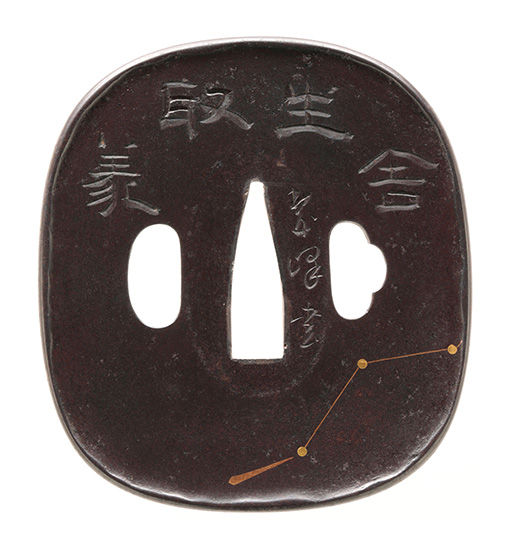
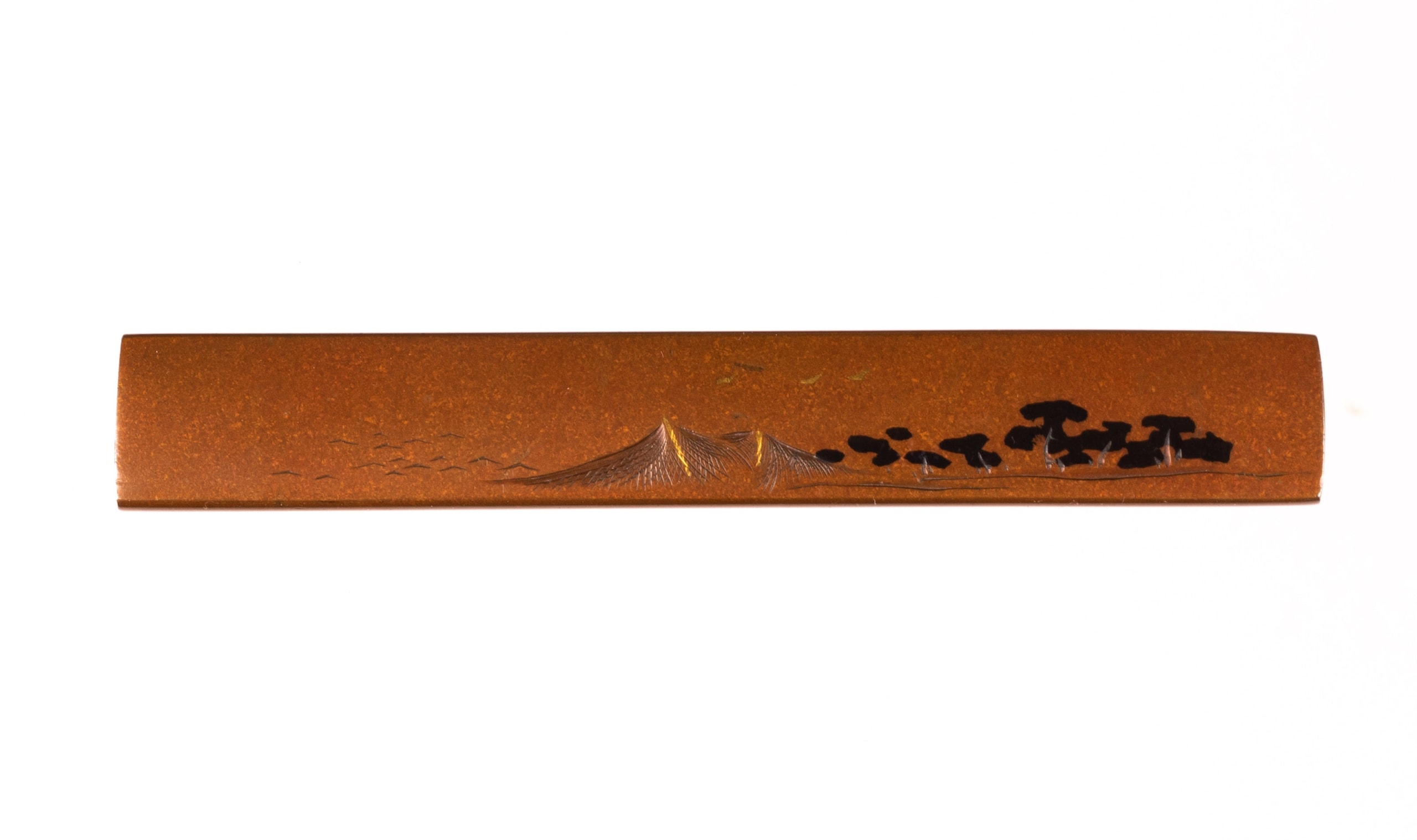
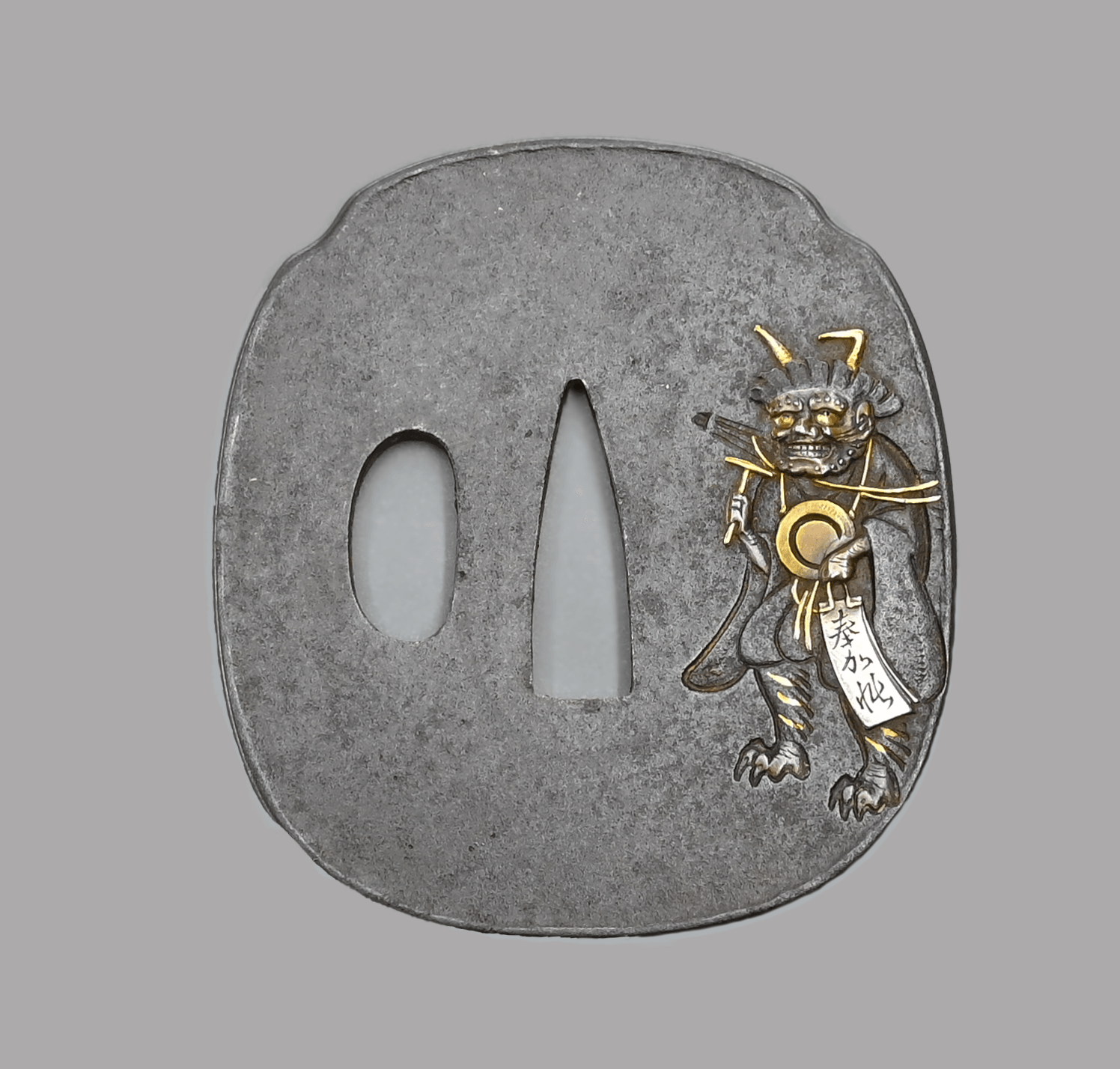
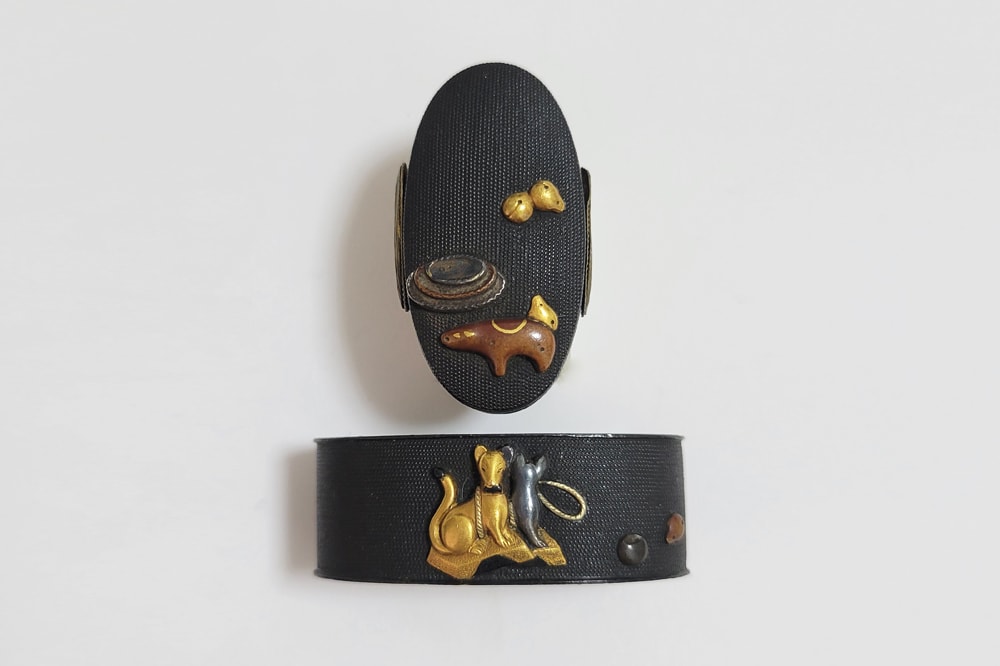
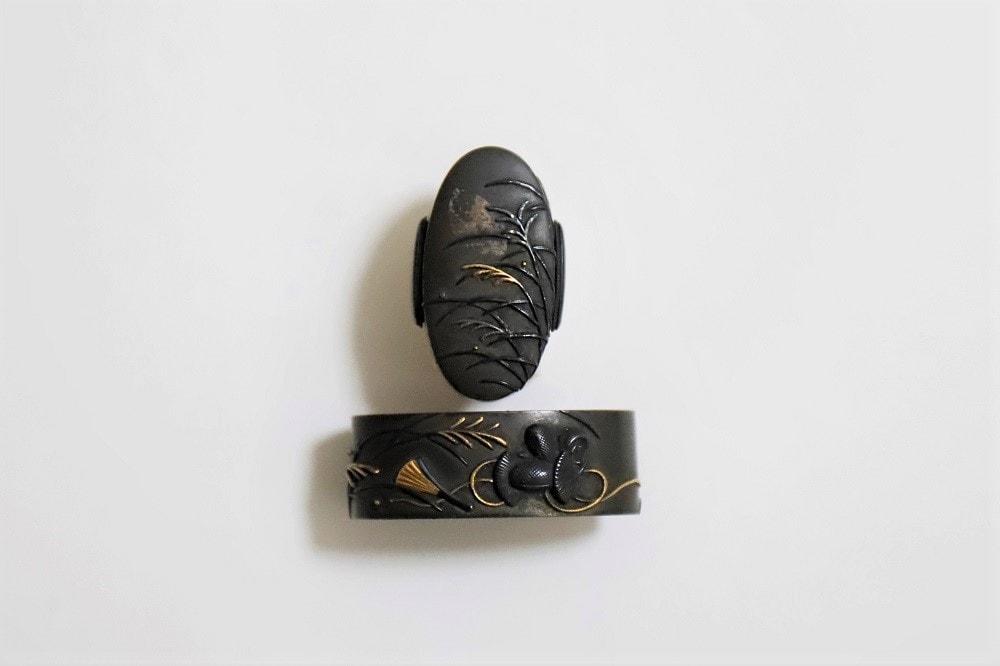
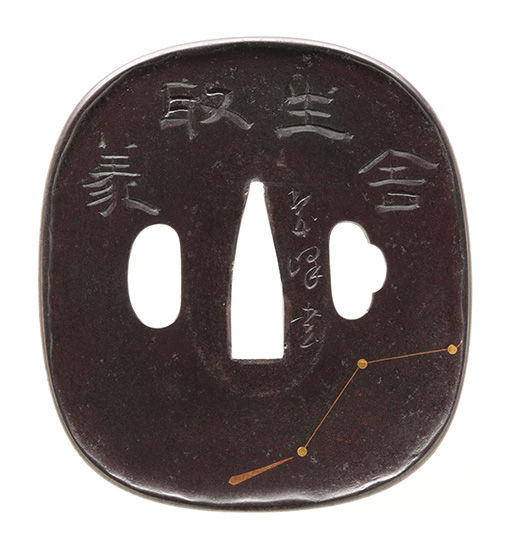
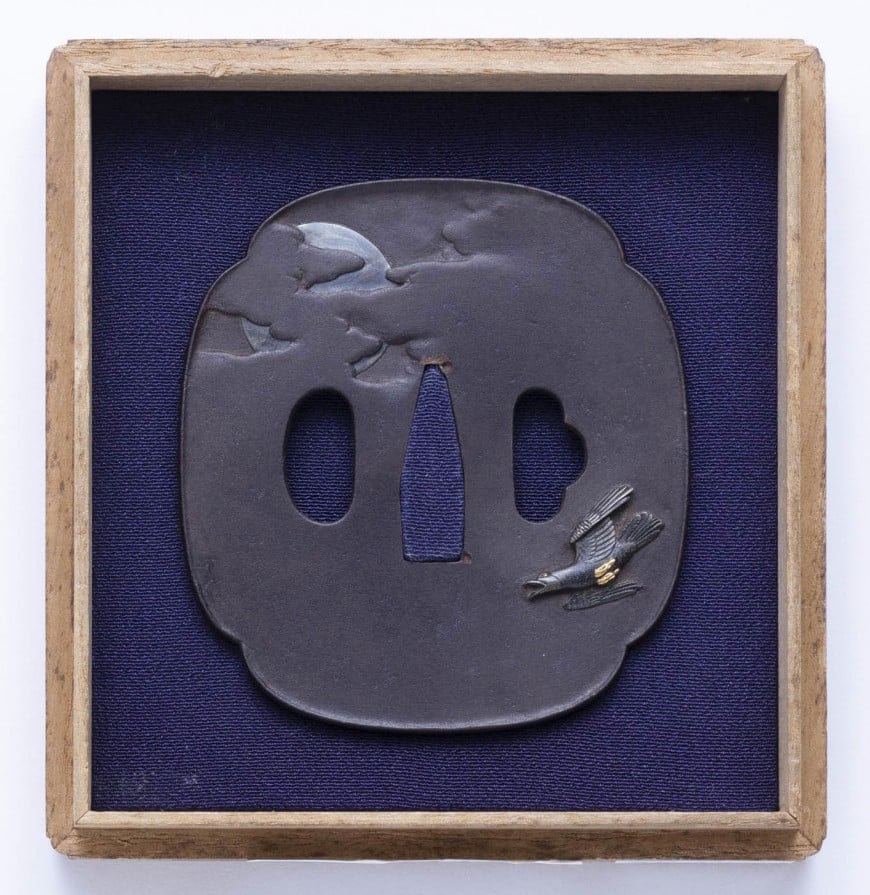
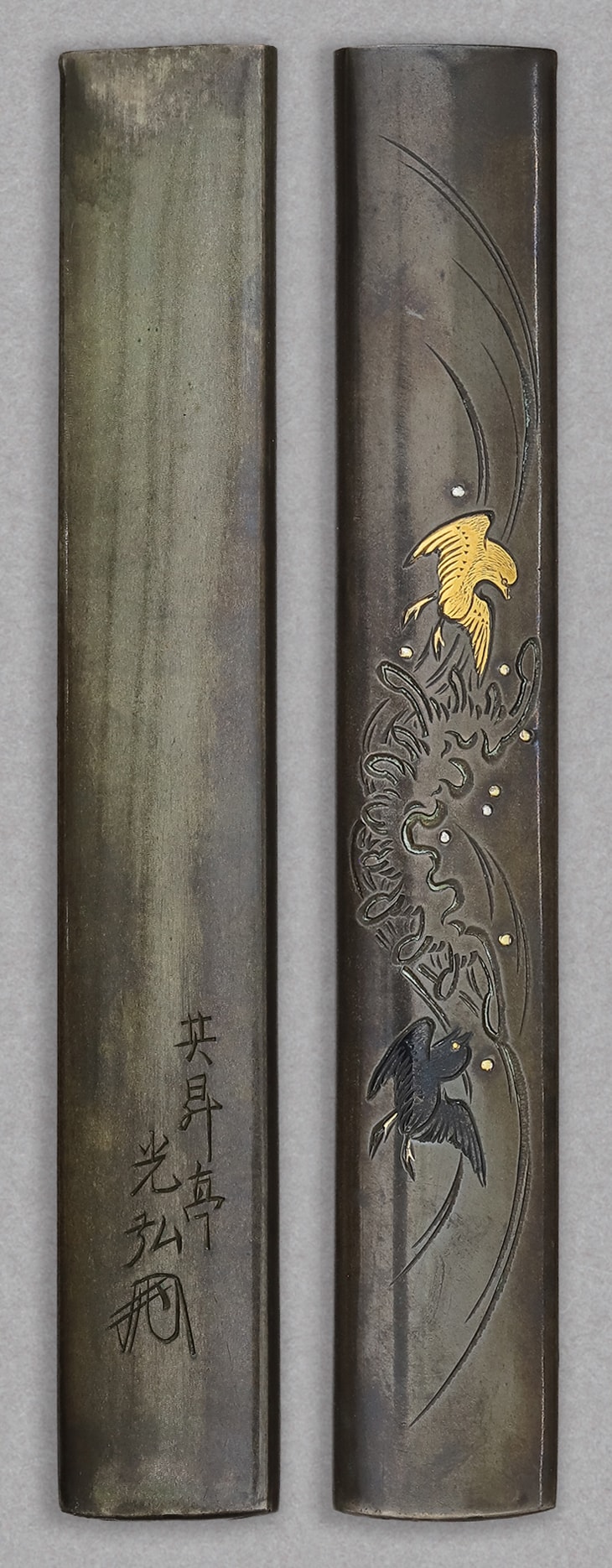
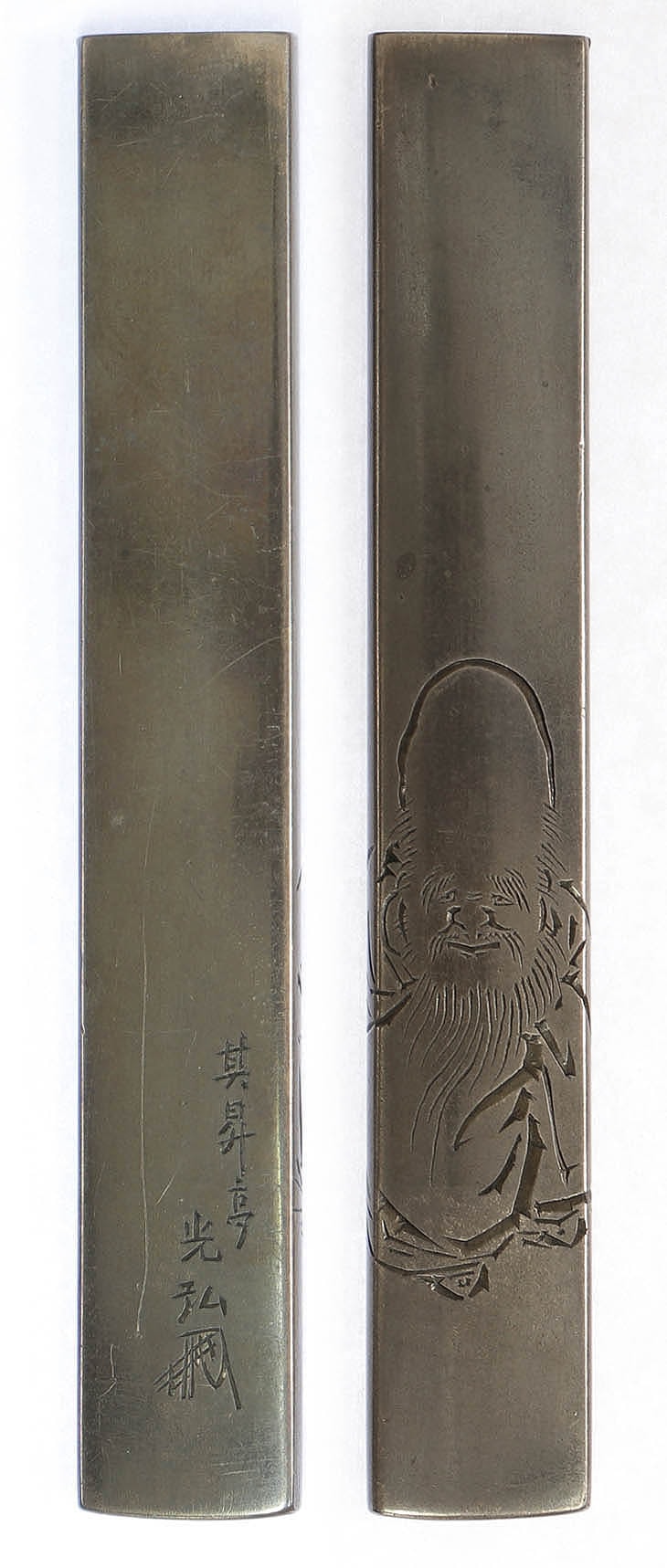
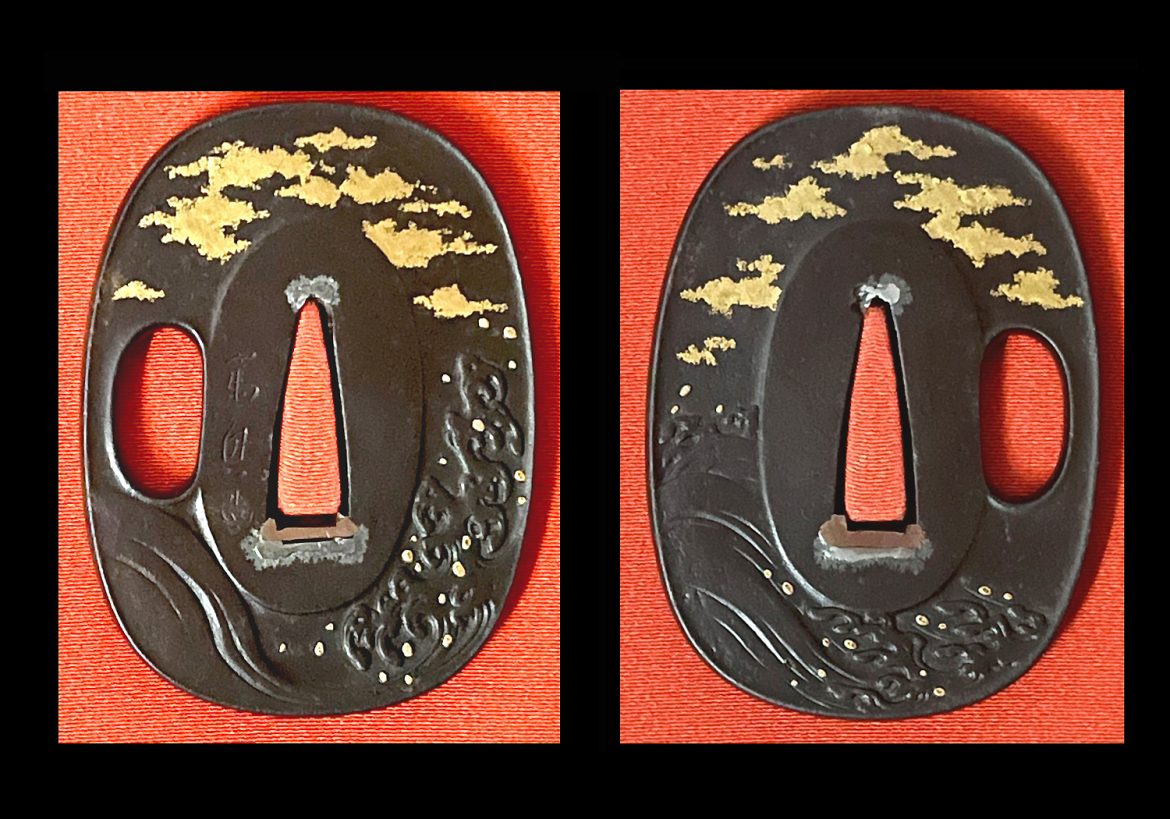
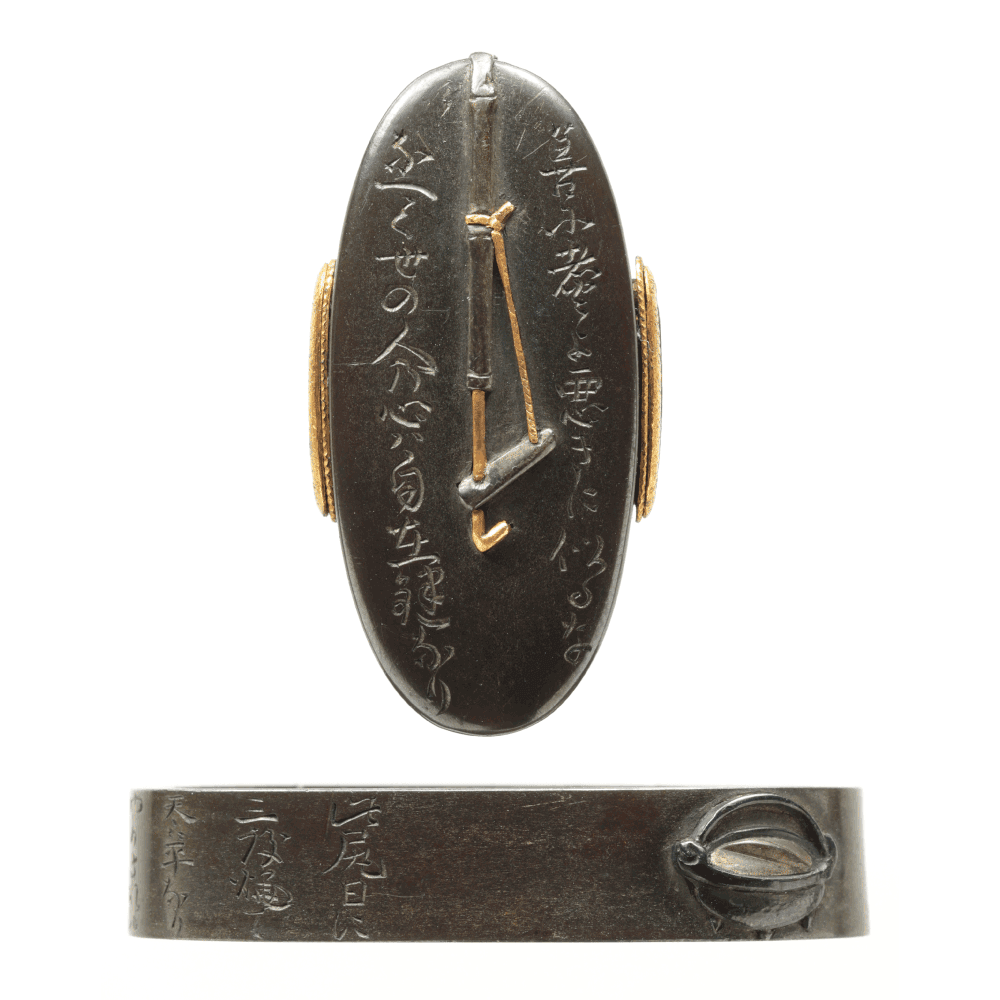
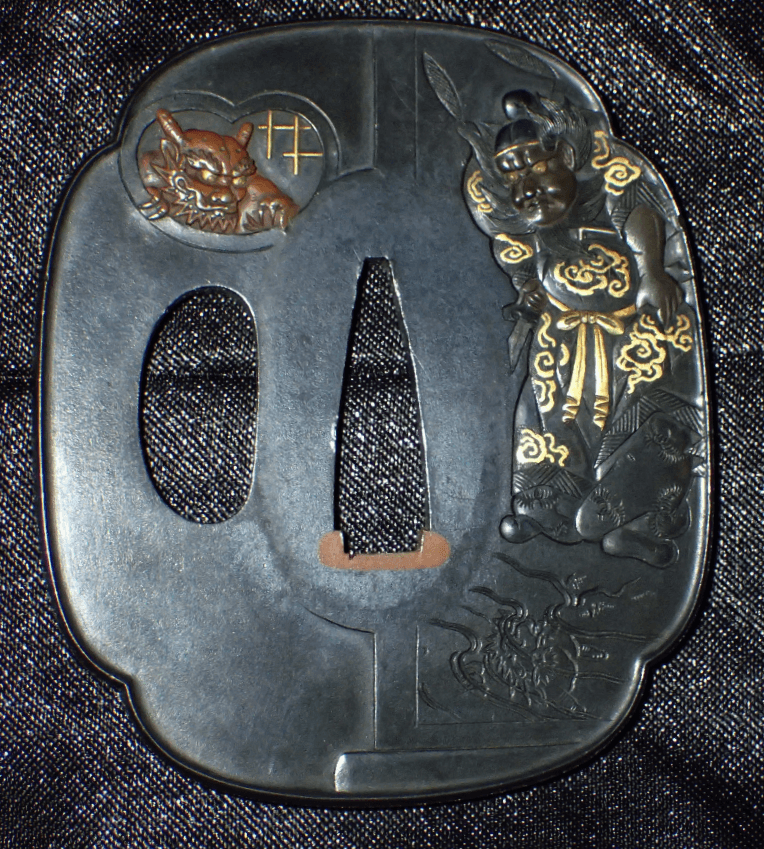
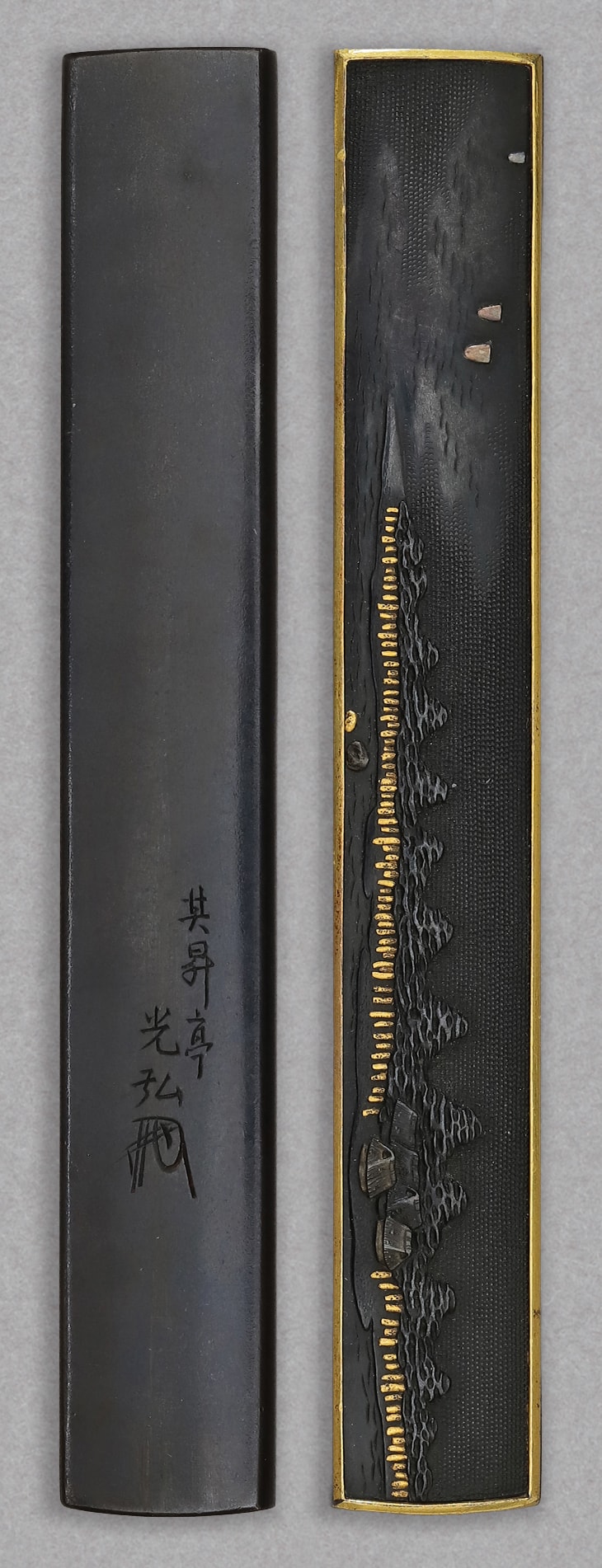
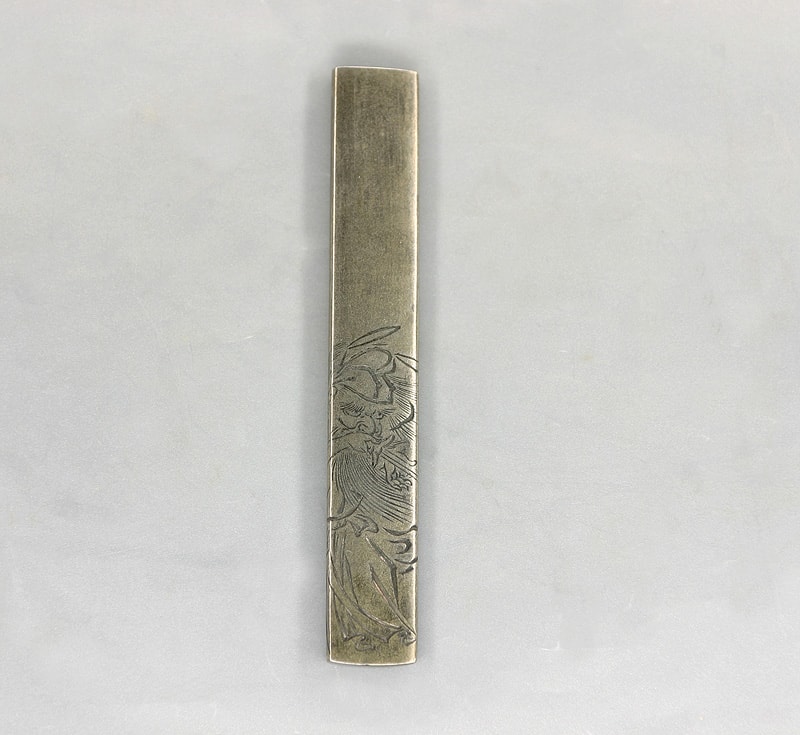
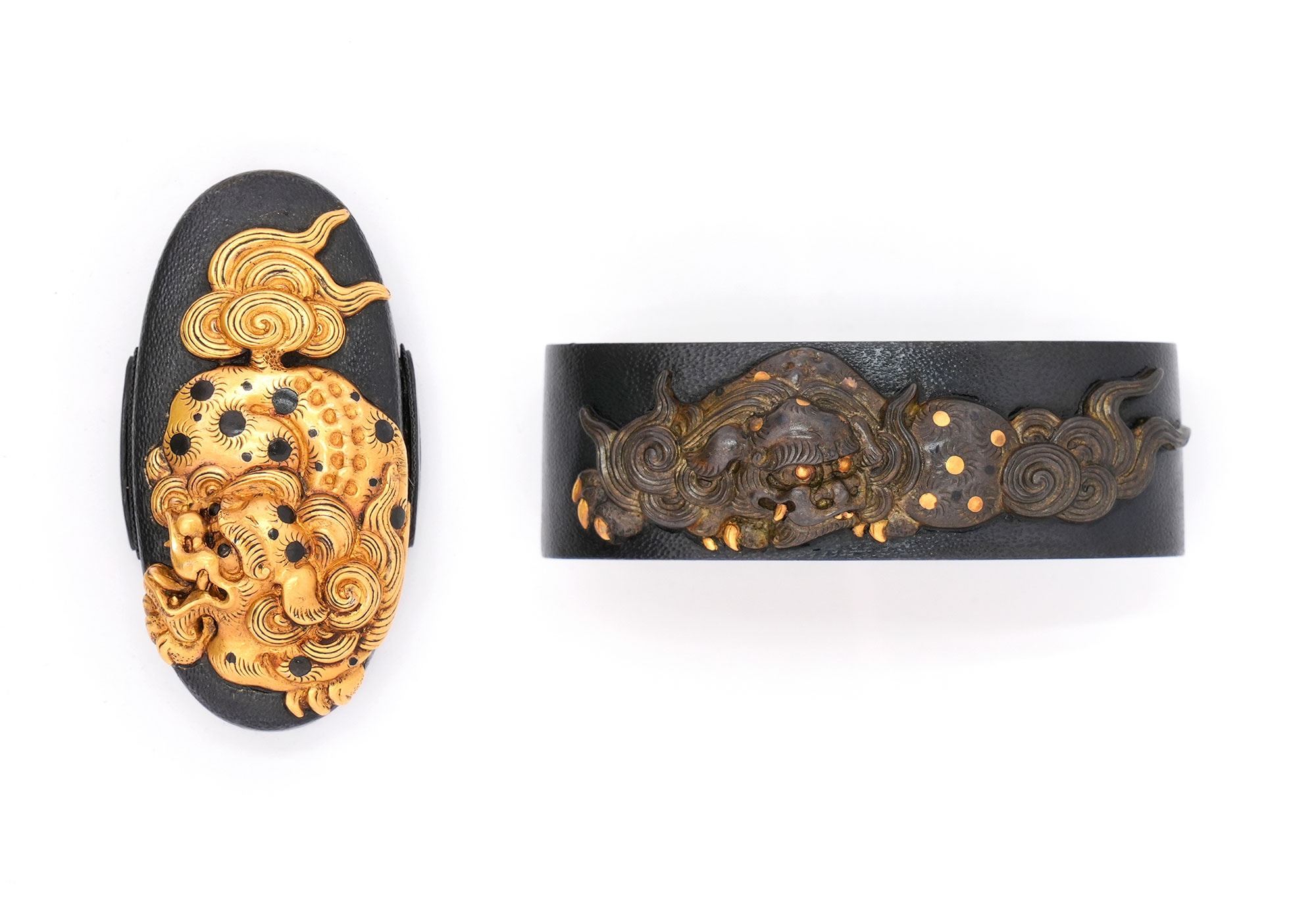
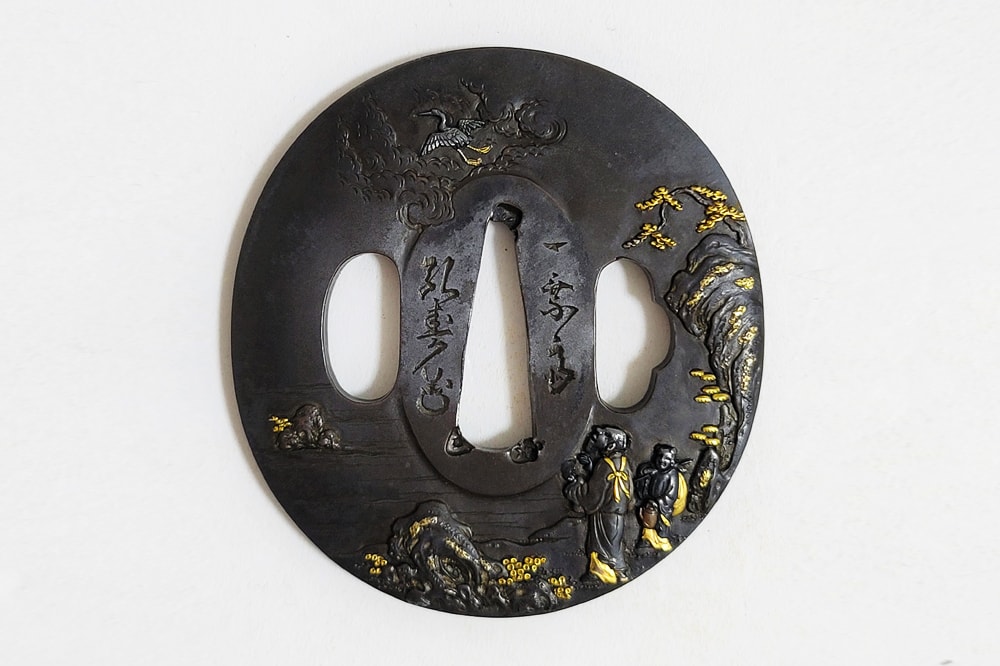
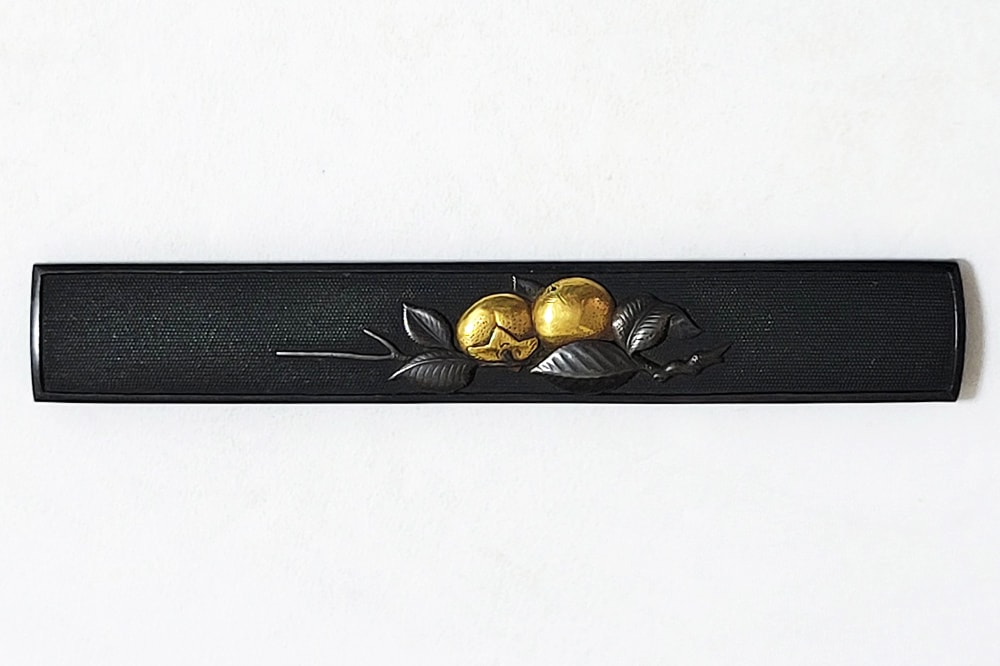
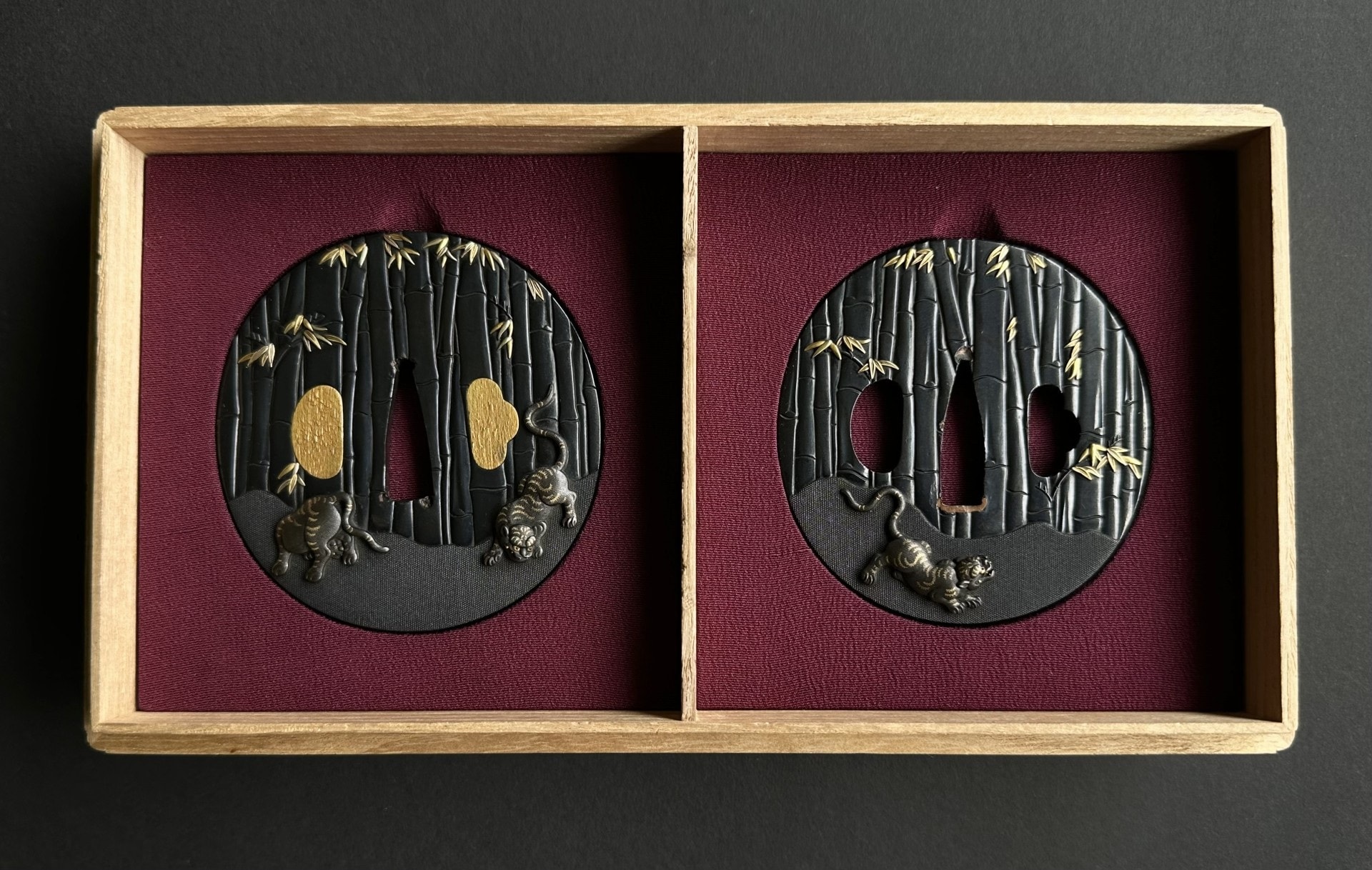
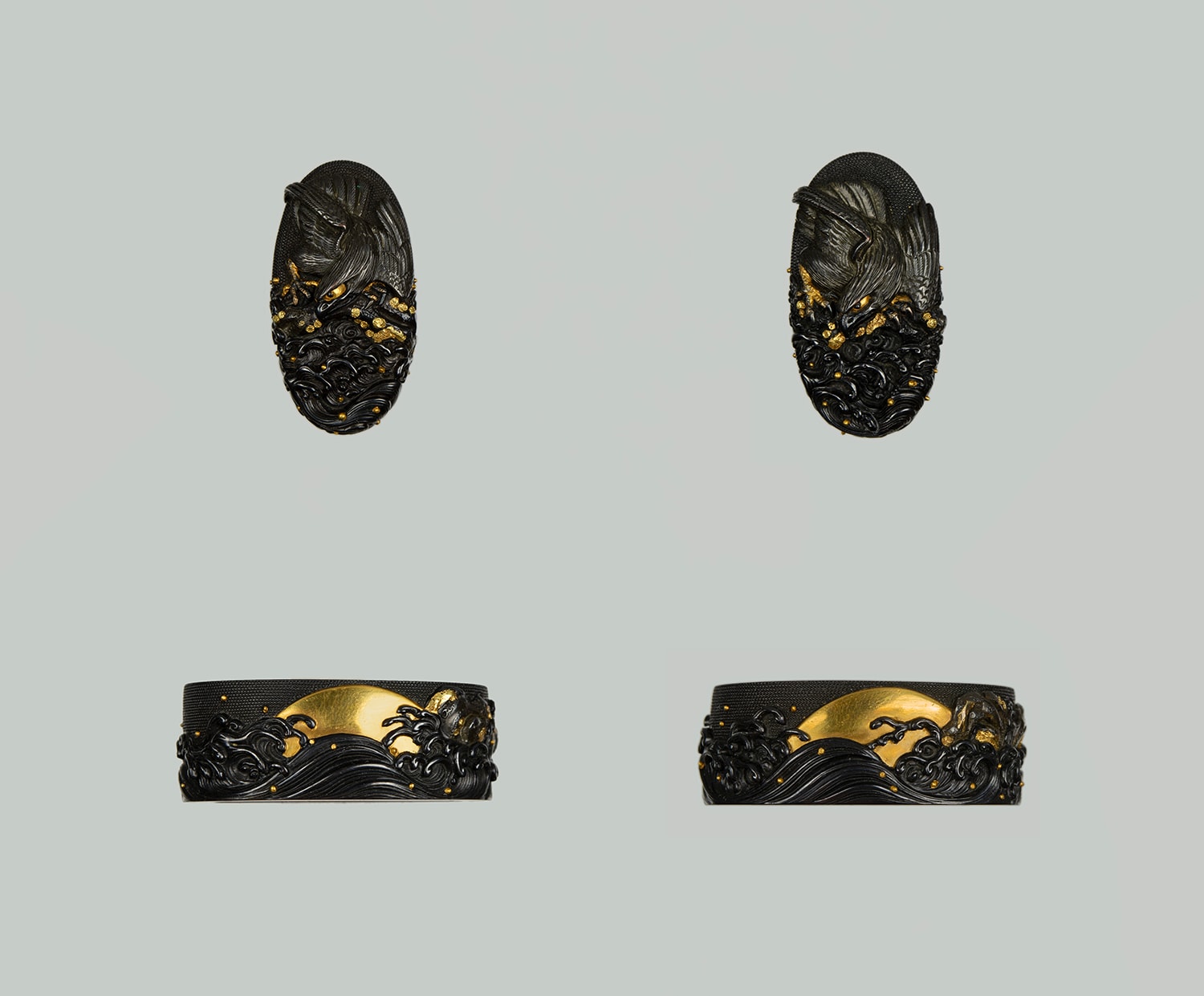
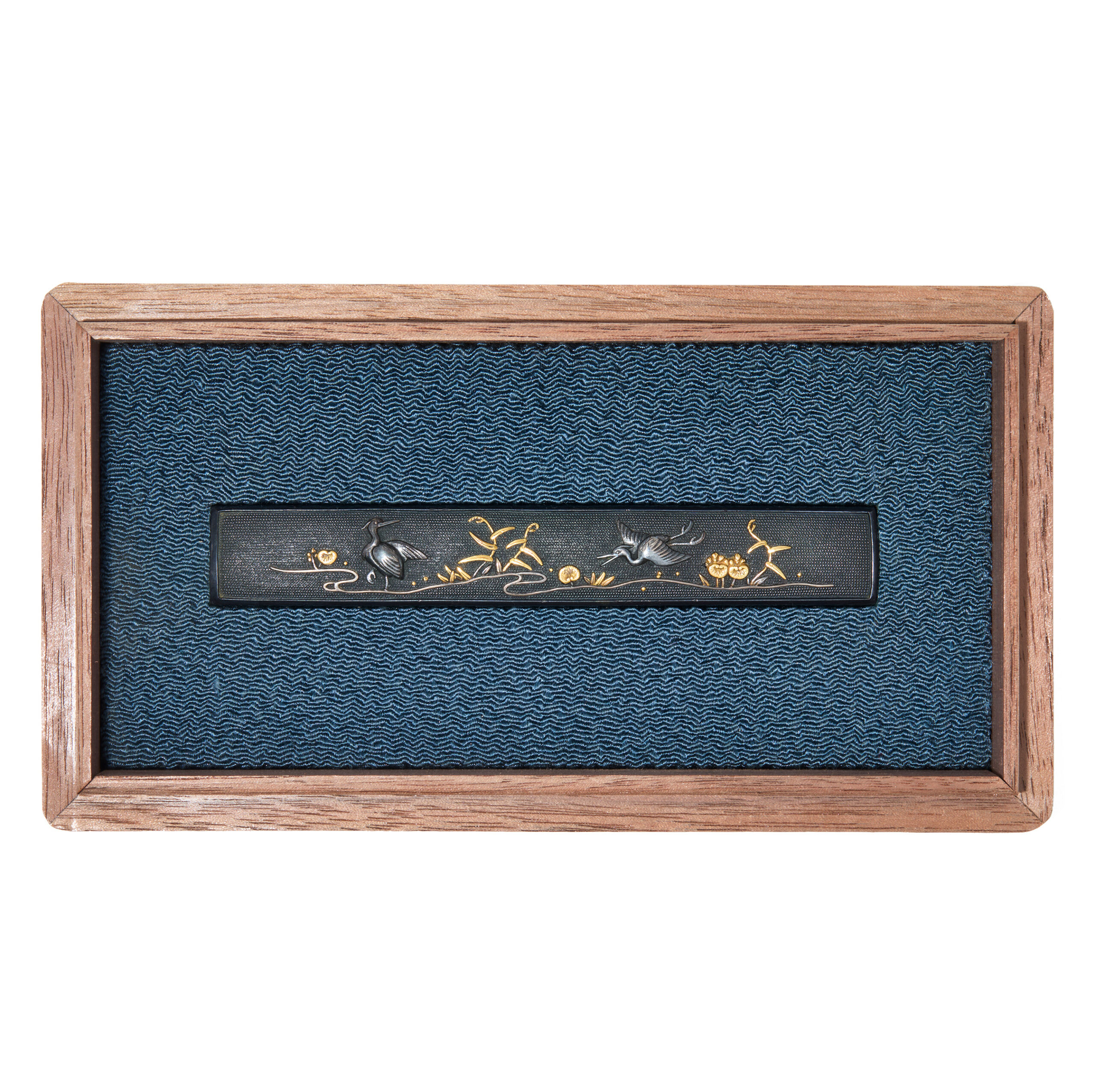
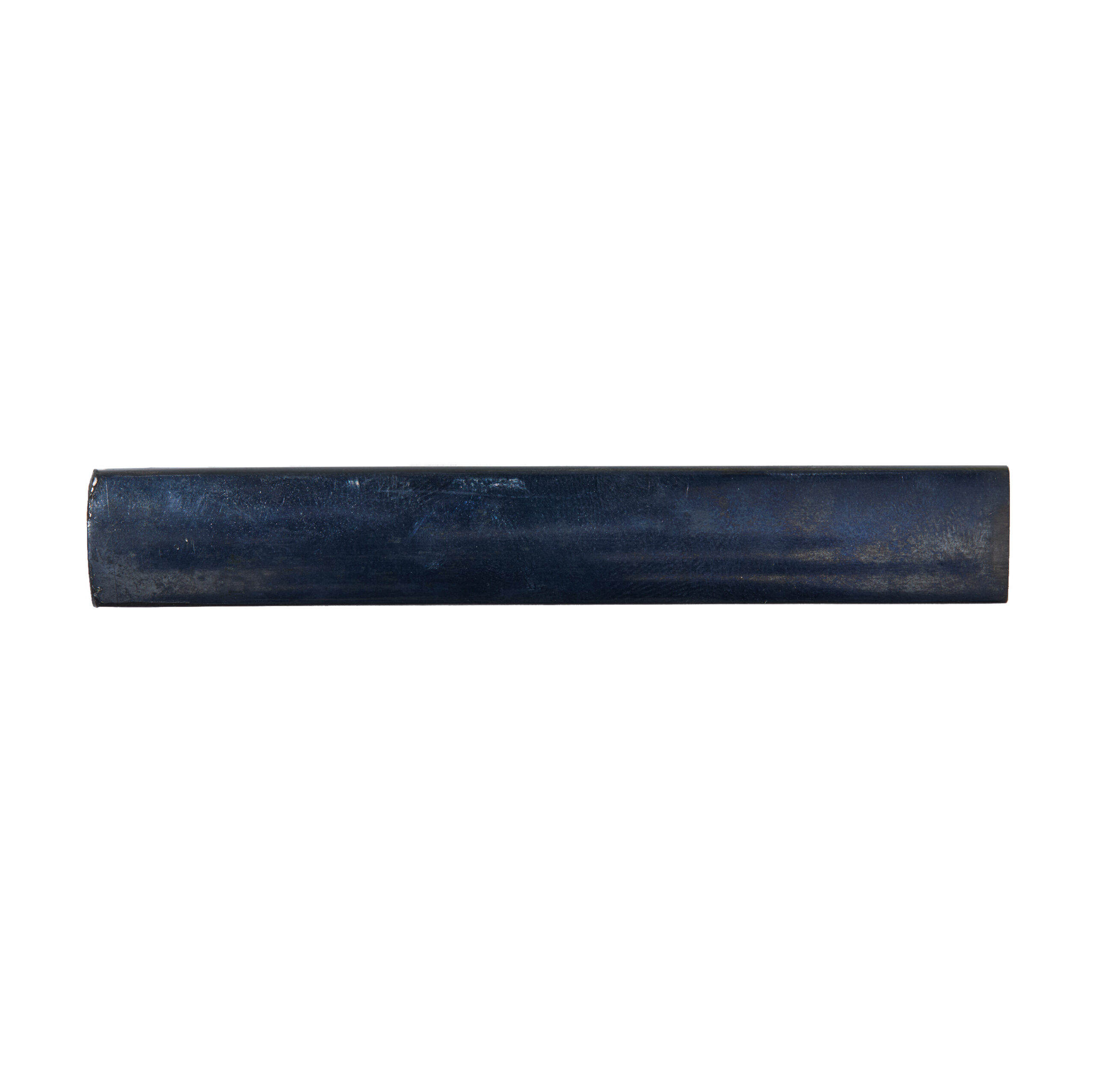
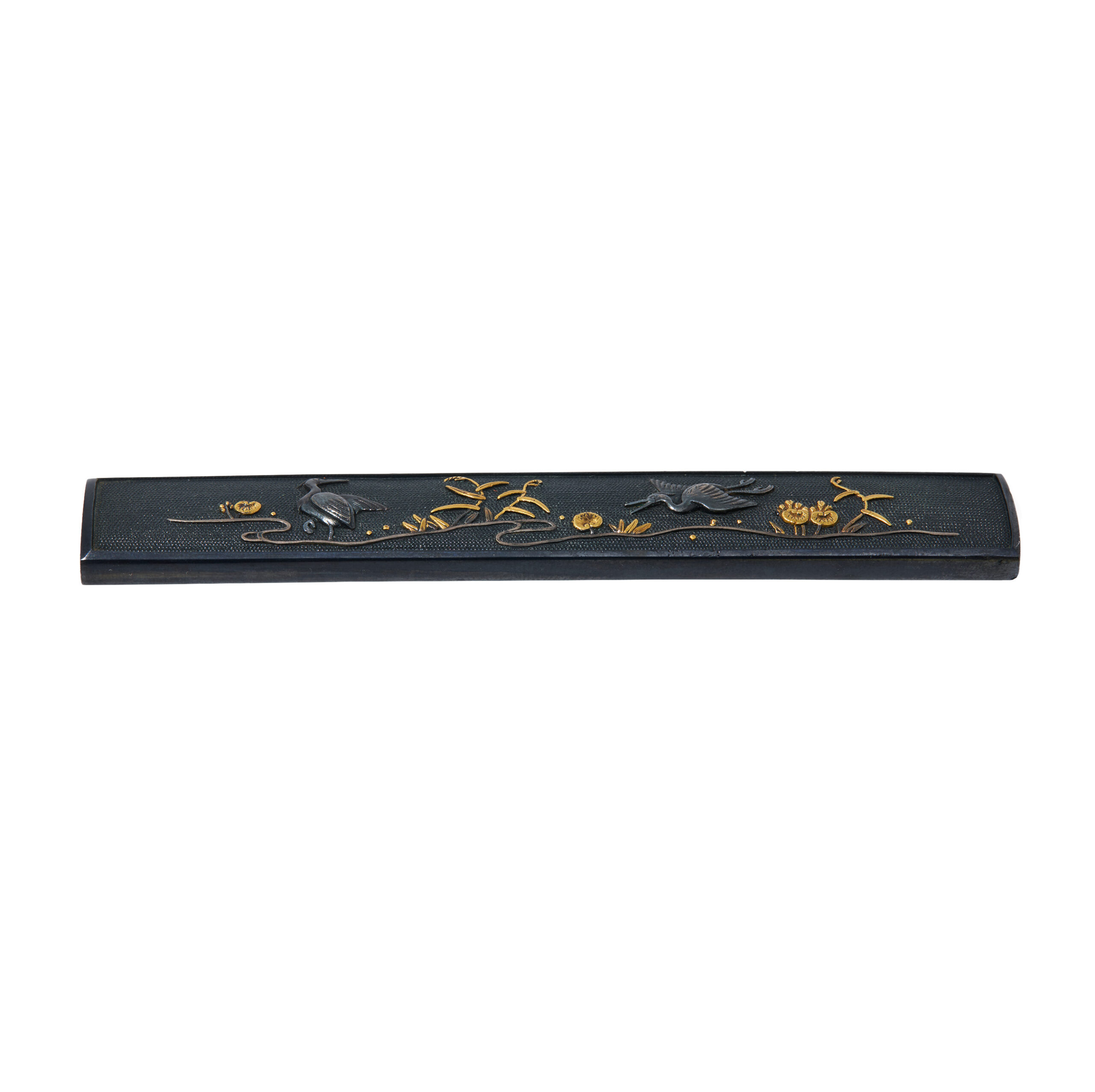
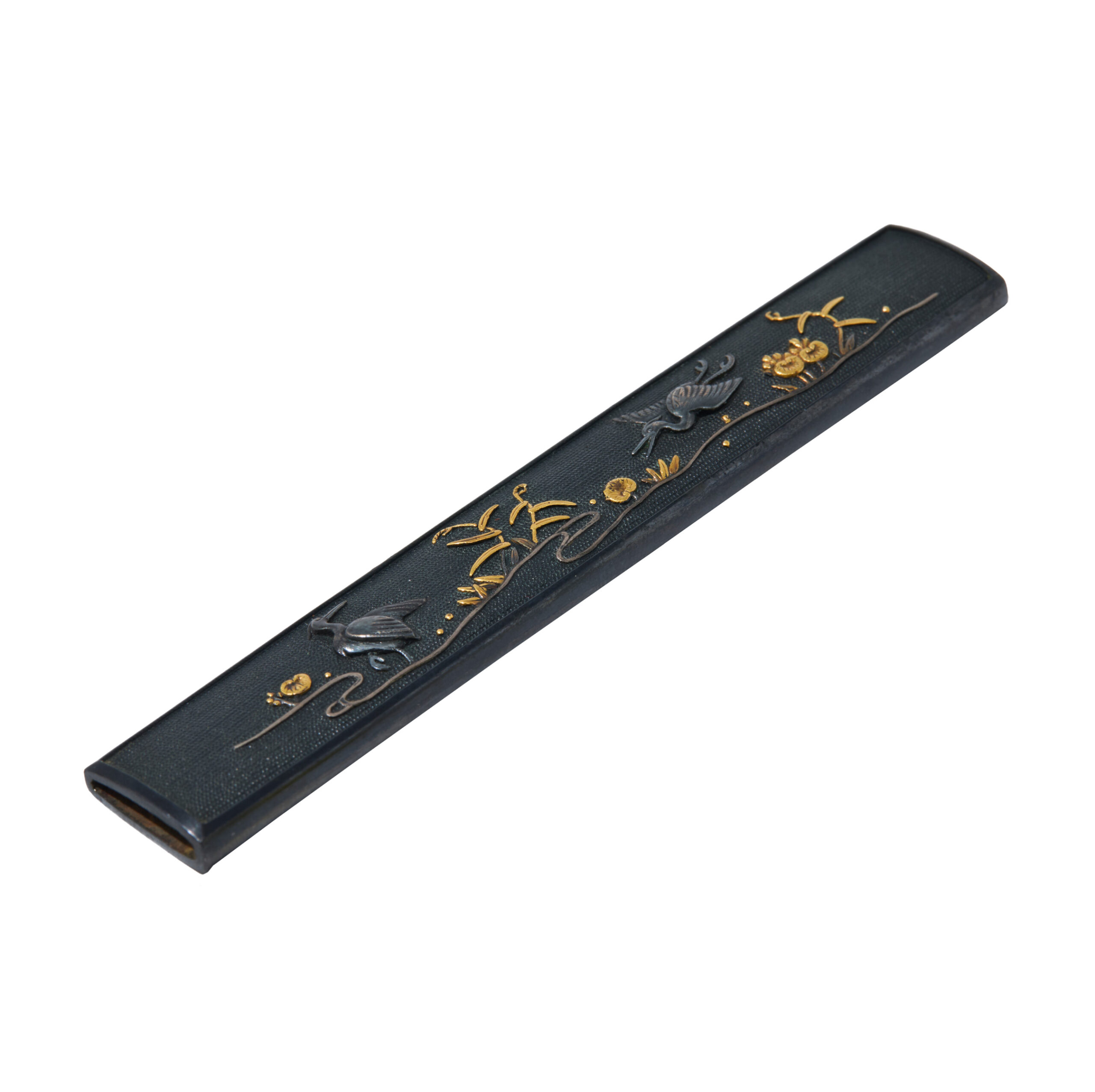
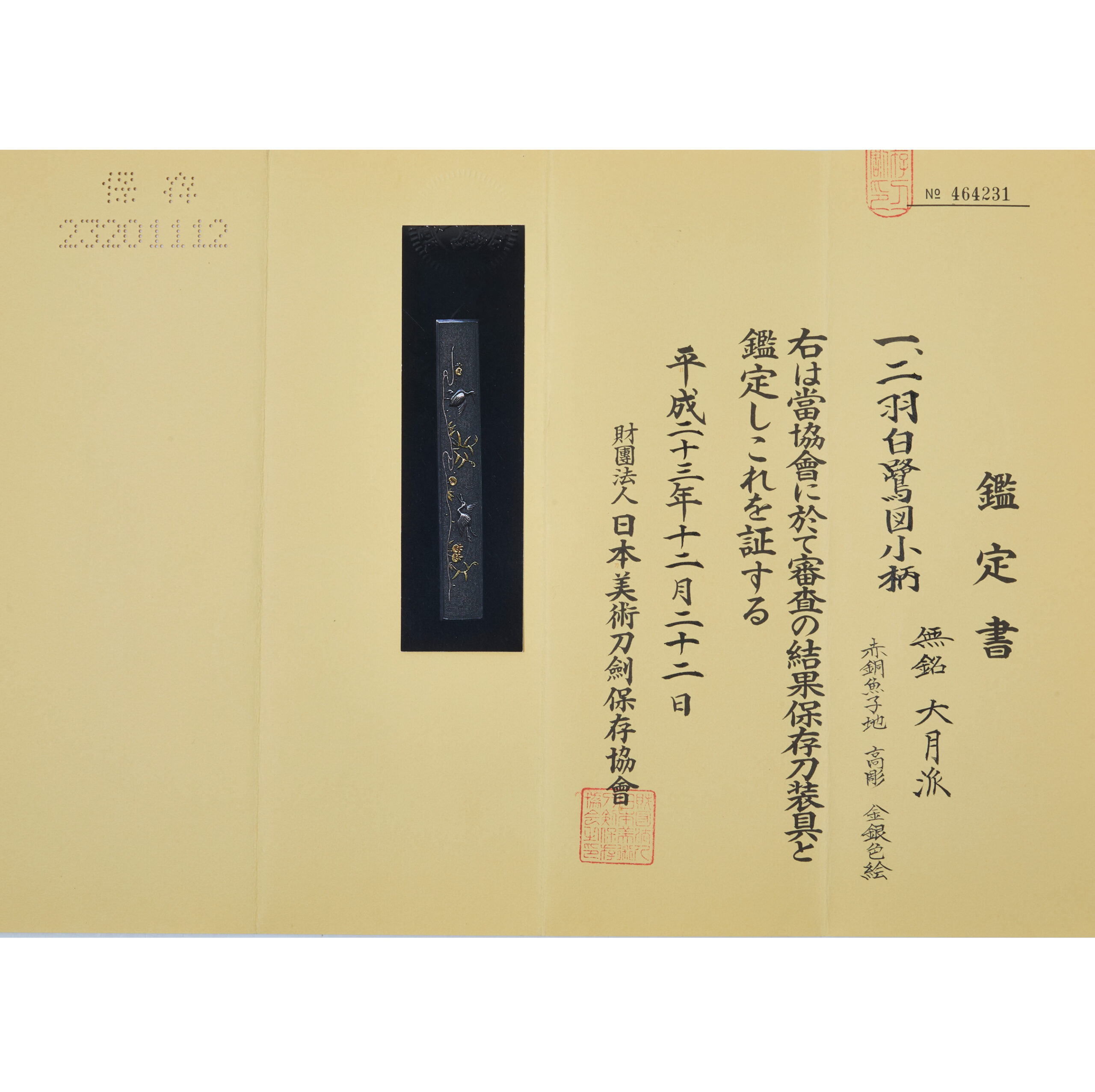
題名:鷺露図(さぎろず) 【説明】 本作は、金と銅の合金であり、深く艶やかな黒青色の発色が特徴の赤銅(しゃくどう)地で仕立てられた小柄(こづか)です。精緻な高彫(たかぼり)に金銀の色絵(いろえ)を施し、華やかさと気品を兼ね備えた意匠に仕上げられています。 図案には、水辺に佇む二羽の鷺(さぎ)が描かれています。優美な姿を持つ鷺は、泥中の川や田にありながらも汚れなく清らかな姿を保つことから、古来より高潔な人格や高官の象徴として尊ばれてきました。また、中国の古典美術においても吉祥の象徴とされ、例えば鷺に蓮や酔芙蓉を配した図は、幸福と富貴に満ちた人生を願うものとされています。 日本美術刀剣保存協会(NBTHK)の鑑定書によれば、本作は大月派(おおつきは)の作と極められています。大月派は、江戸時代の京都において一宮長常や岡本鉄元堂と並び称された名門工金家の一派です。始祖・大月光興を筆頭に、秀興、光興、秀国、月山といった数々の名工を輩出しました。 ※アンティーク品のため、状態については写真にて詳細をご確認ください。 【小柄とは】 小柄は、刀の鞘にある小柄櫃(こづかびつ)に納められる小刀の柄の部分です。多くの鍔には、中心穴(なかごあな)の両脇に小柄と笄(こうがい)を通すための穴が開けられており、侍は刀を抜くことなくこれらを使用することができました。当初は木を削るなどの日常用や、緊急時の武器として用いられましたが、次第に実用よりも工作用のナイフとしての性格が強まりました。 泰平の世となった江戸時代には、実用性以上に装飾性が重視されるようになり、金工師たちの手によって美術的価値の高い小柄や笄が数多く生み出されました。 【刀装具の重要性について】 日本刀の装身具には、鍔、目貫(めぬき)、縁頭(ふちがしら)など、多彩な装飾が施されています。日本刀は武器であると同時に、持ち主の身分や個性、信念を象徴するものでもありました。現代で例えるなら、スマートフォンの装飾に近い感覚と言えるかもしれません。 ぜひ写真を拡大してご覧ください。鉄や銅を主体に、金銀を象嵌(ぞうがん)した日本の高度な彫金技術が見て取れます。鍔一つをとっても、その造形や重量感は千差万別です。刀と共に時代を歩んできたこれらの装具は、刀本体に匹敵する価値を持つこともあります。一見控えめな部品ではありますが、こうした細部にまでこだわりを持つことこそが、真の武士の嗜みであり、愛刀家への第一歩と言えるでしょう。 【鑑定書】 日本美術刀剣保存協会(NBTHK)保存刀装具鑑定書 日本美術刀剣保存協会は、現代日本において最も権威ある刀剣鑑定機関の一つです。本作は平成23年(2011年)12月22日に「保存刀装具」として認定されました。ご購入者様にはこの原本をお渡しいたします。ご希望があれば、鑑定内容の英訳PDFを作成することも可能です。 【運営について】 サムライミュージアムは東京に所在し、侍の歴史に関する古美術品を展示しています。当オンラインショップでは、日本文化や工芸に深い関心をお持ちの方へ向けて、刀剣、甲冑、伝統工芸品などを取り扱っております。 【お支払い方法】 Stripe(クレジットカード)、PayPal、Apple Pay、ChromePayをご利用いただけます。いずれも安全な決済システムです。
Certificate reading — 無銘(大月派)
 NihontoWatch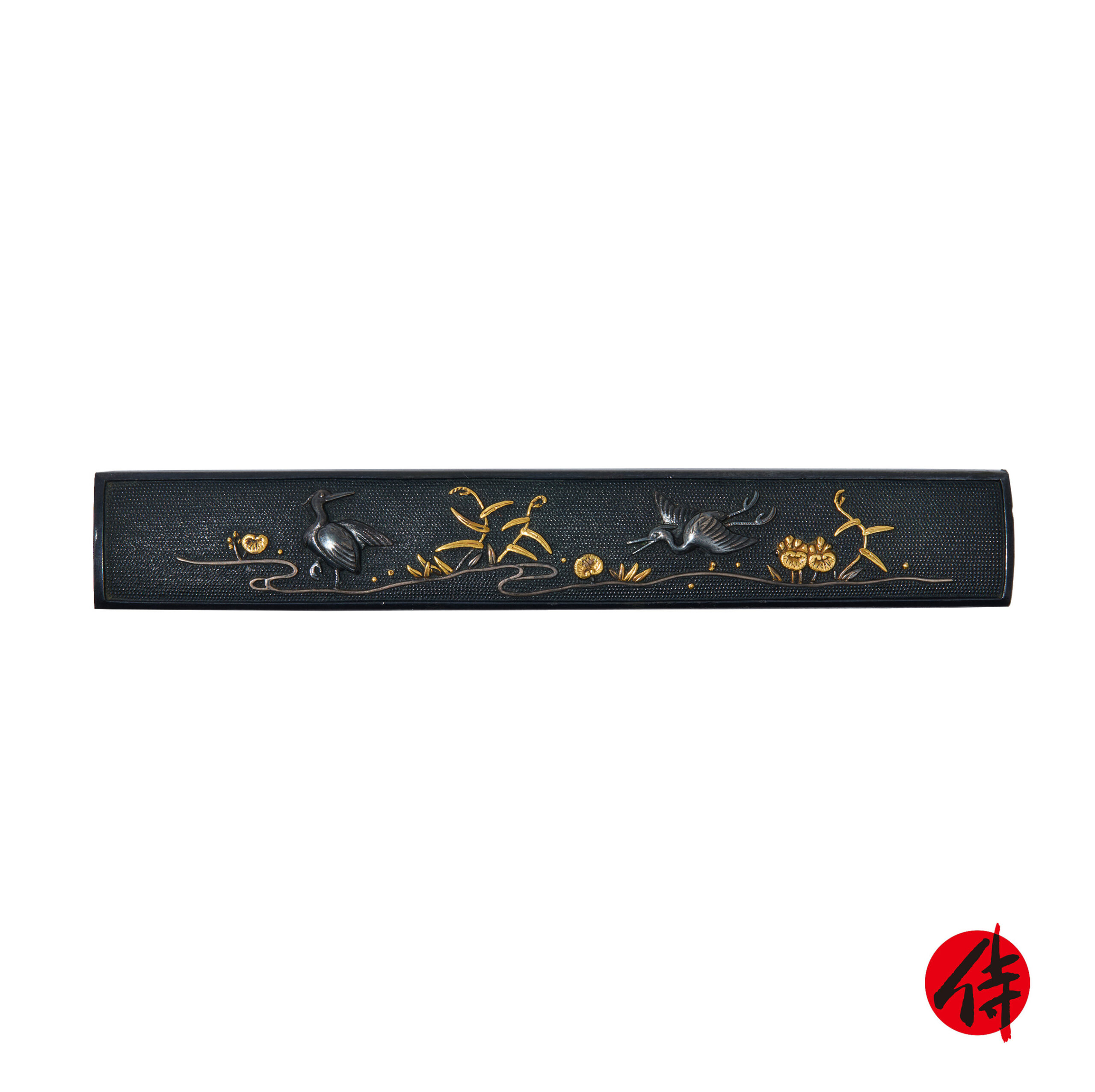
大月派
江戸
無銘
保存 (NBTHK)
町彫 · 山城
現在23点販売中
大月派は江戸時代後期京都を中心に活躍した装剣金工の一派である。開祖大月光興は元禄期に京都に出て、横谷宗珉の高彫色絵の技法を学び、独自の作風を確立した。門人には川原林秀興、篠山篤興、天光堂秀国らがおり、特に秀興は師の技法を継承しながら大月派を隆盛に導いた。文化文政期には秀興の門下から松尾月山嘉六(金剛斎)が輩出され、大月派の伝統を幕末まで維持した。同派は赤銅・真鍮・鉄・四分一など多様な地金を用い、高彫色絵を駆使した華麗な作風で知られる。 大月派の技法的特徴は、精緻な魚子地に高肉彫と据紋を併用し、金や素銅による色絵を施す点にある。高肉彫には立体感豊かな鏨使いが見られ、特に動物の羽毛や龍の鱗など細部の表現に優れる。構図は大胆であり、広い鉄地空間と高彫部分の分量が絶妙な均衡を保つ。片切彫も併用し、人物・動植物・故事など幅広い画題を手掛ける。鐔の造形は竪丸形・葵形・撫角形など多様であり、打返耳に仕立てられるものが多い。地金の微妙な起伏により動静を表現し、彫刻と空間の対比によって主題を際立たせる手法は同派の真骨頂である。 大月派の作品は幕末京都の装剣金工を代表するものとして高く評価される。月山の「孔雀図鐔・縁頭」は魚子を微細に蒔き、据紋を一際高く据え、鏨使いの巧緻さと重厚な面持ちで孔雀の華麗さを極めている。「潜り龍図鐔」は蕩々と飛翔する金龍を生命力豊かに表し、鉄地の起伏と高肉彫の均衡が絶妙である。「衣川館図鐔」は前九年・後三年合戦の一場面を画題とし、両武者の微妙な状態の描写と館の細密な彫技が見事である。これら重要刀装指定作に見る通り、大月派は師流を忠実に継承しながら独自の境地を開き、京都金工の伝統を後世に伝えた。 詳しく見る →
銘が正しい、または無銘でも年代・流派を指摘でき、美術工芸的価値が認められる、保存に値する真正の刀装具と鑑定されたものです。
日本美術刀剣保存協会(NBTHK)は、1948年に設立され、文化庁の監督を受ける公益財団法人で、東京・刀剣博物館に本部を置きます。専門の審査員が出品作を直接審査し、美術的・歴史的価値に応じた鑑定書を発行します。NBTHKの鑑定書は、日本刀および刀装具の真正性を示す最も広く認知された基準です。
NBTHK公式サイトReturns/exchanges limited to defects caused by shipping (except willful misconduct or gross negligence by the company); customers must contact within 72 hours of receiving the product.
$1,037
題名:鷺露図(さぎろず) 【説明】 本作は、金と銅の合金であり、深く艶やかな黒青色の発色が特徴の赤銅(しゃくどう)地で仕立てられた小柄(こづか)です。精緻な高彫(たかぼり)に金銀の色絵(いろえ)を施し、華やかさと気品を兼ね備えた意匠に仕上げられています。 図案には、水辺に佇む二羽の鷺(さぎ)が描かれています。優美な姿を持つ鷺は、泥中の川や田にありながらも汚れなく清らかな姿を保つことから、古来より高潔な人格や高官の象徴として尊ばれてきました。また、中国の古典美術においても吉祥の象徴とされ、例えば鷺に蓮や酔芙蓉を配した図は、幸福と富貴に満ちた人生を願うものとされています。 日本美術刀剣保存協会(NBTHK)の鑑定書によれば、本作は大月派(おおつきは)の作と極められています。大月派は、江戸時代の京都において一宮長常や岡本鉄元堂と並び称された名門工金家の一派です。始祖・大月光興を筆頭に、秀興、光興、秀国、月山といった数々の名工を輩出しました。 ※アンティーク品のため、状態については写真にて詳細をご確認ください。 【小柄とは】 小柄は、刀の鞘にある小柄櫃(こづかびつ)に納められる小刀の柄の部分です。多くの鍔には、中心穴(なかごあな)の両脇に小柄と笄(こうがい)を通すための穴が開けられており、侍は刀を抜くことなくこれらを使用することができました。当初は木を削るなどの日常用や、緊急時の武器として用いられましたが、次第に実用よりも工作用のナイフとしての性格が強まりました。 泰平の世となった江戸時代には、実用性以上に装飾性が重視されるようになり、金工師たちの手によって美術的価値の高い小柄や笄が数多く生み出されました。 【刀装具の重要性について】 日本刀の装身具には、鍔、目貫(めぬき)、縁頭(ふちがしら)など、多彩な装飾が施されています。日本刀は武器であると同時に、持ち主の身分や個性、信念を象徴するものでもありました。現代で例えるなら、スマートフォンの装飾に近い感覚と言えるかもしれません。 ぜひ写真を拡大してご覧ください。鉄や銅を主体に、金銀を象嵌(ぞうがん)した日本の高度な彫金技術が見て取れます。鍔一つをとっても、その造形や重量感は千差万別です。刀と共に時代を歩んできたこれらの装具は、刀本体に匹敵する価値を持つこともあります。一見控えめな部品ではありますが、こうした細部にまでこだわりを持つことこそが、真の武士の嗜みであり、愛刀家への第一歩と言えるでしょう。 【鑑定書】 日本美術刀剣保存協会(NBTHK)保存刀装具鑑定書 日本美術刀剣保存協会は、現代日本において最も権威ある刀剣鑑定機関の一つです。本作は平成23年(2011年)12月22日に「保存刀装具」として認定されました。ご購入者様にはこの原本をお渡しいたします。ご希望があれば、鑑定内容の英訳PDFを作成することも可能です。 【運営について】 サムライミュージアムは東京に所在し、侍の歴史に関する古美術品を展示しています。当オンラインショップでは、日本文化や工芸に深い関心をお持ちの方へ向けて、刀剣、甲冑、伝統工芸品などを取り扱っております。 【お支払い方法】 Stripe(クレジットカード)、PayPal、Apple Pay、ChromePayをご利用いただけます。いずれも安全な決済システムです。
Certificate reading — 無銘(大月派)
NihontoWatch大月派
江戸
無銘
保存 (NBTHK)
町彫 · 山城
現在23点販売中
大月派は江戸時代後期京都を中心に活躍した装剣金工の一派である。開祖大月光興は元禄期に京都に出て、横谷宗珉の高彫色絵の技法を学び、独自の作風を確立した。門人には川原林秀興、篠山篤興、天光堂秀国らがおり、特に秀興は師の技法を継承しながら大月派を隆盛に導いた。文化文政期には秀興の門下から松尾月山嘉六(金剛斎)が輩出され、大月派の伝統を幕末まで維持した。同派は赤銅・真鍮・鉄・四分一など多様な地金を用い、高彫色絵を駆使した華麗な作風で知られる。 大月派の技法的特徴は、精緻な魚子地に高肉彫と据紋を併用し、金や素銅による色絵を施す点にある。高肉彫には立体感豊かな鏨使いが見られ、特に動物の羽毛や龍の鱗など細部の表現に優れる。構図は大胆であり、広い鉄地空間と高彫部分の分量が絶妙な均衡を保つ。片切彫も併用し、人物・動植物・故事など幅広い画題を手掛ける。鐔の造形は竪丸形・葵形・撫角形など多様であり、打返耳に仕立てられるものが多い。地金の微妙な起伏により動静を表現し、彫刻と空間の対比によって主題を際立たせる手法は同派の真骨頂である。 大月派の作品は幕末京都の装剣金工を代表するものとして高く評価される。月山の「孔雀図鐔・縁頭」は魚子を微細に蒔き、据紋を一際高く据え、鏨使いの巧緻さと重厚な面持ちで孔雀の華麗さを極めている。「潜り龍図鐔」は蕩々と飛翔する金龍を生命力豊かに表し、鉄地の起伏と高肉彫の均衡が絶妙である。「衣川館図鐔」は前九年・後三年合戦の一場面を画題とし、両武者の微妙な状態の描写と館の細密な彫技が見事である。これら重要刀装指定作に見る通り、大月派は師流を忠実に継承しながら独自の境地を開き、京都金工の伝統を後世に伝えた。 詳しく見る →
銘が正しい、または無銘でも年代・流派を指摘でき、美術工芸的価値が認められる、保存に値する真正の刀装具と鑑定されたものです。
日本美術刀剣保存協会(NBTHK)は、1948年に設立され、文化庁の監督を受ける公益財団法人で、東京・刀剣博物館に本部を置きます。専門の審査員が出品作を直接審査し、美術的・歴史的価値に応じた鑑定書を発行します。NBTHKの鑑定書は、日本刀および刀装具の真正性を示す最も広く認知された基準です。
NBTHK公式サイトReturns/exchanges limited to defects caused by shipping (except willful misconduct or gross negligence by the company); customers must contact within 72 hours of receiving the product.
$1,037