売切れ
Hozon売切れ
Edo period Antique Fuchi Kashira for Samurai Sword with NBTHK Hozon Certificate (F-24)
売却済
世界81社の刀剣商を横断追跡 · 価格履歴 · 売却アーカイブ
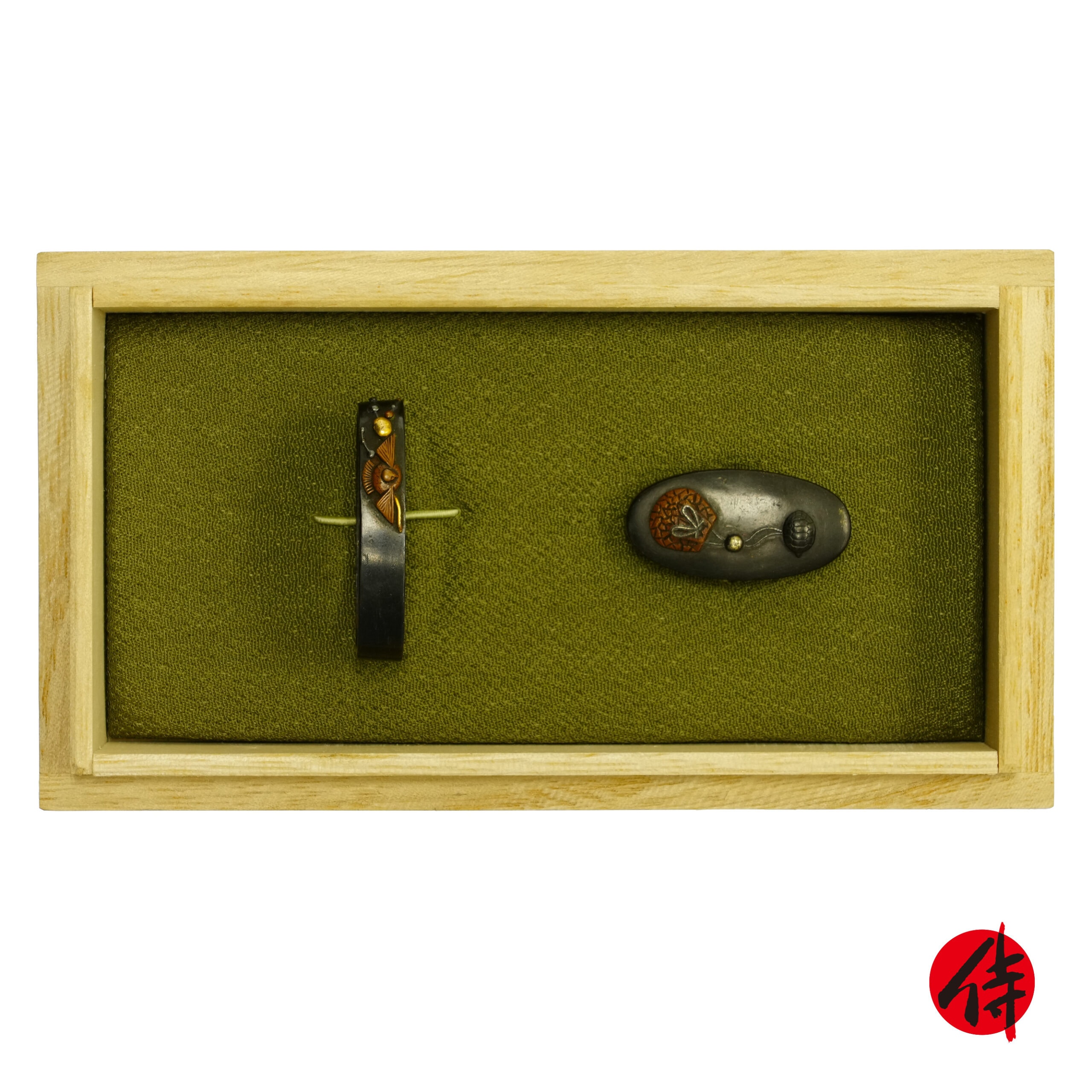
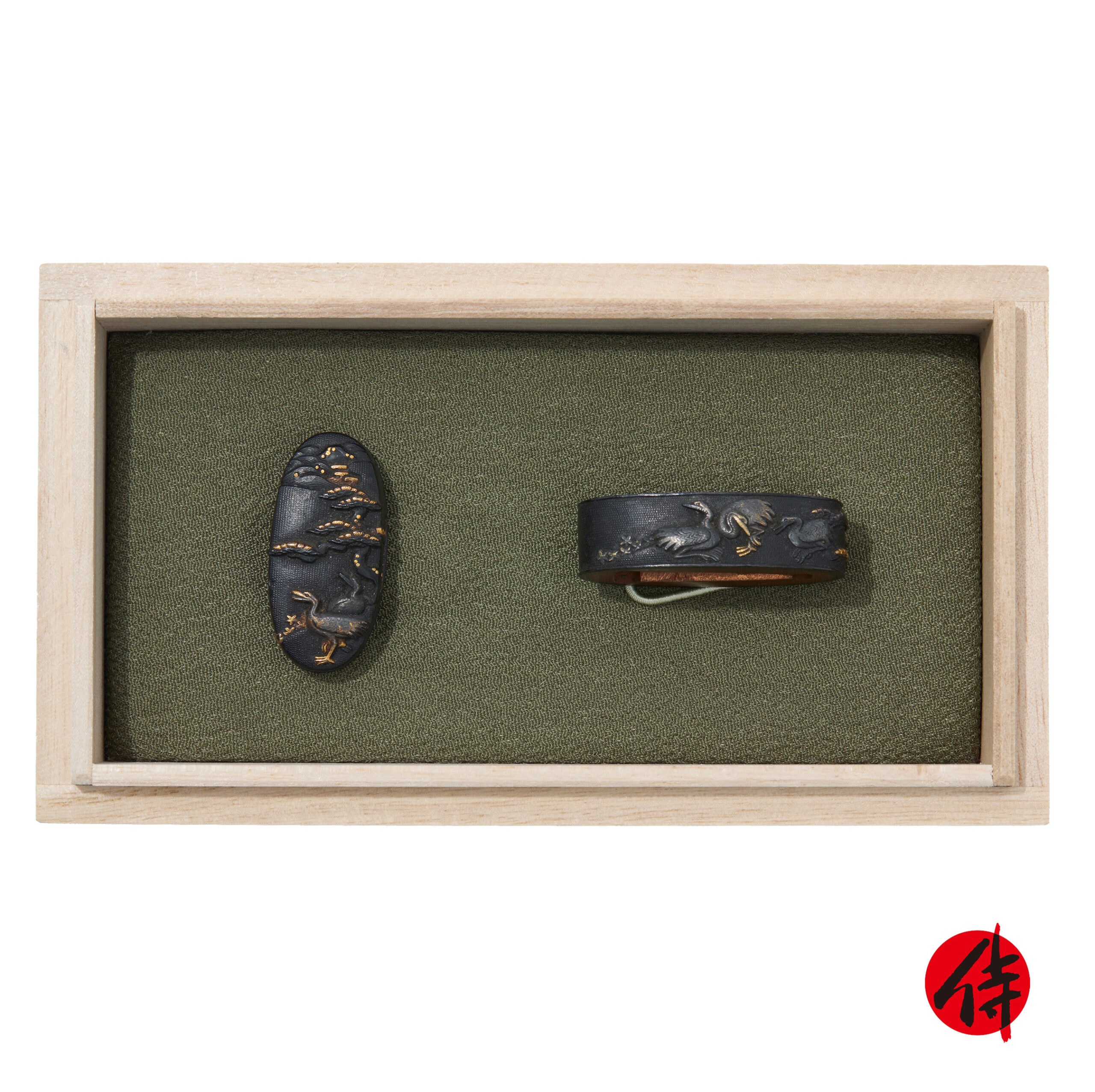
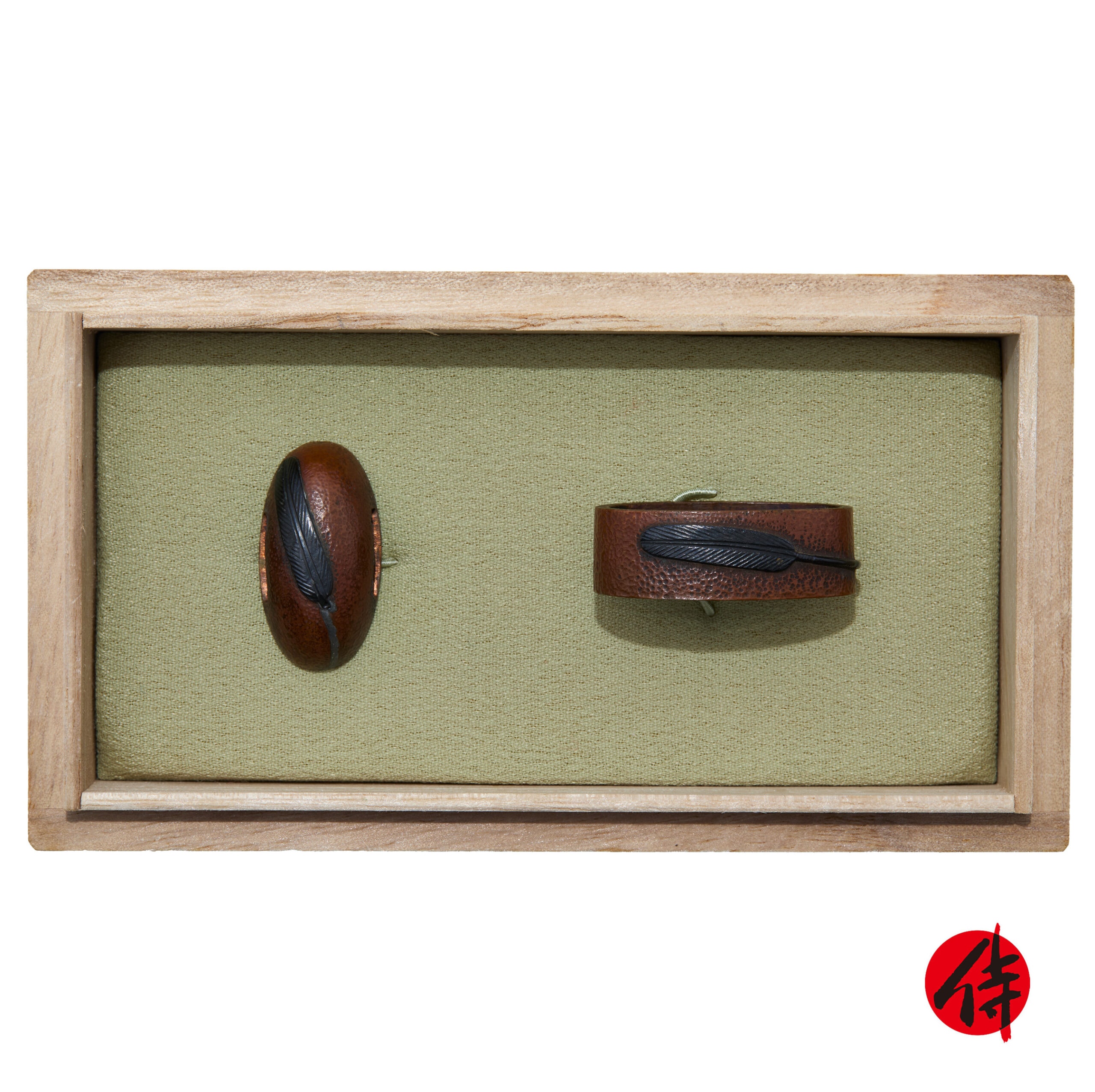
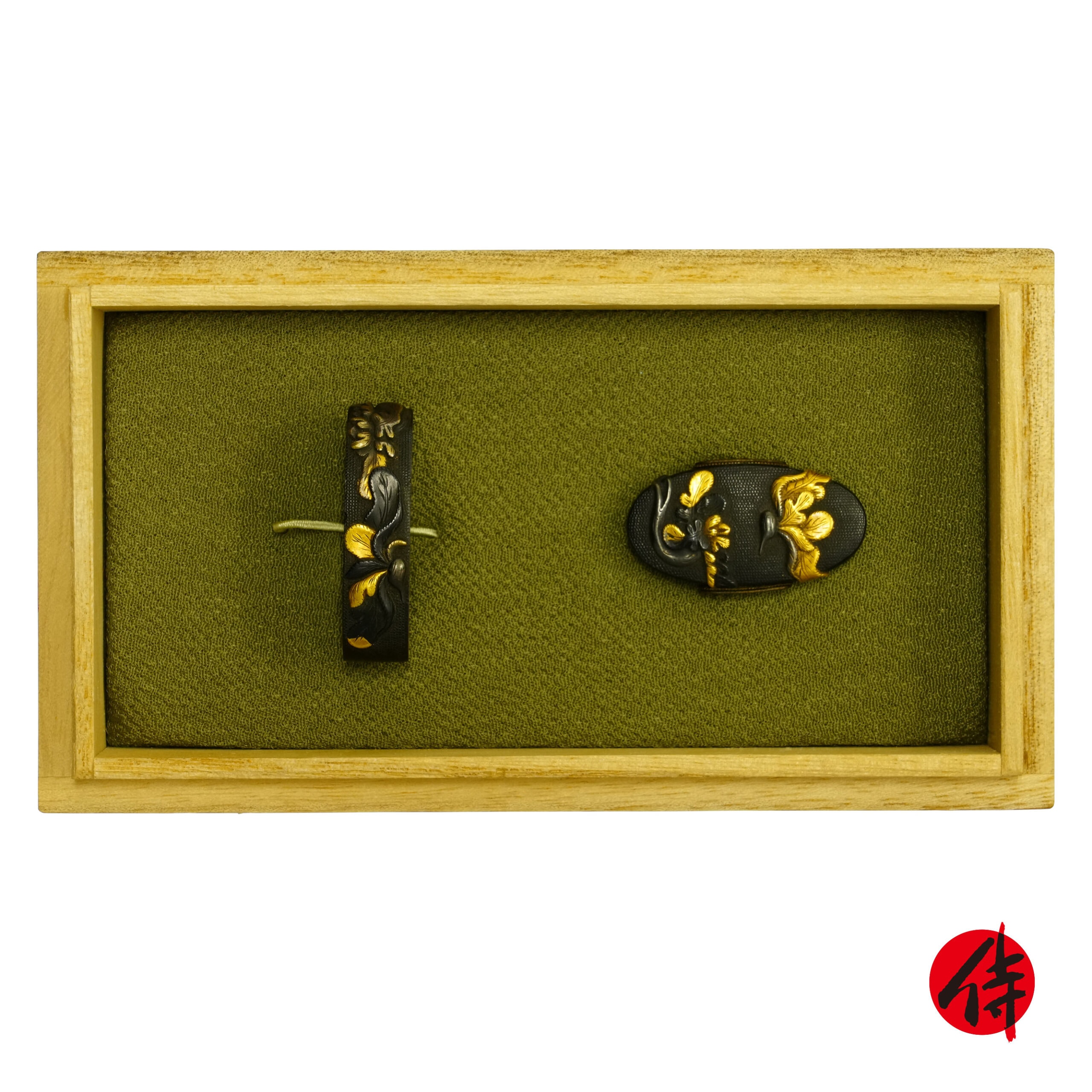
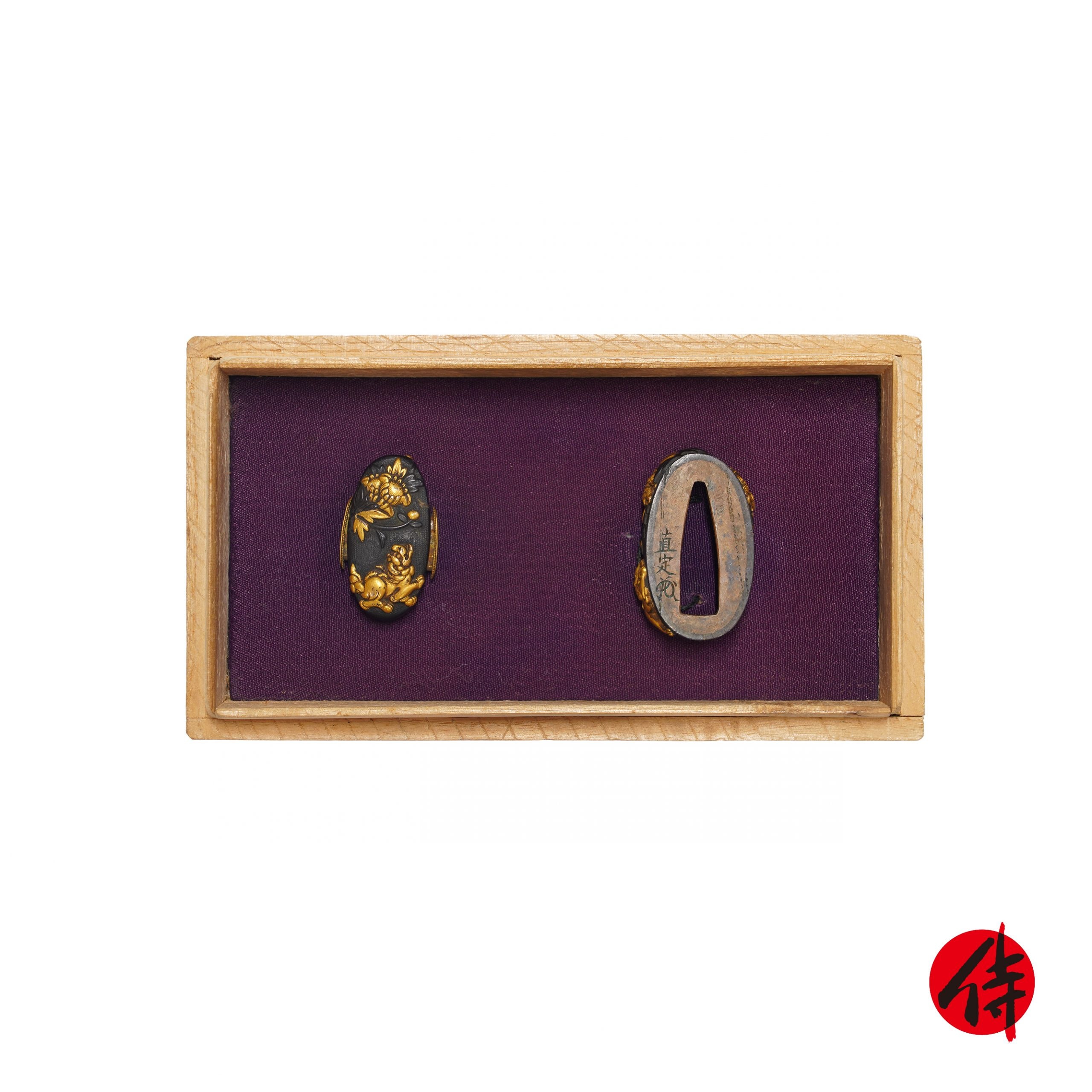
Title: Botan Shishi Zu Description This Fuchi Kashira is made from the Shakudou (赤銅). It has often been used for sword mountings due to its material properties. And it gives an elegant black color for the works as you see in this Fuchi Kashira. The theme of this Fuchi Kashira is the combination of the Botan (牡丹, peony) flowers and the Kara-Jishi (唐獅子). Golden paint is effectively applied to each motif and remains in good condition. Thanks to its coloring, this work has a gorgeous and elegant appearance. It is a classical subject and has been designed for various items since long ago. According to a theory, the peony represents happiness, wealth, nobleness, and gorgeousness. This flower pattern has been treated as a kind of good-omen motif; people regarded it as a rich harvest sign. As mentioned above, peony is called the Botan in Japanese. When we write this flower’s name in Japanese, its second letter means mountain hermit medicine to give us eternal youth. Based on the meaning of this letter, an idea says that the peony pattern symbolizes eternal youth and longevity. The Shishi (獅子) means a lion in Japanese, and the Kara-Jishi is a lion brought from the Continent to Japan in the Toh period (唐, Tang dynasty, 618-907). The Kara-Jishi typically has curly hair for its head, neck, body, and tail. You can see it in this work too. In Buddhism, the Kara-Jishi is regarded as a symbol of wisdom, and the Monju Bosatu (文殊菩薩, Manjushri Bodhisattva) rides lions. According to a theory, the Kara-Jishi originates from the Komainu (狛犬, stone guardian dogs that exorcize evil spirits). There is a Houwa (法話, Buddhist monks tell the story of Buddhism in an easy-to-understand manner) that treats this flower and the Kara-Jishi. The lion is called the king of the beasts. However, even this invincible animal has only one fear; a bug in the lion’s body. This pest grows in the lion’s hair and eventually breaks the skin and bites the flesh. Nevertheless, it dies if it is exposed to be the night dew of peony. Therefore, the lion rests under peony flowers at night, looking for a haven. We guess this story might have inspired this Fuchi Kashira’s design. This Fuchi Kashira is recognized by The Society for the Preservation of Japanese Art Swords, which is known as NBTHK. *As this item is an antique, please check each photo and ensure its condition. What is Fuchi Kashira? Fuchi Kashira is a kind of metal fitting of the Japanese sword, which improves the handle’s strength. Fuchi Kashira is a combination of two parts; Fuchi and Kashira. Fuchi was put next to Tsuba (hand-guard), and Kashira was put on the grip bottle. Fuchi Kashira had developed not only its practicality but also beauty for the decoration of the Japanese sword. Why is it that the sword mounting was important for Samurai? The sword mountings of the Japanese sword have many kinds of decorations such as handguards (Tsuba), sword hilt (Menuki), pommel (Fuchi Kashira). The Japanese sword worked as a weapon and as an object to show who he was. For example, it shows their personalities and beliefs. You could say that it is like decorations for smartphones today. We recommend you zoom in on the pictures of the sword fittings. When you do so, you can see the skill of Japanese metal engraving techniques. They are mainly made of iron and copper with inlays of gold, silver, and bronze. When it comes to handguard (Tsuba), each one has a different outline and weight. These sword fittings that have lived with Japanese swords of the same age might be worth as much as the Japanese swords. They are inconspicuous parts of the Japanese sword. Nevertheless, if you are knowledgeable or particular about it, you will become a connoisseur of the Samurai. Authentication Paper : NBTHK Hozon Certificate NBTHK, also known as Nihon Bijutsu Touken Hozon Kyokai (the Society for the Preservation of the Japan Art Sword), is one of the oldest Japanese sword appraising organizations in modern-day Japan. They authenticated the Fuc
 NihontoWatchBETA
売却済
世界81社の刀剣商を横断追跡 · 価格履歴 · 売却アーカイブ
Title: Botan Shishi Zu Description This Fuchi Kashira is made from the Shakudou (赤銅). It has often been used for sword mountings due to its material properties. And it gives an elegant black color for the works as you see in this Fuchi Kashira. The theme of this Fuchi Kashira is the combination of the Botan (牡丹, peony) flowers and the Kara-Jishi (唐獅子). Golden paint is effectively applied to each motif and remains in good condition. Thanks to its coloring, this work has a gorgeous and elegant appearance. It is a classical subject and has been designed for various items since long ago. According to a theory, the peony represents happiness, wealth, nobleness, and gorgeousness. This flower pattern has been treated as a kind of good-omen motif; people regarded it as a rich harvest sign. As mentioned above, peony is called the Botan in Japanese. When we write this flower’s name in Japanese, its second letter means mountain hermit medicine to give us eternal youth. Based on the meaning of this letter, an idea says that the peony pattern symbolizes eternal youth and longevity. The Shishi (獅子) means a lion in Japanese, and the Kara-Jishi is a lion brought from the Continent to Japan in the Toh period (唐, Tang dynasty, 618-907). The Kara-Jishi typically has curly hair for its head, neck, body, and tail. You can see it in this work too. In Buddhism, the Kara-Jishi is regarded as a symbol of wisdom, and the Monju Bosatu (文殊菩薩, Manjushri Bodhisattva) rides lions. According to a theory, the Kara-Jishi originates from the Komainu (狛犬, stone guardian dogs that exorcize evil spirits). There is a Houwa (法話, Buddhist monks tell the story of Buddhism in an easy-to-understand manner) that treats this flower and the Kara-Jishi. The lion is called the king of the beasts. However, even this invincible animal has only one fear; a bug in the lion’s body. This pest grows in the lion’s hair and eventually breaks the skin and bites the flesh. Nevertheless, it dies if it is exposed to be the night dew of peony. Therefore, the lion rests under peony flowers at night, looking for a haven. We guess this story might have inspired this Fuchi Kashira’s design. This Fuchi Kashira is recognized by The Society for the Preservation of Japanese Art Swords, which is known as NBTHK. *As this item is an antique, please check each photo and ensure its condition. What is Fuchi Kashira? Fuchi Kashira is a kind of metal fitting of the Japanese sword, which improves the handle’s strength. Fuchi Kashira is a combination of two parts; Fuchi and Kashira. Fuchi was put next to Tsuba (hand-guard), and Kashira was put on the grip bottle. Fuchi Kashira had developed not only its practicality but also beauty for the decoration of the Japanese sword. Why is it that the sword mounting was important for Samurai? The sword mountings of the Japanese sword have many kinds of decorations such as handguards (Tsuba), sword hilt (Menuki), pommel (Fuchi Kashira). The Japanese sword worked as a weapon and as an object to show who he was. For example, it shows their personalities and beliefs. You could say that it is like decorations for smartphones today. We recommend you zoom in on the pictures of the sword fittings. When you do so, you can see the skill of Japanese metal engraving techniques. They are mainly made of iron and copper with inlays of gold, silver, and bronze. When it comes to handguard (Tsuba), each one has a different outline and weight. These sword fittings that have lived with Japanese swords of the same age might be worth as much as the Japanese swords. They are inconspicuous parts of the Japanese sword. Nevertheless, if you are knowledgeable or particular about it, you will become a connoisseur of the Samurai. Authentication Paper : NBTHK Hozon Certificate NBTHK, also known as Nihon Bijutsu Touken Hozon Kyokai (the Society for the Preservation of the Japan Art Sword), is one of the oldest Japanese sword appraising organizations in modern-day Japan. They authenticated the Fuc
NihontoWatchBETA売却済
世界81社の刀剣商を横断追跡 · 価格履歴 · 売却アーカイブ