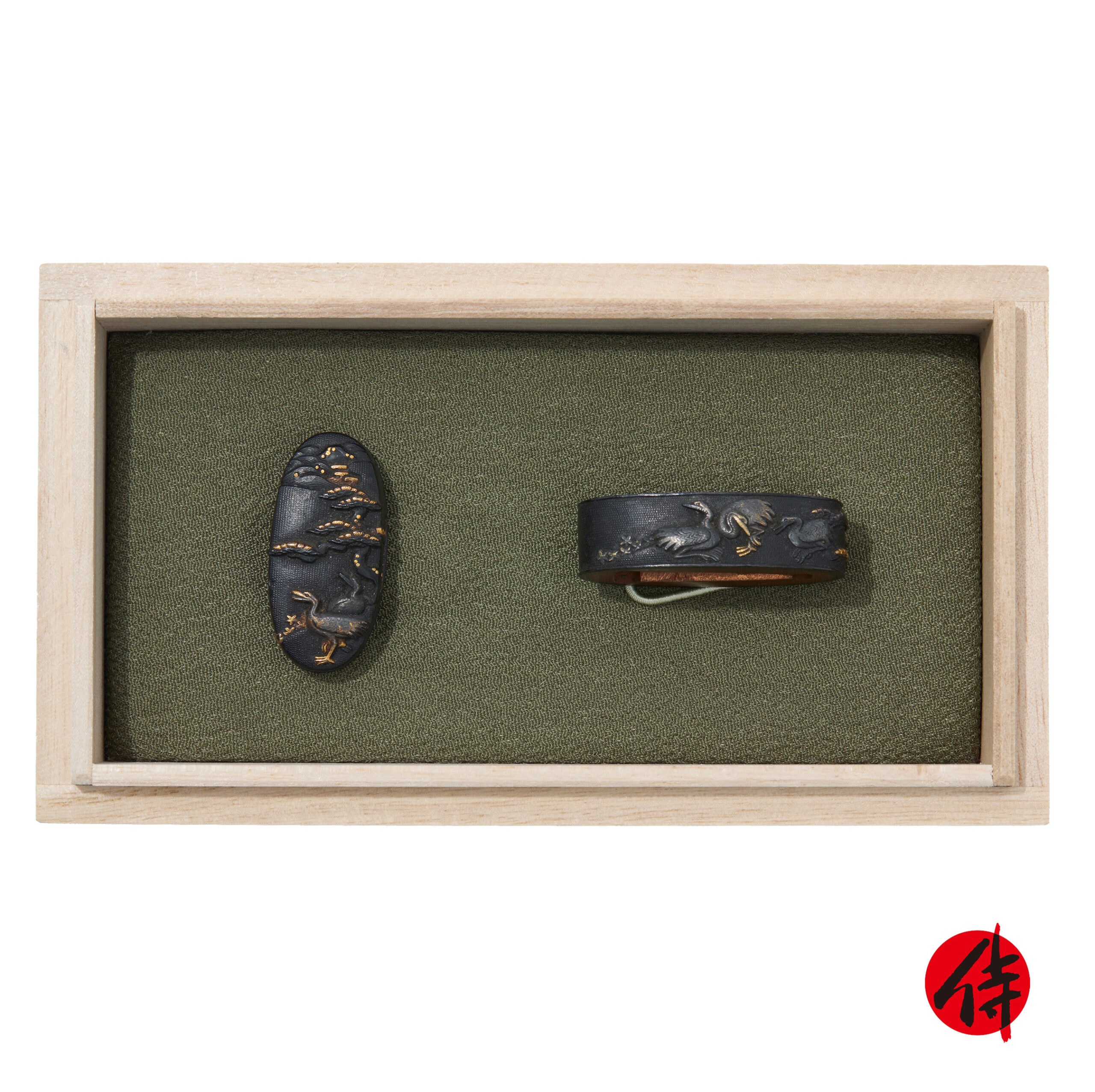
Edo period antique Fuchi Kashira for Samurai Sword (F-44)
$268
世界81社の刀剣商を横断追跡 · 価格履歴 · 売却アーカイブ
時代
Edo
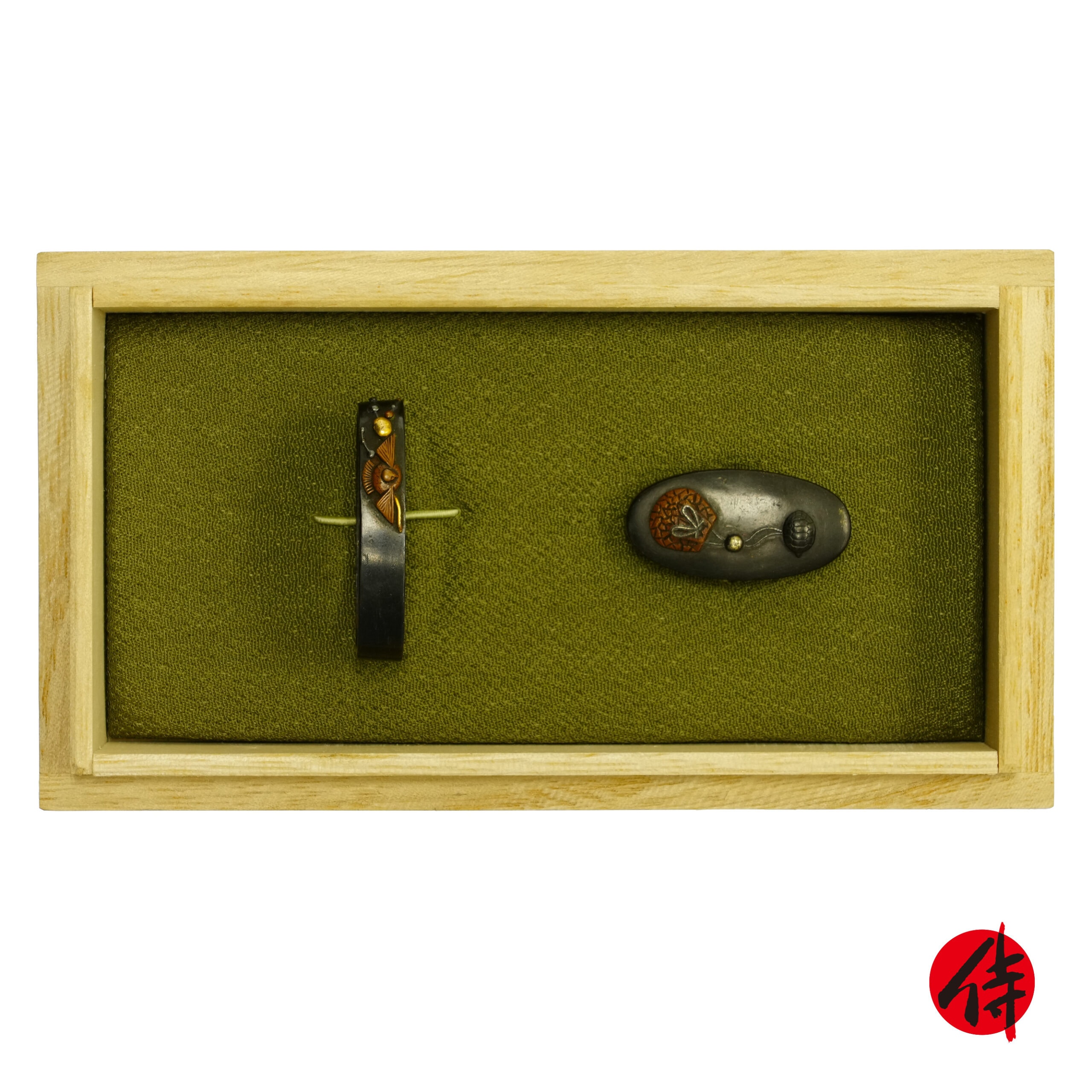
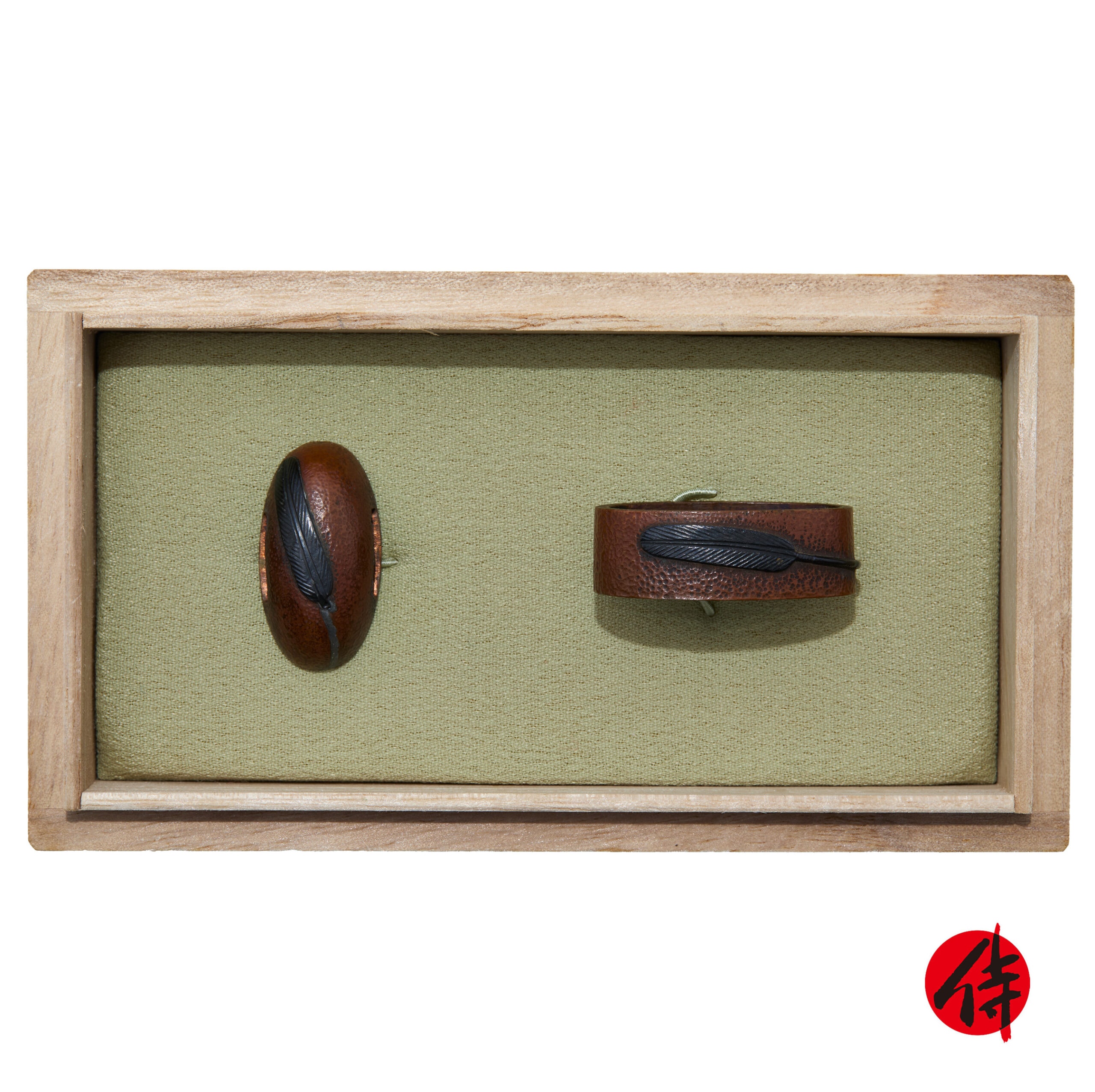
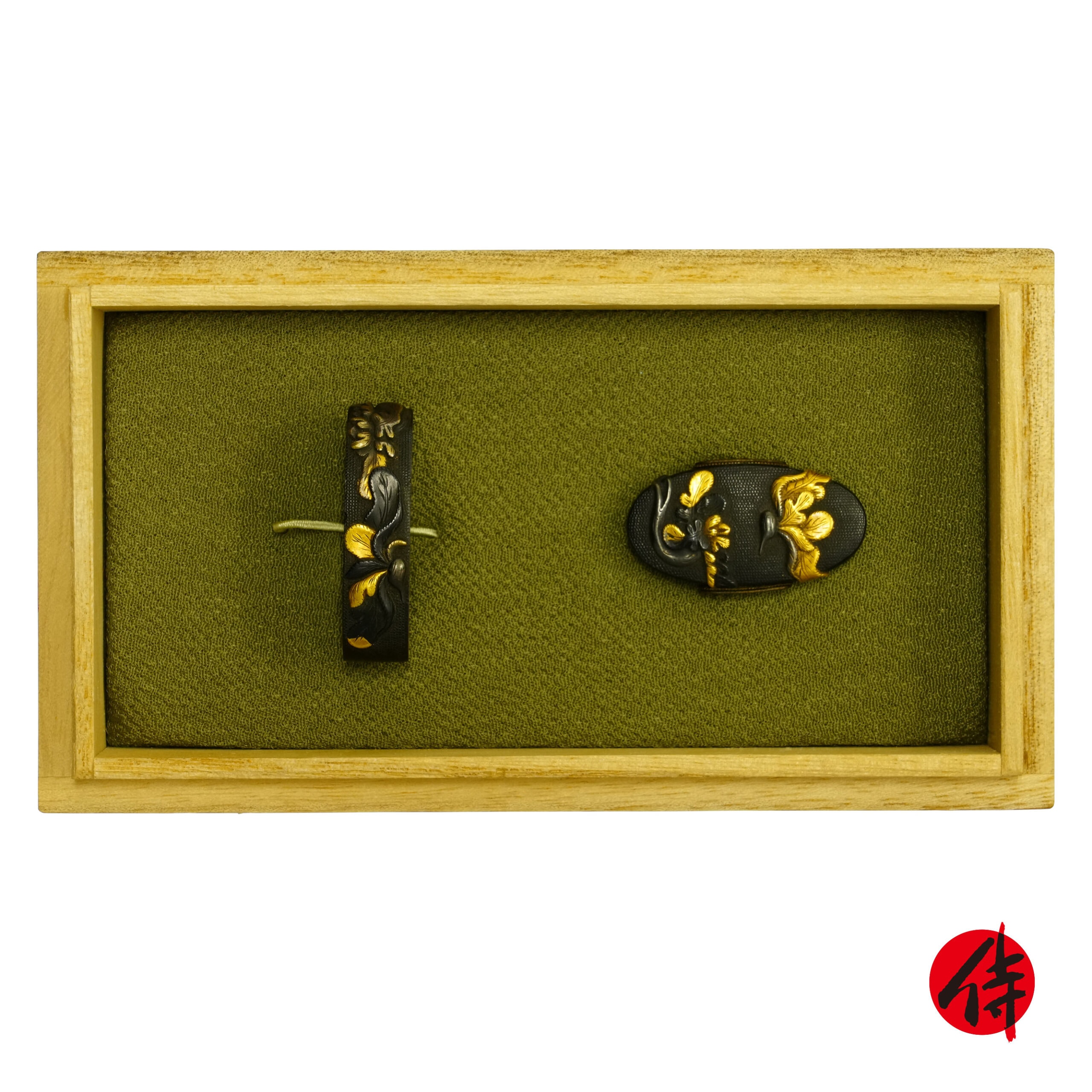
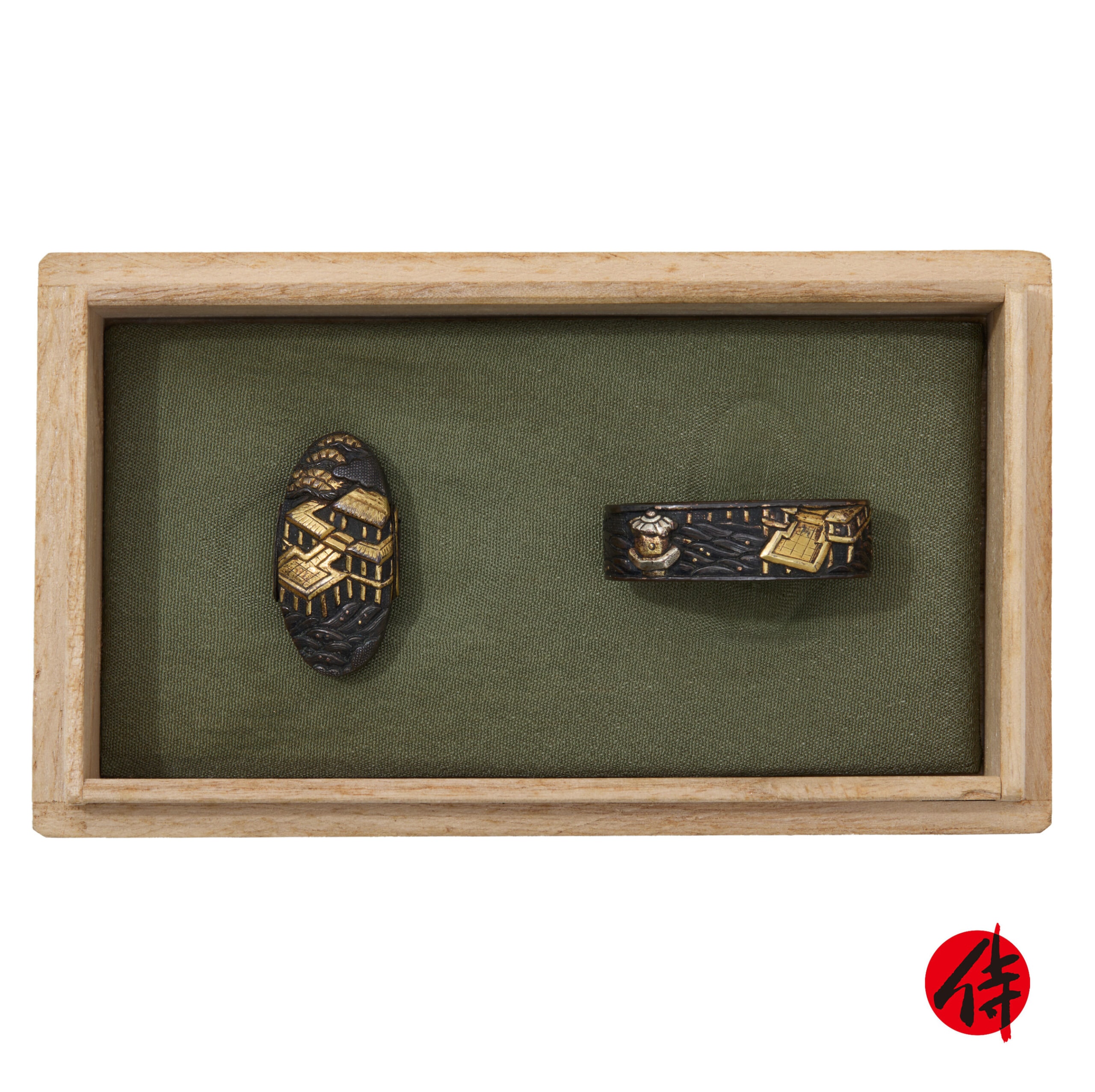
Title: Matsu ni Tsuru Zu Description This Fuchi Kashira seems to be decorated with an auspicious combination: Matsu ni Tsuru (松に鶴), which is the combination of pine trees (松, Matsu) and cranes (鶴, Tsuru), and is a common and usual combination in Japan. This Fuchi Kashira depicts some cranes staying near the pine trees by the sea. Pine trees often grow by the seashores. And as pine trees keep their green color throughout the years by withstanding severe heat and cold, people thought this plant pattern represents eternal youth. Furthermore, its color is called Tokiwa-Iro (常盤色, evergreen trees’ dark green color with brown), and pine trees have another name “Tokiwa-Gi (常盤木).” Tokiwa means immutability, so Tokiwa-Iro is a color that praises green with a wish for longevity and prosperity. It is said this color was appreciated, especially in the Edo period, as a good-luck color. The pine tree design gives us an elegant and noble impression; it might be another reason that people love this motif. The crane has long been recognized as an auspicious bird. There is a proverb that says cranes and turtles live a long life. It says cranes have even one thousand years lifespan; therefore, cranes and turtles have been considered as the symbol of longevity since a long time ago. Also, as cranes make compatible couples, its pattern represents happy marriage. Due to its pure white feathers and dignified appearance, it was favorably used as a good omen design for various ornaments or furnishings such as Kimono (着物, traditional Japanese costume) or Obi (帯, belt for Kimono). Senbazuru (千羽鶴, thousand cranes) is one of Japan’s most popular Origami craft, which is made of Origami paper. A thousand cranes of paper are jointed, and it is mainly used for wishes of recovering. The surface of this Fuchi Kashira is finished with the Nanako-Ji (魚子地) technique. By hitting with the Nanako-Ji Tagane (魚子地鏨, chisel used for this technique), delicate fish egg-shaped protrusions are made on the surface of the metal. This process is often seen and is one of the elements that add gorgeousness to the appearance of metalworks. *As this item is an antique, please check each photo and ensure its condition. What is Fuchi Kashira? Fuchi Kashira is a kind of metal fitting of the Japanese sword, which improves the handle’s strength. Fuchi Kashira is a combination of two parts; Fuchi and Kashira. Fuchi was put next to Tsuba (hand-guard), and Kashira was put on the grip bottle. Fuchi Kashira had developed not only its practicality but also beauty for the decoration of the Japanese sword. Why is it that the sword mounting was important for Samurai? The sword mountings of the Japanese sword have many kinds of decorations such as handguards (Tsuba), sword hilt (Menuki), pommel (Fuchi Kashira). The Japanese sword worked as a weapon and as an object to show who he was. For example, it shows their personalities and beliefs. You could say that it is like decorations for smartphones today. We recommend you zoom in on the pictures of the sword fittings. When you do so, you can see the skill of Japanese metal engraving techniques. They are mainly made of iron and copper with inlays of gold, silver, and bronze. When it comes to handguard (Tsuba), each one has a different outline and weight. These sword fittings that have lived with Japanese swords of the same age might be worth as much as the Japanese swords. They are inconspicuous parts of the Japanese sword. Nevertheless, if you are knowledgeable or particular about it, you will become a connoisseur of the Samurai. 【About us】 Samurai Museum is located in Tokyo, Japan, exhibiting antique artifacts related to the Samurai history. Samurai Museum Shop is the place for those who are interested in Japanese culture and craftsmanship. We deal with antique Samurai swords/armor, traditional crafts made in Japan and so on. 【Payment method】 We accept payment through Stripe (Credit card), PayPal , Apple Pay or ChromePay, all of which are secure pay
 NihontoWatchBETA
$268
世界81社の刀剣商を横断追跡 · 価格履歴 · 売却アーカイブ
Edo
$268
Title: Matsu ni Tsuru Zu Description This Fuchi Kashira seems to be decorated with an auspicious combination: Matsu ni Tsuru (松に鶴), which is the combination of pine trees (松, Matsu) and cranes (鶴, Tsuru), and is a common and usual combination in Japan. This Fuchi Kashira depicts some cranes staying near the pine trees by the sea. Pine trees often grow by the seashores. And as pine trees keep their green color throughout the years by withstanding severe heat and cold, people thought this plant pattern represents eternal youth. Furthermore, its color is called Tokiwa-Iro (常盤色, evergreen trees’ dark green color with brown), and pine trees have another name “Tokiwa-Gi (常盤木).” Tokiwa means immutability, so Tokiwa-Iro is a color that praises green with a wish for longevity and prosperity. It is said this color was appreciated, especially in the Edo period, as a good-luck color. The pine tree design gives us an elegant and noble impression; it might be another reason that people love this motif. The crane has long been recognized as an auspicious bird. There is a proverb that says cranes and turtles live a long life. It says cranes have even one thousand years lifespan; therefore, cranes and turtles have been considered as the symbol of longevity since a long time ago. Also, as cranes make compatible couples, its pattern represents happy marriage. Due to its pure white feathers and dignified appearance, it was favorably used as a good omen design for various ornaments or furnishings such as Kimono (着物, traditional Japanese costume) or Obi (帯, belt for Kimono). Senbazuru (千羽鶴, thousand cranes) is one of Japan’s most popular Origami craft, which is made of Origami paper. A thousand cranes of paper are jointed, and it is mainly used for wishes of recovering. The surface of this Fuchi Kashira is finished with the Nanako-Ji (魚子地) technique. By hitting with the Nanako-Ji Tagane (魚子地鏨, chisel used for this technique), delicate fish egg-shaped protrusions are made on the surface of the metal. This process is often seen and is one of the elements that add gorgeousness to the appearance of metalworks. *As this item is an antique, please check each photo and ensure its condition. What is Fuchi Kashira? Fuchi Kashira is a kind of metal fitting of the Japanese sword, which improves the handle’s strength. Fuchi Kashira is a combination of two parts; Fuchi and Kashira. Fuchi was put next to Tsuba (hand-guard), and Kashira was put on the grip bottle. Fuchi Kashira had developed not only its practicality but also beauty for the decoration of the Japanese sword. Why is it that the sword mounting was important for Samurai? The sword mountings of the Japanese sword have many kinds of decorations such as handguards (Tsuba), sword hilt (Menuki), pommel (Fuchi Kashira). The Japanese sword worked as a weapon and as an object to show who he was. For example, it shows their personalities and beliefs. You could say that it is like decorations for smartphones today. We recommend you zoom in on the pictures of the sword fittings. When you do so, you can see the skill of Japanese metal engraving techniques. They are mainly made of iron and copper with inlays of gold, silver, and bronze. When it comes to handguard (Tsuba), each one has a different outline and weight. These sword fittings that have lived with Japanese swords of the same age might be worth as much as the Japanese swords. They are inconspicuous parts of the Japanese sword. Nevertheless, if you are knowledgeable or particular about it, you will become a connoisseur of the Samurai. 【About us】 Samurai Museum is located in Tokyo, Japan, exhibiting antique artifacts related to the Samurai history. Samurai Museum Shop is the place for those who are interested in Japanese culture and craftsmanship. We deal with antique Samurai swords/armor, traditional crafts made in Japan and so on. 【Payment method】 We accept payment through Stripe (Credit card), PayPal , Apple Pay or ChromePay, all of which are secure pay
NihontoWatchBETA$268
世界81社の刀剣商を横断追跡 · 価格履歴 · 売却アーカイブ
Edo
$268