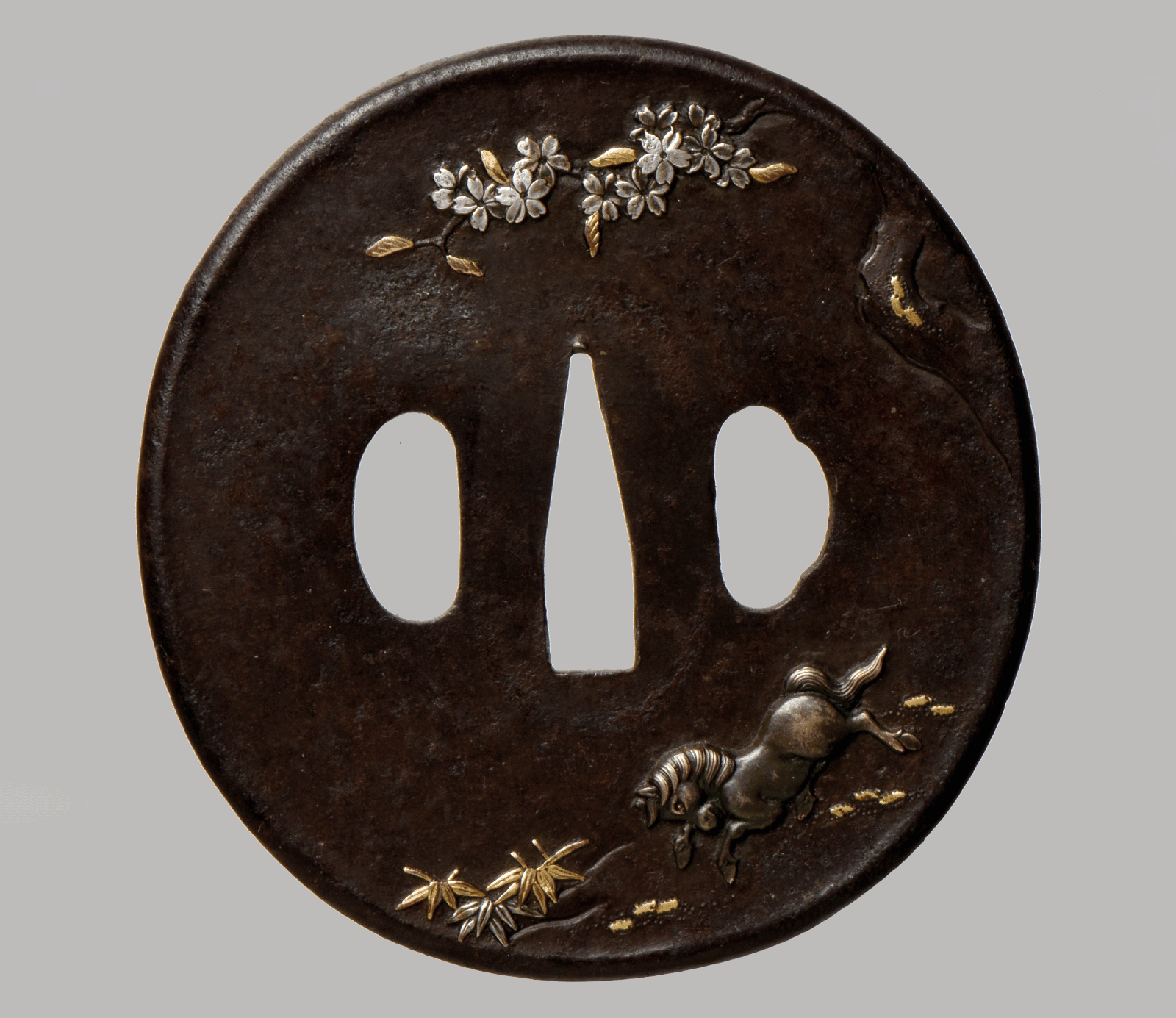
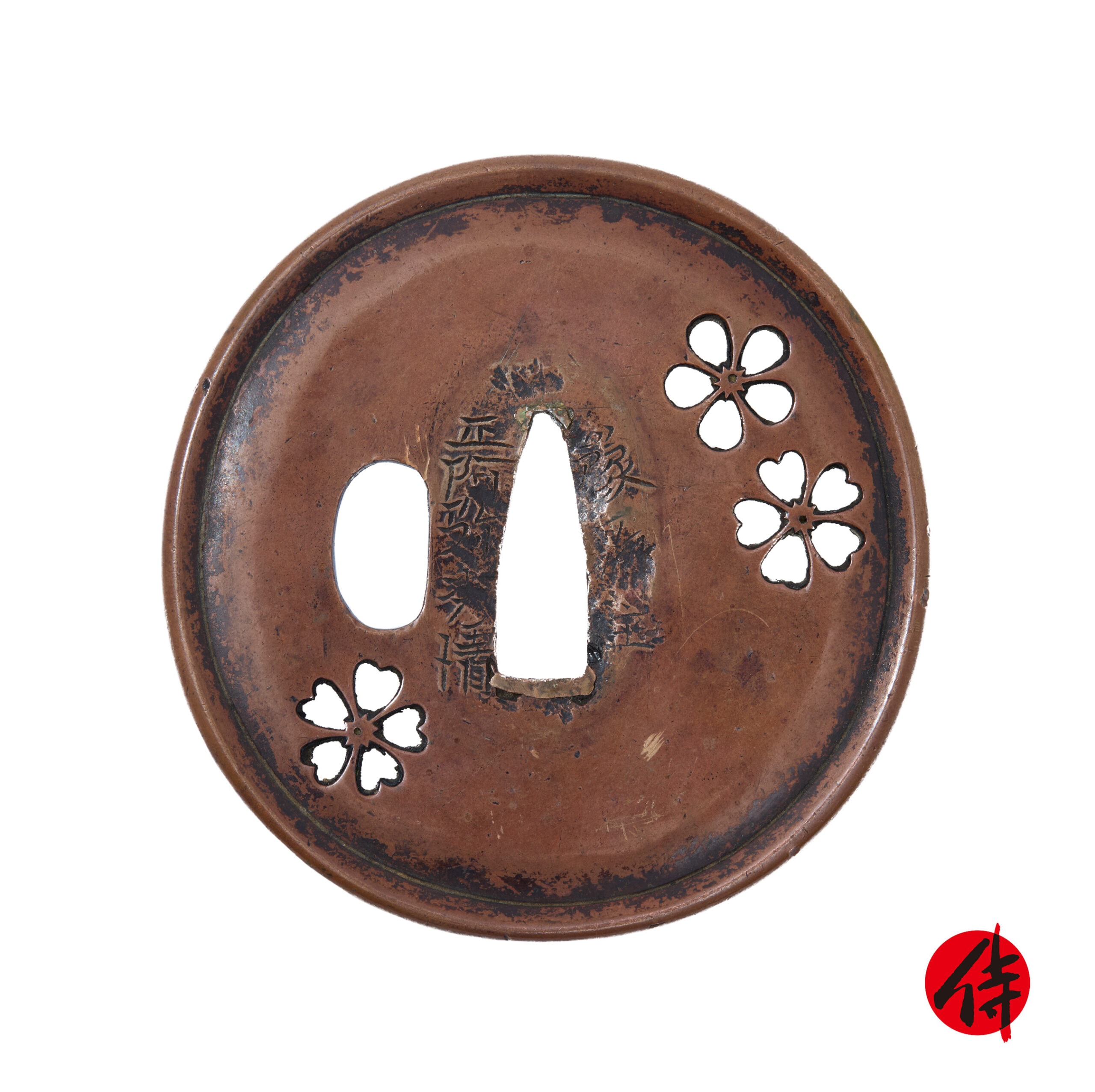
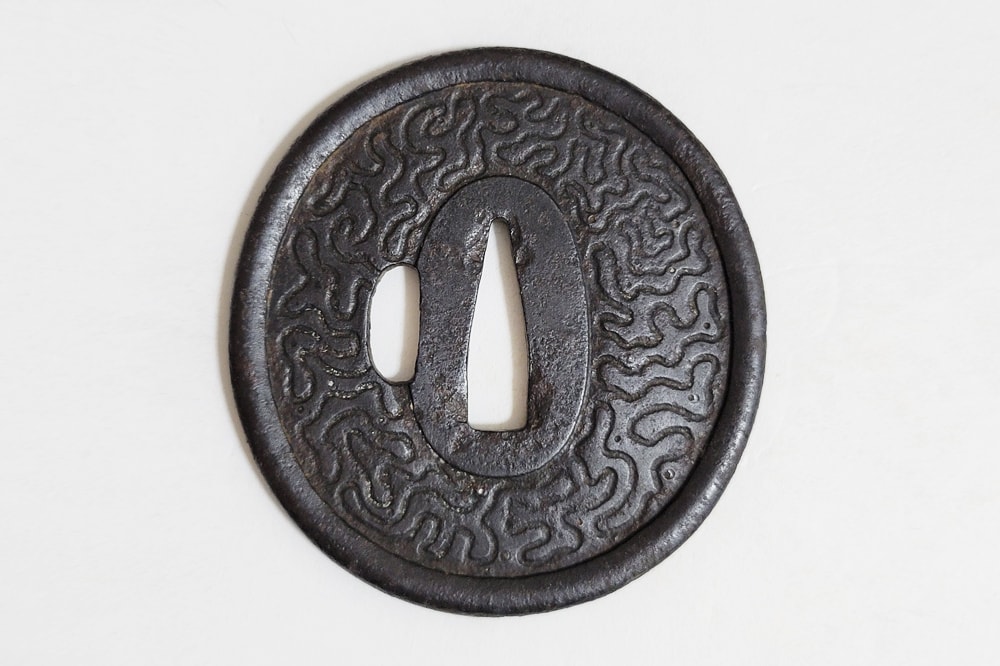
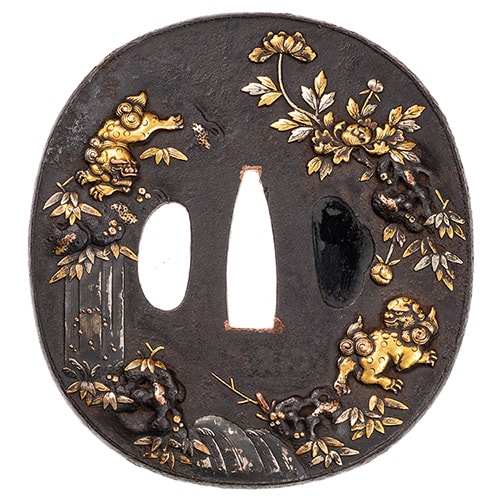
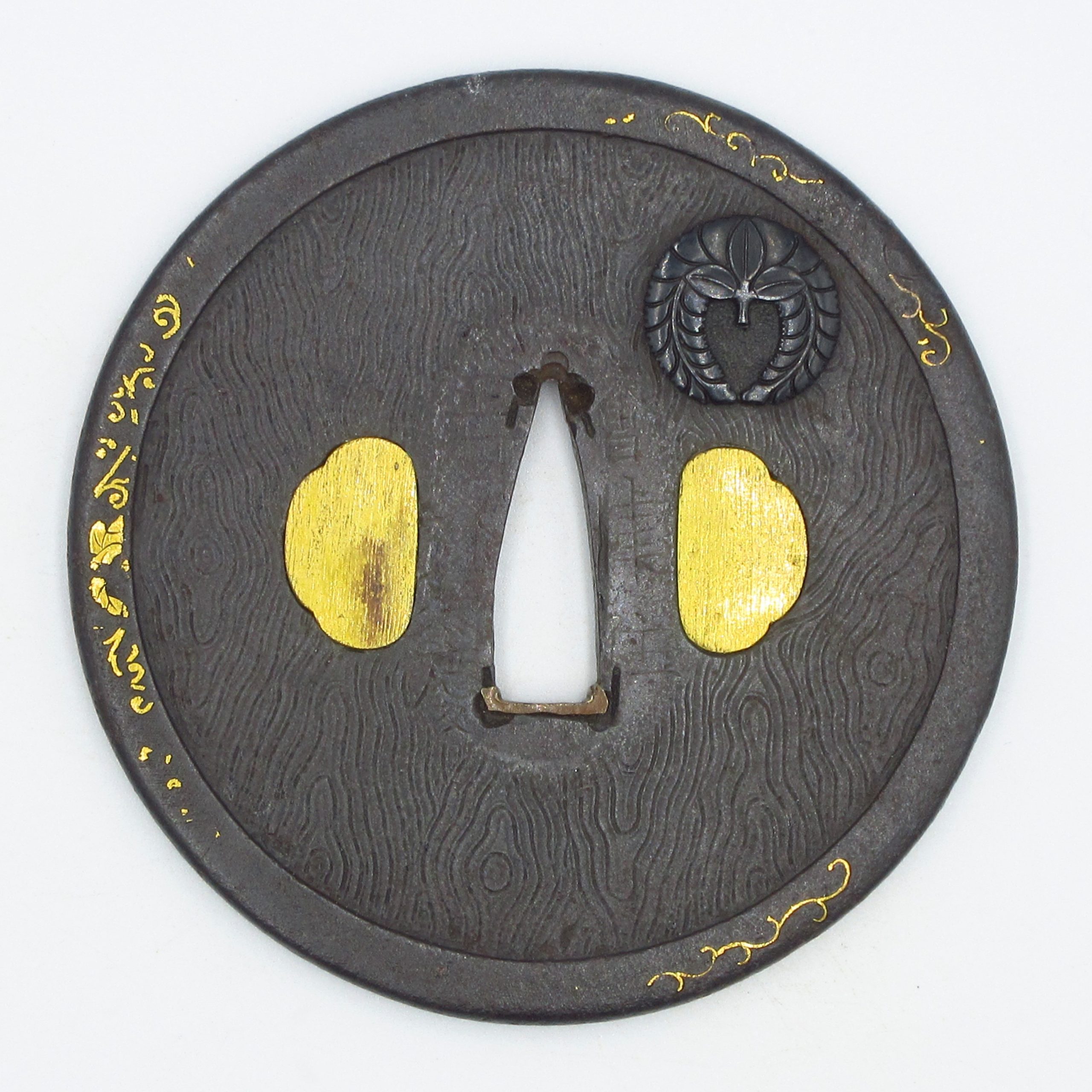
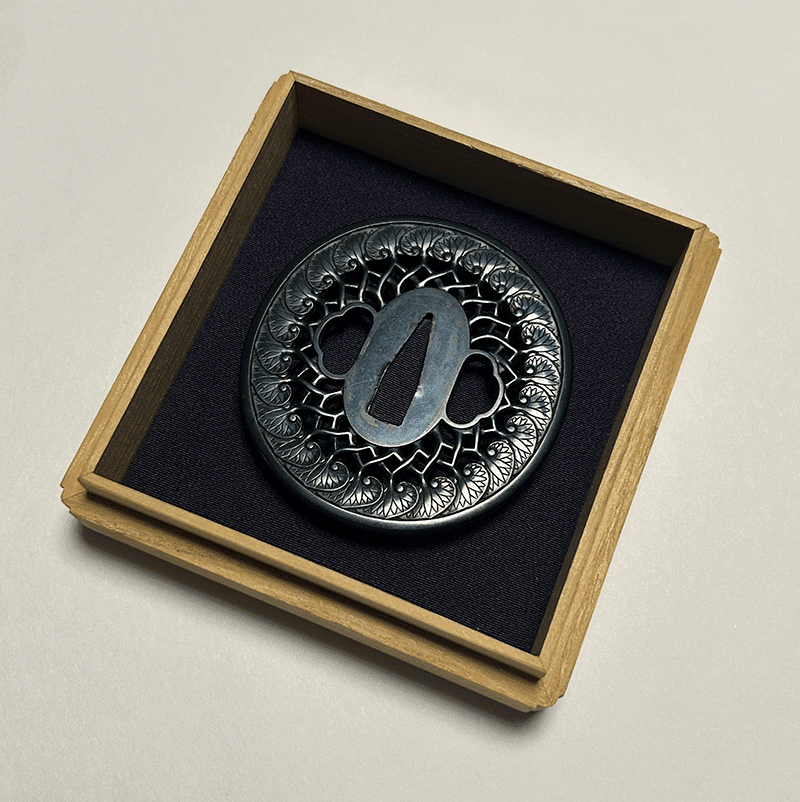
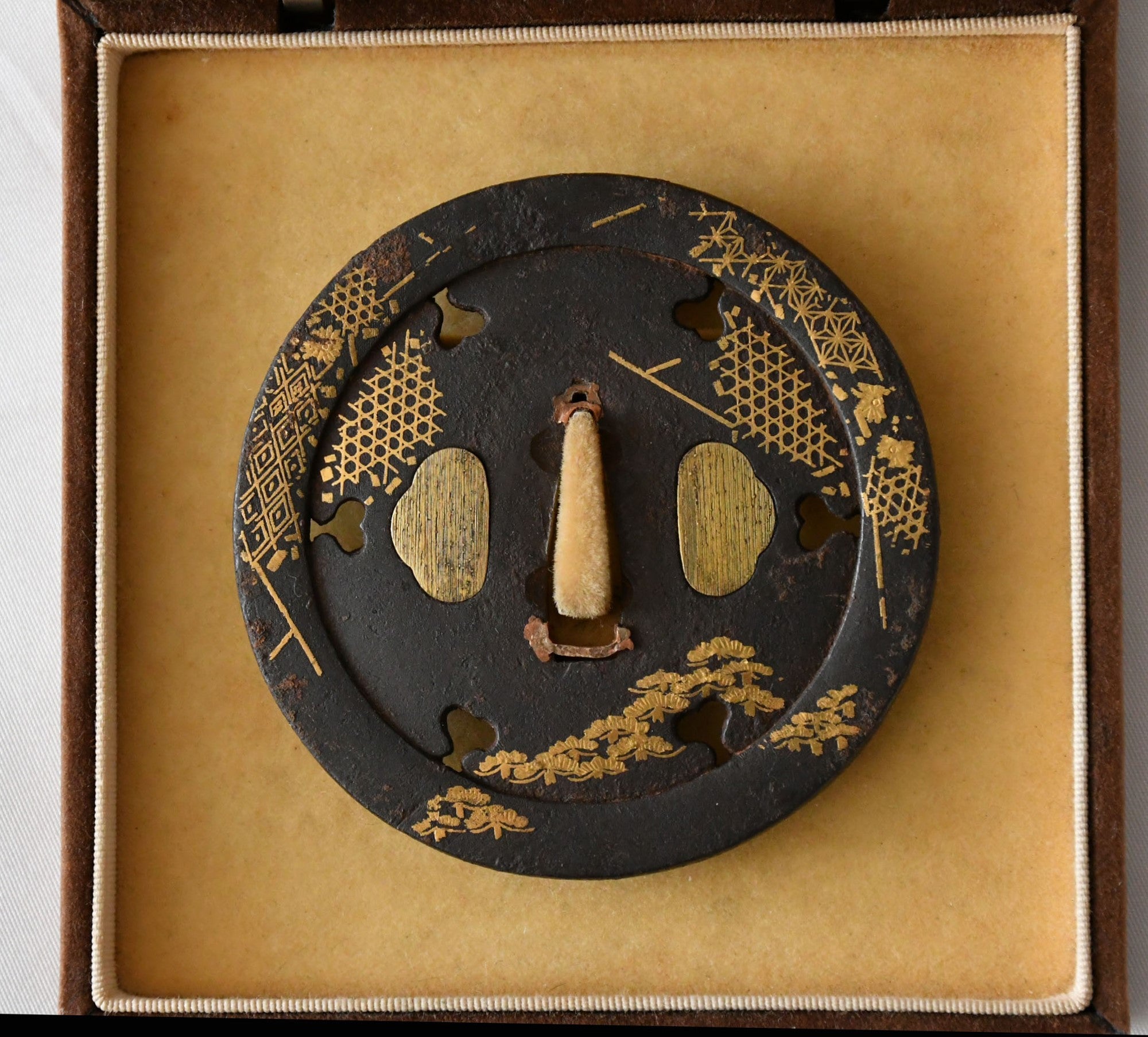
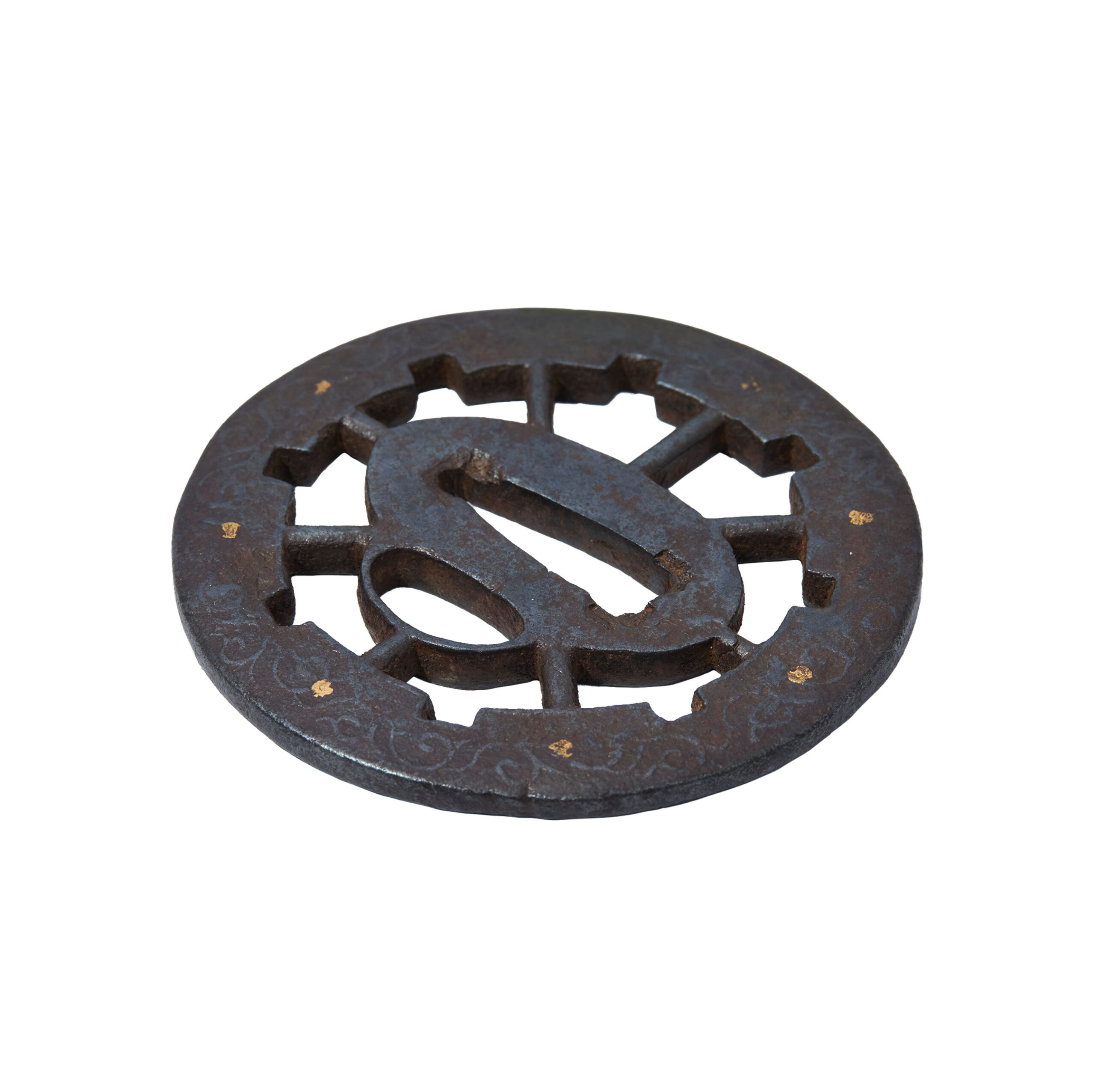
【品名】 車透図鍔 【解説】 本作は鑑定により正阿弥(しょうあみ)と極められた、鉄地、車透しの鍔です。 正阿弥派は鎌倉時代から江戸時代にかけて活躍した金工師の一派であり、刀装具、特に鍔、小柄、笄などの制作において、その繊細な彫刻と独特な意匠で高く評価されてきました。本作に見られるような精巧な透かし彫りを得意とするほか、金、銀、赤銅などを用いた象嵌技術にも秀でています。室町時代以降、正阿弥派は各地の有力大名に抱えられる名門工房へと発展しました。今日においてもその作品は愛好家の間で珍重され、多くの名品が重要文化財として美術館等に収蔵されています。 意匠の「車」は、日本の伝統的な文様では「源氏車(げんじぐるま)」と呼ばれます。これは平安時代の貴族が用いた牛車の車輪を象ったものです。この文様は、紫式部によって11世紀初頭に執筆された日本最古の長編小説『源氏物語』にちなんでその名が付けられました。宮廷の雅やかな風情を想起させるだけでなく、回転する車輪は時の流れや輪廻転生の象徴としても解釈される、非常に奥深い図柄です。 【鍔(つば)とは】 鍔は日本刀の拳を守る護具であり、格の高い侍は、刀本体のみならず意匠を凝らした美しい刀装具を設えた「拵(こしらえ)」を帯びていました。特に鍔の表側は、街を歩く際にも他者の目に触れる機会が多いため、より装飾性の高い意匠が施される傾向にあります。 【刀装具の重要性】 日本刀には、鍔、目貫、縁頭など、多種多様な装飾金具が備わっています。これらは武器としての実用性だけでなく、持ち主の個性や信念、あるいは格式を示す象徴でもありました。現代で例えるならば、スマートフォンの装飾のように、個々のこだわりを反映させる場であったと言えるでしょう。 ぜひ、細部の写真を拡大してご覧ください。鉄や銅を主体に、金、銀、四分一(しぶいち)などの象嵌を施した日本独自の彫金技術の粋を感じていただけます。鍔一枚をとっても、その造形や重量感は千差万別です。刀本体と共に時代を生き抜いてきたこれらの刀装具は、刀剣に勝るとも劣らない価値を有しています。一見、控えめな部品ではありますが、こうした細部にまで目を向けることこそが、武士の美意識を理解する「目利き」への第一歩と言えるでしょう。 【鑑定書】 日本美術刀剣保存協会(NBTHK)特別貴重小道具 認定書 本作には、日本で最も権威ある鑑定機関の一つである日本美術刀剣保存協会が、昭和50年(1975年)10月25日に発行した「特別貴重小道具」の認定書が付属いたします。ご購入者様には、この原本をそのままお渡しいたします。ご希望に応じて、鑑定内容の英訳PDFを作成することも可能です。 【運営について】 侍ミュージアム(Samurai Museum)は東京に拠点を置き、侍の歴史に関する古美術品を展示しております。当オンラインショップでは、日本刀、甲冑、伝統工芸品など、日本の文化と職人技に魅了された方々のために、厳選した品々を取り扱っております。 【お支払い方法】 Stripe(クレジットカード)、PayPal、Apple Pay、Google Payなど、各種安全な決済方法をご利用いただけます。Stripeでの決済にはアカウント作成の必要はございません。その他のお支払い方法をご希望の場合は、お気軽にお問い合わせください。
 NihontoWatch
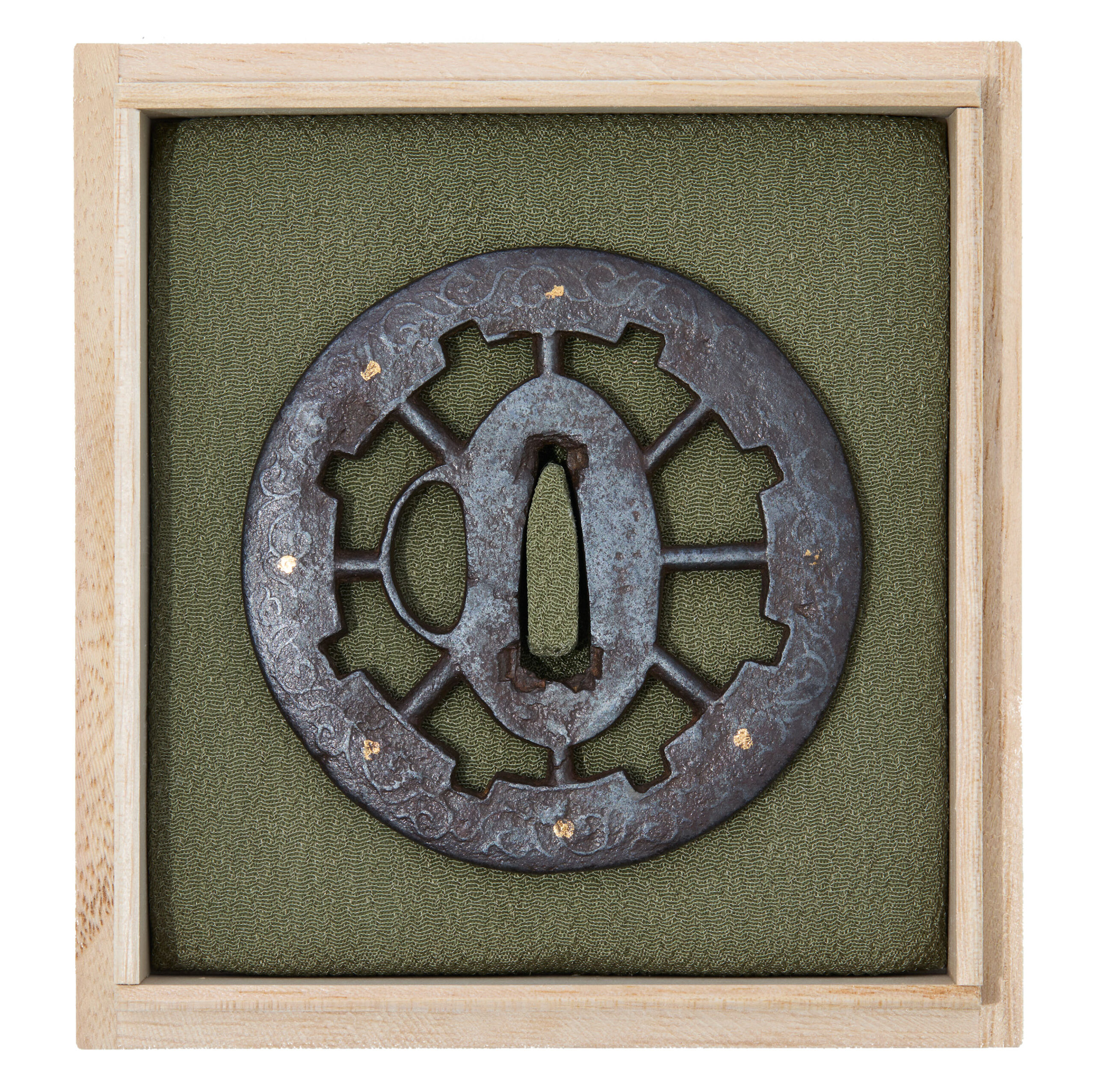
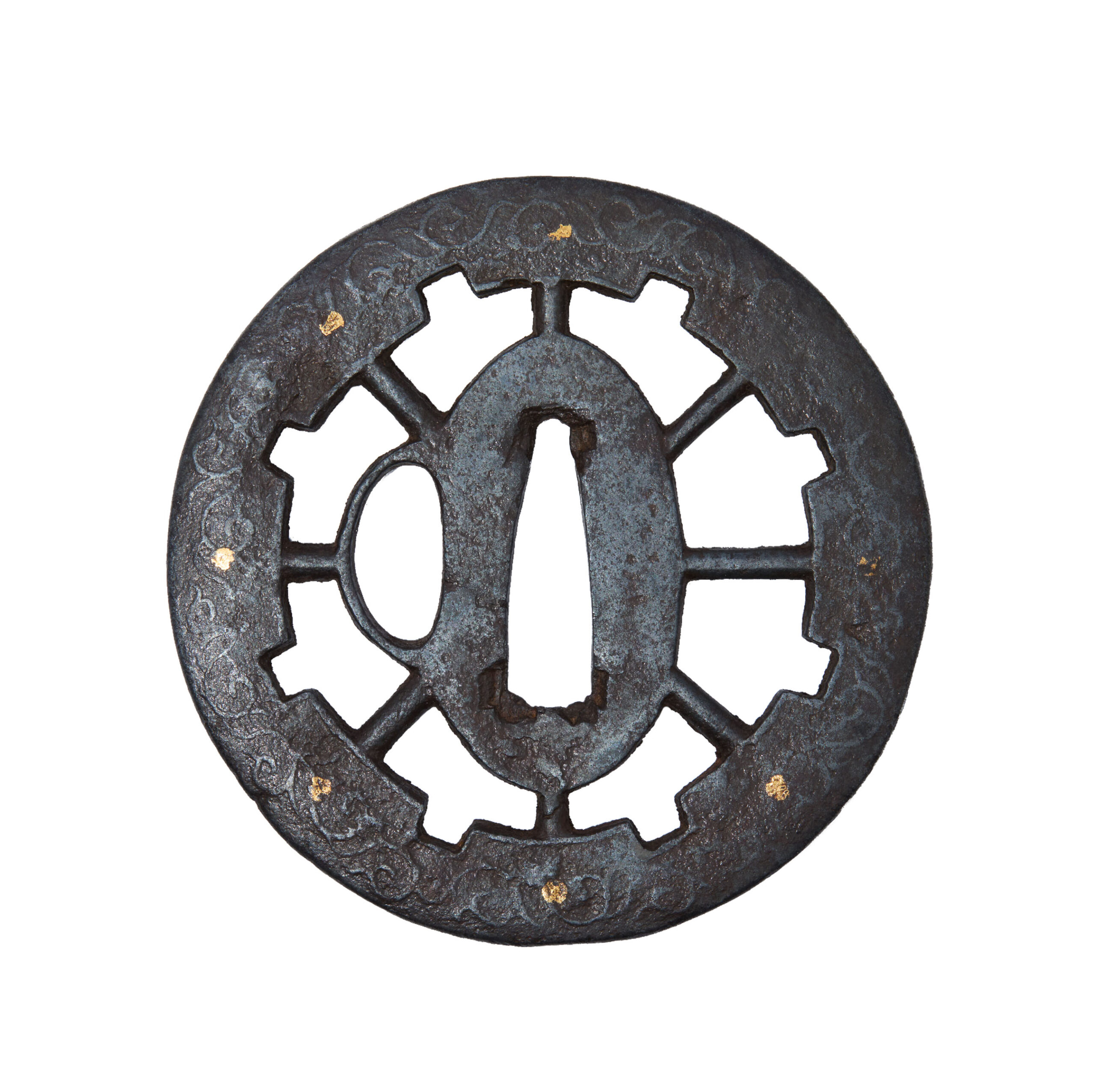
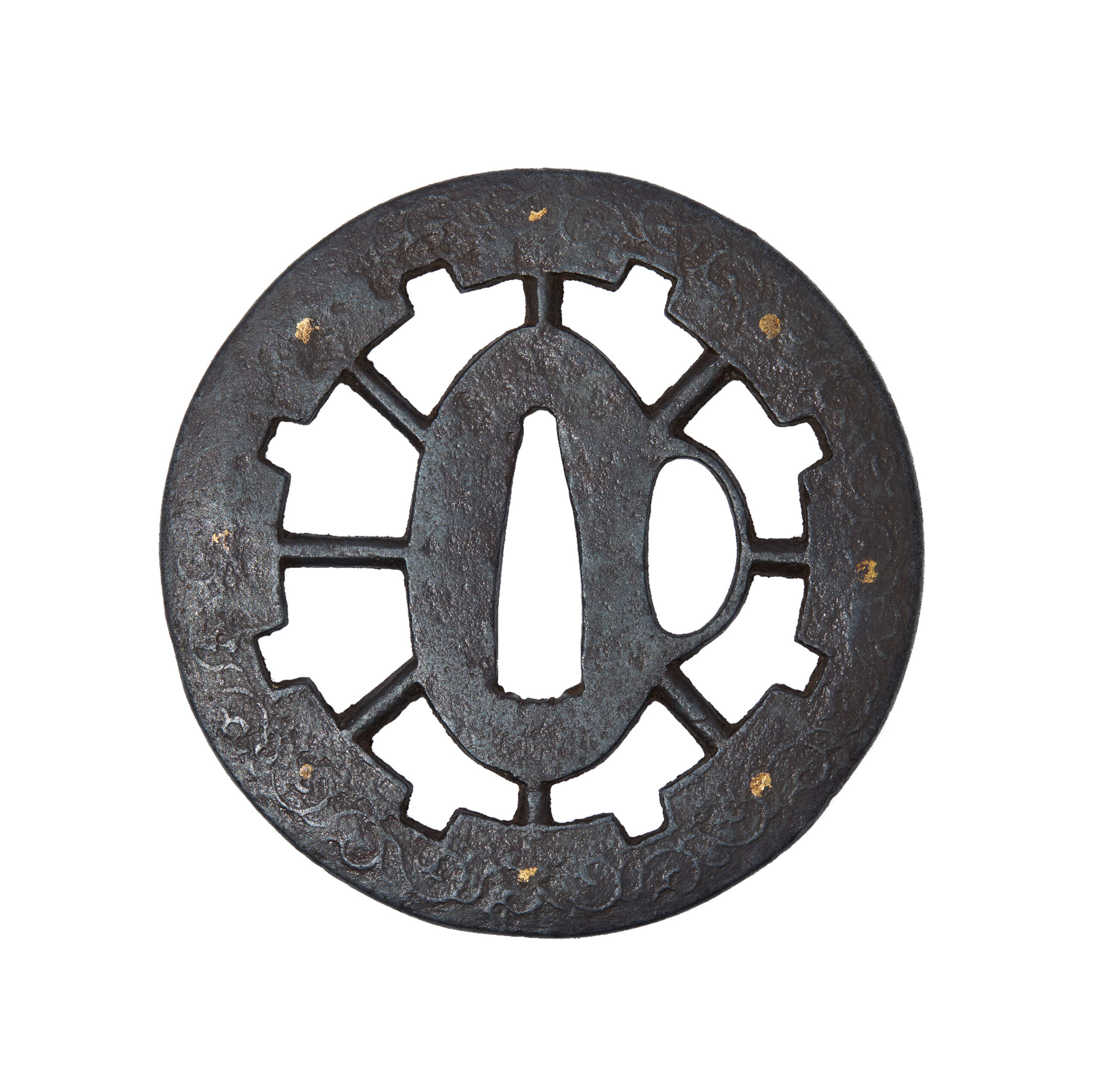
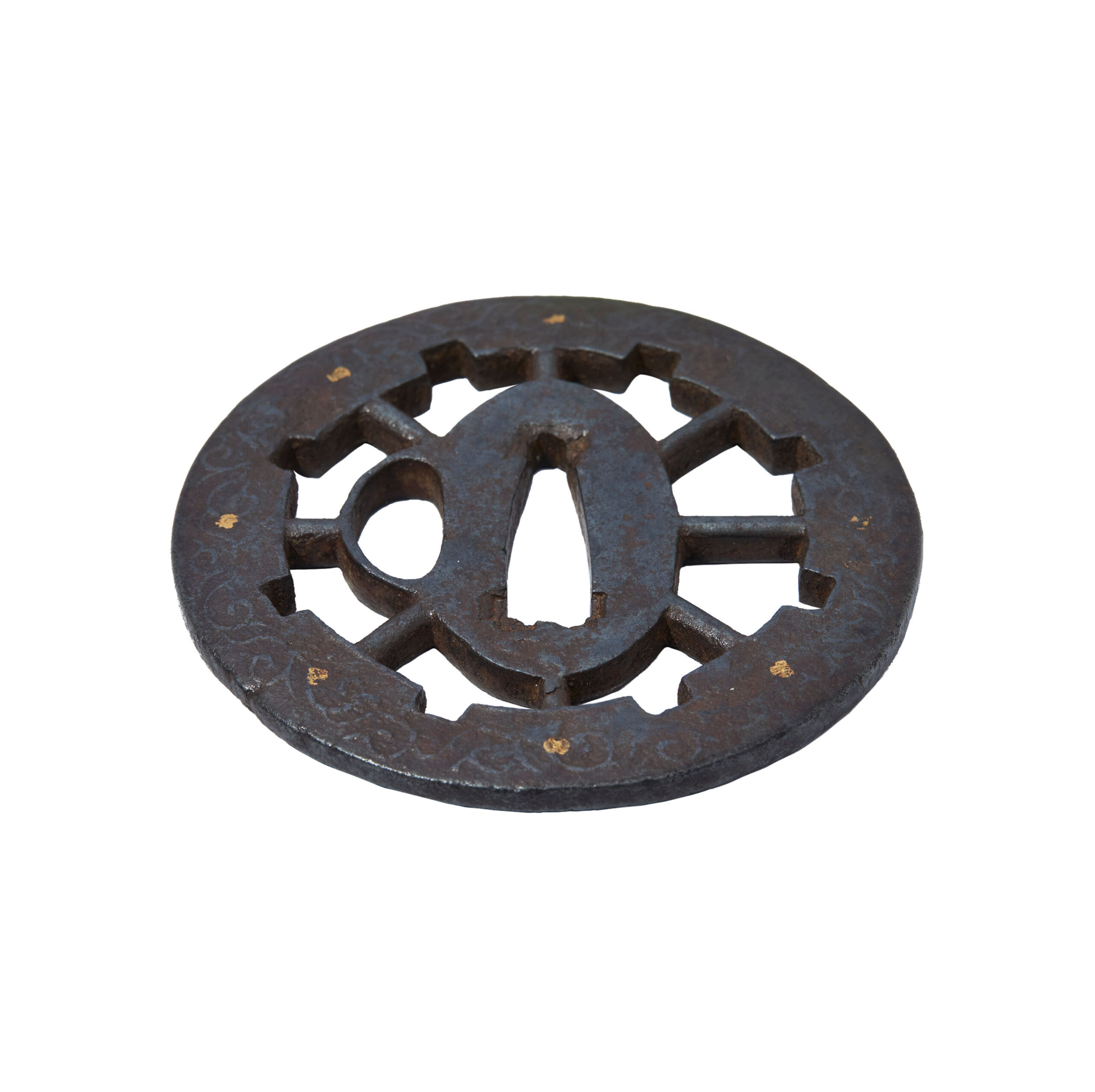
鐔工 · Kyoto
現在189点販売中
正阿弥派は室町時代中期頃に興った鐔工の一派である。室町中期から末期にかけて専門の鐔工が登場するが、京の正阿弥もその主たるものであり、この時期の作を古正阿弥の名で言いならわしている。そもそも京都には同朋衆として阿弥衆が存在し、その中に正阿弥一派があった。有名の作はないものの、刀装金具師から鐔工となったというのが今日の通説である。桃山時代には京都に栄え、慶長八年の年紀を有する彦十郎の太刀鐔・大切羽一組はその隆盛の一端を伝えている。同派は江戸期に入ると各地に移住分派し栄えた。秋田正阿弥もその一類で、伝兵衛重吉を事実上の祖としている。傳兵衛は慶安四年に出羽国庄内に生まれ、寛文八年十八歳の時に江戸へ出て正阿弥吉長の弟子となり、延宝元年に秋田へ移り、同三年に藩主佐竹義処の抱え工となり、同四年に正阿弥の流名を許された。以後嫡流は伝内重高、伝七重常、嘉吉重央と続いている。また岡山正阿弥は池田藩に仕え、幕末には藤四郎家九代を継いだ勝義が出た。 古正阿弥と呼ばれるものの作風を見ると、鉄に透彫をして、それに金・銀などの布目象嵌を施したものが通例である。鍛えの良いやや薄手の鉄磨地に左右大透など大胆な地透を切り、日足鑢に赤銅象嵌を加え、耳に縄目文の銀象嵌や雷文繫の金布目象嵌を施すなど、斬新で力強い意匠に見どころがある。一方、赤銅魚子地に高彫・金色絵で家紋を散らす糸巻太刀拵の総金具など格式の高い太刀金具も手掛けており、長右衛門の針書銘や秋田の六弥の年紀銘を有する作が知られる。秋田正阿弥随一の金工傳兵衛の作域は広く、秋田名物の蕗図や雲龍図を肉彫地透象嵌で表したものや、漆芸の堆朱のような効果を発揮したぐり彫などをはじめ多岐に亘っているが、いずれも構図が斬新であり、線象嵌や布目象嵌など高度な象嵌技術には目を見張るものがある。平地に施された金七宝象嵌は平田本家における七宝手法と全く同一のものであり、両家の交流の証として貴重である。岡山の勝義は堂々とした造込みに堅実な鏨使いで重厚感のある高彫を施し、金・銀・赤銅・素銅・四分一の入念精緻な象嵌を存分に用いており、実兄勝実を通じて後藤一乗の作風も学んでいる。 古正阿弥の鐔は、肥後細川家や大徳川家に伝来した打刀拵、信長拵を手本に制作された肥後打刀拵、宮本武蔵の高弟寺尾信行の指料と伝える拵などに用いられており、武家の実用と雅味の双方に応えた同派への評価を物語っている。慶長八年や天明二年などの年紀作は資料性が極めて高く、正阿弥研究の進展に大きく寄与するものである。秋田では傳兵衛が秋田随一の金工として活躍し、三代傳七も初・二代同様に藩主佐竹家の藩工として腕を振るい、江戸の佐野直照に学んだ重照ら門流も確かな構図・彫技を示した。幕末明治の勝義は明治九年に廃刀令にあって刀装具の制作を断ったが、持国天図鐔や七十三翁銘の難波潟歌絵図鐔など、風流のなかにも覇気を感じさせる傑作を遺している。先祖正阿弥から受け継いだ伝統に用即美の華を添えたその系譜は、室町の京に発して諸国に広がり、近世金工の掉尾を飾るまで連綿と続いた一大流派として、刀装具史に確固たる位置を占めている。 詳しく見る →
本作はNBTHKの旧鑑定書(貴重・特別貴重)を有しますが、これらは現在発行されておらず、現在の日刀保ではほとんど認められていません。極めを確認するには、公的な鑑定機関(NBTHK・NTHKなど)に再提出し、現行の鑑定を受けることもご検討ください。
Returns/exchanges limited to defects caused by shipping (except willful misconduct or gross negligence by the company); customers must contact within 72 hours of receiving the product.