
二世紀半の泰平のあいだ、刀は武器である以上に武士の身分の標章であった。江戸の実証と大坂の華やぎのように都市ごとの作風が育ち、時代の末には需要も細っていく。
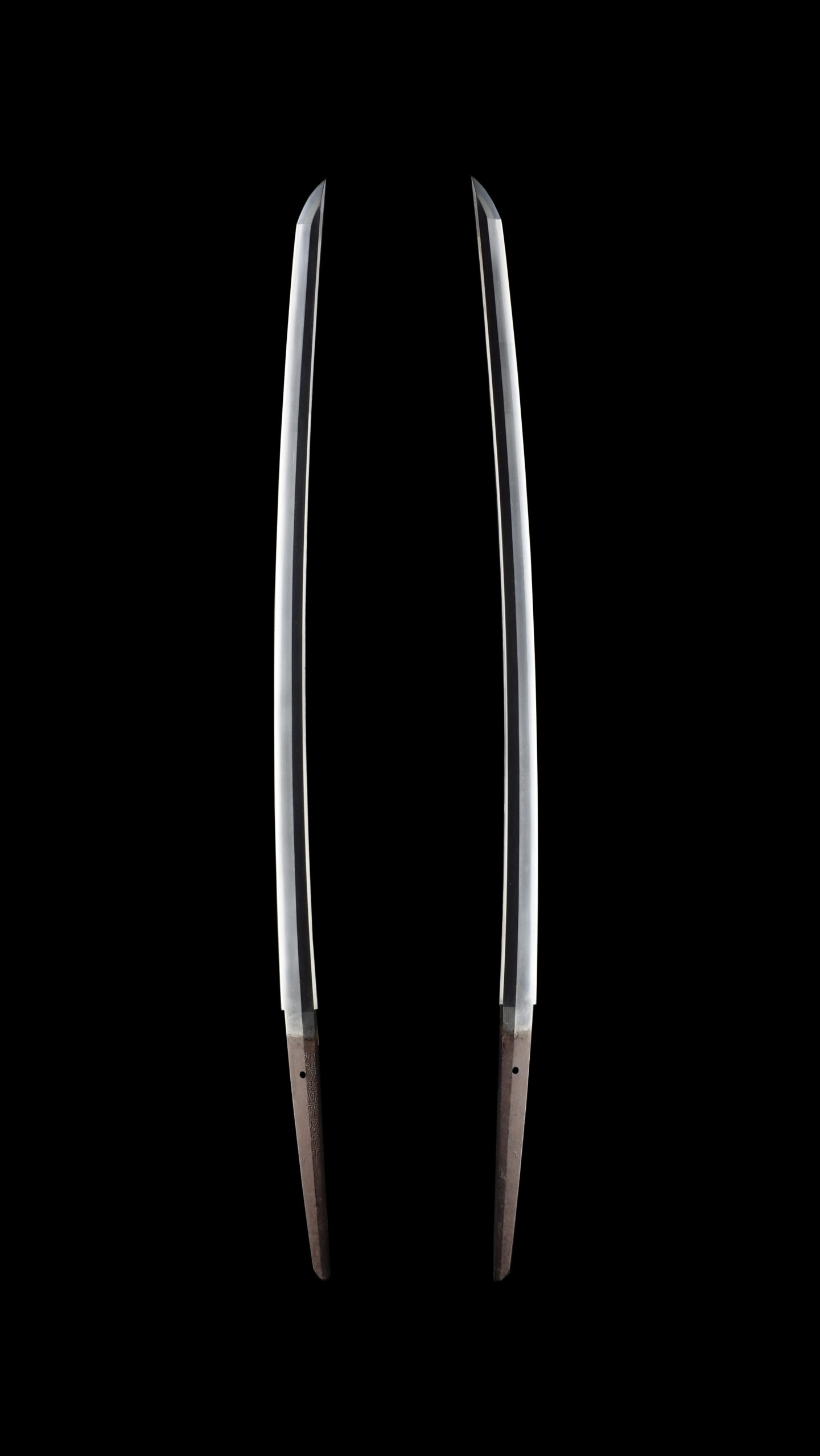
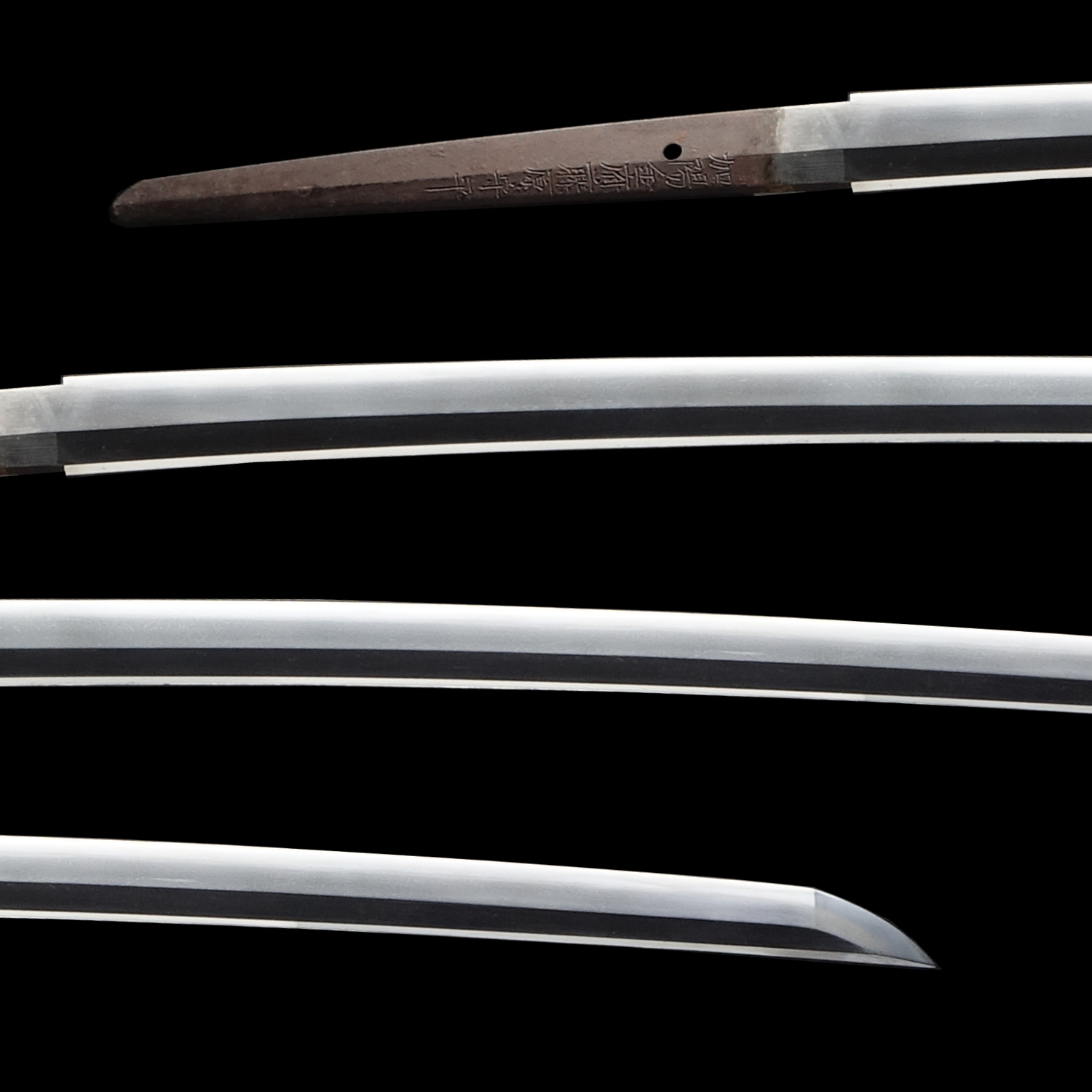
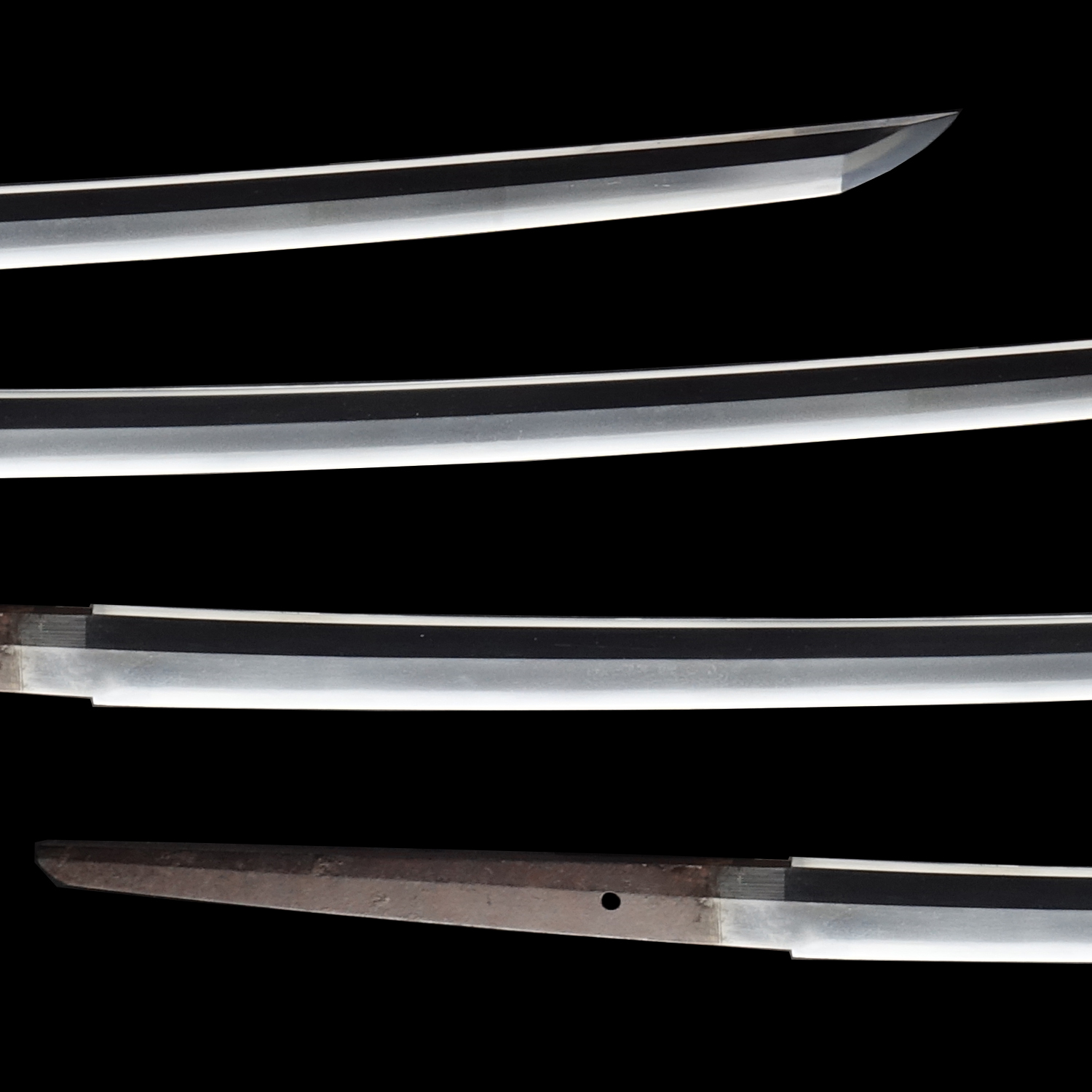
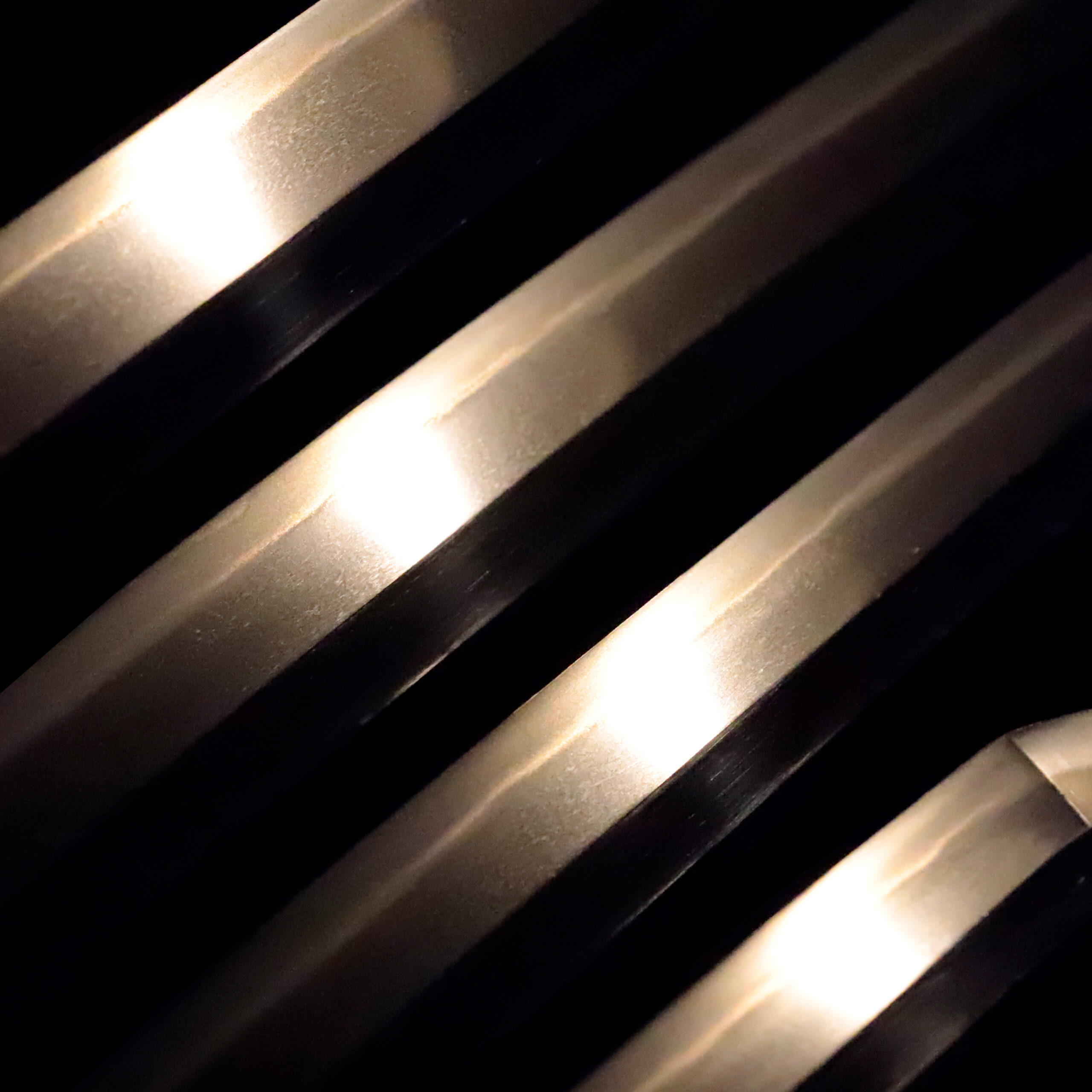
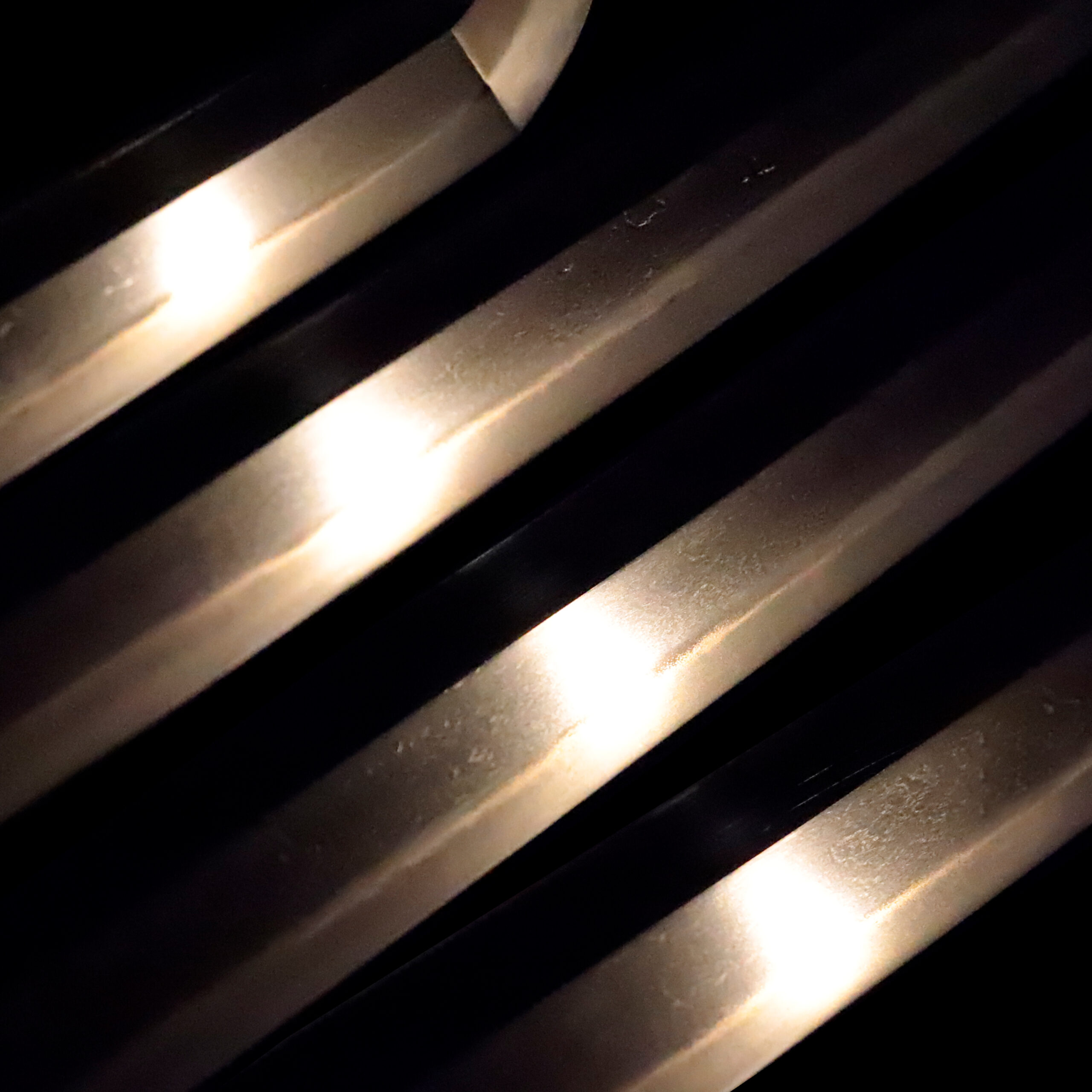
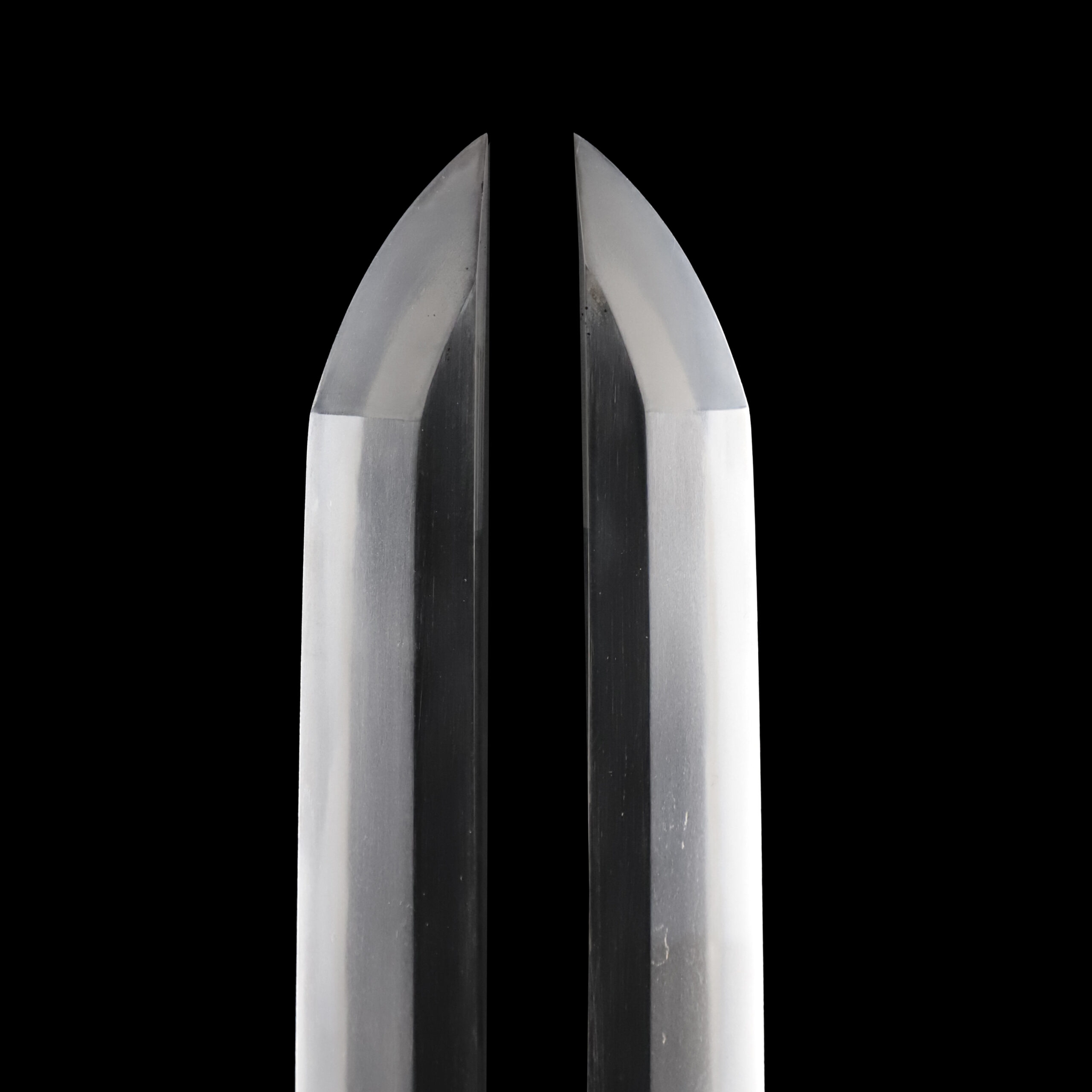
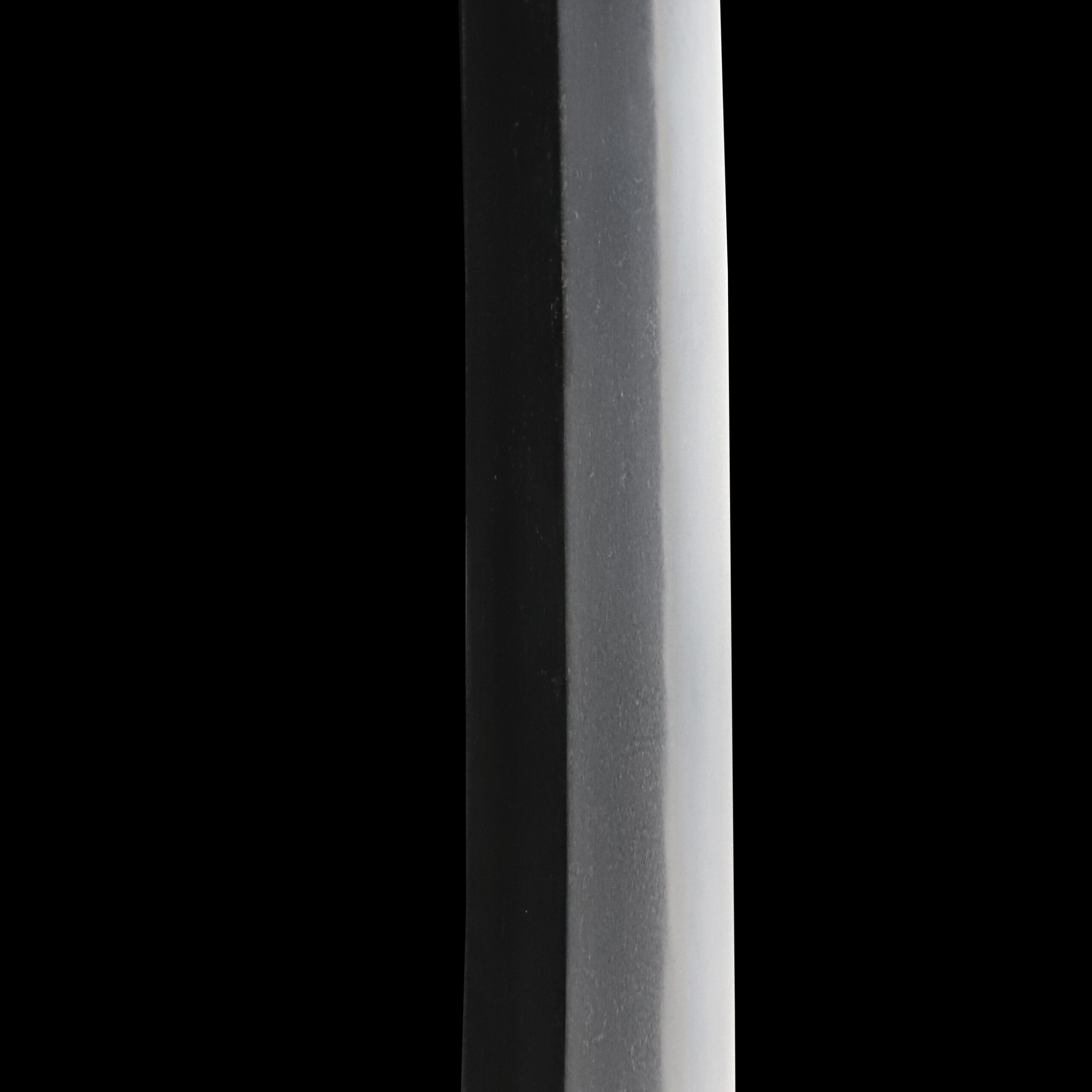
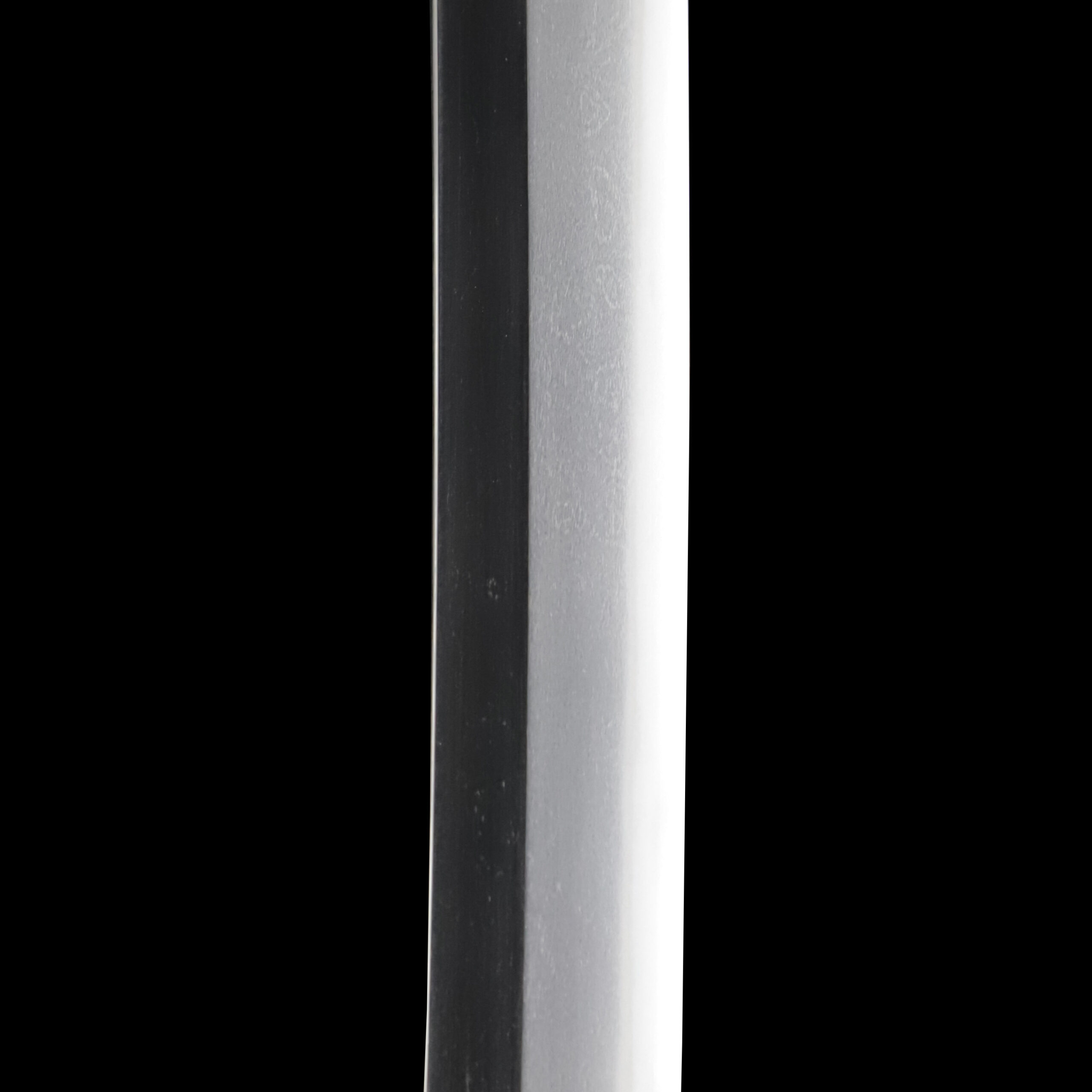
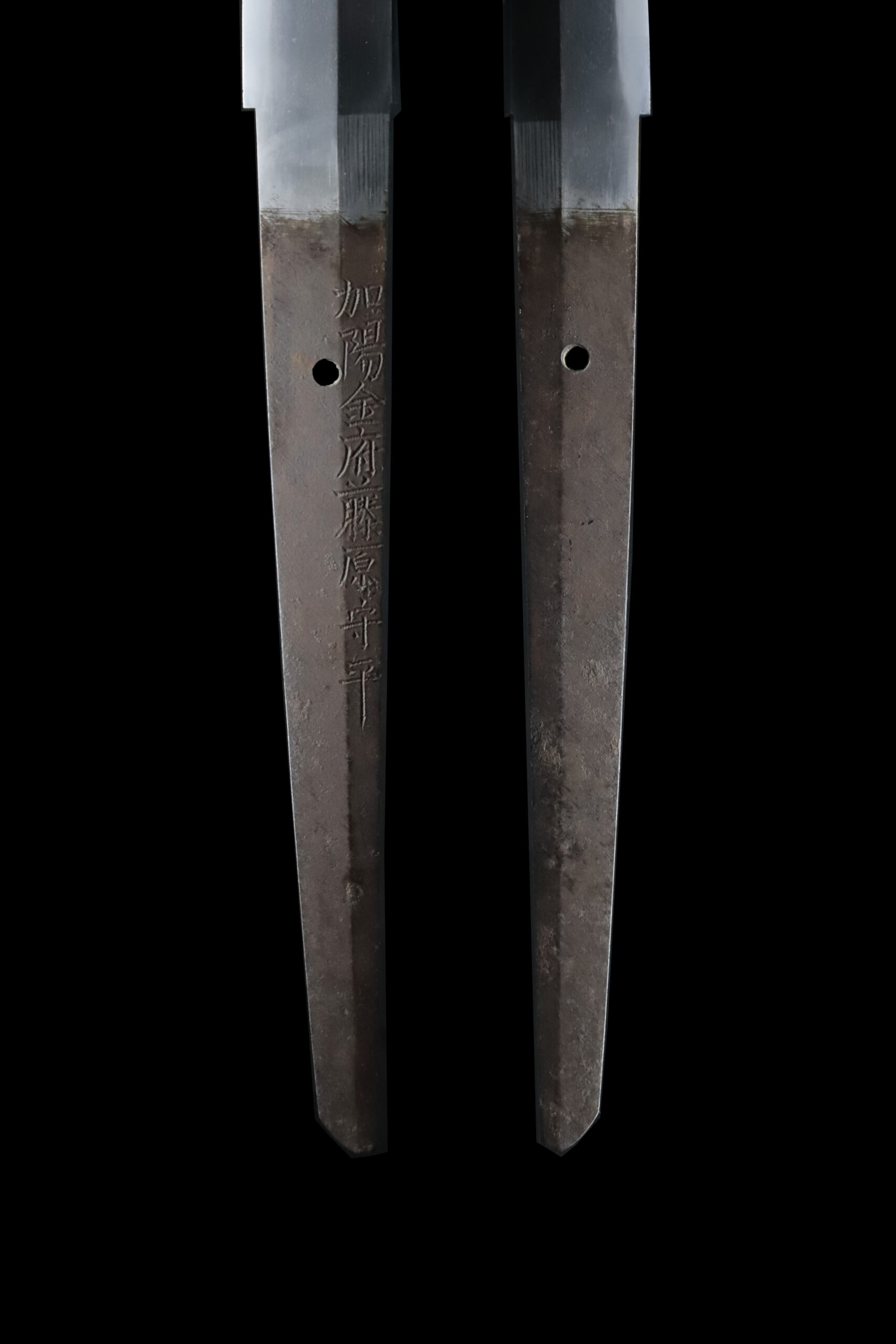
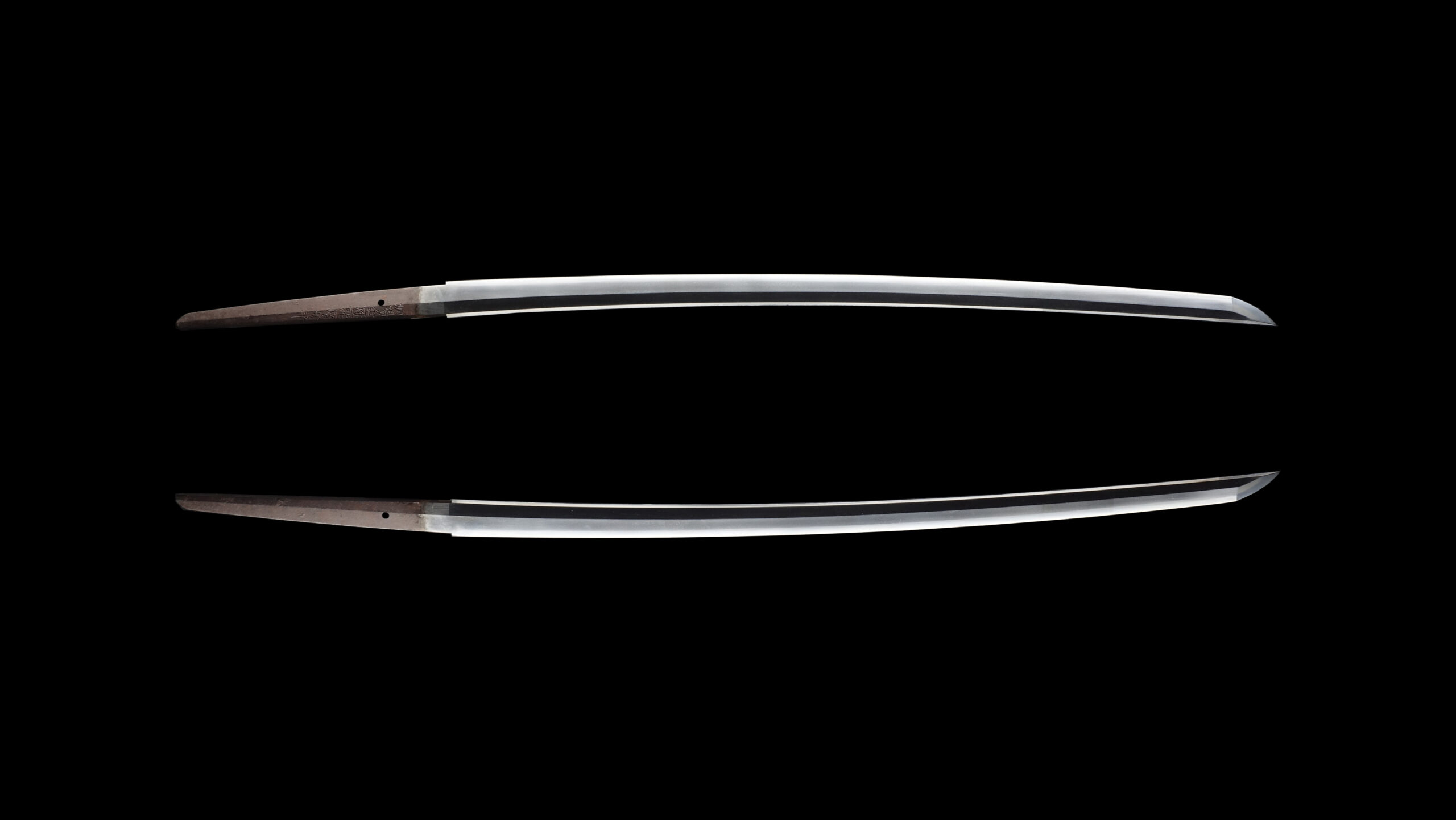
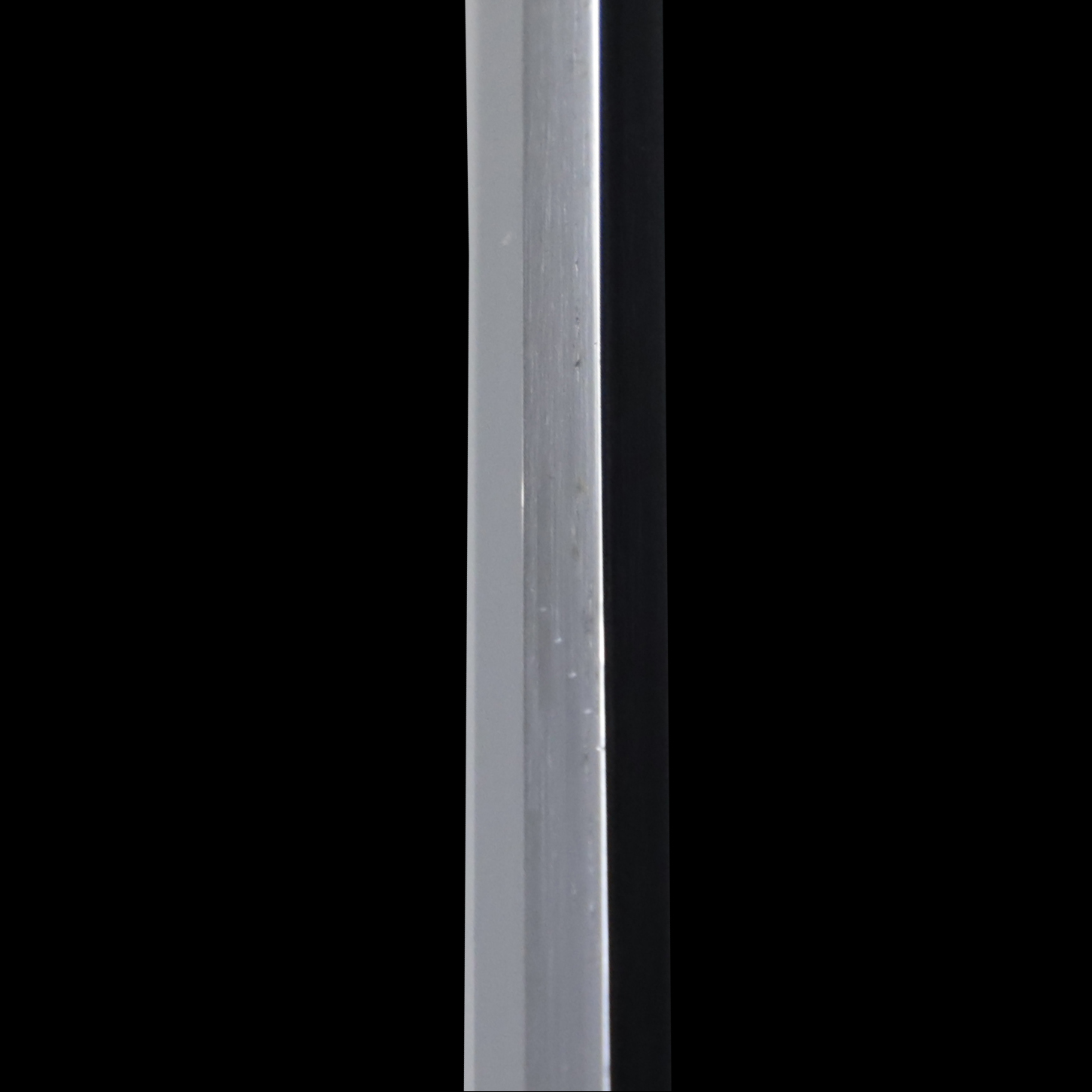
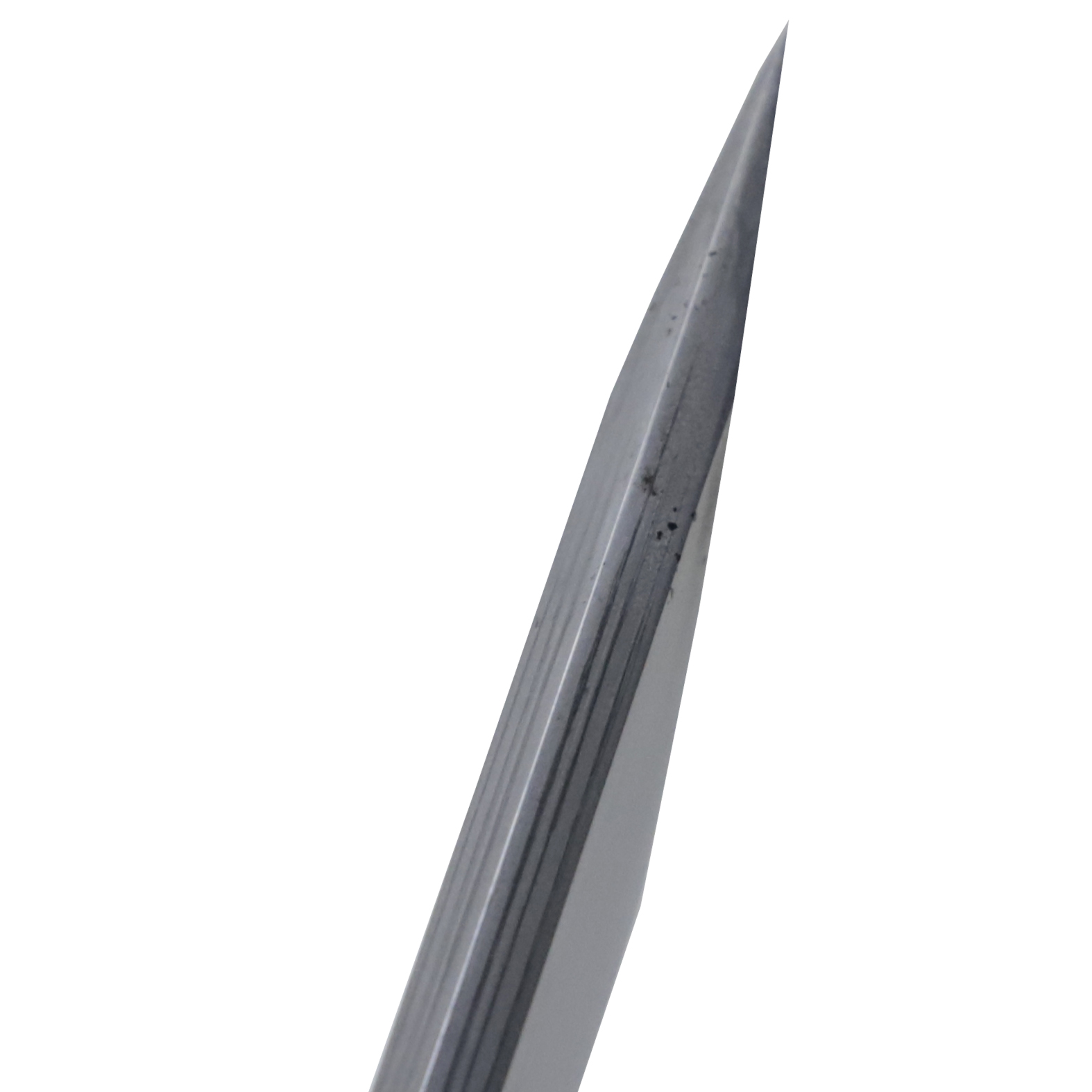
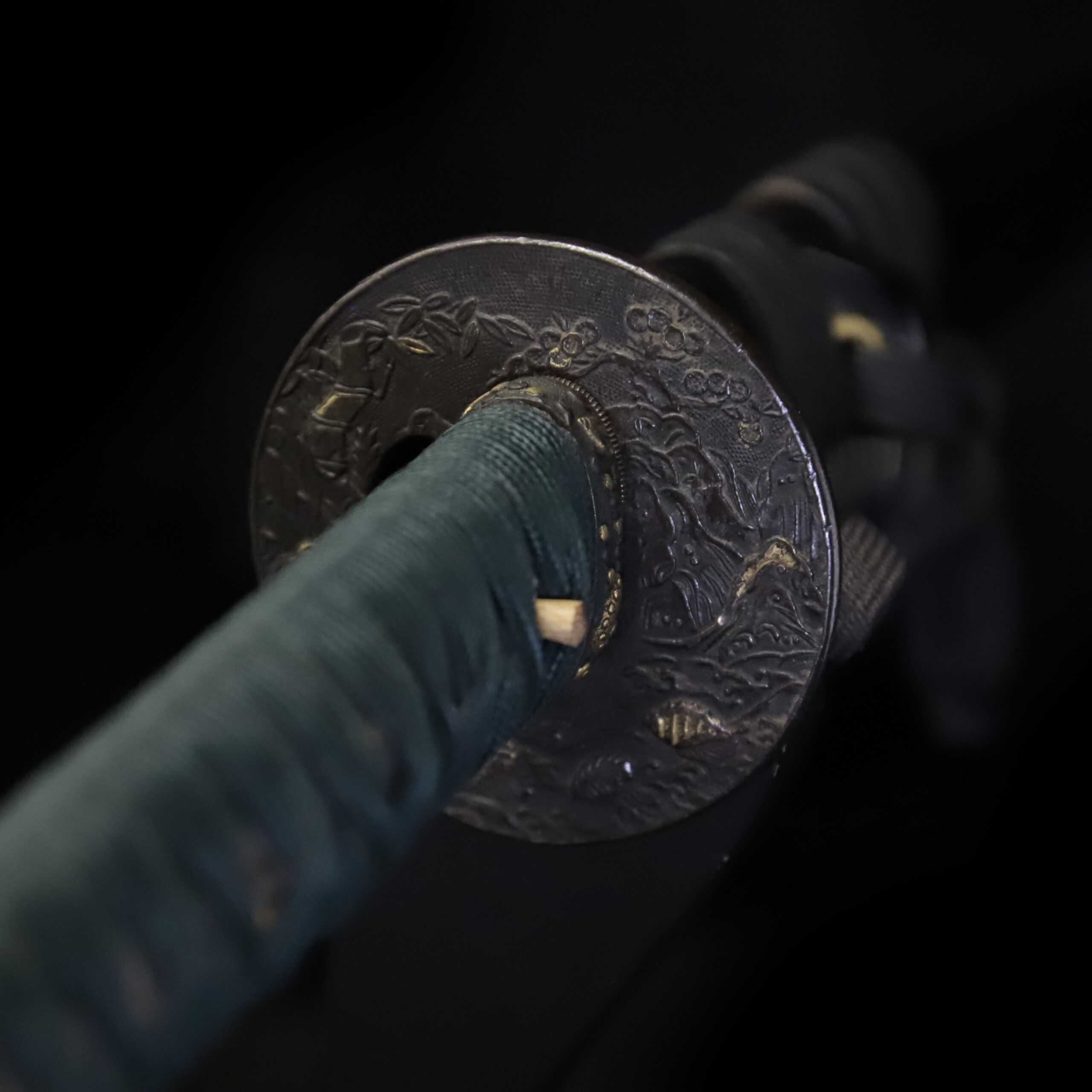
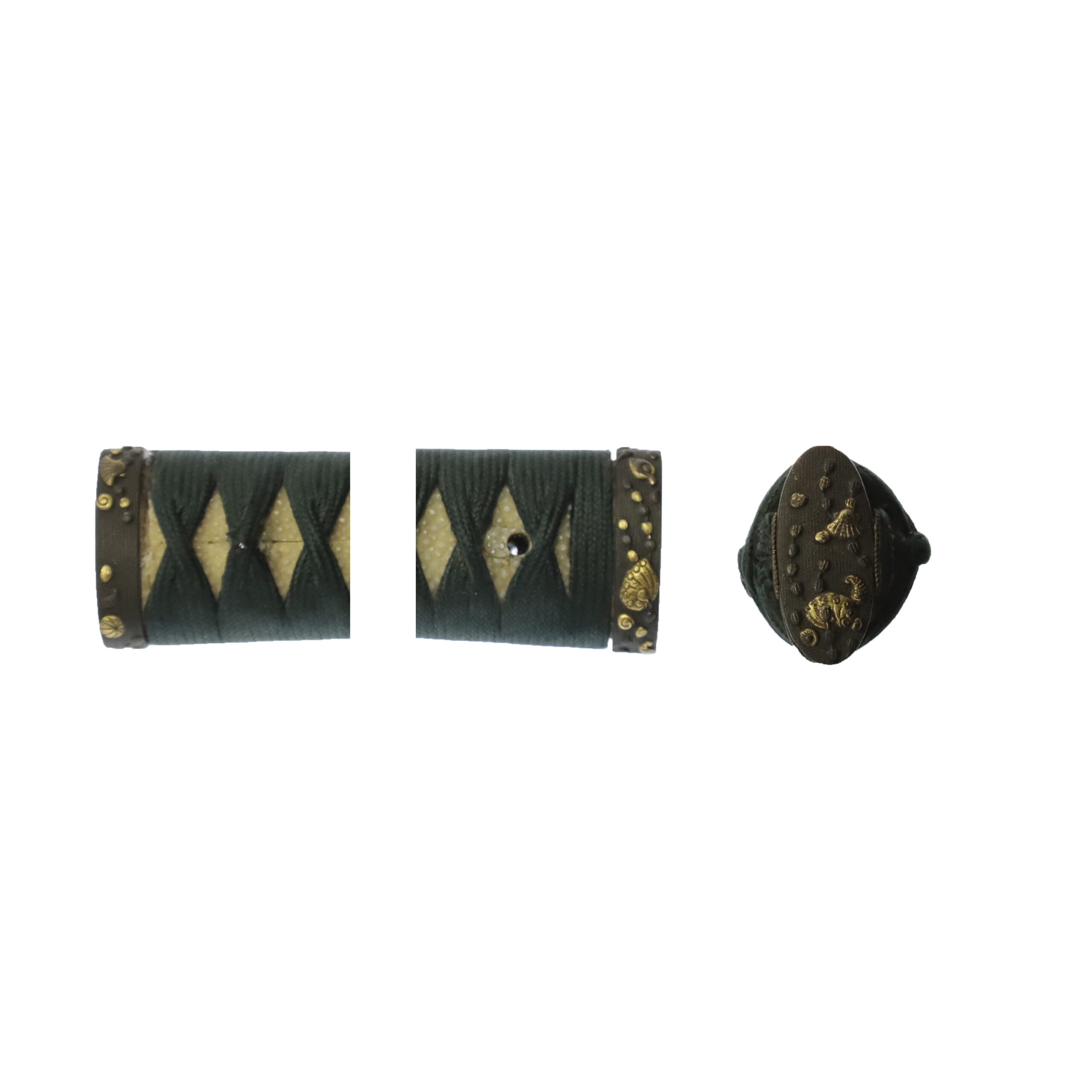
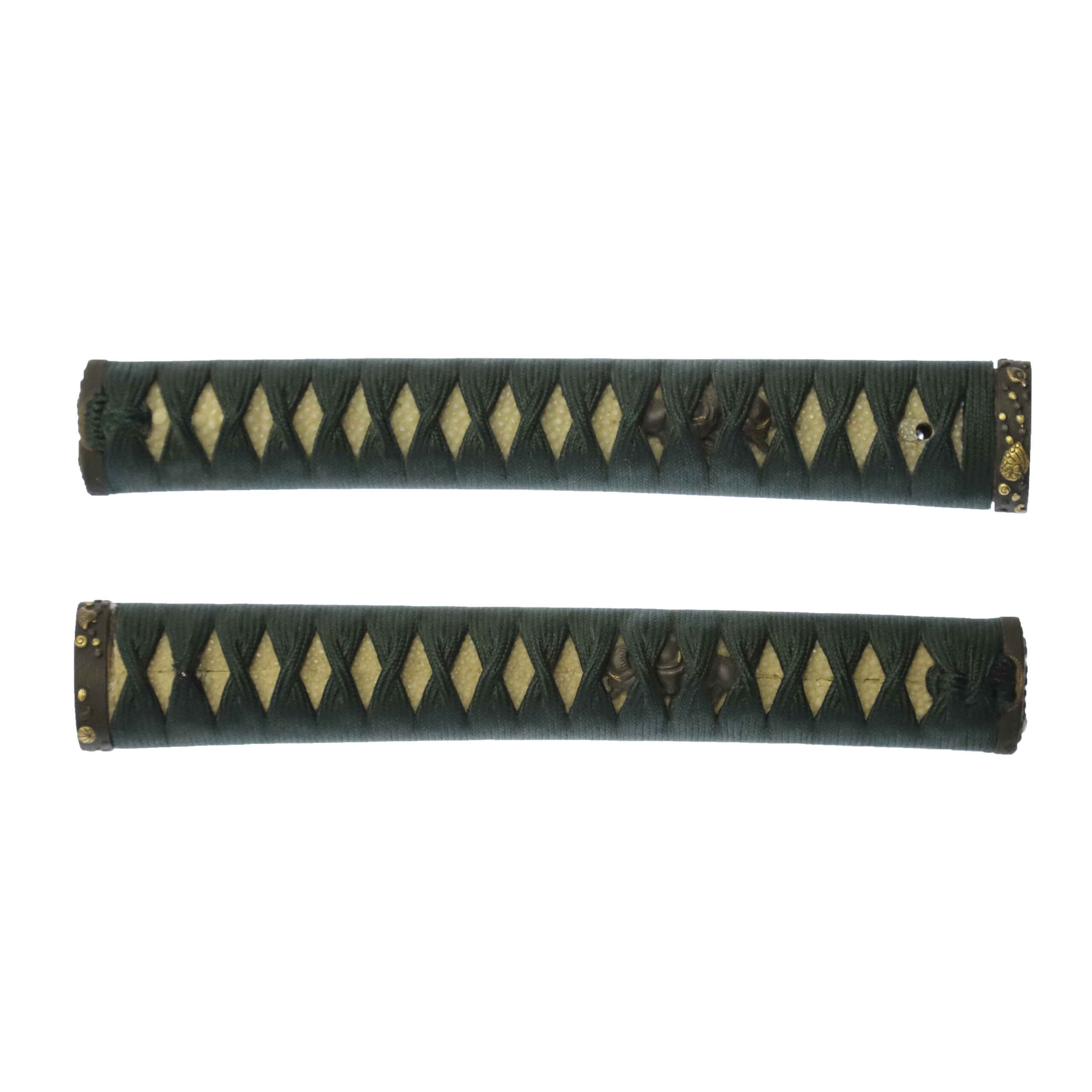
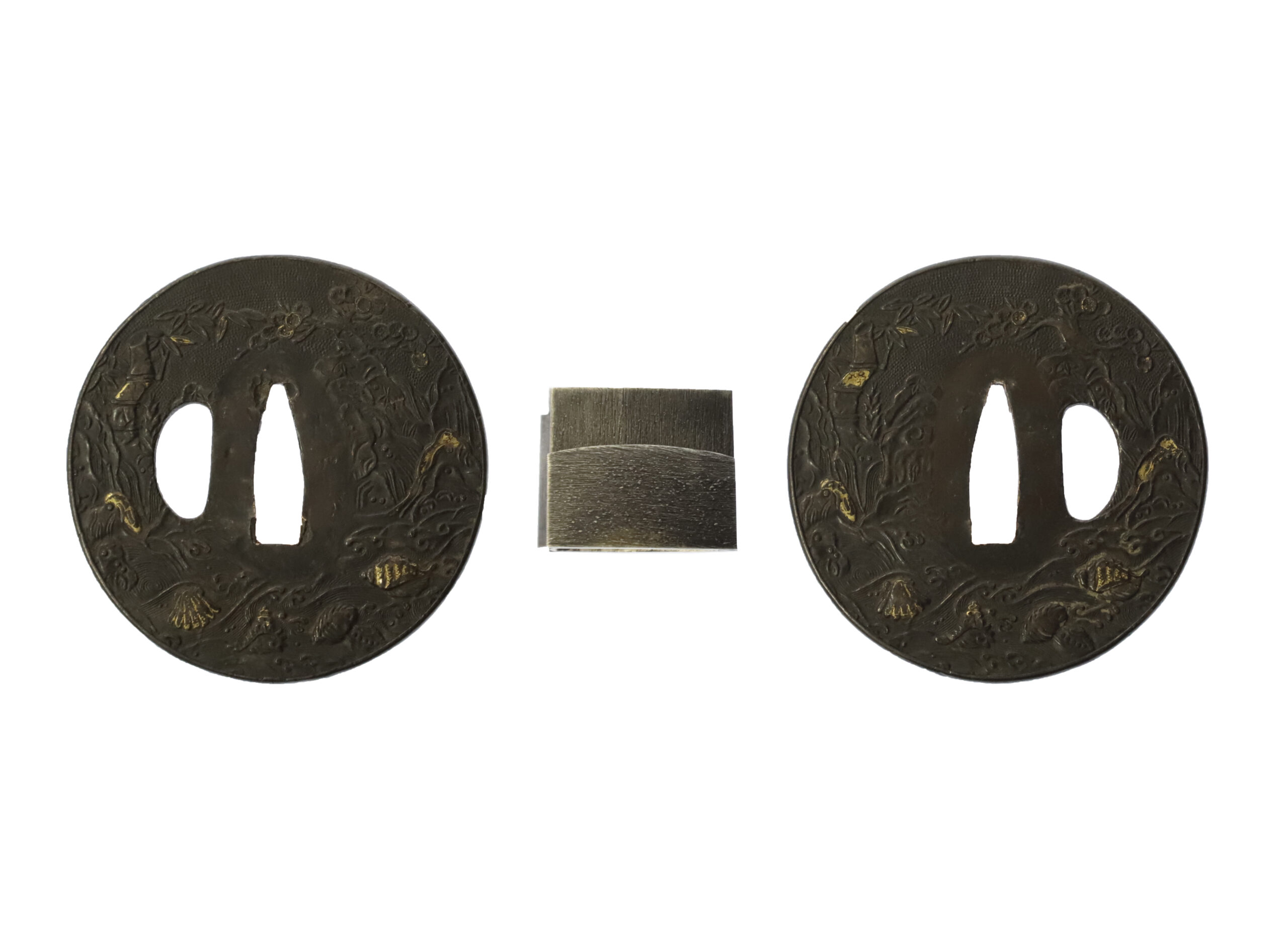
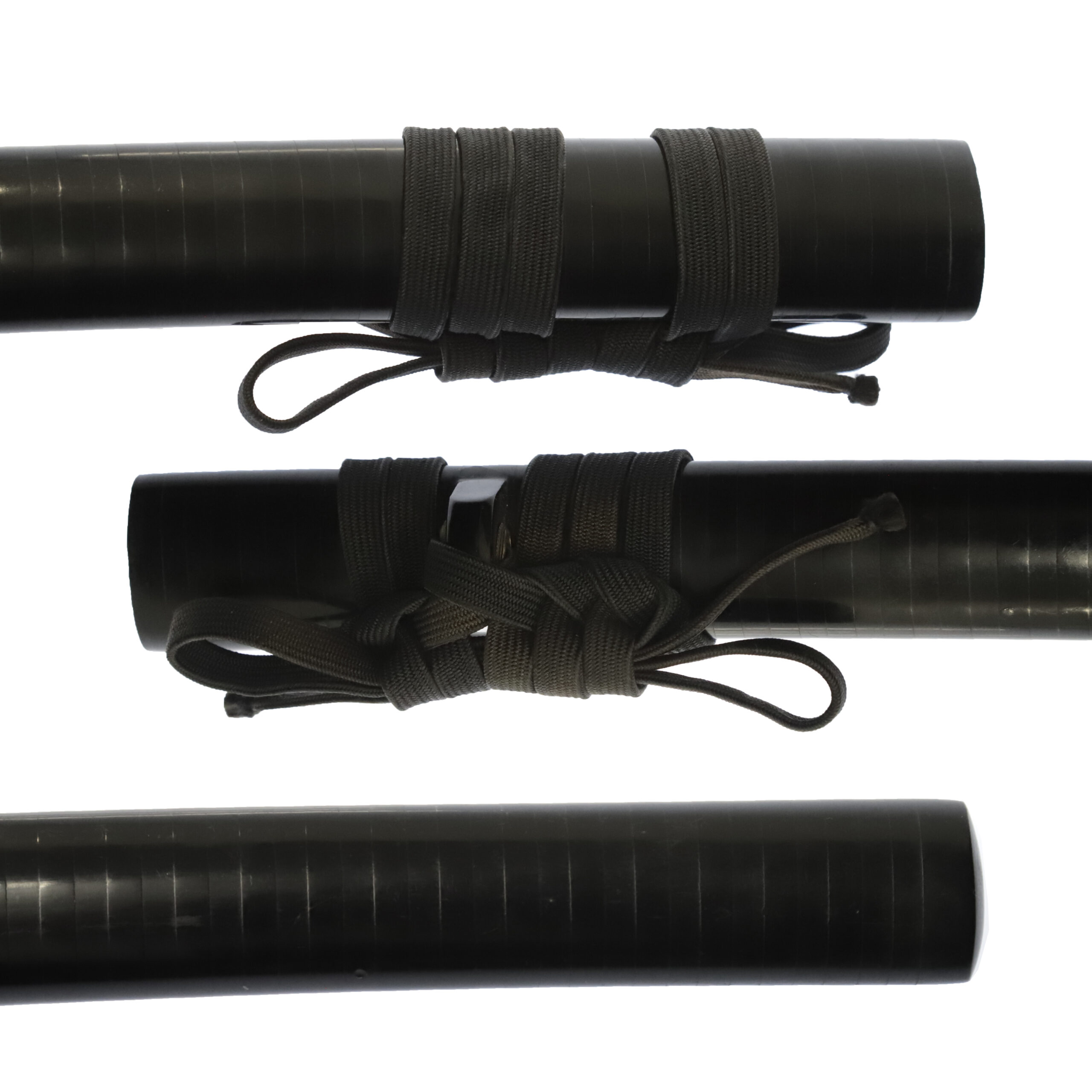
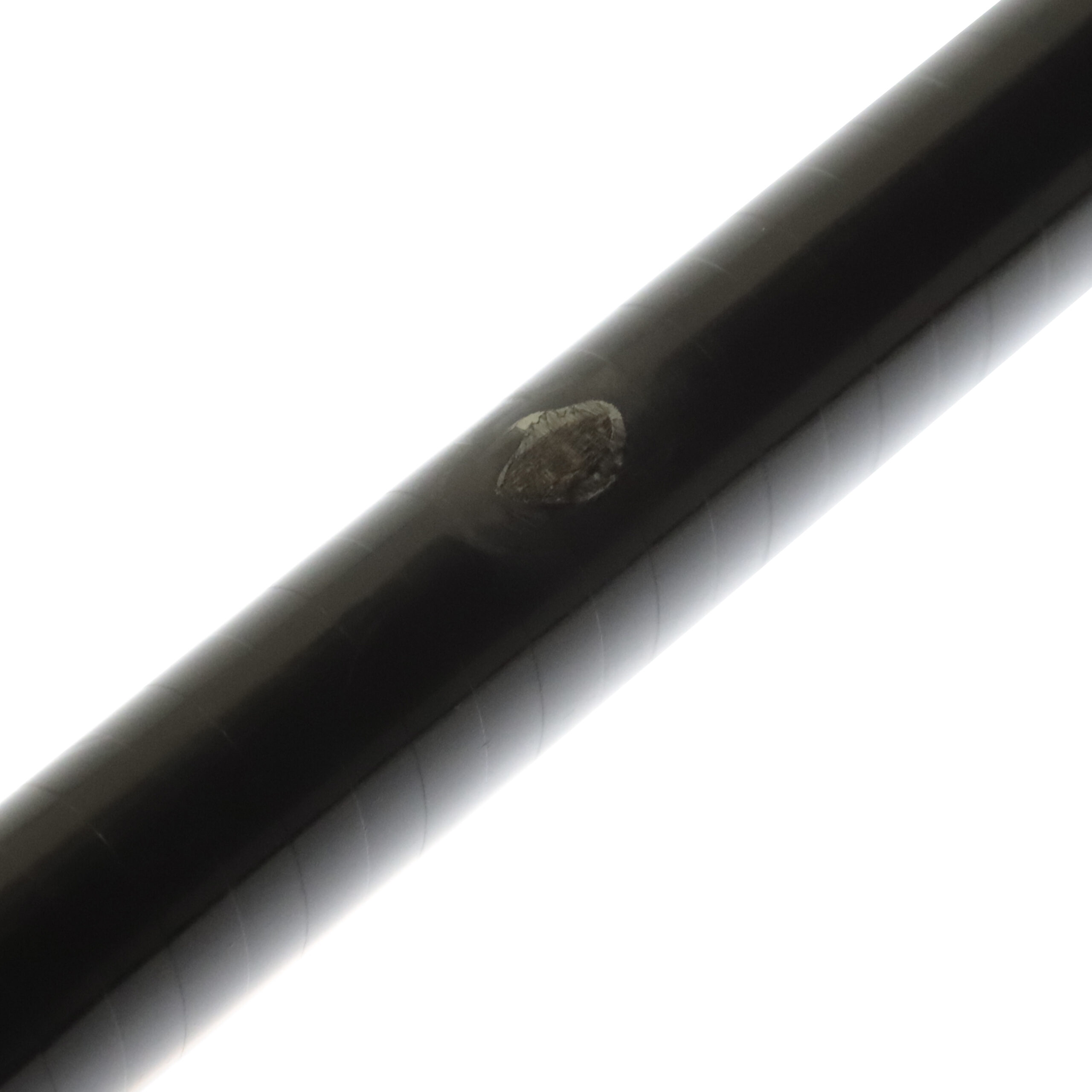
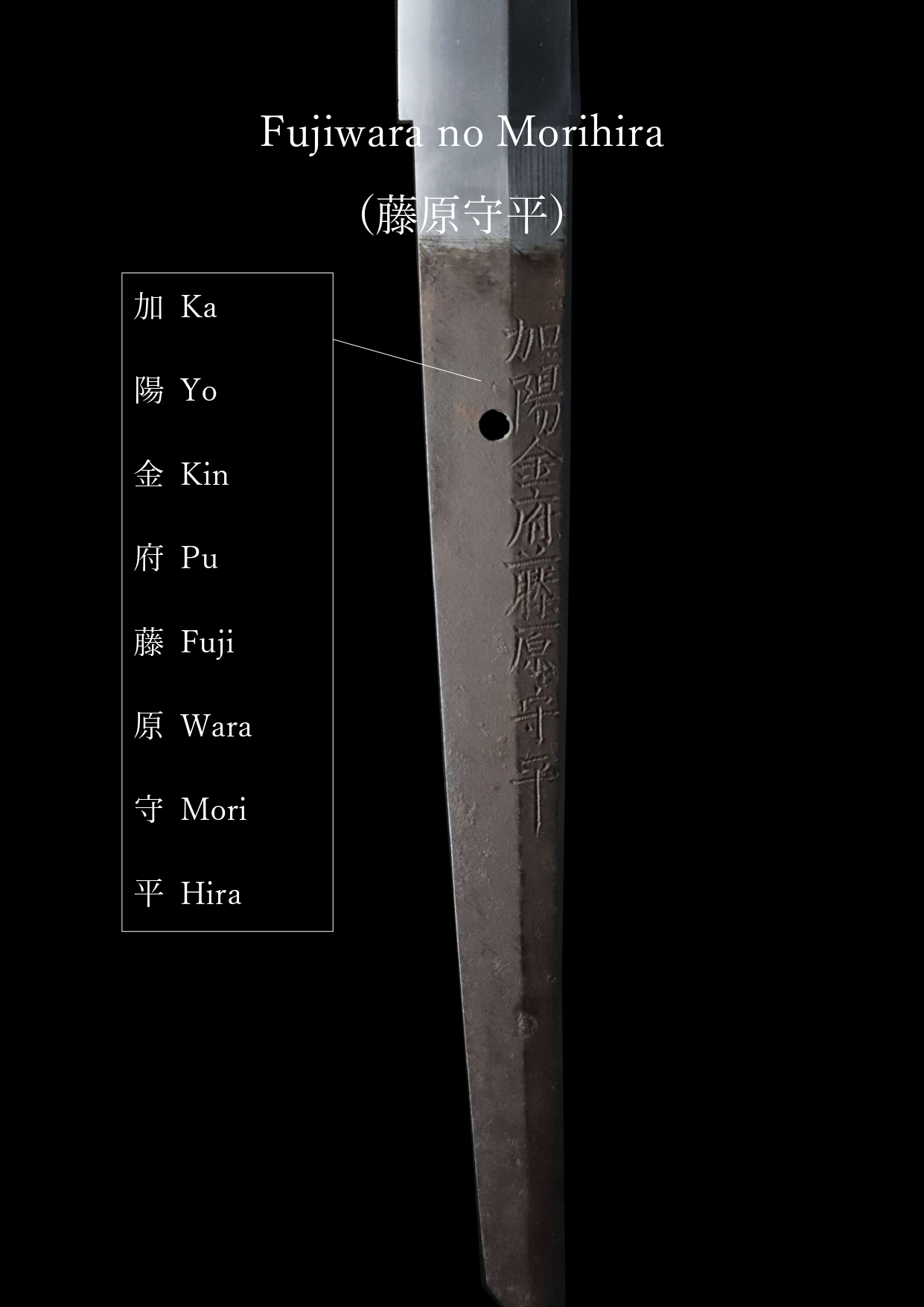
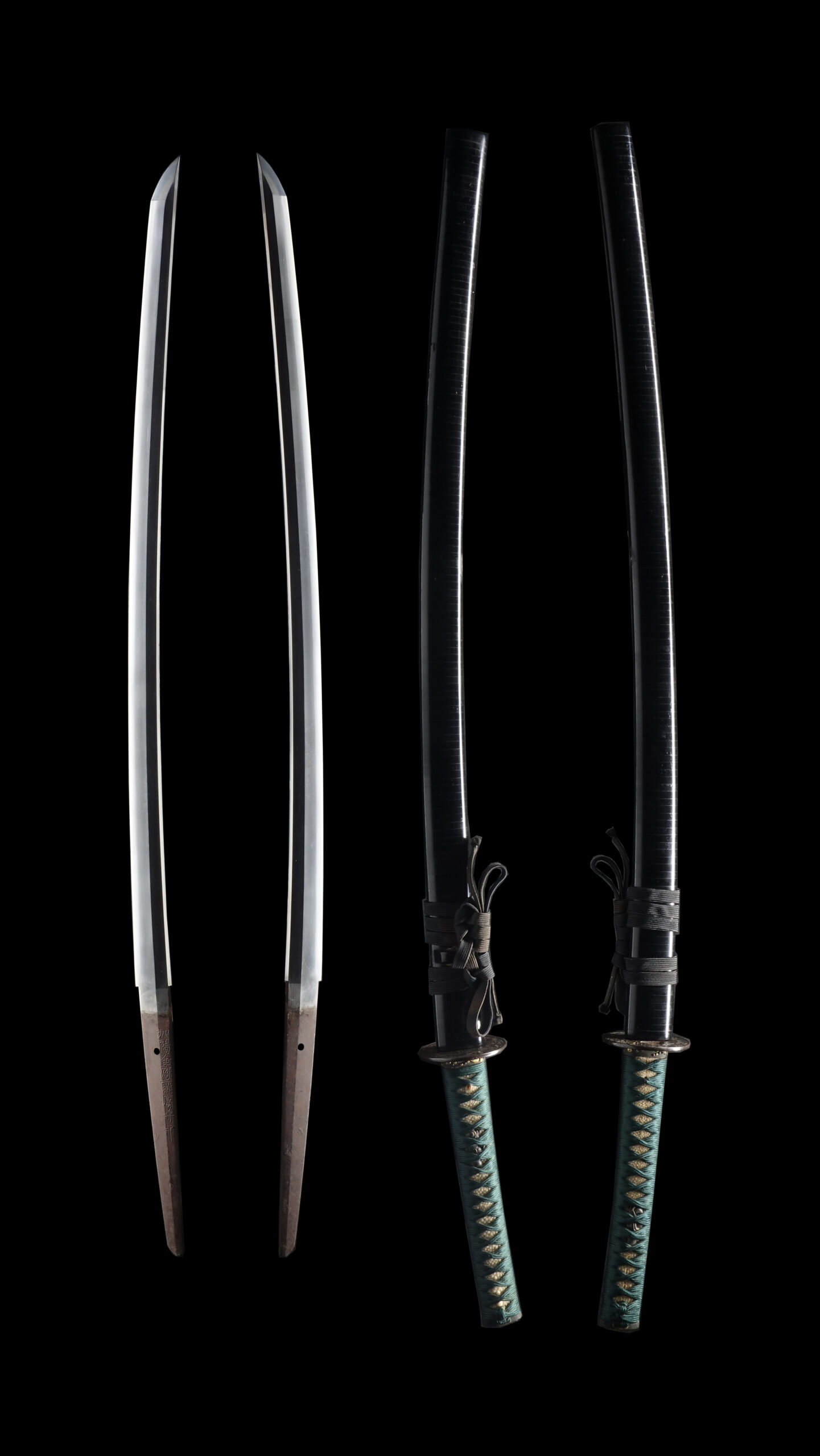
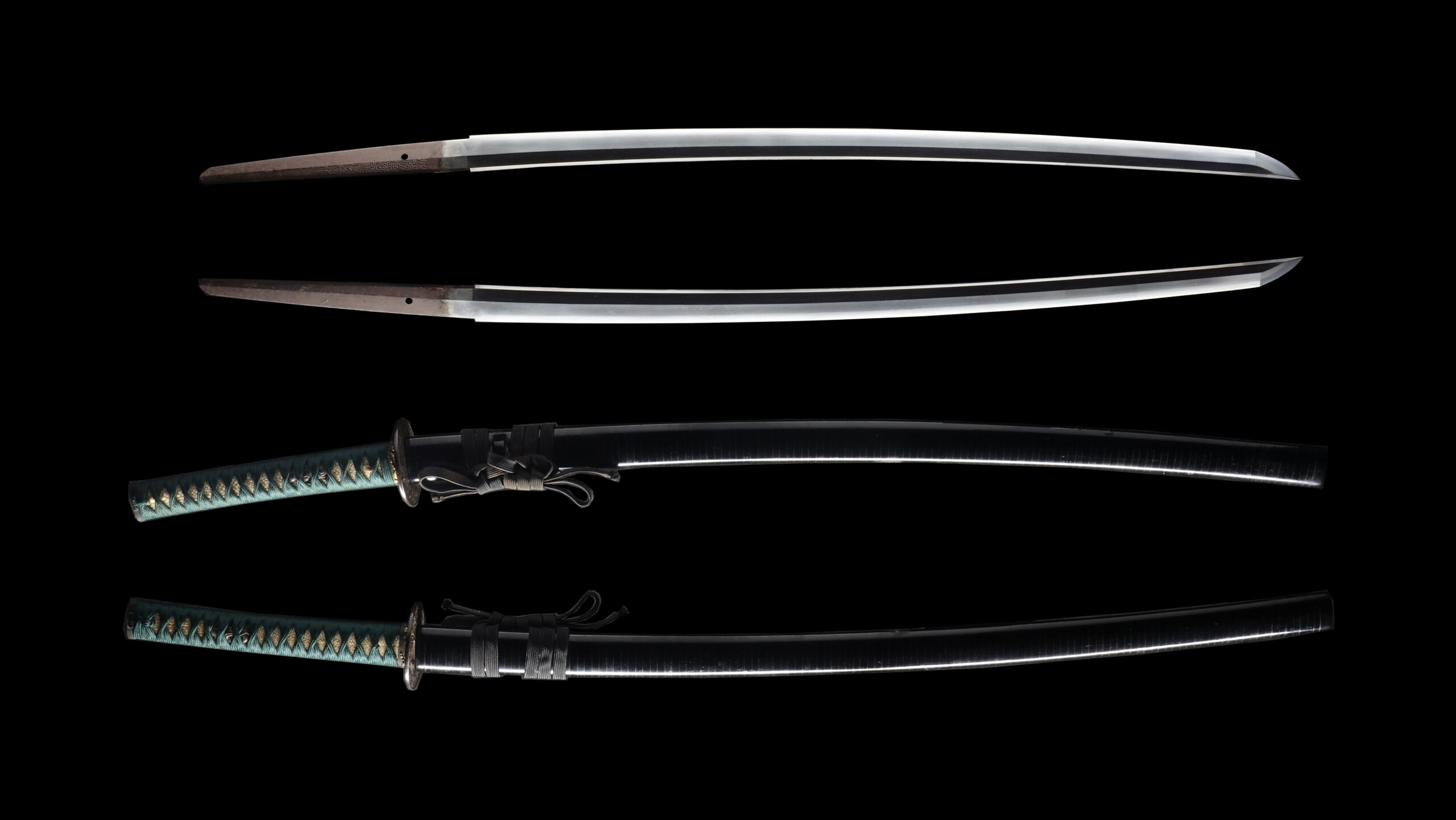
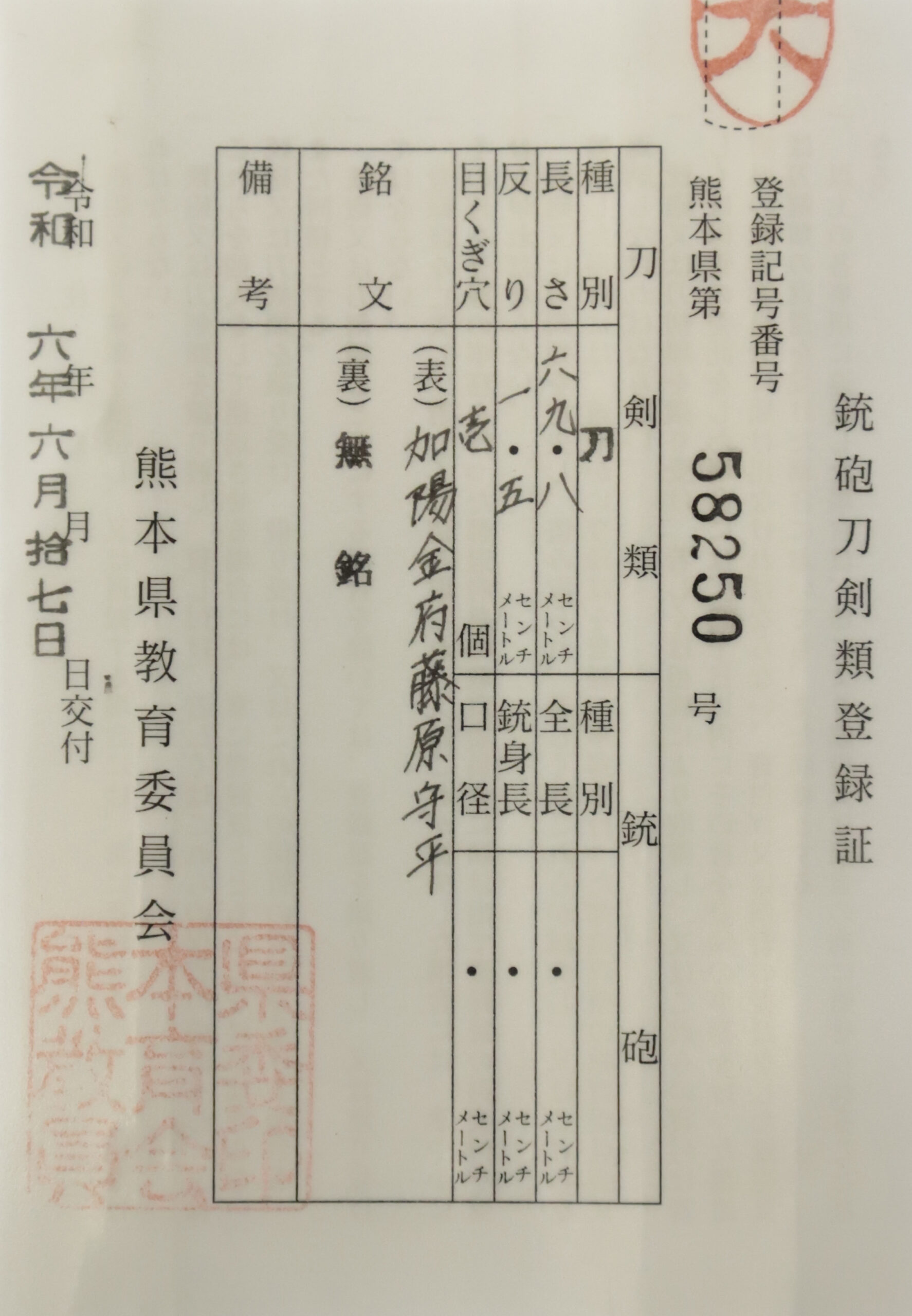
Antique Japanese Sword Katana Signed by Fujiwara no Morihira with Tokubetsu Hozon Certificate 【Description】 This blade was signed by Kayo Kinpu Fujiwara no Morihira (加陽金府藤原守平) and bears the inscription “Gojūkyū (五十九)” written in lacquer on the tang. The smith’s name suggests that he was from the Kayo (加陽) region—an old provincial name corresponding to present-day Ishikawa Prefecture—and that he belonged to the Fujiwara lineage. The numeral “59” likely indicates either the swordsmith’s age at the time of forging. Based on the use of the character “Hira (平)” in his signature, it is presumed that this swordsmith was likely a member of the Kanewaka school (兼若派), one of the most renowned smithing lineages in the Kaga domain during the early to mid-Edo period. The Kanewaka smiths were celebrated for their exceptional skill and fine workmanship, and it is said that they forged swords for the Maeda clan ( 前田氏 , Maeda-shi ), the feudal lords of the Kaga domain. For generations, all swordsmiths who bore the Kanewaka name worked under the auspices of the Maeda family, earning great prestige for their artistry and technical mastery. Maeda Clan Maeda clan was originally a retainer of Oda family, who ruled Owari province. (today’s Nagoya area in Aichi prefecture) The first head of the Maeda clan was Toshie Maeda. He climbed the social ladder of Samurai society, and he became the feudal lord of Kaga Province(today’s Ishikawa prefecture). It is said that he had a vast rice fief that fed 100 million grown-up adults, which is called Hyakuman Goku. The Maeda clan was one of the most powerful lines in Samurai history. Toshie Maeda had a close tie with Oda Nobunaga and Hideyoshi Toyotomi. It is said that the first-gen Kanewaka forged blades for Maeda Toshiie when Kanewaka was still in Mino province (Today’s Gifu prefecture). It is appraised as a Tokubetsu Hozon Token (特別保存刀剣) issued by NBTHK (Nihon Bijutsu Touken Hozon Kyokai:日本美術刀剣保存協会). This authentication paper was only given to authentic Japanese swords, especially well preserved and high quality with artistic value. *Please keep in mind that there are a couple of Kitae Kizu on the blade. If you like to know the detailed condition, please feel free to contact us. 【Blade】 Cutting Edge Length(Nagasa) : 69.8 cm (27.4 inches) Curvature(Sori) : 1.5 cm (0.59 inches) Hamon : The crystalline structure which forms along the cutting edge of a blade as a result of the hardening process Jimon(Jihada) : visible steel surface pattern created by folding and hammering during forging process Kissaki : Kissaki is the tip of the Japanese sword. Nakago : Nakago is the tang of the Japanese sword. Japanese swordsmiths left the black rust on the tang because it prevents red rust while the tang is in its handle. And the discoloration of the tang was created over time, and it is a great indicator for a Japanese sword specialist to estimate when the sword was forged. Koshirae : Koshirae is the mounting of the Japanese sword. There are several parts that consist of Koshirae such as Saya (Scabbard), Tsuka (Handle), Tsuba (Handguard). Fuchi-Kashira : A pair of matching sword fittings that cover the upper and bottom parts of its sword hilt. We believe the theme of this Fuchi Kashira is Seashells (貝尽くし, Kai Dukushi). This pattern is a combination of different types of seashells. It is often designed with a seaside scene or wave pattern. You would feel the refreshing atmosphere of summer. Bivalves, especially clam, its shells cannot be combined with any other clam’s frame; therefore, its pattern represents happy marriage. Seashell is called Kai (貝) in Japanese. Because of its pronunciation, the seashell has another meaning. There is a word Yarigai (やりがい, worthwhile). As a part of this word has the same accent as Kai (貝 is read Gai in some cases), Japanese people found this meaning. Also, since seashells are hard and combine only with their pair, people thought it represented a robust defense. Due to these meanings that in
在銘 · Kanewaka · 新々刀 · 長さ 69.8cm · 反り 1.5cm
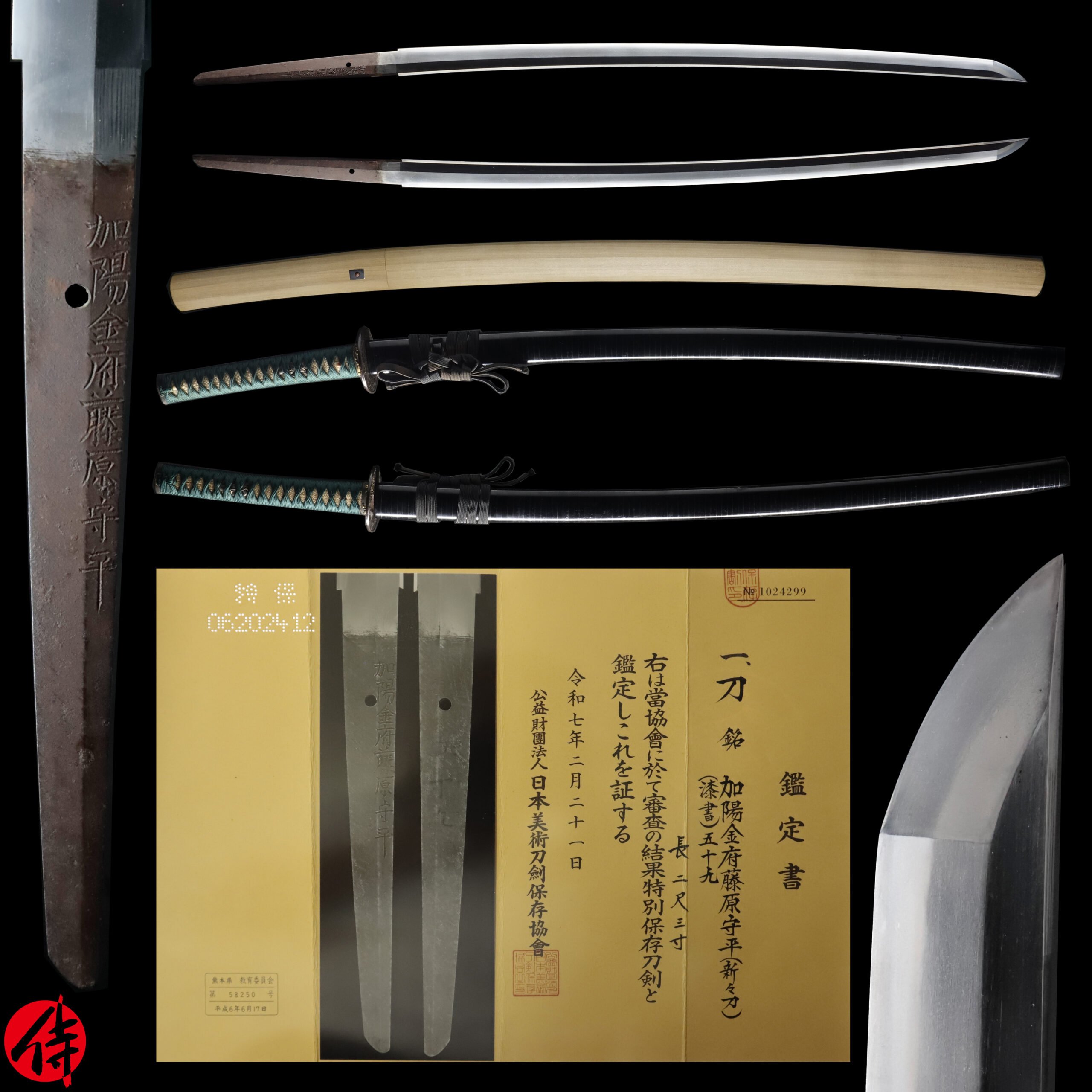
二世紀半の泰平のあいだ、刀は武器である以上に武士の身分の標章であった。江戸の実証と大坂の華やぎのように都市ごとの作風が育ち、時代の末には需要も細っていく。
保存刀剣のうち、出来が一層優れ、保存状態も良好と認められたものです。再刃や、室町・江戸期の多くの無銘作は対象外となり、保存刀剣より高い基準が課されます。
日本美術刀剣保存協会(NBTHK)は、1948年に設立され、文化庁の監督を受ける公益財団法人で、東京・刀剣博物館に本部を置きます。専門の審査員が出品作を直接審査し、美術的・歴史的価値に応じた鑑定書を発行します。NBTHKの鑑定書は、日本刀および刀装具の真正性を示す最も広く認知された基準です。
NBTHK公式サイトReturns/exchanges limited to defects caused by shipping (except willful misconduct or gross negligence by the company); customers must contact within 72 hours of receiving the product.
Antique Japanese Sword Katana Signed by Fujiwara no Morihira with Tokubetsu Hozon Certificate 【Description】 This blade was signed by Kayo Kinpu Fujiwara no Morihira (加陽金府藤原守平) and bears the inscription “Gojūkyū (五十九)” written in lacquer on the tang. The smith’s name suggests that he was from the Kayo (加陽) region—an old provincial name corresponding to present-day Ishikawa Prefecture—and that he belonged to the Fujiwara lineage. The numeral “59” likely indicates either the swordsmith’s age at the time of forging. Based on the use of the character “Hira (平)” in his signature, it is presumed that this swordsmith was likely a member of the Kanewaka school (兼若派), one of the most renowned smithing lineages in the Kaga domain during the early to mid-Edo period. The Kanewaka smiths were celebrated for their exceptional skill and fine workmanship, and it is said that they forged swords for the Maeda clan ( 前田氏 , Maeda-shi ), the feudal lords of the Kaga domain. For generations, all swordsmiths who bore the Kanewaka name worked under the auspices of the Maeda family, earning great prestige for their artistry and technical mastery. Maeda Clan Maeda clan was originally a retainer of Oda family, who ruled Owari province. (today’s Nagoya area in Aichi prefecture) The first head of the Maeda clan was Toshie Maeda. He climbed the social ladder of Samurai society, and he became the feudal lord of Kaga Province(today’s Ishikawa prefecture). It is said that he had a vast rice fief that fed 100 million grown-up adults, which is called Hyakuman Goku. The Maeda clan was one of the most powerful lines in Samurai history. Toshie Maeda had a close tie with Oda Nobunaga and Hideyoshi Toyotomi. It is said that the first-gen Kanewaka forged blades for Maeda Toshiie when Kanewaka was still in Mino province (Today’s Gifu prefecture). It is appraised as a Tokubetsu Hozon Token (特別保存刀剣) issued by NBTHK (Nihon Bijutsu Touken Hozon Kyokai:日本美術刀剣保存協会). This authentication paper was only given to authentic Japanese swords, especially well preserved and high quality with artistic value. *Please keep in mind that there are a couple of Kitae Kizu on the blade. If you like to know the detailed condition, please feel free to contact us. 【Blade】 Cutting Edge Length(Nagasa) : 69.8 cm (27.4 inches) Curvature(Sori) : 1.5 cm (0.59 inches) Hamon : The crystalline structure which forms along the cutting edge of a blade as a result of the hardening process Jimon(Jihada) : visible steel surface pattern created by folding and hammering during forging process Kissaki : Kissaki is the tip of the Japanese sword. Nakago : Nakago is the tang of the Japanese sword. Japanese swordsmiths left the black rust on the tang because it prevents red rust while the tang is in its handle. And the discoloration of the tang was created over time, and it is a great indicator for a Japanese sword specialist to estimate when the sword was forged. Koshirae : Koshirae is the mounting of the Japanese sword. There are several parts that consist of Koshirae such as Saya (Scabbard), Tsuka (Handle), Tsuba (Handguard). Fuchi-Kashira : A pair of matching sword fittings that cover the upper and bottom parts of its sword hilt. We believe the theme of this Fuchi Kashira is Seashells (貝尽くし, Kai Dukushi). This pattern is a combination of different types of seashells. It is often designed with a seaside scene or wave pattern. You would feel the refreshing atmosphere of summer. Bivalves, especially clam, its shells cannot be combined with any other clam’s frame; therefore, its pattern represents happy marriage. Seashell is called Kai (貝) in Japanese. Because of its pronunciation, the seashell has another meaning. There is a word Yarigai (やりがい, worthwhile). As a part of this word has the same accent as Kai (貝 is read Gai in some cases), Japanese people found this meaning. Also, since seashells are hard and combine only with their pair, people thought it represented a robust defense. Due to these meanings that in
在銘 · Kanewaka · 新々刀 · 長さ 69.8cm · 反り 1.5cm
二世紀半の泰平のあいだ、刀は武器である以上に武士の身分の標章であった。江戸の実証と大坂の華やぎのように都市ごとの作風が育ち、時代の末には需要も細っていく。
保存刀剣のうち、出来が一層優れ、保存状態も良好と認められたものです。再刃や、室町・江戸期の多くの無銘作は対象外となり、保存刀剣より高い基準が課されます。
日本美術刀剣保存協会(NBTHK)は、1948年に設立され、文化庁の監督を受ける公益財団法人で、東京・刀剣博物館に本部を置きます。専門の審査員が出品作を直接審査し、美術的・歴史的価値に応じた鑑定書を発行します。NBTHKの鑑定書は、日本刀および刀装具の真正性を示す最も広く認知された基準です。
NBTHK公式サイトReturns/exchanges limited to defects caused by shipping (except willful misconduct or gross negligence by the company); customers must contact within 72 hours of receiving the product.
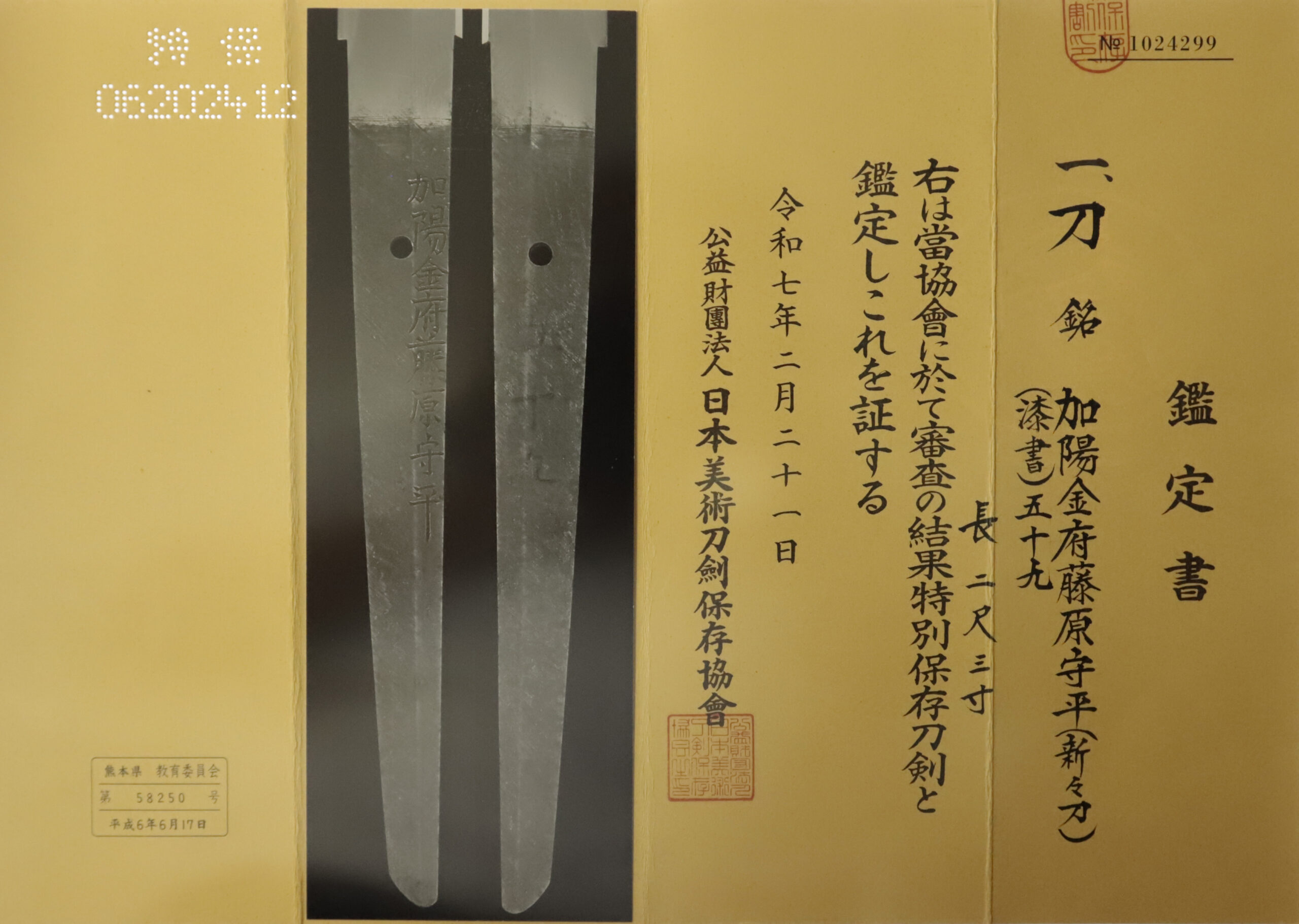
Certificate reading — 銘 加陽金府藤原守平(漆書)五十九
Certificate reading — 銘 加陽金府藤原守平(漆書)五十九

