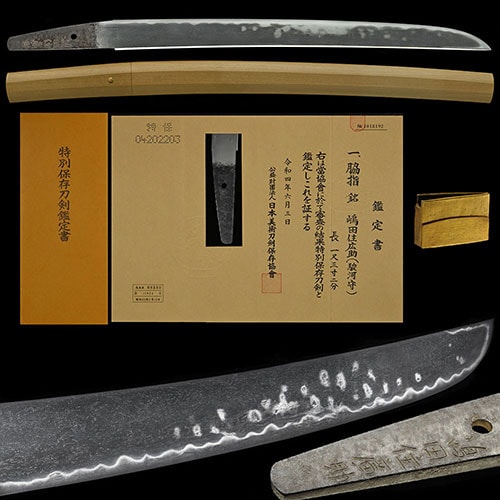
Yoshisuke (義助) was the principal mainstream smith of the Shimada school of Suruga Province (Sunshū). According to meikan sources, the first generation is placed in the Kyōshō era, with successive generations continuing the same name without interruption from the Muromachi period through the shinshintō era. However, it is difficult to distinguish these generations with precision, and among extant works, the earliest dated examples bear inscriptions from the Eishō era (1504-1521). The Shimada lineage in general is noted for their affinity with the workmanship of Mino, Ise, and Sue-Sōshū traditions, and Yoshisuke stands as the school's most prominent representative.
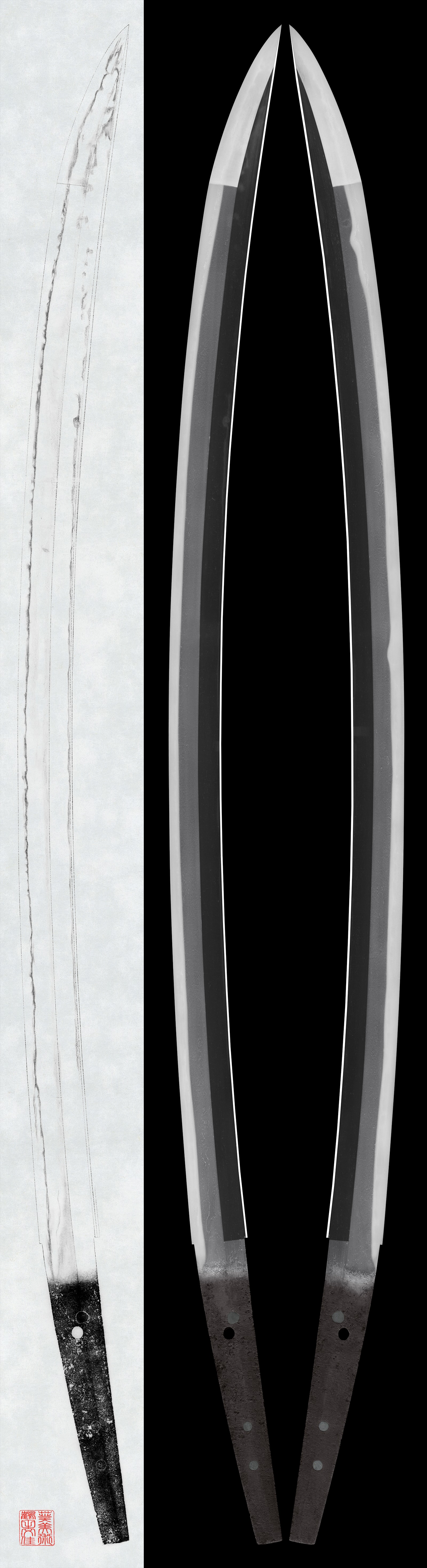
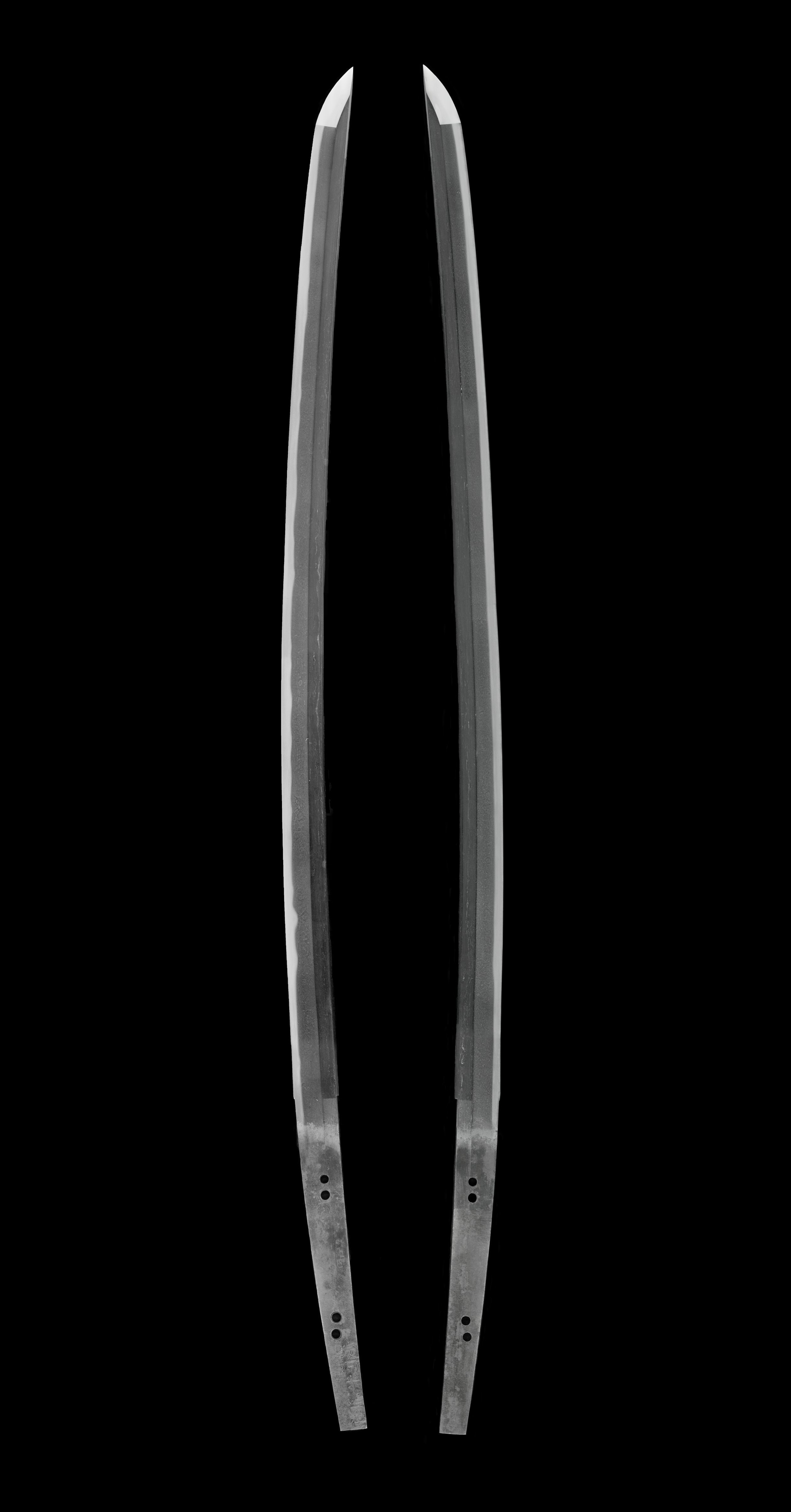
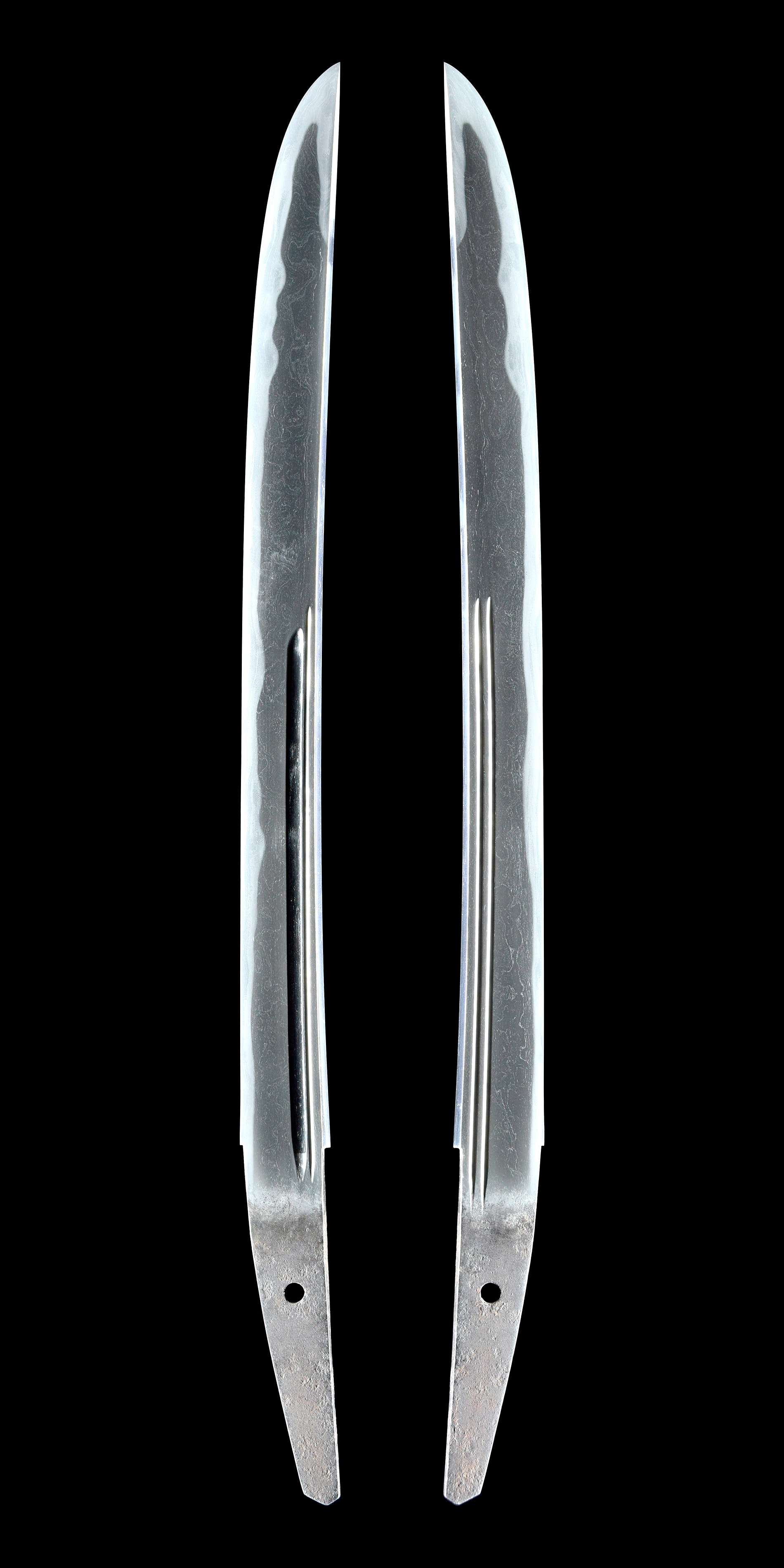
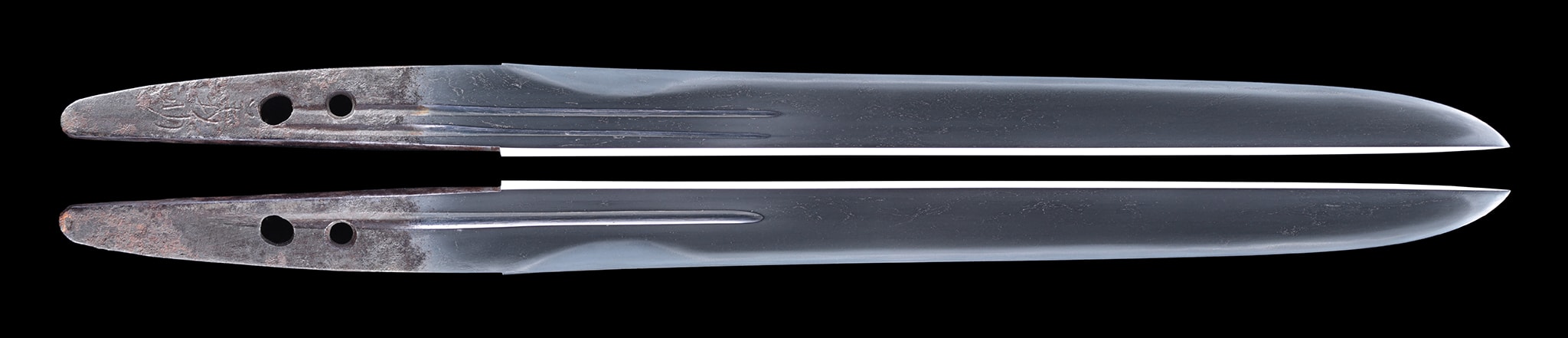
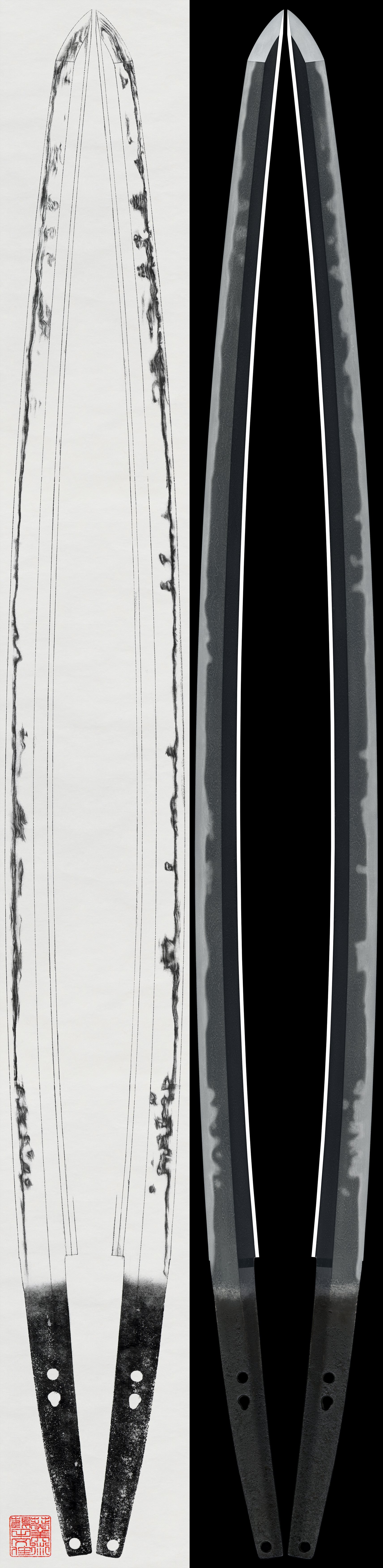
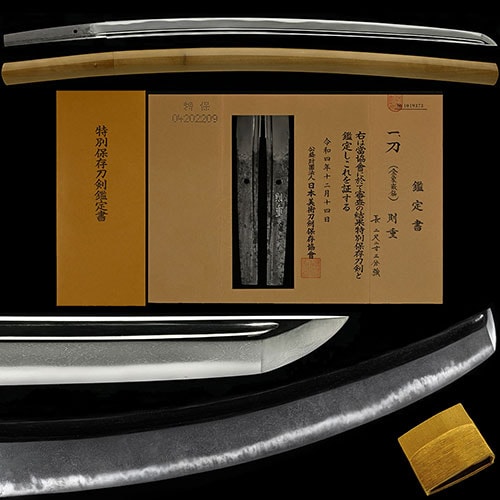
The forging across designated works typically presents itame-hada mixed with mokume, often with the grain standing out (hada-dachi) and a tendency toward masame near the edge, accompanied by ji-nie and a somewhat whitish tonality. The hamon ranges from chū-suguha mixed with ko-gunome to gunome-midare incorporating togariba and ko-notare, frequently with thick nie, sunagashi, and kinsuji. The habuchi characteristically shows hotsure, and the bōshi often exhibits hakikake. This repertoire demonstrates considerable versatility, from the archaic quality (kochō) observed in early-period katana to the forceful intensity found in later tantō and wakizashi. The school also produced comparatively many yari, and Yoshisuke's spearwork -- including ōmi-yari of substantial proportions -- exhibits an unbroken, well-composed style.
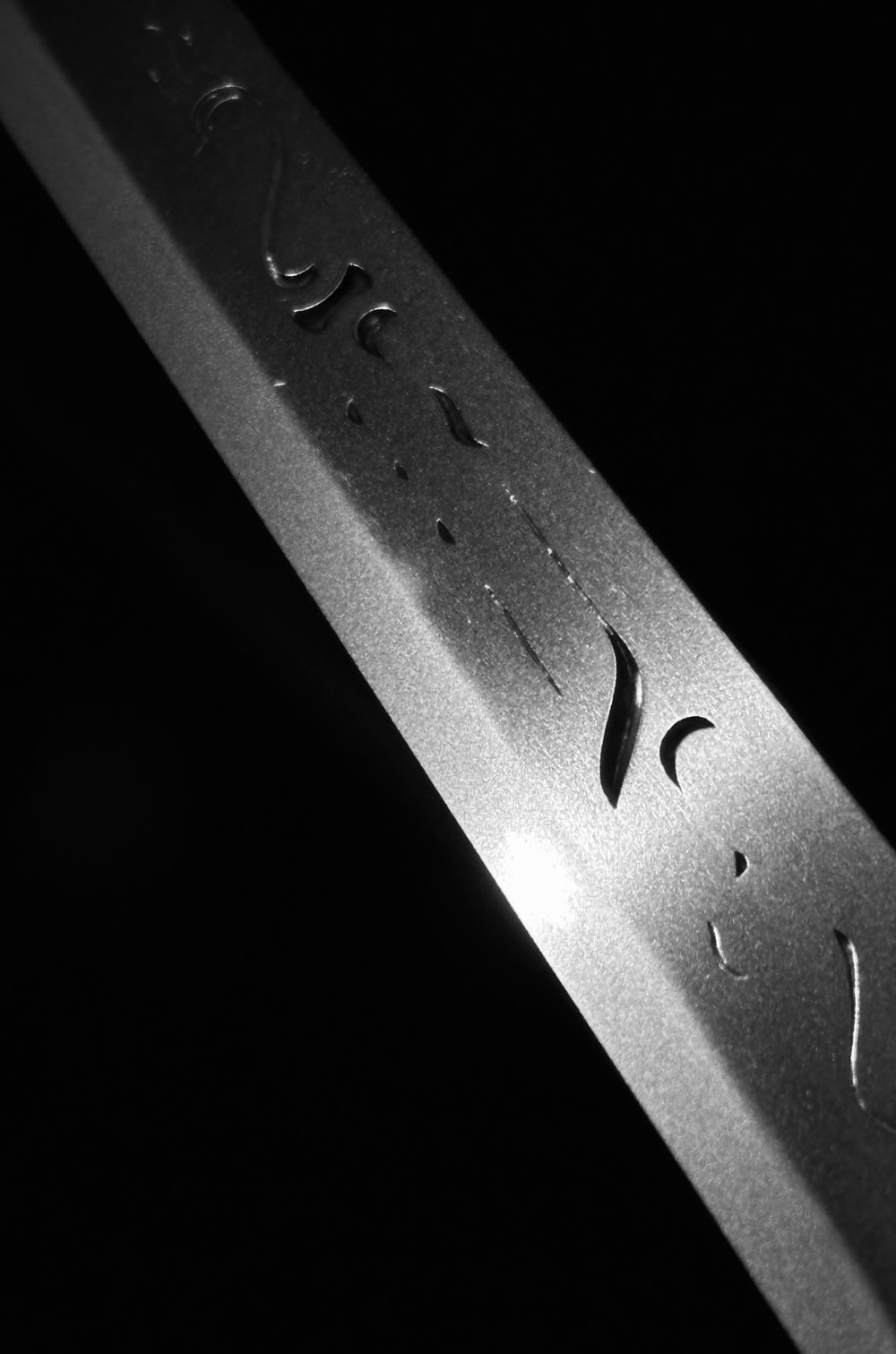
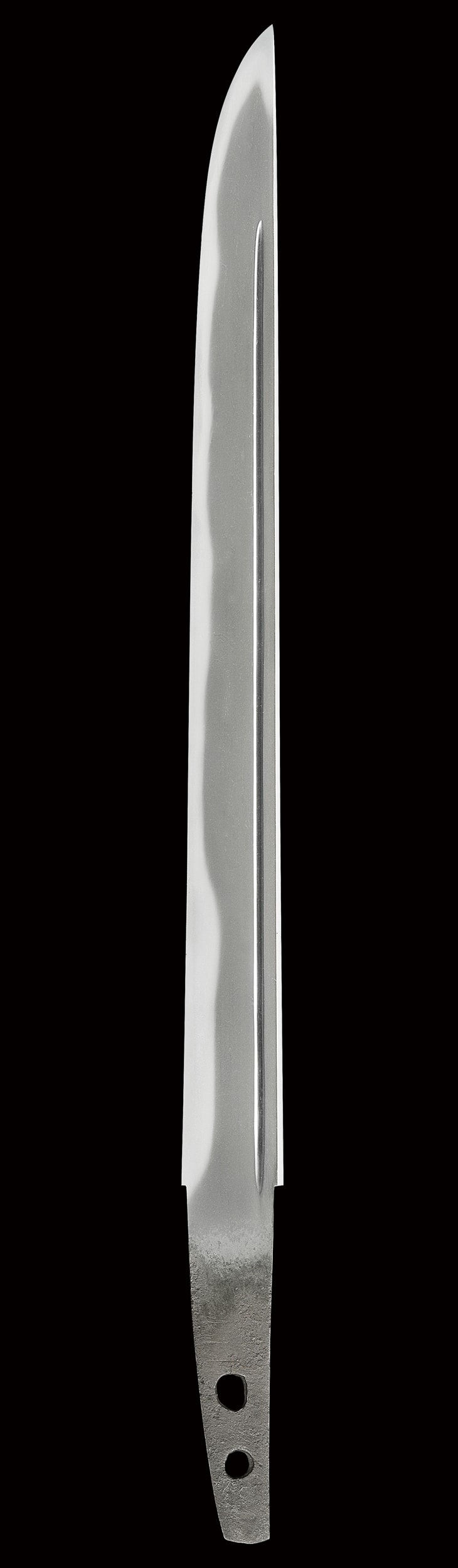
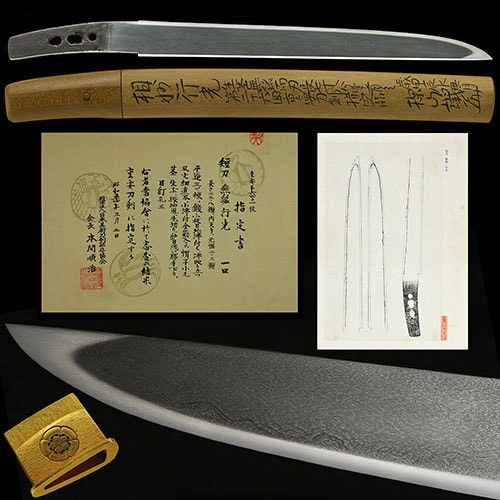
Yoshisuke's tantō and wakizashi are frequently encountered in hira-zukuri with mitsu-mune, often displaying thick kasane and the distinctive withered fukura (fukura kare) characteristic of the school. Several designated pieces bear skillfully executed horimono, including relief carvings (ukibori) of Fudo Myōō and openwork (sukashi-bori) -- the latter noted by examiners as an uncommon feature for this smith. The dated Genki 2 (1571) tantō provides valuable documentary material for study of the lineage's later generations.