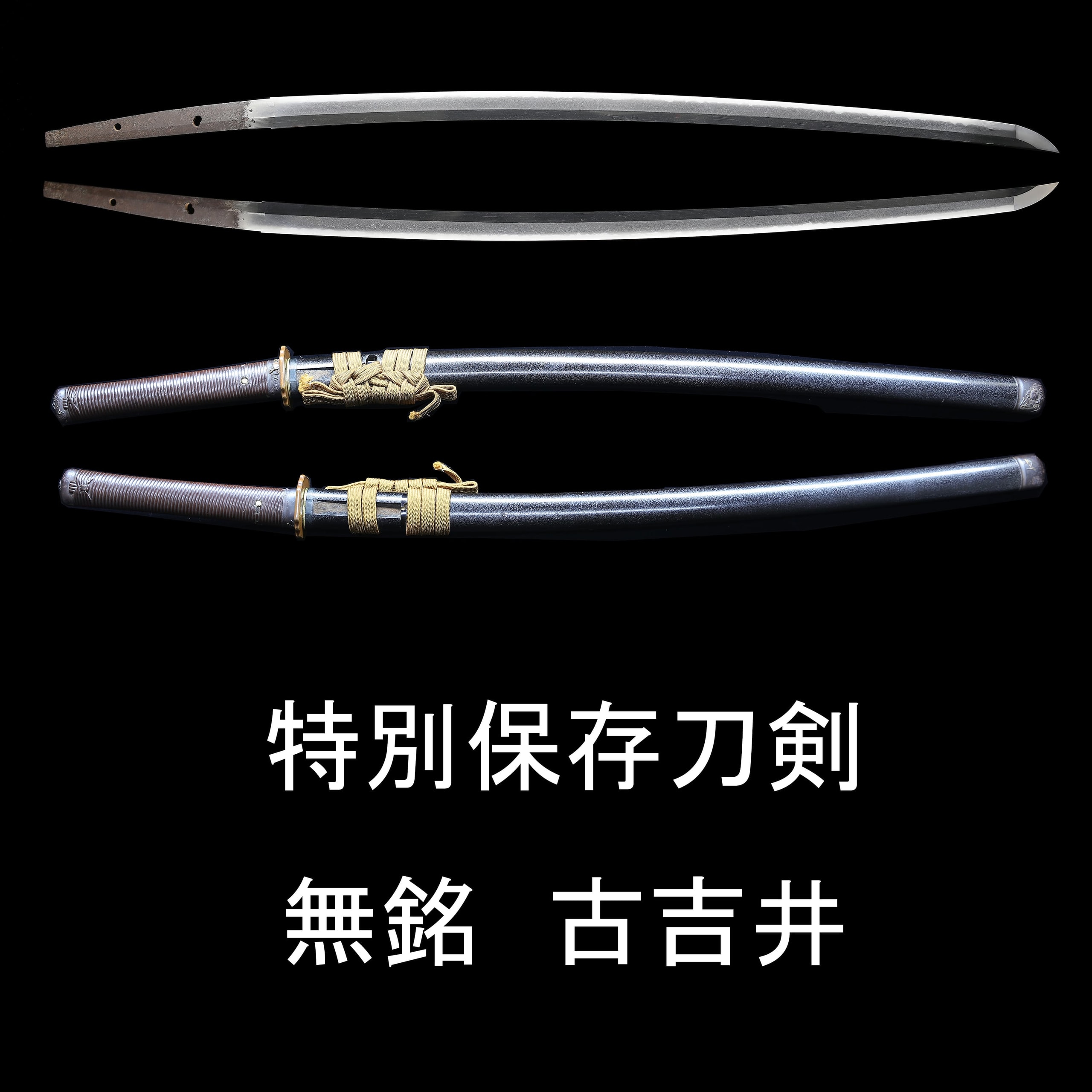
Noritsuna worked within the Yoshii group of Bizen Province, a branch whose origins remain the subject of ongoing study. Sword reference works identify the earliest generation as beginning with dated examples from the Joji era (1362-1368), with subsequent generations active around the Meitoku and Kansho eras; however, as the NBTHK has observed, "there remains room for further study regarding how these generations should be distinguished." Signed and dated tachi by Noritsuna are exceedingly rare, lending his extant nenki-saku particular importance as documentary material.
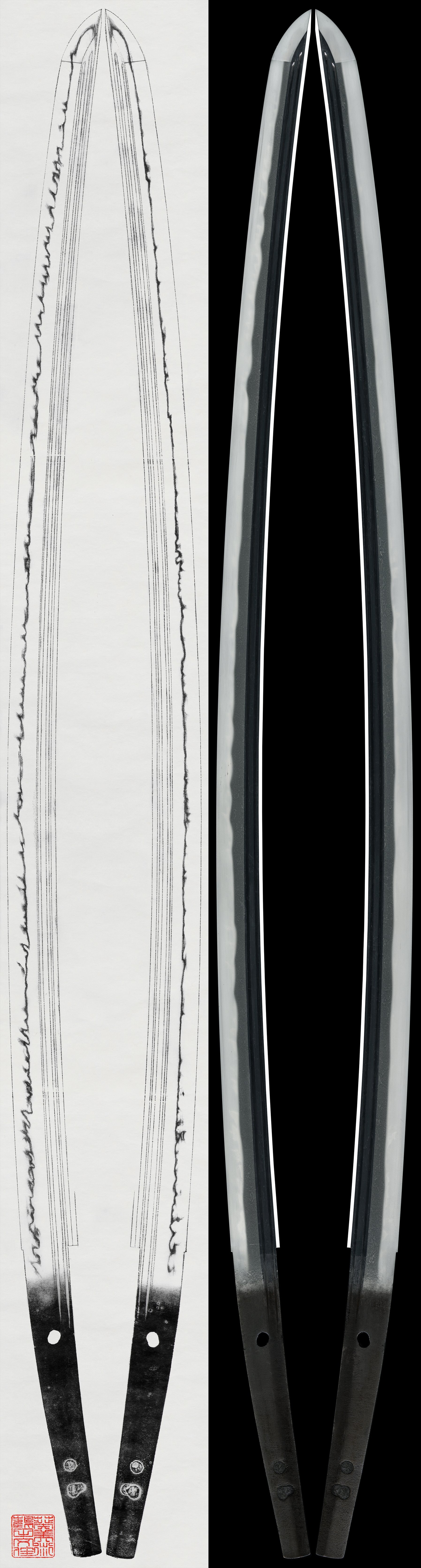
The works attributed to Noritsuna divide broadly into two modes: those presenting a linked ko-gunome temper and those in suguha. In the former style, a small-patterned continuous gunome constitutes, in the NBTHK's assessment, "a hallmark unique to this group." Yet Noritsuna's earlier productions are distinguished from later Yoshii-school work by conspicuously stronger nie and vigorous internal activities -- sunagashi and kinsuji working clearly within the tempered area -- characteristics that mark what the examiners term an "old Yoshii" work free of later-period mannerisms. The kitae is consistently itame-hada mixed with mokume or masame, tending toward hada-dachi, with ji-nie and, on certain pieces, utsuri. In the suguha mode, the nioiguchi is tight with ko-nie and occasional hotsure, yielding a quieter but no less accomplished expression.
Noritsuna's surviving corpus spans both tachi and kodachi forms from the late Nanbokucho into the early Muromachi period, with dated inscriptions from Joji 3 (1364) and the Meitoku era (1391-1392). These pieces preserve clearly legible signatures cut in bold strokes toward the mune side, and as the NBTHK has noted, they "constitute valuable documentary material" for the Yoshii school during a transitional era in Bizen sword-making.