Yamaura Masao was born in Bunka 1 (1804) in Akaiwa village, Komoro, Shinano Province, the eldest son of the rural samurai Yamaura Nobukaze and elder brother of the celebrated Kiyomaro. Together with Kiyomaro, he studied under the Ueda domain smith Kawamura Toshitaka, signing early works as Kanri and Toshimasa before adopting the name Masao, then Shin'o, and finally Toshinaga in his later years. He used art names including "Tennenshi," "Yushaken," and "Yuunsai," and died in Meiji 7 (1874) at seventy-one.
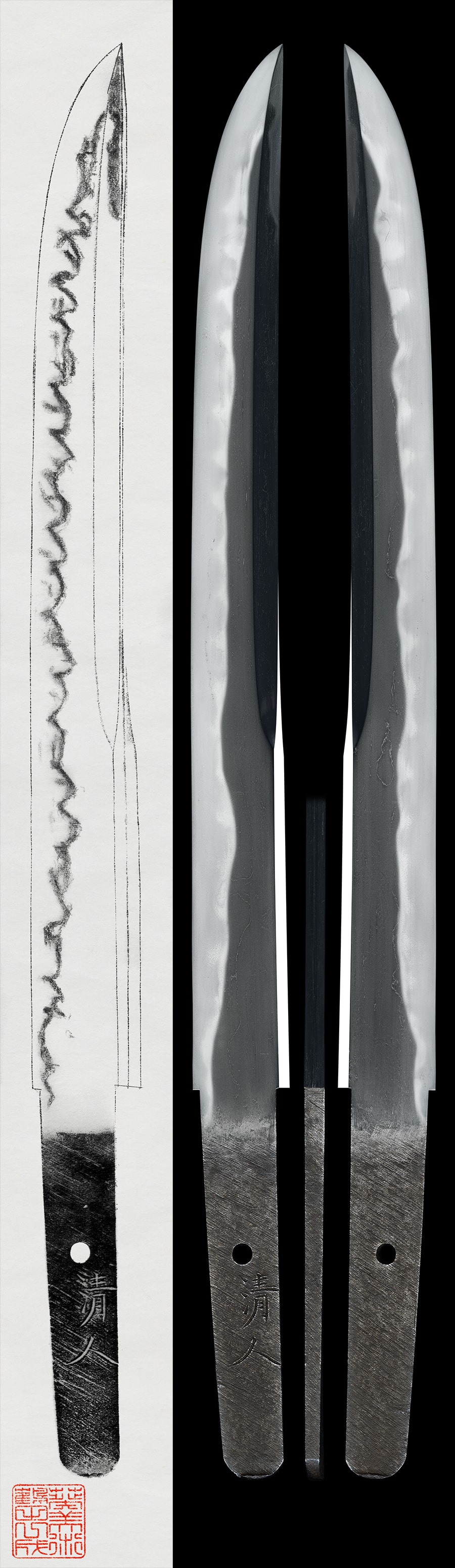
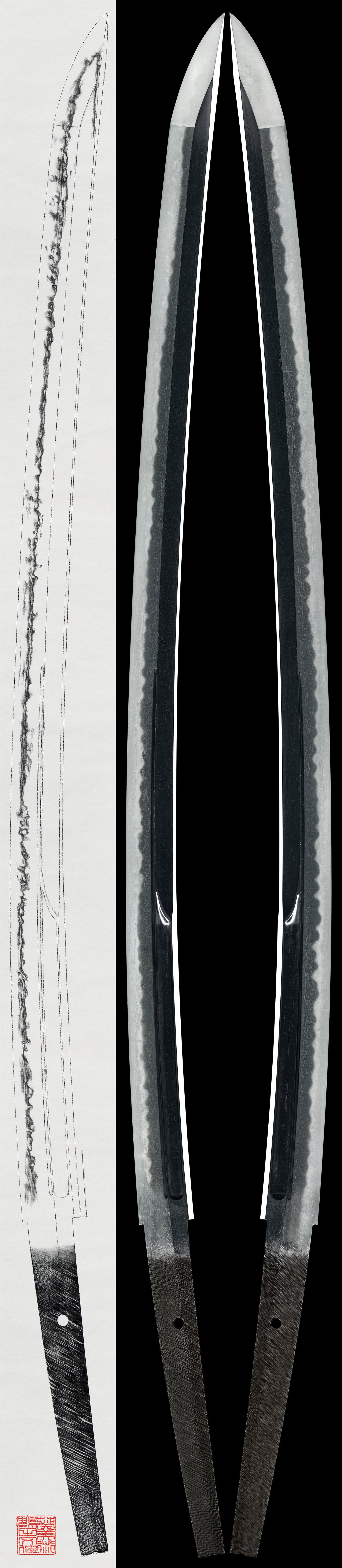
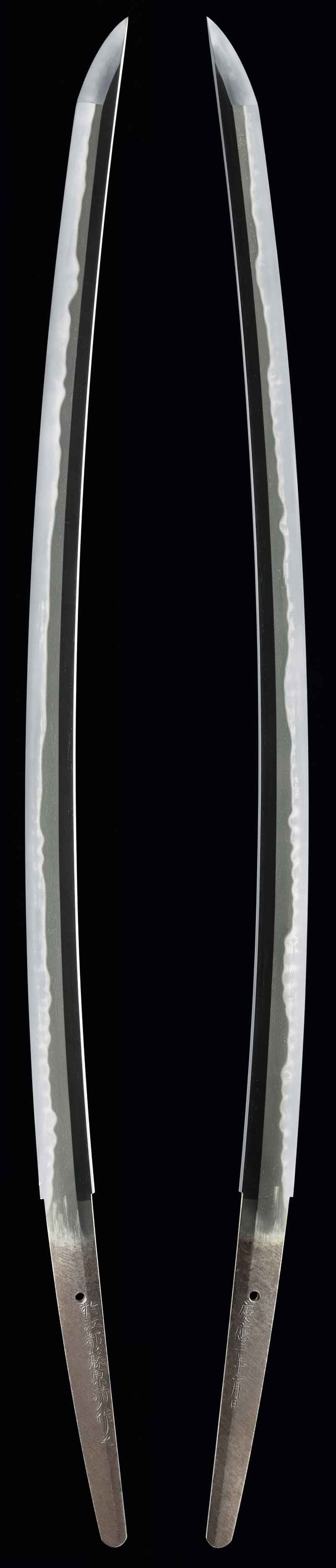
His stylistic trajectory followed that of his brother: beginning with choji in the manner of Toshitaka, then shifting decisively toward Soshu-den. The setsumei consistently note a forging of itame-hada with thick ji-nie and conspicuous chikei, and a tempering of gunome mixed with ko-notare, richly laden with nie, kinsuji, and sunagashi. His finest katana (Juyo, 58th Session) is described as possessing "a powerful forging -- thick with ji-nie and heavily interwoven with chikei" in which "kinsuji and sunagashi activities are richer than usual even for this maker's work." Yet the NBTHK observes that "in comparison with Kiyomaro, his work tends to show fewer chikei in the ji and fewer sunagashi and kinsuji within the hardened area, and the overall quality does not reach Kiyomaro's level."
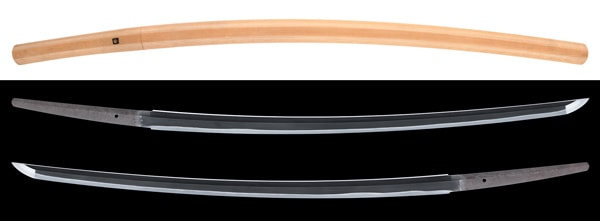
Despite this candid assessment, Masao's designated works demonstrate a smith of real accomplishment, particularly in the Soshu-den mode where nie is vigorously expressed and his shobuzukuri wakizashi display the sharp fukura-kare profile he favored. His output spans both katana of bold construction and wakizashi of refined character, and his commissions from named patrons attest to the regard in which he was held during the shinshinto era.