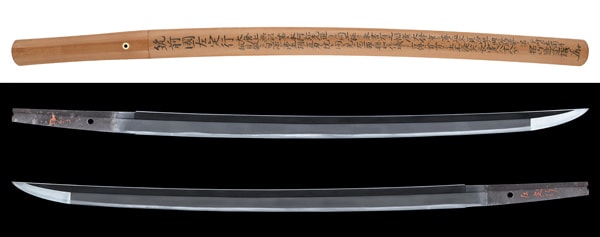
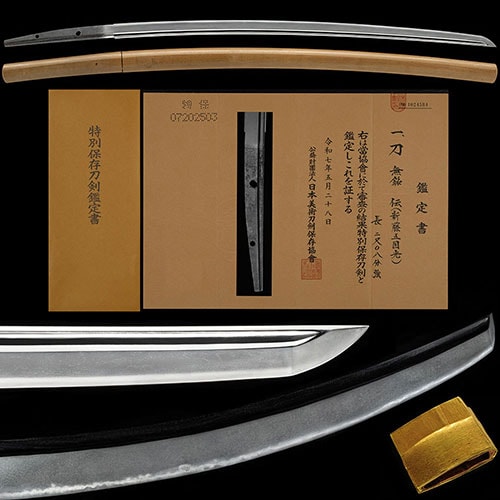
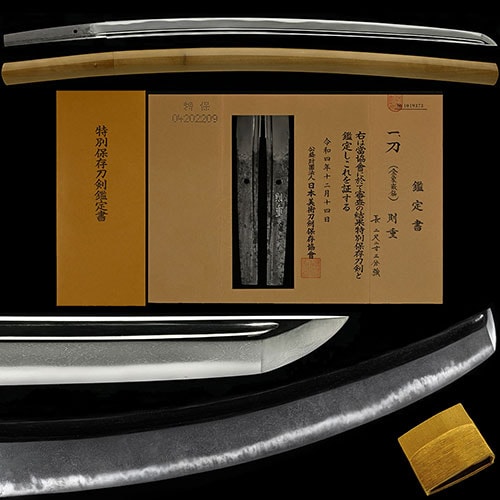
Yukihiro is a smith of the school of the early period, and the one fixed point in a lineage otherwise short of dates: the published sources call him 'the smith whose extant dated work is the earliest and whose workmanship approaches most closely'. His activity is anchored by a dated Kannō 1 (1350), held a National Treasure and said to display workmanship that calls Ō- himself to mind. The school had emerged a generation before, casting off the older classical Kyūshū manner to establish a style in which both and are bright and clear; Yukihiro, transmitted as Ō-'s leading pupil and by one account his son, is the smith the judges set nearest the master's own hand.
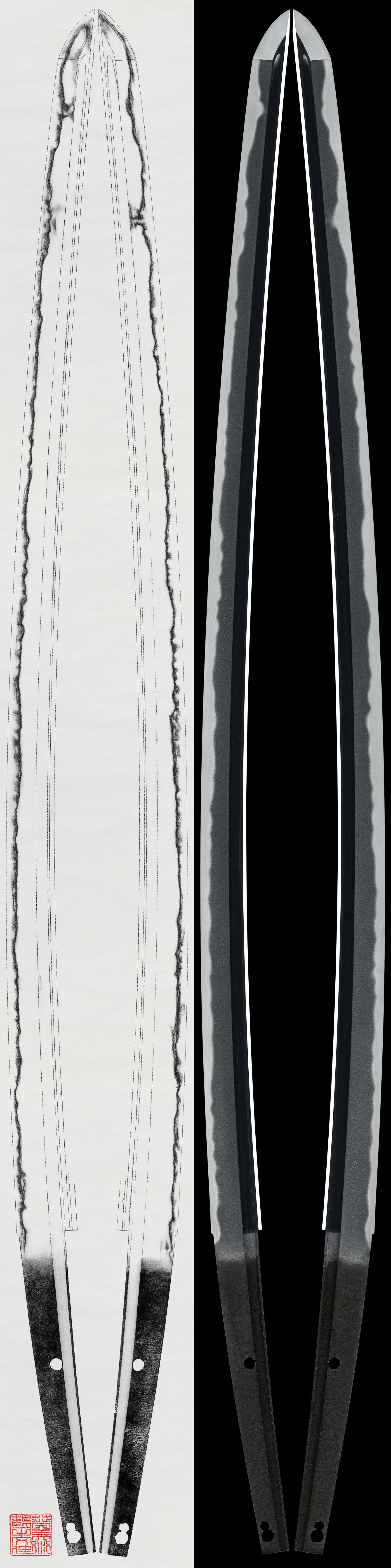
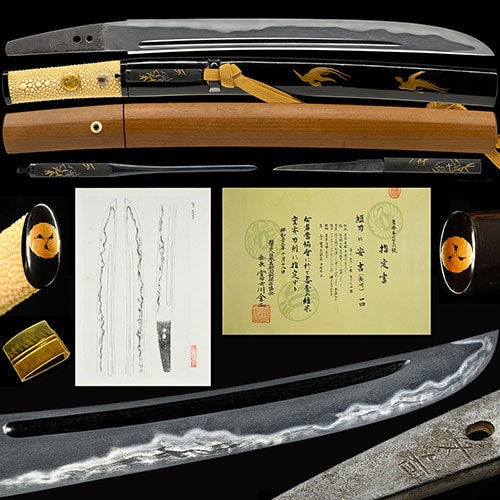
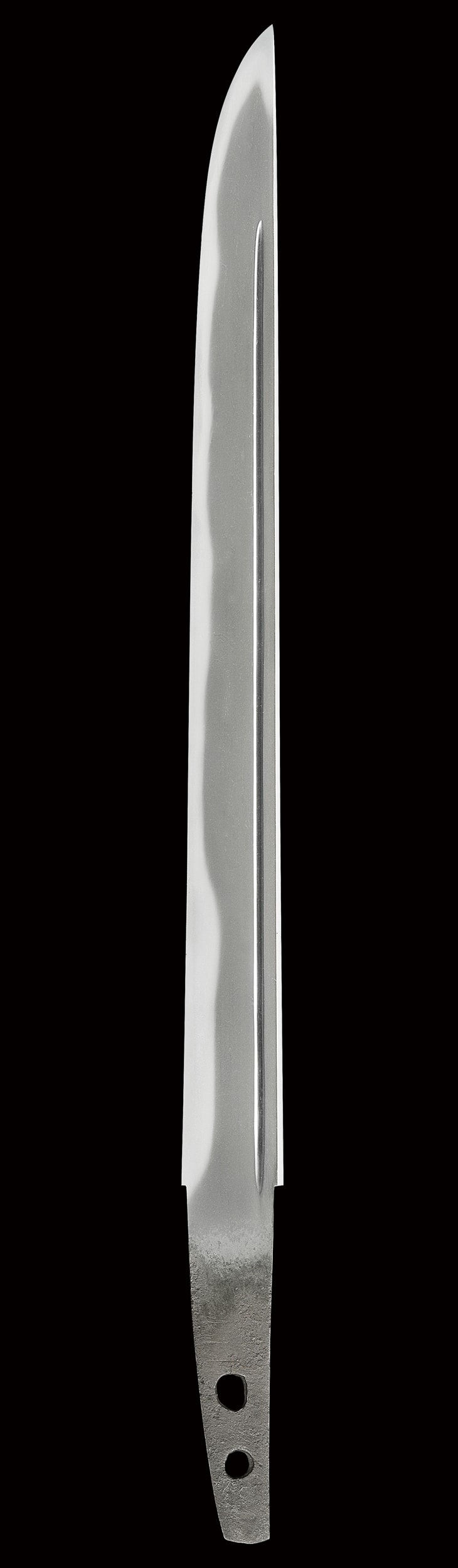
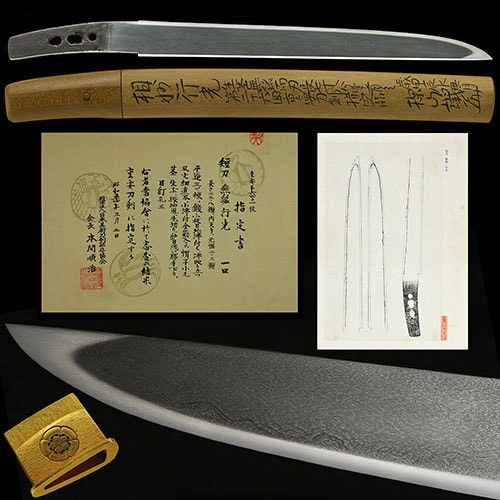
His recognized work is the small , and its temper is the tell. Over the he draws a shallow mixed with and , with and entering, in places and . The is deep and adheres thickly; fine and run well throughout, and the is bright and clear. The gives him away most plainly: it runs into a , thrusts up, ends pointed with , and on the finest pieces the is tempered down long, at times meeting along the back. This is the -derived line of the house, not the clove-flower of , and on Yukihiro it stays comparatively quiet, the activity carried in rather than in towering clusters.
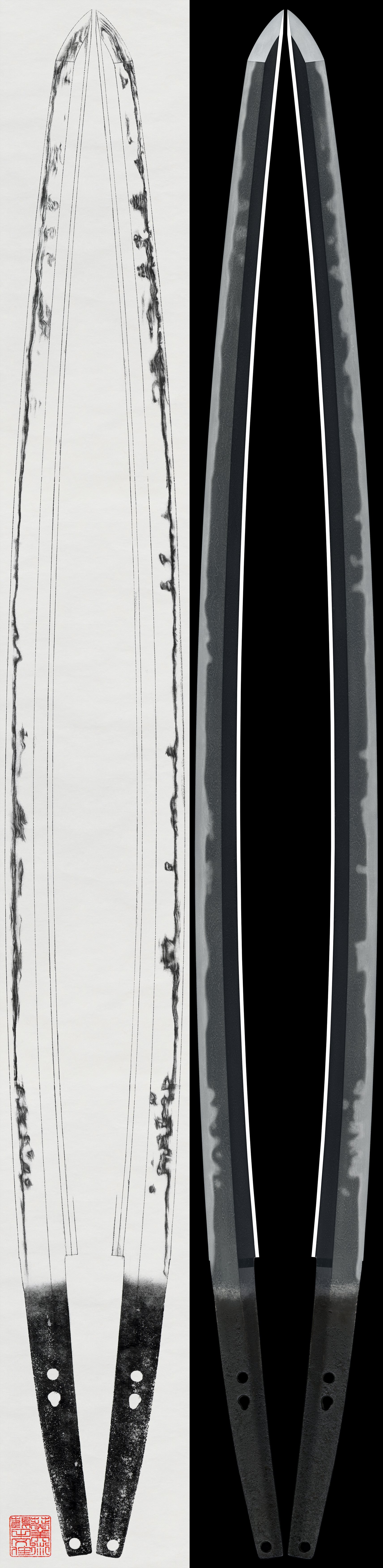
The is the constant, and where the published sources find him closest to the master. His is a well-knit , at times a mixed with , the grain standing somewhat, with dust-fine laid thickly and entering finely and frequently, the steel bright and clear. A stands along the rather than the speckled reflection of old . On his best the tightens into a refined of dust-fine and intricately woven , the manner the judges call most fitting to his hand, set apart from the boldly standing, more open the school assigns to his fellow pupil Kunihiro.
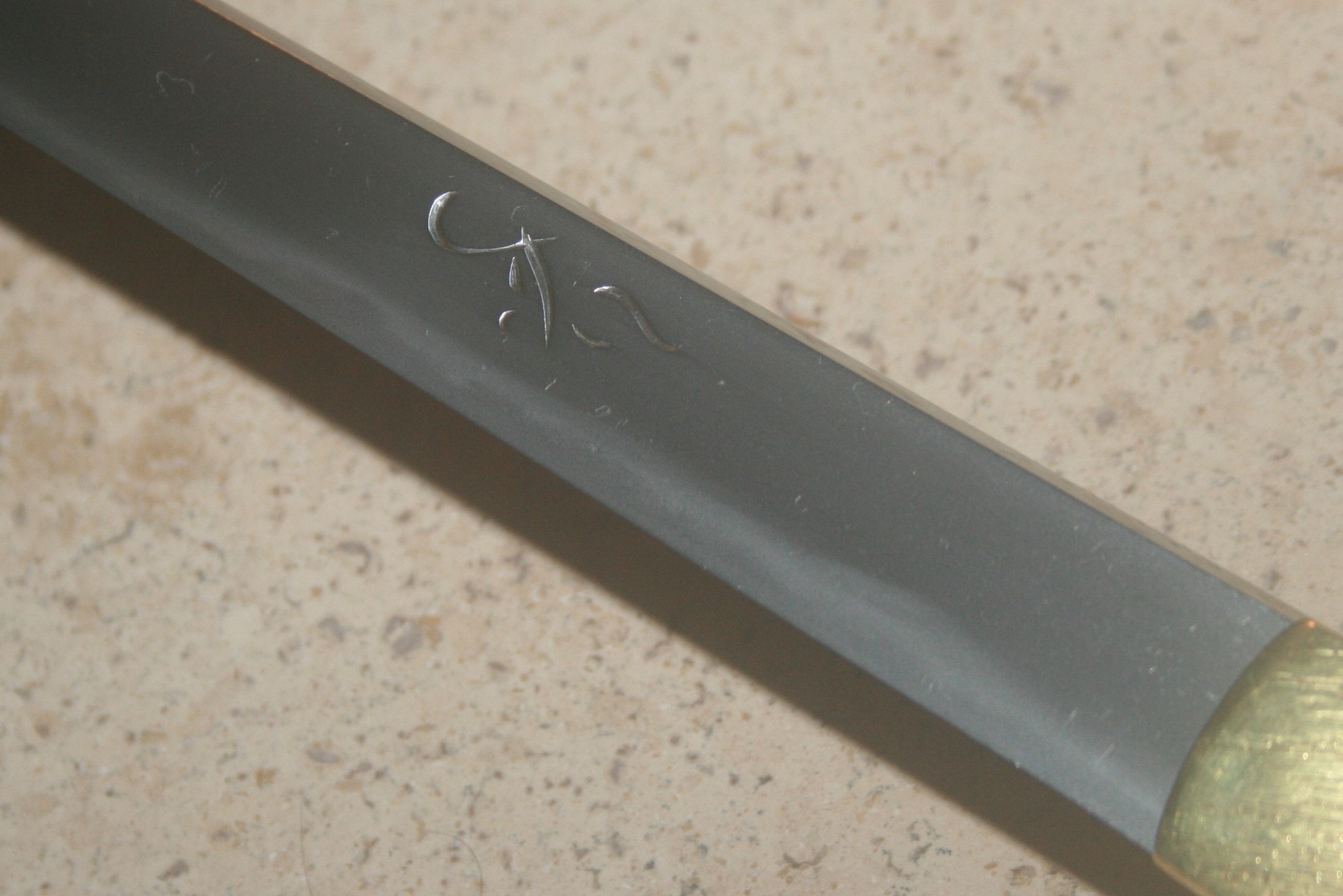
Because no long signed blade survives, his record in length is carried by the and attributed to him, whether by or held as . These are wider, with a standing running toward in places, and an present, and a temper a touch broader and calmer than the , a or shallow -flavored with and the pointed . From the rare signed 'Chikushū-jū ', whose chisel work matches his own, the published sources now infer 'the possibility that among works bearing the signature there are pieces made or signed on another's behalf by Yukihiro'. It is a connoisseur's question that follows directly from how near his hand runs to the master's.
What the judges name as his distinction is exactly that nearness. Within a school whose hands are so closely matched that attribution rests on the boldness of the work rather than a single personal feature, Yukihiro is set apart not by flamboyance but by refinement: the brightest, most thickly -laden and , 'exceptional surviving examples that display workmanship virtually identical to himself'. His pointed, thrusting and the deep clear are the -group features pronounced on his blades; on the finest of his the published commentary judges that 'it shows a manner connecting in a single stream to Great ' and that 'appraising it specifically as Yukihiro is the most appropriate conclusion'. He is the disciple in whom the master's own hand is most nearly read.
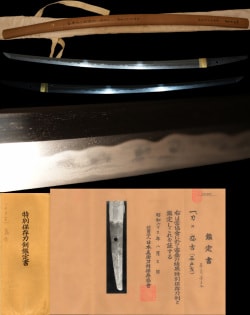
For the collector he is a rare and exacting name. Fujishiro grades him Jō . His one -length National Treasure aside, his record runs through the Important Cultural Property rank and the and tiers, where ten of his blades sit, several of them judged the most fitting attributions to his hand. Provenance gathers around great houses: the by Kōtoku descends in the Asano family, paired there with the 'Ō-', while his blades also pass through the Tokugawa and Yanagisawa houses and are today held at institutions including the Tsuchiura City Museum and the Gotoh Museum. Signed work is limited to a few small , and long signed blades do not survive at all, so a privately held Yukihiro reaches the market only seldom and is a landmark when it does. It is not wholly beyond reach in the way the National Treasure is, but for a smith the published sources place this close to Ō-, a signed or finely attributed example is among the more notable things a collector of work could hope to encounter.