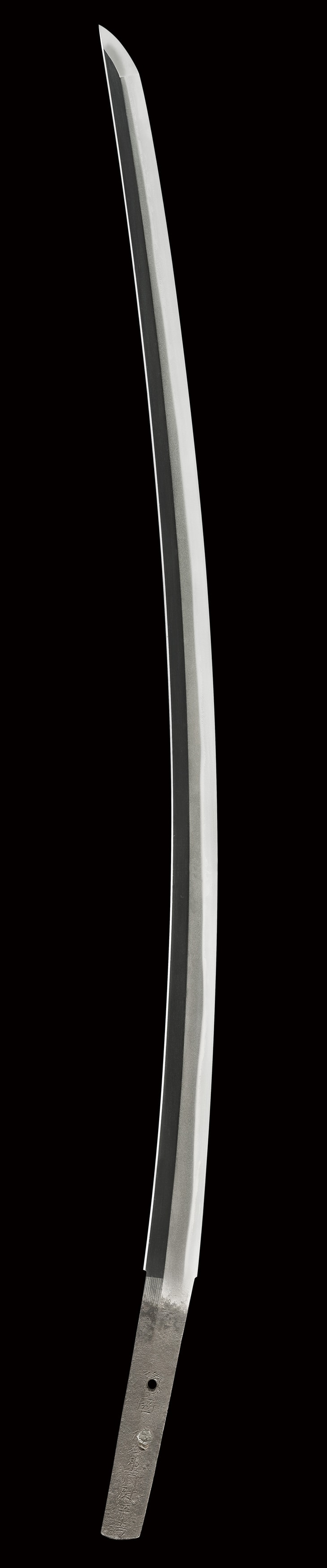
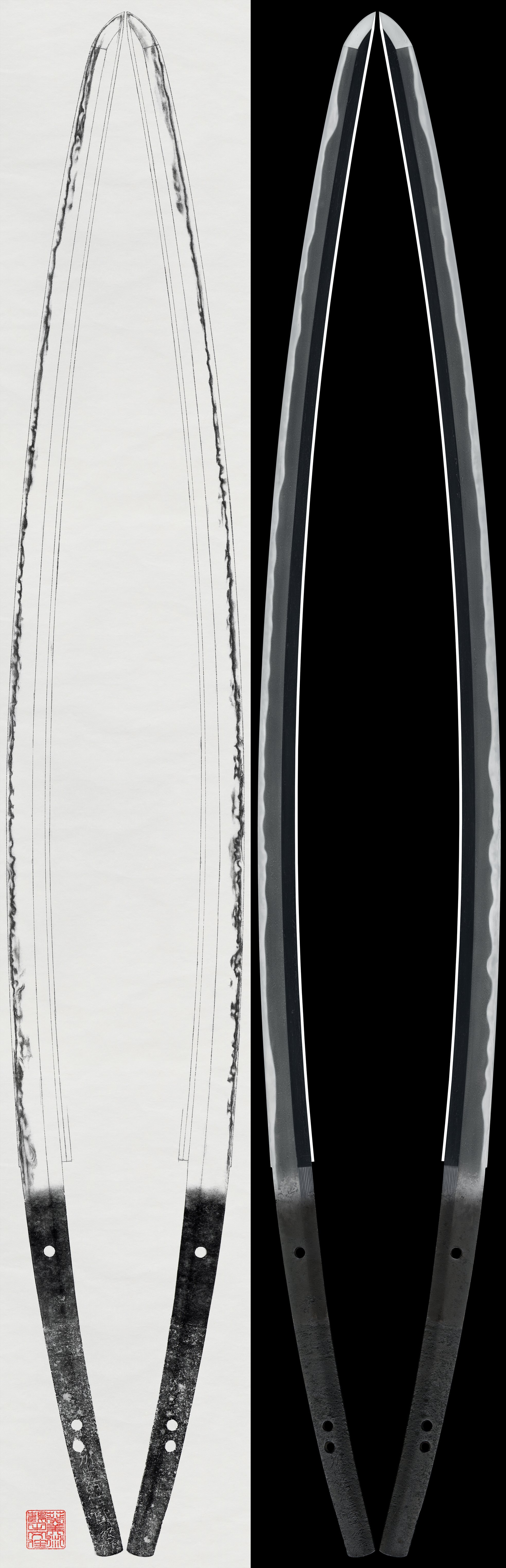
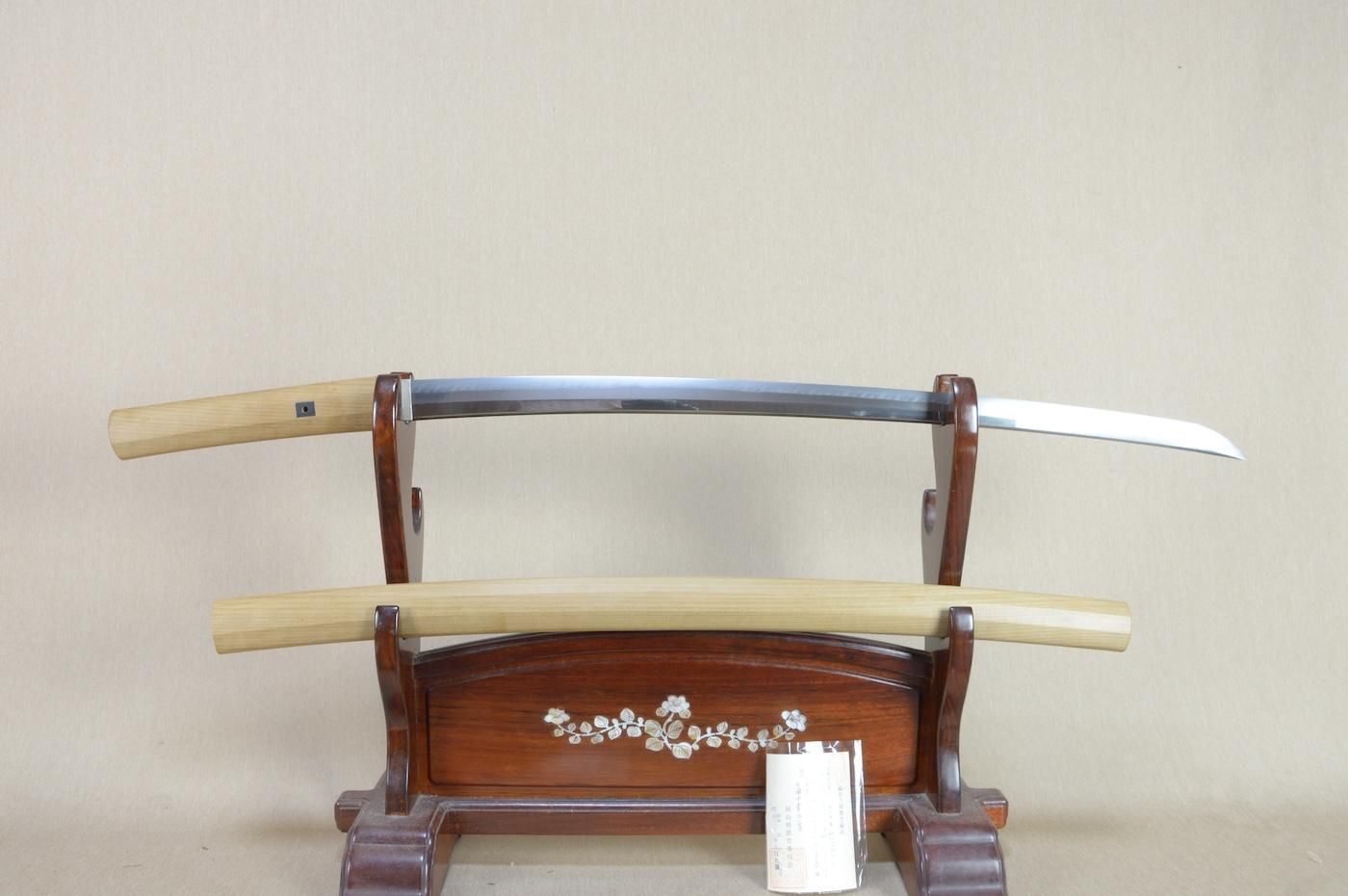
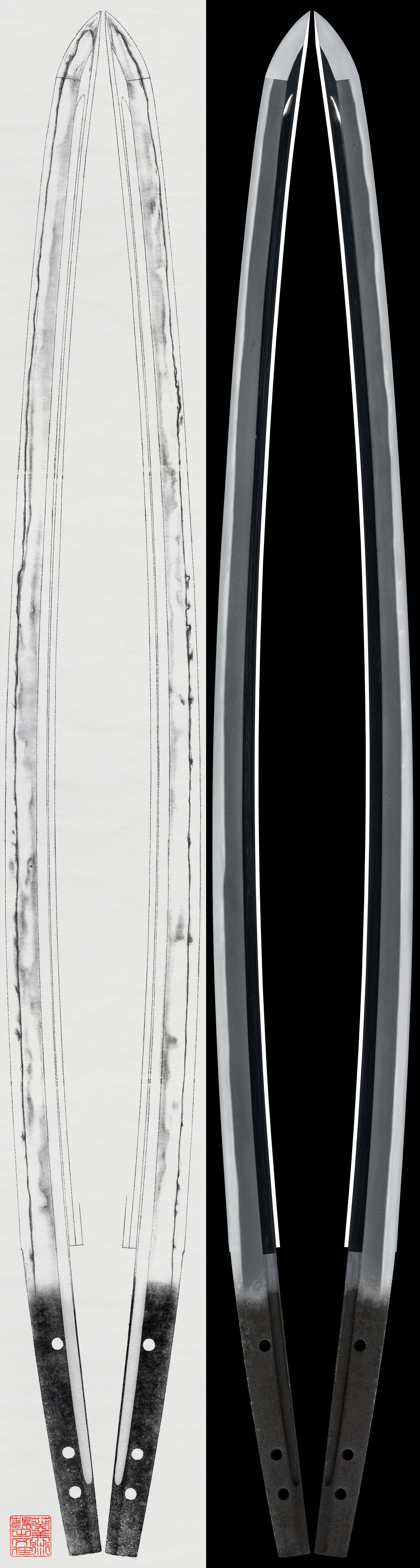
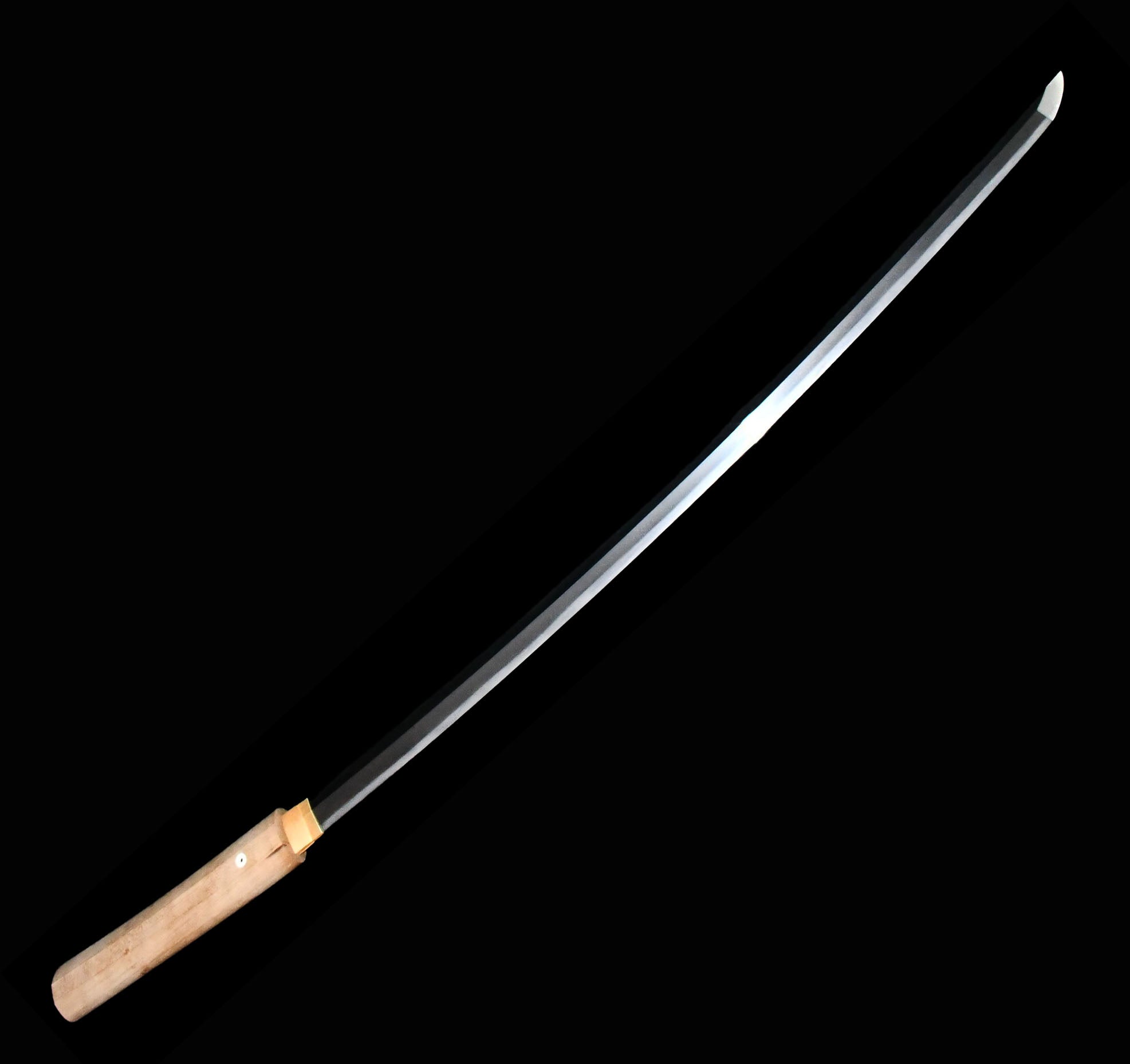
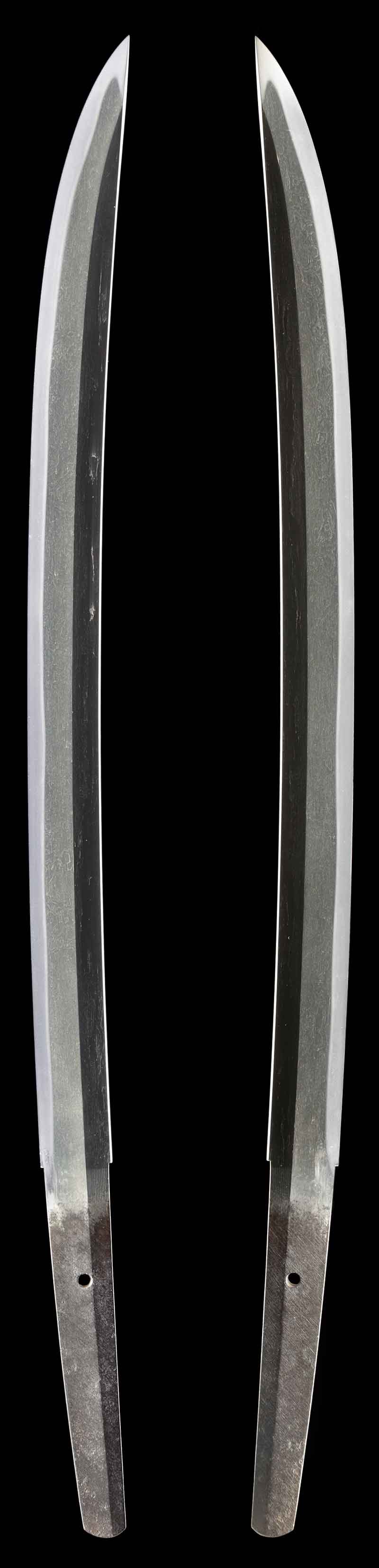
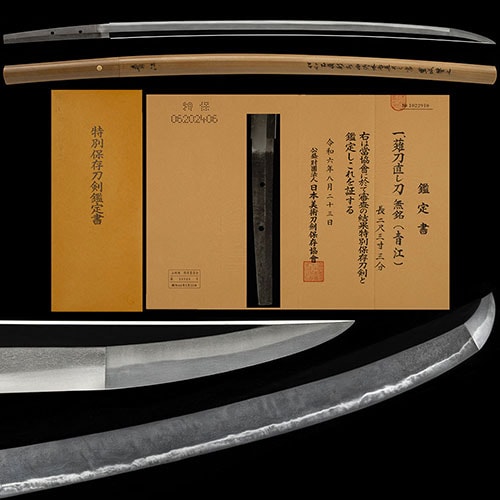
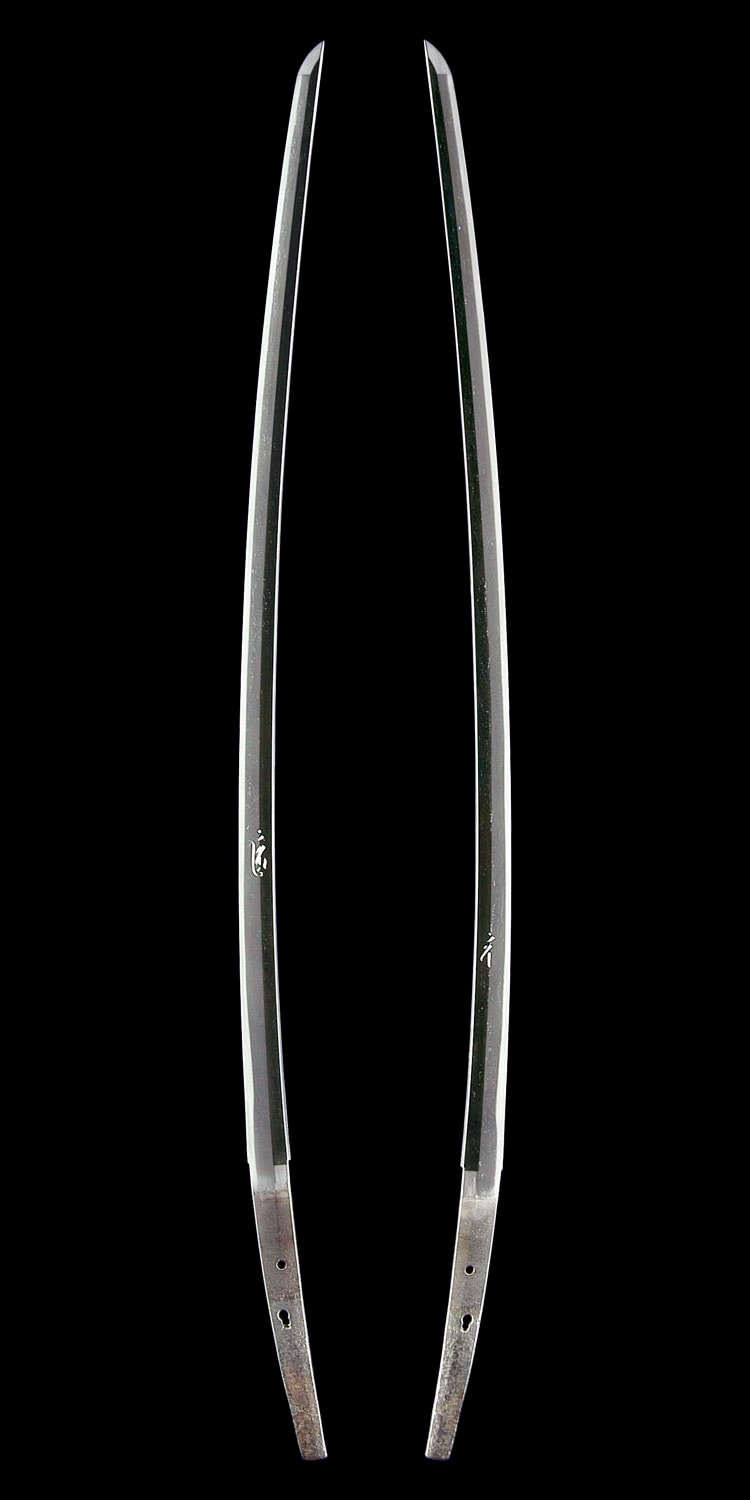
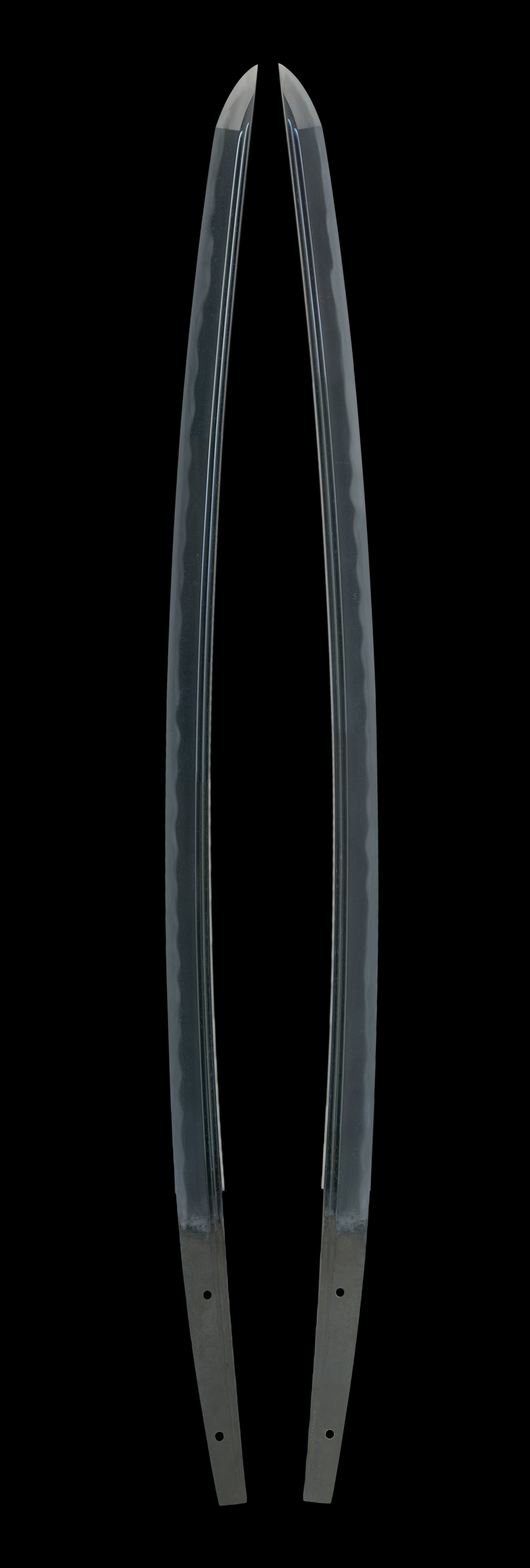
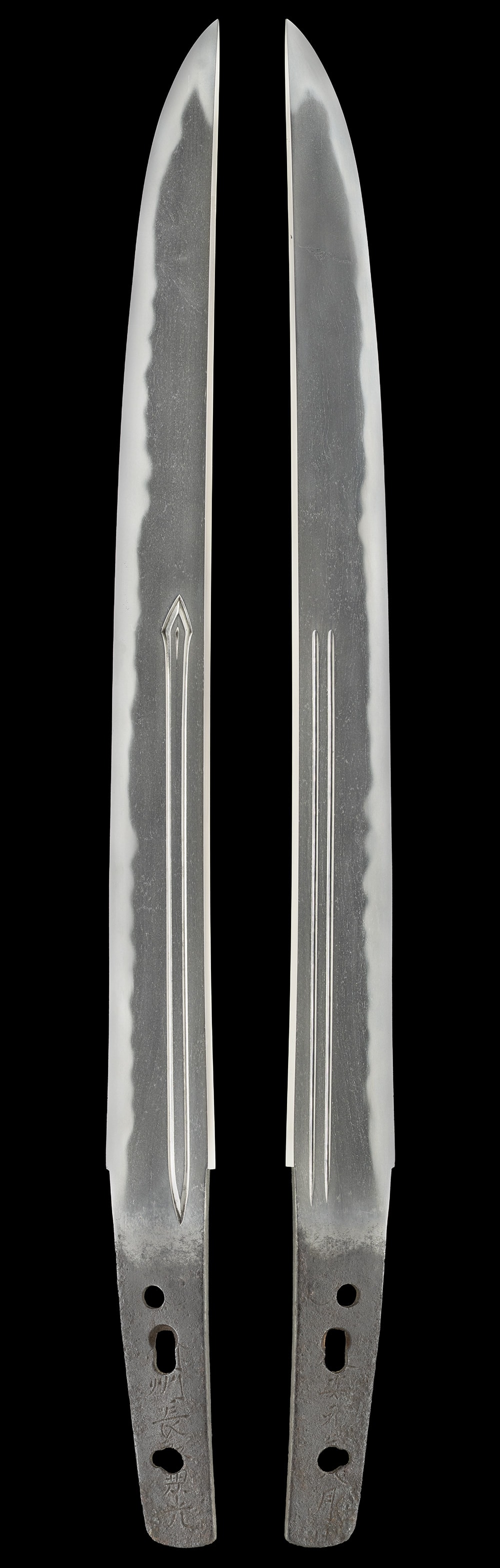
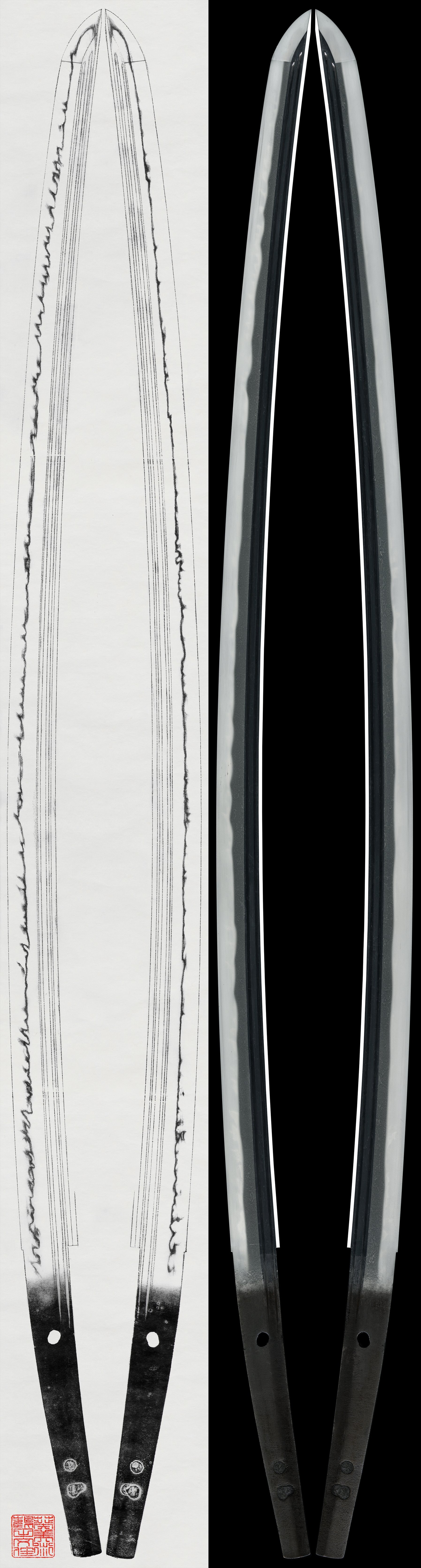
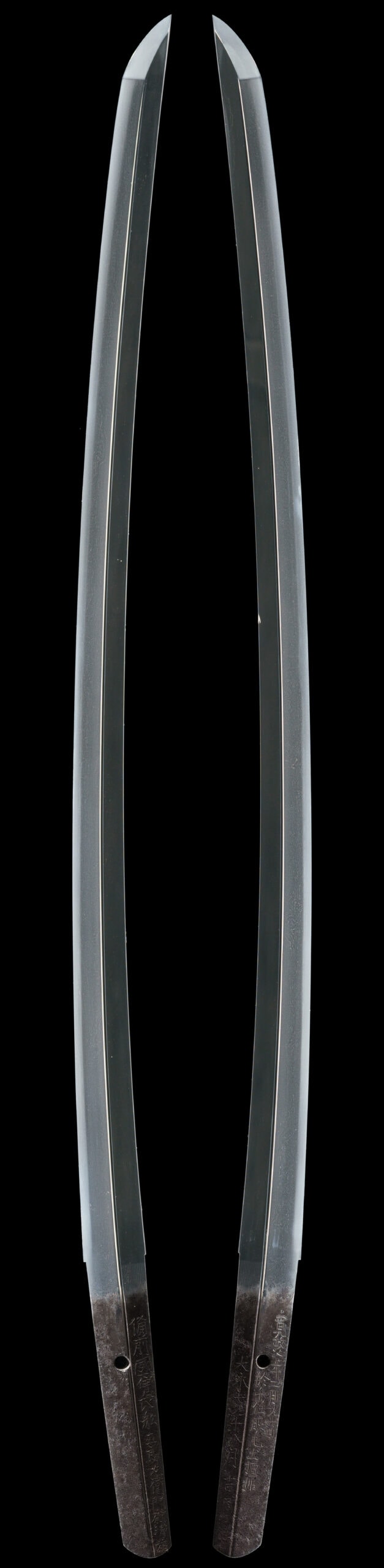
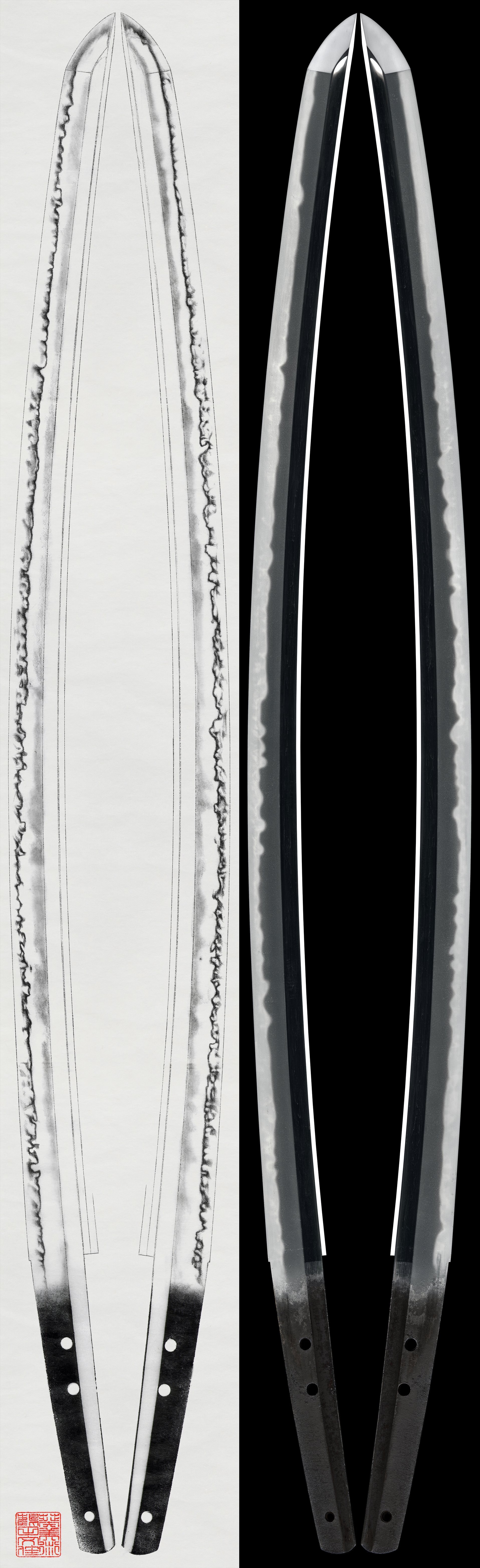
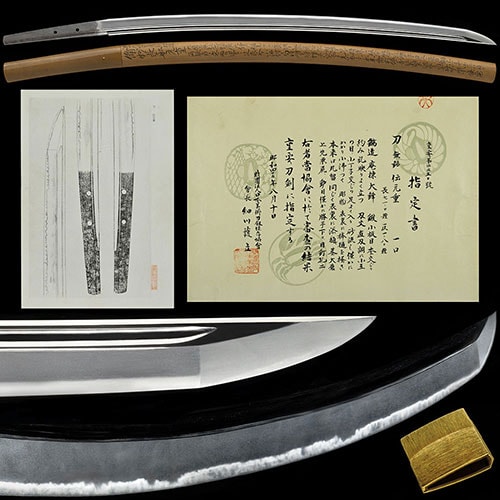
Yoshitsugu is identified as the first generation of the school, one of the representative smiths of the group in Province during the late period. His full signature reads " no -ju Uemon no Jo Taira Yoshitsugu ," and he is known to have frequently cut long inscriptions accompanied by date markings. Dated works survive from the Gentoku (1329--1331), Karyaku (1326--1329), and Kenmu (1334--1338) eras, establishing his active period with unusual documentary precision. Among his most notable pieces are a in the Tokyo National Museum designated as an Important Cultural Property and another Important Cultural Property at Hie Shrine, the former bearing a and the latter a .
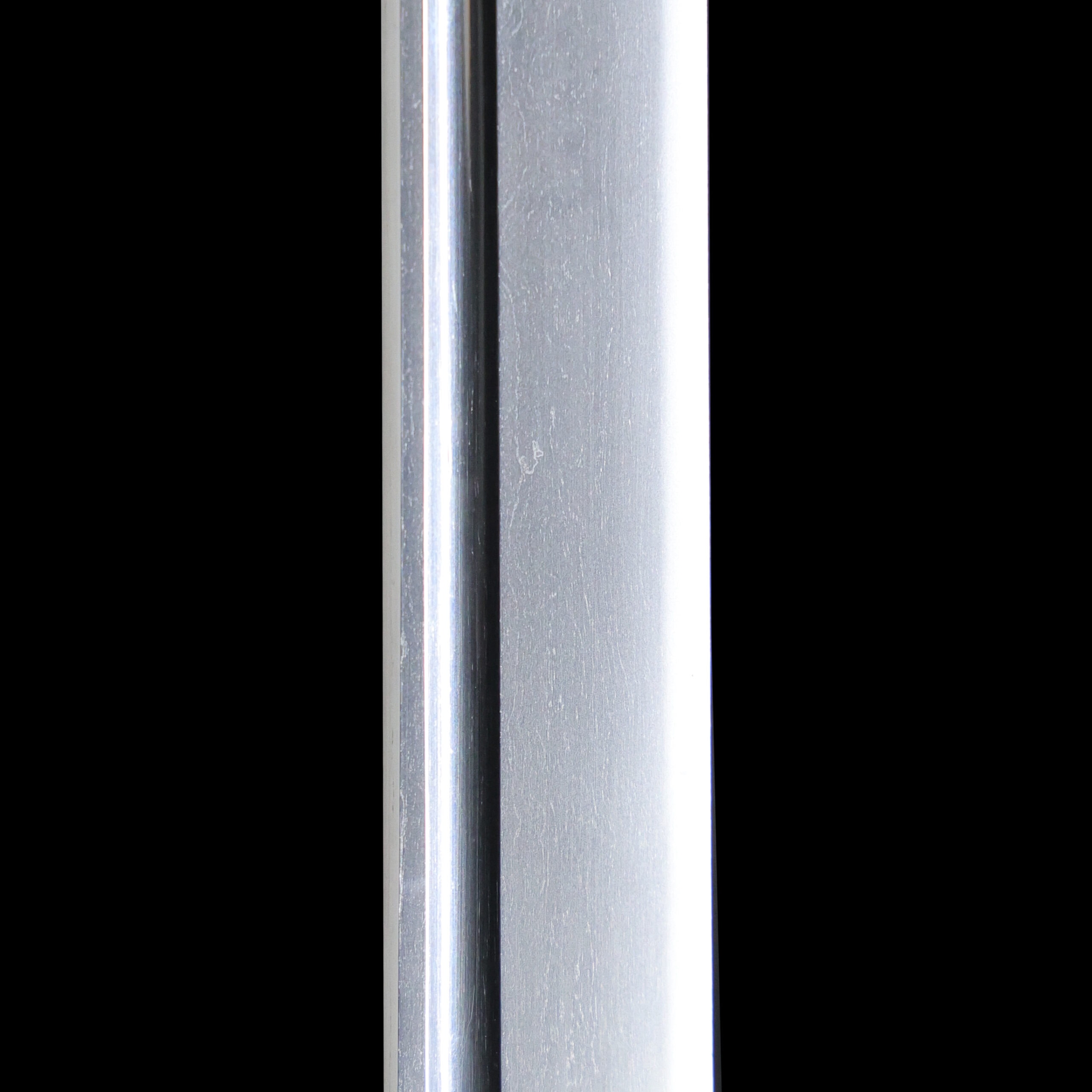
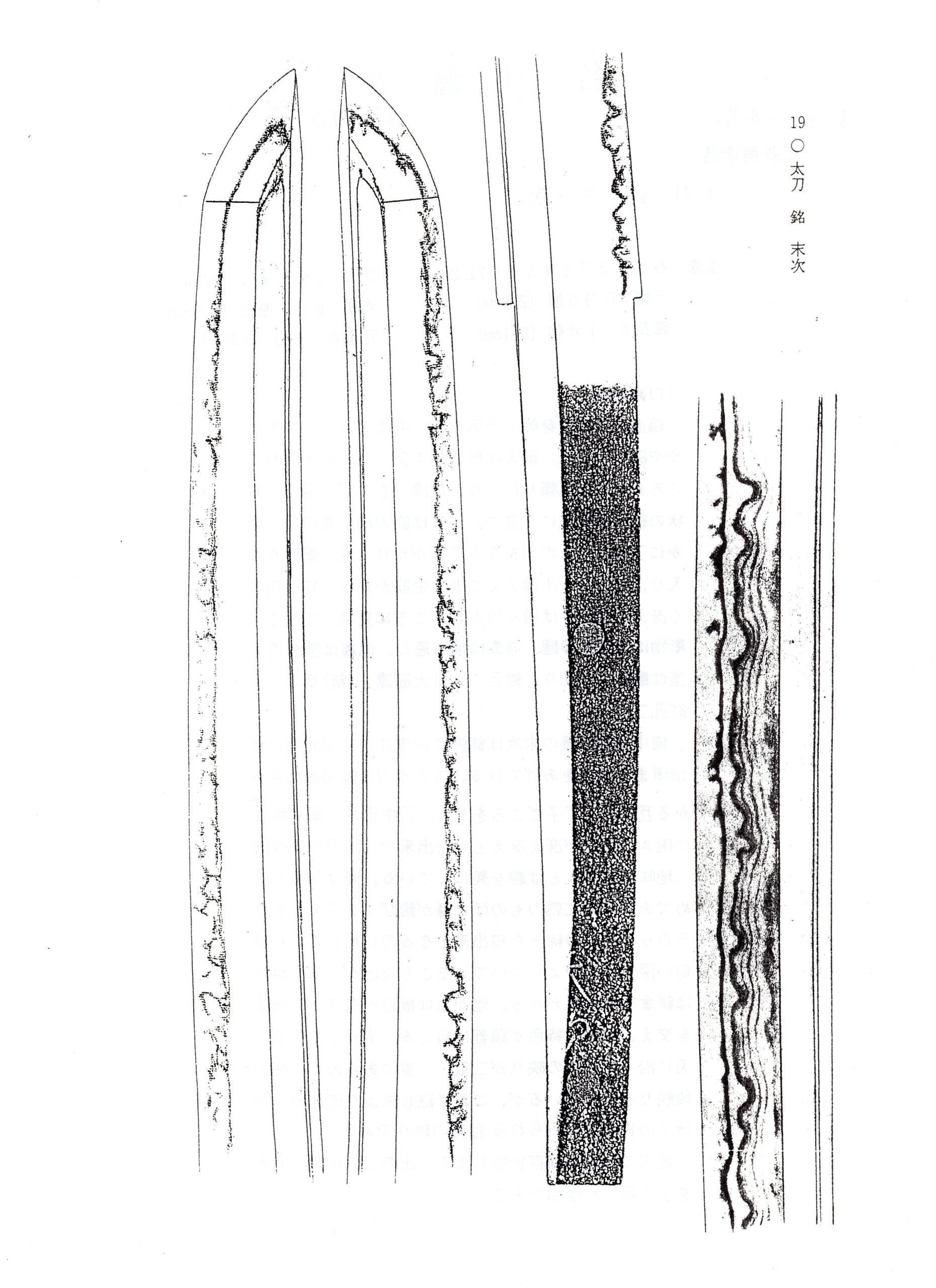
Yoshitsugu's forging characteristically shows a tight mixed with , forming a dense, standing texture with fine and delicate ; are intermingled, and a deep tone pervades the clear steel, occasionally with and a tendency toward . His is fundamentally -based, mixed with small and, in certain works, a hint of -; the temper is laid with and deeply adhering , with and entering abundantly. In the upper portions of certain blades, and appear, giving rise to a -like tendency, while above the the temper may become -gakari and somewhat gorgeous. The ranges from deeply tempered with a -like tendency to turning in .
The assessments consistently praise the excellence of Yoshitsugu's forging, noting that even among his own works certain examples are conspicuous for the quality of the . His blades are said to "excellently demonstrate the characteristics of this school," and their remarkably healthy condition is repeatedly commended. The preservation of with long in fine chisel work is noted as valuable reference material. With pieces held in the Imperial Collection presented to Emperor Meiji by the Mori family, Yoshitsugu occupies a distinguished position within the tradition as a smith whose dated, fully signed works anchor the chronology of the school.