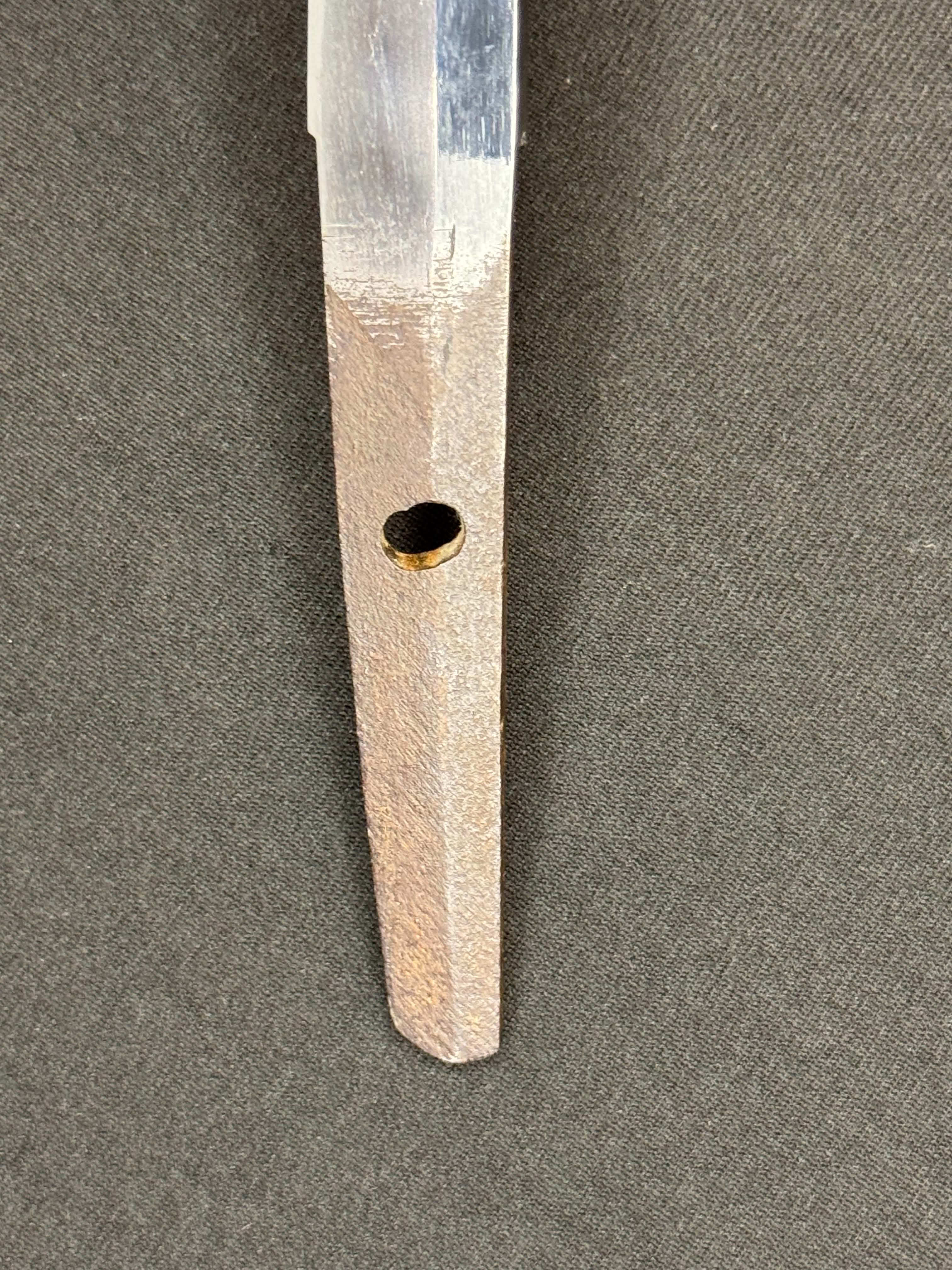
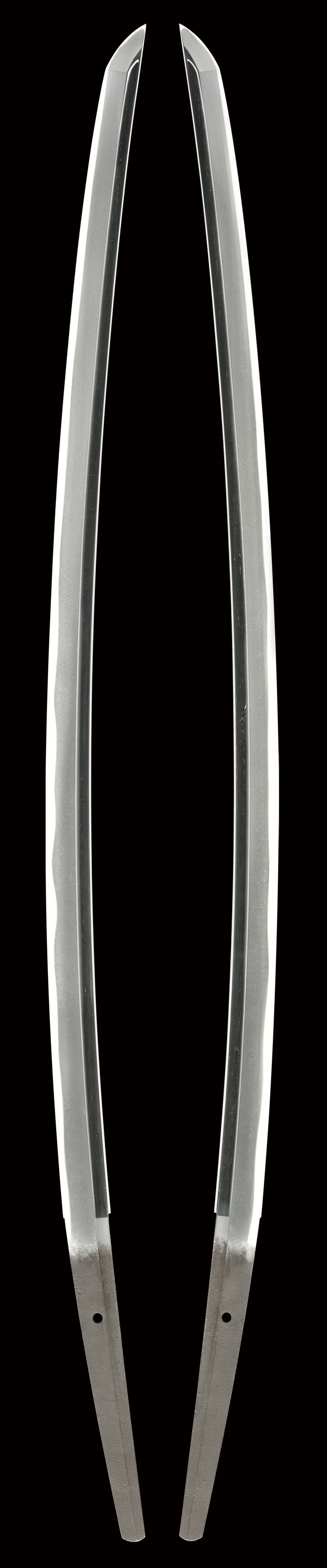
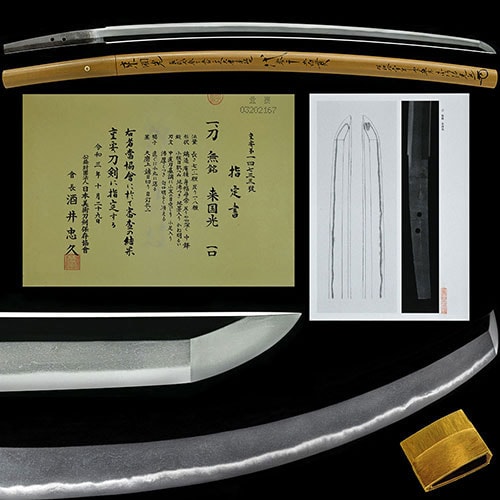
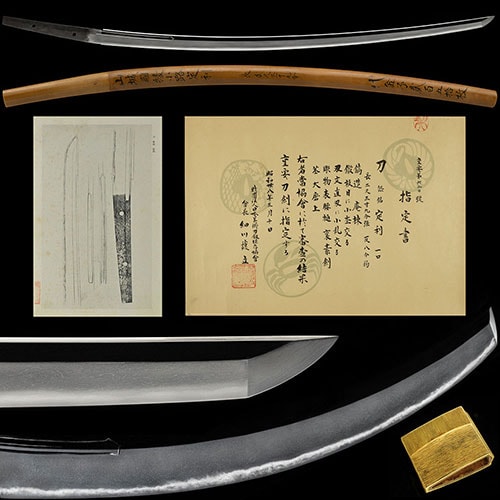
Mari (真利) is a name recorded in swordsmith directories across several of the principal lineages — , Fukuoka , Katayama , and — and the has repeatedly observed that "it is difficult to distinguish these clearly on the basis of signature style alone." The smiths most frequently designated under this name are appraised as belonging to the Ko- group, that is, the earliest generation of the Fukuoka line active in the early period, before the school reached its greatest prosperity in the mid- era. According to the , one Mari is transmitted as a student of Norifusa who later moved to Katayama in Bicchū Province, and a second generation is recorded as having worked at in Province during the Bun'ei era. The Ko- smiths, including Norimune and his contemporaries, are distinguished from their mid- successors by the strongly preserved elements reminiscent of found in both and the workmanship of and .
The characteristic forging of Mari is mixed with , tending toward ; fine adheres, appears, and stands out — a hallmark of classical work. The is typically mixed with and , with and entering well; adheres, and and appear in places. The tends toward , turning back in , sometimes with . A recurring observation across the designation records is that, compared with , the is more prominent and shows a degree of technical elaboration, yet compared with the school of the mid- period, the work remains "more restrained, presenting an archaic and elegant taste." The two-character signature is consistently described as cut with a thick chisel in bold strokes, and several surviving examples retain their original tang, which the regards as especially desirable. One work in form displays a shift from at the base toward a tone in the upper half, demonstrating a broader range within the oeuvre.
The designation records characterize Mari's finest works as — sound and well-preserved in both and — with forms that are "dignified and high in tone." The shape typically exhibits pronounced and, in examples, a sense of , producing what the describes as an "eminently graceful" carriage that clearly manifests the characteristics of its age. The strong in the and and the abundant internal activities produce "a rich variety of expression," and the works are praised as offering "abundant points of appreciation." A comparatively substantial number of works survive under this name, affirming Mari's standing as a significant smith within the early tradition, bridging the archaic restraint of and the splendid, ornate manner that would define the school at its zenith.