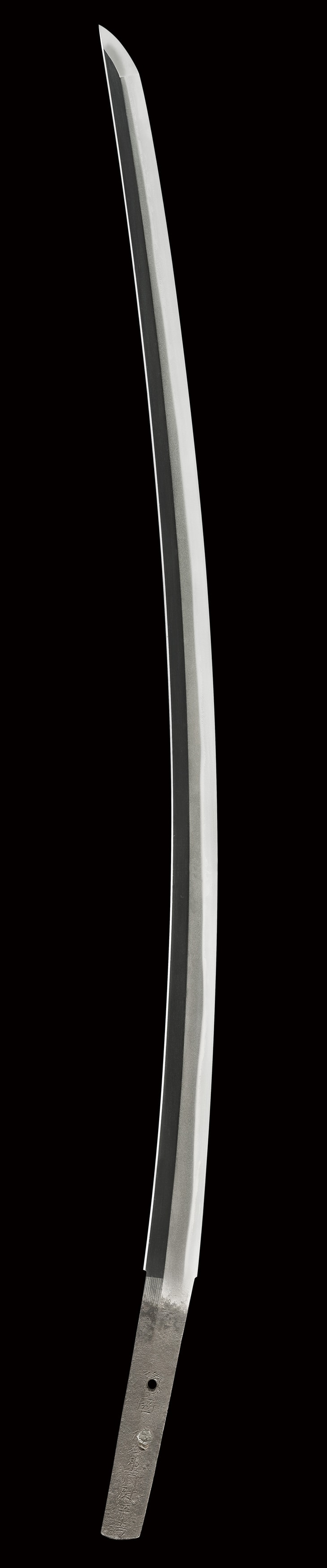
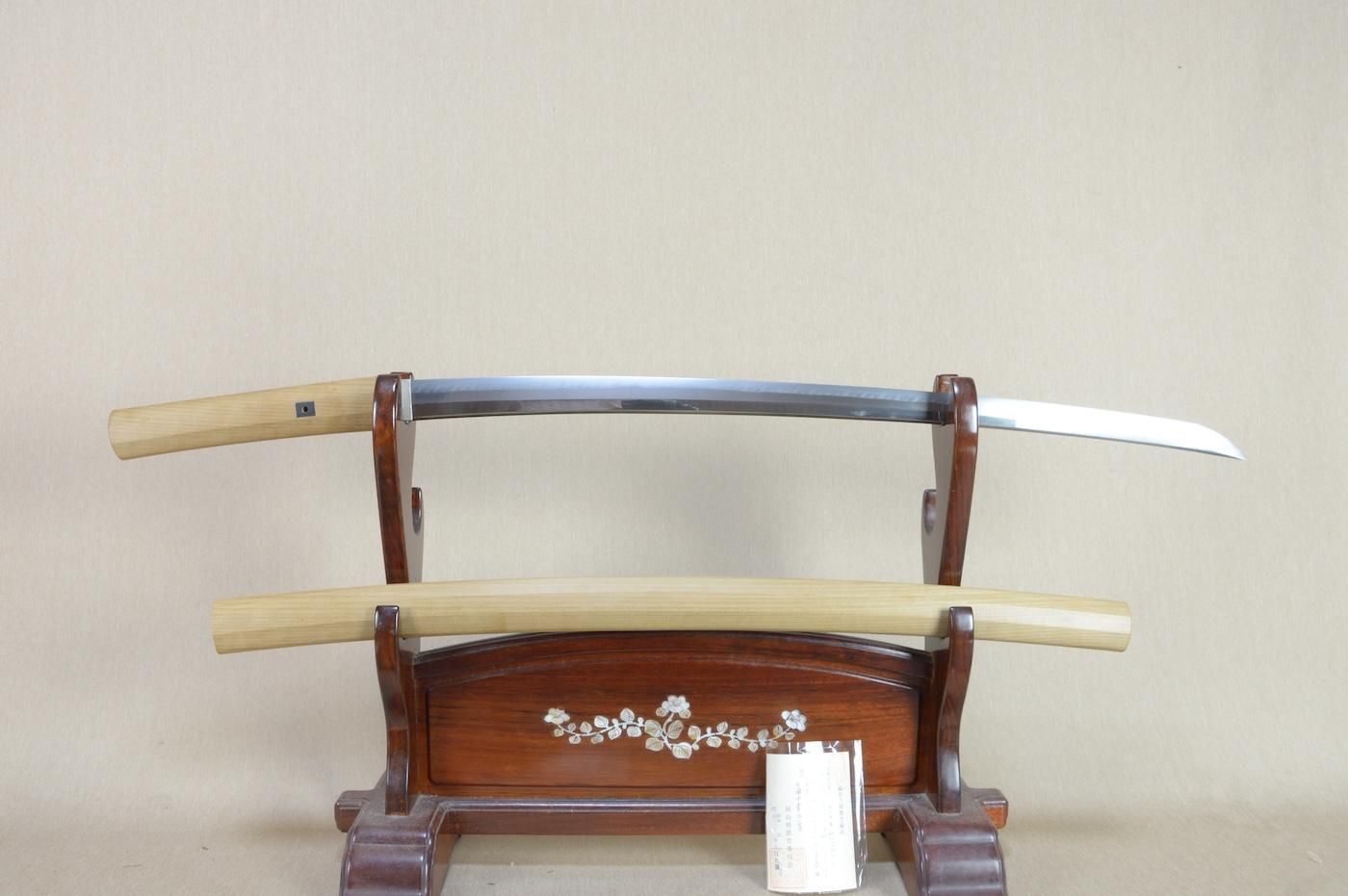
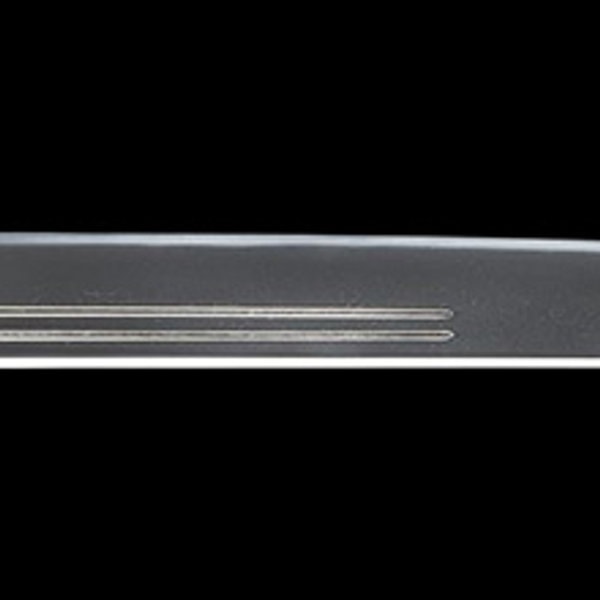
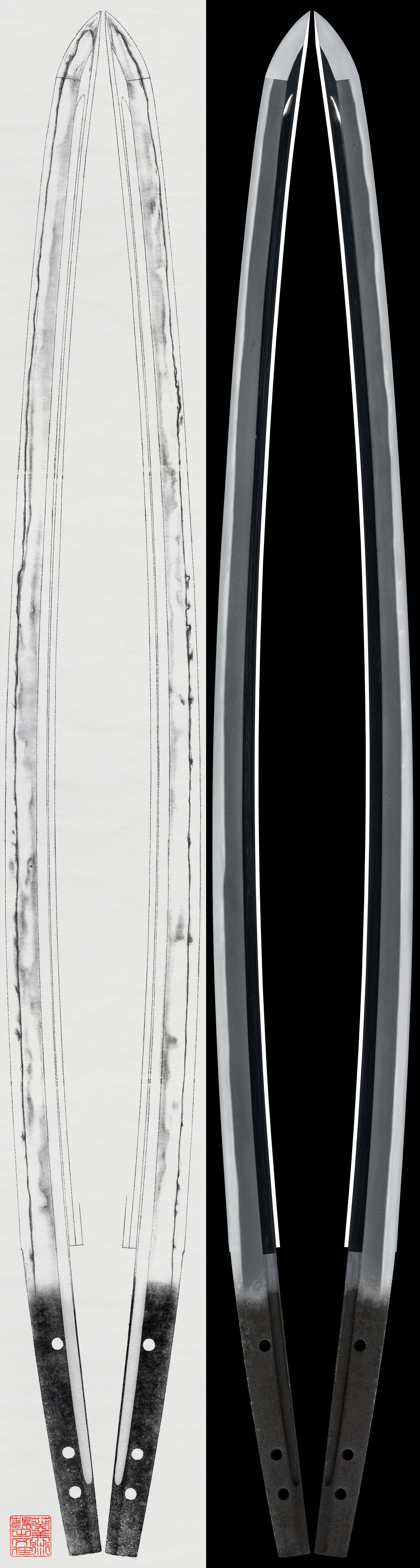
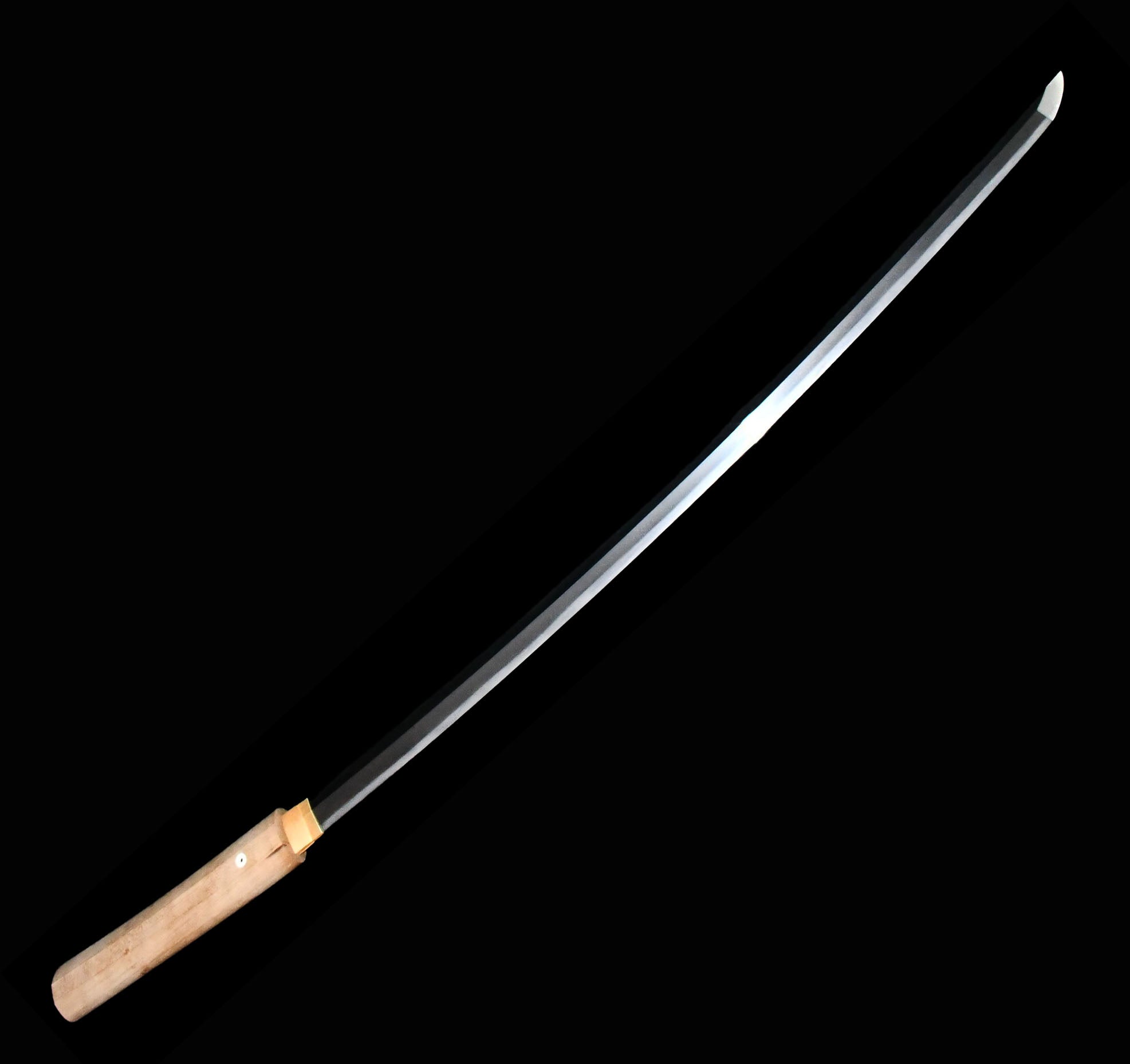
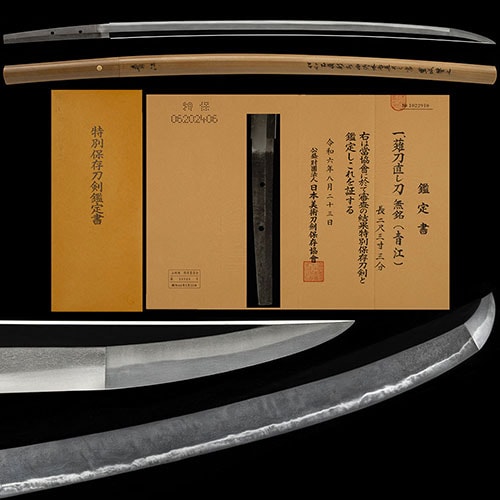
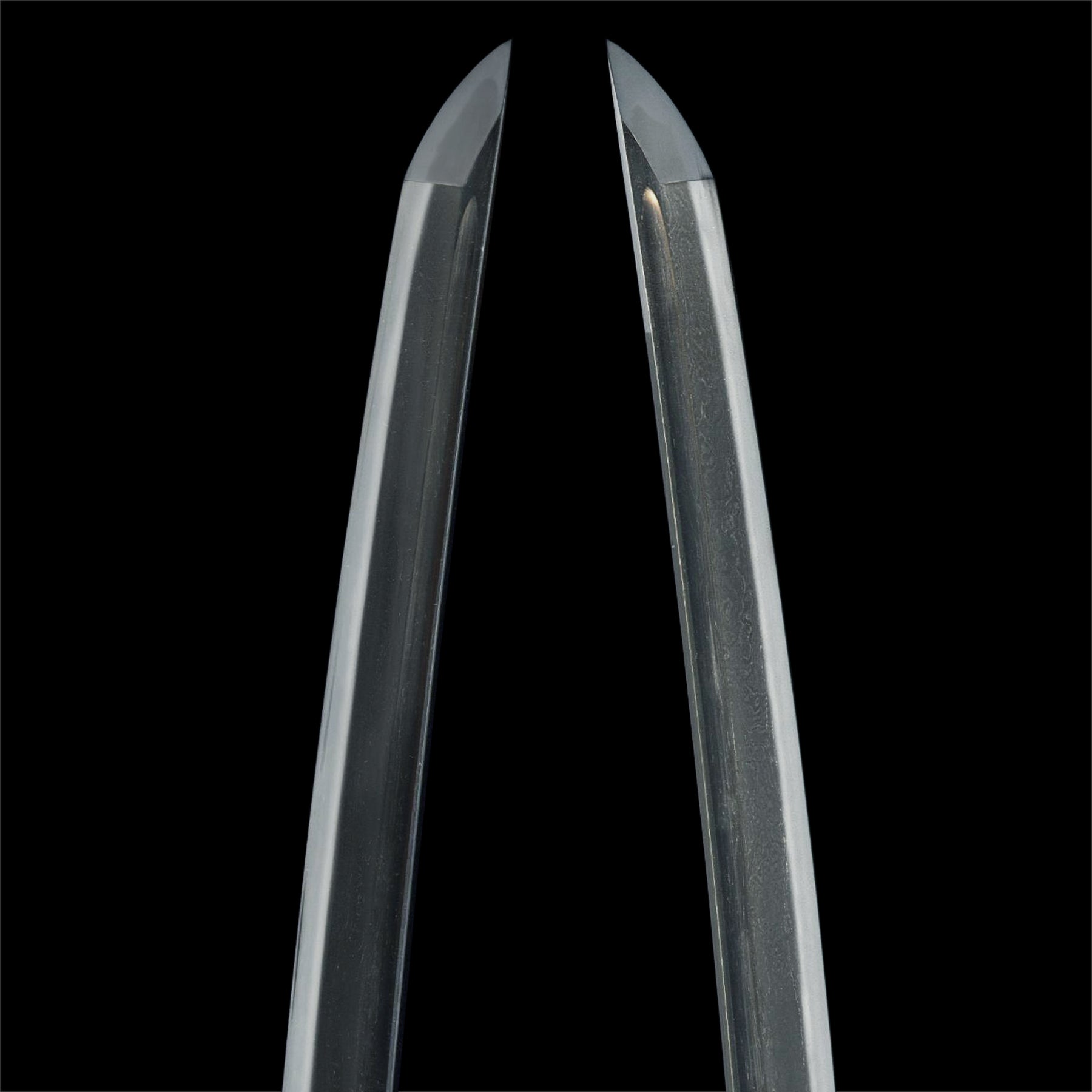
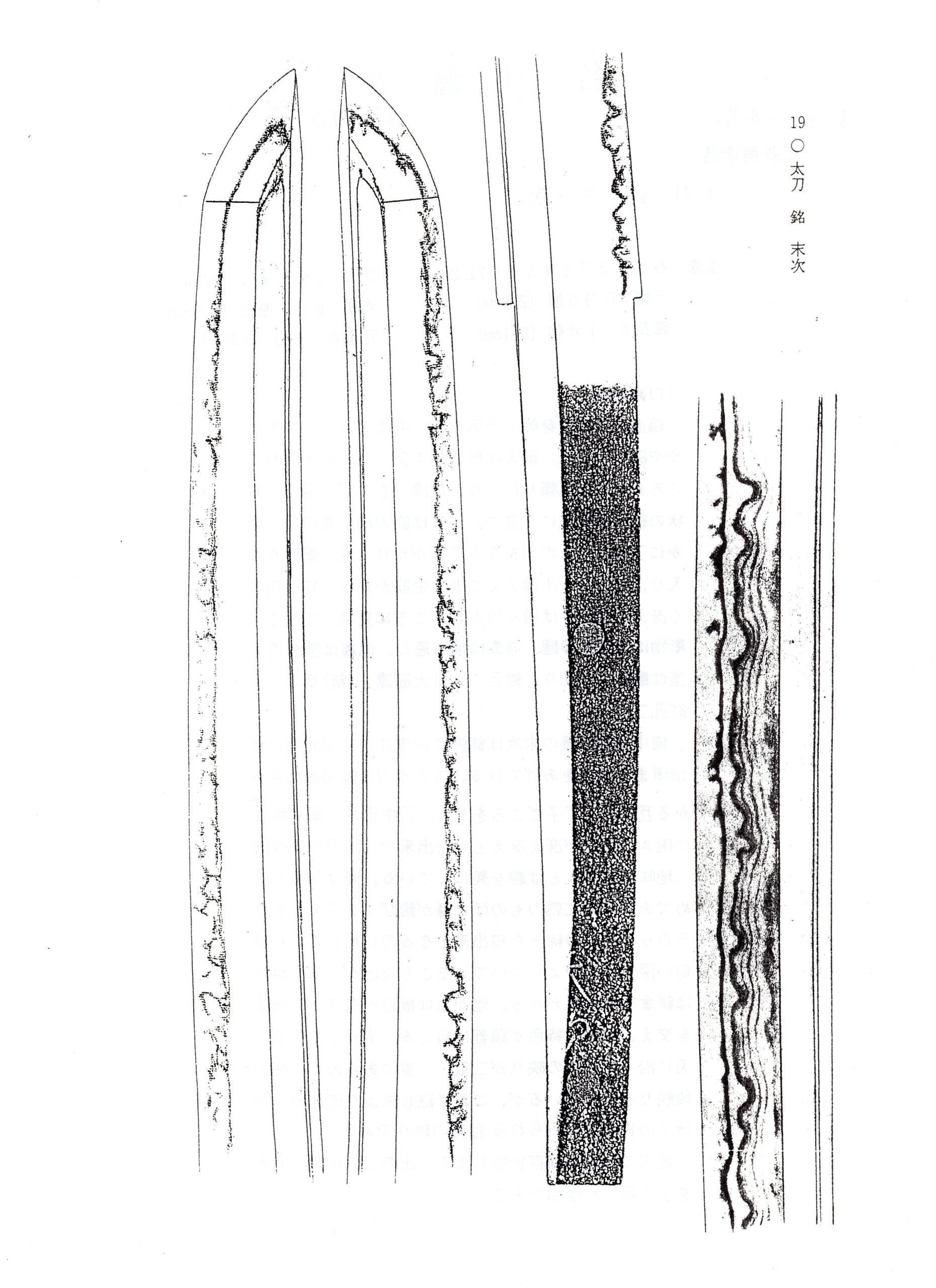
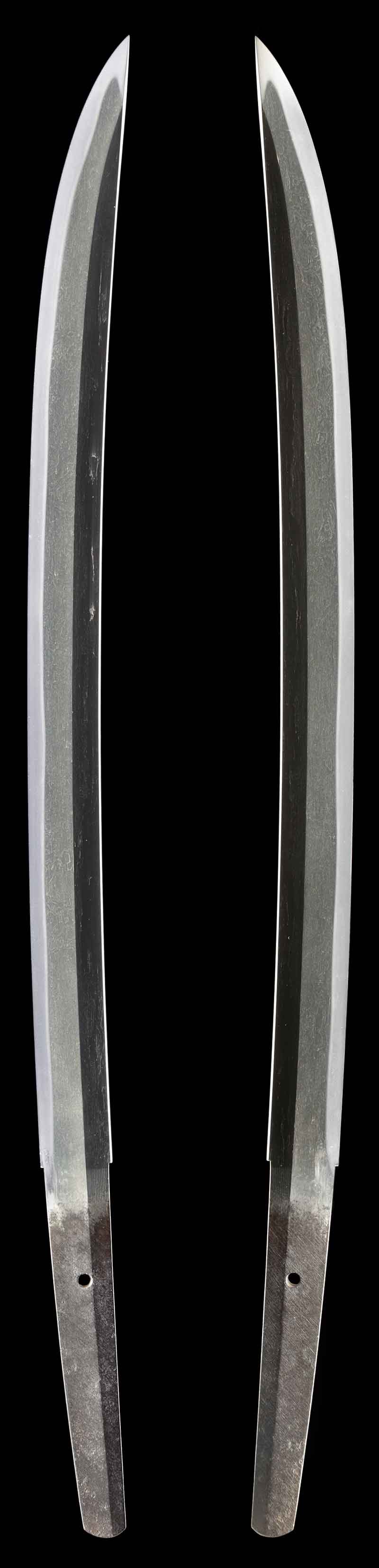
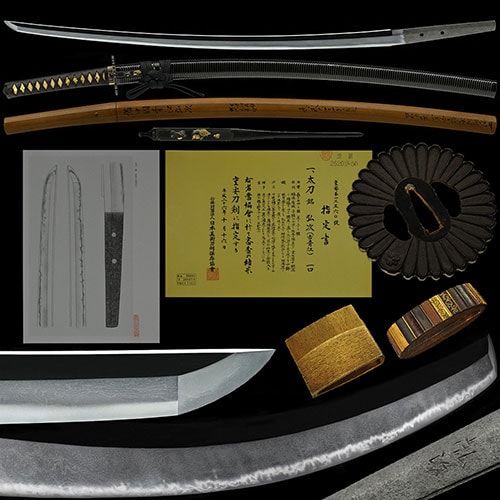
Sadatsugu (貞次) of the school is one of the most historically revered names in the Japanese sword tradition. Sadatsugu has been transmitted since the Kanchiin-bon Meizukushi as a master selected among the smiths appointed to forge in attendance upon Retired Emperor Gotoba. In the Shinkan Hiden-sho he is accorded the highest valuation -- " workmanship, supreme: fifteen " -- and thus has long been regarded as a foremost figure even among works. The name Sadatsugu was carried on through successive generations into the period; the later Uemon Taro Sadatsugu, recorded as the son of Suketsugu, left dated works from the Karyaku, Gentoku, and Genko eras, though surviving examples by this smith are exceedingly rare.
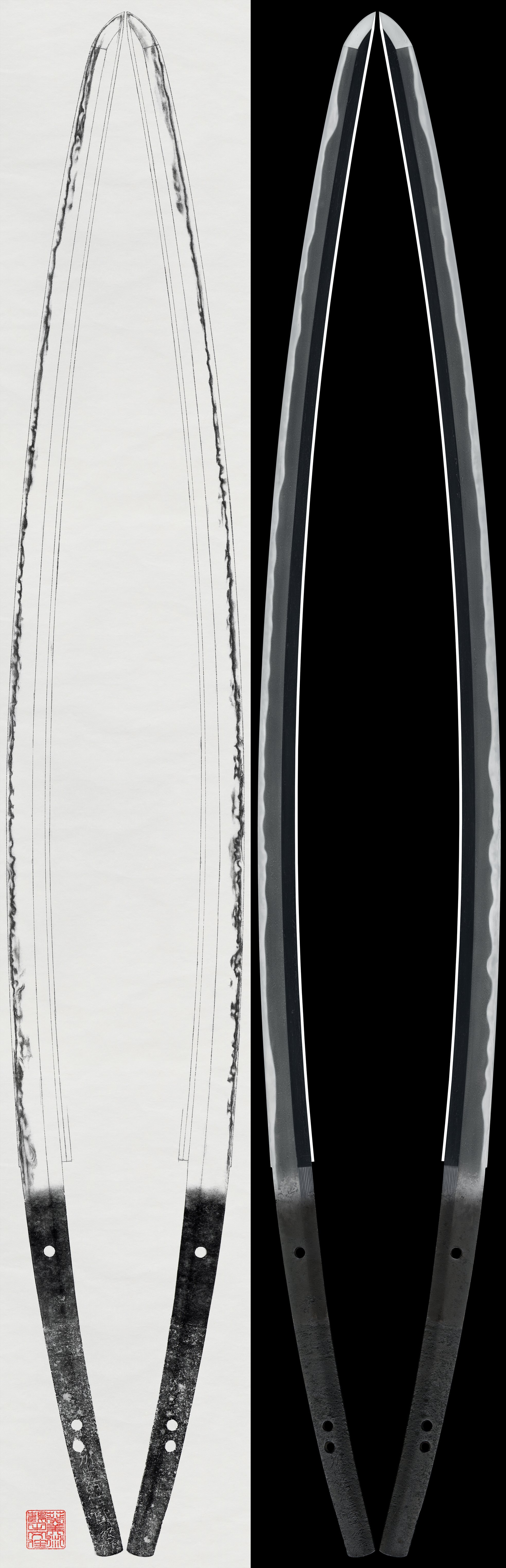
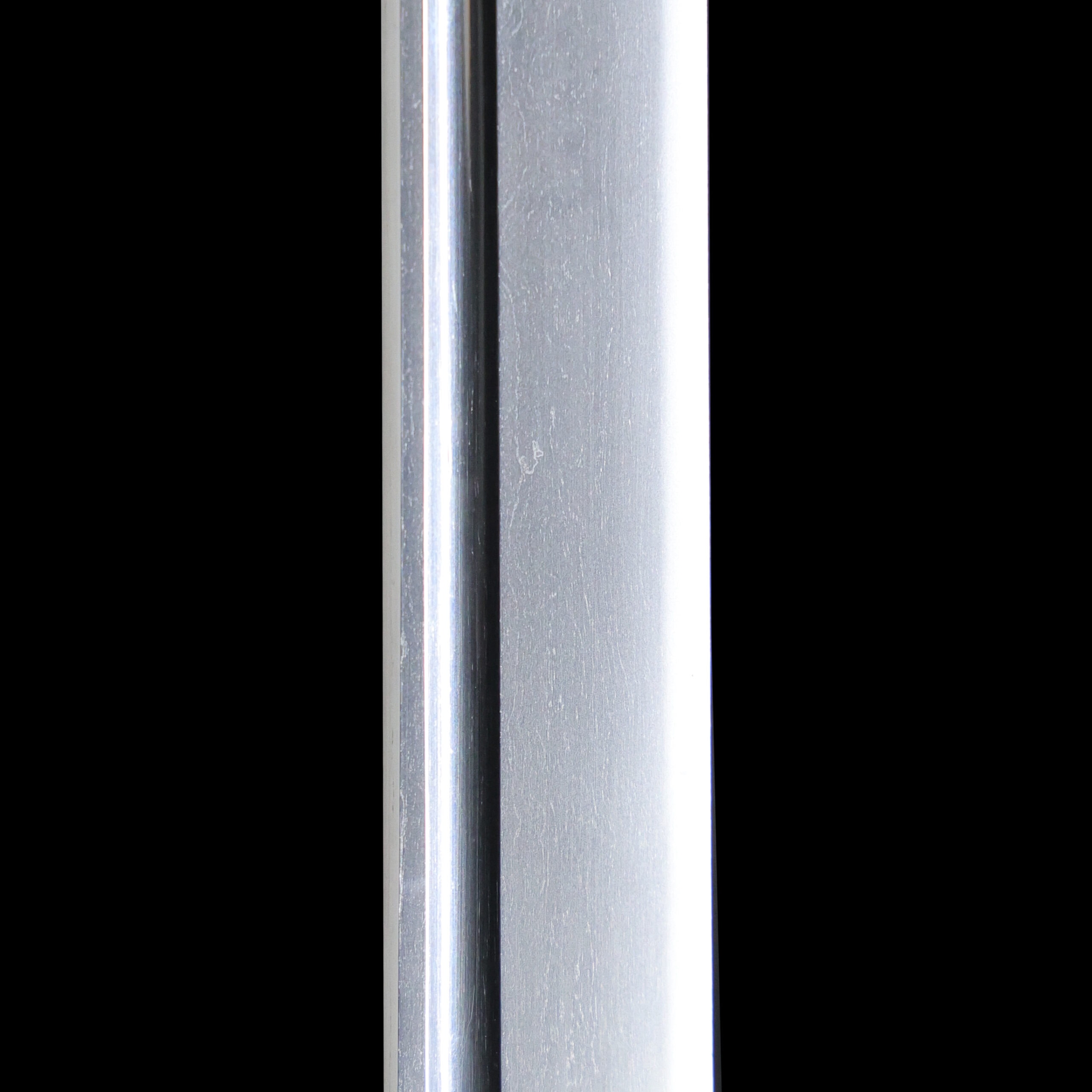
Works attributed to Sadatsugu display the distinctive hallmarks of the late- school. The forging typically presents mixed with , in which the grain stands out to produce a (crepe-like) texture. Minute adheres densely, fine enter, and rises prominently. The takes as its foundation, incorporating , , and small -like elements, with and appearing throughout. The temper is -dominant with , and fine and run well, yielding a that is bright and clear. In certain works a reverse-running tendency () emerges in the lower half, prefiguring the flamboyant gyaku- of the subsequent period.
Sadatsugu's significance extends beyond his personal accomplishment. From old times there has been a tendency to ascribe to Sadatsugu those unsigned blades that display a typical manner and are of particularly fine workmanship, making the name a benchmark for quality within the school. The imposing seen in signed examples -- wide with little taper, , and pronounced -- is chronologically noteworthy for anticipating forms more commonly associated with the era. As both a historical figure of the highest rank and a touchstone for excellence, Sadatsugu remains indispensable to the study of the sword-making tradition.