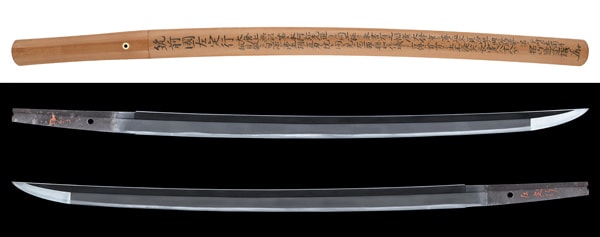
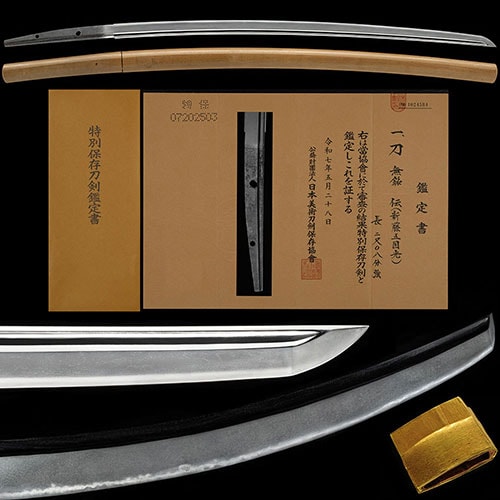
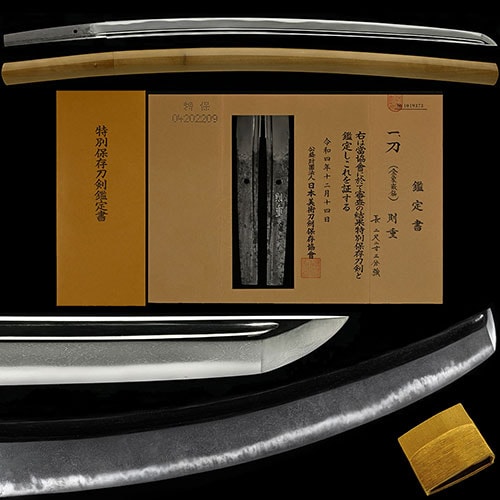
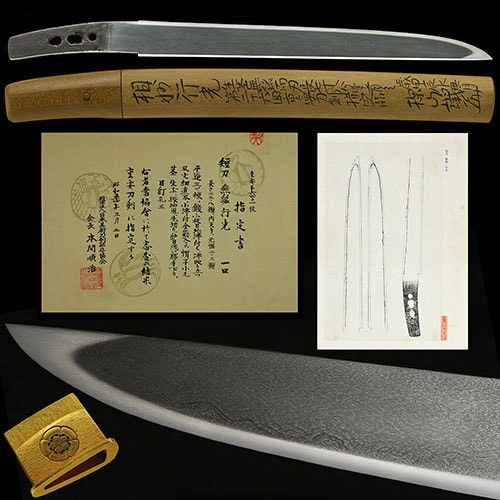
Sadayoshi is a smith of the school, the line of , working in the middle of the period. The published sources place him among the Sue-, the second wave of pupils who carried the school forward after Ō-: "Sadayoshi is said to have been the son of Yasuyoshi and is traditionally placed among the smiths active around the Bunna era". Yasuyoshi was himself a son of , so Sadayoshi sits two generations down from the founder, in the company the commentary names together time and again, Yasuyoshi, Yukihiro, Yoshisada, Kunihiro, Hiroyuki, Hiroyasu and Sadayoshi. The school had emerged in the early and broken decisively from the older, classical Kyūshū manner, establishing a new style in which both and are bright and clear and in which and stand out; Sadayoshi is one of the heirs who forged in that idiom.
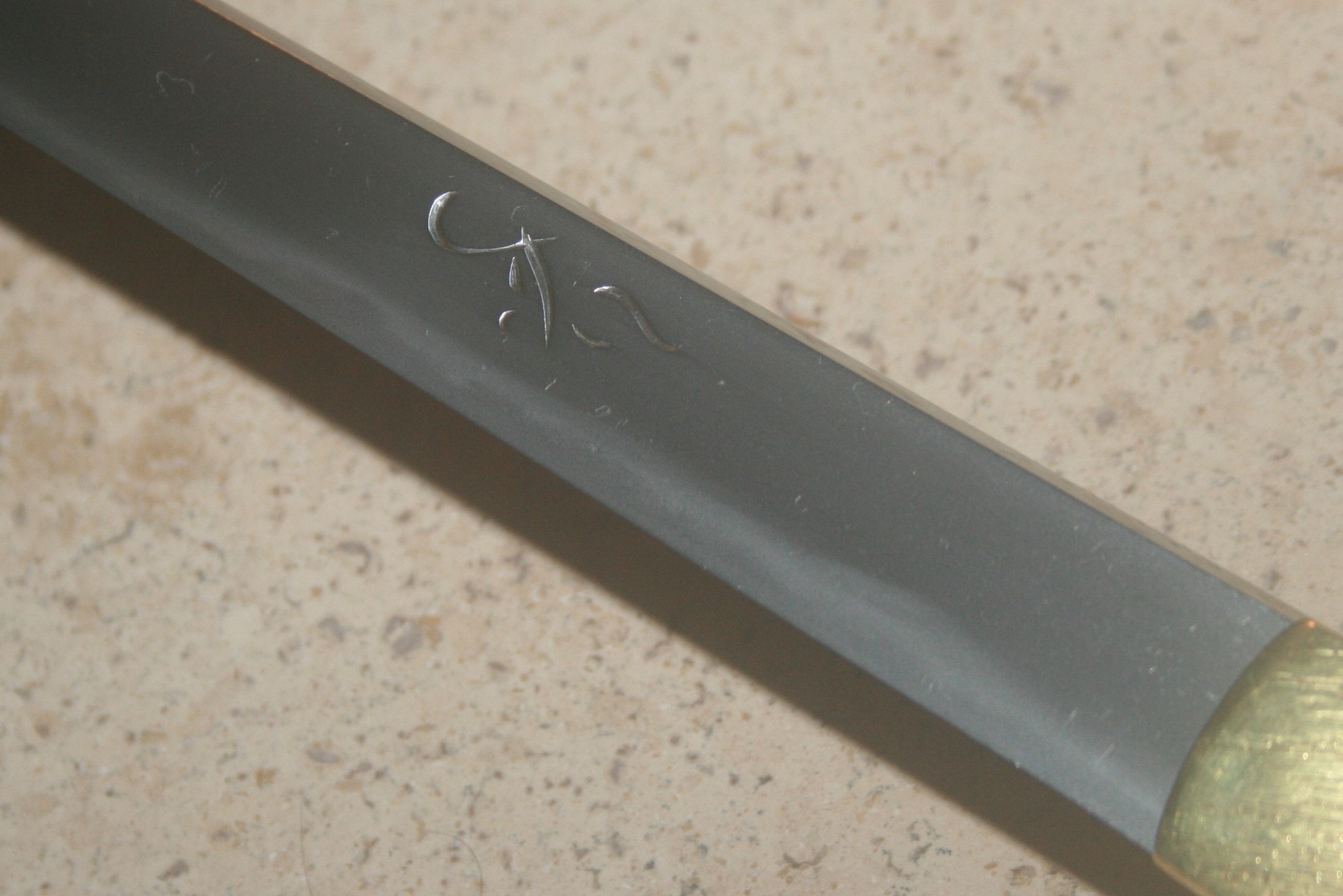
The central fact of his record is its near-total reliance on attribution. The published sources state plainly that "extant signed works are extremely few", and almost everything that survives under his name is the , judged to him. What allows the judges to single him out of the school is one feature, and the commentary names it without hesitation: a calm, -based temper. They observe that "among unsigned blades appraised to the group, one frequently encounters pieces whose tempering is founded on ", and it is this restrained manner, long held the key point in appraising his work, that resolves a -group blade specifically to Sadayoshi. On one the appraisal is put as simply as it can be, that "because the overall impression is comparatively gentle and quiet, it is reasonable to determine the attribution to Sadayoshi".
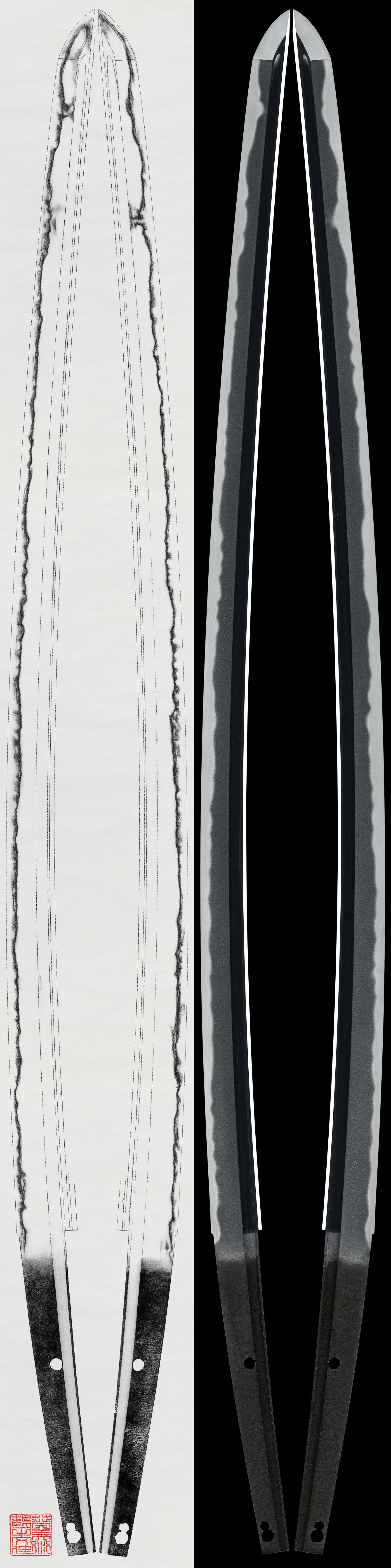
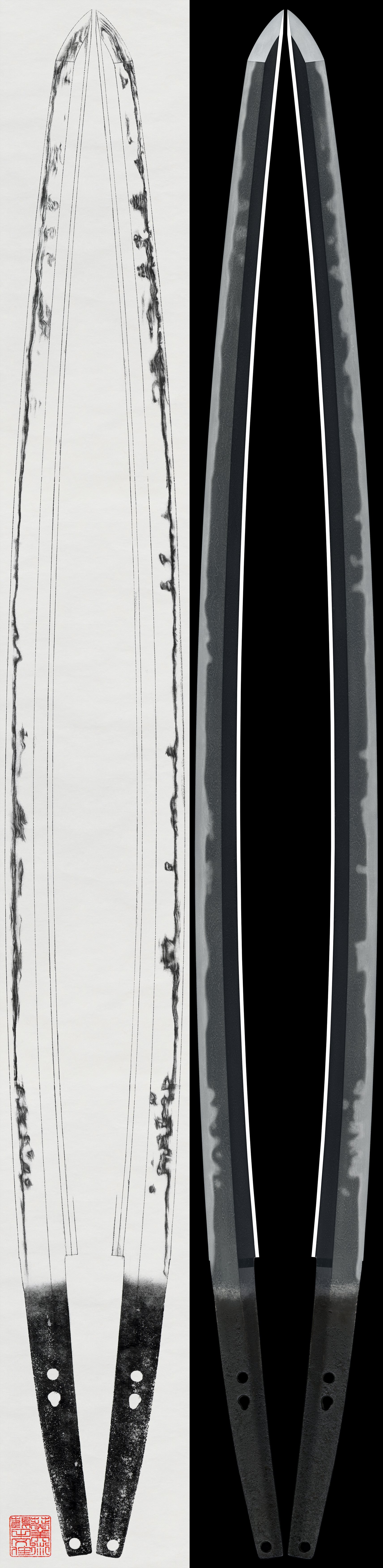
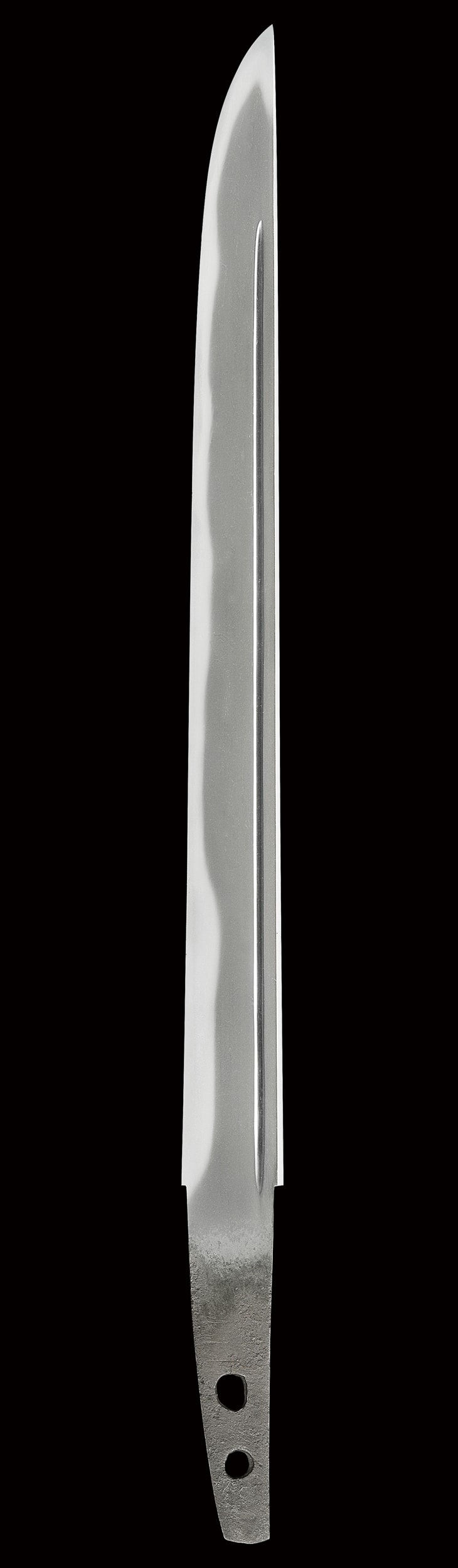
The is the -derived steel he shares with the whole line. He forges a standing , mixed with and a flowing , the grain conspicuous and at times opening; over it the lies thick and the enter frequently, the steel inclining at times toward a dark tone, and on several blades a faint, whitish rises along the . Above the the temper is a wide or with a shallow , into which a little and are mixed; and enter, and run, the gathers thickly, and the at times tends to subside. The is the school's constant and his most reliable structural tell, rising with a thrusting tendency to a sharply pointed tip and swept with , the feature the judges repeatedly call typical of the lineage. A is generally carved through.
Within that one -led manner the attributions divide into a quieter and a more animated register. At its calmest the line is a wide barely undulating, the activity carried in and and in fine rather than in any tall pattern. In a number of blades the foundation opens out: the widens, the line takes a with and angular elements, the thickens and grows uneven with coarser grains, frays the edge, uchi-noke and a -like doubling appear, and or small collect near the . Even at its most active the body of the temper stays , and the pointed, swept holds, so the reading remains -group work given to Sadayoshi. The published sources judge several of these especially well made among works attributed to the smith, the broad and abundant lending a powerful, splendid impression in concert with the bold shape. The blades are wide-bodied with little taper and an extended or , several refashioned from , and a handful carry a later cutting inscription in gold inlay or, in one case, only a red-lacquer character on the tang, which the judges read not as the founder's name in the narrow sense but as a mark of the group as a whole.
What distinguishes Sadayoshi within his own school is exactly the thing that makes him hard to find. The commentary reads the group as a line of comparatively few individual features, the smiths so close in hand that their unsigned work is hard to separate; against that, his calm and his pointed, swept are what carry a blade to his name rather than to a brother's. His bright, -laden and the -toned edge set him apart from the more flamboyant and of the wider circle, and his is read as the quiet, classical face of the late school, the manner in which the inheritance is held in restraint.
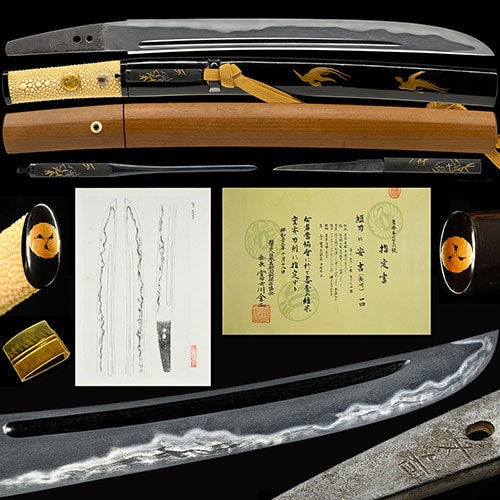
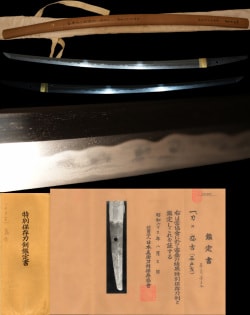
Fujishiro grades Sadayoshi Jō-jō , and his standing in the Tōkō Taikan is recorded at the middle rank. He has no National Treasures, and his record runs entirely through the modern designation tiers: a substantial body of his attributed , more than twenty, has reached the rank across more than a dozen sessions of , several of them judged especially fine among works given to the smith. Provenance is thin in the published record; of recorded whereabouts one blade is held by the Kurokawa Institute of Ancient Cultures, the rest passing through private hands. Because a reliably signed Sadayoshi is among the rarest things in the late record, the collector encounters him almost always through these unsigned, shortened , and even those come to market only from time to time and with patience. A blade securely papered as Sadayoshi is not beyond reach in the way a National Treasure is, but it is a quiet, considered acquisition, valued less for a famous name than for the calm hand by which the judges still know him.