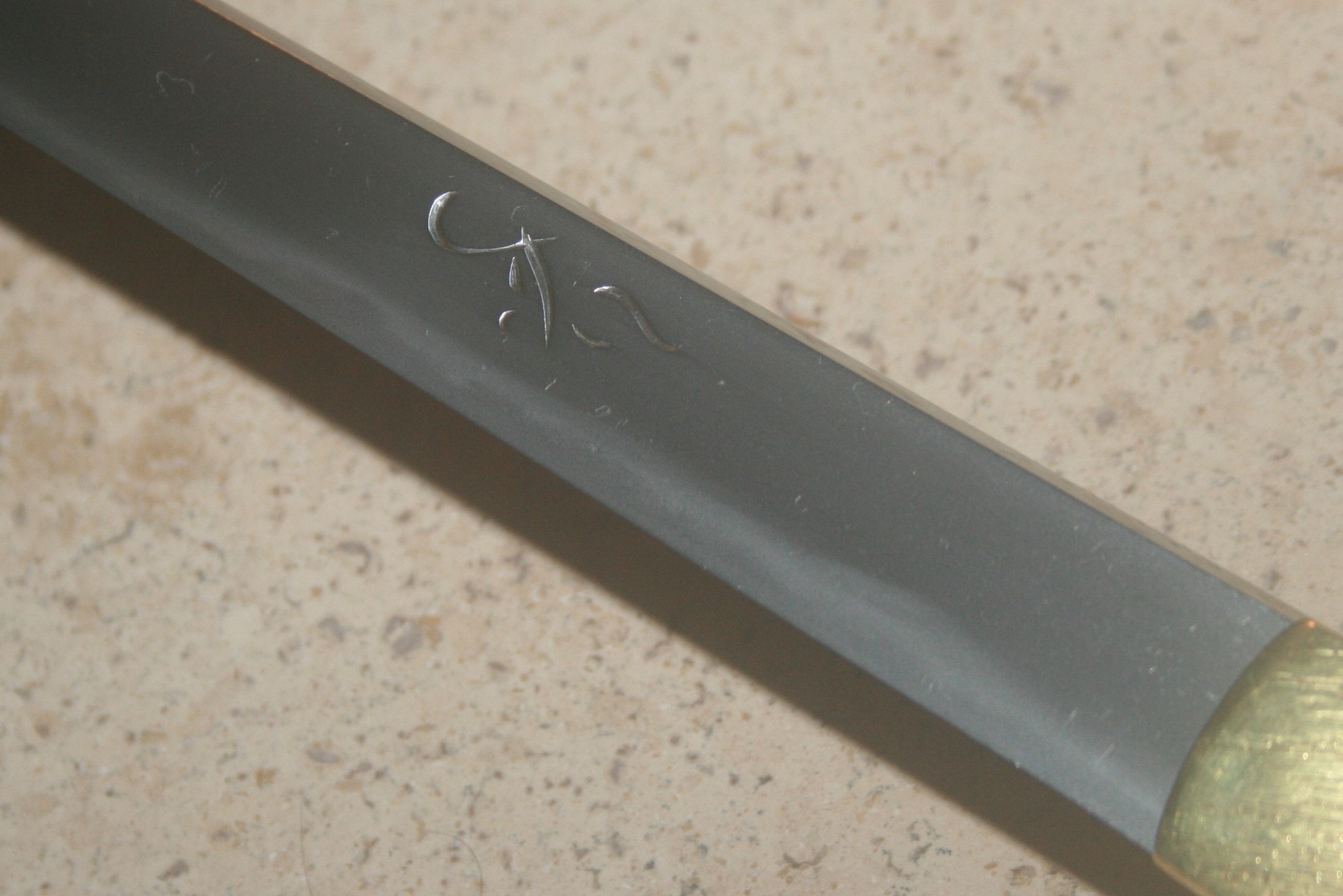
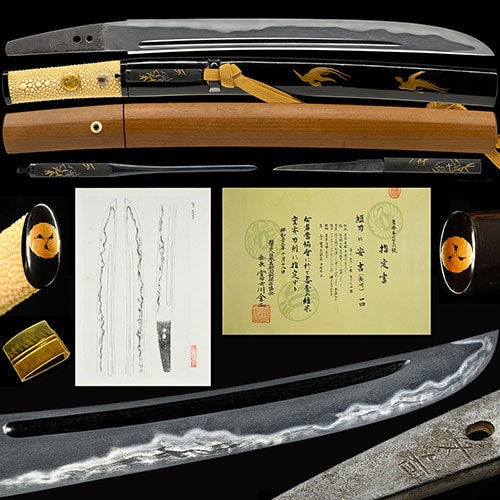
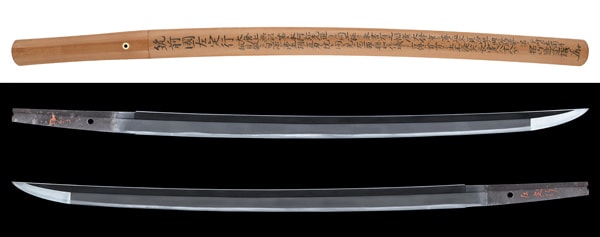
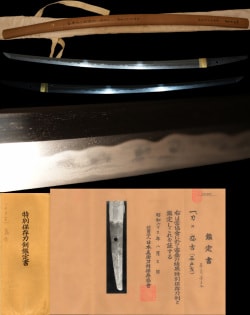
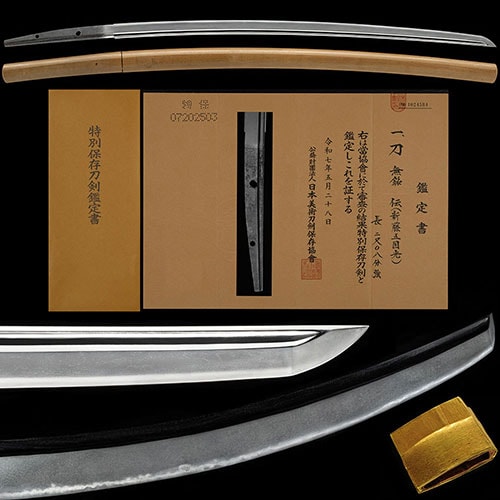
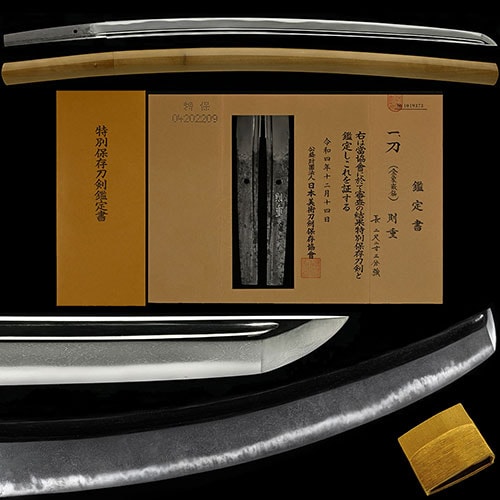
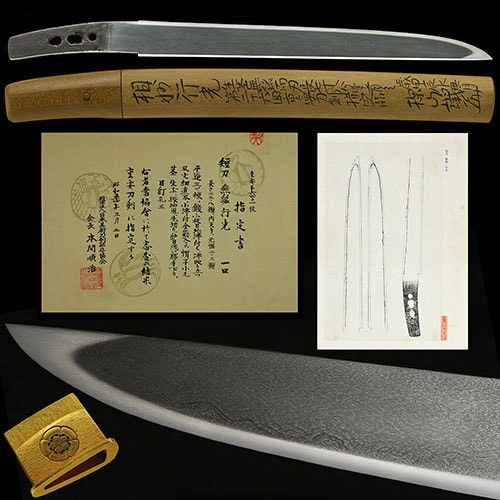
Yoshihiro is recorded in the reference works on sword signatures, with an example bearing a date of Shohei 23 (1368), and he is traditionally said to have been the son of O- (Yukihiro). He was active during the period as part of a broad lineage descending from , among whose disciples and successor smiths there were in fact quite a few. Within that group, however, signed examples are not many; those known to bear signatures include Yasuyoshihiro, Yukihiro, Kunihiro, Hiroyasu, Yoshisada, Yoshihiro, and Hiroyoshi. Even so, the great majority of signed works are limited to and , and signed are exceedingly rare, owing to the prevailing fashion of the period for large of over three in length, many of which were later shortened and converted into .
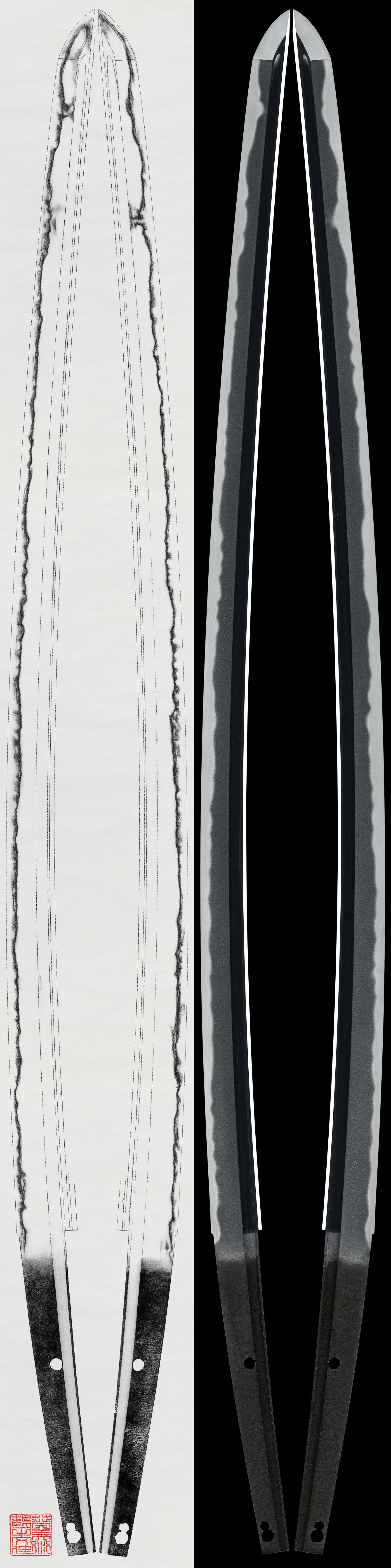
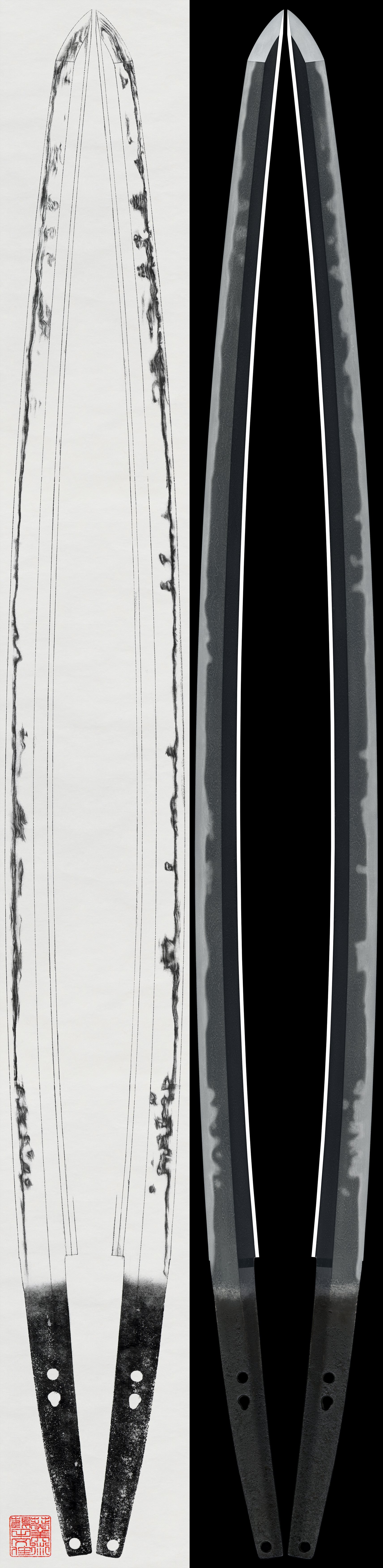
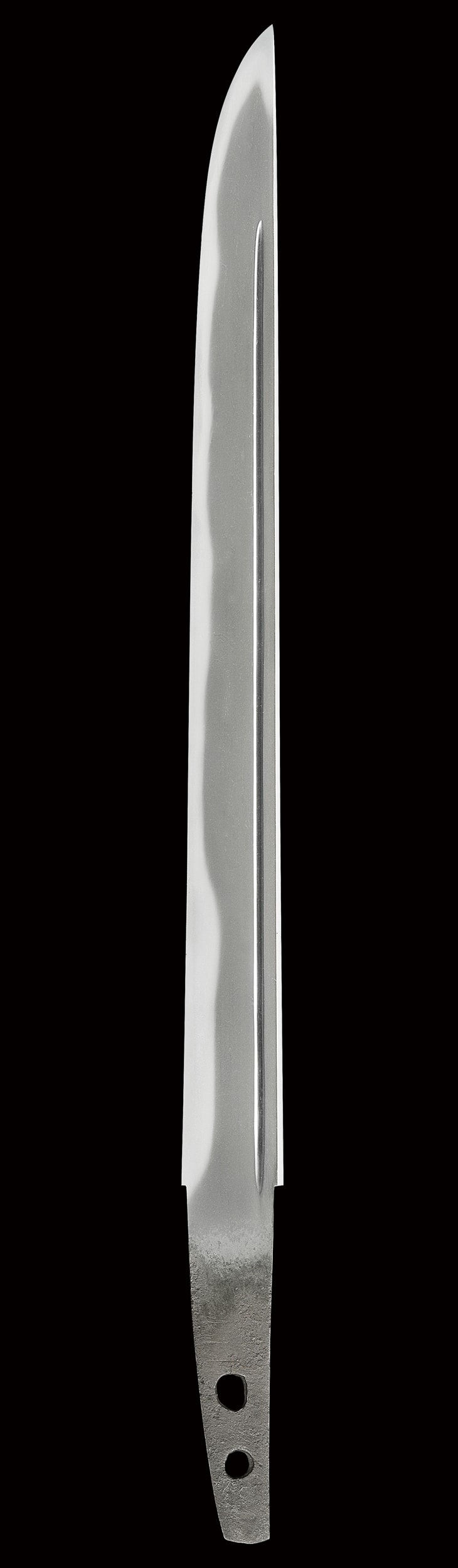
The workmanship commonly shared by the group includes a forging pattern of flowing in , tightly forged, with fine dense accumulating thickly, and appearing. The tempering exhibits a dominant tone of gentle undulation with an (moist, soft) quality, into which , , and are intermingled. runs throughout and appear, while and enter frequently. The is clear, with strongly manifest and adhering well, at times mixed with . The characteristically enters in a manner, showing a tendency that rises to a pointed impression before turning back. Works attributed to Yoshihiro display this full constellation of -school hallmarks: wide , shallow , and extended that clearly exhibit the characteristic features of the period.
The smiths of this lineage were broadly comparable in skill, and their styles do not differ greatly, making discrimination among them on a case-by-case basis difficult. Notwithstanding this, the has consistently recognized that works transmitted as Yoshihiro exhibit the distinctive traits of the group with particular strength, and that their and are (sound and well-preserved). The tradition of attribution to Yoshihiro has been accepted as reasonable on the basis of both period and manner of workmanship. Within the larger school, Yoshihiro's works stand as representative examples of the group's achievement, embodying the refined -influenced forging and tempering idiom that defined the swordmaking tradition at its height.