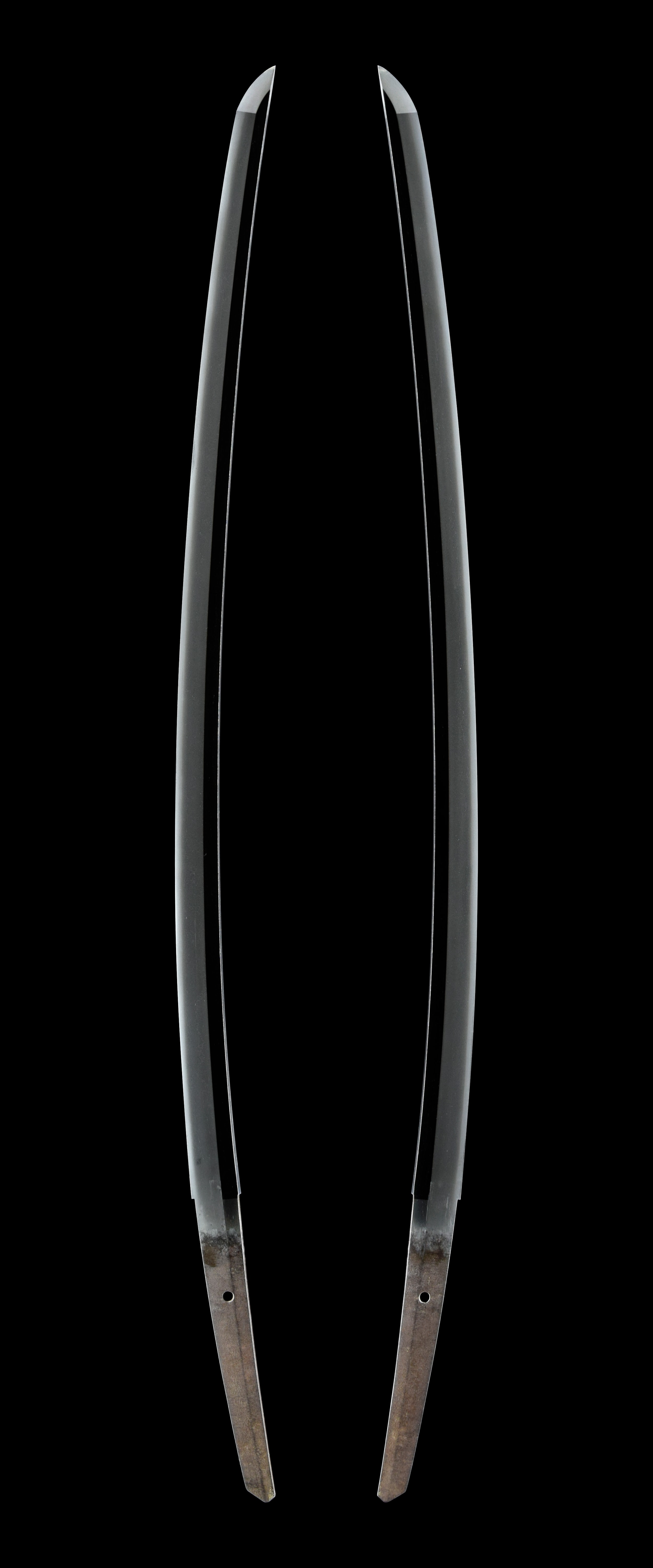
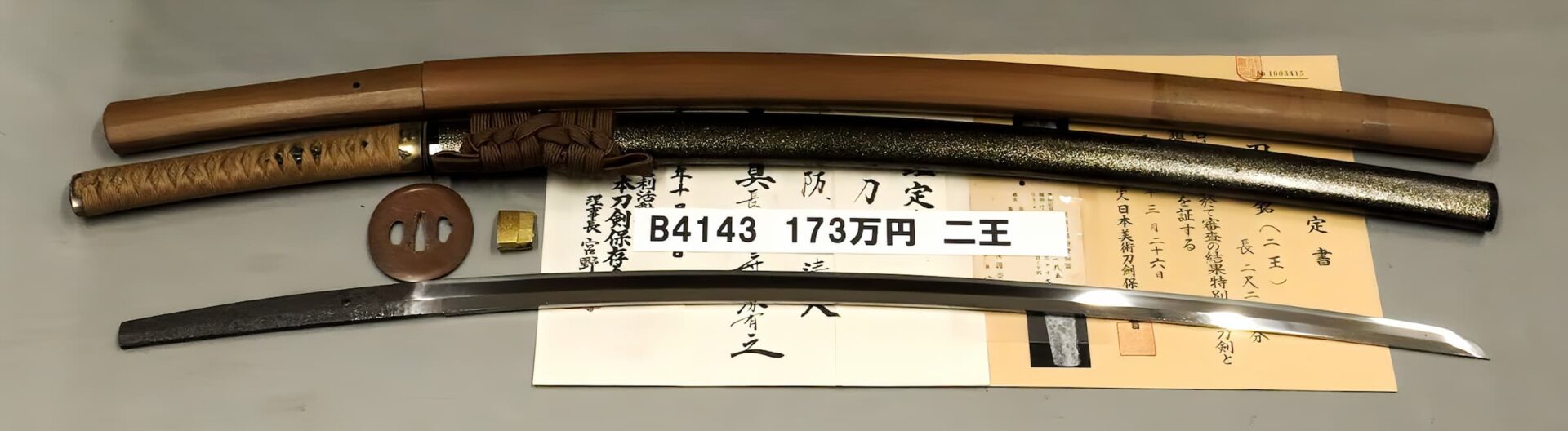
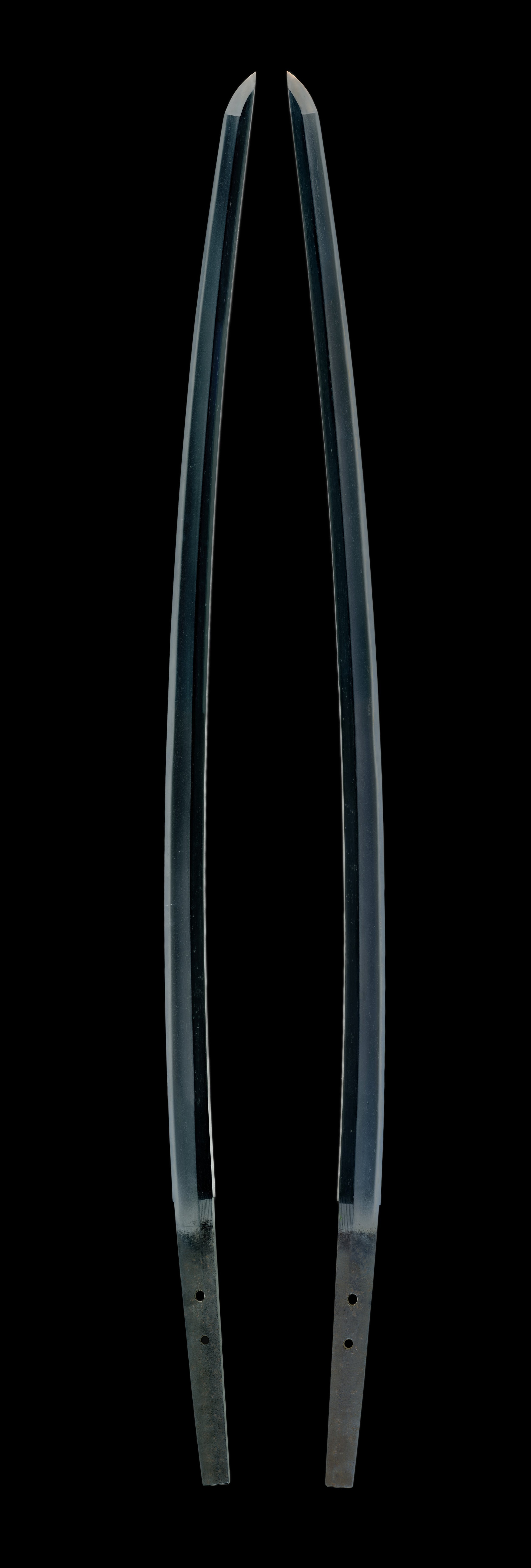
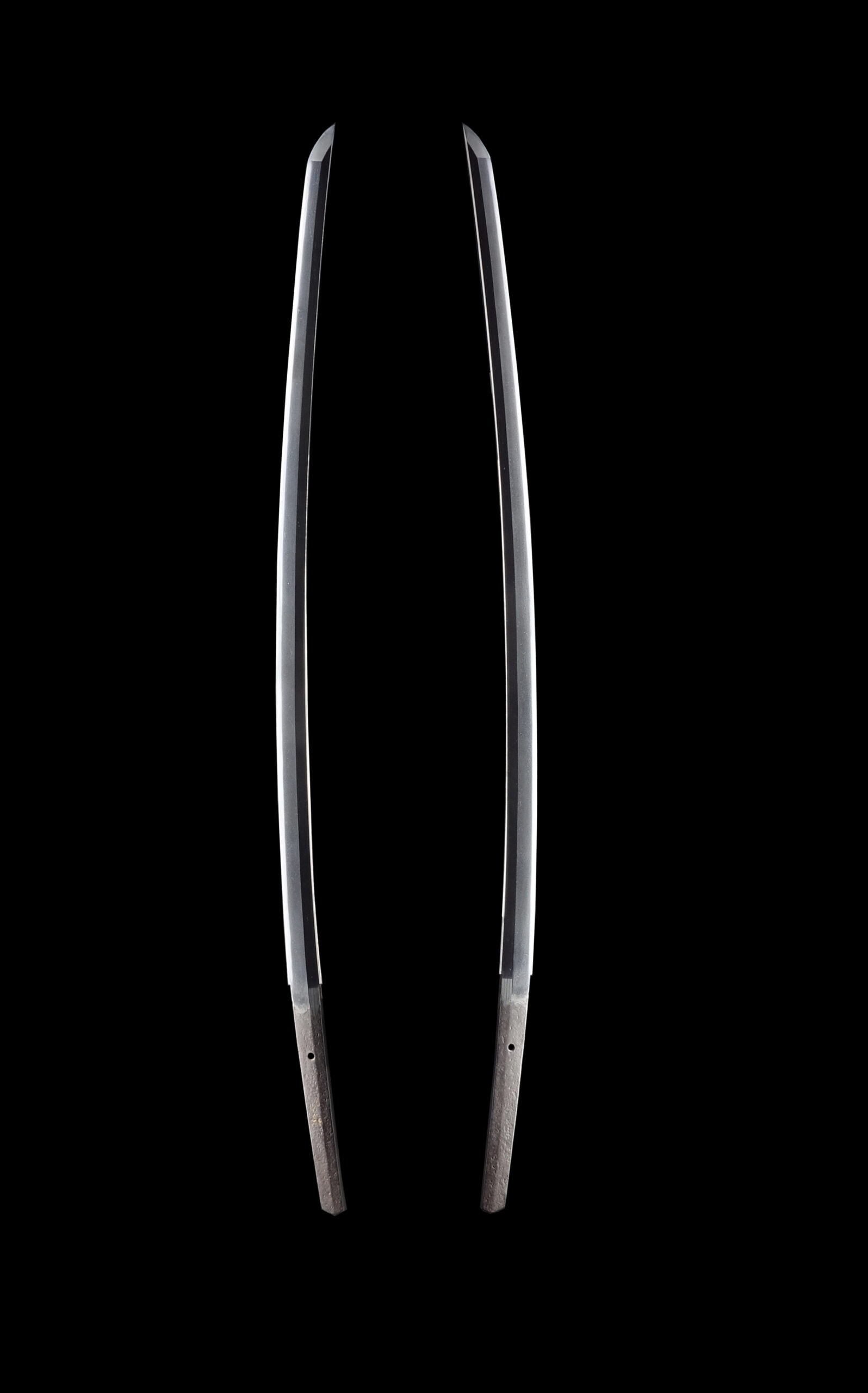
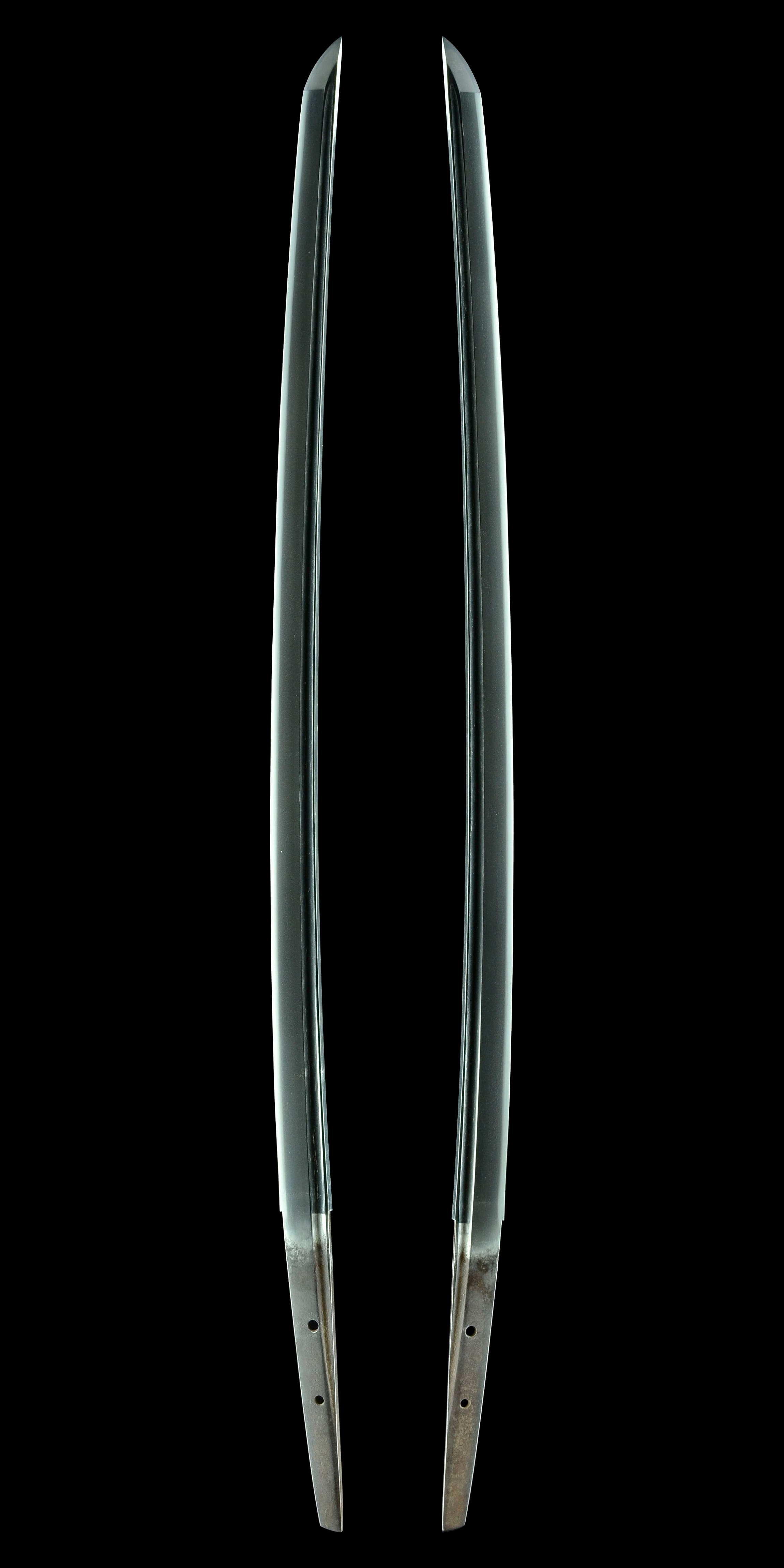
The Nio school of Suo Province is traditionally said to have been established around the Hoden era (1135-1141) by either Kiyozane or Kiyohira; however, as no reliably identifiable extant works by these figures are known, Kiyotsuna is today regarded in effect as the school's de facto founder. Among his surviving works, the earliest is a at Itsukushima Shrine bearing an inscription dated Bun'ei 2 (1265), followed by a inscribed "Boshu Kuga-sho Kiyotsuna" and dated Kenmu 2 (1335). Thereafter, smiths using the name continued in an unbroken line through the period and even into the era. Suo Province contained many estates belonging to temples such as Todai-, and the strongly Yamato-tinged character of Nio workmanship is understood to reflect exchanges with the Yamato heartland. Concerning the origin of the appellation "Nio," the most persuasive view holds that it derives from the school's residence in a district within the province.
Kiyotsuna's works are consistently -based pieces with a pronounced Yamato temperament. The is characteristically an mixed with and , with the grain tending to stand; minute adheres, fine enter, and --- a whitish, hazy reflection --- appears in the forging. The , founded upon narrow , incorporates , , and ; along the appear and uchi-noke, while and run through, and in places the displays an tendency --- a moist, soft quality that, together with , constitutes the distinguishing individuality of the Nio school. The boshiboshi is typically with , the tip often showing . Blades in form present the elegant of the late period: slender, with , comparatively high , and an elevated with taka-no- filemarks that further attest to the Yamato connection.
Within the broader landscape of provincial schools, Kiyotsuna occupies a position of particular documentary significance. At first glance his workmanship presents an appearance suggestive of Yamato proper, yet the school's individuality is firmly recognized in the that pervades the and the tendency within the tempered edge. The has repeatedly described his surviving works as rare and precious as source material for study, and the inclusion of the place-name "Kuga-sho" within certain signatures is noted as valuable for understanding the school's origins. His blades, whether signed or attributed, are praised for their bright iron color, well-forged steel, and abundant internal workings, and they are appraised as excellent examples of orthodox workmanship that conveys well the tradition of the Nio lineage.