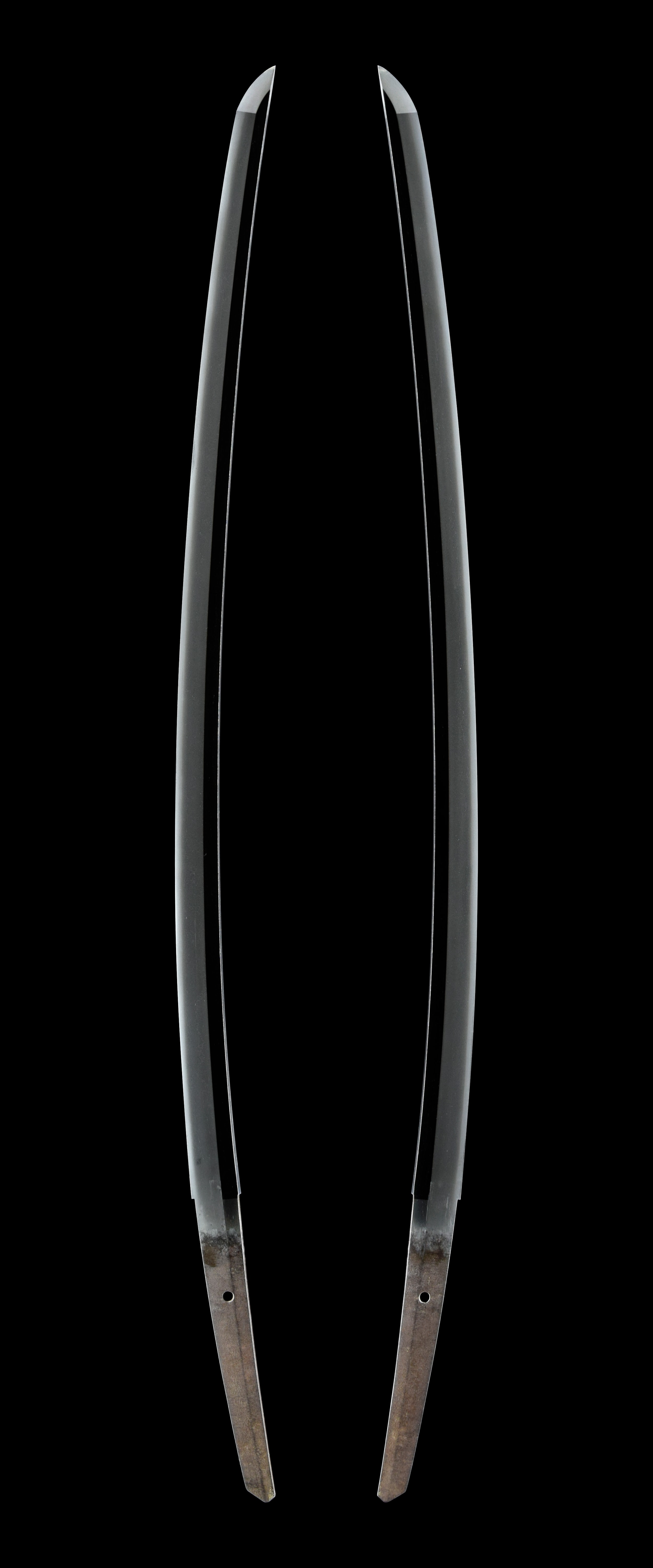
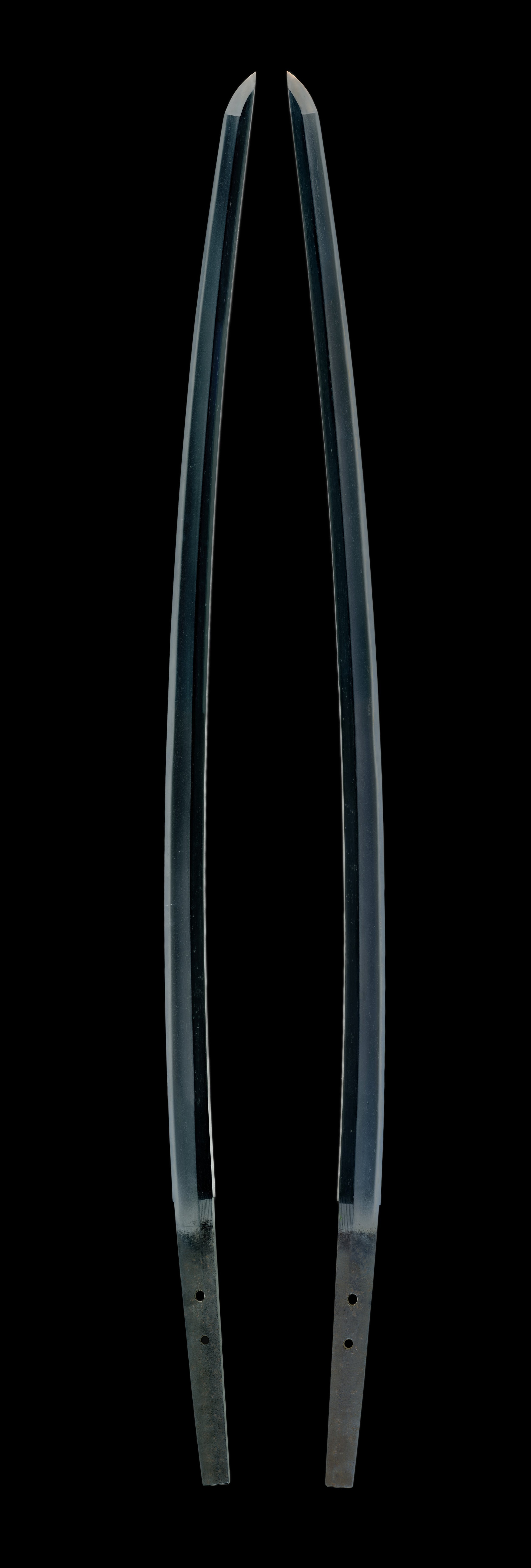
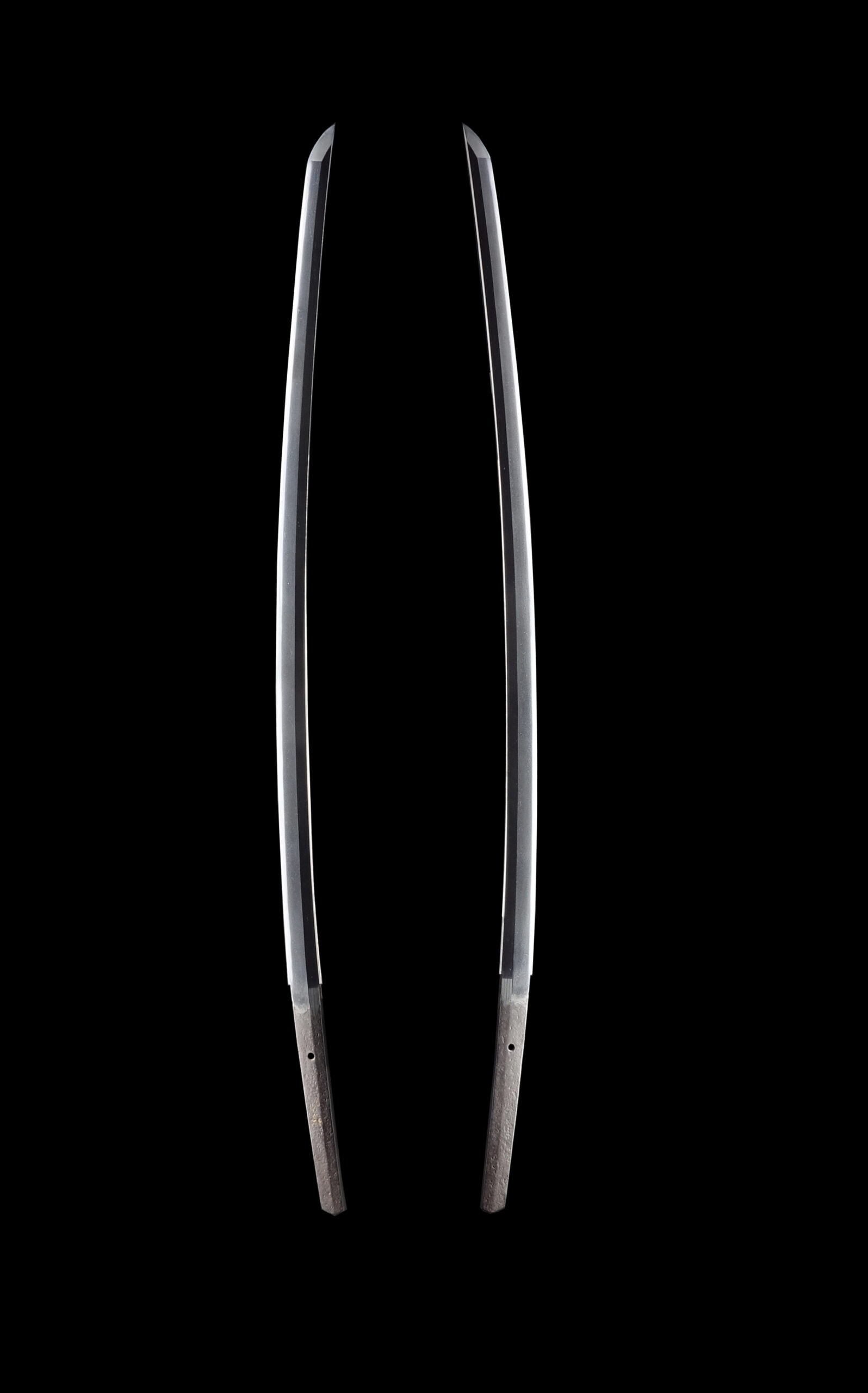
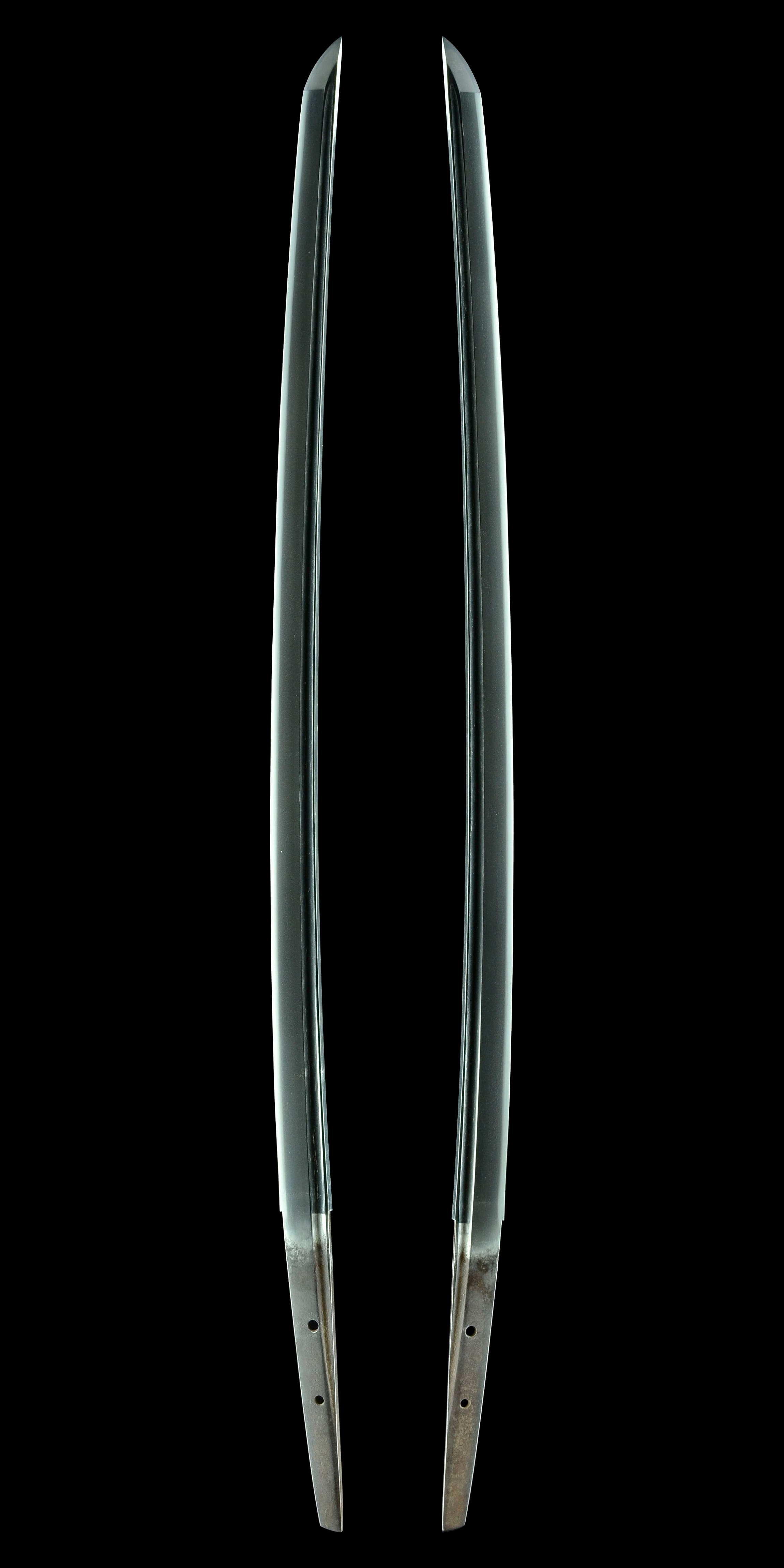
Kiyotsuna is the de facto founder of the Nio school of Suo Province. The lineage is traditionally said to have begun around the Hoden era (1135–1141) with Kiyozane or Kiyohira; however, "no secure surviving works by these putative founders are known, and today Kiyotsuna is regarded, in effect, as the school's founder." Among his extant works, the earliest is a at Itsukushima Shrine bearing a written-out inscription reading "Bun'ei 2, third month — Kiyotsuna" (1265), followed by a signed "Boshu Kuga-sho Kiyotsuna" dated Kenmu 2 (1335). Thereafter, smiths using the name continued in an unbroken line through the period and even into the era. The appellation "Nio" most persuasively derives from residence in Niho-sho within the province. Several smiths are thought to have used the name from the mid- through the period, placing the first generation's active career in the late thirteenth to early fourteenth century.
Suo Province contained many temple estates belonging to major Yamato monasteries, beginning with Todai-, and "the strongly Yamato-colored character of Nio workmanship reflects exchange with the Yamato heartland." The consistently identifies the school's individuality through two diagnostic traits: the appearance of — a whitish, hazy reflection — in the forging, and the tendency for the to show , a moist, soft quality in the temper line. The is characteristically mixed with , tending toward standing grain, with fine and . The is based on — often narrow or slender — mixed with , displaying , , and such activities as , , , and uchi-noke. The is consistently straight, returning in , sometimes with toward the tip. Construction frequently shows a high , somewhat thick , and taka-no- file marks — features that "present a manner that also accords with Yamato workmanship."
Across the body of designated works, the repeatedly affirms that Kiyotsuna's blades "clearly express the characteristics of the Nio group" while displaying "superior workmanship" and "excellent" overall quality. Signed examples with are singled out as "precious as documentary material" and possessing "exceptionally high value as reference material for study," reflecting the rarity of securely attributable works by this smith. The form — slender, with pronounced and or — is consistently praised for conveying "the elegant of the late period." Blades in sound condition are noted as , retaining ample with "not the slightest loosening in either or ." At a glance, the workmanship is "suggestive of Yamato proper," yet the persistent presence of and distinguishes the Nio school as an independent lineage — one rooted in provincial temple culture yet possessed of unmistakable individual character.