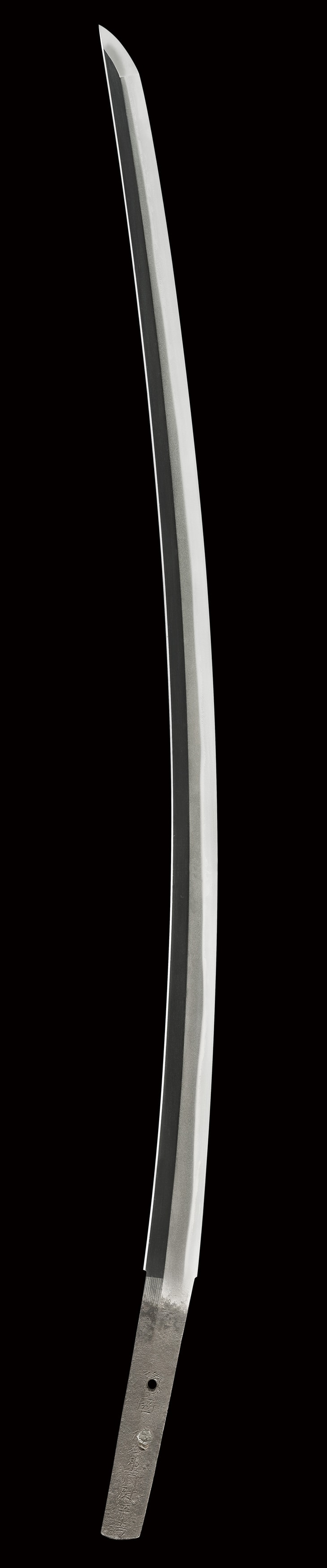
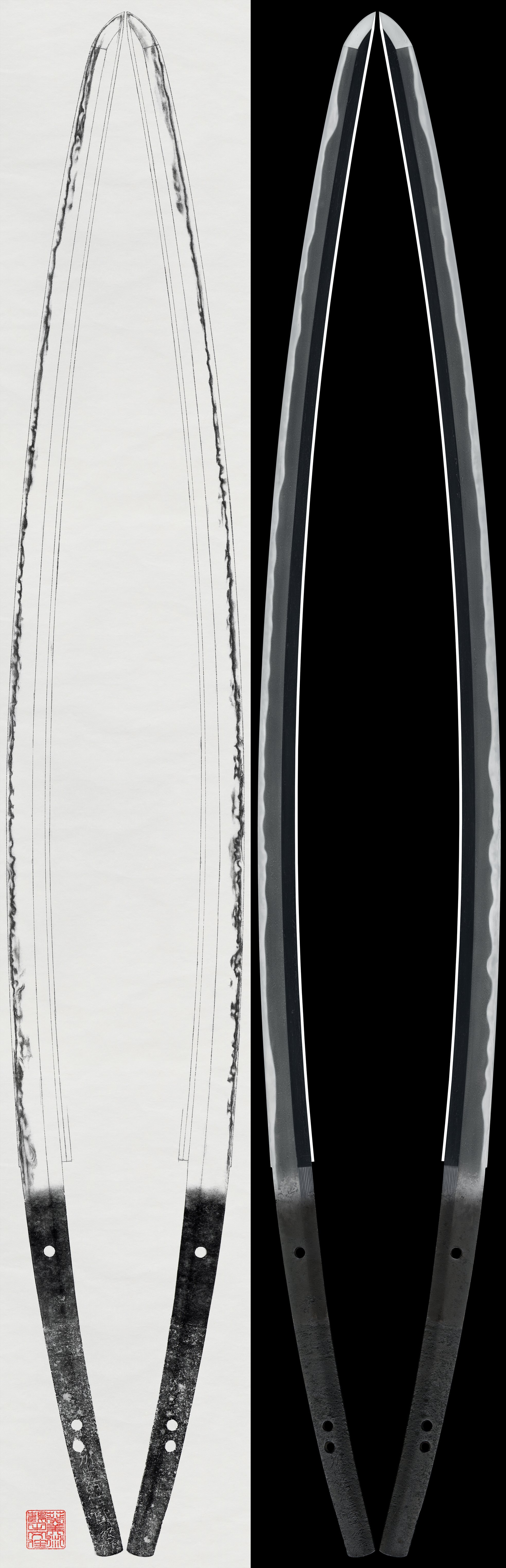
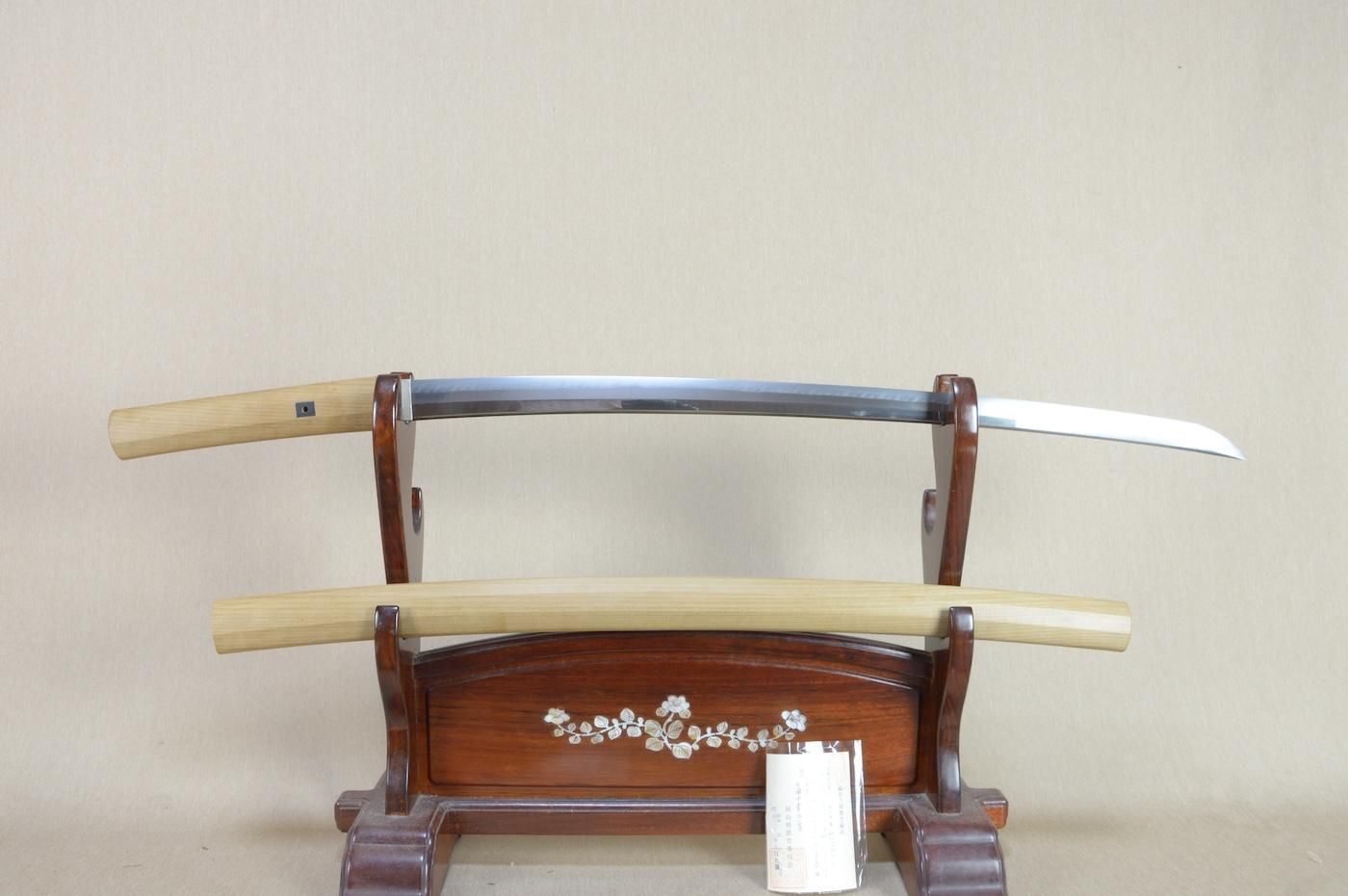
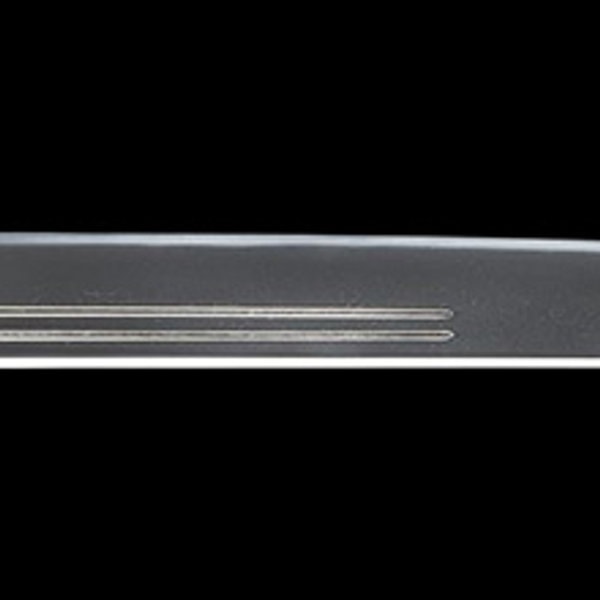
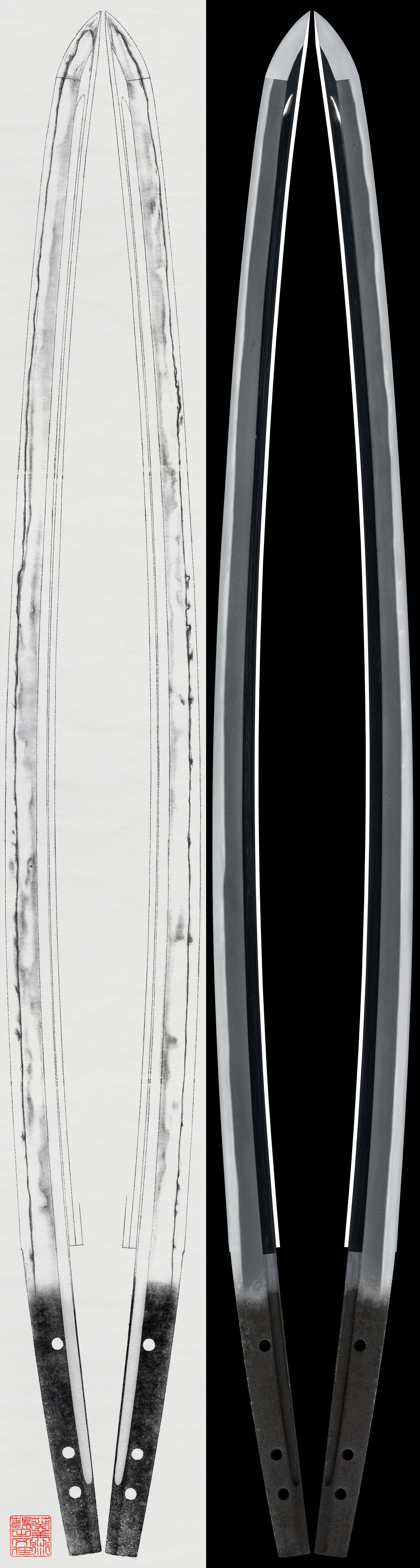
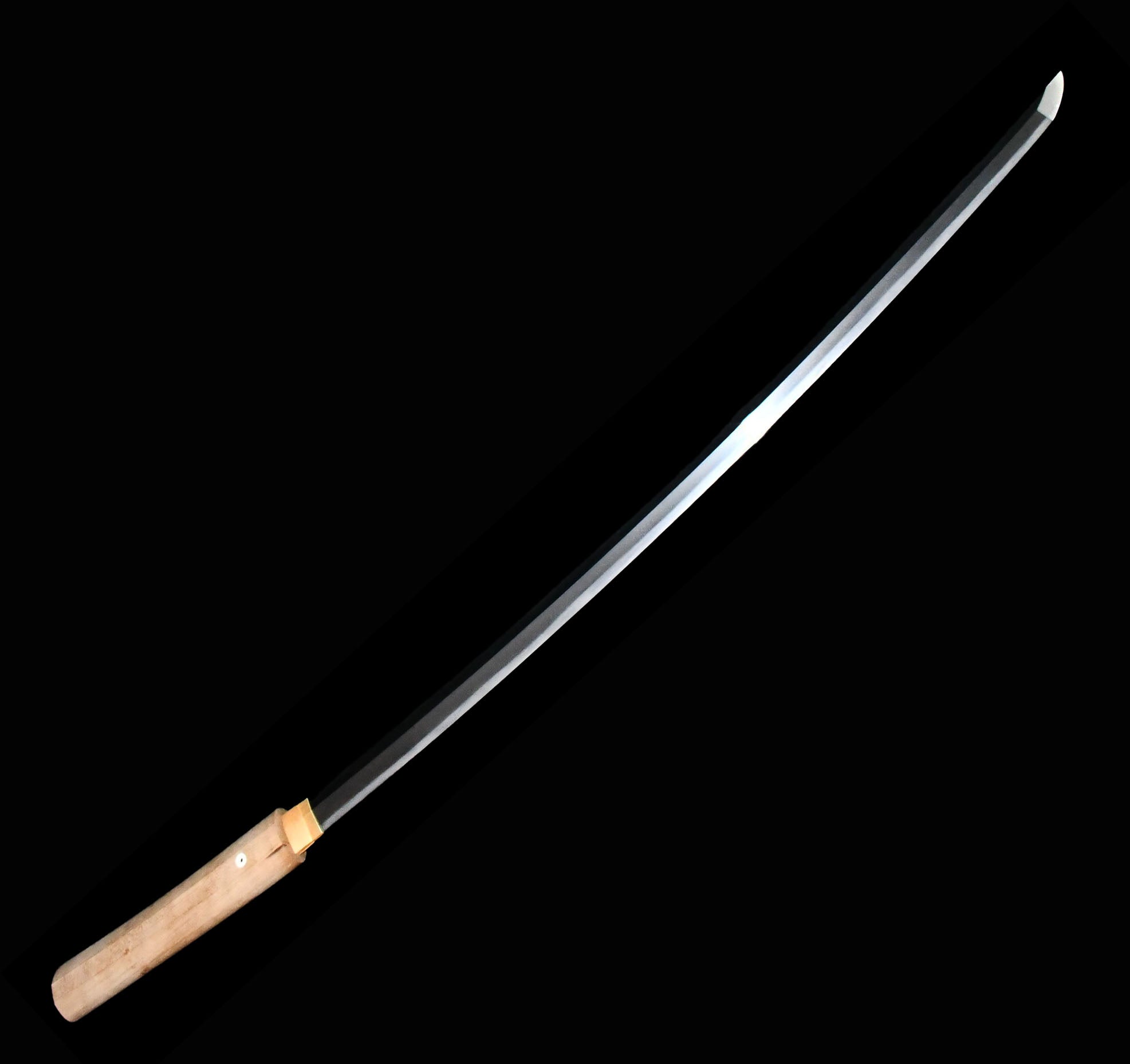
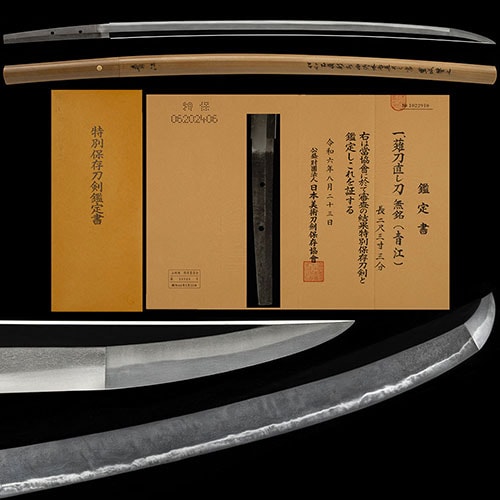
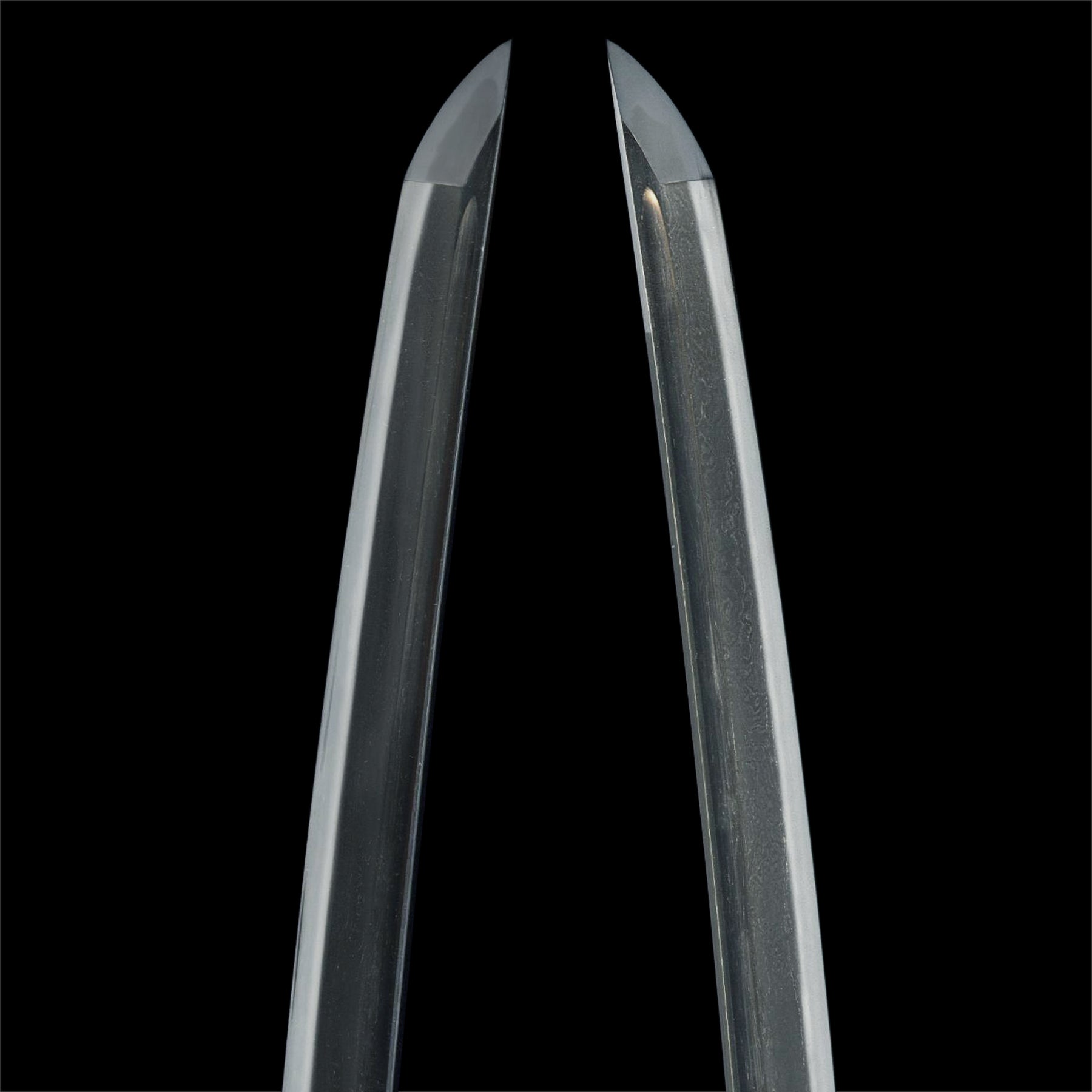
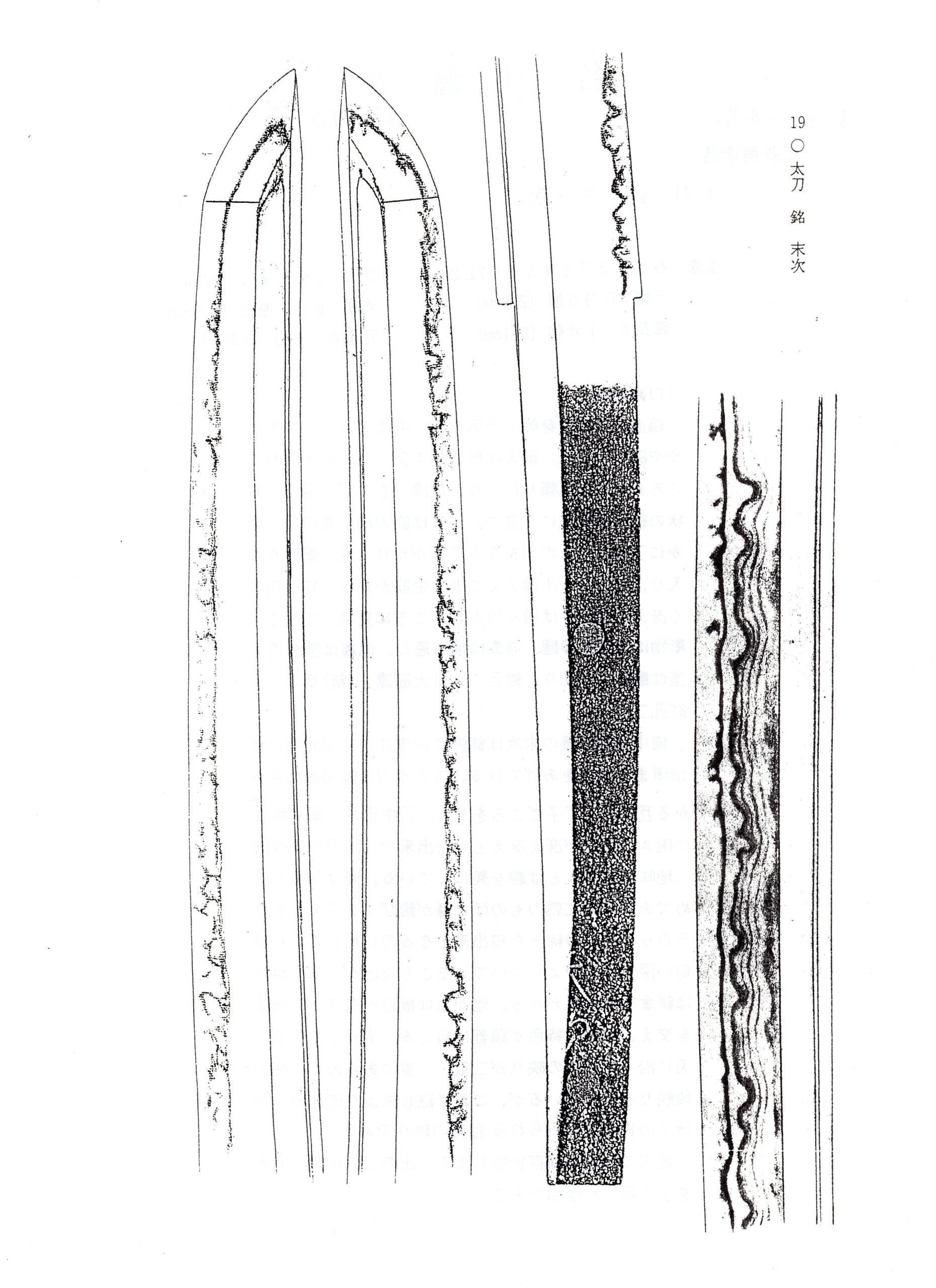
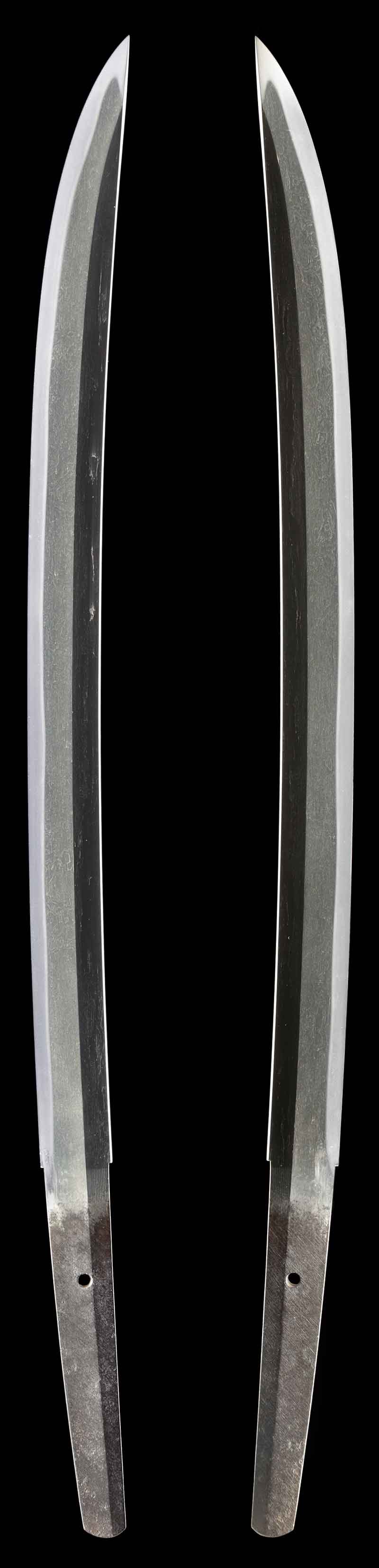
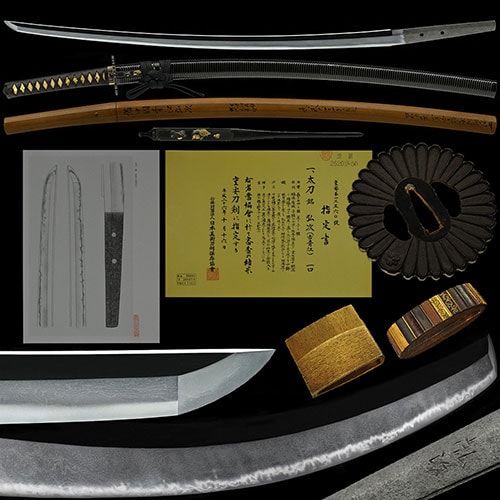
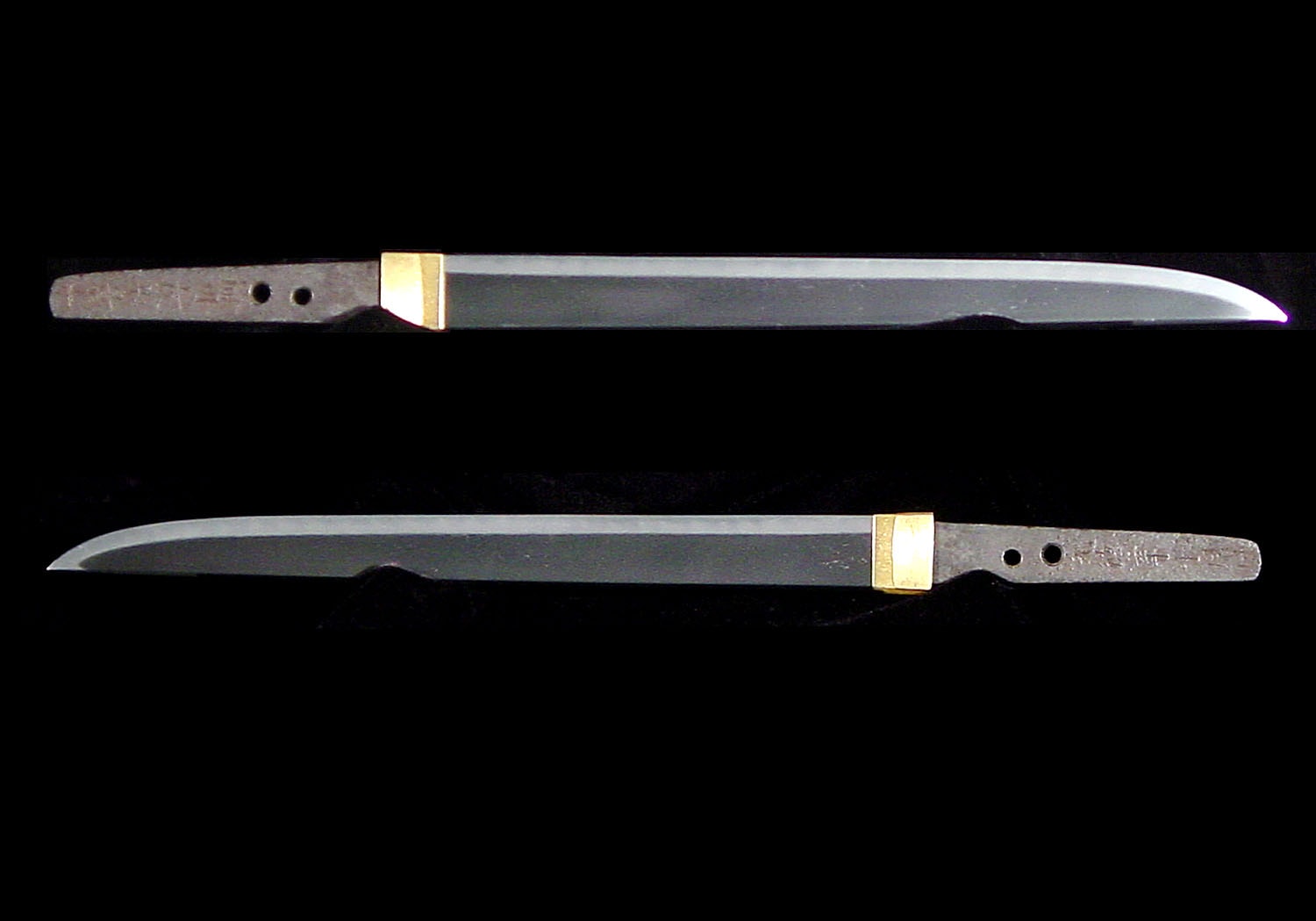
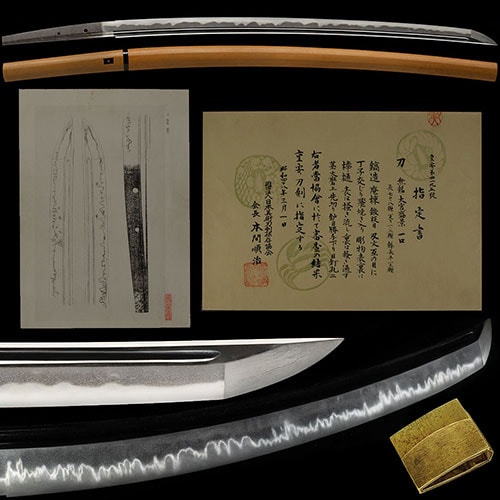
Ietsugu belonged to the school of Province, a lineage whose activity spanned from the mid- period through the late era. He is recorded in the as a son of Moritsugu, and his works are appraised across two distinct periods: a bearing a -style signature is attributed to the group of the middle to late period, while dated works inscribed Enbun 2 (1357) and Shitoku 3 (1386) place him firmly in the era. This range suggests either a long working life or, more likely, successive generations operating under the name.
The displays the school's hallmark qualities: a dense with and standing out, paired with a temper where the tends toward tightness with abundant and adhering . The notes that "the characteristic features of this lineage are well expressed in both the and the ." The later dated Shitoku 3 is especially significant, as signed works of the school from this period are described as "extremely rare — not only those by Ietsugu, but in general." Despite workmanship the candidly assesses as not rising to a high level, the piece is valued as "exceedingly precious as documentary material."
What emerges from the designated corpus is an artisan of considerable documentary importance to the study of the tradition. His dated Enbun 2 differs in form from the large, elongated examples of contemporaries such as Tsuguyoshi and Tsugunao, making it "useful for research on the school." Across his surviving works, Ietsugu preserves the essential vocabulary of craftsmanship while documenting the school's evolution through its final active centuries.